

New material platform for superconducting transmon qubits with coherence times exceeding 0.3 milliseconds
Open accessThe DOI matches its Crossref record; 54 of the 54 references it cites were found in a registry or an index.
Abstract
The superconducting transmon qubit is a leading platform for quantum computing and quantum science. Building large, useful quantum systems based on transmon qubits will require significant improvements in qubit relaxation and coherence times, which are orders of magnitude shorter than limits imposed by bulk properties of the constituent materials. This indicates that relaxation likely originates from uncontrolled surfaces, interfaces, and contaminants. Previous efforts to improve qubit lifetimes have focused primarily on designs that minimize contributions from surfaces. However, significant improvements in the lifetime of two-dimensional transmon qubits have remained elusive for several years. Here, we fabricate two-dimensional transmon qubits that have both lifetimes and coherence times with dynamical decoupling exceeding 0.3 milliseconds by replacing niobium with tantalum in the device. We have observed increased lifetimes for seventeen devices, indicating that these material improvements are robust, paving the way for higher gate fidelities in multi-qubit processors.
Overview
The claims and statistics of this paper haven’t been checked yet.
Free: it reads the open-access text and checks the first 5 claims that cite a source we can check. Create a free account to check every claim.
Integrity signals
Registry
Cites
Statistics
Figures
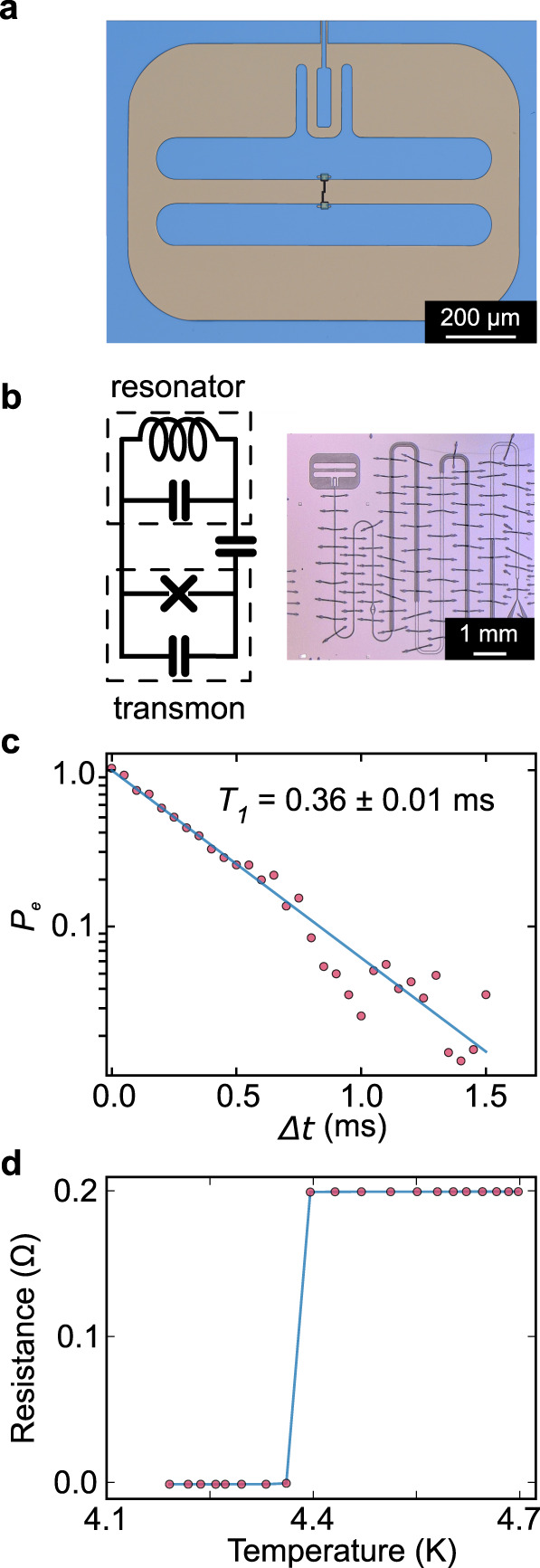
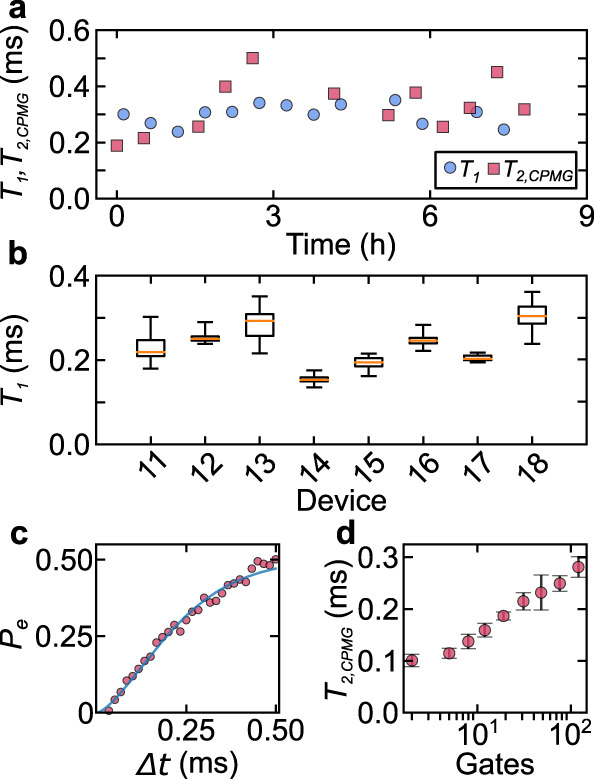
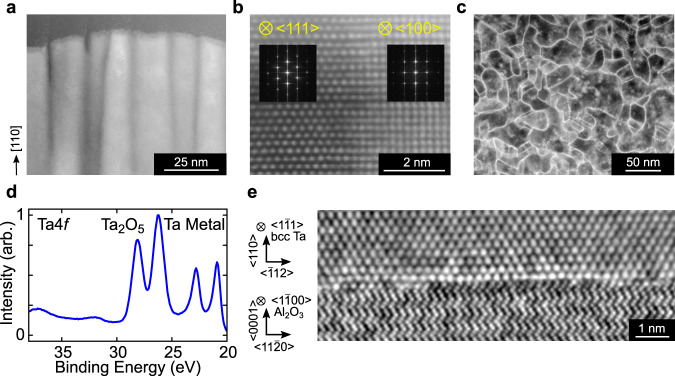
Verification
Claims the paper makes
The claims and statistics of this paper haven’t been checked yet.
Free: it reads the open-access text and checks the first 5 claims that cite a source we can check. Create a free account to check every claim.
Claims other papers make about this one
Each is checked against this paper’s own text: does it say what the citing paper says it does?
The source backs part of the claim, not all of it — or backs it for a different population, condition or comparison.
In the citing paper
“The advantage of this fabrication technique is the possibility for in situ fabrication of the JJ and minimal etch damage to achieve high-coherence qubits of up to hundreds of microseconds19–22.”
From Advanced CMOS manufacturing of superconducting qubits on 300 mm wafers (2024) · cites this paper as [19]
Experimental — accuracy not yet measured
Self-check
Percentages, sums and reported differences re-computed from the paper’s own numbers.
The self-check needs the paper’s full text.
Citations
Cites
Quantum supremacy using a programmable superconducting processor
Arute, F., Arya, K., Babbush, R., Bacon, D., Bardin, J. C., Barends, R., Biswas, R., Boixo, S., Brandao, F. G. S. L., Buell, D. A., et al. (2019) · Nature · doi:10.1038/s41586-019-1666-5 · Cited by 7,720
Hardware-efficient variational quantum eigensolver for small molecules and quantum magnets
Kandala, A., Mezzacapo, A., Temme, K., Takita, M., Brink, M., Chow, J. M., & Gambetta, J. M. (2017) · Nature · doi:10.1038/nature23879 · Cited by 2,982
Superconducting Circuits for Quantum Information: An Outlook
Devoret, M. H., & Schoelkopf, R. J. (2013) · Science · doi:10.1126/science.1231930 · Cited by 2,114
Superconducting quantum circuits at the surface code threshold for fault tolerance
Barends, R., Kelly, J., Megrant, A., Veitia, A., Sank, D., Jeffrey, E., White, T. C., Mutus, J., Fowler, A. G., Campbell, B., et al. (2014) · Nature · doi:10.1038/nature13171 · Cited by 1,733
Quantum algorithms: an overview
Montanaro, A. (2016) · npj Quantum Information · doi:10.1038/npjqi.2015.23 · Cited by 1,071
Scalable Quantum Simulation of Molecular Energies
O’Malley, P. J. J., Babbush, R., Kivlichan, I. D., Romero, J., McClean, J. R., Barends, R., Kelly, J., Roushan, P., Tranter, A., Ding, N., et al. (2016) · Physical Review X · doi:10.1103/physrevx.6.031007 · Cited by 1,059 · cited 1×
“We developed our sapphire etch recipe by (1) looking for crystal formation in an optical microscope, (2) ensuring that zinc was removed in XPS, and (3) checking that we preserved smooth surface morphology in AFM.”
MethodPaik, H., Schuster, D. I., Bishop, L. S., Kirchmair, G., Catelani, G., Sears, A. P., Johnson, B. R., Reagor, M. J., Frunzio, L., Glazman, L. I., et al. (2011) · Physical Review Letters · doi:10.1103/physrevlett.107.240501 · Cited by 1,054
Extending the lifetime of a quantum bit with error correction in superconducting circuits
Ofek, N., Petrenko, A., Heeres, R., Reinhold, P., Leghtas, Z., Vlastakis, B., Liu, Y., Frunzio, L., Girvin, S. M., Jiang, L., et al. (2016) · Nature · doi:10.1038/nature18949 · Cited by 941
State preservation by repetitive error detection in a superconducting quantum circuit
Kelly, J., Barends, R., Fowler, A. G., Megrant, A., Jeffrey, E., White, T. C., Sank, D., Mutus, J. Y., Campbell, B., Chen, Y., et al. (2015) · Nature · doi:10.1038/nature14270 · Cited by 916
A quantum-dot spin qubit with coherence limited by charge noise and fidelity higher than 99.9%
Yoneda, J., Takeda, K., Otsuka, T., Nakajima, T., Delbecq, M. R., Allison, G., Honda, T., Kodera, T., Oda, S., Hoshi, Y., et al. (2018) · Nature Nanotechnology · doi:10.1038/s41565-017-0014-x · Cited by 900
Research works printed but not linked: 5
- Kjaergaard, M. et al. Superconducting Qubits: current state of play. https://arxiv.org/abs/1905.13641 (2019). · arXiv
- Premkumar, A. et al. Microscopic relaxation channels in materials for superconducting Qubits. https://arxiv.org/abs/2004.02908 (2020). · arXiv
- Reese, M. Superconducting Hot Electron Bolometers for Terahertz Sensing. PhD thesis. Yale (2006).
- Face D Prober D Nucleation of body-centered-cubic tantalum films with a thin niobium underlayer J. Vac. Sci. Technol. A: Vac.,Surf., Films 1987 5 3408 3411 10.1116/1.574203 · DOI · Paper page
- Huang, Z. et al. Engineering dynamical sweet spots to protect Qubits from 1/f noise. https://arxiv.org/abs/2004.12458 (2020). · arXiv
Cited by
Items 201–300 of 815
Voltage-Tunable Superconducting Resonators: A Platform for Random Access Quantum Memory
Sardashti, K., Dartiailh, M., Yuan, J. O., Hart, S., Gumann, P., & Shabani, J. (2020) · IEEE Transactions on Quantum Engineering · doi:10.1109/tqe.2020.3034553 · Cited by 23
“Consequently, there is a rich literature on the optimization of materials growth and resonator fabrication processes that recently led to resonator lifetimes of a few milliseconds [1]–[4].”
BackgroundKowsari, D., Zheng, K., Monroe, J., Thobaben, N. J., Du, X., Harrington, P. M., Henriksen, E. A., Wisbey, D., & Murch, K. W. (2021) · Applied Physics Letters · doi:10.1063/5.0066441 · Cited by 23
Probing Oxidation-Driven Amorphized Surfaces in a Ta(110) Film for Superconducting Qubit
Mun, J., Sushko, P. V., Brass, E., Zhou, C., Kisslinger, K., Qu, X., Liu, M., & Zhu, Y. (2023) · ACS Nano · doi:10.1021/acsnano.3c10740 · Cited by 23
Qudit-based quantum computing with SRF cavities at Fermilab
Roy, T., Kim, T., Romanenko, A., & Grassellino, A. (2024) · International Symposium on Lattice Field Theory (LATTICE) · doi:10.22323/1.453.0127 · Cited by 23
Long‐Range Atomic Order on Double‐Stepped Al 2 O 3 (0001) Surfaces
Smink, S., Majer, L. N., Boschker, H., Mannhart, J., & Braun, W. (2024) · Advanced Materials · doi:10.1002/adma.202312899 · Cited by 24
Performance Stabilization of High-Coherence Superconducting QubitsPreprint
Dane, A. E., Balakrishnan, K., Wacaser, B. A., Hung, L.-W., Mamin, H. J., Rugar, D., Shelby, R. M., Murray, C., Rodbell, K. P., & Sleight, J. W. (2025) · arXiv (Cornell University) · doi:10.48550/arxiv.2503.12514 · Cited by 23
Enhanced qubit readout via reinforcement learning
Chatterjee, A., Schwinger, J., & Gao, Y. Y. (2025) · Physical Review Applied · doi:10.1103/physrevapplied.23.054057 · Cited by 22
“Remarkable progress has been made regarding hardware improvements, such as enhancing the coherence properties of qubits [5, 6], creating robust quantum-limited parametric amplifiers [7–9], and developing clever integration control capabilities [10–14].”
Multipartite Entanglement in Rabi-Driven Superconducting Qubits
Lu, M., Ville, J.-L., Cohen, J., Petrescu, A., Schreppler, S., Chen, L., Jünger, C., Pelletti, C., Marchenkov, A. N., Banerjee, A., et al. (2022) · PRX Quantum · doi:10.1103/prxquantum.3.040322 · Cited by 22
Simulating open quantum systems with giant atoms
Chen, G., & Kockum, A. F. (2025) · Quantum Science and Technology · doi:10.1088/2058-9565/adb2bd · Cited by 23
Co-Designed Architectures for Modular Superconducting Quantum Computers
McKinney, E., Xia, M., Zhou, C., Lu, P., Hatridge, M. J., & Jones, A. K. (2023) · IEEE International Symposium on High-Performance Computer Architecture (HPCA) · doi:10.1109/hpca56546.2023.10071036 · Cited by 22
Mitigation of quantum crosstalk in cross-resonance-based qubit architectures
Zhao, P. (2023) · Physical Review Applied · doi:10.1103/physrevapplied.20.054033 · Cited by 21
Novel qubits in hybrid semiconductor–superconductor nanostructures
Pita‐Vidal, M., Souto, R. S., Goswami, S., Andersen, C. K., Katsaros, G., Shabani, J., & Aguado, R. (2026) · Physics Reports · doi:10.1016/j.physrep.2026.10.002 · Cited by 21
Fermion-Parity-Based Computation and Its Majorana-Zero-Mode Implementation
McLauchlan, C., & Béri, B. (2022) · Physical Review Letters · doi:10.1103/physrevlett.128.180504 · Cited by 21
Fast and controllable topological excitation transfers in hybrid magnon-photon systems
Han, J., Wu, J., Yuan, Z., Chen, Y., Xia, Y., Jiang, Y., & Song, J. (2024) · Physical Review Applied · doi:10.1103/physrevapplied.21.014057 · Cited by 21
Decay-protected superconducting qubit with fast control enabled by integrated on-chip filters
Sah, A., Kundu, S., Suominen, H., Chen, Q., & Möttönen, M. (2024) · Communications Physics · doi:10.1038/s42005-024-01733-3 · Cited by 21
“…progress has been made in understanding [37–45] and mitigating these internal losses through the implementation of high-coherence materials [21, 22, 46–49], fabrication recipes [19, 20, 50, 51], and improved qubit geometry [52, 53], leading to a situation where the external coupling should be…”
BackgroundPoorgholam-Khanjari, S., Seferai, V., Foshat, P., Rose, C., Feng, H., Hadfield, R. H., Weides, M. P., & Delfanazari, K. (2025) · Scientific Reports · doi:10.1038/s41598-025-11744-x · Cited by 23
Multi-mode architectures for noise-resilient superconducting qubits
Calzona, A., & Carrega, M. (2022) · Superconductor Science and Technology · doi:10.1088/1361-6668/acaa64 · Cited by 21
Heisenberg-limited Bayesian phase estimation with low-depth digital quantum circuits
Direkci, S., Finkelstein, R., Endres, M., & Gefen, T. (2026) · npj Quantum Information · doi:10.1038/s41534-025-01177-9 · Cited by 20
Quantum benchmarking of high-fidelity noise-biased operations on a detuned Kerr-cat qubit
Qing, B., Hajr, A., Wang, K., Koolstra, G., Nguyen, L. B., Hines, J., Huang, I., Bhandari, B., Chen, L., Kang, Z., et al. (2026) · Proceedings of the National Academy of Sciences · doi:10.1073/pnas.2520479123 · Cited by 20
“Contin-ued advancements in superconducting circuit materials are expected to reduce this decay rate (49), and faster gate operations enabled by pulse shaping (50, 51) and optimized circuit designs (33) may further enhance detuned-KCQ performance.”
Manenti, R., & Motta, M. (2023) · Oxford University Press eBooks · doi:10.1093/oso/9780198787488.005.0002 · Cited by 20
Towards merged-element transmons using silicon fins: The FinMET
Goswami, A., McFadden, A., Zhao, T., Inbar, H. S., Dong, J. T., Zhao, R., McRae, C. R., Simmonds, R. W., Palmstrøm, C. J., & Pappas, D. P. (2022) · Applied Physics Letters · doi:10.1063/5.0104950 · Cited by 19
High-quality superconducting α-Ta film sputtered on the heated silicon substrate
Wu, Y., Ding, Z., Xiong, K., & Feng, J. (2023) · Scientific Reports · doi:10.1038/s41598-023-39420-y · Cited by 19
Jia, H., Zhou, B., Wang, T., Wu, Y., Yang, L., Ding, Z., Li, S., Cai, X., Xiong, K., & Feng, J. (2023) · Journal of Vacuum Science & Technology B Nanotechnology and Microelectronics Materials Processing Measurement and Phenomena · doi:10.1116/6.0002886 · Cited by 19
Fluxonium qubits in a flip-chip package
Somoroff, A., Truitt, P., Weis, A. C., Bernhardt, J., Yohannes, D. T., Walter, J., Kalashnikov, K., Renzullo, M., Mencia, R., Vavilov, M., et al. (2024) · Physical Review Applied · doi:10.1103/physrevapplied.21.024015 · Cited by 20
“By optimizing the materials and fabrication process [26, 40], a reduction in tan δ C by a factor of two is within reasonable expectation.”
Lechner, E., Angle, J. W., Palczewski, A., Stevie, F. A., Kelley, M. J., & Reece, C. (2024) · Journal of Applied Physics · doi:10.1063/5.0191234 · Cited by 19
CircuitQ: an open-source toolbox for superconducting circuits
Aumann, P., Menke, T., Oliver, W. D., & Lechner, W. (2022) · New Journal of Physics · doi:10.1088/1367-2630/ac8cab · Cited by 19
“The lifetime of planar 2D transmon fabrications are reported to be limited by dielectric loss [40].”
BackgroundShape optimization of superconducting transmon qubits for low surface dielectric loss
Eun, S., Park, S. H., Seo, K., Choi, K., & Hahn, S. (2023) · Journal of Physics D Applied Physics · doi:10.1088/1361-6463/acf7cf · Cited by 19
Magnon-mediated quantum gates for superconducting qubits
Dols, M., Sharma, S., Bechara, L., Blanter, Y. M., Kounalakis, M., & Kusminskiy, S. V. (2024) · Physical review. B./Physical review. B · doi:10.1103/physrevb.110.104416 · Cited by 18
Identifying materials-level sources of performance variation in superconducting transmon qubits
Murthy, A. A., Bal, M., Bedzyk, M. J., Cansizoglu, H., Chan, R. K., Chandrasekhar, V., Crisa, F., Datta, A., Deng, Y., Diaz, C. D. M., et al. (2026) · Applied Physics Reviews · doi:10.1063/5.0299931 · Cited by 18
An engineering guide to superconducting quantum circuit shielding
Malevannaya, E. I., Polozov, V. I., Ivanov, А. I., Matanin, A. R., Smirnov, N. S., Echeistov, V. V., Moskalev, D. O., Mikhalin, D. A., Shirokov, D. E., Panfilov, Y. V., et al. (2025) · Applied Physics Reviews · doi:10.1063/5.0250262 · Cited by 18
All-nitride superconducting qubits based on atomic layer deposition
Wang, D., Wu, Y., Pieczulewski, N. A., Garg, P., Pace, M. C. C., Bøttcher, C. G. L., Mazumder, B., Muller, D. A., & Tang, H. X. (2026) · Nature Materials · doi:10.1038/s41563-025-02448-8 · Cited by 18
“Similar to conventional transmons 40,41 , the ALDmons are designed with transition frequencies ( f q ) of 4–5 GHz and are capacitively coupled to quarter-wave resonators operating in the 6–7-GHz range ( f c ), with coupling strengths ( g /2π) of approximately 50–70 MHz.”
Reproducibility and Gap Control of Superconducting Flux Qubits
Chang, T., Holzman, I., Cohen, T. J., Johnson, B. C., Jamieson, D. N., & Stern, M. (2022) · Physical Review Applied · doi:10.1103/physrevapplied.18.064062 · Cited by 18
Fabrication of Al/AlOx/Al junctions with high uniformity and stability on sapphire substrates
Zheng, Y., Li, S., Ding, Z., Xiong, K., Feng, J., & Yang, H. (2023) · Scientific Reports · doi:10.1038/s41598-023-39052-2 · Cited by 18
Zhou, C., Mun, J., Yao, J., Anbalagan, A. K., Hossain, M. D., McLellan, R. A., Li, R., Kisslinger, K., Li, G., Tong, X., et al. (2024) · Advanced Materials · doi:10.1002/adma.202310280 · Cited by 18
Native three-body interactions in a superconducting lattice gauge quantum simulator
Busnaina, J., Shi, Z., Alcaine-Cuervo, J. M., Yang, C., Nsanzineza, I., Rico, E., & Wilson, C. M. (2025) · Physical review. B./Physical review. B · doi:10.1103/6prx-zmdz · Cited by 18
“Current coherence times of superconducting qubits can be as long as hundreds of microseconds [69, 70], while we observe coupling strengths as strong as 3 MHz.”
Control System of Superconducting Quantum Computers
He, Y., Liu, J., Zhao, C., Huang, R., Dai, G., & Chen, W. (2022) · Journal of Superconductivity and Novel Magnetism · doi:10.1007/s10948-021-06104-5 · Cited by 18
“In order to minimize the influence of Qd on T1 , it is generally set to be an order of magnitude higher than QI , which can currently reach up to 4 × 10(6) [38].”
BackgroundStabilizing and Improving Qubit Coherence by Engineering the Noise Spectrum of Two-Level Systems
You, X., Huang, Z., Alyanak, U., Romanenko, A., Grassellino, A., & Zhu, S. (2022) · Physical Review Applied · doi:10.1103/physrevapplied.18.044026 · Cited by 18
Noise Reduction in Qubit Readout with a Two-Mode Squeezed Interferometer
Liu, G., Cao, X., Chien, T.-C., Zhou, C., Lu, P., & Hatridge, M. J. (2022) · Physical Review Applied · doi:10.1103/physrevapplied.18.064092 · Cited by 18
Flux Tunable Superconducting Quantum Circuit Based on Weyl Semimetal MoTe2
Chiu, K. L., Qian, D., Qiu, J., Liu, W., Tan, D., Mosallanejad, V., Liu, S., Zhang, Z., Zhao, Y., & Yu, D. (2020) · Nano Letters · doi:10.1021/acs.nanolett.0c02267 · Cited by 18
Hardware-efficient random circuits to classify noise in a multiqubit system
Kim, J.-S., Bishop, L. S., Corcoles, A. D., Merkel, S., Smolin, J. A., & Sheldon, S. (2021) · Physical Review A · doi:10.1103/physreva.104.022609 · Cited by 18
Su, Q.-P., Bin, L., Zhang, Y., & Yang, C. (2023) · Physical Review A · doi:10.1103/physreva.107.032616 · Cited by 17
Mitigating coherent loss in superconducting circuits using molecular self-assembled monolayers
Alghadeer, M., Banerjee, A., Lee, K., Hussein, H., Fariborzi, H., & Rao, S. G. (2024) · Scientific Reports · doi:10.1038/s41598-024-77227-7 · Cited by 17
Wang, Z., Yu, C. C., & Wu, R. (2025) · Physical Review Applied · doi:10.1103/physrevapplied.23.024017 · Cited by 17
Vortex motion induced losses in tantalum resonators
Bahrami, F., Bland, M. P., Shumiya, N., Chang, R., Hedrick, E., McLellan, R. A., Crowley, K. D., Dutta, A., Horn, L. B.-V., Iguchi, Y., et al. (2026) · Physical review. B./Physical review. B · doi:10.1103/4ny9-9n5b · Cited by 17
Self-citationZhao, P., Ma, T., Jin, Y., & Yu, H. (2022) · Physical Review A · doi:10.1103/physreva.105.062605 · Cited by 17
Near-Field Localization of the Boson Peak on Tantalum Films for Superconducting Quantum Devices
Guo, X., Degnan, Z., Steele, J. A., Solano, E., Donose, B. C., Bertling, K., Fedorov, A., Rakić, A. D., & Jacobson, P. A. (2023) · The Journal of Physical Chemistry Letters · doi:10.1021/acs.jpclett.3c00850 · Cited by 17
“Tantalum has been identified as the leading material system for the fabrication of superconducting devices with state-of-the-art performance, showing notable improvements over aluminum or niobium-based devices [8, 9].”
BackgroundGuinn, C. R., Stein, S., Türeci, E., Avis, G., Liu, C., Krastanov, S., Houck, A., & Li, A. (2023) · arXiv (Cornell University) · doi:10.48550/arxiv.2312.01246 · Cited by 17
“Qubits are becoming increasingly coherent [48, 59] and gates are becoming faster [51, 55], however the largest quantum processors today have fewer than 1000 qubits [30].”
BackgroundSelf-citationLemonde, M.-A., Lachance-Quirion, D., Duclos-Cianci, G., Frattini, N., Hopfmueller, F., Gauvin-Ndiaye, C., Lemyre, J. C., & St-Jean, P. (2024) · arXiv (Cornell University) · doi:10.48550/arxiv.2409.05813 · Cited by 17
QiCells: A Modular RFSoC-based Approach to Interface Superconducting Quantum Bits
Gebauer, R., Karcher, N., Güler, M., & Sander, O. (2023) · ACM Transactions on Reconfigurable Technology and Systems · doi:10.1145/3571820 · Cited by 17
“While scaling up is one research direction, scientists also strive to improve the properties of single qubits, like minimizing the error rate [23, 29].”
BackgroundSingle-Flux-Quantum-Activated Controlled- Z Gate for Transmon Qubits
Wang, Y., Gao, W., Liu, K., Ji, B., Wang, Z., & Lin, Z. (2023) · Physical Review Applied · doi:10.1103/physrevapplied.19.044031 · Cited by 16
HiSEP-Q: A Highly Scalable and Efficient Quantum Control Processor for Superconducting Qubits
Guo, X., Qin, K., & Schulz, M. (2023) · IEEE International Conference on Computer Design: VLSI in Computers and Processors (ICCD) · doi:10.1109/iccd58817.2023.00023 · Cited by 16
“However, a significant challenge for superconducting qubits is their very short coherence time, which typically ranges from 50 µs to 100 µs [17], [18], with some superior studies exceeding 100 µs [19], [20].”
BackgroundHigh-fidelity transmon-coupler-activated CCZ gate on fluxonium qubits
Simakov, I. A., Mazhorin, G. S., Moskalenko, I. N., Seidov, S. S., & Besedin, I. S. (2024) · Physical Review Applied · doi:10.1103/physrevapplied.21.044035 · Cited by 16
Gate operations for superconducting qubits and non-Markovianity
Nakamura, K., & Ankerhold, J. (2024) · Physical Review Research · doi:10.1103/physrevresearch.6.033215 · Cited by 16
“…has witnessed impressive progress in developing quantum computing platforms, in particular based on superconducting circuits: Coherence times [1, 2] as well as gate fidelities [3–5] have been substantially increased, and multiqubit architectures have demonstrated quantum supremacy under…”
BackgroundPritchard, P. G., & Rondinelli, J. M. (2025) · Physical Review Applied · doi:10.1103/6wyt-fxjg · Cited by 16
Quasiparticle effects in magnetic-field-resilient three-dimensional transmons
Krause, J., Marchegiani, G., Janssen, L. M., Catelani, G., Ando, Y., & Dickel, C. (2024) · Physical Review Applied · doi:10.1103/physrevapplied.22.044063 · Cited by 17
“Superconducting quantum circuits such as qubits, sensors, and amplifiers have drastically improved over the last two decades [1], mostly thanks to the reduction and mitigation of charge noise, a recent example being the transmon qubit [2] based on tantalum capacitors [3].”
BackgroundInterface-sensitive microwave loss in superconducting tantalum films sputtered on c-plane sapphire
McFadden, A., Larson, T. F. Q., Gill, S., Dixit, A. V., Simmonds, R., Lecocq, F., Oh, J., & Zhou, L. W. (2025) · Physical Review Materials · doi:10.1103/lwn1-fznb · Cited by 16
“Notably, the substrate preparation procedure used for this study is minimal, avoiding the acid or plasma etching steps and furnace annealing commonly used with sapphire substrates [8,32,33].”
InfluentialDesign of a release-free piezo-optomechanical quantum transducer
Burger, P., Frey, J., Kolvik, J., Hambraeus, D., & Laer, R. V. (2025) · APL Photonics · doi:10.1063/5.0246075 · Cited by 15
“Sapphire conducts heat well and supports excellent superconducting microwave and mechanical coherence as seen in cutting-edge superconducting qubit and quantum acoustics experiments 32–34 .”
BackgroundMethodReversing Hydrogen‐Related Loss in α‐Ta Thin Films for Quantum Device Fabrication
Lozano, D. P., Mongillo, M., Raes, B., Canvel, Y., Massar, S., Vadiraj, A. M., Ivanov, T., Acharya, R., Damme, J. V., de Vondel, J. V., et al. (2025) · Advanced Science · doi:10.1002/advs.202509244 · Cited by 16
“[2] 5] To achieve high coherence while maintaining compatibility with industrial-scale methods, qubit fabrication can leverage processing techniques borrowed from the complementary metal-oxide-semiconductor (CMOS) industry.”
Universal bound on microwave dissipation in superconducting circuits
Charpentier, T., Khvalyuk, A. V., Ioffe, L. B., Feigel’man, M. V., Roch, N., & Sacépé, B. (2026) · Science Advances · doi:10.1126/sciadv.aed3922 · Cited by 16
Low crosstalk in a scalable superconducting quantum lattice
Alghadeer, M., Cao, S., Fasciati, S. D., Piscitelli, M., Gow, P. C., Gates, J. C., Bakr, M. S., & Leek, P. (2026) · EPJ Quantum Technology · doi:10.1140/epjqt/s40507-026-00465-3 · Cited by 16
“Superconducting qubits, the most common type of which is the transmon 32 , can be capacitively coupled via lithographically defined circuit elements 33 .”
Takahashi, T., Kouma, N., Doi, Y., Sato, S., Tamate, S., & Nakamura, Y. (2022) · Japanese Journal of Applied Physics · doi:10.35848/1347-4065/aca256 · Cited by 17
1/f noise in quantum nanoscience
Falci, G., Hakonen, P. J., & Paladino, E. (2023) · Elsevier eBooks · doi:10.1016/b978-0-323-90800-9.00250-x · Cited by 16
Universal Pulses for Superconducting Qudit Ladder Gates
Li, B., Cárdenas-López, F. A., Lupaşcu, A., & Motzoi, F. (2025) · PRX Quantum · doi:10.1103/9dxw-4c7y · Cited by 15
“…note that improvement of the coherence times could be possible by implementing different fabrication techniques such as surface error mitigation [70, 71], changing the Niobium with Tantalum as the base superconductor [72, 73] or mitigating the mi-cromotion of the circuitry [74], among other…”
Krypton-sputtered tantalum films for scalable high-performance quantum devices
Olszewski, M. W., Kong, L., Reinhardt, S., Tong, D., Du, X., Gianluca, G. D., Lu, H., Roy, S., Zhang, L., Biedron, A. B., et al. (2026) · Nature Materials · doi:10.1038/s41563-026-02718-z · Cited by 15
“Academic efforts frequently advance approaches to enhance the performance of fabricated chips, as has recently been promoted by research investigations promoting the body-centered cubic phase (BCC) of tantalum ( α -Ta) as a re-silient, high-performing material [1–3 , 7–”
InfluentialHigh-performance Kerr quantum battery
Ukhtary, M. S., Nugraha, A. R. T., Cahaya, A. B., Rusydi, A., & Majidi, M. A. (2023) · Applied Physics Letters · doi:10.1063/5.0156618 · Cited by 15
Cho, Y., Jasrasaria, D., Ray, K. G., Tennant, D., Lordi, V., DuBois, J. L., & Rosen, Y. J. (2023) · Quantum Science and Technology · doi:10.1088/2058-9565/acf685 · Cited by 16
Nonlinear cascaded quantum network with giant emitters
Wang, X., Li, J., Wang, Z., Kockum, A. F., Du, L., Liu, T., & Nori, F. (2026) · Communications Physics · doi:10.1038/s42005-026-02618-3 · Cited by 15
Efficient Decoupling of a Nonlinear Qubit Mode from Its Environment
Pfeiffer, F., Werninghaus, M., Schweizer, C., Bruckmoser, N., Koch, L., Glaser, N. J., Huber, G. B. P., Bunch, D., Haslbeck, F. X., Knudsen, M., et al. (2024) · Physical Review X · doi:10.1103/physrevx.14.041007 · Cited by 15
“Understanding and circumventing the limits imposed by engineered couplings to control and measure the systems, in particular as the coherence times of superconducting qubits continue to improve through advances in fabrication and qubit design [10–13] has, therefore, become imperative.”
BackgroundMcFadden, A., Goswami, A., Zhao, T., van Schijndel, T. A. J., Larson, T. F. Q., Sahu, S., Gill, S. J., Lecocq, F., Simmonds, R. W., & Palmstrøm, C. J. (2025) · npj Quantum Information · doi:10.1038/s41534-025-00967-5 · Cited by 15
Amplified quantum battery via dynamical modulation
Hadipour, M., Yousefi, N. N., Mortezapour, A., Miavaghi, A. S., & Haseli, S. (2025) · Scientific Reports · doi:10.1038/s41598-025-99291-3 · Cited by 15
“By performing a partial trace over each subsystem A and B in Eq.”
Roadmap on atomically-engineered quantum platforms
Phark, S., Weber, B., Yoshida, Y., Forrester, P., Elbertse, R. J. G., Stroscio, J. A., Wang, H., Yang, K., Gross, L., Mishra, S., et al. (2025) · Nano Futures · doi:10.1088/2399-1984/ade6b7 · Cited by 15
Self-citationClosed-loop optimization for high-fidelity controlled- Z gates in superconducting qubits
Glaser, N. J., Roy, F., Tsitsilin, I., Koch, L., Bruckmoser, N., Schirk, J., Romeiro, J. H., Huber, G. B. P., Wallner, F., Singh, M., et al. (2025) · Physical Review Applied · doi:10.1103/pckq-2csc · Cited by 15
Mahuli, N., Minguzzi, J., Gao, J., Resnick, R., Díez, S., Cosmic, R., Marcaud, G., Hunt, M., Swenson, L. J., Rose, J., et al. (2025) · ACS Nano · doi:10.1021/acsnano.5c14022 · Cited by 15
High-quality superconducting tantalum resonators with beta phase defects
Dhundhwal, R., Duan, H., Brauch, L., Arabi, S., Fuchs, D., Haghighirad, A. A., Welle, A., Scharwaechter, F., Pal, S., Scheffler, M., et al. (2025) · Applied Physics Letters · doi:10.1063/5.0302324 · Cited by 15
“Recently, tanta-lum 12,13 has become a member of the exclusive group of materials with low dielectric loss tangent for quantum devices, challenging the performance of established platforms based on aluminum, niobium 11,14 or titanium nitride 15,16 .”
Growth optimization of TaN for superconducting spintronics
Müller, M., Hoepfl, R., Liensberger, L., Geprägs, S., Huebl, H., Weiler, M., Gross, R., & Althammer, M. (2021) · Materials for Quantum Technology · doi:10.1088/2633-4356/ac2e14 · Cited by 15
0−π qubit with one Josephson junction
Guo, G.-L., Leng, H.-B., Hu, Y., & Liu, X. (2022) · Physical review. B./Physical review. B · doi:10.1103/physrevb.105.l180502 · Cited by 15
Compact vacuum-gap transmon qubits: Selective and sensitive probes for superconductor surface losses
Žemlička, M., Redchenko, E. S., Peruzzo, M., Hassani, F., Trioni, A., Barzanjeh, S., & Fink, J. M. (2023) · Physical Review Applied · doi:10.1103/physrevapplied.20.044054 · Cited by 15
“…major goal in the field and could be achieved for instance by actively engineering the noise spectrum [53], avoiding sample oxidation, through superconductor surface treatments, or by using different materials with a much lower surface loss tangent, such as TiN [8, 16, 19], NbTiN [14] or Ta [48, 54].”
BackgroundInfluential300 mm CMOS-compatible superconducting HfN and ZrN thin films for quantum applications
Potjan, R., Wislicenus, M., Ostien, O., Hoffmann, R., Lederer, M., Reck, A., Emara, J., Roy, L., Uhlig, B., & Wosnitza, J. (2023) · Applied Physics Letters · doi:10.1063/5.0176060 · Cited by 15
Direct pulse-level compilation of arbitrary quantum logic gates on superconducting qutrits
Cho, Y., Beck, K. M., Castelli, A. R., Wendt, K., Evert, B., Reagor, M. J., & DuBois, J. L. (2024) · Physical Review Applied · doi:10.1103/physrevapplied.22.034066 · Cited by 16
“The QuDIT device has a single transmon made of tantalum on a sapphire substrate that has a long energy decay time [27, 28].”
BackgroundHardware optimized parity check gates for superconducting surface codesPreprint
Reagor, M. J., Bohdanowicz, T. C., Pérez, D. R., Sete, E. A., & Zeng, W. J. (2022) · arXiv (Cornell University) · doi:10.48550/arxiv.2211.06382 · Cited by 15
Argon-Milling-Induced Decoherence Mechanisms in Superconducting Quantum Circuits
Van Damme, J., Ivanov, T., Favia, P., Conard, T., Verjauw, J., Acharya, R., Perez Lozano, D., Raes, B., Van de Vondel, J., Vadiraj, A. M., et al. (2023) · Physical Review Applied · doi:10.1103/physrevapplied.20.014034 · Cited by 14
“However, other circuitry like capacitor pads, feedlines, and resonators are often fabricated from other superconducting materials in favor of higher superconducting critical temperature Tc (like Nb [14]), or low-loss, self-limiting native oxide properties (like TiN [26], or Ta [23]).”
BackgroundThe application of quantum coherence as a resource
刘, S.-Y. 思. L., & 范, H. 桁. F. (2023) · Chinese Physics B · doi:10.1088/1674-1056/acfa85 · Cited by 14
Grain size in low loss superconducting Ta thin films on c axis sapphire
Jones, S. G., Materise, N., Leung, C. K. W., Weber, J. C., Isakov, B. D., Chen, X., Zheng, J., Gyenis, A., Jäck, B., & McRae, C. R. (2023) · Journal of Applied Physics · doi:10.1063/5.0169391 · Cited by 14
Self-citationKebande, V. R. (2025) · Wiley Interdisciplinary Reviews Forensic Science · doi:10.1002/wfs2.70013 · Cited by 14
Scalable Architecture for Dark Photon Searches: Superconducting-Qubit Proof of Principle
Kang, R., Hu, Q. P., Cai, X., Yu, W., Zhou, J., Rong, X., & Du, J. (2025) · Physical Review Letters · doi:10.1103/9p1t-vc9j · Cited by 14
Microwave-activated gates between a fluxonium and a transmon qubit
Ciani, A., Varbanov, B., Jolly, N., Andersen, C. K., & Terhal, B. M. (2022) · Physical Review Research · doi:10.1103/physrevresearch.4.043127 · Cited by 14
Chemical mechanical planarization for Ta-based superconducting quantum devices
Bhatia, E., Kar, S., Nalaskowski, J., Vo, T., Olson, S. C., Frost, H., Mucci, J., Martinick, B., Hung, P. Y., Wells, I., et al. (2023) · Journal of Vacuum Science & Technology B Nanotechnology and Microelectronics Materials Processing Measurement and Phenomena · doi:10.1116/6.0002586 · Cited by 14
Evolutionary selection growth of silver films for low-loss nanophotonic devices
Baburin, A. S., Moskalev, D. O., Lotkov, E. S., Sorokina, O. S., Baklykov, D. A., Avdeev, S. S., Buzaverov, K. A., Yankovskiĭ, G. M., Baryshev, A. V., Ryzhikov, I. A., et al. (2023) · Surfaces and Interfaces · doi:10.1016/j.surfin.2023.102897 · Cited by 14
Kar, S., Weiland, C. R., Zhou, C., Bhatia, E., Martinick, B., Nalaskowski, J., Mucci, J., Olson, S., Hung, P. Y., Wells, I., et al. (2023) · Journal of Applied Physics · doi:10.1063/5.0153617 · Cited by 14
“However, many researchers have noted that Nb forms a complex native oxide composed of a mixture of Nb2O5, NbO2, NbO, and other sub-oxides [5, 6].”
BackgroundEnhancing Qubit Readout with Autoencoders
Luchi, P., Trevisanutto, P. E., Roggero, A., DuBois, J. L., Rosen, Y. J., Turro, F., Amitrano, V., & Pederiva, F. (2023) · Physical Review Applied · doi:10.1103/physrevapplied.20.014045 · Cited by 14
Peeters, S. A., Lennon, C. T., Merkx, M. J. M., Hadfield, R. H., Kessels, W. M. M., Verheijen, M. A., & Knoops, H. C. M. (2023) · Applied Physics Letters · doi:10.1063/5.0169339 · Cited by 14
Quantum information processing with superconducting circuits: A perspective
Wendin, G. P. (2023) · Elsevier eBooks · doi:10.1016/b978-0-323-90800-9.00226-2 · Cited by 14
Fast Universal Entangling Gate for Superconducting Quantum ComputersPreprint
AbuGhanem, M., Homid, A. H., Hendy, A. S., Obada, A. ‐. F., & Eleuch, H. (2024) · SSRN Electronic Journal · doi:10.2139/ssrn.4726035 · Cited by 14
α-Ta films on c-plane sapphire with enhanced microstructure
Majer, L. N., Smink, S., Braun, W., Fenk, B., Harbola, V., Stuhlhofer, B., Wang, H., van Aken, P. A., Mannhart, J., & Hensling, F. V. E. (2024) · APL Materials · doi:10.1063/5.0218021 · Cited by 13
Recovering Quantum Coherence of a Cavity Qubit Coupled to a Noisy Ancilla through Real-Time Feedback
Goldblatt, U., Kahn, N., Hazanov, S., Milul, O., Guttel, B., Joshi, L. M., Chausovsky, D., Lafont, F., & Rosenblum, S. (2024) · Physical Review X · doi:10.1103/physrevx.14.041056 · Cited by 14
Integration of Through‐Sapphire Substrate Machining with Superconducting Quantum Processors
Acharya, N., Armstrong, R., Balaji, Y., Crawford, K. G., Gates, J. C., Gow, P. C., Kennedy, O. W., Pothuraju, R. D., Shahbazi, K., & Shelly, C. D. (2025) · Advanced Materials · doi:10.1002/adma.202411780 · Cited by 13
“Whereas on sapphire substrates records include T 1 = 300 − 400 µ s using TiN films [16] and T 1 = 300 − 400 µ s using Ta films [14, 15].”
Bothara, G., Das, S., Salunkhe, K. V., Chand, M., Deshmukh, J., Patankar, M. P., & Vijay, R. (2025) · APL Quantum · doi:10.1063/5.0255892 · Cited by 13
Spectral signature of high-order photon processes enhanced by Cooper-pair pairing
Smith, W. C., Borgognoni, A., Villiers, M., Roverc’h, E., Palomo, J. M., Delbecq, M. R., Kontos, T., Campagne-Ibarcq, P., Douçot, B., & Leghtas, Z. (2025) · Nature Communications · doi:10.1038/s41467-025-62047-8 · Cited by 13
Scalable low-overhead superconducting nonlocal coupler for circuit connectivity enhancement
Xiong, H., Wang, J.-H., Song, J., Yang, J., Bao, Z., Li, Y., Mi, Z., Zhang, H., Yu, H., Song, Y., et al. (2026) · Physical Review Applied · doi:10.1103/kfy3-bwgr · Cited by 13
Yuan, B., Wang, W., Liu, F., He, H., & Shan, Z. (2022) · Entropy · doi:10.3390/e24060792 · Cited by 13
Metadata
- Authors
- Place, A. P. M., Rodgers, L. V. H., Mundada, P., Smitham, B. M., Fitzpatrick, M., Leng, Z., Premkumar, A., Bryon, J., Vrajitoarea, A., Sussman, S., Cheng, G., Madhavan, T., Babla, H. K., Le, X. H., Gang, Y., Jäck, B., Gyenis, A., Yao, N., Cava, R. J., de Leon, N. P., & Houck, A. A.
- Affiliations
- Princeton University (US)
- Corresponding author
- Houck, Andrew A.
- ORCID
- Venue
- Nature Communications
- Published
- 2021-03-19
- Volume
- 12
- Issue
- 1
- Pages
- 1779-1779
- ISSN
- 2041-1723 (ISSN-L)
- PMC
- PMC7979772
- OpenAlex
- W3006932841
- Semantic Scholar
- fe6a5ecce382e9484fc68e2549d682a760d5293c
- Cited by
- 563
- References
- 52
- Citations by year
- 2026: 87 · 2025: 124 · 2024: 117 · 2023: 95 · 2022: 85 · 2021: 43
- FWCI
- 30.01
- Type
- journal article
- Language
- en
- Open access
- gold
- doi.org
- Licence
- cc-by
- creativecommons.org/licenses/by/4.0 (tdm)
- creativecommons.org/licenses/by/4.0 (vor)
- Locations
- Nature Communications (publishedVersion, cc-by)
- PubMed Central (publishedVersion, cc-by)
- PubMed (publishedVersion)
- arXiv (Cornell University) (submittedVersion)
- OSTI OAI (U.S. Department of Energy Office of Scientific and Technical Information) (submittedVersion)
- RePEc: Research Papers in Economics (submittedVersion)
- DOAJ (DOAJ: Directory of Open Access Journals) (submittedVersion, cc-by-sa)
- Rare & Special e-Zone (The Hong Kong University of Science and Technology) (submittedVersion)
- arXiv (Cornell University)
- Bulletin of the American Physical Society
- Funders
- United States Department of Defense | United States Army | U.S. Army Research, Development and Engineering Command | Army Research Office (W911NF1910016, HIPS W911NF1910016)
- ODNI | Intelligence Community Postdoctoral Research Fellowship Program
- National Science Foundation (MRSEC DMR-1420541)
- Topics
- Physical Sciences › Physics and Astronomy › Atomic and Molecular Physics, and Optics › Quantum Information and Cryptography
- Physical Sciences › Computer Science › Artificial Intelligence › Quantum Computing Algorithms and Architecture
- Physical Sciences › Engineering › Electrical and Electronic Engineering › Superconducting and THz Device Technology
- Keywords
- transmon qubits, superconducting qubits, qubit coherence time, qubit relaxation, tantalum, niobium, dynamical decoupling, superconducting quantum computing
About these checks
Registry, retraction, Cites and statistics results are computed, not judged, with one exception: a printed reference that no index lists is read once by a model before it counts as a citation error. Claims are extracted by a model and kept only when their quote appears verbatim in the text; each cited source is then checked, with a model’s help, for whether it says what the claim relies on. Those verdicts can be wrong — read the claim’s quote and the cited source before relying on one.
Statistics and arithmetic are recomputed, not judged.
Confidence bands are shown only for fields calibrated on our annotated test set. None is calibrated yet, so no band is shown.
What counts as a claim ›How we measure confidence ›How we check this ›
Are you an author, or do you see a problem with this page? Request a review
Data sources
Bibliographic data: Semantic Scholar, OpenAlex, Crossref.
Contains information from the Semantic Scholar Academic Graph Datasets, made available under the ODC Attribution License (ODC-BY 1.0).
Semantic Scholar’s data is described in: Kinney, R., et al. (2023). The Semantic Scholar Open Data Platform. arXiv:2301.10140.
