

New material platform for superconducting transmon qubits with coherence times exceeding 0.3 milliseconds
Open accessThe DOI matches its Crossref record; 54 of the 54 references it cites were found in a registry or an index.
Abstract
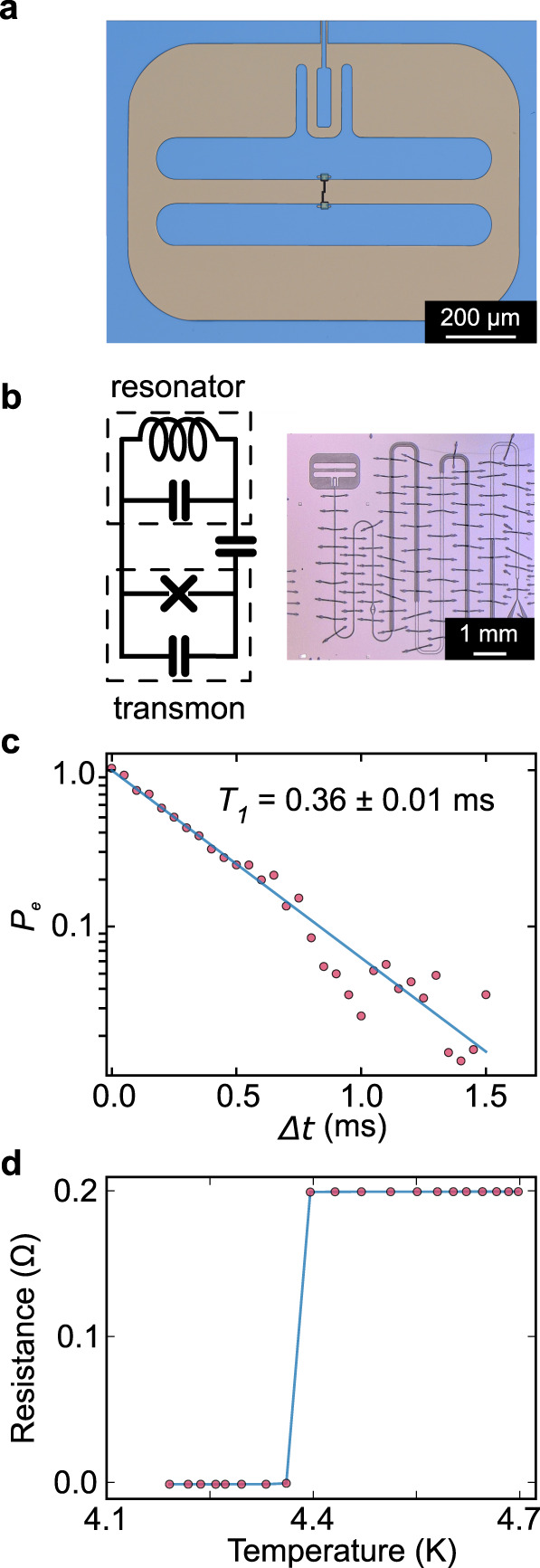
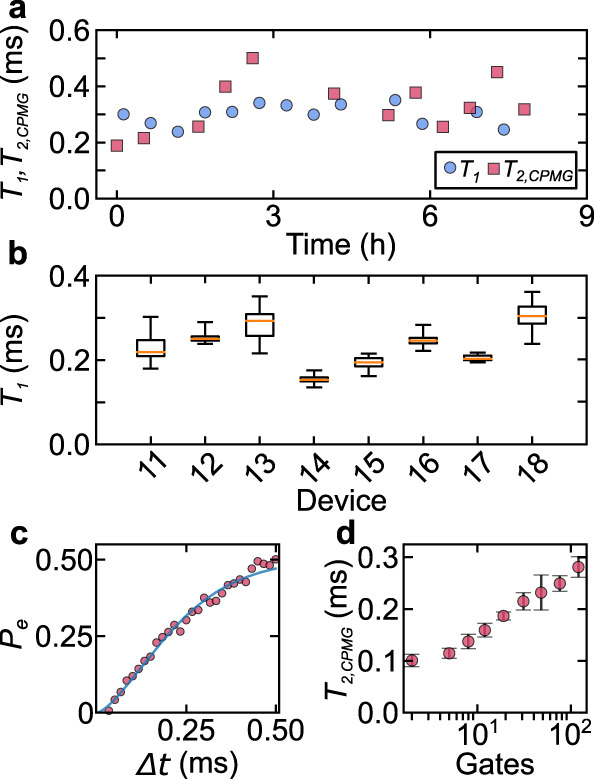
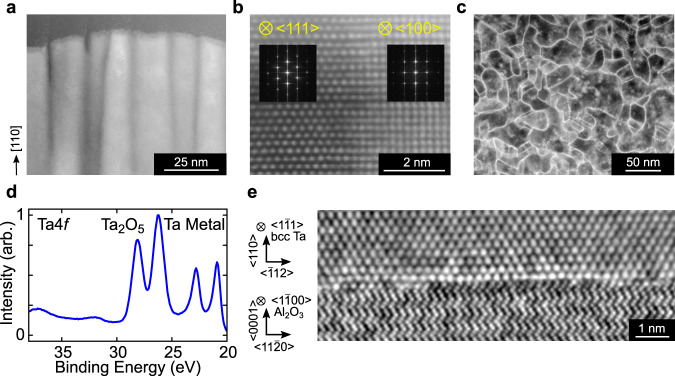
The superconducting transmon qubit is a leading platform for quantum computing and quantum science. Building large, useful quantum systems based on transmon qubits will require significant improvements in qubit relaxation and coherence times, which are orders of magnitude shorter than limits imposed by bulk properties of the constituent materials. This indicates that relaxation likely originates from uncontrolled surfaces, interfaces, and contaminants. Previous efforts to improve qubit lifetimes have focused primarily on designs that minimize contributions from surfaces. However, significant improvements in the lifetime of two-dimensional transmon qubits have remained elusive for several years. Here, we fabricate two-dimensional transmon qubits that have both lifetimes and coherence times with dynamical decoupling exceeding 0.3 milliseconds by replacing niobium with tantalum in the device. We have observed increased lifetimes for seventeen devices, indicating that these material improvements are robust, paving the way for higher gate fidelities in multi-qubit processors.
Overview
The claims and statistics of this paper haven’t been checked yet.
Free: it reads the open-access text and checks the first 5 claims that cite a source we can check. Create a free account to check every claim.
Integrity signals
Registry
Cites
Statistics
Figures
Verification
Claims the paper makes
The claims and statistics of this paper haven’t been checked yet.
Free: it reads the open-access text and checks the first 5 claims that cite a source we can check. Create a free account to check every claim.
Claims other papers make about this one
Each is checked against this paper’s own text: does it say what the citing paper says it does?
The source backs part of the claim, not all of it — or backs it for a different population, condition or comparison.
In the citing paper
“The advantage of this fabrication technique is the possibility for in situ fabrication of the JJ and minimal etch damage to achieve high-coherence qubits of up to hundreds of microseconds19–22.”
From Advanced CMOS manufacturing of superconducting qubits on 300 mm wafers (2024) · cites this paper as [19]
Experimental — accuracy not yet measured
Self-check
Percentages, sums and reported differences re-computed from the paper’s own numbers.
The self-check needs the paper’s full text.
Citations
Cites
Quantum supremacy using a programmable superconducting processor
Arute, F., Arya, K., Babbush, R., Bacon, D., Bardin, J. C., Barends, R., Biswas, R., Boixo, S., Brandao, F. G. S. L., Buell, D. A., et al. (2019) · Nature · doi:10.1038/s41586-019-1666-5 · Cited by 7,720
Hardware-efficient variational quantum eigensolver for small molecules and quantum magnets
Kandala, A., Mezzacapo, A., Temme, K., Takita, M., Brink, M., Chow, J. M., & Gambetta, J. M. (2017) · Nature · doi:10.1038/nature23879 · Cited by 2,982
Superconducting Circuits for Quantum Information: An Outlook
Devoret, M. H., & Schoelkopf, R. J. (2013) · Science · doi:10.1126/science.1231930 · Cited by 2,114
Superconducting quantum circuits at the surface code threshold for fault tolerance
Barends, R., Kelly, J., Megrant, A., Veitia, A., Sank, D., Jeffrey, E., White, T. C., Mutus, J., Fowler, A. G., Campbell, B., et al. (2014) · Nature · doi:10.1038/nature13171 · Cited by 1,733
Quantum algorithms: an overview
Montanaro, A. (2016) · npj Quantum Information · doi:10.1038/npjqi.2015.23 · Cited by 1,071
Scalable Quantum Simulation of Molecular Energies
O’Malley, P. J. J., Babbush, R., Kivlichan, I. D., Romero, J., McClean, J. R., Barends, R., Kelly, J., Roushan, P., Tranter, A., Ding, N., et al. (2016) · Physical Review X · doi:10.1103/physrevx.6.031007 · Cited by 1,059 · cited 1×
“We developed our sapphire etch recipe by (1) looking for crystal formation in an optical microscope, (2) ensuring that zinc was removed in XPS, and (3) checking that we preserved smooth surface morphology in AFM.”
MethodPaik, H., Schuster, D. I., Bishop, L. S., Kirchmair, G., Catelani, G., Sears, A. P., Johnson, B. R., Reagor, M. J., Frunzio, L., Glazman, L. I., et al. (2011) · Physical Review Letters · doi:10.1103/physrevlett.107.240501 · Cited by 1,054
Extending the lifetime of a quantum bit with error correction in superconducting circuits
Ofek, N., Petrenko, A., Heeres, R., Reinhold, P., Leghtas, Z., Vlastakis, B., Liu, Y., Frunzio, L., Girvin, S. M., Jiang, L., et al. (2016) · Nature · doi:10.1038/nature18949 · Cited by 941
State preservation by repetitive error detection in a superconducting quantum circuit
Kelly, J., Barends, R., Fowler, A. G., Megrant, A., Jeffrey, E., White, T. C., Sank, D., Mutus, J. Y., Campbell, B., Chen, Y., et al. (2015) · Nature · doi:10.1038/nature14270 · Cited by 916
A quantum-dot spin qubit with coherence limited by charge noise and fidelity higher than 99.9%
Yoneda, J., Takeda, K., Otsuka, T., Nakajima, T., Delbecq, M. R., Allison, G., Honda, T., Kodera, T., Oda, S., Hoshi, Y., et al. (2018) · Nature Nanotechnology · doi:10.1038/s41565-017-0014-x · Cited by 900
Research works printed but not linked: 5
- Kjaergaard, M. et al. Superconducting Qubits: current state of play. https://arxiv.org/abs/1905.13641 (2019). · arXiv
- Premkumar, A. et al. Microscopic relaxation channels in materials for superconducting Qubits. https://arxiv.org/abs/2004.02908 (2020). · arXiv
- Reese, M. Superconducting Hot Electron Bolometers for Terahertz Sensing. PhD thesis. Yale (2006).
- Face D Prober D Nucleation of body-centered-cubic tantalum films with a thin niobium underlayer J. Vac. Sci. Technol. A: Vac.,Surf., Films 1987 5 3408 3411 10.1116/1.574203 · DOI · Paper page
- Huang, Z. et al. Engineering dynamical sweet spots to protect Qubits from 1/f noise. https://arxiv.org/abs/2004.12458 (2020). · arXiv
Cited by
Items 301–400 of 815
A simulation methodology for superconducting qubit readout fidelity
Wong, H. Y., Dhillon, P., Beck, K. M., & Rosen, Y. J. (2022) · Solid-State Electronics · doi:10.1016/j.sse.2022.108582 · Cited by 13
5 Year Update to the Next Steps in Quantum ComputingPreprint
Brown, K. R., Chong, F. T., Smith, K. N., Conte, T. M., Adams, A. S., Dalvi, A. S., Kang, C., & Viszlai, J. (2024) · arXiv (Cornell University) · doi:10.48550/arxiv.2403.08780 · Cited by 13
The resource cost of large scale quantum computing
Fellous-Asiani, M. (2021) · theses.fr (ABES) · doi:10.70675/d1a944bez79cez43e1zaefcz785bf1e97f74 · Cited by 13
Preserving Phase Coherence and Linearity in Cat Qubits with Exponential Bit-Flip Suppression
(2025) · doi:10.1103/physrevx.15.011070 · Cited by 12
“…long T 1 value is achieved due to: (i) the optimized deposition and etching of the tantalum superconducting thin-film used in the fabrication of the chip which hosts the storage mode coplanar waveguide resonators [27, 37], and (ii) the effective protection of the storage mode by the 4-pole filter.”
Superconductivity of Ta-Hf and Ta-Zr alloys: Potential alloys for use in superconducting devices
Klimczuk, T., Królak, S., & Cava, R. J. (2023) · Physical Review Materials · doi:10.1103/physrevmaterials.7.064802 · Cited by 12
Self-citationQuantum computer-aided design for advanced superconducting qubit: Plasmonium
Liu, F., Wang, C., Chen, M.-C., Chen, H. H., Li, S., Shang, Z.-X., Ying, C., Wang, J., Huo, Y.-H., Peng, C.-Z., et al. (2023) · 中国科学通报:英文版 · doi:10.1016/j.scib.2023.06.030 · Cited by 12
Anbalagan, A. K., Cummings, R., Zhou, C., Mun, J., Stanić, V., Jordan‐Sweet, J., Yao, J., Kisslinger, K., Weiland, C. R., Nykypanchuk, D., et al. (2025) · Advanced Science · doi:10.1002/advs.202413058 · Cited by 12
Advances in Josephson Junction Materials and Processes Toward Practical Quantum Computing
Kim, H. L., Jang, G., Jin, S., An, J., Shin, H., Shin, H., Luo, J., Hashim, A., Siddiqi, I. A., Kim, Y., et al. (2026) · Advanced Science · doi:10.1002/advs.78427 · Cited by 12
Improving the performance of transmon qubits with fluorine-based surface treatments
Gingras, M., Niedzielski, B. M., Grossklaus, K. A., Miller, D., Contipelli, F., Azar, K., Burkhart, L., Calusine, G., Davis, D., Pinero, R. D., et al. (2026) · Physical Review Applied · doi:10.1103/x1gl-mx6f · Cited by 12
Phase tailoring of Ta films via buffer layer-thicknesses controlling
Zuo, J. D., Wang, Y. Q., Wu, K., Zhang, J., Liu, G., & Sun, J. F. (2022) · Scripta Materialia · doi:10.1016/j.scriptamat.2022.114582 · Cited by 12
Suppressing the Dielectric Loss in Superconducting Qubits through Useful Geometry Design
He, H., Wang, W., Liu, F., Yuan, B., & Shan, Z. (2022) · Entropy · doi:10.3390/e24070952 · Cited by 12
“The participation ratio near the three critical interfaces in the plane design can then be computed analytically using conformal mapping based methods [5].”
MethodA Review of Developments in Superconducting Quantum Processors
Mamgain, A., Khaire, S. S., Singhal, U., Ahmad, I., Patel, L., Helambe, K. D., Majumder, S., Singh, V., & Suri, B. (2022) · Journal of the Indian Institute of Science · doi:10.1007/s41745-022-00330-z · Cited by 12
“2.1.4 Transmons with Novel Materials More recently, significant improvements in the transmon coherence were achieved by Place et al.30.”
BackgroundInfluentialMaterial-Inherent Noise Sources in Quantum Information Architecture
Yang, H., & Kim, N. Y. (2023) · Materials · doi:10.3390/ma16072561 · Cited by 12
“3 ms in T1 and from 2 ns to >100 μs [110,111] by exploiting the smart design of the quantum circuits, state-of-the-art fabrication techniques, and new materials [112].”
BackgroundMethodPreparation of maximally-entangled states with multiple cat-state qutrits in circuit QED
Yang, C., Ni, J.-H., Bin, L., Zhang, Y., Yu, Y., & Su, Q.-P. (2023) · Frontiers of Physics · doi:10.1007/s11467-023-1357-4 · Cited by 12
Controlling the qubit-qubit coupling in the superconducting circuit with double-resonator couplers
Wang, H., Zhao, Y.-J., Sun, H.-C., Xu, X., Li, Y., Zheng, Y., Liu, Q., & Li, R. (2024) · Physical Review A · doi:10.1103/physreva.109.012601 · Cited by 12
“The coherence time of superconducting qubits fabricated with new superconducting materials is greatly enhanced[1–5], and the introduction of tunable coupler greatly enhances the fi-delities of two-qubit gates to above 99 .”
BackgroundStable and low loss oxide layer on α-Ta (110) film for superconducting qubits
Ding, Z., Zhou, B., Wang, T., Yang, L., Wu, Y., Cai, X., Xiong, K., & Feng, J. (2024) · Journal of Vacuum Science & Technology B Nanotechnology and Microelectronics Materials Processing Measurement and Phenomena · doi:10.1116/6.0003368 · Cited by 12
A modular RFSoC-based approach to interface superconducting quantum bits
Gebauer, R., Karcher, N., & Sander, O. (2021) · International Conference on Field-Programmable Technology (FPT) · doi:10.1109/icfpt52863.2021.9609909 · Cited by 14
Preserving phase coherence and linearity in cat qubits with exponential bit-flip suppression
Putterman, H., Noh, K., Patel, R. N., Peairs, G. A., MacCabe, G. S., Lee, M., Aghaeimeibodi, S., Hann, C. T., Jarrige, I., Marcaud, G., et al. (2024) · arXiv · doi:10.48550/arxiv.2409.17556 · Cited by 12
“…long T 1 value is achieved due to: (i) the optimized deposition and etching of the tantalum superconducting thin-film used in the fabrication of the chip which hosts the storage mode coplanar waveguide resonators [27, 37], and (ii) the effective protection of the storage mode by the 4-pole filter.”
Q -disease in epitaxial thin film niobium resonators from HF acid exposure
Wang, H., Banerjee, T., Farinha, T. G., Fatemi, V., Richardson, C. J. K., & Palmer, B. S. (2026) · Journal of Applied Physics · doi:10.1063/5.0342627 · Cited by 11
Long-range four-body interactions in structured nonlinear photonic waveguides
Wang, X., Li, J., Liu, T., Miranowicz, A., & Nori, F. (2024) · Physical Review Research · doi:10.1103/physrevresearch.6.043226 · Cited by 11
Singer, M., Schoof, B., Gupta, H. M., Zahn, D., Weber, J., & Tornow, M. (2024) · IEEE International Conference on Quantum Computing and Engineering (QCE) · doi:10.1109/qce60285.2024.00141 · Cited by 11
“High temperature sputtered Ta thin films were already used to fabricate qubits on sapphire [9], [10], [22] and superconducting CPW resonators on silicon [23], as well as to encapsulate niobium resonators [24].”
Ab initio modeling of nonequilibrium dynamics in superconducting detectors and qubits
Simon, A., Foster, R. A., Sahoo, M., Shi, J., Batson, E., Incalza, F., Castellani, M., Medeiros, O., Heil, C., & Berggren, K. K. (2025) · Physical review. B./Physical review. B · doi:10.1103/3m2k-mzr6 · Cited by 11
“This result may in part explain the reduced quasiparticle tunneling rate and longer coherence times observed in Ta transmon qubits [64, 65].”
Growth and structure of alpha-Ta films for quantum circuit integration
Alegria, L. D., Abelson, A., Kim, E., Im, S., Voyles, P. M., Lordi, V., DuBois, J. L., & Rosen, Y. J. (2025) · Journal of Applied Physics · doi:10.1063/5.0245710 · Cited by 11
Unlocking clinical quantum oncology through quantum control
Matarèse, B. F. E., & Purushotham, A. D. (2025) · European Journal of Cancer · doi:10.1016/j.ejca.2025.115632 · Cited by 11
Low-temperature environments for quantum computation and quantum simulation*
Fu, H., Wang, P., Hu, Z., Li, Y., & Lin, X. (2020) · Chinese Physics B · doi:10.1088/1674-1056/abd762 · Cited by 11
Investigating the Individual Performances of Coupled Superconducting Transmon Qubits
Ahmad, H. G., Jordan, C., van den Boogaart, R., Waardenburg, D., Zachariadis, C., Mastrovito, P., Georgiev, A. L., Montemurro, D., Pepe, G. P., Arthers, M., et al. (2023) · Condensed Matter · doi:10.3390/condmat8010029 · Cited by 11
Microwave-driven i swap-like gate for fixed-frequency superconducting transmon qutrits
Xu, P., Jing, Q., Zhao, P., & Yu, Y. (2023) · Physical Review A · doi:10.1103/physreva.108.032615 · Cited by 11
Qubit dynamics beyond Lindblad: Non-Markovianity versus rotating wave approximation
Nakamura, K., & Ankerhold, J. (2024) · Physical review. B./Physical review. B · doi:10.1103/physrevb.109.014315 · Cited by 11
“Impressive progress has been achieved in the last decade in terms of coherence times [1, 2] and gate fidelities [3– 5] but particularly for implementations on solid state platforms such as superconducting circuits and semiconducting devices, larger arrays of qubits still suffer from residual noise…”
BackgroundStabilizing two-qubit entanglement with dynamically decoupled active feedback
Greenfield, S., Martin, L. S., Motzoi, F., Whaley, K. B., Dressel, J., & Levenson-Falk, E. M. (2024) · Physical Review Applied · doi:10.1103/physrevapplied.21.024022 · Cited by 13
“7 [57, 58] and dephasing rates of 1 / 300 µ s [59].”
BackgroundSignal, detection and estimation using a hybrid quantum circuit
Neto, O. P. D. S., & de Oliveira, M. C. (2024) · Scientific Reports · doi:10.1038/s41598-024-65520-4 · Cited by 11
Charge-parity switching effects and optimisation of transmon-qubit design parameters
Papič, M., Tuorila, J., Auer, A., de Vega, I., & Hosseinkhani, A. (2024) · npj Quantum Information · doi:10.1038/s41534-024-00860-7 · Cited by 11
“Since current coherence times are approaching the 1 ms limit 48,49 , the residual .”
InfluentialEngineering strong beamsplitter interaction between bosonic modes via quantum optimal control theory
Basilewitsch, D., Zhang, Y., Girvin, S. M., & Koch, C. P. (2022) · Physical Review Research · doi:10.1103/physrevresearch.4.023054 · Cited by 11
Robust suppression of noise propagation in Gottesman-Kitaev-Preskill error correction
Siegele, C., & Campagne-Ibarcq, P. (2023) · Physical Review A · doi:10.1103/physreva.108.042427 · Cited by 11
Jin, L.-J. (2021) · arXiv (Cornell University) · doi:10.48550/arxiv.2105.13306 · Cited by 11
Position Papers for the ASCR Workshop on Basic Research Needs in Quantum Computing and Networking
Lougovski, P., Parekh, O., Broz, J., Byrd, M., Chembo, Y. K., de Jong, W. A., Figueroa, E. V., Humble, T. S., Larson, J. M., Quiroz, G., et al. (2023) · OSTI OAI (U.S. Department of Energy Office of Scientific and Technical Information) · doi:10.2172/2283320 · Cited by 11
Engineering the Environment of a Superconducting Qubit with an Artificial Giant AtomPreprint
Hu, J., Li, D., Qie, Y., Yin, Z., Kockum, A. F., Nori, F., & An, S. (2024) · arXiv (Cornell University) · doi:10.48550/arxiv.2410.15377 · Cited by 11
Ni, Z., Hu, L., Cai, Y., Zhang, L., Mai, J., Deng, X., Zheng, P., Liu, S., Zheng, S.-B., Xu, Y., et al. (2026) · Nature Physics · doi:10.48550/arxiv.2509.26042 · Cited by 11
Machine Learning-Enabled Image Classification for Automated Electron Microscopy
Day, A. L., Wahl, C. B., Gupta, V., dos Reis, R., Liao, W., Mirkin, C. A., Dravid, V. P., Choudhary, A., & Agrawal, A. (2024) · Microscopy and Microanalysis · doi:10.1093/mam/ozae042 · Cited by 10
Benchmarking the performance of a high-Q cavity qudit using random unitaries
Bornman, N., Roy, T., Job, J., Anand, N., Perdue, G., Zorzetti, S., & Alam, M. S. (2025) · Quantum Science and Technology · doi:10.1088/2058-9565/adc47c · Cited by 10
“While this is larger than the average currently available T 1 times, transmons optimized for coherence can regularly achieve T 1 times in excess of 100 µ [45, 66–68].”
Park, S. H., Choi, G., Kim, G., Jo, J., Lee, B., Kim, G., Park, K., Lee, Y., & Hahn, S. (2024) · Applied Physics Letters · doi:10.1063/5.0182642 · Cited by 10
Remote cross-resonance gate between superconducting fixed-frequency qubits
Ohfuchi, M., & Sato, S. (2024) · Quantum Science and Technology · doi:10.1088/2058-9565/ad3f47 · Cited by 10
Manipulations of a transmon qubit with a null-biased electro-optic fiber link
Xu, W., Guo, T., Zhang, K., Li, Z., Zhou, T., Zuo, Q., Sheng, Y., Jing, L., Ma, H., Yu, M., et al. (2025) · Nature Communications · doi:10.1038/s41467-025-57820-8 · Cited by 10
“129, 041102 (2021); PRX Quantum 2, 040204 (2021); Nature Reviews Materials 6, 875 (2021)].”
Characterization of nanostructural imperfections in superconducting quantum circuits
Alghadeer, M., Fasciati, S. D., Cao, S., Piscitelli, M., Spink, M. C., Hopkinson, D. G., Danaie, M., Speller, S. C., Leek, P., & Bakr, M. S. (2025) · Materials for Quantum Technology · doi:10.1088/2633-4356/aded66 · Cited by 10
Impact of time-retarded noise on dynamical decoupling schemes for qubits
Nakamura, K., & Ankerhold, J. (2025) · Physical review. B./Physical review. B · doi:10.1103/physrevb.111.064503 · Cited by 9
“While remarkable progress in quantum computing has been made in the last decade [1–8], decoherence remains one of the main obstacles to further improvement.”
Microwave-activated two-qubit gates for fixed-coupling and fixed-frequency transmon qubits
Jiang, L., Xu, P., Wu, S., Sun, J., & Dou, F.-Q. (2025) · Physical Review A · doi:10.1103/physreva.111.032609 · Cited by 9
“Recent studies on superconducting quantum systems have reported decoherence times [50, 51] that significantly exceed the gate operation time.”
Superconducting-Semiconducting Voltage-Tunable Qubits in the Third Dimension
Hazard, T., Kerman, A. J., Serniak, K., & Tahan, C. (2023) · Physical Review Applied · doi:10.1103/physrevapplied.20.034056 · Cited by 9
Yang, T., Wang, W., Wang, L., Zhao, B., Liang, C., & Shan, Z. (2023) · Results in Physics · doi:10.1016/j.rinp.2023.106944 · Cited by 9
Dynamics of qudit gates and effects of spectator modes on optimal control pulses
Özgüler, A. B., & Job, J. (2024) · Physical Review A · doi:10.1103/physreva.109.052404 · Cited by 9
Fast Z Z -free entangling gates for superconducting qubits assisted by a driven resonator
Huang, Z., Kim, T.-Y., Roy, T., Lu, Y., Romanenko, A., Zhu, S., & Grassellino, A. (2024) · Physical Review Applied · doi:10.1103/physrevapplied.22.034007 · Cited by 10
“For the state-of-the-art coherence times of the transmon qubits ( 𝑇 1 = 𝑇 2 = 500 𝜇𝑠 ) [37–39], the gate error of this gate is below 10 − 4 for a 40-ns duration, which is shown in Fig.”
Mesoscopic quantum thermo-mechanics: A new frontier of experimental physics
Collin, E. (2022) · AVS Quantum Science · doi:10.1116/5.0086059 · Cited by 9
Laha, P. (2023) · Journal of the Optical Society of America B · doi:10.1364/josab.489223 · Cited by 9
Molecular beam epitaxy growth of superconducting tantalum germanide
Strohbeen, P. J., Banerjee, T., Brook, A. M., Levy, I., Sarney, W. L., van Dijk, J., Orth, H., Mikalsen, M., Fatemi, V., & Shabani, J. (2024) · Applied Physics Letters · doi:10.1063/5.0189597 · Cited by 9
Competition of Quasiparticles and Magnetization Noise in Hybrid Ferromagnetic Transmon Qubits
Ahmad, H. G., Brosco, V., Miano, A., Palma, L. D., Arzeo, M., Satariano, R., Ferraiuolo, R., Lucignano, P., Vettoliere, A., Granata, C., et al. (2023) · IEEE Transactions on Applied Superconductivity · doi:10.1109/tasc.2023.3243197 · Cited by 9
“global and local magnetic field fluctuations, thus impacting on their coherence performances [18], [19], [20], [21], [22], [23], [24], [25], [26], [27].”
BackgroundQuantum design for advanced qubits: plasmoniumPreprint
Liu, F., Chen, M.-C., Wang, C., Li, S., Shang, Z.-X., Ying, C., Wang, J., Peng, C.-Z., Zhu, X., Lu, C., et al. (2021) · arXiv (Cornell University) · doi:10.48550/arxiv.2109.00994 · Cited by 9
A modular quantum computer based on a quantum state router.Preprint
Zhou, C., Lu, P., Praquin, M., Chien, T.-C., Kaufman, R., Cao, X., Xia, M., Mong, R. S. K., Pfaff, W., Pekker, D., et al. (2022) · Research Square · doi:10.21203/rs.3.rs-1547284/v1 · Cited by 9
Deterministic and Bayesian Characterization of Quantum Computing DevicesPreprint
Peng, Z., Appelö, D., Petersson, N. A., Motamed, M., Garcia, F., & Cho, Y. (2023) · arXiv (Cornell University) · doi:10.48550/arxiv.2306.13747 · Cited by 9
“The experiments in this study are performed on a tantalum-based superconducting transmon device [30], within the Quantum Device and Integration Testbed (QuDIT) at LLNL.”
Li, D., Hu, J., Li, Y., & An, S. (2024) · arXiv (Cornell University) · doi:10.48550/arxiv.2405.02955 · Cited by 9
“However, to ensure a high purity α -Ta, previous studies [3, 4] have indicated that a high temperature for sapphire substrate is necessary.”
BackgroundMethodFrozonium: Freezing anharmonicity in Floquet superconducting circuits
Lewellen, K., Mukherjee, R., Guo, H., Roy, S., Fatemi, V., & Chowdhury, D. (2026) · Newton · doi:10.1016/j.newton.2026.100434 · Cited by 8
In Situ Tunable Interaction with an Invertible Sign between a Fluxonium and a Post Cavity
Atanasova, D. G., Yang, I., Hönigl-Decrinis, T., Gusenkova, D., Pop, I. M., & Kirchmair, G. (2025) · PRX Quantum · doi:10.1103/prxquantum.6.020318 · Cited by 8
“Another possibility is to adapt the fabrication process so that it is compatible with more aggressive surface cleaning by swapping the Al with either tantalum [38,39] or niobium capped by another metal [40].”
Wang, H., Shinokita, K., Watanabe, K., Taniguchi, T., Konabe, S., & Matsuda, K. (2025) · ACS Nano · doi:10.1021/acsnano.5c02659 · Cited by 8
Microwave-activated high-fidelity three-qubit gate scheme for fixed-frequency superconducting qubits
Zhao, K., Ma, W.-G., Wang, Z., Li, H., Huang, K., Shi, Y., Xu, K., & Fan, H. (2025) · Physical Review Applied · doi:10.1103/l721-33qk · Cited by 8
Universally robust control of open quantum systems
Ding, L., Fan, J., & Qiu, X. (2025) · npj Quantum Information · doi:10.1038/s41534-025-01166-y · Cited by 9
“…well within the range of high-speed gate operations in current experiments 54 – 56 , and are orders-of-magnitude smaller than the typical coherence times found in experimental systems of either superconducting qubits (orders of milliseconds) 57 – 59 or trapped ions (from seconds to minutes) 60,61 .”
Transmon Qubit Using Sn as a Junction Superconductor
Purkayastha, A., Sharma, A., Patel, P. J., Chen, A., Dempsey, C. P., Asodekar, S., Sinha, S., Tomasian, M., Pendharkar, M., Palmstrøm, C. J., et al. (2026) · Nano Letters · doi:10.1021/acs.nanolett.5c05276 · Cited by 8
“Next to these, advances in materials [8, 9] for quantum computing stand out because quantum information is extremely sensitive to the microscopic environments both within [10] as well as surrounding the qubits[11, 12].”
Characterization and comparison of energy relaxation in fluxonium qubits
Azar, K., Ateshian, L., Randeria, M. T., Pinero, R. D., Gertler, J., An, J., Contipelli, F., Ding, L., Gingras, M., Grossklaus, K. A., et al. (2026) · Physical Review Research · doi:10.1103/3n9q-lg8m · Cited by 8
“Qubit-design and materials-process studies have primarily used transmon qubits [26, 30–33], with fewer examples utilizing multiple fluxonium qubits [15, 34, 35].”
Continuous-Variable Quantum Computation in Circuit QED
Pan, X., Song, P., & Gao, Y. Y. (2023) · Chinese Physics Letters · doi:10.1088/0256-307x/40/11/110303 · Cited by 8
Quantum switch for itinerant microwave single photons with superconducting quantum circuits
Li, Y., Bao, Z., Wang, Z., Wu, Y., Wang, J.-H., Yang, J., Xiong, H., Song, Y., Zhang, H., & Duan, L. (2024) · Physical Review Applied · doi:10.1103/physrevapplied.21.044030 · Cited by 8
Parity-spin superconducting qubit based on topological insulators
Guo, G.-L., Leng, H.-B., & Liu, X. (2024) · New Journal of Physics · doi:10.1088/1367-2630/ad4b58 · Cited by 8
Dielectric loss due to charged-defect acoustic phonon emission
Turiansky, M. E., & de Walle, C. G. V. (2024) · APL Quantum · doi:10.1063/5.0205532 · Cited by 8
Ultrahigh-Precision Hamiltonian Parameter Estimation in a Superconducting Circuit
Li, S., Pan, D.-J., Zhu, Y.-K., Zhou, J.-L., Liao, W.-C., Zhang, W.-X., Liang, Z.-T., Lv, Q.-X., Yu, H., Xue, Z., et al. (2024) · Physical Review Letters · doi:10.1103/physrevlett.132.250204 · Cited by 9
Integration of IoT and Quantum Computing: Revolutionizing Manufacturing
Sonavane, A. S., & Aylani, A. (2024) · Advances in computer and electrical engineering book series · doi:10.4018/979-8-3693-3940-4.ch016 · Cited by 8
Heralding entangled optical photons from a microwave quantum processor
Haug, T. H., Kockum, A. F., & Laer, R. V. (2024) · Physical Review Applied · doi:10.1103/physrevapplied.22.034068 · Cited by 8
“With single-transmon dephasing times up to 100 µ s [83, 104], dual-rail T φ of order 10 ms should be possible [39].”
BackgroundMagnetic bound states embedded in tantalum superconducting thin films
Arabi, S., Li, Q., Dhundhwal, R., Fuchs, D., Reisinger, T. J. G., Pop, I. M., & Wulfhekel, W. (2025) · Applied Physics Letters · doi:10.1063/5.0251996 · Cited by 8
Learning encodings by maximizing state distinguishability: variational quantum error correction
Meyer, N., Mutschler, C., Maier, A., & Scherer, D. D. (2026) · Quantum Science and Technology · doi:10.1088/2058-9565/ae98b1 · Cited by 8
“We extend this analysis by evaluating the scenario of non-uniform noise strength between the involved qubits in figure 18(a), which is typically resembled in actual hardware due to manufacturing quality [84].”
Scalable quantum simulator with an extended gate set in giant atoms
Chen, G., & Kockum, A. F. (2025) · Quantum · doi:10.22331/q-2026-01-30-1992 · Cited by 7
Masuda, S., Koenig, J., & Steele, G. A. (2022) · Scientific Reports · doi:10.1038/s41598-022-14973-6 · Cited by 10
Performance analysis of superconductor-constriction-superconductor transmon qubits
Liu, M., & Black, C. T. (2024) · Physical Review A · doi:10.1103/physreva.110.012427 · Cited by 8
Optical direct write of Dolan–Niemeyer-bridge junctions for transmon qubits
Monroe, J., Kowsari, D., Zheng, K., Gaikwad, C., Brewster, J., Wisbey, D., & Murch, K. W. (2021) · Applied Physics Letters · doi:10.1063/5.0060246 · Cited by 8
Intrinsic Photon Loss at the Interface of Superconducting Devices
Diniz, I., & de Sousa, R. (2020) · Physical Review Letters · doi:10.1103/physrevlett.125.147702 · Cited by 8
High quality superconducting Nb co-planar resonators on sapphire substratePreprint
Zhu, S., Crisa, F., Bal, M., Murthy, A. A., Lee, J., Sung, Z., Lunin, A., Frolov, D., Pilipenko, R., Bafia, D., et al. (2022) · arXiv (Cornell University) · doi:10.48550/arxiv.2207.13024 · Cited by 8
Noise Mitigation in Single Microwave Photon Counting by Cascaded Quantum MeasurementsPreprint
May, A. S., Sutevski, L., Solard, J., Cardoso, G., Carde, L., Pallegoix, L., Lescanne, R., Vion, D., O’Sullivan, J., Bertet, P., et al. (2025) · HAL · doi:10.48550/arxiv.2502.14804 · Cited by 8
“The degraded energy relaxation of Josephson circuits under pumping is well documented [48–50], and results primarily from a breakdown of the rotating-wave approximation (RWA), leading to spurious relaxation channels associated with off-resonant parametric processes.”
Extension of coherence time beyond breakeven point using only drives and dissipation
Sun, L., Xu, Y., Zhou, Y., Hua, Z., Wang, W., Zhou, J., Chen, Z.-J., de Paula, L. Z., Jie, Q.-X., Xue, G., et al. (2026) · Nature Physics · doi:10.48550/arxiv.2509.22191 · Cited by 8
Robust quality factor assessment of high-coherence superconducting qubits
Dane, A. E., Balakrishnan, K., Wacaser, B. A., Hung, L.-W., Mamin, H. J., Rugar, D., Shelby, R. M., Murray, C. E., Rodbell, K. P., & Sleight, J. W. (2026) · npj Quantum Information · doi:10.1038/s41534-026-01199-x · Cited by 7
Huang, Z., You, X., Alyanak, U., Romanenko, A., Grassellino, A., & Zhu, S. (2022) · Physical Review Applied · doi:10.1103/physrevapplied.18.l061001 · Cited by 7
Using the inductive-energy participation ratio to characterize a superconducting quantum chip
Yu, K.-H., Jiao, X.-Y., & Jin, L.-J. (2024) · Physical Review Applied · doi:10.1103/physrevapplied.21.034027 · Cited by 7
Enabling 300 mm Wafer-Scale Fabrication of Superconducting Quantum Devices
Bhatia, E., Frost, H., Pieniazek, N., Nalaskowski, J., Mucci, J., Collison, W. Z., Martinick, B., Telhu, G., Egan, B., Olson, S., et al. (2024) · ASMC proceedings · doi:10.1109/asmc61125.2024.10545509 · Cited by 7
“The choice of the superconductor used in quantum circuits has seen a sea-change over the past few years, attributed to the critical importance of the native oxide of the superconductor to TLS density, and hence to decoherence [9,10].”
BackgroundPractical Trainable Temporal Postprocessor for Multistate Quantum Measurement
Khan, S. A., Kaufman, R., Mesits, B., Hatridge, M. J., & Türeci, H. E. (2024) · PRX Quantum · doi:10.1103/prxquantum.5.020364 · Cited by 7
“We consider two distinct cavity systems, for the dispersive readout of distinct single qubits A and B to discriminate states p ∈ { e, g } .”
BackgroundEnhancement of microwave to optical spin-based quantum transduction via a magnon mode
Puel, T. O., Turflinger, A. T., Horvath, S. P., Thompson, J. D., & Flatté, M. E. (2025) · Physical Review Research · doi:10.1103/kqw2-gs9c · Cited by 7
High-impedance microwave resonators with two-photon nonlinear effects
Andersson, S., Havir, H., Ranni, A., Haldar, S., & Maisi, V. F. (2025) · Nature Communications · doi:10.1038/s41467-025-55860-8 · Cited by 7
“The photon numbers indicated with ⟨ n ⟩ in the initial submission were for a linear resonator that has the same low power resonance frequency and couplings as our non-linear resonator.”
Peeters, S. A., Nelissen, L. E. W. H. M., Besprozvannyy, D., Choudhary, N., Lennon, C. T., Verheijen, M. A., Powell, M. J., Bailey, L., Hadfield, R. H., Kessels, W. M. M., et al. (2025) · AVS Quantum Science · doi:10.1116/5.0254908 · Cited by 7
Two-dimensional superconductivity of epitaxial tantalum films
Chen, X., Tang, C., Yao, L., Cao, Z., Zhu, Y., Zhang, D., & Kou, X. (2025) · Physical review. B./Physical review. B · doi:10.1103/physrevb.111.184503 · Cited by 7
The quantromon: A qubit-resonator system with orthogonal qubit and readout modes
Salunkhe, K. V., Kundu, S., Das, S., Deshmukh, J., Patankar, M. P., & Vijay, R. (2025) · Applied Physics Letters · doi:10.1063/5.0260171 · Cited by 7
Nakamura, K., & Ankerhold, J. (2026) · Physical Review Research · doi:10.1103/b5jp-s6t2 · Cited by 7
Bell, L., Wang, Y., Smith, K. C., Liu, Y., Dumitrescu, E., & Girvin, S. M. (2025) · PRX Quantum · doi:10.1103/1496-tlmm · Cited by 7
“These times are to be compared to state-of-the-art transmon lifetimes of ∼ 300 − 500 𝜇 s [64, 65], and superconducting resonator lifetimes of ∼ 1 − 1000 ms [66–70].”
Parasitic two-level systems in merged-element transmon qubits
Daum, E., Berlitz, B., Deck, S., Ustinov, A. V., & Lisenfeld, J. (2026) · Physical Review Applied · doi:10.1103/g3nf-fp61 · Cited by 7
Control optimization for parametric Hamiltonians by pulse reconstruction
Luchi, P., Turro, F., Quaglioni, S., Wu, X., Amitrano, V., Wendt, K., DuBois, J. L., & Pederiva, F. (2023) · The European Physical Journal A · doi:10.1140/epja/s10050-023-01108-2 · Cited by 7
Transfer of quantum entangled states between superconducting qubits and microwave field qubits
Liu, T., Guo, B.-Q., Zhou, Y. H., Zhao, J., Fang, Y.-L., Wu, Q., & Yang, C. (2022) · Frontiers of Physics · doi:10.1007/s11467-022-1166-1 · Cited by 7
Han, J., Wu, J., Yuan, Z., Xia, Y., Jiang, Y., & Song, J. (2022) · Frontiers of Physics · doi:10.1007/s11467-022-1193-y · Cited by 7
Circuit quantization from first principles
Liao, Y.-C., Powell, B. J., & Stace, T. M. (2025) · Physical Review Research · doi:10.1103/dfrq-44vk · Cited by 7
Ternary metal oxide substrates for superconducting circuits
Degnan, Z., He, X., Frieiro, A. G., Sachkou, Y., Fedorov, A., & Jacobson, P. A. (2022) · Materials for Quantum Technology · doi:10.1088/2633-4356/ac70a2 · Cited by 7
Stability, metallicity, and magnetism in niobium silicide nanofilms
Lu, X., Goronzy, D. P., Torres‐Castanedo, C. G., Das, P. M., Kazemzadeh-Atoufi, M., McFadden, A., McRae, C. R., Voorhees, P. W., Dravid, V. P., Bedzyk, M. J., et al. (2022) · Physical Review Materials · doi:10.1103/physrevmaterials.6.064402 · Cited by 7
Metadata
- Authors
- Place, A. P. M., Rodgers, L. V. H., Mundada, P., Smitham, B. M., Fitzpatrick, M., Leng, Z., Premkumar, A., Bryon, J., Vrajitoarea, A., Sussman, S., Cheng, G., Madhavan, T., Babla, H. K., Le, X. H., Gang, Y., Jäck, B., Gyenis, A., Yao, N., Cava, R. J., de Leon, N. P., & Houck, A. A.
- Affiliations
- Princeton University (US)
- Corresponding author
- Houck, Andrew A.
- ORCID
- Venue
- Nature Communications
- Published
- 2021-03-19
- Volume
- 12
- Issue
- 1
- Pages
- 1779-1779
- ISSN
- 2041-1723 (ISSN-L)
- PMC
- PMC7979772
- OpenAlex
- W3006932841
- Semantic Scholar
- fe6a5ecce382e9484fc68e2549d682a760d5293c
- Cited by
- 563
- References
- 52
- Citations by year
- 2026: 87 · 2025: 124 · 2024: 117 · 2023: 95 · 2022: 85 · 2021: 43
- FWCI
- 30.01
- Type
- journal article
- Language
- en
- Open access
- gold
- doi.org
- Licence
- cc-by
- creativecommons.org/licenses/by/4.0 (tdm)
- creativecommons.org/licenses/by/4.0 (vor)
- Locations
- Nature Communications (publishedVersion, cc-by)
- PubMed Central (publishedVersion, cc-by)
- PubMed (publishedVersion)
- arXiv (Cornell University) (submittedVersion)
- OSTI OAI (U.S. Department of Energy Office of Scientific and Technical Information) (submittedVersion)
- RePEc: Research Papers in Economics (submittedVersion)
- DOAJ (DOAJ: Directory of Open Access Journals) (submittedVersion, cc-by-sa)
- Rare & Special e-Zone (The Hong Kong University of Science and Technology) (submittedVersion)
- arXiv (Cornell University)
- Bulletin of the American Physical Society
- Funders
- United States Department of Defense | United States Army | U.S. Army Research, Development and Engineering Command | Army Research Office (W911NF1910016, HIPS W911NF1910016)
- ODNI | Intelligence Community Postdoctoral Research Fellowship Program
- National Science Foundation (MRSEC DMR-1420541)
- Topics
- Physical Sciences › Physics and Astronomy › Atomic and Molecular Physics, and Optics › Quantum Information and Cryptography
- Physical Sciences › Computer Science › Artificial Intelligence › Quantum Computing Algorithms and Architecture
- Physical Sciences › Engineering › Electrical and Electronic Engineering › Superconducting and THz Device Technology
- Keywords
- transmon qubits, superconducting qubits, qubit coherence time, qubit relaxation, tantalum, niobium, dynamical decoupling, superconducting quantum computing
About these checks
Registry, retraction, Cites and statistics results are computed, not judged, with one exception: a printed reference that no index lists is read once by a model before it counts as a citation error. Claims are extracted by a model and kept only when their quote appears verbatim in the text; each cited source is then checked, with a model’s help, for whether it says what the claim relies on. Those verdicts can be wrong — read the claim’s quote and the cited source before relying on one.
Statistics and arithmetic are recomputed, not judged.
Confidence bands are shown only for fields calibrated on our annotated test set. None is calibrated yet, so no band is shown.
What counts as a claim ›How we measure confidence ›How we check this ›
Are you an author, or do you see a problem with this page? Request a review
Data sources
Bibliographic data: Semantic Scholar, OpenAlex, Crossref.
Contains information from the Semantic Scholar Academic Graph Datasets, made available under the ODC Attribution License (ODC-BY 1.0).
Semantic Scholar’s data is described in: Kinney, R., et al. (2023). The Semantic Scholar Open Data Platform. arXiv:2301.10140.
