

New material platform for superconducting transmon qubits with coherence times exceeding 0.3 milliseconds
Open accessThe DOI matches its Crossref record; 54 of the 54 references it cites were found in a registry or an index.
Abstract
The superconducting transmon qubit is a leading platform for quantum computing and quantum science. Building large, useful quantum systems based on transmon qubits will require significant improvements in qubit relaxation and coherence times, which are orders of magnitude shorter than limits imposed by bulk properties of the constituent materials. This indicates that relaxation likely originates from uncontrolled surfaces, interfaces, and contaminants. Previous efforts to improve qubit lifetimes have focused primarily on designs that minimize contributions from surfaces. However, significant improvements in the lifetime of two-dimensional transmon qubits have remained elusive for several years. Here, we fabricate two-dimensional transmon qubits that have both lifetimes and coherence times with dynamical decoupling exceeding 0.3 milliseconds by replacing niobium with tantalum in the device. We have observed increased lifetimes for seventeen devices, indicating that these material improvements are robust, paving the way for higher gate fidelities in multi-qubit processors.
Overview
The claims and statistics of this paper haven’t been checked yet.
Free: it reads the open-access text and checks the first 5 claims that cite a source we can check. Create a free account to check every claim.
Integrity signals
Registry
Cites
Statistics
Figures
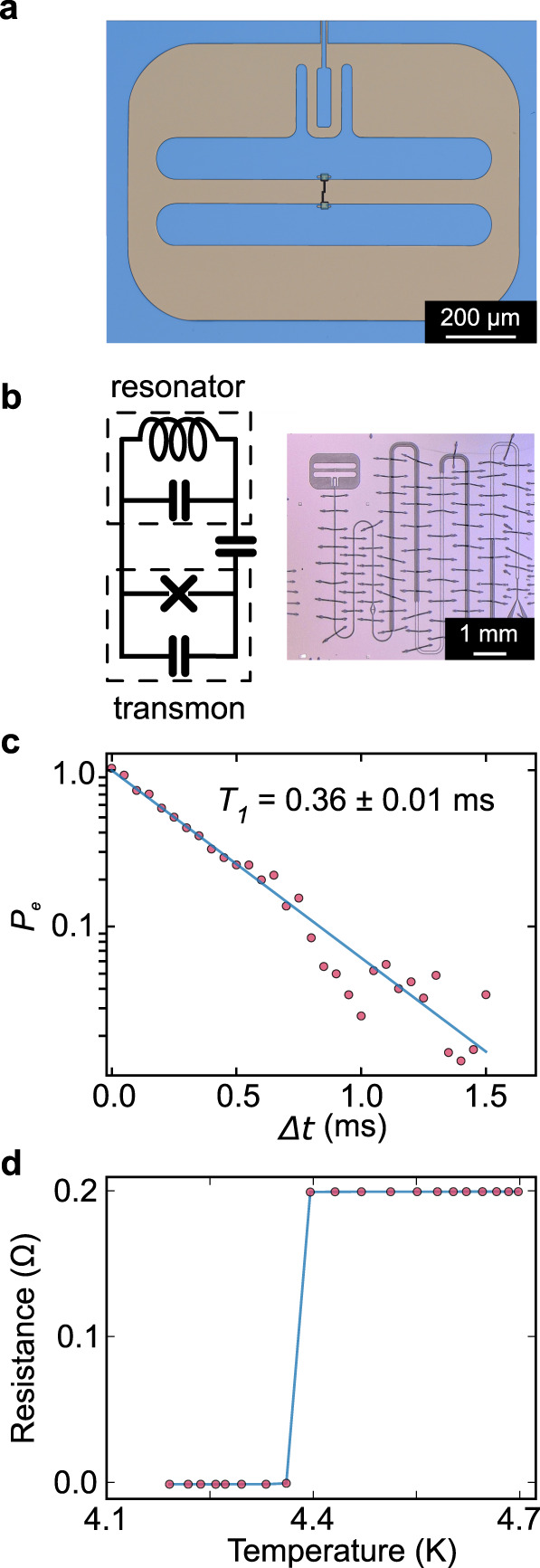
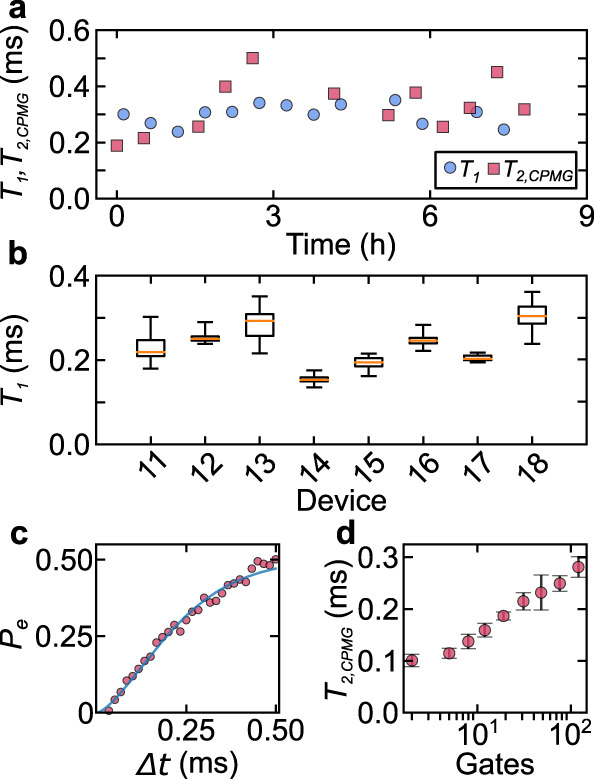
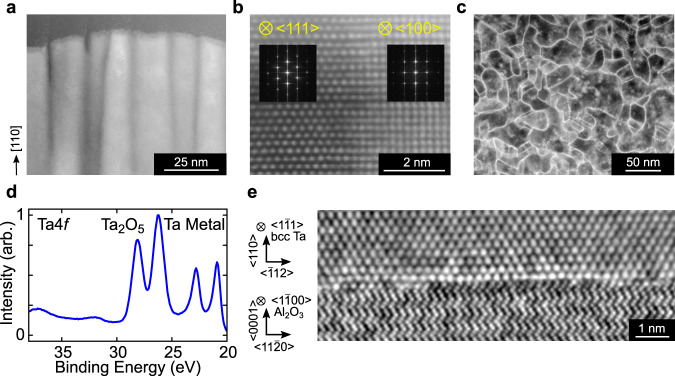
Verification
Claims the paper makes
The claims and statistics of this paper haven’t been checked yet.
Free: it reads the open-access text and checks the first 5 claims that cite a source we can check. Create a free account to check every claim.
Claims other papers make about this one
Each is checked against this paper’s own text: does it say what the citing paper says it does?
The source backs part of the claim, not all of it — or backs it for a different population, condition or comparison.
In the citing paper
“The advantage of this fabrication technique is the possibility for in situ fabrication of the JJ and minimal etch damage to achieve high-coherence qubits of up to hundreds of microseconds19–22.”
From Advanced CMOS manufacturing of superconducting qubits on 300 mm wafers (2024) · cites this paper as [19]
Experimental — accuracy not yet measured
Self-check
Percentages, sums and reported differences re-computed from the paper’s own numbers.
The self-check needs the paper’s full text.
Citations
Cites
Quantum supremacy using a programmable superconducting processor
Arute, F., Arya, K., Babbush, R., Bacon, D., Bardin, J. C., Barends, R., Biswas, R., Boixo, S., Brandao, F. G. S. L., Buell, D. A., et al. (2019) · Nature · doi:10.1038/s41586-019-1666-5 · Cited by 7,720
Hardware-efficient variational quantum eigensolver for small molecules and quantum magnets
Kandala, A., Mezzacapo, A., Temme, K., Takita, M., Brink, M., Chow, J. M., & Gambetta, J. M. (2017) · Nature · doi:10.1038/nature23879 · Cited by 2,982
Superconducting Circuits for Quantum Information: An Outlook
Devoret, M. H., & Schoelkopf, R. J. (2013) · Science · doi:10.1126/science.1231930 · Cited by 2,114
Superconducting quantum circuits at the surface code threshold for fault tolerance
Barends, R., Kelly, J., Megrant, A., Veitia, A., Sank, D., Jeffrey, E., White, T. C., Mutus, J., Fowler, A. G., Campbell, B., et al. (2014) · Nature · doi:10.1038/nature13171 · Cited by 1,733
Quantum algorithms: an overview
Montanaro, A. (2016) · npj Quantum Information · doi:10.1038/npjqi.2015.23 · Cited by 1,071
Scalable Quantum Simulation of Molecular Energies
O’Malley, P. J. J., Babbush, R., Kivlichan, I. D., Romero, J., McClean, J. R., Barends, R., Kelly, J., Roushan, P., Tranter, A., Ding, N., et al. (2016) · Physical Review X · doi:10.1103/physrevx.6.031007 · Cited by 1,059 · cited 1×
“We developed our sapphire etch recipe by (1) looking for crystal formation in an optical microscope, (2) ensuring that zinc was removed in XPS, and (3) checking that we preserved smooth surface morphology in AFM.”
MethodPaik, H., Schuster, D. I., Bishop, L. S., Kirchmair, G., Catelani, G., Sears, A. P., Johnson, B. R., Reagor, M. J., Frunzio, L., Glazman, L. I., et al. (2011) · Physical Review Letters · doi:10.1103/physrevlett.107.240501 · Cited by 1,054
Extending the lifetime of a quantum bit with error correction in superconducting circuits
Ofek, N., Petrenko, A., Heeres, R., Reinhold, P., Leghtas, Z., Vlastakis, B., Liu, Y., Frunzio, L., Girvin, S. M., Jiang, L., et al. (2016) · Nature · doi:10.1038/nature18949 · Cited by 941
State preservation by repetitive error detection in a superconducting quantum circuit
Kelly, J., Barends, R., Fowler, A. G., Megrant, A., Jeffrey, E., White, T. C., Sank, D., Mutus, J. Y., Campbell, B., Chen, Y., et al. (2015) · Nature · doi:10.1038/nature14270 · Cited by 916
A quantum-dot spin qubit with coherence limited by charge noise and fidelity higher than 99.9%
Yoneda, J., Takeda, K., Otsuka, T., Nakajima, T., Delbecq, M. R., Allison, G., Honda, T., Kodera, T., Oda, S., Hoshi, Y., et al. (2018) · Nature Nanotechnology · doi:10.1038/s41565-017-0014-x · Cited by 900
Research works printed but not linked: 5
- Kjaergaard, M. et al. Superconducting Qubits: current state of play. https://arxiv.org/abs/1905.13641 (2019). · arXiv
- Premkumar, A. et al. Microscopic relaxation channels in materials for superconducting Qubits. https://arxiv.org/abs/2004.02908 (2020). · arXiv
- Reese, M. Superconducting Hot Electron Bolometers for Terahertz Sensing. PhD thesis. Yale (2006).
- Face D Prober D Nucleation of body-centered-cubic tantalum films with a thin niobium underlayer J. Vac. Sci. Technol. A: Vac.,Surf., Films 1987 5 3408 3411 10.1116/1.574203 · DOI · Paper page
- Huang, Z. et al. Engineering dynamical sweet spots to protect Qubits from 1/f noise. https://arxiv.org/abs/2004.12458 (2020). · arXiv
Cited by
Items 401–500 of 815
Dissipation and dephasing of interacting photons in transmon arrays
Busel, O., Laine, S., Mansikkamäki, O., & Silveri, M. (2023) · Physical Review Research · doi:10.1103/physrevresearch.5.023121 · Cited by 7
“better isolated, one can achieve much better values [10, 53] T1 ∼ 30 − 300 μs and T2 ∼ 50 − 100 μs.”
An Overview About Mechanics Developments and Achievements in the Context of Industry 4.0
Lincaru, C., Badea, F., Pîrciog, S. C., Grigorescu, A., Badea, S.-I., & Badea, C. R. (2023) · Lecture notes in networks and systems · doi:10.1007/978-3-031-40628-7_2 · Cited by 7
Quantum computation with cat qubitsPreprint
Guillaud, J., Cohen, J., & Mirrahimi, M. (2022) · arXiv (Cornell University) · doi:10.48550/arxiv.2203.03222 · Cited by 7
Scheme for parity-controlled multi-qubit gates with superconducting qubitsPreprint
Christensen, K. S., Zinner, N. T., & Kjærgaard, M. (2023) · arXiv (Cornell University) · doi:10.48550/arxiv.2302.00719 · Cited by 7
“, tantalum-based transmons [28, 29], by optimizing the physical layout of the qubits on-chip, or by novel qubit circuit designs that come with error-suppressing properties out-of-the-box [30], e.”
BackgroundA demonstration of contextuality using quantum computers
Laghaout, A., Dikme, A., Reichel, N., & Bjork, G. G. (2022) · European Journal of Physics · doi:10.1088/1361-6404/ac79e0 · Cited by 7
“Nonetheless, we expect that all these nuisances will be mitigated as the technology steadily improves [42, 43].”
BackgroundGhimire, S., Joshi, K. R., Datta, A., Goerdt, A., Tanatar, M. A., Schlagel, D. L., Kramer, M. J., Marshall, J., Kopas, C., Mutus, J., et al. (2024) · Materials for Quantum Technology · doi:10.1088/2633-4356/ad8c0c · Cited by 6
Protocols for i SWAP gates using a fixed coupler driven by two microwave pulses
Xu, P., Zhang, H., & Wu, S. (2025) · Physical Review Applied · doi:10.1103/physrevapplied.23.034036 · Cited by 6
Intermodal microwave-to-optical transduction using silicon-on-sapphire optomechanical ring resonator
Chen, I.-T., Yama, N., Deng, H., Lin, Q., Yu, Y., Saxena, A., Majumdar, A., Fu, K. C., & Li, M. (2025) · Science Advances · doi:10.1126/sciadv.adx6485 · Cited by 6
Synchrotron Radiation for Quantum Technology
Rader, O., Pascarelli, S., Attenkofer, K., Makarova, A. A., Holldack, K., Roßnagel, K., Temst, K., Kourousias, G., Carretta, S., Biscari, C., et al. (2025) · Advanced Functional Materials · doi:10.1002/adfm.202501043 · Cited by 6
Krasnikova, Y. V., Murthy, A. A., Bafia, D., Crisa, F., Clairmont, A., Sung, Z., Lee, J. Y., van Zanten, D. M. T., Bal, M., Romanenko, A., et al. (2026) · Physical review. B./Physical review. B · doi:10.1103/b9yk-drfs · Cited by 6
Materials Studies of Niobium Thin Films for Quantum Circuit Applications: Progress and Challenges
Chattaraj, A., Anbalagan, A. K., Cho, J. ‐., & Liu, M. (2026) · Advanced Quantum Technologies · doi:10.1002/qute.202500763 · Cited by 6
Tunable, modeless, and hybridization-free cross-Kerr coupler for miniaturized superconducting qubits
Kim, G., Butler, A., & Painter, O. J. (2026) · PRX Quantum · doi:10.1103/cx2t-3hq7 · Cited by 6
Superconducting-qubit gates robust to parameter fluctuations
Wright, E. M., Damme, L. V., Glaser, N. J., Devra, A., Roy, F., Englhardt, J., Bruckmoser, N., Koch, L., Marx, A., Schirk, J., et al. (2026) · Physical Review Applied · doi:10.1103/tf39-n6s3 · Cited by 7
Zikiy, E. V., Smirnov, N. S., Krivko, E. A., Matanin, A. R., Ivanov, A. I., Malevannaya, E. I., Polozov, V. I., Bukatin, S. V., Baklykov, D. A., Stepanov, I. A., et al. (2026) · Applied Physics Reviews · doi:10.1063/5.0308010 · Cited by 6
Chen, C., Tran, J., McFadden, A., Simmonds, R. W., Saito, K., Chu, E.-D., Morales, D., Suezaki, V., Hou, Y., Aumentado, J., et al. (2024) · Science Advances · doi:10.1126/sciadv.ado4875 · Cited by 6
Resource estimation for entanglement routing in quantum networks
Dawar, M., Riedinger, R., Vyas, N., & Mendes, P. (2026) · Physical Review A · doi:10.1103/vf4x-rjsd · Cited by 6
“This is motivated by the fact that qubits normally have vastly different relaxation and decoherence times, making the flip and phase error probabilities differ significantly [WLQ + 21, CSDF + 21, PRM + 21].”
Nanosecond laser annealing: Impact on superconducting silicon on insulator monocrystalline epilayers
Baron, Y., Lábár, J. L., Lequien, S., Pecz, B., Daubriac, R., Kerdilès, S., Acosta-Alba, P., Marcenat, C., Débarre, D., Lefloch, F., et al. (2024) · APL Materials · doi:10.1063/5.0231177 · Cited by 6
Optimizing frequency allocation for superconducting quantum processors with frequency-tunable qubits
Wang, B.-Y., Liu, W., Chen, X., Xu, S., Cui, J., & Yung, M. (2024) · Science China Physics Mechanics and Astronomy · doi:10.1007/s11433-024-2527-3 · Cited by 6
Superconducting Radio Frequency Resonators for Quantum Computing: A Short Review
Dhakal, P. (2021) · Journal of Nepal Physical Society · doi:10.3126/jnphyssoc.v7i3.42179 · Cited by 6
“Recently, a significant improvement over the state of the art in 2D transmon qubits was achieved by using tantalum as the superconductor in the capacitor and microwave resonators, replacing the more commonly used niobium [29].”
BackgroundEscaping Detrimental Interactions with Microwave-Dressed Transmon Qubits
Wang, Z. T., Zhao, P., Yang, Z., Tian, Y., Yu, H., & Zhao, S. P. (2023) · Chinese Physics Letters · doi:10.1088/0256-307x/40/7/070304 · Cited by 6
Protection of Quantum Information in a Chain of Josephson Junctions
Brookes, P., Chang, T., Szymańska, M. H., Grosfeld, E., Ginossar, E., & Stern, M. (2022) · Physical Review Applied · doi:10.1103/physrevapplied.17.024057 · Cited by 6
“Despite significant recent breakthroughs in the development of long-lived superconducting qubits [1,2], high error rates remain a major roadblock in the scaling up of quantum computers and the carrying out of useful calculations.”
Han, C., Sun, H., Hou, C., Wang, S., Xu, J., & Shan, Z. (2022) · The Journal of Physical Chemistry C · doi:10.1021/acs.jpcc.2c04056 · Cited by 6
Magnetic resonance of a single electron spin and its magnetic environment by photon counting
Balembois, L. (2023) · theses.fr (ABES) · doi:10.70675/b5af8fbaz7c56z45d6z923cz1b2c124099ee · Cited by 6
Double-Bracket Algorithmic CoolingPreprint
Alghadeer, M., Giang, K. U., Cao, S., Fasciati, S. D., Piscitelli, M., Ng, N. H. Y., Leek, P., Gluza, M., & Bakr, M. S. (2025) · arXiv (Cornell University) · doi:10.48550/arxiv.2510.00302 · Cited by 6
“…[15] where a. Two-qubit Native ZZ interaction: calibration procedure Among quantum computing architectures, superconducting transmon qubits [49] provide a compelling platform, as litho-graphically defined circuit elements naturally enable capacitive couplings between neighbouring qubits [33, 50].”
Enhancing Kerr-Cat Qubit Coherence with Engineered DissipationPreprint
Adinolfi, F., Haxell, D. Z., Bruno, A., Michaud, L., Kamrul, V. H., Pandey, P., & Grimm, A. (2025) · arXiv (Cornell University) · doi:10.48550/arxiv.2511.01027 · Cited by 6
“[60, 61].”
Efficient three-qubit gates with giant atomsPreprint
Chen, G., & Kockum, A. F. (2025) · arXiv (Cornell University) · doi:10.48550/arxiv.2510.04545 · Cited by 6
Flux-noise-resilient transmon qubit via a doubly-connected gradiometric designPreprint
Fu, J. B., Wang, D., Ren, B., Yang, Z. H., Hu, S., Huang, G. Y., Cao, S. H., Liu, D. D., Zhang, X. M., Fu, X., et al. (2026) · arXiv (Cornell University) · doi:10.48550/arxiv.2601.02137 · Cited by 6
“Integrating the 8-mon design with low-loss superconducting materials such as tantalum-based films may substantially increase T 1 and further push the limit of T ∗ 2 performance [5, 40–42].”
Kerschbaum, M., Wagner, F., Ognjanović, U., Vio, G., Knapp, K., Zanuz, D. C., Flasby, A., Panah, M. B., Wallraff, A. J., & Besse, J.-C. (2026) · arXiv (Cornell University) · doi:10.48550/arxiv.2602.05806 · Cited by 6
“Our findings suggest that as superconducting qubit coherence times continue to improve or new material platforms are introduced [3], revisiting the configuration of experimental setups may become necessary [26].”
Beta Tantalum Transmon Qubits with Quality Factors Approaching 10 MillionPreprint
Joshi, A., Jindal, A., Prestegaard, P. H., Bahrami, F., Hedrick, E., Bland, M. P., Gerg, T., Cheng, G., Yao, N., Cava, R. J., et al. (2026) · arXiv (Cornell University) · doi:10.48550/arxiv.2603.13174 · Cited by 6
Self-citationControllable non-Hermitian qubit–qubit coupling in superconducting quantum circuit
Wang, H., Zhao, Y.-J., & Xu, X. (2024) · APL Quantum · doi:10.1063/5.0217493 · Cited by 5
“Though coupling to a high-loss resonator, the decoherence time of qubit is still much longer than the durations for preparation and read-out of single qubit’s quantum state (usually below 100 ns) especially for the tantalum-based superconducting qubit[42, 43].”
Fabrication of low-loss Josephson parametric devices
Honasoge, K., Handschuh, M., Yam, W. K., Gandorfer, S., Bazulin, D. E., Bruckmoser, N., Koch, L., Marx, A., Gross, R., & Fedorov, K. G. (2025) · Physical review. B./Physical review. B · doi:10.1103/physrevb.111.214508 · Cited by 5
“This step ensures removal of organic contaminants and particulates [35].”
On-chip stencil lithography for superconducting qubits
Hanna, R., Ihssen, S., Geisert, S., Koçak, U., Arfini, M., Hertel, A., Smart, T. J., Schleenvoigt, M., Schmitt, T., Domnick, J., et al. (2026) · Applied Physics Reviews · doi:10.1063/5.0307532 · Cited by 5
Metamaterials in superconducting and cryogenic quantum technologies
Krasnok, A. (2026) · Applied Physics Reviews · doi:10.1063/5.0282013 · Cited by 5
Gu, X.-Y., Feng, D., Peng, Z.-Y., Liang, G.-H., He, Y., Xiao, Y.-X., Wang, M.-C., Yu, Y., Chen, B.-J., Mei, Z.-Y., et al. (2026) · Physical Review Applied · doi:10.1103/k398-k98j · Cited by 5
“…the internal quality factor of the aluminum CPW resonator can reach the level of 10 6 at single-photon power [44], the multimode Purcell filter proposed here is sufficient for building qubits with T 1 above 100 µ s, and is compatible with the long-lived transmon qubits realized recently [45–49].”
Quantum computing applications in biology
Ghamsari, M. S. (2025) · Discover Computing · doi:10.1007/s10791-025-09803-y · Cited by 5
“Quantum decoherence is a major challenge in quantum computing, as it causes qubits—unlike classical bits that are strictly 0 or 1—to lose their superposition states [40].”
Comparison of Nb and Ta pentoxide loss tangents for superconducting quantum devices
Goronzy, D. P., Mah, W., Lim, P. G., Guess, T., Majumder, S. B., Wetten, D. A. G., Walker, M. J., Ramirez, J., Syong, W.-R., Bennett, D. A., et al. (2026) · Applied Physics Letters · doi:10.1063/5.0315266 · Cited by 5
Reducing TLS loss in tantalum CPW resonators using titanium sacrificial layers
Degnan, Z., Chiu, C.-C., Chen, Y., Sommers, D., Abdurakhimov, L. V., Zhu, L., Fedorov, A., & Jacobson, P. A. (2026) · Applied Physics Reviews · doi:10.1063/5.0324744 · Cited by 5
Biznárová, J., Hernández, J. C. R., Forchheimer, D., Bylander, J., Haviland, D. B., & Andersson, G. (2024) · Physical Review Applied · doi:10.1103/physrevapplied.22.014063 · Cited by 5
Direct estimation of arbitrary observables of an oscillator
Krisnanda, T., Valadares, F., Chu, K. T. N., Song, P., Copetudo, A., Fontaine, C. Y., Lachman, L., Filip, R., & Gao, Y. Y. (2026) · Physical Review Research · doi:10.1103/72f2-tgwp · Cited by 5
Distilled remote entanglement between superconducting qubits across optical channels
Dirnegger, N., Malekakhlagh, M., Siddhu, V., Rao, A., Xiong, C., Kumph, M., Orcutt, J. S., & Falk, A. L. (2025) · Quantum Science and Technology · doi:10.1088/2058-9565/ae2884 · Cited by 6
“We modeled the superconducting qubits as having T 1 = 300 µ s , which is typical of high-performing transmons [50, 51].”
Zhu, Q., Lü, C., Wu, J., & Li, Y. (2022) · Laser Physics Letters · doi:10.1088/1612-202x/ac83c2 · Cited by 5
Study of material loss channels in tantalum microwave superconducting resonators
Dutta, A., Place, A. P. M., Crowley, K. D., Le, X. H., Gang, Y., Rodgers, L. V. H., Madhavan, T., Khedkar, N. P., Gui, X., Jia, Y., et al. (2022) · Quantum 2.0 Conference and Exhibition · doi:10.1364/quantum.2022.qtu2a.25 · Cited by 5
Self-citationAdvances in quantum error correction based on superconducting quantum systems
Chen, Z.-J., Pan, X., Hua, Z., Wang, W., Ma, Y., Li, M., Zou, X., Sun, L., & Zou, C. (2022) · Acta Physica Sinica · doi:10.7498/aps.71.20221824 · Cited by 5
Design of Scalable Superconducting Quantum Circuits Using Flip-Chip Assembly
Park, S. H., Baek, D., Park, I., & Hahn, S. (2023) · IEEE Transactions on Applied Superconductivity · doi:10.1109/tasc.2023.3244142 · Cited by 5
“Changing material to superconducting tantalum film may increase the coherence time of the suggested hexamon qubit [44].”
BackgroundBreaking the Measurement-Sensitivity–Maximum-Range Limit of Quantum Metrology Using Two Sequences
Dong, Y., Feng, C., Zhang, S.-C., Zheng, Y. H., Chen, X.-D., Guo, G., & Sun, F. (2023) · Physical Review Applied · doi:10.1103/physrevapplied.19.064022 · Cited by 5
Compact superconducting transmon qubit circuits made of ultrathin NbN
Wei, X., Jiang, J., Xu, W., Guo, T., Zhang, K., Li, Z., Zhou, T., Sheng, Y., Cao, C., Sun, G., et al. (2023) · Applied Physics Letters · doi:10.1063/5.0170259 · Cited by 5
Magnetic ac susceptibility of superconducting Ta films for quantum computing
Yao, J., Zhou, C., Lozano, P. M., Paone, S., Liu, M., & Li, Q. (2023) · Superconductor Science and Technology · doi:10.1088/1361-6668/ad10b6 · Cited by 5
“In 2020, a Princeton University group reported Ta film based transmon qubits that increased the coherence time to 300 µ s [18].”
InfluentialData-driven characterization of latent dynamics on quantum testbeds
Reddy, S. R., Günther, S., & Cho, Y. (2024) · AVS Quantum Science · doi:10.1116/5.0204409 · Cited by 6
Realization of a hybrid multi-qubit quantum phase gate in circuit QED
Zhang, Y., Su, Q.-P., Kang, Y., Zheng, W., Li, S., Yang, C., & Yu, Y. (2024) · Applied Physics Letters · doi:10.1063/5.0227281 · Cited by 5
Scalable quantum eraser with superconducting integrated circuits
Diniz, C. M., Villas-Bôas, C. J., & Santos, A. C. (2025) · Quantum Science and Technology · doi:10.1088/2058-9565/adbded · Cited by 5
Efficient preparation of high-dimensional hybrid entangled states in circuit quantum electrodynamics
Lv, W.-C., Zhao, W., Wang, Y., Kang, Y., Feng, W., Zhang, G., Yu, L. Z., Yang, C., & Su, Q.-P. (2025) · Physical Review Applied · doi:10.1103/physrevapplied.23.054037 · Cited by 5
Youssefi, A., Chegnizadeh, M., Scigliuzzo, M., & Kippenberg, T. J. (2025) · Physical Review Applied · doi:10.1103/q5bc-y54w · Cited by 5
“High coherence superconducting circuits are traditionally realized in aluminum [44], niobium [45, 46] and more recently tantalum [47, 48].”
Improved Superconducting Qubit State Readout by Path Interference
Wang, Z., Bao, Z., Wu, Y., Li, Y., Ma, C., Cai, T., Song, Y., Zhang, H., & Duan, L. (2021) · Chinese Physics Letters · doi:10.1088/0256-307x/38/11/110303 · Cited by 5
Saturable Purcell filter for circuit quantum electrodynamics
Iakoupov, I., & Koshino, K. (2023) · Physical Review Research · doi:10.1103/physrevresearch.5.013148 · Cited by 5
Building Trust in the Quantum Cloud with Physical Unclonable FunctionsPreprint
Tonekaboni, B., Gokhale, P., & Smith, K. N. (2023) · arXiv (Cornell University) · doi:10.48550/arxiv.2311.07094 · Cited by 5
Measuring spin fluorescence with a microwave photon detector
Albertinale, E. (2021) · theses.fr (ABES) · doi:10.70675/095ccc84ze718z413azb2bdz3a4ba81932ee · Cited by 5
Loss Mechanisms of Epitaxial NbN Coplanar Waveguide Resonators on an MgO Substrate
Watanabe, K., Kutsuma, H., Kim, S., & Yamashita, T. (2024) · IEEE Transactions on Applied Superconductivity · doi:10.1109/tasc.2024.3513276 · Cited by 4
Petkov, N., & Fagas, G. (2025) · Nanomaterials · doi:10.3390/nano15221737 · Cited by 4
“This gap has been recently reviewed, with the prospects of using new materials [87].”
Mariani, A., Cardani, L., Bal, M., Casali, N., Colantoni, I., Cruciani, A., del Castello, G., Delicato, D., Dominicis, F. D., Roccagiovine, M. D. G., et al. (2026) · Quantum Science and Technology · doi:10.1088/2058-9565/ae5fcc · Cited by 4
“Significant advancements in the past decade include the demonstration of quantum advantage [3–6], rapid progress in scaling up the number of qubits [7– 10], and substantial improvements in qubit coherence times [11–14].”
Do, T., Wu, P., Gao, Y., Chen, C., Wu, C., Liao, P.-C., Chiu, S., Lu, C., Panagopoulos, C., Fujimori, A., et al. (2026) · Small · doi:10.1002/smll.202512268 · Cited by 4
“For optimal qubit performance, AlO x at grain boundaries, junction interfaces, and surfaces must be minimized, as it introduces microwave energy loss and superconducting decoher-ence [12, 13].”
Rhenium as a material platform for long-lived transmon qubits
Wang, Y., Ganjam, S., Narra, I., Frunzio, L., & Schoelkopf, R. J. (2026) · PRX Quantum · doi:10.1103/2dpj-3nsv · Cited by 4
Quantifying surface losses in superconducting aluminum microwave resonators
Hedrick, E., Bahrami, F., Pakpour‐Tabrizi, A. C., Joshi, A., Rahman, Q. R., Yang, A., Chang, R., Bland, M. P., Jindal, A., Cheng, G., et al. (2026) · MRS Bulletin · doi:10.1557/s43577-026-01147-2 · Cited by 4
“…lifetimes (T 1 ) and coherence times (T 2 ) by utilizing tantalum and high purity silicon [1], driven by precise quantification of the different contributions to loss and addressing the TLS-related loss associated with surface contamination, surface oxides, and the bulk substrate [1, 2, 21–23].”
Self-citationvan der Waals Josephson junctions for quantum science and technology
Sarkar, J., Mukherjee, A., Basu, A., Kundu, R., Kundu, A., & Deshmukh, M. M. (2026) · Nature Reviews Physics · doi:10.1038/s42254-026-00970-5 · Cited by 4
“Although these platforms are state-of-the-art, they each have their own advantages and limitations, leading researchers to look for systems with improved performance in terms of coherence time 9 , scalability, and device functionality, motivating the search for improved architectures 10 .”
Superconducting quantum circuit technology based on nitride superconductors
Terai, H., Kim, S., Pham, D., Mima, S., Hishida, Y., Shirai, S., Noguchi, A., Roppongi, M., Matsuura, K., Fuse, T., et al. (2026) · Applied Physics Express · doi:10.35848/1882-0786/ae72ea · Cited by 4
Birkhölzer, Y. A., Park, A. S., Schnitzer, N., Kaaret, J. Z., Gregory, B. Z., Kraay, T. A., Schwaigert, T., Barone, M. R., Faeth, B. D., Hensling, F. V. E., et al. (2026) · APL Materials · doi:10.1063/5.0322051 · Cited by 4
“Tantalum is a key material in the fabrication of superconducting quantum bits, 13–15 and understanding its oxides may help mitigate decoherence from surface defects caused by uncontrolled oxidation.”
Bound State in the Continuum and Multiple Atom State Transfer Applications in a Waveguide QED Setup
Anonymous, Zhang, X., Weng, M., Qian, B., Liu, H. D., Xing, H., Lü, X.-Y., & Wang, Z. (2026) · Physical Review Letters · doi:10.1103/y1rg-p9hx · Cited by 4
“…the standing-wave character of the BIC [28] and its robustness against disorder [54], our protocol remains resilient to disorder in the waveguide on-site frequencies, inter-site hopping rates, and atom–waveguide couplings, as well as to intrinsic dissipation of both atoms and resonators [55–60].”
Superconductivity with high upper critical field in Ta-Hf alloys
Meena, P. K., Jangid, S., Kushwaha, R. K., & Singh, R. P. (2023) · Physical Review Materials · doi:10.1103/physrevmaterials.7.084801 · Cited by 4
Optimal quantum resource generation by coupled transmons immersed in Markovian baths
Ray, T., Ghoshal, A., Rakshit, D., & Sen, U. (2023) · Physical Review A · doi:10.1103/physreva.108.052417 · Cited by 4
Comparative S/TEM study of superconducting Ta quantum resonators by wet and dry etching types
Mun, J., Zhou, C., Kisslinger, K., Liu, M., & Zhu, Y. (2024) · Applied Physics Letters · doi:10.1063/5.0233167 · Cited by 4
Niobium-buffered tantalum for a superconducting fluxonium qubit
Li, Z. S., Guo, T., Xu, W., Shi, L., Zhang, K., Zuo, Q., Zhou, T., Sun, G., & Wu, P. (2025) · Materials Research Express · doi:10.1088/2053-1591/adb091 · Cited by 4
Correlation enhanced autonomous quantum battery charging via structured reservoirs
Khoudiri, A., Allati, A. E., Khlifi, Y., Anouz, K. E., & Müstecaplıoğlu, Ö. E. (2026) · Physical review. E · doi:10.1103/x2s1-27k1 · Cited by 5
“In-deed, quantum batteries are one of the most potential applications used in the context of quantum thermodynamics [33, 44].”
Liu, Y., Zhang, H., Han, X., Wang, T., Wang, L., Niu, Z., Pan, J., Lin, Z., Peng, W., Li, Z., et al. (2022) · Superconductor Science and Technology · doi:10.1088/1361-6668/ac4ba1 · Cited by 4
Single and double In atomic layers grown on top of a single atomic NiSi2 layer on Si(111)
Bondarenko, L. V., Tupchaya, A. Y., Vekovshinin, Y. E., Gruznev, D. V., Mihalyuk, A. N., Denisov, N. V., Matetskiy, A. V., Zotov, A. V., & Saranin, A. A. (2022) · Physical review. B./Physical review. B · doi:10.1103/physrevb.106.035415 · Cited by 4
Quantum control of tunable-coupling transmons using dynamical invariants of motion
Espinós, H., Panadero, I., García‐Ripoll, J. J., & Torrontegui, E. (2023) · Quantum Science and Technology · doi:10.1088/2058-9565/acbed7 · Cited by 4
Observation of Superconductivity Up to 8.7 K in Reduced Potassium Tantalate
Cao, X., Liu, Z., Lu, J., Pan, W., Wang, Y., Shi, Y., Hong, S., Qin, M., Cao, G., Zhang, M., et al. (2024) · Advanced Quantum Technologies · doi:10.1002/qute.202400255 · Cited by 4
Nanayakkara, T., Bollinger, A. T., Li, R., Zhou, C., Rumaiz, A. K., Tong, X., Zhang, L., Kisslinger, K., Black, C. T., & Liu, M. (2024) · Journal of Vacuum Science & Technology A Vacuum Surfaces and Films · doi:10.1116/6.0004008 · Cited by 4
Towards Novel Tunability Schemes for Hybrid Ferromagnetic Transmon Qubits
Ahmad, H. G., Ferraiuolo, R., Serpico, G., Satariano, R., Levochkina, A., Vettoliere, A., Granata, C., Montemurro, D., Esposito, M., Ausanio, G., et al. (2025) · IEEE Transactions on Applied Superconductivity · doi:10.1109/tasc.2025.3535674 · Cited by 4
“ThecapabilitytocoupleJJswithseveralcircuital elements,suchastransmissionlinesandsuperconductingres-onators[2],[4],[7],[9],[10],[11],[12],[13],[14],[15],provides aneasyinterfacewithcontrolandreadoutelectronics,which isfundamentalforbasicquantumcomputingoperationsand…”
Ithepalli, A., Rajapurohita, A. R., Singh, A., Singh, R., Wright, J., Rana, F., Fatemi, V., Xing, H. G., & Jena, D. (2025) · Applied Physics Letters · doi:10.1063/5.0267713 · Cited by 4
Specialty Grand Challenge: Quantum engineering
García‐Ripoll, J. J. (2022) · Frontiers in Quantum Science and Technology · doi:10.3389/frqst.2022.1029525 · Cited by 4
“, 2022) and qubit coherence times (Place et al., 2021).”
Building compact superconducting microwave resonators with Hilbert space-filling curves
Jiang, J., Li, Z., Guo, T., Xu, W., Wei, X., Zhang, K., Zhou, T., Sheng, Y., Cao, C., Sun, G., et al. (2022) · Applied Physics Letters · doi:10.1063/5.0128964 · Cited by 4
Characterization of Asymmetric Gap-Engineered Josephson Junctions and 3D Transmon Qubits
Steffen, Z., Dutta, S. K., Wang, H., Li, K., Huang, Y., Huang, Y.-H., Mathur, A., Wellstood, F. C., & Palmer, B. S. (2023) · IEEE Transactions on Applied Superconductivity · doi:10.1109/tasc.2023.3247987 · Cited by 4
“While state-of-the-art transmon qubits have energy relaxation times reaching up to T1 = 500 microseconds [5], [6], significant further improvement is required for most quantum computation applications.”
BackgroundPeng, Z., Appelö, D., Petersson, N. A., Garcia, F., & Cho, Y. (2023) · arXiv (Cornell University) · doi:10.48550/arxiv.2301.10712 · Cited by 4
Protomon: A Multimode Qubit in the Fluxonium MoleculePreprint
Kumar, S., You, X., Croot, X., Zhao, T.-P., Chen, D., Sussman, S., Premkumar, A., Bryon, J., Koch, J., & Houck, A. (2024) · arXiv (Cornell University) · doi:10.48550/arxiv.2411.16648 · Cited by 4
“All devices are fabricated on sapphire substrates and surrounding circuitry, including capacitively coupled co-planar waveguide readout resonators, is defined in thin-film tantalum [8] using photolithography, as shown in Fig.”
Self-citationTa-based Josephson junctions using insulating ALD TaN tunnel barriersPreprint
Bhatia, E., Lombardi, J., Vo, T., Senatore, M., Madden, A., Kar, S., Frost, H., Olson, S., Nalaskowski, J., Mucci, J., et al. (2025) · arXiv (Cornell University) · doi:10.48550/arxiv.2511.20266 · Cited by 4
“Ta is well known in integrated circuit (IC) fabrication facilities, having been introduced together with copper interconnects in the late 1990’s [9].”
Potluri, R., Tangirala, R., Liu, J., Barrios, A., Kumar, P., Bauers, S. R., Sushko, P. V., Pappas, D. P., & Eley, S. (2025) · arXiv (Cornell University) · doi:10.48550/arxiv.2510.20114 · Cited by 4
“15,25 In these studies, it was found that the grains aligned with the hexagonal (001)-oriented c-plane Al 2 O 3 substrate and (110)-oriented Ta crystal.”
InfluentialThe waves-in-space Purcell effect for superconducting qubitsPreprint
Patel, P., Xia, M., Zhou, C., Lu, P., Cao, X., Yusuf, I. G., Repicky, J., & Hatridge, M. J. (2025) · arXiv (Cornell University) · doi:10.48550/arxiv.2503.11644 · Cited by 4
“First, we have utilized a simple coaxial tube geometry [18] and a Ta transmon qubit [29] dispersively coupled to a stripline resonator to demonstrate strong Purcell protection by placing a readout port at the qubit null fields (which we dub the “WISPE” spot).”
Wang, Q., Salcedo-Gallo, J. S., Gómez, S. M., Leibovitz, R., Freeman, J., Ábrego, S., Agnew, S. A., Scheideler, W. J., Bedkihal, S., & Fitzpatrick, M. (2025) · arXiv (Cornell University) · doi:10.48550/arxiv.2505.18263 · Cited by 4
Self-citationQuantum Reservoir Computing for Statistical Classification in a Superconducting Quantum CircuitPreprint
Prieto-Garcia, J. J., del Pozo-Martín, A. G., & Pino, M. (2026) · arXiv (Cornell University) · doi:10.48550/arxiv.2602.15474 · Cited by 4
“4 to the Bose-Hubbard model [53, 54].”
Ultra-high Q-factor superconducting tantalum resonators on 300 mm Si wafersPreprint
Acharya, R., Lozano, D. P., Ivanov, T., Massar, S., Vrancken, C., Canvel, Y., Li, Y., Vadiraj, A. M., Damme, J. V., Aghaeimeibodi, S., et al. (2026) · arXiv (Cornell University) · doi:10.48550/arxiv.2606.10719 · Cited by 4
Rajmohan, R. N., Brillant, A., Groszkowski, P., Seif, A., Koch, J., & Clerk, A. A. (2026) · arXiv (Cornell University) · doi:10.48550/arxiv.2607.22503 · Cited by 4
Practical Error Suppression and Mitigation for Reliable Quantum ComputingPreprint
Li, H.-Z., Yang, M., Yan, X., Koh, D. E., Lee, C. H., & Shen, R. (2026) · arXiv (Cornell University) · doi:10.48550/arxiv.2608.20453 · Cited by 5
Chi, T., Shi, L., Su, R., Zang, S., Tan, R., Yao, S., Zhu, Y., Chen, J., Wu, J., Tu, X., et al. (2024) · Applied Physics Letters · doi:10.1063/5.0230767 · Cited by 3
Development of TiN/AlN-Based Superconducting Qubit Components
Schoof, B., Singer, M., Lang, S., Gupta, H. M., Zahn, D., Weber, J., & Tornow, M. (2024) · IEEE International Conference on Quantum Computing and Engineering (QCE) · doi:10.1109/qce60285.2024.00145 · Cited by 3
Epitaxial growth of gold films on the elemental superconductors V(100), Nb(100) and Nb(110)
Wang, D., Vaxevani, K., Longo, D., Kerschbaumer, S., Ortuzar, J., Trivini, S., Li, J., Ilyn, M., Rogero, C., & Pascual, J. I. (2025) · Physical Review Materials · doi:10.1103/physrevmaterials.9.066201 · Cited by 3
Impact of Decoding Latency in the Assessment of Quantum Surface Codes Performance
Valentini, L., Forlivesi, D., & Chiani, M. (2025) · International Conference on Quantum Communications, Networking, and Computing (QCNC) · doi:10.1109/qcnc64685.2025.00093 · Cited by 3
“BAQIS 2022 [30] 359 – 557 IBMQ Jakarta 2022 [31] 140 49 – IBMQ Quebec 2024 [32] 297 199 – Princeton 2021 [33] 230 200 – Sycamore 2023 [19] 20 – 30 Sycamore 2024 [7] 68 – 89 Letting T 1 = αT 2 , and assuming t ≪ min { T 1 , T 2 } , (1) and (4) can be approximated by using the Maclaurin series as and…”
Few-photon microwave fields for superconducting transmon-based qudit control
Solovykh, I. A., Pashchenko, A. V., Maleeva, N. A., Klenov, N. V., Tikhonova, O. V., & Soloviev, I. I. (2025) · Beilstein Journal of Nanotechnology · doi:10.3762/bjnano.16.112 · Cited by 3
How to build a long-lived qubit
de Leon, N. P. (2025) · Nature Physics · doi:10.1038/s41567-025-03044-y · Cited by 3
Aquino, J. A. N., & de Sousa, R. (2025) · Physical Review Applied · doi:10.1103/nr6y-zxnb · Cited by 3
“The T ∗ 2 for large QP densities are comparable to values reported in state-of-the-art trans-mon qubits [44, 45].”
Coherence-mediated quantum thermometry in a hybrid circuit quantum electrodynamics architecture
Zhu, S., You, X., Romanenko, A., & Grassellino, A. (2026) · Physical review. B./Physical review. B · doi:10.1103/sj7j-1s6b · Cited by 3
“A superconducting transmon with typical coherence times of T 1 ∼ 300 µ s and T ∗ 2 ∼ 100 µ s [53–55] couples to the probe, allowing high-contrast Ramsey and Hahn-echo detection of probe dephasing and temperature mapping.”
Li, S., Zhu, Y.-K., Zhang, W.-X., Pan, D.-J., Liao, W.-C., Lv, Q.-X., Yu, H., Yu, Y., Xue, Z., Yan, H., et al. (2025) · Physical Review Letters · doi:10.1103/g1fd-pfvt · Cited by 3
Metadata
- Authors
- Place, A. P. M., Rodgers, L. V. H., Mundada, P., Smitham, B. M., Fitzpatrick, M., Leng, Z., Premkumar, A., Bryon, J., Vrajitoarea, A., Sussman, S., Cheng, G., Madhavan, T., Babla, H. K., Le, X. H., Gang, Y., Jäck, B., Gyenis, A., Yao, N., Cava, R. J., de Leon, N. P., & Houck, A. A.
- Affiliations
- Princeton University (US)
- Corresponding author
- Houck, Andrew A.
- ORCID
- Venue
- Nature Communications
- Published
- 2021-03-19
- Volume
- 12
- Issue
- 1
- Pages
- 1779-1779
- ISSN
- 2041-1723 (ISSN-L)
- PMC
- PMC7979772
- OpenAlex
- W3006932841
- Semantic Scholar
- fe6a5ecce382e9484fc68e2549d682a760d5293c
- Cited by
- 563
- References
- 52
- Citations by year
- 2026: 87 · 2025: 124 · 2024: 117 · 2023: 95 · 2022: 85 · 2021: 43
- FWCI
- 30.01
- Type
- journal article
- Language
- en
- Open access
- gold
- doi.org
- Licence
- cc-by
- creativecommons.org/licenses/by/4.0 (tdm)
- creativecommons.org/licenses/by/4.0 (vor)
- Locations
- Nature Communications (publishedVersion, cc-by)
- PubMed Central (publishedVersion, cc-by)
- PubMed (publishedVersion)
- arXiv (Cornell University) (submittedVersion)
- OSTI OAI (U.S. Department of Energy Office of Scientific and Technical Information) (submittedVersion)
- RePEc: Research Papers in Economics (submittedVersion)
- DOAJ (DOAJ: Directory of Open Access Journals) (submittedVersion, cc-by-sa)
- Rare & Special e-Zone (The Hong Kong University of Science and Technology) (submittedVersion)
- arXiv (Cornell University)
- Bulletin of the American Physical Society
- Funders
- United States Department of Defense | United States Army | U.S. Army Research, Development and Engineering Command | Army Research Office (W911NF1910016, HIPS W911NF1910016)
- ODNI | Intelligence Community Postdoctoral Research Fellowship Program
- National Science Foundation (MRSEC DMR-1420541)
- Topics
- Physical Sciences › Physics and Astronomy › Atomic and Molecular Physics, and Optics › Quantum Information and Cryptography
- Physical Sciences › Computer Science › Artificial Intelligence › Quantum Computing Algorithms and Architecture
- Physical Sciences › Engineering › Electrical and Electronic Engineering › Superconducting and THz Device Technology
- Keywords
- transmon qubits, superconducting qubits, qubit coherence time, qubit relaxation, tantalum, niobium, dynamical decoupling, superconducting quantum computing
About these checks
Registry, retraction, Cites and statistics results are computed, not judged, with one exception: a printed reference that no index lists is read once by a model before it counts as a citation error. Claims are extracted by a model and kept only when their quote appears verbatim in the text; each cited source is then checked, with a model’s help, for whether it says what the claim relies on. Those verdicts can be wrong — read the claim’s quote and the cited source before relying on one.
Statistics and arithmetic are recomputed, not judged.
Confidence bands are shown only for fields calibrated on our annotated test set. None is calibrated yet, so no band is shown.
What counts as a claim ›How we measure confidence ›How we check this ›
Are you an author, or do you see a problem with this page? Request a review
Data sources
Bibliographic data: Semantic Scholar, OpenAlex, Crossref.
Contains information from the Semantic Scholar Academic Graph Datasets, made available under the ODC Attribution License (ODC-BY 1.0).
Semantic Scholar’s data is described in: Kinney, R., et al. (2023). The Semantic Scholar Open Data Platform. arXiv:2301.10140.
