

New material platform for superconducting transmon qubits with coherence times exceeding 0.3 milliseconds
Open accessThe DOI matches its Crossref record; 54 of the 54 references it cites were found in a registry or an index.
Abstract
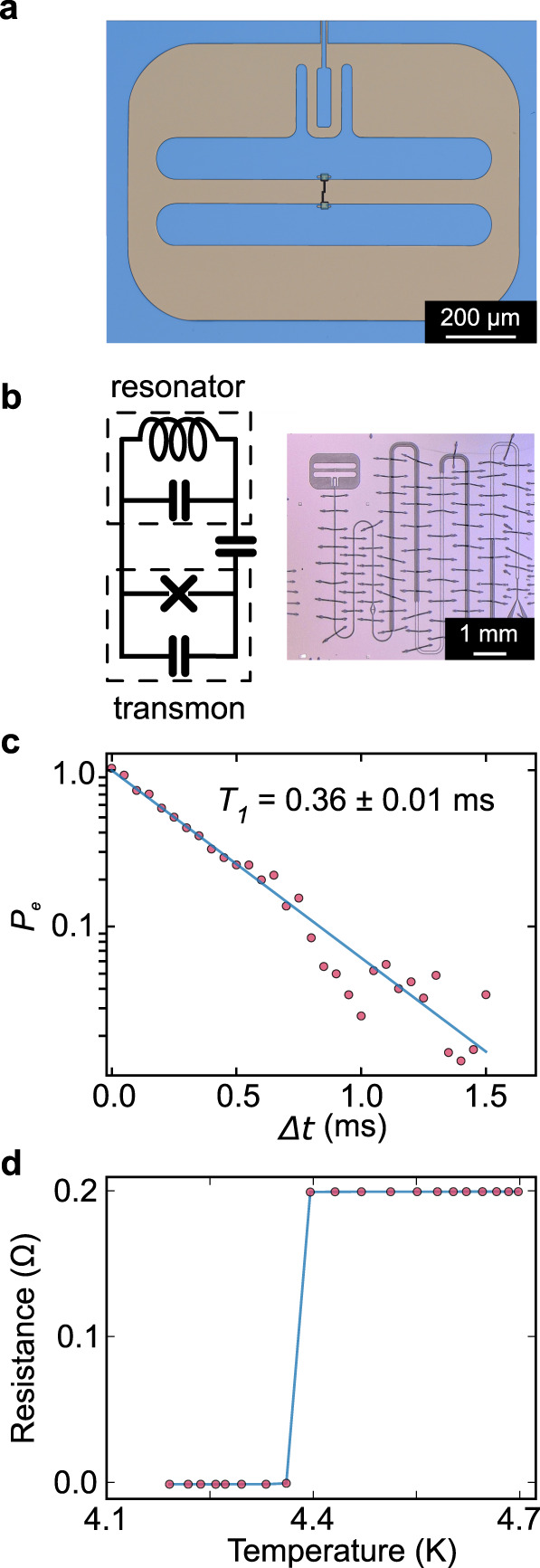
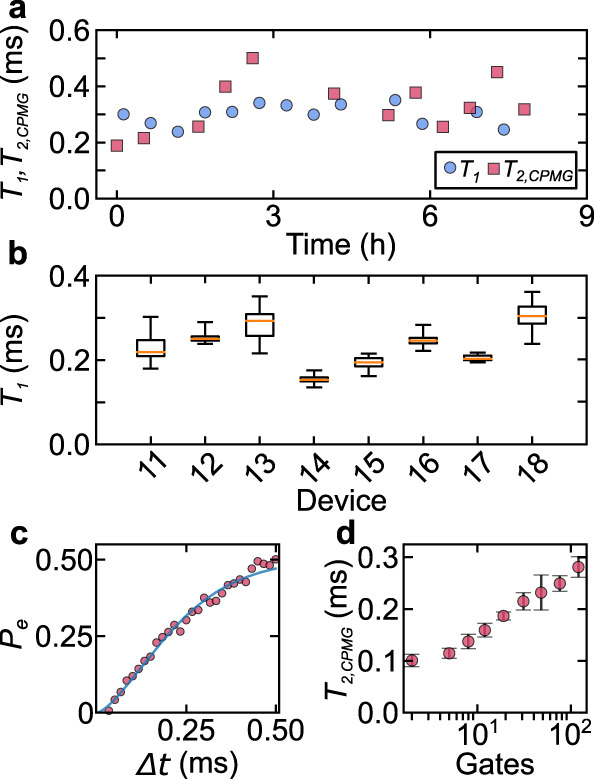
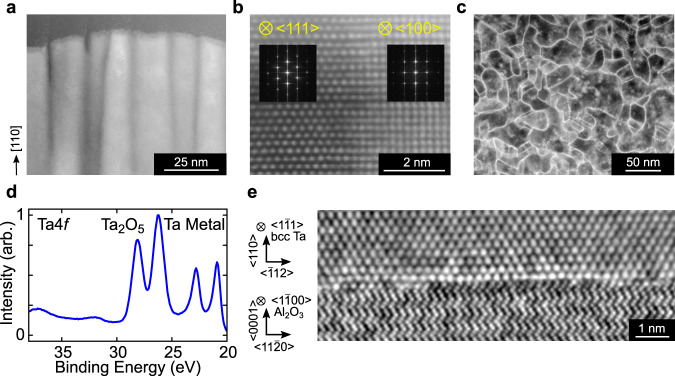
The superconducting transmon qubit is a leading platform for quantum computing and quantum science. Building large, useful quantum systems based on transmon qubits will require significant improvements in qubit relaxation and coherence times, which are orders of magnitude shorter than limits imposed by bulk properties of the constituent materials. This indicates that relaxation likely originates from uncontrolled surfaces, interfaces, and contaminants. Previous efforts to improve qubit lifetimes have focused primarily on designs that minimize contributions from surfaces. However, significant improvements in the lifetime of two-dimensional transmon qubits have remained elusive for several years. Here, we fabricate two-dimensional transmon qubits that have both lifetimes and coherence times with dynamical decoupling exceeding 0.3 milliseconds by replacing niobium with tantalum in the device. We have observed increased lifetimes for seventeen devices, indicating that these material improvements are robust, paving the way for higher gate fidelities in multi-qubit processors.
Overview
The claims and statistics of this paper haven’t been checked yet.
Free: it reads the open-access text and checks the first 5 claims that cite a source we can check. Create a free account to check every claim.
Integrity signals
Registry
Cites
Statistics
Figures
Verification
Claims the paper makes
The claims and statistics of this paper haven’t been checked yet.
Free: it reads the open-access text and checks the first 5 claims that cite a source we can check. Create a free account to check every claim.
Claims other papers make about this one
Each is checked against this paper’s own text: does it say what the citing paper says it does?
The source backs part of the claim, not all of it — or backs it for a different population, condition or comparison.
In the citing paper
“The advantage of this fabrication technique is the possibility for in situ fabrication of the JJ and minimal etch damage to achieve high-coherence qubits of up to hundreds of microseconds19–22.”
From Advanced CMOS manufacturing of superconducting qubits on 300 mm wafers (2024) · cites this paper as [19]
Experimental — accuracy not yet measured
Self-check
Percentages, sums and reported differences re-computed from the paper’s own numbers.
The self-check needs the paper’s full text.
Citations
Cites
Quantum supremacy using a programmable superconducting processor
Arute, F., Arya, K., Babbush, R., Bacon, D., Bardin, J. C., Barends, R., Biswas, R., Boixo, S., Brandao, F. G. S. L., Buell, D. A., et al. (2019) · Nature · doi:10.1038/s41586-019-1666-5 · Cited by 7,720
Hardware-efficient variational quantum eigensolver for small molecules and quantum magnets
Kandala, A., Mezzacapo, A., Temme, K., Takita, M., Brink, M., Chow, J. M., & Gambetta, J. M. (2017) · Nature · doi:10.1038/nature23879 · Cited by 2,982
Superconducting Circuits for Quantum Information: An Outlook
Devoret, M. H., & Schoelkopf, R. J. (2013) · Science · doi:10.1126/science.1231930 · Cited by 2,114
Superconducting quantum circuits at the surface code threshold for fault tolerance
Barends, R., Kelly, J., Megrant, A., Veitia, A., Sank, D., Jeffrey, E., White, T. C., Mutus, J., Fowler, A. G., Campbell, B., et al. (2014) · Nature · doi:10.1038/nature13171 · Cited by 1,733
Quantum algorithms: an overview
Montanaro, A. (2016) · npj Quantum Information · doi:10.1038/npjqi.2015.23 · Cited by 1,071
Scalable Quantum Simulation of Molecular Energies
O’Malley, P. J. J., Babbush, R., Kivlichan, I. D., Romero, J., McClean, J. R., Barends, R., Kelly, J., Roushan, P., Tranter, A., Ding, N., et al. (2016) · Physical Review X · doi:10.1103/physrevx.6.031007 · Cited by 1,059 · cited 1×
“We developed our sapphire etch recipe by (1) looking for crystal formation in an optical microscope, (2) ensuring that zinc was removed in XPS, and (3) checking that we preserved smooth surface morphology in AFM.”
MethodPaik, H., Schuster, D. I., Bishop, L. S., Kirchmair, G., Catelani, G., Sears, A. P., Johnson, B. R., Reagor, M. J., Frunzio, L., Glazman, L. I., et al. (2011) · Physical Review Letters · doi:10.1103/physrevlett.107.240501 · Cited by 1,054
Extending the lifetime of a quantum bit with error correction in superconducting circuits
Ofek, N., Petrenko, A., Heeres, R., Reinhold, P., Leghtas, Z., Vlastakis, B., Liu, Y., Frunzio, L., Girvin, S. M., Jiang, L., et al. (2016) · Nature · doi:10.1038/nature18949 · Cited by 941
State preservation by repetitive error detection in a superconducting quantum circuit
Kelly, J., Barends, R., Fowler, A. G., Megrant, A., Jeffrey, E., White, T. C., Sank, D., Mutus, J. Y., Campbell, B., Chen, Y., et al. (2015) · Nature · doi:10.1038/nature14270 · Cited by 916
A quantum-dot spin qubit with coherence limited by charge noise and fidelity higher than 99.9%
Yoneda, J., Takeda, K., Otsuka, T., Nakajima, T., Delbecq, M. R., Allison, G., Honda, T., Kodera, T., Oda, S., Hoshi, Y., et al. (2018) · Nature Nanotechnology · doi:10.1038/s41565-017-0014-x · Cited by 900
Research works printed but not linked: 5
- Kjaergaard, M. et al. Superconducting Qubits: current state of play. https://arxiv.org/abs/1905.13641 (2019). · arXiv
- Premkumar, A. et al. Microscopic relaxation channels in materials for superconducting Qubits. https://arxiv.org/abs/2004.02908 (2020). · arXiv
- Reese, M. Superconducting Hot Electron Bolometers for Terahertz Sensing. PhD thesis. Yale (2006).
- Face D Prober D Nucleation of body-centered-cubic tantalum films with a thin niobium underlayer J. Vac. Sci. Technol. A: Vac.,Surf., Films 1987 5 3408 3411 10.1116/1.574203 · DOI · Paper page
- Huang, Z. et al. Engineering dynamical sweet spots to protect Qubits from 1/f noise. https://arxiv.org/abs/2004.12458 (2020). · arXiv
Cited by
Items 101–200 of 815
Multi-level quantum noise spectroscopy
Sung, Y., Vepsäläinen, A. P., Braumüller, J., Yan, F., Wang, J. I.-J., Kjærgaard, M., Winik, R., Krantz, P., Bengtsson, A., Melville, A. J., et al. (2021) · Nature Communications · doi:10.1038/s41467-021-21098-3 · Cited by 52
Kono, S., Pan, J., Chegnizadeh, M., Wang, X., Youssefi, A., Scigliuzzo, M., & Kippenberg, T. J. (2024) · Nature Communications · doi:10.1038/s41467-024-48230-3 · Cited by 50
Disorder-assisted assembly of strongly correlated fluids of light
Saxberg, B., Vrajitoarea, A., Roberts, G., Panetta, M. G., Simon, J., & Schuster, D. (2022) · Nature · doi:10.1038/s41586-022-05357-x · Cited by 51
“Our substrate is a 450 μm thick C-plane sapphire wafer that has been annealed at 1500° C for 2 hours, solvent cleaned, etched in 80°C Nano-Strip® for 10 min, and then etched again in 140° C sulfuric acid to fully remove all contaminants [57].”
MethodSelf-citationQuantum Batteries: A Materials Science Perspective
Camposeo, A., Virgili, T., Lombardi, F., Cerullo, G., Pisignano, D., & Polini, M. (2025) · Advanced Materials · doi:10.1002/adma.202415073 · Cited by 52
High-frequency dispersive readout of a superconducting qubitPreprint
Kurilovich, P. D., Connolly, T., Bøttcher, C. G. L., Weiss, D. K., Hazra, S., Joshi, V. R., Ding, A. Z., Nho, H., Diamond, S., Kurilovich, V. D., et al. (2025) · arXiv (Cornell University) · doi:10.48550/arxiv.2501.09161 · Cited by 51
Lozano, D. P., Mongillo, M., Piao, X., Couet, S., Wan, D., Canvel, Y., Vadiraj, A. M., Ivanov, T. T., Verjauw, J., Acharya, R., et al. (2024) · Materials for Quantum Technology · doi:10.1088/2633-4356/ad4b8c · Cited by 47
Systematic-Error-Tolerant Multiqubit Holonomic Entangling Gates
Wu, J., Wang, Y., Han, J., Jiang, Y., Song, J., Xia, Y., Su, S., & Li, W. (2021) · Physical Review Applied · doi:10.1103/physrevapplied.16.064031 · Cited by 47
Path toward manufacturable superconducting qubits with relaxation times exceeding 0.1 ms
Verjauw, J., Acharya, R., Van Damme, J., Ivanov, T., Lozano, D. P., Mohiyaddin, F. A., Wan, D., Jussot, J., Vadiraj, A. M., Mongillo, M., et al. (2022) · npj Quantum Information · doi:10.1038/s41534-022-00600-9 · Cited by 45
Ding, C., Federico, M. D., Hatridge, M. J., Houck, A., Leger, S., Martinez, J. G. C., Miao, C., Schuster, D., Stefanazzi, L., Stoughton, C., et al. (2024) · Physical Review Research · doi:10.1103/physrevresearch.6.013305 · Cited by 47
Self-citationBao, Z., Wang, Z., Wu, Y., Li, Y., Ma, C., Song, Y., Zhang, H., & Duan, L. (2021) · Physical Review Letters · doi:10.1103/physrevlett.127.010503 · Cited by 45
Tunable coupling scheme for implementing two-qubit gates on fluxonium qubits
Moskalenko, I. N., Besedin, I. S., Simakov, I. A., & Ustinov, A. V. (2021) · Applied Physics Letters · doi:10.1063/5.0064800 · Cited by 45
“Additional capacitive shunting of the phase slip junction and reduction of energy participation ratios of interfaces and improves coherence times[3, 4].”
BackgroundInfluentialStrong Dispersive Coupling Between a Mechanical Resonator and a Fluxonium Superconducting Qubit
Lee, N., Guo, Y., Cleland, A. Y., Wollack, E. A., Gruenke, R. G., Makihara, T., Wang, Z., Rajabzadeh, T., Jiang, W., Mayor, F. M., et al. (2023) · PRX Quantum · doi:10.1103/prxquantum.4.040342 · Cited by 46
Charge-Noise Insensitive Chiral Photonic Interface for Waveguide Circuit QED
Zhang, Y.-X., Carceller, C. R. I., Kjærgaard, M., & Sørensen, A. S. (2021) · Physical Review Letters · doi:10.1103/physrevlett.127.233601 · Cited by 44
Quantum Memory: A Missing Piece in Quantum Computing UnitsPreprint
Liu, C., Wang, M., Stein, S. A., Ding, Y., & Li, A. (2023) · arXiv (Cornell University) · doi:10.48550/arxiv.2309.14432 · Cited by 44
“3 ms [70, 71], and be further improved to 0 .”
BackgroundLoss mechanisms in TiN high impedance superconducting microwave circuits
Amin, K. R., Ladner, C., Jourdan, G., Hentz, S., Roch, N., & Renard, J. (2022) · Applied Physics Letters · doi:10.1063/5.0086019 · Cited by 43
Tennant, D., Martinez, L. A., Beck, K. M., O’Kelley, S. R., Wilen, C. D., McDermott, R., DuBois, J. L., & Rosen, Y. J. (2022) · PRX Quantum · doi:10.1103/prxquantum.3.030307 · Cited by 43
Controlled-Controlled-Phase Gates for Superconducting Qubits Mediated by a Shared Tunable Coupler
Glaser, N. J., Roy, F., & Filipp, S. (2023) · Physical Review Applied · doi:10.1103/physrevapplied.19.044001 · Cited by 42
Effects of laser-annealing on fixed-frequency superconducting qubits
Kim, H. L., Jünger, C., Morvan, A., Barnard, E. S., Livingston, W. P., Altoé, M. V. P., Kim, Y., Song, C., Chen, L., Kreikebaum, J. M., et al. (2022) · Applied Physics Letters · doi:10.1063/5.0102092 · Cited by 42
Improved coherence in optically defined niobium trilayer-junction qubits
Anferov, A., Lee, K.-H., Zhao, F., Simon, J., & Schuster, D. I. (2024) · Physical Review Applied · doi:10.1103/physrevapplied.21.024047 · Cited by 41
Quantum sensors for microscopic tunneling systems
Bilmes, A., Volosheniuk, S., Brehm, J. D., Ustinov, A. V., & Lisenfeld, J. (2021) · npj Quantum Information · doi:10.1038/s41534-020-00359-x · Cited by 43
Zhu, C., Wu, X., Yang, Z., Wang, J., Wu, A., Zheng, S., & Wang, X. (2025) · arXiv (Cornell University) · doi:10.48550/arxiv.2505.16891 · Cited by 42
Nitrogen plasma passivated niobium resonators for superconducting quantum circuits
Zheng, K., Kowsari, D., Thobaben, N. J., Du, X., Song, X., Ran, S., Henriksen, E. A., Wisbey, D., & Murch, K. W. (2022) · Applied Physics Letters · doi:10.1063/5.0082755 · Cited by 40
A high-efficiency elementary network of interchangeable superconducting qubit devices
Mollenhauer, M., Irfan, A., Cao, X., Mandal, S., & Pfaff, W. (2025) · Nature Electronics · doi:10.1038/s41928-025-01404-3 · Cited by 42
“A more mature design that preserves state-of-the-art coherence times 34,47–50 would enable intermodule gate infidelities approaching 10 −3 (Fig.”
Two-Way Covert Quantum Communication in the Microwave Regime
Candia, R. D., Yiğitler, H., Paraoanu, G. S., & Jäntti, R. (2021) · PRX Quantum · doi:10.1103/prxquantum.2.020316 · Cited by 39
Error-Detectable Bosonic Entangling Gates with a Noisy Ancilla
Tsunoda, T., Teoh, J. D., Kalfus, W. D., de Graaf, S. J., Chapman, B. J., Curtis, J. C., Thakur, N., Girvin, S. M., & Schoelkopf, R. J. (2023) · PRX Quantum · doi:10.1103/prxquantum.4.020354 · Cited by 39
Search for QCD axion dark matter with transmon qubits and quantum circuit
Chen, S., Fukuda, H., Inada, T., Moroi, T., Nitta, T., & Sichanugrist, T. (2024) · Physical review. D/Physical review. D. · doi:10.1103/physrevd.110.115021 · Cited by 38
Vacuum-gap transmon qubits realized using flip-chip technology
Li, X., Zhang, Y., Yang, C., Li, Z., Wang, J., Su, T., Chen, M., Li, Y., Li, C.-Y., Mi, Z., et al. (2021) · Applied Physics Letters · doi:10.1063/5.0068255 · Cited by 38
Hassani, F., Peruzzo, M., Kapoor, L. N., Trioni, A., Žemlička, M., & Fink, J. M. (2023) · Nature Communications · doi:10.1038/s41467-023-39656-2 · Cited by 38
de Graaf, S. J., Xue, S. H., Chapman, B. J., Teoh, J. D., Tsunoda, T., Winkel, P., Garmon, J. W. O., Chang, K. M., Frunzio, L., Puri, S., et al. (2025) · npj Quantum Information · doi:10.1038/s41534-024-00944-4 · Cited by 39
“With improvement of the mode coherencescloserto state-of-the-art values 66 – 68 , we expect this scheme to yield signi fi cantly below-threshold performance.”
Coherent superconducting qubits from a subtractive junction fabrication process
Stehli, A., Brehm, J. D., Wolz, T., Baity, P., Danilin, S., Seferai, V., Rotzinger, H., Ustinov, A. V., & Weides, M. (2020) · Applied Physics Letters · doi:10.1063/5.0023533 · Cited by 29
Tornow, C., Kanazawa, N., Shanks, W., & Egger, D. J. (2022) · Physical Review Applied · doi:10.1103/physrevapplied.17.064061 · Cited by 38
“Superconducting qubitbased quantum processors [35–37] enjoy long coherence times [38, 39] and comparatively short gates.”
BackgroundResearch Trends in Quantum Computers by Focusing on Qubits as Their Building Blocks
Dejpasand, M. T., & Ghamsari, M. S. (2023) · Quantum Reports · doi:10.3390/quantum5030039 · Cited by 37
“This leads to record average gate fidelities of 99.98–99.99% for single-qubit gates and 99.8–99.9% for two-qubit gates [15,23–26].”
BackgroundInfluentialToward Highly Efficient Multimode Superconducting Quantum Memory
Matanin, A. R., Gerasimov, K. I., Moiseev, E. S., Smirnov, N. S., Ivanov, А. I., Malevannaya, E. I., Polozov, V. I., Zikiy, E. V., Samoilov, A. A., Rodionov, I. A., et al. (2023) · Physical Review Applied · doi:10.1103/physrevapplied.19.034011 · Cited by 36
“Moreover, further technological improvements in term of TLS mitigation with different superconductive materials like niobium and tantalum [44, 45] can significantly reduce the losses in the internal resonators and increase efficiency even closer to unity in single photon regime with a lifetime about a millisecond.”
BackgroundAcceptor-Induced Bulk Dielectric Loss in Superconducting Circuits on Silicon
Zhang, Z.-H., Godeneli, K., He, J., Odeh, M., Zhou, H., Meesala, S., & Sipahigil, A. (2024) · Physical Review X · doi:10.1103/physrevx.14.041022 · Cited by 36
Ahmad, H. G., Brosco, V., Miano, A., Palma, L. D., Arzeo, M., Montemurro, D., Lucignano, P., Pepe, G. P., Tafuri, F., Fazio, R., et al. (2022) · Physical review. B./Physical review. B · doi:10.1103/physrevb.105.214522 · Cited by 36
Superconducting Resonators with Voltage-Controlled Frequency and Nonlinearity
Strickland, W. M., Elfeky, B. H., Yuan, J. O., Schiela, W. F., Yu, P., Langone, D., Vavilov, M., Manucharyan, V., & Shabani, J. (2023) · Physical Review Applied · doi:10.1103/physrevapplied.19.034021 · Cited by 36
Using Bifluxon Tunneling to Protect the Fluxonium Qubit
Ardati, W., Leger, S., Kumar, S., Suresh, V. N., Nicolas, D., Mori, C., d'Esposito, F., Vakhtel, T., Buisson, O., Ficheux, Q., et al. (2024) · Physical Review X · doi:10.1103/physrevx.14.041014 · Cited by 35
Oh, J., Zaman, R., Murthy, A. A., Bal, M., Crisa, F., Zhu, S., Torres‐Castanedo, C. G., Kopas, C., Mutus, J., Jing, D., et al. (2024) · ACS Nano · doi:10.1021/acsnano.4c05251 · Cited by 34
Identification of Different Types of High-Frequency Defects in Superconducting Qubits
Abdurakhimov, L. V., Mahboob, I., Toida, H., Kakuyanagi, K., Matsuzaki, Y., & Saito, S. (2022) · PRX Quantum · doi:10.1103/prxquantum.3.040332 · Cited by 34
Urade, Y., Yakushiji, K., Tsujimoto, M., Yamada, T., Makise, K., Mizubayashi, W., & Inomata, K. (2024) · APL Materials · doi:10.1063/5.0165137 · Cited by 33
Baity, P., Maclean, C., Seferai, V., Bronstein, J., Shu, Y., Hemakumara, T., & Weides, M. P. (2024) · Physical Review Research · doi:10.1103/physrevresearch.6.013329 · Cited by 33
“If Q l is the total resonance efficiency (i.e., quality factor) and Q c is the coupling efficiency to the measurement line, then the circle diameter is d = Q l / | Q c | .”
Scaling up superconducting quantum computers
Megrant, A., & Chen, Y. (2025) · Nature Electronics · doi:10.1038/s41928-025-01381-7 · Cited by 33
Low-loss superconducting resonators fabricated from tantalum films grown at room temperature
Marcaud, G., Perello, D., Chen, C., Umbarkar, E. A., Weiland, C. R., Gao, J., Díez, S., Ly, V., Mahuli, N., D’Souza, N., et al. (2025) · Communications Materials · doi:10.1038/s43246-025-00897-x · Cited by 33
Let Each Quantum Bit Choose Its Basis Gates
Lin, S. F., Sussman, S., Duckering, C., Mundada, P., Baker, J. M., Kumar, R. S., Houck, A., & Chong, F. T. (2022) · IEEE/ACM International Symposium on Microarchitecture (MICRO) · doi:10.1109/micro56248.2022.00075 · Cited by 33
Self-citationQuantum-Enhanced Dark Matter Search Using Cat States
Zheng, P., Cai, Y., Xu, B., Wen, S., Zhang, L., Ni, Z., Mai, J., Zeng, Y., Lin, L., Hu, L., et al. (2026) · Physical Review Letters · doi:10.1103/wbhn-v1sw · Cited by 32
“Both the qubit antenna pads and the readout striplines are made of tantalum to enhance the qubit coherence times [48, 49].”
Tuning microwave losses in superconducting resonators
Gurevich, A. (2023) · Superconductor Science and Technology · doi:10.1088/1361-6668/acc214 · Cited by 32
Wang, H., Kim, H., Dong, D., Shinokita, K., Watanabe, K., Taniguchi, T., & Matsuda, K. (2024) · Nature Communications · doi:10.1038/s41467-024-48623-4 · Cited by 32
“This decoherence process imposes a temporal limitation on the precise manipulation of quantum systems 16 – 18 , hindering their potential applications 19,20 .”
BackgroundSuperconducting flux qubit with ferromagnetic Josephson π-junction operating at zero magnetic field
Kim, S., Abdurakhimov, L. V., Pham, D., Qiu, W., Terai, H., Ashhab, S., Saito, S., Yamashita, T., & Semba, K. (2024) · Communications Materials · doi:10.1038/s43246-024-00659-1 · Cited by 31
Millikelvin temperature cryo-CMOS multiplexer for scalable quantum device characterisation
Potočnik, A., Brebels, S., Verjauw, J., Acharya, R., Grill, A., Wan, D., Mongillo, M., Li, R., Ivanov, T., Winckel, S. V., et al. (2021) · Quantum Science and Technology · doi:10.1088/2058-9565/ac29a1 · Cited by 31
“Qubit specific loss sources, such as quasiparticle tunnelling or two-level-system (TLS) defects inside a Josephson junction, are not captured by this method, however these are generally not limiting the performance of widely used transmon qubits [47].”
Qubit-Compatible Substrates With Superconducting Through-Silicon Vias
Grigoras, K., Yurttagül, N., Kaikkonen, J.-P., Mannila, E. T., Eskelinen, P., Lozano, D. P., Li, H.-X., Rommel, M., Shiri, D., Tiencken, N., et al. (2022) · IEEE Transactions on Quantum Engineering · doi:10.1109/tqe.2022.3209881 · Cited by 31
Q3DE: A fault-tolerant quantum computer architecture for multi-bit burst errors by cosmic rays
Suzuki, Y., Sugiyama, T., Arai, T., Liao, W., Inoue, K., & Tanimoto, T. (2022) · IEEE/ACM International Symposium on Microarchitecture (MICRO) · doi:10.1109/micro56248.2022.00079 · Cited by 34
“The code cycle is typically assumed to be about 1 μs in the case of superconducting qubits [29], [30], [48].”
BackgroundDynamically Enhancing Qubit-Photon Interactions with Antisqueezing
Villiers, M., Smith, W. C., Petrescu, A., Borgognoni, A., Delbecq, M. R., Sarlette, A., Mirrahimi, M., Campagne-Ibarcq, P., Kontos, T., & Leghtas, Z. (2024) · PRX Quantum · doi:10.1103/prxquantum.5.020306 · Cited by 31
Quantum Random Access Memory Architectures Using 3D Superconducting Cavities
Weiss, D., Puri, S., & Girvin, S. M. (2024) · PRX Quantum · doi:10.1103/prxquantum.5.020312 · Cited by 31
“For parameter set 2 (PS2) we use state-of-the-art coherence times for transmons [42, 43] and 3D resonators [19].”
MethodCharacterizing losses in InAs two-dimensional electron gas-based gatemon qubits
Strickland, W. M., Baker, L., Lee, J., Dindial, K., Elfeky, B. H., Strohbeen, P. J., Hatefipour, M., Yu, P., Levy, I., Issokson, J., et al. (2024) · Physical Review Research · doi:10.1103/physrevresearch.6.023094 · Cited by 31
“Recently, the coherence times of planar transmon qubits have exceeded 300 µ s [5] and further improvements are expected with improved materials and fabrication [6].”
BackgroundFull characterization of measurement-induced transitions of a superconducting qubitPreprint
Connolly, T., Kurilovich, P. D., Kurilovich, V. D., Bøttcher, C. G. L., Hazra, S., Dai, W., Ding, A. Z., Joshi, V. R., Nho, H., Diamond, S., et al. (2025) · arXiv (Cornell University) · doi:10.48550/arxiv.2506.05306 · Cited by 31
Entangling Schrödinger’s cat states by bridging discrete- and continuous-variable encoding
Hoshi, D., Nagase, T., Kwon, S., Iyama, D., Kamiya, T., Fujii, S., Mukai, H., Ahmed, S., Kockum, A. F., Watabe, S., et al. (2025) · Nature Communications · doi:10.1038/s41467-025-56503-8 · Cited by 31
Improving qubit readout with hidden Markov models
Martinez, L. A., Rosen, Y. J., & DuBois, J. L. (2020) · Physical Review A · doi:10.1103/physreva.102.062426 · Cited by 31
Tantalum microwave resonators with ultra-high intrinsic quality factors
Shi, L., Guo, T., Su, R., Chi, T., Sheng, Y., Jiang, J., Cao, C., Wu, J., Tu, X., Sun, G., et al. (2022) · Applied Physics Letters · doi:10.1063/5.0124821 · Cited by 30
Fast Fingerprinting of Cloud-based NISQ Quantum Computers
Smith, K. N., Viszlai, J., Seifert, L. M., Baker, J. M., Szefer, J. M., & Chong, F. T. (2023) · IEEE International Symposium on Hardware Oriented Security and Trust (HOST) · doi:10.1109/host55118.2023.10133778 · Cited by 30
“For instance, prior work [37] demonstrates improvements in qubit relaxation and coherence times by replacing the often-used niobium with tantalum in the initial metal layer of the chip.”
BackgroundProposal for Entangling Gates on Fluxonium Qubits via a Two-Photon Transition
Nesterov, K., Ficheux, Q., Manucharyan, V. E., & Vavilov, M. (2021) · PRX Quantum · doi:10.1103/prxquantum.2.020345 · Cited by 30
High- E J / E C transmon qudits with up to 12 levels
Wang, Z., Parker, R. W., Champion, E., & Blok, M. S. (2025) · Physical Review Applied · doi:10.1103/physrevapplied.23.034046 · Cited by 29
Inherent Thermal-Noise Problem in Addressing Qubits
Simbierowicz, S., Borrelli, M., Monarkha, V. Y., Nuutinen, V., & Lake, R. E. (2024) · PRX Quantum · doi:10.1103/prxquantum.5.030302 · Cited by 29
Tantalum airbridges for scalable superconducting quantum processors
Bu, K., Huai, S., Zhang, Z., Li, D., Li, Y., Hu, J., Yang, X., Dai, M., Cai, T., Zheng, Y.-C., et al. (2025) · npj Quantum Information · doi:10.1038/s41534-025-00972-8 · Cited by 29
The information content of jet quenching and machine learning assisted observable design
Lai, Y. S., Mulligan, J. D., Ploskon, M. A., & Ringer, F. (2022) · Journal of High Energy Physics · doi:10.1007/jhep10(2022)011 · Cited by 29
Manenti, R., & Motta, M. (2023) · doi:10.1093/oso/9780198787488.001.0001 · Cited by 29
Pietikäinen, I., Černotík, O., Eickbusch, A., Maiti, A., Garmon, J. W. O., Filip, R., & Girvin, S. M. (2024) · PRX Quantum · doi:10.1103/prxquantum.5.040307 · Cited by 29
Mencia, R., Lin, W.-J., Cho, H., Vavilov, M., & Manucharyan, V. (2024) · PRX Quantum · doi:10.1103/prxquantum.5.040318 · Cited by 28
“The values of the tunneling amplitudes ϵ 1 and ϵ 2 ≪ ϵ 1 depend on the three circuit parameters E J , E C , and E L , but it is safe to assume that both amplitudes are exponentially suppressed with the parameter 8 E J /E C .”
BackgroundLow-loss lumped-element inductors made from granular aluminum
Gupta, V., Winkel, P., Thakur, N., van Vlaanderen, P., Wang, Y., Ganjam, S., Frunzio, L., & Schoelkopf, R. J. (2025) · Physical Review Applied · doi:10.1103/physrevapplied.23.054067 · Cited by 28
“However, to use grAl inductors in state-of-the-art circuits, they must be integrable with conventional Al/AlO x /Al JJ fabrication, or with materials that have lower surface dielectric loss factors like Ta [10, 91–93], Nb [94, 95] and Re [96, 97].”
HetArch: Heterogeneous Microarchitectures for Superconducting Quantum Systems
Stein, S., Sussman, S., Tomesh, T., Guinn, C. R., Türeci, E., Lin, S. F., Tang, W., Ang, J., Chakram, S., Li, A., et al. (2023) · IEEE/ACM International Symposium on Microarchitecture (MICRO) · doi:10.1145/3613424.3614300 · Cited by 28
“0 × compared to homogeneous systems.”
Self-citationJiang, T., Cai, J., Huang, J., Zhou, N., Zhang, Y., Bei, J., Cai, G., Cao, S., Chen, F., Jiang, C., et al. (2026) · Nature Physics · doi:10.1038/s41567-026-03179-6 · Cited by 28
Superconducting circuit architecture for digital-analog quantum computing
Yu, J., Retamal, J. C., Sanz, M., Solano, E., & Albarrán-Arriagada, F. (2022) · EPJ Quantum Technology · doi:10.1140/epjqt/s40507-022-00129-y · Cited by 27
“2 [μs], which means that the simulation can be implemented with the current technology, where the coherent times for superconducting qubits are in the order of 100 [μs] [45].”
Backgroundcnot Gates for Fluxonium Qubits via Selective Darkening of Transitions
Nesterov, K., Wang, C., Manucharyan, V., & Vavilov, M. (2022) · Physical Review Applied · doi:10.1103/physrevapplied.18.034063 · Cited by 27
Fast superconducting qubit control with subharmonic drives
Xia, M., Zhou, C., Liu, C., Patel, P., Cao, X., Lu, P., Mesits, B., Mucci, M., Gorski, D., Pekker, D., et al. (2025) · Nature Communications · doi:10.1038/s41467-025-67766-6 · Cited by 27
“While many factors can limit gate fi delity, such as cross-talk 1,2 and leakage to non-computational states 3 , the most fundamental are gate speed and qubit coherence 4 – 8 , with recent improvements driven more by increased coherence than enhanced speed 9,10 .”
Spurious Antenna Modes of the Transmon QubitPreprint
Rafferty, O., Patel, S., Liu, C. H., Abdullah, S., Wilen, C. D., Harrison, D. C., & McDermott, R. (2021) · arXiv (Cornell University) · doi:10.48550/arxiv.2103.06803 · Cited by 27
Free-standing silicon shadow masks for transmon qubit fabrication
Tsioutsios, I., Serniak, K., Diamond, S., Sivak, V. V., Wang, Z., Shankar, S., Frunzio, L., Schoelkopf, R. J., & Devoret, M. (2020) · AIP Advances · doi:10.1063/1.5138953 · Cited by 26
Su, Q.-P., Zhang, Y., Bin, L., & Yang, C. (2022) · Physical Review A · doi:10.1103/physreva.105.042434 · Cited by 26
Broadband bandpass Purcell filter for circuit quantum electrodynamics
Yan, H., Wu, X., Lingenfelter, A., Joshi, Y. J., Andersson, G., Conner, C. R., Chou, M.-H., Grebel, J., Miller, J. M., Povey, R. G., et al. (2023) · Applied Physics Letters · doi:10.1063/5.0161893 · Cited by 26
Implementing two-qubit gates at the quantum speed limit
Howard, J. E., Lidiak, A., Jameson, C., Basyildiz, B., Clark, K., Zhao, T., Bal, M., Long, J., Pappas, D. P., Singh, M., et al. (2023) · Physical Review Research · doi:10.1103/physrevresearch.5.043194 · Cited by 27
Cryogenic growth of tantalum thin films for low-loss superconducting circuits
van Schijndel, T. A. J., McFadden, A., Engel, A. N., Dong, J. T., Yanez, W., Parthasarathy, M., Simmonds, R. W., & Palmstrøm, C. J. (2025) · Physical Review Applied · doi:10.1103/physrevapplied.23.034025 · Cited by 26
“To achieve high-performance qubit devices on sap-∗ phire, the substrate is typically annealed in-situ in UHV conditions to temperatures ranging from 800-1100 ° C to achieve a clean surface before growth of α -Ta thin films [1, 2, 11].”
InfluentialQuantum Control of Frequency-Tunable Transmon Superconducting Qubits
García‐Ripoll, J. J., Ruiz-Chamorro, A., & Torrontegui, E. (2020) · Physical Review Applied · doi:10.1103/physrevapplied.14.044035 · Cited by 27
Lu, Y., Lambert, N., Kockum, A. F., Funo, K., Bengtsson, A., Gasparinetti, S., Nori, F., & Delsing, P. (2022) · PRX Quantum · doi:10.1103/prxquantum.3.020305 · Cited by 26
“[63], the thermometry method suggested here, based on PSD measurements, can tolerate a higher noise background in the probe waveguide, and, unlike Ref.”
BackgroundMethodInfluentialAbatement of ionizing radiation for superconducting quantum devices
Loer, B., Harrington, P. M., Archambault, B. C., Fuller, E. S., Pierson, B., Arnquist, I. J., Harouaka, K., Schlieder, T. D., Kim, D. K., Melville, A. J., et al. (2024) · Journal of Instrumentation · doi:10.1088/1748-0221/19/09/p09001 · Cited by 26
“…are sufficient for providing an ionizing-radiation-reduced environment for the advancement and study of another 10-to 100-fold increase beyond current state-of-the-art superconducting quantum device coherence times [73, 74], assuming all other sources of decoherence are reduced commensurately.”
BackgroundSu, Q.-P., Zhang, Y., & Yang, C. (2022) · Physical Review A · doi:10.1103/physreva.105.062436 · Cited by 25
Chemical and structural identification of material defects in superconducting quantum circuits
de Graaf, S. E., Un, S., Shard, A. G., & Lindström, T. (2022) · Materials for Quantum Technology · doi:10.1088/2633-4356/ac78ba · Cited by 25
Wiring surface loss of a superconducting transmon qubit
Smirnov, N. S., Krivko, E. A., Solovyova, A. A., Ivanov, А. I., & Rodionov, I. A. (2024) · Scientific Reports · doi:10.1038/s41598-024-57248-y · Cited by 25
Quasiparticle Dynamics in a Superconducting Qubit Irradiated by a Localized Infrared Source
Benevides, R., Drimmer, M., Bisson, G., Adinolfi, F., von Lüpke, U., Doeleman, H. M., Catelani, G., & Chu, Y. (2024) · Physical Review Letters · doi:10.1103/physrevlett.133.060602 · Cited by 25
The effect of niobium thin film structure on losses in superconducting circuits
Drimmer, M., Telkamp, S., Fischer, F. L., Rodrigues, I. C., Todt, C., Křížek, F., Kriegner, D., Müller, C., Wegscheider, W., & Chu, Y. (2025) · Materials for Quantum Technology · doi:10.1088/2633-4356/ae1347 · Cited by 25
“Other authors who investigated the effect of different growth conditions on microwave dissipation report higher internal quality factors/T1 times for growths at 770 K [26] or at 1070 K [25] compared to room-temperature growths.”
BackgroundInitial Design of a W-Band Superconducting Kinetic Inductance Qubit
Faramarzi, F., Day, P., Glasby, J., Sypkens, S., Colangelo, M., Chamberlin, R., Mirhosseini, M., Schmidt, K., Berggren, K. K., & Mauskopf, P. (2021) · IEEE Transactions on Applied Superconductivity · doi:10.1109/tasc.2021.3065304 · Cited by 25
“Recent results on transmon qubits using Ta electrodes have shown an improvement over state-of-the-art coherence times [30], which was associated with the favorable properties of the tantalum oxide surface, so it is interesting to ask whether the metal nitride superconductors, and other potential materials for Kinetico…”
BackgroundHarrelson, T. F., Sheridan, E., Kennedy, E., Vinson, J., N’Diaye, A. T., Altoé, M. V. P., Schwartzberg, A. M., Siddiqi, I. A., Ogletree, D. F., Scott, M. C., et al. (2021) · Applied Physics Letters · doi:10.1063/5.0069549 · Cited by 25
Weakly Flux-Tunable Superconducting Qubit
Chavez-Garcia, J., Solgun, F., Hertzberg, J., Jinka, O., Brink, M., & Abdo, B. (2022) · Physical Review Applied · doi:10.1103/physrevapplied.18.034057 · Cited by 25
Quantum control of a cat-qubit with bit-flip times exceeding ten secondsPreprint
Réglade, U., Bocquet, A., Gautier, R., Cohen, J., Marquet, A., Albertinale, E., Pankratova, N., Hallén, M., Rautschke, F., Sellem, L.-A., et al. (2023) · arXiv (Cornell University) · doi:10.48550/arxiv.2307.06617 · Cited by 25
“Therefore the observation of quantum superpositions of metastable states with macroscopic bit-flip times requires that the decoherence rate verifies We implemented the dynamics of equation (1) in a two-dimensional-circuit quantum electrodynamics architecture 27 (Fig.”
BackgroundMethodTwo-level systems in nucleated and non-nucleated epitaxial alpha-tantalum films
Alegria, L. D., Tennant, D., Chaves, K., Lee, J. R. I., O’Kelley, S. R., Rosen, Y. J., & DuBois, J. L. (2023) · Applied Physics Letters · doi:10.1063/5.0157654 · Cited by 24
Huber, G. B. P., Roy, F. A., Koch, L., Tsitsilin, I., Schirk, J., Glaser, N. J., Bruckmoser, N., Schweizer, C., Romeiro, J. H., Krylov, G., et al. (2025) · PRX Quantum · doi:10.1103/9shv-l4cx · Cited by 24
Klos, J., Tröger, J., Keutgen, J., Losert, M. P., Abrosimov, N. V., Knoch, J., Bracht, H. A., Coppersmith, S. N., Friesen, M. G., Cojocaru‐Mirédin, O., et al. (2024) · Advanced Science · doi:10.1002/advs.202407442 · Cited by 24
Fowler, J. W., Szypryt, P., Bunker, R., Edwards, E. R., Florang, I. M. F., Gao, J., Giachero, A., Hoogerheide, S. F., Loer, B., Mumm, H. P., et al. (2024) · PRX Quantum · doi:10.1103/prxquantum.5.040323 · Cited by 24
“Sapphire substrates are also used for superconducting qubits [47].”
MethodHybrid Cat-Transmon Architecture for Scalable, Hardware-Efficient Quantum Error Correction
Hann, C. T., Noh, K., Putterman, H., Matheny, M. H., Iverson, J. K., Fang, M. T., Chamberland, C., Painter, O. J., & Brandão, F. G. S. L. (2025) · PRX Quantum · doi:10.1103/75x7-5ysv · Cited by 24
Materials and devices for fundamental quantum science and quantum technologiesPreprint
Polini, M., Giazotto, F., Fong, K. C., Pop, I. M., Schuck, C., Boccali, T., Signorelli, G., D’Elia, M., Hadfield, R. H., Giovannetti, V., et al. (2022) · arXiv (Cornell University) · doi:10.48550/arxiv.2201.09260 · Cited by 24
“Several possible paths have been recently followed to increase coherence: i) Replacing the oxide [35]; ii) Employing crystalline epitaxial materials such as GaAs [36] and nitrides [37, 38]; and iii) Employing 2D vdW materials [39–43].”
MethodSite-specific electric-field tuning of two-level system defects in superconducting qubit arrays
Chen, L., Lee, K.-H., Liu, C. H., Marinelli, B., Naik, R., Kang, Z., Goss, N., Mudi, S. R., Santiago, D. I., Santiago, D., et al. (2026) · PRX Quantum · doi:10.48550/arxiv.2503.04702 · Cited by 24
“This includes materials engineering to develop higher-quality fabrication processes [22–25] and design improvements to reduce qubit sensitivity to dissipative interfaces [26–28].”
High-Fidelity Two-Qubit Gates between Fluxonium Qubits with a Resonator Coupler
Rosenfeld, E., Hann, C. T., Schuster, D., Matheny, M. H., & Clerk, A. A. (2024) · PRX Quantum · doi:10.1103/prxquantum.5.040317 · Cited by 23
Active Leakage Cancellation in Single Qubit Gates
Chiaro, B., & Zhang, Y. (2025) · Physical Review Letters · doi:10.1103/4kz9-w97h · Cited by 23
Metadata
- Authors
- Place, A. P. M., Rodgers, L. V. H., Mundada, P., Smitham, B. M., Fitzpatrick, M., Leng, Z., Premkumar, A., Bryon, J., Vrajitoarea, A., Sussman, S., Cheng, G., Madhavan, T., Babla, H. K., Le, X. H., Gang, Y., Jäck, B., Gyenis, A., Yao, N., Cava, R. J., de Leon, N. P., & Houck, A. A.
- Affiliations
- Princeton University (US)
- Corresponding author
- Houck, Andrew A.
- ORCID
- Venue
- Nature Communications
- Published
- 2021-03-19
- Volume
- 12
- Issue
- 1
- Pages
- 1779-1779
- ISSN
- 2041-1723 (ISSN-L)
- PMC
- PMC7979772
- OpenAlex
- W3006932841
- Semantic Scholar
- fe6a5ecce382e9484fc68e2549d682a760d5293c
- Cited by
- 563
- References
- 52
- Citations by year
- 2026: 87 · 2025: 124 · 2024: 117 · 2023: 95 · 2022: 85 · 2021: 43
- FWCI
- 30.01
- Type
- journal article
- Language
- en
- Open access
- gold
- doi.org
- Licence
- cc-by
- creativecommons.org/licenses/by/4.0 (tdm)
- creativecommons.org/licenses/by/4.0 (vor)
- Locations
- Nature Communications (publishedVersion, cc-by)
- PubMed Central (publishedVersion, cc-by)
- PubMed (publishedVersion)
- arXiv (Cornell University) (submittedVersion)
- OSTI OAI (U.S. Department of Energy Office of Scientific and Technical Information) (submittedVersion)
- RePEc: Research Papers in Economics (submittedVersion)
- DOAJ (DOAJ: Directory of Open Access Journals) (submittedVersion, cc-by-sa)
- Rare & Special e-Zone (The Hong Kong University of Science and Technology) (submittedVersion)
- arXiv (Cornell University)
- Bulletin of the American Physical Society
- Funders
- United States Department of Defense | United States Army | U.S. Army Research, Development and Engineering Command | Army Research Office (W911NF1910016, HIPS W911NF1910016)
- ODNI | Intelligence Community Postdoctoral Research Fellowship Program
- National Science Foundation (MRSEC DMR-1420541)
- Topics
- Physical Sciences › Physics and Astronomy › Atomic and Molecular Physics, and Optics › Quantum Information and Cryptography
- Physical Sciences › Computer Science › Artificial Intelligence › Quantum Computing Algorithms and Architecture
- Physical Sciences › Engineering › Electrical and Electronic Engineering › Superconducting and THz Device Technology
- Keywords
- transmon qubits, superconducting qubits, qubit coherence time, qubit relaxation, tantalum, niobium, dynamical decoupling, superconducting quantum computing
About these checks
Registry, retraction, Cites and statistics results are computed, not judged, with one exception: a printed reference that no index lists is read once by a model before it counts as a citation error. Claims are extracted by a model and kept only when their quote appears verbatim in the text; each cited source is then checked, with a model’s help, for whether it says what the claim relies on. Those verdicts can be wrong — read the claim’s quote and the cited source before relying on one.
Statistics and arithmetic are recomputed, not judged.
Confidence bands are shown only for fields calibrated on our annotated test set. None is calibrated yet, so no band is shown.
What counts as a claim ›How we measure confidence ›How we check this ›
Are you an author, or do you see a problem with this page? Request a review
Data sources
Bibliographic data: Semantic Scholar, OpenAlex, Crossref.
Contains information from the Semantic Scholar Academic Graph Datasets, made available under the ODC Attribution License (ODC-BY 1.0).
Semantic Scholar’s data is described in: Kinney, R., et al. (2023). The Semantic Scholar Open Data Platform. arXiv:2301.10140.
