

Power of data in quantum machine learning
Open accessThe DOI matches its Crossref record; 67 of the 69 references it cites were found in a registry or an index.
Abstract
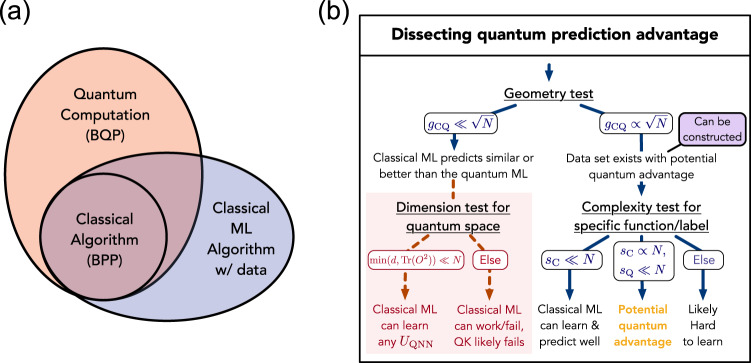
The use of quantum computing for machine learning is among the most exciting prospective applications of quantum technologies. However, machine learning tasks where data is provided can be considerably different than commonly studied computational tasks. In this work, we show that some problems that are classically hard to compute can be easily predicted by classical machines learning from data. Using rigorous prediction error bounds as a foundation, we develop a methodology for assessing potential quantum advantage in learning tasks. The bounds are tight asymptotically and empirically predictive for a wide range of learning models. These constructions explain numerical results showing that with the help of data, classical machine learning models can be competitive with quantum models even if they are tailored to quantum problems. We then propose a projected quantum model that provides a simple and rigorous quantum speed-up for a learning problem in the fault-tolerant regime. For near-term implementations, we demonstrate a significant prediction advantage over some classical models on engineered data sets designed to demonstrate a maximal quantum advantage in one of the largest numerical tests for gate-based quantum machine learning to date, up to 30 qubits.
Overview
The claims and statistics of this paper haven’t been checked yet.
Free: it reads the open-access text and checks the first 5 claims that cite a source we can check. Create a free account to check every claim.
Integrity signals
Registry
Cites
Statistics
Figures
Verification
Claims the paper makes
The claims and statistics of this paper haven’t been checked yet.
Free: it reads the open-access text and checks the first 5 claims that cite a source we can check. Create a free account to check every claim.
Claims other papers make about this one
Each is checked against this paper’s own text: does it say what the citing paper says it does?
The source backs part of the claim, not all of it — or backs it for a different population, condition or comparison.
In the citing paper
“measures such as the effective dimension have been motivated from an information-theoretic standpoint and depend on the Fisher information”
From The power of quantum neural networks (2021) · cites this paper as [21]
Experimental — accuracy not yet measuredThe cited source says what the claim attributes to it.
In the citing paper
“For instance, in [57], it is shown how the quality and the amount of data can sensibly affect the performance of classical and QML models in such a way that the quantum advantage is not always guaranteed.”
From On Circuit-Based Hybrid Quantum Neural Networks for Remote Sensing Imagery Classification (2022) · cites this paper as [57]
The cited source says what the claim attributes to it.
In the citing paper
“However, there is not a shared consensus on how and when QML can be advantageous with respect to its classical counterpart on general classes of problems.”
From On Circuit-Based Hybrid Quantum Neural Networks for Remote Sensing Imagery Classification (2022) · cites this paper as [57]
In the citing paper
“a quantity that describes the geometry of a model's parameter space and is essential in both statistics and machine learning [20-22].”
From The power of quantum neural networks (2021) · cites this paper as [21]
Self-check
Percentages, sums and reported differences re-computed from the paper’s own numbers.
The self-check needs the paper’s full text.
Citations
Cites
Breiman, L. (2001) · Machine Learning · doi:10.1023/a:1010933404324 · Cited by 133,538
Cortes, C., & Vapnik, V. (1995) · Machine Learning · doi:10.1007/bf00994018 · Cited by 59,421
Hohenberg, P., & Kohn, W. (1964) · Physical Review · doi:10.1103/physrev.136.b864 · Cited by 53,541
Learning with Kernels: Support Vector Machines, Regularization, Optimization, and Beyond
Schölkopf, B., & Smola, A. J. (2001) · The MIT Press eBooks · doi:10.7551/mitpress/4175.001.0001 · Cited by 11,703
Libsvm : A library for support vector machines
Ferrari, V. (2008) · Medical Entomology and Zoology · Cited by 10,123
Least Squares Support Vector Machine Classifiers
Suykens, J. A. K., & Vandewalle, J. (1999) · Neural Processing Letters · doi:10.1023/a:1018628609742 · Cited by 9,362
Density-Functional Theory for Time-Dependent Systems
Runge, E., & Gross, E. K. U. (1984) · Physical Review Letters · doi:10.1103/physrevlett.52.997 · Cited by 8,914
A fast quantum mechanical algorithm for database search
Grover, L. K. (1996) · Proceedings of the twenty-eighth annual ACM symposium on Theory of computing - STOC '96 · doi:10.1145/237814.237866 · Cited by 8,830
Re-epithelialization and immune cell behaviour in an ex vivo human skin model
Rakita, A., Nikolić, N., Mildner, M., Matiasek, J., & Elbe-Bürger, A. (2020) · Scientific Reports · doi:10.1038/s41598-019-56847-4 · Cited by 8,228
Quantum supremacy using a programmable superconducting processor
Arute, F., Arya, K., Babbush, R., Bacon, D., Bardin, J. C., Barends, R., Biswas, R., Boixo, S., Brandao, F. G. S. L., Buell, D. A., et al. (2019) · Nature · doi:10.1038/s41586-019-1666-5 · Cited by 7,720
Self-citation
Cited by
Items 201–300 of 925
Quantum Kernel-Based Long Short-term Memory for Climate Time-Series Forecasting
Hsu, Y.-C., Chen, N.-Y., Li, T.-Y., Lee, P.-H. H., & Chen, K. (2025) · International Conference on Quantum Communications, Networking, and Computing (QCNC) · doi:10.1109/qcnc64685.2025.00072 · Cited by 42
“Quantum computing offers transformative potential by exploiting quantum superposition and entanglement to process high-dimensional data in Hilbert spaces more efficiently than classical systems [7].”
Machine learning on quantum experimental data toward solving quantum many-body problems
Kim, D., & Cho, G. (2023) · doi:10.21203/rs.3.rs-3674601/v1 · Cited by 21
Classical-quantum approach to image classification: Autoencoders and quantum SVMs
Slabbert, D., & Petruccione, F. (2025) · AVS Quantum Science · doi:10.1116/5.0261885 · Cited by 25
Shaik, R. U., & Periasamy, S. (2022) · International Journal of Remote Sensing · doi:10.1080/01431161.2022.2061877 · Cited by 20
“From various literature studies, it was observed that the quantum SVM could effectively learn or train the system with a smaller dataset than the classical SVM (Huang et al. 2021).”
BackgroundAkter, M. S., Faruk, M. J. H., Anjum, N., Masum, M., Shahriar, H., Sakib, N., Rahman, A., Wu, F., & Cuzzocrea, A. (2022) · IEEE International Conference on Big Data (BigData) · doi:10.1109/bigdata55660.2022.10020813 · Cited by 27
Machine learning in metastatic cancer research: Potentials, possibilities, and prospects
Petinrin, O. O., Saeed, F., Toseef, M., Liu, Z., Basurra, S. S., Muyide, I. O., Li, X., Lin, Q., & Wong, K. (2023) · Computational and Structural Biotechnology Journal · doi:10.1016/j.csbj.2023.03.046 · Cited by 27
“This technique can be utilized to speed up computation and improve performance of analysis compared to some classical ML methods [179].”
MethodOptimizing Quantum Federated Learning Based on Federated Quantum Natural Gradient Descent
Qi, J., Zhang, X.-L., & Tejedor, J. (2023) · IEEE International Conference on Acoustics Speech and Signal Processing · doi:10.1109/icassp49357.2023.10094634 · Cited by 30
“…of noisy intermediate-scale quantum (NISQ) devices [8, 9, 10], the quantum computing hardware is expected to speed up the classical DL algorithms by creating novel quantum machine learning (QML) approaches like quantum neural networks (QNN) [11, 12, 13, 14] and quantum kernel learning (QKL) [14].”
BackgroundA Perspective on Quantum Computing Applications in Quantum Chemistry Using 25–100 Logical Qubits
Alexeev, Y., Batista, V. S., Bauman, N. P., Bertels, L. W., Claudino, D., Dutta, R., Gagliardi, L., Godwin, S., Govind, N., Head‐Gordon, M., et al. (2025) · Journal of Chemical Theory and Computation · doi:10.1021/acs.jctc.5c01038 · Cited by 53
“…active-space scoring and circuit compilation, accelerating decoder inference and feedback con-trol for QEC, and reducing measurement cost via learning-based estimators (e.g., classical shadows), so that selection, execution, and readout are co-optimized rather than siloed [130, 143, 224, 248].”
InfluentialEmotion Quantification Using Variational Quantum State Fidelity Estimation
Singh, J., Ali, F., Shah, B., Bhangu, K. S., & Kwak, D. (2022) · IEEE Access · doi:10.1109/access.2022.3216890 · Cited by 24
“Numerous methods of encoding data into quantum space have been suggested in the published literature [73], [74], [75].”
MethodWen, J., Wang, Z., Huang, Z., Cai, D., Jia, B., Cao, C., Ma, Y., Wei, H., Wen, K., & Qian, L. (2023) · Science China Physics Mechanics and Astronomy · doi:10.1007/s11433-023-2147-3 · Cited by 21
On the expressivity of embedding quantum kernels
Gil-Fuster, E., Eisert, J., & Dunjko, V. (2024) · Machine Learning Science and Technology · doi:10.1088/2632-2153/ad2f51 · Cited by 54
“On the one hand, it was used in an effort to prove quantum–classical learning separations in the context of data from quantum experiments [28].”
BackgroundMethodResultInfluentialPermutation invariant encodings for quantum machine learning with point cloud data
Heredge, J., Hill, C. D., Hollenberg, L. C. L., & Sevior, M. E. (2024) · Quantum Machine Intelligence · doi:10.1007/s42484-024-00156-1 · Cited by 25
“However, some QML techniques do not generalise well as the number of qubits, and hence, the dimensionality of the Hilbert space increases (Huang et al. 2021).”
Automatic and Effective Discovery of Quantum Kernels
Incudini, M., Bosco, D. L., Martini, F., Grossi, M., Serra, G., & Pierro, A. D. (2024) · IEEE Transactions on Emerging Topics in Computational Intelligence · doi:10.1109/tetci.2024.3499993 · Cited by 36
“This problem can be mitigated by using projected quantum kernels [14], [15], which project the data to a smaller Hilbert space, or by limiting the mapping of data to a small region of the exponentially large Hilbert space [16].”
InfluentialWhat the foundations of quantum computer science teach us about chemistry
McClean, J. R., Rubin, N. C., Lee, J., Harrigan, M. P., O’Brien, T. E., Babbush, R., Huggins, W. J., & Huang, H.-Y. (2021) · The Journal of Chemical Physics · doi:10.1063/5.0060367 · Cited by 24
“In particular, recent work has shown that the power offered by data from a quantum computer can lift classical models to be competitive with their quantum counterparts in some cases [71].”
BackgroundSelf-citationHassan, S. S., Khan, L. U., Park, Y. M., Guizani, M., Han, Z., Ratnarajah, T., & Hong, C. S. (2025) · IEEE Communications Surveys & Tutorials · doi:10.1109/comst.2025.3610357 · Cited by 31
“Recent investigations demonstrate that quantum transfer learning (QTL) frameworks significantly outperform traditional approaches when leveraging pretrained quantum feature maps and variational quantum classifiers [185], [186].”
Error mitigation enables PET radiomic cancer characterization on quantum computers
Moradi, S., Spielvogel, C. P., Krajnc, D., Brandner, C., Hillmich, S., Wille, R., Traub‐Weidinger, T., Li, X., Hacker, M., Drexler, W., et al. (2023) · European Journal of Nuclear Medicine and Molecular Imaging · doi:10.1007/s00259-023-06362-6 · Cited by 21
“Consistently, various QML studies have demonstrated the feasibility to both estimate [14] and to achieve [13, 17, 18] a higher predictive performance when relying on quantum ML approaches compared to classic ML [19].”
BackgroundMethodResultInfluentialQuantum-parallel vectorized data encodings and computations on trapped-ion and transmon QPUs
Balewski, J. T., Amankwah, M. G., Beeumen, R. V., Bethel, E. W., Perciano, T., & Camps, D. (2024) · Scientific Reports · doi:10.1038/s41598-024-53720-x · Cited by 39
Graph algorithms with neutral atom quantum processors
Dalyac, C., Leclerc, L., Vignoli, L., Djellabi, M., Coelho, W. D. S., Alves, B. X. R., Dareau, A., Dreon, D., Elfving, V. E., Signoles, A., et al. (2024) · The European Physical Journal A · doi:10.1140/epja/s10050-024-01385-5 · Cited by 43
“[97], thereby opening the way to potential representation advantages.”
Gyöngyösi, L., & Imre, S. (2025) · Quantum Information and Computation · doi:10.2478/qic-2025-0006 · Cited by 40
Opportunities and challenges of quantum computing for climate modeling
Schwabe, M., Pastori, L., de Vega, I., Gentine, P., Iapichino, L., Lahtinen, V., Leib, M., Lorenz, J. M., & Eyring, V. (2025) · Environmental Data Science · doi:10.1017/eds.2025.10010 · Cited by 23
“Already with current HPC systems it is cheaper to rerun the model if additional analyses are needed instead of storing the entire output.”
deGraffenried, R., Hammer, J. E., Dietterich, H. R., Perroy, R. L., Patrick, M. R., & SHEA, T. B. (2021) · Bulletin of Volcanology · doi:10.1007/s00445-021-01492-x · Cited by 18
Hossain, M. M., Ali, M. S., Swarna, R. A., Hasan, M. M., Habib, N., Rahman, W., Azad, M. M., & Rahman, M. M. (2021) · International Conference on Computer and Information Technology (ICCIT) · doi:10.1109/iccit54785.2021.9689853 · Cited by 17
Experimental quantum end-to-end learning on a superconducting processor
Pan, X., Cao, X., Wang, W., Hua, Z., Cai, W., Li, X., Wang, H., Hu, J., Song, Y., Deng, D.-L., et al. (2023) · npj Quantum Information · doi:10.1038/s41534-023-00685-w · Cited by 24
“, via deep optimization of the circuit architecture [31] and qubit mapping strategies [32].”
MethodOptimal Quantum Dataset for Learning a Unitary Transformation
Yu, Z., Zhao, X., Zhao, B., & Wang, X. (2023) · Physical Review Applied · doi:10.1103/physrevapplied.19.034017 · Cited by 23
A Quantum Kernel Learning Approach to Acoustic Modeling for Spoken Command Recognition
Yang, C.-H. H., Li, B., Zhang, Y., Chen, N., Sainath, T. N., Siniscalchi, S. M., & Lee, C. (2023) · IEEE International Conference on Acoustics Speech and Signal Processing · doi:10.1109/icassp49357.2023.10095142 · Cited by 18
“QKL [15, 12] instead provides an alternative training mechanism to use quantum states for quantum encoding and projection [16], and then forms a kernel to estimate a hyperplane to separate training data with its kernel alignment.”
BackgroundThe role of entanglement for enhancing the efficiency of quantum kernels towards classification
Sharma, D., Singh, P., & Kumar, A. (2023) · Physica A Statistical Mechanics and its Applications · doi:10.1016/j.physa.2023.128938 · Cited by 30
“In this work, we have propose new quantum circuits to compute kernel values and compare the performance of proposed circuits with classical machine learning algorithms and quantum circuits in [21, 22].”
BackgroundMethodResultInfluentialOn Quantum Hyperparameters Selection in Hybrid Classifiers for Earth Observation Data
Sebastianelli, A., Rosso, M. P. D., Ullo, S. L., & Gamba, P. E. (2023) · IEEE Geoscience and Remote Sensing Letters · doi:10.1109/lgrs.2023.3308105 · Cited by 24
“tions that guarantee the quantum advantage [8], or the limit to the number of operations that can be performed on a quantum”
BackgroundQuantum Support Vector Machines for Aerodynamic Classification
Yuan, X.-J., Chen, Z.-Q., Liu, Y., Xie, Z., Liu, Y., Jin, X., Wen, X., & Tang, H. L. (2023) · Intelligent Computing · doi:10.34133/icomputing.0057 · Cited by 22
“It has been proven that setting ML components in the quantum way, such as quantum kernels and quantum feature maps, can lead to general advantages that make the rationale for the emerging field of quantum ML[25–27], and hence a few quantum-circuit-based SVM algorithms were proposed[28– 30].”
BackgroundApproximately Equivariant Quantum Neural Network for p4m Group Symmetries in Images
Chang, S. Y., Grossi, M., Saux, B. L., & Vallecorsa, S. (2023) · IEEE International Conference on Quantum Computing and Engineering (QCE) · doi:10.1109/qce57702.2023.00033 · Cited by 28
“They are often expected to improve existing machine learning (ML) techniques in terms of training performance [2], [4], convergence rate [5], [6], and generalization power [7]– [9].”
BackgroundComplexity of life sciences in quantum and AI era
Pyrkov, A. N., Aliper, A., Bezrukov, D. S., Podolskiy, D. I., Ren, F., & Zhavoronkov, A. A. (2024) · Wiley Interdisciplinary Reviews Computational Molecular Science · doi:10.1002/wcms.1701 · Cited by 30
Quantum Fisher kernel for mitigating the vanishing similarity issue
Suzuki, Y., Kawaguchi, H., & Yamamoto, N. (2024) · Quantum Science and Technology · doi:10.1088/2058-9565/ad4b97 · Cited by 35
“We also mention that even the projected QK may suffer from the vanishing similarity issue [11, 13], although there is more room for further exploration.”
BackgroundMethodInfluentialA hyperparameter study for quantum kernel methods
Egginger, S., Sakhnenko, A., & Lorenz, J. M. (2024) · Quantum Machine Intelligence · doi:10.1007/s42484-024-00172-1 · Cited by 28
“Huang et al. [6] challenged a common argument for claiming quantum advantage that is often used in QML literature.”
BackgroundMethodInfluentialA comprehensive study of quantum arithmetic circuits
Wang, S., Li, X., Lee, W., Deb, S., Lim, E., & Chattopadhyay, A. (2025) · Philosophical Transactions of the Royal Society A Mathematical Physical and Engineering Sciences · doi:10.1098/rsta.2023.0392 · Cited by 64
Empowering nanophotonic applications via artificial intelligence: pathways, progress, and prospects
Chen, W., Yang, S., Yan, Y., Gao, Y., Zhu, J., & Dong, Z. (2025) · Nanophotonics · doi:10.1515/nanoph-2024-0723 · Cited by 22
Potential of quantum machine learning for processing multispectral Earth observation data
Gupta, M. K., Romaszewski, M., & Gawron, P. (2025) · Bulletin of the Polish Academy of Sciences Technical Sciences · doi:10.24425/bpasts.2025.154279 · Cited by 23
Bhatia, A. S., Kais, S., & Alam, M. A. (2025) · IEEE Journal of Biomedical and Health Informatics · doi:10.1109/jbhi.2025.3596156 · Cited by 24
“The realm of quantum machine learning (QML) has become a rapidly growing framework to solve computational problems dealing with quantum data [12], [13].”
O’Brien, T. E., Ioffe, L. B., Su, Y., Fushman, D., Neven, H., Babbush, R., & Smelyanskiy, V. (2022) · PRX Quantum · doi:10.1103/prxquantum.3.030345 · Cited by 39
“[58– 60], or algorithms that require access to the quantum state [61, 62] being implemented.”
BackgroundSelf-citationQuantum kernels with Gaussian state encoding for machine learning
Li, L. H., Zhang, D.-B., & Wang, Z. D. (2022) · Physics Letters A · doi:10.1016/j.physleta.2022.128088 · Cited by 22
Ansatz-Independent Variational Quantum Classifiers and the Price of Ansatz
Miyahara, H., & Roychowdhury, V. (2022) · Scientific Reports · doi:10.1038/s41598-022-20688-5 · Cited by 22
“(26) with p = 2 , for the cancer dataset (0 or 1).”
BackgroundOn Exploring the Potential of Quantum Auto-Encoder for Learning Quantum Systems
Du, Y., & Tao, D. (2024) · IEEE Transactions on Neural Networks and Learning Systems · doi:10.1109/tnnls.2024.3474793 · Cited by 34
“Besides, in QML [88], [89], [90], [91], [92], [93], [94], theoretical studies [95], [96] proved that quantum kernels [61], [97], [98], [99] may achieve better generalization ability than that of classical kernels.”
Neural quantum kernels: Training quantum kernels with quantum neural networks
Rodriguez-Grasa, P., Ban, Y., & Sanz, M. (2025) · Physical Review Research · doi:10.1103/xphb-x2g4 · Cited by 41
Quantum Machine Learning: An Interplay Between Quantum Computing and Machine Learning
Qi, J., Yang, C.-H. H., Chen, S. Y.-C., & Chen, P. (2025) · IEEE International Symposium on Circuits and Systems proceedings · doi:10.1109/iscas56072.2025.11043890 · Cited by 17
Quantum Machine Learning: A comprehensive review on optimization of machine learning algorithms
Divya, R., & Peter, J. D. (2021) · International Conference on Microelectronics, Signals & Systems (ICMSS) · doi:10.1109/icmss53060.2021.9673630 · Cited by 22
Performance of quantum kernel on initial learning process
Tomono, T., & Natsubori, S. (2022) · EPJ Quantum Technology · doi:10.1140/epjqt/s40507-022-00157-8 · Cited by 18
“A methodology for assessing potential quantum advantage in learning tasks was developed [21] in 2021.”
MethodPrediction of Protein‐Ligand Binding Affinity by a Hybrid Quantum‐Classical Deep Learning Algorithm
Dong, L., Li, Y., Liu, D., Ji, Y., Hu, B., Shi, S., Zhang, F., Hu, J., Qian, K., Jin, X., et al. (2023) · Advanced Quantum Technologies · doi:10.1002/qute.202300107 · Cited by 18
Statistical Complexity of Quantum Learning
Banchi, L., Pereira, J. L., Jose, S. T., & Simeone, O. (2024) · Advanced Quantum Technologies · doi:10.1002/qute.202300311 · Cited by 35
“[10] to define a hybrid quantum kernel method with favorable generalization properties.”
Muser, T., Zapusek, E., Belis, V., & Reiter, F. (2024) · Physical Review A · doi:10.1103/physreva.110.032434 · Cited by 24
Quantum-Train-Based Distributed Multi-Agent Reinforcement Learning
Chen, K., Chen, S. Y.-C., Liu, C.-Y., & Leung, K. K. (2025) · doi:10.1109/mciicompanion65207.2025.11007471 · Cited by 36
“Recent advancements in Quantum Machine Learning (QML) have demonstrated that quantum circuits can serve as powerful function approximators [7], [8], providing theoretical speedups for specific computational tasks compared to their classical counterparts [9].”
Quantum Kernel-Based Long Short-term Memory
Hsu, Y.-C., Li, T.-Y., & Chen, K. (2025) · IEEE International Conference on Acoustics, Speech, and Signal Processing Workshops (ICASSPW) · doi:10.1109/icasspw65056.2025.11011010 · Cited by 27
“Quantum computing has emerged as a promising paradigm that leverages quantum mechanical principles such as superposition and entanglement to enhance machine learning models, offering significant speed advantages over traditional computation [4].”
Quantum Federated Learning for Multimodal Data: A Modality-Agnostic Approach
Pokharel, A., Rahman, R., Morris, T., & Nguyen, D. C. (2025) · IEEE/CVF Conference on Computer Vision and Pattern Recognition Workshops (CVPRW) · doi:10.1109/cvprw67362.2025.00059 · Cited by 15
“Quantum-based models often accelerate convergence and improve representational power in diverse machine-learning tasks where classical approaches fail to perform [15].”
Federated Quantum-Train Long Short-Term Memory for Gravitational Wave Signal
Liu, C.-Y., Chen, S. Y.-C., Chen, K.-C., Huang, W.-J., & Chang, Y.-J. (2025) · IEEE Conference on Computer Communications Workshops (INFOCOM WKSHPS) · doi:10.1109/infocomwkshps65812.2025.11152904 · Cited by 18
“Methods like gate-angle encoding and amplitude encoding [24], though theoretically promising, are hindered by the limited qubit count and short coherence times of current quantum hardware.”
Assembly of a Coreset of Earth Observation Images on a Small Quantum Computer
Otgonbaatar, S., & Datcu, M. P. (2021) · Electronics · doi:10.3390/electronics10202482 · Cited by 19
“In particular, quantum computers promise to solve some intractable problems in ML [11–13], and to train an SVM even better/faster than a conventional computer when its input data volume is very small (“core of a dataset”) [14,15].”
BackgroundEmbedding Learning in Hybrid Quantum-Classical Neural Networks
Liu, M., Liu, J., Liu, R., Makhanov, H., Lykov, D., Apte, A., & Alexeev, Y. (2022) · IEEE International Conference on Quantum Computing and Engineering (QCE) · doi:10.1109/qce53715.2022.00026 · Cited by 24
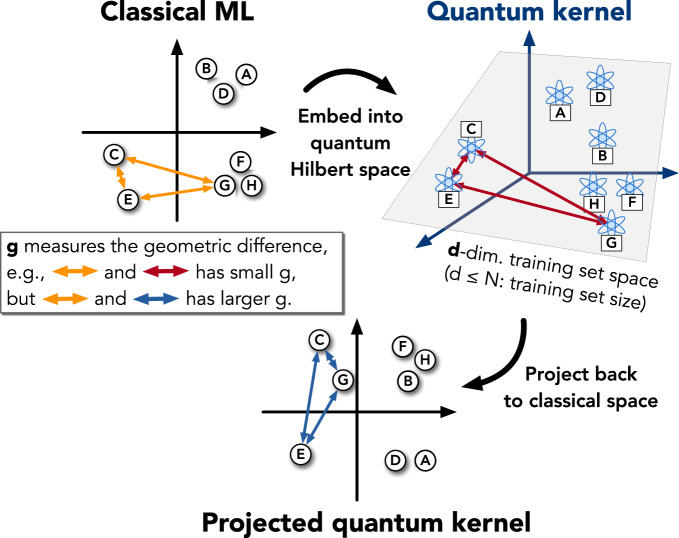
“For quantum machine learning to be advantageous, a significant geometric difference between the classical and quantum data embedding (representation of input data in the classical parameter space or the quantum Hilbert space) is needed, and the quantum embedding must map to the correct answers with lower complexity th…”
BackgroundBarren plateaus from learning scramblers with local cost functions
Garcia, R. J., Zhao, C., Bu, K., & Jaffe, A. (2023) · Journal of High Energy Physics · doi:10.1007/jhep01(2023)090 · Cited by 21
Classification of knee osteoarthritis based on quantum-to-classical transfer learning
Dong, Y., Che, X., Fu, Y., Liu, H., Zhang, Y., & Tu, Y. (2023) · Frontiers in Physics · doi:10.3389/fphy.2023.1212373 · Cited by 20
A hybrid quantum–classical neural network for learning transferable visual representation
Wang, R., Richerme, P., & Chen, F. (2023) · Quantum Science and Technology · doi:10.1088/2058-9565/acf1c7 · Cited by 18
“First , most QML algorithms [27–29] focus on supervised classification by training models to predict class labels on test data that is generated from the same distribution as the training data.”
BackgroundSecond Opinion for Non-Surgical Root Canal Treatment Prognosis Using Machine Learning Models
Bennasar-Verger, C., García, I., González-Cid, Y., Pérez, F., & Jiménez, J. Q. (2023) · Diagnostics · doi:10.3390/diagnostics13172742 · Cited by 16
Liu, C., Chen, Y., & Mo, F. (2023) · National Science Open · doi:10.1360/nso/20230037 · Cited by 19
“This “data-driven” methodology greatly aids synthetic route design, chemical reaction prediction, theoretical simulation, and quantum computing, and has successfully addressed numerous scientific problems [14, 15, 16, 17].”
BackgroundTowards An End-To-End Approach For Quantum Principal Component Analysis
Dri, E., Aita, A., Fioravanti, T., Franco, G., Giusto, E., Ranieri, G., Corbelletto, D., & Montrucchio, B. (2023) · IEEE International Conference on Quantum Computing and Engineering (QCE) · doi:10.1109/qce57702.2023.10175 · Cited by 19
Quantum adversarial learning for kernel methods
Montalbano, G., & Banchi, L. (2025) · Quantum Machine Intelligence · doi:10.1007/s42484-025-00238-8 · Cited by 25
“The generalization capabilities of the quantum-enhanced SVM classifier are defined intrinsically by the quantum embedding circuit leveraged for quantum kernel estimation and can be bounded in several ways (Banchi et al. 2021, 2023; Huang et al. 2021; Caro et al. 2022).”
Quantum support vector data description for anomaly detection
Oh, H., & Park, D. K. (2024) · Machine Learning Science and Technology · doi:10.1088/2632-2153/ad6be8 · Cited by 28
“Notethat when all data is normalized to unit norm vectors, SVDD is equivalent to the one-class SVM [50] which aims to find a maximum margin hyperplane that best separates the training dataset from the origin [51].”
QUSL: Quantum unsupervised image similarity learning with enhanced performance
Yu, L.-H., Li, X., Chen, G., Zhu, Q., Li, H., & Yang, G. (2024) · Expert Systems with Applications · doi:10.1016/j.eswa.2024.125112 · Cited by 16
“QML boasts several advantages Schuld et al. (2014); Xu et al. (2021), one of which is its ability to utilize a larger feature space, providing enhanced capabilities for modeling complex patterns in image processing.”
BackgroundMethodGeneralization error bound for quantum machine learning in NISQ era—a survey
Khanal, B., Rivas, P., Sanjel, A., Sooksatra, K., Quevedo, E., & Rodríguez, A. (2024) · Quantum Machine Intelligence · doi:10.1007/s42484-024-00204-w · Cited by 22
“Huang et al. (2021) found that data availability can modulate the computational hardness of learning tasks.”
InfluentialQuanvolution Neural Network to Recognize arrhythmia from 2D scaleogram features of ECG signals
Sridevi, S., Kanimozhi, T., Issac, K., & Sudha, M. C. (2022) · International Conference on Innovative Trends in Information Technology (ICITIIT) · doi:10.1109/icitiit54346.2022.9744224 · Cited by 20
Data-centric machine learning in quantum information science
Lohani, S., Lukens, J. M., Glasser, R. T., Searles, T. A., & Kirby, B. T. (2022) · Machine Learning Science and Technology · doi:10.1088/2632-2153/ac9036 · Cited by 18
Quantum-classical hybrid neural networks in the neural tangent kernel regime
Nakaji, K., Tezuka, H., & Yamamoto, N. (2023) · Quantum Science and Technology · doi:10.1088/2058-9565/ad133e · Cited by 25
“However, our model is a function of the projected quantum kernel, which may have a good generalization capability as suggested in [27].”
BackgroundMethodInfluentialOptimizing Quantum Classification Algorithms on Classical Benchmark Datasets
John, M., Schuhmacher, J., Barkoutsos, P. K., Tavernelli, I., & Tacchino, F. (2023) · Entropy · doi:10.3390/e25060860 · Cited by 19
“In fact, this not only hinders the trainability of variational quantum models—leading to the so-called barren plateau phenomenon [37–39]—but also has a negative impact on the capabilities of quantum kernel methods [23,40].”
BackgroundHybrid quantum learning with data reuploading on a small-scale superconducting quantum simulator
Tolstobrov, A., Fedorov, G., Sanduleanu, S. V., Kadyrmetov, S., Vasenin, A. V., Bolgar, A. N., Kalacheva, D. A., Lubsanov, V. B., Dorogov, A., Zotova, J., et al. (2024) · Physical Review A · doi:10.1103/physreva.109.012411 · Cited by 19
“…single-qubit quantum circuit is enough to solve non-trivial classification tasks [17, 18], there is potential in using quantum kernel estimation for support vector machines [19, 20], and it is supposed that QC-based models may have advantages in expressivity and generalization [21, 22, 23, 24, 25].”
BackgroundQuantum-inspired language models based on unitary transformation
Fan, Z., Zhang, J., Zhang, P., Lin, Q., Li, Y., & Qian, Y. (2024) · Information Processing & Management · doi:10.1016/j.ipm.2024.103741 · Cited by 22
Sahin, M. E., Symons, B. C. B., Pati, P., Minhas, F., Millar, D. A., Gabrani, M., Mensa, S., & Robertus, J. L. (2024) · Quantum · doi:10.22331/q-2024-10-18-1502 · Cited by 14
“…Ductal Hyperplasia (UDH), Flat Epithe-6 In our tests, we used a 10-qubit feature map inspired by an instantaneous quantum polynomial (IQP) kernel [14, 15] with an optimal bandwidth parameter c opt ≈ 2 /n [26, 27]. where c is the bandwidth, H and Z denote the Hadamard and Pauli Z gates respectively.”
BackgroundMethodConsensus-based Distributed Quantum Kernel Learning for Speech Recognition
Chen, K., Ma, W., & Xu, X. (2025) · IEEE International Conference on Acoustics, Speech, and Signal Processing Workshops (ICASSPW) · doi:10.1109/icasspw65056.2025.11011036 · Cited by 23
“As classical machine learning models struggle with the growing complexity and scale of data, quantum computing presents a promising pathway to address these challenges [4].”
How Quantum Computing-Friendly Multispectral Data can be?
Gupta, M. K., Beseda, M., & Gawron, P. (2022) · IEEE International Geoscience and Remote Sensing Symposium (IGARSS) · doi:10.1109/igarss46834.2022.9883676 · Cited by 30
“For “Artificial surfaces and constructions — 62”, “Cultivated areas — 73”, “Broadleaf tree cover — 82”, and “Herbaceous vegetation — 102”. a detailed description, we refer to Appendix G: “Constructing dataset to separate quantum and classical model” of [17].”
MethodInfluentialQuafu-RL: The cloud quantum computers based quantum reinforcement learning
Jin, Y., Xu, H.-Z., Wang, Z., Zhuang, W.-F., Huang, K., Shi, Y., 马, W.-G. 卫. M., Li, T., Chen, C.-T., Xu, K., et al. (2024) · Chinese Physics B · doi:10.1088/1674-1056/ad3061 · Cited by 22
VQE-generated quantum circuit dataset for machine learning
Nakayama, A., Mitarai, K., Placidi, L., Sugimoto, T., & Fujii, K. (2025) · Physical Review Research · doi:10.1103/c43x-9866 · Cited by 31
“Also, Huang et al. [13] proposed to relabel a classical dataset by outputs of quantum circuits so that the relabeled one is difficult to be learned by classical computers.”
Sukulthanasorn, N., & Terada, K. (2025) · Computer Methods in Applied Mechanics and Engineering · doi:10.1016/j.cma.2025.118411 · Cited by 15
Grand Challenge of Quantum Applications
Babbush, R., King, R., Boixo, S., Huggins, W. J., Khattar, T., Low, G. H., McClean, J. R., O’Brien, T. E., & Rubin, N. C. (2026) · PRX Quantum · doi:10.1103/6r9l-lynr · Cited by 73
“Of course, one still requires a quantum computer to provide initial data, and understanding generalization, or lack thereof, remains a matter of ongoing research [108,109].”
Self-citationPérez, I. F., la Prieta, F. D., Rodríguez, S., Corchado, J. M., & Prieto, J. (2023) · Lecture notes in networks and systems · doi:10.1007/978-3-031-22356-3_15 · Cited by 22
Designing complex concentrated alloys with quantum machine learning and language modeling
Pei, Z., Gong, Y., Liu, X., & Yin, J. (2024) · Matter · doi:10.1016/j.matt.2024.05.035 · Cited by 14
Federated quantum machine learning for drug discovery and healthcare
Saggi, M. K., Bhatia, A. S., & Kais, S. (2024) · Annual reports in computational chemistry · doi:10.1016/bs.arcc.2024.10.007 · Cited by 16
Efficient MPS representations and quantum circuits from the Fourier modes of classical image data
Jobst, B., Shen, K., Riofrío, C. A., Shishenina, E., & Pollmann, F. (2024) · Quantum · doi:10.22331/q-2024-12-03-1544 · Cited by 37
Akrom, M., Herowati, W., & Setiadi, D. R. I. M. (2025) · Journal of Computing Theories and Applications · doi:10.62411/jcta.11779 · Cited by 13
“…the noisy intermediate-scale quantum (NISQ) era, offering significant advantages over classical methods, especially for near-term quantum devices [29], [35] the development of pure quantum methodologies capable of processing classical data entirely within a quantum framework remains a more complex…”
Satellite image classification with neural quantum kernels
Rodriguez-Grasa, P., Farzan-Rodriguez, R., Novelli, G., Ban, Y., & Sanz, M. (2025) · Machine Learning Science and Technology · doi:10.1088/2632-2153/ada86c · Cited by 23
“The development of NQKs, however, opens the door to creating quantum kernels specifically tailored to individual problems.”
Studying the Impact of Quantum-Specific Hyperparameters on Hybrid Quantum-Classical Neural Networks
Zaman, K., Ahmed, T., Kashif, M., Hanif, M. A., Marchisio, A., & Shafique, M. (2025) · Communications in computer and information science · doi:10.1007/978-3-031-85884-0_11 · Cited by 20
Photon Number-Resolving Quantum Reservoir Computing
Nerenberg, S., Neill, O. D., Marcucci, G., & Faccio, D. (2024) · Optica Quantum · doi:10.1364/opticaq.553294 · Cited by 27
Nonunitary quantum machine learning
Heredge, J., West, M. T., Hollenberg, L. C. L., & Sevior, M. E. (2025) · Physical Review Applied · doi:10.1103/physrevapplied.23.044046 · Cited by 29
“A known issue in Quantum Machine Learning (QML) is that as the number of qubits increases there is a decrease in the generalisation performance of algorithms [19].”
CompressedMediQ: Hybrid Quantum Machine Learning Pipeline for High-Dimensional Neuroimaging Data
Chen, K., Li, Y.-T., Li, T.-Y., Liu, C.-Y., Lee, P.-H. H., & Chen, C. (2025) · IEEE International Conference on Acoustics, Speech, and Signal Processing Workshops (ICASSPW) · doi:10.1109/icasspw65056.2025.11011218 · Cited by 30
“CompressedMediQ addresses these issues by integrating quantum computing with classical ML techniques, enhancing processing speed and accuracy [17], [18].”
BackgroundQuantum computing for space applications: a selective review and perspectives
Torta, P., Casati, R., Bruni, S., Mandarino, A., & Prati, E. (2025) · EPJ Quantum Technology · doi:10.1140/epjqt/s40507-025-00369-8 · Cited by 20
Disruptive innovation in psychiatry
Sarris, J. J. (2022) · Annals of the New York Academy of Sciences · doi:10.1111/nyas.14764 · Cited by 14
Long-Lived Particles Anomaly Detection with Parametrized Quantum Circuits
Bordoni, S., Stanev, D., Santantonio, T., & Giagu, S. (2023) · Particles · doi:10.3390/particles6010016 · Cited by 17
“The proposed algorithm may show future advantages for the analysis of quantum data [27].”
Expressivity of Variational Quantum Machine Learning on the Boolean Cube
Herman, D., Raymond, R., Li, M., Robles, N., Mezzacapo, A., & Pistoia, M. (2023) · IEEE Transactions on Quantum Engineering · doi:10.1109/tqe.2023.3255206 · Cited by 21
An introduction to quantum computing for statisticians and data scientists
Lopatnikova, A., Tran, M., & Sisson, S. A. (2024) · Foundations of Data Science · doi:10.3934/fods.2024013 · Cited by 14
“Huang et al. (2021) develop a class of kernel models that can provide rigorously demonstrable speedup over classical models in the presence of noise, which means they are potentially achievable on the current generation of quantum computers.”
BackgroundEncoding optimization for quantum machine learning demonstrated on a superconducting transmon qutrit
Cao, S., Zhang, W., Tilly, J., Agarwal, A., Bakr, M. S., Campanaro, G., Fasciati, S. D., Wills, J., Shteynas, B., Chidambaram, V., et al. (2024) · Quantum Science and Technology · doi:10.1088/2058-9565/ad7315 · Cited by 18
Building a Quantum Engineering Undergraduate Program
Asfaw, A., Blais, A., Brown, K. R., Candelaria, J., Cantwell, C., Carr, L. D., Combes, J., Debroy, D. M., Donohue, J. M., Economou, S. E., et al. (2022) · IEEE Transactions on Education · doi:10.1109/te.2022.3144943 · Cited by 12
“Quantum computers, whose nonclassical properties seem to evade the bounds of the extended Church-Turing hypothesis, could provide breakthrough capabilities in optimization [15] and machine learning [16], [17].”
BackgroundQuantum Machine Learning in Intrusion Detection Systems: A Systematic Mapping Study
Faker, O., & Çağıltay, N. E. (2024) · Lecture notes in networks and systems · doi:10.1007/978-981-99-7886-1_9 · Cited by 15
Macaluso, A. (2024) · Künstliche Intell. · doi:10.1007/s13218-024-00856-7 · Cited by 16
PQKELP: Projected Quantum Kernel Embedding based Link Prediction in dynamic networks
Kumar, M., Singh, N., & Biswas, B. (2024) · Expert Systems with Applications · doi:10.1016/j.eswa.2024.125944 · Cited by 15
Reinforcement learning-based architecture search for quantum machine learning
Rapp, F., Kreplin, D. A., Huber, M. F., & Roth, M. (2025) · Machine Learning Science and Technology · doi:10.1088/2632-2153/adaf75 · Cited by 30
“PQCs, in the following also denoted as encoding circuits, are central to many methods used in QML, such as quantum neural networks (QNNs) [5, 9] and quantum kernel methods [3, 10, 11].”
BackgroundMethodInfluentialQuantum-Train with Tensor Network Mapping Model and Distributed Circuit Ansatz
Liu, C.-Y., Lin, C.-H. A., & Chen, K. (2025) · IEEE International Conference on Acoustics Speech and Signal Processing · doi:10.1109/icassp49660.2025.10889597 · Cited by 15
“In conventional QML approaches, data is typically introduced into quantum circuits through encoding techniques like gate-angle encoding and amplitude encoding [10].”
Razavi-Termeh, S. V., Sadeghi‐Niaraki, A., Ali, F., Pradhan, B., & Choi, S.-M. (2025) · Scientific Reports · doi:10.1038/s41598-025-15381-2 · Cited by 18
Exploring quantum active learning for materials design and discovery
Lourenço, M. P., Zadeh‐Haghighi, H., Hostaš, J., Naseri, M., Gaur, D. R., Simon, C., & Salahub, D. R. (2026) · Physical Chemistry Chemical Physics · doi:10.1039/d5cp04800a · Cited by 19
Metadata
- Authors
- Huang, H.-Y., Broughton, M., Mohseni, M., Babbush, R., Boixo, S., Neven, H., & McClean, J. R.
- Affiliations
- California Institute of Technology (US)
- Google (United States) (US)
- Corresponding author
- McClean, Jarrod R.
- Venue
- Nature Communications
- Published
- 2021-05-11
- Volume
- 12
- Issue
- 1
- Pages
- 2631-2631
- ISSN
- 2041-1723 (ISSN-L)
- PMC
- PMC8113501
- OpenAlex
- W3096052452
- Cited by
- 896
- References
- 67
- Citations by year
- 2026: 220 · 2025: 220 · 2024: 157 · 2023: 140 · 2022: 107 · 2021: 52
- FWCI
- 39.93
- Type
- journal article
- Language
- en
- Open access
- gold
- doi.org
- Licence
- cc-by
- creativecommons.org/licenses/by/4.0 (tdm)
- creativecommons.org/licenses/by/4.0 (vor)
- Locations
- Nature Communications (publishedVersion, cc-by)
- PubMed Central (publishedVersion, cc-by)
- PubMed (publishedVersion)
- arXiv (Cornell University) (submittedVersion)
- CaltechAUTHORS (California Institute of Technology) (submittedVersion, cc-by)
- RePEc: Research Papers in Economics (submittedVersion)
- DOAJ (DOAJ: Directory of Open Access Journals) (submittedVersion, cc-by-sa)
- arXiv (Cornell University)
- Bulletin of the American Physical Society
- Topics
- Physical Sciences › Computer Science › Artificial Intelligence › Quantum Computing Algorithms and Architecture
- Physical Sciences › Physics and Astronomy › Atomic and Molecular Physics, and Optics › Quantum many-body systems
- Physical Sciences › Physics and Astronomy › Atomic and Molecular Physics, and Optics › Quantum Information and Cryptography
- Keywords
- quantum machine learning, quantum advantage, prediction error bounds, classical machine learning, fault-tolerant quantum computing, gate-based quantum computing, quantum-classical comparison
About these checks
Registry, retraction, Cites and statistics results are computed, not judged, with one exception: a printed reference that no index lists is read once by a model before it counts as a citation error. Claims are extracted by a model and kept only when their quote appears verbatim in the text; each cited source is then checked, with a model’s help, for whether it says what the claim relies on. Those verdicts can be wrong — read the claim’s quote and the cited source before relying on one.
Statistics and arithmetic are recomputed, not judged.
Confidence bands are shown only for fields calibrated on our annotated test set. None is calibrated yet, so no band is shown.
What counts as a claim ›How we measure confidence ›How we check this ›
Are you an author, or do you see a problem with this page? Request a review
Data sources
Bibliographic data: Semantic Scholar, OpenAlex, Crossref.
Contains information from the Semantic Scholar Academic Graph Datasets, made available under the ODC Attribution License (ODC-BY 1.0).
Semantic Scholar’s data is described in: Kinney, R., et al. (2023). The Semantic Scholar Open Data Platform. arXiv:2301.10140.
