

Power of data in quantum machine learning
Open accessThe DOI matches its Crossref record; 67 of the 69 references it cites were found in a registry or an index.
Abstract
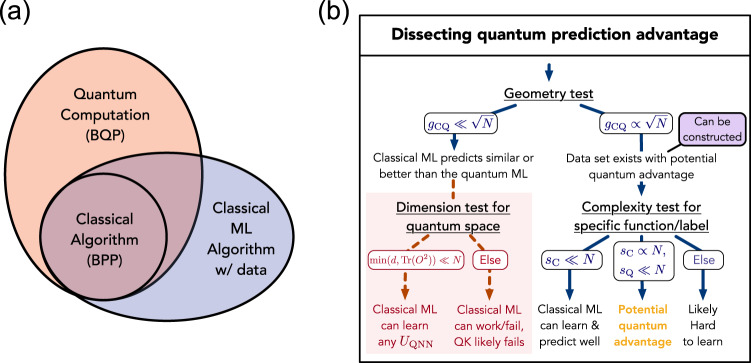
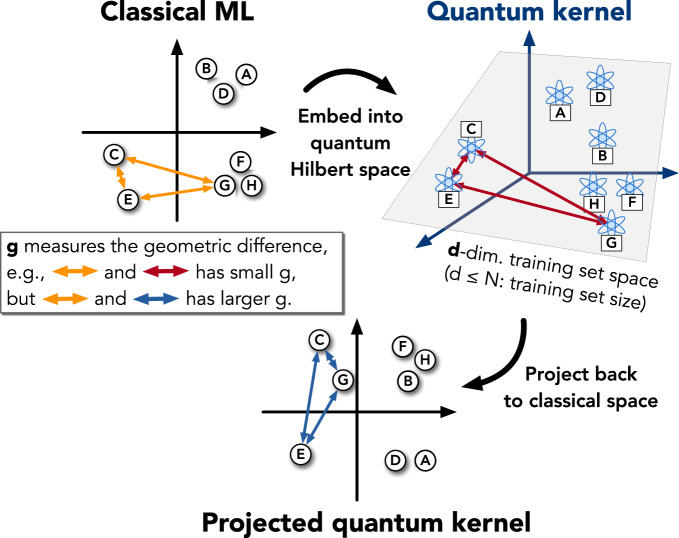
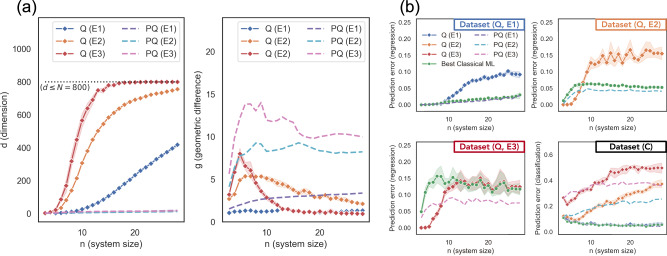
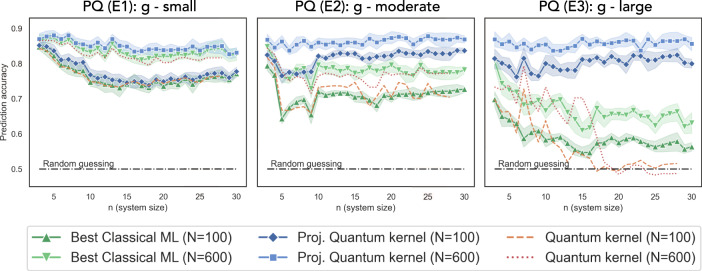
The use of quantum computing for machine learning is among the most exciting prospective applications of quantum technologies. However, machine learning tasks where data is provided can be considerably different than commonly studied computational tasks. In this work, we show that some problems that are classically hard to compute can be easily predicted by classical machines learning from data. Using rigorous prediction error bounds as a foundation, we develop a methodology for assessing potential quantum advantage in learning tasks. The bounds are tight asymptotically and empirically predictive for a wide range of learning models. These constructions explain numerical results showing that with the help of data, classical machine learning models can be competitive with quantum models even if they are tailored to quantum problems. We then propose a projected quantum model that provides a simple and rigorous quantum speed-up for a learning problem in the fault-tolerant regime. For near-term implementations, we demonstrate a significant prediction advantage over some classical models on engineered data sets designed to demonstrate a maximal quantum advantage in one of the largest numerical tests for gate-based quantum machine learning to date, up to 30 qubits.
Overview
The claims and statistics of this paper haven’t been checked yet.
Free: it reads the open-access text and checks the first 5 claims that cite a source we can check. Create a free account to check every claim.
Integrity signals
Registry
Cites
Statistics
Figures
Verification
Claims the paper makes
The claims and statistics of this paper haven’t been checked yet.
Free: it reads the open-access text and checks the first 5 claims that cite a source we can check. Create a free account to check every claim.
Claims other papers make about this one
Each is checked against this paper’s own text: does it say what the citing paper says it does?
The source backs part of the claim, not all of it — or backs it for a different population, condition or comparison.
In the citing paper
“measures such as the effective dimension have been motivated from an information-theoretic standpoint and depend on the Fisher information”
From The power of quantum neural networks (2021) · cites this paper as [21]
Experimental — accuracy not yet measuredThe cited source says what the claim attributes to it.
In the citing paper
“For instance, in [57], it is shown how the quality and the amount of data can sensibly affect the performance of classical and QML models in such a way that the quantum advantage is not always guaranteed.”
From On Circuit-Based Hybrid Quantum Neural Networks for Remote Sensing Imagery Classification (2022) · cites this paper as [57]
The cited source says what the claim attributes to it.
In the citing paper
“However, there is not a shared consensus on how and when QML can be advantageous with respect to its classical counterpart on general classes of problems.”
From On Circuit-Based Hybrid Quantum Neural Networks for Remote Sensing Imagery Classification (2022) · cites this paper as [57]
In the citing paper
“a quantity that describes the geometry of a model's parameter space and is essential in both statistics and machine learning [20-22].”
From The power of quantum neural networks (2021) · cites this paper as [21]
Self-check
Percentages, sums and reported differences re-computed from the paper’s own numbers.
The self-check needs the paper’s full text.
Citations
Cites
Breiman, L. (2001) · Machine Learning · doi:10.1023/a:1010933404324 · Cited by 133,538
Cortes, C., & Vapnik, V. (1995) · Machine Learning · doi:10.1007/bf00994018 · Cited by 59,421
Hohenberg, P., & Kohn, W. (1964) · Physical Review · doi:10.1103/physrev.136.b864 · Cited by 53,541
Learning with Kernels: Support Vector Machines, Regularization, Optimization, and Beyond
Schölkopf, B., & Smola, A. J. (2001) · The MIT Press eBooks · doi:10.7551/mitpress/4175.001.0001 · Cited by 11,703
Libsvm : A library for support vector machines
Ferrari, V. (2008) · Medical Entomology and Zoology · Cited by 10,123
Least Squares Support Vector Machine Classifiers
Suykens, J. A. K., & Vandewalle, J. (1999) · Neural Processing Letters · doi:10.1023/a:1018628609742 · Cited by 9,362
Density-Functional Theory for Time-Dependent Systems
Runge, E., & Gross, E. K. U. (1984) · Physical Review Letters · doi:10.1103/physrevlett.52.997 · Cited by 8,914
A fast quantum mechanical algorithm for database search
Grover, L. K. (1996) · Proceedings of the twenty-eighth annual ACM symposium on Theory of computing - STOC '96 · doi:10.1145/237814.237866 · Cited by 8,830
Re-epithelialization and immune cell behaviour in an ex vivo human skin model
Rakita, A., Nikolić, N., Mildner, M., Matiasek, J., & Elbe-Bürger, A. (2020) · Scientific Reports · doi:10.1038/s41598-019-56847-4 · Cited by 8,228
Quantum supremacy using a programmable superconducting processor
Arute, F., Arya, K., Babbush, R., Bacon, D., Bardin, J. C., Barends, R., Biswas, R., Boixo, S., Brandao, F. G. S. L., Buell, D. A., et al. (2019) · Nature · doi:10.1038/s41586-019-1666-5 · Cited by 7,720
Self-citation
Cited by
Items 501–600 of 925
Quantum Machine Learning Algorithms for Diagnostic Applications: A Review
Pophale, S. S., & Gadekar, A. (2023) · Lecture notes in electrical engineering · doi:10.1007/978-981-19-9989-5_3 · Cited by 5
Mental Health Analysis During Pandemic: A Survey of Detection and Treatment
Upama, P. B., Valero, M., Shahriar, H., Syam, M., & Ahamed, S. I. (2023) · IEEE Annual International Computer Software and Applications Conference (COMPSAC) · doi:10.1109/compsac57700.2023.00236 · Cited by 3
An algorithm based on quantum phase estimation for the identification of patterns
Ntalaperas, D., Καλογερόπουλος, Α., & Konofaos, N. (2024) · Quantum Information Processing · doi:10.1007/s11128-024-04388-9 · Cited by 3
“One remarkable result by Huang et al. [28] demonstrates a methodology for constructing quantum kernels that cannot be modeled classically in an efficient manner.”
Provable Advantage in Quantum Phase Learning via Quantum Kernel AlphatronPreprint
Yusen, W., Wu, B., Wang, J. B., & Yuan, X. (2022) · Research Square · doi:10.21203/rs.3.rs-1179453/v1 · Cited by 3
“133 Secondly, the power of classical ML is in BPP/samp ⊆ P/poly class [40].”
BackgroundQuantum learning unravels quantum system
Dunjko, V. (2022) · Science · doi:10.1126/science.abp9885 · Cited by 3
Chamorro, N. L. (2024) · Documento ocasional/Documento ocasional - Banco de España · doi:10.53479/36696 · Cited by 10
Leveraging Pre-Trained Neural Networks to Enhance Machine Learning with Variational Quantum CircuitsPreprint
Qi, J., Yang, C.-H. H., Samuel, Y.-C., Chen, P., Zenil, H., & Tegner, J. N. (2024) · Research Square · doi:10.21203/rs.3.rs-5442273/v1 · Cited by 4
Quantum spectroscopy of topological dynamics via a supersymmetric HamiltonianPreprint
Yamauchi, H., Kanno, S., Sato, Y., Tezuka, H., Shimada, Y.-A., Kaminishi, E., & Yamamoto, N. (2026) · Research Square · doi:10.21203/rs.3.rs-8563037/v1 · Cited by 6
Quantum Deep Learning for Fast Switching of Full-Bridge Power Converters
Gheisarnejad, M., & Khooban, M. H. (2023) · Designs · doi:10.3390/designs7030060 · Cited by 2
“Recently, the concept of the quantum process was incorporated into artificial intelligence with the aim of enhancing the essential functions of conventional deep neural networks (DNNs) [21,22].”
BackgroundQuadratic Speed‐ups in Quantum Kernelized Binary Classification
Lee, J., & Park, D. K. (2024) · Advanced Quantum Technologies · doi:10.1002/qute.202400126 · Cited by 3
“On the other hand, QKM can solve classification problems in conjunction with classifier algorithms, such as SVM [6, 27, 31].”
BackgroundMethodBERT-Residual Quantum Language Model Inspired by ODE Multi-Step Method
Liang, S., Wang, Y., & Chen, S. (2025) · IEEE Access · doi:10.1109/access.2025.3533554 · Cited by 3
Degree of entanglement in Entangled Hidden Markov Models
Accardi, L., Souissi, A., Soueidi, E. G., & Rhaima, M. (2025) · Chaos Solitons & Fractals · doi:10.1016/j.chaos.2025.116389 · Cited by 2
Physics-informed neural network model using natural gradient descent with Dirichlet distribution
Abdulkadirov, R. I., Lyakhov, P. A., & Baboshina, V. A. (2025) · Engineering Analysis with Boundary Elements · doi:10.1016/j.enganabound.2025.106282 · Cited by 2
Tsai, Z.-L., Wang, H., & Chen, H. (2025) · New Journal of Physics · doi:10.1088/1367-2630/adfe89 · Cited by 6
“Among these quantum models, the quantum kernel method is one of the most widely adopted approaches, and is considered promising for demonstrating practical quantum advantage [72–74].”
Predicting fermionic densities using a projected-quantum-kernel method
Perciavalle, F., Plastina, F., Pisarra, M., & Gullo, N. L. (2025) · Physical Review A · doi:10.1103/tdj2-wltj · Cited by 2
“Alternatively, a valid choice of kernel that intrinsically keeps trace of the properties of a quantum system are the Projected Quantum Kernels (PQK) [23, 28]; here, data are initially mapped into the Hilbert space of a quantum system and subsequently mapped back into a classical space.”
InfluentialTypical machine learning datasets as low-depth quantum circuits
Kiwit, F. J., Jobst, B., Luckow, A., Pollmann, F., & Riofrío, C. A. (2025) · Quantum Science and Technology · doi:10.1088/2058-9565/ae0123 · Cited by 11
Zheng, K., Fu, T., & Liang, Z. (2026) · Quantum Machine Intelligence · doi:10.1007/s42484-026-00369-6 · Cited by 2
Blood–brain barrier permeability prediction via novel stacking classical-quantum hybrid model
Akrom, M., Rustad, S., Sutojo, T., Setiadi, D. R. I. M., Dipojono, H. K., Maezono, R., & Kasai, H. (2025) · Computational Toxicology · doi:10.1016/j.comtox.2025.100388 · Cited by 2
Two-stage behavior of mutual information in quantum neural networks
Zhang, X., Li, X., Dong, Z., & Hou, Y. (2025) · Physics Letters A · doi:10.1016/j.physleta.2025.131110 · Cited by 3
Cai, N., Zhao, M., Ke, Y., & Liu, X. (2025) · Scientific Reports · doi:10.1038/s41598-025-32780-7 · Cited by 4
“The computational efficiency analysis demonstrates substantial reductions in both training time and memory requirements for quantum-enhanced algorithms, with average improvements of 57% in computational time and 67% reduction in memory usage compared to equivalent classical implementations 55 .”
Bavisetti, N., Babu, M. S., M.Sumalatha, Anoosha, S., Ratnagiri, D., & Sravani, B. D. (2025) · International Conference on Innovative Mechanisms for Industry Applications · doi:10.1109/icimia67127.2025.11200790 · Cited by 2
“A. Quantum Machine Learning: Prospects for Medical Imaging: Quantum Machine Learning integrates the statistical efficacy of machine learning with the exponential acceleration potential of quantum processors [4].”
Quantum Machine Learning for Drug Discovery: Taxonomy, Research Challenges, and the Road Ahead
Duong, Y. H. P., Rizvi, S. M. A., McNiven, B. D. E., Nguyen, T. T., Shin, H., Dobre, O. A., & Duong, T. Q. (2026) · ACM Computing Surveys · doi:10.1145/3785660 · Cited by 7
“The ability to perform certain computations (like finding eigenvalues or solving discrete logarithms) exponentially faster has dramatic implications, motivating research into whether similar speedups can be achieved for chemistry and optimization problems relevant to pharmaceuticals.”
Generalization bounds in hybrid quantum-classical machine learning models
Wu, T., Bentellis, A., Sakhnenko, A., & Lorenz, J. M. (2026) · Physical Review A · doi:10.1103/6ckt-hlh8 · Cited by 7
“Several works have provided rigorous bounds on the generalization error for classical machine learning models [11–13] as well as for fully quantum learning models [1–3].”
Quantum kernel learning achieves battery prognostics on noisy quantum hardware
Kiani, A. (2026) · Next Materials · doi:10.1016/j.nxmate.2026.101644 · Cited by 4
Quo Vadis, Quantum Machine Learning?: Quantum kernel methods meet Earth observation
Miroszewski, A., Nalepa, J., Wijata, A. M., B, J. M. A., Saux, B. L., & Sebastianelli, A. (2026) · IEEE Geoscience and Remote Sensing Magazine · doi:10.1109/mgrs.2025.3596291 · Cited by 4
“There exist strategies for constructing synthetic datasets tailored to enhance the performance of quantum kernel SVMs, e.g., based on relabeling datasets to align with the strengths of quantum kernels [51].”
InfluentialFL-QDSNNs: Federated Learning with Quantum Dynamic Spiking Neural Networks
Innan, N., Marchisio, A., & Shafique, M. (2025) · IEEE International Conference on Quantum Artificial Intelligence (QAI) · doi:10.1109/qai63978.2025.00025 · Cited by 13
CQNAS: Convolutional quantum hybrid neural network architecture search for image classification
Kong, D., Jin, J., Cui, X., Yan, J., Tang, J., Fu, Y., Xu, J., & Wang, D. (2026) · Neurocomputing · doi:10.1016/j.neucom.2026.133236 · Cited by 2
Noise-Resilient Quantum Machine Learning Models for Reliable IoT-Healthcare Analytics
Kuzhaloli, S., Sriharsha, A. V., Parthasarathy, C., Sathiya, H., V, Gopu, T., & Kumar, T. D. (2026) · International Conference on Electronics and Renewable Systems (ICEARS) · doi:10.1109/icears67481.2026.11416578 · Cited by 2
“Their findings also indicate the necessity to design meaningful sets of medical features such as EHR-based predictors to reap the best of quantum in healthcare analytics [16].”
Quantum Regression for Cognitive Intelligence in Complex Environments
Alomari, A., & Kumar, S. B. R. (2025) · IEEE International Conference on Cognitive Machine Intelligence (CogMI) · doi:10.1109/cogmi67134.2025.00047 · Cited by 2
“In [67], the authors illustrated a few Quantum Neural Network (QNN) prediction approaches to show the advantage of using quantum regression over classical machine learning.”
A Technical Review of Quantum Computing Use Cases for Finance and Economics
Hlatshwayo, M. Q., Babel, M., Islas-Sanchez, D., & Γεωργόπουλος, Κ. (2026) · Quantum Reports · doi:10.3390/quantum8010026 · Cited by 4
Zouaghia, Z., Kodia, Z., & Saïd, L. B. (2026) · International Journal of Data Science and Analytics · doi:10.1007/s41060-026-01085-x · Cited by 3
Rahman, R., & Nguyen, D. C. (2026) · IEEE Transactions on Neural Networks and Learning Systems · doi:10.1109/tnnls.2026.3677762 · Cited by 6
“Molecular property prediction benchmarks such as QM7 [71] and QM9 [72] have been utilized in variational models of quantum chemistry [78], [79].”
Fundamentals of Quantum Machine Learning and Robustness
Pira, L., & Rebentrost, P. (2026) · Quantum science and technology · doi:10.1007/978-3-032-11153-1_1 · Cited by 5
Wang, Y., He, X., Cai, Z., Zhang, R., Ma, R., Liu, Y., & Buyya, R. (2026) · IEEE International Conference on Acoustics Speech and Signal Processing · doi:10.1109/icassp55912.2026.11460735 · Cited by 2
Pondavakam, S., Singh, S. K., Rishiwal, V., & Park, J. H. (2026) · Transactions on Emerging Telecommunications Technologies · doi:10.1002/ett.70439 · Cited by 2
“These achievements provide strong evidence that quantum computers can efficiently sample from probability distributions that would otherwise be exponentially complex for classical methods [ 51].”
Fourier Analysis Perspective on Quantum Neural Networks
Oh, S., Roh, E. J., Vasilakos, A. V., Park, S., & Kim, J. (2026) · Communications Physics · doi:10.1038/s42005-026-02680-x · Cited by 6
“2-demonstrate good parameter ef fi ciency, achieving competitive accuracy in restricted regimes with signi fi cantly fewer trainable parameters than their classical counterparts 38,39 .”
Intrinsic Preservation of Plasticity in Continual Quantum Learning
Chen, Y., & Zhang, S. (2026) · PRX Quantum · doi:10.1103/ry52-85ll · Cited by 6
Ugail, H., & Howard, N. (2026) · PLoS ONE · doi:10.1371/journal.pone.0353739 · Cited by 2
“…this as indicative rather than as a calibrated predictor, but it shows that the audit carries information about learning behaviour beyond the binary fact of compatibility, in keeping with reading Ψ G as a measure of symmetry-organised complexity rather than a task-agnostic quality score [35].”
Sajjad, I., Alamri, O. A., Malik, M., & Alhelali, M. H. (2026) · AIMS Mathematics · doi:10.3934/math.2026986 · Cited by 2
Automatic Optimization of Variational Quantum Algorithm-Based Classifiers
Jia, R., Yang, G., Nie, M., Liu, Y., & Zhang, M. (2022) · International Conference on Artificial Intelligence and Pattern Recognition · doi:10.1145/3573942.3573943 · Cited by 2
“One possible approach is to embed the data in the upper bit space, which can be achieved by adding non-zero padding terms before normalization [16].”
BackgroundBinary Classification with Variational Quantum Circuit
Kakız, M. T., Güler, E., Çavdar, T., & Şanal, B. (2023) · Innovations in Intelligent Systems and Applications Conference (ASYU) · doi:10.1109/asyu58738.2023.10296812 · Cited by 2
“In this regard, if the advantages of QC computational power could be used in ML, an enormous potential is achieved [6].”
Backgroundmoduli: A Disaggregated Data Management Architecture for Data-Intensive Workflows
Ceravolo, P., Catarci, T., Console, M., Cudré-Mauroux, P., Groppe, S., Hose, K., Pokorný, J., Romero, O., & Wrembel, R. (2024) · ACM SIGWEB Newsletter · doi:10.1145/3643603.3643607 · Cited by 3
Extension of Clifford Data Regression Methods for Quantum Error Mitigation
Pérez-Guijarro, J., Pagés-Zamora, A., & Fonollosa, J. R. (2024) · IEEE International Conference on Acoustics Speech and Signal Processing · doi:10.1109/icassp48485.2024.10446476 · Cited by 8
“15 ∥ O ∥ 2 error, where ∥·∥ 2 denotes the spectral norm or operator norm [5].”
LFQAP: A Lightweight and Flexible Quantum Artificial Intelligence Application Platform
Zhang, X., Li, X., & Hou, Y. (2025) · Quantum Engineering · doi:10.1155/que2/7359832 · Cited by 4
Transforming machine learning: An exploration of quantum algorithms and their applications
Pawan, Y. V. R. N., & Kolla, B. P. (2025) · Advances in computers · doi:10.1016/bs.adcom.2025.06.005 · Cited by 2
Out-of-Distribution Generalization for Learning Quantum Channels with Low-Energy Coherent States
Pereira, J. L., Zhuang, Q.-T., & Banchi, L. (2025) · PRX Quantum · doi:10.1103/5m7p-kbf3 · Cited by 2
Schuld, M., & Petruccione, F. (2021) · Quantum science and technology · doi:10.1007/978-3-030-83098-4_9 · Cited by 2
Anomaly Detection Using Feature Selection and Ensemble of Machine Learning Models
Anbarasu, B., & Thaseen, I. S. (2022) · Lecture notes on data engineering and communications technologies · doi:10.1007/978-981-19-3015-7_16 · Cited by 2
The characteristic of Quantum Kernel in initial learning process
Tomono, T., & Natsubori, S. (2022) · IEEE International Conference on Quantum Computing and Engineering (QCE) · doi:10.1109/qce53715.2022.00150 · Cited by 2
“The quantum characteristic of machine learning has been also reported [2-6].”
BackgroundExploring Quantum Machine Learning for Electroencephalogram Classification
Ho, R. H., & Hung, K. (2023) · IEEE Symposium on Computer Applications & Industrial Electronics (ISCAIE) · doi:10.1109/iscaie57739.2023.10165407 · Cited by 3
“Recent studies have shown that many QML algorithms have significant advantages over their classical counterparts [4-6].”
BackgroundThe effect of the processing and measurement operators on the expressive power of quantum models
Gratsea, A., & Huembeli, P. (2023) · Quantum Machine Intelligence · doi:10.1007/s42484-023-00109-0 · Cited by 7
Design of Quantum Machine Learning Course for a Computer Science Program
Kumar, S., Adeniyi, T. B., Alomari, A., & Ganguly, S. (2023) · IEEE International Conference on Quantum Computing and Engineering (QCE) · doi:10.1109/qce57702.2023.20326 · Cited by 4
“There are several recent works that highlight the importance and opportunities of Quantum machine learning [5, 6, 10, 21, 22].”
BackgroundExploiting A Quantum Multiple Kernel Learning Approach For Low-Resource Spoken Command Recognition
Fu, X., Zhang, X.-L., Yang, C.-H. H., & Qi, J. (2024) · IEEE International Conference on Acoustics Speech and Signal Processing · doi:10.1109/icassp48485.2024.10448120 · Cited by 2
“…of qubits Q and a prediction target function h ( x ) , we show that QMKL demonstrates a theoretical advantage by providing an upper bound as: where for a given arbitrary error ϵ , the amount of training data Compared to the approximation upper bound in [3], we attain a lower upper bound as Eq.”
BackgroundMethodQuantum kernels for classifying dynamical singularities in a multiqubit system
Tancara, D., Fredes, J., & Norambuena, A. (2024) · Quantum Science and Technology · doi:10.1088/2058-9565/ad5228 · Cited by 2
Buildung Continuous Quantum-Classical Bayesian Neural Networks for a Classical Clinical Dataset
Sakhnenko, A., Sikora, J., & Lorenz, J. M. (2024) · doi:10.1145/3665870.3665872 · Cited by 6
“…Networks showed higher effective dimensions on an investigated problem [1], Quantum Kernels allow for better generalization on specific datasets [2], Born Machines are capable of representing distributions that are hard to sample classically [3], as well as empirically-driven results, e.g.…”
Designing quantum multi-category classifier from the perspective of brain processing information
Ding, X., Xu, J., Song, Z., Hou, Y., & Shan, Z. (2024) · Machine Learning Science and Technology · doi:10.1088/2632-2153/ad7570 · Cited by 4
Utility of Quantum Kernel Machines in Remote Sensing Applications
Miroszewski, A., Saux, B. L., Longépé, N., & Nalepa, J. (2024) · IEEE International Geoscience and Remote Sensing Symposium (IGARSS) · doi:10.1109/igarss53475.2024.10640823 · Cited by 2
“We consider the family of the projected quantum kernels [22]: as it was found that the other popular choice—the fidelity quantum kernel [1] suffers from a much stronger effect of exponential concentration [19, 23].”
BackgroundQuantum neural networks to detect entanglement transitions in quantum many-body systems
Ayachi, F. E., Mansour, H. A., & Baz, M. E. (2024) · Physica Scripta · doi:10.1088/1402-4896/ad9422 · Cited by 4
Dissipation-induced quantum homogenization for temporal information processing
Yosifov, A., Iyer, A., & Vedral, V. (2025) · Physical Review A · doi:10.1103/physreva.111.012622 · Cited by 2
Pushpak, S. N. (2025) · Journal of Information Systems Engineering & Management · doi:10.52783/jisem.v10i8s.1193 · Cited by 4
Quantum neural network-based approach for optimizing road network selection
Zheng, H., Li, H., Zhang, J., Wang, G., Jianzhong, G., & Wang, J. (2025) · Geocarto International · doi:10.1080/10106049.2025.2471108 · Cited by 2
“…potential due to the properties of quantum state superposition and entanglement, potentially surpassing classical neural networks in data parallelism and handling complexity (Abbas et al. 2021; Huang et al. 2021; Liu et al. 2021; Caro et al. 2022; Sharma et al. 2022; Larocca et al. 2023).”
Monte Carlo Simulation of Operator Dynamics and Entanglement in Dual-Unitary Circuits
Song, M., Zeng, Z., Wang, T.-T., You, Y., Meng, Z. Y., & Zhang, P. (2025) · Quantum · doi:10.22331/q-2025-04-01-1681 · Cited by 3
Quantum Sensing Technologies and Smart Cities: Opportunities and Challenges
Chapman, J., Seskir, Z. C., Belguith, S., & Tryfonas, T. (2024) · IEEE International Smart Cities Conference (ISC2) · doi:10.1109/isc260477.2024.11004264 · Cited by 4
“Even if the method of mapping the system in terms of the evolution of a state of qubits is not perfect, then quantum simulation may still be valuable by providing a better approximation to a classical simulation – potentially by providing inputs to a machine learning algorithm [13].”
QEA-FAD: Quantum Enhanced Autoencoders for Anomaly Detection in Finance and Healthcare
Kundu, S., Mishra, D., Tarasia, N., Lenka, R. K., & Barik, R. K. (2025) · International Conference on Networks and Cryptology (NETCRYPT) · doi:10.1109/netcrypt65877.2025.11102801 · Cited by 3
Guided graph compression for quantum graph neural networks
Casals, M., Belis, V., Combarro, E. F., Alarcón, E., Vallecorsa, S., & Grossi, M. (2025) · Machine Learning Science and Technology · doi:10.1088/2632-2153/adffe2 · Cited by 9
“Studies on the generalization and expressivity of QML models [12–14] highlight their potential and identify specific problems where QML outperforms classical methods [15–19].”
Quantum Generative Neural Networks for Imaging Applications
Vittal, S., Ramirez, D., Uehara, G. S., Luca, G. D., & Spanias, A. (2025) · International Conference on Information, Intelligence, Systems & Applications (IISA) · doi:10.1109/iisa66859.2025.11311234 · Cited by 2
“In particular, quantum computing enables users to speed up the optimization process, especially during the training of machine learning models [7]–[9].”
Frontiers in computing for artificial intelligence
Humble, T. S., Perdue, G., Fahim, F., Lamm, H., & Schram, M. (2022) · Journal of Instrumentation · doi:10.1088/1748-0221/17/03/c03037 · Cited by 2
“[25] broadly treat the role played by the structure of the data when considering the problem of quantum advantage in machine learning, with specific scenarios constructed to demonstrate these advantage on a current quantum computer have been reported [26].”
BackgroundQuantum Embedding Framework of Industrial Data for Quantum Deep Learning
Lee, H., & Banerjee, A. (2023) · Winter Simulation Conference · doi:10.1109/wsc60868.2023.10407584 · Cited by 2
Quantum approximated cloning-assisted density matrix exponentiation
Rodriguez-Grasa, P., Ibarrondo, R., Gonzalez-Conde, J., Ban, Y., Rebentrost, P., & Sanz, M. (2025) · Physical Review Research · doi:10.1103/physrevresearch.7.013264 · Cited by 6
Pemmaraju, C. D., & Deshmukh, A. A. (2022) · Physical Review A · doi:10.1103/physreva.106.042807 · Cited by 3
Towards Quantum Scalable Data for Heterogeneous Computing Environments
Nguyen, T., Paik, I., Sagawa, H., & Thang, T. C. (2022) · IEEE International Conference on Quantum Computing and Engineering (QCE) · doi:10.1109/qce53715.2022.00153 · Cited by 5
“With the emergence of quantum computers, quantum data is being introduced in different applications [4], [5].”
BackgroundQuantum QSAR for drug discoveryPreprint
Giraldo, A., Ruiz, D., Caruso, M., & Bellomo, G. (2025) · ChemRxiv · doi:10.26434/chemrxiv-2025-l2t8v-v2 · Cited by 2
Lex, V. (2026) · Research Square · doi:10.21203/rs.3.rs-9825475/v1 · Cited by 2
Model-independent quantum phases classifier
Mahlow, F. R. P., Luiz, F. S., Malvezzi, A. L., & Fanchini, F. F. (2023) · Scientific Reports · doi:10.1038/s41598-023-33301-0 · Cited by 4
“Clearly, there is no way to learn from the data that were not provided [9, 33], for that reason, when we predict the phase of H1, we remove the data for the Large-D and XY2 phases.”
On the capacity of a quantum perceptron for storing biased patterns
Benatti, F., Gramegna, G., Mancini, S., & Nwemadji, G. (2023) · Journal of Physics A Mathematical and Theoretical · doi:10.1088/1751-8121/ad125b · Cited by 1
Quantum confinement detection using a coupled Schrödinger system
Li, C. (2023) · Nonlinear Dynamics · doi:10.1007/s11071-023-09168-1 · Cited by 2
Quantum fidelity kernel with a trapped-ion simulation platform
Martínez‐Peña, R., Soriano, M. C., & Zambrini, R. (2024) · Physical Review A · doi:10.1103/physreva.109.042612 · Cited by 2
Şahin, S., & Harman, G. (2024) · Karaelmas Science and Engineering Journal · doi:10.7212/karaelmasfen.1416331 · Cited by 1
Gate-based quantum neurons in hybrid neural networks
Lu, C., Hu, M., Miao, F., & Hou, J. (2024) · New Journal of Physics · doi:10.1088/1367-2630/ad6f3d · Cited by 1
Projected Quantum Kernel for IoT Data Analysis
D’Amore, F., Mariani, L., Mastroianni, C., Settino, J., & Vinci, A. (2024) · IEEE Conference on Pervasive and Intelligent Computing (PICom) · doi:10.1109/picom64201.2024.00032 · Cited by 1
“Section IV delves into Projected Quantum Kernel [4] as a sophisticated approach to applying the kernel trick to quantum data processing.”
Toward structure-preserving quantum encodings
Parzygnat, A. J., Bradley, T.-D., Vlasic, A., & Pham, A. (2025) · Physical Review Research · doi:10.1103/rph8-g15q · Cited by 6
Alagiyawanna, S. D., Karunananda, A., Mahasinghe, A., & Silva, T. (2024) · SLAAI International Conference on Artificial Intelligence (SLAAI-ICAI) · doi:10.1109/slaai-icai63667.2024.10844961 · Cited by 5
“An existing approach called Projected Quantum Kernel (PQK) as proposed by Huang et al. [14] can be adopted to improve image classification provided that data is scarce.”
Zeng, Y., He, J. L., Huang, Q., Wang, H., & Chang, S. (2025) · Advanced Quantum Technologies · doi:10.1002/qute.202400395 · Cited by 3
Al-Ta'Ani, O. (2025) · International journal of innovative research and scientific studies · doi:10.53894/ijirss.v8i3.6842 · Cited by 2
Boosting RBFNN performance in regression tasks with quantum kernel methods
Zhou, X., Geng, Q., & Jiang, T. (2025) · Journal of Statistical Mechanics Theory and Experiment · doi:10.1088/1742-5468/add0a3 · Cited by 1
Quantum Machine Learning for Identifying Transient Events in X-Ray Light Curves
Kawamuro, T., Yamada, S., Nagataki, S., Matsuura, S., Sakai, Y., & Yamada, S. (2025) · The Astrophysical Journal · doi:10.3847/1538-4357/adda43 · Cited by 1
A Quantum-Driven Efficient Learning Model for Enhancing Robustness of IoT Topology
Zhang, S., Qiu, T., Zhou, X., & Ji, Y. (2025) · IEEE Transactions on Mobile Computing · doi:10.1109/tmc.2025.3586749 · Cited by 4
“Driven by this motivation, we introduce the idea of quantum learning [16] into topology robustness optimization problem.”
Quantum machine learning: current trends and applications
Valsalam, S., & Thomas, T. (2025) · Elsevier eBooks · doi:10.1016/b978-0-443-29096-1.00004-0 · Cited by 2
Hardware-Informed Applications, Application-Informed Hardware
Gentile, A. A., Acheche, S., Ghosh, A., Kyriienko, O., & Henry, L.-P. (2025) · IEEE Nanotechnology Magazine · doi:10.1109/mnano.2025.3585999 · Cited by 5
“Alternatively, (quantum) data availability and their nature can open questions on the (absence of) efficient encodings for quantum data to be manipulated and learned via classical ML models, in the spirit of [16].”
A Hybrid Quantum–Classical LSTM Approach for Predicting the Stock Market
Arora, S., Kumar, D., & Gupta, S. (2025) · Information systems engineering and management · doi:10.1007/978-3-031-99786-0_4 · Cited by 4
Liu, S., & Xie, G. (2025) · Journal of Forecasting · doi:10.1002/for.70047 · Cited by 1
Du, Y., Wang, X., Guo, N., Yu, Z., Qian, Y., Zhang, K., Hsieh, M.-H., Rebentrost, P., & Tao, D. (2025) · Springer eBooks · doi:10.1007/978-981-95-1284-3_3 · Cited by 1
Hao, 占. Z., Liang, 胥. X., & Lijian, 张. Z. (2025) · Acta Optica Sinica · doi:10.3788/aos251405 · Cited by 1
Re-uploading quantum data: a universal function approximator for quantum inputs
Cha, H., Park, D. K., & Lee, J. (2026) · Quantum · doi:10.22331/q-2026-10-29-2256 · Cited by 2
Quantum-Inspired Cross-Attention Alignment for Turkish Scientific Abstractive Summarization
ALTAY, G., & Küçüksille, E. U. (2025) · Electronics · doi:10.3390/electronics14224474 · Cited by 1
Tomono, T., & Tsujimura, K. (2025) · IEEE International Conference on Quantum Computing and Engineering (QCE) · doi:10.1109/qce65121.2025.00195 · Cited by 3
“Huang et al. have succeeded in demonstrating large-scale quantum advantages that could not be achieved using existing methods [16].”
Chinnaraju, A. (2025) · JOURNAL OF ADVANCE AND FUTURE RESEARCH · doi:10.56975/jaafr.v3i12.501605 · Cited by 1
A quantum machine learning-based predictive analysis of CERN collision events
Tripathi, S. M., Upadhyay, H., & Soni, J. (2025) · Scientific Reports · doi:10.1038/s41598-025-30305-w · Cited by 2
“Huang et al. 46 present a framework for evaluating quantum advantage in machine learning by showing that, with access to data, classical models can often match or outperform quantum models on certain tasks.”
An ablation study on hybrid quantum neural networks for enhancing brain tumour diagnosis
Pandi, V., & Thiruvenkadam, K. (2025) · The Philosophical Magazine A Journal of Theoretical Experimental and Applied Physics · doi:10.1080/14786435.2025.2600762 · Cited by 3
“Quantum feature maps non-linearly encode classical input into high-dimensional quantum spaces [37], helping the QNN to capture complex patterns with limited training samples.”
Khanal, P., & Khanal, A. (2025) · Crimson Journal of Science and Technology · doi:10.3126/cjost.v1i1.88577 · Cited by 1
“• The “power -of- data” analysis bounds where quantum kernels may deliver advantage over classical baselines(Huang et al., 2021).”
Metadata
- Authors
- Huang, H.-Y., Broughton, M., Mohseni, M., Babbush, R., Boixo, S., Neven, H., & McClean, J. R.
- Affiliations
- California Institute of Technology (US)
- Google (United States) (US)
- Corresponding author
- McClean, Jarrod R.
- Venue
- Nature Communications
- Published
- 2021-05-11
- Volume
- 12
- Issue
- 1
- Pages
- 2631-2631
- ISSN
- 2041-1723 (ISSN-L)
- PMC
- PMC8113501
- OpenAlex
- W3096052452
- Cited by
- 896
- References
- 67
- Citations by year
- 2026: 220 · 2025: 220 · 2024: 157 · 2023: 140 · 2022: 107 · 2021: 52
- FWCI
- 39.93
- Type
- journal article
- Language
- en
- Open access
- gold
- doi.org
- Licence
- cc-by
- creativecommons.org/licenses/by/4.0 (tdm)
- creativecommons.org/licenses/by/4.0 (vor)
- Locations
- Nature Communications (publishedVersion, cc-by)
- PubMed Central (publishedVersion, cc-by)
- PubMed (publishedVersion)
- arXiv (Cornell University) (submittedVersion)
- CaltechAUTHORS (California Institute of Technology) (submittedVersion, cc-by)
- RePEc: Research Papers in Economics (submittedVersion)
- DOAJ (DOAJ: Directory of Open Access Journals) (submittedVersion, cc-by-sa)
- arXiv (Cornell University)
- Bulletin of the American Physical Society
- Topics
- Physical Sciences › Computer Science › Artificial Intelligence › Quantum Computing Algorithms and Architecture
- Physical Sciences › Physics and Astronomy › Atomic and Molecular Physics, and Optics › Quantum many-body systems
- Physical Sciences › Physics and Astronomy › Atomic and Molecular Physics, and Optics › Quantum Information and Cryptography
- Keywords
- quantum machine learning, quantum advantage, prediction error bounds, classical machine learning, fault-tolerant quantum computing, gate-based quantum computing, quantum-classical comparison
About these checks
Registry, retraction, Cites and statistics results are computed, not judged, with one exception: a printed reference that no index lists is read once by a model before it counts as a citation error. Claims are extracted by a model and kept only when their quote appears verbatim in the text; each cited source is then checked, with a model’s help, for whether it says what the claim relies on. Those verdicts can be wrong — read the claim’s quote and the cited source before relying on one.
Statistics and arithmetic are recomputed, not judged.
Confidence bands are shown only for fields calibrated on our annotated test set. None is calibrated yet, so no band is shown.
What counts as a claim ›How we measure confidence ›How we check this ›
Are you an author, or do you see a problem with this page? Request a review
Data sources
Bibliographic data: Semantic Scholar, OpenAlex, Crossref.
Contains information from the Semantic Scholar Academic Graph Datasets, made available under the ODC Attribution License (ODC-BY 1.0).
Semantic Scholar’s data is described in: Kinney, R., et al. (2023). The Semantic Scholar Open Data Platform. arXiv:2301.10140.
