

Power of data in quantum machine learning
Open accessThe DOI matches its Crossref record; 67 of the 69 references it cites were found in a registry or an index.
Abstract
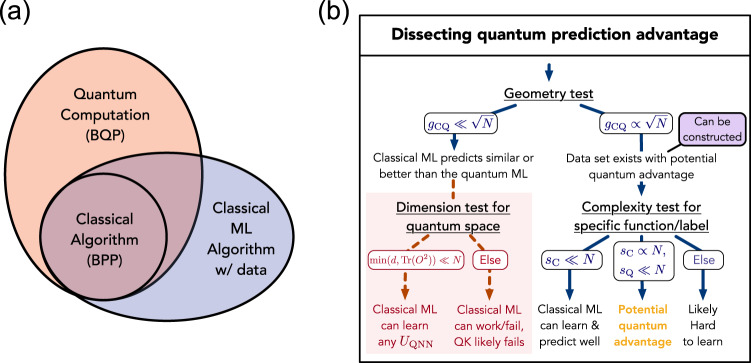
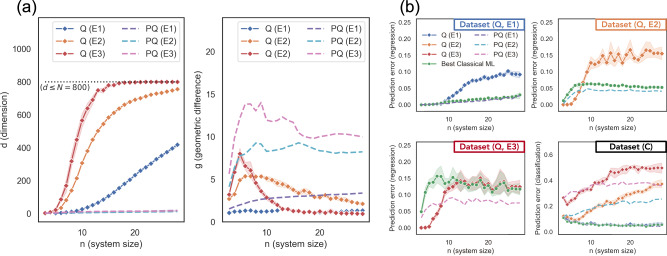
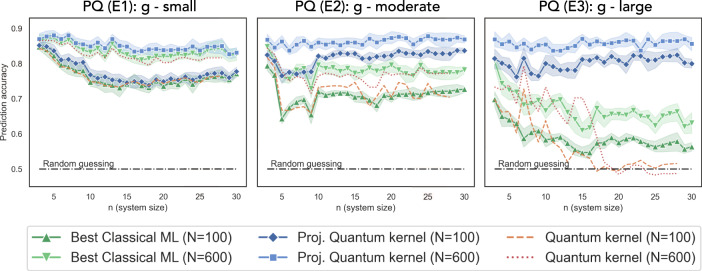
The use of quantum computing for machine learning is among the most exciting prospective applications of quantum technologies. However, machine learning tasks where data is provided can be considerably different than commonly studied computational tasks. In this work, we show that some problems that are classically hard to compute can be easily predicted by classical machines learning from data. Using rigorous prediction error bounds as a foundation, we develop a methodology for assessing potential quantum advantage in learning tasks. The bounds are tight asymptotically and empirically predictive for a wide range of learning models. These constructions explain numerical results showing that with the help of data, classical machine learning models can be competitive with quantum models even if they are tailored to quantum problems. We then propose a projected quantum model that provides a simple and rigorous quantum speed-up for a learning problem in the fault-tolerant regime. For near-term implementations, we demonstrate a significant prediction advantage over some classical models on engineered data sets designed to demonstrate a maximal quantum advantage in one of the largest numerical tests for gate-based quantum machine learning to date, up to 30 qubits.
Overview
The claims and statistics of this paper haven’t been checked yet.
Free: it reads the open-access text and checks the first 5 claims that cite a source we can check. Create a free account to check every claim.
Integrity signals
Registry
Cites
Statistics
Figures
Verification
Claims the paper makes
The claims and statistics of this paper haven’t been checked yet.
Free: it reads the open-access text and checks the first 5 claims that cite a source we can check. Create a free account to check every claim.
Claims other papers make about this one
Each is checked against this paper’s own text: does it say what the citing paper says it does?
The source backs part of the claim, not all of it — or backs it for a different population, condition or comparison.
In the citing paper
“measures such as the effective dimension have been motivated from an information-theoretic standpoint and depend on the Fisher information”
From The power of quantum neural networks (2021) · cites this paper as [21]
Experimental — accuracy not yet measuredThe cited source says what the claim attributes to it.
In the citing paper
“For instance, in [57], it is shown how the quality and the amount of data can sensibly affect the performance of classical and QML models in such a way that the quantum advantage is not always guaranteed.”
From On Circuit-Based Hybrid Quantum Neural Networks for Remote Sensing Imagery Classification (2022) · cites this paper as [57]
The cited source says what the claim attributes to it.
In the citing paper
“However, there is not a shared consensus on how and when QML can be advantageous with respect to its classical counterpart on general classes of problems.”
From On Circuit-Based Hybrid Quantum Neural Networks for Remote Sensing Imagery Classification (2022) · cites this paper as [57]
In the citing paper
“a quantity that describes the geometry of a model's parameter space and is essential in both statistics and machine learning [20-22].”
From The power of quantum neural networks (2021) · cites this paper as [21]
Self-check
Percentages, sums and reported differences re-computed from the paper’s own numbers.
The self-check needs the paper’s full text.
Citations
Cites
Breiman, L. (2001) · Machine Learning · doi:10.1023/a:1010933404324 · Cited by 133,538
Cortes, C., & Vapnik, V. (1995) · Machine Learning · doi:10.1007/bf00994018 · Cited by 59,421
Hohenberg, P., & Kohn, W. (1964) · Physical Review · doi:10.1103/physrev.136.b864 · Cited by 53,541
Learning with Kernels: Support Vector Machines, Regularization, Optimization, and Beyond
Schölkopf, B., & Smola, A. J. (2001) · The MIT Press eBooks · doi:10.7551/mitpress/4175.001.0001 · Cited by 11,703
Libsvm : A library for support vector machines
Ferrari, V. (2008) · Medical Entomology and Zoology · Cited by 10,123
Least Squares Support Vector Machine Classifiers
Suykens, J. A. K., & Vandewalle, J. (1999) · Neural Processing Letters · doi:10.1023/a:1018628609742 · Cited by 9,362
Density-Functional Theory for Time-Dependent Systems
Runge, E., & Gross, E. K. U. (1984) · Physical Review Letters · doi:10.1103/physrevlett.52.997 · Cited by 8,914
A fast quantum mechanical algorithm for database search
Grover, L. K. (1996) · Proceedings of the twenty-eighth annual ACM symposium on Theory of computing - STOC '96 · doi:10.1145/237814.237866 · Cited by 8,830
Re-epithelialization and immune cell behaviour in an ex vivo human skin model
Rakita, A., Nikolić, N., Mildner, M., Matiasek, J., & Elbe-Bürger, A. (2020) · Scientific Reports · doi:10.1038/s41598-019-56847-4 · Cited by 8,228
Quantum supremacy using a programmable superconducting processor
Arute, F., Arya, K., Babbush, R., Bacon, D., Bardin, J. C., Barends, R., Biswas, R., Boixo, S., Brandao, F. G. S. L., Buell, D. A., et al. (2019) · Nature · doi:10.1038/s41586-019-1666-5 · Cited by 7,720
Self-citation
Cited by
The power of quantum neural networks
Abbas, A., Sutter, D., Zoufal, C., Lucchi, A., Figalli, A., & Woerner, S. (2021) · Nature Computational Science · doi:10.1038/s43588-021-00084-1 · Cited by 1,082
The Variational Quantum Eigensolver: A review of methods and best practices
Tilly, J., Chen, H., Cao, S., Picozzi, D., Setia, K., Li, Y., Grant, E., Wossnig, L., Rungger, I., Booth, G. H., et al. (2022) · Physics Reports · doi:10.1016/j.physrep.2022.08.003 · Cited by 1,031
Challenges and opportunities in quantum machine learning
Cerezo, M., Verdon, G., Huang, H.-Y., Cincio, L., & Coles, P. J. (2022) · Nature Computational Science · doi:10.1038/s43588-022-00311-3 · Cited by 689
“However, one should be cautious about the availability of data in ML tasks, which makes classical ML algorithms computationally more powerful [13, 119].”
BackgroundMethodInfluentialSelf-citationPractical quantum advantage in quantum simulation
Daley, A. J., Bloch, I., Kokail, C., Flannigan, S., Pearson, N., Troyer, M., & Zoller, P. (2022) · Nature · doi:10.1038/s41586-022-04940-6 · Cited by 669
“…simulating these models by using the large-scale entangling operations implied by many-body dynamics as a variational circuit that can form the basis for methods such as variational quantum eigensolver 105 , quantum approximate optimization 106 and quantum machine learning 53,69,71–73, 107 , 108 on”
MethodAI for next generation computing: Emerging trends and future directions
Gill, S. S., Xu, M., Ottaviani, C., Patros, P., Bahsoon, R., Shaghaghi, A., Golec, M., Stankovski, V., Wu, H., Abraham, A., et al. (2022) · Internet of Things · doi:10.1016/j.iot.2022.100514 · Cited by 686
“With quantum computers accelerating machine learning, the potential for impact s certain to be enormous [173].”
Generalization in quantum machine learning from few training data
Caro, M. C., Huang, H.-Y., Cerezo, M., Sharma, K., Sornborger, A., Cincio, L., & Coles, P. J. (2022) · Nature Communications · doi:10.1038/s41467-022-32550-3 · Cited by 476
Self-citationThe randomized measurement toolbox
Elben, A., Flammia, S. T., Huang, H.-Y., Kueng, R., Preskill, J., Vermersch, B., & Zoller, P. (2022) · Nature Reviews Physics · doi:10.1038/s42254-022-00535-2 · Cited by 355
Self-citationSystematic literature review: Quantum machine learning and its applications
Peral-García, D., Cruz-Benito, J., & García-Peñalvo, F. J. (2024) · Computer Science Review · doi:10.1016/j.cosrev.2024.100619 · Cited by 246
Intelligent Computing: The Latest Advances, Challenges, and Future
Zhu, S., Yu, T., Xu, T., Chen, H., Dustdar, S., Gigan, S., Gunduz, D., Hossain, E., Jin, Y., Lin, F., et al. (2023) · Intelligent Computing · doi:10.34133/icomputing.0006 · Cited by 290
Barren plateaus in variational quantum computing
Larocca, M., Thanasilp, S., Wang, S., Sharma, K., Biamonte, J., Coles, P. J., Cincio, L., McClean, J. R., Holmes, Z., & Cerezo, M. (2025) · Nature Reviews Physics · doi:10.1038/s42254-025-00813-9 · Cited by 257
“Exponential concentration also arises in kernel-based schemes 97,237–244 , in which a quantum computer is used as an enhanced feature space from which inner products or similarity measures between the data states can be estimated (similar to the kernel trick) 245–248 .”
Self-citationHerman, D., Googin, C., Liu, X., Sun, Y., Galda, A., Safro, I., Pistoia, M., & Alexeev, Y. (2023) · Nature Reviews Physics · doi:10.1038/s42254-023-00603-1 · Cited by 284
Information-Theoretic Bounds on Quantum Advantage in Machine Learning
Huang, H.-Y., Kueng, R., & Preskill, J. (2021) · Physical Review Letters · doi:10.1103/physrevlett.126.190505 · Cited by 250
Self-citationQuantum Computing for High-Energy Physics: State of the Art and Challenges
Di Meglio, A., Jansen, K., Tavernelli, I., Alexandrou, C., Arunachalam, S., Bauer, C. W., Borras, K., Carrazza, S., Crippa, A., Croft, V., et al. (2024) · PRX Quantum · doi:10.1103/prxquantum.5.037001 · Cited by 215
“The fidelity quantum kernel [200, 381] and projected quantum kernel [379] are two common choices in kernels.”
BackgroundQuantum machine learning beyond kernel methods
Jerbi, S., Fiderer, L. J., Poulsen Nautrup, H., Kübler, J. M., Briegel, H. J., & Dunjko, V. (2023) · Nature Communications · doi:10.1038/s41467-023-36159-y · Cited by 229
“While some approaches to this problem focus on constructing learning tasks with separations based on complexity-theoretic assumptions [17, 19], other works try to assess empirically the type of learning problems where quantum models show an advantage over standard classical models [11, 20].”
InfluentialQuantum Models as Kernel Methods
Schuld, M., & Petruccione, F. (2021) · Quantum Science and Technology · doi:10.1007/978-3-030-83098-4_6 · Cited by 236
Quantum variational algorithms are swamped with traps
Anschuetz, E. R., & Kiani, B. T. (2022) · Nature Communications · doi:10.1038/s41467-022-35364-5 · Cited by 226
Provably efficient machine learning for quantum many-body problems
Huang, H.-Y., Kueng, R., Torlai, G., Albert, V. V., & Preskill, J. (2022) · Science · doi:10.1126/science.abk3333 · Cited by 228
“Together, we rigorously establish the advantage ofMLalgorithms withdata over thosewithout data ( 36 ) in a physically relevant task.”
BackgroundMethodSelf-citationExponential concentration in quantum kernel methods
Thanasilp, S., Wang, S., Cerezo, M., & Holmes, Z. (2024) · Nature Communications · doi:10.1038/s41467-024-49287-w · Cited by 189
“This means the theorem holds for a wide range of embedding architectures, including both problem-agnostic 11,15,29,37,46,68 and problem-inspired embeddings 6 – 8 .”
InfluentialQuantum technology for military applications
Krelina, M. (2021) · EPJ Quantum Technology · doi:10.1140/epjqt/s40507-021-00113-y · Cited by 176
“A recent study [181] shows that quantum ML provides an advantage just for some kernels fitting particular problems.”
BackgroundQuantum circuit architecture search for variational quantum algorithms
Du, Y., Huang, T., You, S., Hsieh, M.-H., & Tao, D. (2022) · npj Quantum Information · doi:10.1038/s41534-022-00570-y · Cited by 184
“[42] Hsin-Yuan Huang, Michael Broughton, Masoud Mohseni, Ryan Babbush, Sergio Boixo, Hartmut Neven, et al.”
BackgroundTheory of overparametrization in quantum neural networks
Larocca, M., Ju, N., García-Martín, D., Coles, P. J., & Cerezo, M. (2023) · Nature Computational Science · doi:10.1038/s43588-023-00467-6 · Cited by 176
“Let ∇(2)L(θ∗) be the Hessian for a loss function of the form of equation (12) evaluated at the optimal set of parameters θ*.”
BackgroundIBM quantum computers: evolution, performance, and future directions
AbuGhanem, M. (2025) · The Journal of Supercomputing · doi:10.1007/s11227-025-07047-7 · Cited by 343
Efficient Estimation of Pauli Observables by Derandomization
Huang, H.-Y., Kueng, R., & Preskill, J. (2021) · Physical Review Letters · doi:10.1103/physrevlett.127.030503 · Cited by 175
Self-citationSupervised quantum machine learning models are kernel methods
Schuld, M. (2021) · arXiv · doi:10.48550/arxiv.2101.11020 · Cited by 173
“Section III C will discuss that this definition of the feature space is equivalent to the tensor product space of complex vectors ∣ ψ ⟩ ⊗ ∣ ψ ∗ ⟩ used in [12].”
BackgroundInfluentialOn Circuit-Based Hybrid Quantum Neural Networks for Remote Sensing Imagery Classification
Sebastianelli, A., Zaidenberg, D. A., Spiller, D., Le Saux, B., & Ullo, S. (2022) · IEEE Journal of Selected Topics in Applied Earth Observations and Remote Sensing · doi:10.1109/jstars.2021.3134785 · Cited by 162
Machine learning in the quantum realm: The state-of-the-art, challenges, and future vision
Houssein, E. H., Abohashima, Z., Elhoseny, M., & Mohamed, W. M. (2022) · Expert Systems with Applications · doi:10.1016/j.eswa.2022.116512 · Cited by 184
Generalization in Quantum Machine Learning: A Quantum Information Standpoint
Banchi, L., Pereira, J., & Pirandola, S. (2021) · PRX Quantum · doi:10.1103/prxquantum.2.040321 · Cited by 153
“…with a POVM, as in (c). ested in classifying classical data x (e.g. images) using a quantum algorithm, to look for algorithmic quantum advantage [11, 34] (faster classification), or classifying quantum channels using quantum probes to look for quantum advantage in accuracy [12] (fewer…”
BackgroundMethodTraining quantum embedding kernels on near-term quantum computers
Hubregtsen, T., Wierichs, D., Gil-Fuster, E., Derks, P.-J. H. S., Faehrmann, P. K., & Meyer, J. J. (2022) · Physical Review A · doi:10.1103/physreva.106.042431 · Cited by 218
“Furthermore, it was recently shown that other types of variational quantum learning models are fundamentally related to quantum kernel methods [18,19] and that quantum kernels enable the construction of learning problems that prove a separation between classical and quantum machine learning [16,20].”
BackgroundQNLP in Practice: Running Compositional Models of Meaning on a Quantum Computer
Lorenz, R., Pearson, A., Meichanetzidis, K., Kartsaklis, D., & Coecke, B. (2023) · Journal of Artificial Intelligence Research · doi:10.1613/jair.1.14329 · Cited by 221
Drug design on quantum computers
(2024) · doi:10.1038/s41567-024-02411-5 · Cited by 132
“There are unresolved issues in data representation, and some initially promising approaches have fallen victim to ‘dequantization’ — the adaptation of a quantum algorithm into a similarly efficient classical one 29–32 .”
Self-citationMachine learning of high dimensional data on a noisy quantum processor
Peters, E., Caldeira, J., Ho, A., Leichenauer, S., Mohseni, M., Neven, H., Spentzouris, P., Strain, D., & Perdue, G. N. (2021) · npj Quantum Information · doi:10.1038/s41534-021-00498-9 · Cited by 127
“The kernel function we employ is then the squared inner product between pairs of mapped input data given by k ( x i , x j ) = |(cid:104) φ ( x i ) | φ ( x j ) (cid:105)| 2 , which allows for more expressive models compared to the alternative choice φ ( x i ) | φ ( x j ) (cid:105) [4].”
MethodInfluentialSelf-citationQuantum computing models for artificial neural networks
Mangini, S., Tacchino, F., Gerace, D., Bajoni, D., & Macchiavello, C. (2021) · Europhysics Letters (EPL) · doi:10.1209/0295-5075/134/10002 · Cited by 159
“Nevertheless, some initial results towards a thorough analysis of the capacity (or power) of quantum neural networks have recently been put forward [67–69].”
BackgroundTheory for Equivariant Quantum Neural Networks
Nguyen, Q. T., Schatzki, L., Braccia, P., Ragone, M., Coles, P. J., Sauvage, F., Larocca, M., & Cerezo, M. (2024) · PRX Quantum · doi:10.1103/prxquantum.5.020328 · Cited by 233
“Recent work has studied the training sample complexity needed for QML models to generalize [25, 157–159].”
BackgroundThe impact of 6G-IoT technologies on the development of agriculture 5.0: a review
Polymeni, S., Plastras, S., Skoutas, D. N., Kormentzas, G., & Skianis, C. (2023) · Electronics · doi:10.3390/electronics12122651 · Cited by 121
“The new field of research that emerges from the combination of quantum computing with machine learning is referred to as Quantum Machine Learning (QML) [74,75].”
BackgroundBuilding a Quantum Engineering Undergraduate Program
Oliver, W. D. (2022) · DSpace@MIT (Massachusetts Institute of Technology) · Cited by 127
The Dawn of Quantum Natural Language Processing
Sipio, R. D., Huang, J.-H., Chen, S. Y.-C., Mangini, S., & Worring, M. (2022) · IEEE International Conference on Acoustics Speech and Signal Processing · doi:10.1109/icassp43922.2022.9747675 · Cited by 173
Quantum machine learning: from physics to software engineering
Melnikov, A. A., Kordzanganeh, M., Alodjants, A. P., & Lee, R. (2023) · Advances in Physics X · doi:10.1080/23746149.2023.2165452 · Cited by 182
“[159] found a mathematical formulation for where we can expect to find such an advantage.”
BackgroundMethodQuantum self-attention neural networks for text classification
Li, G., Zhao, X., & Wang, X. (2024) · Science China Information Sciences · doi:10.1007/s11432-023-3879-7 · Cited by 183
“Recent works have proved rigorous quantum advantages on some classification tasks by utilizing high-dimensional quantum feature space [62] and projected quantum models [12].”
BackgroundA comprehensive review of quantum machine learning: from NISQ to fault tolerance
Wang, Y., & Liu, J. (2024) · Reports on Progress in Physics · doi:10.1088/1361-6633/ad7f69 · Cited by 192
“The expression of objective functions based on fidelities is commonly utilized in state preparation algorithms in quantum optics [84, 86] and quantum machine learning [16, 34, 69, 119].”
Anomaly detection in high-energy physics using a quantum autoencoder
Ngairangbam, V. S., Spannowsky, M., & Takeuchi, M. (2022) · Physical review. D/Physical review. D. · doi:10.1103/physrevd.105.095004 · Cited by 137
Chen, S., Cotler, J. S., Huang, H.-Y., & Li, J. Z. (2023) · Nature Communications · doi:10.1038/s41467-023-41217-6 · Cited by 215
“[36] Hsin-Yuan Huang, Michael Broughton, Masoud Mohseni, Ryan Babbush, Sergio Boixo, Hartmut Neven, and Jarrod R.”
Self-citationTheoretical guarantees for permutation-equivariant quantum neural networks
Schatzki, L., Larocca, M., Nguyen, Q. T., Sauvage, F., & Cerezo, M. (2024) · npj Quantum Information · doi:10.1038/s41534-024-00804-1 · Cited by 199
“The ensuing graphs are binned into two categories: connected and disconnected.”
BackgroundCovariant quantum kernels for data with group structure
Glick, J. R., Gujarati, T. P., Corcoles, A. D., Kim, Y., Kandala, A., Gambetta, J., & Temme, K. (2024) · Nature Physics · doi:10.1038/s41567-023-02340-9 · Cited by 193
Encoding-dependent generalization bounds for parametrized quantum circuits
Caro, M. C., Gil-Fuster, E., Meyer, J. J., Eisert, J., & Sweke, R. (2021) · Quantum · doi:10.22331/q-2021-11-17-582 · Cited by 191
“[30] which has developed techniques for evaluating the potential advantages of quantum kernels over classical kernels.”
BackgroundWu, S. L., Sun, S., Guan, W., Zhou, C., Chan, J., Cheng, C. L., Pham, T. M., Qian, Y., Wang, A. Z., Zhang, R., et al. (2021) · Physical Review Research · doi:10.1103/physrevresearch.3.033221 · Cited by 140
“A recent result [11] demonstrates a significant advantage in prediction accuracy for a quantum algorithm over some classical algorithms on engineered datasets.”
BackgroundTowards provably efficient quantum algorithms for large-scale machine-learning models
Liu, J., Liu, M., Liu, J.-P., Ye, Z., Wang, Y., Alexeev, Y., Eisert, J., & Jiang, L. (2024) · Nature Communications · doi:10.1038/s41467-023-43957-x · Cited by 167
“• Full-scale quantum machine learning algorithms have at the same time been established in the fault-tolerant setting, including steps of principle component analysis [23] (which has been largely de-quantized in the meantime [24]), quantum kernel methods [25, 26], or notions of quantum machine learning of quantum phys…”
BackgroundGoto, T., Tran, Q. H., & Nakajima, K. (2021) · Physical Review Letters · doi:10.1103/physrevlett.127.090506 · Cited by 170
“Furthermore, one can construct engineered data sets to demonstrate the most significant separation between quantum and classical models from a learning-theoretic sense to yield the quantum advantage in ML problems [16].”
BackgroundGujju, Y., Matsuo, A., & Raymond, R. (2024) · Physical Review Applied · doi:10.1103/physrevapplied.21.067001 · Cited by 138
An introduction to quantum machine learning: from quantum logic to quantum deep learning
Alchieri, L., Badalotti, D., Bonardi, P., & Bianco, S. (2021) · Quantum Machine Intelligence · doi:10.1007/s42484-021-00056-8 · Cited by 125
“A method to construct such dataset is given by Huang et al. (2020).”
BackgroundMethodInfluentialTowards understanding the power of quantum kernels in the NISQ era
Wang, X., Du, Y., Luo, Y., & Tao, D. (2021) · Quantum · doi:10.22331/q-2021-08-30-531 · Cited by 128
“[24] Hsin-Yuan Huang, Michael Broughton, Masoud Mohseni, Ryan Babbush, Sergio Boixo, Hartmut Neven, and Jarrod R McClean.”
BackgroundMethodResultInfluentialNeural predictor based quantum architecture search
Zhang, S.-X., Hsieh, C.-Y., Zhang, S., & Yao, H. (2021) · Machine Learning: Science and Technology · doi:10.1088/2632-2153/ac28dd · Cited by 88
“Some prominent examples of VQA include variational quantum eigensolvers (VQE) [4–9], quantum approximation optimization algorithms (QAOA) [10–14] and variational quantum machine learning (QML) [15–27].”
BackgroundBiology and medicine in the landscape of quantum advantages
Cordier, B. A., Sawaya, N. P. D., Guerreschi, G. G., & McWeeney, S. K. (2022) · Journal of The Royal Society Interface · doi:10.1098/rsif.2022.0541 · Cited by 87
“However, recent work has also made clear that the bar for achieving these advantages may be high given the ability of data to empower classical machine learning algorithms [225].”
BackgroundInfluentialMachine learning for practical quantum error mitigation
Liao, H., Wang, D. S., Sitdikov, I., Salcedo, C., Seif, A., & Minev, Z. (2024) · Nature Machine Intelligence · doi:10.1038/s42256-024-00927-2 · Cited by 167
Quantum machine learning with differential privacy
Watkins, W. M., Chen, S. Y.-C., & Yoo, S. (2023) · Scientific Reports · doi:10.1038/s41598-022-24082-z · Cited by 121
“Table 1 depicts the hyperparameters used in this study; the (15) Rj(α) = ej = cos α”
MethodBokhan, D., Mastiukova, A. S., Boev, A. S., Trubnikov, D. N., & Fedorov, A. K. (2022) · Frontiers in Physics · doi:10.3389/fphy.2022.1069985 · Cited by 105
Qiao, C., Li, M., Liu, Y., & Tian, Z. (2024) · IEEE Communications Surveys & Tutorials · doi:10.1109/comst.2024.3399612 · Cited by 113
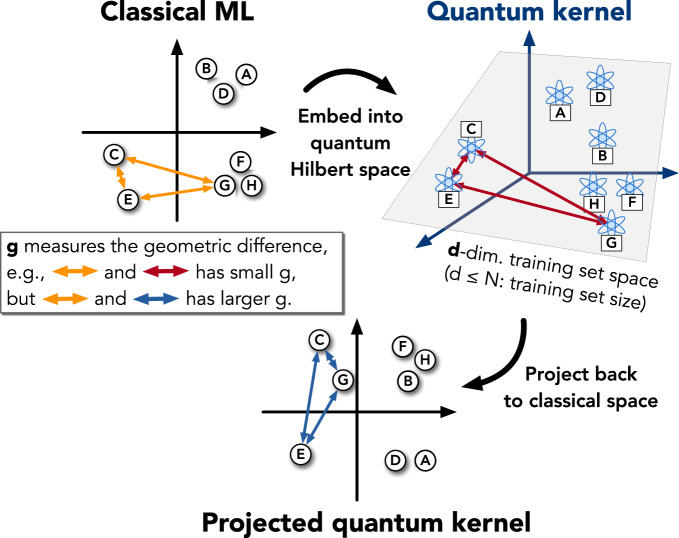
“It shows that when the geometric difference between classical and quantum datasets is small, the classical machine learning models perform similarly to quantum models even if they are designed specifically for quantum problems [303].”
NISQ Computers: A Path to Quantum Supremacy
AbuGhanem, M., & Eleuch, H. (2024) · IEEE Access · doi:10.1109/access.2024.3432330 · Cited by 116
Subtleties in the trainability of quantum machine learning models
Thanasilp, S., Wang, S., Nghiem, N. A., Coles, P. J., & Cerezo, M. (2023) · Quantum Machine Intelligence · doi:10.1007/s42484-023-00103-6 · Cited by 143
“[16] Hsin-Yuan Huang, Michael Broughton, Masoud Mohseni, Ryan Babbush, Sergio Boixo, Hartmut Neven, and Jarrod R McClean, “Power of data in quantum machine learning,” Nature Communications 12, 1–9 (2021).”
BackgroundMachine learning for anomaly detection in particle physics
Belis, V., Odagiu, P., & Aarrestad, T. K. (2024) · Reviews in Physics · doi:10.1016/j.revip.2024.100091 · Cited by 138
Hybrid quantum-classical-quantum convolutional neural networks
Long, C., Huang, M., Ye, X., Futamura, Y., & Sakurai, T. (2025) · Scientific Reports · doi:10.1038/s41598-025-13417-1 · Cited by 126
Mensa, S., Sahin, E., Tacchino, F., Barkoutsos, P. K., & Tavernelli, I. (2023) · Machine Learning Science and Technology · doi:10.1088/2632-2153/acb900 · Cited by 124
Out-of-distribution generalization for learning quantum dynamics
Caro, M. C., Huang, H.-Y., Ezzell, N., Gibbs, J., Sornborger, A. T., Cincio, Ł., Coles, P. J., & Holmes, Z. (2023) · Nature Communications · doi:10.1038/s41467-023-39381-w · Cited by 159
“…R P ð α opt Þ of the optimized parameters α opt after training is controlled in terms of the optimized training cost We can now bound the in-distribution generalization error using already known QML in-distribution generalization bounds 11 – 23 (or,indeed,anysuchboundsthatarederivedinthefuture).”
Self-citationShadows of quantum machine learning
Jerbi, S., Gyurik, C., Marshall, S. C., Molteni, R., & Dunjko, V. (2024) · Nature Communications · doi:10.1038/s41467-024-49877-8 · Cited by 152
“…each ⟨ P i ⟩ to additive error ε max x ∥ w ( x ) ∥ 1 allows us to guarantee the desired total additive error, and each of this estimates can be obtained using A more interesting shadow model relies on Pauli classical shadows [40] where random Pauli measurements are used to construct ω ( θ ).”
MethodResultQuantum machine learning of large datasets using randomized measurements
Haug, T., Self, C. N., & Kim, M. S. (2023) · Machine Learning Science and Technology · doi:10.1088/2632-2153/acb0b4 · Cited by 117
“Our choice of quantum kernel measures the distance between two encoding states as given by the fidelity between ρ(θi) and ρ(θj) [8, 27]”
BackgroundQuantum Machine Learning for Finance ICCAD Special Session Paper
Pistoia, M., Farhan, S., Ajagekar, A., Buts, A., Chakrabarti, S., Herman, D., Hu, S., Jena, A., Minssen, P., Niroula, P., et al. (2021) · International Conference on Computer Aided Design · doi:10.1109/iccad51958.2021.9643469 · Cited by 104
“There is a connection between the QSVM and VQC formulations [40, 53, 54] similar to the connection between classical Neural Networks and SVMs [55].”
Nanowire‐based integrated photonics for quantum information and quantum sensing
Chang, J., Gao, J., Zadeh, I. E., Elshaari, A. W., & Zwiller, V. (2023) · Nanophotonics · doi:10.1515/nanoph-2022-0652 · Cited by 83
Learning to Predict Arbitrary Quantum Processes
Huang, H.-Y., Chen, S., & Preskill, J. P. (2023) · PRX Quantum · doi:10.1103/prxquantum.4.040337 · Cited by 158
Self-citationImportance of kernel bandwidth in quantum machine learning
Shaydulin, R., & Wild, S. M. (2022) · Physical Review A · doi:10.1103/physreva.106.042407 · Cited by 132
“As a motivating example, we consider the paper [7], which includes numerical experiments on the performance of the quantum kernel method with the feature map given by |xi〉 = d ∏”
BackgroundMethodResultInfluentialGeneralization despite overfitting in quantum machine learning models
Peters, E., & Schuld, M. (2023) · Quantum · doi:10.22331/q-2023-12-20-1210 · Cited by 125
“(9) , and serves a role similar to regularization commonly applied to quantum models by introducing a penalty term proportional to ∥ M ∥ 2 F [26, 42, 43].”
BackgroundClinical data classification with noisy intermediate scale quantum computers
Moradi, S., Brandner, C., Spielvogel, C. P., Krajnc, D., Hillmich, S., Wille, R., Drexler, W., & Papp, L. (2022) · Scientific Reports · doi:10.1038/s41598-022-05971-9 · Cited by 82
Quantum Kernels for Real-World Predictions Based on Electronic Health Records
Krunic, Z., Flöther, F. F., Seegan, G., Earnest-Noble, N., & Shehab, O. (2022) · IEEE Transactions on Quantum Engineering · doi:10.1109/tqe.2022.3176806 · Cited by 90
Yang, C.-H. H., Qi, J., Chen, S. Y.-C., Tsao, Y., & Chen, P. (2022) · IEEE International Conference on Acoustics Speech and Signal Processing · doi:10.1109/icassp43922.2022.9746412 · Cited by 87
The Inductive Bias of Quantum Kernels
Kübler, J. M., Buchholz, S., & Schölkopf, B. (2021) · neural information processing systems · doi:10.48550/arxiv.2106.03747 · Cited by 128
Data compression for quantum machine learning
Dilip, R., Liu, Y.-J., Smith, A., & Pollmann, F. (2022) · Physical Review Research · doi:10.1103/physrevresearch.4.043007 · Cited by 94
Beyond Bits: A Review of Quantum Embedding Techniques for Efficient Information Processing
Khan, M. A., Aman, M. N., & Sikdar, B. (2024) · IEEE Access · doi:10.1109/access.2024.3382150 · Cited by 89
“…e.g., space encoding [65], matrix or dynamic encoding [82], Schmidt decomposition [129], instantaneous quantum polynomial (IQP) style encoding [130], Schrödinger’s cat code encoding [131], QAOA ansatz encoding [132], time-bin encoding [133], parity encoding [134], arbitrary…”
BackgroundQuantum-Classical Hybrid Machine Learning for Image Classification (ICCAD Special Session Paper)
Alam, M., Kundu, S., Topaloglu, R. O., & Ghosh, S. (2021) · International Conference on Computer Aided Design · doi:10.1109/iccad51958.2021.9643516 · Cited by 78
Theoretical error performance analysis for variational quantum circuit based functional regression
Qi, J., Yang, C.-H. H., Chen, P., & Hsieh, M.-H. (2023) · npj Quantum Information · doi:10.1038/s41534-022-00672-7 · Cited by 83
“d1⁄41 Wðd; uÞ xðdÞ; 8u 2 1⁄2U : (6) If we assume that U 1⁄4 QK k1⁄41 uk , then we can reshape the 2-order matrixW as a D-order double-indexed tensorW and it can be factorized into the TT-format as:”
Quantum kernel methods under scrutiny: a benchmarking study
Schnabel, J., & Roth, M. (2025) · Quantum Machine Intelligence · doi:10.1007/s42484-025-00273-5 · Cited by 106
“…the native geometry of the quantum state space and naturally define a quantum kernel using the Hilbert-Schmidt inner product, i.e., (3) For pure states, this definition reduces to which, since it represents a fidelity-type metric, is referred to as the fidelity quantum kernel (FQK) (Huang et al. 2021).”
InfluentialBiological research and self-driving labs in deep space supported by artificial intelligence
Sanders, L. M., Scott, R. T., Yang, J. H., Qutub, A. A., Garcia Martin, H., Berrios, D. C., Hastings, J. J. A., Rask, J., Mackintosh, G., Hoarfrost, A. L., et al. (2023) · Nature Machine Intelligence · doi:10.1038/s42256-023-00618-4 · Cited by 49
“This is relevant to AI and ML research because models typically ‘learn’ through iterative adjustments in their parameters to minimize a cost function, which makes quantum optimization and AI and ML a promising combination 152,153 .”
BackgroundQuantum Convolutional Neural Networks are Effectively Classically Simulable
Bermejo, P., Braccia, P., Rudolph, M. S., Holmes, Z., Cincio, Ł., & Cerezo, M. (2026) · PRX Quantum · doi:10.1103/8qt9-72ts · Cited by 158
“The combination of these two facts allows us to show that there exist efficient classical algorithms that can simulate the action of the QCNN in this small subspace, provided that we are given access to Pauli classical shadows on the input data. learning [49, 95, 96].”
QTN-VQC: an end-to-end learning framework for quantum neural networks
Qi, J., Yang, C.-H. H., & Chen, P. (2023) · Physica Scripta · doi:10.1088/1402-4896/ad14d6 · Cited by 77
Contemporary Quantum Computing Use Cases: Taxonomy, Review and Challenges
Singh, J., & Bhangu, K. S. (2022) · Archives of Computational Methods in Engineering · doi:10.1007/s11831-022-09809-5 · Cited by 66
“The researchers demonstrate the quantum advantage for prediction over classical models [47].”
BackgroundAnalytic Theory for the Dynamics of Wide Quantum Neural Networks
Liu, J., Najafi, K., Sharma, K., Tacchino, F., Jiang, L., & Mezzacapo, A. (2023) · Physical Review Letters · doi:10.1103/physrevlett.130.150601 · Cited by 96
“Recent experimental progress on quantum hardware and algorithms has generated great excitement in trying to identify applications that can lead to a quantum advantage over classical devices [9–12].”
Quantum anomaly detection in the latent space of proton collision events at the LHC
Belis, V., Wozniak, K. A., Puljak, E., Barkoutsos, P. K., Dissertori, G., Grossi, M., Pierini, M., Reiter, F., Tavernelli, I., & Vallecorsa, S. (2024) · Communications Physics · doi:10.1038/s42005-024-01811-6 · Cited by 84
“Recent works on QML share these insights in a more general context [9, 58–61].”
Quantum Neural Network Classifiers: A Tutorial
Li, W., Lu, Z., & Deng, D.-L. (2022) · SciPost Physics Lecture Notes · doi:10.21468/scipostphyslectnotes.61 · Cited by 72
“It is worthwhile to note that, as indicated in [95, 96], amplitude-encoding based QNNs can be regarded as kernel methods, stressing the importance of the way to encode the data.”
BackgroundQuantum kernel methods for solving regression problems and differential equations
Paine, A. E., Elfving, V. E., & Kyriienko, O. (2023) · Physical Review A · doi:10.1103/physreva.107.032428 · Cited by 89
Detecting Clouds in Multispectral Satellite Images Using Quantum-Kernel Support Vector Machines
Miroszewski, A., B, J. M. A., Czelusta, G., Szczepanek, F., Grabowski, B., Saux, B. L., & Nalepa, J. (2023) · IEEE Journal of Selected Topics in Applied Earth Observations and Remote Sensing · doi:10.1109/jstars.2023.3304122 · Cited by 64
“Among the most studied methods in QML are the quantum extensions of the support vector machine (SVM) algorithms [10], quantum-kernel methods [11], variational quantum classifiers [8], quantum convolutional neural networks [12], quanvolutional neural networks [13], and quantum principal component analysis (PCA) [14].”
MethodVast World of Quantum Advantage
Huang, H.-Y., Choi, S., McClean, J. R., & Preskill, J. P. (2026) · Physical Review X · doi:10.1103/tn89-g1xz · Cited by 78
“A subtle challenge to computational quantum advantages emerges with the recognition of the power of data [80].”
Self-citationThe Dilemma of Quantum Neural Networks
Yang, Q., Wang, X., Du, Y., Wu, X., & Tao, D. (2022) · IEEE Transactions on Neural Networks and Learning Systems · doi:10.1109/tnnls.2022.3208313 · Cited by 73
“…quantum circuit on noisy devices, there is a serious performance decline in terms of the ability of learning the original data and fitting random label. model complexity enables us to leverage statistical learning theory to analyze the generalization ability of QNNs with a tight bound [39], [42].”
BackgroundMethodInfluentialVariational Inference with a Quantum Computer
Benedetti, M., Coyle, B., Fiorentini, M., Lubasch, M., & Rosenkranz, M. (2021) · Physical Review Applied · doi:10.1103/physrevapplied.16.044057 · Cited by 73
Quantum Embedding Search for Quantum Machine Learning
Nguyen, N., & Chen, K. (2022) · IEEE Access · doi:10.1109/access.2022.3167398 · Cited by 71
Quantum algorithms for approximate function loading
Marin-Sanchez, G., Gonzalez-Conde, J., & Sanz, M. (2023) · Physical Review Research · doi:10.1103/physrevresearch.5.033114 · Cited by 85
“…article, we have considered the problem of loading real valued functions into a quantum computer, which is a major bottleneck for solving partial derivatives equations [11–14], computing Monte-Carlo integrations [9, 10, 36] and quantum field theory [37, 38] and quantum machine learning [15, 17–20].”
Quantum phase detection generalization from marginal quantum neural network models
Monaco, S., Kiss, O., Mandarino, A., Vallecorsa, S., & Grossi, M. (2023) · Physical review. B./Physical review. B · doi:10.1103/physrevb.107.l081105 · Cited by 61
“Even if QML models benefit from high expressivity [14] and demonstrated superiority over classical models in some specific cases [15, 16], it is still unclear what kind of advantage could be obtained with quantum computers [17] in the era of foundation models [18].”
BackgroundImproved machine learning algorithm for predicting ground state properties
Lewis, L. H., Huang, H.-Y., Tran, V. T., Lehner, S., Kueng, R., & Preskill, J. P. (2024) · Nature Communications · doi:10.1038/s41467-024-45014-7 · Cited by 95
“The output y ℓ in the training data can be obtained by measuring Tr ð O ρ ð x ‘ ÞÞ for the sameobservable O multiple times and averaging the outcomes.”
MethodSelf-citationQFNN-FFD: Quantum Federated Neural Network for Financial Fraud Detection
Innan, N., Marchisio, A., Bennai, M., & Shafique, M. (2025) · IEEE International Conference on Quantum Software (QSW) · doi:10.1109/qsw67625.2025.00015 · Cited by 74
“The emergence of Quantum Machine Learning (QML) marks a transformative era [3]–[5], promising unprecedented computational capabilities by exploiting quantum physics [6], while simultaneously raising pivotal concerns about privacy and data security.”
Zeng, Y., Wang, H., He, J., Huang, Q., & Chang, S. (2022) · Entropy · doi:10.3390/e24030394 · Cited by 45
“Recently, quantum machine learning has attracted much attention, including the Quantum Autoencoder [3–5], Quantum Boltzmann Machine [6,7], Quantum Generative Adversarial Learning [8–11], and Quantum Kernel Method [12–15].”
BackgroundQuantum computing and chemistry
Weidman, J. D., Sajjan, M., Mikolas, C. A., Stewart, Z. J., Pollanen, J., Kais, S., & Wilson, A. K. (2024) · Cell Reports Physical Science · doi:10.1016/j.xcrp.2024.102105 · Cited by 71
“143 In general, both workflows can benefit from the fact that certain recent reports provably demonstrate (analytically as well as through numerical experiments) 144–146 that QML models require less training data than their classical counterparts.”
BackgroundHow can quantum computing be applied in clinical trial design and optimization?
Doğa, H., Bose, A., Sahin, M. E., Bettencourt‐Silva, J. H., Pham, A., Kim, E., Andress, A., Saxena, S., Parida, L., Robertus, J. L., et al. (2024) · Trends in Pharmacological Sciences · doi:10.1016/j.tips.2024.08.005 · Cited by 64
“Quantum feature map is a unique method to map classical data into the complex Hilbert space, which in theory can represent correlation between variables in complex dataset that is hard to simulate classically [169, 170].”
Quantum-inspired algorithm for direct multi-class classification
Giuntini, R., Holik, F., Park, D. K., Freytes, H., Blank, C., & Sergioli, G. (2022) · Applied Soft Computing · doi:10.1016/j.asoc.2022.109956 · Cited by 48
“However, the number of copies must be carefully chosen because increasing the dimension of the feature space does not always monotonically increase the classification accuracy 37 .”
BackgroundShaik, R. U., Laneve, G., & Fusilli, L. (2022) · Remote Sensing · doi:10.3390/rs14051264 · Cited by 49
“Future developments of this work would be (1) to verify the procedure by associating fuel types to Scott–Burgan fuel models, including isobioclimatic conditions and (2) to apply a quantum support vector machine classifier as it can learn with fewer data [64].”
Method
Metadata
- Authors
- Huang, H.-Y., Broughton, M., Mohseni, M., Babbush, R., Boixo, S., Neven, H., & McClean, J. R.
- Affiliations
- California Institute of Technology (US)
- Google (United States) (US)
- Corresponding author
- McClean, Jarrod R.
- Venue
- Nature Communications
- Published
- 2021-05-11
- Volume
- 12
- Issue
- 1
- Pages
- 2631-2631
- ISSN
- 2041-1723 (ISSN-L)
- PMC
- PMC8113501
- OpenAlex
- W3096052452
- Cited by
- 896
- References
- 67
- Citations by year
- 2026: 220 · 2025: 220 · 2024: 157 · 2023: 140 · 2022: 107 · 2021: 52
- FWCI
- 39.93
- Type
- journal article
- Language
- en
- Open access
- gold
- doi.org
- Licence
- cc-by
- creativecommons.org/licenses/by/4.0 (tdm)
- creativecommons.org/licenses/by/4.0 (vor)
- Locations
- Nature Communications (publishedVersion, cc-by)
- PubMed Central (publishedVersion, cc-by)
- PubMed (publishedVersion)
- arXiv (Cornell University) (submittedVersion)
- CaltechAUTHORS (California Institute of Technology) (submittedVersion, cc-by)
- RePEc: Research Papers in Economics (submittedVersion)
- DOAJ (DOAJ: Directory of Open Access Journals) (submittedVersion, cc-by-sa)
- arXiv (Cornell University)
- Bulletin of the American Physical Society
- Topics
- Physical Sciences › Computer Science › Artificial Intelligence › Quantum Computing Algorithms and Architecture
- Physical Sciences › Physics and Astronomy › Atomic and Molecular Physics, and Optics › Quantum many-body systems
- Physical Sciences › Physics and Astronomy › Atomic and Molecular Physics, and Optics › Quantum Information and Cryptography
- Keywords
- quantum machine learning, quantum advantage, prediction error bounds, classical machine learning, fault-tolerant quantum computing, gate-based quantum computing, quantum-classical comparison
About these checks
Registry, retraction, Cites and statistics results are computed, not judged, with one exception: a printed reference that no index lists is read once by a model before it counts as a citation error. Claims are extracted by a model and kept only when their quote appears verbatim in the text; each cited source is then checked, with a model’s help, for whether it says what the claim relies on. Those verdicts can be wrong — read the claim’s quote and the cited source before relying on one.
Statistics and arithmetic are recomputed, not judged.
Confidence bands are shown only for fields calibrated on our annotated test set. None is calibrated yet, so no band is shown.
What counts as a claim ›How we measure confidence ›How we check this ›
Are you an author, or do you see a problem with this page? Request a review
Data sources
Bibliographic data: Semantic Scholar, OpenAlex, Crossref.
Contains information from the Semantic Scholar Academic Graph Datasets, made available under the ODC Attribution License (ODC-BY 1.0).
Semantic Scholar’s data is described in: Kinney, R., et al. (2023). The Semantic Scholar Open Data Platform. arXiv:2301.10140.
