

Power of data in quantum machine learning
Open accessThe DOI matches its Crossref record; 67 of the 69 references it cites were found in a registry or an index.
Abstract
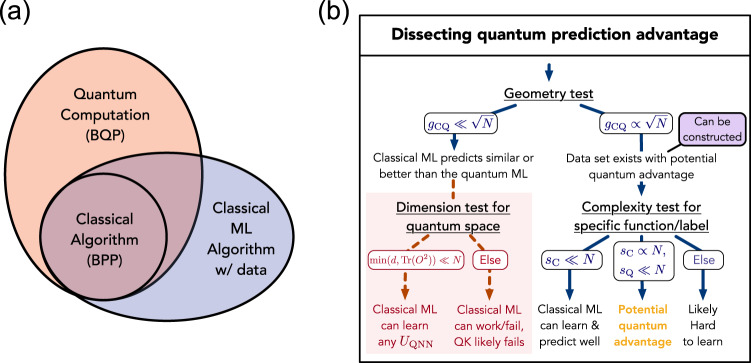
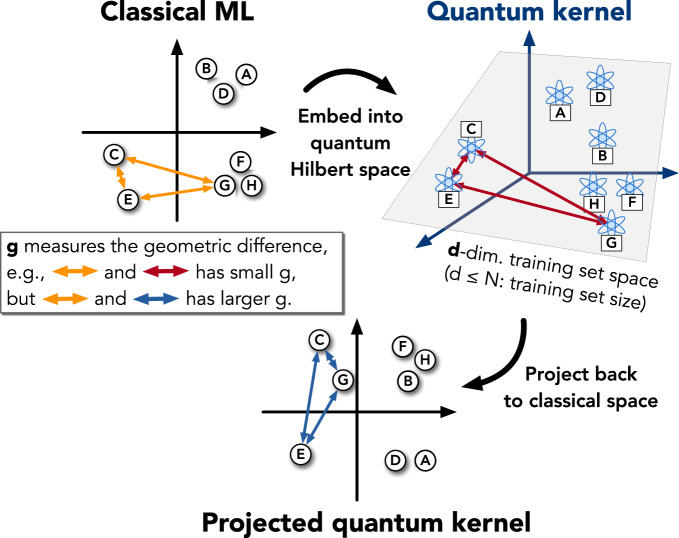
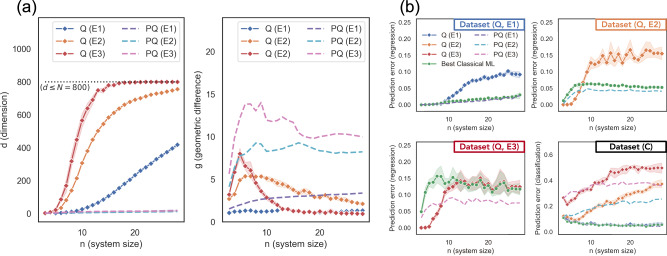
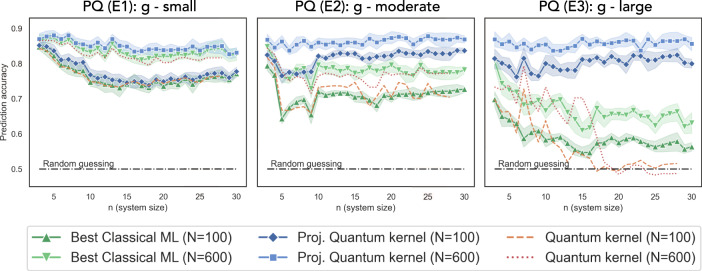
The use of quantum computing for machine learning is among the most exciting prospective applications of quantum technologies. However, machine learning tasks where data is provided can be considerably different than commonly studied computational tasks. In this work, we show that some problems that are classically hard to compute can be easily predicted by classical machines learning from data. Using rigorous prediction error bounds as a foundation, we develop a methodology for assessing potential quantum advantage in learning tasks. The bounds are tight asymptotically and empirically predictive for a wide range of learning models. These constructions explain numerical results showing that with the help of data, classical machine learning models can be competitive with quantum models even if they are tailored to quantum problems. We then propose a projected quantum model that provides a simple and rigorous quantum speed-up for a learning problem in the fault-tolerant regime. For near-term implementations, we demonstrate a significant prediction advantage over some classical models on engineered data sets designed to demonstrate a maximal quantum advantage in one of the largest numerical tests for gate-based quantum machine learning to date, up to 30 qubits.
Overview
The claims and statistics of this paper haven’t been checked yet.
Free: it reads the open-access text and checks the first 5 claims that cite a source we can check. Create a free account to check every claim.
Integrity signals
Registry
Cites
Statistics
Figures
Verification
Claims the paper makes
The claims and statistics of this paper haven’t been checked yet.
Free: it reads the open-access text and checks the first 5 claims that cite a source we can check. Create a free account to check every claim.
Claims other papers make about this one
Each is checked against this paper’s own text: does it say what the citing paper says it does?
The source backs part of the claim, not all of it — or backs it for a different population, condition or comparison.
In the citing paper
“measures such as the effective dimension have been motivated from an information-theoretic standpoint and depend on the Fisher information”
From The power of quantum neural networks (2021) · cites this paper as [21]
Experimental — accuracy not yet measuredThe cited source says what the claim attributes to it.
In the citing paper
“For instance, in [57], it is shown how the quality and the amount of data can sensibly affect the performance of classical and QML models in such a way that the quantum advantage is not always guaranteed.”
From On Circuit-Based Hybrid Quantum Neural Networks for Remote Sensing Imagery Classification (2022) · cites this paper as [57]
The cited source says what the claim attributes to it.
In the citing paper
“However, there is not a shared consensus on how and when QML can be advantageous with respect to its classical counterpart on general classes of problems.”
From On Circuit-Based Hybrid Quantum Neural Networks for Remote Sensing Imagery Classification (2022) · cites this paper as [57]
In the citing paper
“a quantity that describes the geometry of a model's parameter space and is essential in both statistics and machine learning [20-22].”
From The power of quantum neural networks (2021) · cites this paper as [21]
Self-check
Percentages, sums and reported differences re-computed from the paper’s own numbers.
The self-check needs the paper’s full text.
Citations
Cites
Breiman, L. (2001) · Machine Learning · doi:10.1023/a:1010933404324 · Cited by 133,538
Cortes, C., & Vapnik, V. (1995) · Machine Learning · doi:10.1007/bf00994018 · Cited by 59,421
Hohenberg, P., & Kohn, W. (1964) · Physical Review · doi:10.1103/physrev.136.b864 · Cited by 53,541
Learning with Kernels: Support Vector Machines, Regularization, Optimization, and Beyond
Schölkopf, B., & Smola, A. J. (2001) · The MIT Press eBooks · doi:10.7551/mitpress/4175.001.0001 · Cited by 11,703
Libsvm : A library for support vector machines
Ferrari, V. (2008) · Medical Entomology and Zoology · Cited by 10,123
Least Squares Support Vector Machine Classifiers
Suykens, J. A. K., & Vandewalle, J. (1999) · Neural Processing Letters · doi:10.1023/a:1018628609742 · Cited by 9,362
Density-Functional Theory for Time-Dependent Systems
Runge, E., & Gross, E. K. U. (1984) · Physical Review Letters · doi:10.1103/physrevlett.52.997 · Cited by 8,914
A fast quantum mechanical algorithm for database search
Grover, L. K. (1996) · Proceedings of the twenty-eighth annual ACM symposium on Theory of computing - STOC '96 · doi:10.1145/237814.237866 · Cited by 8,830
Re-epithelialization and immune cell behaviour in an ex vivo human skin model
Rakita, A., Nikolić, N., Mildner, M., Matiasek, J., & Elbe-Bürger, A. (2020) · Scientific Reports · doi:10.1038/s41598-019-56847-4 · Cited by 8,228
Quantum supremacy using a programmable superconducting processor
Arute, F., Arya, K., Babbush, R., Bacon, D., Bardin, J. C., Barends, R., Biswas, R., Boixo, S., Brandao, F. G. S. L., Buell, D. A., et al. (2019) · Nature · doi:10.1038/s41586-019-1666-5 · Cited by 7,720
Self-citation
Cited by
Items 301–400 of 925
Experimentally realizable continuous-variable quantum neural networks
Bangar, S., Sunny, L., Aydeniz, K. Y., & Siopsis, G. (2023) · Physical Review A · doi:10.1103/physreva.108.042414 · Cited by 16
Chinzei, K., Tran, Q. H., Maruyama, K., Oshima, H., & Sato, S. (2024) · Physical Review Research · doi:10.1103/physrevresearch.6.023042 · Cited by 19
“Recent studies have demonstrated quantum speedups in QML beyond classical machine learning for specific artificially engineered tasks, suggesting the potential of QML [6–8].”
BackgroundChen, Q., Du, Y., Jiao, Y., Lu, X., Wu, X., & Zhao, Q. (2024) · Quantum Science and Technology · doi:10.1088/2058-9565/ad420a · Cited by 12
A new method of software vulnerability detection based on a quantum neural network
Zhou, X., Pang, J., Yue, F., Liu, F., Guo, J., Liu, W., Song, Z., Shu, G., Xia, B., & Shan, Z. (2022) · Scientific Reports · doi:10.1038/s41598-022-11227-3 · Cited by 18
“Meanwhile, the research 36 quantitatively studied the computational advantages of quantum neural networks through theoretical derivation.”
BackgroundIncudini, M., Martini, F., & Pierro, A. D. (2024) · Advanced Quantum Technologies · doi:10.1002/qute.202300298 · Cited by 15
Guided quantum compression for high dimensional data classification
Belis, V., Odagiu, P., Grossi, M., Reiter, F., Dissertori, G., & Vallecorsa, S. (2024) · Machine Learning Science and Technology · doi:10.1088/2632-2153/ad5fdd · Cited by 24
Li, Y., Hao, X., Liu, G., Shang, R., & Jiao, L. (2024) · Memetic Computing · doi:10.1007/s12293-024-00417-3 · Cited by 13
Quantum computing enhanced knowledge tracing: Personalized KT research for mitigating data sparsity
Bao, C., Wu, Q., Ji, W., Wang, M., & Wang, H. (2024) · Journal of King Saud University - Computer and Information Sciences · doi:10.1016/j.jksuci.2024.102224 · Cited by 11
“There are also notable applications in quantum support vector machines (Heredge et al., 2021; Huang et al., 2021), drug development (Zinner et al., 2021), and financial forecasting (Egger et al., 2020).”
Akrom, M., Rustad, S., Sutojo, T., Setiadi, D. R. I. M., Andono, P. N., Shidik, G. F., Dipojono, H. K., & Maezono, R. (2025) · Materials Today Communications · doi:10.1016/j.mtcomm.2025.112341 · Cited by 15
Optimization Strategies in Quantum Machine Learning: A Performance Analysis
Ajmi, N. A. A., & Shoaib, M. (2025) · Applied Sciences · doi:10.3390/app15084493 · Cited by 22
EEG-Based Dementia Classification Using CS-EMD Synchrony Features and Quantum Machine Learning
Ho, R., Hung, K., Chui, K. T., Fu, Y., & Wu, H. C. (2025) · IEEE Transactions on Consumer Electronics · doi:10.1109/tce.2025.3548303 · Cited by 13
“These results indicate that quantum-inspired methods can potentially offer notable advantages over their classical counterparts, which coincides with the findings of several previous studies [19], [20].”
A hybrid quantum-neural network for heart disease classification
Verdone, A., Succetti, F., Ceschini, A., Rosato, A., Fioravanti, A., & Panella, M. (2025) · Biomedical Signal Processing and Control · doi:10.1016/j.bspc.2025.109185 · Cited by 17
Supervised learning of random quantum circuits via scalable neural networks
Cantori, S., Vitali, D., & Pilati, S. (2023) · Quantum Science and Technology · doi:10.1088/2058-9565/acc4e2 · Cited by 14
“Moreover, it has recently been proven that data-based algorithms can solve otherwise classically intractable computational tasks [12], including predicting ground-state properties of quantum systems, and rigorous guarantees on the accuracy and on the scaling of the required training set size have been demonstrated [13…”
BackgroundQuantum Machine Learning and Recent Advancements
Manjunath, T. D., & Bhowmik, B. R. (2023) · International Conference on Artificial Intelligence and Smart Communication (AISC) · doi:10.1109/aisc56616.2023.10085586 · Cited by 16
“Huang et al. [24] provided an improved performance by a few quantum kernel methods applied over classical machine learning models.”
MethodWang, R., Du, J., & Gao, T. H. (2023) · IEEE International Conference on Acoustics Speech and Signal Processing · doi:10.1109/icassp49357.2023.10096141 · Cited by 17
“For example, projecting classical data into a high-dimensional quantum feature space has been shown to have quantum advantages in many classification tasks [12, 13], and privacy algorithms built on cloud quantum devices API provide data isolation [10, 14].”
BackgroundA Modified Depolarization Approach for Efficient Quantum Machine Learning
Khanal, B., & Rivas, P. (2024) · Mathematics · doi:10.3390/math12091385 · Cited by 15
“The presence of system noise can significantly diminish the quantum kernel advantage [27], raising concerns about the viability of quantum kernel methods [28].”
BackgroundQuantum Circuit Architecture Search on a Superconducting Processor
Linghu, K., Qian, Y., Wang, R., Hu, M., Li, Z., Li, X., Xu, H., Zhang, J.-N., Ma, T., Zhao, P., et al. (2024) · Entropy · doi:10.3390/e26121025 · Cited by 19
“In the past years, a growing number of theoretical studies have shown the computational superiority of VQAs in the regime of machine learning [8–16], quantum many-body physics [17–20], and quantum information processing [21–23].”
Explainable t-SNE for single-cell RNA-seq data analysisPreprint
Han, H., Zhang, T., Li, C., Benton, M. L., Wang, J., & Li, J. (2022) · bioRxiv (Cold Spring Harbor Laboratory) · doi:10.1101/2022.01.12.476084 · Cited by 13
“At the same time, we are also interested in investigating to extend the proposed c-TSNE to its quantum version to exploit its quantum advantage to handle larger and more complicated scRNA-seq datasets in a fast and accurate way [40].”
BackgroundQuanTest: Entanglement-Guided Testing of Quantum Neural Network Systems
Shi, J., Xiao, Z., Shi, H., Jiang, Y., & Li, X. (2025) · ACM Transactions on Software Engineering and Methodology · doi:10.1145/3688840 · Cited by 15
Quantum Computing in Finance: The Intesa Sanpaolo Experience
Sotelo, R., Corbelletto, D., Dri, E., Giusto, E., & Montrucchio, B. (2024) · IEEE Engineering Management Review · doi:10.1109/emr.2024.3373796 · Cited by 16
“…in the laws of quantum mechanics, defining computing devices that are theoretically able to outperform any other classical computer in performing certain applications in finance [1], [2], [3], chemistry [4], biomechanics [5], machine learning [6], [7], networks [8], [9] and many other domains.”
BackgroundKatırcı, R., Aasım, M., Deveci, G., & Mustafa, Z. (2024) · Plant Cell Tissue and Organ Culture (PCTOC) · doi:10.1007/s11240-024-02880-9 · Cited by 13
“QML represents a novel frontier at the confluence of quantum computing and machine learning, with the poten - tial to revolutionize computational methodologies (Huang et al. 2021).”
Hype or Heuristic? Quantum Reinforcement Learning for Join Order Optimisation
Franz, M., Winker, T., Groppe, S., & Mauerer, W. (2024) · IEEE International Conference on Quantum Computing and Engineering (QCE) · doi:10.1109/qce60285.2024.00055 · Cited by 21
“This finding appears to contradict claims for quantum advantage in QML literature [37], [38], [40].”
Kreplin, D. A., Willmann, M., Schnabel, J., Rapp, F., Hagelüken, M., & Roth, M. (2025) · IEEE Software · doi:10.1109/ms.2025.3527736 · Cited by 20
Enhanced feature encoding and classification on distributed quantum hardware
Moretti, R., Giachero, A., Radescu, V. A. M., & Grossi, M. (2025) · Machine Learning Science and Technology · doi:10.1088/2632-2153/adb4bc · Cited by 16
“Also, techniques such as projected quantum kernels [22, 23] can further help to balance expressivity and generalizability thanks to partial tracing.”
Walia, G. S., Sathiya Priya, S., Karthikeya, K., Suresh, D., Sudheer, P., & Syambabu, V. (2025) · International Conference on Pervasive Computational Technologies (ICPCT) · doi:10.1109/icpct64145.2025.10940638 · Cited by 11
“To overcome the limitations of both quantum and classical approaches, [9] suggested hybrid algorithms that can handle complicated data jobs more effectively.”
Universal Approximation Theorem and Error Bounds for Quantum Neural Networks and Quantum Reservoirs
Gonon, L., & Jacquier, A. (2025) · IEEE Transactions on Neural Networks and Learning Systems · doi:10.1109/tnnls.2025.3552223 · Cited by 42
“In terms of learning e ffi ciency, a general comparative advantage has yet to be established in the literature and may be highly dependent on the considered data, as demonstrated in [55].”
Liu, Y., Kaneko, K., Baba, K., Koyama, J., Kimura, K., & Takeda, N. (2025) · IEEE Transactions on Quantum Engineering · doi:10.1109/tqe.2025.3571484 · Cited by 23
“…classical machine learning algorithms for real-world applications in the NISQ era, some researchers have indicated that VQA-based QML holds the potential to provide stronger representational power than classical methods, including highly successful deep neural networks [12, 13, 14, 15, 16].”
BackgroundAlfonso, D. R., Lee, Y., Paudel, H. P., & Duan, Y. (2025) · Applied Physics Reviews · doi:10.1063/5.0245874 · Cited by 13
Quantum enhanced stratification of breast cancer: exploring quantum expressivity for real omics data
Repetto, V., Ceroni, E. G., Buonaiuto, G., & D’Aurizio, R. (2025) · Quantum Machine Intelligence · doi:10.1007/s42484-025-00289-x · Cited by 18
“This can help in learning in both computational and sample complexity aspects [7].”
InfluentialSporadic Federated Learning Approach in Quantum Environment to Tackle Quantum Noise
Rahman, R., Pokharel, A., & Nguyen, D. C. (2025) · IEEE/CVF Conference on Computer Vision and Pattern Recognition Workshops (CVPRW) · doi:10.1109/cvprw67362.2025.00171 · Cited by 10
“Furthermore, quantum algorithms enhance optimization and pattern recognition, making QFL ideal for safe, large-scale distributed learning across a wide range of applications [12].”
Advancing single-cell omics and cell-based therapeutics with quantum computing
Bose, A., Rhrissorrakrai, K., Utro, F., Parida, L., Basu, S., Born, J., Capponi, S., Chalkia, D., Chan, T. A.-T., Doğa, H., et al. (2026) · Nature Reviews Molecular Cell Biology · doi:10.1038/s41580-025-00918-0 · Cited by 23
Jawad, A., Stefan-Henningsen, E., & Kiani, A. (2026) · Next research. · doi:10.1016/j.nexres.2026.101532 · Cited by 15
PQKLP: Projected Quantum Kernel based Link Prediction in Dynamic Networks
Kumar, M., Mishra, S., & Biswas, B. (2022) · Computer Communications · doi:10.1016/j.comcom.2022.10.006 · Cited by 11
Kawaguchi, H. (2023) · PLoS ONE · doi:10.1371/journal.pone.0283933 · Cited by 11
“While g CQ has been proposed as a metric to assess the quantum advantage of quantum kernels regarding prediction performance [45], g CQ might also be available to assess whether quantum kernels are useful for independence measures.”
InfluentialThe power of one clean qubit in supervised machine learning
Karimi, M., Javadi-Abhari, A., Simon, C., & Ghobadi, R. (2023) · Scientific Reports · doi:10.1038/s41598-023-46497-y · Cited by 14
Reconstructing charged particle track segments with a quantum-enhanced support vector machine
Duckett, P. K., Facini, G. J., Jastrzebski, M., Malik, S. A., Scanlon, T., & Rettie, S. (2024) · Physical review. D/Physical review. D. · doi:10.1103/physrevd.109.052002 · Cited by 15
“The authors of [34] introduced a set of metrics which can be used to quantify the differences between the quantum and classical models (kernels) K Q and K C , respectively.”
Digital–analog quantum learning on Rydberg atom arrays
Lu, J. Z., Jiao, L., Wolinski, K., Kornjača, M., Hu, H.-Y., Cantu, S., Liu, F., Yelin, S. F., & Wang, S.-T. (2024) · Quantum Science and Technology · doi:10.1088/2058-9565/ad9177 · Cited by 29
Quantum phase transition detection via quantum support vector machine
Wang, Y., & Cao, L. (2024) · Quantum Science and Technology · doi:10.1088/2058-9565/ad985f · Cited by 14
“…efficiency compared to the existing QSVM algorithms; concurrently, our approach promises a quantum computational edge in scenarios where the quantum feature map circuit defies classical simulation [36, 37], thereby delivering a level of performance that outstrips classical counterparts.”
Communication-efficient Quantum Federated Learning Optimization for Multi-Center Healthcare Data
Bhatia, A. S., Saggi, M. K., & Kais, S. (2024) · IEEE-EMBS International Conference on Biomedical and Health Informatics (BHI ...) · doi:10.1109/bhi62660.2024.10913485 · Cited by 10
“Till now, several approaches have been proposed and shown great potential to revolutionize various sectors, including healthcare, finance, chemistry, cybersecurity, optimization, and many more [4], [5].”
Exploring quantum perceptron and quantum neural network structures with a teacher-student scheme
Gratsea, A., & Huembeli, P. (2022) · Quantum Machine Intelligence · doi:10.1007/s42484-021-00058-6 · Cited by 16
Position Papers for the ASCR Workshop on Basic Research Needs in Quantum Computing and Networking
Lougovski, P., Parekh, O., Broz, J., Byrd, M., Chembo, Y. K., de Jong, W. A., Figueroa, E. V., Humble, T. S., Larson, J. M., Quiroz, G., et al. (2023) · OSTI OAI (U.S. Department of Energy Office of Scientific and Technical Information) · doi:10.2172/2283320 · Cited by 11
Quantum-classical separations in shallow-circuit-based learning with and without noises
Zhang, Z., Gong, W., Li, W., & Deng, D.-L. (2024) · Communications Physics · doi:10.1038/s42005-024-01783-7 · Cited by 16
“In recent years, a number of quantum learning algorithms have been proposed 7 – 22 , which may offer potential quantum advantages over their classical counterparts.”
Quantum ensemble learning with a programmable superconducting processor
Chen, J., Wu, Y., Yang, Z. Y., Xu, S., Ye, X., Li, D., Wang, K., Zhang, C., Jin, F., Zhu, X., et al. (2025) · npj Quantum Information · doi:10.1038/s41534-025-01037-6 · Cited by 21
“…of quantum learning models has been extensively studied in terms of quantum neural network (QNN) and quantum convolutional neural network (QCNN) [7–9] and, with the rapid advances of quantum technologies across various physical platforms [10–14], supported by a growing number of experiments…”
Mukhanbet, A., & Daribayev, B. (2025) · Computation · doi:10.3390/computation13080185 · Cited by 15
“Although Huang et al. [30] experimentally demonstrated quantum advantage in select machine learning tasks, these were confined to structured problems and do not yet extend to complex, real-world datasets like CIFAR-100, where a significant performance gap remains.”
Quantum-Enhanced Parameter-Efficient Learning for Typhoon Trajectory Forecasting
Liu, C.-Y., Chen, K., Chen, Y., Chen, S. Y.-C., Huang, W., Huang, W., & Chang, Y.-J. (2025) · IEEE International Conference on Quantum Computing and Engineering (QCE) · doi:10.1109/qce65121.2025.00224 · Cited by 18
Transfer of quantum information via a dissipative protocol for data classification
Korkmaz, U., & Türkpençe, D. (2021) · Physics Letters A · doi:10.1016/j.physleta.2021.127887 · Cited by 12
Neural Networks with Variational Quantum Circuits
Rizvi, S. M. A., Ulum, M. S., Asif, N., & Shin, H. (2023) · Lecture notes of the Institute for Computer Sciences, Social Informatics and Telecommunications Engineering · doi:10.1007/978-3-031-47359-3_15 · Cited by 15
Generating Universal Adversarial Perturbations for Quantum Classifiers
Anil, G., Vinod, V., & Narayan, A. (2024) · Proceedings of the AAAI Conference on Artificial Intelligence · doi:10.1609/aaai.v38i10.28963 · Cited by 17
“(Huang et al. 2021).”
Effect of alternating layered Ansätze on trainability of projected quantum kernels
Suzuki, Y., & Li, M. (2024) · Physical Review A · doi:10.1103/physreva.110.012409 · Cited by 17
On hybrid quanvolutional neural networks optimization
Ceschini, A., Carbone, A., Sebastianelli, A., Panella, M., & Saux, B. L. (2025) · Quantum Machine Intelligence · doi:10.1007/s42484-025-00241-z · Cited by 18
“Addressing this challenge necessitates meticulous design considerations for QNNs (Ragone et al. 2023; Diaz et al. 2023) and the integration of techniques for controlling expressibility, such as projection (Huang et al. 2021) and bandwidth control (Canatar et al. 2022).”
Uso de computación cuántica en la mejora de algoritmos de aprendizaje automático
Galarza-Sánchez, P. C., Erazo-Luzuriaga, A. F., & Boné-Andrade, M. F. (2023) · Revista Científica Ciencia y Método · doi:10.55813/gaea/rcym/v1/n4/25 · Cited by 10
Inferring predator–prey interaction in the subterranean environment: a case study from Dinaric caves
Premate, E., Zagmajster, M., & Fišer, C. (2021) · Scientific Reports · doi:10.1038/s41598-021-01249-8 · Cited by 9
Artificial Intelligence Technological Revolution in Education and Space for Next Generation
Chetradevee, S. L., Xavier, K. A., & Jayapandian, N. (2022) · Lecture notes in networks and systems · doi:10.1007/978-981-19-2130-8_30 · Cited by 10
Quantum Machine Learning For Classical DataPreprint
Wossnig, L. (2021) · arXiv (Cornell University) · doi:10.48550/arxiv.2105.03684 · Cited by 16
Strong generalization in quantum neural networks
Jiang, J., Zhao, Y., Li, R., Li, C., Guo, Z., Fan, B., Li, X., Li, R., & Zhang, X. (2023) · Quantum Information Processing · doi:10.1007/s11128-023-04095-x · Cited by 10
“Huang et al. demonstrate a significant prediction advantage over some classical models on engineered data sets [24].”
Letting the Tiger out of Its Cage: Bosonic Coding without Concatenation
Xu, Y., Wang, Y., Vuillot, C., & Albert, V. V. (2025) · Physical Review X · doi:10.1103/ls5r-vj7r · Cited by 27
Light‐Cone Feature Selection for Quantum Machine Learning
Suzuki, Y., Sakuma, R., & Kawaguchi, H. (2025) · Advanced Quantum Technologies · doi:10.1002/qute.202400647 · Cited by 13
“Note that, by local quantum kernels, we mean a family of quantum kernels that measure local similarity between a pair of data; examples are projected quantum kernels (PQKs) [23] and quantum Fisher kernels (QFKs) [26].”
BackgroundMethodResultInfluentialThe discriminative ability on anomaly detection using quantum kernels for shipping inspection
Tomono, T., & Tsujimura, K. (2025) · EPJ Quantum Technology · doi:10.1140/epjqt/s40507-025-00335-4 · Cited by 12
“Hsin-Huang H et al. experimentally demonstrated that quantum kernels exhibit exponentially superior performance compared to classical kernels for specific datasets [13].”
Rosa, E., Vaccaro, M., Placidi, E., D’Andrea, M. L., Liporace, F., Natali, G. L., Secinaro, A., & Napolitano, A. (2025) · Computers · doi:10.3390/computers14120529 · Cited by 8
“Researchers are actively exploring ways to combine quantum and classical approaches to get the best of both worlds, with the goal of applying QNNs to real-world challenges like medical diagnostics, financial modeling, and data security [28,29].”
SLIQ: Quantum Image Similarity Networks on Noisy Quantum Computers
Silver, D., Patel, T., Ranjan, A., Gandhi, H., Cutler, W., & Tiwari, D. (2023) · Proceedings of the AAAI Conference on Artificial Intelligence · doi:10.1609/aaai.v37i8.26175 · Cited by 14
“Our simulations and real-computer evaluations demonstrate that SLIQ achieves a 31% point improvement in similarity detection over a baseline quantum triplet network on a real-world, unlabeled dataset (Chen, Lai, and Liu 2018), while prior state-of-the-art works in QML only perform classification and require labeled in…”
BackgroundMethodInfluentialDistributed Coordinate Descent Algorithm for Variational Quantum Classification
Koyasu, I., Raymond, R., & Imai, H. (2023) · IEEE International Conference on Quantum Computing and Engineering (QCE) · doi:10.1109/qce57702.2023.00059 · Cited by 9
“…results of numerical simulations and execution of quantum circuits on IBM quantum devices for image classification tasks using the handwritten digit, MNIST [25], and the grayscale image of fashion product, Fashion-MNIST [26], datasets which are popular for benchmarking quantum algorithms [27]–[32].”
Quantum autoencoders using mixed reference states
Ma, H., Mooney, G. J., Petersen, I. R., Hollenberg, L. C. L., & Dong, D. (2024) · npj Quantum Information · doi:10.1038/s41534-024-00872-3 · Cited by 15
“By now, we have threestrategiesforsetting p r ,andtheircomparsionforcompressingthermal states and Werner states is summarized in Supplementary Discussion 3.”
Expressive quantum perceptrons for quantum neuromorphic computing
Bravo, R. A., Patti, T. L., Najafi, K., Gao, X., & Yelin, S. F. (2025) · Quantum Science and Technology · doi:10.1088/2058-9565/ad9fa4 · Cited by 11
“Suppose we have a data set D that is a subset of an ambient data set X . a Let Ψ in be the feature map taking a data point x into quantum state | Ψ in ( x ) . defined ⟩ The kernel inherited by the featured map is as κ ( x , y ) ≡ |⟨ Ψ in ( x ) Ψ in ( y ) 2 [35, 36].”
Quantum Kernel Machine Learning With Continuous Variables
Henderson, L. J., Goel, R., & Shrapnel, S. (2024) · Quantum · doi:10.22331/q-2024-12-17-1570 · Cited by 15
“This is the so-called “exponential concentration” problem analogous to the barren plateau problem in quantum neural networks [20] —as quantum kernels become more expressive, they typically also become exponentially harder to learn and less likely to generalise [21– 23].”
Adiabatic quantum algorithm for artificial graphene
Pérez-Obiol, A., Pérez-Salinas, A., Sanchez, S., Araújo, B. G. M., & García-Sáez, A. (2022) · Physical Review A · doi:10.1103/physreva.106.052408 · Cited by 13
Detection of Bare Soil in Hyperspectral Images Using Quantum-Kernel Support Vector Machines
Wijata, A. M., Miroszewski, A., Saux, B. L., Longépé, N., Ruszczak, B., & Nalepa, J. (2024) · IEEE International Geoscience and Remote Sensing Symposium (IGARSS) · doi:10.1109/igarss53475.2024.10641442 · Cited by 11
“The choice of PQK for this work follows from the following reasons: quantum state tomography for complex feature maps generated on a quantum device is a hard-to-compute task, additionally the potential of quantum advantage of this kernel family has been shown for artificial datasets [28].”
BackgroundSurvey of Quantum Machine Learning in IoT Application Field
Pradhan, M. (2024) · International Conference on IoT Based Control Networks and Intelligent Systems (ICICNIS) · doi:10.1109/icicnis64247.2024.10823197 · Cited by 8
A Power Transformer Fault Diagnosis Method Based on Improved Variational Quantum Shadow Learning
He, H., Yu, J., Lee, W., Luo, D., & Liang, W. (2025) · IEEE Transactions on Power Delivery · doi:10.1109/tpwrd.2025.3546722 · Cited by 7
“Recently, scholars have embarked on researching quantum neural network (QNN) methods [14], and a series of structures for QNN have already been constructed [15], [16], [17], [18].”
Slysz, M., Grodzki, Ł., Rydlichowski, P., Siera, D., Kurowski, K., Waligóra, G., & Węglarz, J. (2025) · Future Generation Computer Systems · doi:10.1016/j.future.2025.107934 · Cited by 11
Lalawat, R. S., Bajaj, V., Padhy, P. K., & Lin, C.-Y. (2025) · Applied Acoustics · doi:10.1016/j.apacoust.2025.110976 · Cited by 7
Wang, E., Ding, C., Zhou, D., Xu, C., Sing, S. L., Jiang, J., & Wu, H. (2026) · Advanced Science · doi:10.1002/advs.202522817 · Cited by 7
“QML excels in parallel computing within high-dimensional data spaces, efficiently analyzing complex multicomponent alloy systems and capturing nonlinear relationships between material properties and microstructure [ 30, 31 ].”
NISQ-Friendly Non-Linear Activation Functions for Quantum Neural Networks
Sajadimanesh, S., Faye, J. P. L., & Atoofian, E. (2022) · IEEE International Conference on Networking, Architecture and Storage (NAS) · doi:10.1109/nas55553.2022.9925456 · Cited by 8
“Inspired by Huang et al. [32], we use a classical fully-connected (FC) layer after the last quantum layer.”
MethodZhao, R.-S., 马, H.-Y. 鸿. M., 程, T. 涛. C., 王, S. 爽. W., & Fan, X. (2023) · Chinese Physics B · doi:10.1088/1674-1056/ad02e7 · Cited by 8
Understanding Logical-Shift Error Propagation in Quanvolutional Neural Networks
Vallero, M., Dri, E., Giusto, E., Montrucchio, B., & Rech, P. (2024) · IEEE Transactions on Quantum Engineering · doi:10.1109/tqe.2024.3372880 · Cited by 8
“With the current widespread access to simulators and quantum devices over the cloud, researchers have been able to quickly expand QC’s reach to fields such as finance [1], chemistry [2], biomechanics [3], machine learning [4], [5], and many others.”
BackgroundYuan, J., Gao, H., Shen, Y., & Ma, G. (2024) · Land · doi:10.3390/land13040560 · Cited by 8
“Machine learning, which is known for its high result accuracy and precision, has been widely applied in various research [63].”
BackgroundNear-optimal quantum kernel principal component analysis
Wang, Y. (2024) · Quantum Science and Technology · doi:10.1088/2058-9565/ad9176 · Cited by 9
“Recently, kernel methods [2, 6–11] have been linked to quantum computing and have provided exponential quantum speedups in specific tasks such as support vector machines [4].”
Robust Quantum Reservoir Learning for Molecular Property Prediction
Beaulieu, D., Kornjača, M., Krunic, Z., Stivaktakis, M., Chen, J., Ehmer, T., Wang, S.-T., & Pham, A. (2025) · Journal of Chemical Information and Modeling · doi:10.1021/acs.jcim.5c00958 · Cited by 20
Thakur, A., Bezerra, P. C. S., Abhishek, Zeng, S., Zhang, K., Treptow, W. L., Luna, A., Dougherty, U., Kwesi, A., Huang, I. R., et al. (2025) · Bioactive Materials · doi:10.1016/j.bioactmat.2025.03.023 · Cited by 11
“This allows QML algorithms to solve problems that are intractable for classical computers [39,92 – 95].”
InfluentialPost-variational classical quantum transfer learning for binary classification
Yogaraj, K., Quanz, B., Vikas, T., Mondal, A., & Mondal, S. (2025) · Scientific Reports · doi:10.1038/s41598-025-08887-2 · Cited by 12
“The Observable Construction Heuristic 40 , proposed a kernel-based method for quantum states called “projected quantum kernels” applied on the Fashion MNIST dataset.”
Noisy HQNNs: A Comprehensive Analysis of Noise Robustness in Hybrid Quantum Neural Networks
Ahmed, T., Marchisio, A., Kashif, M., & Shafique, M. (2025) · International Joint Conference on Neural Networks (IJCNN) · doi:10.1109/ijcnn64981.2025.11229153 · Cited by 16
“One field where QC has demonstrated a significant advantage over classical computers is Quantum Machine Learning (QML) [4]–[7].”
Storage properties of a quantum perceptron
Gratsea, A., Kasper, V., & Lewenstein, M. (2024) · Physical review. E · doi:10.1103/physreve.110.024127 · Cited by 16
Ecmas: Efficient Circuit Mapping and Scheduling for Surface Code
Zhu, M., Fu, H., Wu, J., Zhang, C., Xie, W., & Li, X. (2024) · Proceedings of the CGO/Proceedings of the ... CGO · doi:10.1109/cgo57630.2024.10444874 · Cited by 14
“Quantum algorithms offer exponential speedup over classical algorithms in various fields such as machine learning [14], [18], [30], simulation [11] and cryptography [31].”
BackgroundQuantum machine learning for multiclass classification beyond kernel methods
Ding, C., Wang, S., Wang, Y., & Gao, W. (2025) · Physical Review A · doi:10.1103/physreva.111.062410 · Cited by 16
Quantum graph learning and algorithms applied in quantum computer sciences and image classification
Shayeganfar, F., Ramazani, A., Sundararaghavan, V., & Duan, Y. (2025) · Applied Physics Reviews · doi:10.1063/5.0237599 · Cited by 11
Neural Quantum Embedding via Deterministic Quantum Computation with One Qubit
Liu, H., Hur, T., Zhang, S., Che, L., Long, X., Wang, X., Huang, K., Fan, Y.-A., Zheng, Y., Feng, Y., et al. (2025) · Physical Review Letters · doi:10.1103/y8wr-yml4 · Cited by 15
Basilewitsch, D., Bravo, J. F., Tutschku, C., & Struckmeier, F. (2025) · Quantum Machine Intelligence · doi:10.1007/s42484-025-00336-7 · Cited by 20
“…[1, 2] is one of the various subfields of quantum computing promising advantages over its classical counterpart, for instance due to proposals regarding more efficient data encoding [3, 4], improved model expressivity [5–7], prediction accuracy [8–10] or by saving computational resources [11, 12].”
Quantum kernel methods for marketing analytics with convergence theory and separation bounds
Sáez‐Ortuño, L., Forgas‐Coll, S., & Феррара, М. (2026) · Scientific Reports · doi:10.1038/s41598-026-35793-y · Cited by 7
“This reduces the observable dimension from exponential to polynomial while preserving kernel expressivity [9].”
Controlling Remote Robots Based on Zidan’s Quantum Computing Model
Panda, B., Tripathy, N. K., Sahu, S., Behera, B. K., & Elhady, W. E. (2022) · Computers, materials & continua/Computers, materials & continua (Print) · doi:10.32604/cmc.2022.028394 · Cited by 6
Smart Payment Fraud Detection using QML – A Major Challenge
Tekkali, C. G., & Natarajan, K. (2023) · International Conference on Artificial Intelligence and Smart Energy (ICAIS) · doi:10.1109/icais56108.2023.10073712 · Cited by 7
“Hsin-Yuan Huang et al. [12] concluded the power of data in QML and developed an approach for checking potential quantum benefit in tasks of learning.”
BackgroundQuantum Theory Approach to Performance Enhancement in Machine Learning
Adebiyi, M. O., Olaniyan, D., Osang, F. B., & Adebiyi, A. A. (2023) · International Conference on Science, Engineering and Business for Sustainable Development Goals (SEB-SDG) · doi:10.1109/seb-sdg57117.2023.10124582 · Cited by 7
“Reference [33] experimented with the use of data that classical machine learning models can compete with quantum models, even if they are designed to solve quantum problems, according to numerical results explained by these structures.”
Povm-Based Quantum Self-Attention Neural Network
Wei, J., He, Z., Chen, C., Deng, M., & Situ, H. (2023) · International Conference on Wavelet Analysis and Pattern Recognition · doi:10.1109/icwapr58546.2023.10337270 · Cited by 6
“Quantum machine learning[1, 15] is an interdisciplinary field that merges quantum computing[20] with artificial intelligence, integrating the theories and technologies of quantum computing with machine learning algorithms.”
BackgroundRelation Between Quantum Advantage in Supervised Learning and Quantum Computational Advantage
Pérez-Guijarro, J., Pagés-Zamora, A., & Fonollosa, J. R. (2023) · IEEE Transactions on Quantum Engineering · doi:10.1109/tqe.2023.3347476 · Cited by 12
“In this appendix, we reformulate the results in [21] about the complexity differences between computational and learning tasks.”
BackgroundMethodInfluentialPQML: Enabling the Predictive Reproducibility on NISQ Machines for Quantum ML Applications
Senapati, P., Chen, S. Y.-C., Fang, B., Athawale, T. M., Li, A., Jiang, W., Lu, C. C., & Guan, Q. (2024) · IEEE International Conference on Quantum Computing and Engineering (QCE) · doi:10.1109/qce60285.2024.00168 · Cited by 13
Harnessing quantum support vector machines for cross-domain classification of quantum states
Sharma, D., Sabale, V. B., Singh, P., & Kumar, A. (2025) · Quantum Machine Intelligence · doi:10.1007/s42484-025-00274-4 · Cited by 7
“The circuit is chosen after performing an optimization based on repetitions of the gates and a number of measurements and in comparison to other circuits such as instantaneous quantum polynomial (IQP) and Hamiltonian circuits (Havlíˇcek et al. 2019; Huang et al. 2021).”
Quantum kernel evaluation via Hong–Ou–Mandel interference
Bowie, C., Shrapnel, S., & Kewming, M. J. (2023) · Quantum Science and Technology · doi:10.1088/2058-9565/acfba9 · Cited by 12
Precise image generation on current noisy quantum computing devices
Rehm, F., Vallecorsa, S., Borras, K., Krücker, D., Grossi, M., & Varo, V. (2023) · Quantum Science and Technology · doi:10.1088/2058-9565/ad0389 · Cited by 11
“Quantum machine learning (QML) is a domain which achieves acceptable results on NISQ devices due to the observed robustness against noise [3].”
BackgroundUnderstanding the mapping of encode data through an implementation of quantum topological analysis
Vlasic, A., & Pham, A. T. (2023) · Quantum Information and Computation · doi:10.26421/qic23.13-14-2 · Cited by 9
Quantum neural networks successfully calibrate language models
Neto, J. S., Ardila, L. Q., Nogueira, T. N., Albuquerque, F., Papa, J. P., Guido, R. C., & Fanchini, F. F. (2024) · Quantum Machine Intelligence · doi:10.1007/s42484-024-00139-2 · Cited by 7
QNN Learning Algorithm to Diversify the Framework in Deep Learning
Sharma, A., Sharma, H. K., & Sharma, K. (2023) · IEEE Uttar Pradesh Section International Conference on Electrical, Electronics and Computer Engineering (UPCON) · doi:10.1109/upcon59197.2023.10434320 · Cited by 6
“[ 20] Power of data in quantum machine learning.”
BackgroundZhang, Z., & You, Y. (2024) · Machine Learning Science and Technology · doi:10.1088/2632-2153/ad3330 · Cited by 10
Metadata
- Authors
- Huang, H.-Y., Broughton, M., Mohseni, M., Babbush, R., Boixo, S., Neven, H., & McClean, J. R.
- Affiliations
- California Institute of Technology (US)
- Google (United States) (US)
- Corresponding author
- McClean, Jarrod R.
- Venue
- Nature Communications
- Published
- 2021-05-11
- Volume
- 12
- Issue
- 1
- Pages
- 2631-2631
- ISSN
- 2041-1723 (ISSN-L)
- PMC
- PMC8113501
- OpenAlex
- W3096052452
- Cited by
- 896
- References
- 67
- Citations by year
- 2026: 220 · 2025: 220 · 2024: 157 · 2023: 140 · 2022: 107 · 2021: 52
- FWCI
- 39.93
- Type
- journal article
- Language
- en
- Open access
- gold
- doi.org
- Licence
- cc-by
- creativecommons.org/licenses/by/4.0 (tdm)
- creativecommons.org/licenses/by/4.0 (vor)
- Locations
- Nature Communications (publishedVersion, cc-by)
- PubMed Central (publishedVersion, cc-by)
- PubMed (publishedVersion)
- arXiv (Cornell University) (submittedVersion)
- CaltechAUTHORS (California Institute of Technology) (submittedVersion, cc-by)
- RePEc: Research Papers in Economics (submittedVersion)
- DOAJ (DOAJ: Directory of Open Access Journals) (submittedVersion, cc-by-sa)
- arXiv (Cornell University)
- Bulletin of the American Physical Society
- Topics
- Physical Sciences › Computer Science › Artificial Intelligence › Quantum Computing Algorithms and Architecture
- Physical Sciences › Physics and Astronomy › Atomic and Molecular Physics, and Optics › Quantum many-body systems
- Physical Sciences › Physics and Astronomy › Atomic and Molecular Physics, and Optics › Quantum Information and Cryptography
- Keywords
- quantum machine learning, quantum advantage, prediction error bounds, classical machine learning, fault-tolerant quantum computing, gate-based quantum computing, quantum-classical comparison
About these checks
Registry, retraction, Cites and statistics results are computed, not judged, with one exception: a printed reference that no index lists is read once by a model before it counts as a citation error. Claims are extracted by a model and kept only when their quote appears verbatim in the text; each cited source is then checked, with a model’s help, for whether it says what the claim relies on. Those verdicts can be wrong — read the claim’s quote and the cited source before relying on one.
Statistics and arithmetic are recomputed, not judged.
Confidence bands are shown only for fields calibrated on our annotated test set. None is calibrated yet, so no band is shown.
What counts as a claim ›How we measure confidence ›How we check this ›
Are you an author, or do you see a problem with this page? Request a review
Data sources
Bibliographic data: Semantic Scholar, OpenAlex, Crossref.
Contains information from the Semantic Scholar Academic Graph Datasets, made available under the ODC Attribution License (ODC-BY 1.0).
Semantic Scholar’s data is described in: Kinney, R., et al. (2023). The Semantic Scholar Open Data Platform. arXiv:2301.10140.
