

The DOI matches its Crossref record; 12 of the 12 references it cites were found in a registry or an index.
UBE4B, a microRNA-9 target gene, promotes autophagy-mediated Tau degradation
Abstract
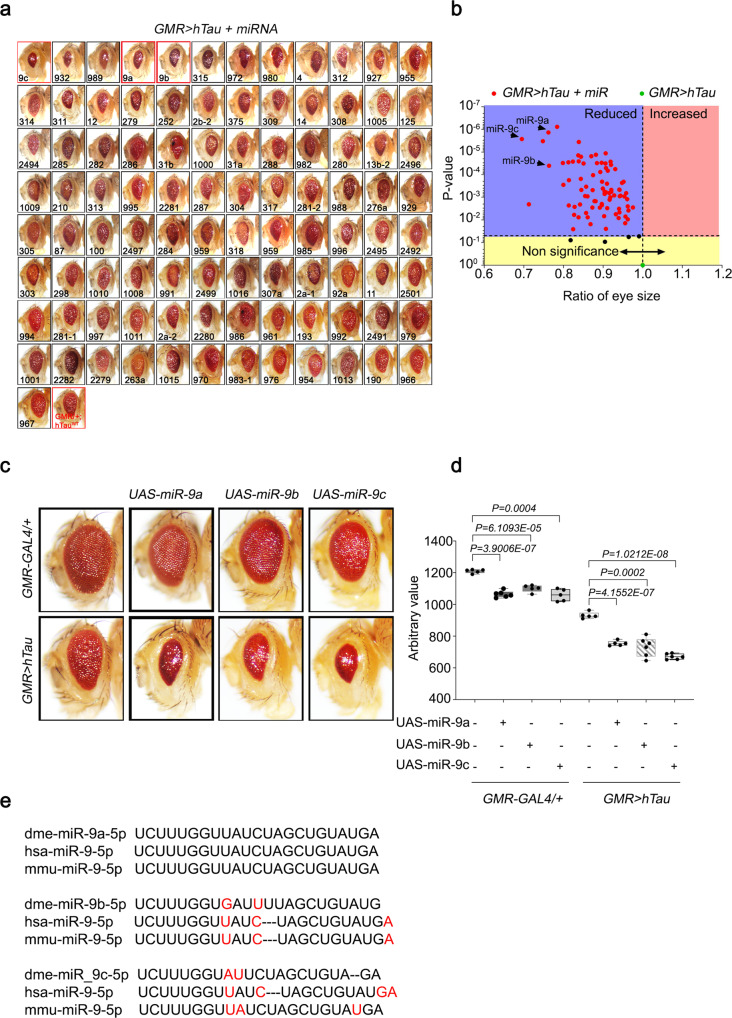
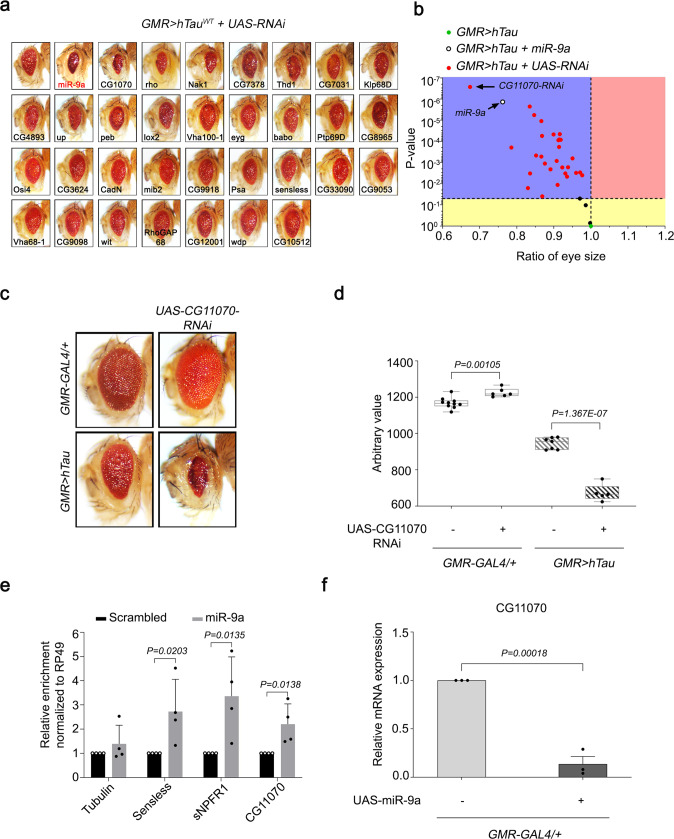
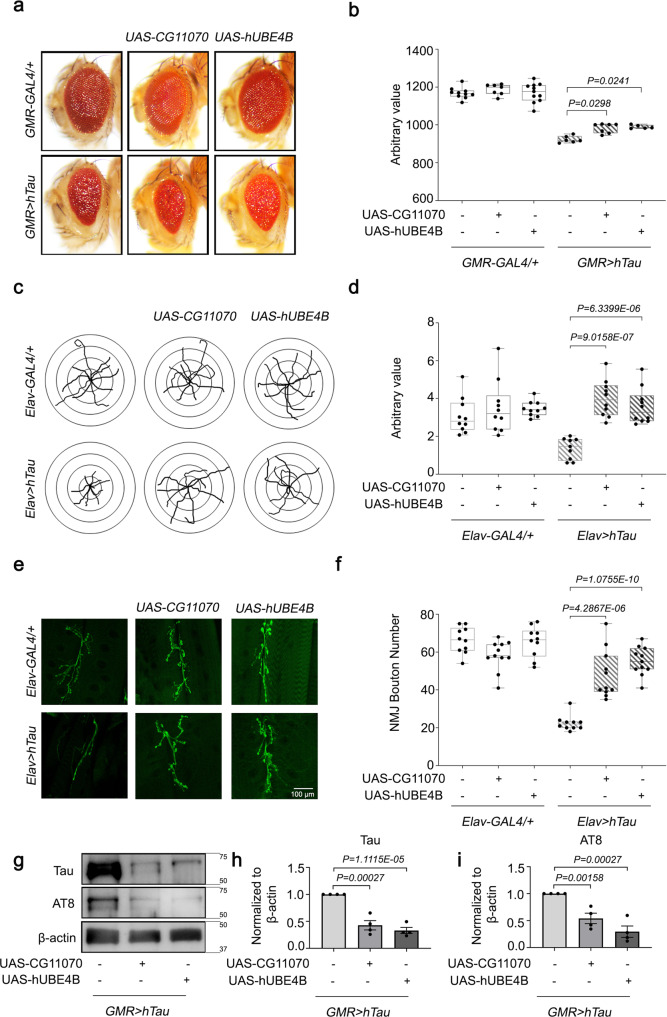
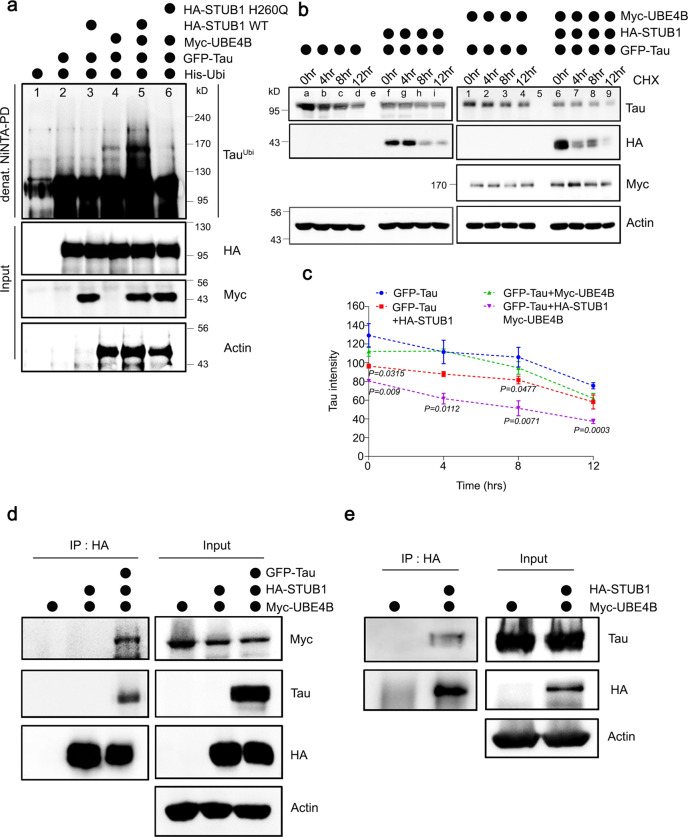
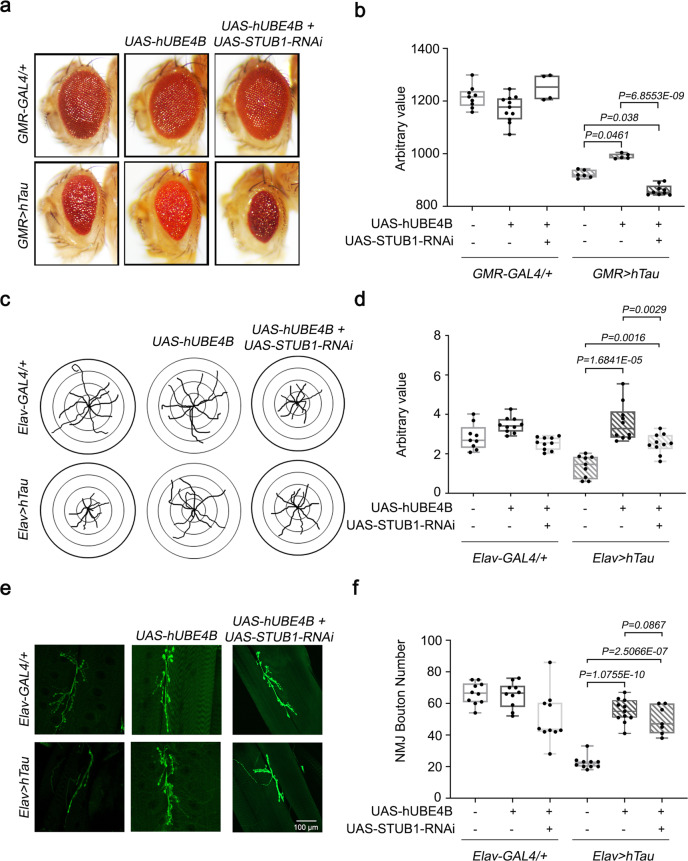
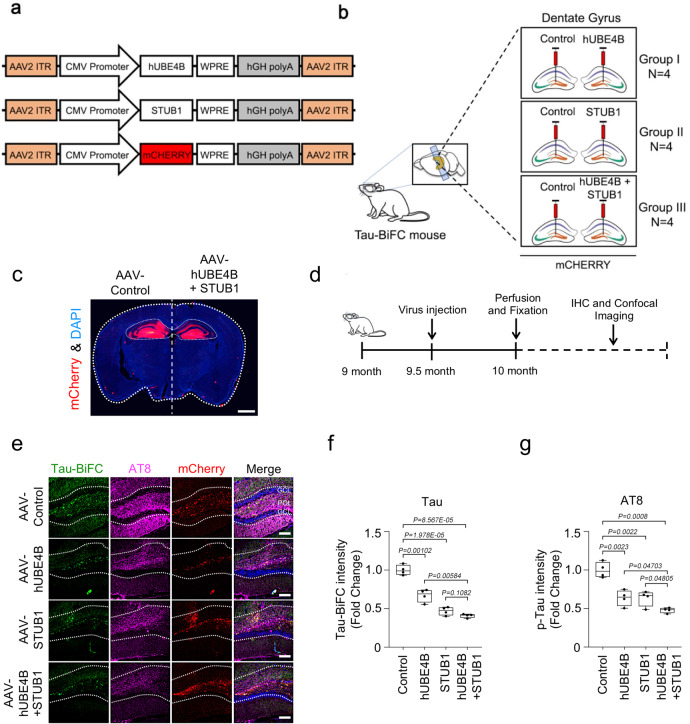
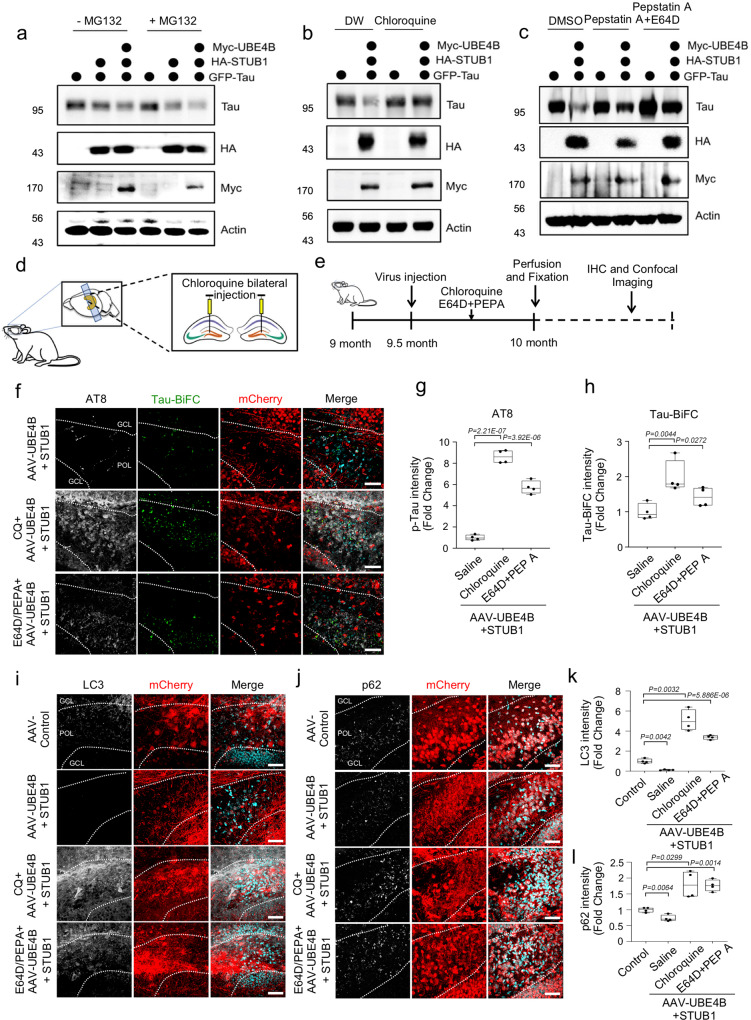
The formation of hyperphosphorylated intracellular Tau tangles in the brain is a hallmark of Alzheimer’s disease (AD). Tau hyperphosphorylation destabilizes microtubules, promoting neurodegeneration in AD patients. To identify suppressors of tau -mediated AD, we perform a screen using a microRNA (miR) library in Drosophila and identify the miR-9 family as suppressors of human tau overexpression phenotypes. CG11070 , a miR-9a target gene, and its mammalian orthologue UBE4B , an E3/E4 ubiquitin ligase, alleviate eye neurodegeneration, synaptic bouton defects, and crawling phenotypes in Drosophila human tau overexpression models. Total and phosphorylated Tau levels also decrease upon CG11070 or UBE4B overexpression. In mammalian neuroblastoma cells, overexpression of UBE4B and STUB1 , which encodes the E3 ligase CHIP, increases the ubiquitination and degradation of Tau. In the Tau-BiFC mouse model, UBE4B and STUB 1 overexpression also increase oligomeric Tau degradation. Inhibitor assays of the autophagy and proteasome systems reveal that the autophagy-lysosome system is the major pathway for Tau degradation in this context. These results demonstrate that UBE4B, a miR-9 target gene, promotes autophagy-mediated Tau degradation together with STUB1, and is thus an innovative therapeutic approach for AD.
Overview
The claims and statistics of this paper haven’t been checked yet.
Run the check — free, no account needed. It reads the open-access text and checks the sources it cites.
Integrity signals
Registry
Cites
Statistics
Figures
Verification
Claims the paper makes
The claims and statistics of this paper haven’t been checked yet.
Run the check — free, no account needed. It reads the open-access text and checks the sources it cites.
Claims other papers make about this one
Each is checked against this paper’s own text: does it say what the citing paper says it does?
In the citing paper
“miR-9-5p also decreased the Tau degradation by targeting UBE4B [52].”
From MicroRNAs in Extracellular Vesicles of Alzheimer’s Disease (2023) · cites this paper as [52]
Self-check
Percentages, sums and reported differences re-computed from the paper’s own numbers.
The self-check needs the paper’s full text.
Citations
Cites
Lee, V. M.-Y., Goedert, M., & Trojanowski, J. Q. (2001) · Annual Review of Neuroscience · doi:10.1146/annurev.neuro.24.1.1121 · Cited by 2,480
Tau-mediated neurodegeneration in Alzheimer’s disease and related disorders
Ballatore, C., Lee, V. M.-Y., & Trojanowski, J. Q. (2007) · Nature Reviews Neuroscience · doi:10.1038/nrn2194 · Cited by 2,174
A pancreatic islet-specific microRNA regulates insulin secretion
Poy, M. N., Eliasson, L., Krutzfeldt, J., Kuwajima, S., Ma, X., MacDonald, P. E., Pfeffer, S., Tuschl, T., Rajewsky, N., Rorsman, P., et al. (2004) · Nature · doi:10.1038/nature03076 · Cited by 2,102
Protein degradation and protection against misfolded or damaged proteins.
Goldberg, A. L. (2003) · Nature · doi:10.1038/nature02263 · Cited by 2,088
Cargo recognition and trafficking in selective autophagy
Stolz, A., Ernst, A., & Dikic, I. (2014) · Nature Cell Biology · doi:10.1038/ncb2979 · Cited by 1,207
Acetylation of Tau Inhibits Its Degradation and Contributes to Tauopathy
Min, S.-W., Cho, S.-H., Zhou, Y., Schroeder, S., Haroutunian, V., Seeley, W. W., Huang, E. J., Shen, Y., Masliah, E., Mukherjee, C., et al. (2010) · Neuron · doi:10.1016/j.neuron.2010.08.044 · Cited by 949
Regulation of Synaptic Structure and Function by FMRP-Associated MicroRNAs miR-125b and miR-132
Edbauer, D., Neilson, J. R., Foster, K. A., Wang, C.-F., Seeburg, D. P., Batterton, M. N., Tada, T., Dolan, B. M., Sharp, P. A., & Sheng, M. (2010) · Neuron · doi:10.1016/j.neuron.2010.01.005 · Cited by 735
CHIP and Hsp70 regulate tau ubiquitination, degradation and aggregation
Petrucelli, L. (2004) · Human Molecular Genetics · doi:10.1093/hmg/ddh083 · Cited by 723
Alterations of the microRNA network cause neurodegenerative disease
Hébert, S. S., & De Strooper, B. (2009) · Trends in Neurosciences · doi:10.1016/j.tins.2008.12.003 · Cited by 452
Stimulation of autophagy reduces neurodegeneration in a mouse model of human tauopathy
Schaeffer, V., Lavenir, I., Ozcelik, S., Tolnay, M., Winkler, D. T., & Goedert, M. (2012) · Brain · doi:10.1093/brain/aws143 · Cited by 343
Genetic modifiers of tauopathy in Drosophila
Shulman, J. M., & Feany, M. B. (2003) · Genetics · doi:10.1093/genetics/165.3.1233 · Cited by 256
Tau Does Not Stabilize Axonal Microtubules but Rather Enables Them to Have Long Labile Domains
Qiang, L., Sun, X., Austin, T. O., Muralidharan, H., Jean, D. C., Liu, M., Yu, W., & Baas, P. W. (2018) · Current Biology · doi:10.1016/j.cub.2018.05.045 · Cited by 222
Research works printed but not linked: 54
- Haass, C. & Selkoe, D. J. Soluble protein oligomers in neurodegeneration: lessons from the Alzheimer’s amyloid beta-peptide. Nat. Rev. Mol. cell Biol. 8, 101–112 (2007). · DOI · Paper page
- Kadavath, H. et al. Tau stabilizes microtubules by binding at the interface between tubulin heterodimers. Proc. Natl Acad. Sci. USA 112, 7501–7506 (2015). · DOI · Paper page
- Sarkar, S. Neurofibrillary tangles mediated human neuronal tauopathies: insights from fly models. J. Genet. 97, 783–793 (2018). · DOI
- Sivanantharajah, L., Mudher, A. & Shepherd, D. An evaluation of Drosophila as a model system for studying tauopathies such as Alzheimer’s disease. J. Neurosci. Methods 319, 77–88 (2019). · DOI
- Kosmidis, S., Grammenoudi, S., Papanikolopoulou, K. & Skoulakis, E. M. Differential effects of Tau on the integrity and function of neurons essential for learning in Drosophila. J. Neurosci. 30, 464–477 (2010). · DOI
- Chanu, S. I. & Sarkar, S. Targeted downregulation of dMyc restricts neurofibrillary tangles mediated pathogenesis of human neuronal tauopathies in Drosophila. Biochimi biophys Acta Mol. Basis Dis. 1863, 2111–2119 (2017). · DOI
- Wittmann, C. W. et al. Tauopathy in Drosophila: neurodegeneration without neurofibrillary tangles. Science 293, 711–714 (2001). · DOI · Paper page
- Bartel, D. P. MicroRNAs: target recognition and regulatory functions. Cell 136, 215–233 (2009). · DOI · Paper page
- Brodersen, P. & Voinnet, O. Revisiting the principles of microRNA target recognition and mode of action. Nat. Rev. Mol. Cell Biol. 10, 141–148 (2009). · DOI
- Krutzfeldt, J. & Stoffel, M. MicroRNAs: a new class of regulatory genes affecting metabolism. Cell Metab. 4, 9–12 (2006). · DOI
- Lu, J. et al. MicroRNA expression profiles classify human cancers. Nature 435, 834–838 (2005). · DOI
- Schaefer, A. et al. Cerebellar neurodegeneration in the absence of microRNAs. J. Exp. Med. 204, 1553–1558 (2007). · DOI · Paper page
- Keller, J. N., Hanni, K. B. & Markesbery, W. R. Impaired proteasome function in Alzheimer’s disease. J. neurochem. 75, 436–439 (2000). · DOI · Paper page
- Myeku, N. et al. Tau-driven 26S proteasome impairment and cognitive dysfunction can be prevented early in disease by activating cAMP-PKA signaling. Nat. Med. 22, 46–53 https://doi.org/doi:10.1038/nm.4011 (2016). · DOI · Paper page
- Dolan, P. J. & Johnson, G. V. A caspase cleaved form of tau is preferentially degraded through the autophagy pathway. J. Biol. Chem. 285, 21978–21987 (2010). · DOI
- Suh, Y. S. et al. Genome-wide microRNA screening reveals that the evolutionary conserved miR-9a regulates body growth by targeting sNPFR1/NPYR. Nat. Commun. 6, 7693 (2015). · DOI
- Li, Y., Wang, F., Lee, J. A. & Gao, F. B. MicroRNA-9a ensures the precise specification of sensory organ precursors in Drosophila. Genes Dev. 20, 2793–2805 (2006). · DOI · Paper page
- Lee, B. I. et al. Photoexcited Porphyrins as a Strong Suppressor of beta-Amyloid Aggregation and Synaptic Toxicity. Angew. Chem. 54, 11472–11476 (2015). · DOI
- Lee, B. I., Suh, Y. S., Chung, Y. J., Yu, K. & Park, C. B. Shedding Light on Alzheimer’s beta-Amyloidosis: Photosensitized Methylene Blue Inhibits Self-Assembly of beta-Amyloid Peptides and Disintegrates Their Aggregates. Sci. Rep. 7, 7523 (2017). · DOI
- Hatakeyama, S. et al. U-box protein carboxyl terminus of Hsc70-interacting protein (CHIP) mediates poly-ubiquitylation preferentially on four-repeat Tau and is involved in neurodegeneration of tauopathy. J. neurochemistry 91, 299–307 (2004). · DOI
- Shimura, H., Schwartz, D., Gygi, S. P. & Kosik, K. S. CHIP-Hsc70 complex ubiquitinates phosphorylated tau and enhances cell survival. J. Biol. Chem. 279, 4869–4876 (2004). · DOI
- Shin, S. et al. Visualization of soluble tau oligomers in TauP301L-BiFC transgenic mice demonstrates the progression of tauopathy. Progress in neurobiology, 101782, https://doi.org/10.1016/j.pneurobio.2020.101782 (2020). · DOI
- Berger, Z. et al. Rapamycin alleviates toxicity of different aggregate-prone proteins. Hum. Mol. Genet. 15, 433–442 (2006). · DOI · Paper page
- Sarkar, S., Davies, J. E., Huang, Z., Tunnacliffe, A. & Rubinsztein, D. C. Trehalose, a novel mTOR-independent autophagy enhancer, accelerates the clearance of mutant huntingtin and alpha-synuclein. J. Biol. Chem. 282, 5641–5652 (2007). · DOI · Paper page
- Chen, X. et al. Promoting tau secretion and propagation by hyperactive p300/CBP via autophagy-lysosomal pathway in tauopathy. Mol. neurodegeneration 15, 2 (2020). · DOI · Paper page
- Wang, M., Qin, L. & Tang, B. MicroRNAs in Alzheimer’s Disease. Front. Genet. 10, 153 (2019). · DOI
- Absalon, S., Kochanek, D. M., Raghavan, V. & Krichevsky, A. M. MiR-26b, upregulated in Alzheimer’s disease, activates cell cycle entry, tau-phosphorylation, and apoptosis in postmitotic neurons. J. Neurosci.: Off. J. Soc. Neurosci. 33, 14645–14659 (2013). · DOI · Paper page
- Dickson, J. R., Kruse, C., Montagna, D. R., Finsen, B. & Wolfe, M. S. Alternative polyadenylation and miR-34 family members regulate tau expression. J. neurochemistry 127, 739–749 (2013). · DOI
- Ma, X., Liu, L. & Meng, J. MicroRNA-125b promotes neurons cell apoptosis and Tau phosphorylation in Alzheimer’s disease. Neurosci. Lett. 661, 57–62 (2017). · DOI
- Smith, P. Y. et al. miR-132/212 deficiency impairs tau metabolism and promotes pathological aggregation in vivo. Hum. Mol. Genet. 24, 6721–6735 (2015). · DOI · Paper page
- Wang, L. et al. Dihydrotanshinone I induced apoptosis and autophagy through caspase dependent pathway in colon cancer. Phytomedicine: Int. J. Phytother. phytopharmacology 22, 1079–1087 (2015). · DOI
- Zhao, Z. B. et al. MicroRNA-922 promotes tau phosphorylation by downregulating ubiquitin carboxy-terminal hydrolase L1 (UCHL1) expression in the pathogenesis of Alzheimer’s disease. Neuroscience 275, 232–237 (2014). · DOI
- Coolen, M., Katz, S. & Bally-Cuif, L. miR-9: a versatile regulator of neurogenesis. Front. Cell. Neurosci. 7, 220 (2013). · DOI · Paper page
- Delay, C., Mandemakers, W. & Hebert, S. S. MicroRNAs in Alzheimer’s disease. Neurobiol. Dis. 46, 285–290 (2012). · DOI · Paper page
- Kaneko, C. et al. Characterization of the mouse gene for the U-box-type ubiquitin ligase UFD2a. Biochemical biophysical Res. Commun. 300, 297–304 (2003). · DOI
- Morris, M. et al. Tau post-translational modifications in wild-type and human amyloid precursor protein transgenic mice. Nat. Neurosci. 18, 1183–1189 (2015). · DOI · Paper page
- Wu, H. et al. UBE4B promotes Hdm2-mediated degradation of the tumor suppressor p53. Nat. Med. 17, 347–355 (2011). · DOI
- Zeinab, R. A., Wu, H., Sergi, C. & Leng, R. UBE4B: a promising regulatory molecule in neuronal death and survival. Int. J. Mol. Sci. 13, 16865–16879 (2012). · DOI
- Matsumoto, M. et al. Molecular clearance of ataxin-3 is regulated by a mammalian E4. EMBO J. 23, 659–669 (2004). · DOI
- Babu, J. R., Geetha, T. & Wooten, M. W. Sequestosome 1/p62 shuttles polyubiquitinated tau for proteasomal degradation. J. neurochemistry 94, 192–203 (2005). · DOI · Paper page
- David, D. C. et al. Proteasomal degradation of tau protein. J. neurochemistry 83, 176–185 (2002). · DOI · Paper page
- Wong, E. S. et al. Autophagy-mediated clearance of aggresomes is not a universal phenomenon. Hum. Mol. Genet. 17, 2570–2582 (2008). · DOI
- Inoue, K. et al. Macroautophagy deficiency mediates age-dependent neurodegeneration through a phospho-tau pathway. Mol. neurodegeneration 7, 48 (2012). · DOI · Paper page
- Hamano, T. et al. Autophagic-lysosomal perturbation enhances tau aggregation in transfectants with induced wild-type tau expression. Eur. J. Neurosci. 27, 1119–1130 (2008). · DOI · Paper page
- Wang, Y. et al. Synergy and antagonism of macroautophagy and chaperone-mediated autophagy in a cell model of pathological tau aggregation. Autophagy 6, 182–183 (2010). · DOI · Paper page
- Kruger, U., Wang, Y., Kumar, S. & Mandelkow, E. M. Autophagic degradation of tau in primary neurons and its enhancement by trehalose. Neurobiol. aging 33, 2291–2305 (2012). · DOI · Paper page
- Rodriguez-Navarro, J. A. et al. Trehalose ameliorates dopaminergic and tau pathology in parkin deleted/tau overexpressing mice through autophagy activation. Neurobiol. Dis. 39, 423–438 (2010). · DOI · Paper page
- Tan, J. M. et al. Lysine 63-linked ubiquitination promotes the formation and autophagic clearance of protein inclusions associated with neurodegenerative diseases. Hum. Mol. Genet. 17, 431–439 (2008). · DOI
- Thrower, J. S., Hoffman, L., Rechsteiner, M. & Pickart, C. M. Recognition of the polyubiquitin proteolytic signal. EMBO J. 19, 94–102 (2000). · DOI
- Deng, Z. et al. Autophagy Receptors and Neurodegenerative Diseases. Trends cell Biol. 27, 491–504 (2017). · DOI
- Lippai, M. & Low, P. The role of the selective adaptor p62 and ubiquitin-like proteins in autophagy. BioMed. Res. Int. 2014, 832704 (2014). · DOI
- Mohanty, S. et al. The E3/E4 ubiquitin conjugation factor UBE4B interacts with and ubiquitinates the HTLV-1 Tax oncoprotein to promote NF-kappaB activation. PLoS Pathog. 16, e1008504 (2020). · DOI
- Tak, H. et al. Bimolecular fluorescence complementation; lighting-up tau-tau interaction in living cells. PloS one 8, e81682 (2013). · DOI
- Lee, J. et al. Remodeling of heterochromatin structure slows neuropathological progression and prolongs survival in an animal model of Huntington’s disease. Acta neuropathologica 134, 729–748 (2017). · DOI
Cited by
Sorted by citations
Targeting autophagy in Alzheimer’s disease: Animal models and mechanisms
Zhang, X.-W., 澳门大学中华医药研究院中药质量研究国家重点实验室, 澳. 凼. 9., State Key Laboratory of Quality Research in Chinese Medicine, I. O. C. M. S., Zhu, X.-X., Tang, D.-S., Lu, J.-H., 佛山大学广东省动物分子设计与精准育种重点实验室, 广., & Guangdong Provincial Key Laboratory of Animal Molecular Design and Precise Breeding, G. E. T. C. O. G. P. (2023) · Zoological Research · doi:10.24272/j.issn.2095-8137.2023.294 · Cited by 77
MicroRNAs in Extracellular Vesicles of Alzheimer’s Disease
Li, W., & Zheng, Y. (2023) · Cells · doi:10.3390/cells12101378 · Cited by 43
Metadata
- Authors
- Subramanian, M., Hyeon, S. J., Das, T., Suh, Y. S., Kim, Y. K., Lee, J.-S., Song, E. J., Ryu, H., & Yu, K.
- Venue
- Nature Communications
- Published
- 2021-06-02
- Volume
- 12
- Issue
- 1
- ISSN
- 2041-1723
- PMC
- PMC8172564
- Cited by
- 62
- References
- 12
- Language
- en
- Update notices
- correction (2021-07-07)
- Funders
- Korea Research Institute of Bioscience and Biotechnology (KRIBB Research Initiative Program)
- National Research Council of Science and Technology (CRC-15-04-KIST)
- National Research Foundation of Korea (2015R1A5A1009024, 2019R1A2C2004149)
About these checks
Registry, retraction, Cites and statistics results are computed, not judged, with one exception: a printed reference that no index lists is read once by a model before it counts as a citation error. Claims are extracted by a model and kept only when their quote appears verbatim in the text; each cited source is then checked, with a model’s help, for whether it says what the claim relies on. Those verdicts can be wrong — read the claim’s quote and the cited source before relying on one.
Statistics and arithmetic are recomputed, not judged.
Confidence bands are shown only for fields calibrated on our annotated test set. None is calibrated yet, so no band is shown.
What counts as a claim ›How we measure confidence ›How we check this ›
Are you an author, or do you see a problem with this page? Request a review
