

TLR4 signalling via Piezo1 engages and enhances the macrophage mediated host response during bacterial infection
Open accessThe DOI matches its Crossref record; 62 of the 65 references it cites were found in a registry or an index.
Abstract
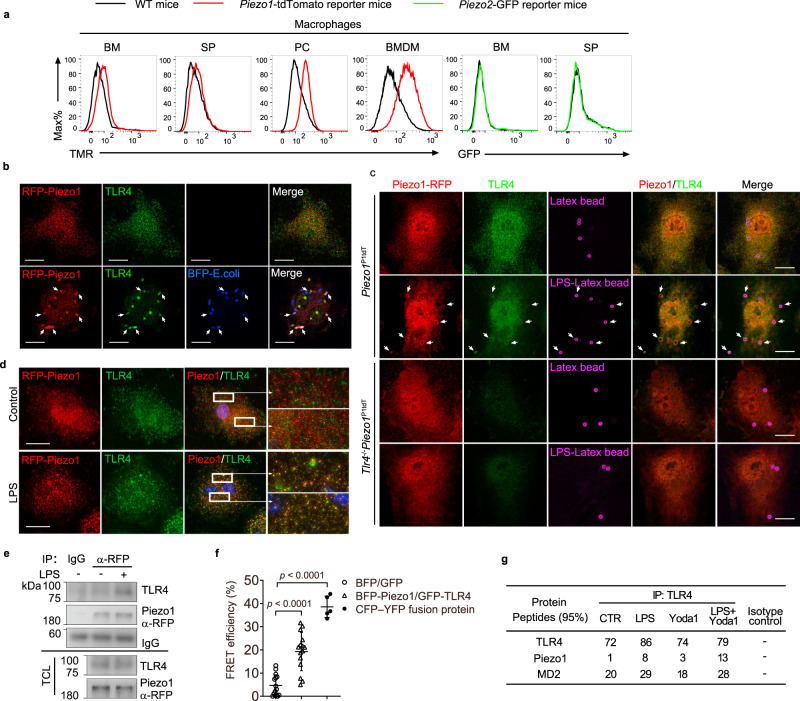
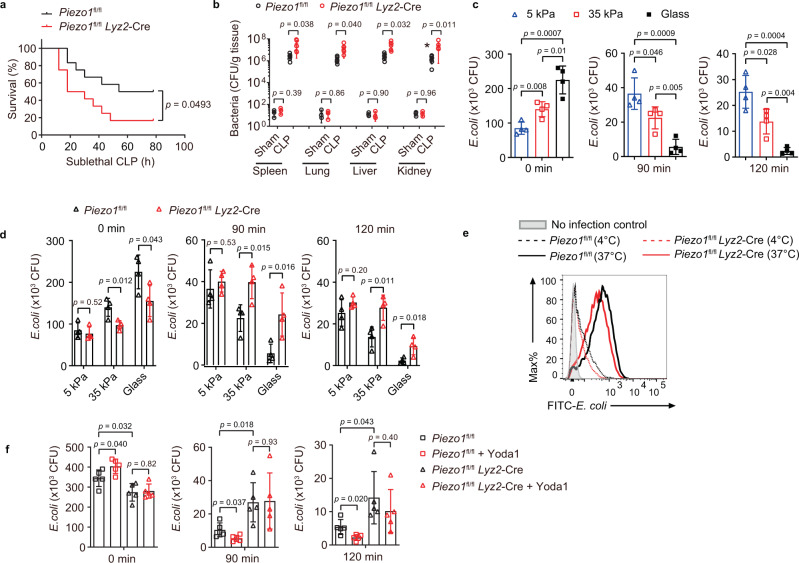
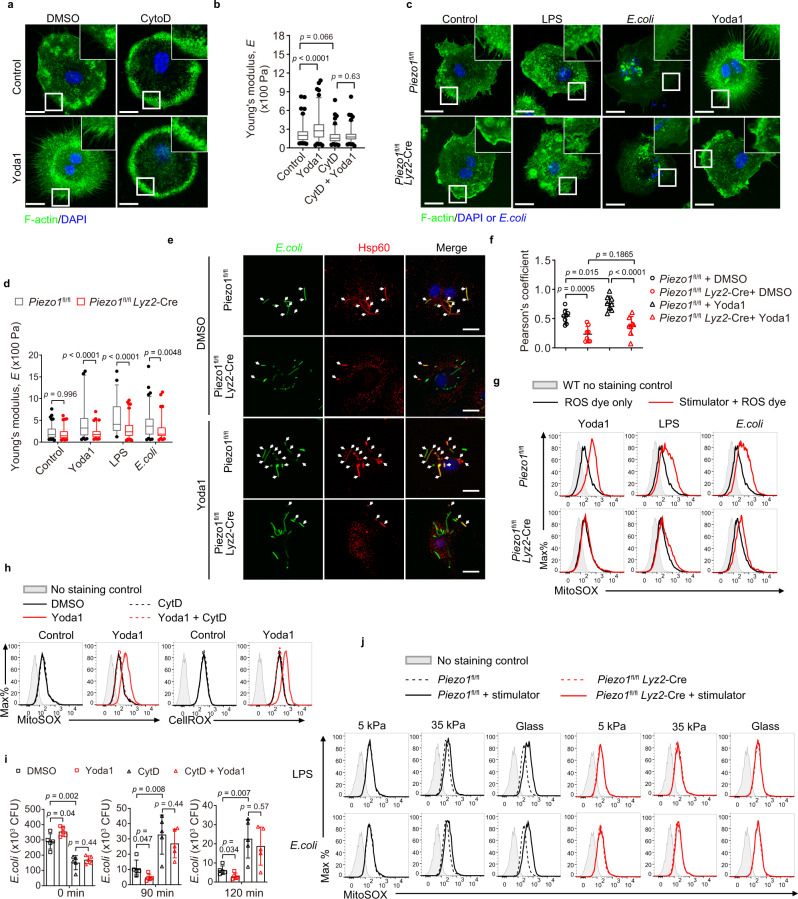
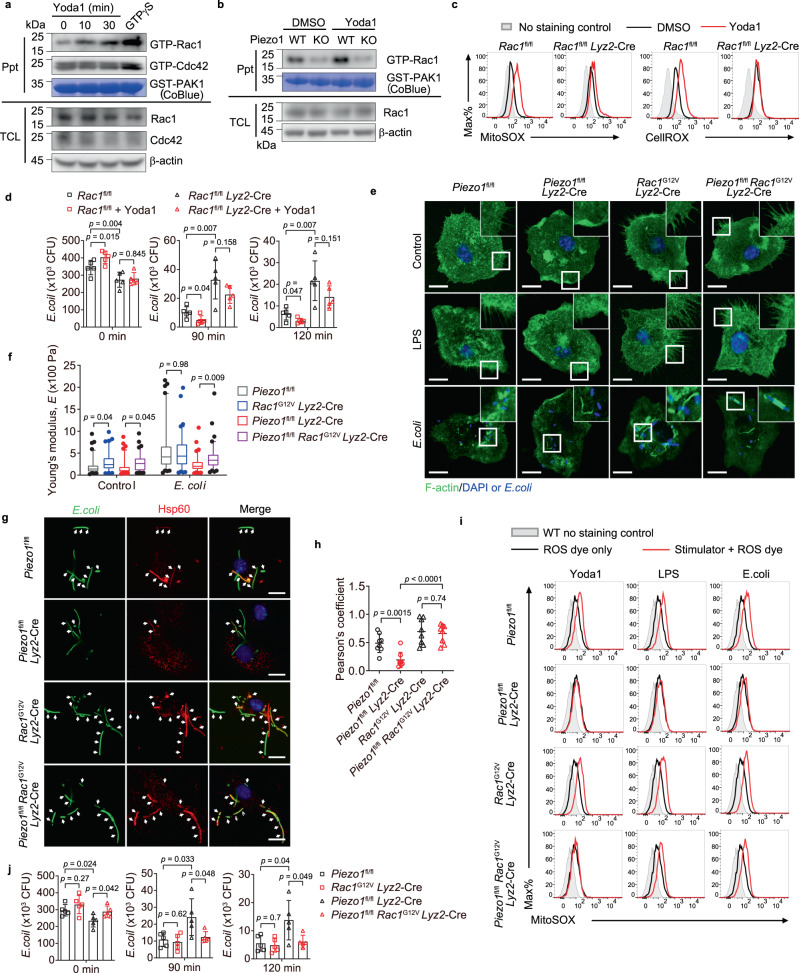
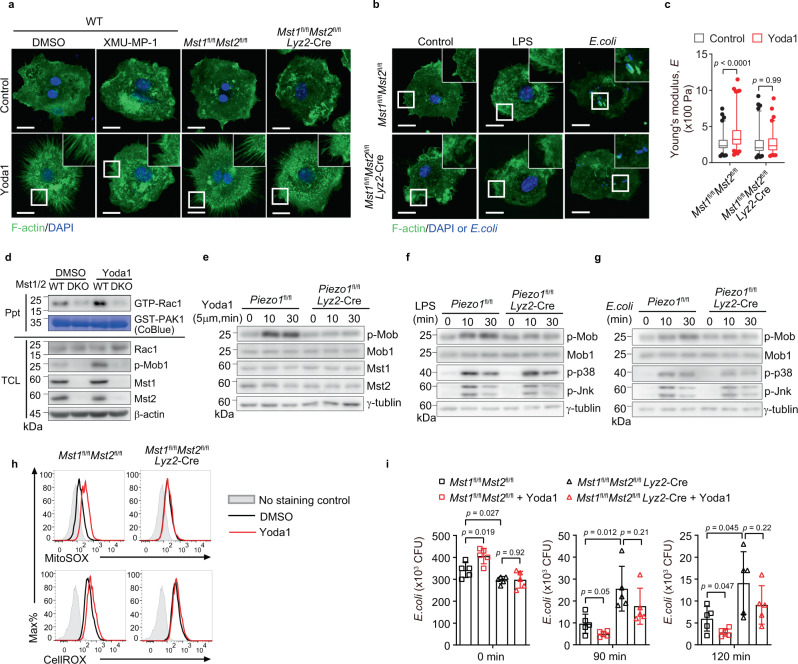
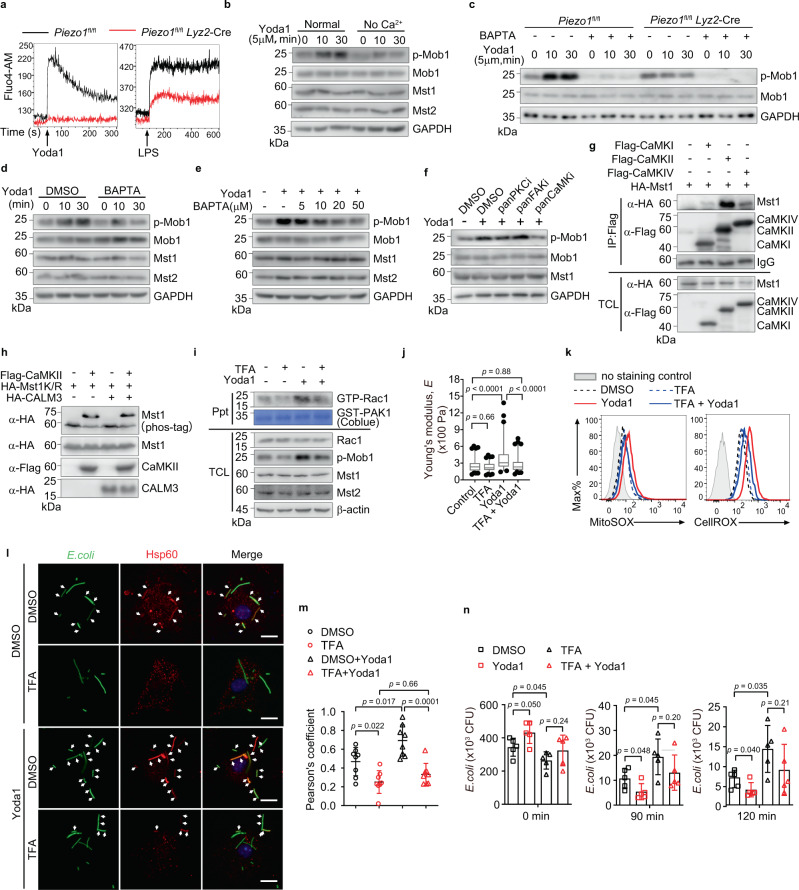
TLR4 signaling plays key roles in the innate immune response to microbial infection. Innate immune cells encounter different mechanical cues in both health and disease to adapt their behaviors. However, the impact of mechanical sensing signals on TLR4 signal-mediated innate immune response remains unclear. Here we show that TLR4 signalling augments macrophage bactericidal activity through the mechanical sensor Piezo1. Bacterial infection or LPS stimulation triggers assembly of the complex of Piezo1 and TLR4 to remodel F-actin organization and augment phagocytosis, mitochondrion-phagosomal ROS production and bacterial clearance and genetic deficiency of Piezo1 results in abrogation of these responses. Mechanistically, LPS stimulates TLR4 to induce Piezo1-mediated calcium influx and consequently activates CaMKII-Mst1/2-Rac axis for pathogen ingestion and killing. Inhibition of CaMKII or knockout of either Mst1/2 or Rac1 results in reduced macrophage bactericidal activity, phenocopying the Piezo1 deficiency. Thus, we conclude that TLR4 drives the innate immune response via Piezo1 providing critical insight for understanding macrophage mechanophysiology and the host response.
Overview
The claims and statistics of this paper haven’t been checked yet.
Free: it reads the open-access text and checks the first 5 claims that cite a source we can check. Create a free account to check every claim.
Integrity signals
Registry
Cites
Statistics
Figures
Verification
Claims the paper makes
The claims and statistics of this paper haven’t been checked yet.
Free: it reads the open-access text and checks the first 5 claims that cite a source we can check. Create a free account to check every claim.
Claims other papers make about this one
Each is checked against this paper’s own text: does it say what the citing paper says it does?
The cited source says what the claim attributes to it.
In the citing paper
“In addition, we found that BMDMs from Piezo1fl/fl Lyz2Cre mice were usually smaller than BMDMs from Piezo1fl/fl mice (Fig. 5C), attributed to the deficiency of Piezo1 impairing the calcium influx and downstream cytoskeletal organization in BMDMs (16, 23).”
From Stiffness sensing via Piezo1 enhances macrophage efferocytosis and promotes the resolution of liver fibrosis (2024) · cites this paper as [23]
Self-check
Percentages, sums and reported differences re-computed from the paper’s own numbers.
The self-check needs the paper’s full text.
Citations
Cites
The role of pattern-recognition receptors in innate immunity: update on Toll-like receptors
Kawai, T., & Akira, S. (2010) · Nature Immunology · doi:10.1038/ni.1863 · Cited by 9,304
Rho GTPases and the Actin Cytoskeleton
Hall, A. (1998) · Science · doi:10.1126/science.279.5350.509 · Cited by 6,140
Role of YAP/TAZ in mechanotransduction
Dupont, S., Morsut, L., Aragona, M., Enzo, E., Giulitti, S., Cordenonsi, M., Zanconato, F., Le Digabel, J., Forcato, M., Bicciato, S., et al. (2011) · Nature · doi:10.1038/nature10137 · Cited by 5,979
Remodelling the extracellular matrix in development and disease
Bonnans, C., Chou, J., & Werb, Z. (2014) · Nature Reviews Molecular Cell Biology · doi:10.1038/nrm3904 · Cited by 4,367
Piezo1 and Piezo2 Are Essential Components of Distinct Mechanically Activated Cation Channels
Coste, B., Mathur, J., Schmidt, M., Earley, T. J., Ranade, S., Petrus, M. J., Dubin, A. E., & Patapoutian, A. (2010) · Science · doi:10.1126/science.1193270 · Cited by 3,316
Tlr signalling augments macrophage bactericidal activity through mitochondrial ros
West, A. P., Brodsky, I. E., Rahner, C., Woo, D. K., Erdjument-Bromage, H., Tempst, P., Walsh, M. C., Choi, Y., Shadel, G. S., & Ghosh, S. (2011) · Nature · doi:10.1038/nature09973 · Cited by 1,659
Aragona, M., Panciera, T., Manfrin, A., Giulitti, S., Michielin, F., Elvassore, N., Dupont, S., & Piccolo, S. (2013) · Cell · doi:10.1016/j.cell.2013.07.042 · Cited by 1,651
Force triggers YAP nuclear entry by regulating transport across nuclear pores
Elosegui-Artola, A., Andreu, I., Beedle, A. E. M., Lezamiz, A., Uroz, M., Kosmalska, A. J., Oria, R., Kechagia, J. Z., Rico-Lastres, P., Le Roux, A.-L., et al. (2017) · Cell · doi:10.1016/j.cell.2017.10.008 · Cited by 1,491
Calvo, F., Ege, N., Grande-Garcia, A., Hooper, S., Jenkins, R. P., Chaudhry, S. I., Harrington, K., Williamson, P., Moeendarbary, E., Charras, G., et al. (2013) · Nature Cell Biology · doi:10.1038/ncb2756 · Cited by 1,478
Intracellular Toll-like Receptors
Blasius, A. L., & Beutler, B. (2010) · Immunity · doi:10.1016/j.immuni.2010.03.012 · Cited by 1,325
Piezo1 integration of vascular architecture with physiological force
Li, J., Hou, B., Tumova, S., Muraki, K., Bruns, A., Ludlow, M. J., Sedo, A., Hyman, A. J., McKeown, L., Young, R. S., et al. (2014) · Nature · doi:10.1038/nature13701 · Cited by 1,223
Self-citationPiezo proteins are pore-forming subunits of mechanically activated channels
Coste, B., Xiao, B., Santos, J. S., Syeda, R., Grandl, J., Spencer, K. S., Kim, S. E., Schmidt, M., Mathur, J., Dubin, A. E., et al. (2012) · Nature · doi:10.1038/nature10812 · Cited by 1,167
Transduction of mechanical and cytoskeletal cues by YAP and TAZ
Halder, G., Dupont, S., & Piccolo, S. (2012) · Nature Reviews Molecular Cell Biology · doi:10.1038/nrm3416 · Cited by 985
Hippo–YAP/TAZ signalling in organ regeneration and regenerative medicine
Moya, I. M., & Halder, G. (2019) · Nature Reviews Molecular Cell Biology · doi:10.1038/s41580-018-0086-y · Cited by 981
Zhou, D., Conrad, C., Xia, F., Park, J.-S., Payer, B., Yin, Y., Lauwers, G. Y., Thasler, W., Lee, J. T., Avruch, J., et al. (2009) · Cancer Cell · doi:10.1016/j.ccr.2009.09.026 · Cited by 913
Self-citationPiezo1, a mechanically activated ion channel, is required for vascular development in mice
Ranade, S. S., Qiu, Z., Woo, S.-H., Hur, S. S., Murthy, S. E., Cahalan, S. M., Xu, J., Mathur, J., Bandell, M., Coste, B., et al. (2014) · Proceedings of the National Academy of Sciences · doi:10.1073/pnas.1409233111 · Cited by 901
The Hippo Signaling Pathway in Development and Disease
Zheng, Y., & Pan, D. (2019) · Developmental Cell · doi:10.1016/j.devcel.2019.06.003 · Cited by 867
Beutler, B. A. (2009) · Blood · doi:10.1182/blood-2008-07-019307 · Cited by 840
Mechanical stretch triggers rapid epithelial cell division through Piezo1
Gudipaty, S. A., Lindblom, J., Loftus, P. D., Redd, M. J., Edes, K., Davey, C. F., Krishnegowda, V., & Rosenblatt, J. (2017) · Nature · doi:10.1038/nature21407 · Cited by 803
Piezo2 is required for Merkel-cell mechanotransduction
Woo, S.-H., Ranade, S., Weyer, A. D., Dubin, A. E., Baba, Y., Qiu, Z., Petrus, M., Miyamoto, T., Reddy, K., Lumpkin, E. A., et al. (2014) · Nature · doi:10.1038/nature13251 · Cited by 779
Mechanosensation of cyclical force by PIEZO1 is essential for innate immunity
Solis, A. G., Bielecki, P., Steach, H. R., Sharma, L., Harman, C. C. D., Yun, S., de Zoete, M. R., Warnock, J. N., To, S. D. F., York, A. G., et al. (2019) · Nature · doi:10.1038/s41586-019-1485-8 · Cited by 678
Integrin-YAP/TAZ-JNK cascade mediates atheroprotective effect of unidirectional shear flow
Wang, L., Luo, J.-Y., Li, B., Tian, X. Y., Chen, L.-J., Huang, Y., Liu, J., Deng, D., Lau, C. W., Wan, S., et al. (2016) · Nature · doi:10.1038/nature20602 · Cited by 668
Self-citationMechanically Activated Ion Channels
Ranade, S. S., Syeda, R., & Patapoutian, A. (2015) · Neuron · doi:10.1016/j.neuron.2015.08.032 · Cited by 652
Piezo1 links mechanical forces to red blood cell volume
Cahalan, S. M., Lukacs, V., Ranade, S. S., Chien, S., Bandell, M., & Patapoutian, A. (2015) · eLife · doi:10.7554/elife.07370 · Cited by 624
A Guide to Fluorescent Protein FRET Pairs
Bajar, B., Wang, E., Zhang, S., Lin, M., & Chu, J. (2016) · Sensors · doi:10.3390/s16091488 · Cited by 463
Katagiri, K., Maeda, A., Shimonaka, M., & Kinashi, T. (2003) · Nature Immunology · doi:10.1038/ni950 · Cited by 461
Physical and mechanical regulation of macrophage phenotype and function
McWhorter, F. Y., Davis, C. T., & Liu, W. F. (2015) · Cellular and Molecular Life Sciences · doi:10.1007/s00018-014-1796-8 · Cited by 437
Force-induced conformational changes in PIEZO1
Lin, Y.-C., Guo, Y. R., Miyagi, A., Levring, J., MacKinnon, R., & Scheuring, S. (2019) · Nature · doi:10.1038/s41586-019-1499-2 · Cited by 433
Human neutrophil immunodeficiency syndrome is associated with an inhibitory Rac2 mutation
Ambruso, D. R., Knall, C., Abell, A. N., Panepinto, J., Kurkchubasche, A., Thurman, G., Gonzalez-Aller, C., Hiester, A., deBoer, M., Harbeck, R. J., et al. (2000) · Proceedings of the National Academy of Sciences · doi:10.1073/pnas.080074897 · Cited by 407
Zhou, T., Gao, B., Fan, Y., Liu, Y., Feng, S., Cong, Q., Zhang, X., Zhou, Y., Yadav, P. S., Lin, J., et al. (2020) · eLife · doi:10.7554/elife.52779 · Cited by 392
The mechanosensitive ion channel Piezo2 mediates sensitivity to mechanical pain in mice
Murthy, S. E., Loud, M. C., Daou, I., Marshall, K. L., Schwaller, F., Kühnemund, J., Francisco, A. G., Keenan, W. T., Dubin, A. E., Lewin, G. R., et al. (2018) · Science Translational Medicine · doi:10.1126/scitranslmed.aat9897 · Cited by 379
RAP2 mediates mechanoresponses of the Hippo pathway
Meng, Z., Qiu, Y., Lin, K. C., Kumar, A., Placone, J. K., Fang, C., Wang, K.-C., Lu, S., Pan, M., Hong, A. W., et al. (2018) · Nature · doi:10.1038/s41586-018-0444-0 · Cited by 377
Structure and mechanogating of the mammalian tactile channel PIEZO2
Wang, L., Zhou, H., Zhang, M., Liu, W., Deng, T., Zhao, Q., Li, Y., Lei, J., Li, X., & Xiao, B. (2019) · Nature · doi:10.1038/s41586-019-1505-8 · Cited by 373
The SWI/SNF complex is a mechanoregulated inhibitor of YAP and TAZ
Chang, L., Azzolin, L., Di Biagio, D., Zanconato, F., Battilana, G., Lucon Xiccato, R., Aragona, M., Giulitti, S., Panciera, T., Gandin, A., et al. (2018) · Nature · doi:10.1038/s41586-018-0658-1 · Cited by 327
The phenotype of human STK4 deficiency
Abdollahpour, H., Appaswamy, G., Kotlarz, D., Diestelhorst, J., Beier, R., Schäffer, A. A., Gertz, E. M., Schambach, A., Kreipe, H. H., Pfeifer, D., et al. (2012) · Blood · doi:10.1182/blood-2011-09-378158 · Cited by 325
Functional Role for Piezo1 in Stretch-evoked Ca2+ Influx and ATP Release in Urothelial Cell Cultures
Miyamoto, T., Mochizuki, T., Nakagomi, H., Kira, S., Watanabe, M., Takayama, Y., Suzuki, Y., Koizumi, S., Takeda, M., & Tominaga, M. (2014) · Journal of Biological Chemistry · doi:10.1074/jbc.m113.528638 · Cited by 303
Nehme, N. T., Schmid, J. P., Debeurme, F., André-Schmutz, I., Lim, A., Nitschke, P., Rieux-Laucat, F., Lutz, P., Picard, C., Mahlaoui, N., et al. (2012) · Blood · doi:10.1182/blood-2011-09-378364 · Cited by 283
Geng, J., Sun, X., Wang, P., Zhang, S., Wang, X., Wu, H., Hong, L., Xie, C., Li, X., Zhao, H., et al. (2015) · Nature Immunology · doi:10.1038/ni.3268 · Cited by 264
Self-citationYAP is essential for tissue tension to ensure vertebrate 3D body shape
Porazinski, S., Wang, H., Asaoka, Y., Behrndt, M., Miyamoto, T., Morita, H., Hata, S., Sasaki, T., Krens, S. F. G., Osada, Y., et al. (2015) · Nature · doi:10.1038/nature14215 · Cited by 261
Schappe, M. S., Szteyn, K., Stremska, M. E., Mendu, S. K., Downs, T. K., Seegren, P. V., Mahoney, M. A., Dixit, S., Krupa, J. K., Stipes, E. J., et al. (2018) · Immunity · doi:10.1016/j.immuni.2017.11.026 · Cited by 252
Toll Receptor-Mediated Hippo Signaling Controls Innate Immunity in Drosophila
Liu, B., Zheng, Y., Yin, F., Yu, J., Silverman, N., & Pan, D. (2016) · Cell · doi:10.1016/j.cell.2015.12.029 · Cited by 249
Katagiri, K., Imamura, M., & Kinashi, T. (2006) · Nature Immunology · doi:10.1038/ni1374 · Cited by 230
Fischer, R. S., Myers, K. A., Gardel, M. L., & Waterman, C. M. (2012) · Nature Protocols · doi:10.1038/nprot.2012.127 · Cited by 223
Piezo2 channel regulates RhoA and actin cytoskeleton to promote cell mechanobiological responses
Pardo-Pastor, C., Rubio-Moscardo, F., Vogel-González, M., Serra, S. A., Afthinos, A., Mrkonjic, S., Destaing, O., Abenza, J. F., Fernández-Fernández, J. M., Trepat, X., et al. (2018) · Proceedings of the National Academy of Sciences · doi:10.1073/pnas.1718177115 · Cited by 223
Hippo/Mst signalling couples metabolic state and immune function of CD8α+ dendritic cells
Du, X., Wen, J., Wang, Y., Karmaus, P. W. F., Khatamian, A., Tan, H., Li, Y., Guy, C., Nguyen, T.-L. M., Dhungana, Y., et al. (2018) · Nature · doi:10.1038/s41586-018-0177-0 · Cited by 223
Mammalian Mechanoelectrical Transduction: Structure and Function of Force-Gated Ion Channels
Douguet, D., & Honoré, E. (2019) · Cell · doi:10.1016/j.cell.2019.08.049 · Cited by 217
Rac1 and Rac2 regulate macrophage morphology but are not essential for migration
Wheeler, A. P., Wells, C. M., Smith, S. D., Vega, F. M., Henderson, R. B., Tybulewicz, V. L., & Ridley, A. J. (2006) · Journal of Cell Science · doi:10.1242/jcs.03024 · Cited by 188
Rac1-deficient macrophages exhibit defects in cell spreading and membrane ruffling but not migration
Wells, C. M., Walmsley, M., Ooi, S., Tybulewicz, V., & Ridley, A. J. (2004) · Journal of Cell Science · doi:10.1242/jcs.00997 · Cited by 186
Cutting Edge: Piezo1 Mechanosensors Optimize Human T Cell Activation
Liu, C. S. C., Raychaudhuri, D., Paul, B., Chakrabarty, Y., Ghosh, A. R., Rahaman, O., Talukdar, A., & Ganguly, D. (2018) · The Journal of Immunology · doi:10.4049/jimmunol.1701118 · Cited by 172
Duchemin, A.-L., Vignes, H., & Vermot, J. (2019) · eLife · doi:10.7554/elife.44706 · Cited by 170
Mst1 controls lymphocyte trafficking and interstitial motility within lymph nodes
Katagiri, K., Katakai, T., Ebisuno, Y., Ueda, Y., Okada, T., & Kinashi, T. (2009) · The EMBO Journal · doi:10.1038/emboj.2009.82 · Cited by 163
Levering Mechanically Activated Piezo Channels for Potential Pharmacological Intervention
Xiao, B. (2020) · Annual Review of Pharmacology and Toxicology · doi:10.1146/annurev-pharmtox-010919-023703 · Cited by 163
Mou, F., Praskova, M., Xia, F., Van Buren, D., Hock, H., Avruch, J., & Zhou, D. (2012) · Journal of Experimental Medicine · doi:10.1084/jem.20111692 · Cited by 161
Self-citationThe Nore1B/Mst1 complex restrains antigen receptor-induced proliferation of naïve T cells
Zhou, D., Medoff, B. D., Chen, L., Li, L., Zhang, X.-F., Praskova, M., Liu, M., Landry, A., Blumberg, R. S., Boussiotis, V. A., et al. (2008) · Proceedings of the National Academy of Sciences · doi:10.1073/pnas.0810773105 · Cited by 148
Self-citationRole of Hippo signaling in regulating immunity
Hong, L., Li, X., Zhou, D., Geng, J., & Chen, L. (2018) · Cellular and Molecular Immunology · doi:10.1038/s41423-018-0007-1 · Cited by 132
Self-citationNovel mechanisms of PIEZO1 dysfunction in hereditary xerocytosis
Glogowska, E., Schneider, E. R., Maksimova, Y., Schulz, V. P., Lezon-Geyda, K., Wu, J., Radhakrishnan, K., Keel, S. B., Mahoney, D., Freidmann, A. M., et al. (2017) · Blood · doi:10.1182/blood-2017-05-786004 · Cited by 131
Li, W., Xiao, J., Zhou, X., Xu, M., Hu, C., Xu, X., Lu, Y., Liu, C., Xue, S., Nie, L., et al. (2015) · Journal of Clinical Investigation · doi:10.1172/jci81203 · Cited by 119
A Cell-Intrinsic Role for Mst1 in Regulating Thymocyte Egress
Dong, Y., Du, X., Ye, J., Han, M., Xu, T., Zhuang, Y., & Tao, W. (2009) · The Journal of Immunology · doi:10.4049/jimmunol.0900678 · Cited by 106
Mechanosensing by Peyer’s patch stroma regulates lymphocyte migration and mucosal antibody responses
Chang, J. E., Buechler, M. B., Gressier, E., Turley, S. J., & Carroll, M. C. (2019) · Nature Immunology · doi:10.1038/s41590-019-0505-z · Cited by 70
Coordinate changes in C protein and myosin expression during skeletal muscle hypertrophy
McCormick, K. M., Baldwin, K. M., & Schachat, F. H. (1994) · American Journal of Physiology-Cell Physiology · doi:10.1152/ajpcell.1994.267.2.c443 · Cited by 33
Su, T., Pan, S., Luo, Q., & Zhang, Z. (2013) · Biosensors and Bioelectronics · doi:10.1016/j.bios.2013.02.024 · Cited by 27
Khare, H. S., & Burris, D. L. (2013) · Review of Scientific Instruments · doi:10.1063/1.4804163 · Cited by 26
Wroblewski, H. (1994) · American Journal of Physiology-Heart and Circulatory Physiology · doi:10.1152/ajpheart.1994.267.2.h443 · Cited by 13
(2000) · PubMed
Cited by
Macrophages in immunoregulation and therapeutics
Chen, S., Saeed, A. F. U. H., Liu, Q., Jiang, Q., Xu, H., Xiao, G. G., Rao, L., & Duo, Y. (2023) · Signal Transduction and Targeted Therapy · doi:10.1038/s41392-023-01452-1 · Cited by 2,229
“Genetic deficiency of Piezo1 results in abrogation of these responses, which are triggered by a bacterial infection or LPS stimulation and involve the assembly of a complex between Piezo1 and TLR4 to remodel F-actin organization and enhance phagocytosis, mitochondrialphagosomal ROS production, and bacterial clearance.…”
BackgroundLu, P., Ruan, D., Huang, M., Tian, M., Zhu, K., Gan, Z., & Xiao, Z. (2024) · Signal Transduction and Targeted Therapy · doi:10.1038/s41392-024-01852-x · Cited by 667
Tuning immunity through tissue mechanotransduction
Du, H., Bartleson, J. M., Butenko, S., Alonso, V., Liu, W. F., Winer, D. A., & Butte, M. J. (2023) · Nature Reviews Immunology · doi:10.1038/s41577-022-00761-w · Cited by 427
Macrophage plasticity: signaling pathways, tissue repair, and regeneration
Yan, L., Wang, J., Cai, X., Liou, Y., Shen, H., Hao, J., Huang, C., Luo, G., & He, W. (2024) · MedComm · doi:10.1002/mco2.658 · Cited by 343
“The activation of M1 macrophages is mediated by a diverse array of PRRs, including TLRs, NLRs, and RLRs. 309,310 TLRs, such as TLR4 and TLR2, are particularly crucial in this process, initiating signaling cascades that converge on the activation of transcription factors like NF-κ B and AP-1, driving the expression of…”
InfluentialPattern recognition receptors: function, regulation and therapeutic potential
Chen, R., Zou, J., Chen, J., Zhong, X., Kang, R., & Tang, D. (2025) · Signal Transduction and Targeted Therapy · doi:10.1038/s41392-025-02264-1 · Cited by 301
Metadata
- Authors
- Geng, J., Shi, Y., Zhang, J., Yang, B., Wang, P., Yuan, W., Zhao, H., Li, J., Qin, F., Hong, L., Xie, C., Deng, X., Sun, Y., Wu, C., Chen, L., & Zhou, D.
- Affiliations
- Xiamen University (CN)
- Second Affiliated Hospital of Xi'an Jiaotong University (CN)
- Peking University (CN)
- Corresponding author
- Chen, Lanfen
- Zhou, Dawang
- ORCID
- Venue
- Nature Communications
- Published
- 2021-06-10
- Volume
- 12
- Issue
- 1
- Pages
- 3519-3519
- ISSN
- 2041-1723 (ISSN-L)
- PMC
- PMC8192512
- OpenAlex
- W3166797325
- Cited by
- 290
- References
- 65
- Citations by year
- 2026: 72 · 2025: 76 · 2024: 70 · 2023: 46 · 2022: 24 · 2021: 2
- FWCI
- 13.34
- Type
- journal article
- Language
- en
- Open access
- gold
- doi.org
- Licence
- cc-by
- creativecommons.org/licenses/by/4.0 (tdm)
- creativecommons.org/licenses/by/4.0 (vor)
- Locations
- Nature Communications (publishedVersion, cc-by)
- PubMed Central (publishedVersion, cc-by)
- PubMed (publishedVersion)
- RePEc: Research Papers in Economics (submittedVersion)
- DOAJ (DOAJ: Directory of Open Access Journals) (submittedVersion, cc-by-sa)
- Funders
- National Natural Science Foundation of China (31625010, 2017YFA0504502, 81830046, 81902797, 32070891, 82021003, 81790254, U1905208)
- Peking University
- Xiamen University (20720180047)
- Recruitment Program of Global Experts
- Fundamental Research Funds for the Central Universities (20720180047)
- Topics
- Life Sciences › Immunology and Microbiology › Immunology › Immune Response and Inflammation
- Life Sciences › Immunology and Microbiology › Immunology › Invertebrate Immune Response Mechanisms
- Life Sciences › Biochemistry, Genetics and Molecular Biology › Physiology › Calcium signaling and nucleotide metabolism
- Keywords
- TLR4 signaling, Piezo1, macrophages, mechanical sensing, innate immunity, bacterial infection, lipopolysaccharide, phagocytosis, F-actin reorganization, mitochondrial reactive oxygen species, calcium influx, CaMKII, MST1/2, Rac1, host defense
- MeSH terms
- Serine-Threonine Kinase 3, Hippo Kinases, Actins, Animals, Bacterial Infections, Calcium, Cytoskeleton, Escherichia coli Infections, Humans, Immunity, Innate, Ion Channels, Lipopolysaccharides, Macrophages, Mice, Inbred C57BL, Neuropeptides, Phagocytosis, Phagosomes, Proto-Oncogene Proteins, Signal Transduction, Hepatocyte Growth Factor, Protein Serine-Threonine Kinases, Reactive Oxygen Species, rac1 GTP-Binding Protein, Fluorescence Resonance Energy Transfer, Toll-Like Receptor 4, Mice, Calcium-Calmodulin-Dependent Protein Kinase Type 2, HEK293 Cells
About these checks
Registry, retraction, Cites and statistics results are computed, not judged, with one exception: a printed reference that no index lists is read once by a model before it counts as a citation error. Claims are extracted by a model and kept only when their quote appears verbatim in the text; each cited source is then checked, with a model’s help, for whether it says what the claim relies on. Those verdicts can be wrong — read the claim’s quote and the cited source before relying on one.
Statistics and arithmetic are recomputed, not judged.
Confidence bands are shown only for fields calibrated on our annotated test set. None is calibrated yet, so no band is shown.
What counts as a claim ›How we measure confidence ›How we check this ›
Are you an author, or do you see a problem with this page? Request a review
Data sources
Bibliographic data: Semantic Scholar, OpenAlex, Crossref.
Contains information from the Semantic Scholar Academic Graph Datasets, made available under the ODC Attribution License (ODC-BY 1.0).
Semantic Scholar’s data is described in: Kinney, R., et al. (2023). The Semantic Scholar Open Data Platform. arXiv:2301.10140.
