

Noise-induced barren plateaus in variational quantum algorithms
Open accessThe DOI matches its Crossref record; 120 of the 120 references it cites were found in a registry or an index.
Abstract
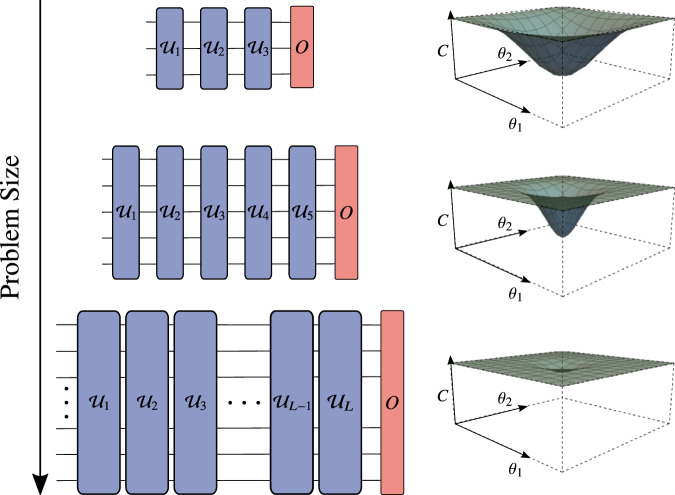
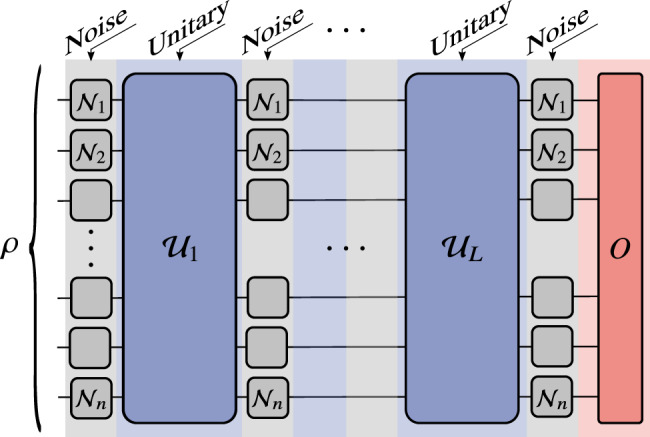
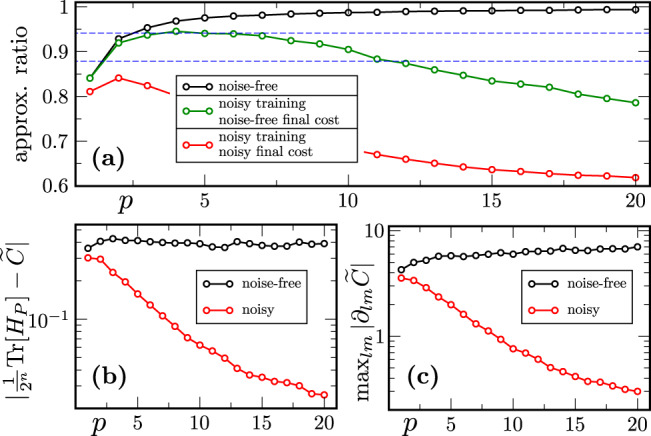
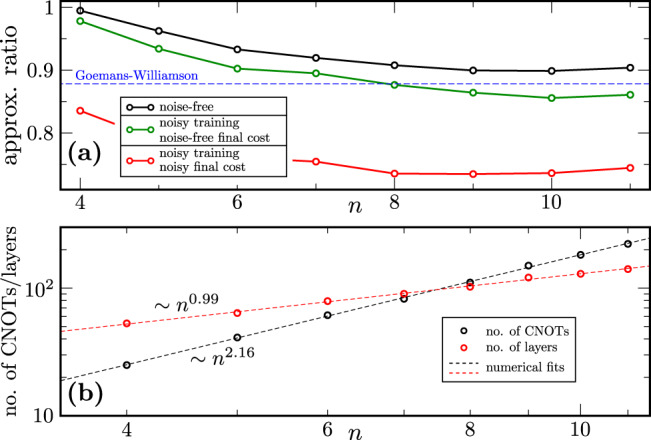
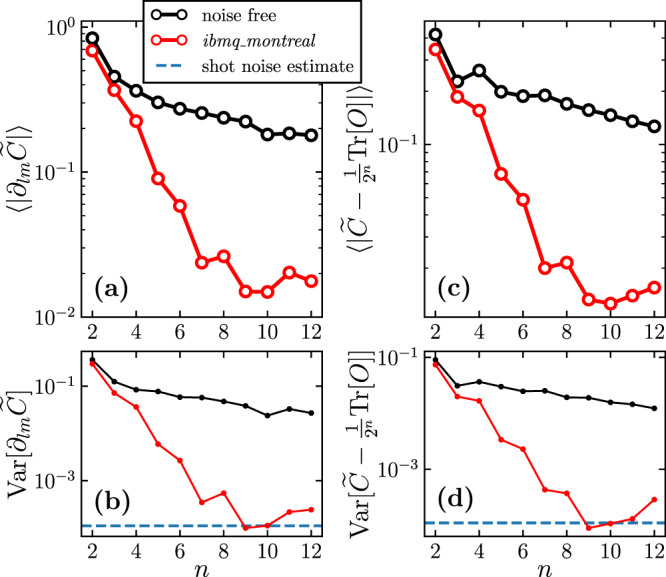
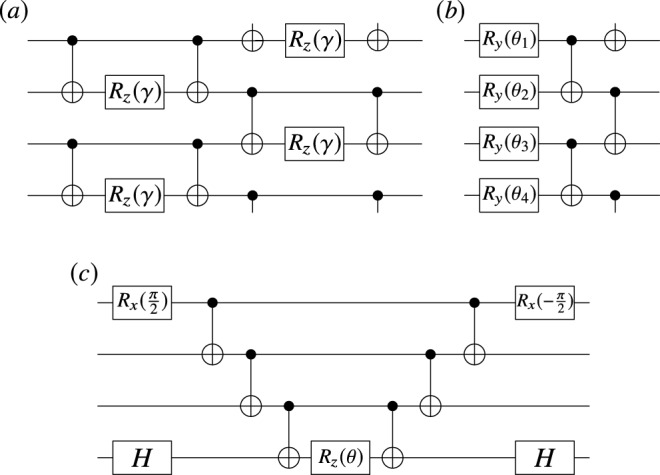
Variational Quantum Algorithms (VQAs) may be a path to quantum advantage on Noisy Intermediate-Scale Quantum (NISQ) computers. A natural question is whether noise on NISQ devices places fundamental limitations on VQA performance. We rigorously prove a serious limitation for noisy VQAs, in that the noise causes the training landscape to have a barren plateau (i.e., vanishing gradient). Specifically, for the local Pauli noise considered, we prove that the gradient vanishes exponentially in the number of qubits n if the depth of the ansatz grows linearly with n . These noise-induced barren plateaus (NIBPs) are conceptually different from noise-free barren plateaus, which are linked to random parameter initialization. Our result is formulated for a generic ansatz that includes as special cases the Quantum Alternating Operator Ansatz and the Unitary Coupled Cluster Ansatz, among others. For the former, our numerical heuristics demonstrate the NIBP phenomenon for a realistic hardware noise model.
Overview
The claims and statistics of this paper haven’t been checked yet.
Free: it reads the open-access text and checks the first 5 claims that cite a source we can check. Create a free account to check every claim.
Integrity signals
Registry
Cites
Statistics
Figures
Verification
Claims the paper makes
The claims and statistics of this paper haven’t been checked yet.
Free: it reads the open-access text and checks the first 5 claims that cite a source we can check. Create a free account to check every claim.
Claims other papers make about this one
Each is checked against this paper’s own text: does it say what the citing paper says it does?
The cited source says what the claim attributes to it.
In the citing paper
“Barren plateau landscapes correspond to gradients that vanish exponentially in the number of qubits.”
From Effect of barren plateaus on gradient-free optimization (2021) · cites this paper as [21]
In the citing paper
“However, we note that in general the scalability of real time angle-finding for a hybrid quantum-classical feedback loop is not clear for variational quantum algorithms, and in particular is expected to be quite hard especially with the presence of noise [57], [4].”
From High-Round QAOA for MAX $k$-SAT on Trapped Ion NISQ Devices (2023) · cites this paper as [57]
In the citing paper
“Second, it is challenging for the random parameters method to efficiently handle barren plateaus, while our method can address this issue by providing quasi-optimal initial guesses46.”
From Data-driven quantum approximate optimization algorithm for power systems (2023) · cites this paper as [46]
Self-check
Percentages, sums and reported differences re-computed from the paper’s own numbers.
The self-check needs the paper’s full text.
Citations
Cites
A Simplex Method for Function Minimization
Nelder, J. A., & Mead, R. (1965) · The Computer Journal · doi:10.1093/comjnl/7.4.308 · Cited by 28,905
Quantum Computation and Quantum Information
Nielsen, M. A., Chuang, I., & Grover, L. K. (2002) · American Journal of Physics · doi:10.1119/1.1463744 · Cited by 21,895
Quantum Computing in the NISQ era and beyond
Preskill, J. (2018) · Quantum · doi:10.22331/q-2018-08-06-79 · Cited by 8,830
Biamonte, J., Wittek, P., Pancotti, N., Rebentrost, P., Wiebe, N., & Lloyd, S. (2017) · Nature · doi:10.1038/nature23474 · Cited by 4,779 · cited 1×
“[59] Jacob Biamonte, Peter Wittek, Nicola Pancotti, Patrick Rebentrost, Nathan Wiebe, and Seth Lloyd, “Quantum machine learning,” Nature 549, 195–202 (2017).”
BackgroundA variational eigenvalue solver on a photonic quantum processor
Peruzzo, A., McClean, J., Shadbolt, P., Yung, M.-H., Zhou, X.-Q., Love, P. J., Aspuru-Guzik, A., & O’Brien, J. L. (2014) · Nature Communications · doi:10.1038/ncomms5213 · Cited by 4,552
Goemans, M. X., & Williamson, D. P. (1995) · Journal of the ACM · doi:10.1145/227683.227684 · Cited by 3,587
Variational quantum algorithms
Cerezo, M., Arrasmith, A., Babbush, R., Benjamin, S. C., Endo, S., Fujii, K., McClean, J. R., Mitarai, K., Yuan, X., Cincio, L., et al. (2021) · Nature Reviews Physics · doi:10.1038/s42254-021-00348-9 · Cited by 3,385 · cited 1×
“At the heart of this discussion are Variational Quantum Algorithms (VQAs), which are believed to be the best hope for near-term quantum advantage [2–4].”
BackgroundSelf-citationCoupled-cluster theory in quantum chemistry
Bartlett, R. J., & Musiał, M. (2007) · Reviews of Modern Physics · doi:10.1103/revmodphys.79.291 · Cited by 3,343
Hardware-efficient variational quantum eigensolver for small molecules and quantum magnets
Kandala, A., Mezzacapo, A., Temme, K., Takita, M., Brink, M., Chow, J. M., & Gambetta, J. M. (2017) · Nature · doi:10.1038/nature23879 · Cited by 2,982
Barren plateaus in quantum neural network training landscapes
McClean, J. R., Boixo, S., Smelyanskiy, V. N., Babbush, R., & Neven, H. (2018) · Nature Communications · doi:10.1038/s41467-018-07090-4 · Cited by 2,329
Research works printed but not linked: 4
- Bauer B Wecker D Millis AJ Hastings MB Troyer M Hybrid quantum-classical approach to correlated materials Phys. Rev. X 2016 6 031045
- Li Y Benjamin SC Efficient variational quantum simulator incorporating active error minimization Phys. Rev. X 2017 7 021050
- Wang Z Hadfield S Jiang Z Rieffel EG Quantum approximate optimization algorithm for maxcut: a fermionic view Phys. Rev. A 2018 97 022304 · DOI · Paper page
- Erdos P Renyi A On random graphs i Publ. math. Debr. 1959 6 18
Cited by
Items 101–200 of 1,010
Simulating Quantum Circuits with Arbitrary Local Noise Using Pauli Propagation
Angrisani, A., Mele, A. A., Rudolph, M. S., Cerezo, M., & Holmes, Z. (2026) · PRX Quantum · doi:10.1103/fb28-wlv2 · Cited by 100
Self-citationCAFQA: A Classical Simulation Bootstrap for Variational Quantum Algorithms
Ravi, G. S., Gokhale, P., Ding, Y., Kirby, W., Smith, K. N., Baker, J. M., Love, P. J., Hoffmann, H., Brown, K. R., & Chong, F. T. (2022) · International Conference on Architectural Support for Programming Languages and Operating Systems (ASPLOS) · doi:10.1145/3567955.3567958 · Cited by 99
Short-depth QAOA circuits and quantum annealing on higher-order ising models
Pelofske, E., Bärtschi, A., & Eidenbenz, S. (2024) · npj Quantum Information · doi:10.1038/s41534-024-00825-w · Cited by 97
Analytic Theory for the Dynamics of Wide Quantum Neural Networks
Liu, J., Najafi, K., Sharma, K., Tacchino, F., Jiang, L., & Mezzacapo, A. (2023) · Physical Review Letters · doi:10.1103/physrevlett.130.150601 · Cited by 96
Self-citationNoise-induced shallow circuits and the absence of barren plateaus
Mele, A. A., Angrisani, A., Ghosh, S., Khatri, S., Eisert, J., França, D. S., & Quek, Y. (2026) · Nature Physics · doi:10.1038/s41567-026-03245-z · Cited by 98
KANQAS: Kolmogorov-Arnold Network for Quantum Architecture Search
Kundu, A., Sarkar, A., & Sadhu, A. (2024) · EPJ Quantum Technology · doi:10.1140/epjqt/s40507-024-00289-z · Cited by 96
Entangled Datasets for Quantum Machine LearningPreprint
Schatzki, L., Arrasmith, A., Coles, P. J., & Cerezo, M. (2021) · arXiv (Cornell University) · doi:10.48550/arxiv.2109.03400 · Cited by 96
Self-citationA Leap among Quantum Computing and Quantum Neural Networks: A Survey
Massoli, F. V., Vadicamo, L., Amato, G. M., & Falchi, F. (2022) · ACM Computing Surveys · doi:10.1145/3529756 · Cited by 94
Avoiding barren plateaus via transferability of smooth solutions in a Hamiltonian variational ansatz
Mele, A. A., Mbeng, G. B., Santoro, G. E., Collura, M., & Torta, P. (2022) · Physical Review A · doi:10.1103/physreva.106.l060401 · Cited by 96
Grimsley, H. R., Barron, G. S., Barnes, E., Economou, S. E., & Mayhall, N. J. (2023) · npj Quantum Information · doi:10.1038/s41534-023-00681-0 · Cited by 93
On fundamental aspects of quantum extreme learning machines
Xiong, W., Facelli, G., Sahebi, M., Agnel, O., Chotibut, T., Thanasilp, S., & Holmes, Z. (2025) · Quantum Machine Intelligence · doi:10.1007/s42484-025-00239-7 · Cited by 94
Quantum Architecture Search: A Survey
Martyniuk, D., Jung, J., & Paschke, A. (2024) · IEEE International Conference on Quantum Computing and Engineering (QCE) · doi:10.1109/qce60285.2024.00198 · Cited by 92
Exponentially tighter bounds on limitations of quantum error mitigation
Quek, Y., Stilck França, D., Khatri, S., Meyer, J. J., & Eisert, J. (2024) · Nature Physics · doi:10.1038/s41567-024-02536-7 · Cited by 89
Hybrid quantum classical graph neural networks for particle track reconstruction
Tüysüz, C., Rieger, C., Novotny, K., Demirköz, B. M., Dobos, D., Potamianos, K. J., Vallecorsa, S., Vlimant, J.-R., & Forster, R. (2021) · Quantum Machine Intelligence · doi:10.1007/s42484-021-00055-9 · Cited by 90
Variational Quantum Simulation: A Case Study for Understanding Warm Starts
Puig, R., Drudis, M., Thanasilp, S., & Holmes, Z. (2025) · PRX Quantum · doi:10.1103/prxquantum.6.010317 · Cited by 89
Neural predictor based quantum architecture search
Zhang, S.-X., Hsieh, C.-Y., Zhang, S., & Yao, H. (2021) · Machine Learning: Science and Technology · doi:10.1088/2632-2153/ac28dd · Cited by 88
“Despite wide application range and initial successes, pushing for quantum advantages with VQA faces many challenges such as noise-induced decoherence, barren plateaus [123, 124] that derail the training of parameters, and reachability deficits with certain fixed ansatz [30– 32, 34].”
BackgroundTight Bounds on the Convergence of Noisy Random Circuits to the Uniform Distribution
Deshpande, A., Niroula, P., Shtanko, O., Gorshkov, A. V., Fefferman, B., & Gullans, M. J. (2022) · PRX Quantum · doi:10.1103/prxquantum.3.040329 · Cited by 89
The generative quantum eigensolver (GQE) and its application for ground state searchPreprint
Nakaji, K., Kristensen, L. B., Kemmoku, R., Campos-Gonzalez-Angulo, J. A., Vakili, M. G., Huang, H., Bagherimehrab, M., Gorgulla, C., Wong, F., McCaskey, A., et al. (2024) · arXiv (Cornell University) · doi:10.48550/arxiv.2401.09253 · Cited by 88
Unifying and benchmarking state-of-the-art quantum error mitigation techniques
Bultrini, D., Gordon, M. H., Czarnik, P., Arrasmith, A., Cerezo, M., Coles, P. J., & Cincio, Ł. (2023) · Quantum · doi:10.22331/q-2023-06-06-1034 · Cited by 86
Self-citationOvercoming the coherence time barrier in quantum machine learning on temporal data
Hu, F., Khan, S. A., Bronn, N. T., Angelatos, G., Rowlands, G. E., Ribeill, G. J., & Türeci, H. E. (2024) · Nature Communications · doi:10.1038/s41467-024-51162-7 · Cited by 86
Presence and Absence of Barren Plateaus in Tensor-Network Based Machine Learning
Liu, Z., Yu, L.-W., Duan, L., & Deng, D.-L. (2022) · Physical Review Letters · doi:10.1103/physrevlett.129.270501 · Cited by 82
Ge, X., Wu, R.-B., & RABITZ, H. A. (2022) · Annual Reviews in Control · doi:10.1016/j.arcontrol.2022.06.001 · Cited by 83
Noise-Assisted Quantum Autoencoder
Cao, C., & Wang, X. (2021) · Physical Review Applied · doi:10.1103/physrevapplied.15.054012 · Cited by 81
Resource theory of quantum scrambling
Garcia, R. J., Bu, K., & Jaffe, A. (2023) · Proceedings of the National Academy of Sciences · doi:10.1073/pnas.2217031120 · Cited by 79
Quantum approximate optimization via learning-based adaptive optimization
Cheng, L., Chen, Y., Zhang, S., & Zhang, S. (2024) · Communications Physics · doi:10.1038/s42005-024-01577-x · Cited by 80
Wang, Y., Qi, B., Ferrie, C., & Dong, D. (2024) · Physical Review Applied · doi:10.1103/physrevapplied.22.054005 · Cited by 80
Layer VQE: A Variational Approach for Combinatorial Optimization on Noisy Quantum Computers
Liu, X., Angone, A., Shaydulin, R., Safro, I., Alexeev, Y., & Cincio, L. (2022) · IEEE Transactions on Quantum Engineering · doi:10.1109/tqe.2021.3140190 · Cited by 78
“[54] show that another type of “barren plateau” is induced by hardware noise.”
BackgroundVariational Quantum Algorithm for Estimating the Quantum Fisher Information
Beckey, J. L., Cerezo, M., Sone, A., & Coles, P. J. (2020) · arXiv · doi:10.48550/arxiv.2010.10488 · Cited by 77
Self-citationQTN-VQC: an end-to-end learning framework for quantum neural networks
Qi, J., Yang, C.-H. H., & Chen, P. (2023) · Physica Scripta · doi:10.1088/1402-4896/ad14d6 · Cited by 77
Building spatial symmetries into parameterized quantum circuits for faster training
Sauvage, F., Larocca, M., Coles, P. J., & Cerezo, M. (2024) · Quantum Science and Technology · doi:10.1088/2058-9565/ad152e · Cited by 77
Self-citationError Propagation in NISQ Devices for Solving Classical Optimization Problems
González-García, G., Trivedi, R., & Cirac, J. I. (2022) · PRX Quantum · doi:10.1103/prxquantum.3.040326 · Cited by 76
Practical Quantum Advantage on Partially Fault-Tolerant Quantum Computer
Toshio, R., Akahoshi, Y., Fujisaki, J., Oshima, H., Sato, S., & Fujii, K. (2025) · Physical Review X · doi:10.1103/physrevx.15.021057 · Cited by 76
Avoiding barren plateaus with classical deep neural networks
Friedrich, L., & Maziero, J. (2022) · Physical Review A · doi:10.1103/physreva.106.042433 · Cited by 74
Quantum Phase Recognition via Quantum Kernel Methods
Wu, Y., Wu, B., Wang, J. B., & Yuan, X. (2023) · Quantum · doi:10.22331/q-2023-04-17-981 · Cited by 74
Tkachenko, N. V., Sud, J., Zhang, Y., Tretiak, S., Anisimov, P. M., Arrasmith, A. T., Coles, P. J., Cincio, L., & Dub, P. A. (2021) · PRX Quantum · doi:10.1103/prxquantum.2.020337 · Cited by 73
“In fact, these two issues are related as the accumulation of hardware noise also leads to smaller gradients [16].”
BackgroundSelf-citationBharti, K., & Haug, T. (2021) · Physical Review A · doi:10.1103/physreva.104.042418 · Cited by 73
Variational Inference with a Quantum Computer
Benedetti, M., Coyle, B., Fiorentini, M., Lubasch, M., & Rosenkranz, M. (2021) · Physical Review Applied · doi:10.1103/physrevapplied.16.044057 · Cited by 73
Adapting Quantum Approximation Optimization Algorithm (QAOA) for Unit Commitment
Koretsky, S., Gokhale, P., Baker, J. M., Viszlai, J., Zheng, H., Gurung, N., Burg, R., Paaso, E. A., Khodaei, A., Eskandarpour, R., et al. (2021) · IEEE International Conference on Quantum Computing and Engineering (QCE) · doi:10.1109/qce52317.2021.00035 · Cited by 73
Problem-Dependent Power of Quantum Neural Networks on Multiclass Classification
Du, Y., Yang, Y., Tao, D., & Hsieh, M.-H. (2023) · Physical Review Letters · doi:10.1103/physrevlett.131.140601 · Cited by 74
Mitigating Barren Plateaus of Variational Quantum Eigensolvers
Liu, X., Liu, G., Zhang, H.-K., Huang, J., & Wang, X. (2024) · IEEE Transactions on Quantum Engineering · doi:10.1109/tqe.2024.3383050 · Cited by 74
Stochastic noise can be helpful for variational quantum algorithms
Liu, J., Wilde, F., Mele, A. A., Jin, X., Jiang, L., & Eisert, J. (2025) · Physical Review A · doi:10.1103/physreva.111.052441 · Cited by 73
Data-driven quantum approximate optimization algorithm for power systems
Jing, H., Wang, Y., & Li, Y. (2023) · Communications Engineering · doi:10.1038/s44172-023-00061-8 · Cited by 72
Quantum Neural Network Classifiers: A Tutorial
Li, W., Lu, Z., & Deng, D.-L. (2022) · SciPost Physics Lecture Notes · doi:10.21468/scipostphyslectnotes.61 · Cited by 73
Curriculum reinforcement learning for quantum architecture search under hardware errors
Patel, Y. J., Kundu, A., Ostaszewski, M., Bonet-Monroig, X., Dunjko, V., & Danaci, O. (2024) · International Conference on Learning Representations · doi:10.48550/arxiv.2402.03500 · Cited by 71
QSAN: A Near-Term Achievable Quantum Self-Attention Network
Shi, J., Zhao, R.-X., Wang, W., Zhang, S., & Li, X. (2024) · IEEE Transactions on Neural Networks and Learning Systems · doi:10.1109/tnnls.2024.3504828 · Cited by 72
Optimal training of variational quantum algorithms without barren plateausPreprint
Haug, T., & Kim, M. S. (2021) · arXiv (Cornell University) · doi:10.48550/arxiv.2104.14543 · Cited by 71
On contraction coefficients, partial orders and approximation of capacities for quantum channels
Hirche, C., Rouzé, C., & França, D. S. (2022) · Quantum · doi:10.22331/q-2022-11-28-862 · Cited by 72
Quantum computing and chemistry
Weidman, J. D., Sajjan, M., Mikolas, C. A., Stewart, Z. J., Pollanen, J., Kais, S., & Wilson, A. K. (2024) · Cell Reports Physical Science · doi:10.1016/j.xcrp.2024.102105 · Cited by 71
Design and analysis of quantum machine learning: a survey
Chen, L., Li, T., Chen, Y., Chen, X., Woźniak, M., Xiong, N. N., & Liang, W. (2024) · Connection Science · doi:10.1080/09540091.2024.2312121 · Cited by 69
Efficient Quantum-Enhanced Classical Simulation for Patches of Quantum Landscapes
Lerch, S., Puig, R., Rudolph, M. S., Angrisani, A., Jones, T., Cerezo, M., Thanasilp, S., & Holmes, Z. (2026) · PRX Quantum · doi:10.1103/fhc5-8sm6 · Cited by 69
Self-citationInvestigating and mitigating barren plateaus in variational quantum circuits: a survey
Cunningham, J., & Zhuang, J. (2025) · Quantum Information Processing · doi:10.1007/s11128-025-04665-1 · Cited by 69
Adiabatic Spectroscopy and a Variational Quantum Adiabatic Algorithm
Schiffer, B. F., Tura, J., & Cirac, J. I. (2022) · PRX Quantum · doi:10.1103/prxquantum.3.020347 · Cited by 70
Microwave signal processing using an analog quantum reservoir computer
Senanian, A., Prabhu, S., Kremenetski, V., Roy, S., Cao, Y., Kline, J. B., Onodera, T., Wright, L. G., Wu, X., Fatemi, V., et al. (2024) · Nature Communications · doi:10.1038/s41467-024-51161-8 · Cited by 68
VSQL: Variational Shadow Quantum Learning for Classification
Li, G., Song, Z., & Wang, X. (2021) · Proceedings of the AAAI Conference on Artificial Intelligence · doi:10.1609/aaai.v35i9.17016 · Cited by 68
Reflection equivariant quantum neural networks for enhanced image classification
West, M. T., Sevior, M. E., & Usman, M. (2023) · Machine Learning Science and Technology · doi:10.1088/2632-2153/acf096 · Cited by 69
ResQNets: a residual approach for mitigating barren plateaus in quantum neural networks
Kashif, M., & Al-Kuwari, S. M. (2024) · EPJ Quantum Technology · doi:10.1140/epjqt/s40507-023-00216-8 · Cited by 67
Absence of Barren Plateaus in Finite Local-Depth Circuits with Long-Range Entanglement
Zhang, H.-K., Liu, S., & Zhang, S. (2024) · Physical Review Letters · doi:10.1103/physrevlett.132.150603 · Cited by 67
Quantum Optimization: Potential, Challenges, and the Path Forward
Abbas, A., (NNSA), U. N. N. S. A., Ambainis, A., Augustino, B., Bärtschi, A., Buhrman, H., Coffrin, C., Cortiana, G., Dunjko, V., Egger, D., et al. (2023) · OSTI OAI (U.S. Department of Energy Office of Scientific and Technical Information) · doi:10.2172/2229681 · Cited by 67
Exact and efficient Lanczos method on a quantum computer
Kirby, W., Motta, M., & Mezzacapo, A. (2023) · Quantum · doi:10.22331/q-2023-05-23-1018 · Cited by 66
Say NO to Optimization: A Nonorthogonal Quantum Eigensolver
Baek, U., Hait, D., Shee, J., Leimkuhler, O., Huggins, W. J., Stetina, T. F., Head‐Gordon, M., & Whaley, K. B. (2023) · PRX Quantum · doi:10.1103/prxquantum.4.030307 · Cited by 66
Mundada, P., Barbosa, A., Maity, S., Wang, Y., Merkh, T., Stace, T. M., Nielson, F. F., Carvalho, A. R. R., Hush, M., Biercuk, M. J., et al. (2023) · Physical Review Applied · doi:10.1103/physrevapplied.20.024034 · Cited by 66
An expressive ansatz for low-depth quantum approximate optimisation
Vijendran, V., Das, A., Koh, D. E., Assad, S. M., & Lam, P. K. (2024) · Quantum Science and Technology · doi:10.1088/2058-9565/ad200a · Cited by 66
Scaling whole-chip QAOA for higher-order ising spin glass models on heavy-hex graphs
Pelofske, E., Bärtschi, A., Cincio, Ł., Golden, J. K., & Eidenbenz, S. (2024) · npj Quantum Information · doi:10.1038/s41534-024-00906-w · Cited by 68
Space-efficient binary optimization for variational quantum computing
Glos, A., Krawiec, A., & Zimborás, Z. (2022) · npj Quantum Information · doi:10.1038/s41534-022-00546-y · Cited by 65
Provably Trainable Rotationally Equivariant Quantum Machine Learning
West, M. T., Heredge, J., Sevior, M. E., & Usman, M. (2024) · PRX Quantum · doi:10.1103/prxquantum.5.030320 · Cited by 66
Non-trivial symmetries in quantum landscapes and their resilience to quantum noise
Fontana, E., Cerezo, M., Arrasmith, A., Rungger, I., & Coles, P. J. (2022) · Quantum · doi:10.22331/q-2022-09-15-804 · Cited by 67
Self-citationEnhancing quantum adversarial robustness by randomized encodings
Gong, W., Dong, Y., Li, W., & Deng, D.-L. (2024) · Physical Review Research · doi:10.1103/physrevresearch.6.023020 · Cited by 65
Effect of Nonunital Noise on Random-Circuit Sampling
Fefferman, B., Ghosh, S., Gullans, M. J., Kuroiwa, K., & Sharma, K. (2024) · PRX Quantum · doi:10.1103/prxquantum.5.030317 · Cited by 64
Self-citationOptimization Applications as Quantum Performance Benchmarks
Lubinski, T., Coffrin, C., McGeoch, C., Sathe, P., Apanavicius, J., & Neira, D. E. B. (2023) · arXiv · doi:10.48550/arxiv.2302.02278 · Cited by 62
Ancilla-free implementation of generalized measurements for qubits embedded in a qudit space
Fischer, L. E., Miller, D., Tacchino, F., Barkoutsos, P. K., Egger, D. J., & Tavernelli, I. (2022) · Physical Review Research · doi:10.1103/physrevresearch.4.033027 · Cited by 62
Symmetrized Liouvillian Gap in Markovian Open Quantum Systems
Mori, T., & Shirai, T. (2023) · Physical Review Letters · doi:10.1103/physrevlett.130.230404 · Cited by 63
Variational quantum simulation for periodic materials
Yoshioka, N., Sato, T., Nakagawa, Y. O., Ohnishi, Y.-Y., & Mizukami, W. (2022) · Physical Review Research · doi:10.1103/physrevresearch.4.013052 · Cited by 64
Latent Style-based Quantum GAN for high-quality Image GenerationPreprint
Chang, S. Y., Thanasilp, S., Saux, B. L., Vallecorsa, S., & Grossi, M. (2024) · arXiv (Cornell University) · doi:10.48550/arxiv.2406.02668 · Cited by 63
Quantum machine learning with adaptive linear optics
Chabaud, U., Markham, D., & Sohbi, A. (2021) · Quantum · doi:10.22331/q-2021-07-05-496 · Cited by 61
A Survey and Tutorial on Security and Resilience of Quantum Computing
Saki, A. A., Alam, M., Phalak, K., Suresh, A., Topaloglu, R. O., & Ghosh, S. (2021) · IEEE European Test Symposium (ETS) · doi:10.1109/ets50041.2021.9465397 · Cited by 60
Investigating the effect of circuit cutting in QAOA for the MaxCut problem on NISQ devices
Bechtold, M., Barzen, J., Leymann, F., Mandl, A., Obst, J., Truger, F., & Weder, B. (2023) · Quantum Science and Technology · doi:10.1088/2058-9565/acf59c · Cited by 60
Quantum Machine Learning: A Hands-on Tutorial for Machine Learning Practitioners and ResearchersPreprint
Du, Y., Wang, X., Guo, N., Yu, Z., Yang, Q., Zhang, K., Hsieh, M.-H., Rebentrost, P., & Tao, D. (2025) · arXiv · doi:10.48550/arxiv.2502.01146 · Cited by 61
Optimization Applications as Quantum Performance Benchmarks
Lubinski, T., Coffrin, C., McGeoch, C., Sathe, P., Apanavicius, J., Bernal Neira, D., & Quantum Economic Development Consortium(QED-C) Collaboration (2024) · ACM Transactions on Quantum Computing · doi:10.1145/3678184 · Cited by 59
Quantum Monge-Kantorovich Problem and Transport Distance between Density Matrices
Friedland, S., Eckstein, M., Cole, S., & Życzkowski, K. (2022) · Physical Review Letters · doi:10.1103/physrevlett.129.110402 · Cited by 61
Analytical framework for quantum alternating operator ansätze
Hadfield, S., Hogg, T., & Rieffel, E. G. (2022) · Quantum Science and Technology · doi:10.1088/2058-9565/aca3ce · Cited by 60
Sopena, A., Gordon, M. H., García-Martín, D., Sierra, G., & López, E. (2022) · Quantum · doi:10.22331/q-2022-09-08-796 · Cited by 59
IQGAN: Robust Quantum Generative Adversarial Network for Image Synthesis On NISQ Devices
Chu, C., Skipper, G., Swany, M., & Chen, F. (2023) · IEEE International Conference on Acoustics Speech and Signal Processing · doi:10.1109/icassp49357.2023.10096772 · Cited by 59
Aifer, M., Donatella, K., Gordon, M. H., Duffield, S., Ahle, T. D., Simpson, D., Crooks, G. E., & Coles, P. J. (2024) · npj Unconventional Computing · doi:10.1038/s44335-024-00014-0 · Cited by 59
Self-citationA semi-agnostic ansatz with variable structure for variational quantum algorithms
Bilkis, M., Cerezo, M., Verdon, G., Coles, P. J., & Cincio, L. (2023) · Quantum Machine Intelligence · doi:10.1007/s42484-023-00132-1 · Cited by 58
Self-citationQuantum Topology Optimization via Quantum Annealing
Ye, Z., Qian, X., & Pan, W. (2023) · IEEE Transactions on Quantum Engineering · doi:10.1109/tqe.2023.3266410 · Cited by 58
Similarity-based parameter transferability in the quantum approximate optimization algorithm
Galda, A., Gupta, E., Falla, J., Liu, X., Lykov, D., Alexeev, Y., & Safro, I. (2023) · Frontiers in Quantum Science and Technology · doi:10.3389/frqst.2023.1200975 · Cited by 58
Engineered dissipation to mitigate barren plateaus
Sannia, A., Tacchino, F., Tavernelli, I., Giorgi, G. L., & Zambrini, R. (2024) · npj Quantum Information · doi:10.1038/s41534-024-00875-0 · Cited by 59
Detecting and quantifying entanglement on near-term quantum devices
Wang, K., Song, Z., Zhao, X., Wang, Z., & Wang, X. (2022) · npj Quantum Information · doi:10.1038/s41534-022-00556-w · Cited by 58
Scaling quantum approximate optimization on near-term hardware
Lotshaw, P. C., Nguyen, T., Santana, A., McCaskey, A., Herrman, R., Ostrowski, J., Siopsis, G., & Humble, T. S. (2022) · Scientific Reports · doi:10.1038/s41598-022-14767-w · Cited by 60
Fock state-enhanced expressivity of quantum machine learning models
Gan, B. Y., Leykam, D., & Angelakis, D. G. (2022) · EPJ Quantum Technology · doi:10.1140/epjqt/s40507-022-00135-0 · Cited by 58
Variational Gibbs state preparation on noisy intermediate-scale quantum devices
Consiglio, M., Settino, J., Giordano, A., Mastroianni, C., Plastina, F., Lorenzo, S., Maniscalco, S., Goold, J., & Apollaro, T. J. G. (2024) · Physical Review A · doi:10.1103/physreva.110.012445 · Cited by 57
Cole, S., Eckstein, M., Friedland, S., & Życzkowski, K. (2023) · Mathematical Physics Analysis and Geometry · doi:10.1007/s11040-023-09456-7 · Cited by 58
Reduction of finite sampling noise in quantum neural networks
Kreplin, D. A., & Roth, M. (2024) · Quantum · doi:10.22331/q-2024-06-25-1385 · Cited by 57
Universal effectiveness of high-depth circuits in variational eigenproblems
Kim, J., Kim, J., & Rosa, D. (2021) · Physical Review Research · doi:10.1103/physrevresearch.3.023203 · Cited by 56
Solving hadron structures using the basis light-front quantization approach on quantum computers
Qian, W., Basili, R., Pal, S., Luecke, G. R., & Vary, J. P. (2022) · Physical Review Research · doi:10.1103/physrevresearch.4.043193 · Cited by 55
Iterative quantum-assisted eigensolver
Bharti, K., & Haug, T. (2021) · Physical Review A · doi:10.1103/physreva.104.l050401 · Cited by 54
Robustness of quantum reinforcement learning under hardware errors
Skolik, A., Mangini, S., Bäck, T., Macchiavello, C., & Dunjko, V. (2023) · EPJ Quantum Technology · doi:10.1140/epjqt/s40507-023-00166-1 · Cited by 54
Efficient witnessing and testing of magic in mixed quantum states
Haug, T., & Tarabunga, P. S. (2026) · npj Quantum Information · doi:10.1038/s41534-026-01189-z · Cited by 54
Evaluation of QAOA based on the approximation ratio of individual samples
Larkin, J. M., Jonsson, M., Justice, D., & Guerreschi, G. G. (2022) · Quantum Science and Technology · doi:10.1088/2058-9565/ac6973 · Cited by 54
Unitary Selective Coupled-Cluster Method
Fedorov, D. A., Alexeev, Y., Gray, S. K., & Otten, M. (2022) · Quantum · doi:10.22331/q-2022-05-02-703 · Cited by 53
Metadata
- Authors
- Wang, S., Fontana, E., Cerezo, M., Sharma, K., Sone, A., Cincio, L., & Coles, P. J.
- Affiliations
- Los Alamos National Laboratory (US)
- Louisiana State University (US)
- Corresponding author
- Wang, Samson
- Cerezo, M.
- Coles, Patrick J.
- Venue
- Nature Communications
- Published
- 2021-11-29
- Volume
- 12
- Issue
- 1
- Pages
- 6961-6961
- ISSN
- 2041-1723 (ISSN-L)
- PMC
- PMC8630047
- OpenAlex
- W3045606049
- Semantic Scholar
- a7da6cf3820d94f250349d658a09004a36b14ff0
- Cited by
- 773
- References
- 115
- Citations by year
- 2026: 150 · 2025: 163 · 2024: 168 · 2023: 135 · 2022: 102 · 2021: 52
- FWCI
- 40.22
- Type
- journal article
- Language
- en
- Open access
- gold
- doi.org
- Licence
- cc-by
- creativecommons.org/licenses/by/4.0 (tdm)
- creativecommons.org/licenses/by/4.0 (vor)
- Locations
- Nature Communications (publishedVersion, cc-by)
- PubMed Central (publishedVersion, cc-by)
- PubMed (publishedVersion)
- Strathprints: The University of Strathclyde institutional repository (University of Strathclyde) (acceptedVersion)
- arXiv (Cornell University) (submittedVersion)
- RePEc: Research Papers in Economics (submittedVersion)
- DOAJ (DOAJ: Directory of Open Access Journals) (submittedVersion, cc-by-sa)
- OSTI OAI (U.S. Department of Energy Office of Scientific and Technical Information) (submittedVersion)
- arXiv (Cornell University)
- Bulletin of the American Physical Society
- Funders
- U.S. Department of Energy
- RCUK | Engineering and Physical Sciences Research Council
- Topics
- Physical Sciences › Computer Science › Artificial Intelligence › Quantum Computing Algorithms and Architecture
- Physical Sciences › Physics and Astronomy › Atomic and Molecular Physics, and Optics › Quantum many-body systems
- Physical Sciences › Physics and Astronomy › Atomic and Molecular Physics, and Optics › Quantum Information and Cryptography
- Keywords
- barren plateaus, variational quantum algorithms, NISQ devices, gradient vanishing, Quantum Alternating Operator Ansatz, unitary coupled cluster ansatz, quantum advantage
About these checks
Registry, retraction, Cites and statistics results are computed, not judged, with one exception: a printed reference that no index lists is read once by a model before it counts as a citation error. Claims are extracted by a model and kept only when their quote appears verbatim in the text; each cited source is then checked, with a model’s help, for whether it says what the claim relies on. Those verdicts can be wrong — read the claim’s quote and the cited source before relying on one.
Statistics and arithmetic are recomputed, not judged.
Confidence bands are shown only for fields calibrated on our annotated test set. None is calibrated yet, so no band is shown.
What counts as a claim ›How we measure confidence ›How we check this ›
Are you an author, or do you see a problem with this page? Request a review
Data sources
Bibliographic data: Semantic Scholar, OpenAlex, Crossref.
Contains information from the Semantic Scholar Academic Graph Datasets, made available under the ODC Attribution License (ODC-BY 1.0).
Semantic Scholar’s data is described in: Kinney, R., et al. (2023). The Semantic Scholar Open Data Platform. arXiv:2301.10140.
