

Noise-induced barren plateaus in variational quantum algorithms
Open accessThe DOI matches its Crossref record; 120 of the 120 references it cites were found in a registry or an index.
Abstract
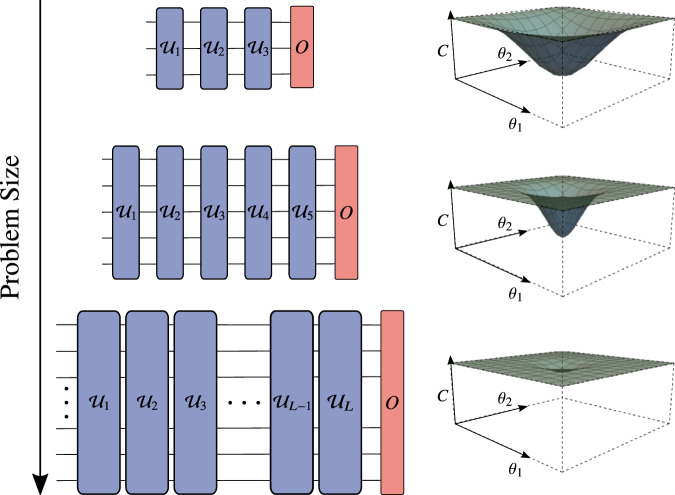
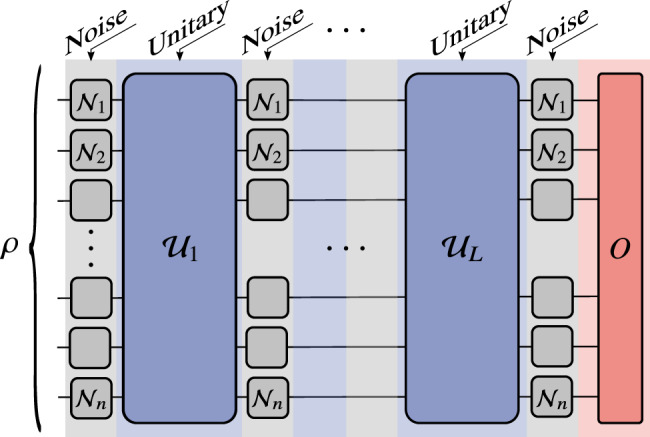
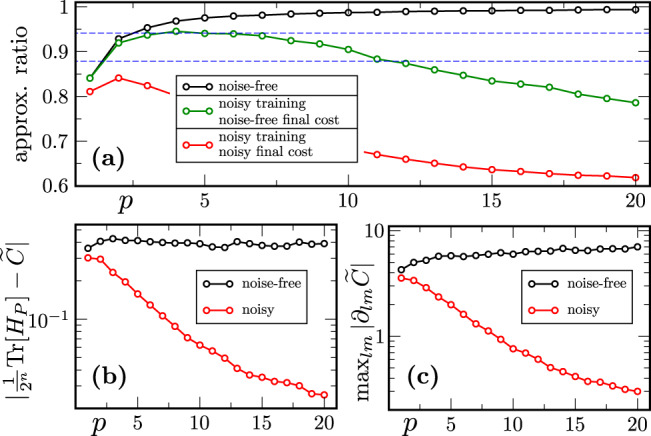
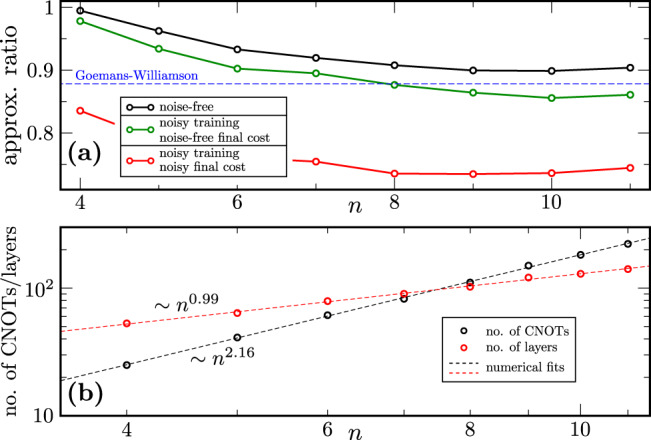
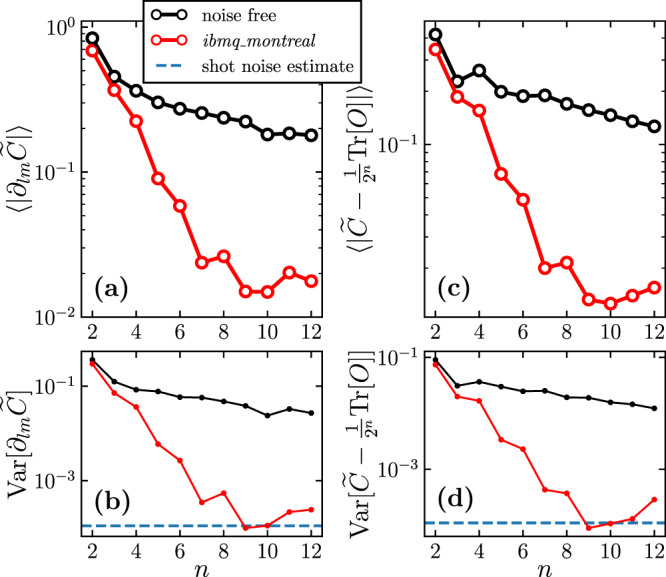
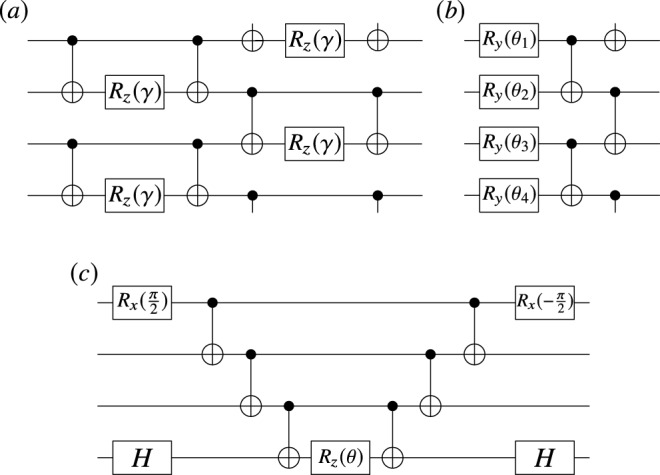
Variational Quantum Algorithms (VQAs) may be a path to quantum advantage on Noisy Intermediate-Scale Quantum (NISQ) computers. A natural question is whether noise on NISQ devices places fundamental limitations on VQA performance. We rigorously prove a serious limitation for noisy VQAs, in that the noise causes the training landscape to have a barren plateau (i.e., vanishing gradient). Specifically, for the local Pauli noise considered, we prove that the gradient vanishes exponentially in the number of qubits n if the depth of the ansatz grows linearly with n . These noise-induced barren plateaus (NIBPs) are conceptually different from noise-free barren plateaus, which are linked to random parameter initialization. Our result is formulated for a generic ansatz that includes as special cases the Quantum Alternating Operator Ansatz and the Unitary Coupled Cluster Ansatz, among others. For the former, our numerical heuristics demonstrate the NIBP phenomenon for a realistic hardware noise model.
Overview
The claims and statistics of this paper haven’t been checked yet.
Free: it reads the open-access text and checks the first 5 claims that cite a source we can check. Create a free account to check every claim.
Integrity signals
Registry
Cites
Statistics
Figures
Verification
Claims the paper makes
The claims and statistics of this paper haven’t been checked yet.
Free: it reads the open-access text and checks the first 5 claims that cite a source we can check. Create a free account to check every claim.
Claims other papers make about this one
Each is checked against this paper’s own text: does it say what the citing paper says it does?
The cited source says what the claim attributes to it.
In the citing paper
“Barren plateau landscapes correspond to gradients that vanish exponentially in the number of qubits.”
From Effect of barren plateaus on gradient-free optimization (2021) · cites this paper as [21]
In the citing paper
“However, we note that in general the scalability of real time angle-finding for a hybrid quantum-classical feedback loop is not clear for variational quantum algorithms, and in particular is expected to be quite hard especially with the presence of noise [57], [4].”
From High-Round QAOA for MAX $k$-SAT on Trapped Ion NISQ Devices (2023) · cites this paper as [57]
In the citing paper
“Second, it is challenging for the random parameters method to efficiently handle barren plateaus, while our method can address this issue by providing quasi-optimal initial guesses46.”
From Data-driven quantum approximate optimization algorithm for power systems (2023) · cites this paper as [46]
Self-check
Percentages, sums and reported differences re-computed from the paper’s own numbers.
The self-check needs the paper’s full text.
Citations
Cites
A Simplex Method for Function Minimization
Nelder, J. A., & Mead, R. (1965) · The Computer Journal · doi:10.1093/comjnl/7.4.308 · Cited by 28,905
Quantum Computation and Quantum Information
Nielsen, M. A., Chuang, I., & Grover, L. K. (2002) · American Journal of Physics · doi:10.1119/1.1463744 · Cited by 21,895
Quantum Computing in the NISQ era and beyond
Preskill, J. (2018) · Quantum · doi:10.22331/q-2018-08-06-79 · Cited by 8,830
Biamonte, J., Wittek, P., Pancotti, N., Rebentrost, P., Wiebe, N., & Lloyd, S. (2017) · Nature · doi:10.1038/nature23474 · Cited by 4,779 · cited 1×
“[59] Jacob Biamonte, Peter Wittek, Nicola Pancotti, Patrick Rebentrost, Nathan Wiebe, and Seth Lloyd, “Quantum machine learning,” Nature 549, 195–202 (2017).”
BackgroundA variational eigenvalue solver on a photonic quantum processor
Peruzzo, A., McClean, J., Shadbolt, P., Yung, M.-H., Zhou, X.-Q., Love, P. J., Aspuru-Guzik, A., & O’Brien, J. L. (2014) · Nature Communications · doi:10.1038/ncomms5213 · Cited by 4,552
Goemans, M. X., & Williamson, D. P. (1995) · Journal of the ACM · doi:10.1145/227683.227684 · Cited by 3,587
Variational quantum algorithms
Cerezo, M., Arrasmith, A., Babbush, R., Benjamin, S. C., Endo, S., Fujii, K., McClean, J. R., Mitarai, K., Yuan, X., Cincio, L., et al. (2021) · Nature Reviews Physics · doi:10.1038/s42254-021-00348-9 · Cited by 3,385 · cited 1×
“At the heart of this discussion are Variational Quantum Algorithms (VQAs), which are believed to be the best hope for near-term quantum advantage [2–4].”
BackgroundSelf-citationCoupled-cluster theory in quantum chemistry
Bartlett, R. J., & Musiał, M. (2007) · Reviews of Modern Physics · doi:10.1103/revmodphys.79.291 · Cited by 3,343
Hardware-efficient variational quantum eigensolver for small molecules and quantum magnets
Kandala, A., Mezzacapo, A., Temme, K., Takita, M., Brink, M., Chow, J. M., & Gambetta, J. M. (2017) · Nature · doi:10.1038/nature23879 · Cited by 2,982
Barren plateaus in quantum neural network training landscapes
McClean, J. R., Boixo, S., Smelyanskiy, V. N., Babbush, R., & Neven, H. (2018) · Nature Communications · doi:10.1038/s41467-018-07090-4 · Cited by 2,329
Research works printed but not linked: 4
- Bauer B Wecker D Millis AJ Hastings MB Troyer M Hybrid quantum-classical approach to correlated materials Phys. Rev. X 2016 6 031045
- Li Y Benjamin SC Efficient variational quantum simulator incorporating active error minimization Phys. Rev. X 2017 7 021050
- Wang Z Hadfield S Jiang Z Rieffel EG Quantum approximate optimization algorithm for maxcut: a fermionic view Phys. Rev. A 2018 97 022304 · DOI · Paper page
- Erdos P Renyi A On random graphs i Publ. math. Debr. 1959 6 18
Cited by
Items 501–600 of 1,010
Differential Privacy Preserving Quantum Computing via Projection Operator Measurements
Li, Y., Zhao, Y., Zhang, X., Zhong, H., Pan, M., & Zhang, C. (2024) · International Conference on Quantum Communications, Networking, and Computing (QCNC) · doi:10.1109/qcnc62729.2024.00045 · Cited by 14
Quantum phase transition detection via quantum support vector machine
Wang, Y., & Cao, L. (2024) · Quantum Science and Technology · doi:10.1088/2058-9565/ad985f · Cited by 14
Unsupervised beyond-standard-model event discovery at the LHC with a novel quantum autoencoder
Duffy, C., Hassanshahi, M. H., Jastrzebski, M., & Malik, S. (2025) · Quantum Machine Intelligence · doi:10.1007/s42484-025-00258-4 · Cited by 14
NRQNN: The Role of Observable Selection in Noise-Resilient Quantum Neural Networks
Kashif, M., & Shafique, M. (2025) · Communications in computer and information science · doi:10.1007/978-3-031-85884-0_10 · Cited by 14
Q-MAML: Quantum Model-Agnostic Meta-Learning for Variational Quantum Algorithms
Lee, J., Cho, J., & Kim, S. (2025) · Proceedings of the AAAI Conference on Artificial Intelligence · doi:10.1609/aaai.v39i17.33995 · Cited by 14
Xiao, J., Sukulthanasorn, N., Nomura, R., Moriguchi, S., & Terada, K. (2025) · Advanced Modeling and Simulation in Engineering Sciences · doi:10.1186/s40323-025-00298-2 · Cited by 14
Li, Z.-L., & Zhang, S. (2026) · Physical Review Research · doi:10.1103/4kyq-n8jb · Cited by 14
Real-time error mitigation for variational optimization on quantum hardware
Robbiati, M., Sopena, A., Papaluca, A., & Carrazza, S. (2026) · Physical Review Research · doi:10.1103/zyb2-zl2d · Cited by 15
Varsamopoulos, S., Philip, E., Elfving, V. E., van Vlijmen, H., Menon, S., Vos, A. M., Dyubankova, N., Torfs, B., & Rowe, A. (2024) · Quantum Machine Intelligence · doi:10.1007/s42484-024-00176-x · Cited by 14
Quantum subspace expansion in the presence of hardware noise
Getelina, J. C., Sharma, P., Iadecola, T., Orth, P. P., & Yao, Y. (2024) · APL Quantum · doi:10.1063/5.0217294 · Cited by 14
Evaluating the resilience of variational quantum algorithms to leakage noise
Ding, C., Xu, X.-Y., Zhang, S., Huang, H.-L., & Bao, W. (2022) · Physical Review A · doi:10.1103/physreva.106.042421 · Cited by 14
Quantum information processing with superconducting circuits: A perspective
Wendin, G. P. (2023) · Elsevier eBooks · doi:10.1016/b978-0-323-90800-9.00226-2 · Cited by 14
Reinforcement learning-assisted quantum architecture search for variational quantum algorithmsPreprint
Kundu, A. (2024) · arXiv (Cornell University) · doi:10.48550/arxiv.2402.13754 · Cited by 14
AI Agents for Variational Quantum Circuit DesignPreprint
Knipfer, M., Roman, A., Matchev, K. T., Matcheva, K., & Gleyzer, S. (2026) · arXiv (Cornell University) · doi:10.48550/arxiv.2602.19387 · Cited by 14
Practical quantum simulation of small-scale non-Hermitian dynamics
Liu, H., Yang, X., Tang, K., Che, L., Nie, X., Xin, T., Li, J., & Lu, D. (2023) · Physical Review A · doi:10.1103/physreva.107.062608 · Cited by 13
Benchmarking variational quantum algorithms for combinatorial optimization in practice
Schwägerl, T., Chai, Y., Hartung, T., Jansen, K., & Kühn, S. (2026) · Quantum Machine Intelligence · doi:10.1007/s42484-026-00355-y · Cited by 13
Efficient quantum algorithm for lattice protein folding
Wang, Y., & Zhou, X. (2024) · Quantum Science and Technology · doi:10.1088/2058-9565/ada08e · Cited by 13
QCEDA: Using Quantum Computers for EDA
Jung, M., Krumke, S. O., Schroth, C., Lobe, E., & Mauerer, W. (2025) · Lecture notes in computer science · doi:10.1007/978-3-031-78380-7_3 · Cited by 13
Lean Classical‐Quantum Hybrid Neural Network Model for Image Classification
Liu, A., Wen, C., & Wang, J. (2025) · Advanced Quantum Technologies · doi:10.1002/qute.202400703 · Cited by 14
Quantum Circuit Design using a Progressive Widening Enhanced Monte Carlo Tree Search
Lipardi, V., Dibenedetto, D., Stamoulis, G., & Winands, M. H. M. (2025) · Advanced Quantum Technologies · doi:10.1002/qute.202500093 · Cited by 13
State preparation with parallel-sequential circuits
Wei, Z.-Y., & Malz, D. (2026) · Quantum · doi:10.22331/q-2026-04-21-2079 · Cited by 13
Koßmann, G., Binkowski, L., van Luijk, L., Ziegler, T., & Schwonnek, R. (2025) · Quantum · doi:10.22331/q-2025-10-13-1882 · Cited by 13
Efficient online quantum circuit learning with no upfront training
O’Leary, T., Czarnik, P., Pelofske, E., Sornborger, A. T., McKerns, M. M., & Cincio, Ł. (2025) · Communications Physics · doi:10.1038/s42005-025-02423-4 · Cited by 13
Decoded quantum interferometry under noise
Bu, K., Gu, W., Koh, D. E., & Li, X. (2026) · Quantum Science and Technology · doi:10.1088/2058-9565/ae4536 · Cited by 13
Novak, V., Bezděk, T., Zelinka, I., Das, S., & Beseda, M. (2026) · Swarm and Evolutionary Computation · doi:10.1016/j.swevo.2026.102469 · Cited by 13
Navigating the noise-depth tradeoff in adiabatic quantum circuits
Azses, D., Dupont, M., Evert, B., Reagor, M. J., & Torre, E. G. D. (2023) · Physical review. B./Physical review. B · doi:10.1103/physrevb.107.125127 · Cited by 13
Fermionic simulators for enhanced scalability of variational quantum simulation
Li, Q., Mukhopadhyay, C., & Bayat, A. (2023) · Physical Review Research · doi:10.1103/physrevresearch.5.043175 · Cited by 13
Efficient quantum circuits based on the quantum natural gradient
Roy, A., Erramilli, S., & Konik, R. (2024) · Physical Review Research · doi:10.1103/physrevresearch.6.043083 · Cited by 13
Practicality of a quantum adiabatic algorithm for chemistry applications
Granet, E., Ghanem, K., & Dreyer, H. (2025) · Physical Review A · doi:10.1103/physreva.111.022428 · Cited by 13
Diagnosing Quantum Circuits: Noise Robustness, Trainability, and ExpressibilityPreprint
Shao, Y., Chen, Z., Wei, Z., & Liu, Z. (2025) · arXiv (Cornell University) · doi:10.48550/arxiv.2509.11307 · Cited by 13
Diabetes Prediction Using an Optimized Variational Quantum Classifier
Khan, W. R., Kamran, M. A., Khan, M. U., Ibrahim, M. M., Kim, K. S., & Ali, M. U. (2025) · International Journal of Intelligent Systems · doi:10.1155/int/1351522 · Cited by 12
The discriminative ability on anomaly detection using quantum kernels for shipping inspection
Tomono, T., & Tsujimura, K. (2025) · EPJ Quantum Technology · doi:10.1140/epjqt/s40507-025-00335-4 · Cited by 12
Filter-enhanced adiabatic quantum computing on a digital quantum processor
Karacan, E., Keever, C. M., Foss‐Feig, M., Hayes, D., & Lubasch, M. (2025) · Physical Review Research · doi:10.1103/x2v8-jx1h · Cited by 12
Zhu, Y., Liang, Y., & Situ, H. (2025) · Physica Scripta · doi:10.1088/1402-4896/adf0ae · Cited by 12
Weber, M., Anand, A., Cervera-Lierta, A., Kottmann, J. S., Kyaw, T. H., Li, B., Aspuru‐Guzik, A., Zhang, C., & Zhao, Z. (2022) · Physical Review Research · doi:10.1103/physrevresearch.4.033217 · Cited by 12
An inductive bias from quantum mechanics: learning order effects with non-commuting measurements
Gili, K., Alonso, G., & Schuld, M. (2024) · Quantum Machine Intelligence · doi:10.1007/s42484-024-00200-0 · Cited by 12
Batched Line Search Strategy for Navigating through Barren Plateaus in Quantum Circuit Training
Nádori, J., Morse, G., Villám, B. F., Majnay-Takács, Z., Zimborás, Z., & Rakyta, P. (2025) · Quantum · doi:10.22331/q-2025-08-29-1841 · Cited by 12
Quantum Orbital Minimization Method for Excited States Calculation on a Quantum Computer
Bierman, J., Li, Y., & Lu, J. (2022) · Journal of Chemical Theory and Computation · doi:10.1021/acs.jctc.2c00218 · Cited by 12
Recursive Variational Quantum CompilingPreprint
Bilek, S. D., & Wold, K. (2022) · arXiv (Cornell University) · doi:10.48550/arxiv.2203.08514 · Cited by 12
Chamaki, D., Hadfield, S., Klymko, K., O’Gorman, B., & Tubman, N. M. (2022) · arXiv (Cornell University) · doi:10.48550/arxiv.2211.16522 · Cited by 12
Out-of-distribution generalization for learning quantum dynamics
Caro, M. C., Administration, U. A. S. F. H. R. A., Huang, H.-Y., Ezzell, N., Gibbs, J., Sornborger, A. T., Cincio, Ł., Coles, P. J., & Holmes, Z. (2023) · OSTI OAI (U.S. Department of Energy Office of Scientific and Technical Information) · doi:10.2172/2377336 · Cited by 12
Self-citationMachine learning applications for noisy intermediate-scale quantum computersPreprint
Coyle, B. (2022) · arXiv (Cornell University) · doi:10.48550/arxiv.2205.09414 · Cited by 12
Simulating the flight gate assignment problem on a trapped ion quantum computerPreprint
Chai, Y., Epifanovsky, E., Jansen, K., Kaushik, A., & Kühn, S. (2023) · Desy publication database (The Deutsches Elektronen-Synchrotron) · doi:10.48550/arxiv.2309.09686 · Cited by 12
Efficient quantum state preparation of multivariate functions using tensor networksPreprint
Ballarin, M., García-Ripoll, J. J., Hayes, D., & Lubasch, M. (2025) · arXiv (Cornell University) · doi:10.48550/arxiv.2511.15674 · Cited by 12
Hardware-efficient variational quantum algorithm in a trapped-ion quantum computer
Zhuang, J.-Z., Wu, Y., & Duan, L.-M. (2024) · Physical Review A · doi:10.1103/physreva.110.062414 · Cited by 11
Zhang, S., Zhou, Y., Qin, Z., Li, R., Du, C., Xiao, Z., & Zhang, Y. (2025) · Physical Review A · doi:10.1103/physreva.111.052403 · Cited by 11
More buck-per-shot: Why learning trumps mitigation in noisy quantum sensing
Ijaz, A., Alderete, C. H., Sauvage, F., Cincio, Ł., Cerezo, M., & Goh, M. L. (2025) · Materials Today Quantum · doi:10.1016/j.mtquan.2025.100042 · Cited by 12
Self-citationVariational Quantum Computing for Quantum Simulation: Principles, Implementations, and Challenges
Galvão, L. Q., de Souza, A. B. M., Moret, M. A., & Cruz, C. (2025) · Brazilian Journal of Physics · doi:10.1007/s13538-025-01946-z · Cited by 11
Superior resilience to poisoning and amenability to unlearning in quantum machine learning
Chen, Y., & Zhang, S. (2026) · Nature Communications · doi:10.1038/s41467-026-70420-4 · Cited by 11
Towards quantum computing enhanced general computational homogenization without readout problem
Xu, Y., Kuang, Z., Li, L., Huang, Q., Yang, J., Huang, K., Wang, Z., Fan, H., & Hu, H. (2026) · International Journal of Mechanical Sciences · doi:10.1016/j.ijmecsci.2026.111214 · Cited by 11
Anonymous, Jäger, J., & Krems, R. V. (2026) · Physical Review A · doi:10.1103/6hbr-kj64 · Cited by 12
Modeling noise in global Mølmer-Sørensen interactions applied to quantum approximate optimization
Lotshaw, P. C., Battles, K. D., Gard, B., Buchs, G., Humble, T. S., & Herold, C. D. (2023) · Physical Review A · doi:10.1103/physreva.107.062406 · Cited by 11
Azad, U., & Sinha, A. (2023) · Quantum Information Processing · doi:10.1007/s11128-023-03998-z · Cited by 11
Shen, Y., Camps, D., Szasz, A., Darbha, S., Klymko, K., Williams‐Young, D. B., Tubman, N. M., & Beeumen, R. V. (2023) · IEEE International Conference on Quantum Computing and Engineering (QCE) · doi:10.1109/qce57702.2023.10253 · Cited by 11
Mastropietro, D., Korpas, G., Kungurtsev, V., & Mareček, J. (2026) · IEEE Transactions on Quantum Engineering · doi:10.1109/tqe.2026.3663507 · Cited by 12
Impact of barren plateaus countermeasures on the quantum neural network capacity to learn
Cybulski, J. L., & Nguyen, T. T. (2023) · Quantum Information Processing · doi:10.1007/s11128-023-04187-8 · Cited by 11
Exponential Hardness of Optimization from the Locality in Quantum Neural Networks
Zhang, H.-K., Zhu, C., Liu, G., & Wang, X. (2024) · Proceedings of the AAAI Conference on Artificial Intelligence · doi:10.1609/aaai.v38i15.29614 · Cited by 11
Li, S. X., Mu, W. L., You, J.-B., & Shao, X. Q. (2024) · Physical Review A · doi:10.1103/physreva.109.062603 · Cited by 12
Patra, C., Halder, S., & Maitra, R. (2024) · The Journal of Chemical Physics · doi:10.1063/5.0210854 · Cited by 11
Single entanglement connection architecture between multi-layer bipartite hardware efficient ansatz
Zhang, S., Qin, Z., Yang, Z., Li, R., Du, C., & Xiao, Z. (2024) · New Journal of Physics · doi:10.1088/1367-2630/ad64fb · Cited by 11
Variational Quantum Circuit Decoupling
Wang, X., Yang, C., & Gu, M. (2024) · Physical Review Letters · doi:10.1103/physrevlett.133.130602 · Cited by 11
Expressive quantum perceptrons for quantum neuromorphic computing
Bravo, R. A., Patti, T. L., Najafi, K., Gao, X., & Yelin, S. F. (2025) · Quantum Science and Technology · doi:10.1088/2058-9565/ad9fa4 · Cited by 11
Density matrix representation of hybrid tensor networks for noisy quantum devices
Harada, H., Suzuki, Y., Yang, B., Tokunaga, Y., & Endo, S. (2025) · Quantum · doi:10.22331/q-2025-08-07-1823 · Cited by 11
Stabilizer configuration interaction: Finding molecular subspaces with error detection properties
Anand, A., & Brown, K. R. (2025) · Physical Review A · doi:10.1103/jkcp-6km5 · Cited by 11
Diffusion‐Enhanced Optimization of Variational Quantum Eigensolver for General Hamiltonians
Zhang, S., Qin, Z., Zhang, Y., Zhou, Y., Li, R., Du, C., & Xiao, Z. (2026) · Advanced Quantum Technologies · doi:10.1002/qute.202500766 · Cited by 11
Coarse-grained intermolecular interactions on quantum processors
Anderson, L. W., Kiffner, M., Barkoutsos, P. K., Tavernelli, I., Crain, J. N., & Jaksch, D. (2022) · Physical Review A · doi:10.1103/physreva.105.062409 · Cited by 11
Universal noise-precision relations in variational quantum algorithms
Ito, K., Mizukami, W., & Fujii, K. (2023) · Physical Review Research · doi:10.1103/physrevresearch.5.023025 · Cited by 13
Quantum Variational Rewinding for Time Series Anomaly DetectionPreprint
Baker, J. S., Horowitz, H., Radha, S. K., Fernandes, S. F. D. L., Jones, C. A., Noorani, N., Skavysh, V., Lamontangne, P., & Sanders, B. C. (2022) · arXiv (Cornell University) · doi:10.48550/arxiv.2210.16438 · Cited by 11
Quantum Variational Rewinding for Time Series Anomaly DetectionPreprint
Baker, J. S., Horowitz, H., Radha, S. K., Fernandes, S. F. D. L., Jones, C., Noorani, N., Skavysh, V., Lamontagne, P., & Sanders, B. C. (2023) · Research Square · doi:10.21203/rs.3.rs-2310685/v1 · Cited by 11
Position Papers for the ASCR Workshop on Basic Research Needs in Quantum Computing and Networking
Lougovski, P., Parekh, O., Broz, J., Byrd, M., Chembo, Y. K., de Jong, W. A., Figueroa, E. V., Humble, T. S., Larson, J. M., Quiroz, G., et al. (2023) · OSTI OAI (U.S. Department of Energy Office of Scientific and Technical Information) · doi:10.2172/2283320 · Cited by 11
Solving General QUBOs with Warm-Start QAOA via a Reduction to Max-CutPreprint
Bhattacharyya, B., Capriotti, M., & Tate, R. (2025) · arXiv (Cornell University) · doi:10.48550/arxiv.2504.06253 · Cited by 11
Scaling Quantum Algorithms via Dissipation: Avoiding Barren PlateausPreprint
Zapusek, E., Rojkov, I., & Reiter, F. (2025) · arXiv (Cornell University) · doi:10.48550/arxiv.2507.02043 · Cited by 11
Enabling Lie-Algebraic Classical Simulation beyond Free FermionsPreprint
Bärligea, A., Goh, M. L., & Kottmann, J. S. (2026) · arXiv (Cornell University) · doi:10.48550/arxiv.2604.16701 · Cited by 11
Bias-field digitized counterdiabatic quantum optimization
Cadavid, A. G., Dalal, A., Simen, A., Solano, E., & Hegade, N. N. (2025) · Physical Review Research · doi:10.1103/physrevresearch.7.l022010 · Cited by 10
“Additionally, BF-DCQO does not require any classical optimization subroutines, thus overcoming the train-ability issues faced by variational quantum optimization algorithms [13].”
Uvarov, A., Rabinovich, D., Lakhmanskaya, O., Lakhmanskiy, K., Biamonte, J., & Adhikary, S. (2024) · Physical Review A · doi:10.1103/physreva.110.012404 · Cited by 10
Improve variational quantum eigensolver by many-body localization
Li, X., & Yin, Z.-Q. (2024) · Frontiers of Physics · doi:10.15302/frontphys.2025.023202 · Cited by 10
Quantum graph learning and algorithms applied in quantum computer sciences and image classification
Shayeganfar, F., Ramazani, A., Sundararaghavan, V., & Duan, Y. (2025) · Applied Physics Reviews · doi:10.1063/5.0237599 · Cited by 11
Demonstration of efficient predictive surrogates for large-scale quantum processors
Liao, W.-Y., Du, Y., Wang, X., Tian, T.-C., Luo, Y., Du, B., Tao, D., & Huang, H.-L. (2026) · Nature Communications · doi:10.1038/s41467-026-72506-5 · Cited by 12
AppQSim: Application-oriented benchmarks for Hamiltonian simulation on a quantum computer
Granet, E., & Dreyer, H. (2025) · Physical Review Research · doi:10.1103/qt55-7d6r · Cited by 10
Towards utility-scale electronic structure with sample-based quantum bootstrap embedding
Bierman, J., & Liu, Y. (2026) · Digital Discovery · doi:10.1039/d5dd00416k · Cited by 11
Quantum Machine Learning: A Review of Hybrid Classical-Quantum Approaches
Prajapati, B. B., & Prajapati, R. B. (2026) · Quanta · doi:10.12743/quanta.94 · Cited by 10
Fourier Analysis of Parameterized Quantum Circuits and the Barren Plateau Problem
Okumura, S., & Ohzeki, M. (2026) · Journal of the Physical Society of Japan · doi:10.7566/jpsj.95.033002 · Cited by 10
Fast decay of classification error in variational quantum circuits
Zhang, B., & Zhuang, Q. (2022) · Quantum Science and Technology · doi:10.1088/2058-9565/ac70f5 · Cited by 10
Shuffle-QUDIO: accelerate distributed VQE with trainability enhancement and measurement reduction
Qian, Y., Du, Y., & Tao, D. (2024) · Quantum Machine Intelligence · doi:10.1007/s42484-024-00167-y · Cited by 10
Sagingalieva, A., Lusnig, L., Cavalli, F., & Melnikov, A. A. (2025) · Informatics in Medicine Unlocked · doi:10.1016/j.imu.2025.101682 · Cited by 10
A practically scalable approach to the closest vector problem for sieving via QAOA with fixed angles
Priestley, B., & Wallden, P. (2026) · Quantum Science and Technology · doi:10.1088/2058-9565/ae4cc6 · Cited by 10
Noise-robust ground state energy estimates from deep quantum circuits
Vallury, H. J., Jones, M. A., White, G. A. L., Creevey, F. M., Hill, C. D., & Hollenberg, L. C. L. (2023) · Quantum · doi:10.22331/q-2023-09-11-1109 · Cited by 10
Cichy, S., Faehrmann, P. K., Khatri, S., & Eisert, J. (2024) · Physical Review A · doi:10.1103/physreva.109.052624 · Cited by 10
Gyawali, G., Rappaport, S., Sereno, T., & Lawler, M. J. (2023) · arXiv (Cornell University) · doi:10.48550/arxiv.2312.09135 · Cited by 10
Analytical Expressions for the Quantum Approximate Optimization Algorithm and its VariantsPreprint
Ng, T. Y., Koh, J. M., & Koh, D. E. (2024) · arXiv (Cornell University) · doi:10.48550/arxiv.2411.09745 · Cited by 10
Quantum automated learning with provable and explainable trainabilityPreprint
Ye, Q., Geng, S., Han, Z., Li, W., Duan, L. M., & Deng, D.-L. (2025) · arXiv · doi:10.48550/arxiv.2502.05264 · Cited by 10
Hybrid quantum optimization in the context of minimizing traffic congestionPreprint
Villanueva, J., Mooney, G. J., Bardhan, B. R., Ghosh, J., Hill, C. D., & Hollenberg, L. C. L. (2025) · arXiv (Cornell University) · doi:10.48550/arxiv.2504.08275 · Cited by 10
Simulating Condensed Matter Physics on Quantum HardwarePreprint
Shen, R., Chen, T., Tai, T., Koh, J. M., Ghaemi, P., & Lee, C. H. (2026) · arXiv (Cornell University) · doi:10.48550/arxiv.2606.02721 · Cited by 12
Quantum parallel information exchange (QPIE) hybrid network with transfer learning
Guo, Z., Khan, A., Sheng, V. S., Jabeen, S., & Pan, Z. (2025) · Quantum Science and Technology · doi:10.1088/2058-9565/ade89f · Cited by 9
Mutual information maximizing quantum generative adversarial networks
Lee, M., Shin, M., Lee, J., & Jeong, K. (2025) · Scientific Reports · doi:10.1038/s41598-025-18476-y · Cited by 9
Jiang, L., Zhang, C., & Chen, F. (2025) · IEEE International Conference on Quantum Computing and Engineering (QCE) · doi:10.1109/qce65121.2025.00167 · Cited by 9
Toward chemically accurate quantum simulations on quantum hardware: A quantum-HPC hybrid approach
V., A. K. S., Patra, A., Mukherjee, M., Shukla, A., Sai Shankar, P., Bhat, R., L., R. T. S., & Jaiganesh, G. (2026) · The Journal of Chemical Physics · doi:10.48550/arxiv.2604.01983 · Cited by 10
Noisy monitored quantum circuits
Liu, S., Jian, S.-K., & Zhang, S. (2026) · Journal of Physics Condensed Matter · doi:10.1088/1361-648x/ae6a58 · Cited by 10
Optimal Clifford Initial States for Ising Hamiltonians
Bhattacharyya, B., & Ravi, G. S. (2023) · IEEE International Conference on Rebooting Computing (ICRC) · doi:10.1109/icrc60800.2023.10386971 · Cited by 9
Near-term quantum algorithm for solving the MaxCut problem with fewer quantum resources
Xiumei, Z., Li, Y., Li, J., Wang, S., Wang, S., Qin, S., & Gao, F. (2024) · Physica A Statistical Mechanics and its Applications · doi:10.1016/j.physa.2024.129951 · Cited by 9
Self-citation
Metadata
- Authors
- Wang, S., Fontana, E., Cerezo, M., Sharma, K., Sone, A., Cincio, L., & Coles, P. J.
- Affiliations
- Los Alamos National Laboratory (US)
- Louisiana State University (US)
- Corresponding author
- Wang, Samson
- Cerezo, M.
- Coles, Patrick J.
- Venue
- Nature Communications
- Published
- 2021-11-29
- Volume
- 12
- Issue
- 1
- Pages
- 6961-6961
- ISSN
- 2041-1723 (ISSN-L)
- PMC
- PMC8630047
- OpenAlex
- W3045606049
- Semantic Scholar
- a7da6cf3820d94f250349d658a09004a36b14ff0
- Cited by
- 773
- References
- 115
- Citations by year
- 2026: 150 · 2025: 163 · 2024: 168 · 2023: 135 · 2022: 102 · 2021: 52
- FWCI
- 40.22
- Type
- journal article
- Language
- en
- Open access
- gold
- doi.org
- Licence
- cc-by
- creativecommons.org/licenses/by/4.0 (tdm)
- creativecommons.org/licenses/by/4.0 (vor)
- Locations
- Nature Communications (publishedVersion, cc-by)
- PubMed Central (publishedVersion, cc-by)
- PubMed (publishedVersion)
- Strathprints: The University of Strathclyde institutional repository (University of Strathclyde) (acceptedVersion)
- arXiv (Cornell University) (submittedVersion)
- RePEc: Research Papers in Economics (submittedVersion)
- DOAJ (DOAJ: Directory of Open Access Journals) (submittedVersion, cc-by-sa)
- OSTI OAI (U.S. Department of Energy Office of Scientific and Technical Information) (submittedVersion)
- arXiv (Cornell University)
- Bulletin of the American Physical Society
- Funders
- U.S. Department of Energy
- RCUK | Engineering and Physical Sciences Research Council
- Topics
- Physical Sciences › Computer Science › Artificial Intelligence › Quantum Computing Algorithms and Architecture
- Physical Sciences › Physics and Astronomy › Atomic and Molecular Physics, and Optics › Quantum many-body systems
- Physical Sciences › Physics and Astronomy › Atomic and Molecular Physics, and Optics › Quantum Information and Cryptography
- Keywords
- barren plateaus, variational quantum algorithms, NISQ devices, gradient vanishing, Quantum Alternating Operator Ansatz, unitary coupled cluster ansatz, quantum advantage
About these checks
Registry, retraction, Cites and statistics results are computed, not judged, with one exception: a printed reference that no index lists is read once by a model before it counts as a citation error. Claims are extracted by a model and kept only when their quote appears verbatim in the text; each cited source is then checked, with a model’s help, for whether it says what the claim relies on. Those verdicts can be wrong — read the claim’s quote and the cited source before relying on one.
Statistics and arithmetic are recomputed, not judged.
Confidence bands are shown only for fields calibrated on our annotated test set. None is calibrated yet, so no band is shown.
What counts as a claim ›How we measure confidence ›How we check this ›
Are you an author, or do you see a problem with this page? Request a review
Data sources
Bibliographic data: Semantic Scholar, OpenAlex, Crossref.
Contains information from the Semantic Scholar Academic Graph Datasets, made available under the ODC Attribution License (ODC-BY 1.0).
Semantic Scholar’s data is described in: Kinney, R., et al. (2023). The Semantic Scholar Open Data Platform. arXiv:2301.10140.
