

The DOI matches its Crossref record; 52 of the 52 references it cites were found in a registry or an index; 3 of the 47 sources its claims cite were checked for support.
Vitrification and nanowarming enable long-term organ cryopreservation and life-sustaining kidney transplantation in a rat model
Open accessAbstract
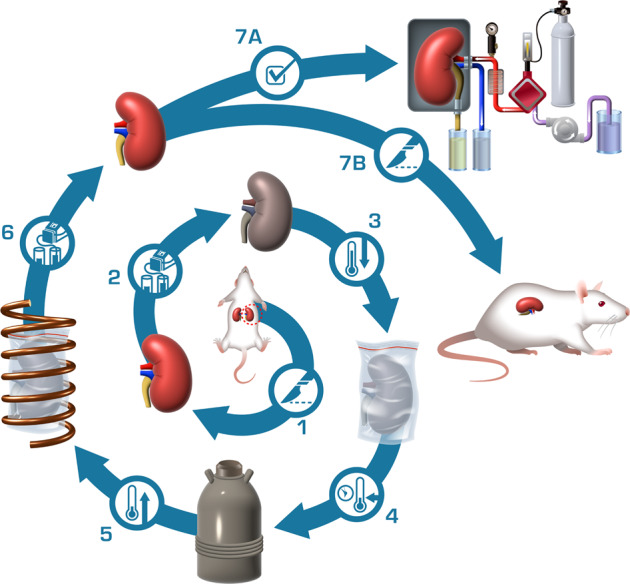
Banking cryopreserved organs could transform transplantation into a planned procedure that more equitably reaches patients regardless of geographical and time constraints. Previous organ cryopreservation attempts have failed primarily due to ice formation, but a promising alternative is vitrification, or the rapid cooling of organs to a stable, ice-free, glass-like state. However, rewarming of vitrified organs can similarly fail due to ice crystallization if rewarming is too slow or cracking from thermal stress if rewarming is not uniform. Here we use “nanowarming,” which employs alternating magnetic fields to heat nanoparticles within the organ vasculature, to achieve both rapid and uniform warming, after which the nanoparticles are removed by perfusion. We show that vitrified kidneys can be cryogenically stored (up to 100 days) and successfully recovered by nanowarming to allow transplantation and restore life-sustaining full renal function in nephrectomized recipients in a male rat model. Scaling this technology may one day enable organ banking for improved transplantation.
Overview
AI snapshot
Written from the paper’s full text.
TL;DR
This study reports vitrification and nanowarming of rat kidneys stored for 1–100 days at −150 °C, followed by transplantation into nephrectomized male rats. Nanowarmed kidneys restored life-sustaining renal function, and all recipients survived the 30-day endpoint, with function normalizing after 2–3 weeks.
Key findings
- Vitrified kidneys were stored for 1–100 days at −150 °C and rewarmed by nanowarming at 72.0 ± 8.0 °C/min, faster than the ~50 °C/min critical warming rate of VMP in kidney tissue; cooling was 20.5 ± 8.1 °C/min versus a 2 °C/min critical cooling rate.
- In syngeneic Lewis-to-Lewis transplants with both native kidneys removed, all fresh control and nanowarmed kidney recipients survived the full 30-day study; serum creatinine in nanowarmed recipients peaked on days 2–3, fell below 2.0 mg/dL by day 19, reached normal rat range by day 23 (0.4–0.8 mg/dL), and from day 14 onward was not statistically different from controls.
- At 30 days, eGFR was 2.2 ± 0.8 mL/min in nanowarmed recipients versus 2.7 ± 0.7 mL/min in controls (P = 0.421), and serum/urine parameters were statistically similar and essentially normal; no correlation was found between preservation time and peak creatinine, time to creatinine <2.0, or terminal creatinine (all P > 0.5).
- During normothermic machine perfusion, nanowarmed kidneys made urine immediately and had vascular resistance of 31.3 ± 3.6 mmHg/mL/min × g, not statistically different from fresh control (18.8 ± 4.1, P = 0.9), 24-h cold stored (24.9 ± 2.6, P = 1.0), or VMP-only (27.5 ± 3.4, P = 1.0), but much lower than VS55-only (372 ± 131, P < 0.001).
Methods
- Male Lewis and Sprague Dawley rats (450–525 g) were used; kidneys were recovered, flushed with UW solution, perfused with VMP CPA plus silica/PEG-coated iron oxide nanoparticles, cooled in a controlled-rate freezer to −150 °C, stored for 1–100 days, and rewarmed in a 15 kW RF coil at 63 kA/m and 180 kHz.
- Assessments included micro-CT, histology, differential scanning calorimetry, normothermic machine perfusion with oxygenated acellular Krebs–Henseleit buffer, and syngeneic Lewis-to-Lewis kidney transplantation with bilateral native nephrectomy and daily laboratory follow-up to 30 days; limited allogeneic transplants and a 60-h cold-stored comparison were also performed.
- Statistical analysis used R version 4.2.1 with ANOVA/Tukey HSD or Games–Howell, Wilcoxon/Kruskal–Wallis, and Pearson’s Chi-squared tests; biological replicates were n = 4–8 per group.
Limitations
- Stated by the paper: the study was performed in a rat model with limited sample size (n = 4–8 per group), not human or human-sized porcine kidneys; storage was studied only up to 100 days; transplant recipients were followed only to 30 days; only a limited number of allogeneic transplants were performed and host immune response was not characterized; mechanisms of initial transplant dysfunction were not determined; comparison to other transplant categories such as 36–48 h cold storage was incomplete; and nanowarmed organs experienced 2–3 weeks of initial graft dysfunction.
- Evident from the text: all transplant experiments used male rats only, and no long-term survival or chronic allograft outcomes beyond 30 days were assessed.
Model-written summary. Check it against the paper before relying on it.
Integrity signals
Registry
Cites
Statistics
Figures
Verification
Claims the paper makes
42 Own result · 18 Own interpretation · 13 Not checked yet · 12 Own method · 8 No full text of the sources · 5 No basis given · 1 Supported so far · 1 Partly supported · 1 Sources not found · accuracy not yet measured
The cited sources support only part of this claim — read each source’s verdict below.
In the paper
“we have developed “nanowarming,” which achieves both objectives simultaneously by generating heat from within and throughout the organ rather than just at its surface14.”
§ Vitrification and nanowarming enable long-term organ cryopreservation and life-sustaining kidney transplantation in a rat model > Introduction
What the sources say
- Partly supportedcites [14] Manuchehrabadi, N. et al. Improved tissue cryopreservation using inductive heating of magnetic nanoparticles. Sci. Transl. Med. 9, eaah4586 (2017). sourceExperimental — accuracy not yet measured
The Results section (‘Comparison of gold standard convection and nanowarming’; page unavailable) explains that nanoparticles generate heat within tissues exposed to magnetic fields, unlike convective warming, which produces gradients between the surface and center. The Discussion reports uniform heating in tested tissue and 1–80 mL systems, but treats whole-organ nanowarming as a future goal; it does not establish heating throughout an organ. (LLM, conf=0.87)
plaindirect- Asserted: passes — The authors put it forward as true.
- Checkable: passes — It can be checked against evidence.
- Load-bearing: passes — The paper’s conclusions depend on it.
- Based: passes — The paper gives a reason why it holds.
- Partly supported
A result the paper reports from its own data — it cites no other source for it, so there is none to check. The quote shows it is in the paper.
In the paper
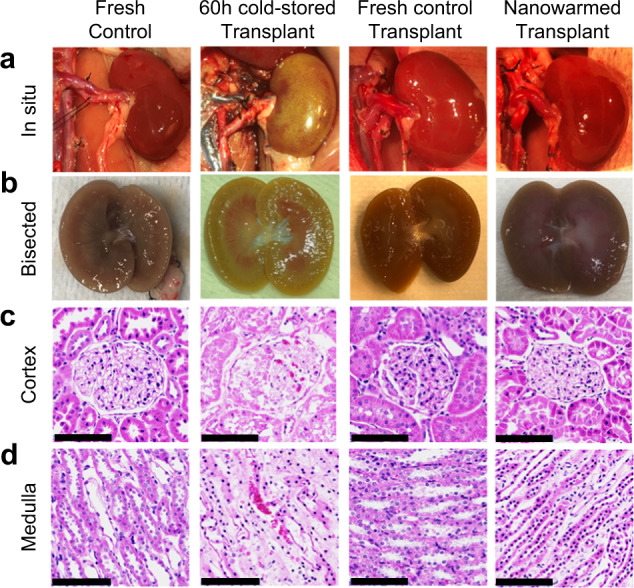
“The 60-h cold stored kidney transplants demonstrated mesangial hypercellularity and diffuse proximal convoluted tubule necrosis with congestion in the glomerulus and tubules in the medulla.”
§ Vitrification and nanowarming enable long-term organ cryopreservation and life-sustaining kidney transplantation in a rat model > Results > Microscopy of nanowarmed and transplanted kidneys
boosted- Asserted: passes — The authors put it forward as true.
- Checkable: passes — It can be checked against evidence.
- Load-bearing: unclear — It is unclear whether the paper’s conclusions depend on it.
- Based: passes — The paper gives a reason why it holds.
A result the paper reports from its own data — it cites no other source for it, so there is none to check. The quote shows it is in the paper.
In the paper
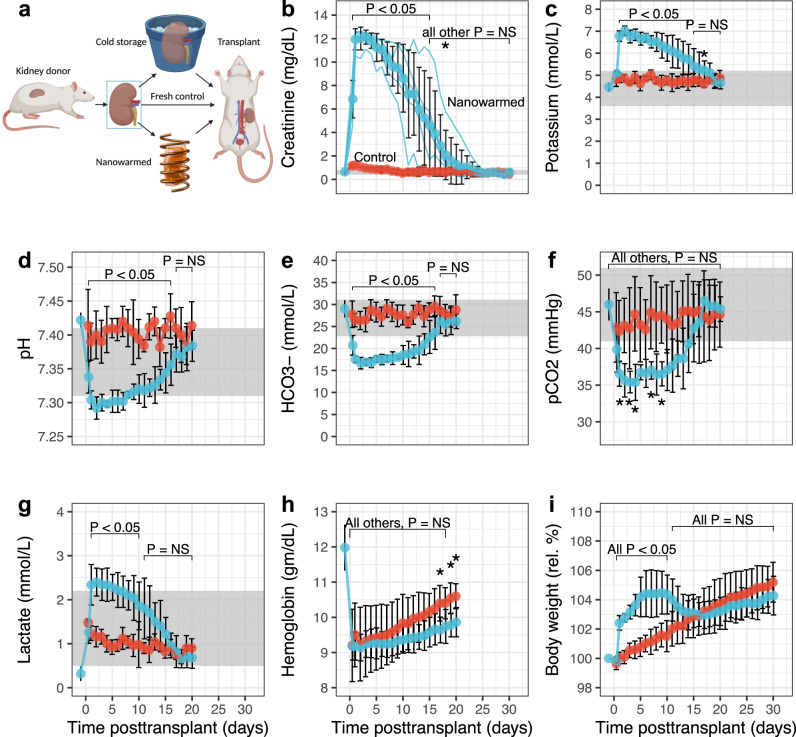
“From day 14 onward, the creatinine in nanowarmed recipients was not statistically different from that in control kidney recipients.”
§ Vitrification and nanowarming enable long-term organ cryopreservation and life-sustaining kidney transplantation in a rat model > Results > Transplantation of nanowarmed kidneys
plain- Asserted: passes — The authors put it forward as true.
- Checkable: passes — It can be checked against evidence.
- Load-bearing: passes — The paper’s conclusions depend on it.
- Based: passes — The paper gives a reason why it holds.
A result the paper reports from its own data — it cites no other source for it, so there is none to check. The quote shows it is in the paper.
In the paper
“We did not observe any vascular thrombosis.”
§ Vitrification and nanowarming enable long-term organ cryopreservation and life-sustaining kidney transplantation in a rat model > Results > Transplantation of nanowarmed kidneys
plainn = 5- Asserted: passes — The authors put it forward as true.
- Checkable: passes — It can be checked against evidence.
- Load-bearing: unclear — It is unclear whether the paper’s conclusions depend on it.
- Based: passes — The paper gives a reason why it holds.
A result the paper reports from its own data — it cites no other source for it, so there is none to check. The quote shows it is in the paper.
In the paper
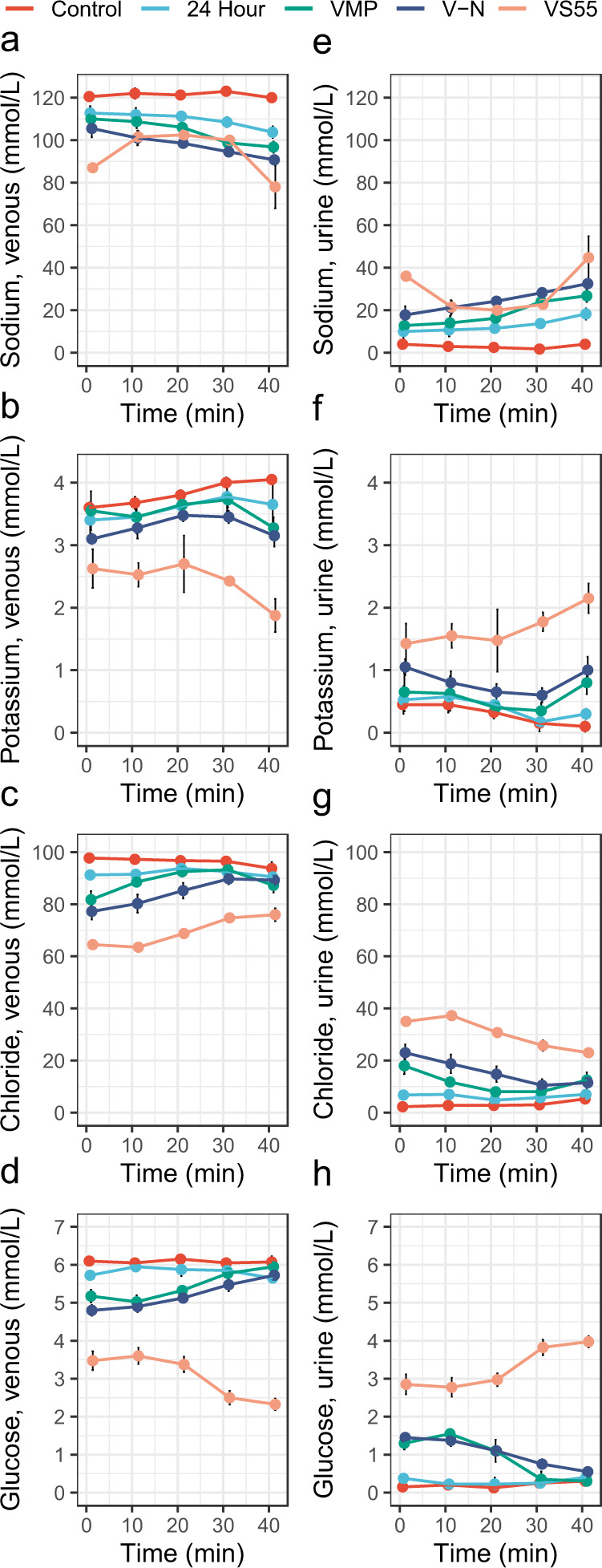
“Nanowarmed kidney urine and venous electrolytes (Na+, K+, Cl−) were very similar to fresh control (Fig. 5).”
§ Vitrification and nanowarming enable long-term organ cryopreservation and life-sustaining kidney transplantation in a rat model > Results > Kidney nanowarming and post-nanowarming assessment
plainn = 4- Asserted: passes — The authors put it forward as true.
- Checkable: passes — It can be checked against evidence.
- Load-bearing: passes — The paper’s conclusions depend on it.
- Based: passes — The paper gives a reason why it holds.
A result the paper reports from its own data — it cites no other source for it, so there is none to check. The quote shows it is in the paper.
In the paper
“whereas we demonstrated stable storage for up to 100 days.”
§ Vitrification and nanowarming enable long-term organ cryopreservation and life-sustaining kidney transplantation in a rat model > Discussion
boosted- Asserted: passes — The authors put it forward as true.
- Checkable: passes — It can be checked against evidence.
- Load-bearing: passes — The paper’s conclusions depend on it.
- Based: passes — The paper gives a reason why it holds.
A result the paper reports from its own data — it cites no other source for it, so there is none to check. The quote shows it is in the paper.
In the paper
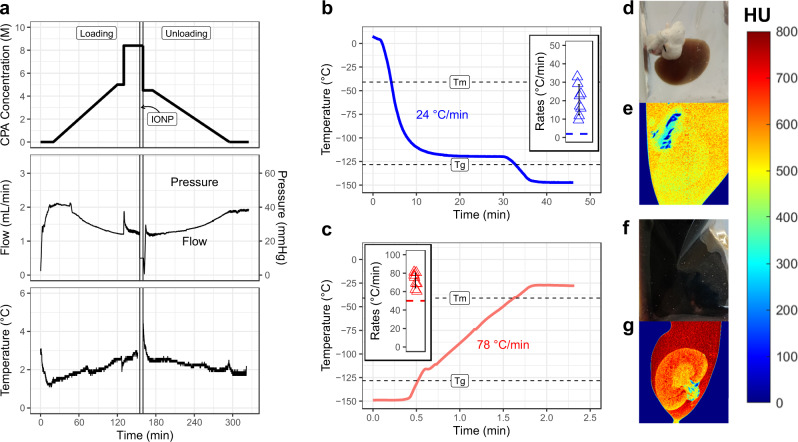
“The solution, cortex, outer medulla, and inner medulla had mean HU values of 768 ± 20, 628 ± 15, 656 ± 20, and 560 ± 18, respectively.”
§ Vitrification and nanowarming enable long-term organ cryopreservation and life-sustaining kidney transplantation in a rat model > Results > CPA loading and kidney vitrification
plain- Asserted: passes — The authors put it forward as true.
- Checkable: passes — It can be checked against evidence.
- Load-bearing: unclear — It is unclear whether the paper’s conclusions depend on it.
- Based: passes — The paper gives a reason why it holds.
A result the paper reports from its own data — it cites no other source for it, so there is none to check. The quote shows it is in the paper.
In the paper
“Fresh control transplants also showed focal tubular necrosis in some areas with some hyaline change but otherwise normal histology.”
§ Vitrification and nanowarming enable long-term organ cryopreservation and life-sustaining kidney transplantation in a rat model > Results > Microscopy of nanowarmed and transplanted kidneys
plain- Asserted: passes — The authors put it forward as true.
- Checkable: passes — It can be checked against evidence.
- Load-bearing: unclear — It is unclear whether the paper’s conclusions depend on it.
- Based: passes — The paper gives a reason why it holds.
A result the paper reports from its own data — it cites no other source for it, so there is none to check. The quote shows it is in the paper.
In the paper
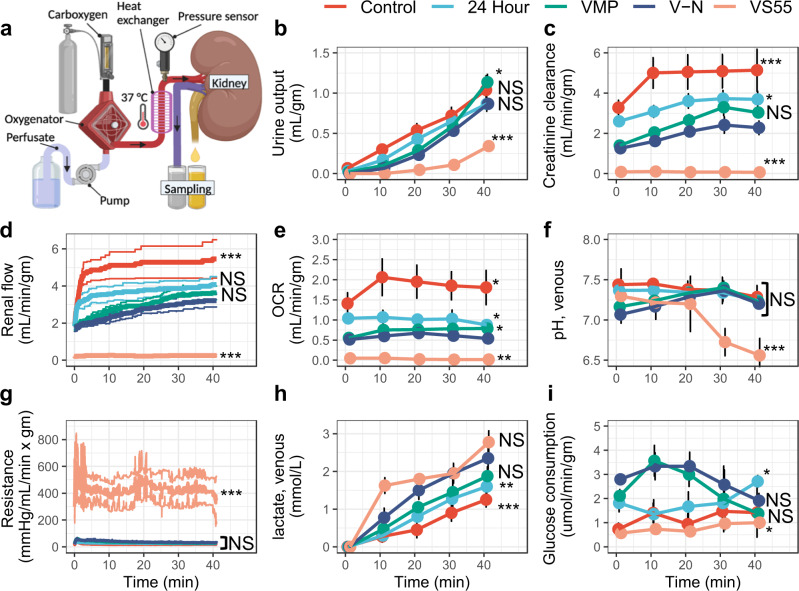
“Additionally, nanowarmed organs consumed oxygen and glucose during machine perfusion (Fig. 4e, i), indicating that they were metabolically active.”
§ Vitrification and nanowarming enable long-term organ cryopreservation and life-sustaining kidney transplantation in a rat model > Results > Kidney nanowarming and post-nanowarming assessment
plain- Asserted: passes — The authors put it forward as true.
- Checkable: passes — It can be checked against evidence.
- Load-bearing: passes — The paper’s conclusions depend on it.
- Based: passes — The paper gives a reason why it holds.
A result the paper reports from its own data — it cites no other source for it, so there is none to check. The quote shows it is in the paper.
In the paper
“Of note, in these transplants there was no correlation of preservation time with peak Cr, time to normalization of Cr to <2.0, or terminal Cr (all P > 0.5, Kendall rank correlation).”
§ Vitrification and nanowarming enable long-term organ cryopreservation and life-sustaining kidney transplantation in a rat model > Results > Transplantation of nanowarmed kidneys
plain- Asserted: passes — The authors put it forward as true.
- Checkable: passes — It can be checked against evidence.
- Load-bearing: passes — The paper’s conclusions depend on it.
- Based: passes — The paper gives a reason why it holds.
A result the paper reports from its own data — it cites no other source for it, so there is none to check. The quote shows it is in the paper.
In the paper
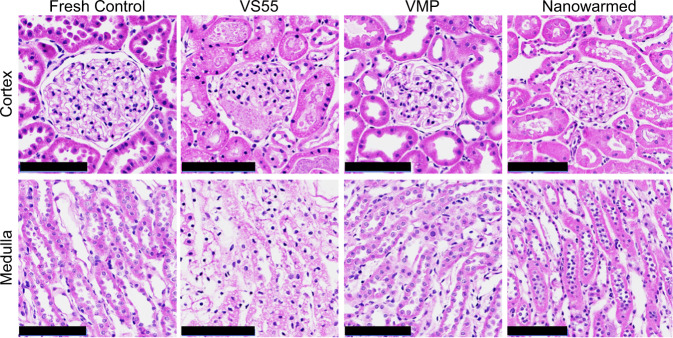
“The histologic appearance confirmed that VMP was less toxic than VS55, further assessed through ex vivo normothermic perfusion as discussed below.”
§ Vitrification and nanowarming enable long-term organ cryopreservation and life-sustaining kidney transplantation in a rat model > Results > CPA loading and kidney vitrification
plaindirectn = 4- Asserted: passes — The authors put it forward as true.
- Checkable: passes — It can be checked against evidence.
- Load-bearing: passes — The paper’s conclusions depend on it.
- Based: passes — The paper gives a reason why it holds.
A result the paper reports from its own data — it cites no other source for it, so there is none to check. The quote shows it is in the paper.
In the paper
“Urine glucose in nanowarmed kidneys normalized to <1 mmol/L, demonstrating an absence of glycosuria (Fig. 5 h).”
§ Vitrification and nanowarming enable long-term organ cryopreservation and life-sustaining kidney transplantation in a rat model > Results > Kidney nanowarming and post-nanowarming assessment
boostedn = 4- Asserted: passes — The authors put it forward as true.
- Checkable: passes — It can be checked against evidence.
- Load-bearing: unclear — It is unclear whether the paper’s conclusions depend on it.
- Based: passes — The paper gives a reason why it holds.
A result the paper reports from its own data — it cites no other source for it, so there is none to check. The quote shows it is in the paper.
In the paper
“Both serum and urine laboratory parameters demonstrated statistically similar, and essentially normal, kidney function in both groups (Tables 1 and 2).”
§ Vitrification and nanowarming enable long-term organ cryopreservation and life-sustaining kidney transplantation in a rat model > Results > Transplantation of nanowarmed kidneys
boosted- Asserted: passes — The authors put it forward as true.
- Checkable: passes — It can be checked against evidence.
- Load-bearing: passes — The paper’s conclusions depend on it.
- Based: passes — The paper gives a reason why it holds.
A result the paper reports from its own data — it cites no other source for it, so there is none to check. The quote shows it is in the paper.
In the paper
“Venous and ureteral effluent CPA concentration at the end of unloading showed near complete CPA washout (Supplementary Data Fig. 2b).”
§ Vitrification and nanowarming enable long-term organ cryopreservation and life-sustaining kidney transplantation in a rat model > Results > Kidney nanowarming and post-nanowarming assessment
plain- Asserted: passes — The authors put it forward as true.
- Checkable: passes — It can be checked against evidence.
- Load-bearing: passes — The paper’s conclusions depend on it.
- Based: passes — The paper gives a reason why it holds.
In the paper
“and reported a single successful rabbit kidney transplant31”
§ Vitrification and nanowarming enable long-term organ cryopreservation and life-sustaining kidney transplantation in a rat model > Discussion
What the sources say
- Not checked — no full text of the sourcecites [31] Fahy, G. M. et al. Physical and biological aspects of renal vitrification. Organogenesis 5, 167–175 (2009). source
plainSingle case- Asserted: passes — The authors put it forward as true.
- Checkable: passes — It can be checked against evidence.
- Load-bearing: unclear — It is unclear whether the paper’s conclusions depend on it.
- Based: passes — The paper gives a reason why it holds.
None of the sources cited for this claim have been checked yet.
In the paper
“We found that CPA damage, not physical injury from vitrification and nanowarming, was the limiting step for biologic and functional recovery.”
§ Vitrification and nanowarming enable long-term organ cryopreservation and life-sustaining kidney transplantation in a rat model > Introduction
What the sources say
- Not checked yetcites [17] Gao, Z. et al. Vitrification and rewarming of magnetic nanoparticle‐loaded rat hearts. Adv. Mater. Technol. 7, 2100873 (2021). source
Checked before — its earlier verdict is held back until a new check runs.
- Not matchedcites [18] Sharma, A. et al. Vitrification and Nanowarming of Kidneys. Adv. Sci. (Weinh.) 8, e2101691 (2021).
Couldn’t be matched to a paper in Crossref, so it can’t be checked.
- Not checked yetcites [19] Sharma, A. et al. Cryopreservation of whole rat livers by vitrification and nanowarming. Ann. Biomed. Eng. 51, 566–577 (2022). source
Checked before — its earlier verdict is held back until a new check runs.
- Not checked yetcites [20] Chiu-Lam, A., Staples, E., Pepine, C. J. & Rinaldi, C. Perfusion, cryopreservation, and nanowarming of whole hearts using colloidally stable magnetic cryopreservation agent solutions. Sci. Adv. 7, eabe3005 (2021). source
Checked before — its earlier verdict is held back until a new check runs.
plaindirect- Asserted: passes — The authors put it forward as true.
- Checkable: passes — It can be checked against evidence.
- Load-bearing: passes — The paper’s conclusions depend on it.
- Based: passes — The paper gives a reason why it holds.
- Not checked yet
A conclusion the paper draws from its own results — it cites no other source for it, so there is none to check. The quote shows it is in the paper.
In the paper
“Thus, nanowarming is intrinsically scalable to human-sized organs for clinical translation.”
§ Vitrification and nanowarming enable long-term organ cryopreservation and life-sustaining kidney transplantation in a rat model > Introduction
plaindirect- Asserted: passes — The authors put it forward as true.
- Checkable: passes — It can be checked against evidence.
- Load-bearing: passes — The paper’s conclusions depend on it.
- Based: passes — The paper gives a reason why it holds.
- Rests on an assumption: Perfusion within capillaries allows sufficiently uniform delivery of CPAs and IONPs regardless of organ size.
A conclusion the paper draws from its own results — it cites no other source for it, so there is none to check. The quote shows it is in the paper.
In the paper
“These data demonstrated physiologic renal recovery.”
§ Vitrification and nanowarming enable long-term organ cryopreservation and life-sustaining kidney transplantation in a rat model > Discussion
boosted- Asserted: passes — The authors put it forward as true.
- Checkable: passes — It can be checked against evidence.
- Load-bearing: passes — The paper’s conclusions depend on it.
- Based: passes — The paper gives a reason why it holds.
A claim is checked only against the cited paper’s full text, never its abstract, and none is available for its sources.
In the paper
“For example, microwave rewarming leads to thermal hotspots from limited tissue penetration and standing wave formation34,35.”
§ Vitrification and nanowarming enable long-term organ cryopreservation and life-sustaining kidney transplantation in a rat model > Discussion
What the sources say
- Not checked — no full text of the sourcecites [34] Ecker, H. A., Burdette, E. C. & Cain, F. L. Simultaneous microwave and HF thawing of cryogenically preserved canine kidneys. In Proc IEEE 1976 International Symposium on Electromagnetic Compatibility, 1–5 https://ieeexplore.ieee.org/abstract/document/7568728 (1976). source
- Not checked — no full text of the sourcecites [35] Burdette, E. C., Karow, A. M. & Jeske, A. H. Design, development, and performance of an electromagnetic illumination system for thawing cryopreserved kidneys of rabbits and dogs. Cryobiology 15, 152–167 (1978). source
plaindirect- Asserted: passes — The authors put it forward as true.
- Checkable: passes — It can be checked against evidence.
- Load-bearing: unclear — It is unclear whether the paper’s conclusions depend on it.
- Based: passes — The paper gives a reason why it holds.
A conclusion the paper draws from its own results — it cites no other source for it, so there is none to check. The quote shows it is in the paper.
In the paper
“Altogether, we infer that (1) fresh control transplants in rats are analogous to living donor transplants in humans (best outcomes), (2) 24-h cold stored kidneys are similar to standard criteria deceased donor transplants, and (3) 60-h cold stored kidneys are at the limits of expanded criteria transplants.”
§ Vitrification and nanowarming enable long-term organ cryopreservation and life-sustaining kidney transplantation in a rat model > Discussion
hedged- Asserted: passes — The authors put it forward as true.
- Checkable: passes — It can be checked against evidence.
- Load-bearing: passes — The paper’s conclusions depend on it.
- Based: passes — The paper gives a reason why it holds.
In the paper
“Additionally, their single surviving rabbit kidney transplant was vitrified for only 8 min prior to rewarming”
§ Vitrification and nanowarming enable long-term organ cryopreservation and life-sustaining kidney transplantation in a rat model > Discussion
What the sources say
- Not checked — no full text of the sourcecites [31] Fahy, G. M. et al. Physical and biological aspects of renal vitrification. Organogenesis 5, 167–175 (2009). source
plainSingle case- Asserted: passes — The authors put it forward as true.
- Checkable: passes — It can be checked against evidence.
- Load-bearing: unclear — It is unclear whether the paper’s conclusions depend on it.
- Based: passes — The paper gives a reason why it holds.
A conclusion the paper draws from its own results — it cites no other source for it, so there is none to check. The quote shows it is in the paper.
In the paper
“Altogether, we infer that (1) fresh control transplants in rats are analogous to living donor transplants in humans (best outcomes), (2) 24-h cold stored kidneys are similar to standard criteria deceased donor transplants, and (3) 60-h cold stored kidneys are at the limits of expanded criteria transplants.”
§ Vitrification and nanowarming enable long-term organ cryopreservation and life-sustaining kidney transplantation in a rat model > Discussion
hedged- Asserted: passes — The authors put it forward as true.
- Checkable: passes — It can be checked against evidence.
- Load-bearing: passes — The paper’s conclusions depend on it.
- Based: passes — The paper gives a reason why it holds.
A conclusion the paper draws from its own results — it cites no other source for it, so there is none to check. The quote shows it is in the paper.
In the paper
“Altogether, we infer that (1) fresh control transplants in rats are analogous to living donor transplants in humans (best outcomes), (2) 24-h cold stored kidneys are similar to standard criteria deceased donor transplants, and (3) 60-h cold stored kidneys are at the limits of expanded criteria transplants.”
§ Vitrification and nanowarming enable long-term organ cryopreservation and life-sustaining kidney transplantation in a rat model > Discussion
hedgedcorrelational- Asserted: passes — The authors put it forward as true.
- Checkable: passes — It can be checked against evidence.
- Load-bearing: passes — The paper’s conclusions depend on it.
- Based: unclear — It is unclear why the paper says it holds.
None of the sources cited for this claim have been checked yet.
In the paper
“Other methods for warming cryopreserved organs have been attempted, but with limited success.”
§ Vitrification and nanowarming enable long-term organ cryopreservation and life-sustaining kidney transplantation in a rat model > Discussion
What the sources say
- Not checked — no full text of the sourcecites [32] Wusteman, M., Robinson, M. & Pegg, D. Vitrification of large tissues with dielectric warming: biological problems and some approaches to their solution. Cryobiology 48, 179–189 (2004). source
- Not checked yetcites [33] Robinson, M., Wusteman, M., Wang, L. & Pegg, D. Electrmagnetic re-warming of cryopreserved tissues: effect of choice of cryoprotectant and sample shade of uniformity of heating. Phys. Med. Biol. 47, 2311–2325 (2002). source
Checked before — its earlier verdict is held back until a new check runs.
- Not checked — no full text of the sourcecites [34] Ecker, H. A., Burdette, E. C. & Cain, F. L. Simultaneous microwave and HF thawing of cryogenically preserved canine kidneys. In Proc IEEE 1976 International Symposium on Electromagnetic Compatibility, 1–5 https://ieeexplore.ieee.org/abstract/document/7568728 (1976). source
plain- Asserted: passes — The authors put it forward as true.
- Checkable: passes — It can be checked against evidence.
- Load-bearing: passes — The paper’s conclusions depend on it.
- Based: passes — The paper gives a reason why it holds.
A conclusion the paper draws from its own results — it cites no other source for it, so there is none to check. The quote shows it is in the paper.
In the paper
“Here we show the first repeatable approach for successful cryopreservation of intact organs (rat kidneys) for up to 100 days prior to transplantation.”
§ Vitrification and nanowarming enable long-term organ cryopreservation and life-sustaining kidney transplantation in a rat model > Discussion
plaindirect- Asserted: passes — The authors put it forward as true.
- Checkable: passes — It can be checked against evidence.
- Load-bearing: passes — The paper’s conclusions depend on it.
- Based: passes — The paper gives a reason why it holds.
None of the sources cited for this claim have been checked yet.
In the paper
“Notably, nanowarming rates are not dependent on system size or boundary conditions since the RF frequencies used penetrate tissues without attenuation14–16.”
§ Vitrification and nanowarming enable long-term organ cryopreservation and life-sustaining kidney transplantation in a rat model > Introduction
What the sources say
- Not checked yetcites [14] Manuchehrabadi, N. et al. Improved tissue cryopreservation using inductive heating of magnetic nanoparticles. Sci. Transl. Med. 9, eaah4586 (2017). source
Checked before — its earlier verdict is held back until a new check runs.
- Not checked — no full text of the sourcecites [15] Etheridge, M. L. et al. RF heating of magnetic nanoparticles improves the thawing of cryopreserved biomaterials. Technology 02, 229–242 (2014). source
- Not checked yetcites [16] Etheridge, M. L. et al. Accounting for biological aggregation in heating and imaging of magnetic nanoparticles. Technology (Singap. World Sci.) 2, 214–228 (2014). source
Checked before — its earlier verdict is held back until a new check runs.
plain- Asserted: passes — The authors put it forward as true.
- Checkable: passes — It can be checked against evidence.
- Load-bearing: passes — The paper’s conclusions depend on it.
- Based: passes — The paper gives a reason why it holds.
- Not checked yet
None of the sources cited for this claim have been checked yet.
In the paper
“These approaches have failed to produce adequately rapid and uniform rewarming due to variations in the material dielectric properties, attenuation of the higher frequency fields (e.g., caused by skin depth), and the shape of the sample33.”
§ Vitrification and nanowarming enable long-term organ cryopreservation and life-sustaining kidney transplantation in a rat model > Discussion
What the sources say
- Not checked yetcites [33] Robinson, M., Wusteman, M., Wang, L. & Pegg, D. Electrmagnetic re-warming of cryopreserved tissues: effect of choice of cryoprotectant and sample shade of uniformity of heating. Phys. Med. Biol. 47, 2311–2325 (2002). source
Checked before — its earlier verdict is held back until a new check runs.
plaindirect- Asserted: passes — The authors put it forward as true.
- Checkable: passes — It can be checked against evidence.
- Load-bearing: passes — The paper’s conclusions depend on it.
- Based: passes — The paper gives a reason why it holds.
- Not checked yet
None of the sources cited for this claim have been checked yet.
In the paper
“These and other studies also demonstrated that injury from ice crystallization during freezing limited success, especially in larger systems4–9.”
§ Vitrification and nanowarming enable long-term organ cryopreservation and life-sustaining kidney transplantation in a rat model > Introduction
What the sources say
- Not checked — no full text of the sourcecites [4] Mazur, P. Cryobiology: the freezing of biological systems. Science 168, 939–949 (1970). source
- Not checked — no full text of the sourcecites [5] Mazur, P. Slow-freezing injury in mammalian cells. In The Freezing of Mammalian Embryos, Vol. 52, 19–48 (Elsevier, Amsterdam, 1977). source
- Not checked yetcites [6] Mazur, P. Freezing of living cells: mechanisms and implications. Am. J. Physiol. 247, C125–C142 (1984). source
Checked before — its earlier verdict is held back until a new check runs.
- Not checked — no full text of the sourcecites [7] Meryman, H. T. Mechanics of freezing in living cells and tissues. Science 124, 515–521 (1956). source
- Not checked — no full text of the sourcecites [8] Meryman, H. T. Modified model for the mechanism of freezing injury in erythrocytes. Nature 218, 333–336 (1968). source
- Not checked — no full text of the sourcecites [9] Farrant, J. Mechanism of cell damage during freezing and thawing and its prevention. Nature 205, 1284–1287 (1965). source
boosteddirect- Asserted: passes — The authors put it forward as true.
- Checkable: passes — It can be checked against evidence.
- Load-bearing: passes — The paper’s conclusions depend on it.
- Based: passes — The paper gives a reason why it holds.
A conclusion the paper draws from its own results — it cites no other source for it, so there is none to check. The quote shows it is in the paper.
In the paper
“Additionally, nanowarmed organs consumed oxygen and glucose during machine perfusion (Fig. 4e, i), indicating that they were metabolically active.”
§ Vitrification and nanowarming enable long-term organ cryopreservation and life-sustaining kidney transplantation in a rat model > Results > Kidney nanowarming and post-nanowarming assessment
hedgeddirect- Asserted: passes — The authors put it forward as true.
- Checkable: passes — It can be checked against evidence.
- Load-bearing: passes — The paper’s conclusions depend on it.
- Based: passes — The paper gives a reason why it holds.
What the paper did — it cites no source for this, so there is none to check. The quote shows it is in the paper.
In the paper
“Second, we only studied organ storage for up to 100 days.”
§ Vitrification and nanowarming enable long-term organ cryopreservation and life-sustaining kidney transplantation in a rat model > Discussion
plain- Asserted: passes — The authors put it forward as true.
- Checkable: passes — It can be checked against evidence.
- Load-bearing: unclear — It is unclear whether the paper’s conclusions depend on it.
- Based: passes — The paper gives a reason why it holds.
A conclusion the paper draws from its own results — it cites no other source for it, so there is none to check. The quote shows it is in the paper.
In the paper
“Further, we can predict that their convective rewarming approach will be insufficient for human-sized organs.”
§ Vitrification and nanowarming enable long-term organ cryopreservation and life-sustaining kidney transplantation in a rat model > Discussion
plaindirect- Asserted: passes — The authors put it forward as true.
- Checkable: passes — It can be checked against evidence.
- Load-bearing: passes — The paper’s conclusions depend on it.
- Based: passes — The paper gives a reason why it holds.
None of the sources cited for this claim have been checked yet.
In the paper
“The critical warming rates (CWR) needed to avoid ice crystallization during rewarming are typically an order of magnitude higher (10–1000 s °C/min) than the required critical cooling rates (CCR) (1–100 s °C/min), even with the aid of CPAs12,13.”
§ Vitrification and nanowarming enable long-term organ cryopreservation and life-sustaining kidney transplantation in a rat model > Introduction
What the sources say
- Not checked — no full text of the sourcecites [12] Karow, A. M. Jr. Cryoprotectants–a new class of drugs. J. Pharm. Pharmacol. 21, 209–223 (1969). source
- Not checked yetcites [13] Elliott, G. D., Wang, S. & Fuller, B. J. Cryoprotectants: a review of the actions and applications of cryoprotective solutes that modulate cell recovery from ultra-low temperatures. Cryobiology 76, 74–91 (2017). source
Checked before — its earlier verdict is held back until a new check runs.
plaincorrelational- Asserted: passes — The authors put it forward as true.
- Checkable: passes — It can be checked against evidence.
- Load-bearing: passes — The paper’s conclusions depend on it.
- Based: passes — The paper gives a reason why it holds.
The paper states this without a source or data behind it here, so there is nothing to check it against. The quote shows it is in the paper.
In the paper
“Their studies were critical for proof-of-concept, but they were limited by their rewarming technique (convective warming on the organ surface), which was unable to reproducibly achieve the needed rates or homogeneity of heating required.”
§ Vitrification and nanowarming enable long-term organ cryopreservation and life-sustaining kidney transplantation in a rat model > Discussion
plaindirect- Asserted: passes — The authors put it forward as true.
- Checkable: passes — It can be checked against evidence.
- Load-bearing: passes — The paper’s conclusions depend on it.
- Based: passes — The paper gives a reason why it holds.
A conclusion the paper draws from its own results — it cites no other source for it, so there is none to check. The quote shows it is in the paper.
In the paper
“These results show that prolonged organ banking for transplantation may finally be possible.”
§ Vitrification and nanowarming enable long-term organ cryopreservation and life-sustaining kidney transplantation in a rat model > Discussion
hedgedconditional- Asserted: passes — The authors put it forward as true.
- Checkable: passes — It can be checked against evidence.
- Load-bearing: passes — The paper’s conclusions depend on it.
- Based: passes — The paper gives a reason why it holds.
A conclusion the paper draws from its own results — it cites no other source for it, so there is none to check. The quote shows it is in the paper.
In the paper
“The absence of glycosuria, hematuria, or proteinuria also supported the lack of renal damage.”
§ Vitrification and nanowarming enable long-term organ cryopreservation and life-sustaining kidney transplantation in a rat model > Discussion
plaincorrelational- Asserted: passes — The authors put it forward as true.
- Checkable: passes — It can be checked against evidence.
- Load-bearing: passes — The paper’s conclusions depend on it.
- Based: passes — The paper gives a reason why it holds.
- Probably not a substantial claim. 27
- It may state two separate claims as one. 54
The sources with a verdict support this claim; the rest weren’t checked yet, have no full text we could read, or their verdicts aren’t rated yet.
In the paper
“Further, a range of other technologies are in use or are being studied to prolong preservation times for kidneys and other organs, including hypothermic machine perfusion37, normothermic machine perfusion25, subnormothermic machine perfusion38, high subzero supercooling39,40, and partial freezing41.”
§ Vitrification and nanowarming enable long-term organ cryopreservation and life-sustaining kidney transplantation in a rat model > Discussion
What the sources say
- Not checked — no full text of the sourcecites [37] Moers, C. et al. Machine perfusion or cold storage in deceased-donor kidney transplantation. N. Engl. J. Med 360, 7–19 (2009). source
- Supportedcites [25] Nasralla, D. et al. A randomized trial of normothermic preservation in liver transplantation. Nature 557, 50–56 (2018). source
The citation is attached specifically to normothermic machine perfusion, not to the other technologies in the list. The Study design section describes a normothermic liver perfusion device that enables preservation for up to 24 hours, and the Discussion reports longer preservation times with NMP. (LLM, conf=0.94)
- Supportedcites [38] Bruinsma, B. G. et al. Subnormothermic machine perfusion for ex vivo preservation and recovery of the human liver for transplantation. Am. J. Transplant. 14, 1400–1409 (2014). source
Citation 38 is attached specifically to subnormothermic machine perfusion. The Discussion identifies this study as an investigation of that technology for ex vivo preservation and recovery of human livers; it is not being cited for the other technologies in the sentence. (LLM, conf=0.93)
plaindirect- Asserted: passes — The authors put it forward as true.
- Checkable: passes — It can be checked against evidence.
- Load-bearing: fails — The paper’s conclusions may not depend on it.
- Based: passes — The paper gives a reason why it holds.
Probably not a substantial claim. The paper’s conclusions may not depend on it.
A result the paper reports from its own data — it cites no other source for it, so there is none to check. The quote shows it is in the paper.
In the paper
“Intraoperatively, all nanowarmed kidneys reperfused rapidly and homogeneously upon restoration of blood flow and appeared similar to fresh control organ transplants (Fig. 6).”
§ Vitrification and nanowarming enable long-term organ cryopreservation and life-sustaining kidney transplantation in a rat model > Results > Transplantation of nanowarmed kidneys
plain- Asserted: passes — The authors put it forward as true.
- Checkable: passes — It can be checked against evidence.
- Load-bearing: passes — The paper’s conclusions depend on it.
- Based: passes — The paper gives a reason why it holds.
It may state two separate claims as one.
A result the paper reports from its own data — it cites no other source for it, so there is none to check. The quote shows it is in the paper.
In the paper
“In the transplant experiments, nanowarmed kidneys had higher peak creatinine and took longer to achieve normal levels than fresh control transplants, but both groups performed much better than 60-h cold stored ones.”
§ Vitrification and nanowarming enable long-term organ cryopreservation and life-sustaining kidney transplantation in a rat model > Discussion
plaindirect- Asserted: passes — The authors put it forward as true.
- Checkable: passes — It can be checked against evidence.
- Load-bearing: passes — The paper’s conclusions depend on it.
- Based: passes — The paper gives a reason why it holds.
It may state two separate claims as one.
A result the paper reports from its own data — it cites no other source for it, so there is none to check. The quote shows it is in the paper.
In the paper
“Histologically, nanowarmed kidneys appeared similar to VMP-only treated ones and much better than VS55-only (Fig. 3).”
§ Vitrification and nanowarming enable long-term organ cryopreservation and life-sustaining kidney transplantation in a rat model > Results > Kidney nanowarming and post-nanowarming assessment
hedged- Asserted: passes — The authors put it forward as true.
- Checkable: passes — It can be checked against evidence.
- Load-bearing: passes — The paper’s conclusions depend on it.
- Based: passes — The paper gives a reason why it holds.
It may state two separate claims as one.
A result the paper reports from its own data — it cites no other source for it, so there is none to check. The quote shows it is in the paper.
In the paper
“After an initial drop in hemoglobin in both groups due to surgical blood loss, hemoglobin rose steadily in the postop period, suggesting intact renal erythropoietin production and/or potentially hemoconcentration (Fig. 7h).”
§ Vitrification and nanowarming enable long-term organ cryopreservation and life-sustaining kidney transplantation in a rat model > Results > Transplantation of nanowarmed kidneys
hedgedconditional- Asserted: passes — The authors put it forward as true.
- Checkable: passes — It can be checked against evidence.
- Load-bearing: fails — The paper’s conclusions may not depend on it.
- Based: passes — The paper gives a reason why it holds.
Probably not a substantial claim. The paper’s conclusions may not depend on it. It may state two separate claims as one.
A result the paper reports from its own data — it cites no other source for it, so there is none to check. The quote shows it is in the paper.
In the paper
“The 60-h cold stored kidney reperfused poorly with patchy ecchymosis over the surface and hilar congestion (Fig. 6). Failing to make urine, the rat was euthanized, and the gross appearance of the bisected kidney demonstrated congested medulla and ecchymosis in the cortex.”
§ Vitrification and nanowarming enable long-term organ cryopreservation and life-sustaining kidney transplantation in a rat model > Results > Transplantation of nanowarmed kidneys
plainSingle case- Asserted: passes — The authors put it forward as true.
- Checkable: passes — It can be checked against evidence.
- Load-bearing: passes — The paper’s conclusions depend on it.
- Based: passes — The paper gives a reason why it holds.
It may state two separate claims as one.
A result the paper reports from its own data — it cites no other source for it, so there is none to check. The quote shows it is in the paper.
In the paper
“VMP-only treated kidneys (loading and unloading only but no nanoparticles or vitrification) were histologically similar to fresh control kidneys and much better than those treated with the prior CPA, VS55 (Fig. 3).”
§ Vitrification and nanowarming enable long-term organ cryopreservation and life-sustaining kidney transplantation in a rat model > Results > CPA loading and kidney vitrification
plainn = 4- Asserted: passes — The authors put it forward as true.
- Checkable: passes — It can be checked against evidence.
- Load-bearing: passes — The paper’s conclusions depend on it.
- Based: passes — The paper gives a reason why it holds.
It may state two separate claims as one.
A result the paper reports from its own data — it cites no other source for it, so there is none to check. The quote shows it is in the paper.
In the paper
“Creatinine clearance, a measure of overall renal function, was slightly reduced compared to fresh control and cold-stored kidneys, but similar to VMP-only (Fig. 4c).”
§ Vitrification and nanowarming enable long-term organ cryopreservation and life-sustaining kidney transplantation in a rat model > Results > Kidney nanowarming and post-nanowarming assessment
plainn = 4- Asserted: passes — The authors put it forward as true.
- Checkable: passes — It can be checked against evidence.
- Load-bearing: passes — The paper’s conclusions depend on it.
- Based: passes — The paper gives a reason why it holds.
It may state two separate claims as one.
A result the paper reports from its own data — it cites no other source for it, so there is none to check. The quote shows it is in the paper.
In the paper
“The kidney extravascular space had a mean radiodensity of 507 ± 30 Hounsfield Units (HU), while the adherent fat outside the kidney was 267 ± 104 HU.”
§ Vitrification and nanowarming enable long-term organ cryopreservation and life-sustaining kidney transplantation in a rat model > Results > CPA loading and kidney vitrification
plain- Asserted: passes — The authors put it forward as true.
- Checkable: passes — It can be checked against evidence.
- Load-bearing: passes — The paper’s conclusions depend on it.
- Based: passes — The paper gives a reason why it holds.
It may state two separate claims as one.
A result the paper reports from its own data — it cites no other source for it, so there is none to check. The quote shows it is in the paper.
In the paper
“And finally, while the organs eventually recovered fully, they experienced a period of 2–3 weeks of initial graft dysfunction”
§ Vitrification and nanowarming enable long-term organ cryopreservation and life-sustaining kidney transplantation in a rat model > Discussion
plain- Asserted: passes — The authors put it forward as true.
- Checkable: passes — It can be checked against evidence.
- Load-bearing: unclear — It is unclear whether the paper’s conclusions depend on it.
- Based: passes — The paper gives a reason why it holds.
It may state two separate claims as one.
None of the sources cited for this claim have been checked yet.
In the paper
“The estimated glomerular filtration rate (eGFR) for nanowarmed kidney recipients was 2.2 ± 0.8 mL/min, which was not statistically different from control kidney transplant recipients (2.7 ± 0.7 mL/min, P = 0.421) and in the range for normal rats (median: 1.5 mL/min, interquartile range: 1.0–2.2 mL/min28).”
§ Vitrification and nanowarming enable long-term organ cryopreservation and life-sustaining kidney transplantation in a rat model > Results > Transplantation of nanowarmed kidneys
What the sources say
- Not checked yetcites [28] Besseling, P. J. et al. A plasma creatinine- and urea-based equation to estimate glomerular filtration rate in rats. Am. J. Physiol. Ren. Physiol. 320, F518–f524 (2021). source
Checked before — its earlier verdict is held back until a new check runs.
plain- Asserted: passes — The authors put it forward as true.
- Checkable: passes — It can be checked against evidence.
- Load-bearing: passes — The paper’s conclusions depend on it.
- Based: passes — The paper gives a reason why it holds.
It may state two separate claims as one.
- Not checked yet
A result the paper reports from its own data — it cites no other source for it, so there is none to check. The quote shows it is in the paper.
In the paper
“Nanowarmed kidneys made urine immediately upon perfusion (Fig. 4b) and at rates that were not statistically different than fresh control or cold-stored kidneys and very similar to VMP-only treated organs, but much better than VS55-only.”
§ Vitrification and nanowarming enable long-term organ cryopreservation and life-sustaining kidney transplantation in a rat model > Results > Kidney nanowarming and post-nanowarming assessment
plainn = 4- Asserted: passes — The authors put it forward as true.
- Checkable: passes — It can be checked against evidence.
- Load-bearing: passes — The paper’s conclusions depend on it.
- Based: passes — The paper gives a reason why it holds.
It may state two separate claims as one.
A result the paper reports from its own data — it cites no other source for it, so there is none to check. The quote shows it is in the paper.
In the paper
“Postoperatively, all fresh control and nanowarmed kidney transplants continued to produce urine, and all animals survived for the full 30-day study period.”
§ Vitrification and nanowarming enable long-term organ cryopreservation and life-sustaining kidney transplantation in a rat model > Results > Transplantation of nanowarmed kidneys
plain- Asserted: passes — The authors put it forward as true.
- Checkable: passes — It can be checked against evidence.
- Load-bearing: passes — The paper’s conclusions depend on it.
- Based: passes — The paper gives a reason why it holds.
It may state two separate claims as one.
A result the paper reports from its own data — it cites no other source for it, so there is none to check. The quote shows it is in the paper.
In the paper
“The measured warming rate adjacent to the kidney was 72.0 ± 8.0 °C/min (Fig. 2c), which is faster than the ~50 °C/min CWR of VMP in kidney tissue (Supplementary Methods).”
§ Vitrification and nanowarming enable long-term organ cryopreservation and life-sustaining kidney transplantation in a rat model > Results > Kidney nanowarming and post-nanowarming assessment
plain- Asserted: passes — The authors put it forward as true.
- Checkable: passes — It can be checked against evidence.
- Load-bearing: passes — The paper’s conclusions depend on it.
- Based: passes — The paper gives a reason why it holds.
It may state two separate claims as one.
None of the sources cited for this claim have been checked yet.
In the paper
“No extra “white space” was seen within the extravascular space of the nanowarmed kidneys, which would have been seen if ice had formed during the process14.”
§ Vitrification and nanowarming enable long-term organ cryopreservation and life-sustaining kidney transplantation in a rat model > Results > Kidney nanowarming and post-nanowarming assessment
What the sources say
- Not checked yetcites [14] Manuchehrabadi, N. et al. Improved tissue cryopreservation using inductive heating of magnetic nanoparticles. Sci. Transl. Med. 9, eaah4586 (2017). source
Checked before — its earlier verdict is held back until a new check runs.
plain- Asserted: passes — The authors put it forward as true.
- Checkable: passes — It can be checked against evidence.
- Load-bearing: passes — The paper’s conclusions depend on it.
- Based: passes — The paper gives a reason why it holds.
It may state two separate claims as one.
- Not checked yet
A result the paper reports from its own data — it cites no other source for it, so there is none to check. The quote shows it is in the paper.
In the paper
“Normal liver function tests and creatinine kinase levels suggested a lack of systemic toxicity, but there was a mild elevation in serum amylase in the nanowarmed organ recipients.”
§ Vitrification and nanowarming enable long-term organ cryopreservation and life-sustaining kidney transplantation in a rat model > Results > Transplantation of nanowarmed kidneys
hedged- Asserted: passes — The authors put it forward as true.
- Checkable: passes — It can be checked against evidence.
- Load-bearing: unclear — It is unclear whether the paper’s conclusions depend on it.
- Based: passes — The paper gives a reason why it holds.
It may state two separate claims as one.
A result the paper reports from its own data — it cites no other source for it, so there is none to check. The quote shows it is in the paper.
In the paper
“Initially, the venous pH of nanowarmed kidneys was somewhat acidic, suggesting anaerobic metabolism, but the pH normalized by 20 min of NMP (Fig. 4f).”
§ Vitrification and nanowarming enable long-term organ cryopreservation and life-sustaining kidney transplantation in a rat model > Results > Kidney nanowarming and post-nanowarming assessment
hedgeddirect- Asserted: passes — The authors put it forward as true.
- Checkable: passes — It can be checked against evidence.
- Load-bearing: unclear — It is unclear whether the paper’s conclusions depend on it.
- Based: passes — The paper gives a reason why it holds.
It may state two separate claims as one.
None of the sources cited for this claim have been checked yet.
In the paper
“Venous lactate, which correlates with organ quality in perfused organ systems25,26, rose slowly for all groups, but the differences between groups were minor (Fig. 4h).”
§ Vitrification and nanowarming enable long-term organ cryopreservation and life-sustaining kidney transplantation in a rat model > Results > Kidney nanowarming and post-nanowarming assessment
What the sources say
- Not checked yetcites [25] Nasralla, D. et al. A randomized trial of normothermic preservation in liver transplantation. Nature 557, 50–56 (2018). source
Checked before — its earlier verdict is held back until a new check runs.
- Not checked — no full text of the sourcecites [26] Dhital, K. K. et al. Adult heart transplantation with distant procurement and ex-vivo preservation of donor hearts after circulatory death: a case series. Lancet 385, 2585–2591 (2015). source
plain- Asserted: passes — The authors put it forward as true.
- Checkable: passes — It can be checked against evidence.
- Load-bearing: fails — The paper’s conclusions may not depend on it.
- Based: passes — The paper gives a reason why it holds.
Probably not a substantial claim. The paper’s conclusions may not depend on it. It may state two separate claims as one.
- Not checked yet
A result the paper reports from its own data — it cites no other source for it, so there is none to check. The quote shows it is in the paper.
In the paper
“In contrast, VS55-only treated kidneys demonstrated increased Bowman’s space, diffuse tubular necrosis, and hyaline changes (but with no vascular compromise).”
§ Vitrification and nanowarming enable long-term organ cryopreservation and life-sustaining kidney transplantation in a rat model > Results > CPA loading and kidney vitrification
plaindirectn = 3- Asserted: passes — The authors put it forward as true.
- Checkable: passes — It can be checked against evidence.
- Load-bearing: unclear — It is unclear whether the paper’s conclusions depend on it.
- Based: passes — The paper gives a reason why it holds.
It may state two separate claims as one.
A result the paper reports from its own data — it cites no other source for it, so there is none to check. The quote shows it is in the paper.
In the paper
“In this study, we found an initial period of nanowarmed kidney graft dysfunction lasting 2–3 weeks, following which renal function normalized in all nanowarmed kidney transplant recipients.”
§ Vitrification and nanowarming enable long-term organ cryopreservation and life-sustaining kidney transplantation in a rat model > Discussion
plain- Asserted: passes — The authors put it forward as true.
- Checkable: passes — It can be checked against evidence.
- Load-bearing: passes — The paper’s conclusions depend on it.
- Based: passes — The paper gives a reason why it holds.
It may state two separate claims as one.
A result the paper reports from its own data — it cites no other source for it, so there is none to check. The quote shows it is in the paper.
In the paper
“Histologic examination of transplanted nanowarmed kidneys demonstrated some focal tubular necrosis and hyaline change but intact basement membranes and vasculature (Fig. 6c, d). Microthrombi and infarcts were absent.”
§ Vitrification and nanowarming enable long-term organ cryopreservation and life-sustaining kidney transplantation in a rat model > Results > Microscopy of nanowarmed and transplanted kidneys
boosted- Asserted: passes — The authors put it forward as true.
- Checkable: passes — It can be checked against evidence.
- Load-bearing: passes — The paper’s conclusions depend on it.
- Based: passes — The paper gives a reason why it holds.
It may state two separate claims as one.
A result the paper reports from its own data — it cites no other source for it, so there is none to check. The quote shows it is in the paper.
In the paper
“Nanowarmed organs restored renal function and solely sustained the lives of nephrectomized transplant recipients for 30 days post transplant.”
§ Vitrification and nanowarming enable long-term organ cryopreservation and life-sustaining kidney transplantation in a rat model > Discussion
plaindirect- Asserted: passes — The authors put it forward as true.
- Checkable: passes — It can be checked against evidence.
- Load-bearing: passes — The paper’s conclusions depend on it.
- Based: passes — The paper gives a reason why it holds.
It may state two separate claims as one.
A result the paper reports from its own data — it cites no other source for it, so there is none to check. The quote shows it is in the paper.
In the paper
“The mean cooling rate was 20.5 ± 8.1 °C/min (Fig. 2b), which was much faster than the 2 °C/min CCR of VMP in kidney tissue.”
§ Vitrification and nanowarming enable long-term organ cryopreservation and life-sustaining kidney transplantation in a rat model > Results > CPA loading and kidney vitrification
plain- Asserted: passes — The authors put it forward as true.
- Checkable: passes — It can be checked against evidence.
- Load-bearing: passes — The paper’s conclusions depend on it.
- Based: passes — The paper gives a reason why it holds.
It may state two separate claims as one.
A result the paper reports from its own data — it cites no other source for it, so there is none to check. The quote shows it is in the paper.
In the paper
“In syngeneic (Lewis to Lewis) nanowarmed kidney recipients, serum creatinine levels (a principal measure of renal function) were higher on postop day 1 than in the control transplants (Fig. 7b). Creatinine in the nanowarmed kidney recipients continued to rise, peaking between days 2–3, and then gradually declined to reach control levels over 2–3 weeks.”
§ Vitrification and nanowarming enable long-term organ cryopreservation and life-sustaining kidney transplantation in a rat model > Results > Transplantation of nanowarmed kidneys
plaincorrelational- Asserted: passes — The authors put it forward as true.
- Checkable: passes — It can be checked against evidence.
- Load-bearing: passes — The paper’s conclusions depend on it.
- Based: passes — The paper gives a reason why it holds.
It may state two separate claims as one.
A result the paper reports from its own data — it cites no other source for it, so there is none to check. The quote shows it is in the paper.
In the paper
“Nanowarmed kidneys made urine within 40–45 min following reperfusion. In contrast, fresh control transplants made urine within a few minutes.”
§ Vitrification and nanowarming enable long-term organ cryopreservation and life-sustaining kidney transplantation in a rat model > Results > Transplantation of nanowarmed kidneys
plain- Asserted: passes — The authors put it forward as true.
- Checkable: passes — It can be checked against evidence.
- Load-bearing: unclear — It is unclear whether the paper’s conclusions depend on it.
- Based: passes — The paper gives a reason why it holds.
It may state two separate claims as one.
A result the paper reports from its own data — it cites no other source for it, so there is none to check. The quote shows it is in the paper.
In the paper
“From the normothermic perfusion experiments, we found that nanowarmed kidneys produced the same amount of urine as fresh control kidneys (albeit with a slightly reduced creatinine clearance) and performed similarly to the 24-h cold stored control group for all measures.”
§ Vitrification and nanowarming enable long-term organ cryopreservation and life-sustaining kidney transplantation in a rat model > Discussion
plain- Asserted: passes — The authors put it forward as true.
- Checkable: passes — It can be checked against evidence.
- Load-bearing: passes — The paper’s conclusions depend on it.
- Based: passes — The paper gives a reason why it holds.
It may state two separate claims as one.
A result the paper reports from its own data — it cites no other source for it, so there is none to check. The quote shows it is in the paper.
In the paper
“We show that vitrified kidneys can be cryogenically stored (up to 100 days) and successfully recovered by nanowarming to allow transplantation and restore life-sustaining full renal function in nephrectomized recipients in a male rat model.”
- Also stated in: § Discussion · plain
“Nanowarmed organs restored renal function and solely sustained the lives of nephrectomized transplant recipients for 30 days post transplant.”
§ Vitrification and nanowarming enable long-term organ cryopreservation and life-sustaining kidney transplantation in a rat model > Abstract
plaindirect- Asserted: passes — The authors put it forward as true.
- Checkable: passes — It can be checked against evidence.
- Load-bearing: passes — The paper’s conclusions depend on it.
- Based: passes — The paper gives a reason why it holds.
It may state two separate claims as one.
- Also stated in: § Discussion · plain
A result the paper reports from its own data — it cites no other source for it, so there is none to check. The quote shows it is in the paper.
In the paper
“At the 30-day endpoint, renal function of nanowarmed kidney recipients was statistically similar to fresh control transplants, as measured by serum chemistries and urinalyses, and both groups were in the normal range for healthy control rats.”
§ Vitrification and nanowarming enable long-term organ cryopreservation and life-sustaining kidney transplantation in a rat model > Discussion
plain- Asserted: passes — The authors put it forward as true.
- Checkable: passes — It can be checked against evidence.
- Load-bearing: passes — The paper’s conclusions depend on it.
- Based: passes — The paper gives a reason why it holds.
It may state two separate claims as one.
A result the paper reports from its own data — it cites no other source for it, so there is none to check. The quote shows it is in the paper.
In the paper
“which was much higher than what we observed (nadir 0.4 mg/dL and terminal 0.6 mg/dL, each in the normal range for rats).”
§ Vitrification and nanowarming enable long-term organ cryopreservation and life-sustaining kidney transplantation in a rat model > Discussion
plain- Asserted: passes — The authors put it forward as true.
- Checkable: passes — It can be checked against evidence.
- Load-bearing: passes — The paper’s conclusions depend on it.
- Based: passes — The paper gives a reason why it holds.
It may state two separate claims as one.
A result the paper reports from its own data — it cites no other source for it, so there is none to check. The quote shows it is in the paper.
In the paper
“The creatinine fell below 2.0 mg/dL by day 19 and into the normal range for healthy rats on day 23, remaining between 0.4 and 0.8 mg/dL until the end of follow-up.”
§ Vitrification and nanowarming enable long-term organ cryopreservation and life-sustaining kidney transplantation in a rat model > Results > Transplantation of nanowarmed kidneys
plain- Asserted: passes — The authors put it forward as true.
- Checkable: passes — It can be checked against evidence.
- Load-bearing: passes — The paper’s conclusions depend on it.
- Based: passes — The paper gives a reason why it holds.
It may state two separate claims as one.
A result the paper reports from its own data — it cites no other source for it, so there is none to check. The quote shows it is in the paper.
In the paper
“However, there were no areas of low HU attenuation that would suggest ice crystallization or linear transitions suggesting cracking (see Supplementary Data for micro-CT calibration of vitrified materials).”
§ Vitrification and nanowarming enable long-term organ cryopreservation and life-sustaining kidney transplantation in a rat model > Results > CPA loading and kidney vitrification
hedgedSingle case- Asserted: passes — The authors put it forward as true.
- Checkable: passes — It can be checked against evidence.
- Load-bearing: passes — The paper’s conclusions depend on it.
- Based: passes — The paper gives a reason why it holds.
It may state two separate claims as one.
A result the paper reports from its own data — it cites no other source for it, so there is none to check. The quote shows it is in the paper.
In the paper
“Following transplant, both control and nanowarmed kidney recipients increased body weight. Initially, nanowarmed organ recipients experienced greater weight gain, presumably due to hypervolemia. This ~10% excess weight gain resolved by days 10–12, after which body mass increased in parallel to control transplants (Fig. 7i).”
§ Vitrification and nanowarming enable long-term organ cryopreservation and life-sustaining kidney transplantation in a rat model > Results > Transplantation of nanowarmed kidneys
hedgedconditional- Asserted: passes — The authors put it forward as true.
- Checkable: passes — It can be checked against evidence.
- Load-bearing: fails — The paper’s conclusions may not depend on it.
- Based: passes — The paper gives a reason why it holds.
Probably not a substantial claim. The paper’s conclusions may not depend on it. It may state two separate claims as one.
A result the paper reports from its own data — it cites no other source for it, so there is none to check. The quote shows it is in the paper.
In the paper
“The mean vascular resistance of nanowarmed kidneys after 40 min of perfusion was 31.3 ± 3.6 mmHg/mL/min × g, which was slightly higher but not statistically different than fresh control (18.8 ± 4.1, P = 0.9), 24-h cold stored (24.9 ± 2.6, P = 1.0) or VMP-only (27.5 ± 3.4, P = 1.0), but much lower than VS55-only (372 ± 131, P < 0.001).”
§ Vitrification and nanowarming enable long-term organ cryopreservation and life-sustaining kidney transplantation in a rat model > Results > Kidney nanowarming and post-nanowarming assessment
plain- Asserted: passes — The authors put it forward as true.
- Checkable: passes — It can be checked against evidence.
- Load-bearing: passes — The paper’s conclusions depend on it.
- Based: passes — The paper gives a reason why it holds.
It may state two separate claims as one.
A claim is checked only against the cited paper’s full text, never its abstract, and none is available for its sources.
In the paper
“Inadequate tissue CPA concentration, combined with suboptimal rewarming, led to ice formation, particularly in the renal medulla, and failure in almost all transplants21,31.”
§ Vitrification and nanowarming enable long-term organ cryopreservation and life-sustaining kidney transplantation in a rat model > Discussion
What the sources say
- Not checked — no full text of the sourcecites [21] Fahy, G. M. et al. Cryopreservation of organs by vitrification: perspectives and recent advances. Cryobiology 48, 157–178 (2004). source
- Not checked — no full text of the sourcecites [31] Fahy, G. M. et al. Physical and biological aspects of renal vitrification. Organogenesis 5, 167–175 (2009). source
plaindirect- Asserted: passes — The authors put it forward as true.
- Checkable: passes — It can be checked against evidence.
- Load-bearing: passes — The paper’s conclusions depend on it.
- Based: passes — The paper gives a reason why it holds.
It may state two separate claims as one.
A conclusion the paper draws from its own results — it cites no other source for it, so there is none to check. The quote shows it is in the paper.
In the paper
“Successful banking and relief from time constraints will invite a transformation in the system to address these problems and benefit patients.”
§ Vitrification and nanowarming enable long-term organ cryopreservation and life-sustaining kidney transplantation in a rat model > Discussion
plaindirect- Asserted: passes — The authors put it forward as true.
- Checkable: fails — It may be too vague to check against evidence.
- Load-bearing: fails — The paper’s conclusions may not depend on it.
- Based: passes — The paper gives a reason why it holds.
Probably not a substantial claim. It may be too vague to check against evidence. The paper’s conclusions may not depend on it. It may state two separate claims as one.
- Rests on an assumption: The current organ transplantation system is based on severe time constraints from organ acquisition to transplant, typically measured in hours.
What the paper did — it cites no source for this, so there is none to check. The quote shows it is in the paper.
In the paper
“Third, we only followed transplant recipients to our 30-day endpoint and did not assess longer-term survival.”
§ Vitrification and nanowarming enable long-term organ cryopreservation and life-sustaining kidney transplantation in a rat model > Discussion
plain- Asserted: passes — The authors put it forward as true.
- Checkable: passes — It can be checked against evidence.
- Load-bearing: fails — The paper’s conclusions may not depend on it.
- Based: passes — The paper gives a reason why it holds.
Probably not a substantial claim. The paper’s conclusions may not depend on it. It may state two separate claims as one.
None of the sources cited for this claim have been checked yet.
In the paper
“Another group attempted nanowarming in rat hearts but did not test for viability or function after rewarming20.”
§ Vitrification and nanowarming enable long-term organ cryopreservation and life-sustaining kidney transplantation in a rat model > Discussion
What the sources say
- Not checked yetcites [20] Chiu-Lam, A., Staples, E., Pepine, C. J. & Rinaldi, C. Perfusion, cryopreservation, and nanowarming of whole hearts using colloidally stable magnetic cryopreservation agent solutions. Sci. Adv. 7, eabe3005 (2021). source
Checked before — its earlier verdict is held back until a new check runs.
plain- Asserted: passes — The authors put it forward as true.
- Checkable: passes — It can be checked against evidence.
- Load-bearing: fails — The paper’s conclusions may not depend on it.
- Based: passes — The paper gives a reason why it holds.
Probably not a substantial claim. The paper’s conclusions may not depend on it.
- Not checked yet
None of the sources cited for this claim have been checked yet.
In the paper
“Our nanowarmed kidney recipients had normal creatinine at the end of the 30-day follow-up, which in clinical transplantation predicts good long-term graft function in human kidney recipients30.”
§ Vitrification and nanowarming enable long-term organ cryopreservation and life-sustaining kidney transplantation in a rat model > Discussion
What the sources say
- Not checked yetcites [30] Koh, S. M., Ju, M. K., Huh, K. H., Kim, Y. S. & Kim, M. S. Serum creatinine level at 1-month posttransplant can independently predict long-term graft survival and functional status. Korean J. Transplant. 34, 244–248 (2020). source
Checked before — its earlier verdict is held back until a new check runs.
plaincorrelational- Asserted: passes — The authors put it forward as true.
- Checkable: passes — It can be checked against evidence.
- Load-bearing: passes — The paper’s conclusions depend on it.
- Based: passes — The paper gives a reason why it holds.
It may state two separate claims as one.
- Not checked yet
None of the sources cited for this claim have been checked yet.
In the paper
“In the past, we and others have shown that nanowarming can rewarm vitrified organs (including kidneys) from animal models with physical success, but only partial biological recovery and no transplant data17–20.”
§ Vitrification and nanowarming enable long-term organ cryopreservation and life-sustaining kidney transplantation in a rat model > Introduction
What the sources say
- Not checked yetcites [17] Gao, Z. et al. Vitrification and rewarming of magnetic nanoparticle‐loaded rat hearts. Adv. Mater. Technol. 7, 2100873 (2021). source
Checked before — its earlier verdict is held back until a new check runs.
- Not matchedcites [18] Sharma, A. et al. Vitrification and Nanowarming of Kidneys. Adv. Sci. (Weinh.) 8, e2101691 (2021).
Couldn’t be matched to a paper in Crossref, so it can’t be checked.
- Not checked yetcites [19] Sharma, A. et al. Cryopreservation of whole rat livers by vitrification and nanowarming. Ann. Biomed. Eng. 51, 566–577 (2022). source
Checked before — its earlier verdict is held back until a new check runs.
- Not checked yetcites [20] Chiu-Lam, A., Staples, E., Pepine, C. J. & Rinaldi, C. Perfusion, cryopreservation, and nanowarming of whole hearts using colloidally stable magnetic cryopreservation agent solutions. Sci. Adv. 7, eabe3005 (2021). source
Checked before — its earlier verdict is held back until a new check runs.
plaindirect- Asserted: passes — The authors put it forward as true.
- Checkable: passes — It can be checked against evidence.
- Load-bearing: passes — The paper’s conclusions depend on it.
- Based: passes — The paper gives a reason why it holds.
It may state two separate claims as one.
- Not checked yet
In the paper
“This has contributed to a U.S. system characterized by wide variations in organ availability by region and transplant center, inefficient matching of organs and recipients, significant inequities in organ availability, and excessive organ nonuse42.”
§ Vitrification and nanowarming enable long-term organ cryopreservation and life-sustaining kidney transplantation in a rat model > Discussion
What the sources say
- Not matchedcites [42] National Research Council. Realizing the Promise of Equity in the Organ Transplantation System (The National Academies Press, Washington, DC, 2022).
Couldn’t be matched to a paper in Crossref, so it can’t be checked.
plaindirect- Asserted: passes — The authors put it forward as true.
- Checkable: passes — It can be checked against evidence.
- Load-bearing: fails — The paper’s conclusions may not depend on it.
- Based: passes — The paper gives a reason why it holds.
Probably not a substantial claim. The paper’s conclusions may not depend on it. It may state two separate claims as one.
- Not matched
The paper states this without a source or data behind it here, so there is nothing to check it against. The quote shows it is in the paper.
In the paper
“To overcome that toxicity, they reduced the loading temperature to −22 °C, which slowed CPA delivery due to increased viscosity and decreased diffusivity and membrane permeability.”
§ Vitrification and nanowarming enable long-term organ cryopreservation and life-sustaining kidney transplantation in a rat model > Discussion
plaindirect- Asserted: passes — The authors put it forward as true.
- Checkable: passes — It can be checked against evidence.
- Load-bearing: fails — The paper’s conclusions may not depend on it.
- Based: passes — The paper gives a reason why it holds.
Probably not a substantial claim. The paper’s conclusions may not depend on it.
What the paper did — it cites no source for this, so there is none to check. The quote shows it is in the paper.
In the paper
“histologic interpretation was performed in a blinded fashion by a clinical pathologist.”
§ Vitrification and nanowarming enable long-term organ cryopreservation and life-sustaining kidney transplantation in a rat model > Methods > Micro-CT imaging and histology
plain- Asserted: passes — The authors put it forward as true.
- Checkable: passes — It can be checked against evidence.
- Load-bearing: fails — The paper’s conclusions may not depend on it.
- Based: passes — The paper gives a reason why it holds.
Probably not a substantial claim. The paper’s conclusions may not depend on it.
What the paper did — it cites no source for this, so there is none to check. The quote shows it is in the paper.
In the paper
“we set prospective exclusion criteria wherein the perfusion flow rate during unloading had to be >45% of the observed flow rate during loading.”
§ Vitrification and nanowarming enable long-term organ cryopreservation and life-sustaining kidney transplantation in a rat model > Methods > CPA solutions and nanoparticles
plain- Asserted: passes — The authors put it forward as true.
- Checkable: passes — It can be checked against evidence.
- Load-bearing: fails — The paper’s conclusions may not depend on it.
- Based: passes — The paper gives a reason why it holds.
Probably not a substantial claim. The paper’s conclusions may not depend on it.
In the paper
“We note that Fahy and colleagues first demonstrated vitrification of rabbit kidneys in 198411”
§ Vitrification and nanowarming enable long-term organ cryopreservation and life-sustaining kidney transplantation in a rat model > Discussion
What the sources say
- Not checked — no full text of the sourcecites [11] Fahy, G. M., MacFarlane, D. R., Angell, C. A. & Meryman, H. T. Vitrification as an approach to cryopreservation. Cryobiology 21, 407–426 (1984). source
boosted- Asserted: passes — The authors put it forward as true.
- Checkable: passes — It can be checked against evidence.
- Load-bearing: fails — The paper’s conclusions may not depend on it.
- Based: passes — The paper gives a reason why it holds.
Probably not a substantial claim. The paper’s conclusions may not depend on it.
The paper states this without a source or data behind it here, so there is nothing to check it against. The quote shows it is in the paper.
In the paper
“However, rewarming of vitrified organs can similarly fail due to ice crystallization if rewarming is too slow or cracking from thermal stress if rewarming is not uniform.”
§ Vitrification and nanowarming enable long-term organ cryopreservation and life-sustaining kidney transplantation in a rat model > Abstract
plaindirect- Asserted: passes — The authors put it forward as true.
- Checkable: passes — It can be checked against evidence.
- Load-bearing: passes — The paper’s conclusions depend on it.
- Based: passes — The paper gives a reason why it holds.
Probably not a substantial claim. It may state two separate claims as one.
What the paper did — it cites no source for this, so there is none to check. The quote shows it is in the paper.
In the paper
“All measurements represent distinct biological replicates taken from individual kidneys or rats, except for time series data, where kidneys/rats were resampled at each time point.”
§ Vitrification and nanowarming enable long-term organ cryopreservation and life-sustaining kidney transplantation in a rat model > Methods > Statistical analysis
plain- Asserted: passes — The authors put it forward as true.
- Checkable: passes — It can be checked against evidence.
- Load-bearing: passes — The paper’s conclusions depend on it.
- Based: passes — The paper gives a reason why it holds.
Probably not a substantial claim. It may state two separate claims as one.
A conclusion the paper draws from its own results — it cites no other source for it, so there is none to check. The quote shows it is in the paper.
In the paper
“While we demonstrate success in the rat kidney, our approach is translatable to other organs, and the intrinsic scalability of nanowarming suggests clinical translation is feasible.”
§ Vitrification and nanowarming enable long-term organ cryopreservation and life-sustaining kidney transplantation in a rat model > Discussion
hedgedconditional- Asserted: passes — The authors put it forward as true.
- Checkable: fails — It may be too vague to check against evidence.
- Load-bearing: passes — The paper’s conclusions depend on it.
- Based: fails — The paper may give no reason why it holds.
Probably not a substantial claim. It may be too vague to check against evidence. The paper may give no reason why it holds. It may state two separate claims as one.
What the paper did — it cites no source for this, so there is none to check. The quote shows it is in the paper.
In the paper
“Statistical testing was two-sided, and a P value of <0.05 was considered significant.”
§ Vitrification and nanowarming enable long-term organ cryopreservation and life-sustaining kidney transplantation in a rat model > Methods > Statistical analysis
plain- Asserted: passes — The authors put it forward as true.
- Checkable: passes — It can be checked against evidence.
- Load-bearing: fails — The paper’s conclusions may not depend on it.
- Based: passes — The paper gives a reason why it holds.
Probably not a substantial claim. The paper’s conclusions may not depend on it. It may state two separate claims as one.
In the paper
“Another approach called “directional freezing” was tested for liver cryopreservation with partial success, but with only limited biologic outputs (including no survival transplants) and absent follow-on study36.”
§ Vitrification and nanowarming enable long-term organ cryopreservation and life-sustaining kidney transplantation in a rat model > Discussion
What the sources say
- Not checked — no full text of the sourcecites [36] Gavish, Z., Ben-Haim, M. & Arav, A. Cryopreservation of whole murine and porcine livers. Rejuvenation Res. 11, 765–772 (2008). source
plain- Asserted: passes — The authors put it forward as true.
- Checkable: passes — It can be checked against evidence.
- Load-bearing: fails — The paper’s conclusions may not depend on it.
- Based: passes — The paper gives a reason why it holds.
Probably not a substantial claim. The paper’s conclusions may not depend on it. It may state two separate claims as one.
The paper states this without a source or data behind it here, so there is nothing to check it against. The quote shows it is in the paper.
In the paper
“Importantly, since the IONPs remain in the organ vasculature, they can be washed out during CPA perfusion unloading.”
§ Vitrification and nanowarming enable long-term organ cryopreservation and life-sustaining kidney transplantation in a rat model > Introduction
plaindirect- Asserted: passes — The authors put it forward as true.
- Checkable: passes — It can be checked against evidence.
- Load-bearing: passes — The paper’s conclusions depend on it.
- Based: fails — The paper may give no reason why it holds.
Probably not a substantial claim. The paper may give no reason why it holds. It may state two separate claims as one.
A conclusion the paper draws from its own results — it cites no other source for it, so there is none to check. The quote shows it is in the paper.
In the paper
“However, nanowarming uniquely would improve donor/recipient matching by increasing the number of organs available for consideration at one time, whereas other approaches continue the practice of one at a time decision making for every potential organ offer.”
§ Vitrification and nanowarming enable long-term organ cryopreservation and life-sustaining kidney transplantation in a rat model > Discussion
hedgeddirect- Asserted: passes — The authors put it forward as true.
- Checkable: passes — It can be checked against evidence.
- Load-bearing: fails — The paper’s conclusions may not depend on it.
- Based: passes — The paper gives a reason why it holds.
Probably not a substantial claim. The paper’s conclusions may not depend on it. It may state two separate claims as one.
- Rests on an assumption: Nanowarming is independent of size.
What the paper did — it cites no source for this, so there is none to check. The quote shows it is in the paper.
In the paper
“Sixth, we have not fully characterized how nanowarmed organs perform compared to other categories of transplants, such as 36–48 h of cold storage.”
§ Vitrification and nanowarming enable long-term organ cryopreservation and life-sustaining kidney transplantation in a rat model > Discussion
plain- Asserted: passes — The authors put it forward as true.
- Checkable: passes — It can be checked against evidence.
- Load-bearing: fails — The paper’s conclusions may not depend on it.
- Based: passes — The paper gives a reason why it holds.
Probably not a substantial claim. The paper’s conclusions may not depend on it.
The paper states this without a source or data behind it here, so there is nothing to check it against. The quote shows it is in the paper.
In the paper
“Due to limitations in the convective warming rates, a higher concentration of CPA was required (9.3 M M22) with more significant toxicity than VMP.”
§ Vitrification and nanowarming enable long-term organ cryopreservation and life-sustaining kidney transplantation in a rat model > Discussion
plaindirect- Asserted: passes — The authors put it forward as true.
- Checkable: passes — It can be checked against evidence.
- Load-bearing: passes — The paper’s conclusions depend on it.
- Based: passes — The paper gives a reason why it holds.
It may state two separate claims as one.
A conclusion the paper draws from its own results — it cites no other source for it, so there is none to check. The quote shows it is in the paper.
In the paper
“There was a trace amount of yellowish-brown material in some of the thin-walled capillaries of most of the nanowarmed kidneys, best seen at the cortico-medullary junction and medulla but absent in glomeruli, which could represent a small amount of retained IONPs.”
§ Vitrification and nanowarming enable long-term organ cryopreservation and life-sustaining kidney transplantation in a rat model > Results > Microscopy of nanowarmed and transplanted kidneys
hedgedconditional- Asserted: passes — The authors put it forward as true.
- Checkable: passes — It can be checked against evidence.
- Load-bearing: fails — The paper’s conclusions may not depend on it.
- Based: passes — The paper gives a reason why it holds.
Probably not a substantial claim. The paper’s conclusions may not depend on it.
What the paper did — it cites no source for this, so there is none to check. The quote shows it is in the paper.
In the paper
“Fourth, we performed only a limited number of allogenic transplants and have not characterized any changes to the host immune response.”
§ Vitrification and nanowarming enable long-term organ cryopreservation and life-sustaining kidney transplantation in a rat model > Discussion
plain- Asserted: passes — The authors put it forward as true.
- Checkable: passes — It can be checked against evidence.
- Load-bearing: unclear — It is unclear whether the paper’s conclusions depend on it.
- Based: passes — The paper gives a reason why it holds.
It may state two separate claims as one.
In the paper
“Further, their transplant recipient had a nadir creatinine of ~4 mg/dL and a terminal creatinine of ~6 mg/dL”
§ Vitrification and nanowarming enable long-term organ cryopreservation and life-sustaining kidney transplantation in a rat model > Discussion
What the sources say
- Not checked — no full text of the sourcecites [31] Fahy, G. M. et al. Physical and biological aspects of renal vitrification. Organogenesis 5, 167–175 (2009). source
plainSingle case- Asserted: passes — The authors put it forward as true.
- Checkable: passes — It can be checked against evidence.
- Load-bearing: passes — The paper’s conclusions depend on it.
- Based: passes — The paper gives a reason why it holds.
It may state two separate claims as one.
In the paper
“While their transplant did sustain the life of the recipient, it did so with significantly impaired renal function and the need for repeated blood transfusion.”
§ Vitrification and nanowarming enable long-term organ cryopreservation and life-sustaining kidney transplantation in a rat model > Discussion
What the sources say
- Not checked — no full text of the sourcecites [31] Fahy, G. M. et al. Physical and biological aspects of renal vitrification. Organogenesis 5, 167–175 (2009). source
plaindirectSingle case- Asserted: passes — The authors put it forward as true.
- Checkable: passes — It can be checked against evidence.
- Load-bearing: unclear — It is unclear whether the paper’s conclusions depend on it.
- Based: passes — The paper gives a reason why it holds.
It may state two separate claims as one.
None of the sources cited for this claim have been checked yet.
In the paper
“While these extend preservation for broader organ sharing, they only increase preservation by hours to a few days and do not achieve prolonged banking for months and potentially years.”
§ Vitrification and nanowarming enable long-term organ cryopreservation and life-sustaining kidney transplantation in a rat model > Discussion
What the sources say
- Not checked — no full text of the sourcecites [37] Moers, C. et al. Machine perfusion or cold storage in deceased-donor kidney transplantation. N. Engl. J. Med 360, 7–19 (2009). source
- Not checked yetcites [25] Nasralla, D. et al. A randomized trial of normothermic preservation in liver transplantation. Nature 557, 50–56 (2018). source
Checked before — its earlier verdict is held back until a new check runs.
- Not checked yetcites [38] Bruinsma, B. G. et al. Subnormothermic machine perfusion for ex vivo preservation and recovery of the human liver for transplantation. Am. J. Transplant. 14, 1400–1409 (2014). source
Checked before — its earlier verdict is held back until a new check runs.
plaindirect- Asserted: passes — The authors put it forward as true.
- Checkable: passes — It can be checked against evidence.
- Load-bearing: passes — The paper’s conclusions depend on it.
- Based: passes — The paper gives a reason why it holds.
It may state two separate claims as one.
A conclusion the paper draws from its own results — it cites no other source for it, so there is none to check. The quote shows it is in the paper.
In the paper
“These approaches, and ours, allow for national organ sharing, more time to perform cross-matching, and converting transplants to daytime events.”
§ Vitrification and nanowarming enable long-term organ cryopreservation and life-sustaining kidney transplantation in a rat model > Discussion
plaindirect- Asserted: passes — The authors put it forward as true.
- Checkable: passes — It can be checked against evidence.
- Load-bearing: passes — The paper’s conclusions depend on it.
- Based: passes — The paper gives a reason why it holds.
Probably not a substantial claim. It may state two separate claims as one.
A conclusion the paper draws from its own results — it cites no other source for it, so there is none to check. The quote shows it is in the paper.
In the paper
“Further, nanowarming would allow better patient preparation prior to surgery, enable tolerance protocols that take days to weeks of conditioning or preparation, and increase organ utilization by banking organs even if an appropriate recipient has not yet been identified.”
§ Vitrification and nanowarming enable long-term organ cryopreservation and life-sustaining kidney transplantation in a rat model > Discussion
hedgeddirect- Asserted: passes — The authors put it forward as true.
- Checkable: fails — It may be too vague to check against evidence.
- Load-bearing: fails — The paper’s conclusions may not depend on it.
- Based: passes — The paper gives a reason why it holds.
Probably not a substantial claim. It may be too vague to check against evidence. The paper’s conclusions may not depend on it. It may state two separate claims as one.
- Rests on an assumption: Nanowarming is independent of size.
What the paper did — it cites no source for this, so there is none to check. The quote shows it is in the paper.
In the paper
“P values were adjusted for multiple comparisons.”
§ Vitrification and nanowarming enable long-term organ cryopreservation and life-sustaining kidney transplantation in a rat model > Methods > Statistical analysis
plain- Asserted: passes — The authors put it forward as true.
- Checkable: passes — It can be checked against evidence.
- Load-bearing: fails — The paper’s conclusions may not depend on it.
- Based: passes — The paper gives a reason why it holds.
Probably not a substantial claim. The paper’s conclusions may not depend on it.
A conclusion the paper draws from its own results — it cites no other source for it, so there is none to check. The quote shows it is in the paper.
In the paper
“Further, recovery of hemoglobin levels suggested intact renal erythropoietin production (and potentially hemoconcentration), and normal calcium levels suggested preserved renal conversion of vitamin D to its active form (1,25-dihydroxyvitamin D).”
§ Vitrification and nanowarming enable long-term organ cryopreservation and life-sustaining kidney transplantation in a rat model > Discussion
hedgedconditional- Asserted: passes — The authors put it forward as true.
- Checkable: passes — It can be checked against evidence.
- Load-bearing: passes — The paper’s conclusions depend on it.
- Based: passes — The paper gives a reason why it holds.
It may state two separate claims as one.
A conclusion the paper draws from its own results — it cites no other source for it, so there is none to check. The quote shows it is in the paper.
In the paper
“which might have been treated with dialysis in some clinical settings.”
§ Vitrification and nanowarming enable long-term organ cryopreservation and life-sustaining kidney transplantation in a rat model > Discussion
hedgedconditional- Asserted: passes — The authors put it forward as true.
- Checkable: fails — It may be too vague to check against evidence.
- Load-bearing: fails — The paper’s conclusions may not depend on it.
- Based: fails — The paper may give no reason why it holds.
Probably not a substantial claim. It may be too vague to check against evidence. The paper’s conclusions may not depend on it. The paper may give no reason why it holds.
What the paper did — it cites no source for this, so there is none to check. The quote shows it is in the paper.
In the paper
“First, it was performed in a rat model with limited sample size (n = 4–8 per group) rather than in human or human-sized (e.g., porcine) kidneys.”
§ Vitrification and nanowarming enable long-term organ cryopreservation and life-sustaining kidney transplantation in a rat model > Discussion
plainn = 4- Asserted: passes — The authors put it forward as true.
- Checkable: passes — It can be checked against evidence.
- Load-bearing: unclear — It is unclear whether the paper’s conclusions depend on it.
- Based: passes — The paper gives a reason why it holds.
It may state two separate claims as one.
What the paper did — it cites no source for this, so there is none to check. The quote shows it is in the paper.
In the paper
“The Institutional IACUC committee from the University of Minnesota (protocol #2204-39970 A) approved all animal studies.”
§ Vitrification and nanowarming enable long-term organ cryopreservation and life-sustaining kidney transplantation in a rat model > Methods
plain- Asserted: passes — The authors put it forward as true.
- Checkable: passes — It can be checked against evidence.
- Load-bearing: fails — The paper’s conclusions may not depend on it.
- Based: passes — The paper gives a reason why it holds.
Probably not a substantial claim. The paper’s conclusions may not depend on it.
What the paper did — it cites no source for this, so there is none to check. The quote shows it is in the paper.
In the paper
“Fifth, we have not determined which mechanisms and modes of injury (e.g., apoptosis vs. necrosis, protein denaturation from high concentration CPA solutions) led to the observed initial transplant dysfunction in the nanowarmed kidneys.”
§ Vitrification and nanowarming enable long-term organ cryopreservation and life-sustaining kidney transplantation in a rat model > Discussion
plain- Asserted: passes — The authors put it forward as true.
- Checkable: passes — It can be checked against evidence.
- Load-bearing: fails — The paper’s conclusions may not depend on it.
- Based: passes — The paper gives a reason why it holds.
Probably not a substantial claim. The paper’s conclusions may not depend on it.
The paper relies on this without support.
Organ banking via cryopreservation would make organ transplantation elective and improve donor/recipient matching, equity in access, patient preparation, tolerance protocols, organ utilization, and graft and patient survival.
“Organ banking via cryopreservation would make organ transplantation an elective rather than an urgent/emergent procedure and revolutionize how organs are used to treat human disease. Better donor/recipient matching, improved equity in access, better patient preparation, better transplant tolerance protocols, increased organ utilization, and enhanced graft and patient survival could all be enabled”
The paper relies on this without support.
Vitrification followed by long-term transplant success with a kidney or any organ has never been reproducibly achieved.
“Indeed, vitrification followed by long-term transplant success with a kidney (or any organ) has never been reproducibly achieved.”
The paper relies on this without support.
Perfusion within capillaries allows sufficiently uniform delivery of CPAs and IONPs regardless of organ size.
“In addition, perfusion within the capillaries allows sufficiently uniform delivery of CPAs and IONPs regardless of organ size.”
The authors state this as an assumption.
The transport from the capillary vasculature into the extravascular space occurs across a membrane (composite basement and cell membrane) that can be described by coupled solute/solvent flow using irreversible thermodynamics as described by the Kedem-Katchalsky equations.
“The transport from the capillary vasculature into the extravascular space is assumed to occur across a membrane (composite basement and cell membrane) that can be described by coupled solute/solvent flow using irreversible thermodynamics as described by the Kedem-Katchalsky (KK) equations.”
The authors state this as an assumption.
The kidney can be represented by many parallel identical cylindrical/hexagonal prism units, each consisting of a central capillary surrounded by tissue.
“In the Krogh model, the kidney is represented by many parallel identical cylindrical/hexagonal prism units, each consisting of a central capillary surrounded by tissue.”
The authors state this as an assumption.
The processes in one Krogh unit are typical and representative of the processes in the whole organ.
“The mass transfer in the whole kidney is analyzed by considering the processes in such a unit to be typical and representative of the processes in the whole organ.”
The paper relies on this without support.
Nanowarming is independent of size.
“In contrast, nanowarming is independent of size.”
The paper relies on this without support.
Fahy and colleagues have never reproduced their finding of a successful rabbit kidney transplant.
“but have never reproduced that finding.”
The paper relies on this without support.
The current organ transplantation system is based on severe time constraints from organ acquisition to transplant, typically measured in hours.
“The current system is based on severe time constraints from organ acquisition to transplant, typically measured in hours.”
Claims other papers make about this one
Each is checked against this paper’s own text: does it say what the citing paper says it does?
The source backs part of the claim, not all of it — or backs it for a different population, condition or comparison.
In the citing paper
“This amount should be multiplied by ~2 to 4 times the vascular volume to ensure complete perfusion loading14,15, elevating the IONP required for a single kidney to ~0.8–1.6 gFe.”
From Physical vitrification and nanowarming at liter-scale CPA volumes: toward organ cryopreservation (2025) · cites this paper as [15]
Experimental — accuracy not yet measuredThe source backs part of the claim, not all of it — or backs it for a different population, condition or comparison.
In the citing paper
“So far, we and others have published on nanowarming of volumes up to 80 mL CPA mL and 30 mL biological nanowarming at rates up to 50–100 °C/min14–19 (see Table S1).”
From Physical vitrification and nanowarming at liter-scale CPA volumes: toward organ cryopreservation (2025) · cites this paper as [15]
Experimental — accuracy not yet measuredThe source backs part of the claim, not all of it — or backs it for a different population, condition or comparison.
In the citing paper
“the predicted nanowarming rate for adult human kidneys is lower than previously reported rates achieved in rat kidneys (40 °C/min versus >60 °C/min)15.”
From Physical vitrification and nanowarming at liter-scale CPA volumes: toward organ cryopreservation (2025) · cites this paper as [15]
Experimental — accuracy not yet measuredIn the citing paper
“during CPA perfusion loading of organs, successfully perfused tissues may only equilibrate to ~92-94% concentration of full-strength CPA15,34”
From Physical vitrification and nanowarming at liter-scale CPA volumes: toward organ cryopreservation (2025) · cites this paper as [15]
Self-check
Percentages, sums and reported differences re-computed from the paper’s own numbers.
Rated minor: it would not touch a result — a value no result rests on, a p-value that stays on the same side of the significance level, or a conflict that is clerical, resolved elsewhere in the paper, or outside its own findings.
In the paper
“| Total protein (g/dL) | 6.22 (0.63) | 6.76 (0.74) | 0.3 | | Albumin (g/dL) | 3.66 (0.61) | 4.04 (0.93) | 0.6 | | Globulin (g/dL) | 2.72 (0.43) | 2.84 (0.23) | 0.5 |”
§ Vitrification and nanowarming enable long-term organ cryopreservation and life-sustaining kidney transplantation in a rat model > Results > Transplantation of nanowarmed kidneys
Reported 6.22 · recomputed 6.38
Citations
Cites
Revival of Spermatozoa after Vitrification and Dehydration at Low Temperatures
POLGE, C., Smith, A. U., & Parkes, A. S. (1949) · Nature · doi:10.1038/164666a0 · Cited by 2,121
Freezing of living cells: mechanisms and implications
Mazur, P. (1984) · American Journal of Physiology-Cell Physiology · doi:10.1152/ajpcell.1984.247.3.c125 · Cited by 1,816
Ice-free cryopreservation of mouse embryos at −196 °C by vitrification
Rall, W. F., & Fahy, G. M. (1985) · Nature · doi:10.1038/313573a0 · Cited by 1,665
Mazur, P. (1970) · Science · doi:10.1126/science.168.3934.939 · Cited by 1,402
A randomized trial of normothermic preservation in liver transplantation
for the Consortium for Organ Preservation in Europe, Nasralla, D., Coussios, C. C., Mergental, H., Akhtar, M. Z., Butler, A. J., Ceresa, C. D. L., Chiocchia, V., Dutton, S. J., García-Valdecasas, J. C., et al. (2018) · Nature · doi:10.1038/s41586-018-0047-9 · Cited by 1,199
Machine Perfusion or Cold Storage in Deceased-Donor Kidney Transplantation
Moers, C., Smits, J. M., Maathuis, M.-H. J., Treckmann, J., van Gelder, F., Napieralski, B. P., van Kasterop-Kutz, M., van der Heide, J. J. H., Squifflet, J.-P., van Heurn, E., et al. (2009) · New England Journal of Medicine · doi:10.1056/nejmoa0802289 · Cited by 1,020
Vitrification as an approach to cryopreservation
Fahy, G. M., MacFarlane, D. R., Angell, C. A., & Meryman, H. T. (1984) · Cryobiology · doi:10.1016/0011-2240(84)90079-8 · Cited by 983
Survival of Mouse Embryos Frozen to -196° and -269°C
Whittingham, D. G., Leibo, S. P., & Mazur, P. (1972) · Science · doi:10.1126/science.178.4059.411 · Cited by 900
Elliott, G. D., Wang, S., & Fuller, B. J. (2017) · Cryobiology · doi:10.1016/j.cryobiol.2017.04.004 · Cited by 534
Dhital, K. K., Iyer, A., Connellan, M., Chew, H. C., Gao, L., Doyle, A., Hicks, M., Kumarasinghe, G., Soto, C., Dinale, A., et al. (2015) · The Lancet · doi:10.1016/s0140-6736(15)60038-1 · Cited by 436
Research works printed but not linked: 1
- National Research Council. Realizing the Promise of Equity in the Organ Transplantation System (The National Academies Press, Washington, DC, 2022).
Cited by
Sorted by citations
The future of liver transplantation
Feng, S., Roll, G. R., Rouhani, F. J., & Fueyo, A. S. (2024) · Hepatology · doi:10.1097/hep.0000000000000873 · Cited by 69
Current State and Challenges of Tissue and Organ Cryopreservation in Biobanking
Khaydukova, I. V., Ivannikova, V. M., Zhidkov, D. A., Belikov, N. V., Peshkova, M., Timashev, P. S., Tsiganov, D. I., & Pushkarev, A. V. (2024) · International Journal of Molecular Sciences · doi:10.3390/ijms252011124 · Cited by 58
Implantable bioelectronics and wearable sensors for kidney health and disease
Madhvapathy, S. R., Cho, S., Gessaroli, E., Forte, E., Xiong, Y., Gallon, L. G., & Rogers, J. A. (2025) · Nature Reviews Nephrology · doi:10.1038/s41581-025-00961-2 · Cited by 64
Advances in magnetic nanoparticles for molecular medicine
Yang, X., Kubican, S., Yi, Z., & Tong, S. (2025) · Chemical Communications · doi:10.1039/d4cc05167j · Cited by 41
Biofabrication of Living Actuators
Raman, R. (2024) · Annual Review of Biomedical Engineering · doi:10.1146/annurev-bioeng-110122-013805 · Cited by 31
Metadata
- Authors
- Han, Z., Rao, J. S., Gangwar, L., Namsrai, B.-E., Pasek-Allen, J. L., Etheridge, M. L., Wolf, S. M., Pruett, T. L., Bischof, J. C., & Finger, E. B.
- Affiliations
- University of Minnesota (US)
- Corresponding author
- Bischof, John C.
- Finger, Erik B.
- ORCID
- Venue
- Nature Communications
- Published
- 2023-06-09
- Volume
- 14
- Issue
- 1
- Pages
- 3407-3407
- ISSN
- 2041-1723 (ISSN-L)
- PMC
- PMC10256770
- OpenAlex
- W4380090567
- Semantic Scholar
- 1b5960dcdad05e1bf3b7ca39b716e564aba64703
- Cited by
- 173
- References
- 51
- Citations by year
- 2026: 58 · 2025: 53 · 2024: 46 · 2023: 16
- FWCI
- 38.87
- Type
- journal article
- Language
- en
- Open access
- gold
- doi.org
- Locations
- Nature Communications (publishedVersion, cc-by)
- PubMed Central (publishedVersion, cc-by)
- PubMed (publishedVersion)
- RePEc: Research Papers in Economics (submittedVersion)
- DOAJ (DOAJ: Directory of Open Access Journals) (submittedVersion, cc-by-sa)
- Funders
- U.S. Department of Health & Human Services | NIH | National Institute of Diabetes and Digestive and Kidney Diseases (DK117425, DK131209, DK132211)
- Biostasis Research Institute
- U.S. Department of Health & Human Services | NIH | National Heart, Lung, and Blood Institute (HL135046)
- National Science Foundation (EEC-1941543)
- Topics
- Health Sciences › Medicine › Surgery › Organ Transplantation Techniques and Outcomes
- Health Sciences › Medicine › Reproductive Medicine › Reproductive Biology and Fertility
- Health Sciences › Medicine › Surgery › Transplantation: Methods and Outcomes
- Keywords
- organ cryopreservation, vitrification, nanowarming, kidney transplantation, organ banking, alternating magnetic field heating, magnetic nanoparticles, ice crystal formation, thermal stress, renal function recovery, rat model
- MeSH terms
- Animals, Kidney, Male, Organ Preservation, Cryopreservation, Kidney Transplantation, Rats, Vitrification
About these checks
Registry, retraction, Cites and statistics results are computed, not judged, with one exception: a printed reference that no index lists is read once by a model before it counts as a citation error. Claims are extracted by a model and kept only when their quote appears verbatim in the text; each cited source is then checked, with a model’s help, for whether it says what the claim relies on. Those verdicts can be wrong — read the claim’s quote and the cited source before relying on one.
A language model drew the claims from the paper on 2026-11-10, under version 3 of the claim definition (model deepseek-v4.1-flash, prompt extract-v3).
A second model labelled each claim on 2026-11-10 (model jev-1.13-20260917, definition revision gold-guideline-v0.2).
Cited sources are checked with a language model’s help (gpt-6-sol).
Statistics and arithmetic are recomputed, not judged.
Confidence bands are shown only for fields calibrated on our annotated test set. None is calibrated yet, so no band is shown.
What counts as a claim ›How we measure confidence ›How we check this ›
Are you an author, or do you see a problem with this page? Request a review
