

Using social and behavioural science to support COVID-19 pandemic response
Open accessThe DOI matches its Crossref record; 257 of the 259 references it cites were found in a registry or an index; 24 of the 89 sources its claims cite were checked for support.
Abstract
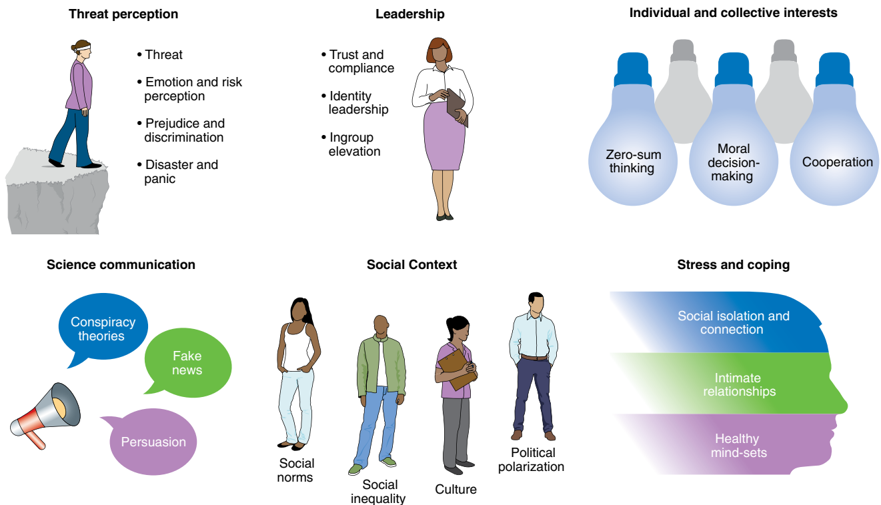
The COVID-19 pandemic represents a massive global health crisis. Because the crisis requires large-scale behaviour change and places significant psychological burdens on individuals, insights from the social and behavioural sciences can be used to help align human behaviour with the recommendations of epidemiologists and public health experts. Here we discuss evidence from a selection of research topics relevant to pandemics, including work on navigating threats, social and cultural influences on behaviour, science communication, moral decision-making, leadership, and stress and coping. In each section, we note the nature and quality of prior research, including uncertainty and unsettled issues. We identify several insights for effective response to the COVID-19 pandemic and highlight important gaps researchers should move quickly to fill in the coming weeks and months.
Overview
CoChat Summary
TL;DR
This perspective argues that social and behavioural science can help align public behaviour with COVID-19 public health recommendations across threat perception, social context, science communication, cooperation, leadership, and stress/coping. It synthesizes prior evidence and policy insights while cautioning that evidence is limited, often drawn from non-pandemic contexts, and in many areas unsettled.
Key findings
- The paper notes the scale of infectious disease threats: the bubonic plague killed approximately 25% of the European population, and by March 2020 COVID-19 had spread to more than 118,000 cases and caused 4,291 deaths in 114 countries. It also notes that 21 countries donated medical supplies to China in February, with China reciprocating widely.
- Fear appeals can change behaviour when people feel capable of dealing with the threat, but produce defensive reactions when people feel helpless; optimism bias can lead people to underestimate personal risk and ignore public health warnings.
- Social norms, inequality, culture, and political polarization shape pandemic behaviour: correcting misperceived norms can help when most people are already doing the desirable behaviour, but descriptive norms can backfire if the behaviour is undesirable unless paired with prescriptive norms.
- Effective communication and leadership may involve credible sources, messages that protect others or align with moral values, prebunking/inoculation against misinformation, accuracy nudges, shared social identity, and leaders modelling prosocial sacrifice; excessive national self-image concerns (“collective narcissism”) can backfire.
Methods
- Design: Perspective/narrative review; no primary data collection or sample. Topics were identified by the corresponding authors as potentially relevant to pandemic response and are explicitly not exhaustive.
- Evidence base: synthesizes prior social and behavioural research on threat perception, social context, science communication, moral decision-making, cooperation, leadership, and stress/coping, drawing on laboratory experiments, correlational studies, field experiments, meta-analyses, and preprints/forthcoming work.
- Analysis: narrative synthesis with policy implications and identified research gaps; no systematic search strategy or quantitative synthesis is reported.
Limitations
- Stated: due to space constraints, the paper provides only a brief summary of each topic; research on these topics is ongoing and in many cases far from settled; there is very little published social science research on the current pandemic, so discussion often draws from different circumstances and evidence quality varies substantially.
- Stated: insights and policy implications should be interpreted with caution.
- Evident: as a perspective rather than a systematic review or empirical study, it does not provide a comprehensive evidence appraisal, and its reliance on preprints and forthcoming sources limits certainty.
Model-written summary. Check it against the paper before relying on it.
Integrity signals
Registry
Cites
Statistics
Figures
Verification
Claims the paper makes
19 Valid · 5 Not valid · 37 Not checked · 13 Own results and interpretations
At least one cited source doesn’t support this claim or points to a different paper, and none confirmed it — see the verdicts below.
In the paper
“For instance, in hypothetical scenarios about deciding whether to go to work while sick, American and British participants reported they would be less willing to stay home when it was uncertain they would infect a co-worker.”
What the sources say
- Disputedcites [176] Kappes, A. et al. Uncertainty about the impact of social decisions increases prosocial behaviour. Nat. Hum. Behav. 2, 573–580 (2018). sourceExperimental — accuracy not yet measured
In the paper’s account of the infectious-disease scenario (Abstract; page not provided), participants facing uncertainty about how severely a co-worker might be affected were more likely to stay home than controls, not less. The paper distinguishes that impact uncertainty from uncertainty about whether a co-worker would be infected. Its Study 6 Methods (page not provided) describe recruitment through AMT, but do not establish the claimed American and British participant groups. (LLM, conf=0.88)
Checked by a reasoning model — may be wrong.
hedgedstates an association- Asserted: passes — The authors put it forward as true.
- Checkable: passes — It can be checked against evidence.
- Load-bearing: passes — The paper’s conclusions depend on it.
- Based: passes — The paper gives a reason why it holds.
- Disputed
The cited sources that could be checked couldn’t confirm or dispute this claim.
In the paper
“Moreover, there is mixed research regarding whether corrections may actually increase belief in the original misinformation 121,124-126 or in other misleading claims that fail to get corrected 127 .”
What the sources say
- Not checked — no full text of the sourcecites [121] Guess, A. & Coppock, A. Does counter-attitudinal information cause backlash? Results from three large survey experiments. Br. J. Polit. Sci. https://doi.org/10.1017/S0007123418000327 (2018). source
- Not matchedcites [124] Wittenberg, C. & Berinsky, A.J. Misinformation and its correction. in Social Media and Democracy: The State of the Field (eds Persily, N. & Tucker, J. A.) (Cambridge University Press, forthcoming).
Its entry has no title and year that we can search by.
- Not checked — no full text of the sourcecites [125] Swire, B. & Ecker, U.K.H. Misinformation and its correction: Cognitive mechanisms and recommendations for mass communication. in Misinformation and Mass Audiences (eds. Southwell, B. G., Thorson, E. A. & Sheble, L.) 195–2011 (University of Texas Press, 2018). source
- Not checked — no full text of the sourcecites [126] Wood, T. & Porter, E. The elusive backfire effect: mass attitudes’ steadfast factual adherence. Polit. Behav. 41, 135–163 (2018). source
- Could not verifycites [127] Pennycook, G., McPhetres, J., Zhang, Y. & Rand, D. Fighting COVID-19 misinformation on social media: Experimental evidence for a scalable accuracy nudge intervention. Preprint at PsyArXiv https://doi.org/10.31234/osf.io/uhbk9 (2020). sourceExperimental — accuracy not yet measured
Citation 127 is attached to the suggestion that corrections may increase belief in other misleading claims that go uncorrected. The Statement of Relevance and Discussion describe an accuracy nudge that improved sharing decisions, not corrections or their effects on belief in uncorrected claims. Searches for correction backfire and uncorrected misinformation found no passage addressing that point; page numbers were unavailable in our copy. (LLM, conf=0.76)
hedgedstates a possible cause- Asserted: passes — The authors put it forward as true.
- Checkable: passes — It can be checked against evidence.
- Load-bearing: passes — The paper’s conclusions depend on it.
- Based: passes — The paper gives a reason why it holds.
The sources with a verdict support this claim; the rest weren’t checked yet, have no full text we could read, or their verdicts aren’t rated yet.
In the paper
“Indeed, laboratory research has found that people prioritize local over global (or international) interests 185,186 .”
What the sources say
- Supportedcites [185] Milinski, M., Hilbe, C., Semmann, D., Sommerfeld, R. & Marotzke, J. Humans choose representatives who enforce cooperation in social dilemmas through extortion. Nat. Commun. 7, 10915 (2016). source
The Results section (‘Voters choose selfish representatives’; page unavailable) reports that participants preferentially re-elected representatives who contributed less to the shared climate account and elected candidates who pledged to contribute less than a fair share. In this simulated international dilemma, that supports the claim that participants favored their own group’s interests over the collective goal; it does not establish that everyone did so. (LLM, conf=0.85)
- Not checked — no full text of the sourcecites [186] Reinders Folmer, C. P. et al. One for all: what representing a group may do to us. J. Exp. Soc. Psychol. 48, 1047–1056 (2012). source
plain- Asserted: passes — The authors put it forward as true.
- Checkable: passes — It can be checked against evidence.
- Load-bearing: passes — The paper’s conclusions depend on it.
- Based: passes — The paper gives a reason why it holds.
- Supported
Every source the paper cites for this claim was checked and supports it.
In the paper
“However, when going to work risked infecting an elderly co-worker who would suffer a serious illness, participants reported they would be more willing to stay home 176 .”
What the sources say
- Supportedcites [176] Kappes, A. et al. Uncertainty about the impact of social decisions increases prosocial behaviour. Nat. Hum. Behav. 2, 573–580 (2018). source
The Study 6 Methods (page not provided) describe a scenario in which going to work could infect an older, vulnerable co-worker who would suffer severely, followed by a rating of willingness to go to work. The reported Study 6 findings (indexed under Abstract; page not provided) say participants given that risk information were significantly more likely to stay home than controls. (LLM, conf=0.92)
hedgedstates a cause- Asserted: passes — The authors put it forward as true.
- Checkable: passes — It can be checked against evidence.
- Load-bearing: passes — The paper’s conclusions depend on it.
- Based: passes — The paper gives a reason why it holds.
- Supported
The sources with a verdict support this claim; the rest weren’t checked yet, have no full text we could read, or their verdicts aren’t rated yet.
In the paper
“Several techniques, such as sanctioning defectors 187 or rewarding cooperators 188 , tend to increase cooperative behaviour in laboratory experiments using economic games.”
What the sources say
- Not checked — no full text of the sourcecites [187] Yamagishi, T. The provision of a sanctioning system as a public good. J. Pers. Soc. Psychol. 51, 110–116 (1986). source
- Supportedcites [188] Rand, D. G., Dreber, A., Ellingsen, T., Fudenberg, D. & Nowak, M. A. Positive interactions promote public cooperation. Science 325, 1272–1275 (2009). source
Citation 188 is attached to rewarding cooperators. The paper’s Abstract reports a laboratory comparison using repeated public goods games and finds that reward maintained public cooperation and, when both reward and punishment were available, increased contributions. (LLM, conf=0.93)
plainstates a cause- Asserted: passes — The authors put it forward as true.
- Checkable: passes — It can be checked against evidence.
- Load-bearing: unclear — It is unclear whether the paper’s conclusions depend on it.
- Based: passes — The paper gives a reason why it holds.
50 more claims · 13 with their cited sources checked
Create a free account to see all 74 claims and to verify the 2 references still open.
- It may state two separate claims as one. 13
- Probably not a substantial claim. 6
Claims other papers make about this one
Each is checked against this paper’s own text: does it say what the citing paper says it does?
The source backs part of the claim, not all of it — or backs it for a different population, condition or comparison.
In the citing paper
“COVID-19 is an international public health crisis, putting substantial burden on medical centers and increasing the psychological toll on health care workers (HCW).”
From Supporting the well-being of health care providers during the COVID-19 pandemic: The CopeColumbia response (2020) · cites this paper as [6]
Experimental — accuracy not yet measuredThe source backs part of the claim, not all of it — or backs it for a different population, condition or comparison.
In the citing paper
“these population-wide measures affected psychological well-being and mental health as well as increased social isolation [68] and loneliness.”
From Psychological correlates of perceived loneliness in college students before and during the COVID-19 stay-at-home period: a longitudinal study (2023) · cites this paper as [68]
Experimental — accuracy not yet measuredThe source backs part of the claim, not all of it — or backs it for a different population, condition or comparison.
In the citing paper
“they may eventually increase the social isolation of students and affect their psychological well-being and mental health [3].”
From Students under lockdown: Comparisons of students’ social networks and mental health before and during the COVID-19 crisis in Switzerland (2020) · cites this paper as [3]
Experimental — accuracy not yet measuredThe source backs part of the claim, not all of it — or backs it for a different population, condition or comparison.
In the citing paper
“effective interventions are hard to scale to a population level (12);”
From Psychological inoculation improves resilience against misinformation on social media (2022) · cites this paper as [12]
Experimental — accuracy not yet measuredThe source backs part of the claim, not all of it — or backs it for a different population, condition or comparison.
In the citing paper
“There is a shortage of studies that test anti-misinformation interventions in an ecologically valid manner, i.e., testing an intervention as consumers would interact with it in online environments (8, 12).”
From Psychological inoculation improves resilience against misinformation on social media (2022) · cites this paper as [12]
Experimental — accuracy not yet measured
6 more claims about this paper
Create a free account to see every claim other papers make about this one.
Citations
Cites
Granovetter, M. S. (1973) · American Journal of Sociology · doi:10.1086/225469 · Cited by 40,491
Zhou, F., Yu, T., Du, R., Fan, G., Liu, Y., Liu, Z., Xiang, J., Wang, Y., Song, B., Gu, X., et al. (2020) · The Lancet · doi:10.1016/s0140-6736(20)30566-3 · Cited by 27,263
The need to belong: Desire for interpersonal attachments as a fundamental human motivation.
Baumeister, R. F., & Leary, M. R. (1995) · Psychological Bulletin · doi:10.1037//0033-2909.117.3.497 · Cited by 23,245
Culture and the self: Implications for cognition, emotion, and motivation.
Markus, H. R., & Kitayama, S. (1991) · Psychological Review · doi:10.1037/0033-295x.98.2.224 · Cited by 21,995
Self-citationThe Psychological Impact of Quarantine and How to Reduce It: Rapid Review of the Evidence
Brooks, S. K., Webster, R. K., Smith, L. E., Woodland, L., Wessely, S., Greenberg, N., & Rubin, G. J. (2020) · doi:10.2139/ssrn.3532534 · Cited by 16,394
The psychological impact of quarantine and how to reduce it: Rapid review of the evidence
Brooks, S. K., Webster, R. K., Smith, L. E., Woodland, L., Wessely, S., Greenberg, N., & Rubin, G. J. (2020) · The Lancet · doi:10.1016/s0140-6736(20)30460-8 · Cited by 16,378
Nudge: improving decisions about health, wealth, and happiness
(2008) · Choice Reviews Online · doi:10.5860/choice.46-0977 · Cited by 11,572
Slovic, P. (1987) · Science · doi:10.1126/science.3563507 · Cited by 9,271
The Elaboration Likelihood Model of Persuasion
Petty, R. E., & Cacioppo, J. T. (1986) · Advances in Experimental Social Psychology · doi:10.1016/s0065-2601(08)60214-2 · Cited by 8,822
Self-citationThe emotional dog and its rational tail: A social intuitionist approach to moral judgment.
Haidt, J. (2001) · Psychological Review · doi:10.1037/0033-295x.108.4.814 · Cited by 8,048
Research works printed but not linked: 3
- Berkowitz, A.D. An overview of the social norms approach. in Changing the Culture of College Drinking: A Socially Situated Health Communication Campaign (eds. Stewart, L. & Lederman, L. C.) 193–214 (Hampton Press, 2005).
- Wittenberg, C. & Berinsky, A.J. Misinformation and its correction. in Social Media and Democracy: The State of the Field (eds Persily, N. & Tucker, J. A.) (Cambridge University Press, forthcoming).
- Ransohoff, K.J. Patients on the Trolley Track: The Moral Cognition of Medical Practitioners and Public Health Professionals. (Harvard Univ. Press, 2011).
Cited by
Items 1,301–1,400 of 5,015
AI-powered drug repurposing for developing COVID-19 treatments
Liu, Z., Chen, X., Carter, W., Moruf, A., Komatsu, T. E., Pahwa, S., Chan‐Tack, K. M., Snyder, K., Petrick, N., Cha, K., et al. (2022) · Elsevier eBooks · doi:10.1016/b978-0-12-824010-6.00005-8 · Cited by 39
Han, R., Xu, J., & Pan, D. (2022) · International Journal of Environmental Research and Public Health · doi:10.3390/ijerph19073942 · Cited by 32
“dissemination can promote people to take reasonable measures to deal with COVID-19 [2], but the phenomenon of an information epidemic caused by poor information dissemination was a predicament in the early stage of epidemic management [3].”
BackgroundDubois, E., Yuan, X., Gayle, D. B., Khurana, P., Knight, T., LaForce, S., Turetsky, D., & Wild, D. J. (2022) · Data and Information Management · doi:10.1016/j.dim.2022.100001 · Cited by 28
“Within these socially vulnerable populations, individuals experiencing homelessness cannot shelter in place, those without access to safe running water are unable to adhere to proper hygiene protocols, detainees (immigrants in detention centers and prisoners) lack physical space to social distance, those relying on pu…”
Polarization of Opinions on COVID-19 Measures: Integrating Twitter and Survey Data
Reiter-Haas, M., Klösch, B., Hadler, M., & Lex, E. (2022) · Social Science Computer Review · doi:10.1177/08944393221087662 · Cited by 29
Batool, A., Shabbir, R., Abrar, M., & Bilal, A. R. (2022) · Journal of Islamic marketing · doi:10.1108/jima-08-2021-0258 · Cited by 28
Yukhymenko–Lescroart, M. A. (2022) · Journal of College Student Retention Research Theory & Practice · doi:10.1177/15210251221100415 · Cited by 28
“Yet, the COVID-19 pandemic has caused significant disruption to academic, occupational, and interpersonal functioning, having a negative impact on many aspects of mental health and well-being in the adult population (e.g., Aristovnik et al., 2020; Van Bavel et al., 2020; Park et al., 2020).”
Planetary health & COVID-19: A multi-perspective investigation
Talukder, B., vanLoon, G. W., & Hipel, K. W. (2022) · One Health · doi:10.1016/j.onehlt.2022.100416 · Cited by 29
“The negative effects of social distancing will cause difficulties in social networks and threaten the survival of many people [118].”
Langhammer, T., Peters, C., Ertle, A., Hilbert, K., & Lueken, U. (2022) · PLoS ONE · doi:10.1371/journal.pone.0272215 · Cited by 20
“Previous research suggests that social isolation increases vigilance for threat, heightens feelings of vulnerability, decreases emotion recognition ability and causes serious mental health problems [1, 12].”
BackgroundLyu, Z., & Takikawa, H. (2022) · Heliyon · doi:10.1016/j.heliyon.2022.e10419 · Cited by 32
“The pandemic has not only caused massive death tolls and economic loss but also in fl uenced individual behaviors and opinions in several ways (Bavel et al., 2020).”
Li, B., Xue, C., Cheng, Y., Lim, E. T. K., & Tan, C. (2022) · Journal of Business Research · doi:10.1016/j.jbusres.2022.113330 · Cited by 30
Disentangling material, social, and cognitive determinants of human behavior and beliefs
Tverskoi, D., Guido, A., Andrighetto, G., Sánchez, Á., & Gavrilets, S. (2023) · Humanities and Social Sciences Communications · doi:10.1057/s41599-023-01745-4 · Cited by 43
The impact of social distancing on tourists’ preferences for anthropomorphism
Liu, H., Xu, S. T., Chen, Z., & Hou, Y. (2023) · Journal of Hospitality and Tourism Management · doi:10.1016/j.jhtm.2023.05.002 · Cited by 28
Mao, J., Zeng, Z., Yang, S., Guo, Y., & van Prooijen, J. (2023) · Political Psychology · doi:10.1111/pops.12924 · Cited by 27
Risk, sanctions and norm change: the formation and decay of social distancing norms
Vriens, E., Andrighetto, G., & Tummolini, L. (2024) · Philosophical Transactions of the Royal Society B Biological Sciences · doi:10.1098/rstb.2023.0035 · Cited by 27
Field testing the transferability of behavioural science knowledge on promoting vaccinations
Saccardo, S., Dai, H., Han, M. A., Vangala, S., Hoo, J., & Fujimoto, J. T. (2024) · Nature Human Behaviour · doi:10.1038/s41562-023-01813-4 · Cited by 29
“…the COVID-19 pandemic, behavioural scientists have offered their intuitions on what behavioural theories and findings might inform policy response 9 and have provided evidence compilations to government agencies (for example, the Centers for Disease Control and Prevention) to help them formulate…”
BackgroundSakib, M. N., Butt, Z. A., Morita, P. P., Oremus, M., Fong, G. T., & Hall, P. A. (2020) · Journal of Medical Internet Research · doi:10.2196/19930 · Cited by 22
“It must be evidence-based and driven by public health authorities who have the expertise to understand and interpret the rapidly growing scientific studies on the novel pathogen and can synthesize the material and communicate it in ways that the public can readily understand, and to provide advice in ways that the pub…”
BackgroundBlack and Minority Ethnic (BAME) Alliance Against COVID-19: One Step Forward
Ahmed, M. H. (2020) · Journal of Racial and Ethnic Health Disparities · doi:10.1007/s40615-020-00837-0 · Cited by 23
“Significant exposure to stress can decrease immunity, and stress in BAME population can be attributed to social isolation, lack of spiritual activities, concern about wellbeing and health of families in the UK and overseas, financial constraints and the fading of resilience especially with longer duration of the lockd…”
BackgroundLloyd, A., McKay, R., Hartman, T. K., Vincent, B. T., Murphy, J., Miller, J. G., Levita, L., Bennett, K. M., McBride, O., Martínez, A. P., et al. (2021) · Scientific Reports · doi:10.1038/s41598-021-98772-5 · Cited by 23
Hughes, E. C., Amat, J. A. R., Haney, J., Parr, Y. A., Logan, N. A., Palmateer, N. E., Nickbakhsh, S., Ho, A. Y. W., Cherepanov, P., Rosa, A., et al. (2020) · The Journal of Infectious Diseases · doi:10.1093/infdis/jiaa788 · Cited by 23
“of the previous community-based studies, likely reflecting a sex bias in COVID-19 presentation [21] or differences in social behaviour that led to increased exposure [22].”
ResultCevher, C., Altunkaynak, B., & Gürü, M. (2021) · Sustainability · doi:10.3390/su13095186 · Cited by 26
“The social and economic impacts of COVID-19 have been reported by researchers that it can have wide-ranging negative effects on human well-being [16,17].”
BackgroundWamser‐Nanney, R. A., Nguyen‐Feng, V. N., Lotzin, A., & Zhou, X. (2023) · Couple and Family Psychology Research and Practice · doi:10.1037/cfp0000189 · Cited by 23
Individualism vs. Collectivism and the Early-Stage Transmission of COVID-19Preprint
Jiang, S., Wei, Q., & Zhang, L. (2020) · SSRN Electronic Journal · doi:10.2139/ssrn.3646229 · Cited by 29
Beware of virus! Wearing a face mask against COVID-19 results in a reduction of social distancingPreprint
Cartaud, A., Quesque, F., & Coello, Y. (2020) · PsyArXiv (OSF Preprints) · doi:10.31234/osf.io/ubzea · Cited by 22
Impact of COVID-19 on public mental health and the buffering effect of sense of coherencePreprint
Schäfer, S. K., Sopp, R., Schanz, C. G., Staginnus, M., Göritz, A. S., & Michael, T. (2020) · OSF Preprints (OSF Preprints) · doi:10.31219/osf.io/4ptfz · Cited by 25
Jones, C. M., Diethei, D., Schöning, J., Shrestha, R., Jahnel, T., & Schüz, B. (2023) · Journal of Medical Internet Research · doi:10.2196/45583 · Cited by 24
“Unfortunately, most interventions based on these findings have proven difficult to implement and scale and, more importantly, have failed to account for the social dynamics of social media environments that promote user engagement and sharing through social cues such as “likes” and “shares” [10,11].”
Attitudes towards Afghan refugees and immigrants in Turkey: A Twitter analysis
Uluğ, Ö. M., Kanık, B., Tekin, S., Uyanık, G. D., & Solak, N. (2023) · Current Research in Ecological and Social Psychology · doi:10.1016/j.cresp.2023.100145 · Cited by 27
Support from Social Media during the COVID-19 Pandemic: A Systematic Review
Szeto, S., Au, A. K. Y., & Cheng, S. K. L. (2024) · Behavioral Sciences · doi:10.3390/bs14090759 · Cited by 36
“Relationship reconnection on social media has shown its value during various crises in previous research [71].”
BackgroundTyler, T. R. (2025) · Criminology & Public Policy · doi:10.1111/1745-9133.12695 · Cited by 44
What Lessons can Be Learned From the Management of the COVID-19 Pandemic?
Quinn, G. A., Connolly, R., ÓhAiseadha, C. O., Hynds, P. D., Bagus, P., Brown, R. B., Cáceres, C. F., Craig, C. E. H., Connolly, M., Domingo, J. L., et al. (2025) · International Journal of Public Health · doi:10.3389/ijph.2025.1607727 · Cited by 27
“Apparently, many governments used psychological and sociological “ nudge ” manipulation techniques [377] to promote particular policies and behaviours [69, 220, 354].”
Alarm at the Gate—Health and Social Inequalities are Comorbid Conditions of HIV and COVID-19
Harris, O., Leblanc, N. M., McGee, K. S., Randolph, S. D., Wharton, M. J., & Relf, M. V. (2020) · Journal of the Association of Nurses in AIDS Care · doi:10.1097/jnc.0000000000000190 · Cited by 19
Rokhmah, D., Ali, K., Putri, S. M. D., & Khoiron, K. (2020) · F1000Research · doi:10.12688/f1000research.25525.1 · Cited by 29
Combating COVID-19 through Collaborative Governance: Lessons from East Asia
Mao, Y. (2020) · Chinese Public Administration Review · doi:10.22140/cpar.v11i2.255 · Cited by 20
“Although China has a tight culture that encourages citizens to cooperate with the government (Bavel et al., 2020), the social voluntary cooperation norm (e.”
BackgroundA behavioral economic risk aversion experiment in the context of the COVID-19 pandemic
Kluwe‐Schiavon, B., Viola, T. W., Bandinelli, L. P., Castro, S. C. C., Kristensen, C. H., da Costa, J. C., & Grassi‐Oliveira, R. (2021) · PLoS ONE · doi:10.1371/journal.pone.0245261 · Cited by 23
Murphy, M. F., & Moret‐Tatay, C. (2021) · Frontiers in Psychiatry · doi:10.3389/fpsyt.2021.627018 · Cited by 22
Verberk, J. D. M., Anthierens, S., Tonkin-Crine, S. K., Goossens, H., Kinsman, J., de Hoog, M. L. A., Bielicki, J. A., Bruijning-Verhagen, P. C. J. L., & Gobat, N. (2021) · PLoS ONE · doi:10.1371/journal.pone.0249391 · Cited by 23
“The extent to which people comply with these adaptations is influenced by many factors, including their perception of infection risk, their beliefs about the effectiveness of advice provided, their access to necessary materials and social norms [16].”
BackgroundKhan, A. R., Shimul, S. M. A. K., & Arendse, N. (2021) · International Social Science Journal · doi:10.1111/issj.12269 · Cited by 31
“…political polarisation, panic, ethnocentrism, prejudice, and discriminant treatment of survivors, their families, and the groups and individuals who are thought of as under a heavy influence of the virus resulting in a denial of human rights and disrespect to human dignity (van Bavel et al. 2020).”
BackgroundInfluentialMental well‐being and social support perceptions of nurses working in a Covid‐19 pandemic hospital
Ersin, F., Havlıoğlu, S., & Gür, S. C. (2021) · Perspectives In Psychiatric Care · doi:10.1111/ppc.12833 · Cited by 20
“This form comprises 19 questions on sociodemographic characteristics and coronavirus.(18,19) The introductory information form includes questions such as the sociodemographic of nurses, the unit they work in, their quarantine status, their use of personal protective equipment, their status of being diagnosed with COVI…”
BackgroundAkhtar, H., Akhtar, S., Rahman, F. U., et al. (2021) · JMIR Public Health and Surveillance · doi:10.2196/28594 · Cited by 20
“Human behavior is also a major factor causing the resurge in infections [18].”
BackgroundLiao, Q., Xiao, J., Cheung, J. K., Ng, T. W. Y., Lam, W., Ni, M. Y., & Cowling, B. J. (2021) · Scientific Reports · doi:10.1038/s41598-021-00616-9 · Cited by 20
Faith and science mindsets as predictors of COVID-19 concern: A three-wave longitudinal study
Johnson, K. A., Baraldi, A. N., Moon, J. W., Okun, M. A., & Cohen, A. B. (2021) · Journal of Experimental Social Psychology · doi:10.1016/j.jesp.2021.104186 · Cited by 19
“The worldwide threat of the COVID-19 pandemic has created social and psychological dilemmas that people must solve in order to survive and flourish (Van Bavel et al., 2020).”
Johansson, B., Sohlberg, J., Esaiasson, P., & Ghersetti, M. (2021) · Journal of International Crisis and Risk Communication Research · doi:10.30658/jicrcr.4.2.6 · Cited by 32
Ryu, J., Sükei, E., Norbury, A., Liu, S. H., Campaña-Montes, J. J., Baca‐García, E., Artés-Rodríguez, A., & Pérez-Rodríguez, M. M. (2021) · JMIR Mental Health · doi:10.2196/30833 · Cited by 21
“In contrast, positive public health outcomes are driven by individuals’ sound health decisions made based on accurate perceptions of the costs and benefits to self and society [11].”
BackgroundRisk Perception and Protective Behavior in the Context of COVID-19: a Qualitative Exploration
Siddiqui, S., & Qamar, A. H. (2021) · Asian Bioethics Review · doi:10.1007/s41649-021-00181-3 · Cited by 21
Double jeopardy from the COVID-19 pandemic: risk of exposure and income loss in Portugal
Gama, A. F., Alves, J., Costa, D. S. A., Laires, P. A., Soares, P., Pedro, A. R., Moniz, M., Solinho, L., Nunes, C., & Dias, S. (2021) · International Journal for Equity in Health · doi:10.1186/s12939-021-01569-1 · Cited by 24
“Low-income workers are more likely to have a precarious financial situation, low savings, limited opportunity to access to paid sick leave, and face strong disincentives to be absent from work because they cannot afford to lose money [24, 25].”
BackgroundThe ethics of nudging: Using moral foundations theory to understand consumers' approval of nudges
Chowdhury, R. M. M. I. (2021) · Journal of Consumer Affairs · doi:10.1111/joca.12431 · Cited by 24
Chen, X., & Fu, F. (2022) · Proceedings of the Royal Society A Mathematical Physical and Engineering Sciences · doi:10.1098/rspa.2022.0040 · Cited by 22
Dimant, E., Clemente, E. G., Pieper, D. J., Dreber, A., Gelfand, M. J., Hallsworth, M., Holzwarth, A., & Tantia, P. (2021) · Scientific Reports · doi:10.1038/s41598-022-10524-1 · Cited by 28
Self-citationCrowd dynamics research in the era of Covid-19 pandemic: Challenges and opportunities
Haghani, M. (2022) · Safety Science · doi:10.1016/j.ssci.2022.105818 · Cited by 20
Expert voices in South African mass media during the COVID-19 pandemic
Joubert, M., Guenther, L., & Rademan, L. (2022) · South African Journal of Science · doi:10.17159/sajs.2022/12480 · Cited by 27
Hiew, L.-C., Lee, A., Leong, C., Liew, C.-Y., & Soe, M.-H. (2022) · Asian Journal of Business Research · doi:10.14707/ajbr.220121 · Cited by 32
Nudging societally relevant behavior by promoting cognitive inferences
Dessel, P. V., Boddez, Y., & Hughes, S. (2022) · Scientific Reports · doi:10.1038/s41598-022-12964-1 · Cited by 24
“Invitation to the study was based on a pre-screening study in which the targeted participants had indicated that (1) they would go shopping later that day, (2) they would be available to complete the first study part before going shopping and the second part after going shopping, (3) the last time they went shopping w…”
MethodVulnerability and fraud: evidence from the COVID-19 pandemic
Zhang, Y., Wu, Q., Zhang, T., & Yang, L. (2022) · Humanities and Social Sciences Communications · doi:10.1057/s41599-022-01445-5 · Cited by 29
“Such negative framing captures the attention of individuals, increases their negative emotions, and sensitizes them to the COVID-19 risk (Van Bavel et al., 2020).”
BackgroundPanic buying and fake news in urban vs. rural England: A case study of twitter during COVID-19
Ali, M., Gomes, L. M., Azab, N., Souza, J. G. D. M., Sorour, M. K., & Kimura, H. (2023) · Technological Forecasting and Social Change · doi:10.1016/j.techfore.2023.122598 · Cited by 23
A hierarchical intervention scheme based on epidemic severity in a community network
He, R., Luo, X., Asamoah, J. K. K., Zhang, Y., Li, Y., Jin, Z., & Sun, G. (2023) · Journal of Mathematical Biology · doi:10.1007/s00285-023-01964-y · Cited by 21
“Once the intervention measures are not implemented within the zone, COVID-19 must break out.”
BackgroundInfluentialAgboola, O. P., Nia, H. A., & Dodo, Y. A. (2023) · Urban Science · doi:10.3390/urbansci7040114 · Cited by 26
Younas, M. S., Dong, Y., Menhas, R., Li, X., Wang, Y., & Noor, U. (2023) · Psychology Research and Behavior Management · doi:10.2147/prbm.s441395 · Cited by 20
Dynamics of diseases spreading on networks in the forms of reaction-diffusion systems
Sun, G., He, R., Hou, L.-F., Gao, S., Luo, X., Liu, Q., Zhang, Y., & Chang, L. (2024) · Europhysics Letters (EPL) · doi:10.1209/0295-5075/ad5e1b · Cited by 20
Bourassa, K. J. (2020) · Psychosomatic Medicine · doi:10.1097/psy.0000000000000905 · Cited by 16
Race, immigration and health: the Hostile Environment and public health responses to Covid-19
Doná, G. (2021) · Ethnic and Racial Studies · doi:10.1080/01419870.2021.1881578 · Cited by 30
Impact of the COVID-19 Pandemic on Oncologists: Results of an International Study
Jazieh, A. R., Coutinho, A. K., Bensalem, A., Alsharm, A. A., Errihani, H. H., Mula‐Hussain, L., Al‐Sukhun, S., Sampaio-Filho, C. A., Khorshid, O., Guzman, R. B. D., et al. (2021) · JCO Global Oncology · doi:10.1200/go.20.00542 · Cited by 22
Ryu, S., Park, I.-H., Kim, M., Lee, Y.-R., Lee, J., Kim, H., Jhon, M., Kim, J.-W., Lee, J., Kim, J.-M., et al. (2021) · PLoS ONE · doi:10.1371/journal.pone.0246894 · Cited by 16
Sahimi, H. M. S., Azman, N., Jaafar, N. R. N., Daud, T. I. M., Baharudin, A., Ismail, A. K., Malek, A. Z. A., Hassan, M. R., & Nawi, A. M. (2021) · International Journal of Environmental Research and Public Health · doi:10.3390/ijerph18094879 · Cited by 25
The onset of COVID-19, common identity, and intergroup prejudice
Toprakkiran, S., & Gordils, J. (2021) · The Journal of Social Psychology · doi:10.1080/00224545.2021.1918620 · Cited by 23
“In fact, the COVID-19 virus has been referred to “the Chinese virus” by leaders in the United States (Ren et al., 2020; Van Bavel et al., 2020).”
BackgroundAspectos espacial e temporal e fatores associados à interiorização da Covid-19 em Pernambuco, Brasil
Quinino, L. R. D. M., Vasconcellos, F. H. M., Diniz, I. S., et al. (2021) · Ciência & Saúde Coletiva · doi:10.1590/1413-81232021266.00642021 · Cited by 20
Scholz, J., Wetzker, W., Licht, A., Heintzmann, R., Scherag, A., Weis, S., Pletz, M. W., Betsch, C., Bauer, M. W., Dickmann, P., et al. (2021) · PLoS ONE · doi:10.1371/journal.pone.0256113 · Cited by 23
“This could be based on the so-called optimism bias, which leads to a greater perceived risk for others than for oneself [7].”
BackgroundThe impact of information sources on COVID-19 knowledge accumulation and vaccination intention
Vlasceanu, M., & Coman, A. (2022) · International Journal of Data Science and Analytics · doi:10.1007/s41060-021-00307-8 · Cited by 23
Rezapouraghdam, H., Karatepe, O. M., & Enea, C. (2022) · Journal of Hospitality and Tourism Insights · doi:10.1108/jhti-03-2022-0103 · Cited by 42
Burton, A., McKinlay, A. R., Dawes, J., et al. (2021) · doi:10.31234/osf.io/k4wqh · Cited by 20
Travaglino, G. A., & Moon, C. (2020) · doi:10.31234/osf.io/8yn5b · Cited by 20
Ruggeri, K., Stock, F., Haslam, S. A., Capraro, V., Boggio, P., Ellemers, N., Cichocka, A., Douglas, K., Rand, D. G., Cikara, M., et al. (2022) · doi:10.31234/osf.io/58udn · Cited by 19
Self-citationMcKinley, C. J., Olivier, E., & Ward, J. K. (2023) · Vaccines · doi:10.3390/vaccines11081319 · Cited by 23
Antonini, M., Genie, M. G., Attema, A. E., Attwell, K., Balogh, Z. J., Behmane, D., Berardi, C., Brammli‐Greenberg, S., Greenland, A., Hagen, T. P., et al. (2024) · Health Policy and Technology · doi:10.1016/j.hlpt.2024.100849 · Cited by 20
Risk perception, public health interventions, and Covid-19 pandemic control in sub-saharan Africa
Aduh, U., Foláyan, M. O., Afe, A. J., Onyeaghala, A. A., Ajayi, I. O., Coker, M. O., Tebeje, Y. K., & Ndembi, N. (2020) · Journal of Public Health in Africa · doi:10.4081/jphia.2021.1622 · Cited by 18
Uyheng, J., Ng, L. H. X., & Carley, K. M. (2021) · Computational and Mathematical Organization Theory · doi:10.1007/s10588-021-09332-1 · Cited by 24
“Such identity-based dynamics, social scientists have pointed out, are factors at the core of social cohesion and collective behavioral efficacy against the pandemic (Van Bavel et al. 2020).”
BackgroundEkici, H., Yücel, E., & Cesur, S. (2021) · Current Psychology · doi:10.1007/s12144-021-01941-y · Cited by 27
COVID-19 and the Pandemic's Spatio-Temporal Impact on Tourism Demand in Bavaria (Germany)
Schmude, J., Filimon, S., Namberger, P., Lindner, E., Nam, J.-E., & Metzinger, P. (2021) · Tourism · doi:10.37741/t.69.2.6 · Cited by 28
Feroz, A. S., Ali, N. A., Feroz, R., Akber, N., & Meghani, S. N. (2021) · BMJ Open · doi:10.1136/bmjopen-2020-048359 · Cited by 19
Blanken, T. F., Tanis, C. C., Nauta, F. H., Dablander, F., Zijlstra, B. J. H., Bouten, R. R. M., Oostvogel, Q. H., Boersma, M. J., Steenhoven, M. V. V. D., van Harreveld, F., et al. (2021) · Scientific Reports · doi:10.1038/s41598-021-98964-z · Cited by 19
Sub-Sahara Africa and the COVID-19 Pandemic: Reflecting on Challenges and Recovery Opportunities
Agwanda, B., Dagba, G., Opoku, P., Amankwa, M. O., & Nyadera, İ. N. (2021) · Journal of Developing Societies · doi:10.1177/0169796x211032567 · Cited by 21
“Van Bavel et al. (2020) also observed the global rise in fake news and misinformation.”
BackgroundThe effects of organizational climate on adherence to guidelines for COVID-19 prevention
Hubert, P., Hadi, S. A., Mojzisch, A., & Häusser, J. A. (2021) · Social Science & Medicine · doi:10.1016/j.socscimed.2021.114622 · Cited by 32
Humanizing racialization: Social psychology in a time of unexpected transformational conjunctions
Phoenix, A. (2021) · British Journal of Social Psychology · doi:10.1111/bjso.12517 · Cited by 28
Holt, L. F., Kjærvik, S. L., & Bushman, B. J. (2022) · Media Psychology · doi:10.1080/15213269.2022.2034021 · Cited by 27
“Although it is impossible to draw a direct connection between media accounts and action, media do wield considerable influence, especially during times of crises (Ogbodo et al., 2020; Van Bavel et al., 2020).”
BackgroundKadinski, L., Salcedo, C. A., Boccelli, D. L., Berglund, E. Z., & Ostfeld, A. (2022) · Water · doi:10.3390/w14071088 · Cited by 20
Zlobina, A., & de León, M. C. D. (2022) · British Journal of Social Psychology · doi:10.1111/bjso.12539 · Cited by 27
“As several authors have argued (Van Bavel et al., 2020; Drury et al., 2020; Mols, 2020), stressing the social over the individual appears to be the best option, and ‘nurturing the social in peoples’ minds is not the problem but it is the solution’ (Yzerbyt, 2020, p. xiv).”
BackgroundResultShort-sighted decision-making by those not vaccinated against COVID-19
Halilova, J. G., Fynes‐Clinton, S., Green, L., Myerson, J., Wu, J., Ruggeri, K., Addis, D. R., & Rosenbaum, R. S. (2022) · Scientific Reports · doi:10.1038/s41598-022-15276-6 · Cited by 23
Coupling Fear and Contagion for Modeling Epidemic Dynamics
Jain, K., Bhatnagar, V., Prasad, S. N., & Kaur, S. (2022) · IEEE Transactions on Network Science and Engineering · doi:10.1109/tnse.2022.3187775 · Cited by 20
Fu, F., Ji, Q., Chen, Y., & Cao, Q. P. (2022) · Social Work in Health Care · doi:10.1080/00981389.2022.2101582 · Cited by 23
Corporate Dividend Policies during the COVID-19 Pandemic
Ali, N., Rehman, M. Z. U., Ashraf, B. N., & Shear, F. (2022) · Economies · doi:10.3390/economies10110263 · Cited by 34
Identity‐based social support predicts mental and physical health outcomes during COVID ‐19
Carter, H., Dennis, A., Williams, N., & Weston, D. (2022) · British Journal of Social Psychology · doi:10.1111/bjso.12600 · Cited by 27
Containment measures during the COVID pandemic: The role of non-pharmaceutical health policies
Funke, M., Ho, T., & Tsang, A. (2022) · Journal of Policy Modeling · doi:10.1016/j.jpolmod.2022.12.001 · Cited by 20
“4 See Van Bavel et al. (2020) for several of these behavioral interventions. Their overview of knowledge in social and behavioral science explored the potential avenues and channels through which these disciplines can support the management of the pandemic crisis. 5 Mediation analysis moves beyond calculation of avera…”
BackgroundInfluentialLi, L., Zhou, J., Zhuang, J., & Zhang, Q. (2023) · Information Processing & Management · doi:10.1016/j.ipm.2023.103299 · Cited by 21
Digital public health leadership in the global fight for health security
Al-Knawy, B., Kozlakidis, Z., Tarkoma, S., Bates, D. W., Honkela, A., Crooks, G., Rhee, K. B. L., & McKillop, M. M. (2023) · BMJ Global Health · doi:10.1136/bmjgh-2022-011454 · Cited by 34
Ünlü, A., Truong, S., Tammi, T., & Lohiniva, A. (2023) · Journal of Medical Internet Research · doi:10.2196/50199 · Cited by 31
Cheng, A. L., Anderson, J., Didehbani, N., Fine, J. S., Fleming, T. K., Karnik, R., Longo, M. T., Ng, R., Re’em, Y., Sampsel, S., et al. (2023) · PM&R · doi:10.1002/pmrj.13085 · Cited by 23
“38 These stressors have been further exacerbated by pre-existing stigma surrounding mental health disorders, disruptions in the health care system which resulted in diminished access to mental health services, and frequent dismissal of patients ’ reported mental health symptoms by the health care…”
BackgroundHills, A. P., Jayasinghe, S. U., Arena, R. A., & Byrne, N. M. (2024) · Progress in Cardiovascular Diseases · doi:10.1016/j.pcad.2024.02.008 · Cited by 26
Is society caught up in a Death Spiral? Modeling societal demise and its reversal
Schippers, M. C., Ioannidis, J. P. A., & Luijks, M. (2024) · Frontiers in Sociology · doi:10.3389/fsoc.2024.1194597 · Cited by 33
Dangerous shortage of blood banks as an indirect effect of SARS‐CoV‐2: An obstetrics perspective
Nieto‐Calvache, A. J., Quintero‐Santacruz, M., Macia‐Mejía, C., et al. (2020) · International Journal of Gynecology & Obstetrics · doi:10.1002/ijgo.13409 · Cited by 19
Miyajima, T., & Murakami, F. (2021) · Frontiers in Psychology · doi:10.3389/fpsyg.2021.605059 · Cited by 26
Individual risk-aversion responses tune epidemics to critical transmissibility ( R = 1)
Manrubia, S. C., & Zanette, D. H. (2022) · Royal Society Open Science · doi:10.1098/rsos.211667 · Cited by 20
“However, the quantitative relevance of the mechanisms that underlie individual RTP is not yet fully understood: it is believed that emotions may drive risk perceptions, sometimes more than factual information [7], and that behavioural responses to pandemics are primarily shaped by risk attitudes, and not so much by ac…”
BackgroundInfluentialGröndal, M., Ask, K., Luke, T. J., & Winblad, S. (2021) · PLoS ONE · doi:10.1371/journal.pone.0258778 · Cited by 29
“Scientists have identified numerous ways in which the social and behavioral sciences can support humanity’s response to the pandemic, including reducing its negative emotional impact and facilitating adaptive stress management and coping strategies [6].”
Background
Metadata
- Authors
- Bavel, J. J. V., Baicker, K., Boggio, P. S., Capraro, V., Cichocka, A., Cikara, M., Crockett, M. J., Crum, A. J., Douglas, K. M., Druckman, J. N., Drury, J., Dube, O., Ellemers, N., Finkel, E. J., Fowler, J. H., Gelfand, M., Han, S., Haslam, S. A., Jetten, J., Kitayama, S., Mobbs, D., Napper, L. E., Packer, D. J., Pennycook, G., Peters, E., Petty, R. E., Rand, D. G., Reicher, S. D., Schnall, S., Shariff, A., Skitka, L. J., Smith, S. S., Sunstein, C. R., Tabri, N., Tucker, J. A., Linden, S. V. D., Lange, P. V., Weeden, K. A., Wohl, M. J. A., Zaki, J., Zion, S. R., & Willer, R.
- Affiliations
- New York University (US)
- Universidade Presbiteriana Mackenzie (BR)
- Middlesex University London (GB)
- University of Kent (GB)
- Harvard University (US)
- Yale University (US)
- Stanford University (US)
- Northwestern University (US)
- University of Sussex (GB)
- University of Chicago (US)
- Utrecht University (NL)
- University of California San Diego (US)
- University of Maryland, College Park (US)
- Peking University (CN)
- The University of Queensland (AU)
- University of Michigan (US)
- California Institute of Technology (US)
- Lehigh University (US)
- University of Regina (CA)
- University of Oregon (US)
- The Ohio State University (US)
- Massachusetts Institute of Technology (US)
- University of St Andrews (GB)
- University of Cambridge (GB)
- University of British Columbia (CA)
- University of Illinois Chicago (US)
- University of California, Berkeley (US)
- Carleton University (CA)
- Cornell University (US)
- Corresponding author
- Bavel, Jay J. Van
- Willer, Robb
- ORCID
- Bavel, Jay J. Van
- Baicker, Katherine
- Boggio, Paulo S.
- Capraro, Valerio
- Cichocka, Aleksandra
- Cikara, Mina
- Crockett, Molly J.
- Crum, Alia J.
- Douglas, Karen M.
- Druckman, James N.
- Drury, John
- Ellemers, Naomi
- Finkel, Eli J.
- Fowler, James H.
- Gelfand, Michele
- Han, Shihui
- Haslam, S. Alexander
- Jetten, Jolanda
- Kitayama, Shinobu
- Mobbs, Dean
- Napper, Lucy E.
- Packer, Dominic J.
- Pennycook, Gordon
- Peters, Ellen
- Petty, Richard E.
- Rand, David G.
- Reicher, Stephen D.
- Schnall, Simone
- Shariff, Azim
- Skitka, Linda J.
- Sunstein, Cass R.
- Tabri, Nassim
- Tucker, Joshua A.
- Linden, Sander van der
- Weeden, Kim A.
- Wohl, Michael J. A.
- Zaki, Jamil
- Zion, Sean R.
- Willer, Robb
- Venue
- Nature Human Behaviour
- Published
- 2020-04-30
- Volume
- 4
- Issue
- 5
- Pages
- 460-471
- ISSN
- 2397-3374 (ISSN-L)
- OpenAlex
- W3016902371
- Semantic Scholar
- d81abcd7f053b136423f1e7f57928524e8b0e1a0
- Cited by
- 4,964
- References
- 259
- Citations by year
- 2026: 177 · 2025: 288 · 2024: 483 · 2023: 741 · 2022: 1094 · 2021: 1474 · 2020: 702
- FWCI
- 175.81
- Type
- journal article
- Language
- en
- Open access
- bronze
- doi.org
- Licence
- www.springernature.com/gp/researchers/text-and-data-mining (tdm)
- www.springernature.com/gp/researchers/text-and-data-mining (vor)
- Locations
- Nature Human Behaviour (publishedVersion)
- PubMed (publishedVersion)
- Middlesex University Research Repository (Middlesex University Of London) (acceptedVersion)
- Kent Academic Repository (University of Kent) (acceptedVersion)
- DSpace@MIT (Massachusetts Institute of Technology) (submittedVersion, cc-by-nc-sa)
- Sussex Research Online (University of Sussex) (submittedVersion)
- CaltechAUTHORS (California Institute of Technology) (submittedVersion)
- RePEc: Research Papers in Economics (submittedVersion)
- BOA (University of Milano-Bicocca) (submittedVersion)
- Carleton University's Institutional Repository (MacOdrum Library, Carleton University) (submittedVersion, other-oa)
- Utrecht University Repository (Utrecht University) (submittedVersion)
- Figshare (submittedVersion)
- VU Research Portal (submittedVersion, other-oa)
- Utrecht University Repository (Utrecht University) (submittedVersion, other-oa)
- Data Archiving and Networked Services (DANS) (submittedVersion, other-oa)
- Funders
- U.S. Department of Health and Human Services (2P50 MH094258)
- National Institute of Mental Health (P50MH094258)
- Topics
- Social Sciences › Sociology and Political Science › COVID-19 Prevention and Impact
- Social Sciences › Communication › Communication and COVID-19 Impact
- Physical Sciences › Mathematics › Modeling and Simulation › COVID-19 epidemiological studies
- Keywords
- COVID-19 pandemic, pandemic response, behavior change, science communication, ethical decision-making, leadership, stress coping, psychological burden, public health recommendations
- MeSH terms
- Betacoronavirus, COVID-19, SARS-CoV-2, Adaptation, Psychological, Communicable Disease Control, Decision Making, Humans, Human Activities, Health Knowledge, Attitudes, Practice, Leadership, Pneumonia, Viral, Public Health, Quarantine, Stress, Psychological, Global Health, Coronavirus, Coronavirus Infections, Pandemics, Social Media, Epidemiological Monitoring
About these checks
Registry, retraction, Cites and statistics results are computed, not judged, with one exception: a printed reference that no index lists is read once by a model before it counts as a citation error. Claims are extracted by a model and kept only when their quote appears verbatim in the text; each cited source is then checked, with a model’s help, for whether it says what the claim relies on. Those verdicts can be wrong — read the claim’s quote and the cited source before relying on one.
The claim verdicts this report counts are experimental: their accuracy is not yet measured.
A language model drew the claims from the paper on 2026-10-10, under version 3 of the claim definition (model deepseek-v4.1-flash, prompt extract-v3).
A second model labelled each claim on 2026-10-10 (model jev-1.13-20260917, definition revision gold-guideline-v0.2).
Cited sources are checked with a language model’s help (gpt-6-sol).
Statistics and arithmetic are recomputed, not judged.
Confidence bands are shown only for fields calibrated on our annotated test set. None is calibrated yet, so no band is shown.
What counts as a claim ›How we measure confidence ›How we check this ›
Are you an author, or do you see a problem with this page? Request a review
Data sources
Bibliographic data: Semantic Scholar, OpenAlex, Crossref.
Contains information from the Semantic Scholar Academic Graph Datasets, made available under the ODC Attribution License (ODC-BY 1.0).
Semantic Scholar’s data is described in: Kinney, R., et al. (2023). The Semantic Scholar Open Data Platform. arXiv:2301.10140.
