

Toroidal topology of population activity in grid cells
Open accessPublished version of a preprint
The DOI matches its Crossref record; 85 of the 85 references it cites were found in a registry or an index.
Abstract
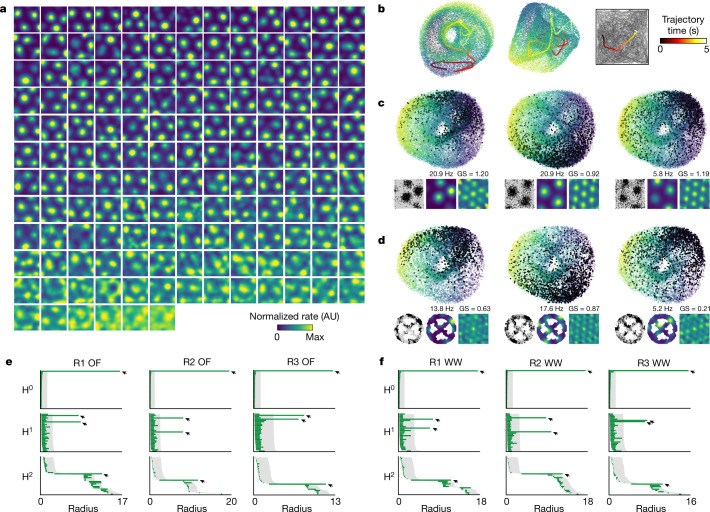
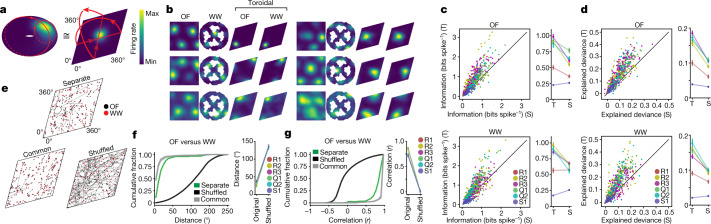
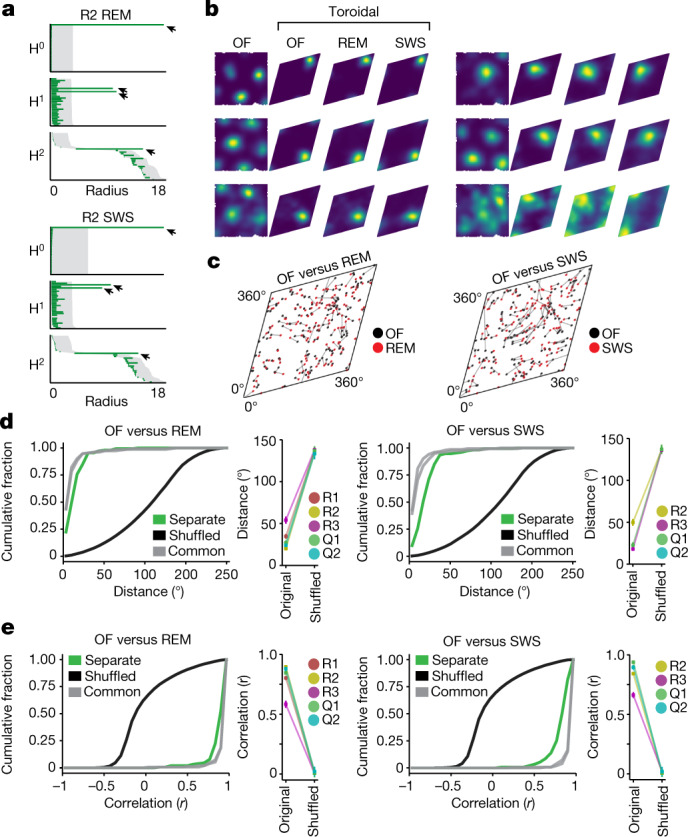
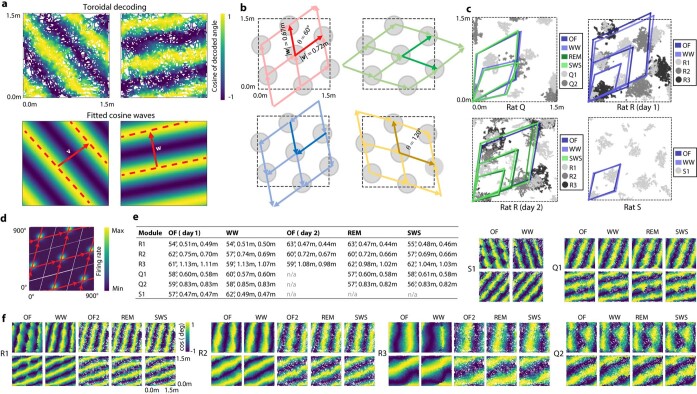
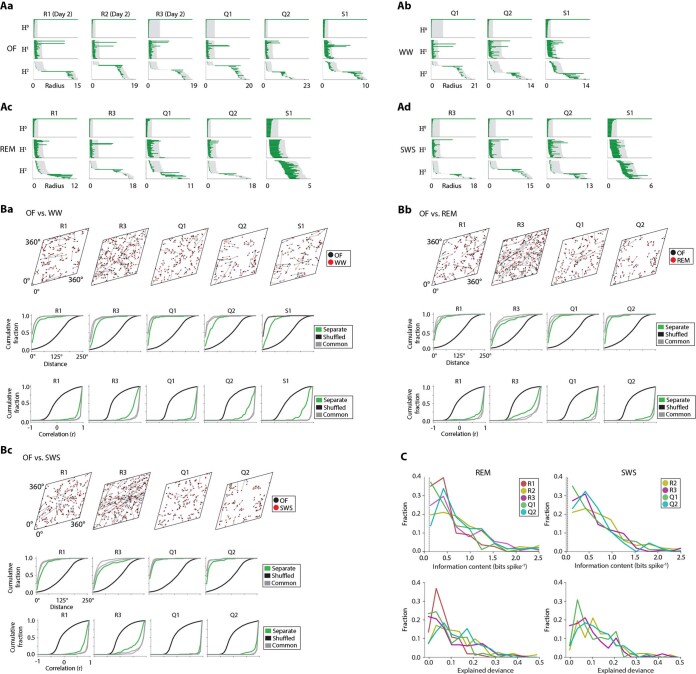
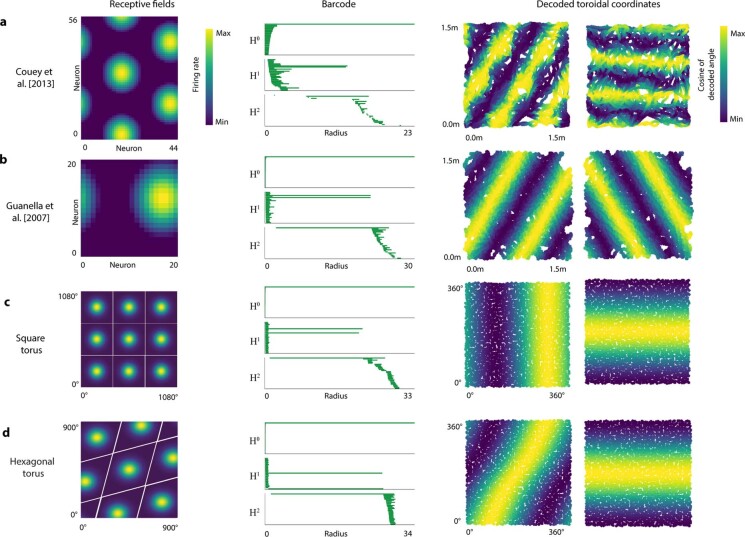
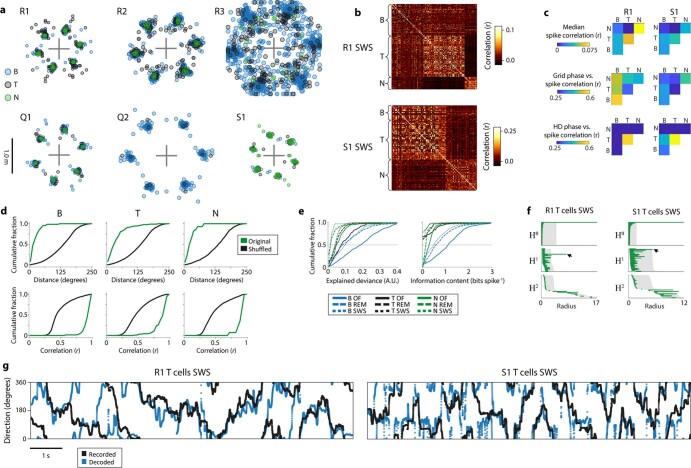
The medial entorhinal cortex is part of a neural system for mapping the position of an individual within a physical environment 1 . Grid cells, a key component of this system, fire in a characteristic hexagonal pattern of locations 2 , and are organized in modules 3 that collectively form a population code for the animal’s allocentric position 1 . The invariance of the correlation structure of this population code across environments 4,5 and behavioural states 6,7 , independent of specific sensory inputs, has pointed to intrinsic, recurrently connected continuous attractor networks (CANs) as a possible substrate of the grid pattern 1,8–11 . However, whether grid cell networks show continuous attractor dynamics, and how they interface with inputs from the environment, has remained unclear owing to the small samples of cells obtained so far. Here, using simultaneous recordings from many hundreds of grid cells and subsequent topological data analysis, we show that the joint activity of grid cells from an individual module resides on a toroidal manifold, as expected in a two-dimensional CAN. Positions on the torus correspond to positions of the moving animal in the environment. Individual cells are preferentially active at singular positions on the torus. Their positions are maintained between environments and from wakefulness to sleep, as predicted by CAN models for grid cells but not by alternative feedforward models 12 . This demonstration of network dynamics on a toroidal manifold provides a population-level visualization of CAN dynamics in grid cells.
Overview
The claims and statistics of this paper haven’t been checked yet.
Free: it reads the open-access text and checks the first 5 claims that cite a source we can check. Create a free account to check every claim.
Integrity signals
Registry
Cites
Statistics
Figures
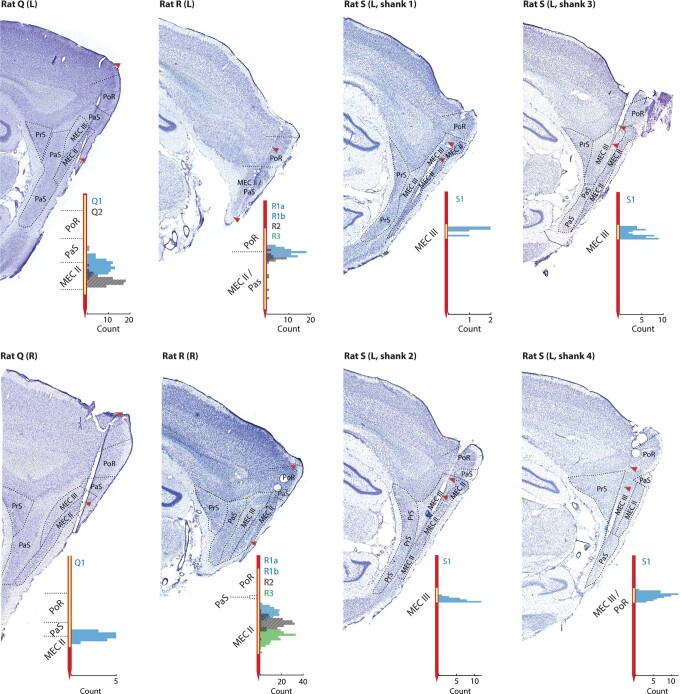
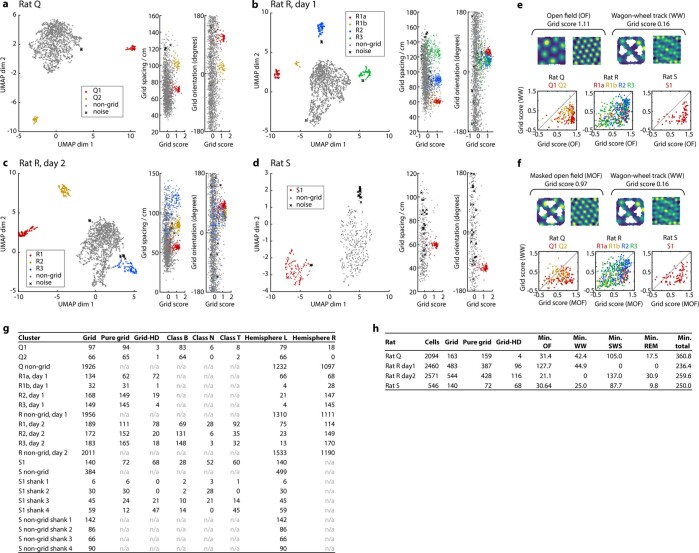
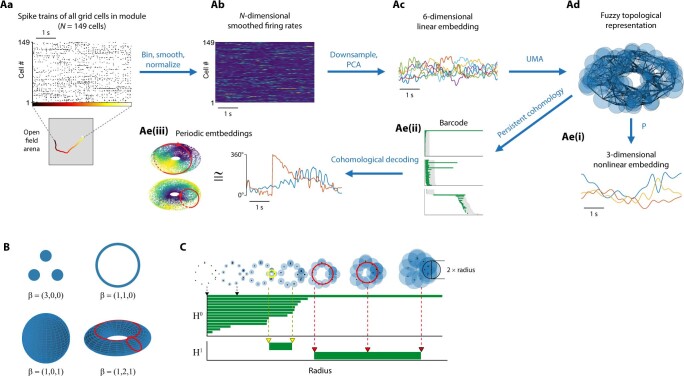
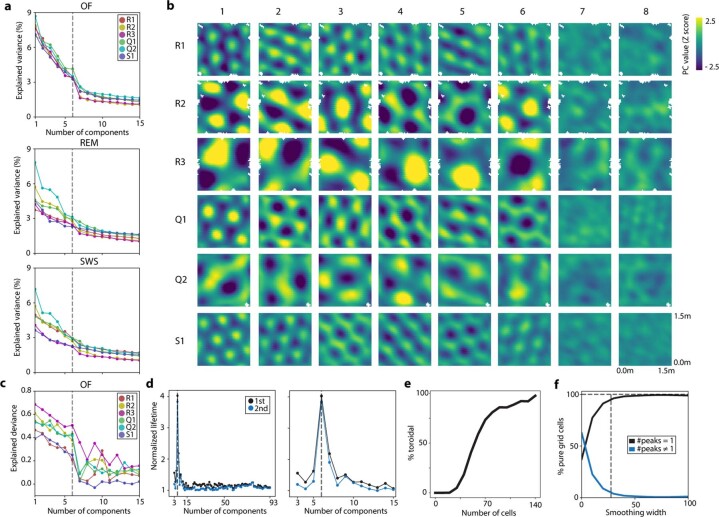
Verification
Claims the paper makes
The claims and statistics of this paper haven’t been checked yet.
Free: it reads the open-access text and checks the first 5 claims that cite a source we can check. Create a free account to check every claim.
Claims other papers make about this one
Each is checked against this paper’s own text: does it say what the citing paper says it does?
The cited source says what the claim attributes to it.
In the citing paper
“For all topological analyses, the six-dimensional pointcloud was further downsampled using the procedure proposed by Gardner et al. This was done to reduce the impact of spurious activity, as persistent homology can be sensitive to outliers.11”
From Coherently remapping toroidal cells but not Grid cells are responsible for path integration in virtual agents (2023) · cites this paper as [11]
The cited source says what the claim attributes to it.
In the citing paper
“This was done to reduce the impact of spurious activity, as persistent homology can be sensitive to outliers.11”
From Coherently remapping toroidal cells but not Grid cells are responsible for path integration in virtual agents (2023) · cites this paper as [11]
Self-check
Percentages, sums and reported differences re-computed from the paper’s own numbers.
The self-check needs the paper’s full text.
Citations
Cites
UMAP: Uniform Manifold Approximation and Projection
McInnes, L., Healy, J., Saul, N., & Großberger, L. (2018) · Journal of Open Source Software · doi:10.21105/joss.00861 · Cited by 9,826
UMAP: Uniform Manifold Approximation and Projection for Dimension Reduction
McInnes, L., Healy, J., & Melville, J. (2018) · arXiv · doi:10.48550/arxiv.1802.03426 · Cited by 7,101
Microstructure of a spatial map in the entorhinal cortex
Hafting, T., Fyhn, M., Molden, S., Moser, M.-B., & Moser, E. I. (2005) · Nature · doi:10.1038/nature03721 · Cited by 4,068
Self-citationFully integrated silicon probes for high-density recording of neural activity
Jun, J. J., Steinmetz, N. A., Siegle, J. H., Denman, D. J., Bauza, M., Barbarits, B., Lee, A. K., Anastassiou, C. A., Andrei, A., Aydın, Ç., et al. (2017) · Nature · doi:10.1038/nature24636 · Cited by 2,190
Self-citationDynamics of pattern formation in lateral-inhibition type neural fields
Amari, S.-I. (1977) · Biological Cybernetics · doi:10.1007/bf00337259 · Cited by 2,060
Path integration and the neural basis of the 'cognitive map'
McNaughton, B. L., Battaglia, F. P., Jensen, O., Moser, E. I., & Moser, M.-B. (2006) · Nature Reviews Neuroscience · doi:10.1038/nrn1932 · Cited by 2,024
Self-citationTaube, J., Muller, R., & Ranck, J. (1990) · The Journal of Neuroscience · doi:10.1523/jneurosci.10-02-00420.1990 · Cited by 1,809
Conjunctive Representation of Position, Direction, and Velocity in Entorhinal Cortex
Sargolini, F., Fyhn, M., Hafting, T., McNaughton, B. L., Witter, M. P., Moser, M.-B., & Moser, E. I. (2006) · Science · doi:10.1126/science.1125572 · Cited by 1,485
Self-citationMemory of sequential experience in the hippocampus during slow wave sleep
Lee, A. K., & Wilson, M. A. (2002) · Neuron · doi:10.1016/s0896-6273(02)01096-6 · Cited by 1,296
Neuropixels 2.0: A miniaturized high-density probe for stable, long-term brain recordings.
Steinmetz, N. A., Aydin, C., Lebedeva, A., Okun, M., Pachitariu, M., Bauza, M., Beau, M., Bhagat, J., Böhm, C., Broux, M., et al. (2021) · Science · doi:10.1126/science.abf4588 · Cited by 1,173
Self-citation
Research works printed but not linked: 6
- Skaggs W Mcnaughton B Gothard K An information-theoretic approach to deciphering the hippocampal code Adv. Neural Inf. Process. Syst. 1992 5 1030 1037
- Bellman, R. Dynamic Programming (Princeton Univ. Press, 1957).
- Spivak, D. I. Metric realization of fuzzy simplicial sets https://www.semanticscholar.org/paper/metric-realization-of-fuzzy-simplicial-sets-spivak/a73fb9d562a3850611d2615ac22c3a8687fa745e (Semantic Scholar, 2009).
- Hatcher, A. Algebraic Topology (Cambridge University Press, 2002).
- Tsodyks M Sejnowski TJ Associative memory and hippocampal place cells Int. J. Neural Syst. 1995 6 81 86
- Stepanyuk A Self-organization of grid fields under supervision of place cells in a neuron model with associative plasticity Biol. Inspired Cogn. Archit. 2015 13 48 62
Cited by
Items 201–300 of 486
Speed modulations in grid cell information geometry
Ye, Z., & Weßel, R. (2025) · Nature Communications · doi:10.1038/s41467-025-62856-x · Cited by 4
Modeled grid cells aligned by a flexible attractor
Benas, S., Fernández, X., & Kropff, E. (2024) · eLife · doi:10.1101/2022.06.13.495956 · Cited by 4
“S1), as experimental data suggests (Gardner et al., 2022).”
Are Grid-Like Representations a Component of All Perception and Cognition?
Chen, Z. S., Zhang, X., Long, X., & Zhang, S. (2022) · Frontiers in Neural Circuits · doi:10.3389/fncir.2022.924016 · Cited by 6
“Increasing unit yields by high-density probes or large-scale imaging in rodent studies may potentially enhance the opportunity to identify the ensembles of grid cells in sensory cortices (Gardner et al., 2022; Obenhaus et al., 2022; Zong et al., 2022).”
BackgroundFlexibility of memory for future-oriented cognition
Takehara‐Nishiuchi, K. (2022) · Current Opinion in Neurobiology · doi:10.1016/j.conb.2022.102622 · Cited by 4
Pynapple: a toolbox for data analysis in neurosciencePreprint
Viejo, G. D., Levenstein, D., Carrasco, S. S., Mehrotra, D., Mahallati, S., Vite, G. R., Denny, H., Sjulson, L., Battaglia, F. P., & Peyrache, A. (2023) · eLife · doi:10.7554/elife.85786.1 · Cited by 7
Implicit Gaussian process representation of vector fields over arbitrary latent manifolds
Peach, R. L., Vinao-Carl, M., Grossman, N., David, M., Mallas, E., Sharp, D. J., Malhotra, P., Vandergheynst, P., & Gosztolai, A. (2024) · International Conference on Learning Representations · doi:10.48550/arxiv.2309.16746 · Cited by 5
“…in neuroscience, smooth vector fields arise from the firing rate trajectories of neural populations evolving over neural manifolds, which is instrumental in neural information coding (Sussillo & Barak, 2013; Published as a conference paper at ICLR 2024 Khona & Fiete, 2022; Gardner et al., 2022).”
BackgroundThe bifiltration of a relation and extended Dowker dualityPreprint
Vaupel, M., & Dunn, B. A. (2023) · Research Square · doi:10.21203/rs.3.rs-3626379/v1 · Cited by 4
Self-citationNeural Trajectories of Conceptually Related EventsPreprint
Schafer, M., Kamilar-Britt, P., Sahani, V., Bachi, K., & Schiller, D. (2023) · bioRxiv (Cold Spring Harbor Laboratory) · doi:10.1101/2023.12.04.569670 · Cited by 4
“For example, the entorhinal cortex also tracks structure, exhibiting strikingly regular activity through space and a correspondingly structured manifold 23 ; how do hippocampal and entorhinal manifolds relate, and what does this reveal about how the underlying cell populations interact?”
BackgroundREMI: Reconstructing Episodic Memory During Internally Driven Path PlanningPreprint
Wang, Z., Morris, G., Derdikman, D., Chaudhari, P., & Balasubramanian, V. (2025) · bioRxiv (Cold Spring Harbor Laboratory) · doi:10.1101/2025.07.02.662824 · Cited by 4
“This variable maps the population response onto an n -dimensional torus [61], denoted as Consider a 1D case with ϕ c and ϕ t as the phase variables of the current and target locations in some module.”
Neural manifolds that orchestrate walking and stoppingPreprint
Komi, S., Kaur, J., Winther, A., Bonfils, M. C. A., Houser, G., Sørensen, R. J. F., Li, G., Sobriel, K., & Berg, R. W. (2025) · bioRxiv (Cold Spring Harbor Laboratory) · doi:10.1101/2025.11.08.687367 · Cited by 7
“The manifold is composed of many non-trivial fixed points, i.e. they are non-zero, and together they form a quasi-continuum, which is somewhat similar to a continuous attractor network 28,29 .”
InfluentialEvolutionarily conserved neural dynamics across mice, monkeys, and humansPreprint
Codol, O., Asclipe, M., Sobinov, A. R., Chen, Z., Park, J., Hatsopoulos, N. G., Dudman, J. T., Gallego, J. Á., Lajoie, G., & Perich, M. G. (2026) · bioRxiv (Cold Spring Harbor Laboratory) · doi:10.64898/2026.03.06.709637 · Cited by 4
“Recent studies have uncovered structural invariances in neural manifold geometries across individuals and even sleep/wake states 37,38 .”
Topological persistence pinpoints higher-order network vulnerabilities
Xie, H., & Ding, B. (2026) · Chaos An Interdisciplinary Journal of Nonlinear Science · doi:10.1063/5.0293652 · Cited by 3
Chen, Y. L., Hua, M., Sun, X., & Peng, J. (2026) · Frontiers in Neuroscience · doi:10.3389/fnins.2026.1788255 · Cited by 4
“In the entorhinal cortex, grid-cell population activity has been shown to occupy a toroidal structure in state space (Gardner et al., 2022), directly revealing a low-dimensional manifold on which population activity evolves continuously.”
InfluentialO’Reilly-Shah, V. N., & Selvitella, A. (2026) · Journal of Computational Neuroscience · doi:10.1007/s10827-026-00951-8 · Cited by 3
“These manifolds carry distinct topological signatures: a ring ( S 1 ) for head direction (Chaudhuri et al., 2019), a torus ( T 2 ) for grid cells (Gardner et al., 2022), a low-dimensional sub-space for motor cortex (Gallego et al., 2017), and a smooth high-dimensional code for visual cortex…”
InfluentialAlpha shapes in kernel density estimation
Carlsson, E., & Carlsson, J. (2023) · Journal of Applied and Computational Topology · doi:10.1007/s41468-026-00241-3 · Cited by 2
“One method for doing this is the topological denoising approach of Kloke and Carlsson (2009), which selects landmark points that maximize persistent homological signal, and which was also used in Gardner et al. (2022).”
Savelli, F. (2024) · Journal of Neuroscience · doi:10.1523/jneurosci.1663-23.2024 · Cited by 3
Neural manifolds: Latest buzzword or pathway to understand the brain?
Perich, M. G. (2024) · The Transmitter · doi:10.53053/ctcu7246 · Cited by 3
The effects of the post-delay epochs on working memory error reduction
Ye, Z., Li, H., Tian, L., & Zhou, C. (2025) · PLoS Computational Biology · doi:10.1371/journal.pcbi.1013083 · Cited by 4
“Instead, they might occupy higher-dimensional manifolds, such as surfaces with intrinsic two-dimensional structures [48,52].”
Lindsay, D., Ram, A., Menon, D. K., & Stamatakis, E. A. (2025) · British Journal of Anaesthesia · doi:10.1016/j.bja.2025.04.032 · Cited by 4
“9,14 Two major neural circuits have been identified within the hippocampus running from the entorhinal cortex to the subiculum: the monosynaptic direct pathway and the trisynaptic pathway.”
Neural dynamics of reversal learning in the prefrontal cortex and recurrent neural networks
Kim, C. M., Chow, C. C., & Averbeck, B. B. (2025) · eLife · doi:10.7554/elife.103660.3 · Cited by 3
Deciphering hippocampal place codes in weak theta rhythms
Agarwal, G., Akera, S., Lustig, B. R., Pastalkova, E., Lee, A. K., & Sommer, F. T. (2026) · Nature Communications · doi:10.1038/s41467-026-69438-5 · Cited by 3
The inherent capacity of neurons to learn order relations and support abstract reasoning
Yang, Y., & Maass, W. (2026) · Nature Communications · doi:10.1038/s41467-026-76102-5 · Cited by 3
NeuroAI: If grid cells are the answer, is path integration the question?
Frey, M., Mathis, M. W., & Mathis, A. (2023) · Current Biology · doi:10.1016/j.cub.2023.01.031 · Cited by 3
Do Place Cells Dream of Deceptive Moves in a Signaling Game?
Fenton, A. A., Hurtado, J., Broek, J. A. C., Park, E., & Mishra, B. (2023) · Neuroscience · doi:10.1016/j.neuroscience.2023.08.012 · Cited by 3
Advantages of Persistent Cohomology in Estimating Animal Location From Grid Cell Population Activity
Kawahara, D., & Fujisawa, S. (2024) · Neural Computation · doi:10.1162/neco_a_01645 · Cited by 3
“The success is because the population activity space of grid cells is a torus (Gardner et al., 2022), and mGPLVM and feaLVM use the appropriate latent space.”
BackgroundMethodInfluentialBrain-Inspired Multimodal Navigation With Multiscale Hippocampal–Entorhinal Neural Network
Yang, C., Xiong, Z., Liang, X., & Liu, J. (2024) · IEEE Transactions on Instrumentation and Measurement · doi:10.1109/tim.2024.3420368 · Cited by 7
“Attractor manifolds are found in rodents [16], [17], and attractor dynamics both in connections and anatomy are also found in grid cells [17], which are widely postulated to be a neural analog of a KF to weigh the relative contribution of path integration and positional measurement and to refine…”
BackgroundHeterogeneous Axonal Delay Improves the Spiking Activity Propagation on a Toroidal Network
Salustri, M., & Micheletto, R. (2022) · Cognitive Computation · doi:10.1007/s12559-022-10034-2 · Cited by 3
“The utilization of toroidal topology in previous studies [9], together with the mathematical topological nature of the torus, which we might want to exploit for future research, led us to frame our network in the toroidal shape.”
MethodFlexible neural representations of abstract structural knowledge in the human Entorhinal CortexPreprint
Mark, S., Schwartenbeck, P., Hahamy, A., Samborska, V., Baram, A., & Behrens, T. E. J. (2023) · bioRxiv (Cold Spring Harbor Laboratory) · doi:10.1101/2023.08.31.555760 · Cited by 3
Nevjen, F., & Dunn, B. A. (2023) · bioRxiv (Cold Spring Harbor Laboratory) · doi:10.1101/2023.10.25.563994 · Cited by 3
“…directly, using for example latent variable models (LVM) ( Lawrence, 2003 ; Yu et al., 2008 ; Wu et al., 2017 ; Pandarinath et al., 2018 ; Bjerke et al., 2023 ; Schneider et al., 2023 ) or topological data analysis (TDA) ( Curto and Itskov, 2008 ; Rybakken et al., 2019 ; Gardner et al., 2022 ).”
BackgroundMethodSelf-citationAuthor response: Neural Trajectories of Conceptually Related Events
Schafer, M., Kamilar-Britt, P., Sahani, V., Bachi, K., & Schiller, D. (2024) · eLife · doi:10.7554/elife.96895.1.sa3 · Cited by 3
Repix: reliable, reusable, versatile chronic Neuropixels implants using minimal componentsPreprint
Horan, M., Regester, D., Mazuski, C. N., Jahans-Price, T., Bailey, S., Thompson, E., Slonina, Z., Plattner, V. M., Menichini, E., Toksöz, I., et al. (2024) · eLife · doi:10.7554/elife.98977 · Cited by 3
Subsampling, aligning, and averaging to find circular coordinates in recurrent time seriesPreprint
Blumberg, A. J., Carrière, M., Fung, J. H., & Mandell, M. A. (2024) · HAL · doi:10.48550/arxiv.2412.18515 · Cited by 3
Secer, G., Krishnan, B., Cowan, N. J., & Knierim, J. J. (2025) · bioRxiv (Cold Spring Harbor Laboratory) · doi:10.1101/2025.11.11.687899 · Cited by 3
Time-series attribution maps with regularized contrastive learningPreprint
Schneider, S., Laiz, R. G., Filippova, A., Frey, M., & Mathis, M. W. (2025) · arXiv (Cornell University) · doi:10.48550/arxiv.2502.12977 · Cited by 10
“Lastly, we show that our method is applicable to real-world neural data recorded in rats (Gardner et al., 2022).”
Dynamic control of neural manifoldsPreprint
Lehr, A. B., Kumar, A., & Tetzlaff, C. (2024) · bioRxiv (Cold Spring Harbor Laboratory) · doi:10.1101/2024.07.08.602452 · Cited by 6
“…(Gao et al., 2017; Ebitz and Hayden, 2021; Chung and Abbott, 2021; Langdon et al., 2023; Churchland et al., 2012; Lind´en et al., 2022; Gallego et al., 2017, 2018; Gardner et al., 2022; Latimer and Freedman, 2023; Boyle et al., 2024; Elsayed et al., 2016; Tang et al., 2020; Esparza et al., 2023).”
BackgroundToroidal topology of grid-cell activity precedes spatial navigation during developmentPreprint
Guardamagna, M., Hermansen, E., Carpenter, J., Lykken, C. M., Dunn, B. A., Moser, E. I., & Moser, M. (2026) · bioRxiv (Cold Spring Harbor Laboratory) · doi:10.64898/2026.03.10.710908 · Cited by 5
Self-citationTopological Characteristics of the Pore Network in the Tight Sandstone Using Persistent Homology
Wang, W., Yan, Z., Wang, L., & Xu, S. (2024) · ACS Omega · doi:10.1021/acsomega.3c08847 · Cited by 2
Complexity in speech and music listening via neural manifold flows
Runfola, C., Neri, M., Schön, D., Morillon, B., Trébuchon, A., Rabuffo, G., Sorrentino, P., & Jirsa, V. (2024) · Network Neuroscience · doi:10.1162/netn_a_00422 · Cited by 2
“As an example, functional magnetic resonance imaging (fMRI) fails to capture the fast dynamics of music and speech due to its low temporal resolution (Gardner et al., 2022).”
InfluentialAltered developmental profile of the head-direction signal in a rat model of fragile X syndrome
Moore, N., Duszkiewicz, A. J., Asiminas, A., Dudchenko, P. A., Peyrache, A., & Wood, E. R. (2026) · Communications Biology · doi:10.1101/2025.01.09.632139 · Cited by 2
“Importantly, neural activity in these networks is constrained to low-dimensional neural manifolds that persist across online (e.g. awake) and offline (e.g. sleep) states 23,24 .”
Minute‐Scale Oscillations in Sparse Neural Networks
Fernández-León, J. A. (2025) · Hippocampus · doi:10.1002/hipo.70021 · Cited by 2
“Previous studies provide theoretical and anatomical evidence for connectivity between the hippocampus and MEC (Brown and Aggleton 2001; Rennó-Costa and Tort 2017; Van Strien et al. 2009; Tamamaki and Nojyo 1995; Tukker et al. 2022) because one region affects the dynamics of the other when perturbed or inactivated.”
InfluentialCharacterizing neural manifolds’ properties and curvatures using normalizing flows
Bouss, P., Nestler, S., Fischer, K., Merger, C., René, A., & Helias, M. (2025) · PRX Life · doi:10.1103/rmfp-b7b5 · Cited by 1
“A number of studies on neural manifolds have been carried out for different brain areas, such as motor cortex [13, 14], prefrontal cortex [17, 34, 35], hippocampus [36, 37], visual cortex [9, 18], and basal ganglia [24, 25].”
Enhance Learning Environments Using Knowledge Flow: A Living Systems, Neuroscience-based Model
Clabough, E. B. D. (2025) · Journal of University Teaching and Learning Practice · doi:10.53761/s76ajr33 · Cited by 2
“…in the inner ear (Ju et al., 2018), neural network activity of grid cells display a torus structure when organising information in mental maps (Gardner et al., 2022), and the torus is associated with higher order brain functions (Tozzi & Peters, 2016), including perhaps consciousness (Meijer…”
Overdispersion: Navigating Noise, Learning and Remembering
Fenton, A. A. (2025) · Hippocampus · doi:10.1002/hipo.70060 · Cited by 2
Kala, A., Evander, V., Tukker, J. J., Kremkow, J., Schmitz, D., & Sibille, J. (2026) · iScience · doi:10.64898/2026.01.22.701007 · Cited by 2
“…synaptically connected pairs of neurons (Barthó et al., 2004; J. Csicsvari et al., 1998; English et al., 2017; Fink et al., 2025; Perkel et al., 1967; Tanaka, 1983) and high-dimensional descriptions of neural population code (Gardner et al., 2021; Nagelhus et al., 2023; Zutshi et al., 2025).”
Flexible neural representations of abstract structural knowledge in the human entorhinal cortex
Mark, S., Schwartenbeck, P., Hahamy, A., Samborska, V., Baram, A. B., & Behrens, T. E. J. (2026) · eLife · doi:10.7554/elife.101134.3 · Cited by 2
Excitatory-inhibitory resonance in cognition stabilizes synaptic traces in memory
Tucker, D. M., & Luu, P. (2026) · Cerebral Cortex · doi:10.1093/cercor/bhag044 · Cited by 2
The Representation of Affective Internal States in the Hypothalamus: A Neural Manifold View
Nair, A., Linderman, S. W., & Anderson, D. J. (2026) · Annual Review of Neuroscience · doi:10.1146/annurev-neuro-090225-115629 · Cited by 2
Cross-modal invariants as the foundational basis of emerging brain circuitry representations
Ramasamy, A., & Jörntell, H. (2026) · Physics of Life Reviews · doi:10.1016/j.plrev.2026.06.010 · Cited by 3
Sleep reveals dynamics integrating and segregating movement and stimulus representations in V1
de Oliveira, E. F., Kim, S., Qiu, T. S., Peyrache, A., Batista‐Brito, R., & Sjulson, L. (2026) · Nature Communications · doi:10.1038/s41467-026-75347-4 · Cited by 2
“Similar approaches have yielded insights in spatial navigation-related circuits 8 – 10, 12”
InfluentialMysterious ultraslow and ordered activity observed in the cortex
Laurent, G. (2023) · Nature · doi:10.1038/d41586-023-03795-9 · Cited by 2
Topological data analysis of the firings of a network of stochastic spiking neurons
Bai, X., Yu, C., & Zhai, J. (2024) · Frontiers in Neural Circuits · doi:10.3389/fncir.2023.1308629 · Cited by 3
“…spatial cognitive systems such as head-direction cells, grid cells, and conjunctive cells that span low-dimension topological structures embedded in high-dimensional neural activity space (Curto, 2016; Kang et al., 2021; Gardner et al., 2022) in which persistent cohomology techniques are used.”
MethodCan Grid Cells Help Us Understand The Brain?
Moser, E. I., & Segev, N. (2024) · Frontiers for Young Minds · doi:10.3389/frym.2023.1151734 · Cited by 2
“We can compare our new data to existing theoretical models of grid cell activity [7].”
ResultSelf-citationDeciphering the mysteries of the neural code
Sompolinsky, H. (2024) · Danish Medical Journal · doi:10.61409/a300006 · Cited by 2
An Entorhinal-Hippocampal Loop Model Based on Non-negative Sparse Coding
Zhao, K., & Ren, M. (2024) · Journal of The Institution of Engineers (India) Series B · doi:10.1007/s40031-024-01082-3 · Cited by 2
“…electrophysiological experiments have demonstrated that grid cell spacing typically ranges from 28 to 100 cm. Notably, in 2012, Stensola and colleagues observed [16] that grid cell spacings cluster into distinct groups, with the ratio between the spacings of these clusters approximately 1.4.”
InfluentialThe Evolving Conscious Agent, I
Chen, Y., & Sanders, J. W. (2024) · Lecture notes in computer science · doi:10.1007/978-3-031-75107-3_6 · Cited by 2
Not so griddy: Internal representations of RNNs path integrating more than one agent
Redman, W. T., Acosta–Mendoza, S., Acosta–Mendoza, S., & Miolane, N. (2024) · neural information processing systems · doi:10.52202/079017-0713 · Cited by 7
Manifold Rewiring for Unlabeled Imaging
Debarnot, V., Kishore, V., Shi, C., & Dokmanić, I. (2022) · Asia-Pacific Signal and Information Processing Association Annual Summit and Conference (APSIPA ASC) · doi:10.23919/apsipaasc55919.2022.9980168 · Cited by 2
Arithmetic modeling of k-ary n-cubes and toroidal k-ary grids
Roig, P. J., Alcaraz, S., Gilly, K., Bernad, C., & Juiz, C. (2024) · Journal of Physics Conference Series · doi:10.1088/1742-6596/2701/1/012036 · Cited by 2
Hippocampal replay anticipates the hexagonal axes that structure human navigation behaviourPreprint
Zhang, B., Tu, S., & Liu, J. (2023) · bioRxiv (Cold Spring Harbor Laboratory) · doi:10.1101/2023.02.19.529130 · Cited by 2
Nevjen, F., & Dunn, B. A. (2024) · eLife · doi:10.7554/elife.92517.1 · Cited by 2
Self-citationRedman, W. T., Acosta–Mendoza, S., Wei, X.-X., & Goard, M. J. (2024) · eLife · doi:10.7554/elife.100652.1 · Cited by 3
Predicting Neural Activity from Connectome Embedding SpacesPreprint
Zhang, Z., Zhang, H., & Mihalaş, Ş. (2025) · Research Square · doi:10.1101/2025.05.09.653224 · Cited by 3
Coherent thalamic inputs organize head direction signal in the medial entorhinal cortexPreprint
Vite, G. R., Ding, M., & Peyrache, A. (2025) · bioRxiv (Cold Spring Harbor Laboratory) · doi:10.1101/2025.05.14.654107 · Cited by 2
“This view is supported by the coherent activity of grid and HD cells during sleep (Gardner et al., 2019, 2022; Trettel et al., 2019).”
Intrinsic and circuit mechanisms of predictive coding in a grid cell network modelPreprint
Shaikh, I., & Assisi, C. G. (2025) · eLife · doi:10.7554/elife.108142.1 · Cited by 2
Interpretable Machine Learning Identifies an Emergent Absence Seizure MechanismPreprint
Hull, J. M., Denomme, N., Ganguli, S., & Huguenard, J. R. (2025) · bioRxiv (Cold Spring Harbor Laboratory) · doi:10.1101/2025.09.23.678032 · Cited by 2
Kawahara, D., & Fujisawa, S. (2025) · bioRxiv (Cold Spring Harbor Laboratory) · doi:10.1101/2025.10.16.682754 · Cited by 2
Live Spike Sorting of Large-scale Neural RecordingsPreprint
Muralidharan, S., Leng, C., Orts, L., Trepka, E. B., Zhu, S., Panichello, M. F., Jonikaitis, D., Pennington, J. R., Pachitariu, M., & Moore, T. (2026) · bioRxiv (Cold Spring Harbor Laboratory) · doi:10.64898/2025.12.29.696938 · Cited by 2
Self-citationGrid cells are not a parsimonious source of the hexadirectional signalPreprint
Almog, N., Doan, T. P., & Schröder, T. N. (2026) · bioRxiv (Cold Spring Harbor Laboratory) · doi:10.64898/2026.03.04.709667 · Cited by 2
A metric for comparing complex systems by their dynamicsPreprint
Ostrow, M., Eisen, A. J., Kozachkov, L., Redman, W. T., & Fiete, I. (2026) · bioRxiv (Cold Spring Harbor Laboratory) · doi:10.64898/2026.07.16.738953 · Cited by 2
Formal Properties of Language as Constraints on Neural DynamicsPreprint
Murphy, E. (2026) · arXiv · doi:10.48550/arxiv.2609.14384 · Cited by 2
The grid-cell normative model: Unifying ‘principles’
Fernández-León, J. A., & Sarramone, L. (2023) · Biosystems · doi:10.1016/j.biosystems.2023.105091 · Cited by 1
Wang, W., Ren, Z.-M., Lin, Y., Weng, T., & Du, W. (2025) · Chaos An Interdisciplinary Journal of Nonlinear Science · doi:10.1063/5.0245093 · Cited by 1
A Grid Cell-Inspired Structured Vector Algebra for Cognitive Maps
Krausse, S., Neftci, E., Sommer, F. T., & Renner, A. (2025) · Neuro Inspired Computational Elements Conference (NICE) · doi:10.1109/nice65350.2025.11065704 · Cited by 1
“Such bumps of activity moving around with periodic boundary conditions on a (twisted) toroidal topology [25], [46] give rise to the characteristic hexagonal receptive fields observed in individual neurons.”
Neural population-based approaches have opened new windows into neural computations and behavior
Perich, M. G. (2025) · The Transmitter · doi:10.53053/erjf9553 · Cited by 1
In silico discovery of natural and synthetic inhibitors targeting AKT1 in prostate cancer
Chanda, H. M. K. C., & Katari, S. K. (2026) · Molecular Diversity · doi:10.1007/s11030-026-11563-w · Cited by 2
“…× 20 Å. Compounds were ranked based on predicted binding affini - ties (ΔG in kcal/mol), and the top five ligands demonstrating the most favourable binding scores and critical interactions with the active site when compare with reference were selected for downstream validation and analysis [46–48].”
On the supra-linear storage in dense networks of grid and place cells
Barra, A., Centonze, M. S., Solazzo, M. M., & Tantari, D. (2026) · Physica A Statistical Mechanics and its Applications · doi:10.1016/j.physa.2026.131517 · Cited by 1
Suárez-Barrera, D., Bayones, L., Encinas-Rodríguez, N., Parra, S., Monroy, V., Pujalte, S., Andrade-Ortega, B., Díaz, H., Álvarez, M., Zainos, A., et al. (2025) · PLoS Biology · doi:10.1371/journal.pbio.3003527 · Cited by 2
“17575203 datasets, UMAP has already proved successful in uncovering the low-dimensional geometry of neuronal population responses [26], in exploring firing rate dynamics and information coding in neural populations [27,28] and in efficiently identifying and classifying cell types [29–32].”
Schirrmacher, V. (2025) · International Journal of Molecular Sciences · doi:10.3390/ijms262311567 · Cited by 2
“Local and distal input was reported to control excitation in layer II of the MEC [11].”
InfluentialChen, Y. L., Hua, M., Qin, Z., Yue, S., Sun, X., & Peng, J. (2026) · European Journal of Neuroscience · doi:10.1111/ejn.70344 · Cited by 1
“…used to characterize attractor dynamics phenomenon found in various regions of the cerebral cortex (Inagaki et al. 2019; Khona and Fiete 2022; Gardner et al. 2022; Stensola et al. 2012), for example, single-peaked response of heading direction cells (K. Zhang 1996; Song and Wang 2005) and…”
Spatially periodic computation in the entorhinal-hippocampal circuit during navigation
Zhang, B., Guan, X., Mobbs, D., & Liu, J. (2026) · eLife · doi:10.7554/elife.107517.4 · Cited by 1
Barceló-Coblijn, L., Eguíluz, V. M., & Seoane, L. F. (2026) · Physical Review Research · doi:10.1103/d93c-hm6w · Cited by 1
Dynamical diversity in conductance-based neuron response to kilohertz electrical stimulation
Polli, J. G., Kölbl, F., Lanusse, P., & da Luz, M. G. E. (2026) · Physical review. E · doi:10.1103/qj5f-f4d5 · Cited by 1
State-dependent spatial maps for navigation
Mark, L., & Giocomo, L. M. (2026) · Trends in Cognitive Sciences · doi:10.1016/j.tics.2026.01.009 · Cited by 1
Time series analysis of spiking neural systems via transfer entropy and directed persistent homology
Peek, D., Pritam, S., Skerritt, M. P., & Chalup, S. K. (2026) · Neurocomputing · doi:10.1016/j.neucom.2026.133541 · Cited by 1
Impact of leaky dynamics on predictive path integration accuracy in recurrent neural networks
Zhang, Y., Zhang, Y., Zheng, M., & Xu, K. (2026) · Nonlinear Dynamics · doi:10.1007/s11071-026-12740-0 · Cited by 1
“These findings are supported by both Grid Score analyses[67] and spatial autocorrelation measurements[68–71], which confirm increased symmetry and regularity in the firing patterns produced by leaky RNNs. Notably, the grid-like activity encoded by leaky RNNs exhibits clear and evenly spaced peaks,…”
Coherence-incoherence patterns in coupled excitable systems
Franović, I., Eydam, S., Zhu, J., Игоревна, С. Н., Costa, F. P., & Schöll, E. (2026) · Physics of Life Reviews · doi:10.1016/j.plrev.2026.07.003 · Cited by 2
The recipe for intelligence in natural and artificial systems
Summerfield, C., & Stachenfeld, K. (2026) · Neuron · doi:10.1016/j.neuron.2026.08.013 · Cited by 1
Nakano, M., Barry, C., & Clopath, C. (2026) · Hippocampus · doi:10.1002/hipo.70131 · Cited by 1
Understanding Categorical Learning in Neural Circuits Through the Primary Olfactory Cortex
Stensola, T., & Stensola, H. (2022) · Frontiers in Cellular Neuroscience · doi:10.3389/fncel.2022.920334 · Cited by 1
Profile of May-Britt and Edvard Moser
Viegas, J. (2022) · Proceedings of the National Academy of Sciences · doi:10.1073/pnas.2210910119 · Cited by 1
“Using a Neuropixels hardware system, the Mosers captured the first visualization of a continuous attractor network for grid cells (23).”
MethodGeometric basis of action potential of skeletal muscle cells and neurons
Li, Q. (2022) · Open Life Sciences · doi:10.1515/biol-2022-0488 · Cited by 2
“The evidence for the joint spike activity of grid cells from an individual module (a two-dimensional CAN) residing on a toroidal manifold raises questions about how this grid representation (or visual center neurons and motor center neurons representation) might be generated and maintained.”
BackgroundInfluentialCovariant Formulation of the Brain’s Emerging Ohm’s Law
Rivas, M., & Reina, M. (2024) · Symmetry · doi:10.3390/sym16121570 · Cited by 1
Riemannian Topological Analysis of Neuronal Activity
Rivas, M., & Reina, M. (2025) · Symmetry · doi:10.3390/sym17030412 · Cited by 1
Creagar, M., Rebarber, R., & Tenhumberg, B. (2025) · Theoretical Ecology · doi:10.1007/s12080-025-00625-8 · Cited by 1
“A toroidal structure is often used for spatial models in population biology, such as cellular automata models (e.g., Gardner et al. 2022; Nowak 2006; Rohde 2005).”
Neural computation in the brainstem for visceral sensation-driven haemodynamicsPreprint
Lee, J., Mun, J., & Park, S. (2023) · bioRxiv (Cold Spring Harbor Laboratory) · doi:10.1101/2023.08.27.555024 · Cited by 1
Author Response: Pynapple, a toolbox for data analysis in neuroscience
Viejo, G. D., Levenstein, D., Carrasco, S. S., Mehrotra, D., Mahallati, S., Vite, G. R., Denny, H., Sjulson, L., Battaglia, F. P., & Peyrache, A. (2023) · eLife · doi:10.7554/elife.85786.3.sa3 · Cited by 1
Huber, D. E. (2024) · eLife · doi:10.7554/elife.95733.1 · Cited by 1
Neural Trajectories of Conceptually Related EventsPreprint
Schafer, M., Kamilar-Britt, P., Sahani, V., Bachi, K., & Schiller, D. (2026) · eLife · doi:10.7554/elife.96895 · Cited by 1
From the fly connectome to exact ring attractor dynamicsPreprint
Biswas, T., Stanoev, A., Romani, S., & Fitzgerald, J. E. (2024) · bioRxiv (Cold Spring Harbor Laboratory) · doi:10.1101/2024.11.01.621596 · Cited by 4
Bujía, G., Ruarte, G., Sclar, M., Solovey, G., & Kamienkowski, J. E. (2025) · bioRxiv (Cold Spring Harbor Laboratory) · doi:10.1101/2025.01.14.632909 · Cited by 2
Metadata
- Authors
- Gardner, R. J., Hermansen, E., Pachitariu, M., Burak, Y., Baas, N. A., Dunn, B. A., Moser, M.-B., & Moser, E. I.
- Affiliations
- Norwegian University of Science and Technology (NO)
- Howard Hughes Medical Institute (US)
- Hebrew University of Jerusalem (IL)
- Corresponding author
- Gardner, Richard J.
- Baas, Nils A.
- Dunn, Benjamin A.
- Moser, Edvard I.
- ORCID
- Venue
- Nature
- Published
- 2022-01-12
- Volume
- 602
- Issue
- 7895
- Pages
- 123-128
- ISSN
- 0028-0836 (ISSN-L)
- 1476-4687
- PMC
- PMC8810387
- OpenAlex
- W4205399426
- Cited by
- 428
- References
- 80
- Citations by year
- 2026: 79 · 2025: 108 · 2024: 99 · 2023: 89 · 2022: 48
- FWCI
- 44.35
- Type
- journal article
- Language
- en
- Open access
- hybrid
- doi.org
- Licence
- cc-by
- creativecommons.org/licenses/by/4.0 (tdm)
- creativecommons.org/licenses/by/4.0 (vor)
- Locations
- Nature (publishedVersion, cc-by)
- PubMed Central (publishedVersion, cc-by)
- PubMed (publishedVersion)
- Funders
- Kavli Foundation
- Norges Teknisk-Naturvitenskapelige Universitet
- Gatsby Charitable Foundation
- Israel Science Foundation
- Norges Forskningsråd (223262, 295721)
- Mattilsynet
- Division of Mathematical Sciences
- H2020 European Research Council (951319)
- Topics
- Life Sciences › Neuroscience › Cognitive Neuroscience › Memory and Neural Mechanisms
- Life Sciences › Neuroscience › Cognitive Neuroscience › Neural dynamics and brain function
- Social Sciences › Psychology › Experimental and Cognitive Psychology › Spatial Cognition and Navigation
- Keywords
- grid cells, continuous attractor networks, toroidal manifold, population activity, medial entorhinal cortex, spatial representation, topological data analysis, recurrent connectivity, sleep and wakefulness
- MeSH terms
- Grid Cells, Action Potentials, Animals, Male, Models, Neurological, Sleep, Space Perception, Wakefulness, Entorhinal Cortex, Rats, Long-Evans, Rats
About these checks
Registry, retraction, Cites and statistics results are computed, not judged, with one exception: a printed reference that no index lists is read once by a model before it counts as a citation error. Claims are extracted by a model and kept only when their quote appears verbatim in the text; each cited source is then checked, with a model’s help, for whether it says what the claim relies on. Those verdicts can be wrong — read the claim’s quote and the cited source before relying on one.
Statistics and arithmetic are recomputed, not judged.
Confidence bands are shown only for fields calibrated on our annotated test set. None is calibrated yet, so no band is shown.
What counts as a claim ›How we measure confidence ›How we check this ›
Are you an author, or do you see a problem with this page? Request a review
Data sources
Bibliographic data: Semantic Scholar, OpenAlex, Crossref.
Contains information from the Semantic Scholar Academic Graph Datasets, made available under the ODC Attribution License (ODC-BY 1.0).
Semantic Scholar’s data is described in: Kinney, R., et al. (2023). The Semantic Scholar Open Data Platform. arXiv:2301.10140.
