

A compute-in-memory chip based on resistive random-access memory
Open accessThe DOI matches its Crossref record; 65 of the 66 references it cites were found in a registry or an index; 15 of the 35 sources its claims cite were checked for support.
Abstract
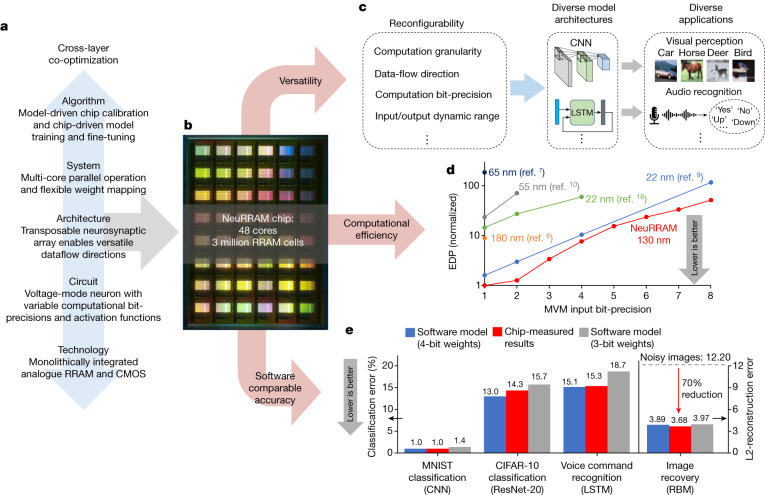
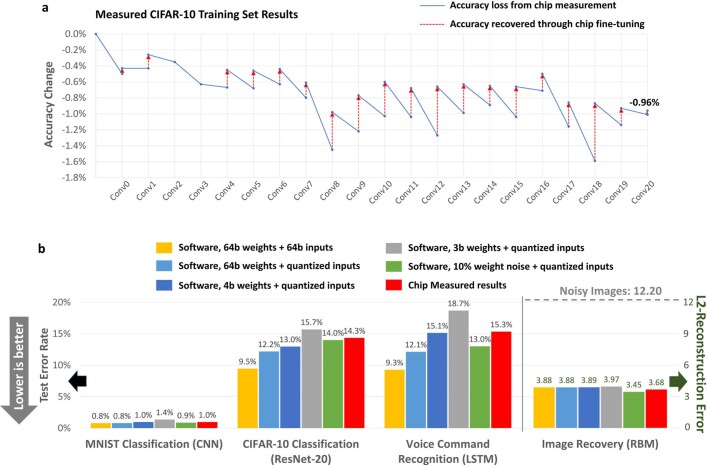
Abstract Realizing increasingly complex artificial intelligence (AI) functionalities directly on edge devices calls for unprecedented energy efficiency of edge hardware. Compute-in-memory (CIM) based on resistive random-access memory (RRAM) 1 promises to meet such demand by storing AI model weights in dense, analogue and non-volatile RRAM devices, and by performing AI computation directly within RRAM, thus eliminating power-hungry data movement between separate compute and memory 2–5 . Although recent studies have demonstrated in-memory matrix-vector multiplication on fully integrated RRAM-CIM hardware 6–17 , it remains a goal for a RRAM-CIM chip to simultaneously deliver high energy efficiency, versatility to support diverse models and software-comparable accuracy. Although efficiency, versatility and accuracy are all indispensable for broad adoption of the technology, the inter-related trade-offs among them cannot be addressed by isolated improvements on any single abstraction level of the design. Here, by co-optimizing across all hierarchies of the design from algorithms and architecture to circuits and devices, we present NeuRRAM—a RRAM-based CIM chip that simultaneously delivers versatility in reconfiguring CIM cores for diverse model architectures, energy efficiency that is two-times better than previous state-of-the-art RRAM-CIM chips across various computational bit-precisions, and inference accuracy comparable to software models quantized to four-bit weights across various AI tasks, including accuracy of 99.0 percent on MNIST 18 and 85.7 percent on CIFAR-10 19 image classification, 84.7-percent accuracy on Google speech command recognition 20 , and a 70-percent reduction in image-reconstruction error on a Bayesian image-recovery task.
Overview
CoChat Summary
TL;DR
NeuRRAM is a 48-core RRAM compute-in-memory chip that co-optimizes device, circuit, architecture, system, and algorithm choices to support reconfigurable AI inference with hardware-measured accuracy. The paper reports better energy-delay product than prior RRAM-CIM chips and benchmark results of 99.0% on MNIST, 85.7% on CIFAR-10, 84.7% on Google speech commands, and a 70% reduction in image-reconstruction error on MNIST image recovery.
Key findings
- The chip achieves an energy-delay product that is 1.6× to 2.3× lower than previous state-of-the-art RRAM-CIM chips, and 7× to 13× higher computational density at various MVM bit-precisions.
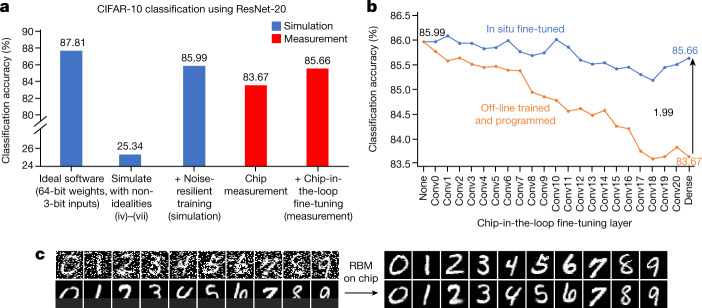
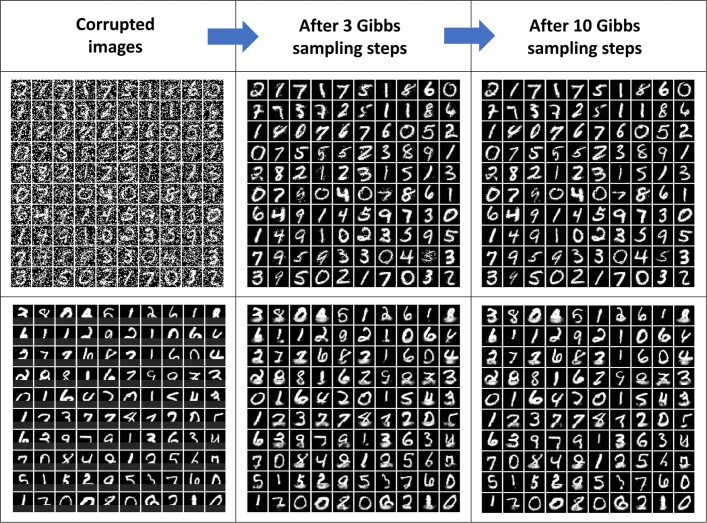
- Fully hardware-measured benchmark results include 99.0% MNIST accuracy, 85.7% CIFAR-10 accuracy, 84.7% Google speech command accuracy, and 70% lower image-reconstruction error on the Bayesian image-recovery task.
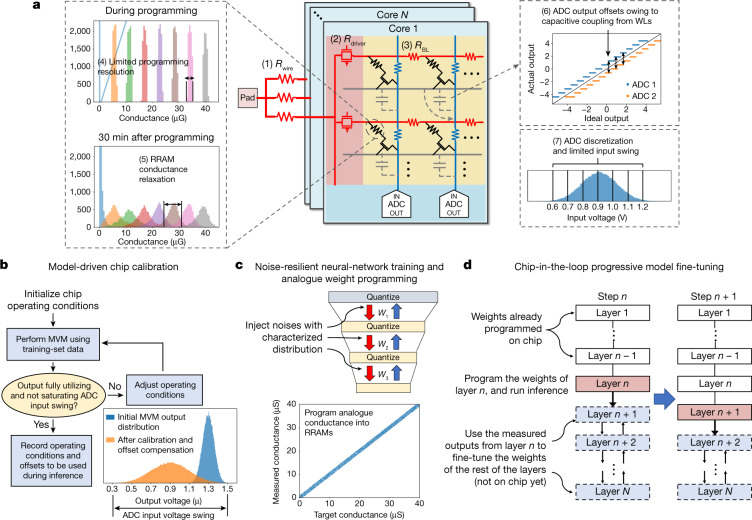
- Hardware-algorithm co-optimization improved CIFAR-10 classification from 25.34% accuracy without noise injection to 85.99% with noise injection; chip-in-the-loop progressive fine-tuning improved cumulative CIFAR-10 test-set accuracy by 1.99%.
- The authors report that the measured CIFAR-10 accuracy for deep ResNet-20 inference on-chip was 83.67%, which remained 3.36% below the 87.03% of the corresponding 4-bit-weight software model.
Methods
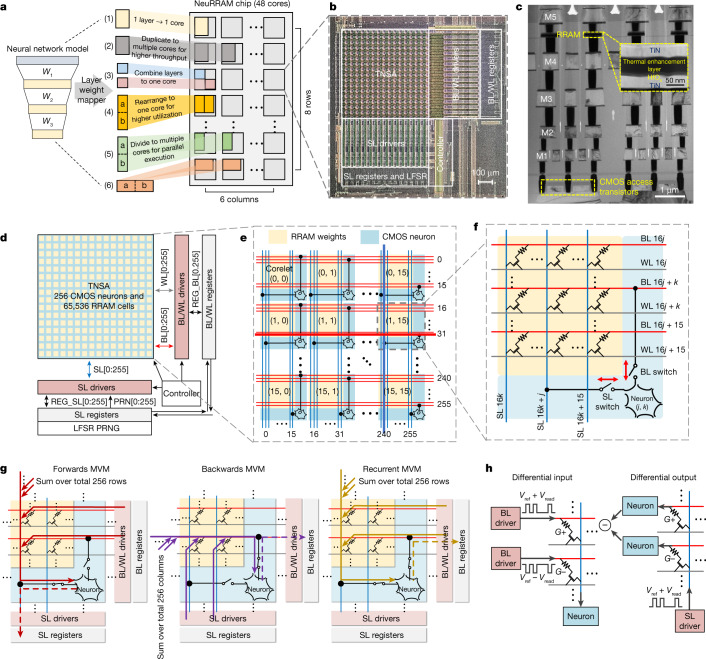
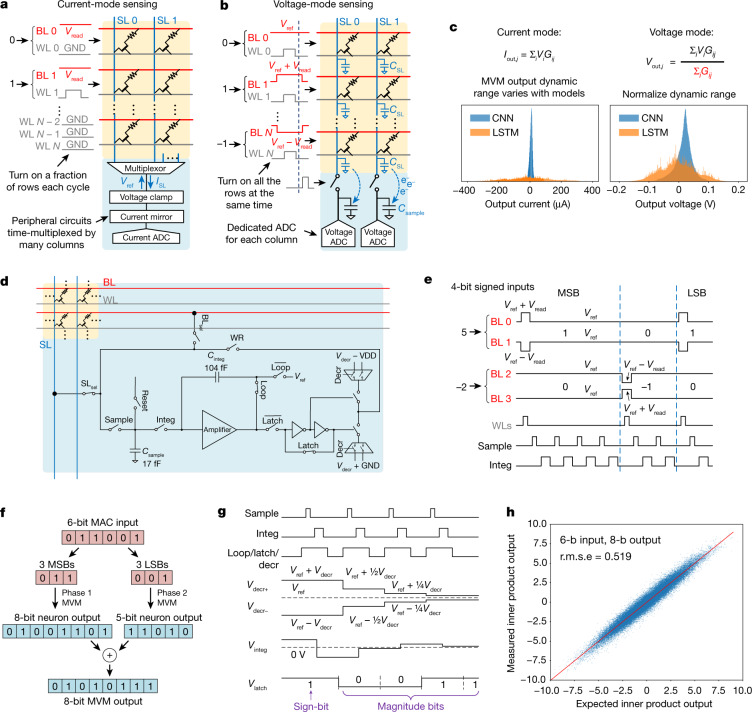
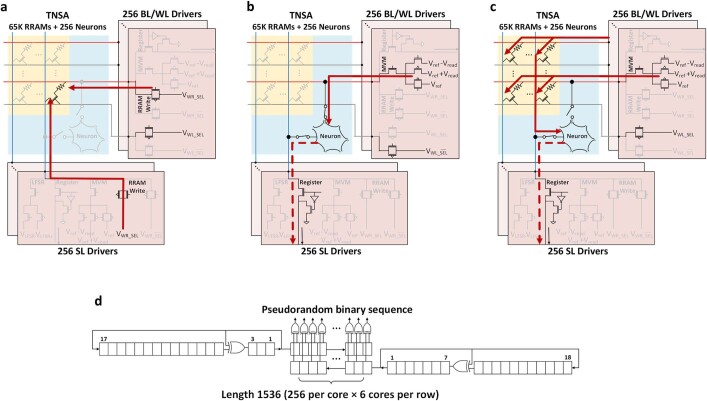
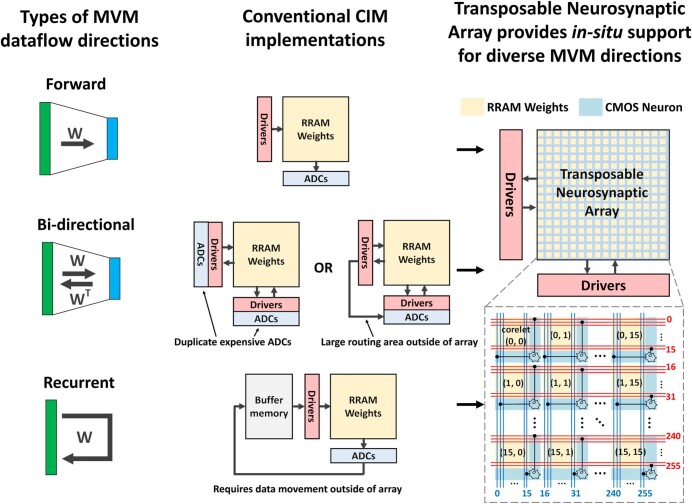
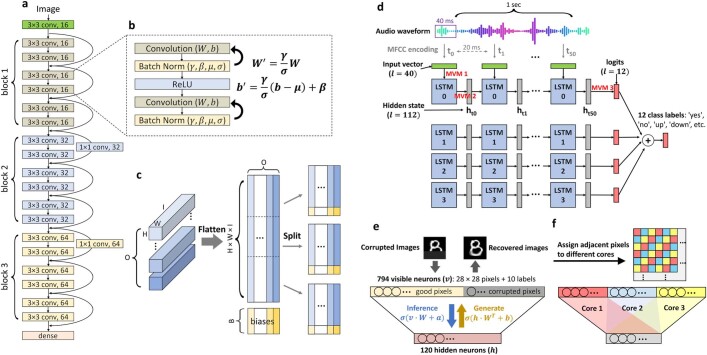
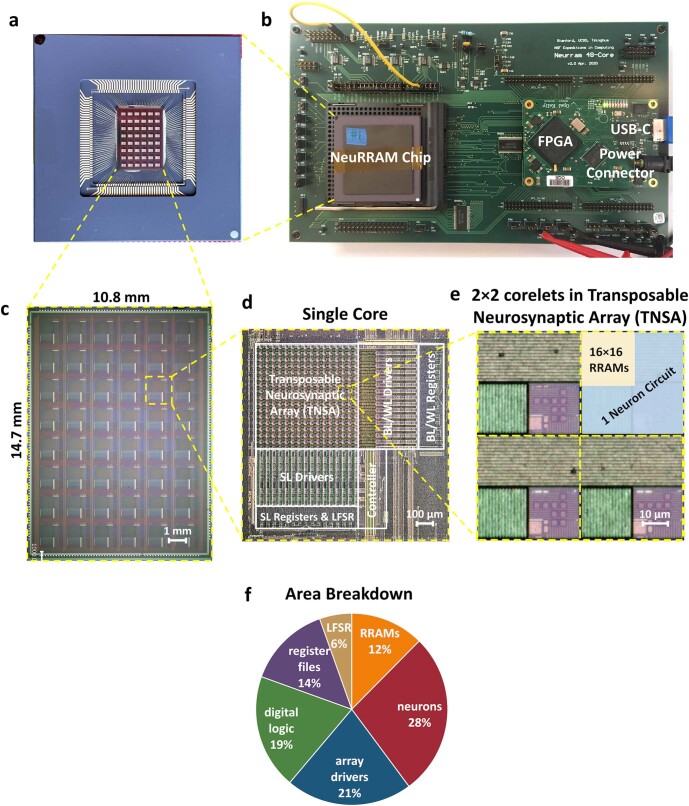
- Built a 48-core NeuRRAM chip with 3 million RRAM devices in a 130-nm CMOS process, using a bidirectional transposable neurosynaptic array (TNSA) and a voltage-mode neuron circuit.
- Evaluated the chip on multiple AI tasks: MNIST and CIFAR-10 image classification, Google speech command recognition, and MNIST image recovery with CNNs, LSTMs, and an RBM; all benchmark results were obtained from hardware measurements on complete datasets.
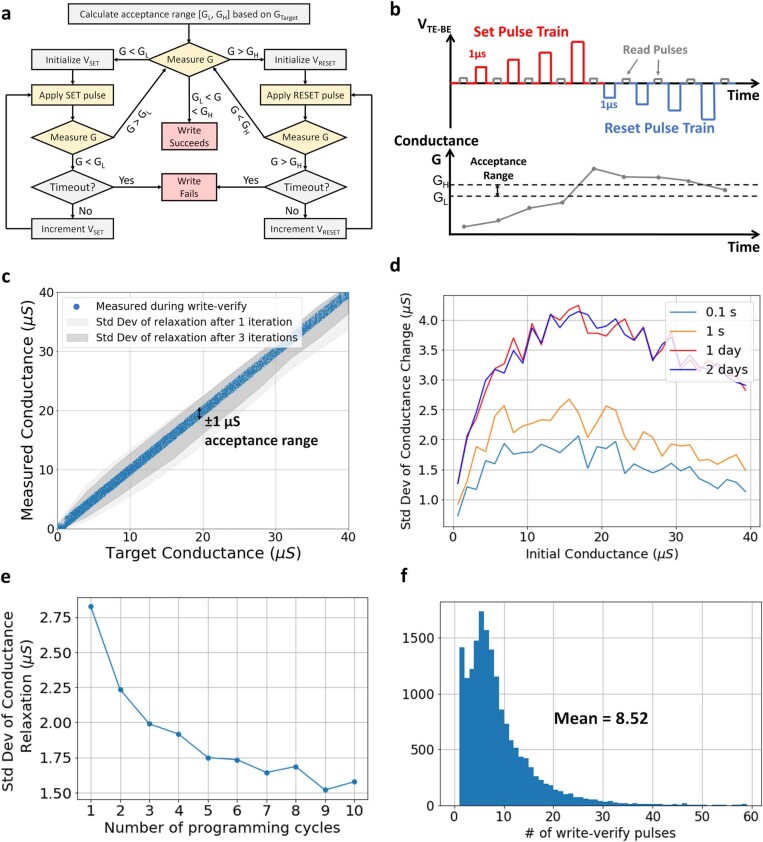
- Used model calibration, noise-resilient training, iterative write–verify programming, and chip-in-the-loop progressive fine-tuning; weights were mapped across cores with strategies for balancing load and mitigating voltage drop.
Limitations
- The paper states that the reported throughput and energy-efficiency numbers are peak values at 100% array utilization and do not include energy/time for buffering or moving intermediate data; this is an explicit limitation of the measurement scope.
- The paper notes that some on-chip accuracies are still below full-precision digital implementations, mainly because of ≤4-bit quantization of inputs and activations, especially sensitive input and output layers.
- Evident from the text: the implementation relies on an FPGA board for partial-sum accumulation, average pooling, buffers, and other operations, so the system is not a fully self-contained chip-level AI system in the demonstrated setup.
Model-written summary. Check it against the paper before relying on it.
Integrity signals
Registry
Cites
Statistics
Figures
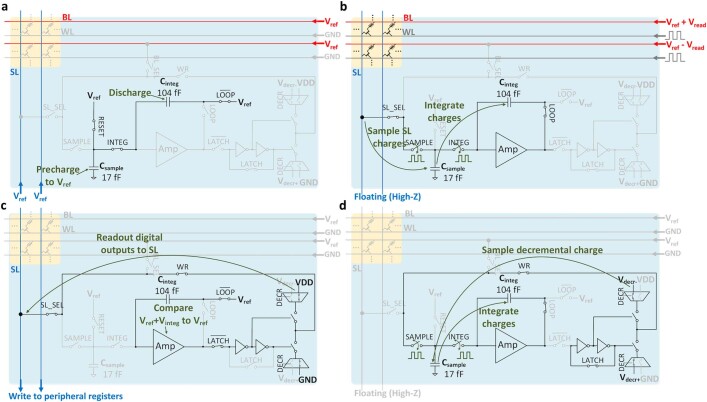
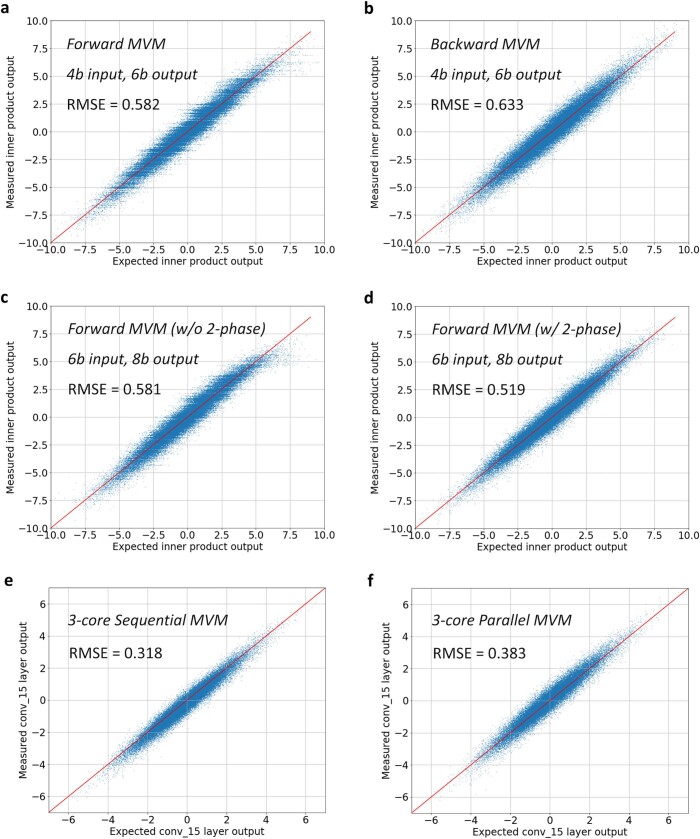
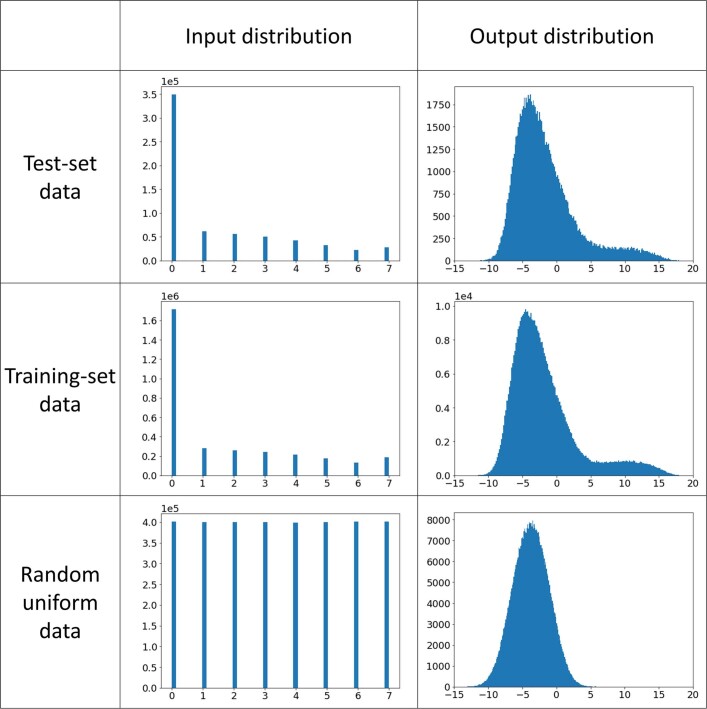
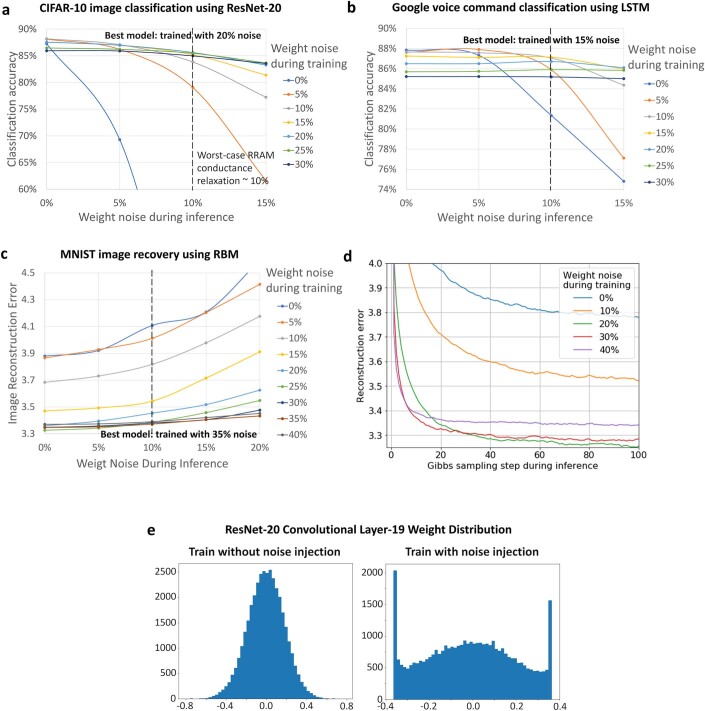
Verification
Claims the paper makes
7 Valid · 1 Not valid · 7 Not checked · 130 Own results and interpretations
The cited sources support only part of this claim — read each source’s verdict below.
In the paper
“The accuracy gap mainly comes from low-precision (≤4-bit) quantization of inputs and activations, especially on the most sensitive input and output layers46.”
§ A compute-in-memory chip based on resistive random-access memory > Hardware-algorithm co-optimizations
What the sources say
- Partly supportedcites [46] Choi, J. et al. PACT: parameterized clipping activation for quantized neural networks. Preprint at https://arxiv.org/abs/1805.06085 (2018). sourceExperimental — accuracy not yet measured
Section A.3 (pp. 11–12) finds that aggressively quantizing the first or last layer can noticeably degrade accuracy, while using 8 bits for those layers causes little degradation in the tested model. Section 5.1 (p. 7) also finds that activation accuracy improves with precision. But it does not establish that the accuracy gap mainly comes from inputs and activations, and it reports less than a 1% validation-error difference when activation precision is at least 4 bits, so the claim’s ≤4-bit framing is too broad. (LLM, conf=0.86)
plainstates a cause- Asserted: passes — The authors put it forward as true.
- Checkable: passes — It can be checked against evidence.
- Load-bearing: passes — The paper’s conclusions depend on it.
- Based: passes — The paper gives a reason why it holds.
- Partly supported
The cited sources support only part of this claim — read each source’s verdict below.
In the paper
“The accuracies of some of our quantized models are lower than that of the state-of-the-art quantized model because we apply <4-bit quantization to the most sensitive input and output layers of the neural networks”
§ A compute-in-memory chip based on resistive random-access memory > Methods > Noise-resilient neural-network training
What the sources say
- Supportedcites [46] Choi, J. et al. PACT: parameterized clipping activation for quantized neural networks. Preprint at https://arxiv.org/abs/1805.06085 (2018). source
Section A.3 (pp. 11–12) reports that aggressively quantizing the first or last layer can noticeably degrade accuracy; its table shows substantially higher validation error when those layers use 2 bits. The comparison with a state-of-the-art model describes the citing authors’ own results, not a finding attributed to PACT. (LLM, conf=0.88)
- Not matchedcites [54] Esser, S. K., Mckinstry, J. L., Bablani, D., Appuswamy, R. & Modha, D. S. Learned step size quantization. In International Conference on Learning Representations (ICLR) (2020).
Its entry has no title and year that we can search by.
plainstates a cause- Asserted: passes — The authors put it forward as true.
- Checkable: passes — It can be checked against evidence.
- Load-bearing: unclear — It is unclear whether the paper’s conclusions depend on it.
- Based: passes — The paper gives a reason why it holds.
- Supported
A result the paper reports from its own data — it cites no other source for it, so there is none to check. The quote shows it is in the paper.
In the paper
“we achieve a 0.98% error rate on MNIST handwritten digit recognition using a 7-layer CNN”
§ A compute-in-memory chip based on resistive random-access memory > Hardware-algorithm co-optimizations
plain- Asserted: passes — The authors put it forward as true.
- Checkable: passes — It can be checked against evidence.
- Load-bearing: passes — The paper’s conclusions depend on it.
- Based: passes — The paper gives a reason why it holds.
A result the paper states — it cites no source for it, so there is none to check. The quote shows it is in the paper.
In the paper
“Some of these numbers are not yet to the accuracies achieved by full-precision digital implementations.”
§ A compute-in-memory chip based on resistive random-access memory > Hardware-algorithm co-optimizations
plain- Asserted: passes — The authors put it forward as true.
- Checkable: passes — It can be checked against evidence.
- Load-bearing: unclear — It is unclear whether the paper’s conclusions depend on it.
- Based: passes — The paper gives a reason why it holds.
A result the paper reports from its own data — it cites no other source for it, so there is none to check. The quote shows it is in the paper.
In the paper
“a 14.34% error rate on CIFAR-10 object classification using ResNet-20”
§ A compute-in-memory chip based on resistive random-access memory > Hardware-algorithm co-optimizations
plain- Asserted: passes — The authors put it forward as true.
- Checkable: passes — It can be checked against evidence.
- Load-bearing: passes — The paper’s conclusions depend on it.
- Based: passes — The paper gives a reason why it holds.
72 more claims
Create a free account to see all 145 claims and to verify the 2 references still open.
- Probably not a substantial claim. 37
- It may state two separate claims as one. 41
Claims other papers make about this one
Each is checked against this paper’s own text: does it say what the citing paper says it does?
The source backs part of the claim, not all of it — or backs it for a different population, condition or comparison.
In the citing paper
“So far, several groups and companies have claimed the realization of hybrid CMOS/memristor implementations of ANNs53–61, —from now on, memristive ANNs— with performance that is superior to that of fully-CMOS counterparts.”
From Hardware implementation of memristor-based artificial neural networks (2024) · cites this paper as [60]
Experimental — accuracy not yet measuredThe source backs part of the claim, not all of it — or backs it for a different population, condition or comparison.
In the citing paper
“Although several compute-in-memory or near-memory approaches based on SRAMs and digital compute35–38 have been presented in the literature, most of these do not address the energy and time costs of reloading weights, thus making direct side-by-side comparisons against NVM-based weight-stationary approaches difficult.”
From An analog-AI chip for energy-efficient speech recognition and transcription (2023) · cites this paper as [7]
Experimental — accuracy not yet measuredThe cited source says what the claim attributes to it.
In the citing paper
“Some groups prefer to incorporate a transistor in series to each MIM cell to obtain a better control over the currents through the device (i.e., improve conductance controllability and minimize sneak path currents)53–55,60,61,102,113,167,194,218–222,).”
From Hardware implementation of memristor-based artificial neural networks (2024) · cites this paper as [60]
The cited source says what the claim attributes to it.
In the citing paper
“Then, analogue VMM has been demonstrated both for binary inputs and weights218–220, as well as for binary inputs and analogue/multilevel weights60,85,105,217.”
From Hardware implementation of memristor-based artificial neural networks (2024) · cites this paper as [60]
The cited source says what the claim attributes to it.
In the citing paper
“These results imply that with better architecture, materials, and hardware-software co-design [161], in-memory computing can set new standards for parallel processing.”
From Brain-inspired computing systems: a systematic literature review (2024) · cites this paper as [161]
2 more claims about this paper
Create a free account to see every claim other papers make about this one.
Citations
Cites
Deep Residual Learning for Image Recognition
He, K., Zhang, X., Ren, S., & Sun, J. (2016) · 2016 IEEE Conference on Computer Vision and Pattern Recognition (CVPR) · doi:10.1109/cvpr.2016.90 · Cited by 235,474
Hochreiter, S., & Schmidhuber, J. (1997) · Neural Computation · doi:10.1162/neco.1997.9.8.1735 · Cited by 102,318
LeCun, Y., Bengio, Y., & Hinton, G. (2015) · Nature · doi:10.1038/nature14539 · Cited by 84,126
Gradient-based learning applied to document recognition
Lecun, Y., Bottou, L., Bengio, Y., & Haffner, P. (1998) · Proceedings of the IEEE · doi:10.1109/5.726791 · Cited by 58,805
Multilayer feedforward networks are universal approximators
Hornik, K., Stinchcombe, M., & White, H. (1989) · Neural Networks · doi:10.1016/0893-6080(89)90020-8 · Cited by 21,728
International Conference on Learning Representations (ICLR 2013)
松尾, 豊. (2013) · 人工知能学会誌 = Journal of Japanese Society for Artificial Intelligence · Cited by 6,286
In-Datacenter Performance Analysis of a Tensor Processing Unit
Jouppi, N. P., Young, C., Patil, N., Patterson, D., Agrawal, G., Bajwa, R., Bates, S., Bhatia, S., Boden, N., Borchers, A., et al. (2017) · Proceedings of the 44th Annual International Symposium on Computer Architecture · doi:10.1145/3079856.3080246 · Cited by 4,537
Eyeriss: An Energy-Efficient Reconfigurable Accelerator for Deep Convolutional Neural Networks
Chen, Y.-H., Krishna, T., Emer, J. S., & Sze, V. (2017) · IEEE Journal of Solid-State Circuits · doi:10.1109/jssc.2016.2616357 · Cited by 3,247 · cited 1×
“Extended Data Table 2 shows that such scaling will enable NeuRRAM to deliver higher energy and area efficiency than today’s state-of-the-art edge inference accelerators 58–61 .”
BackgroundTraining and operation of an integrated neuromorphic network based on metal-oxide memristors
Prezioso, M., Merrikh-Bayat, F., Hoskins, B. D., Adam, G. C., Likharev, K. K., & Strukov, D. B. (2015) · Nature · doi:10.1038/nature14441 · Cited by 3,001 · cited 2×
“…based on resistive random-access memory (RRAM) 1 promises to meet such demand by storing AI model weights in dense, analogue and non-volatile RRAM devices, and by performing AI computation directly within RRAM, thus eliminating power-hungry data movement between separate compute and memory 2–5 .”
Wong, H.-S. P., Lee, H.-Y., Yu, S., Chen, Y.-S., Wu, Y., Chen, P.-S., Lee, B., Chen, F. T., & Tsai, M.-J. (2012) · Proceedings of the IEEE · doi:10.1109/jproc.2012.2190369 · Cited by 2,757
Self-citation
Research works printed but not linked: 1
- Koller, D. & Friedman, N. Probabilistic Graphical Models: Principles and Techniques (Adaptive Computation and Machine Learning series) (MIT Press, 2009).
Cited by
Items 101–200 of 925
Brain-inspired computing systems: a systematic literature review
Zolfagharinejad, M., Alegre-Ibarra, U., Chen, T., Kinge, S., & van der Wiel, W. G. (2024) · The European Physical Journal B · doi:10.1140/epjb/s10051-024-00703-6 · Cited by 39
Hsu, H.-H., Wen, T.-H., Huang, W., Khwa, W.-S., Lo, Y.-C., Jhang, C.-J., Chin, Y.-H., Chen, Y.-C., Lo, C., Liu, R.-S., et al. (2023) · IEEE Journal of Solid-State Circuits · doi:10.1109/jssc.2023.3314433 · Cited by 44
“…silicon-based nvCIM designs [8], [9], [10], [11], [12], [13], [14], [15], [16], [17], [18], [19], [20], [21], [22], [23], [24], [25], [26], [27], [28], [29] have shown that on-chip memory storage combined with computing elements can enable parallel multiply-and-accumulate (MAC) operation,…”
A Riccati Matrix Equation Solver Design Based Neurodynamics Method and Its Application
Xiao, P., Fang, J., Wei, Z., Dong, Y., Du, S., Wen, S., & Hong, Q. (2025) · IEEE Transactions on Automation Science and Engineering · doi:10.1109/tase.2025.3567981 · Cited by 37
In-memory and in-sensor reservoir computing with memristive devices
Lin, N., Chen, J., Zhao, R., He, Y., Wong, K., Qiu, Q., Wang, Z., & Yang, J. J. (2024) · APL Machine Learning · doi:10.1063/5.0174863 · Cited by 42
The Intel neuromorphic DNS challenge
Timcheck, J., Shrestha, S. B., Rubin, D. B. D., Kupryjanow, A., Orchard, G., Pindor, L., Shea, T. M., & Davies, M. (2023) · Neuromorphic Computing and Engineering · doi:10.1088/2634-4386/ace737 · Cited by 63
Spinel ferrites for resistive random access memory applications
Gayakvad, K., Somdatta, K., Mathe, V. L., Dongale, T. D., Wuppulluri, M., & Patankar, K. K. (2023) · Emergent Materials · doi:10.1007/s42247-023-00576-y · Cited by 37
Raffel, Y., De, S., Lederer, M., Olivo, R. R., Hoffmann, R., Thunder, S., Pirro, L., Beyer, S., Chohan, T., Kämpfe, T., et al. (2022) · ACS Applied Electronic Materials · doi:10.1021/acsaelm.2c00771 · Cited by 43
Zhang, G., Fan, X., Wang, J., Wang, Z., Zhang, Z., Li, P., Ma, Y., Huang, K., Yu, B., Wan, Q., et al. (2025) · Nature Communications · doi:10.1038/s41467-025-60970-4 · Cited by 64
Iliasov, A. I., Matsukatova, A. N., Emelyanov, A. V., Slepov, P. S., Nikiruy, K. E., & Rylkov, V. V. (2024) · Nanoscale Horizons · doi:10.1039/d3nh00421j · Cited by 34
Fibre integrated circuits by a multilayered spiral architecture
Wang, Z., Ke, C. H. E. N., Shi, X., Du, Q., Ai, Y., Li, P., Yong, L., Sun, X., Wang, N., Hu, X., et al. (2026) · Nature · doi:10.1038/s41586-025-09974-0 · Cited by 51
Preparation and applications of Hydrogen-Bonded organic framework membranes
Deng, W., Wang, X., Xiao, K., Li, Y., Liu, C., Yao, Z., Wang, L., Cheng, Z., Lv, Y., Xiang, S., et al. (2024) · Chemical Engineering Journal · doi:10.1016/j.cej.2024.154457 · Cited by 36
Memristor-based feature learning for pattern classification
Shi, T., Gao, L., Tian, Y., Tang, S., Liu, J., Li, Y., Zhou, R., Cui, S., Zhang, H., Li, Y., et al. (2025) · Nature Communications · doi:10.1038/s41467-025-56286-y · Cited by 51
Neural architecture search for in-memory computing-based deep learning accelerators
Krestinskaya, O., Fouda, M. E., Benmeziane, H., Maghraoui, K. E., Sebastian, A., Lu, W. D., Lanza, M., Li, H. H., Kurdahi, F. J., Fahmy, S. A., et al. (2024) · Nature Reviews Electrical Engineering · doi:10.1038/s44287-024-00052-7 · Cited by 47
Liu, Q., Ren, H. J., Wei, Q., & Li, M. (2025) · Advanced Science · doi:10.1002/advs.202509155 · Cited by 43
On-chip direct synthesis of boron nitride memristors
Xie, J., Yekta, A. E., Mamun, F. A., Zhu, K., Chen, M., Pazos, S. M., Zheng, W., Zhang, X., Tongay, S., Li, X., et al. (2025) · Nature Nanotechnology · doi:10.1038/s41565-025-01988-z · Cited by 48
Self-citationBio-Inspired Design of Superconducting Spiking Neuron and Synapse
Schegolev, A. E., Klenov, N. V., Gubochkin, G. I., Kupriyanov, M. Y., & Soloviev, I. I. (2023) · Nanomaterials · doi:10.3390/nano13142101 · Cited by 37
Wang, J., Ren, Y., Yang, Z., Lv, Q., Zhang, Y., Zhang, M., Zhao, T., Gu, D., Liu, F., Tang, B., et al. (2024) · Advanced Science · doi:10.1002/advs.202309538 · Cited by 39
From memristive devices to neuromorphic systems
Huang, Y., Kiani, F., Ye, F., & Xia, Q. (2023) · Applied Physics Letters · doi:10.1063/5.0133044 · Cited by 37
Guo, Z., Zhang, J., Wang, J., Liu, X., Guo, P., Sun, T., Li, L., Gao, H., Xiong, L., & Huang, J. D. (2024) · Nano Letters · doi:10.1021/acs.nanolett.4c01606 · Cited by 33
Chaudhary, M., Yang, T., Chen, C., Lai, P., Hsu, Y., Peng, Y., Kumar, A., Lee, C., & Chueh, Y. (2023) · Advanced Functional Materials · doi:10.1002/adfm.202303697 · Cited by 32
Photonic online learning: a perspective
Buckley, S. M., Tait, A. N., McCaughan, A. N., & Shastri, B. J. (2023) · Nanophotonics · doi:10.1515/nanoph-2022-0553 · Cited by 38
Neuromorphic computing for robotic vision: algorithms to hardware advances
Chowdhury, S. S., Sharma, D., Kosta, A. K., & Roy, K. (2025) · Communications Engineering · doi:10.1038/s44172-025-00492-5 · Cited by 55
Ji, Z., & Jiang, M. (2025) · Renewable and Sustainable Energy Reviews · doi:10.1016/j.rser.2025.116159 · Cited by 53
CiMLoop: A Flexible, Accurate, and Fast Compute-In-Memory Modeling Tool
Andrulis, T., Emer, J., & Sze, V. (2024) · IEEE International Symposium on Performance Analysis of Systems and Software (ISPASS) · doi:10.1109/ispass61541.2024.00012 · Cited by 61
Ji, X., Chen, Y., Wang, J., Zhou, G., Lai, C. S., & Dong, Z. (2024) · IEEE Internet of Things Journal · doi:10.1109/jiot.2024.3448350 · Cited by 37
Two-dimensional materials for bio-realistic neuronal computing networks
Sangwan, V. K., Liu, S. E., Trivedi, A. R., & Hersam, M. C. (2022) · Matter · doi:10.1016/j.matt.2022.10.017 · Cited by 36
Rapid learning with phase-change memory-based in-memory computing through learning-to-learn
Ortner, T., Petschenig, H., Vasilopoulos, A., Renner, R., Brglez, Š., Limbacher, T., Piñero-Fuentes, E., Linares-Barranco, A., Pantazi, A., & Legenstein, R. A. (2025) · Nature Communications · doi:10.1038/s41467-025-56345-4 · Cited by 46
Zhang, Y., Xu, H., Huang, L., & Chen, C. (2023) · Engineering Applications of Artificial Intelligence · doi:10.1016/j.engappai.2023.106232 · Cited by 31
Sk, M. R., Thunder, S., Lehninger, D., Sanctis, S., Raffel, Y., Lederer, M., Jank, M. P. M., Kämpfe, T., De, S., & Chakrabarti, B. (2023) · ACS Applied Electronic Materials · doi:10.1021/acsaelm.2c01357 · Cited by 32
Koo, R., Shin, W., Kim, S., Im, J., Park, S., Ko, J., Kwon, D., Kim, J., Kwon, D., & Lee, J. (2023) · Advanced Science · doi:10.1002/advs.202303735 · Cited by 29
Metal–Organic Frameworks–Based Memristors: Materials, Devices, and Applications
Shu, F., Chen, X., Yu, Z., Gao, P., & Liu, G. (2022) · Molecules · doi:10.3390/molecules27248888 · Cited by 28
MLG-NCS: Multimodal Local–Global Neuromorphic Computing System for Affective Video Content Analysis
Ji, X., Dong, Z., Zhou, G., Lai, C. S., & Qi, D. (2024) · IEEE Transactions on Systems Man and Cybernetics Systems · doi:10.1109/tsmc.2024.3392732 · Cited by 32
Reliable Memristive Synapses Based on Parylene-MoOx Nanocomposites for Neuromorphic Applications
Minnekhanov, A. A., Matsukatova, A. N., Trofimov, A. D., Несмелов, А. А., Zavyalov, S. A., Demin, V. A., & Emelyanov, A. V. (2023) · ACS Applied Materials & Interfaces · doi:10.1021/acsami.3c13956 · Cited by 30
In-memory analog solution of compressed sensing recovery in one step
Wang, S., Luo, Y., Zuo, P., Pan, L., Li, Y., & Sun, Z. (2023) · Science Advances · doi:10.1126/sciadv.adj2908 · Cited by 43
Nonvolatile Electrochemical Random‐Access Memory under Short Circuit
Kim, D. S., Watkins, V. J., Cline, L. A., Li, J., Sun, K., Sugar, J. D., Fuller, E. J., Talin, A. A., & Li, Y. (2022) · Advanced Electronic Materials · doi:10.1002/aelm.202200958 · Cited by 37
A ferroelectric–memristor memory for both training and inference
Martemucci, M., Rummens, F., Malot, Y., Hirtzlin, T., Guille, O., Martin, S., Carabasse, C., Vincent, A. F., Saïghi, S., Grenouillet, L., et al. (2025) · Nature Electronics · doi:10.1038/s41928-025-01454-7 · Cited by 56
Yue, W., Wu, K., Li, Z., Zhou, J., Wang, Z., Zhang, T., Yang, Y., Ye, L., Wu, Y., Bu, W., et al. (2025) · Nature Communications · doi:10.1038/s41467-025-56412-w · Cited by 42
Large-Scale Integrated Photonic Device Platform for Energy-Efficient AI/ML Accelerators
Tossoun, B. M., Xiao, X., Cheung, S. S., Yuan, Y., Peng, Y., Srinivasan, S., Giamougiannis, G., Huang, Z., Singaraju, P., London, Y., et al. (2025) · IEEE Journal of Selected Topics in Quantum Electronics · doi:10.1109/jstqe.2025.3527904 · Cited by 45
Deployment of Artificial Intelligence Models on Edge Devices: A Tutorial Brief
Żyliński, M., Nassibi, A., Rakhmatulin, I., Malik, A., Papavassiliou, C., & Mandic, D. P. (2023) · IEEE Transactions on Circuits & Systems II Express Briefs · doi:10.1109/tcsii.2023.3336831 · Cited by 38
Ryabova, M. A., Matsukatova, A. N., Emelyanov, A. V., Несмелов, А. А., Patsaev, T. D., & Demin, V. A. (2024) · Nanoscale · doi:10.1039/d4nr03368j · Cited by 29
An Analysis of Components and Enhancement Strategies for Advancing Memristive Neural Networks
Park, H., Han, J., Yim, S., Shin, D. H., Park, T. W., Woo, K. S., Lee, S. H., Cho, J. M., Kim, H. W., Park, T., et al. (2025) · Advanced Materials · doi:10.1002/adma.202412549 · Cited by 27
Neuromorphic Computing Based on CMOS-Integrated Memristive Arrays: Current State and Perspectives
Mikhaylov, A. N., Gryaznov, E. G., Koryazhkina, M. N., Bordanov, I., Shchanikov, S., Telminov, O. A., & Kazantsev, V. (2023) · Supercomputing Frontiers and Innovations · doi:10.14529/jsfi230206 · Cited by 37
Advanced Optical Integration Processes for Photonic‐Integrated Circuit Packaging
Baek, K., Kim, M., Kim, H., Ahn, J., & So, H. (2025) · Advanced Materials Technologies · doi:10.1002/admt.202401848 · Cited by 32
Atomic Layer Deposition Films for Resistive Random‐Access Memories
Hao, C., Peng, J., Zierold, R., & Blick, R. H. (2024) · Advanced Materials Technologies · doi:10.1002/admt.202301762 · Cited by 31
van Doremaele, E. R. W., Stevens, T., Ringeling, S., Spolaor, S., Fattori, M., & van de Burgt, Y. (2024) · Science Advances · doi:10.1126/sciadv.ado8999 · Cited by 31
Fatima, S., Tahir, R., Akinwande, D., & Rizwan, S. (2023) · Carbon · doi:10.1016/j.carbon.2023.118656 · Cited by 26
A dual-domain compute-in-memory system for general neural network inference
Wang, Z., Yu, R., Jia, Z., He, Z., Yang, T., Gao, B., Li, Y., Hu, Z., Hao, Z., Liu, Y., et al. (2025) · Nature Electronics · doi:10.1038/s41928-024-01315-9 · Cited by 35
Self-citationAn Eight-Core RISC-V Processor With Compute Near Last Level Cache in Intel 4 CMOS
Chen, G. K., Knag, P. C., Tokunaga, C., & Krishnamurthy, R. K. (2022) · IEEE Journal of Solid-State Circuits · doi:10.1109/jssc.2022.3228765 · Cited by 29
A full-stack memristor-based computation-in-memory system with software-hardware co-development
Yu, R., Wang, Z., Liu, Q., Gao, B., Hao, Z., Guo, T., Ding, S., Zhang, J., Qin, Q., Wu, D. M., et al. (2025) · Nature Communications · doi:10.1038/s41467-025-57183-0 · Cited by 36
Self-citationAnalog in-memory computing attention mechanism for fast and energy-efficient large language models
Leroux, N., Manea, P.-P., Sudarshan, C., Finkbeiner, J., Siegel, S., Strachan, J. P., & Neftci, E. (2025) · Nature Computational Science · doi:10.1038/s43588-025-00854-1 · Cited by 60
A Fully-Integrated Memristor Chip for Edge Learning
Zhang, Y., Chu, L., & Li, W. (2024) · Nano-Micro Letters · doi:10.1007/s40820-024-01368-7 · Cited by 28
MoOx Synaptic Memristor with Programmable Multilevel Conductance for Reliable Neuromorphic Hardware
Dong, X., Sun, H., Lai, X., et al. (2024) · The Journal of Physical Chemistry Letters · doi:10.1021/acs.jpclett.4c00600 · Cited by 24
You, D.-Q., Chiu, Y.-C., Khwa, W.-S., Li, C.-Y., Hsieh, F.-L., Chien, Y.-A., Lo, C., Liu, R.-S., Hsieh, C.-C., Tang, K., et al. (2023) · IEEE Journal of Solid-State Circuits · doi:10.1109/jssc.2023.3324335 · Cited by 25
Deep Bayesian active learning using in-memory computing hardware
Lin, Y., Gao, B., Tang, J., Zhang, Q., Qian, H., & Wu, H. (2024) · Nature Computational Science · doi:10.1038/s43588-024-00744-y · Cited by 44
Self-citationA near-threshold memristive computing-in-memory engine for edge intelligence
Wang, L., Li, W., Zhou, Z., An, J., Ye, W., Li, Z., Gao, H., Hu, H., Liu, J., Chen, X., et al. (2025) · Nature Communications · doi:10.1038/s41467-025-61025-4 · Cited by 39
Yuan, Y. J., Pazos, S. M., Li, J., Tian, B., Alharbi, O., Zhang, X., Akinwande, D., & Lanza, M. (2025) · Materials Science and Engineering R Reports · doi:10.1016/j.mser.2025.101006 · Cited by 22
Radiofrequency signal processing with a memristive system-on-a-chip
Huang, Y., He, C., Ling, Y., Ge, N., Yang, J. J., Hu, M., Katehi, L. P. B., & Xia, Q. (2025) · Nature Electronics · doi:10.1038/s41928-025-01409-y · Cited by 33
Deep reservoir computing based on self-rectifying memristor synapse for time series prediction
Wang, R., Qi, L., Wang, S., Cao, Y., Ma, X., Wang, H., & Hao, Y. (2023) · Applied Physics Letters · doi:10.1063/5.0158076 · Cited by 22
Role of all-optical neural networks
Matuszewski, M., Prystupiuk, A., & Opala, A. (2024) · Physical Review Applied · doi:10.1103/physrevapplied.21.014028 · Cited by 37
Computing high-degree polynomial gradients in memory
Bhattacharya, T., Hutchinson, G. H., Pedretti, G., Sheng, X., Ignowski, J., Vaerenbergh, T. V., Beausoleil, R. G., Strachan, J. P., & Strukov, D. B. (2024) · Nature Communications · doi:10.1038/s41467-024-52488-y · Cited by 35
Khan, A. H., Cao, X., Luo, C., Zhang, S., Guo, W., Katsikis, V. N., & Li, S. (2025) · Artificial Intelligence Science and Engineering · doi:10.23919/aise.2025.000013 · Cited by 30
A neuromorphic processor with on-chip learning for beyond-CMOS device integration
Greatorex, H., Richter, O., Mastella, M., Cotteret, M., Klein, P., Fabre, M., Rubino, A., Girão, W. S., Chen, J.-R., Ziegler, M., et al. (2025) · Nature Communications · doi:10.1038/s41467-025-61576-6 · Cited by 53
Li, X., Gao, B., Qin, Q., Yao, P., Li, J., Zhao, H., Liu, C., Zhang, Q., Hao, Z., Li, Y., et al. (2025) · Nature Electronics · doi:10.1038/s41928-025-01390-6 · Cited by 33
Self-citationLiu, D., Zhou, H., Mao, W., Liu, J., Han, Y., Man, C., Wu, Q., Guo, Z., Huang, M., Luo, S., et al. (2022) · IEEE Journal on Emerging and Selected Topics in Circuits and Systems · doi:10.1109/jetcas.2022.3212314 · Cited by 26
A 22 nm Floating-Point ReRAM Compute-in-Memory Macro Using Residue-Shared ADC for AI Edge Device
Hsu, H.-H., Wen, T.-H., Khwa, W.-S., Huang, W.-H., Ke, Z.-E., Chin, Y.-H., Wen, H.-J., Chang, Y., Hsu, W., Lele, A. S., et al. (2024) · IEEE Journal of Solid-State Circuits · doi:10.1109/jssc.2024.3470211 · Cited by 23
Boron nitride for applications in microelectronics
Chen, S. H., Magyari-Köpe, B., Hsu, C., Woon, W., & Liao, S. S. (2025) · Nature Reviews Electrical Engineering · doi:10.1038/s44287-025-00141-1 · Cited by 26
Jeong, H., Han, S., Park, S., Kim, T. R., Bae, J., Jang, T., Cho, Y., Seo, S., Jeong, H.-J., Park, S., et al. (2025) · Nature Electronics · doi:10.1038/s41928-024-01318-6 · Cited by 47
An, Y., Kim, D., Park, Y. R., Eo, J. S., Kim, M., Kim, D., Kim, H. B., Lee, B., & Wang, G. (2025) · Nano Energy · doi:10.1016/j.nanoen.2025.110999 · Cited by 23
An implantable memristor towards biomedical applications
Zhu, S., Cao, Z., Zhou, G., Tong, G., Ma, Y., Yang, W., Wu, Y. A., Zhao, Y. X., & Sun, B. T. (2024) · Applied Materials Today · doi:10.1016/j.apmt.2024.102214 · Cited by 25
Non-Volatile Memory and Synaptic Characteristics of TiN/CeOx/Pt RRAM Devices
Ha, H., Pyo, J., Lee, Y., & Kim, S. (2022) · Materials · doi:10.3390/ma15249087 · Cited by 20
Fan, Y., An, R., Tang, J., Li, Y., Liu, T., Gao, B., Qian, H., & Wu, H. (2024) · Current Opinion in Solid State and Materials Science · doi:10.1016/j.cossms.2024.101199 · Cited by 27
Self-citationFu, K., Luo, S., Fu, H., Hatch, K. A., Alugubelli, S. R., Liu, H., Li, T., Xu, M., Mei, Z., He, Z., et al. (2023) · IEEE Transactions on Electron Devices · doi:10.1109/ted.2023.3321562 · Cited by 21
Stochastic neuro-fuzzy system implemented in memristor crossbar arrays
Shi, T., Zhang, H., Cui, S., Liu, J., Gu, Z., Wang, Z., Yan, X., & Liu, Q. (2024) · Science Advances · doi:10.1126/sciadv.adl3135 · Cited by 23
Choi, S., Bezugam, S. S., Bhattacharya, T., Kwon, D., & Strukov, D. B. (2025) · Nature Communications · doi:10.1038/s41467-025-63831-2 · Cited by 44
Improved resistive and synaptic switching performances in bilayer ZrOx/HfOx devices
Ji, H., Lee, Y., Heo, J., & Kim, S. (2023) · Journal of Alloys and Compounds · doi:10.1016/j.jallcom.2023.171096 · Cited by 21
A CMOL-Like Memristor-CMOS Neuromorphic Chip-Core Demonstrating Stochastic Binary STDP
Camuñas-Mesa, L. A., Vianello, E., Reita, C., Serrano‐Gotarredona, T., & Linares-Barranco, B. (2022) · IEEE Journal on Emerging and Selected Topics in Circuits and Systems · doi:10.1109/jetcas.2022.3207514 · Cited by 22
Naqi, M., Kim, T., Cho, Y., Pujar, P., Park, J., & Kim, S. (2023) · Materials Today Nano · doi:10.1016/j.mtnano.2023.100441 · Cited by 22
Layer ensemble averaging for fault tolerance in memristive neural networks
Yousuf, O., Hoskins, B. D., Ramu, K., Fream, M., Borders, W. A., Madhavan, A., Daniels, M. W., Dienstfrey, A., McClelland, J. J., Lueker-Boden, M., et al. (2025) · Nature Communications · doi:10.1038/s41467-025-56319-6 · Cited by 34
Tsuchiya, T., Nishioka, D., Namiki, W., & Terabe, K. (2024) · Advanced Electronic Materials · doi:10.1002/aelm.202400625 · Cited by 21
Wei, Q., Gao, B., Tang, J., Qian, H., & Wu, H. (2023) · IEEE Electron Devices Magazine · doi:10.1109/med.2023.3296084 · Cited by 22
Self-citationMetal-organic framework single crystal for in-memory neuromorphic computing with a light control
Bachinin, S. V., Marunchenko, A., Matchenya, I., Zhestkij, N. A., Shirobokov, V., Gunina, E. V., Novikov, A. S., Timofeeva, M., Povarov, S. A., Li, F., et al. (2024) · Communications Materials · doi:10.1038/s43246-024-00573-6 · Cited by 25
Yan, T., Cai, Y., Wang, Y., Yang, J., Li, S., Zhan, X., Wang, F., Cheng, R., Wang, F., He, J., et al. (2023) · Science China Information Sciences · doi:10.1007/s11432-022-3695-1 · Cited by 19
Adapting magnetoresistive memory devices for accurate and on-chip-training-free in-memory computing
Xiao, Z., Naik, V. B., Lim, J. H., Hou, Y., Wang, Z., & Shao, Q. (2024) · Science Advances · doi:10.1126/sciadv.adp3710 · Cited by 24
Kim, S., Hong, K., Kim, H., Kim, M., & Choi, W. Y. (2024) · Advanced Intelligent Systems · doi:10.1002/aisy.202300797 · Cited by 21
Improved memory performance of ALD grown HfO2 films by nitrogen doping
Aziz, J., Khan, M. F., Neumaier, D., Ahmad, M., Kim, H., Rehman, S., Elahi, E., Chavan, V. D., Ghafoor, F., Kadam, K. D., et al. (2023) · Materials Science and Engineering B · doi:10.1016/j.mseb.2023.116755 · Cited by 20
Singh, D. K., & Gupta, G. (2024) · Materials Advances · doi:10.1039/d4ma00133h · Cited by 21
Song, Y., Chang, Y.-H., Choi, J.-H., Song, M., Yoon, J. H., Lee, S., Jung, S.-Y., Ham, W., Park, J.-M., Kim, H., et al. (2023) · Applied Surface Science · doi:10.1016/j.apsusc.2023.157356 · Cited by 19
Real-time signal processing enabled by fused networks on a memristor-based system on a chip
Wang, Z., Song, W., Wang, T., Wang, Z., Xu, Y., Rao, M., Cai, F., Yin, W., Chen, M. S., Ge, N., et al. (2025) · Science Advances · doi:10.1126/sciadv.adv3436 · Cited by 26
Semenov, V. K., Golden, E. B., & Tolpygo, S. K. (2023) · IEEE Transactions on Applied Superconductivity · doi:10.1109/tasc.2023.3252495 · Cited by 18
Memristor-based adaptive analog-to-digital conversion for efficient and accurate compute-in-memory
Hong, H., Du, Z., Jiang, M., Mao, R., Ren, Y., Li, F., Mao, W., Peng, M., Zhang, W., Liu, Z., et al. (2025) · Nature Communications · doi:10.1038/s41467-025-65233-w · Cited by 41
Self-citationLiu, Y., Wang, B., Wu, L., Huang, L., Lin, L., Li, X., Liu, D., Zhang, S., Zhu, C., Tao, Y., et al. (2023) · ACS Applied Materials & Interfaces · doi:10.1021/acsami.3c11495 · Cited by 20
An overview memristor based hardware accelerators for deep neural network
Gökgöz, B., Gül, F., & Aydın, T. (2024) · Concurrency and Computation Practice and Experience · doi:10.1002/cpe.7997 · Cited by 20
Defect‐Driven Light Perception and Memristor Storage with Phase Transition in Vanadium Dioxide
Niu, L., Xu, P., Huang, T., et al. (2024) · Advanced Electronic Materials · doi:10.1002/aelm.202400006 · Cited by 17
Vasilopoulos, A., Büchel, J., Kersting, B., Lammie, C., Brew, K. W., Choi, S., Philip, T. M., Saulnier, N., Narayanan, V., Gallo, M. L., et al. (2023) · IEEE Transactions on Electron Devices · doi:10.1109/ted.2023.3321014 · Cited by 23
Nonvolatile Memristive Materials and Physical Modeling for In‐Memory and In‐Sensor Computing
Go, S., Lim, K.-G., Lee, T. H., & Loke, D. K. (2024) · Small Science · doi:10.1002/smsc.202300139 · Cited by 16
Falcone, D. F., Clerico, V., Choi, W., Stecconi, T., Horst, F., Bégon‐Lours, L., Galetta, M., Porta, A. L., Garg, N., Alibart, F., et al. (2025) · Advanced Functional Materials · doi:10.1002/adfm.202504688 · Cited by 22
Large-area multilayer molybdenum disulfide for 2D memristors
Zhuang, P., Yan, H., Li, B., Dou, C. R., Tian, Y., Zhou, C., Zhu, H., Tian, B., Chen, Y., Lin, D., et al. (2023) · Materials Today Nano · doi:10.1016/j.mtnano.2023.100353 · Cited by 18
Metadata
- Authors
- Wan, W., Kubendran, R., Schaefer, C., Eryilmaz, S. B., Zhang, W., Wu, D., Deiss, S., Raina, P., Qian, H., Gao, B., Joshi, S., Wu, H., Wong, H.-S. P., & Cauwenberghs, G.
- Affiliations
- University of California San Diego (US)
- University of Pittsburgh (US)
- University of Notre Dame (US)
- Stanford University (US)
- Tsinghua University (CN)
- Corresponding author
- Wan, Weier
- Gao, Bin
- Joshi, Siddharth
- Wu, Huaqiang
- Wong, H.-S. Philip
- Cauwenberghs, Gert
- ORCID
- Venue
- Nature
- Published
- 2022-08-17
- Volume
- 608
- Issue
- 7923
- Pages
- 504-512
- ISSN
- 0028-0836 (ISSN-L)
- 1476-4687
- PMC
- PMC9385482
- OpenAlex
- W4292121737
- Cited by
- 943
- References
- 65
- Citations by year
- 2026: 235 · 2025: 273 · 2024: 246 · 2023: 167 · 2022: 22
- FWCI
- 48.45
- Type
- journal article
- Language
- en
- Open access
- hybrid
- doi.org
- Licence
- cc-by
- creativecommons.org/licenses/by/4.0 (tdm)
- creativecommons.org/licenses/by/4.0 (vor)
- Locations
- Nature (publishedVersion, cc-by)
- PubMed Central (publishedVersion, cc-by)
- PubMed (publishedVersion)
- RePEc: Research Papers in Economics (submittedVersion)
- eScholarship (California Digital Library) (submittedVersion, cc-by)
- Funders
- National Science Foundation (1317470)
- Western Digital
- University of Pennsylvania
- Pennsylvania State University
- Stanford SystemX Alliance
- National Natural Science Foundation of China (61851404)
- Office of Naval Research
- Topics
- Physical Sciences › Engineering › Electrical and Electronic Engineering › Advanced Memory and Neural Computing
- Physical Sciences › Engineering › Electrical and Electronic Engineering › Ferroelectric and Negative Capacitance Devices
- Physical Sciences › Computer Science › Computer Vision and Pattern Recognition › Advanced Neural Network Applications
- Keywords
- in-memory computing, resistive random access memory, neuromorphic hardware, edge AI, energy efficiency, weight quantization, hardware-software co-optimization, non-volatile memory, image classification, voice command recognition
About these checks
Registry, retraction, Cites and statistics results are computed, not judged, with one exception: a printed reference that no index lists is read once by a model before it counts as a citation error. Claims are extracted by a model and kept only when their quote appears verbatim in the text; each cited source is then checked, with a model’s help, for whether it says what the claim relies on. Those verdicts can be wrong — read the claim’s quote and the cited source before relying on one.
The claim verdicts this report counts are experimental: their accuracy is not yet measured.
A language model drew the claims from the paper on 2026-09-29, under version 3 of the claim definition (model deepseek-v4.1-flash, prompt extract-v3).
A second model labelled each claim on 2026-09-29 (model jev-1.13-20260917, definition revision gold-guideline-v0.2).
Cited sources are checked with a language model’s help (gpt-6-sol).
Statistics and arithmetic are recomputed, not judged.
Confidence bands are shown only for fields calibrated on our annotated test set. None is calibrated yet, so no band is shown.
What counts as a claim ›How we measure confidence ›How we check this ›
Are you an author, or do you see a problem with this page? Request a review
Data sources
Bibliographic data: Semantic Scholar, OpenAlex, Crossref.
Contains information from the Semantic Scholar Academic Graph Datasets, made available under the ODC Attribution License (ODC-BY 1.0).
Semantic Scholar’s data is described in: Kinney, R., et al. (2023). The Semantic Scholar Open Data Platform. arXiv:2301.10140.
