

A draft human pangenome reference.
Open accessPublished version of a preprint
The DOI matches its Crossref record; 139 of the 150 references it cites were found in a registry or an index; 59 of the 67 sources its claims cite were checked for support.
Abstract
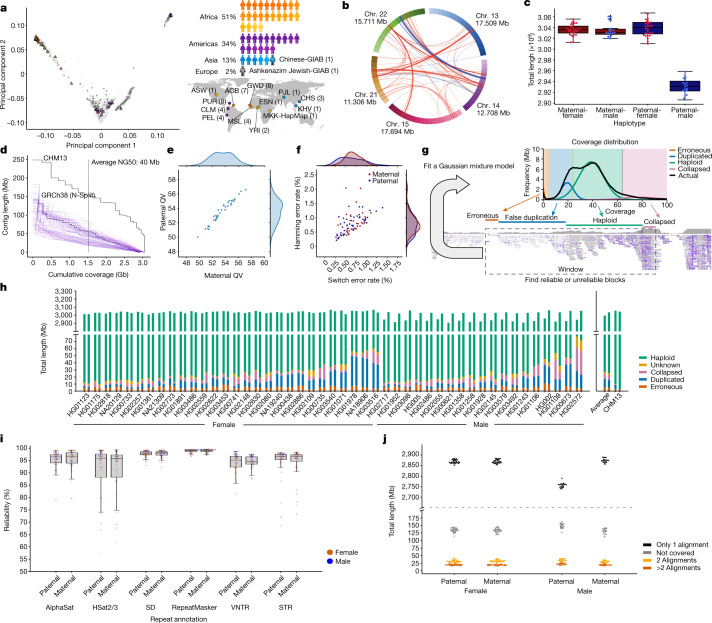
Here the Human Pangenome Reference Consortium presents a first draft of the human pangenome reference. The pangenome contains 47 phased, diploid assemblies from a cohort of genetically diverse individuals. These assemblies cover more than 99% of the expected sequence in each genome and are more than 99% accurate at the structural and base pair levels.
Overview
CoChat Summary
TL;DR
The paper presents a first draft human pangenome reference built from 47 phased, diploid assemblies from genetically diverse individuals, plus graph-based representations and annotations. The draft pangenome improves downstream analyses versus GRCh38, including reducing small-variant discovery errors by 34% and increasing detected structural variants per haplotype by 104%.
Key findings
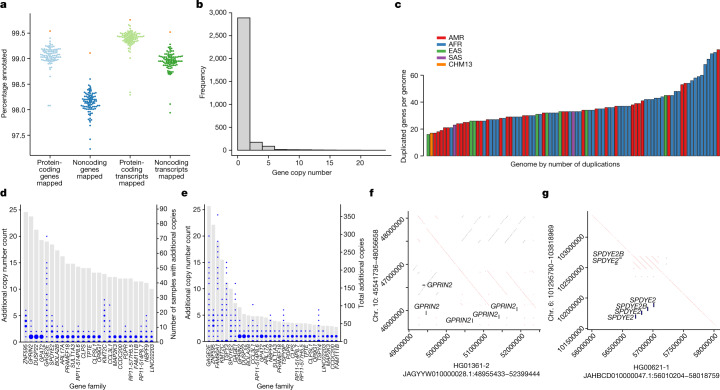
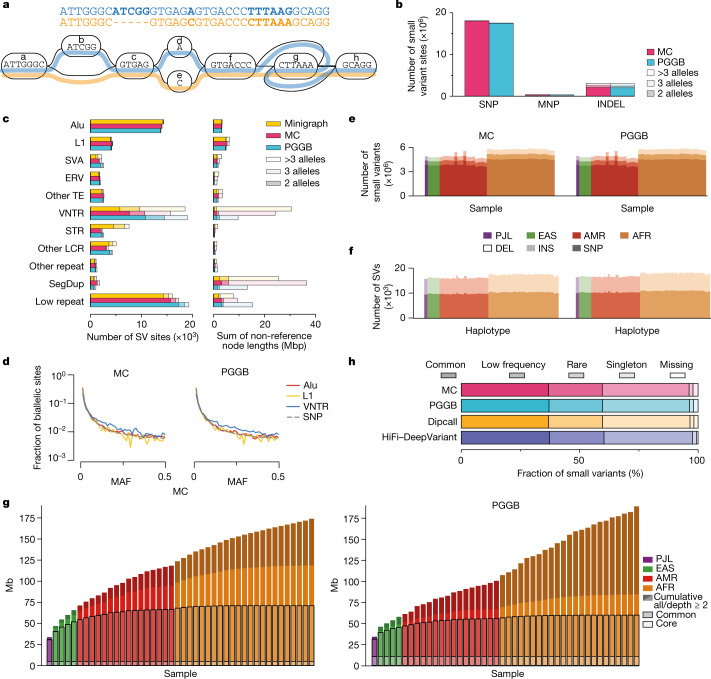
- The draft pangenome was built from 47 phased, diploid assemblies and adds 119 million base pairs of euchromatic polymorphic sequence plus 1,115 gene duplications relative to GRCh38; about 90 million of the added bases came from structural variation.
- Assemblies were reported as >99% complete and >99% accurate at structural and base-pair levels; the assembly reliability pipeline marked only 0.88% (26.4 Mb) of each assembly as unreliable.
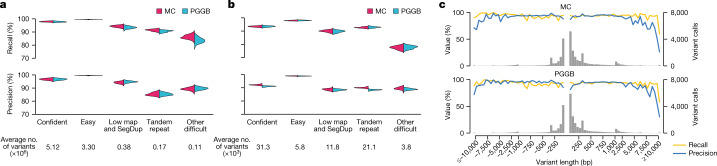
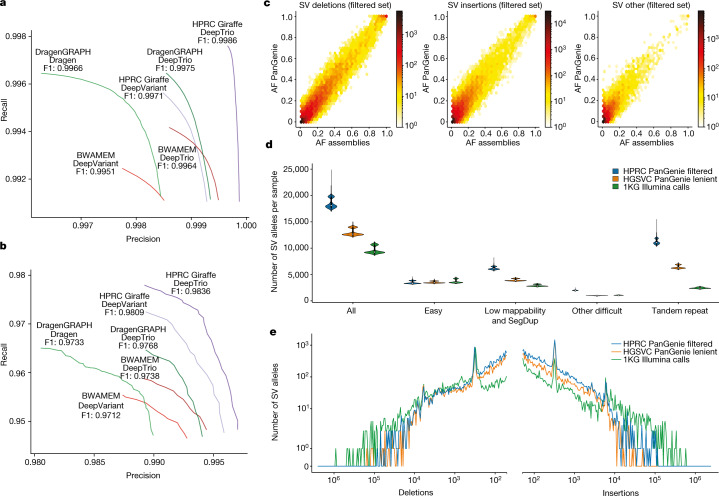
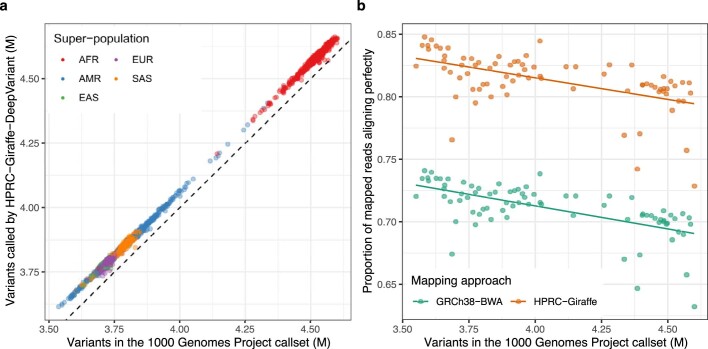
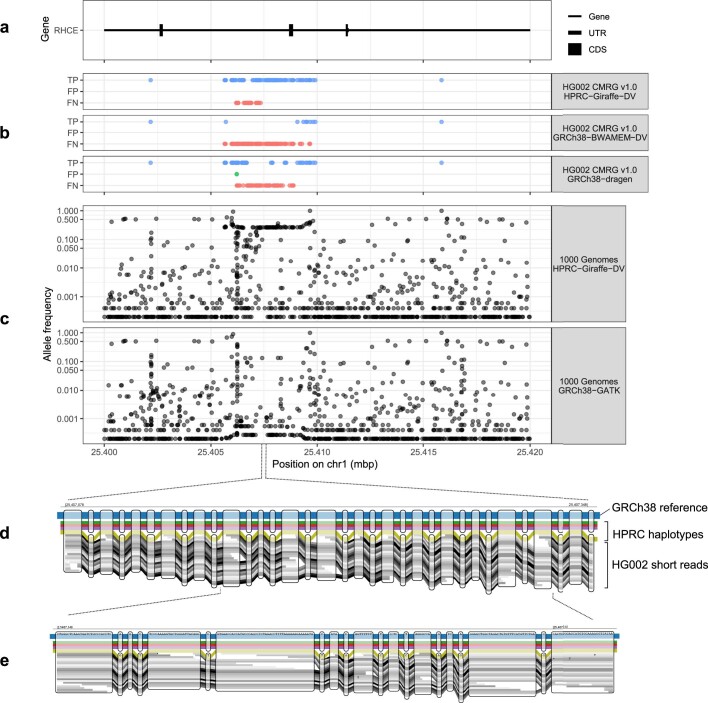
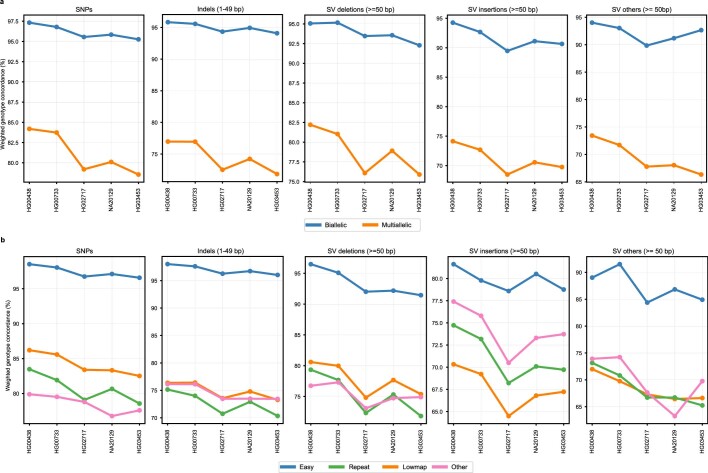
- In short-read analysis, the pangenome workflow reduced small-variant discovery errors by 34% and increased the number of structural variants detected per haplotype by 104% compared with GRCh38-based workflows.
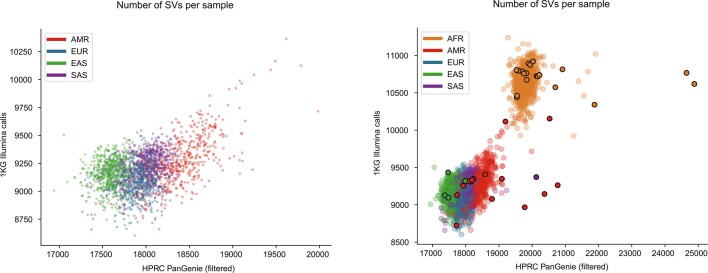
- For 1KG short-read genotyping, the pangenome-based call set gave on average 64,000 more small variants per sample than the 1KG catalogue; for SV genotyping it produced 18,483 SVs per sample versus 9,596 in the short-read 1KG call set.
Methods
- The study assembled 47 fully phased diploid genomes from globally diverse individuals, using PacBio HiFi, Oxford Nanopore, Hi-C, Bionano, and parental Illumina data; assemblies were phased with Trio-Hifiasm and manually/automatically curated.
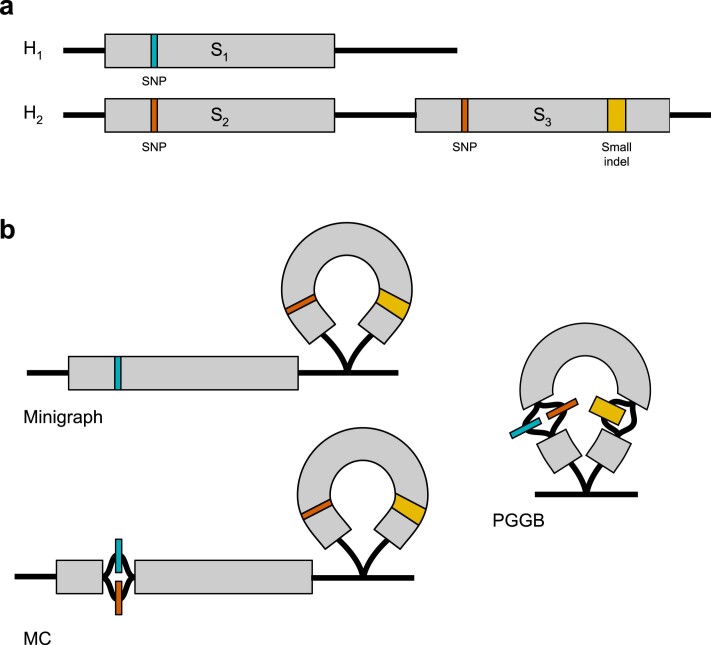
- The authors constructed pangenomes with three graph approaches: Minigraph, Minigraph-Cactus (MC), and PGGB, then evaluated variant representation, graph support, and downstream utility.
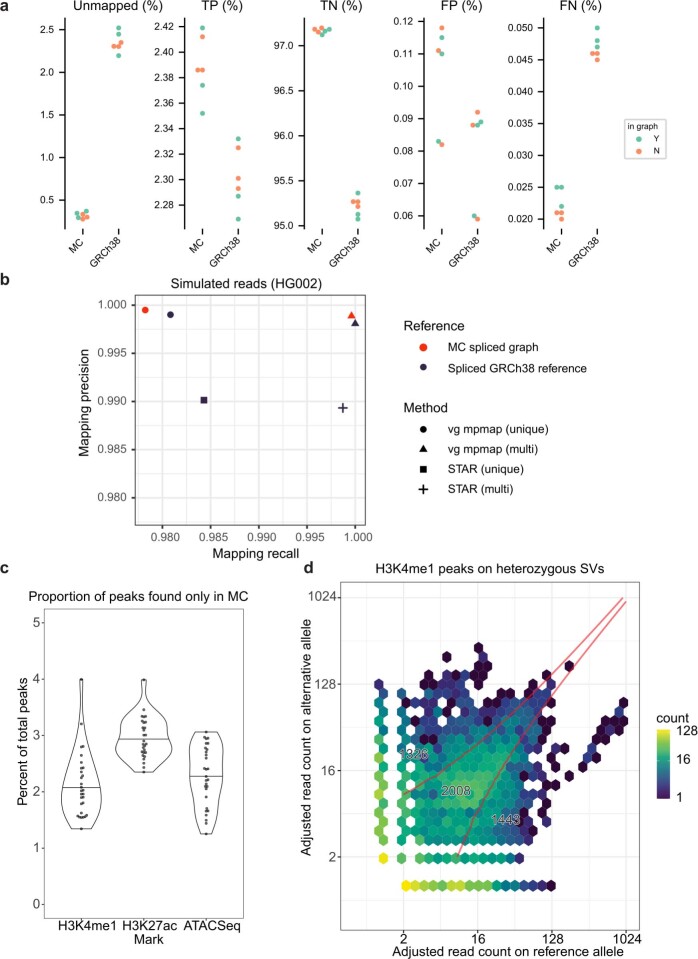
- They benchmarked pangenome-based analyses against GRCh38-based workflows using GIAB, 1KG short reads, and assembly-based comparisons for small variants, SVs, gene annotations, RNA-seq, ChIP-seq/ATAC-seq, VNTRs, and population analyses.
Limitations
- The paper states the cohort is relatively small and that the assembly reliability analysis found roughly an order of magnitude more erroneously assembled sequences in the HPRC assemblies than in T2T-CHM13.
- It explicitly notes remaining issues in highly repetitive regions and complex loci, where variant calling performance was lower and further work is needed; this is a stated limitation.
- The text also makes evident that some analyses are constrained by reference gaps, alignment ambiguity, and incomplete benchmarking truth sets; this is the paper’s implication, stated in the discussion around repetitive regions and underestimation of errors.
Model-written summary. Check it against the paper before relying on it.
Integrity signals
Registry
Cites
Statistics
Figures
Verification
Claims the paper makes
38 Valid · 5 Not valid · 2 Not checked · 206 Own results and interpretations
At least one cited source doesn’t support this claim or points to a different paper, and none confirmed it — see the verdicts below.
In the paper
“The pangenome contains 47 phased, diploid assemblies from a cohort of genetically diverse individuals1.”
§ A draft human pangenome reference > Abstract
What the sources say
- Disputedcites [1] 1000 Genomes Project Consortium. A global reference for human genetic variation Nature 2015 526 68 74 10.1038/nature15393 26432245 PMC4750478 sourceExperimental — accuracy not yet measured
The Abstract (page unavailable) describes a 1000 Genomes resource based on 2,504 individuals from 26 populations, with variants phased onto haplotypes. The Data set overview describes phasing variant sites, not a pangenome containing 47 phased, diploid assemblies. (LLM, conf=0.86)
Checked by a reasoning model — may be wrong.
plain- Asserted: passes — The authors put it forward as true.
- Checkable: passes — It can be checked against evidence.
- Load-bearing: passes — The paper’s conclusions depend on it.
- Based: passes — The paper gives a reason why it holds.
- Rests on an assumption not shown here.
- Disputed
The cited sources support only part of this claim — read each source’s verdict below.
In the paper
“Previous studies have identified tens of megabases of sequence contained within structural variants (SVs) that are polymorphic within the population5.”
§ A draft human pangenome reference > Main
What the sources say
- Partly supportedcites [5] Ebert P Haplotype-resolved diverse human genomes and integrated analysis of structural variation Science 2021 372 eabf7117 10.1126/science.abf7117 33632895 PMC8026704 sourceExperimental — accuracy not yet measured
The Results sections on structural variant distribution and complex structural variation document SVs and distinct structural haplotypes in human populations. But the reported ~279 Mbp is the genomic span of SV hotspots, not the amount of sequence contained within polymorphic SVs; the passages do not establish the claimed tens-of-megabases total. (LLM, conf=0.82)
plain- Asserted: passes — The authors put it forward as true.
- Checkable: passes — It can be checked against evidence.
- Load-bearing: passes — The paper’s conclusions depend on it.
- Based: passes — The paper gives a reason why it holds.
- Partly supported
Every source the paper cites for this claim was checked and supports it.
In the paper
“Recently, the Telomere-to-Telomere (T2T) consortium finished the first complete sequence of a haploid human genome, T2T-CHM13, which provides a contiguous representation of each autosome and of chromosome X, with the exception of some ribosomal DNA arrays that remain to be fully resolved3.”
§ A draft human pangenome reference > Main
What the sources say
- Supportedcites [3] Nurk S The complete sequence of a human genome Science 2022 376 44 53 10.1126/science.abj6987 35357919 PMC9186530 source
“A truly complete genome” states that T2T-CHM13 has gapless telomere-to-telomere assemblies for all 22 autosomes and chromosome X. “rDNA assembly” explains that the ordering of repeats in three rDNA arrays could not be fully resolved, so those arrays are represented by model sequences. (LLM, conf=0.93)
plainSingle case- Asserted: passes — The authors put it forward as true.
- Checkable: passes — It can be checked against evidence.
- Load-bearing: passes — The paper’s conclusions depend on it.
- Based: passes — The paper gives a reason why it holds.
- Supported
The cited sources support only part of this claim — read each source’s verdict below.
In the paper
“despite individual SVs being more likely to affect gene function than either individual SNPs or short insertions and deletions (indels)9,10.”
§ A draft human pangenome reference > Main
What the sources say
- Partly supportedcites [9] Chiang C The impact of structural variation on human gene expression Nat. Genet. 2017 49 692 699 10.1038/ng.3834 28369037 PMC5406250 sourceExperimental — accuracy not yet measured
The Results (Fine-mapping causal variants) state that, per variant, an SV is 28–54 times more likely to modulate gene expression than an SNV or indel. That supports the comparison for gene expression, but the cited analysis does not establish the broader claim about gene function generally. (LLM, conf=0.86)
- Partly supportedcites [10] Sudmant PH An integrated map of structural variation in 2,504 human genomes Nature 2015 526 75 81 10.1038/nature15394 26432246 PMC4617611 sourceExperimental — accuracy not yet measured
The Functional impact of SVs section reports that SV classes were enriched for expression-associated variants relative to the number tested, supporting a greater per-variant effect on gene expression. It uses eQTL associations as a surrogate for functional impact and groups SNPs with indels in the comparison; it does not establish the broader claim about gene function separately against each variant type. (LLM, conf=0.82)
hedgedstates an association- Asserted: passes — The authors put it forward as true.
- Checkable: passes — It can be checked against evidence.
- Load-bearing: passes — The paper’s conclusions depend on it.
- Based: passes — The paper gives a reason why it holds.
- Partly supported
Every source the paper cites for this claim was checked and supports it.
In the paper
“For the core assembler, we chose Trio-Hifiasm20 after detailed benchmarking of several alternatives21.”
§ A draft human pangenome reference > Assembling 47 diverse human genomes
What the sources say
- Supportedcites [20] Cheng H Concepcion GT Feng X Zhang H Li H Haplotype-resolved de novo assembly using phased assembly graphs with hifiasm Nat. Methods 2021 18 170 175 10.1038/s41592-020-01056-5 33526886 PMC7961889 source
Citation 20 identifies Trio-Hifiasm as the assembler the citing authors chose. The Results section (‘Overview of the hifiasm algorithm’) describes hifiasm’s graph-based trio binning, supporting that identification. The separate benchmarking claim is attached to citation 21, not this source. (LLM, conf=0.93)
- Supportedcites [21] Jarvis, E. D. et al. Semi-automated assembly of high-quality diploid human reference genomes. Nature611, 519–531 (2022). PMC9668749 36261518 source
The cited paper’s ‘Trios and higher phasing accuracy’ section compares several assembly algorithms and data types. Its ‘Graph phasing is more complete and accurate’ section reports that Trio hifiasm had the strongest combination of quality metrics among the diploid assemblies. The citing authors’ choice of core assembler is their own decision; this source supports the benchmarking offered as its rationale. Page numbers were not available in our copy. (LLM, conf=0.91)
plain- Asserted: passes — The authors put it forward as true.
- Checkable: passes — It can be checked against evidence.
- Load-bearing: unclear — It is unclear whether the paper’s conclusions depend on it.
- Based: passes — The paper gives a reason why it holds.
- Supported
135 more claims · 15 with their cited sources checked
Create a free account to see all 251 claims and every source verdict.
- It may state two separate claims as one. 80
- Probably not a substantial claim. 40
- The quote only partly states this claim. 1
Claims other papers make about this one
Each is checked against this paper’s own text: does it say what the citing paper says it does?
The cited source doesn’t support the claim as written.
In the citing paper
“In addition, the DRAGEN multigenome mapper is already incorporated for SV and CNV calling, something that is not currently possible with any other graph genome implementations because they focus primarily on genotyping variants14,73.”
From Comprehensive genome analysis and variant detection at scale using DRAGEN (2025) · cites this paper as [73]
Checked by a reasoning model — may be wrong.
Experimental — accuracy not yet measuredThe source backs part of the claim, not all of it — or backs it for a different population, condition or comparison.
In the citing paper
“Other biases, for example, in terms of sex, specific diseases, or human ancestral populations could also reduce the impact of AIVC models.115”
From How to build the virtual cell with artificial intelligence: Priorities and opportunities (2024) · cites this paper as [115]
Experimental — accuracy not yet measuredThe source backs part of the claim, not all of it — or backs it for a different population, condition or comparison.
In the citing paper
“For example, population-specific genes may provide insights into local adaptation, while structural variants may contribute to disease susceptibility or resistance in ways that were previously invisible to reference-based analyses [112,113].”
From Origin and Evolution of Genes in Eukaryotes: Mechanisms, Dynamics, and Functional Implications (2025) · cites this paper as [113]
Experimental — accuracy not yet measuredThe source backs part of the claim, not all of it — or backs it for a different population, condition or comparison.
In the citing paper
“These values were chosen after empirical experimentation specifically to filter out spurious mappings as determined by VCF-based comparison with Hi-Fi-based DeepVariant calls 25 .”
From Pangenome graph construction from genome alignments with Minigraph-Cactus (2024) · cites this paper as [25]
Experimental — accuracy not yet measuredThe cited source says what the claim attributes to it.
In the citing paper
“Notably, the first draft of a human pangenome reference has been released by the Human Pangenome Reference Consortium just last year as of the time of writing [19].”
From <tt>SAFARI</tt> : pangenome alignment of ancient DNA using purine/pyrimidine encodings (2025) · cites this paper as [19]
1 more claim about this paper
Create a free account to see every claim other papers make about this one.
Citations
Cites
The Sequence Alignment/Map format and SAMtools
Li, H., Handsaker, B., Wysoker, A., Fennell, T., Ruan, J., Homer, N., Marth, G., Abecasis, G., Durbin, R., & 1000 Genome Project Data Processing Subgroup (2009) · Bioinformatics · doi:10.1093/bioinformatics/btp352 · Cited by 62,041 · cited 1×
“3.1), (Li et al., 2009).”
InfluentialFast gapped-read alignment with Bowtie 2
Langmead, B., & Salzberg, S. L. (2012) · Nature Methods · doi:10.1038/nmeth.1923 · Cited by 56,400
STAR: ultrafast universal RNA-seq aligner
Dobin, A., Davis, C. A., Schlesinger, F., Drenkow, J., Zaleski, C., Jha, S., Batut, P., Chaisson, M., & Gingeras, T. R. (2013) · Bioinformatics · doi:10.1093/bioinformatics/bts635 · Cited by 51,709
BEDTools: a flexible suite of utilities for comparing genomic features
Quinlan, A. R., & Hall, I. M. (2010) · Bioinformatics · doi:10.1093/bioinformatics/btq033 · Cited by 27,437
Initial sequencing and analysis of the human genome
International Human Genome Sequencing Consortium, Whitehead Institute for Biomedical Research, C. F. G. R., Lander, E. S., Linton, L. M., Birren, B., Nusbaum, C., Zody, M. C., Baldwin, J., Devon, K., Dewar, K., et al. (2001) · Nature · doi:10.1038/35057062 · Cited by 24,216
Self-citationRSEM: accurate transcript quantification from RNA-Seq data with or without a reference genome
Li, B., & Dewey, C. N. (2011) · BMC Bioinformatics · doi:10.1186/1471-2105-12-323 · Cited by 22,179
A global reference for human genetic variation
The 1000 Genomes Project Consortium, authors, C., Auton, A., Abecasis, G. R., Steering committee, Altshuler, D. M., Durbin, R. M., Abecasis, G. R., Bentley, D. R., Chakravarti, A., et al. (2015) · Nature · doi:10.1038/nature15393 · Cited by 18,247
Self-citationAn integrated encyclopedia of DNA elements in the human genome
The ENCODE Project Consortium (2012) · Nature · doi:10.1038/nature11247 · Cited by 18,072
Twelve years of SAMtools and BCFtools
Danecek, P., Bonfield, J. K., Liddle, J., Marshall, J., Ohan, V., Pollard, M. O., Whitwham, A., Keane, T., McCarthy, S. A., Davies, R. M., et al. (2021) · GigaScience · doi:10.1093/gigascience/giab008 · Cited by 15,343 · cited 2×
“9 was used for filtering the variant sets (Danecek et al., 2021).”
MethodSelf-citationMinimap2: Pairwise alignment for nucleotide sequences
Li, H. (2018) · Bioinformatics · doi:10.1093/bioinformatics/bty191 · Cited by 14,807 · cited 8×
“The sequences of these anchors were them mapped against the target genome with minimap2 (Li, 2018b) using the following command:”
MethodInfluentialSalmon provides fast and bias-aware quantification of transcript expression
Patro, R., Duggal, G., Love, M. I., Irizarry, R. A., & Kingsford, C. (2017) · Nature Methods · doi:10.1038/nmeth.4197 · Cited by 12,700
The mutational constraint spectrum quantified from variation in 141,456 humans
Karczewski, K. J., Francioli, L. C., Tiao, G., Cummings, B. B., Alföldi, J., Wang, Q., Collins, R. L., Laricchia, K. M., Ganna, A., Birnbaum, D. P., et al. (2020) · Nature · doi:10.1038/s41586-020-2308-7 · Cited by 9,434 · cited 1×
“To annotate small variants with allele frequencies from gnomAD (Karczewski et al., 2020), the gnomAD v3.”
MethodTandem repeats finder: a program to analyze DNA sequences
Benson, G. (1999) · Nucleic Acids Research · doi:10.1093/nar/27.2.573 · Cited by 9,374 · cited 5×
“6.2, (Pacific Biosciences, 2021)), SV signatures were identified using pbsv discover with --tandem-repeats <GRCH38 TRF BED file> to improve the calling performance in repetitive regions.”
InfluentialHaplotype-resolved de novo assembly using phased assembly graphs with hifiasm
Cheng, H., Concepcion, G. T., Feng, X., Zhang, H., & Li, H. (2021) · Nature Methods · doi:10.1038/s41592-020-01056-5 · Cited by 5,859 · cited 16×
“Trio-Hifiasm uses PacBio HiFi long-reads and parental Illumina short-reads to produce near fully phased contig assemblies.”
BackgroundMethodInfluentialSelf-citationAligning sequence reads, clone sequences and assembly contigs with BWA-MEM
Li, H. (2013) · DROPS (Schloss Dagstuhl – Leibniz Center for Informatics) · doi:10.48550/arxiv.1303.3997 · Cited by 5,159 · cited 13×
“7.17-r1188), (Li, 2013) to align reads to the hs38d1 human reference genome with decoys but no ALTs.”
BackgroundMethodInfluentialSelf-citationThe National Center for Biotechnology Information
Benson, D., Boguski, M., Lipman, D. J., & Ostell, J. (1990) · Genomics · doi:10.1016/0888-7543(90)90583-g · Cited by 5,126
Haplotype-based variant detection from short-read sequencing
Garrison, E., & Marth, G. (2012) · arXiv · doi:10.48550/arxiv.1207.3907 · Cited by 3,700 · cited 1×
“2.0), (Garrison & Marth, 2012), and then with ABRA (v2.”
BackgroundInfluentialMerqury: reference-free quality, completeness, and phasing assessment for genome assemblies
Rhie, A., Walenz, B. P., Koren, S., & Phillippy, A. M. (2020) · Genome Biology · doi:10.1186/s13059-020-02134-9 · Cited by 3,643 · cited 4×
“Assembly QV was also determined using Meryl and Merqury (Rhie et al., 2020).”
MethodInfluentialSelf-citationThe complete sequence of a human genome
Nurk, S., Koren, S., Rhie, A., Rautiainen, M., Bzikadze, A. V., Mikheenko, A., Vollger, M. R., Altemose, N., Uralsky, L., Gershman, A., et al. (2022) · Science · doi:10.1126/science.abj6987 · Cited by 3,136 · cited 4×
“The known homology between the short arms bolsters the possibility of ongoing sequence information exchange between non-homologous chromosomes (Nurk et al., 2022), which would be consistent with the patterns we observe.”
BackgroundResultInfluentialSelf-citationBandage: interactive visualization of de novo genome assemblies
Wick, R. R., Schultz, M. B., Zobel, J., & Holt, K. E. (2015) · Bioinformatics · doi:10.1093/bioinformatics/btv383 · Cited by 3,029 · cited 1×
“8.1, (Wick et al., 2015)).”
InfluentialAutomated generation of heuristics for biological sequence comparison
Slater, G. S. C., & Birney, E. (2005) · BMC Bioinformatics · doi:10.1186/1471-2105-6-31 · Cited by 2,933
An integrated map of structural variation in 2,504 human genomes
Sudmant, P. H., Rausch, T., Gardner, E. J., Handsaker, R. E., Abyzov, A., Huddleston, J., Zhang, Y., Ye, K., Jun, G., Hsi-Yang Fritz, M., et al. (2015) · Nature · doi:10.1038/nature15394 · Cited by 2,354 · cited 2×
“…short-read data and the human reference assembly (Chaisson et al., 2019; Wenger et al., 2019; Zhao et al., 2021), despite individual SVs being more likely to impact gene function than either individual SNPs or short insertions and deletions (indels) (Chiang et al., 2017; Sudmant et al., 2015).”
BackgroundSelf-citationCunningham, F., Allen, J. E., Allen, J., Alvarez-Jarreta, J., Amode, M. R., Armean, I. M., Austine-Orimoloye, O., Azov, A. G., Barnes, I., Bennett, R., et al. (2022) · Nucleic Acids Research · doi:10.1093/nar/gkab1049 · Cited by 1,923
Self-citationScaling accurate genetic variant discovery to tens of thousands of samples
Poplin, R., Ruano-Rubio, V., DePristo, M. A., Fennell, T. J., Carneiro, M. O., Van der Auwera, G. A., Kling, D. E., Gauthier, L. D., Levy-Moonshine, A., Roazen, D., et al. (2017) · bioRxiv (Cold Spring Harbor Laboratory) · doi:10.1101/201178 · Cited by 1,915
Wenger, A. M., Peluso, P., Rowell, W. J., Chang, P.-C., Hall, R. J., Concepcion, G. T., Ebler, J., Fungtammasan, A., Kolesnikov, A., Olson, N. D., et al. (2019) · Nature Biotechnology · doi:10.1038/s41587-019-0217-9 · Cited by 1,841 · cited 2×
“Due to its repetitive nature and the absence of these alternative alleles and copy-number polymorphic paralogs from the reference genome, over two-thirds of SVs have been missed in studies using short-read data and the human reference assembly (Chaisson et al., 2019; Wenger et al., 2019; Zhao et al., 2021), despite in…”
BackgroundSelf-citationA universal SNP and small-indel variant caller using deep neural networks
Poplin, R., Chang, P.-C., Alexander, D., Schwartz, S., Colthurst, T., Ku, A., Newburger, D., Dijamco, J., Nguyen, N., Afshar, P. T., et al. (2018) · Nature Biotechnology · doi:10.1038/nbt.4235 · Cited by 1,840 · cited 6×
“These reference-based call sets were generated from the PacBio HiFi reads and haplotype-resolved assemblies using different discovery methods: DeepVariant (Poplin et al., 2018), PBSV (Pacific Biosciences, 2021), Sniffles (Sedlazeck et al.”
MethodInfluentialSelf-citationThe Encyclopedia of DNA elements (ENCODE): data portal update
Davis, C. A., Hitz, B. C., Sloan, C. A., Chan, E. T., Davidson, J. M., Gabdank, I., Hilton, J. A., Jain, K., Baymuradov, U. K., Narayanan, A. K., et al. (2018) · Nucleic Acids Research · doi:10.1093/nar/gkx1081 · Cited by 1,717 · cited 1×
“, 2014) and the ENCODE project (ENCSR000AED, replicate 1) (Davis et al., 2018; ENCODE Project Consortium, 2012).”
BackgroundThe mutational constraint spectrum quantified from variation in 141,456 humans
Karczewski, K. J., Francioli, L. C., Tiao, G., Cummings, B. B., Alföldi, J., Wang, Q., Collins, R. L., Laricchia, K. M., Ganna, A., Birnbaum, D. P., et al. (2019) · doi:10.1101/531210 · Cited by 1,662
Accurate detection of complex structural variations using single-molecule sequencing
Sedlazeck, F. J., Rescheneder, P., Smolka, M., Fang, H., Nattestad, M., von Haeseler, A., & Schatz, M. C. (2018) · Nature Methods · doi:10.1038/s41592-018-0001-7 · Cited by 1,654 · cited 7×
“In contrast to PBSV and Sniffles, SVIM outputs all calls no matter their quality.”
InfluentialSelf-citationVersatile genome assembly evaluation with QUAST-LG
Mikheenko, A., Prjibelski, A., Saveliev, V., Antipov, D., & Gurevich, A. (2018) · Bioinformatics · doi:10.1093/bioinformatics/bty266 · Cited by 1,527 · cited 3×
“QUAST was invoked with the following command: python /opt/quast/quast-5.”
MethodInfluentialFrankish, A., Diekhans, M., Jungreis, I., Lagarde, J., Loveland, J. E., Mudge, J. M., Sisu, C., Wright, J. C., Armstrong, J., Barnes, I., et al. (2021) · Nucleic Acids Research · doi:10.1093/nar/gkaa1087 · Cited by 1,334
Self-citationA Systematic Survey of Loss-of-Function Variants in Human Protein-Coding Genes
MacArthur, D. G., Balasubramanian, S., Frankish, A., Huang, N., Morris, J., Walter, K., Jostins, L., Habegger, L., Pickrell, J. K., Montgomery, S. B., et al. (2012) · Science · doi:10.1126/science.1215040 · Cited by 1,272 · cited 1×
“These numbers are within the range of previously reported numbers of loss-of-function mutations (between 10-150 per person, depending on the level of conservation of the mutation) (1000 Genomes Project Consortium et al., 2015; MacArthur et al., 2012).”
BackgroundSelf-citationNew strategies to improve minimap2 alignment accuracy
Li, H. (2021) · Bioinformatics · doi:10.1093/bioinformatics/btab705 · Cited by 1,236 · cited 4×
“com/lh3/minimap2/tree/master/misc) (Li, 2021b), to count the number of apparent gene duplications for each of the assemblies produced by Hifiasm-v0.”
MethodInfluentialSelf-citationMosdepth: quick coverage calculation for genomes and exomes
Pedersen, B. S., & Quinlan, A. R. (2018) · Bioinformatics · doi:10.1093/bioinformatics/btx699 · Cited by 1,156
GFF Utilities: GffRead and GffCompare
Pertea, G., & Pertea, M. (2020) · F1000Research · doi:10.12688/f1000research.23297.2 · Cited by 1,152
Comparative genomics: the bacterial pan-genome
Tettelin, H., Riley, D., Cattuto, C., & Medini, D. (2008) · Current Opinion in Microbiology · doi:10.1016/j.mib.2008.09.006 · Cited by 1,120
Variant Review with the Integrative Genomics Viewer
Robinson, J. T., Thorvaldsdóttir, H., Wenger, A. M., Zehir, A., & Mesirov, J. P. (2017) · Cancer Research · doi:10.1158/0008-5472.can-17-0337 · Cited by 1,115 · cited 1×
“(Supplementary Figure 43) shows a snapshot of the IGV browser (Robinson et al., 2017) illustrating the coverage of the adapter-containing reads along the genome.”
BackgroundByrska-Bishop, M., Evani, U. S., Zhao, X., Basile, A. O., Abel, H. J., Regier, A. A., Corvelo, A., Clarke, W. E., Musunuri, R., Nagulapalli, K., et al. (2022) · Cell · doi:10.1016/j.cell.2022.08.004 · Cited by 1,094
Self-citationA structural variation reference for medical and population genetics
Collins, R. L., Brand, H., Karczewski, K. J., Zhao, X., Alföldi, J., Francioli, L. C., Khera, A. V., Lowther, C., Gauthier, L. D., Wang, H., et al. (2020) · Nature · doi:10.1038/s41586-020-2287-8 · Cited by 1,037 · cited 1×
“Previous short-read, linear reference studies have discovered 7.5-9.5k SVs per sample (Byrska-Bishop et al., 2021; Collins et al., 2020) while long read-sequencing efforts have routinely discovered ∼25k. Ebert et al. showed that using PanGenie, a pangenomic approach, with 32 samples a subset of…”
MethodInfluentialLiftoff: accurate mapping of gene annotations
Shumate, A., & Salzberg, S. L. (2021) · Bioinformatics · doi:10.1093/bioinformatics/btaa1016 · Cited by 979
Multi-platform discovery of haplotype-resolved structural variation in human genomes
Chaisson, M. J. P., Sanders, A. D., Zhao, X., Malhotra, A., Porubsky, D., Rausch, T., Gardner, E. J., Rodriguez, O. L., Guo, L., Collins, R. L., et al. (2019) · Nature Communications · doi:10.1038/s41467-018-08148-z · Cited by 891 · cited 3×
“…paralogs from the reference genome, over two-thirds of SVs have been missed in studies using short-read data and the human reference assembly (Chaisson et al., 2019; Wenger et al., 2019; Zhao et al., 2021), despite individual SVs being more likely to impact gene function than either…”
BackgroundSelf-citationVariation graph toolkit improves read mapping by representing genetic variation in the reference
Garrison, E., Sirén, J., Novak, A. M., Hickey, G., Eizenga, J. M., Dawson, E. T., Jones, W., Garg, S., Markello, C., Lin, M. F., et al. (2018) · Nature Biotechnology · doi:10.1038/nbt.4227 · Cited by 821 · cited 2×
“ChIP-seq analysis We aligned H3K4me1, H3K27ac and ATAC-seq obtained from monocyte-derived macrophages from 30 individuals (Groza et al., 2022) using vg map (Garrison et al., 2018) to the hg38 reference genome graph and to the HPRC genome graph.”
MethodSelf-citationExtensive sequencing of seven human genomes to characterize benchmark reference materials
Zook, J. M., Catoe, D., McDaniel, J., Vang, L., Spies, N., Sidow, A., Weng, Z., Liu, Y., Mason, C. E., Alexander, N., et al. (2016) · Scientific Data · doi:10.1038/sdata.2016.25 · Cited by 811 · cited 3×
“These assemblies include 29 samples with long and linked read sequencing data generated entirely by the HPRC, and 19 samples sequenced by other efforts (Porubsky et al., 2021; Shafin et al., 2020; J. M. Zook et al., 2016), denoted HPRC+.”
MethodSelf-citationMultiple sequence alignment using partial order graphs
Lee, C., Grasso, C., & Sharlow, M. F. (2002) · Bioinformatics · doi:10.1093/bioinformatics/18.3.452 · Cited by 764 · cited 5×
“For smoothxg, our first iteration attempts to generate 13033bp-long POA problems, while the second is 13177bp.”
MethodInfluentialLimitations of next-generation genome sequence assembly
Alkan, C., Sajjadian, S., & Eichler, E. E. (2011) · Nature Methods · doi:10.1038/nmeth.1527 · Cited by 733 · cited 1×
“7 earlier findings that length and identity of SDs play an important role in assembly accuracy (Alkan et al., 2011).”
BackgroundSelf-citationHaplotype-resolved diverse human genomes and integrated analysis of structural variation
Ebert, P., Audano, P. A., Zhu, Q., Rodriguez-Martin, B., Porubsky, D., Bonder, M. J., Sulovari, A., Ebler, J., Zhou, W., Serra Mari, R., et al. (2021) · Science · doi:10.1126/science.abf7117 · Cited by 702 · cited 20×
“For PAV (v0.”
BackgroundMethodResultInfluentialSelf-citationDiversity of Human Copy Number Variation and Multicopy Genes
Sudmant, P. H., Kitzman, J. O., Antonacci, F., Alkan, C., Malig, M., Tsalenko, A., Sampas, N., Bruhn, L., Shendure, J., 1000 Genomes Project, et al. (2010) · Science · doi:10.1126/science.1197005 · Cited by 667 · cited 17×
“Then using the most representative SD we calculated the average length and identity of SDs overlapping each class of unreliable region for all the 94 haplotypes and compared the length of identity of SDs that overlapped the different types of errors in the assembly.”
BackgroundInfluentialComplete genomic and epigenetic maps of human centromeres
Altemose, N., Logsdon, G. A., Bzikadze, A. V., Sidhwani, P., Langley, S. A., Caldas, G. V., Hoyt, S. J., Uralsky, L., Ryabov, F. D., Shew, C. J., et al. (2022) · Science · doi:10.1126/science.abl4178 · Cited by 618 · cited 2×
“…of these regions are peri/centromeric (Supplementary Figure 3), with the active/inactive alpha satellites and human satellite 3 comprising about ∼50% of these bases, mainly due to their highly repetitive composition and also higher frequency compared to other satellites (Altemose et al., 2022).”
BackgroundSelf-citationHuman-Specific NOTCH2NL Genes Affect Notch Signaling and Cortical Neurogenesis
Fiddes, I. T., Lodewijk, G. A., Mooring, M., Bosworth, C. M., Ewing, A. D., Mantalas, G. L., Novak, A. M., van den Bout, A., Bishara, A., Rosenkrantz, J. L., et al. (2018) · Cell · doi:10.1016/j.cell.2018.03.051 · Cited by 595
Self-citationProgressive Cactus is a multiple-genome aligner for the thousand-genome era
Armstrong, J., Hickey, G., Diekhans, M., Fiddes, I. T., Novak, A. M., Deran, A., Fang, Q., Xie, D., Feng, S., Stiller, J., et al. (2020) · Nature · doi:10.1038/s41586-020-2871-y · Cited by 586 · cited 3×
“MC extends the Minigraph pangenome with a base-level alignment of the homology relationships between the assemblies using the Cactus genome aligner (Armstrong et al., 2020), while retaining the structure of the Minigraph pangenome.”
MethodInfluentialSelf-citationNanopore sequencing and the Shasta toolkit enable efficient de novo assembly of eleven human genomes
Shafin, K., Pesout, T., Lorig-Roach, R., Haukness, M., Olsen, H. E., Bosworth, C., Armstrong, J., Tigyi, K., Maurer, N., Koren, S., et al. (2020) · Nature Biotechnology · doi:10.1038/s41587-020-0503-6 · Cited by 567 · cited 3×
“This is the largest set of fully phased genome assemblies currently available, outperforming earlier efforts on many levels of assembly quality (Audano et al., 2019; Ebert et al., 2021; Shafin et al., 2020).”
BackgroundMethodSelf-citationGraph pangenome captures missing heritability and empowers tomato breeding
Zhou, Y., Zhang, Z., Bao, Z., Li, H., Lyu, Y., Zan, Y., Wu, Y., Cheng, L., Fang, Y., Wu, K., et al. (2022) · Nature · doi:10.1038/s41586-022-04808-9 · Cited by 511
Self-citationThe impact of structural variation on human gene expression
GTEx Consortium, Chiang, C., Scott, A. J., Davis, J. R., Tsang, E. K., Li, X., Kim, Y., Hadzic, T., Damani, F. N., Ganel, L., et al. (2017) · Nature Genetics · doi:10.1038/ng.3834 · Cited by 495 · cited 2×
“…short-read data and the human reference assembly (Chaisson et al., 2019; Wenger et al., 2019; Zhao et al., 2021), despite individual SVs being more likely to impact gene function than either individual SNPs or short insertions and deletions (indels) (Chiang et al., 2017; Sudmant et al., 2015).”
BackgroundThe Human Pangenome Project: a global resource to map genomic diversity
Wang, T., Antonacci-Fulton, L., Howe, K., Lawson, H. A., Lucas, J. K., Phillippy, A. M., Popejoy, A. B., Asri, M., Carson, C., Chaisson, M. J. P., et al. (2022) · Nature · doi:10.1038/s41586-022-04601-8 · Cited by 494 · cited 3×
“Here, we sequence and assemble a set of diverse individual genomes and present a draft human pangenome, the first release of the Human Pangenome Reference Consortium (HPRC) (Wang et al., 2022).”
BackgroundMethodSelf-citationCharacterizing the Major Structural Variant Alleles of the Human Genome
Audano, P. A., Sulovari, A., Graves-Lindsay, T. A., Cantsilieris, S., Sorensen, M., Welch, A. E., Dougherty, M. L., Nelson, B. J., Shah, A., Dutcher, S. K., et al. (2019) · Cell · doi:10.1016/j.cell.2018.12.019 · Cited by 492 · cited 1×
“This is the largest set of fully phased genome assemblies currently available, outperforming earlier efforts on many levels of assembly quality (Audano et al., 2019; Ebert et al., 2021; Shafin et al., 2020).”
BackgroundThe design and construction of reference pangenome graphs with minigraph
Li, H., Feng, X., & Chu, C. (2020) · Genome Biology · doi:10.1186/s13059-020-02168-z · Cited by 455 · cited 7×
“The SV sites were then annotated as described in the Methods section of minigraph paper (Li et al., 2020).”
BackgroundMethodInfluentialSelf-citationWhatsHap: fast and accurate read-based phasing
Martin, M., Patterson, M., Garg, S., O Fischer, S., Pisanti, N., Klau, G. W., Schöenhuth, A., & Marschall, T. (2016) · bioRxiv (Cold Spring Harbor Laboratory) · doi:10.1101/085050 · Cited by 449
Self-citationA complete reference genome improves analysis of human genetic variation
Aganezov, S., Yan, S. M., Soto, D. C., Kirsche, M., Zarate, S., Avdeyev, P., Taylor, D. J., Shafin, K., Shumate, A., Xiao, C., et al. (2022) · Science · doi:10.1126/science.abl3533 · Cited by 441 · cited 2×
“7 million additional single-nucleotide polymorphisms (SNPs) in regions non-syntenic to GRCh38 and better representing the true copy-number variants (CNVs) of 1000 Genomes Project (1KG) samples when compared to GRCh38 (1000 Genomes Project Consortium et al., 2015; Aganezov et al., 2022).”
BackgroundInfluentialSelf-citationBest practices for benchmarking germline small-variant calls in human genomes
the Global Alliance for Genomics and Health Benchmarking Team, Krusche, P., Trigg, L., Boutros, P. C., Mason, C. E., De La Vega, F. M., Moore, B. L., Gonzalez-Porta, M., Eberle, M. A., Tezak, Z., et al. (2019) · Nature Biotechnology · doi:10.1038/s41587-019-0054-x · Cited by 429 · cited 2×
“The comparison between the callsets and truth set was made with RTG’s vcfeval (Cleary et al., 2015) and Illumina’s hap.py tool (Krusche et al., 2019) on confident regions of the benchmark.”
MethodLarge multiallelic copy number variations in humans
Handsaker, R. E., Van Doren, V., Berman, J. R., Genovese, G., Kashin, S., Boettger, L. M., & McCarroll, S. A. (2015) · Nature Genetics · doi:10.1038/ng.3200 · Cited by 402 · cited 1×
“For example, the gene GPRIN2 is known to be copy-number polymorphic (Handsaker et al., 2015) based on read depth, and has sequence resolution of 1-3 additional copies duplicated in tandem in the pangenome (Figure 2F).”
BackgroundPangenomics enables genotyping of known structural variants in 5202 diverse genomes
Sirén, J., Monlong, J., Chang, X., Novak, A. M., Eizenga, J. M., Markello, C., Sibbesen, J. A., Hickey, G., Chang, P.-C., Carroll, A., et al. (2021) · Science · doi:10.1126/science.abg8871 · Cited by 400 · cited 22×
“39.0 (Sirén et al., 2021) using the command vg giraffe -x $pref.xg - g $pref.gg -”
BackgroundMethodInfluentialSelf-citationSVIM: structural variant identification using mapped long reads
Heller, D., & Vingron, M. (2019) · Bioinformatics · doi:10.1093/bioinformatics/btz041 · Cited by 372 · cited 8×
“In contrast to PBSV and Sniffles, SVIM outputs all calls no matter their quality.”
InfluentialGenome evolution and diversity of wild and cultivated potatoes
Tang, D., Jia, Y., Zhang, J., Li, H., Cheng, L., Wang, P., Bao, Z., Liu, Z., Feng, S., Zhu, X., et al. (2022) · Nature · doi:10.1038/s41586-022-04822-x · Cited by 367
Self-citationGenome graphs and the evolution of genome inference
Paten, B., Novak, A. M., Eizenga, J. M., & Garrison, E. (2017) · Genome Research · doi:10.1101/gr.214155.116 · Cited by 351 · cited 2×
“Constructing a draft pangenome We use a sequence graph representation for pangenomes (Eizenga et al., 2020; Paten et al., 2017) in which nodes correspond to segments of DNA.”
BackgroundMethodSelf-citationPangenome Graph Construction from Genome Alignment with Minigraph-Cactus
Hickey, G., Monlong, J., Ebler, J., Novak, A., Eizenga, J. M., Gao, Y., Human Pangenome Reference Consortium, Marschall, T., Li, H., & Paten, B. (2022) · doi:10.1101/2022.10.06.511217 · Cited by 345
Self-citationPangenome graph construction from genome alignments with Minigraph-Cactus
Hickey, G., Monlong, J., Ebler, J., Novak, A. M., Eizenga, J. M., Gao, Y., Human Pangenome Reference Consortium, Abel, H. J., Antonacci-Fulton, L. L., Asri, M., et al. (2024) · Nature Biotechnology · doi:10.1038/s41587-023-01793-w · Cited by 343
Self-citationThe structure, function and evolution of a complete human chromosome 8
Logsdon, G. A., Vollger, M. R., Hsieh, P., Mao, Y., Liskovykh, M. A., Koren, S., Nurk, S., Mercuri, L., Dishuck, P. C., Rhie, A., et al. (2021) · Nature · doi:10.1038/s41586-021-03420-7 · Cited by 341 · cited 1×
“…parts of the pangenome, our initial population-genetic analysis of these regions (Methods) leaves open questions about assembly accuracy and alignment especially in areas of the genome where mutation rates are thought to be an order of magnitude greater (Logsdon et al., 2021).”
BackgroundSelf-citationEizenga, J. M., Novak, A. M., Sibbesen, J. A., Heumos, S., Ghaffaari, A., Hickey, G., Chang, X., Seaman, J. D., Rounthwaite, R., Ebler, J., et al. (2020) · Annual Review of Genomics and Human Genetics · doi:10.1146/annurev-genom-120219-080406 · Cited by 320 · cited 4×
“Constructing a draft pangenome We use a sequence graph representation for pangenomes (Eizenga et al., 2020; Paten et al., 2017) in which nodes correspond to segments of DNA.”
BackgroundMethodInfluentialSelf-citationGenotyping structural variants in pangenome graphs using the vg toolkit
Hickey, G., Heller, D., Monlong, J., Sibbesen, J. A., Sirén, J., Eizenga, J., Dawson, E. T., Garrison, E., Novak, A. M., & Paten, B. (2020) · Genome Biology · doi:10.1186/s13059-020-1941-7 · Cited by 319 · cited 1×
“33.0, (Hickey et al., 2020)) with options -”
InfluentialSelf-citationMapping and characterization of structural variation in 17,795 human genomes
Genomics, N. C. F. C. D., Abel, H. J., Larson, D. E., Regier, A. A., Chiang, C., Das, I., Kanchi, K. L., Layer, R. M., Neale, B. M., Salerno, W. J., et al. (2020) · Nature · doi:10.1038/s41586-020-2371-0 · Cited by 310
Self-citationMiller, N. A., Farrow, E. G., Gibson, M., Willig, L. K., Twist, G., Yoo, B., Marrs, T., Corder, S., Krivohlavek, L., Walter, A., et al. (2015) · Genome Medicine · doi:10.1186/s13073-015-0221-8 · Cited by 300 · cited 7×
“, 2018) and the Dragen variant caller (Miller et al., 2015) (Methods).”
BackgroundMethodInfluentialComputational pan-genomics: status, promises and challenges
(2016) · Briefings in Bioinformatics · doi:10.1093/bib/bbw089 · Cited by 287
Ebler, J., Ebert, P., Clarke, W. E., Rausch, T., Audano, P. A., Houwaart, T., Mao, Y., Korbel, J. O., Eichler, E. E., Zody, M. C., et al. (2022) · Nature Genetics · doi:10.1038/s41588-022-01043-w · Cited by 277 · cited 7×
“For this purpose, we applied a machine learning approach similar to what we have presented previously (Ebert et al., 2021; Ebler et al., 2022).”
BackgroundMethodResultInfluentialSelf-citationGarrison, E., Guarracino, A., Heumos, S., Villani, F., Bao, Z., Tattini, L., Hagmann, J., Vorbrugg, S., Marco-Sola, S., Kubica, C., et al. (2024) · Nature Methods · doi:10.1038/s41592-024-02430-3 · Cited by 277
Self-citationGarrison, E., Kronenberg, Z. N., Dawson, E. T., Pedersen, B. S., & Prins, P. (2022) · PLOS Computational Biology · doi:10.1371/journal.pcbi.1009123 · Cited by 276
Self-citationHAL: a hierarchical format for storing and analyzing multiple genome alignments
Hickey, G., Paten, B., Earl, D., Zerbino, D., & Haussler, D. (2013) · Bioinformatics · doi:10.1093/bioinformatics/btt128 · Cited by 272 · cited 1×
“The resulting graph is used to infer an ancestral sequence (not explicitly used in this work), and then exported to a Hierarchical ALignment (HAL) file (Hickey et al., 2013).”
MethodSelf-citationLong-read mapping to repetitive reference sequences using Winnowmap2
Jain, C., Rhie, A., Hansen, N. F., Koren, S., & Phillippy, A. M. (2022) · Nature Methods · doi:10.1038/s41592-022-01457-8 · Cited by 267 · cited 3×
“03, (Jain et al., 2022)) with -x map-pb -a -Y -L --eqx --cs.”
InfluentialSelf-citationDefining a personal, allele-specific, and single-molecule long-read transcriptome
Tilgner, H., Grubert, F., Sharon, D., & Snyder, M. P. (2014) · Proceedings of the National Academy of Sciences · doi:10.1073/pnas.1400447111 · Cited by 266 · cited 2×
“(SRR1153470) (Tilgner et al., 2014) and the ENCODE project (ENCSR000AED, replicate 1) (Davis et al.”
BackgroundMethodByrska‐Bishop, M. S., Evani, U. S., Zhao, X., et al. (2021) · bioRxiv (Cold Spring Harbor Laboratory) · doi:10.1101/2021.02.06.430068 · Cited by 259
Low copy number of the salivary amylase gene predisposes to obesity
Falchi, M., El-Sayed Moustafa, J. S., Takousis, P., Pesce, F., Bonnefond, A., Andersson-Assarsson, J. C., Sudmant, P. H., Dorajoo, R., Al-Shafai, M. N., Bottolo, L., et al. (2014) · Nature Genetics · doi:10.1038/ng.2939 · Cited by 254 · cited 2×
“These contain genes known to have CNV associated with human health including amylase (Falchi et al., 2014) (4-10 copies), beta-defensin (Mohajeri et al.”
BackgroundA synthetic-diploid benchmark for accurate variant-calling evaluation
Li, H., Bloom, J. M., Farjoun, Y., Fleharty, M., Gauthier, L., Neale, B., & MacArthur, D. (2018) · Nature Methods · doi:10.1038/s41592-018-0054-7 · Cited by 253 · cited 13×
“2.4) (Li et al., 2018).”
InfluentialSelf-citationGraphAligner: rapid and versatile sequence-to-graph alignment
Rautiainen, M., & Marschall, T. (2020) · Genome Biology · doi:10.1186/s13059-020-02157-2 · Cited by 242
Self-citationCurated variation benchmarks for challenging medically relevant autosomal genes
Wagner, J., Olson, N. D., Harris, L., McDaniel, J., Cheng, H., Fungtammasan, A., Hwang, Y.-C., Gupta, R., Wenger, A. M., Rowell, W. J., et al. (2022) · Nature Biotechnology · doi:10.1038/s41587-021-01158-1 · Cited by 241
Self-citationTruvari: refined structural variant comparison preserves allelic diversity
English, A. C., Menon, V. K., Gibbs, R. A., Metcalf, G. A., & Sedlazeck, F. J. (2022) · Genome Biology · doi:10.1186/s13059-022-02840-6 · Cited by 236 · cited 4×
“2.0, (English et al., 2022)) with options --multimatch -r 1000 -”
MethodInfluentialCleary, J. G., Braithwaite, R., Gaastra, K., Hilbush, B. S., Inglis, S., Irvine, S. A., Jackson, A., Littin, R., Rathod, M., Ware, D., et al. (2015) · doi:10.1101/023754 · Cited by 230
Semi-automated assembly of high-quality diploid human reference genomes
Jarvis, E. D., Formenti, G., Rhie, A., Guarracino, A., Yang, C., Wood, J., Tracey, A., Thibaud-Nissen, F., Vollger, M. R., Porubsky, D., et al. (2022) · Nature · doi:10.1038/s41586-022-05325-5 · Cited by 209 · cited 3×
“For the core assembler, we chose Trio-Hifiasm (Cheng et al., 2021) after detailed benchmarking of a large number of alternatives (Jarvis et al., 2022).”
BackgroundMethodSelf-citationHuman Genome Structural Variation Consortium, Porubsky, D., Ebert, P., Audano, P. A., Vollger, M. R., Harvey, W. T., Marijon, P., Ebler, J., Munson, K. M., Sorensen, M., et al. (2021) · Nature Biotechnology · doi:10.1038/s41587-020-0719-5 · Cited by 203
Self-citationBenchmarking challenging small variants with linked and long reads
Wagner, J., Olson, N. D., Harris, L., Khan, Z., Farek, J., Mahmoud, M., Stankovic, A., Kovacevic, V., Yoo, B., Miller, N., et al. (2022) · Cell Genomics · doi:10.1016/j.xgen.2022.100128 · Cited by 202
Self-citationOlson, N. D., Wagner, J., McDaniel, J., Stephens, S. H., Westreich, S. T., Prasanna, A. G., Johanson, E., Boja, E., Maier, E. J., Serang, O., et al. (2022) · Cell Genomics · doi:10.1016/j.xgen.2022.100129 · Cited by 202 · cited 1×
“The evaluation was also stratified using the set of regions provided by the GIAB at (https://github.com/genome-in-a-bottle/genome-stratifications) (Olson et al., 2022).”
MethodSelf-citationODGI: understanding pangenome graphs
Guarracino, A., Heumos, S., Nahnsen, S., Prins, P., & Garrison, E. (2022) · Bioinformatics · doi:10.1093/bioinformatics/btac308 · Cited by 195
Self-citationSVIM-asm: structural variant detection from haploid and diploid genome assemblies
Heller, D., & Vingron, M. (2021) · Bioinformatics · doi:10.1093/bioinformatics/btaa1034 · Cited by 186 · cited 4×
“These reference-based call sets were generated from the PacBio HiFi reads and haplotype-resolved assemblies using different discovery methods: DeepVariant (Poplin et al., 2018), PBSV (Pacific Biosciences, 2021), Sniffles (Sedlazeck et al., 2018) with Iris (Kirsche et al., 2021), SVIM (Heller & Vingron, 2019), SVIM-asm…”
MethodInfluentialAccurate detection of complex structural variations using single molecule sequencingPreprint
Sedlazeck, F. J., Rescheneder, P., Smolka, M., et al. (2017) · bioRxiv (Cold Spring Harbor Laboratory) · doi:10.1101/169557 · Cited by 179
ABRA: improved coding indel detection via assembly-based realignment
Mose, L. E., Wilkerson, M. D., Hayes, D. N., Perou, C. M., & Parker, J. S. (2014) · Bioinformatics · doi:10.1093/bioinformatics/btu376 · Cited by 177 · cited 1×
“23), (Mose et al., 2014) on target regions that were identified using RealignerTargetCreator from GATK (v3.”
MethodJasmine and Iris: population-scale structural variant comparison and analysis
Kirsche, M., Prabhu, G., Sherman, R., Ni, B., Battle, A., Aganezov, S., & Schatz, M. C. (2023) · Nature Methods · doi:10.1038/s41592-022-01753-3 · Cited by 165
Multi-platform discovery of haplotype-resolved structural variation in human genomes
Chaisson, M. J. P., Sanders, A. D., Zhao, X., Malhotra, A., Porubsky, D., Rausch, T., Gardner, E. J., Rodriguez, O., Guo, L., Collins, R. L., et al. (2017) · bioRxiv (Cold Spring Harbor Laboratory) · doi:10.1101/193144 · Cited by 145
Self-citationSchatz, M. C., Philippakis, A. A., Afgan, E., Banks, E., Carey, V. J., Carroll, R. J., Culotti, A., Ellrott, K., Goecks, J., Grossman, R. L., et al. (2022) · Cell Genomics · doi:10.1016/j.xgen.2021.100085 · Cited by 143 · cited 2×
“All assemblies were generated using this workflow, running on AnVIL (Schatz et al., 2022).”
MethodSelf-citationRecombination between heterologous human acrocentric chromosomes
Guarracino, A., Buonaiuto, S., de Lima, L. G., Potapova, T., Rhie, A., Koren, S., Rubinstein, B., Fischer, C., Human Pangenome Reference Consortium, Abel, H. J., et al. (2023) · Nature · doi:10.1038/s41586-023-05976-y · Cited by 134
Self-citationZhao, X., Collins, R. L., Lee, W.-P., Weber, A. M., Jun, Y., Zhu, Q., Weisburd, B., Huang, Y., Audano, P. A., Wang, H., et al. (2021) · The American Journal of Human Genetics · doi:10.1016/j.ajhg.2021.03.014 · Cited by 132 · cited 4×
“This confirms that SV callers based on short-reads alone miss a large portion of SVs located in regions inaccessible by short-read alignments, which has been reported previously by several studies (Ebert et al., 2021; Zhao et al., 2021).”
BackgroundInfluentialSelf-citationEffective variant filtering and expected candidate variant yield in studies of rare human disease
Pedersen, B. S., Brown, J. M., Dashnow, H., Wallace, A. D., Velinder, M., Tristani-Firouzi, M., Schiffman, J. D., Tvrdik, T., Mao, R., Best, D. H., et al. (2021) · npj Genomic Medicine · doi:10.1038/s41525-021-00227-3 · Cited by 122 · cited 2×
“2.7, (Pedersen et al., 2021)) with options --field AC:gnomad_ac --field AN:gnomad_an --field AF:gnomad_af --field nhomalt:gnomad_nhomalt.”
InfluentialComparative Annotation Toolkit (CAT)—simultaneous clade and personal genome annotation
Fiddes, I. T., Armstrong, J., Diekhans, M., Nachtweide, S., Kronenberg, Z. N., Underwood, J. G., Gordon, D., Earl, D., Keane, T., Eichler, E. E., et al. (2018) · Genome Research · doi:10.1101/gr.233460.117 · Cited by 120
Self-citationComputational methods for chromosome-scale haplotype reconstruction
Garg, S. (2021) · Genome Biology · doi:10.1186/s13059-021-02328-9 · Cited by 116 · cited 2×
“We also calculated phase accuracy using Pstools (Garg, 2020, 2021), which uses Hi-C sequence data of the sample not used in creating the assembly.”
MethodSelf-citationExtensive sequencing of seven human genomes to characterize benchmark reference materialsPreprint
Zook, J. M., Catoe, D., McDaniel, J., et al. (2015) · bioRxiv (Cold Spring Harbor Laboratory) · doi:10.1101/026468 · Cited by 106
Self-citationIncreased mutation and gene conversion within human segmental duplications
Vollger, M. R., Dishuck, P. C., Harvey, W. T., DeWitt, W. S., Guitart, X., Goldberg, M. E., Rozanski, A. N., Lucas, J., Asri, M., Human Pangenome Reference Consortium, et al. (2023) · Nature · doi:10.1038/s41586-023-05895-y · Cited by 104
Self-citationCyrius: accurate CYP2D6 genotyping using whole-genome sequencing data
Chen, X., Shen, F., Gonzaludo, N., Malhotra, A., Rogert, C., Taft, R. J., Bentley, D. R., & Eberle, M. A. (2021) · The Pharmacogenomics Journal · doi:10.1038/s41397-020-00205-5 · Cited by 95 · cited 2×
“For CYP2D6/7, our calls matched 96% of haplotypes of 76 assemblies called by Cyrius using Illumina shortreads data (Chen et al., 2021).”
MethodGarrison, E., & Guarracino, A. (2023) · Bioinformatics · doi:10.1093/bioinformatics/btac743 · Cited by 95
Self-citationFast characterization of segmental duplications in genome assemblies
Numanagić, I., Gökkaya, A. S., Zhang, L., Berger, B., Alkan, C., & Hach, F. (2018) · Bioinformatics · doi:10.1093/bioinformatics/bty586 · Cited by 90 · cited 2×
“SDs were annotated using sedef (Numanagic et al., 2018) after masking repeats in each assembly.”
MethodCGAL: computing genome assembly likelihoods
Rahman, A., & Pachter, L. (2013) · Genome Biology · doi:10.1186/gb-2013-14-1-r8 · Cited by 85 · cited 1×
“This process is similar to likelihood-based approaches that assess the assembly given the reads (Rahman & Pachter, 2013), but is adapted to work with long-reads and a diploid assembly where both parental haplotypes are resolved.”
MethodHaplotype-aware pantranscriptome analyses using spliced pangenome graphs
Sibbesen, J. A., Eizenga, J. M., Novak, A. M., Sirén, J., Chang, X., Garrison, E., & Paten, B. (2023) · Nature Methods · doi:10.1038/s41592-022-01731-9 · Cited by 83 · cited 3×
“We included a simple pangenome model based on previous 1KG variant calls for comparison purposes (Byrska-Bishop et al., 2021; Sibbesen et al., 2021).”
BackgroundMethodSelf-citationA diploid assembly-based benchmark for variants in the major histocompatibility complex
Chin, C.-S., Wagner, J., Zeng, Q., Garrison, E., Garg, S., Fungtammasan, A., Rautiainen, M., Aganezov, S., Kirsche, M., Zarate, S., et al. (2020) · Nature Communications · doi:10.1038/s41467-020-18564-9 · Cited by 82 · cited 1×
“We used ‘-z200000,10000’ parameter to improve alignment contiguity, as previously shown to improve variant recall in regions with dense variation like the Major Histocompatibility Complex (Chin et al., 2020).”
MethodSelf-citationA complete reference genome improves analysis of human genetic variationPreprint
Aganezov, S. S., Yan, S. M., Soto, D. C., et al. (2021) · bioRxiv (Cold Spring Harbor Laboratory) · doi:10.1101/2021.07.12.452063 · Cited by 81
Superbubbles, Ultrabubbles, and Cacti
Paten, B., Eizenga, J. M., Rosen, Y. M., Novak, A. M., Garrison, E., & Hickey, G. (2018) · Journal of Computational Biology · doi:10.1089/cmb.2017.0251 · Cited by 75 · cited 5×
“These snarls were then converted to VCF format using vg deconstruct (Paten et al., 2018).”
MethodInfluentialSelf-citationsvtools: population-scale analysis of structural variation
Larson, D. E., Abel, H. J., Chiang, C., Badve, A., Das, I., Eldred, J. M., Layer, R. M., & Hall, I. M. (2019) · Bioinformatics · doi:10.1093/bioinformatics/btz492 · Cited by 71 · cited 1×
“Merging SV call sets To integrate per-sample VCF files generated by three HiFi-based and three assembly-based SV callers, svtools (Larson et al., 2019) was used.”
MethodSelf-citationOlson, N. D., Wagner, J., McDaniel, J., et al. (2020) · bioRxiv (Cold Spring Harbor Laboratory) · doi:10.1101/2020.11.13.380741 · Cited by 67
Self-citationOptimal gap-affine alignment in O ( s ) space
Marco-Sola, S., Eizenga, J. M., Guarracino, A., Paten, B., Garrison, E., & Moreto, M. (2023) · Bioinformatics · doi:10.1093/bioinformatics/btad074 · Cited by 66
Self-citationProfiling variable-number tandem repeat variation across populations using repeat-pangenome graphs
Lu, T.-Y., The Human Genome Structural Variation Consortium, Munson, K. M., Lewis, A. P., Zhu, Q., Tallon, L. J., Devine, S. E., Lee, C., Eichler, E. E., & Chaisson, M. J. P. (2021) · Nature Communications · doi:10.1038/s41467-021-24378-0 · Cited by 64 · cited 2×
“3 (Lu et al., 2021) (dist_scan=700, dist_merge=1, TRwindow=100000, MBE_th1=0.3, MBE_th2=0.6).”
MethodInfluentialSelf-citationabPOA: an SIMD-based C library for fast partial order alignment using adaptive band
Gao, Y., Liu, Y., Ma, Y., Liu, B., Wang, Y., & Xing, Y. (2021) · Bioinformatics · doi:10.1093/bioinformatics/btaa963 · Cited by 61
Self-citationBenchmarking challenging small variants with linked and long readsPreprint
Wagner, J., Olson, N. D., Harris, L. N., et al. (2020) · bioRxiv (Cold Spring Harbor Laboratory) · doi:10.1101/2020.07.24.212712 · Cited by 60
Self-citationBest Practices for Benchmarking Germline Small Variant Calls in Human GenomesPreprint
Krusche, P., Trigg, L., Boutros, P. C., et al. (2018) · bioRxiv (Cold Spring Harbor Laboratory) · doi:10.1101/270157 · Cited by 58
Gaps and complex structurally variant loci in phased genome assemblies
Porubsky, D., Vollger, M. R., Harvey, W. T., Rozanski, A. N., Ebert, P., Hickey, G., Hasenfeld, P., Sanders, A. D., Stober, C., Human Pangenome Reference Consortium, et al. (2023) · Genome Research · doi:10.1101/gr.277334.122 · Cited by 58
Self-citationPersonalized and graph genomes reveal missing signal in epigenomic data
Groza, C., Kwan, T., Soranzo, N., Pastinen, T., & Bourque, G. (2020) · Genome Biology · doi:10.1186/s13059-020-02038-8 · Cited by 57 · cited 2×
“Pangenomes do not just improve variant calling: we build on recent work to further show that mapping to the pantranscriptome graph similarly improves transcript mapping accuracy (Sibbesen et al., 2021), and pangenome mapping can help improve the detection of ChIP-seq peaks (Groza et al., 2020).”
BackgroundSelf-citationThe structure, function, and evolution of a complete human chromosome 8Preprint
Logsdon, G. A., Vollger, M. R., Hsieh, P., et al. (2020) · bioRxiv (Cold Spring Harbor Laboratory) · doi:10.1101/2020.09.08.285395 · Cited by 55
Self-citationThe impact of structural variation on human gene expressionPreprint
Chiang, C., Scott, A. J., Davis, J. R., et al. (2016) · bioRxiv (Cold Spring Harbor Laboratory) · doi:10.1101/055962 · Cited by 48
Genotyping structural variants in pangenome graphs using the vg toolkitPreprint
Hickey, G., Heller, D., Monlong, J., et al. (2019) · bioRxiv (Cold Spring Harbor Laboratory) · doi:10.1101/654566 · Cited by 43
Self-citationMohajeri, K., Cantsilieris, S., Huddleston, J., Nelson, B. J., Coe, B. P., Campbell, C. D., Baker, C., Harshman, L., Munson, K. M., Kronenberg, Z. N., et al. (2016) · Genome Research · doi:10.1101/gr.211284.116 · Cited by 42 · cited 2×
“These contain genes known to have CNV associated with human health including amylase (Falchi et al., 2014) (4-10 copies), beta-defensin (Mohajeri et al., 2016) (3-8 copies, DEFB107A), and NOTCH2NLC/B (Fiddes, Lodewijk, et al., 2018) (1 additional copy).”
BackgroundSelf-citationGraph Peak Caller: Calling ChIP-seq peaks on graph-based reference genomes
Grytten, I., Rand, K. D., Nederbragt, A. J., Storvik, G. O., Glad, I. K., & Sandve, G. K. (2019) · PLOS Computational Biology · doi:10.1371/journal.pcbi.1006731 · Cited by 38 · cited 2×
“3 (Grytten et al., 2019) on both sets of alignments for each of the 30 H3K4me1, H3K27ac, and ATAC-seq samples.”
BackgroundInfluentialGBZ file format for pangenome graphs
Sirén, J., & Paten, B. (2022) · Bioinformatics · doi:10.1093/bioinformatics/btac656 · Cited by 35
DeepTrio: Variant Calling in Families Using Deep Learning
Brambrink, L., Kolesnikov, A., Goel, S., Nattestad, M., Yun, T., Baid, G., Yang, H., McLean, C., Shafin, K., Chang, P.-C., et al. (2021) · doi:10.1101/2021.04.05.438434 · Cited by 32 · cited 19×
“Using DeepTrio (Kolesnikov et al., 2021) resulted in better performance relative to DeepVariant across all samples of the GIAB (Figure 6A) and the challenging medically-relevant genes benchmarks (Figure 6B, Supplementary Figure 18), with improvements that appear additive to those from the pangenome.”
MethodInfluentialSelf-citationEfficient dynamic variation graphs
Eizenga, J. M., Novak, A. M., Kobayashi, E., Villani, F., Cisar, C., Heumos, S., Hickey, G., Colonna, V., Paten, B., & Garrison, E. (2021) · Bioinformatics · doi:10.1093/bioinformatics/btaa640 · Cited by 31 · cited 4×
“Constructing a draft pangenome We use a sequence graph representation for pangenomes (Eizenga et al., 2020; Paten et al., 2017) in which nodes correspond to segments of DNA.”
BackgroundMethodInfluentialSelf-citationIdentifying centromeric satellites with dna-brnn
Li, H. (2019) · Bioinformatics · doi:10.1093/bioinformatics/btz264 · Cited by 28 · cited 4×
“1, (Li, 2019c)), and seqtk gap (v1.”
MethodInfluentialComparative Annotation Toolkit (CAT) - simultaneous clade and personal genome annotationPreprint
Fiddes, I. T., Armstrong, J. C., Diekhans, M. E., et al. (2017) · bioRxiv (Cold Spring Harbor Laboratory) · doi:10.1101/231118 · Cited by 25
Self-citationEffective variant filtering and expected candidate variant yield in studies of rare human diseasePreprint
Pedersen, B. S., Brown, J. M., Dashnow, H., et al. (2020) · bioRxiv (Cold Spring Harbor Laboratory) · doi:10.1101/2020.08.13.249532 · Cited by 21
A Diploid Assembly-based Benchmark for Variants in the Major Histocompatibility ComplexPreprint
Chin, C.-S., Wagner, J., Zeng, Q., et al. (2019) · bioRxiv (Cold Spring Harbor Laboratory) · doi:10.1101/831792 · Cited by 20
Self-citationHaplotype-aware pantranscriptome analyses using spliced pangenome graphsPreprint
Sibbesen, J. A., Eizenga, J. M., Novak, A. M., et al. (2021) · bioRxiv (Cold Spring Harbor Laboratory) · doi:10.1101/2021.03.26.437240 · Cited by 18
Self-citationGenome graphs detect human polymorphisms in active epigenomic state during influenza infection
Groza, C., Chen, X., Pacis, A., Simon, M.-M., Pramatarova, A., Aracena, K. A., Pastinen, T., Barreiro, L. B., & Bourque, G. (2023) · Cell Genomics · doi:10.1016/j.xgen.2023.100294 · Cited by 18
Self-citationwfmash: a pangenome-scale aligner
Guarracino, A., Mwaniki, N., Marco‐Sola, S., & Garrison, E. (2021) · Zenodo (CERN European Organization for Nuclear Research) · doi:10.5281/zenodo.6949372 · Cited by 8
Self-citationGenome graphs detect human polymorphisms in active epigenomic state during influenza infectionPreprint
Groza, C., Chen, X., Pacis, A., et al. (2021) · bioRxiv (Cold Spring Harbor Laboratory) · doi:10.1101/2021.09.29.462206 · Cited by 6
Self-citationGraph Peak Caller: calling ChIP-Seq Peaks on Graph-based Reference GenomesPreprint
Grytten, I., Rand, K. D., Nederbragt, A. J., et al. (2018) · bioRxiv (Cold Spring Harbor Laboratory) · doi:10.1101/286823 · Cited by 5
Genome In A Bottle - v3.0 Genome Stratifications
Zook, J. M. (2021) · National Institute of Standards and Technology (NIST) · doi:10.18434/mds2-2499 · Cited by 4
Self-citationpangenome/vcfbub: citation release
Garrison, E. P., Guarracino, A., & Hickey, G. (2022) · Zenodo (CERN European Organization for Nuclear Research) · doi:10.5281/zenodo.7239224 · Cited by 4
Self-citationpangenome/smoothxg: citation release
Guarracino, A., Garrison, E. P., Heumos, S., Novak, A., Hickey, G., Prins, P., Eizenga, J. M., & Leonard, A. (2022) · Zenodo (CERN European Organization for Nuclear Research) · doi:10.5281/zenodo.7239230 · Cited by 1
Self-citationpangenome/vcfbub: citation release
Garrison, E. (2022) · Zenodo · doi:10.5281/zenodo.7239225
Self-citationwfmash: a pangenome-scale aligner
Guarracino, A., Mwaniki, N., Marco-Sola, S., et al. (2021) · Zenodo · doi:10.5281/zenodo.6949373
Self-citationpangenome/smoothxg: citation release
Garrison, E., Guarracino, A., Heumos, S., et al. (2022) · Zenodo · doi:10.5281/zenodo.7239231
Self-citation
Cited by
Martin, F. J., Amode, M. R., Aneja, A., Austine-Orimoloye, O., Azov, A. G., Barnes, I., Becker, A., Bennett, R., Berry, A., Bhai, J., et al. (2023) · Nucleic Acids Research · doi:10.1093/nar/gkac958 · Cited by 1,023
“We have released initial annotation sets for each of these genomes through our Rapid Release site and built a dedicated HPRC project page (https://projects.ensembl. org/hprc).”
BackgroundMethodInfluentialSelf-citationDyer, S. C., Austine-Orimoloye, O., Azov, A. G., Barba, M., Barnes, I., Barrera-Enriquez, V. P., Becker, A., Bennett, R., Beracochea, M., Berry, A., et al. (2025) · Nucleic Acids Research · doi:10.1093/nar/gkae1071 · Cited by 663
Self-citationGENCODE: reference annotation for the human and mouse genomes in 2023
Frankish, A., Carbonell-Sala, S., Diekhans, M., Jungreis, I., Loveland, J. E., Mudge, J. M., Sisu, C., Wright, J. C., Arnan, C., Barnes, I., et al. (2023) · Nucleic Acids Research · doi:10.1093/nar/gkac1071 · Cited by 597
“We have provided one gene annotation set using CAT with GENCODE as the reference gene set and assisted in the creation of a second GENCODE-derived annotation set by Ensembl (11).”
BackgroundMethodSelf-citationThe complete sequence of a human Y chromosome
Rhie, A., Nurk, S., Cechova, M., Hoyt, S. J., Taylor, D. J., Altemose, N., Hook, P. W., Koren, S., Rautiainen, M., Alexandrov, I. A., et al. (2023) · Nature · doi:10.1038/s41586-023-06457-y · Cited by 471
“The chain files used were created from the GRCh38-based HAL file, downloaded from the cactus-minigraph alignment of Liao et al.(73) The resulting variant-call formats were annotated with predicted molecular consequence and transcript-specific variant deleteriousness scores from PolyPhen-2 and SIFT using Ensembl Varian…”
MethodSelf-citationSchubach, M., Maass, T., Nazaretyan, L., Röner, S., & Kircher, M. (2024) · Nucleic Acids Research · doi:10.1093/nar/gkad989 · Cited by 455
Metadata
- Authors
- Liao, W.-W., Asri, M., Ebler, J., Doerr, D., Haukness, M., Hickey, G., Lu, S., Lucas, J. K., Monlong, J., Abel, H. J., Buonaiuto, S., Chang, X. H., Cheng, H., Chu, J., Colonna, V., Eizenga, J. M., Feng, X., Fischer, C., Fulton, R. S., Garg, S., Groza, C., Guarracino, A., Harvey, W. T., Heumos, S., Howe, K., Jain, M., Lu, T.-Y., Markello, C., Martin, F. J., Mitchell, M. W., Munson, K. M., Mwaniki, M. N., Novak, A. M., Olsen, H. E., Pesout, T., Porubsky, D., Prins, P., Sibbesen, J. A., Sirén, J., Tomlinson, C., Villani, F., Vollger, M. R., Antonacci-Fulton, L. L., Baid, G., Baker, C. A., Belyaeva, A., Billis, K., Carroll, A., Chang, P.-C., Cody, S., Cook, D. E., Cook-Deegan, R. M., Cornejo, O. E., Diekhans, M., Ebert, P., Fairley, S., Fedrigo, O., Felsenfeld, A. L., Formenti, G., Frankish, A., Gao, Y., Garrison, N. A., Giron, C. G., Green, R. E., Haggerty, L., Hoekzema, K., Hourlier, T., Ji, H. P., Kenny, E. E., Koenig, B. A., Kolesnikov, A., Korbel, J. O., Kordosky, J., Koren, S., Lee, H., Lewis, A. P., Magalhães, H., Marco-Sola, S., Marijon, P., McCartney, A., McDaniel, J., Mountcastle, J., Nattestad, M., Nurk, S., Olson, N. D., Popejoy, A. B., Puiu, D., Rautiainen, M., Regier, A. A., Rhie, A., Sacco, S., Sanders, A. D., Schneider, V. A., Schultz, B. I., Shafin, K., Smith, M. W., Sofia, H. J., Abou Tayoun, A. N., Thibaud-Nissen, F., Tricomi, F. F., Wagner, J., Walenz, B., Wood, J. M. D., Zimin, A. V., Bourque, G., Chaisson, M. J. P., Flicek, P., Phillippy, A. M., Zook, J. M., Eichler, E. E., Haussler, D., Wang, T., Jarvis, E. D., Miga, K. H., Garrison, E., Marschall, T., Hall, I. M., Li, H., & Paten, B.
- Affiliations
- Washington University in St. Louis (US)
- University of California, Santa Cruz (US)
- Heinrich Heine University Düsseldorf (DE)
- Yale University (US)
- Institute of Genetics and Biophysics (IT)
- Harvard University (US)
- Dana-Farber Cancer Institute (US)
- University of Tennessee Health Science Center (US)
- Novo Nordisk Foundation (DK)
- McGill University (CA)
- University of Washington (US)
- Quantitative Biology Center (DE)
- Wellcome Sanger Institute (GB)
- Northeastern University (US)
- University of Southern California (US)
- European Bioinformatics Institute (GB)
- Coriell Institute For Medical Research (US)
- University of Pisa (IT)
- University of Copenhagen (DK)
- Google (United States) (US)
- Washington Center (US)
- Rockefeller University (US)
- National Institutes of Health (US)
- Children's Hospital of Philadelphia (US)
- University of California, Los Angeles (US)
- Stanford Medicine (US)
- Icahn School of Medicine at Mount Sinai (US)
- University of California, San Francisco (US)
- National Institute of Standards and Technology (US)
- University of California, Davis (US)
- Johns Hopkins University (US)
- Max Delbrück Center (DE)
- Kyoto University (JP)
- Howard Hughes Medical Institute (US)
- Corresponding author
- Garrison, Erik
- Marschall, Tobias
- Hall, Ira M.
- Li, Heng
- Paten, Benedict
- ORCID
- Liao, Wen-Wei
- Asri, Mobin
- Ebler, Jana
- Doerr, Daniel
- Haukness, Marina
- Hickey, Glenn
- Lu, Shuangjia
- Lucas, Julian K.
- Monlong, Jean
- Abel, Haley J.
- Buonaiuto, Silvia
- Chang, Xian H.
- Cheng, Haoyu
- Chu, Justin
- Colonna, Vincenza
- Eizenga, Jordan M.
- Feng, Xiaowen
- Fulton, Robert S.
- Garg, Shilpa
- Groza, Cristian
- Guarracino, Andrea
- Harvey, William T.
- Heumos, Simon
- Howe, Kerstin
- Jain, Miten
- Lu, Tsung-Yu
- Markello, Charles
- Martin, Fergal J.
- Mitchell, Matthew W.
- Munson, Katherine M.
- Mwaniki, Moses Njagi
- Novak, Adam M.
- Olsen, Hugh E.
- Pesout, Trevor
- Porubsky, David
- Prins, Pjotr
- Sibbesen, Jonas A.
- Sirén, Jouni
- Tomlinson, Chad
- Villani, Flavia
- Vollger, Mitchell R.
- Baid, Gunjan
- Belyaeva, Anastasiya
- Billis, Konstantinos
- Carroll, Andrew
- Chang, Pi-Chuan
- Cook, Daniel E.
- Cook-Deegan, Robert M.
- Cornejo, Omar E.
- Diekhans, Mark
- Ebert, Peter
- Fairley, Susan
- Fedrigo, Olivier
- Formenti, Giulio
- Frankish, Adam
- Gao, Yan
- Garrison, Nanibaa’ A.
- Green, Richard E.
- Haggerty, Leanne
- Hoekzema, Kendra
- Hourlier, Thibaut
- Ji, Hanlee P.
- Kenny, Eimear E.
- Koenig, Barbara A.
- Kolesnikov, Alexey
- Korbel, Jan O.
- Koren, Sergey
- Lee, HoJoon
- Lewis, Alexandra P.
- Magalhães, Hugo
- Marco-Sola, Santiago
- Marijon, Pierre
- McDaniel, Jennifer
- Mountcastle, Jacquelyn
- Nattestad, Maria
- Nurk, Sergey
- Olson, Nathan D.
- Popejoy, Alice B.
- Puiu, Daniela
- Rautiainen, Mikko
- Regier, Allison A.
- Rhie, Arang
- Sacco, Samuel
- Sanders, Ashley D.
- Shafin, Kishwar
- Smith, Michael W.
- Sofia, Heidi J.
- Thibaud-Nissen, Françoise
- Tricomi, Francesca Floriana
- Wagner, Justin
- Walenz, Brian
- Wood, Jonathan M. D.
- Zimin, Aleksey V.
- Bourque, Guillaume
- Chaisson, Mark J. P.
- Flicek, Paul
- Phillippy, Adam M.
- Zook, Justin M.
- Eichler, Evan E.
- Haussler, David
- Wang, Ting
- Jarvis, Erich D.
- Miga, Karen H.
- Garrison, Erik
- Marschall, Tobias
- Hall, Ira M.
- Li, Heng
- Paten, Benedict
- Venue
- Nature
- Published
- 2023-05-10
- Volume
- 617
- Issue
- 7960
- Pages
- 312-324
- ISSN
- 0028-0836 (ISSN-L)
- 1476-4687
- PMC
- PMC10172123
- OpenAlex
- W4376133202
- Cited by
- 1,129
- References
- 150
- Citations by year
- 2026: 300 · 2025: 374 · 2024: 315 · 2023: 132
- FWCI
- 101.10
- Type
- journal article
- Language
- en
- Open access
- hybrid
- doi.org
- Licence
- cc-by
- creativecommons.org/licenses/by/4.0 (tdm)
- creativecommons.org/licenses/by/4.0 (vor)
- Locations
- Nature (publishedVersion, cc-by)
- PubMed Central (publishedVersion, cc-by)
- PubMed (publishedVersion)
- Digital Commons@Becker (Washington University School of Medicine) (submittedVersion, cc-by)
- HAL (submittedVersion)
- Dipòsit Digital de Documents de la UAB (Universitat Autònoma de Barcelona) (submittedVersion, cc-by)
- eScholarship (California Digital Library) (submittedVersion, cc-by)
- UPCommons institutional repository (Universitat Politècnica de Catalunya) (submittedVersion, cc-by-nc-nd)
- Funders
- Wellcome Trust (WT104947/Z/14/Z, WT222155/Z/20/Z, WT108749/Z/15/Z)
- Nederlandse Organisatie voor Wetenschappelijk Onderzoek (2021.040)
- Novo Nordisk Fonden (NNF10CC1016517, NNF21OC0069089)
- National Institutes of Health (OT2OD033761)
- National Human Genome Research Institute (R01HG010485, U24HG009081, U01HG010973, U01HG010963, U01HG010971, U41HG007234, R01HG011274, U01HG010961, R01HG002385, U24HG011853, U24HG007234, R01HG010169, ZIAHG200398, U24HG007497, U24HG010262, U41HG010972, R01HG011649, R01HG006677)
- National Institute of General Medical Sciences (R01GM123489, R35GM130151)
- Topics
- Life Sciences › Biochemistry, Genetics and Molecular Biology › Molecular Biology › Genomics and Phylogenetic Studies
- Life Sciences › Biochemistry, Genetics and Molecular Biology › Genetics › Genomic variations and chromosomal abnormalities
- Life Sciences › Biochemistry, Genetics and Molecular Biology › Genetics › Genetic Associations and Epidemiology
- Keywords
- human pangenome, structural variants, gene duplication, haplotypes, GRCh38, genetic diversity
- MeSH terms
- Alleles, Diploidy, Haplotypes, Humans, Reference Standards, Genetic Variation, Cohort Studies, Genome, Human, Sequence Analysis, DNA, Genomics
About these checks
Registry, retraction, Cites and statistics results are computed, not judged, with one exception: a printed reference that no index lists is read once by a model before it counts as a citation error. Claims are extracted by a model and kept only when their quote appears verbatim in the text; each cited source is then checked, with a model’s help, for whether it says what the claim relies on. Those verdicts can be wrong — read the claim’s quote and the cited source before relying on one.
The claim verdicts this report counts are experimental: their accuracy is not yet measured.
A language model drew the claims from the paper on 2026-10-11, under version 3 of the claim definition (model deepseek-v4.1-flash, prompt extract-v3).
A second model labelled each claim on 2026-10-11 (model jev-1.13-20260917, definition revision gold-guideline-v0.2).
Cited sources are checked with a language model’s help (gpt-6-sol).
Statistics and arithmetic are recomputed, not judged.
Confidence bands are shown only for fields calibrated on our annotated test set. None is calibrated yet, so no band is shown.
What counts as a claim ›How we measure confidence ›How we check this ›
Are you an author, or do you see a problem with this page? Request a review
Data sources
Bibliographic data: Semantic Scholar, OpenAlex, Crossref.
Contains information from the Semantic Scholar Academic Graph Datasets, made available under the ODC Attribution License (ODC-BY 1.0).
Semantic Scholar’s data is described in: Kinney, R., et al. (2023). The Semantic Scholar Open Data Platform. arXiv:2301.10140.
