

Plasma proteomic associations with genetics and health in the UK Biobank
Open accessPublished version of a preprint
The DOI matches its Crossref record; 125 of the 125 references it cites were found in a registry or an index; 25 of the 34 sources its claims cite were checked for support.
Abstract
The Pharma Proteomics Project is a precompetitive biopharmaceutical consortium characterizing the plasma proteomic profiles of 54,219 UK Biobank participants. Here we provide a detailed summary of this initiative, including technical and biological validations, insights into proteomic disease signatures, and prediction modelling for various demographic and health indicators. We present comprehensive protein quantitative trait locus (pQTL) mapping of 2,923 proteins that identifies 14,287 primary genetic associations, of which 81% are previously undescribed, alongside ancestry-specific pQTL mapping in non-European individuals. The study provides an updated characterization of the genetic architecture of the plasma proteome, contextualized with projected pQTL discovery rates as sample sizes and proteomic assay coverages increase over time. We offer extensive insights into trans pQTLs across multiple biological domains, highlight genetic influences on ligand–receptor interactions and pathway perturbations across a diverse collection of cytokines and complement networks, and illustrate long-range epistatic effects of ABO blood group and FUT2 secretor status on proteins with gastrointestinal tissue-enriched expression. We demonstrate the utility of these data for drug discovery by extending the genetic proxied effects of protein targets, such as PCSK9, on additional endpoints, and disentangle specific genes and proteins perturbed at loci associated with COVID-19 susceptibility. This public–private partnership provides the scientific community with an open-access proteomics resource of considerable breadth and depth to help to elucidate the biological mechanisms underlying proteo-genomic discoveries and accelerate the development of biomarkers, predictive models and therapeutics 1 .
Overview
CoChat Summary
TL;DR
The UK Biobank Pharma Proteomics Project profiled plasma proteins in 54,219 UK Biobank participants using the Olink Explore 3072 proximity extension assay, measuring 2,923 unique proteins. It reports large-scale pQTL mapping, including 14,287 primary genetic associations in a European discovery cohort, of which 81% were previously undescribed.
Key findings
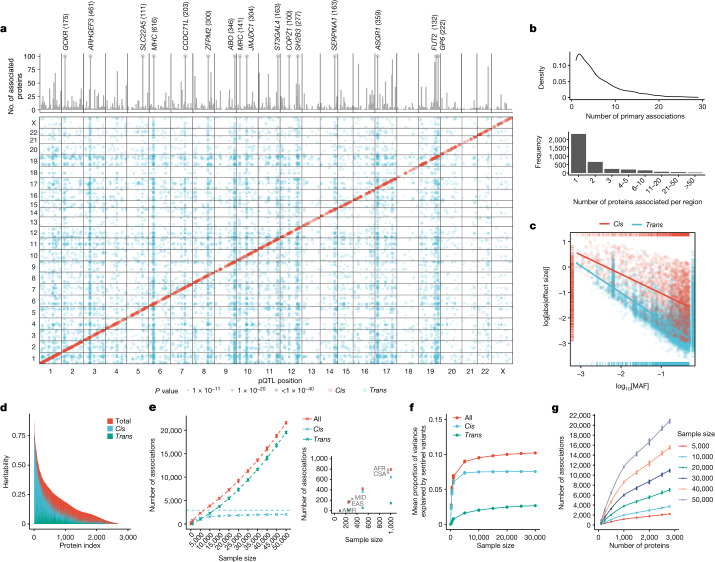
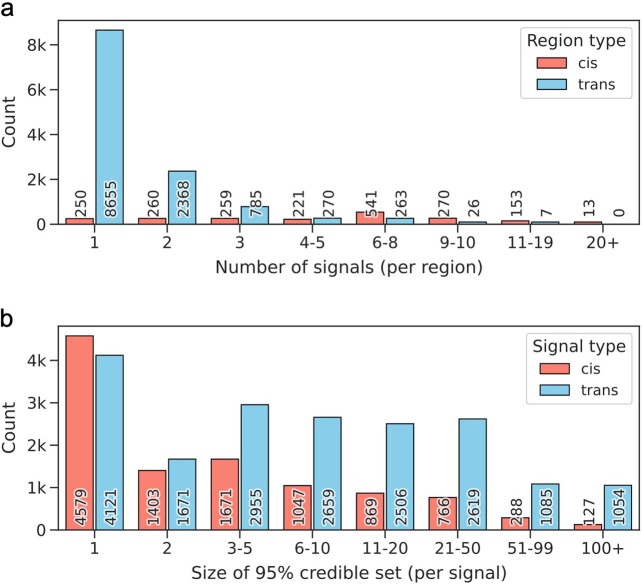
- In the European discovery cohort (n = 34,557), the study identified 14,287 primary pQTL associations across 3,760 independent genetic regions at P < 1.7 × 10⁻¹¹; 1,955 were cis and 12,332 were trans. Replication in n = 17,806 showed 95.6% of cis and 64.1% of trans associations remained significant and directionally concordant.
- 82.6% of tested proteins (2,414/2,922) had at least one pQTL, and 66.9% (1,954/2,922) had a cis association. 81% of primary associations (11,521/14,287) were previously undescribed; 89% of trans pQTLs were previously undescribed versus 27% of cis pQTLs.
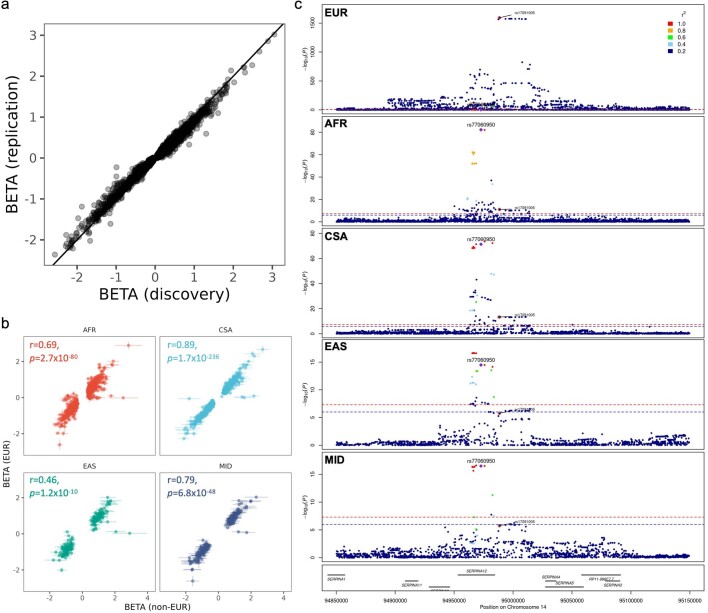
- Non-European ancestry-specific analyses found 785 (AFR, n = 931), 732 (CSA, n = 920), 227 (MID, n = 308), 179 (EAS, n = 262) and 9 (AMR, n = 97) primary associations; the paper highlights ancestry-specific allelic enrichments such as SERPINA12 rs77060950.
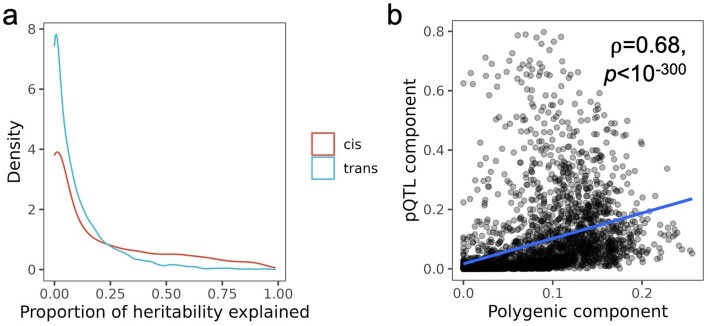
- Additional analyses identified 29,420 independent pQTL signals, mean total SNP-based heritability of 0.16, and colocalization of 65% (1,220/1,889) of genes with a significant eQTL in at least one tissue.
Methods
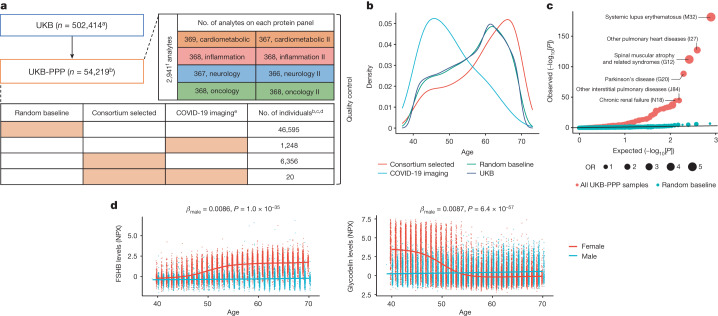
- Plasma proteomic profiling used the antibody-based Olink Explore 3072 PEA, measuring 2,941 protein analytes and 2,923 unique proteins across 54,219 UKB participants, including 46,595 randomly selected baseline, 6,376 consortium-selected and 1,268 COVID-19 repeat-imaging participants.
- Discovery pQTL analyses were performed in European-ancestry randomly selected baseline participants (n = 34,557) with replication in the remaining samples (n = 17,806), using REGENIE GWAS for up to 16.1 million imputed variants and a significance threshold of P < 1.7 × 10⁻¹¹; full-cohort mapping used n = 52,363 and up to 23.8 million variants.
- Downstream analyses included SuSiE fine-mapping, SNP-based heritability estimation, colocalization with GTEx eQTLs, ancestry-specific pQTL mapping in five pan-UKBB groups, sensitivity analyses for blood cell counts, BMI, season and fasting time, and Mendelian randomization exemplars such as PCSK9.
Limitations
- Stated: the predominantly white European ancestral composition of UKB does not capture full human genetic and phenotypic diversity, and the non-European ancestry groups were small and underpowered; the authors call for prioritizing under-represented and genetically diverse populations, resampling/longitudinal analyses, and orthogonal comparisons across proteomic assays.
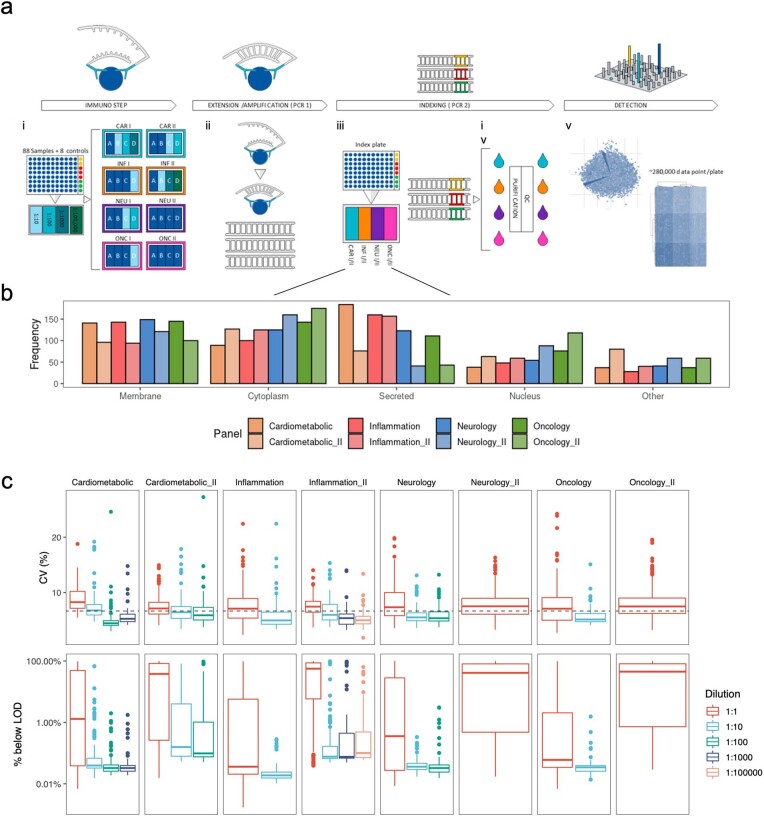
- Stated: pQTL discovery is affected by protein abundance and assay detection; proteins with lower expected concentrations had higher coefficients of variation, and 81.4% of proteins without a pQTL had more than 50% of samples below the limit of detection.
- Evident from the text: the main design is cross-sectional and observational, with causal inference limited to exemplar Mendelian randomization analyses; platform-specific antibody-based measurements may limit overlap with aptamer-based pQTL findings, as only 38% of previous aptamer-based associations replicated among common proteins.
Model-written summary. Check it against the paper before relying on it.
Integrity signals
Registry
Cites
Statistics
Figures
Verification
Claims the paper makes
15 Valid · 1 Not valid · 5 Not checked · 123 Own results and interpretations
The cited sources that could be checked couldn’t confirm or dispute this claim.
In the paper
“Liver expression of SERPINA12 was also higher in rs77060950-T carriers (P = 2.6 × 10 -8 ) 31”
§ Plasma proteomic associations with genetics and health in the UK Biobank > Non-European pQTL mapping
What the sources say
- Could not verifycites [31] The GTEx Consortium. The GTEx Consortium atlas of genetic regulatory effects across human tissues. Science 369, 1318-1330 (2020). sourceExperimental — accuracy not yet measured
The QTL discovery section describes associations between genetic variants and gene expression across tissues, but does not report this specific association. Searches for SERPINA12, rs77060950, and the stated P value found no passage establishing higher liver expression in T carriers; page numbers were not supplied in our copy. (LLM, conf=0.72)
plainstates an association- Asserted: passes — The authors put it forward as true.
- Checkable: passes — It can be checked against evidence.
- Load-bearing: unclear — It is unclear whether the paper’s conclusions depend on it.
- Based: passes — The paper gives a reason why it holds.
- Could not verify
The cited sources support only part of this claim — read each source’s verdict below.
In the paper
“These included well-established, previously identified [17][18][19][20] pleiotropic loci such as MHC, ABO, ZFPM2, ARHGEF3, GCKR, SERPINA1, SH2B3 and ASGR1”
§ Plasma proteomic associations with genetics and health in the UK Biobank > Discovery of pQTLs
What the sources say
- Partly supportedcites [17] Emilsson, V. et al. Co-regulatory networks of human serum proteins link genetics to disease. Science 361, 769-773 (2018). sourceExperimental — accuracy not yet measured
The section “Genetic variants influence serum protein levels” explicitly describes pleiotropy at ABO as well established. Our copy does not identify MHC, ZFPM2, ARHGEF3, GCKR, SERPINA1, SH2B3, or ASGR1 as previously identified pleiotropic loci, so it supports only part of the list. (LLM, conf=0.86)
- Partly supportedcites [18] Sun, B. B. et al. Genomic atlas of the human plasma proteome. Nature 558, 73-79 (2018). sourceExperimental — accuracy not yet measured
In “trans pQTLs identify pathways to disease” (page unavailable), the paper identifies ABO as a well-known pleiotropic locus, describes ZFPM2 as associated with many correlated proteins, and reports associations between a SERPINA1 variant and multiple proteins. It mentions MHC elsewhere but does not identify it there as a pleiotropic locus; the passages found do not establish ARHGEF3, GCKR, SH2B3 or ASGR1 as examples. (LLM, conf=0.88)
- Not checked — no full text of the sourcecites [19] Ferkingstad, E. et al. Large-scale integration of the plasma proteome with genetics and disease. Nat. Genet. 53, 1712-1721 (2021). source
- Partly supportedcites [20] Pietzner, M. et al. Mapping the proteo-genomic convergence of human diseases. Science 374, eabj1541 (2021). sourceExperimental — accuracy not yet measured
The Results section (‘Genetic associations for protein targets’; page unavailable) identifies ARF4-ARHGEF3, ABO and GCKR as substantially pleiotropic regions. The ‘A map of proteo-genomic connections across the phenome’ section also calls GCKR a known pleiotropic locus. Our copy does not establish the remaining named loci as previously identified pleiotropic loci, so it does not support the full list. (LLM, conf=0.87)
boostedstates an association- Asserted: passes — The authors put it forward as true.
- Checkable: passes — It can be checked against evidence.
- Load-bearing: unclear — It is unclear whether the paper’s conclusions depend on it.
- Based: passes — The paper gives a reason why it holds.
- Partly supported
The cited sources support only part of this claim — read each source’s verdict below.
In the paper
“The missense variant rs72938840 (Arg59Gln, MAF AFR = 7.9%) in the gene encoding rhomboid protease, RHBDL2, is mostly absent in EUR and other ancestries 28 and is associated in trans with concentrations of one of its cleavage substrates 29 , SPINT1 (P = 5.8 × 10 -12 )”
§ Plasma proteomic associations with genetics and health in the UK Biobank > Non-European pQTL mapping
What the sources say
- Could not verifycites [28] Karczewski, K. J. et al. The mutational constraint spectrum quantified from variation in 141,456 humans. Nature 581, 434-443 (2020). sourceExperimental — accuracy not yet measured
The cited paper’s population-comparison discussion (p. 439) concerns gene-level constraint, not rs72938840 or its frequency across ancestries. Searches for rs72938840, RHBDL2, Arg59Gln and SPINT1 found no passage reporting the variant’s 7.9% African-ancestry frequency or its association with SPINT1 concentrations. In the citing sentence, this source’s citation is attached to the ancestry-frequency statement, while a different citation follows the SPINT1 statement. (LLM, conf=0.72)
- Supportedcites [29] Johnson, N. et al. Quantitative proteomics screen identifies a substrate repertoire of rhomboid protease RHBDL2 in human cells and implicates it in epithelial homeostasis. Sci. Rep. 7, 7283 (2017). source
The citation to this paper identifies SPINT1 as a cleavage substrate of RHBDL2. In the Results section (page not available), the authors report RHBDL2-dependent cleavage of Spint-1 and identify its cleavage site. The variant association, allele frequency, and P value are not attributed to this source by the citation placement. (LLM, conf=0.93)
plainstates an association- Asserted: passes — The authors put it forward as true.
- Checkable: passes — It can be checked against evidence.
- Load-bearing: unclear — It is unclear whether the paper’s conclusions depend on it.
- Based: passes — The paper gives a reason why it holds.
- Could not verify
A result the paper reports from its own data — it cites no other source for it, so there is none to check. The quote shows it is in the paper.
In the paper
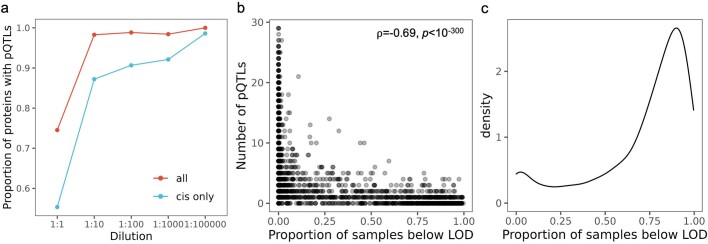
“we found a significant negative relationship between the number of pQTLs and the proportion of samples that were below the LOD (Spearman's ρ = -0.69,P < 10 -300”
§ Plasma proteomic associations with genetics and health in the UK Biobank > Discovery of pQTLs
plainstates an association- Asserted: passes — The authors put it forward as true.
- Checkable: passes — It can be checked against evidence.
- Load-bearing: unclear — It is unclear whether the paper’s conclusions depend on it.
- Based: passes — The paper gives a reason why it holds.
A result the paper reports from its own data — it cites no other source for it, so there is none to check. The quote shows it is in the paper.
In the paper
“with 66.9% of proteins tested (1,954 of 2,922 proteins) having a cis association (within 1 Mb from the gene encoding the protein)”
§ Plasma proteomic associations with genetics and health in the UK Biobank > Discovery of pQTLs
plainstates an association- Asserted: passes — The authors put it forward as true.
- Checkable: passes — It can be checked against evidence.
- Load-bearing: passes — The paper’s conclusions depend on it.
- Based: passes — The paper gives a reason why it holds.
52 more claims
Create a free account to see all 144 claims and to verify the 1 reference still open.
- It may state two separate claims as one. 58
- Probably not a substantial claim. 44
Claims other papers make about this one
Each is checked against this paper’s own text: does it say what the citing paper says it does?
The source backs part of the claim, not all of it — or backs it for a different population, condition or comparison.
In the citing paper
“In a separate array-based GWAS on the UKB-PPP cohort, we tested for the association between common variants (MAF > 0.1%) and 2,922 protein assays, resulting in 14,287 primary genetic associations5.”
From Rare variant associations with plasma protein levels in the UK Biobank (2023) · cites this paper as [5]
Experimental — accuracy not yet measuredThe source backs part of the claim, not all of it — or backs it for a different population, condition or comparison.
In the citing paper
“This pQTL was also CSF specific using Olink (table S5), independent of a subthreshold EGFR pQTL in plasma (rs56380922; R2 = 0.017), and not significant in plasma studies with 10 times our CSF sample size (9–11), implying a highly specific association in neurological contexts.”
From Low overlap of plasma and CSF protein quantitative trait loci affects protein discovery for neurological disease (2026) · cites this paper as [11]
Experimental — accuracy not yet measuredThe cited source says what the claim attributes to it.
In the citing paper
“Key plasma protein databases, such as the UK Biobank Pharma Proteomics Project (UKB-PPP) and deCODE [12,13], offer valuable resources for identifying therapeutic targets and risk factors across various diseases, including cancer [14,15].”
From Identifying novel drug targets for calcific aortic valve disease through Mendelian randomization (2025) · cites this paper as [12]
The cited source says what the claim attributes to it.
In the citing paper
“To date, most pQTLs have been discovered via genome-wide association studies (GWASs), which predominantly focus on common variants3,5–8.”
From Rare variant associations with plasma protein levels in the UK Biobank (2023) · cites this paper as [5]
The cited source says what the claim attributes to it.
In the citing paper
“The effect sizes (β) of nominally significant ExWAS pQTLs (P < 1 × 10⁻⁴) strongly correlated with the GWAS-derived pQTLs5 (r2 = 0.96; Supplementary Fig. 2).”
From Rare variant associations with plasma protein levels in the UK Biobank (2023) · cites this paper as [5]
10 more claims about this paper
Create a free account to see every claim other papers make about this one.
Self-check
Percentages, sums and reported differences re-computed from the paper’s own numbers.
Each contradiction between two passages listed here was confirmed by an independent check.
Rated minor: it would not touch a result — a value no result rests on, a p-value that stays on the same side of the significance level, or a conflict that is clerical, resolved elsewhere in the paper, or outside its own findings.
In the paper
§ Plasma proteomic associations with genetics and health in the UK Biobank > Additional information
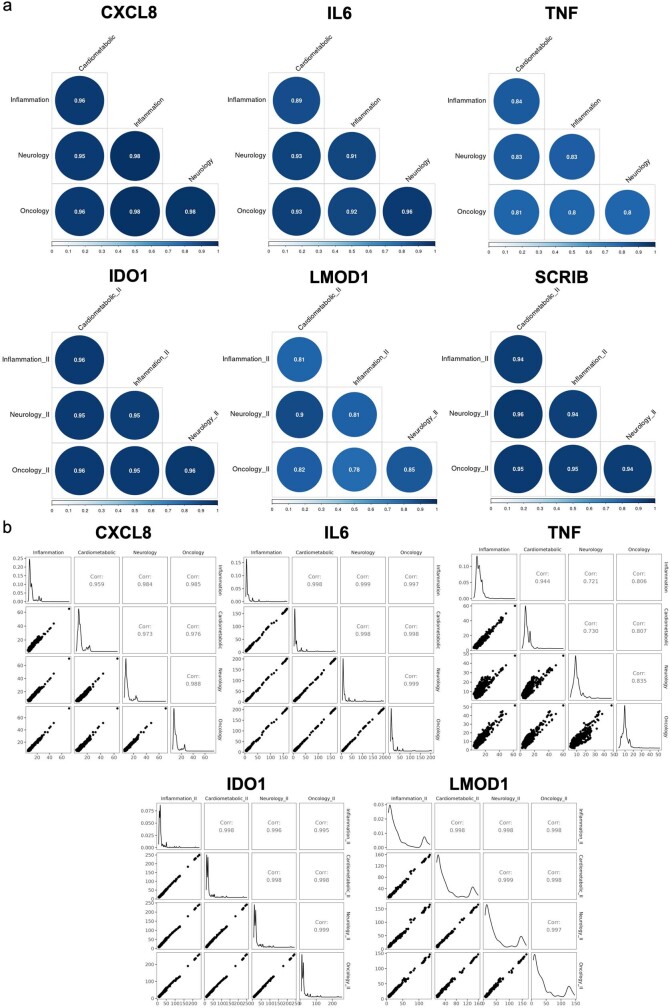
“on three proteins measured across multiple protein panels”
§ Plasma proteomic associations with genetics and health in the UK Biobank > Additional information
“(CXCL8, IL-6, TNF, IDO1, LMOD1, SCRIB).”
Rated minor: it would not touch a result — a value no result rests on, a p-value that stays on the same side of the significance level, or a conflict that is clerical, resolved elsewhere in the paper, or outside its own findings.
In the paper
§ Plasma proteomic associations with genetics and health in the UK Biobank > Discovery of pQTLs
“A total of 1,955 of the 14,287 primary associations were in cis”
§ Plasma proteomic associations with genetics and health in the UK Biobank > Comparisons with previous pQTL studies
“compared with cis pQTLs (27%; 518 out of 1,954).”
Citations
Cites
Regularization Paths for Generalized Linear Models via Coordinate Descent
Friedman, J., Hastie, T., & Tibshirani, R. (2010) · Journal of Statistical Software · doi:10.18637/jss.v033.i01 · Cited by 19,927 · cited 1×
“…eGFR and ABO blood groups (genetic ascertainment of blood groups is described in the ‘ABO blood group and FUT2 secretor status analysis’ section) separately using glmnet (R package v.4.1-4) 57 to tune the lambda.1se parameter with tenfold cross validation for 100 lambdas between 10 −5 and 1,000.”
MethodInfluentialTissue-based map of the human proteome
Uhlén, M., Fagerberg, L., Hallström, B. M., Lindskog, C., Oksvold, P., Mardinoglu, A., Sivertsson, Å., Kampf, C., Sjöstedt, E., Asplund, A., et al. (2015) · Science · doi:10.1126/science.1260419 · Cited by 15,286
Second-generation PLINK: rising to the challenge of larger and richer datasets
Chang, C. C., Chow, C. C., Tellier, L. C., Vattikuti, S., Purcell, S. M., & Lee, J. J. (2015) · Gigascience · doi:10.1186/s13742-015-0047-8 · Cited by 12,709
The mutational constraint spectrum quantified from variation in 141,456 humans
Karczewski, K. J., Francioli, L. C., Tiao, G., Cummings, B. B., Alföldi, J., Wang, Q., Collins, R. L., Laricchia, K. M., Ganna, A., Birnbaum, D. P., et al. (2020) · Nature · doi:10.1038/s41586-020-2308-7 · Cited by 9,434 · cited 3×
“%) and is nearly absent in EUR and other ances-tries 28 .”
BackgroundInfluentialSelf-citationThe UK Biobank resource with deep phenotyping and genomic data
Bycroft, C., Freeman, C., Petkova, D., Band, G., Elliott, L. T., Sharp, K., Motyer, A., Vukcevic, D., Delaneau, O., O’Connell, J., et al. (2018) · Nature · doi:10.1038/s41586-018-0579-z · Cited by 8,876 · cited 2×
“The open-access framework 24 , deep phenotypic characterization 7 and long-term development 9,10 of population studies like the UKB offer a unique opportunity to expand proteogenomics to a massive scale, broaden research use of high-throughput proteomic data, build more extensive pQTL databases,…”
BackgroundMethodSelf-citationThe MR-Base platform supports systematic causal inference across the human phenome
Hemani, G., Zheng, J., Elsworth, B., Wade, K. H., Haberland, V., Baird, D., Laurin, C., Burgess, S., Bowden, J., Langdon, R., et al. (2018) · eLife · doi:10.7554/elife.34408 · Cited by 7,959 · cited 1×
“Data for these outcomes were extracted from the OpenGWAS project 72,73 .”
MethodSelf-citationLD Score regression distinguishes confounding from polygenicity in genome-wide association studies
Schizophrenia Working Group of the Psychiatric Genomics Consortium, Bulik-Sullivan, B. K., Loh, P.-R., Finucane, H. K., Ripke, S., Yang, J., Patterson, N., Daly, M. J., Price, A. L., & Neale, B. M. (2015) · Nature Genetics · doi:10.1038/ng.3211 · Cited by 5,559 · cited 1×
“The polygenic component, which mostly likely satisfies the polygenic model of small genetic contributions across the genome, was estimated using LD-score regression 62 .”
MethodThe GTEx Consortium atlas of genetic regulatory effects across human tissues
The GTEx Consortium, Aguet, F., Anand, S., Ardlie, K. G., Gabriel, S., Getz, G. A., Graubert, A., Hadley, K., Handsaker, R. E., Huang, K. H., et al. (2020) · Science · doi:10.1126/science.aaz1776 · Cited by 5,547
Self-citationAnderson, N. L., & Anderson, N. G. (2002) · Molecular & Cellular Proteomics · doi:10.1074/mcp.r200007-mcp200 · Cited by 4,414
Estimating glomerular filtration rate from serum creatinine and cystatin C
Inker, L. A., Schmid, C. H., Tighiouart, H., Eckfeldt, J. H., Feldman, H. I., Greene, T., Kusek, J. W., Manzi, J., Van Lente, F., Zhang, Y. L., et al. (2012) · New England Journal of Medicine · doi:10.1056/nejmoa1114248 · Cited by 4,102
Cited by
Items 1,701–1,800 of 1,846
Precision medicine breakthrough: Multi-omics integration elevates CAD risk prediction
Su, Q., Li, Q.-Y., Hu, C.-K., Huang, Y., Mo, L., HUANG, W.-Z., & Pan, D.-G. (2026) · Ageing Research Reviews · doi:10.1016/j.arr.2026.103306
Wang, Z., Deng, Z., Wang, J., Tao, N., Xiao, X., & Pei, C. (2026) · BMC Ophthalmology · doi:10.21203/rs.3.rs-10152825/v1
Exosome-Related Pathogenic Genes in Adenomyosis: A Multi-Omics Mendelian Randomization Study
Luo, Y., Zhang, X., 郭琛, Sun, P., Zhang, Q., & Wang, L. (2026) · OMICS A Journal of Integrative Biology · doi:10.1177/15578100261479264
“…aggregated data for protein expression-associated protein QTL (pQTL) were collected from three large-scale European meta-analyses: the Fenland study ( n = 10,708) (Pietzner et al., 2021), the UKB-PPP ( n = 54,219) (Sun et al., 2023), and the deCODE study ( n = 35,559) (Ferkingstad et al., 2021).”
Chen, S., Liang, Y., Luo, S., Zheng, J., Yoshiji, S., Power, G. M., Xu, Z., Burgess, S., Cowling, B. J., Lam, H. S., et al. (2026) · International Journal of Epidemiology · doi:10.1093/ije/dyag165
“First, to assess the robustness of our findings to the choice of proteomic platform, we replicated the analyses using protein associations from the UK Biobank Pharma Proteomics Project (UKB-PPP), which used the Olink platform [31].”
Large-scale plasma proteomics identifies protein signatures linking air pollution to epilepsy
He, Z., Yin, J., Yang, Q., Liu, S., Wang, J., Zhou, X., Yi, T., Zhou, D., & Li, J. (2026) · Ecotoxicology and Environmental Safety · doi:10.1016/j.ecoenv.2026.120669
Wang, F., Luo, J., Zhang, Y., Zhou, N., Cao, W., & Sun, S. (2026) · Atmospheric Environment · doi:10.1016/j.atmosenv.2026.122313
Anwar, M., Kuc, R. E., Bullock, C., Abraham, G. R., Maguire, J. J., Hoole, S. P., Proudfoot, D., & Davenport, A. P. (2026) · Canadian Journal of Physiology and Pharmacology · doi:10.1139/cjpp-2026-0112
Host genetic determinants of rotavirus disease and immunity in African childrenPreprint
Gilchrist, J. J., Agoti, C. N., Chauwa, A., Nassuuna, J., Kabagenyi, J., Ssejjoba, M. M., Laban, N. M., Pinto, A. C., Webb, E., Macharia, A. W., et al. (2026) · Research Square · doi:10.21203/rs.3.rs-10565996/v1 · Cited by 1
Liu, C., Roberts, B. R., Patel, M., Roberts, A. M., Alkhoder, A. A., Ko, Y.-A., Jin, Z., YADALAM, A. K., Alonso, Á., Huang, J., et al. (2026) · American Journal of Preventive Cardiology · doi:10.1016/j.ajpc.2026.101800
Beydoun, M. A., Huang, T., Hu, Y., Weiss, J., Georgescu, M. F., Hooten, N. N., Kuczmarski, M. F., Beydoun, H. A., Song, M., Launer, L. J., et al. (2026) · Ecotoxicology and Environmental Safety · doi:10.1016/j.ecoenv.2026.120657
Huang, Y., Li, K., Yangybrbi, Y., Xu, Y., Gu, W., Lin, M., Shi, W., Li, J., Yang, Y., & Wang, H. (2026) · Brain Behavior and Immunity · doi:10.1016/j.bbi.2026.106974
Koh, H. B., Kim, H. J., Heo, S., Park, C. H., Kim, H. W., Joo, Y. S., Chang, T. I., Park, J. T., Yoo, T., Kang, S., et al. (2026) · Clinical Journal of the American Society of Nephrology · doi:10.2215/cjn.0000001177
Liao, S., Sung, G. C. Y., Liang, Y., Li, C., & Yeung, S. L. A. (2026) · Diabetes Obesity and Metabolism · doi:10.1111/dom.71253
“We performed replication analyses for identified proteins using the UK Biobank Pharma Proteomics Project (UKB-PPP), which measured 2923 unique proteins via the Olink platform in 34 557 European participants [34].”
Jiang, L., Chien, C., Li, T., Zhang, H., Zhao, T., & Wu, X. (2026) · Frontiers in Endocrinology · doi:10.3389/fendo.2026.1883523
Association of dietary sodium intake with IL-17-mediated diseases in the UK biobank
Xian, J. Z., Chiang, B. M., Chang, A. Y., Faye, A. S., McCulloch, C. E., Blarigan, E. L. V., & Abuabara, K. (2026) · Clinical Nutrition ESPEN · doi:10.1016/j.clnesp.2026.105065
Huang, S., Yang, Z., Zhong, X., Li, C., Zhen, J., Cai, X., Gao, Y., Liang, R., Wu, H., Wang, Z., et al. (2026) · Journal of the American Heart Association · doi:10.1161/jaha.126.049221
Yan, Z., Pu, X., Ren, T., Cai, Y., Xu, Y., Chen, J., Chang, X., Wang, Y., Liu, Z., & Liu, R. (2026) · Cardiovascular Drugs and Therapy · doi:10.1007/s10557-026-07941-z
Miklas, J. W., Papsdorf, K., Sun, E., Tsenter, A., Haseley, N. R., Ameglio, B., Medoh, U. N., Richard, D. J., McCarthy, F., Artiles, K. L., et al. (2026) · Cell Reports · doi:10.1016/j.celrep.2026.117902
Liu, C., RunZhi, W., Liu, X., Li, Y., Ren, L., Zhao, Z., Fan, Z., & Xiao, J. (2026) · GeroScience · doi:10.1007/s11357-026-02491-6
Liu, F., & Yang, Q. (2026) · Medicine · doi:10.1097/md.0000000000050475
“[23] Independent protein-source validation used INTERVAL SomaScan data from 3301 participants of European ancestry.”
Liu, H., Zhu, J., Zhang, Q., Chen, J., & Huang, R. (2026) · Frontiers in Endocrinology · doi:10.3389/fendo.2026.1839419
“Physical activity was categorized as low, moderate, or high according to the International Physical Activity Questionnaire (IPAQ) guidelines (26).”
Bridging precision agriculture and human medicine through comparative genetics
Liu, X., Li, B., & Fang, L. (2026) · Nature Reviews Genetics · doi:10.1038/s41576-026-01000-x · Cited by 1
Genetic predisposition to schizophrenia and circulating proteins in 44,661 UK Biobank participantsPreprint
Strawbridge, R. J., McQueen, D., Kendall, K. M., Anderson, J., Casanova, F., Fajs, N., Gebretsadik, E. T., Hayman, M. M. E., Ho, F. K. W., Lyall, D. M., et al. (2026) · Research Square · doi:10.21203/rs.3.rs-10592335/v1
Gao, D., Lin, H., Wang, S., Wang, Y., Yang, H., & Wang, Z. (2026) · Cardiovascular Therapeutics · doi:10.1155/cdr/7359278
“pQTL summary statistics were derived from the UKB-PPP, which profiled over 2900 plasma proteins using the Olink platform across approximately 54,306 individuals of European ancestry [21].”
Li, R., Xu, Z., Yue, J., Yang, B., Li, Z., Chen, Y., Li, P., Liu, H., Li, Y., Wang, J., et al. (2026) · Genes & Diseases · doi:10.1016/j.gendis.2026.102435
Zhang, W., Zhang, W., Cheng, H., Gong, W., Kou, Y., & Jiang, B. (2026) · The FASEB Journal · doi:10.1096/fj.202600647r
Jin, F., Yang, X., Cheng, S., Hui, J., Zhao, B., He, D., Liu, L., Liu, H., Cheng, B., Jia, Y., et al. (2026) · Joint Bone Spine · doi:10.1016/j.jbspin.2026.106129
Ribeiro, F. W., & Júnior, E. L. (2026) · Metabolites · doi:10.3390/metabo16090632
“…this question to be addressed by integrating lipid and hepatic profiles, circulating inflammatory proteins quantified by proximity extension assays [14], metabolomic markers of systemic inflammation obtained by nuclear magnetic resonance such as glycoprotein acetyls [15], and inflammatory indices…”
Trends in large-scale human population cohorts
Jing, X., Yan, Z., Zhang, S., & Zhao, Y. (2026) · Trends in Genetics · doi:10.1016/j.tig.2026.08.002
OmicsPred as a centralized resource for genetic prediction of multi-omic traits
Foguet, C., Gil, L., Xu, Y., Salazar-Magaña, S., Ritchie, S. C., Persyn, E., Im, H. K., Inouye, M., & Lambert, S. A. (2026) · Nature Genetics · doi:10.1038/s41588-026-02726-4 · Cited by 3
Brecher, V., Androutsopoulou, V. A., Sicouri, S., Ramlawi, B., Avgerinos, D. V., Athanasiou, T., & Magouliotis, D. E. (2026) · Frontiers in Systems Biology · doi:10.3389/fsysb.2026.1897299 · Cited by 1
“…the Olink proximity extension assay and the SomaScan aptamer-based assay, enable high-throughput quantification of hundreds to thousands of proteins in plasma, making them particularly suited to large population cohort studies such as the UK Biobank Pharma Proteomics Project (Sun et al., 2023).”
InfluentialLiao, Z., Fang, Q., Chen, Y., Yang, X., Wu, H., Wang, H., & Gao, J. (2026) · The Journal of Gene Medicine · doi:10.1002/jgm.70111
Lu, F., Luan, W., Jiang, H., Ma, S., & Ruan, H. (2026) · Plastic & Reconstructive Surgery Global Open · doi:10.1097/gox.0000000000008084
“20 This study characterized plasma proteomic profiles of 54,219 Europeans and generated corresponding GWAS datasets, publicly available through the UKB-PPP database (https:// www.synapse.org/Synapse:syn51364943/wiki/622119) ( Table 1).”
Xu, J., Hu, Z., Su, Y., Lin, L., Shen, R., Xie, C., Hu, J., & Huang, K. (2026) · Research Square · doi:10.21203/rs.3.rs-10326299/v1
Wang, S., Tang, Y., Sui, Y., Zhao, H., Khan, A., Yin, W., Chen, Q., Xu, T., Liu, Z., Zhang, Z., et al. (2026) · Nature Cardiovascular Research · doi:10.1038/s44161-026-00865-9 · Cited by 1
“The instrumental variables for these exposures were selected from the cis -pQTL of the LPA 60 and the PCSK9 58 .”
Chen, L., Fang, M.-J., Cheng, N., & Xu, Y. (2026) · Genes · doi:10.3390/genes17091067
“A comprehensive mapping was performed to identify pQTLs associated with 2923 proteins [10].”
Guymer, R. H., Wu, Z., Gao, S. S., Zhang, M., Steffen, V., Chen, C., Zhang, J., Litts, K. M., Chang, M. C. S., Elstrott, J., et al. (2026) · Ophthalmology Science · doi:10.1016/j.xops.2026.101320 · Cited by 2
“63,64 The HONU data set will be a major addition to the current longitudinal datasets of patients with eyes that have drusen, followed meticulously over time.”
Self-citationYarmolinsky, J. W., Cavallo, F. R., Koskeridis, F., Yu, X., Bouras, E., Richenberg, G., Costantini, I., Ray, D., Woolf, B. A. R., Karhunen, V., et al. (2026) · medRxiv · doi:10.64898/2026.08.30.26361622
Modeling Joint Reference Regions for Omics Biomarkers in UK Biobank ProteomicsPreprint
Pusparum, M., Thas, O., & Ertaylan, G. (2026) · medRxiv · doi:10.64898/2026.09.01.26361504
Liang, Z., Hu, C., Wang, Z., Ma, R., Ding, Y., & Shao, Y. (2026) · The French Journal of Urology · doi:10.1016/j.fjurol.2026.103196
Mounts, K., Liu, Y., Fujita, M., Oyegunle, J., Neziraj, T., Pollak, S. V., Nandakumar, R., Ngouth, N., Steele, S. U., Cortese, I. C. M., et al. (2026) · Multiple Sclerosis and Related Disorders · doi:10.1016/j.msard.2026.107911
Yan, X., Zhang, L., Li, J., & Song, J. (2026) · Cellular and Molecular Neurobiology · doi:10.1007/s10571-026-01819-2
“The UKB-PPP identified 14,287 major genetic associations, with 81% pre - viously undescribed ones, thus significantly expanding the catalog of genetic tools for downstream analyses (Sun et al. 2023).”
Chen, Z., Mi, M. Y., Barber, J., Tiwari, G., Adams, C. D., Deng, S., Shin, C., Farrell, L. A., Rao, P., Cruz, D. E., et al. (2026) · Diabetes · doi:10.2337/db26-0148
Wang, Z., Su, C., Lu, J., Hasebe, M., Mejía‐García, A., Tsao, H. M., Hu, J., Lu, T., & Zhou, S. (2026) · Cardiovascular Diabetology · doi:10.1186/s12933-026-03363-1
Orešković, T., Jin, D., Trichia, E., Aguilar-Ramirez, D. J., Xu, Y., Foguet, C., Hubbard, T., Turner, M., Vergara-Lope, A., Fernández‐Chirino, L., et al. (2026) · medRxiv · doi:10.64898/2026.09.03.26362043
Jiashu, Y. U. E., Huang, J., Zhang, T., Hao, Q., Liu, G., Bai, H., Jiang, Y., Zhou, Y., Li, J., & Mu, X. (2026) · Frontiers in Medicine · doi:10.3389/fmed.2026.1883046
Jin, L., & Wang, F. (2026) · Genes · doi:10.3390/genes17091084
“For external validation and phenome-wide exploration, we additionally used SER-PINC1 pQTL instruments from the UK Biobank Pharma Proteomics Project (UKB PPP Olink 3k, Sun et al. [18]).”
Mao, Y., Jiang, Y., Wu, T., Li, P., Li, Y., Sun, W. Y., & Kong, X. (2026) · Hypertension · doi:10.1161/hypertensionaha.126.26937
Carrasco-Zanini, J., Andrade, J., Pietzner, M., Kousathanas, A., Jacobsen, J. O. B., Lord, J., Telugu, N. S., Diecke, S., Mülleder, M., Bierbaum, D., et al. (2026) · Science Translational Medicine · doi:10.1126/scitranslmed.aeb1331
Zhao, H., Guan, Y., Shen, J., Li, L., Zhang, K., Liu, S., zhu, Q., Chow, P., Jiang, H., Li, J., et al. (2026) · Proteomes · doi:10.3390/proteomes14030047
Self-citationSoga, K., Shinada, T., Takahashi, M., Uno, A., & Taki, Y. (2026) · Nutrition and Health · doi:10.1177/02601060261479772
Xu, Y., Li, X., & Nan, G. (2026) · International Journal of Neuroscience · doi:10.1080/00207454.2026.2733265
“…for over-all MG, eOMG, and lOMG were obtained from OpenGWas (table s2) [23]. the MG datasets were derived from chia et al. and represented european acetylcholine receptor antibody-positive MG [5]. cD40 pQtl summary statistics were obtained from the ProteoNexus sex-combined pQtl dataset [24,25].”
Sarguroh, S., Morris, S., Ng, E., Butler‐Laporte, G., Nanjala, R., Pozarickij, A., Yang, L., Li, L., Junshi, J., Pei, P., et al. (2026) · medRxiv · doi:10.64898/2026.09.08.26362390
Landman, J. M., Highland, H. M., Perry, A., Howard, A. G., Sheng, Q., Lorenz, A., Palmer, A. B., Zhao, S., Zhu, W., Zhang, X., et al. (2026) · Nature Metabolism · doi:10.1038/s42255-026-01589-7
“We estimated the proteomic scores for each multi-phenotype LF in adults from two samples: (1) BHRC adults ( n = 494) and (2) adults from the UK Biobank ( n = 28,256) 76 .”
Gao, P., Liang, M., Tang, B., Li, J., Mao, R., Feng, Z., Zhang, T., & Liu, Y. (2026) · Frontiers in Endocrinology · doi:10.3389/fendo.2026.1910610
“In addition, proteomics can provide biological context for metabolite-based signatures by linking metabolic pro fi les to pathways involving lipoprotein transport, adipokine signaling, in fl ammation and vascular regulation (13).”
Endocannabinoid system genes and dementia: a systematic Mendelian randomization studyPreprint
Javidnia, S., Karhunen, V., Woolf, B. A. R., Burgess, S., Proitsi, P., Velayudhan, L., & Bhattacharyya, S. (2026) · medRxiv · doi:10.64898/2026.09.08.26362514
Wen, L., Li, F., Liu, Y., Zhang, K., Mao, A., Liu, L., Lv, X., Geng, L., Yu, F., Feng, L., et al. (2026) · International Journal of Molecular Sciences · doi:10.3390/ijms27188103
“Using human plasma pQTL data from the UK Biobank Pharma Proteomics Project (UKB-PPP; N = 53, 022) [24], cis-genetic prediction models were constructed for 2923 proteins.”
InfluentialSex-specific biological aging clocks across organs and omics
Song, Z., Feng, D., Rahman, N. A., Duggan, M. R., Tian, Q., Zeng, J., Zhou, X., Zou, C., Rafii, M. S., Shen, L., et al. (2026) · Nature Medicine · doi:10.1038/s41591-026-04662-6 · Cited by 2
Gu, H., Shi, X., & Zhang, J. (2026) · Journal of Behavioral and Brain Science · doi:10.4236/jbbs.2026.169010
An adult proteomic signature associated with very low birth weight and chronic disease risk
Huang, C.-Y., Seong, D., Reiss, J. D., Shu, C.-H., Sadeghi, M. A., Chung, P., Yang, L. K., Xue, L., Fang, Y., Xu, R., et al. (2026) · Med · doi:10.1016/j.medj.2026.101297
Bankier, S., Talukdar, H. A., Khan, M., Mocci, G., Sukhavasi, K., Hao, K., Ma, A., Ruusalepp, A., Schadt, E. E., Kovacic, J. C., et al. (2026) · Cell Systems · doi:10.1016/j.cels.2026.101735 · Cited by 2
Noori, A., Fishman, N., Fang, A., Fesser, L., & Žitnik, M. (2026) · Cell · doi:10.1016/j.cell.2026.08.032 · Cited by 6
Stinson, S. E. (2026) · Metabologia · doi:10.1007/s44357-026-00018-2
Germline EGFR T790M mutation and lung cancer risk
LoPiccolo, J., Micheletti, S. J., Shi, J., Wang, W., Saini, S., Lin, K., Xu, W., Fontanillas, P., Koeller, D. R., Yatzus, H., et al. (2026) · Science · doi:10.1126/science.aec0473
Li, H., De-jun, G. O. N. G., Yang, J., Wang, Z., Lv, J., & Guo, C. (2026) · Biomedicines · doi:10.3390/biomedicines14092096
“The DECODE cohort [13] identified 6214 cis-pQTLs corresponding to 1700 plasma proteins, the UKB-PPP cohort [18] detected 5369 cis-pQTLs for 1883 plasma proteins, and the proteomic GWAS dataset [19] yielded 735 cis-pQTLs for 730 plasma proteins (Tables S2–S4).”
Noyvert, B., Erzurumluoglu, A. M., Drichel, D., Omland, S., Andlauer, T. F., Mueller, S., Sennels, L., Becker, C., Kantorovich, A., Bartholdy, B., et al. (2026) · eLife · doi:10.7554/elife.106115.2 · Cited by 2
Seitz‐Holland, J., Haaf, M., Mendes‐Silva, A. P., Penzel, N., Berberich, C., Bouix, S., Coleman, M. J., Kotler, E., Kim, N., Burdick, K. E., et al. (2026) · Brain Behavior and Immunity · doi:10.1016/j.bbi.2026.107023
Deng, G., Cui, T., Xu, Y., Gao, W., Li, N., Jiang, L., & Zhang, W. (2026) · Genes · doi:10.3390/genes17091155
“Plasma pQTL coverage was assessed using UK Biobank Pharma Proteomics Project data (2923 proteins; n = 54,219) [19] and deCODE SomaScan data (4907 aptamers; n = 35,559) [20].”
Human plasma proteomic alterations by diphenylarsinic acid poisoning
Ohuchi, S., Kataura, T., Fujimaki, M., Iseki, M., Suzuki, A., Ishii, K., Tamaoka, A., & Saiki, S. (2026) · Environment International · doi:10.1016/j.envint.2026.110536
Wang, X., Yang, W., Song, S., Su, H., & Zhang, Y. (2026) · Genes · doi:10.3390/genes17091154
“Plasma AAT cis-pQTLs came from the UKB-PPP European discovery sample ( n = 33,348) [53]. cis-eQTLs were extracted for ENSG00000197249.”
Lv, K., Fang, J., Wang, S., Xing, X., & Zhu, R. (2026) · Endocrine Connections · doi:10.1530/ec-25-0180
“Targeted replication using the Sun et al. (7) dataset also yielded no statistically significant replication with an effect direction concordant with the primary analysis.”
InfluentialWu, Z., Ghag, S. A., Shihab, M. H. I., Vasoya, A. P., Sharma, V., Hickman, J. P., Wang, Y., Huang, X., & Huang, M. (2026) · Proteomes · doi:10.3390/proteomes14030049
“…that may participate in disease mechanisms from proteins that are only correlated with clinical states. pQTLs provide genetic anchors for circulating proteins, while colocalization tests whether protein and disease associations at a locus are consistent with the same causal signal [25,177–180].”
Tinworth, A. C., Yao, P., Iona, A., Pozarickij, A., Ende, A. V., Millwood, I. Y., Walters, R. G., Clarke, R., Bragg, F., & Chen, Z. (2026) · Nature Cardiovascular Research · doi:10.1038/s44161-026-00871-x · Cited by 1
“Proteins were quantified on the Olink Explore 3072 panel as normalized protein expression values on a log 2 scale; sample selection, processing and quality-control procedures have been described previously 18 .”
Collis, H., Hansson, S., Nasr, P., Jönsson, C., Liljeblad, M., Carlsson, B., Ma’ayeh, S. Y., Zhang, B., de Wiljes, J., Ekstedt, M., et al. (2026) · Clinical and Translational Science · doi:10.1111/cts.70716
Li, J., & Liu, X. (2026) · The American Journal of Human Genetics · doi:10.1016/j.ajhg.2026.09.003
Sun, M., Cao, J., Liang, M., Liang, T., Yao, H., Fei, Q., & Cui, Q. (2026) · Frontiers in Physiology · doi:10.3389/fphys.2026.1864411
Jiang, Y., Zhou, S., Wu, Q., Li, X., Lu, Y., Jia, J., Xie, Y., Cheng, X., Liu, L., Shan, Z., et al. (2026) · Redox Biology · doi:10.1016/j.redox.2026.104411 · Cited by 1
“Consortium-selected and COVID-19 imaging participants showed widespread differences such as demographics and biochemistry markers, reflecting their non-random sampling, whereas the randomly selected baseline participants remained highly representative of the overall UK Biobank [27].”
Papatziamou, D., Singh, A., Makwana, M. V., & Patel, S. K. (2026) · Biochimica et Biophysica Acta (BBA) - Proteins and Proteomics · doi:10.1016/j.bbapap.2026.141180
Yue-Qi, Z., Chen, W., & Han, X. (2026) · Journal of Alzheimer s Disease · doi:10.1177/13872877261489741
Yang, Z., Ruan, Y., Wang, Y., Liu, K., Li, Y., Guo, Y., Qu, L., Tang, Y., Chen, X., Peng, L., et al. (2026) · Arteriosclerosis Thrombosis and Vascular Biology · doi:10.1161/atvbaha.126.323961
Pellegrino, N., Diniz, B. S., Zhou, Y., Fortinsky, R. H., Kuchel, G. A., Brugge, D., & Kuo, C.-L. (2026) · The Science of The Total Environment · doi:10.1016/j.scitotenv.2026.182315
Jeong, H., Lake, B. B., Diep, D. H., Li, X., Yan, Q., Gisch, D. L., Kaushal, M., Reinert, S., Eadon, M. T., Gaut, J. P., et al. (2026) · Nature Aging · doi:10.1038/s43587-026-01221-z · Cited by 1
“Plasma levels of proteins encoded by several of these genes, including DSC2, DSG2 and TIMP2, were negatively associated with eGFR in the general population 35 , linking these molecular features to clinically relevant kidney traits.”
Where Do Proteomics People Come from?
Orsburn, B. C. (2026) · Journal of the American Society for Mass Spectrometry · doi:10.1021/jasms.6c00268
A failing heart is a failing heart — until proteomics looks beyond etiology
Lundby, A. (2026) · Nature Cardiovascular Research · doi:10.1038/s44161-026-00875-7
Machine learning and statistical methods for molecular quantitative trait loci
Engelhardt, B. E., Weinstock, J. S., Nyquist, S. K., & Battle, A. J. (2026) · Nature Reviews Genetics · doi:10.1038/s41576-026-00990-y
Metabolomic profiling identifies plasma protein biomarkers of biological agingPreprint
Luo, X., Liu, C., Xie, Y., Zhao, Y., Zhao, H., Huang, Y., Shuo, G., Wang, Y., Jian, X., Zhao, G., et al. (2026) · medRxiv · doi:10.64898/2026.09.27.26364110
A draft atlas of the human plasma proteome at isoform resolutionPreprint
Zühlke, B. M., Schwecke, T., Shapira, T., Niewienda, A., Yang, A., Amari, F., Textoris‐Taube, K., Sinn, L. R., Lehmann, K., Gille, C., et al. (2026) · bioRxiv (Cold Spring Harbor Laboratory) · doi:10.64898/2026.09.26.754256
Intereye Retinal Asymmetry, Incident Cardiovascular Disease, and Circulating Proteomic Signatures
Liu, A., Xu, Y., 吴玲玲, Wei, Y., Xiang, X., Cui, X., & Zhao, K. (2026) · Journal of the American Heart Association · doi:10.1161/jaha.126.050850
Voller, B., Woodward, R. M., Murrin, O., Delgado, J., Türkmen, D., Hopkins, R., Violán, C., Mancini, M., Farmer, L., Boddy, K., et al. (2026) · medRxiv · doi:10.64898/2026.09.28.26364012
Age Acceleration and Mortality Risk Constitute Distinct Dimensions of Organ AgingPreprint
Na, R., Shi, C., Ruan, X., Shi, R., Ma, R., Liang, Z., Sun, Y., Yao, C., Xu, X., Li, X., et al. (2026) · Research Square · doi:10.21203/rs.3.rs-10881849/v1
Cornelis, M. C., van Dam, R. M., Bennett, D. A., & Schneider, J. A. (2026) · Nutrients · doi:10.3390/nu18193232
“The COMT Val158Met variant is the top SNP identified in GWAS of plasma ( N = 34,557 to 67,761) [30,31] and brain ( N = 268) [32] COMT concentrations.”
Abbasi, M., Missikpode, C., Verma, A., Zhao, R., Schmidt, I. M., Lash, J. P., Waikar, S. S., & Srivastava, A. S. (2026) · Kidney Medicine · doi:10.1016/j.xkme.2026.101556
Laiton-Jiménez, L. A., Abdelrahman, M., Shalev, I., Sliwinski, M. J., & Veturi, Y. (2026) · Brain Behavior & Immunity - Health · doi:10.1016/j.bbih.2026.101380
“UKB analyses focused on assessing inflammatory biomarkers as mediators, including baseline CRP in the full cohort and additional plasma inflammatory proteins measured in the UKB Pharma Proteomics Project (UKB-PPP) subset (Palmer, 2007; Sudlow et al., 2015; Li, 2023; Sun et al., 2023).”
Sun, C., Liu, G., Zhong, Z., Lei, X., Deng, H., Huang, F., & Zeng, J. (2026) · The Italian Journal of Pediatrics/Italian journal of pediatrics · doi:10.1186/s13052-026-02356-w
Li, J., Qiu, K., Rao, Y., Cheng, D., Song, Y., Shao, X., Jiang, C., Shu, T., Xu, W., Zhao, Y., et al. (2026) · European Archives of Oto-Rhino-Laryngology · doi:10.1007/s00405-026-10663-5
Huang, Y., Liu, W., Wu, M., Gao, Q., Gao, J., Chen, Q., Wang, J., Chen, Y., Zhang, H., Mai, J., et al. (2026) · Diabetes Obesity and Metabolism · doi:10.1111/dom.71423
Periodontitis GWAS Reveal Immune‐Biased Heritability Without Gingival Cell‐Type Resolution
Wang, C., An, W., Lin, M., Wang, Y., & Yang, G. (2026) · Journal of Periodontal Research · doi:10.1111/jre.70179
Comparative proteomic quantification reveals novel longevity regulatorsPreprint
Ding, L., Lin, H., Huang, C., Vallanadu, V., Ashley, K., Pitts, S. R., Mutlu, A. S., Zhou, Y., Ma, X., Choi, J. M., et al. (2026) · bioRxiv (Cold Spring Harbor Laboratory) · doi:10.64898/2026.10.06.757189
Cao, T., Wu, L.-J., Yang, X.-H., Fan, N., Ding, J., Gong, M., Feng, X.-M., Li, Y.-H., & Yan, Y. (2026) · Hepatology International · doi:10.1007/s12072-026-11155-8
Hu, S., 謝郁琦, Tan, J.-S., Guo, T.-T., Zhu, S., Lin, Z., Zhang, J., & Hua, L. (2026) · iScience · doi:10.1016/j.isci.2026.117792
Self-citation
Metadata
- Authors
- Sun, B. B., Chiou, J., Traylor, M., Benner, C., Hsu, Y.-H., Richardson, T. G., Surendran, P., Mahajan, A., Robins, C., Vasquez-Grinnell, S. G., Hou, L., Kvikstad, E. M., Burren, O. S., Davitte, J., Ferber, K. L., Gillies, C. E., Hedman, Å. K., Hu, S., Lin, T., Mikkilineni, R., Pendergrass, R. K., Pickering, C., Prins, B., Baird, D., Chen, C.-Y., Ward, L. D., Deaton, A. M., Welsh, S., Willis, C. M., Lehner, N., Arnold, M., Wörheide, M. A., Suhre, K., Kastenmüller, G., Sethi, A., Cule, M., Raj, A., Genetics, A. H., Initiative, A. G., Biogen Biobank Team, Squibb, B. M., Genetics, G. H., Sciences, G. G., Biology, P. I., Sciences, P. A. O. J. D., Regeneron Genetics Center, Kang, H. M., Burkitt-Gray, L., Melamud, E., Black, M. H., Fauman, E. B., Howson, J. M. M., Kang, H. M., McCarthy, M. I., Nioi, P., Petrovski, S., Scott, R. A., Smith, E. N., Szalma, S., Waterworth, D. M., Mitnaul, L. J., Szustakowski, J. D., Gibson, B. W., Miller, M. R., & Whelan, C. D.
- Affiliations
- Biogen (United States) (US)
- Pfizer (United States) (US)
- Genentech (US)
- Amgen (United States) (US)
- GlaxoSmithKline (United Kingdom) (GB)
- GlaxoSmithKline (United States) (US)
- Janssen Research & Development (United States) (US)
- Bristol-Myers Squibb (United States) (US)
- AstraZeneca (United Kingdom) (GB)
- Regeneron (United States) (US)
- Pfizer (Sweden) (SE)
- Takeda (United States) (US)
- UK Biobank (GB)
- Alnylam Pharmaceuticals (United States) (US)
- Helmholtz Munich (DE)
- Duke University (US)
- Weill Cornell Medical College in Qatar (QA)
- Calico Life Sciences (US)
- Corresponding author
- Sun, Benjamin B.
- Whelan, Christopher D.
- ORCID
- Sun, Benjamin B.
- Chiou, Joshua
- Traylor, Matthew
- Benner, Christian
- Hsu, Yi-Hsiang
- Richardson, Tom G.
- Surendran, Praveen
- Mahajan, Anubha
- Robins, Chloe
- Hou, Liping
- Kvikstad, Erika M.
- Burren, Oliver S.
- Davitte, Jonathan
- Ferber, Kyle L.
- Gillies, Christopher E.
- Hedman, Åsa K.
- Hu, Sile
- Lin, Tinchi
- Mikkilineni, Rajesh
- Prins, Bram
- Baird, Denis
- Chen, Chia-Yen
- Ward, Lucas D.
- Deaton, Aimee M.
- Welsh, Samantha
- Willis, Carissa M.
- Arnold, Matthias
- Wörheide, Maria A.
- Suhre, Karsten
- Kastenmüller, Gabi
- Sethi, Anurag
- Cule, Madeleine
- Raj, Anil
- Burkitt-Gray, Lucy
- Melamud, Eugene
- Black, Mary Helen
- Fauman, Eric B.
- Howson, Joanna M. M.
- Kang, Hyun Min
- McCarthy, Mark I.
- Nioi, Paul
- Petrovski, Slavé
- Scott, Robert A.
- Smith, Erin N.
- Szalma, Sándor
- Waterworth, Dawn M.
- Szustakowski, Joseph D.
- Gibson, Bradford W.
- Miller, Melissa R.
- Whelan, Christopher D.
- Venue
- Nature
- Published
- 2023-10-04
- Volume
- 622
- Issue
- 7982
- Pages
- 329-338
- ISSN
- 0028-0836 (ISSN-L)
- 1476-4687
- PMC
- PMC10567551
- OpenAlex
- W4387344289
- Semantic Scholar
- 9a677c53b58ffd1d81817d8c3334723edca321fd
- Cited by
- 1,880
- References
- 107
- Citations by year
- 2026: 805 · 2025: 703 · 2024: 313 · 2023: 54
- FWCI
- 233.27
- Type
- journal article
- Language
- en
- Open access
- hybrid
- doi.org
- Licence
- cc-by
- creativecommons.org/licenses/by/4.0 (tdm)
- creativecommons.org/licenses/by/4.0 (vor)
- Locations
- Nature (publishedVersion, cc-by)
- bioRxiv (Cold Spring Harbor Laboratory) (submittedVersion, cc-by-nc-nd)
- PubMed Central (publishedVersion, cc-by)
- PubMed (publishedVersion)
- RePEc: Research Papers in Economics (submittedVersion)
- PuSH - Publication Server of Helmholtz Zentrum München (submittedVersion, cc-by)
- Funders
- Amgen
- Bristol-Myers Squibb
- Pfizer
- AstraZeneca
- GlaxoSmithKline
- Biogen
- Alnylam Pharmaceuticals
- Regeneron Pharmaceuticals
- Novo Nordisk
- Genentech
- Medical Research Council (MC_PC_17228)
- Topics
- Life Sciences › Biochemistry, Genetics and Molecular Biology › Genetics › Genetic Associations and Epidemiology
- Life Sciences › Biochemistry, Genetics and Molecular Biology › Molecular Biology › Bioinformatics and Genomic Networks
- Life Sciences › Biochemistry, Genetics and Molecular Biology › Genetics › Genetic and phenotypic traits in livestock
- Keywords
- plasma proteome, protein quantitative trait loci, ligand-receptor interactions, cytokines, complement system, ABO blood group system, PCSK9, COVID-19 susceptibility, disease signatures, predictive modeling, UK Biobank
- MeSH terms
- ABO Blood-Group System, Proprotein Convertase 9, COVID-19, Galactoside 2-alpha-L-fucosyltransferase, Blood Proteins, Epistasis, Genetic, Fucosyltransferases, United Kingdom, Health, Humans, Plasma, Databases, Factual, Biological Specimen Banks, Genetic Predisposition to Disease, Proteome, Genomics, Quantitative Trait Loci, Proteomics, Drug Discovery, Public-Private Sector Partnerships
About these checks
Registry, retraction, Cites and statistics results are computed, not judged, with one exception: a printed reference that no index lists is read once by a model before it counts as a citation error. Claims are extracted by a model and kept only when their quote appears verbatim in the text; each cited source is then checked, with a model’s help, for whether it says what the claim relies on. Those verdicts can be wrong — read the claim’s quote and the cited source before relying on one.
The claim verdicts this report counts are experimental: their accuracy is not yet measured.
A language model drew the claims from the paper on 2026-10-31, under version 3 of the claim definition (model deepseek-v4.1-flash, prompt extract-v3).
A second model labelled each claim on 2026-10-31 (model jev-1.13-20260917, definition revision gold-guideline-v0.2).
Cited sources are checked with a language model’s help (gpt-6-sol).
Statistics and arithmetic are recomputed, not judged.
Confidence bands are shown only for fields calibrated on our annotated test set. None is calibrated yet, so no band is shown.
What counts as a claim ›How we measure confidence ›How we check this ›
Are you an author, or do you see a problem with this page? Request a review
Data sources
Bibliographic data: Semantic Scholar, OpenAlex, Crossref.
Contains information from the Semantic Scholar Academic Graph Datasets, made available under the ODC Attribution License (ODC-BY 1.0).
Semantic Scholar’s data is described in: Kinney, R., et al. (2023). The Semantic Scholar Open Data Platform. arXiv:2301.10140.
