

Detecting hallucinations in large language models using semantic entropy
Open accessThe DOI matches its Crossref record; 57 of the 60 references it cites were found in a registry or an index; 14 of the 21 sources its claims cite were checked for support.
Abstract
Abstract Large language model (LLM) systems, such as ChatGPT 1 or Gemini 2 , can show impressive reasoning and question-answering capabilities but often ‘hallucinate’ false outputs and unsubstantiated answers 3,4 . Answering unreliably or without the necessary information prevents adoption in diverse fields, with problems including fabrication of legal precedents 5 or untrue facts in news articles 6 and even posing a risk to human life in medical domains such as radiology 7 . Encouraging truthfulness through supervision or reinforcement has been only partially successful 8 . Researchers need a general method for detecting hallucinations in LLMs that works even with new and unseen questions to which humans might not know the answer. Here we develop new methods grounded in statistics, proposing entropy-based uncertainty estimators for LLMs to detect a subset of hallucinations—confabulations—which are arbitrary and incorrect generations. Our method addresses the fact that one idea can be expressed in many ways by computing uncertainty at the level of meaning rather than specific sequences of words. Our method works across datasets and tasks without a priori knowledge of the task, requires no task-specific data and robustly generalizes to new tasks not seen before. By detecting when a prompt is likely to produce a confabulation, our method helps users understand when they must take extra care with LLMs and opens up new possibilities for using LLMs that are otherwise prevented by their unreliability.
Overview
CoChat Summary
TL;DR
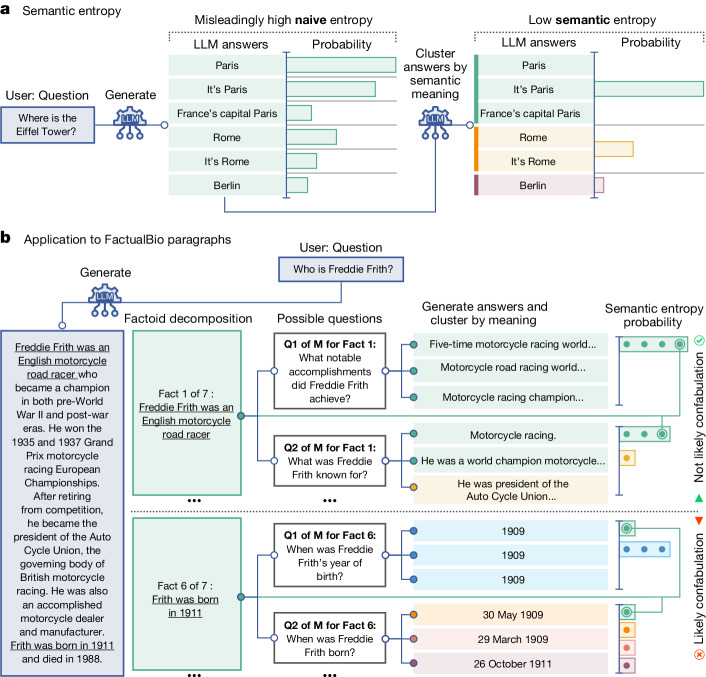
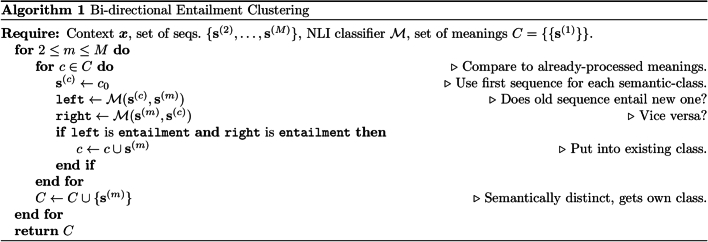
The paper introduces semantic entropy, an uncertainty estimator that clusters LLM generations by meaning via bidirectional entailment and computes entropy over those semantic clusters to detect confabulations. Across question-answering, math, and biography-generation tasks, semantic entropy outperforms naive entropy and supervised baselines without task-specific training data.
Key findings
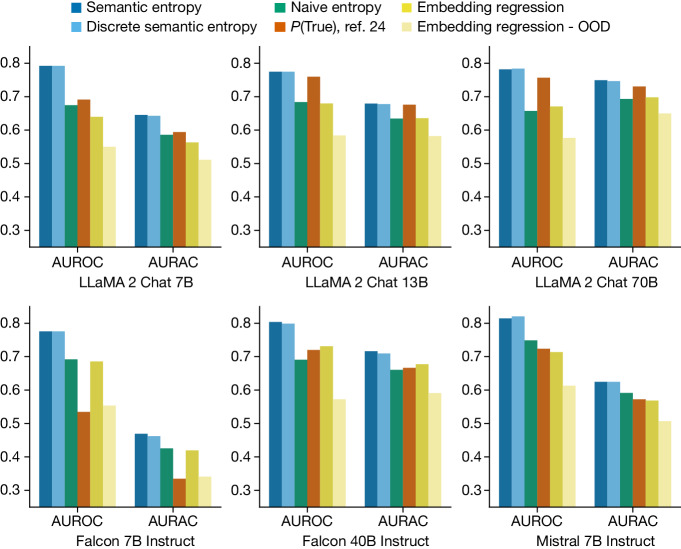
- Averaged across 30 task–model combinations, semantic entropy achieved the best AUROC of 0.790, compared with naive entropy (0.691), P(True) (0.698), and embedding regression (0.687); performance was stable between 0.78 and 0.81 across LLaMA, Falcon, and Mistral model families and scales from 7B to 70B parameters.
- Semantic entropy detects confabulations in sentence-length QA and math across TriviaQA, SQuAD 1.1, BioASQ, NQ-Open, and SVAMP, and its discrete variant performs similarly without requiring exact output probabilities.
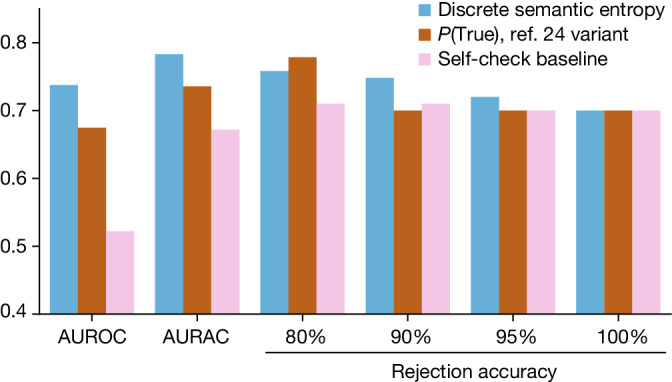
- On the GPT-4 biography dataset FactualBio—21 individuals, 150 factual claims, of which 45 were incorrect—the discrete semantic entropy variant outperformed a self-check baseline and an adapted P(True) baseline on AUROC and AURAC; P(True) had a narrow edge only after the top 20% of answers judged most likely to be confabulations were rejected.
- The method targets confabulations—arbitrary and incorrect generations sensitive to irrelevant details such as random seed—rather than all hallucinations, and it does not address systematically bad outputs.
Methods
- For each question, the method samples multiple generations from the LLM, clusters them by semantic equivalence using bidirectional entailment, and estimates semantic entropy over the meaning clusters; a discrete variant approximates cluster probabilities from generation frequencies when token probabilities are unavailable.
- Sentence-length experiments used LLaMA 2 Chat (7B, 13B, 70B), Falcon Instruct (7B, 40B), and Mistral Instruct (7B) on BioASQ, SQuAD 1.1, TriviaQA, SVAMP, and NQ-Open, with 400 train and 400 test examples per dataset; GPT-4 (v.0613) was used for FactualBio.
- Evaluation metrics were AUROC, rejection accuracy, and AURAC; sentence-length correctness was assessed automatically with GPT-4 against reference answers, validated against human judgement in the Supplementary Information.
Limitations
- The paper states that semantic entropy does not guarantee factuality and does not help when LLM outputs are systematically bad, including confident errors from training objectives, systematic reasoning failures, or misleading behaviour.
- The paper notes that semantic clustering can be overly sensitive to context: in one example, it distinguished a precise date from a year and treated the model as uncertain, even though the distinction was probably irrelevant in context.
- For FactualBio, the paper states that automatically generated questions are the main source of errors, and that GPT-4 did not expose output probabilities at the time, preventing computation of naive entropy, standard semantic entropy, and the embedding regression baseline for GPT-4.
Model-written summary. Check it against the paper before relying on it.
Integrity signals
Registry
Cites
Statistics
Figures
Verification
Claims the paper makes
8 Valid · 6 Not valid · 5 Not checked · 60 Own results and interpretations
The cited sources support only part of this claim — read each source’s verdict below.
In the paper
“Large language model (LLM) systems, such as ChatGPT1 or Gemini2, can show impressive reasoning and question-answering capabilities but often ‘hallucinate’ false outputs and unsubstantiated answers3,4.”
§ Detecting hallucinations in large language models using semantic entropy > Abstract
What the sources say
- Partly supportedcites [3] Xiao, Y. & Wang, W. Y. On hallucination and predictive uncertainty in conditional language generation. In Proc. 16th Conference of the European Chapter of the Association for Computational Linguistics 2734–2744 (Association for Computational Linguistics, 2021). sourceExperimental — accuracy not yet measured
The Introduction (p. 1) says neural generation models can produce content unsupported by their inputs, and §2.1 (p. 2) defines hallucination as false information unsupported by the input. The paper studies conditional generation, including image captioning and data-to-text, rather than establishing how often LLM systems such as ChatGPT or Gemini give unsubstantiated answers. (LLM, conf=0.84)
- Partly supportedcites [4] Rohrbach, A., Hendricks, L. A., Burns, K., Darrell, T. & Saenko, K. Object hallucination in image captioning. In Proc. 2018 Conference on Empirical Methods in Natural Language Processing (eds Riloff, E., Chiang, D., Hockenmaier, J. & Tsujii, J.) 4035–4045 (Association for Computational Linguistics, 2018). sourceExperimental — accuracy not yet measured
The Introduction describes image-captioning models generating objects absent from an image, and Section 3.2 reports hallucinated objects in 7.4%–17.7% of tested captions. This supports the general point that generated outputs can be false, but the paper does not establish how often LLM systems such as ChatGPT or Gemini produce unsubstantiated answers. Page numbers were not available in our copy. (LLM, conf=0.86)
plain- Asserted: passes — The authors put it forward as true.
- Checkable: passes — It can be checked against evidence.
- Load-bearing: passes — The paper’s conclusions depend on it.
- Based: passes — The paper gives a reason why it holds.
- Partly supported
The cited sources support only part of this claim — read each source’s verdict below.
In the paper
“High entropy corresponds to high uncertainty23–25—so semantic entropy is one way to estimate semantic uncertainties.”
§ Detecting hallucinations in large language models using semantic entropy > Main
What the sources say
- Not checked — no full text of the sourcecites [23] MacKay DJC Information-based objective functions for active data selection Neural Comput. 1992 4 590 604 10.1162/neco.1992.4.4.590 source
- Partly supportedcites [24] Kadavath, S. et al. Language models (mostly) know what they know. Preprint at https://arxiv.org/abs/2207.05221 (2022). sourceExperimental — accuracy not yet measured
Section B.2 (p. 29) hypothesizes that an unsure model produces a high-entropy answer distribution, and reports that entropy has some predictive power. But it also finds that larger models can give diverse correct answers and concludes that answer-distribution entropy is not a robust measure of whether a model knows the answer. The unqualified correspondence in the claim overstates the paper's finding. (LLM, conf=0.87)
- Supportedcites [25] Lindley DV On a measure of the information provided by an experiment Ann. Math. Stat. 1956 27 986 1005 10.1214/aoms/1177728069 source
The discussion on p. 4 explains that the measure uses Shannon’s function with the sign reversed: information is greatest when the distribution is concentrated on one value and falls as it spreads. This supports the cited background point that higher Shannon entropy corresponds to greater uncertainty; the later claim about semantic entropy is not attributed to this source. (LLM, conf=0.88)
plainstates an association- Asserted: passes — The authors put it forward as true.
- Checkable: passes — It can be checked against evidence.
- Load-bearing: passes — The paper’s conclusions depend on it.
- Based: passes — The paper gives a reason why it holds.
A result the paper states — it cites no source for it, so there is none to check. The quote shows it is in the paper.
In the paper
“Nevertheless, we significantly improve question-answering accuracy for state-of-the-art LLMs, revealing that confabulations are a great source of error at present.”
§ Detecting hallucinations in large language models using semantic entropy > Main
boostedstates a cause- Asserted: passes — The authors put it forward as true.
- Checkable: passes — It can be checked against evidence.
- Load-bearing: passes — The paper’s conclusions depend on it.
- Based: passes — The paper gives a reason why it holds.
- Rests on an assumption not shown here.
A result the paper reports from its own data — it cites no other source for it, so there is none to check. The quote shows it is in the paper.
In the paper
“We further show that semantic uncertainty can be used to improve model accuracy by refusing to answer questions when semantic uncertainty is high.”
§ Detecting hallucinations in large language models using semantic entropy > Methods > Detecting confabulations in QA and math
plainstates a cause- Asserted: passes — The authors put it forward as true.
- Checkable: passes — It can be checked against evidence.
- Load-bearing: passes — The paper’s conclusions depend on it.
- Based: passes — The paper gives a reason why it holds.
A result the paper reports from its own data — it cites no other source for it, so there is none to check. The quote shows it is in the paper.
In the paper
“In our experiments, we use semantic uncertainty to predict model accuracy, demonstrating that confabulations make up a notable fraction of model mistakes.”
§ Detecting hallucinations in large language models using semantic entropy > Methods > Detecting confabulations in QA and math
boosted- Asserted: passes — The authors put it forward as true.
- Checkable: passes — It can be checked against evidence.
- Load-bearing: passes — The paper’s conclusions depend on it.
- Based: passes — The paper gives a reason why it holds.
36 more claims
Create a free account to see all 79 claims and to verify the 2 references still open.
- Probably not a substantial claim. 30
- It may state two separate claims as one. 20
Claims other papers make about this one
Each is checked against this paper’s own text: does it say what the citing paper says it does?
The source backs part of the claim, not all of it — or backs it for a different population, condition or comparison.
In the citing paper
“However, LLMs exhibit hallucination and fabrication errors that are unacceptable for quantitative modeling [19, 20, 21].”
From Structured Schemas for Provenance‐Rich, LLM ‐Assisted QSP Model Calibration (2026) · cites this paper as [19]
Experimental — accuracy not yet measuredThe source backs part of the claim, not all of it — or backs it for a different population, condition or comparison.
In the citing paper
“Studies on hallucination, calibration, sycophancy, and cognitive bias indicate that failures often result not from a lack of capability but from unstable behavioral dispositions under uncertainty or pressure [8, 9, 10, 12, 15].”
From Machine Psychometrics: A Mathematical Psychology of Artificial Intelligence (2026) · cites this paper as [8]
Experimental — accuracy not yet measuredThe source backs part of the claim, not all of it — or backs it for a different population, condition or comparison.
In the citing paper
“AI-generated patient summaries also frequently contain errors that can be hard to detect12.”
From Multi-model assurance analysis showing large language models are highly vulnerable to adversarial hallucination attacks during clinical decision support (2025) · cites this paper as [12]
Experimental — accuracy not yet measuredThe source backs part of the claim, not all of it — or backs it for a different population, condition or comparison.
In the citing paper
“LLMs remain limited by the static knowledge encoded in their parameters.They are prone to hallucinations, factual inaccuracies, and out-of-date internal knowledge (Farquhar et al., 2024;Lewis et al., 2020).”
From Improving Amharic Information Retrieval with Translative and Multi-Agent Debate Retrieval Augmented Generation (2026) · cites this paper as Farquhar et al., 2024
Experimental — accuracy not yet measuredThe source backs part of the claim, not all of it — or backs it for a different population, condition or comparison.
In the citing paper
“This limitation can result in responses that lack coherence, contextual relevance, and even lead to hallucinations in extended dialogues or complex tasks [1], [2].”
From Memory-Augmented Architecture for Long-Term Context Handling in Large Language Models (2026) · cites this paper as [1]
Experimental — accuracy not yet measured
11 more claims about this paper
Create a free account to see every claim other papers make about this one.
Citations
Cites
Language Models are Few-Shot Learners
Brown, T. B., Mann, B., Ryder, N., Subbiah, M., Kaplan, J., Dhariwal, P., Neelakantan, A., Shyam, P., Sastry, G., Askell, A., et al. (2020) · arXiv · doi:10.48550/arxiv.2005.14165 · Cited by 23,372 · cited 1×
“57), which can predict entailment given suitable prompts.”
SQuAD: 100,000+ Questions for Machine Comprehension of Text
Rajpurkar, P., Zhang, J., Lopyrev, K., & Liang, P. (2016) · Proceedings of the 2016 Conference on Empirical Methods in Natural Language Processing · doi:10.18653/v1/d16-1264 · Cited by 6,208
Survey of Hallucination in Natural Language Generation
Ji, Z., Lee, N., Frieske, R., Yu, T., Su, D., Xu, Y., Ishii, E., Bang, Y. J., Madotto, A., & Fung, P. (2023) · ACM Computing Surveys · doi:10.1145/3571730 · Cited by 5,025 · cited 2×
“Hallucinations are often defined as LLMs generating “content that is nonsensical or unfaithful to the provided source content” 9–11 but they have come to include a vast array of failures of faithfulness and factuality.”
Survey of Hallucination in Natural Language Generation
Ji, Z., Lee, N., Frieske, R., Yu, T., Su, D., Xu, Y., Ishii, E., Bang, Y., Chen, D., Dai, W., et al. (2022) · arXiv · doi:10.48550/arxiv.2202.03629 · Cited by 4,981
A Broad-Coverage Challenge Corpus for Sentence Understanding through Inference
Williams, A., Nangia, N., & Bowman, S. (2018) · Proceedings of the 2018 Conference of the North American Chapter of the Association for Computational Linguistics: Human Language Technologies, Volume 1 (Long Papers) · doi:10.18653/v1/n18-1101 · Cited by 3,342 · cited 2×
“We rely on language models to predict entailment, such as DeBERTa-Large-MNLI 56 , which has been trained to predict entailment, or general-purpose LLMs such as GPT-3.”
Llama 2: Open Foundation and Fine-Tuned Chat Models
Touvron, H., Martin, L., Stone, K., Albert, P., Almahairi, A., Babaei, Y., Bashlykov, N., Batra, S., Bhargava, P., Bhosale, S., et al. (2023) · arXiv · doi:10.48550/arxiv.2307.09288 · Cited by 2,604 · cited 1×
“Our results for TriviaQA, SQuAD, BioASQ, NQ-Open and SVAMP are all evaluated context-free and involve sentence-length answers (96 ± 70 characters, mean ± s.d.) and use LLaMA 2 Chat (7B, 13B and 70B parameters) 38 , Falcon Instruct (7B and 40B) 39 and Mistral Instruct (7B) 40 .”
Aleatory or epistemic? Does it matter?
Kiureghian, A. D., & Ditlevsen, O. (2009) · Structural Safety · doi:10.1016/j.strusafe.2008.06.020 · Cited by 2,454 · cited 1×
“Researchers some-times separate aleatoric uncertainty (uncertainty in the underlying data distribution) from epistemic uncertainty (caused by having only limited information) 46 .”
Natural Questions: A benchmark for question answering research
Kwiatkowski, T., Palomaki, J., Redfield, O., Collins, M., Parikh, A., Alberti, C., Epstein, D., Polosukhin, I., Devlin, J., Lee, K., et al. (2019) · Transactions of the Association for Computational Linguistics · doi:10.1162/tacl_a_00276 · Cited by 2,069 · cited 2×
“33), life sciences (BioASQ 34 ) and open-domain natural questions (NQ-Open 35 ) derived from actual queries to Google Search 36 .”
TriviaQA: A Large Scale Distantly Supervised Challenge Dataset for Reading Comprehension
Joshi, M., Choi, E., Weld, D., & Zettlemoyer, L. (2017) · Proceedings of the 55th Annual Meeting of the Association for Computational Linguistics (Volume 1: Long Papers) · doi:10.18653/v1/p17-1147 · Cited by 1,690 · cited 5×
“TriviaQA is a trivia question-answering dataset.”
InfluentialTriviaQA: A Large Scale Distantly Supervised Challenge Dataset for Reading Comprehension
Joshi, M., Choi, E., Weld, D. S., & Zettlemoyer, L. (2017) · arXiv · doi:10.48550/arxiv.1705.03551 · Cited by 1,650
Research works printed but not linked: 8
- Xiao, T. Z., Gomez, A. N. & Gal, Y. Wat zei je? Detecting out-of-distribution translations with variational transformers. In Workshop on Bayesian Deep Learning at the Conference on Neural Information Processing Systems (NeurIPS, Vancouver, 2019).
- Negri, M., Bentivogli, L., Mehdad, Y., Giampiccolo, D. & Marchetti, A. Divide and conquer: crowdsourcing the creation of cross-lingual textual entailment corpora. In Proc. 2011 Conference on Empirical Methods in Natural Language Processing 670–679 (Association for Computational Linguistics, 2011).
- Malinin, A. & Gales, M. Uncertainty estimation in autoregressive structured prediction. In Proceedings of the International Conference on Learning Representations https://openreview.net/forum?id=jN5y-zb5Q7m (2021).
- Holtzman, A., Buys, J., Du, L., Forbes, M. & Choi, Y. The curious case of neural text degeneration. In Proceedings of the International Conference on Learning Representations https://openreview.net/forum?id=rygGQyrFvH (2020).
- Culicover PW Paraphrase generation and information retrieval from stored text Mech. Transl. Comput. Linguist. 1968 11 78 88
- He, P., Liu, X., Gao, J. & Chen, W. Deberta: decoding-enhanced BERT with disentangled attention. In International Conference on Learning Representations https://openreview.net/forum?id=XPZIaotutsD (2021).
- Socher, R., Huang, E., Pennin, J., Manning, C. D. & Ng, A. Dynamic pooling and unfolding recursive autoencoders for paraphrase detection. In Proceedings of the 24th Conference on Neural Information Processing Systems (eds Shawe-Taylor, J. et al.) (2011)
- Kane, H., Kocyigit, Y., Abdalla, A., Ajanoh, P. & Coulibali, M. Towards neural similarity evaluators. In Workshop on Document Intelligence at the 32nd conference on Neural Information Processing (2019).
Cited by
Items 201–300 of 888
Khanal, B., Pokhrel, S., Bhandari, S., Rana, R., Shrestha, N., Gurung, R. B., Linte, C. A., Watson, A. J. M., Shrestha, Y. R., & Bhattarai, B. (2025) · Lecture notes in computer science · doi:10.1007/978-3-032-05127-1_23 · Cited by 24
Foundation Models for Translational Cancer Biology
Tsang, K. K., Kivelson, S., Cortina, J. M. A., Kuchi, A., Berkowitz, J. S., Liu, H., Srinivasan, A., Friedrich, N. A., Fatapour, Y., & Tatonetti, N. P. (2025) · Annual Review of Biomedical Data Science · doi:10.1146/annurev-biodatasci-103123-095633 · Cited by 6
Piao, J., Lu, Z., Gao, C., & Li, Y. (2025) · International World Wide Web Conference (WWW) · doi:10.1145/3696410.3714537 · Cited by 13
Inferring Drug–Gene Relationships in Cancer Using Literature-Augmented Large Language Models
Lai, Y.-J., Wang, L.-J., Yasaka, T. M., Shin, Y., Ning, M., Tan, Y., Shih, C.-H., Guo, Y., Chen, P.-Y., Galloway, H., et al. (2025) · Cancer Research Communications · doi:10.1158/2767-9764.crc-25-0030 · Cited by 4
Comparison of Large Language Model with Aphasia
Watanabe, T., Inoue, K., Kuniyoshi, Y., Nakajima, K., & Aihara, K. (2025) · Advanced Science · doi:10.1002/advs.202414016 · Cited by 6
Penny‐Dimri, J. C., Bachmann, M., Cooke, W. R., Mathewlynn, S., Dockree, S., Tolladay, J., Kossen, J., Li, L., Gal, Y., & Jones, G. D. (2025) · The Lancet Obstetrics Gynaecology & Women s Health · doi:10.1016/j.lanogw.2025.100005 · Cited by 13
“Semantic entropy (SE), its discrete version, and perplexity were evaluated as metrics of uncertainty using accuracy and area under the receiver operating characteristic curve (AUROC) [ 15].”
InfluentialSelf-citationHlaing, N. H. M. M., Park, K., Hahn, S., Lee, S., Yeo, I.-S. L., & Lee, J. (2025) · Journal of Prosthetic Dentistry · doi:10.1016/j.prosdent.2025.10.004 · Cited by 8
LENS: Layers of Evaluation of Hallucination in GenAI Systems
Gu, C., Zhang, W., Huang, Z., Kou, J., Liu, Z., Zhao, C., Liu, C., Zhang, L., Lin, W., Wang, Z., et al. (2024) · International Conference on Universal Village (UV) · doi:10.1109/uv63228.2024.11189150 · Cited by 39
Motghare, M., Agarwal, M., & Agrawal, A. (2025) · Computers · doi:10.3390/computers14120508 · Cited by 5
AutoHall: Automated Factuality Hallucination Dataset Generation for Large Language Models
Cao, Z., Yang, Y., Li, X., & Zhao, H. (2025) · IEEE Transactions on Audio Speech and Language Processing · doi:10.1109/taslpro.2025.3635038 · Cited by 33
“4 indicates that among 10 comparison pairs, the number of conflicts reaches six or more almost only when LLM tends to generate hallucination.”
The regulation of fine-tuning: Federated compliance for modified general-purpose AI models
Hacker, P., & Holweg, M. (2025) · Computer law & security review · doi:10.1016/j.clsr.2025.106234 · Cited by 17
Shah, S. T. U., Hussein, M., Barcomb, A., & Moshirpour, M. (2026) · Automated Software Engineering · doi:10.1007/s10515-025-00587-5 · Cited by 6
“Current methods also fall short in addressing the hallucination-grounding dilemma, the difficulty of using the generative abilities of LLMs while ensuring that outputs remain closely linked to the original source text (Farquhar et al. 2024).”
Perez, R. M., Shimogawa, M., Chang, Y., Li, X., Phan, H. A. T., Marmorstein, J. G., Yanagawa, E. S. K., & Petersson, E. J. (2026) · Computers and Education Artificial Intelligence · doi:10.1016/j.caeai.2026.100546 · Cited by 11
An Information–Theoretic Model of Abduction for Detecting Hallucinations in Explanations
Galitsky, B. A., & Rybalov, A. (2026) · Entropy · doi:10.3390/e28020173 · Cited by 8
“Unlike IG-only hallucination detectors, which rely solely on information–theoretic surprise or uncertainty signals [12,13], our framework does not equate high information gain with incorrectness.”
Xu, M., Li, X., Lan, T., Zeng, X., Wang, T., Sheng, S., Deng, X., Sun, J., Fiebrink, R. A., Bryan–Kinns, N., et al. (2026) · Interactive Learning Environments · doi:10.1080/10494820.2025.2604649 · Cited by 6
Abramson, C. M., Prendergast, T., Li, Z., & Dohan, D. P. (2026) · Annual Review of Sociology · doi:10.1146/annurev-soc-011824-104836 · Cited by 12
Exploring the Intersection of AI, Language, and Law: A Bibliometric Analysis
Lan, Z., & Zhang, X. (2026) · SAGE Open · doi:10.1177/21582440261431000 · Cited by 10
“…detection (including probabilistic approaches such as semantic entropy), and auditable workflows built around documentation, logging, and internal algorithmic auditing (Dana Roemling & Miletic, 2024; Farquhar et al., 2024; Mo¨kander & Floridi, 2023; Raji et al., 2020; Richmond et al., 2024).”
Fan, S., Wang, X., Zhang, B., & Sun, X. (2026) · Telematics and Informatics · doi:10.1016/j.tele.2026.102434 · Cited by 5
Evaluating the robustness and readiness of large frontier models in health AI applications
池谷, 裕., Fu, J., Liu, X., Valanarasu, J. M. J., Codella, N., Tan, R., Liu, Q., Jin, Y., Zhang, S., Wang, J., et al. (2026) · Nature Medicine · doi:10.1038/s41591-026-04501-8 · Cited by 60
“Although previous studies abound in studying LLM pitfalls 7,10–13 , they predominantly focus on the text modality, whereas multimodal reasoning is relatively underexplored.”
Extended Blahut–Arimoto Algorithm for Semantic Rate-Distortion Function
Han, Y., Liu, Y., Sun, Y., Niu, K., Ma, N., Cui, S. R., & Zhang, P. (2025) · Entropy · doi:10.3390/e27060651 · Cited by 8
“By introducing the synonymous mapping, information measures (such as semantic entropy, which is consistent with that used in large language models [25]) and coding theorems for the semantic communication system were established, thus providing a mathematical foundation for guiding the design of the…”
Collaborative intelligence in AI: Evaluating the performance of a council of AIs on the USMLE
Shaikh, Y., Jeelani-Shaikh, Z. A., Jeelani, M., Javaid, A., Mahmud, T., Gaglani, S. M., Gibbons, M., Cheema, M., Cross, A., Livingston, D., et al. (2025) · PLOS Digital Health · doi:10.1371/journal.pdig.0000787 · Cited by 7
“Once this distribution is determined, the Shannon entropy formula was applied to calculate the semantic entropy: [30] where 𝑁 is the total number of clusters, and 𝑝 𝑖 is the probability of the 𝑖 -th cluster.”
InfluentialSelf-reflection enhances large language models towards substantial academic response
Li, B., & Zhao, C. (2025) · npj Artificial Intelligence · doi:10.1038/s44387-025-00045-3 · Cited by 9
Niu, Q., Liu, J., Bi, Z., Feng, P., Peng, B., Chen, K., Li, M., Yan, L. K. Q., Zhang, Y., Yin, C. H., et al. (2026) · BIO Integration · doi:10.15212/bioi-2025-0199 · Cited by 121
Li, K., Jia, W., & Li, Z. (2024) · Software Practice and Experience · doi:10.1002/spe.3389 · Cited by 8
Ohn, M., Maddison, K. J., Walsh, J. H., & von Ungern-Sternberg, B. S. (2025) · Paediatric Respiratory Reviews · doi:10.1016/j.prrv.2025.01.004 · Cited by 8
Flores‐Gouyonnet, J., Cuéllar‐Gutiérrez, M. C., Figueroa‐Parra, G., Kimbrough, B. A., Joerns, E. K., Navarro-Mendoza, E., Crowson, C. S., Lennon, R. J., Bautista-Vargas, M. A., González‐Treviño, M., et al. (2025) · The Lancet Rheumatology · doi:10.1016/s2665-9913(24)00400-4 · Cited by 4
Transforming phenomenological sociology for virtual personalities and virtual worlds
Shibuya, K. (2025) · AI & Society · doi:10.1007/s00146-025-02189-x · Cited by 6
“…side can perceive the interaction with the virtual personality as if it were established, the problem of hallucination has arisen, in which the human side per-ceives the discourse including errors and false information presented by the generated AI as if they were correct (Farquhar et al. 2024).”
Hierarchical chat-based strategies with MLLMs for Spatio-temporal action detection
Zhou, X., Wang, Y., Tao, F., Yu, H. Z., & Liu, Q. (2025) · Information Processing & Management · doi:10.1016/j.ipm.2025.104094 · Cited by 5
Reichenpfader, D., Knupp, J., von Däniken, S. U., Gaio, R., Dennstädt, F., Cereghetti, G. M., Sander, A., Hiltbrunner, H., Nairz, K., & Denecke, K. (2025) · Journal of Medical Internet Research · doi:10.2196/68427 · Cited by 4
“Further limitations include XSL • FO RenderX models “hallucinating” wrong or misleading outputs [21] and restricted use of commercial models due to the sensitive nature of patient data [22].”
Large language modeling of hallucinatory problem mitigation based on the wheel of emotions
Wang, Z., Wang, J., Zhou, L., & You, F. (2025) · Neural Networks · doi:10.1016/j.neunet.2025.107996 · Cited by 7
Shining a Light on AI Hallucinations
Greengard, S. (2025) · Communications of the ACM · doi:10.1145/3715691 · Cited by 10
Xie, E., Cheng, L., Shireman, J., Cai, Y., Liu, J., Mohanty, C., Dey, M., & Kendziorski, C. (2024) · doi:10.1101/2024.12.04.626476 · Cited by 3
LLM hallucinations in the wild: Large-scale evidence from non-existent citations
Zhao, Z., Wang, Y., Stuart, T., De Vaan, M., Ginsparg, P., & Yin, Y. (2026) · arXiv · doi:10.48550/arxiv.2605.07723 · Cited by 3
“The propensity of Large Language Models (LLMs) to generate plausible but false information, often referred to as “hallucination”, remains an unresolved challenge even in state-of-the-art models [1].”
Should Artificial Intelligence Play a Durable Role in Biomedical Research and Practice?
Bongrand, P. (2024) · International Journal of Molecular Sciences · doi:10.3390/ijms252413371 · Cited by 5
Semantic-based topic model for public opinion analysis in sudden-onset disasters
Ma, Y., Zhang, X., & Wang, R. (2025) · Applied Soft Computing · doi:10.1016/j.asoc.2025.112700 · Cited by 8
Li, S., Jiang, J., & Yang, X. (2025) · Journal of Children s Orthopaedics · doi:10.1177/18632521251331772 · Cited by 5
“9,20 In this study, while the models largely provided accurate information, there were cases where they offered incorrect responses to certain queries, including DDH grading.”
Ma, Z., Mei, Y., Bruderlein, C., Gajos, K. Z., & Pan, W. (2025) · Annual Symposium on Human-Computer Interaction for Work (CHIWORK) · doi:10.1145/3729176.3729194 · Cited by 28
VAP3: Variation-Aware Prompt Performance Prediction
Arabzadeh, N., & Bagheri, E. (2025) · International ACM SIGIR Conference on Research and Development in Information Retrieval (SIGIR) · doi:10.1145/3726302.3730264 · Cited by 6
Entropy-Guided Probing for Predicting LLM Hallucinations with Knowledge Graph Features
Ali, U., Lynden, S. J., Matono, A., & Amagasa, T. (2025) · Lecture notes in computer science · doi:10.1007/978-3-032-02049-9_5 · Cited by 3
Tarhini, A. A., Dave, P., & Naqa, I. E. (2025) · BJR|Artificial Intelligence · doi:10.1093/bjrai/ubaf015 · Cited by 7
“65 This unreliability poses major risk, especially in medicine, where faulty radiology or pathology reports may negatively impact patient care.”
InfluentialEnhancing ICD classification with semantic embedding rectification and long-tail refinement
Wu, Y., Wu, Y., Fan, W., & Li, M. (2025) · Knowledge-Based Systems · doi:10.1016/j.knosys.2025.114530 · Cited by 6
Asking Questions to Alleviate Object Hallucination in Large Vision-Language Models
Bi, C., Dang, T., Wang, S., Cao, F., & Huang, Q. (2025) · IEEE Transactions on Circuits and Systems for Video Technology · doi:10.1109/tcsvt.2025.3618949 · Cited by 3
“Nowadays, there are some studies that infer hallucination tendencies from internal model states [56], [57], or semantic entropy [42].”
Hallucination in Large Language Models: From Mechanistic Understanding to Novel Control Frameworks
Zhang, W., Zhang, C., Gu, C., Kou, J., Yuan, H., Fang, X., Duan, X., & Fang, Y. (2024) · International Conference on Universal Village (UV) · doi:10.1109/uv63228.2024.11189226 · Cited by 60
“…internal mechanisms (C1: data-level, C2: training-induced, C3: inference-stage) and external manifestations (P1: factuality errors, P2: faithfulness violations, P3: logical inconsistencies, P4: emergent behaviors), revealing precise causal pathways that enable targeted interventions [15], [20].”
InfluentialLiu, P., Zhang, Y., Yang, Y., Zhao, X., & Tao, B. (2025) · Applied Soft Computing · doi:10.1016/j.asoc.2025.114140 · Cited by 3
Grace, B., Zhu, J., Dudakia, H., Ajao-Rotimi, F., & Colton, N. A. (2025) · Human Fertility · doi:10.1080/14647273.2025.2584673 · Cited by 7
“However, research (Farquhar et al., 2024) has highlighted risks of inaccuracies, including hallucination, generation false outputs, and unsubstantiated answers associated with AI-generated information.”
Austin, M. W., Linan, A. G., Blomberg, M., et al. (2025) · Plants People Planet · doi:10.1002/ppp3.70128 · Cited by 3
“Efficiency increases will continue to be made as LLMs are developed with more precise reasoning abilities and fewer hallucinations (Farquhar et al., 2024).”
Lu, J., & Li, J. (2025) · PLoS ONE · doi:10.1371/journal.pone.0337361 · Cited by 13
“…in handling complex reasoning and mathematical calculations, and they are susceptible to the “hallucination” problem, where the model may generate incorrect answers that do not align with actual knowledge, posing challenges to the accuracy and reliability of the educational system [8,9].”
Tripathi, A. G., Waqas, A., Venkatesan, K., Ullah, E., Khan, A., Khalil, F. K., Chen, W., Ozturk, Z. G., Saeed‐Vafa, D., Bui, M. M., et al. (2025) · Laboratory Investigation · doi:10.1016/j.labinv.2025.104272 · Cited by 13
HaluGNN: Hallucination detection in large language models using graph neural network
Kong, L., Zhang, Y., Zhong, X., Fu, H., Wang, Y., & Liu, H. (2025) · Expert Systems with Applications · doi:10.1016/j.eswa.2025.130857 · Cited by 11
Evaluation of large language models in assigning PI-RADS v2.1 categories for prostate MRI reports
Dölek, B. A., & Beşler, M. S. (2026) · BMC Urology · doi:10.1186/s12894-025-02038-5 · Cited by 3
Trustworthiness of large language models: hallucinations
Brunello, N. (2026) · Elsevier eBooks · doi:10.1016/b978-0-443-33592-1.00007-3 · Cited by 5
Xu, Y., Kamat, V. R., & Menassa, C. C. (2026) · ASCE International Conference on Computing in Civil Engineering (i3CE) · doi:10.1061/9780784486436.012 · Cited by 4
Agentic AI Meets Edge Computing in Autonomous UAV Swarms
Nguyen, T. M., Truong, V. T., & Le, L. B. (2026) · IEEE Internet of Things Magazine · doi:10.1109/miot.2025.3645767 · Cited by 5
“Hallucination remains a critical challenge in LLMs and LLM-driven agentic AI systems, referring to the generation of factually inaccurate content [14].”
Tang, W., Chen, R., Long, X., Yu, D., Zhao, S., & Chen, B. (2026) · Journal of Orthopaedic Translation · doi:10.1016/j.jot.2026.101050 · Cited by 10
Marlowe, T. J., Ku, C. S., Laracy, J. R., Kirova, V. D., & Herbert, K. G. (2026) · Journal of Integrated Design and Process Science · doi:10.1177/10920617251405471 · Cited by 13
“In both cases, but particularly for prompts related to requirements, risk, and documentation, output also requires checking for hallucination of anecdote and detail, and in particular fabrication of references (Farquhar et al., 2024; Singh, 2025).”
DataFactory: Collaborative multi-agent framework for advanced table question answering
Wang, T., Jin, C., Chen, Y., Deng, H., Kuang, X., & Zhao, G. (2026) · Information Processing & Management · doi:10.1016/j.ipm.2026.104723 · Cited by 9
“…capabilities (Wang et al., 2025a; Lee et al., 2025); (2) hallucination issues where models generate content not supported by the table data (Farquhar et al., 2024; Yang et al., 2025c; Sairaj and Balasundaram, 2025a); and (3) difficulty in precise data localization and low interpretability…”
Tan, C., Xu, X., & Ma, L. (2026) · International Journal of Industrial Ergonomics · doi:10.1016/j.ergon.2026.103924 · Cited by 7
Awill, R., Khan, W. A., Hussain, M., Anderson, B., & Kazmi, S. M. A. (2026) · Expert Systems with Applications · doi:10.1016/j.eswa.2026.131801 · Cited by 4
Human-in-the-loop agent for product regulatory screening: Case study on concrete
Vergés, R., Gaspar, K., Forcada, N., & Hosseini, M. R. (2026) · Automation in Construction · doi:10.1016/j.autcon.2026.106876 · Cited by 4
Huang, G., Li, L.-J., Li, P.-S., Fan, Z., & Lu, B.-Q. (2026) · European Archives of Oto-Rhino-Laryngology · doi:10.1007/s00405-026-10133-y · Cited by 3
A hierarchical imprecise probability approach to reliability assessment of large language models
Aghazadeh-Chakherlou, R., Guo, Q., Khastgir, S., Popov, P. T., Zhang, X., & Zhao, X. (2026) · Reliability Engineering & System Safety · doi:10.1016/j.ress.2026.112615 · Cited by 9
Pai, K.-C., & Hsu, W.-C. (2026) · Computer Standards & Interfaces · doi:10.1016/j.csi.2026.104163 · Cited by 3
Predicting Retrieval Utility and Answer Quality in Retrieval-Augmented Generation
Tian, F., Ganguly, D., & Macdonald, C. (2026) · Lecture notes in computer science · doi:10.1007/978-3-032-21289-4_24 · Cited by 16
Lv, J., Liu, G., Zhou, X., & Chen, Y. (2026) · Probiotics and Antimicrobial Proteins · doi:10.1007/s12602-026-11013-x · Cited by 4
“Second, text-conditioned generative models may suffer from hallucinations, generating sequences that appear plausible but do not correspond to the intended peptides design objectives [152, 153].”
Andrew, A., & Zhao, S. (2025) · Indian Journal of Surgery · doi:10.1007/s12262-025-04296-x · Cited by 3
“Furthermore, LLMs are prone to "hallucination," where they generate nonsensical or inaccurate outputs, as highlighted in research [32].”
ChemLit-QA: a human evaluated dataset for chemistry RAG tasks
Wellawatte, G. P., Guo, H., Lederbauer, M., Borisova, A., Hart, M., Brucka, M., & Schwaller, P. (2025) · Machine Learning Science and Technology · doi:10.1088/2632-2153/adc2d6 · Cited by 18
“Furthermore, we computed Semantic Entropy (SE) [8] to detect the severeness of LLM confabulation by evaluating how semantically different candidate answers are to a fixed question.”
Current Perspectives on the Artificial Intelligence in Critical Care Medicine
Lee, J., & Yoon, J. H. (2025) · Anesthesiology Clinics · doi:10.1016/j.anclin.2025.05.005 · Cited by 5
Shen, S., Xiao, Z., & Han, D. (2025) · Neurocomputing · doi:10.1016/j.neucom.2025.131859 · Cited by 5
Healing AI Mental Health to Slash Energy Consumption and Carbon Emissions
Misan, S., Orciuolo, P., Beebeejaun, R., Bosich, D., Chiandone, M., & Sulligoi, G. (2024) · AEIT International Annual Conference · doi:10.23919/aeit63317.2024.10736831 · Cited by 3
“Case Study: Google Gemini model, during its development, exhibited instances of hallucinations where it produced fabricated information, requiring extra computational cycles to rectify [11].”
Application of Generative AI to Enhance Obstetrics and Gynecology Research
Kawakita, T., Wong, M. S., Gibson, K. S., Gupta, M., Gimovsky, A. C., Moussa, H. N., Heo, H. J., & for the Society of Maternal-Fetal Medicine Clinical Informatics Committee (2025) · American Journal of Perinatology · doi:10.1055/a-2616-4182 · Cited by 10
Zhang, J., Cai, Q., Song, H., Wu, H., Tao, C., & Chen, X. (2025) · IEEE Conference on Big Data Security on Cloud (BigDataSecurity) · doi:10.1109/bigdatasecurity66063.2025.00032 · Cited by 3
“1, when general LLMs are used for question-answering or consultation tasks in the domain of Power Operation and Maintenance, their output results often exhibit instability [13], knowledge hallucinations [14], and instruction confusion [15], which fail to meet the professional requirements of users.”
Qiu, Z., Ravishankar, J., Wang, Z., & Xie, R. (2025) · SSRN Electronic Journal · doi:10.2139/ssrn.5217709 · Cited by 6
Sezgın, E., Jackson, D., Hussain, S.-A., Kocaballi, A. B., Richardson, C., Skeens, M. A., Fosler‐Lussier, E., Ewing, A. P., Donneyong, M. M., & Pai, A. L. H. (2026) · PLOS Digital Health · doi:10.1101/2025.06.16.25329054 · Cited by 3
“69 Although no serious issues were reported in our study, establishing rigorous content validation and oversight (such as human review of a subset of chatbot outputs or user-friendly feedback mechanisms) will be important as the system scales.”
Williams, A. (2026) · Cogent Education · doi:10.1080/2331186x.2026.2698137 · Cited by 2
IAN, an intelligent system for omics data analysis and discovery
Nagarajan, V., Horai, R., Shi, G., Yu, C., Gopalakrishnan, J., Yadav, M. K., Liew, M. H., Gentilucci, C., & Caspi, R. R. (2026) · Cell Reports Methods · doi:10.1016/j.crmeth.2026.101503 · Cited by 4
“21 Researchers have proven that hallucination is an inevitable limitation of LLMs, but are working toward identifying and using approaches, methods and tools that could be used to mitigate hallucination and improve LLMs capabilities.”
Artificial Intelligence for Regional Anesthesiology and Acute Pain Medicine in the 21st Century
Schroeder, K. M., Nanda, M., Mariano, E. R., Gupta, R. K., Maniker, R. B., & Elkassabany, N. M. (2025) · Anesthesiology Clinics · doi:10.1016/j.anclin.2025.02.009 · Cited by 4
Bansal, R., Chandra, R., & Lulla, K. (2025) · International Journal of Computational and Experimental Science and Engineering · doi:10.22399/ijcesen.2471 · Cited by 5
“Practically, Farquhar et al. (2024) discovered they could efficiently identify a subset of hallucinations (those resulting from uncertainty) by grouping several outputs and evaluating semantic entropy.”
AggTruth: Contextual Hallucination Detection Using Aggregated Attention Scores in LLMs
Matys, P., Eliasz, J., Kiełczyński, K., Langner, M., Ferdinan, T., Kocoń, J., & Kazienko, P. (2025) · Lecture notes in computer science · doi:10.1007/978-3-031-97570-7_18 · Cited by 5
“A similar but more statistically grounded idea, based on semantic entropy, has also been presented [3].”
Large Language Models as a Virtual Endodontic Patient. Can They Help Us Teach Endodontic Diagnosis?
Wohlgemuth, P., Opazo, C., Covietz, E., & Kalibat, K. (2025) · Journal of Dental Education · doi:10.1002/jdd.70014 · Cited by 3
Bridging guidelines and large language models: a case for retrieval-augmented generation
Alexandrou, M., Mahtani, A. U., & Brilakis, E. S. (2025) · European Heart Journal · doi:10.1093/eurheartj/ehaf546 · Cited by 2
Jarvis: Zero-code Prototyping of IoT Applications with Composable Hardware-Software Abstractions
Wang, W., Li, B., Wang, S., & He, T. (2025) · ACM Transactions on Internet of Things · doi:10.1145/3762670 · Cited by 2
ScanVerse: An extended reality authoring platform for industrial digital twins
Solmaz, S., Jorissen, L., & Zogopoulos, V. (2025) · Procedia CIRP · doi:10.1016/j.procir.2025.08.107 · Cited by 2
Yu, H.-H., Lin, W.-T., Kuan, C.-W., Yang, C.-C., & Liao, K.-M. (2025) · Future Internet · doi:10.3390/fi17090414 · Cited by 5
“However, when applied to specialized, fact-intensive domains, general-purpose LLMs are prone to factual inaccuracies and “hallucinations”, where they generate plausible but incorrect information [8–13].”
Üretken Yapay Zeka: Sağlıkta Hizmetlerinde Kullanımı, Üstün ve Zayıf Yanları
Hayran, O. (2025) · JOURNAL OF BIOTECHNOLOGY AND STRATEGIC HEALTH RESEARCH · doi:10.34084/bshr.1731738 · Cited by 4
Mushtaq, E., Fabian, Z., Bakman, Y. F., Ramakrishna, A., Soltanolkotabi, M., & Avestimehr, A. S. (2025) · IEEE/CVF Conference on Computer Vision and Pattern Recognition Workshops (CVPRW) · doi:10.1109/cvprw67362.2025.00154 · Cited by 6
“Output Consistency methods estimate uncertainty by examining the consistency of generated outputs across rephrasings [5, 8, 18] or model confidence over sub-questions [19].”
Ma, J., Zhou, Y., He, L., Zhang, Q., Bilal, M. A., & Zhang, Y. (2025) · Minerals · doi:10.3390/min15101023 · Cited by 6
“Without domain-specific knowledge, general LLMs frequently rely on templated responses, limiting their ability to deliver accurate and contextually relevant answers [20].”
Miller, H. A., Goodin, D. A., & Frieboes, H. B. (2025) · Computer Methods and Programs in Biomedicine · doi:10.1016/j.cmpb.2025.109096 · Cited by 2
Ma, Y., Hassan, L., van der Veer, S. N., & Nenadić, G. (2025) · Journal of Medical Internet Research · doi:10.2196/78632 · Cited by 4
“Moreover, LLMs are prone to hallucinations [66,67], generating plausible yet inaccurate information, which poses additional challenges for reliable topic modeling.”
Large language model enhanced framework for systematic reviews and meta-analyses
Shen, J., Luo, Z., Jia, D., Wang, S., Sun, F., & Wu, J. (2025) · BMJ Digital Health & AI · doi:10.1136/bmjdhai-2025-000017 · Cited by 8
Cases and Lessons in Prompting Artificial Intelligence for Social Work
Fricker, S., Goldkind, L., Hackstein, S., & Weber, J. (2025) · IEEE International Requirements Engineering Conference Workshops (REW) · doi:10.1109/rew66121.2025.00087 · Cited by 3
“This design introduces a critical risk: LLMs may produce confident but incorrect answers — a phenomenon known as hallucination [27].”
Zhang, J., Jiang, J., Ma, F., Jiang, Z., Tan, Q., & Zhou, Y. (2025) · IEEE Transactions on Neural Networks and Learning Systems · doi:10.1109/tnnls.2025.3569168 · Cited by 2
“3, while GPT-4 produced fluent and coherent responses, it struggled to accurately extract and utilize medical information from continuous long dialog contexts [74].”
URSD: A uncertainty-resistant semi-supervised approach for object detection
Chen, Y., Liu, Y., Jiang, F., Zhu, D., & Li, J. (2025) · Expert Systems with Applications · doi:10.1016/j.eswa.2025.130281 · Cited by 2
ChatGPT Coolness-Desirable Framework for Tourism and Hospitality
Loureiro, S. M. C., Bilro, R. G., Guerreiro, J., Lee, M. J., & Han, H. (2025) · Journal of Travel Research · doi:10.1177/00472875251380185 · Cited by 4
Wei, Z., Wang, S., Rong, X., Liu, X., & Li, H. (2025) · Communications in computer and information science · doi:10.1007/978-981-95-4088-4_32 · Cited by 19
Improving negative rejection ability in language models: A review of fine-tuned LLMs, RAG, and RAFT
Bowen, L., Zhuoqing, Z., Hengyu, Z., Xubin, S., & Ihnaini, B. (2025) · Journal of King Saud University - Computer and Information Sciences · doi:10.1007/s44443-025-00334-6 · Cited by 4
“Farquhar et al. and Thomas et al. have recently published two studies that give thorough frameworks for evaluating the promise of those capabilities in LLMs (Farquhar et al. 2024; Thomas et al. 2024).”
Liu, B., Li, W., Zhao, R., Klauer, R. R., Hansen, A., Miller, N., Chen, Y., Blenner, M., & Tang, Y. (2025) · Environmental Science & Technology · doi:10.1021/acs.est.5c14258 · Cited by 3
Song, J., Tang, X., Hao, K., & Li, Y. (2026) · Expert Systems with Applications · doi:10.1016/j.eswa.2026.131273 · Cited by 2
Administrative Decision-Making with Generative AI: The Challenge of Epistemic Boundedness
Kim, Y., Kim, J., Kim, T., & Cho, H.-C. (2026) · Administration & Society · doi:10.1177/00953997251409156 · Cited by 5
“LLMs also include safety features to block specific questions, but these protections are limited (Farquhar et al., 2024; H. J. Kim et al., 2025; Verspoor, 2024; Wen et al., 2025).”
Jeon, J., Sim, Y., Lee, H., Han, C., Yun, D., Kim, E., Nagendra, S. L., Jun, M. B. G., Kim, Y., Lee, S. W., et al. (2026) · Journal of Manufacturing Systems · doi:10.1016/j.jmsy.2026.01.009 · Cited by 7
Radaković, J., Batalović, K., & Novaković, N. (2026) · Journal of Cheminformatics · doi:10.1186/s13321-025-01149-3 · Cited by 2
“…and word differentiation into subwords using different tokenization schemes, in addition to large language models’ susceptibility to hallucinations [58], can collectively produce significant variability in word-level embedding representations of chemical compounds beyond domain-specific corpus…”
Metadata
- Authors
- Farquhar, S., Kossen, J., Kuhn, L., & Gal, Y.
- Affiliations
- University of Oxford (GB)
- Corresponding author
- Farquhar, Sebastian
- Venue
- Nature
- Published
- 2024-06-19
- Volume
- 630
- Issue
- 8017
- Pages
- 625-630
- ISSN
- 0028-0836 (ISSN-L)
- 1476-4687
- PMC
- PMC11186750
- OpenAlex
- W4399803256
- Semantic Scholar
- f82f49c20c6acc69f884f05e3a9f1ceea91061ce
- Cited by
- 934
- References
- 60
- Citations by year
- 2026: 540 · 2025: 349 · 2024: 44
- FWCI
- 137.11
- Type
- journal article
- Language
- en
- Open access
- hybrid
- doi.org
- Licence
- cc-by
- creativecommons.org/licenses/by/4.0 (tdm)
- creativecommons.org/licenses/by/4.0 (vor)
- Locations
- Nature (publishedVersion, cc-by)
- PubMed Central (publishedVersion, cc-by)
- PubMed (publishedVersion)
- RePEc: Research Papers in Economics (submittedVersion)
- Funders
- Government of the United Kingdom
- UK Research and Innovation
- Topics
- Physical Sciences › Computer Science › Artificial Intelligence › Topic Modeling
- Physical Sciences › Computer Science › Artificial Intelligence › Adversarial Robustness in Machine Learning
- Physical Sciences › Computer Science › Artificial Intelligence › Natural Language Processing Techniques
- Keywords
- hallucination detection, large language models, semantic entropy, uncertainty estimation, confabulation, LLM reliability, generalization to unseen tasks, honesty
About these checks
Registry, retraction, Cites and statistics results are computed, not judged, with one exception: a printed reference that no index lists is read once by a model before it counts as a citation error. Claims are extracted by a model and kept only when their quote appears verbatim in the text; each cited source is then checked, with a model’s help, for whether it says what the claim relies on. Those verdicts can be wrong — read the claim’s quote and the cited source before relying on one.
The claim verdicts this report counts are experimental: their accuracy is not yet measured.
A language model drew the claims from the paper on 2026-10-10, under version 3 of the claim definition (model deepseek-v4.1-flash, prompt extract-v3).
A second model labelled each claim on 2026-10-10 (model jev-1.13-20260917, definition revision gold-guideline-v0.2).
Cited sources are checked with a language model’s help (gpt-6-sol).
Statistics and arithmetic are recomputed, not judged.
Confidence bands are shown only for fields calibrated on our annotated test set. None is calibrated yet, so no band is shown.
What counts as a claim ›How we measure confidence ›How we check this ›
Are you an author, or do you see a problem with this page? Request a review
Data sources
Bibliographic data: Semantic Scholar, OpenAlex, Crossref.
Contains information from the Semantic Scholar Academic Graph Datasets, made available under the ODC Attribution License (ODC-BY 1.0).
Semantic Scholar’s data is described in: Kinney, R., et al. (2023). The Semantic Scholar Open Data Platform. arXiv:2301.10140.
