

Detecting hallucinations in large language models using semantic entropy
Open accessThe DOI matches its Crossref record; 57 of the 60 references it cites were found in a registry or an index; 14 of the 21 sources its claims cite were checked for support.
Abstract
Abstract Large language model (LLM) systems, such as ChatGPT 1 or Gemini 2 , can show impressive reasoning and question-answering capabilities but often ‘hallucinate’ false outputs and unsubstantiated answers 3,4 . Answering unreliably or without the necessary information prevents adoption in diverse fields, with problems including fabrication of legal precedents 5 or untrue facts in news articles 6 and even posing a risk to human life in medical domains such as radiology 7 . Encouraging truthfulness through supervision or reinforcement has been only partially successful 8 . Researchers need a general method for detecting hallucinations in LLMs that works even with new and unseen questions to which humans might not know the answer. Here we develop new methods grounded in statistics, proposing entropy-based uncertainty estimators for LLMs to detect a subset of hallucinations—confabulations—which are arbitrary and incorrect generations. Our method addresses the fact that one idea can be expressed in many ways by computing uncertainty at the level of meaning rather than specific sequences of words. Our method works across datasets and tasks without a priori knowledge of the task, requires no task-specific data and robustly generalizes to new tasks not seen before. By detecting when a prompt is likely to produce a confabulation, our method helps users understand when they must take extra care with LLMs and opens up new possibilities for using LLMs that are otherwise prevented by their unreliability.
Overview
CoChat Summary
TL;DR
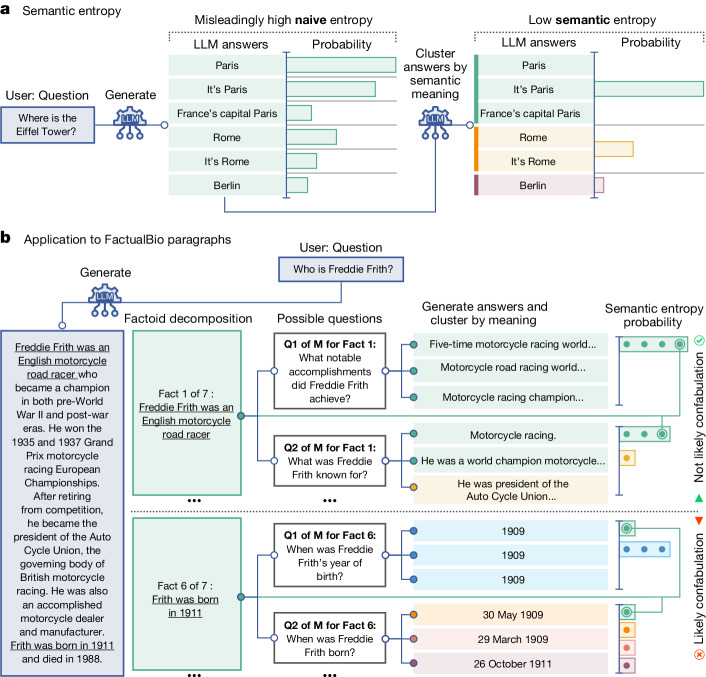
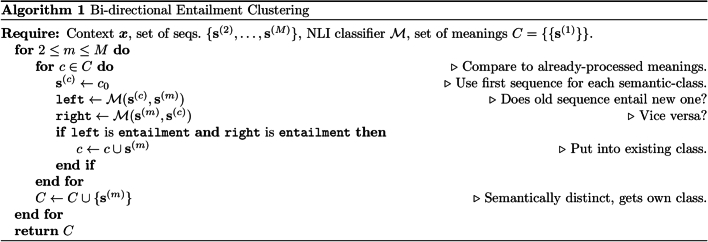
The paper introduces semantic entropy, an uncertainty estimator that clusters LLM generations by meaning via bidirectional entailment and computes entropy over those semantic clusters to detect confabulations. Across question-answering, math, and biography-generation tasks, semantic entropy outperforms naive entropy and supervised baselines without task-specific training data.
Key findings
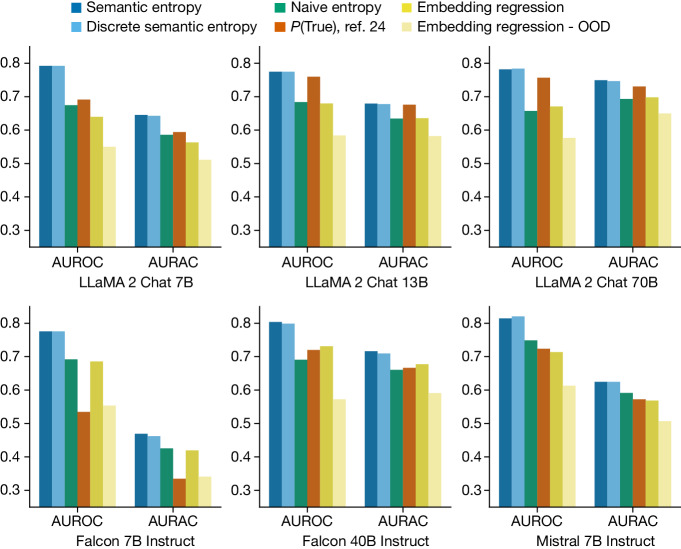
- Averaged across 30 task–model combinations, semantic entropy achieved the best AUROC of 0.790, compared with naive entropy (0.691), P(True) (0.698), and embedding regression (0.687); performance was stable between 0.78 and 0.81 across LLaMA, Falcon, and Mistral model families and scales from 7B to 70B parameters.
- Semantic entropy detects confabulations in sentence-length QA and math across TriviaQA, SQuAD 1.1, BioASQ, NQ-Open, and SVAMP, and its discrete variant performs similarly without requiring exact output probabilities.
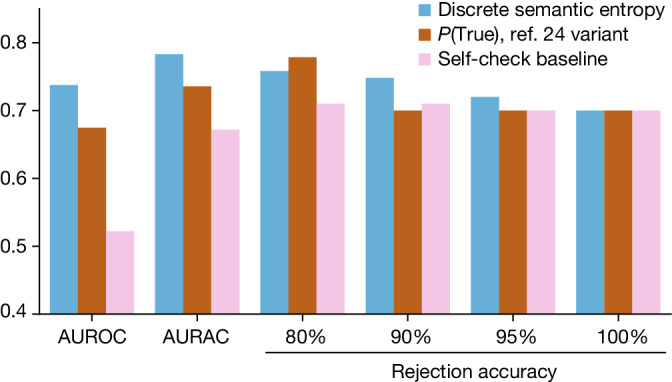
- On the GPT-4 biography dataset FactualBio—21 individuals, 150 factual claims, of which 45 were incorrect—the discrete semantic entropy variant outperformed a self-check baseline and an adapted P(True) baseline on AUROC and AURAC; P(True) had a narrow edge only after the top 20% of answers judged most likely to be confabulations were rejected.
- The method targets confabulations—arbitrary and incorrect generations sensitive to irrelevant details such as random seed—rather than all hallucinations, and it does not address systematically bad outputs.
Methods
- For each question, the method samples multiple generations from the LLM, clusters them by semantic equivalence using bidirectional entailment, and estimates semantic entropy over the meaning clusters; a discrete variant approximates cluster probabilities from generation frequencies when token probabilities are unavailable.
- Sentence-length experiments used LLaMA 2 Chat (7B, 13B, 70B), Falcon Instruct (7B, 40B), and Mistral Instruct (7B) on BioASQ, SQuAD 1.1, TriviaQA, SVAMP, and NQ-Open, with 400 train and 400 test examples per dataset; GPT-4 (v.0613) was used for FactualBio.
- Evaluation metrics were AUROC, rejection accuracy, and AURAC; sentence-length correctness was assessed automatically with GPT-4 against reference answers, validated against human judgement in the Supplementary Information.
Limitations
- The paper states that semantic entropy does not guarantee factuality and does not help when LLM outputs are systematically bad, including confident errors from training objectives, systematic reasoning failures, or misleading behaviour.
- The paper notes that semantic clustering can be overly sensitive to context: in one example, it distinguished a precise date from a year and treated the model as uncertain, even though the distinction was probably irrelevant in context.
- For FactualBio, the paper states that automatically generated questions are the main source of errors, and that GPT-4 did not expose output probabilities at the time, preventing computation of naive entropy, standard semantic entropy, and the embedding regression baseline for GPT-4.
Model-written summary. Check it against the paper before relying on it.
Integrity signals
Registry
Cites
Statistics
Figures
Verification
Claims the paper makes
8 Valid · 6 Not valid · 5 Not checked · 60 Own results and interpretations
The cited sources support only part of this claim — read each source’s verdict below.
In the paper
“Large language model (LLM) systems, such as ChatGPT1 or Gemini2, can show impressive reasoning and question-answering capabilities but often ‘hallucinate’ false outputs and unsubstantiated answers3,4.”
§ Detecting hallucinations in large language models using semantic entropy > Abstract
What the sources say
- Partly supportedcites [3] Xiao, Y. & Wang, W. Y. On hallucination and predictive uncertainty in conditional language generation. In Proc. 16th Conference of the European Chapter of the Association for Computational Linguistics 2734–2744 (Association for Computational Linguistics, 2021). sourceExperimental — accuracy not yet measured
The Introduction (p. 1) says neural generation models can produce content unsupported by their inputs, and §2.1 (p. 2) defines hallucination as false information unsupported by the input. The paper studies conditional generation, including image captioning and data-to-text, rather than establishing how often LLM systems such as ChatGPT or Gemini give unsubstantiated answers. (LLM, conf=0.84)
- Partly supportedcites [4] Rohrbach, A., Hendricks, L. A., Burns, K., Darrell, T. & Saenko, K. Object hallucination in image captioning. In Proc. 2018 Conference on Empirical Methods in Natural Language Processing (eds Riloff, E., Chiang, D., Hockenmaier, J. & Tsujii, J.) 4035–4045 (Association for Computational Linguistics, 2018). sourceExperimental — accuracy not yet measured
The Introduction describes image-captioning models generating objects absent from an image, and Section 3.2 reports hallucinated objects in 7.4%–17.7% of tested captions. This supports the general point that generated outputs can be false, but the paper does not establish how often LLM systems such as ChatGPT or Gemini produce unsubstantiated answers. Page numbers were not available in our copy. (LLM, conf=0.86)
plain- Asserted: passes — The authors put it forward as true.
- Checkable: passes — It can be checked against evidence.
- Load-bearing: passes — The paper’s conclusions depend on it.
- Based: passes — The paper gives a reason why it holds.
- Partly supported
The cited sources support only part of this claim — read each source’s verdict below.
In the paper
“High entropy corresponds to high uncertainty23–25—so semantic entropy is one way to estimate semantic uncertainties.”
§ Detecting hallucinations in large language models using semantic entropy > Main
What the sources say
- Not checked — no full text of the sourcecites [23] MacKay DJC Information-based objective functions for active data selection Neural Comput. 1992 4 590 604 10.1162/neco.1992.4.4.590 source
- Partly supportedcites [24] Kadavath, S. et al. Language models (mostly) know what they know. Preprint at https://arxiv.org/abs/2207.05221 (2022). sourceExperimental — accuracy not yet measured
Section B.2 (p. 29) hypothesizes that an unsure model produces a high-entropy answer distribution, and reports that entropy has some predictive power. But it also finds that larger models can give diverse correct answers and concludes that answer-distribution entropy is not a robust measure of whether a model knows the answer. The unqualified correspondence in the claim overstates the paper's finding. (LLM, conf=0.87)
- Supportedcites [25] Lindley DV On a measure of the information provided by an experiment Ann. Math. Stat. 1956 27 986 1005 10.1214/aoms/1177728069 source
The discussion on p. 4 explains that the measure uses Shannon’s function with the sign reversed: information is greatest when the distribution is concentrated on one value and falls as it spreads. This supports the cited background point that higher Shannon entropy corresponds to greater uncertainty; the later claim about semantic entropy is not attributed to this source. (LLM, conf=0.88)
plainstates an association- Asserted: passes — The authors put it forward as true.
- Checkable: passes — It can be checked against evidence.
- Load-bearing: passes — The paper’s conclusions depend on it.
- Based: passes — The paper gives a reason why it holds.
A result the paper states — it cites no source for it, so there is none to check. The quote shows it is in the paper.
In the paper
“Nevertheless, we significantly improve question-answering accuracy for state-of-the-art LLMs, revealing that confabulations are a great source of error at present.”
§ Detecting hallucinations in large language models using semantic entropy > Main
boostedstates a cause- Asserted: passes — The authors put it forward as true.
- Checkable: passes — It can be checked against evidence.
- Load-bearing: passes — The paper’s conclusions depend on it.
- Based: passes — The paper gives a reason why it holds.
- Rests on an assumption not shown here.
A result the paper reports from its own data — it cites no other source for it, so there is none to check. The quote shows it is in the paper.
In the paper
“We further show that semantic uncertainty can be used to improve model accuracy by refusing to answer questions when semantic uncertainty is high.”
§ Detecting hallucinations in large language models using semantic entropy > Methods > Detecting confabulations in QA and math
plainstates a cause- Asserted: passes — The authors put it forward as true.
- Checkable: passes — It can be checked against evidence.
- Load-bearing: passes — The paper’s conclusions depend on it.
- Based: passes — The paper gives a reason why it holds.
A result the paper reports from its own data — it cites no other source for it, so there is none to check. The quote shows it is in the paper.
In the paper
“In our experiments, we use semantic uncertainty to predict model accuracy, demonstrating that confabulations make up a notable fraction of model mistakes.”
§ Detecting hallucinations in large language models using semantic entropy > Methods > Detecting confabulations in QA and math
boosted- Asserted: passes — The authors put it forward as true.
- Checkable: passes — It can be checked against evidence.
- Load-bearing: passes — The paper’s conclusions depend on it.
- Based: passes — The paper gives a reason why it holds.
36 more claims
Create a free account to see all 79 claims and to verify the 2 references still open.
- Probably not a substantial claim. 30
- It may state two separate claims as one. 20
Claims other papers make about this one
Each is checked against this paper’s own text: does it say what the citing paper says it does?
The source backs part of the claim, not all of it — or backs it for a different population, condition or comparison.
In the citing paper
“However, LLMs exhibit hallucination and fabrication errors that are unacceptable for quantitative modeling [19, 20, 21].”
From Structured Schemas for Provenance‐Rich, LLM ‐Assisted QSP Model Calibration (2026) · cites this paper as [19]
Experimental — accuracy not yet measuredThe source backs part of the claim, not all of it — or backs it for a different population, condition or comparison.
In the citing paper
“Studies on hallucination, calibration, sycophancy, and cognitive bias indicate that failures often result not from a lack of capability but from unstable behavioral dispositions under uncertainty or pressure [8, 9, 10, 12, 15].”
From Machine Psychometrics: A Mathematical Psychology of Artificial Intelligence (2026) · cites this paper as [8]
Experimental — accuracy not yet measuredThe source backs part of the claim, not all of it — or backs it for a different population, condition or comparison.
In the citing paper
“AI-generated patient summaries also frequently contain errors that can be hard to detect12.”
From Multi-model assurance analysis showing large language models are highly vulnerable to adversarial hallucination attacks during clinical decision support (2025) · cites this paper as [12]
Experimental — accuracy not yet measuredThe source backs part of the claim, not all of it — or backs it for a different population, condition or comparison.
In the citing paper
“LLMs remain limited by the static knowledge encoded in their parameters.They are prone to hallucinations, factual inaccuracies, and out-of-date internal knowledge (Farquhar et al., 2024;Lewis et al., 2020).”
From Improving Amharic Information Retrieval with Translative and Multi-Agent Debate Retrieval Augmented Generation (2026) · cites this paper as Farquhar et al., 2024
Experimental — accuracy not yet measuredThe source backs part of the claim, not all of it — or backs it for a different population, condition or comparison.
In the citing paper
“This limitation can result in responses that lack coherence, contextual relevance, and even lead to hallucinations in extended dialogues or complex tasks [1], [2].”
From Memory-Augmented Architecture for Long-Term Context Handling in Large Language Models (2026) · cites this paper as [1]
Experimental — accuracy not yet measured
11 more claims about this paper
Create a free account to see every claim other papers make about this one.
Citations
Cites
Language Models are Few-Shot Learners
Brown, T. B., Mann, B., Ryder, N., Subbiah, M., Kaplan, J., Dhariwal, P., Neelakantan, A., Shyam, P., Sastry, G., Askell, A., et al. (2020) · arXiv · doi:10.48550/arxiv.2005.14165 · Cited by 23,372 · cited 1×
“57), which can predict entailment given suitable prompts.”
SQuAD: 100,000+ Questions for Machine Comprehension of Text
Rajpurkar, P., Zhang, J., Lopyrev, K., & Liang, P. (2016) · Proceedings of the 2016 Conference on Empirical Methods in Natural Language Processing · doi:10.18653/v1/d16-1264 · Cited by 6,208
Survey of Hallucination in Natural Language Generation
Ji, Z., Lee, N., Frieske, R., Yu, T., Su, D., Xu, Y., Ishii, E., Bang, Y. J., Madotto, A., & Fung, P. (2023) · ACM Computing Surveys · doi:10.1145/3571730 · Cited by 5,025 · cited 2×
“Hallucinations are often defined as LLMs generating “content that is nonsensical or unfaithful to the provided source content” 9–11 but they have come to include a vast array of failures of faithfulness and factuality.”
Survey of Hallucination in Natural Language Generation
Ji, Z., Lee, N., Frieske, R., Yu, T., Su, D., Xu, Y., Ishii, E., Bang, Y., Chen, D., Dai, W., et al. (2022) · arXiv · doi:10.48550/arxiv.2202.03629 · Cited by 4,981
A Broad-Coverage Challenge Corpus for Sentence Understanding through Inference
Williams, A., Nangia, N., & Bowman, S. (2018) · Proceedings of the 2018 Conference of the North American Chapter of the Association for Computational Linguistics: Human Language Technologies, Volume 1 (Long Papers) · doi:10.18653/v1/n18-1101 · Cited by 3,342 · cited 2×
“We rely on language models to predict entailment, such as DeBERTa-Large-MNLI 56 , which has been trained to predict entailment, or general-purpose LLMs such as GPT-3.”
Llama 2: Open Foundation and Fine-Tuned Chat Models
Touvron, H., Martin, L., Stone, K., Albert, P., Almahairi, A., Babaei, Y., Bashlykov, N., Batra, S., Bhargava, P., Bhosale, S., et al. (2023) · arXiv · doi:10.48550/arxiv.2307.09288 · Cited by 2,604 · cited 1×
“Our results for TriviaQA, SQuAD, BioASQ, NQ-Open and SVAMP are all evaluated context-free and involve sentence-length answers (96 ± 70 characters, mean ± s.d.) and use LLaMA 2 Chat (7B, 13B and 70B parameters) 38 , Falcon Instruct (7B and 40B) 39 and Mistral Instruct (7B) 40 .”
Aleatory or epistemic? Does it matter?
Kiureghian, A. D., & Ditlevsen, O. (2009) · Structural Safety · doi:10.1016/j.strusafe.2008.06.020 · Cited by 2,454 · cited 1×
“Researchers some-times separate aleatoric uncertainty (uncertainty in the underlying data distribution) from epistemic uncertainty (caused by having only limited information) 46 .”
Natural Questions: A benchmark for question answering research
Kwiatkowski, T., Palomaki, J., Redfield, O., Collins, M., Parikh, A., Alberti, C., Epstein, D., Polosukhin, I., Devlin, J., Lee, K., et al. (2019) · Transactions of the Association for Computational Linguistics · doi:10.1162/tacl_a_00276 · Cited by 2,069 · cited 2×
“33), life sciences (BioASQ 34 ) and open-domain natural questions (NQ-Open 35 ) derived from actual queries to Google Search 36 .”
TriviaQA: A Large Scale Distantly Supervised Challenge Dataset for Reading Comprehension
Joshi, M., Choi, E., Weld, D., & Zettlemoyer, L. (2017) · Proceedings of the 55th Annual Meeting of the Association for Computational Linguistics (Volume 1: Long Papers) · doi:10.18653/v1/p17-1147 · Cited by 1,690 · cited 5×
“TriviaQA is a trivia question-answering dataset.”
InfluentialTriviaQA: A Large Scale Distantly Supervised Challenge Dataset for Reading Comprehension
Joshi, M., Choi, E., Weld, D. S., & Zettlemoyer, L. (2017) · arXiv · doi:10.48550/arxiv.1705.03551 · Cited by 1,650
Research works printed but not linked: 8
- Xiao, T. Z., Gomez, A. N. & Gal, Y. Wat zei je? Detecting out-of-distribution translations with variational transformers. In Workshop on Bayesian Deep Learning at the Conference on Neural Information Processing Systems (NeurIPS, Vancouver, 2019).
- Negri, M., Bentivogli, L., Mehdad, Y., Giampiccolo, D. & Marchetti, A. Divide and conquer: crowdsourcing the creation of cross-lingual textual entailment corpora. In Proc. 2011 Conference on Empirical Methods in Natural Language Processing 670–679 (Association for Computational Linguistics, 2011).
- Malinin, A. & Gales, M. Uncertainty estimation in autoregressive structured prediction. In Proceedings of the International Conference on Learning Representations https://openreview.net/forum?id=jN5y-zb5Q7m (2021).
- Holtzman, A., Buys, J., Du, L., Forbes, M. & Choi, Y. The curious case of neural text degeneration. In Proceedings of the International Conference on Learning Representations https://openreview.net/forum?id=rygGQyrFvH (2020).
- Culicover PW Paraphrase generation and information retrieval from stored text Mech. Transl. Comput. Linguist. 1968 11 78 88
- He, P., Liu, X., Gao, J. & Chen, W. Deberta: decoding-enhanced BERT with disentangled attention. In International Conference on Learning Representations https://openreview.net/forum?id=XPZIaotutsD (2021).
- Socher, R., Huang, E., Pennin, J., Manning, C. D. & Ng, A. Dynamic pooling and unfolding recursive autoencoders for paraphrase detection. In Proceedings of the 24th Conference on Neural Information Processing Systems (eds Shawe-Taylor, J. et al.) (2011)
- Kane, H., Kocyigit, Y., Abdalla, A., Ajanoh, P. & Coulibali, M. Towards neural similarity evaluators. In Workshop on Document Intelligence at the 32nd conference on Neural Information Processing (2019).
Cited by
Items 701–800 of 888
Click Breeding: Toward programmable crop design
Dai, B., Tian, Y., Chai, J., Liu, F., Chen, S., & Tang, K. (2026) · Trends in Plant Science · doi:10.1016/j.tplants.2026.06.009
HabitatAgent: An End-to-End Multi-agent System for Housing Consultation
Yang, H., Zhang, Y., Yang, S. Y., Xiao, Y., Wu, H., Zhang, Y., Hou, J., & Zhang, R. X. (2026) · Lecture notes in computer science · doi:10.1007/978-981-92-2014-4_24
Adaptive human-in-the-loop optimization using language-guided priors for chemical experiments
Mottafegh, A., & Ahn, G. (2026) · Journal of Chemical Information and Modeling · doi:10.1021/acs.jcim.6c00976 · Cited by 4
Ayalew, A. M., Seppänen, T., & Oussalah, M. (2026) · ACM SIGIR International Conference on Theory of Information Retrieval (ICTIR) · doi:10.1145/3805713.3820416 · Cited by 1
Uncertainty Quantification for Multimodal Retrieval Augmented Generation
Binz, S., Soudani, H., & Hasibi, F. (2026) · ACM SIGIR International Conference on Theory of Information Retrieval (ICTIR) · doi:10.1145/3805713.3820431 · Cited by 2
Deep Search with Hierarchical Meta-Cognitive Monitoring Inspired by Cognitive Neuroscience
Sun, Z., Wang, Q., Yu, W., Yang, J., Lu, H., & Xu, J. (2026) · International ACM SIGIR Conference on Research and Development in Information Retrieval (SIGIR) · doi:10.1145/3805712.3809549 · Cited by 8
Zhou, H., & Jia, G. (2026) · Knowledge-Based Systems · doi:10.1016/j.knosys.2026.116667 · Cited by 2
Do Language Models Prefer Vulnerable Code? A Probabilistic Study of Insecure Code Preference
Melo, R., Reis, S., Catarino, A., & Abreu, R. (2026) · IEEE International Conference on Software Testing, Verification and Validation (ICST) · doi:10.1109/icst69053.2026.00075 · Cited by 2
“At the same time, uncertainty [41] quantified by entropy has been demonstrated as a reliable signal of model confidence and a predictor of unreliable outputs [42].”
Descamps, J., Bouguennec, N., Porcher, R., Resche‐Rigon, M., & Bouché, P.-A. (2026) · Orthopaedics & Traumatology Surgery & Research · doi:10.1016/j.otsr.2026.104793 · Cited by 2
Unsupervised Hallucination Detection via Generalized Semantic Entropy
Yang, J., Chen, X. M., & Dai, G. (2026) · Lecture notes in computer science · doi:10.1007/978-981-92-3417-2_50
Trustworthiness in AI: on SciCompBot—the scientific computing chatbot
Hansen, A. C., & Circelli, F. (2026) · Philosophical Transactions of the Royal Society A Mathematical Physical and Engineering Sciences · doi:10.1098/rsta.2025.0116 · Cited by 1
Psychoanalyse und künstliche Intelligenz: Ein explorativer Überblick
Fuchshuber, J., & Alexopoulos, J. (2026) · PSYCHE · doi:10.21706/ps-80-8-651 · Cited by 1
Modeling Response Uncertainty and Item Relevance in Conversational Recommender Systems
Zhong, C., Zou, J., Sun, A., Deng, Y., Guo, W., Yang, Y., & Shen, H. T. (2026) · ACM Transactions on Information Systems · doi:10.1145/3822505 · Cited by 3
Uncertainty-Aware Neuro-Symbolic Reasoning for Reliable Large Language Models
Nguyen, T. H. K., & Tran, T. H. (2026) · Communications in computer and information science · doi:10.1007/978-3-032-33381-0_28
Aletheia: A Two-Stage Graph-Based Framework for Hallucination Detection in Abstractive Summarization
Cai, T., Li, G., Wang, Z., Zeng, C., Han, N., Huang, C., Chen, Q., Wang, S., Zhang, H., & Wang, W. (2026) · Lecture notes in computer science · doi:10.1007/978-981-92-3426-4_47
Mai, H., Li, W., Chen, J., Huang, B., Li, B., & Long, S. (2026) · International Conference on Computer and Multimedia Technology (ICCMT) · doi:10.1109/iccmt69755.2026.11608235
“Recent semantic entropy detection methods show that the uncertainty of model output can serve as an important signal for identifying some hallucinations [2].”
Benchmarking Large Language Models on Long-Tail Plant Taxonomic Knowledge with PTTB-600
He, J., Xiao, J., Qu, H., & Xie, L. (2026) · Diversity · doi:10.3390/d18090541
Enhanced Inference and Hallucination Mitigation via a Unified Virtual MoE
Liu, M., Yuan, J., Li, J., et al. (2025) · Asia Conference on Cognitive Engineering and Intelligent Interaction (CEII) · doi:10.1109/ceii67787.2025.00073
“Hallucinations in generative models, including text degeneration and factual inconsistencies, remain a major challenge for ensuring reliable outputs in real-world applications ([5] and [6]).”
Decoding vocabulary like humans in abstractive summarization
Zhu, Y., Hu, D., Zhang, X., Vanetik, N., Litvak, M., & Li, L. (2026) · Applied Soft Computing · doi:10.1016/j.asoc.2026.115930
Lehmann, S., Wilhelmy, F., Schwaebe, F. V., von Dercks, N., Güresir, E., & Wach, J. (2026) · Applied Clinical Informatics · doi:10.1055/a-2913-8450
Closed-loop agentic AI in drug discovery
Chhetri, P. (2026) · RSC Medicinal Chemistry · doi:10.1039/d6md00319b · Cited by 4
Fabulating Realities: Artistic explorations of large language models´ hallucinations
Burri, R. V., Langenbach, C. L., & Sigrüner, L. (2026) · doi:10.14236/ewic/eva2026.54
Choe, H., & Kim, J. (2026) · SSRN Electronic Journal · doi:10.2139/ssrn.7085220
Application of Large Language Models to Predict Enteric Viruses Removal Using Surrogate Indicators
Bam, P. G., Rosso, D., & Jiang, S. C. (2026) · Environmental Science & Technology · doi:10.1021/acs.est.6c04967
Surabhi, A. S., & Martha, S. (2026) · International Journal of Engineering and Technology Innovation · doi:10.46604/ijeti.2026.16326
“However, despite these advances, base LLMs often exhibit persistent limitations, including the hallucination of unsupported facts, weak grounding in domain-specific evidence, and limited pedagogical diversity in generated questions [10-13].”
Mallala, N., & Sharma, A. (2026) · International Conference on Intelligent Technologies (CONIT) · doi:10.1109/conit69683.2026.11621839
“Root-cause analysis in advanced robotics is difficult because faults often emerge from interactions among mechanical, sensing, control, and software layers, and these interactions can vary across sites due to differences in environment, procedures, maintenance skill, and software versions [1].”
Branting, L. K., & Bonardi, M. (2026) · Cambridge University Press eBooks · doi:10.1017/9781009779487.024
Technical Methods for Evaluating AI Applications for Legal Tasks
Iyer, S., Linna, D. W., & Savelka, J. (2026) · Cambridge University Press eBooks · doi:10.1017/9781009779487.025
Large Model Citation Illusion Detection Based on Multimodal Information Fusion
Yin, L., & Yin, S. (2026) · International Conference on Artificial Intelligence, Big Data and Algorithms (CAIBDA) · doi:10.1109/caibda70336.2026.11621108
“…review of Huang et al. [8] on the problem of large model hallucination and the idea of hallucination correction proposed by Farquhar et al. [9], this paper expands the task of hallucination detection from a single text task to a multimodal joint reasoning task, and proposes a multimodal…”
Lertola, T. (2026) · SSRN Electronic Journal · doi:10.2139/ssrn.7127098
Park, S., & Yang, J. (2026) · IEEE Access · doi:10.1109/access.2026.3719188
Saadat, A., Sogir, T. B., Chowdhury, M. T. A., & Aziz, S. (2026) · Lecture notes in computer science · doi:10.1007/978-3-032-31666-0_4
Sam, R., Sainati, T., Kay, R. W., & Cockerill, T. (2026) · Nuclear Engineering and Technology · doi:10.1016/j.net.2026.104605
Dialectical systems framework for LLM applications in intelligent construction and operation
Xu, X., & Li, Z. (2026) · Automation in Construction · doi:10.1016/j.autcon.2026.107186
An Optimization Perspective on Industry Applications of ChatGPT
Zhang, H., Xing, L., & Zhou, Z. (2026) · Youth Academic Annual Conference of Chinese Association of Automation (YAC) · doi:10.1109/yac71005.2026.11616549
“Notwithstanding, the risky hallucination phenomenon that is inextirpable for LLMs, large models, and GAI should not be overlooked [3] and should be adaptively suppressed according to the emphasis put on the explainability of the optimization process and the optimization result.”
XunZi, an AI biologist, reveals disease-modifying targets
Huang, X., Qin, J., Tang, F., Yang, C., Xu, L., Wei, J., Liu, D., Chen, K., Zhang, C., Chen, M., et al. (2026) · Nature Biomedical Engineering · doi:10.1038/s41551-026-01769-6
Agent-Native Applications: A New Application Paradigm
Luo, D., & Leon‐Garcia, A. (2026) · IEEE Access · doi:10.1109/access.2026.3720448
Uncertainty-Aware Structural Attention Features for Hallucination Detection in LLMs
Lokesh, R., Mokshagna, C., Dinesh, K., & Usha, P. (2026) · International Conference on Signal Processing and Communications (SPCOM) · doi:10.1109/spcom71105.2026.11622967 · Cited by 1
“The internal states of LLMs can also reveal uncertainty-related signals such as entropy and variability across attention heads and layers, which can provide valuable information for detecting hallucinations [3], [9], [15], [17].”
Ten Rules for Deploying Large Language Models in Official StatisticsPreprint
Hammad, A. T., & Riva, G. V. D. (2026) · SSRN Electronic Journal · doi:10.2139/ssrn.7199920
Kong, L., Fu, H., Li, A., et al. (2026) · Information Sciences · doi:10.1016/j.ins.2026.123976
Uncertainty-Aware Adaptive Debate for Robust and Efficient Large Language Model ReasoningPreprint
Liu, R., Guo, W., Liao, T., et al. (2026) · Research Square · doi:10.21203/rs.3.rs-10581777/v1
Prill, J. (2026) · doi:10.1093/9780198945215.003.0261
Long, Q., Chen, H., Zhao, C., Du, X., Wang, X., Wang, P., Li, C., Zhou, Y., & Zhu, H. (2026) · ACM SIGKDD Conference on Knowledge Discovery and Data Mining (KDD) · doi:10.1145/3770855.3818479 · Cited by 11
Training a Generalist Hallucination Detector across Multiple Domains via Adaptive Layer Aggregation
Li, X., Fang, Z., Luo, Y., Deng, Y., Du, X., Ye, S., & Chen, L. (2026) · ACM SIGKDD Conference on Knowledge Discovery and Data Mining (KDD) · doi:10.1145/3770855.3817792
Descamps, J., Bouguennec, N., Porcher, R., Resche‐Rigon, M., & Bouché, P.-A. (2026) · Revue de Chirurgie Orthopédique et Traumatologique · doi:10.1016/j.rcot.2026.07.013
Chatbots in Agriculture: A Literature Review
Ποδάρας, Α., Petropoulos, M., Karetsos, S., Ntaliani, M. S., & Xanthoudakis, M. I. (2026) · IEEE Access · doi:10.1109/access.2026.3721509
“Empirical studies document hallucination and related failure modes in foundation models, underscoring the need for guardrails, domain-curated knowledge, human oversight, and robust evaluation when systems deliver safety-relevant agricultural advice [30], [31].”
Dual-enhancement and fusion with knowledge-aware semantic alignment for multimodal sarcasm detection
Huang, S., Guo, H., Gao, J., Geng, Z., Chen, J., & Kong, C. (2026) · Pattern Recognition · doi:10.1016/j.patcog.2026.114562
KA2L: A knowledge-aware active learning framework for LLMs
Yin, H., Tang, C., Wang, Y., Yan, L., & Jiang, J. (2026) · Expert Systems with Applications · doi:10.1016/j.eswa.2026.133951 · Cited by 1
“This phenomenon is quantified by high Semantic Entropy (SE) (Farquhar et al., 2024; Kuhn et al., 2023), a metric at the heart of our approach.”
InfluentialWhy Large Language Models Cannot Be Certified for Safety-Critical Systems
Sayakov, A. (2026) · American Impact Review · doi:10.66308/air.e2026066
Zhao, Y., Hu, T., & Jiang, S. (2026) · Symmetry · doi:10.3390/sym18081340
van Laar, B., Greco, A., Remøy, H., & Gruis, V. (2026) · Smart and Sustainable Built Environment · doi:10.1108/sasbe-10-2025-0645
Asmi, F., Wong, A., Almugren, I., Chotia, V., & Bilinovics–Sipos, J. (2026) · Journal of Enterprise Information Management · doi:10.1108/jeim-10-2025-1027
Entropy-Adaptive Routing Selection for Multimodal Chain-of-Thought Reasoning
Long, R. (2026) · International Conference on Electronic Technology and Information Science (ICETIS) · doi:10.1109/icetis70504.2026.11633380
“Self-Consistency [27] samples multiple reasoning paths and selects the most consistent answer, while Farquhar et al. [29] measure uncertainty through semantic differences among generated responses.”
Multiobjective Evolutionary Calibration of Uncertainty Quantification for Large Language Models
Mora-Cross, M. A., Ramírez, S. C., & Gonzalez, S. R. (2026) · Genetic and Evolutionary Computation Conference Companion (GECCO Companion) · doi:10.1145/3795101.3805422 · Cited by 1
“Large Language Models (LLMs) have shown strong performance in many applications, including clinical decision support, but their reliability remains limited when queries require knowledge not well represented in training data, often leading to hallucinations [6].”
Gundidza, F., Kikuchi, M., & Ozono, T. (2026) · IEEE Access · doi:10.1109/access.2026.3723798
AIGC-Generated Content-Driven Algorithm for B2B Anchor Feature Deviation Detection and Correction
Li, S. (2026) · International Conference on Distributed Computing and Electrical Circuits and Electronics (ICDCECE) · doi:10.1109/icdcece68961.2026.11646148
“…accurately pinpoint the specific dimensions and extent of deviations from industry standards, nor can they establish a closed-loop governance path from deviation detection to content correction, thus hindering the large-scale implementation of AIGC technology in B2B live-streaming scenarios [5-6].”
Biagini, G., Pezzati, F., Spinu, M. B., & Ranieri, M. (2026) · Communications in computer and information science · doi:10.1007/978-3-032-31853-4_27
Designing Large Language Models That Refuse Unsafe Medication Questions Well
Costa, G., Ribeiro, L., Alves, R., & Lopes, M. (2026) · Archives of Pharmacy Practice · doi:10.51847/msrqginb22
From Output Errors to Workflow Harm: A Practitioner-Audit Method for LLM-Mediated ResearchPreprint
Austria, D., McCollister, B., Lindsey, J. E., Arowolo, M. O., & Okon, M. (2026) · medRxiv · doi:10.64898/2026.08.13.26360414 · Cited by 1
Evaluation of Inductive Coding with LLMs
Dörfel, L., & Ammoneit, R. (2026) · Education Sciences · doi:10.3390/educsci16081314 · Cited by 1
Alekberli, R. Z., & Karimov, H. (2026) · International Conference on Cybersecurity, Digital Forensics, and AI Applications (ICCSDFAI) · doi:10.1109/iccsdfai70505.2026.11647933
Eryılmaz, B., Bahn, M., Damm, H., Chu, B., Bender, N., Kleesiek, J., & Nensa, F. (2026) · doi:10.2196/preprints.109219
Yin, D., Leung, M. K. S., Pun, D. W. H., Chen, F. H., Kwon, J. Y., Lin, X., & Ho, J. W. K. (2026) · Quantitative Biology · doi:10.1002/qub2.70050 · Cited by 2
Dan, W., Xi, S., Guo, C., Ran, X., & Qin, Z. S. (2026) · SSRN Electronic Journal · doi:10.2139/ssrn.7305416
LLM-Assisted Reviewer Assignment via Auditable Expertise Matching
Bagheri, F., Buscaldi, D., & Recupero, D. R. (2026) · IEEE Access · doi:10.1109/access.2026.3724622
FireSeek-Sci: A large language model with fire science knowledge for smart building safety
Ding, Y., Zheng, H., Lu, T., Zeng, Y., Deng, R., Zhang, Y., & Huang, X. (2026) · Journal of Infrastructure Intelligence and Resilience · doi:10.1016/j.iintel.2026.100233
Jouvet, P. A., Albert, K., Wiedemann, A., & Sauthier, M. (2026) · Bulletin de l Académie Nationale de Médecine · doi:10.1016/j.banm.2026.04.019
Yoo, Y., & Kim, S. (2026) · INFORMS Transactions on Education · doi:10.1287/ited.2025.0175
SocialScribe: A Modular System for Audience-Targeted Social Media Generation from Long-Form Content
Meenakshi, K., Kumar, P., Gahtori, P., Kushwaha, P., Bhargava, D., & Rana, A. (2026) · 2026 International Conference on NextGen Data Science and Analytics (ICNDSA) · doi:10.1109/icndsa68777.2026.11652358
Finding homonyms: operationalizing lexical ambiguity in LLM retrieval
Krzyżosiak, K. (2026) · International Journal of Lexicography · doi:10.1093/ijl/ecag026
Bindra, J. S., Chaturvedi, H., Singh, S., & Singh, S. K. (2026) · International Conference on NextGen Data Science and Analytics (ICNDSA) · doi:10.1109/icndsa68777.2026.11652307
“…in recent research for diagnosing hallucinations are strongly correlated with preventive methods for diagnosing factual correctness (whereas, the current methods generally only operate as post hoc evaluations, according to the definition of the word) and don’t exist in the generative pipeline [4].”
InfluentialMarienhagen, K. I. (2026) · Computers in Human Behavior Artificial Humans · doi:10.1016/j.chbah.2026.100380 · Cited by 3
Wang, Y., Li, H., & Chen, L. (2026) · Proceedings of the VLDB Endowment · doi:10.14778/3819518.3819565 · Cited by 1
Zeng, X., Lyu, J., & Lian, Z. (2026) · Renewable and Sustainable Energy Reviews · doi:10.1016/j.rser.2026.117429
Uddin, S. M. J., Jin, Z., & Chaudhary, N. (2026) · International Journal of Construction Management · doi:10.1080/15623599.2026.2717617
Imamoğlu, M. Y. (2026) · IEEE Annual International Computer Software and Applications Conference (COMPSAC) · doi:10.1109/compsac69091.2026.00268
“Repeated stochastic generation can yield semantically divergent or inconsistent outputs [19], [20], alongside duplicated expenditure and reduced traceability across platforms.”
Alzu'bi, A. A., Alkhatib, R. I., & Dalky, A. F. (2026) · Informatics in Medicine Unlocked · doi:10.1016/j.imu.2026.101807
Xu, Y., Kamat, V. R., & Menassa, C. C. (2026) · Journal of Computing in Civil Engineering · doi:10.1061/jccee5.cpeng-7818 · Cited by 1
Khan, T., & Osondu, I. S. (2026) · ASEE Annual Conference & Exposition · doi:10.18260/1-2--59130
A framework for hallucinations explainability in text summarizationPreprint
Hussieny, O. A. A.-A., El-Tantawy, S., Shawky, D., & Maksoud, E. Y. A. (2026) · Research Square · doi:10.21203/rs.3.rs-10766736/v1
Miyamoto, T. (2026) · Computers in Human Behavior Artificial Humans · doi:10.1016/j.chbah.2026.100375
The Semantic Power Factor (SPF): A Complex AC Power Model for Generative AI Communication
Tantisukarom, C. (2026) · Systems Research and Behavioral Science · doi:10.1002/sres.70149
Data security in large language models: risks, defense, and directions
Chen, K., Zhou, X., Yu, Y., Lin, Y., Chen, H., Cai, C., & Shen, L. (2026) · Journal of King Saud University - Computer and Information Sciences · doi:10.1007/s44443-026-01200-9 · Cited by 2
“This tendency is further reinforced by exposure bias in training and evaluation procedures, which implicitly reward complete responses over abstentions, making hallucinations difficult to detect and mitigate in practice (Farquhar et al. 2024).”
Kato, K., Chu, C., Murawaki, Y., & Kurohashi, S. (2026) · Frontiers in Artificial Intelligence · doi:10.3389/frai.2026.1857934
Wang, L., Dong, L., Xu, Y., Jiang, Y., Chen, C., & Chang, D. (2026) · Journal of Engineering Design · doi:10.1080/09544828.2026.2723799
Durán, A. G., de Oliver-Lopez, C. P., & Bravo, C. B. (2026) · Journal of Cultural Heritage · doi:10.1016/j.culher.2026.08.010 · Cited by 1
Li, Z. (2026) · SSRN Electronic Journal · doi:10.2139/ssrn.7364531
Carroll, M., Kentis, S., Kareff, H., Schechter, C. B., & Jariwala, S. P. (2026) · Applied Clinical Informatics · doi:10.1055/a-2946-7393 · Cited by 1
“47 As shown above, response entropy was consistently higher under the combined prompt condition for all models.”
Evaluation of Large Language Model-Generated Recommendations in Glaucoma Surgical Decision-Making
Toprak, M., Tuğan, B. Y., & Yüksel, N. (2026) · Seminars in Ophthalmology · doi:10.1080/08820538.2026.2725223
Dynamic adaptive ensemble decoding under uncertainty for large language models
Ma, W., Feng, X., Huang, L., Huang, Y., Ye, Y., Feng, X., & Qin, B. (2026) · Knowledge-Based Systems · doi:10.1016/j.knosys.2026.116931
Risk-aware multiple-choice question answering with conformal P-values
Fu, W., Ye, Y., Yang, G., Wei, Y., & Zhang, L. (2026) · Scientific Reports · doi:10.1038/s41598-026-66677-w
Alam, G., & Ihsanullah, I. (2026) · Journal of Environmental Management · doi:10.1016/j.jenvman.2026.130753
Fang, Y., Xiong, D., Zhao, G., Yang, Y., Wang, H., & Sun, M. (2026) · Aerospace · doi:10.3390/aerospace13090790
Toward continuous quality observability in medicine
Patil, A., Curry, W. T., & Nahed, B. V. (2026) · npj Health Systems · doi:10.1038/s44401-026-00146-4
Wang, N., Zhang, R., & Pang, H. (2026) · Molecular Pharmaceutics · doi:10.1021/acs.molpharmaceut.6c00594
Zhao, Z., Wu, B., Tian, S., Hu, H., & Hao, P. (2026) · JMIR Medical Education · doi:10.2196/95039
Zhou, A., Ngo, N. D., Duy, L. K. N., Huang, Y., Wong, K.-S., Yu, H., & Nguyen, T. H. (2026) · ACS ES&T Air · doi:10.1021/acsestair.6c00152
Cognitive Enhancement or Social Atrophy? Generative AI, Neurodiversity, and Human Flourishing
Casanovas, Á. P., Castellví, P., & Lidón‐Moyano, C. (2026) · Human Affairs · doi:10.1515/humaff-2025-0108
“Contrastingly, confabula-tions are a narrower subset of hallucinations and are de fi ned as fl uent but false LLM outputs that sound plausible but are not stably determined by the input, the model ’ s knowledge, or a consistent reasoning pattern (Farquhar et al. 2024, 625).”
Jiang, G. Y., & Chen, J. (2026) · Advanced Engineering Informatics · doi:10.1016/j.aei.2026.105209 · Cited by 1
Adversarial Fact Editing and Active RAG Defenses for Robust Large Language Model Bash Execution
Adler, E., Seitz, C., Holz, L., Loevenich, J. F., & Lopes, R. R. F. (2026) · Conference on Local Computer Networks · doi:10.1109/lcn67947.2026.11660783
Metadata
- Authors
- Farquhar, S., Kossen, J., Kuhn, L., & Gal, Y.
- Affiliations
- University of Oxford (GB)
- Corresponding author
- Farquhar, Sebastian
- Venue
- Nature
- Published
- 2024-06-19
- Volume
- 630
- Issue
- 8017
- Pages
- 625-630
- ISSN
- 0028-0836 (ISSN-L)
- 1476-4687
- PMC
- PMC11186750
- OpenAlex
- W4399803256
- Semantic Scholar
- f82f49c20c6acc69f884f05e3a9f1ceea91061ce
- Cited by
- 934
- References
- 60
- Citations by year
- 2026: 540 · 2025: 349 · 2024: 44
- FWCI
- 137.11
- Type
- journal article
- Language
- en
- Open access
- hybrid
- doi.org
- Licence
- cc-by
- creativecommons.org/licenses/by/4.0 (tdm)
- creativecommons.org/licenses/by/4.0 (vor)
- Locations
- Nature (publishedVersion, cc-by)
- PubMed Central (publishedVersion, cc-by)
- PubMed (publishedVersion)
- RePEc: Research Papers in Economics (submittedVersion)
- Funders
- Government of the United Kingdom
- UK Research and Innovation
- Topics
- Physical Sciences › Computer Science › Artificial Intelligence › Topic Modeling
- Physical Sciences › Computer Science › Artificial Intelligence › Adversarial Robustness in Machine Learning
- Physical Sciences › Computer Science › Artificial Intelligence › Natural Language Processing Techniques
- Keywords
- hallucination detection, large language models, semantic entropy, uncertainty estimation, confabulation, LLM reliability, generalization to unseen tasks, honesty
About these checks
Registry, retraction, Cites and statistics results are computed, not judged, with one exception: a printed reference that no index lists is read once by a model before it counts as a citation error. Claims are extracted by a model and kept only when their quote appears verbatim in the text; each cited source is then checked, with a model’s help, for whether it says what the claim relies on. Those verdicts can be wrong — read the claim’s quote and the cited source before relying on one.
The claim verdicts this report counts are experimental: their accuracy is not yet measured.
A language model drew the claims from the paper on 2026-10-10, under version 3 of the claim definition (model deepseek-v4.1-flash, prompt extract-v3).
A second model labelled each claim on 2026-10-10 (model jev-1.13-20260917, definition revision gold-guideline-v0.2).
Cited sources are checked with a language model’s help (gpt-6-sol).
Statistics and arithmetic are recomputed, not judged.
Confidence bands are shown only for fields calibrated on our annotated test set. None is calibrated yet, so no band is shown.
What counts as a claim ›How we measure confidence ›How we check this ›
Are you an author, or do you see a problem with this page? Request a review
Data sources
Bibliographic data: Semantic Scholar, OpenAlex, Crossref.
Contains information from the Semantic Scholar Academic Graph Datasets, made available under the ODC Attribution License (ODC-BY 1.0).
Semantic Scholar’s data is described in: Kinney, R., et al. (2023). The Semantic Scholar Open Data Platform. arXiv:2301.10140.
