

SCENIC+: single-cell multiomic inference of enhancers and gene regulatory networks
Open accessPublished version of a preprint
The DOI matches its Crossref record; 175 of the 175 references it cites were found in a registry or an index.
Abstract
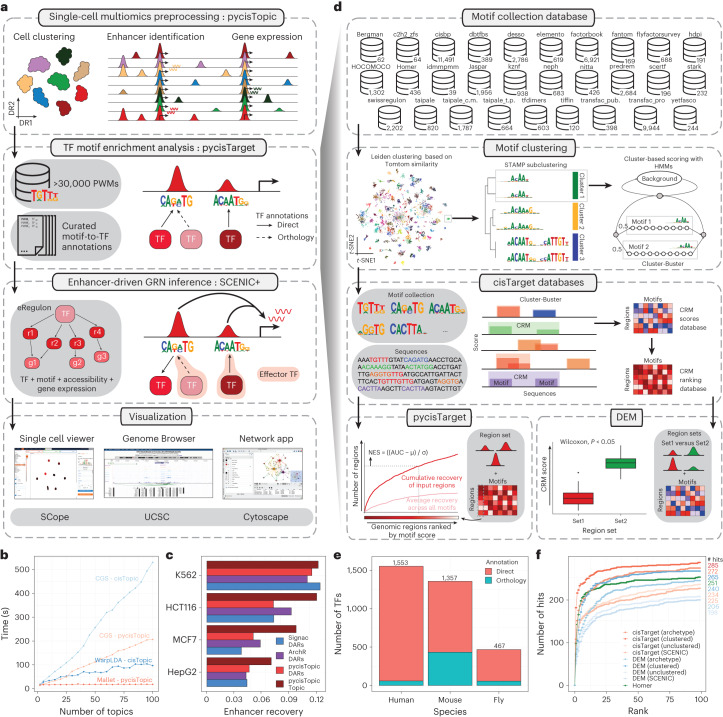
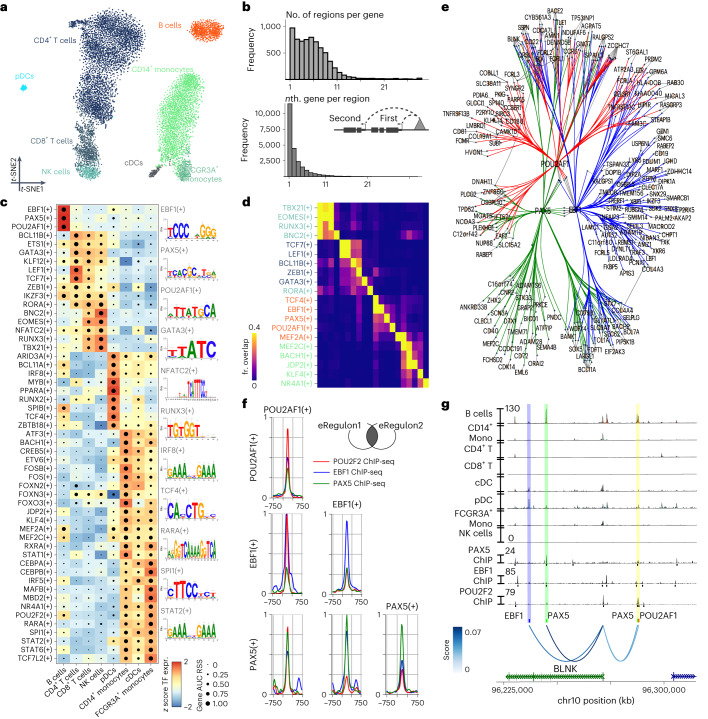
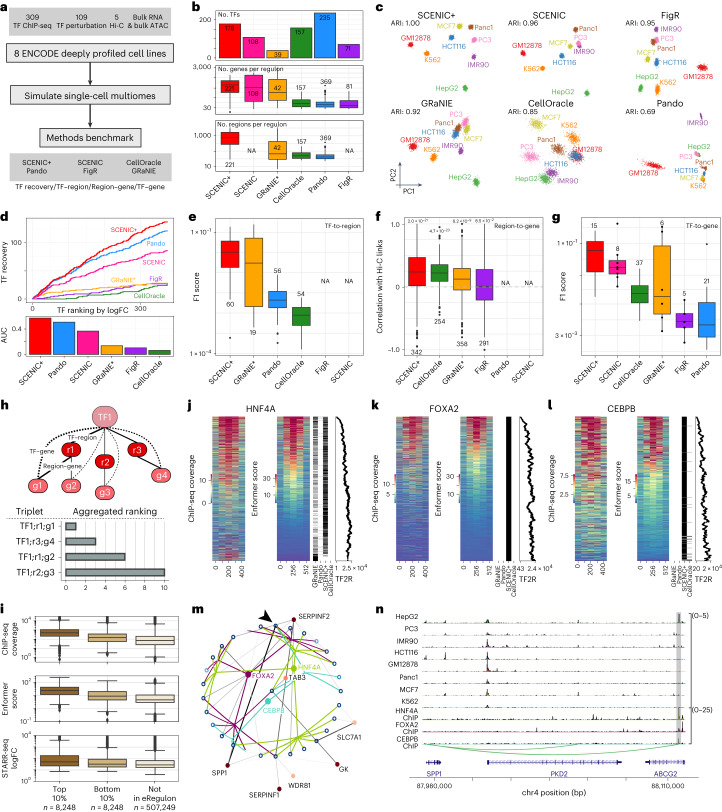
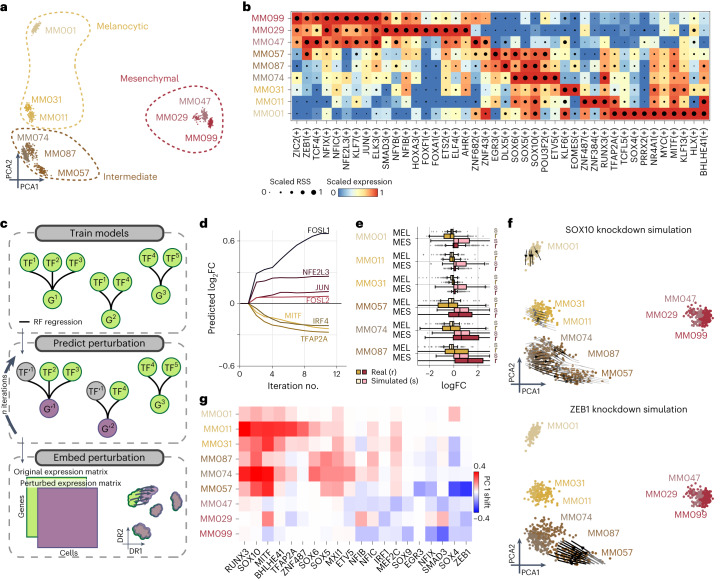
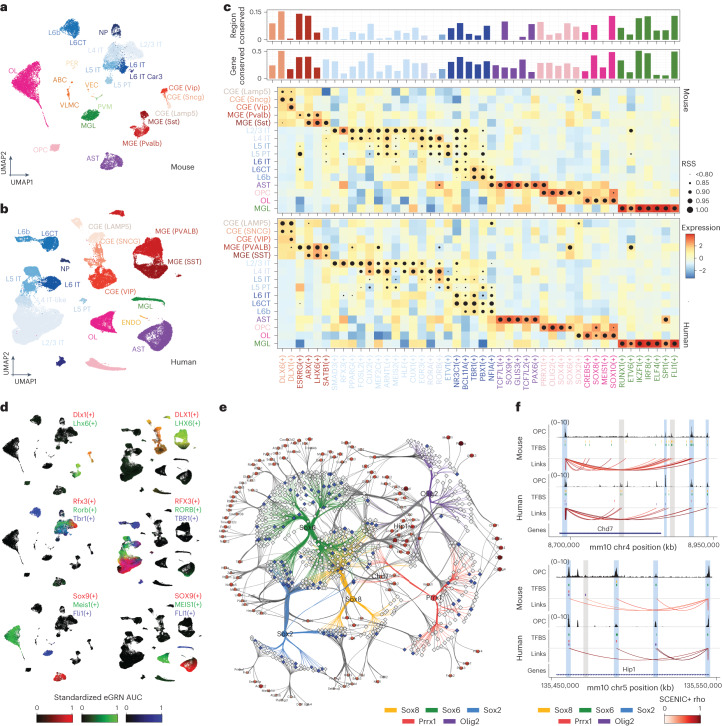
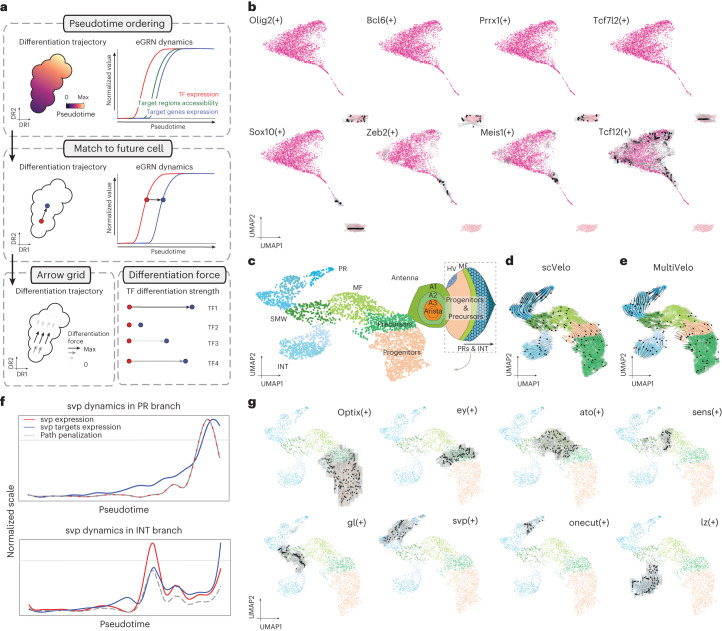
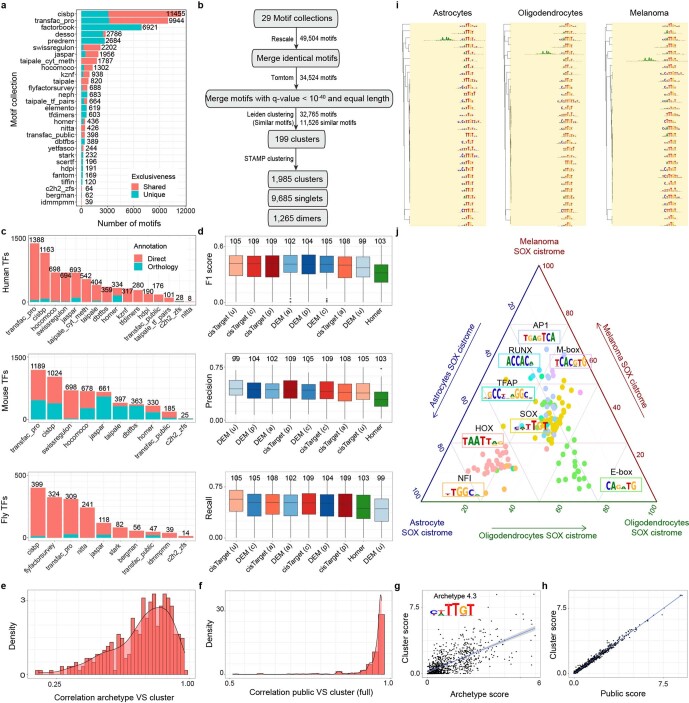
Joint profiling of chromatin accessibility and gene expression in individual cells provides an opportunity to decipher enhancer-driven gene regulatory networks (GRNs). Here we present a method for the inference of enhancer-driven GRNs, called SCENIC+. SCENIC+ predicts genomic enhancers along with candidate upstream transcription factors (TFs) and links these enhancers to candidate target genes. To improve both recall and precision of TF identification, we curated and clustered a motif collection with more than 30,000 motifs. We benchmarked SCENIC+ on diverse datasets from different species, including human peripheral blood mononuclear cells, ENCODE cell lines, melanoma cell states and Drosophila retinal development. Next, we exploit SCENIC+ predictions to study conserved TFs, enhancers and GRNs between human and mouse cell types in the cerebral cortex. Finally, we use SCENIC+ to study the dynamics of gene regulation along differentiation trajectories and the effect of TF perturbations on cell state. SCENIC+ is available at scenicplus.readthedocs.io .
Overview
The claims and statistics of this paper haven’t been checked yet.
Free: it reads the open-access text and checks the first 5 claims that cite a source we can check. Create a free account to check every claim.
Integrity signals
Registry
Cites
Statistics
Figures
Verification
Claims the paper makes
The claims and statistics of this paper haven’t been checked yet.
Free: it reads the open-access text and checks the first 5 claims that cite a source we can check. Create a free account to check every claim.
Claims other papers make about this one
Each is checked against this paper’s own text: does it say what the citing paper says it does?
The source backs part of the claim, not all of it — or backs it for a different population, condition or comparison.
In the citing paper
“SCENIC+ demonstrated superior performance compared to its original version, as well as ppcor, GRNBOOST2, PIDC, GRaNIE, FigR, and Pando, as evidenced by the AUC and F1 score metrics [48].”
From A mini-review on perturbation modelling across single-cell omic modalities (2024) · cites this paper as [48]
Experimental — accuracy not yet measuredThe source backs part of the claim, not all of it — or backs it for a different population, condition or comparison.
In the citing paper
“pycisTarget (v.1.0.1.dev42+gb6707ee) was run using a custom database with the consensus regions on DARs, binarized topics (with Otsu thresholding), curated DARs and topics and MACS2 (v.2.2.7.1) bdgdiff regions, with and without promoters, and using pycisTarget and DEM7.”
From Single-cell spatial multi-omics and deep learning dissect enhancer-driven gene regulatory networks in liver zonation (2024) · cites this paper as [7]
Experimental — accuracy not yet measuredThe cited source says what the claim attributes to it.
In the citing paper
“Notably, SCENIC+ anticipates genomic enhancers and identifies potential upstream transcription factors (TFs) and establishes connections between these enhancers and their relevant target genes.”
From A mini-review on perturbation modelling across single-cell omic modalities (2024) · cites this paper as [48]
The cited source says what the claim attributes to it.
In the citing paper
“Cell-cell similarity graphs in single cell omics [ 47 ], gene regulatory networks [ 48 ] and protein-protein interaction networks [ 49 ] are fundamental tools to rationalize the complexity of biological systems such as the human body.”
From igraph 1.0 enables fast and robust network analysis across programming languages (2026) · cites this paper as [48]
The cited source says what the claim attributes to it.
In the citing paper
“SCENIC+ was run with the default parameters on the complete dataset and using only hepatocytes, using http://nov2020.archive.ensembl.org/ as Biomart host.”
From Single-cell spatial multi-omics and deep learning dissect enhancer-driven gene regulatory networks in liver zonation (2024) · cites this paper as [7]
1 more claim about this paper
Create a free account to see every claim other papers make about this one.
Self-check
Percentages, sums and reported differences re-computed from the paper’s own numbers.
The self-check needs the paper’s full text.
Citations
Cites
Moderated estimation of fold change and dispersion for RNA-seq data with DESeq2
Love, M. I., Huber, W., & Anders, S. (2014) · Genome Biology · doi:10.1186/s13059-014-0550-8 · Cited by 95,106
A Threshold Selection Method from Gray-Level Histograms
Otsu, N. (1979) · IEEE Transactions on Systems, Man, and Cybernetics · doi:10.1109/tsmc.1979.4310076 · Cited by 43,398 · cited 1×
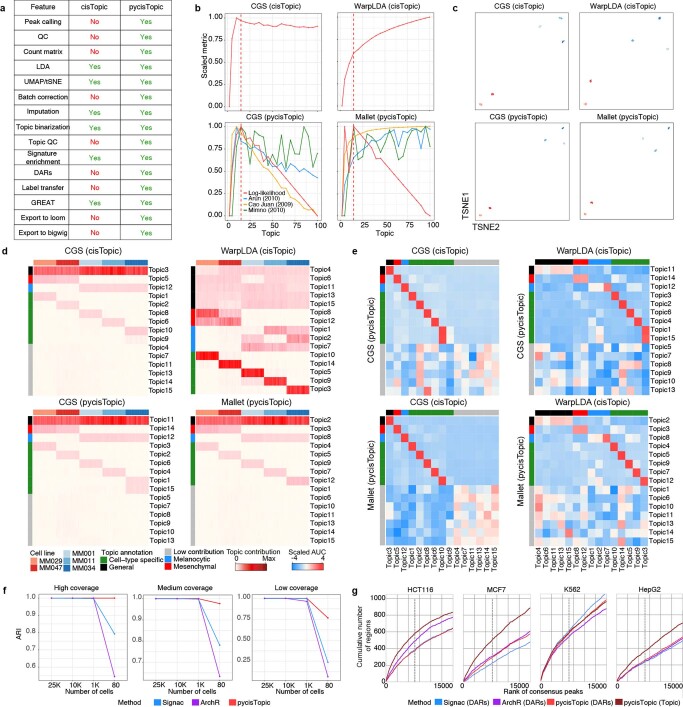
“We have included several binarization methods (applicable for topic-region and cell-topic distributions): ’otsu’ (Otsu, 1979)107, ’yen’ (Yen et al., 1995)108, ’li’ (Li & Lee, 1993)109, ’aucell’ (Van de Sande et al., 2020)20 or ’ntop’ (Taking the top n regions per topic).”
MethodModel-based Analysis of ChIP-Seq (MACS)
Zhang, Y., Liu, T., Meyer, C. A., Eeckhoute, J., Johnson, D. S., Bernstein, B. E., Nusbaum, C., Myers, R. M., Brown, M., Li, W., et al. (2008) · Genome Biology · doi:10.1186/gb-2008-9-9-r137 · Cited by 18,386
An integrated encyclopedia of DNA elements in the human genome
The ENCODE Project Consortium (2012) · Nature · doi:10.1038/nature11247 · Cited by 18,072
Comprehensive Integration of Single-Cell Data
Stuart, T., Butler, A., Hoffman, P., Hafemeister, C., Papalexi, E., Mauck, W. M., Hao, Y., Stoeckius, M., Smibert, P., & Satija, R. (2019) · Cell · doi:10.1016/j.cell.2019.05.031 · Cited by 15,453
Heinz, S., Benner, C., Spann, N., Bertolino, E., Lin, Y. C., Laslo, P., Cheng, J. X., Murre, C., Singh, H., & Glass, C. K. (2010) · Molecular Cell · doi:10.1016/j.molcel.2010.05.004 · Cited by 13,382
Fast, sensitive and accurate integration of single-cell data with Harmony
Korsunsky, I., Millard, N., Fan, J., Slowikowski, K., Zhang, F., Wei, K., Baglaenko, Y., Brenner, M., Loh, P.-R., & Raychaudhuri, S. (2019) · Nature Methods · doi:10.1038/s41592-019-0619-0 · Cited by 10,488
SCANPY: large-scale single-cell gene expression data analysis
Wolf, F. A., Angerer, P., & Theis, F. J. (2018) · Genome Biology · doi:10.1186/s13059-017-1382-0 · Cited by 8,881
Scenic: single-cell regulatory network inference and clustering.
Aibar, S., González-Blas, C. B., Moerman, T., Huynh-Thu, V. A., Imrichova, H., Hulselmans, G., Rambow, F., Marine, J.-C., Geurts, P., Aerts, J., et al. (2017) · Nature Methods · doi:10.1038/nmeth.4463 · Cited by 6,520
Self-citationGriffiths, T. L., & Steyvers, M. (2004) · Proceedings of the National Academy of Sciences · doi:10.1073/pnas.0307752101 · Cited by 6,049 · cited 1×
“- Log-likelihood: Uses the log-likelihood in the last iteration as calculated by Griffiths and Steyvers (2004)104, as used in cisTopic.”
Method
Research works printed but not linked: 1
- Mimno, D., Wallach, H. M., Talley, E., Leenders, M. & McCallum, A. Optimizing semantic coherence in topic models. In Proc. 2011 Conference on Empirical Methods in Natural Language Processing 262–272 (Association for Computational Linguistics, 2011).
Cited by
Items 201–300 of 779
Spatiotemporal cellular map of the developing human reproductive tract
Lorenzi, V., Icoresi-Mazzeo, C., Cassie, C., Yayon, N., Ruiz-Morales, E. R., Sancho‐Serra, C., Colligan, R. M., Wong, F. C. K., Marečková, M., Tuck, E. J., et al. (2025) · Nature · doi:10.1038/s41586-025-09875-2 · Cited by 21
“The union of the differentially accessible regions and the regions contained in topics (obtained by binarizing the region-topic probabilities) served as the set of regions used to find transcription factor-binding motifs with pycistarget 95 .”
InfluentialNakata, S., Iwasaki, K., Funato, H., Yanagisawa, M., & Ozaki, H. (2024) · Neuroscience Research · doi:10.1016/j.neures.2024.03.004 · Cited by 11
Lou, J., Luo, G., Zhao, L., & Zhang, H. (2024) · Medicine · doi:10.1097/md.0000000000039399 · Cited by 8
Reconstructing the regulatory programs underlying the phenotypic plasticity of neural cancers
Larsson, I., Held, F., Popova, G., Koc, A., Kundu, S., Jörnsten, R. J., & Nelander, S. (2024) · Nature Communications · doi:10.1038/s41467-024-53954-3 · Cited by 12
Technical and biological sources of noise confound multiplexed enhancer AAV screening
Hunker, A. C., Mich, J. K., Taskin, N., Torkelson, A., Cardenas, T., Lalanne, J., Mahoney, J. T., Bertagnolli, D., Chakka, A. B., Chakrabarty, R., et al. (2026) · Nature Communications · doi:10.1038/s41467-026-72147-8 · Cited by 10
“Machine learning algorithms trained on large genomic datasets can accurately predict enhancer activity based on sequence motifs, chromatin accessibility, and epigenetic modi fi cations 3,4 .”
Ma, Y., Jiang, D., Li, J., Zheng, G., Deng, Y. J., Gou, X., Gao, S., Cheng Ann, C. H. E. N., Zhou, Y., Zhang, Y., et al. (2025) · Translational Psychiatry · doi:10.1038/s41398-025-03243-4 · Cited by 9
“This framework integrates a human brain single-cell multiomic dataset [67], encompassing transcriptomic and chromatin accessibility pro fi les, with GWAS summary statistics.”
InfluentialWhelan, E. C., Swain, J. J., Sussman, J. H., Smith, D., Yang, F., Rotolo, A., Avarbock, M. R., Malekshahi, C. R., Radaelli, E., Beiting, D. P., et al. (2025) · Stem Cell Reports · doi:10.1016/j.stemcr.2025.102449 · Cited by 9
GFI1-driven transcriptional and epigenetic programs maintain CD8+ T cell stemness and persistence
Chaudhry, M. Z., Chen, E., Man, H. O., Jones, A., Denman, R., Yu, H., Huang, Q., Ilich, A., Schreuder, J., Navarro, S., et al. (2025) · Nature Immunology · doi:10.1038/s41590-025-02151-5 · Cited by 9
“Integrated single-cell transcriptomic and single-cell chromatin accessibility data from the Seurat analysis was used to identify gene regulatory networks using the SCENIC+ (v.1.0a1) algorithm as described previously 33 .”
Spatial Transcriptomics of Human Decidua Identifies Molecular Signatures in Recurrent Pregnancy Loss
Sha, Q., Yu, Q., Chen, K., Wang, J., Wang, F., Jiang, C., Li, Y., Tang, M., Hou, Y., Liu, K., et al. (2025) · Genomics Proteomics & Bioinformatics · doi:10.1093/gpbjnl/qzaf080 · Cited by 10
Wang, T., Pan, Y., Ju, F., Zheng, S., Liu, C., Min, Y., Jiang, Q., Liu, X., Xia, H., Liu, G., et al. (2025) · Nature Cell Biology · doi:10.1038/s41556-025-01755-1 · Cited by 12
“To demonstrate CellNavi’s effectiveness, we compared it with two alternative methods: SCENIC/SCENIC+ 4,5 , a training-free approach that infers GRNs from transcriptomic data with a focus on master regulators, and GEARS 28 , an in silico perturbation approach, which targets a partially inverse…”
Park, B., Nicaise, A. M., Tsitsipatis, D., Pirvan, L., Žucha, D., Munteanu, A., Prasad, P., Larraz, M., Bulgaru, C., Kollyfas, R., et al. (2025) · Neuron · doi:10.1016/j.neuron.2025.09.022 · Cited by 12
Sharma, Y., Bhatia, P., Rangappa, G., Saha, S., & Raghu, P. (2025) · EMBO Molecular Medicine · doi:10.1038/s44321-025-00327-y · Cited by 10
“Outputs of pycisTopic cistopic object and scanpy were used as input for SCENIC + analysis as outlined in their tutorial default settings (Bravo González-Blas et al, 2023). snapATAC2 ATAC-seq data was imported using SnapATAC2 ’ s import_data function, utilizing the hg38 genome as reference.”
Ma, Y., Yao, Y., Zhou, Y., Dai, W., Li, J., Gui, Y., Sun, H., Zhu, Z., Jiang, D., Cheng Ann, C. H. E. N., et al. (2025) · Nature Aging · doi:10.1038/s43587-025-01027-5 · Cited by 18
Yang, X., Xie, B., Shen, P., Chen, Y., Li, C. C., Tan, F., Yang, Y., Yang, Y. S., Song, R., Mi, P., et al. (2026) · Nature Communications · doi:10.1038/s41467-026-68291-w · Cited by 10
“To explore the logics of TF GRNs underpinning gastrulation, we applied the SCENIC + 32 , a method for the inference of enhancer-driven TF GRNs, to systematically pro fi le the TF distribution, TF target gene expression as well as TF target peak chromatin accessibility across the annotated cell types.”
Human body single-cell atlas of three-dimensional genome organization and DNA methylation
Zhou, J., Wu, Y., Liu, H., Tian, W., Castanon, R., Bartlett, A., Zhang, Z., Yao, G., Shi, D., Clock, B., et al. (2026) · Science · doi:10.1126/science.adx0673 · Cited by 31
The industrial genomic revolution: A new era in neuroimmunology
Shalita, R., & Amit, I. (2022) · Neuron · doi:10.1016/j.neuron.2022.09.030 · Cited by 10
Nirgude, S., Tichy, E. D., Liu, Z., Kavari, S. L., Pradieu, R. D., Byrne, M. A., Yang, F., Gil‐de‐Gómez, L., Mamou, B., Bernt, K. M., et al. (2025) · Communications Biology · doi:10.1038/s42003-025-07961-9 · Cited by 8
geneRNIB: a living benchmark for gene regulatory network inferencePreprint
Nourisa, J., Passemiers, A., Kalfon, J., Stock, M., Zeller‐Plumhoff, B., Cannoodt, R., Arnold, C., Tong, A., Hartford, J., Netea, M. G., et al. (2025) · bioRxiv (Cold Spring Harbor Laboratory) · doi:10.1101/2025.02.25.640181 · Cited by 13
“For example, many GRN inference methods associate TFs with target genes based solely on gene expression [12, 3, 5, 21], overlooking the non-linearity between mRNA and protein levels.”
InfluentialTRIAGE: an R package for regulatory gene analysis
Zhao, Q., Shim, W. J., Sun, Y., Sinniah, E., Shen, S., Bodén, M., & Palpant, N. J. (2024) · Briefings in Bioinformatics · doi:10.1093/bib/bbaf004 · Cited by 8
KEGNI: knowledge graph enhanced framework for gene regulatory network inference
Li, P., Li, L., Nan, J., Chen, J., Sun, J., & Cao, Y. (2025) · Genome biology · doi:10.1186/s13059-025-03780-7 · Cited by 8
“To fully demonstrate the effectiveness of KEGNI and MAE, we benchmarked them against LINGER [22], SCENIC + [21], scMultiomeGRN [23], and FigR [20], all of which leverage scRNA-seq and scATAC-seq datasets simultaneously.”
Prostate cancer cells converge to an inflammatory-like state upon metastatic dissemination
Keshavarzian, T., Furlano, K., Grillo, G., Mout, L., Arlidge, C., Hasan, F., Nand, A., Mikutenaite, M., Karadoulama, E., Goyal, A., et al. (2025) · Nature Communications · doi:10.1038/s41467-025-67856-5 · Cited by 8
“We computed the expression signature of the statistically signi fi cant genes per tissue at the single cell level and ranked all populations based on their median enrichment 37 .”
Cross-species cellular mapping and humanization of Fcγ receptors to advance antibody modeling
Damme, K. F. A. V., Sichien, D., der Borght, K. V., Moorleghem, J. V., Gassen, S. V., Jorssen, J., Winter, S. D., Leeuw, E. D., Wang, C., Chai, Q., et al. (2026) · Science Immunology · doi:10.1126/sciimmunol.ady7328 · Cited by 11
Self-citationJiang, J., Chen, S., Tsou, T., McGinnis, C. S., Khazaei, T., Zhu, Q., Park, J. H., Strazhnik, I.-M., Vielmetter, J., Gong, Y., et al. (2026) · Cell · doi:10.1016/j.cell.2026.04.028 · Cited by 37
Yuan, X., Li, W., Liu, Q., Long, Q., Qi, Y., & Zhang, P. (2024) · Heliyon · doi:10.1016/j.heliyon.2024.e33079 · Cited by 8
Yang, Y., & Pe’er, D. (2024) · Bioinformatics · doi:10.1093/bioinformatics/btae234 · Cited by 9
Cui, W., Long, Q., Xiao, M., Wang, X., Feng, G., Li, X., Wang, P., & Zhou, Y. (2024) · Briefings in Bioinformatics · doi:10.1093/bib/bbae361 · Cited by 10
Canalizing kernel for cell fate determination
Kim, N., Lee, J., Kim, J., Kim, Y., & Cho, K. (2024) · Briefings in Bioinformatics · doi:10.1093/bib/bbae406 · Cited by 6
“In line with this advance, many useful methods for regulatory network inference, such as Single-Cell Network Synthesis [63], CellOracle [64], scTenifoldKnk [65], and SCENIC + [66], have been suggested.”
MethodGeneSPIDER2: large scale GRN simulation and benchmarking with perturbed single-cell data
Garbulowski, M., Hillerton, T., Morgan, D. C., Seçilmiş, D., Sonnhammer, L., Tjärnberg, A., Nordling, T. E. M., & Sonnhammer, E. L. L. (2024) · NAR Genomics and Bioinformatics · doi:10.1093/nargab/lqae121 · Cited by 8
The β Common Cytokine Receptor Family Reveals New Functional Paradigms From Structural Complexities
Kan, W. L., Weekley, C. M., Nero, T. L., Hercus, T. R., Yip, K. H., Tumes, D. J., Woodcock, J. M., Ross, D. M., Thomas, D., Teran, D., et al. (2025) · Immunological Reviews · doi:10.1111/imr.13430 · Cited by 8
“Thus, we can utilize not only gene regulatory network prediction algorithms designed for single-modal data, such as ISMARA [98], SCENIC [99], and Mogrify [100, 101], but also cutting-edge multiomic tools like SCENIC + [102].”
Dissecting gene regulation with multimodal sequencing
Costa, I. G. (2023) · Nature Methods · doi:10.1038/s41592-023-01957-1 · Cited by 7
CRISPR-GEM: A Novel Machine Learning Model for CRISPR Genetic Target Discovery and Evaluation
Graham, J. P., Zhang, Y., He, L., & Gonzalez‐Fernandez, T. (2024) · ACS Synthetic Biology · doi:10.1021/acssynbio.4c00473 · Cited by 13
Hao, J., Wang, Z., Ren, J., Cao, S., Xie, Z., Yang, J., Li, J., Ding, W., Li, J., Han, Z., et al. (2025) · Cell Proliferation · doi:10.1111/cpr.13772 · Cited by 6
Decoding the blueprints of embryo development with single-cell and spatial omics
Liu, C. X., Li, X., Hu, Q., Jia, Z., Ye, Q., Wang, X., Zhao, K., Liu, L., & Wang, M. (2025) · Seminars in Cell and Developmental Biology · doi:10.1016/j.semcdb.2025.01.002 · Cited by 8
Integrated analysis reveals that EGR1 promotes epithelial IL33 production in T2 asthma
Zhao, Y. D., Patel, J. R., Fan, J., Wang, X., Chen, L. V., Li, Y., & Luo, Z. (2025) · Journal of Translational Medicine · doi:10.1186/s12967-025-06116-y · Cited by 6
“12.0 (VIB Center for Brain Disease Research, Laboratory of Computational Biology, Leuven, Belgium) [24].”
InfluentialZhuang, Y., Liao, X., Niu, F., Li, M., Yu, Y., He, C., Wu, X., Tian, R., & Gao, G. (2025) · Nature Communications · doi:10.1038/s41467-025-59856-2 · Cited by 11
Charting the cardiac landscape: Advances in spatial transcriptomics for heart biology
Farah, E. N., Diaz, J. T., Bloomekatz, J. E., & Chi, N. C. (2025) · Seminars in Cell and Developmental Biology · doi:10.1016/j.semcdb.2025.103648 · Cited by 9
The regulatory code of injury-responsive enhancers enables precision cell-state targeting in the CNS
Zamboni, M., Martínez-Martín, A., Rydholm, G., Häneke, T., Almeida, L. P., Seçilmiş, D., Ziegenhain, C., & Llorens-Bobadilla, E. (2025) · Nature Neuroscience · doi:10.1038/s41593-025-02131-w · Cited by 10
Rebalancing NTRK2 isoforms promotes vascular regeneration in bronchopulmonary dysplasia
Zhang, Y., Tan, C., Liu, Z., Mao, X., Jiang, C., Mohammed, A. N., Li, X., Lu, R., Wang, A., Maihemuti, W., et al. (2025) · Cell stem cell · doi:10.1016/j.stem.2025.12.006 · Cited by 6
Krüppel-like factors 2 and 3 regulate T cell exhaustion by directing T cell residency and migration
Shen, J., Brown, R. J., Zhang, Y., Gai, K., Brown, A. K., Bauer, A. M., Zhu, A. R., Lin, S., Niu, H., Kharel, A., et al. (2026) · Immunity · doi:10.1016/j.immuni.2026.02.021 · Cited by 9
scANANSE gene regulatory network and motif analysis of single-cell clusters
Smits, J. G. A., Arts, J. A., Frölich, S., Snabel, R. R., Heuts, B. M. H., Martens, J. H. A., van Heeringen, S. J., & Zhou, H. (2023) · F1000Research · doi:10.12688/f1000research.130530.2 · Cited by 6
Lian, K., Yang, W., Ye, J., Chen, Y., Zhang, L., & Xu, X. (2025) · BMC Psychiatry · doi:10.1186/s12888-025-06542-8 · Cited by 6
Chen, M. (2025) · Cell Genomics · doi:10.1016/j.xgen.2025.100806 · Cited by 7
Improved gene regulatory network inference from single cell data with dropout augmentation
Zhu, H., & Slonim, D. K. (2025) · PLoS Computational Biology · doi:10.1371/journal.pcbi.1013603 · Cited by 11
“Therefore, since DAZZLE has better performance and runs faster, it can be seemlessly used in popular downstream GRN analysis tools such as SCENIC [13,60] and SCENIC Plus [61].”
Cell fate decision in erythropoiesis: Insights from multiomics studies
Tur, S., Palii, C. G., & Brand, M. (2024) · Experimental Hematology · doi:10.1016/j.exphem.2024.104167 · Cited by 7
SPREd: a simulation-supervised neural network tool for gene regulatory network reconstruction
Wu, Z., & Sinha, S. (2024) · Bioinformatics Advances · doi:10.1093/bioadv/vbae011 · Cited by 8
Mapping cis- and trans-regulatory target genes of human-specific deletions
Fair, T., Pavlovic, B. J., Swope, D., Castillo, O. E., Schaefer, N. K., & Pollen, A. A. (2025) · Nature Communications · doi:10.1038/s41467-025-67424-x · Cited by 12
Yuan, Q., & Duren, Z. (2023) · bioRxiv (Cold Spring Harbor Laboratory) · doi:10.1101/2023.08.01.551575 · Cited by 6
“Furthermore, we compared LINGER with a state-of-theart method, SCENIC+ [35], which predicts TF-RE pairs from multiome single-cell data.”
(2024) · Nature Methods · doi:10.1038/s41592-023-02158-6 · Cited by 7
Comparative gene regulatory networks modulating APOE expression in microglia and astrocytesPreprint
Brase, L., Yu, Y., McDade, E., Dominantly Inherited Alzheimer Network (DIAN), Harari, O., & Benítez, B. A. (2024) · medRxiv · doi:10.1101/2024.04.19.24306098 · Cited by 9
Narasimhan, H., Richter, M. L., Shakiba, R., Papaioannou, N. E., Stehle, C., Rengarajan, K. R., Ulmert, I., Küntzel, V., Stange, E.-L., Antonova, A. U., et al. (2024) · bioRxiv (Cold Spring Harbor Laboratory) · doi:10.1101/2024.05.06.592772 · Cited by 6
Duran, M., Barkan, E. R., Tresenrider, A. M., Lee, H., Friedman, R. Z., Lammers, N. C., Colón, M., Franks, J. M., Ewing, B., Kimelman, D., et al. (2025) · bioRxiv (Cold Spring Harbor Laboratory) · doi:10.1101/2025.04.03.646654 · Cited by 8
“Other tools, such as CellOracle 10 , SCENIC+ 11 , and D-SPIN 12 , adopt a “bottom-up” approach, first learning gene regulatory networks and then using them to predict how interventions in the network will impact each cell’s transcriptome.”
Epigenomic profiling of mouse nucleus accumbens at single-cell resolution
Bhatia, P., Yang, L., Luo, J. X. J., Xu, M., & Renthal, W. (2023) · Molecular and Cellular Neuroscience · doi:10.1016/j.mcn.2023.103857 · Cited by 5
Enhancer grammar of liver cell types and hepatocyte zonation states
González-Blas, C. B., Matetovici, I., Hillen, H., Taskiran, I. I., Vandepoel, R., Christiaens, V., Sansores-García, L., Verboven, E., Hulselmans, G., Poovathingal, S., et al. (2022) · doi:10.1101/2022.12.08.519575 · Cited by 6
Self-citationGanpat, M. M. P., Morales-Rodriguez, F., Pham, N., Lijnzaad, P., de Souza, T. M., Derakhshan, S., Fumagalli, A., Zeller, P. J., Balwierz, A., Ayyildiz, D., et al. (2025) · iScience · doi:10.1016/j.isci.2025.112122 · Cited by 5
“Using single-cell regulatory network interference and clustering (SCENIC), 37 we found decreased transcriptional activity of the transcription factors FOXP1 and HMGA2 in both wk16 and wk17 Tub Fus models (Figures 4H, 4I, S3H, and S3I), suggesting a possible role for these transcription factors in…”
Design principles of gene circuits for longevity
Godoy, P., & Hao, N. (2025) · Trends in Cell Biology · doi:10.1016/j.tcb.2025.02.006 · Cited by 6
Multi-physiology modeling of the immune system in the era of precision immunotherapy
Hong, S.-H., & Park, K. (2025) · Frontiers in Immunology · doi:10.3389/fimmu.2025.1548768 · Cited by 6
Dissecting the enhancer gene regulatory network in early Drosophila spermatogenesis
y Sanchez, P. V. N., Sekhar, P. S., Yildirim, K., Lange, T., Kreplin, L. Z., Boopathy, V. M., de Souza, S. R., Dammer, K., Ibberson, D., Wang, Q., et al. (2025) · Nature Communications · doi:10.1038/s41467-025-62046-9 · Cited by 7
“DARsandDEGswerecalculatedaspartoftheSCENIC+pipeline.”
InfluentialZhuang, W., Zhang, Q., Kong, Q., Hui, Y., Shen, J., Zhang, C., Sang, H., & Ye, Q. (2025) · Clinical Cosmetic and Investigational Dermatology · doi:10.2147/ccid.s541106 · Cited by 10
Abedi, M., Rai, P., Zhou, Y., Liu, C., Johnson, I., Chandra, A., Fasolino, M., Rostami, S. Y., Wang, W., Min, Z., et al. (2025) · Science Immunology · doi:10.1126/sciimmunol.adz0472 · Cited by 6
Shi, L., Ma, C., Tang, X., Song, Y., Liu, X., & Fang, T. (2026) · Chemical Engineering Science · doi:10.1016/j.ces.2026.123424 · Cited by 6
Mateos, M. A., Adiconis, X., Li, J.-K., Marchese, D., Caratù, G., Hon, C.-C., Tiwari, P., Kojima, M., Vieth, B., Murphy, M. A., et al. (2026) · Genome biology · doi:10.1186/s13059-026-04002-4 · Cited by 12
Regulatory logic of neuronal differentiation in the Drosophila visual system
Treese, M., Chen, Y., Tyree, A., Coyne, R., Lake, C. M., Tabi, O. B., Rajesh, R., Chen, Y.-C. D., Hassan, H., Li, H., et al. (2026) · Proceedings of the National Academy of Sciences · doi:10.1073/pnas.2614314123 · Cited by 10
Liu, Q., Peng, F., Liu, H., Sun, Q., Chen, H., Xu, X., Hu, Z., Zhou, X., Jin, K. G., Xie, J., et al. (2024) · Journal of Inflammation Research · doi:10.2147/jir.s460259 · Cited by 7
“These patients had higher SOFA score (10 ± 5 vs 7 ± 3, P=0.001), APACHE II score (22 ± 9 vs 19 ± 7, P=0.015), and 28-day mortality [23 (37”
InfluentialBoulgakoff, L. J., Sturny, R., Olejníčková, V., Sedmera, D., Kelly, R. G., & Miquerol, L. (2024) · Nature Cardiovascular Research · doi:10.1038/s44161-024-00530-z · Cited by 5
Systems immunology approaches to study T cells in health and disease
Yang, A., & Poholek, A. C. (2024) · npj Systems Biology and Applications · doi:10.1038/s41540-024-00446-1 · Cited by 8
Liang, M., Chu, L. M., & Yue, Z. (2025) · Movement Disorders · doi:10.1002/mds.30097 · Cited by 6
“17 New computational algorithms, such as SCE-NIC + 55 and Dictys, 56 are also effective tools for uncovering dynamic regulatory networks by integrating multiomics single-cell data, including chromatin accessibility, gene expression, and transcriptional factor binding.”
Choi, J. J., Svaren, J. P., & Wang, D. (2025) · Communications Biology · doi:10.1038/s42003-025-07570-6 · Cited by 10
Jin, H., Zhang, D., Ma, Y., Meng, L., Huang, S., Su, H., Xu, J., & Yao, Y. (2025) · npj Precision Oncology · doi:10.1038/s41698-025-00880-2 · Cited by 6
Immune-mediated cardiac development and regeneration
Byatt, T. C., Razaghi, E., Tüzüner, S., & Simões, F. C. (2025) · Seminars in Cell and Developmental Biology · doi:10.1016/j.semcdb.2025.103613 · Cited by 7
“Tools like SCENIC+ [143] and CellOracle [144] enable prediction of regulatory programmes and in silico modelling of gene perturbation.”
Liu, D., Chen, H., Wang, J., & Wang, Y. (2025) · Computation · doi:10.3390/computation13050124 · Cited by 7
“…field of GRN inference, there are already several unsupervised learning methods that use multi-omics data to infer GRNs. scMTNI [14] and SCENIC+ [15] first identify TF binding sites by performing motif analysis [16] in accessible chromatin (ATAC peak) regions to construct initial TF–gene or…”
Cellular cartography reveals mouse prostate organization and determinants of castration resistance
Cho, H., Zhang, Y., Tien, J. C.-Y., Mannan, R., Luo, J., Narayanan, S. P., Mahapatra, S., Hu, J., Shelley, G., Cruz, G., et al. (2025) · Proceedings of the National Academy of Sciences · doi:10.1073/pnas.2427116122 · Cited by 5
“Extension of such analysis at the systems level using SCENIC+ ( 27 ) revealed that prostatic LEs are defined by unique TMs, wherein the activity of Gata1/2 , Klf5 , Bhlha15, and Spdef determine the identity of LE1/ LE2, LE5, LE7, and LE8, respectively ( Fig.”
Multimodal single cell analysis infers widespread enhancer co-activity in a lymphoblastoid cell line
Ziyani, C., Delaneau, O., & Ribeiro, D. M. (2023) · Communications Biology · doi:10.1038/s42003-023-04954-4 · Cited by 5
Inferring regulators of cell identity in the human adult pancreas
Vanheer, L., Fantuzzi, F., To, S. K., Schiavo, A. A., Haele, M. V., Ostyn, T., Haesen, T., Yi, X., Janiszewski, A., Chappell, J., et al. (2023) · NAR Genomics and Bioinformatics · doi:10.1093/nargab/lqad068 · Cited by 12
Liu, Q., Liu, H., Hu, Z., Zhou, X., Jin, K. G., Huang, Y., Huang, W. C., & Yang, Y. (2024) · Journal of Inflammation Research · doi:10.2147/jir.s459706 · Cited by 5
A variegated model of transcription factor function in the immune system
Chowdhary, K., & Benoist, C. O. (2023) · Trends in Immunology · doi:10.1016/j.it.2023.05.001 · Cited by 5
MICA: A multi-omics method to predict gene regulatory networks in early human embryosPreprint
Alanis‐Lobato, G., Bartlett, T. E., Huang, Q., Simon, C. S., McCarthy, A., Elder, K. T., Snell, P., Christie, L., & Niakan, K. K. (2023) · bioRxiv (Cold Spring Harbor Laboratory) · doi:10.1101/2023.02.03.527081 · Cited by 5
Single-nucleus multiome analysis of human cerebellum in Alzheimer’s disease-related dementiaPreprint
Cheng, F., Feng, Y., Flanagan, M. E., Bonakdarpour, B., Jamshidi, P., Castellani, R. J., Mao, Q., Chu, X., Gao, H., Liu, Y., et al. (2024) · Research Square · doi:10.21203/rs.3.rs-4871032/v1 · Cited by 5
Multimodal foundation model predicts zero-shot functional perturbations and cell fate dynamicsPreprint
Yang, Z., Fan, X., Lan, M., Tang, X., Zheng, Z., Liu, B., You, Y., Tian, L., Church, G. M., Liu, X., et al. (2024) · bioRxiv (Cold Spring Harbor Laboratory) · doi:10.1101/2024.12.19.629561 · Cited by 5
Latent plasticity of the human pancreas across development, health, and diseasePreprint
Mereu, E., Balboa, D., Liebig, J., Herrero, A., Casals, A. M., Mardamshina, M., Mollandin, F., Schickentanz, F., Tosti, L., Vandenbempt, V., et al. (2025) · bioRxiv (Cold Spring Harbor Laboratory) · doi:10.1101/2025.10.01.679230 · Cited by 5
Keremitçi, D., Tuna, Ö., Houdjedj, A., Kazan, H., & Kaymaz, Y. (2025) · The Journal of Immunology · doi:10.1093/jimmun/vkaf253 · Cited by 10
Recent advances and applications of single-cell sequencing in insects
Nayyar, N., Arya, S. K., Harrison, D. A., & Palli, S. R. (2025) · Current Opinion in Insect Science · doi:10.1016/j.cois.2025.101455 · Cited by 8
Wijewardena, H., Bhatia, S., Bhattacharya, N., Sengupta, D., Wu, S., & Schmitz, U. (2025) · Computational and Structural Biotechnology Journal · doi:10.1016/j.csbj.2025.11.008 · Cited by 4
“Tools such as Clustifyr [111], SCENIC [112], and prior knowledge-based methods can be particularly useful for the detection of tumour cells [19].”
Li, C., Gu, Y., Virgilio, M., Lee, K. H., Collins, K. L., & Welch, J. D. (2025) · Nature Communications · doi:10.1038/s41467-025-66287-6 · Cited by 9
“15d, weused the human TF list provided by the cisTarget database 42 to select TFs with differential velocity among the aforementioned lineages.”
Zhang, L., Sun, Y., Yao, X., Yan, C., Liu, Y., Qiao, D., Du, Z., Hu, C., Guo, F., Meng, Z., et al. (2025) · Journal of Translational Medicine · doi:10.1186/s12967-025-07520-0 · Cited by 6
“To infer transcription factor (TF) regulatory networks and assess their activity at the single-cell level, we performed Single-Cell Regulatory Network Inference and Clustering (SCENIC) analysis [25] using the pySCENIC pipeline (v0.”
Axes of biological variation in diffuse large B cell lymphoma
Wang, B., Wright, G. W., Enssle, J. C., Yu, X., Phelan, J. D., Yang, Y., Shaffer, A. L., Ruiz, A. E. B., Huang, D. W., Coulibaly, Z. A., et al. (2026) · Cancer Cell · doi:10.1016/j.ccell.2025.12.015 · Cited by 4
Yu, Z., Yang, D., Chen, Q., Zhang, Y., Li, Z., Wang, Y., Wang, C., & Zhang, Y. (2026) · Cell Genomics · doi:10.1016/j.xgen.2025.101130 · Cited by 6
“63 Additionally, SCENIC+, a computational framework for single-cell multi-omics inference of gene regulatory networks, 64 also failed to predict most known functional regulators in this dataset (Figure S11A).”
InfluentialCondensates and cell states: A new paradigm for understanding tumor biology
Nussinov, R., & Jang, H. (2026) · Biophysical Journal · doi:10.1016/j.bpj.2026.01.052 · Cited by 5
Cao, Q., Liu, J., Huang, G., Wang, S.-Y., Lu, G.-D., Huang, Y., Chen, Y.-T., Zhang, Z., Fu, J., Sun, S., et al. (2026) · Journal of Clinical Investigation · doi:10.1172/jci198076 · Cited by 9
“To identify TFs for TRMs maintenance, we used Single-Cell Regulatory Network Inference and Clustering (SCENIC) (36) and found KLF4 and JUN to be 2 key TFs in Lyve1 + Cd163 + Txnip + M φ -1 (Figure 8E).”
InfluentialSato, G., Yamamoto, Y., Sonehara, K., Saiki, R., Ojima, T., Kanai, M., Liu, A., Edahiro, R., Shirai, Y., Namba, S., et al. (2026) · Nature Medicine · doi:10.1038/s41591-026-04213-z · Cited by 9
Interpretable modality-aware mapping of gene regulation in single-cell multiomics with scMAGCA
Wang, Y., Zhou, Liu, W., Zhang, P., Cheng, Y., Su, Y., Wang, F., Wong, K., & Li, X. (2026) · Nature Communications · doi:10.1038/s41467-026-73055-7 · Cited by 6
Genome evolution through polyploidy: Enhancing plant stress resilience in agriculture
Edger, P. P., Body, M. J. A., Donno, S. D., Platts, A. E., Wang, J., & Jiang, J. (2026) · Proceedings of the National Academy of Sciences · doi:10.1073/pnas.2522064123 · Cited by 6
Chromatin landscape and epigenetic heterogeneity of acute myeloid leukaemia
Ochi, Y., Liew-Littorin, M., Nannya, Y., Bengtzén, S., Piauger, B., Deneberg, S., Jädersten, M., Lazarević, V., Cammenga, J., Robelius, A., et al. (2026) · Nature · doi:10.1038/s41586-026-10703-4 · Cited by 11
“SCENIC+ infers TF networks by integrating gene expression and chromatin accessibility from the same single cells, in a manner analogous to ANANSE but applied to single-cell data (Meth-ods and Extended Data Fig.”
InfluentialSingle-cell genomic profiling to study regeneration
Maynard, A., Soretić, M., & Treutlein, B. (2024) · Current Opinion in Genetics & Development · doi:10.1016/j.gde.2024.102231 · Cited by 4
Advances in modeling cellular state dynamics: integrating omics data and predictive techniques
Jung, S. (2025) · Animal Cells and Systems · doi:10.1080/19768354.2024.2449518 · Cited by 7
ScReNI: Single-cell Regulatory Network Inference Through Integrating scRNA-seq and scATAC-seq Data
Xu, X., Liang, Y., Tang, M., Wang, J., Wang, X., Li, Y., & Wang, J. (2025) · Genomics Proteomics & Bioinformatics · doi:10.1093/gpbjnl/qzaf060 · Cited by 8
“Despite existing methods, such as SCENIC þ and IReNA [12,13], showing promising performance in determining key regulators in cell type-specific networks, it remains a challenge to identify statistically enriched regulators at the single-cell level.”
Lemée, M. V., Loviglio, M. N., Ye, T., Tilly, P., Keime, C., Weber, C., Petrova, A., Klein, P., Morlet, B., Wendling, O., et al. (2025) · Nucleic Acids Research · doi:10.1093/nar/gkaf934 · Cited by 5
“To test this possibility, we performed a SCENIC + work-flow analysis to catalog the set of enhancer-driven regulons that form GRNs in both wildtype and CHD1L mutant organoids [ 64 ] (Fig.”
Li, R., Alberge, J.-B., Keshavarzian, T., Tsuji, J., Gustafsson, J., Rahmat, M., Lightbody, E. D., Deng, S., Riviero, S., Miller, M. L., et al. (2025) · Briefings in Bioinformatics · doi:10.1093/bib/bbaf516 · Cited by 7
“Downstream QC steps (e.g. low-quality cells and doublets [15]), dimension reduction, cell clustering, and initial cell type annotation for scRNA-and scATAC-seq were conducted with Scanpy [16] and pyCistopic [17],respectively.”
Zandigohar, M., Rehman, J., & Dai, Y. D. (2025) · Bioinformatics · doi:10.1093/bioinformatics/btaf638 · Cited by 5
Tang, K., Han, Y., Sun, D., Dong, X., Han, T., Wei, H., Shao, W., Hu, J., Liu, Z., Zhang, L., et al. (2025) · Genome Medicine · doi:10.1186/s13073-025-01572-z · Cited by 5
Data-driven modeling of core gene regulatory network underlying leukemogenesis in IDH mutant AML
Katebi, A., Chen, X., Ramirez, D., Li, S., & Lu, M. (2024) · npj Systems Biology and Applications · doi:10.1038/s41540-024-00366-0 · Cited by 6
Metadata
- Authors
- Bravo González-Blas, C., De Winter, S., Hulselmans, G., Hecker, N., Matetovici, I., Christiaens, V., Poovathingal, S., Wouters, J., Aibar, S., & Aerts, S.
- Affiliations
- VIB-KU Leuven Center for Brain & Disease Research (BE)
- Vlaams Instituut voor Biotechnologie (BE)
- Corresponding author
- Aerts, Stein
- ORCID
- Venue
- Nature Methods
- Published
- 2023-07-13
- Volume
- 20
- Issue
- 9
- Pages
- 1355-1367
- ISSN
- 1548-7091 (ISSN-L)
- 1548-7105
- PMC
- PMC10482700
- OpenAlex
- W4384198561
- Cited by
- 778
- References
- 169
- Citations by year
- 2026: 279 · 2025: 280 · 2024: 153 · 2023: 59
- FWCI
- 68.58
- Type
- journal article
- Language
- en
- Open access
- hybrid
- doi.org
- Licence
- cc-by
- creativecommons.org/licenses/by/4.0 (tdm)
- creativecommons.org/licenses/by/4.0 (vor)
- Locations
- Nature Methods (publishedVersion, cc-by)
- bioRxiv (Cold Spring Harbor Laboratory) (acceptedVersion)
- PubMed Central (publishedVersion, cc-by)
- PubMed (publishedVersion)
- Lirias (submittedVersion, cc-by)
- Funders
- Fonds Wetenschappelijk Onderzoek (G094121N, 11F1519N)
- KU Leuven
- Fondation contre le Cancer
- Bijzonder Onderzoeksfonds UGent
- Topics
- Life Sciences › Biochemistry, Genetics and Molecular Biology › Molecular Biology › Genomics and Chromatin Dynamics
- Life Sciences › Biochemistry, Genetics and Molecular Biology › Molecular Biology › Single-cell and spatial transcriptomics
- Life Sciences › Biochemistry, Genetics and Molecular Biology › Molecular Biology › Gene Regulatory Network Analysis
- Keywords
- SCENIC, gene regulatory networks, chromatin accessibility, single-cell multi-omics, transcription factor identification, transcription factor binding motifs, cross-species conservation, differentiation trajectories, transcription factor perturbation
- MeSH terms
- Multiomics, Animals, Chromatin, Drosophila, Enhancer Elements, Genetic, Gene Expression Regulation, Humans, Leukocytes, Mononuclear, Mice, Gene Regulatory Networks
About these checks
Registry, retraction, Cites and statistics results are computed, not judged, with one exception: a printed reference that no index lists is read once by a model before it counts as a citation error. Claims are extracted by a model and kept only when their quote appears verbatim in the text; each cited source is then checked, with a model’s help, for whether it says what the claim relies on. Those verdicts can be wrong — read the claim’s quote and the cited source before relying on one.
Statistics and arithmetic are recomputed, not judged.
Confidence bands are shown only for fields calibrated on our annotated test set. None is calibrated yet, so no band is shown.
What counts as a claim ›How we measure confidence ›How we check this ›
Are you an author, or do you see a problem with this page? Request a review
Data sources
Bibliographic data: Semantic Scholar, OpenAlex, Crossref.
Contains information from the Semantic Scholar Academic Graph Datasets, made available under the ODC Attribution License (ODC-BY 1.0).
Semantic Scholar’s data is described in: Kinney, R., et al. (2023). The Semantic Scholar Open Data Platform. arXiv:2301.10140.
