

SCENIC+: single-cell multiomic inference of enhancers and gene regulatory networks
Open accessPublished version of a preprint
The DOI matches its Crossref record; 175 of the 175 references it cites were found in a registry or an index.
Abstract
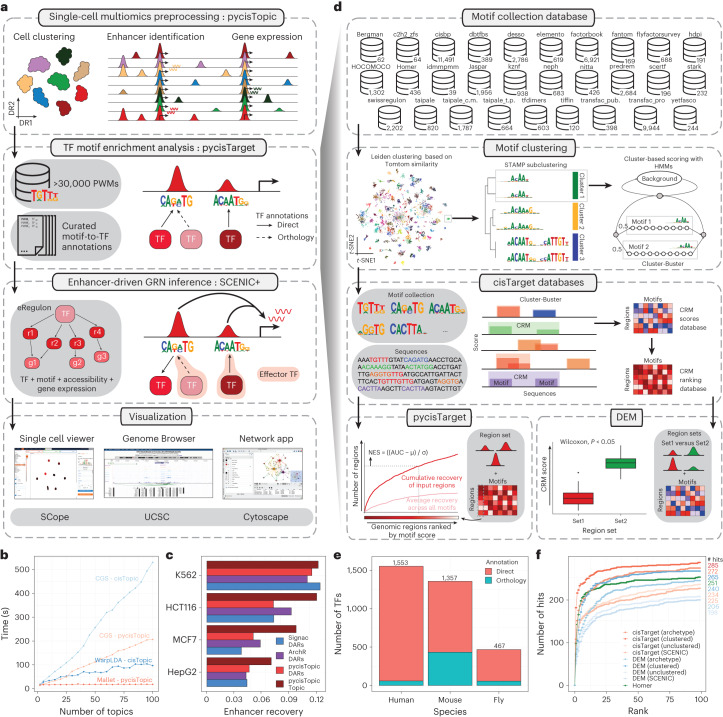
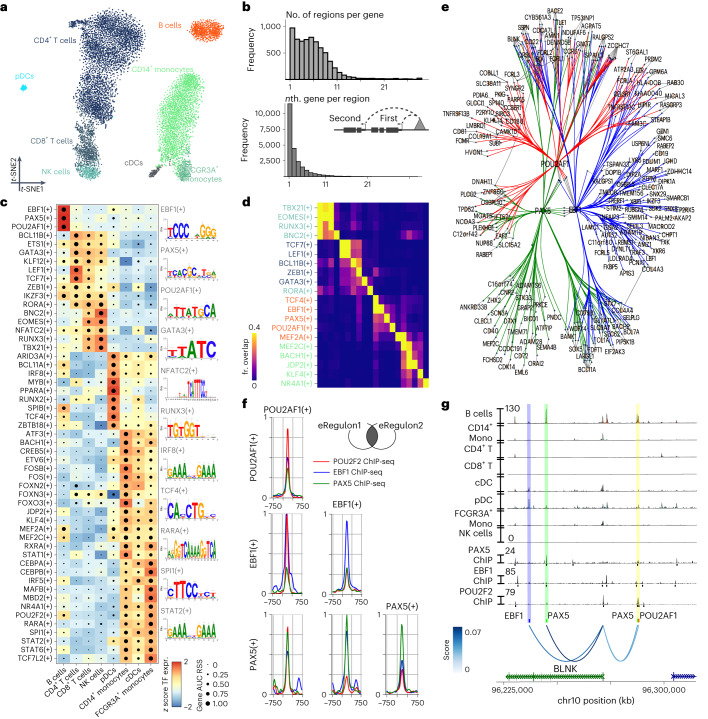
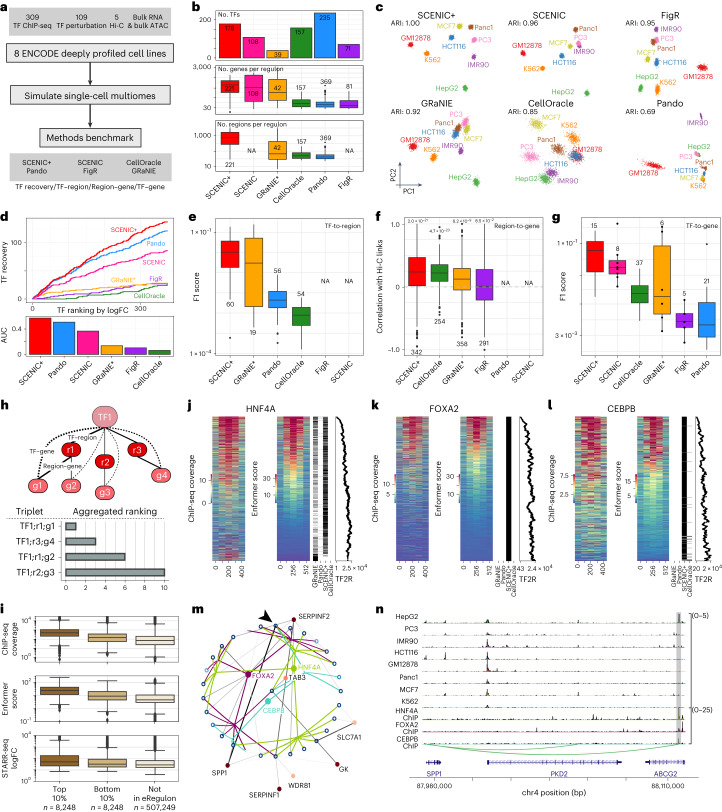
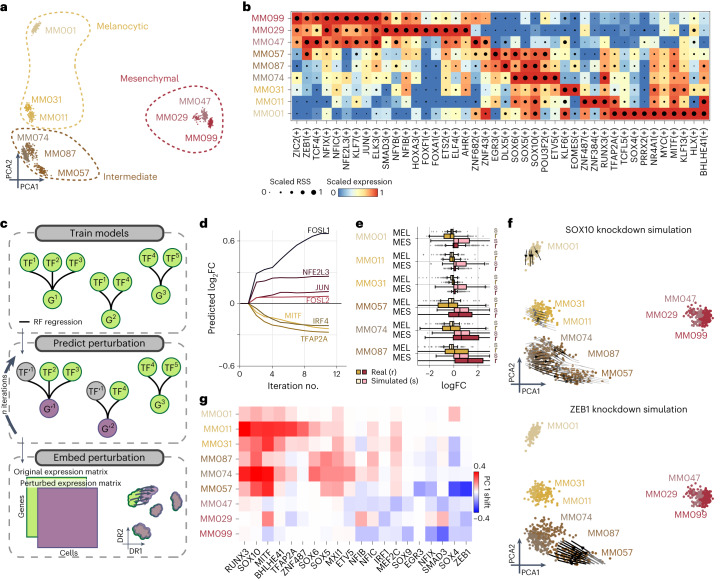
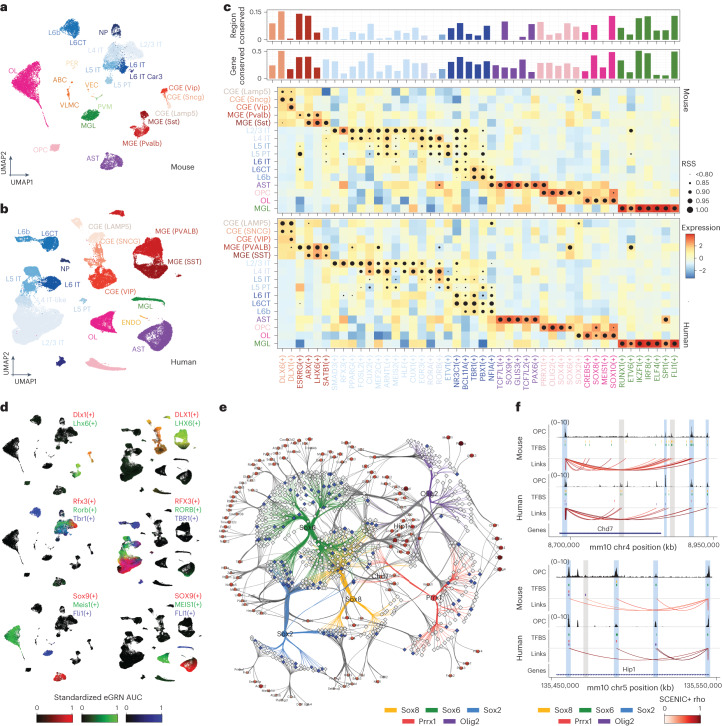
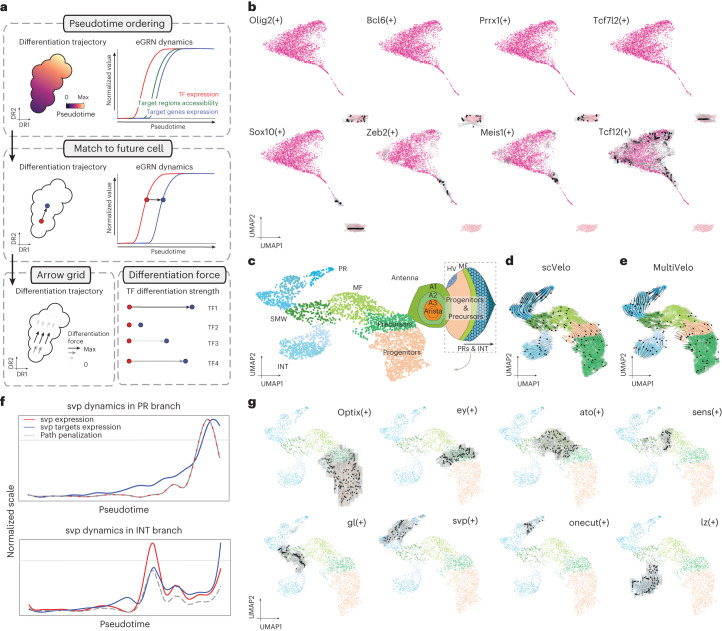
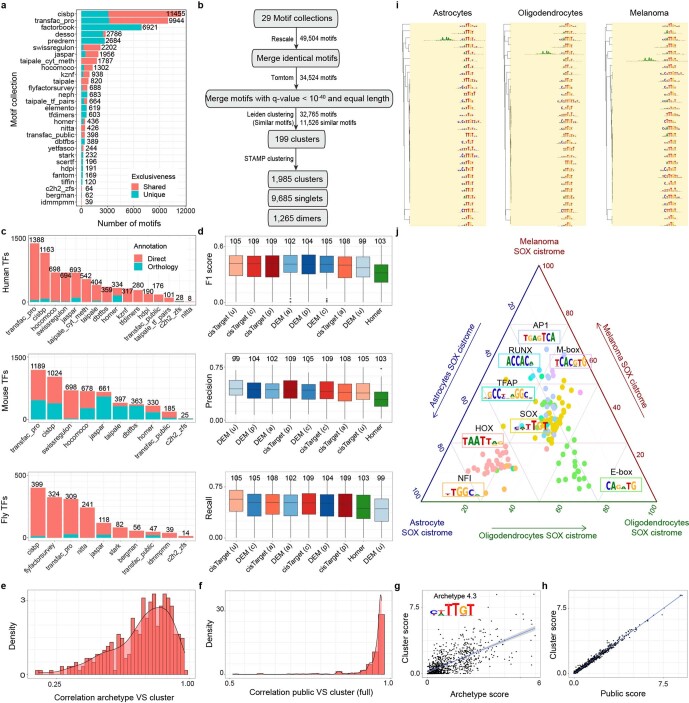
Joint profiling of chromatin accessibility and gene expression in individual cells provides an opportunity to decipher enhancer-driven gene regulatory networks (GRNs). Here we present a method for the inference of enhancer-driven GRNs, called SCENIC+. SCENIC+ predicts genomic enhancers along with candidate upstream transcription factors (TFs) and links these enhancers to candidate target genes. To improve both recall and precision of TF identification, we curated and clustered a motif collection with more than 30,000 motifs. We benchmarked SCENIC+ on diverse datasets from different species, including human peripheral blood mononuclear cells, ENCODE cell lines, melanoma cell states and Drosophila retinal development. Next, we exploit SCENIC+ predictions to study conserved TFs, enhancers and GRNs between human and mouse cell types in the cerebral cortex. Finally, we use SCENIC+ to study the dynamics of gene regulation along differentiation trajectories and the effect of TF perturbations on cell state. SCENIC+ is available at scenicplus.readthedocs.io .
Overview
The claims and statistics of this paper haven’t been checked yet.
Free: it reads the open-access text and checks the first 5 claims that cite a source we can check. Create a free account to check every claim.
Integrity signals
Registry
Cites
Statistics
Figures
Verification
Claims the paper makes
The claims and statistics of this paper haven’t been checked yet.
Free: it reads the open-access text and checks the first 5 claims that cite a source we can check. Create a free account to check every claim.
Claims other papers make about this one
Each is checked against this paper’s own text: does it say what the citing paper says it does?
The source backs part of the claim, not all of it — or backs it for a different population, condition or comparison.
In the citing paper
“SCENIC+ demonstrated superior performance compared to its original version, as well as ppcor, GRNBOOST2, PIDC, GRaNIE, FigR, and Pando, as evidenced by the AUC and F1 score metrics [48].”
From A mini-review on perturbation modelling across single-cell omic modalities (2024) · cites this paper as [48]
Experimental — accuracy not yet measuredThe source backs part of the claim, not all of it — or backs it for a different population, condition or comparison.
In the citing paper
“pycisTarget (v.1.0.1.dev42+gb6707ee) was run using a custom database with the consensus regions on DARs, binarized topics (with Otsu thresholding), curated DARs and topics and MACS2 (v.2.2.7.1) bdgdiff regions, with and without promoters, and using pycisTarget and DEM7.”
From Single-cell spatial multi-omics and deep learning dissect enhancer-driven gene regulatory networks in liver zonation (2024) · cites this paper as [7]
Experimental — accuracy not yet measuredThe cited source says what the claim attributes to it.
In the citing paper
“Notably, SCENIC+ anticipates genomic enhancers and identifies potential upstream transcription factors (TFs) and establishes connections between these enhancers and their relevant target genes.”
From A mini-review on perturbation modelling across single-cell omic modalities (2024) · cites this paper as [48]
The cited source says what the claim attributes to it.
In the citing paper
“Cell-cell similarity graphs in single cell omics [ 47 ], gene regulatory networks [ 48 ] and protein-protein interaction networks [ 49 ] are fundamental tools to rationalize the complexity of biological systems such as the human body.”
From igraph 1.0 enables fast and robust network analysis across programming languages (2026) · cites this paper as [48]
The cited source says what the claim attributes to it.
In the citing paper
“SCENIC+ was run with the default parameters on the complete dataset and using only hepatocytes, using http://nov2020.archive.ensembl.org/ as Biomart host.”
From Single-cell spatial multi-omics and deep learning dissect enhancer-driven gene regulatory networks in liver zonation (2024) · cites this paper as [7]
1 more claim about this paper
Create a free account to see every claim other papers make about this one.
Self-check
Percentages, sums and reported differences re-computed from the paper’s own numbers.
The self-check needs the paper’s full text.
Citations
Cites
Moderated estimation of fold change and dispersion for RNA-seq data with DESeq2
Love, M. I., Huber, W., & Anders, S. (2014) · Genome Biology · doi:10.1186/s13059-014-0550-8 · Cited by 95,106
A Threshold Selection Method from Gray-Level Histograms
Otsu, N. (1979) · IEEE Transactions on Systems, Man, and Cybernetics · doi:10.1109/tsmc.1979.4310076 · Cited by 43,398 · cited 1×
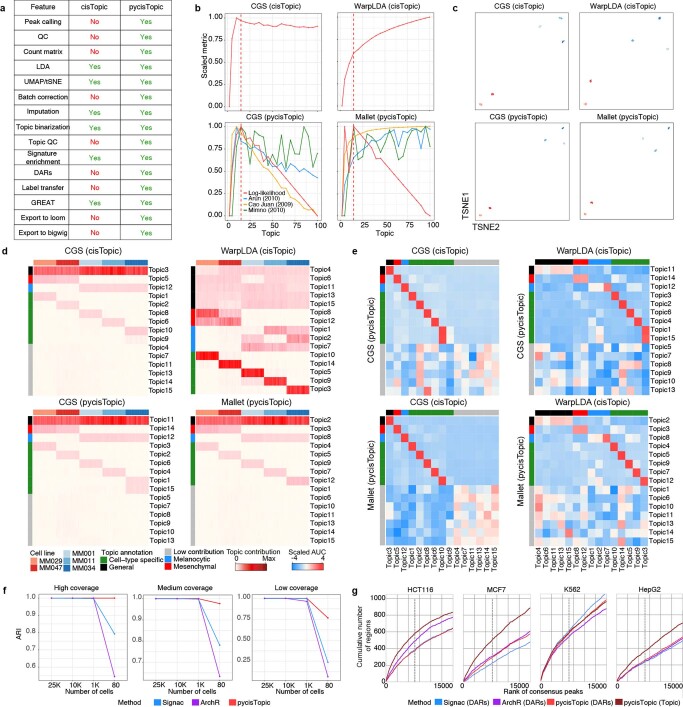
“We have included several binarization methods (applicable for topic-region and cell-topic distributions): ’otsu’ (Otsu, 1979)107, ’yen’ (Yen et al., 1995)108, ’li’ (Li & Lee, 1993)109, ’aucell’ (Van de Sande et al., 2020)20 or ’ntop’ (Taking the top n regions per topic).”
MethodModel-based Analysis of ChIP-Seq (MACS)
Zhang, Y., Liu, T., Meyer, C. A., Eeckhoute, J., Johnson, D. S., Bernstein, B. E., Nusbaum, C., Myers, R. M., Brown, M., Li, W., et al. (2008) · Genome Biology · doi:10.1186/gb-2008-9-9-r137 · Cited by 18,386
An integrated encyclopedia of DNA elements in the human genome
The ENCODE Project Consortium (2012) · Nature · doi:10.1038/nature11247 · Cited by 18,072
Comprehensive Integration of Single-Cell Data
Stuart, T., Butler, A., Hoffman, P., Hafemeister, C., Papalexi, E., Mauck, W. M., Hao, Y., Stoeckius, M., Smibert, P., & Satija, R. (2019) · Cell · doi:10.1016/j.cell.2019.05.031 · Cited by 15,453
Heinz, S., Benner, C., Spann, N., Bertolino, E., Lin, Y. C., Laslo, P., Cheng, J. X., Murre, C., Singh, H., & Glass, C. K. (2010) · Molecular Cell · doi:10.1016/j.molcel.2010.05.004 · Cited by 13,382
Fast, sensitive and accurate integration of single-cell data with Harmony
Korsunsky, I., Millard, N., Fan, J., Slowikowski, K., Zhang, F., Wei, K., Baglaenko, Y., Brenner, M., Loh, P.-R., & Raychaudhuri, S. (2019) · Nature Methods · doi:10.1038/s41592-019-0619-0 · Cited by 10,488
SCANPY: large-scale single-cell gene expression data analysis
Wolf, F. A., Angerer, P., & Theis, F. J. (2018) · Genome Biology · doi:10.1186/s13059-017-1382-0 · Cited by 8,881
Scenic: single-cell regulatory network inference and clustering.
Aibar, S., González-Blas, C. B., Moerman, T., Huynh-Thu, V. A., Imrichova, H., Hulselmans, G., Rambow, F., Marine, J.-C., Geurts, P., Aerts, J., et al. (2017) · Nature Methods · doi:10.1038/nmeth.4463 · Cited by 6,520
Self-citationGriffiths, T. L., & Steyvers, M. (2004) · Proceedings of the National Academy of Sciences · doi:10.1073/pnas.0307752101 · Cited by 6,049 · cited 1×
“- Log-likelihood: Uses the log-likelihood in the last iteration as calculated by Griffiths and Steyvers (2004)104, as used in cisTopic.”
Method
Research works printed but not linked: 1
- Mimno, D., Wallach, H. M., Talley, E., Leenders, M. & McCallum, A. Optimizing semantic coherence in topic models. In Proc. 2011 Conference on Empirical Methods in Natural Language Processing 262–272 (Association for Computational Linguistics, 2011).
Cited by
Items 601–700 of 779
DynPerturb:Dynamic Perturbation Modeling for Spatiotemporal Single-Cell SystemsPreprint
Qin, H., Zhang, Y., Guo, Z., Hu, L., Li, Q., Cao, L., Xia, T., Deng, Z., Zhang, Y., Li, Y. P., et al. (2025) · bioRxiv (Cold Spring Harbor Laboratory) · doi:10.1101/2025.09.15.676236
Nirgude, S., Tichy, E. D., Zhang, Y., Pradieu, R. D., Xie, H. M., Bernt, K. M., MacFarland, S. P., & Kalish, J. M. (2025) · bioRxiv (Cold Spring Harbor Laboratory) · doi:10.1101/2025.09.17.676802
Yu, J. J., Gupta, N., Guo, M., Olatoke, T., & Xu, Y. J. (2025) · Seminars in Respiratory and Critical Care Medicine · doi:10.1055/a-2698-7273 · Cited by 2
Paxbp1 restrains cytotoxic and innate cell programs in CD4+ T cells to promote Th2 differentiationPreprint
Chisolm, D. A., Morimoto, Y., Nagashima, H., Brooks, S. R., Meremikwu, I. C., Hammond, M., Sun, J., Ermis, E., Philips, R. L., Chaitankar, V., et al. (2025) · Research Square · doi:10.21203/rs.3.rs-7199764/v1
Sugimoto, H., Tsuyuzaki, K., Zou, Z., Oki, S., Ohta, T., & Kawakami, E. (2025) · bioRxiv (Cold Spring Harbor Laboratory) · doi:10.1101/2025.10.05.680506
Arachchilage, K. H., Risgaard, R. D., Sheng, J., Kumarage, P., Choi, J. J., Alatkar, S. A., Gupta, C., Zhao, X., Sousa, A. M. M., & Wang, D. (2025) · bioRxiv (Cold Spring Harbor Laboratory) · doi:10.1101/2025.10.07.681016 · Cited by 1
Liang, X., Miao, Y., Han, D., Li, Y., Zhang, W., & Wang, Z. (2026) · Nucleic Acids Research · doi:10.1093/nar/gkag437 · Cited by 3
“Regression-based models, including DIRECT-NET [ 24 ], SCENIC + [ 25 ], SCARlink [ 26 ], and Enhlink [ 27 ], quantify the relationship between one or more enhancers and target gene expression using multivariate regression.”
InfluentialMullins, R. D. Z., Zaretsky, J. M., Stoller, E., Moore, M., Takacsi-Nagy, O., Shpynov, O., Sampaleanu, R., Roth, T. L., Satpathy, A. T., Mitra, R. D., et al. (2025) · bioRxiv (Cold Spring Harbor Laboratory) · doi:10.1101/2025.10.09.681414
The origin and molecular evolution of the mammalian liver cell architecturePreprint
Yuan, X., Rodríguez-Montes, L., Zaremba, B., Trost, N., Schneider, C., Schmidt, J., Berki, B., Ibberson, D., Leushkin, E. V., Nickel, B., et al. (2025) · bioRxiv (Cold Spring Harbor Laboratory) · doi:10.1101/2025.10.14.682049 · Cited by 3
Principles, methods and applications of gene regulatory network inference
Jiang, Y., Liu, Z., Zhang, Q., Chen, Z., Zan, Z., Lü, Q., Wang, J., Zhu, J., Zhang, J., & Wei, X. (2025) · Scientia Sinica Vitae · doi:10.1360/ssv-2025-0070
Cohen, C., Mimpen, J. Y., Kurjan, A., Paul, C., Sharma, S., Ramos‐Mucci, L., Ikwanusi, C. T., Aksu, A. C., Serebour, T. B., Nikolic, M., et al. (2025) · bioRxiv (Cold Spring Harbor Laboratory) · doi:10.1101/2025.10.17.683019
Servaas, N. H., Bauersachs, H. G., Abreu, L., Claringbould, A., Berest, I., Schwarz, J., Stein, F., Fälth-Savitski, M., Eismann, L., Reddington, J. P., et al. (2025) · bioRxiv (Cold Spring Harbor Laboratory) · doi:10.1101/2025.10.30.685551 · Cited by 1
Machine Learning‐Assisted Plant Systems Biology
Dutta, H., Dutta, S., & Kumar, S. (2025) · Wiley eBooks · doi:10.1002/9781394329649.ch12
Chen, Y., Zheng, Y., Chen, Z., Zhang, G., Tang, C., Wang, F., Liu, C., Li, M., & Jin, L. G. (2025) · Journal of Integrative Agriculture · doi:10.1016/j.jia.2025.11.016
Distinct Programs Drive Organ Development and RegenerationPreprint
Ma, R., Deng, Z., Li, Y., Chen, J., Zhang, J., Feng, D., Xu, C., Zhou, J., Zhang, X., Xia, K., et al. (2025) · bioRxiv (Cold Spring Harbor Laboratory) · doi:10.1101/2025.11.20.689429 · Cited by 1
Hu, Z., Przytycki, P. F., & Pollard, K. S. (2025) · STAR Protocols · doi:10.1016/j.xpro.2025.104235
van Knippenberg, S. S. F. A., Tryfonos, M., Busscher, J. D., Biondi, E., Solís, M. A., Lorent, C., Girard, O., Poovathingal, S. K., Wojno, M., Khodeer, S., et al. (2025) · bioRxiv (Cold Spring Harbor Laboratory) · doi:10.64898/2025.12.01.691499
Self-citationPhenotypic plasticity mediates colorectal cancer metastasisPreprint
Efremova, M., Ogden, S., Metic, N., Smith, E. A., Berner, A., Baker, A.-M., Uddin, I., Chelala, C., Ullah, D., Saad, A. B., et al. (2024) · Research Square · doi:10.21203/rs.3.rs-3846377/v1
Guo, X., Jin, W., Wen, Y., Wang, Z., Ren, X., Liu, Z., Fu, R., Cai, Z., & Li, L. (2024) · Figshare · doi:10.6084/m9.figshare.26752192
Coronado, M., Vincelle-Nieto, Á., Azcárate, I. G., Pérez-Benavente, S., Puyet, A., Díez, A., Bautista, J. M., & Reyes‐Palomares, A. (2025) · bioRxiv (Cold Spring Harbor Laboratory) · doi:10.64898/2025.12.10.693423
IKAROS Gene Regulatory Network Reveal ERG as a Vulnerability in B-cell Acute Lymphoblastic LeukemiaPreprint
Paculová, H., Richman, A. R., Boyd, J., Bernil, J. C., Rodriguez, P., Ayongaba, E. F., Ghule, P. N., Drivet, E., Palaria, A., Dajani, M., et al. (2025) · bioRxiv (Cold Spring Harbor Laboratory) · doi:10.64898/2025.12.29.696402
Trauernicht, M., Franceschini-Santos, V. H., Yücel, H., Filipovska, T., & van Steensel, B. (2026) · bioRxiv · doi:10.64898/2026.01.05.697632 · Cited by 1
Chen, H., Kaneko, N., Ohyama, Y., & Moriyama, M. (2026) · Journal of Autoimmunity · doi:10.1016/j.jaut.2025.103521 · Cited by 2
Single-nucleus chromatin accessibility and gene expression co-profiling by ISSAAC-seq
Xu, W., Hu, Y., Zhang, Y., Schnepp, P. M., Lo, L. M., Zhang, Q., Cheng, S. M., & Chen, X. X. (2026) · Nature Protocols · doi:10.1038/s41596-025-01304-y
LI, Y., Zhang, X., Ghimire, K., Khatri, N., Wang, L., Liu, Q., Shiri, M., Shakoori, R., Upadhayaya, S., Li, B., et al. (2026) · bioRxiv (Cold Spring Harbor Laboratory) · doi:10.64898/2026.01.12.699153
Single-Cell Multi-Omics Insights into BMI-Mediated Immune-Related Disease RiskPreprint
Huang, Z., Xu, Z., Yang, H., Zheng, Y., Zhou, W., Guan, B., Zeng, Y., Zhang, J., Yin, P., Liu, C., et al. (2026) · bioRxiv (Cold Spring Harbor Laboratory) · doi:10.64898/2026.01.12.698924
Marku, M., Chenel, H., Bordenave, J., Hurtado, M., Domagala, M., Raynal, F., Poupot, M., Ysebaert, L., Zinovyev, A. Y., & Pancaldi, V. (2026) · npj Systems Biology and Applications · doi:10.1038/s41540-025-00645-4 · Cited by 2
Zhang, Q., Wang, S., Li, Z., Bao, W., Liu, W., & Huang, D.-S. (2026) · Genome Research · doi:10.1101/gr.281219.125
Inference of Gene Regulatory Networks for Overcoming Low Performance in Real-World Data
Hiki, Y., Tokuoka, Y., Yamada, T., & Funahashi, A. (2026) · IEEE Access · doi:10.1109/access.2026.3659303
“Several studies have modeled expression dynamics from inferred gene regulatory networks but have not directly considered edge dynamics and require multi-omics data [35], [36].”
Qiu, Q., Zhang, H., Xia, Z., Gao, W. N. D., Leu, J., Liang, D., Li, Y., Su, Y., Feierman, E. R., Horn, V., et al. (2026) · bioRxiv (Cold Spring Harbor Laboratory) · doi:10.64898/2026.01.29.702431
Heim, T. A., Rogers, Z. J., Duquette, S. M., Carney, M., Bhandarkar, V., Chatterjee, F., Dinter, T., Schenkel, J. M., Manalis, S. R., Love, J. C., et al. (2026) · bioRxiv (Cold Spring Harbor Laboratory) · doi:10.64898/2026.02.03.703569
“To overcome this limitation, we used SCENIC+ 33 to extrapolate enhancer driven gene regulatory networks or eRegulons (TF+target genes) by connecting TF binding sites with observed gene expression. eRegulons are assembled by identifying chromatin accessible enhancer regions and identifying genes,…”
InfluentialDecomposing multi-scale dynamic regulation from single-cell multiomics with scMagnifyPreprint
Chen, X., Yan, X., Shen, B., Wang, H., Tang, Z., Zang, Y., Lin, P., Zhang, H., Li, Y., & Li, H. (2026) · bioRxiv (Cold Spring Harbor Laboratory) · doi:10.64898/2026.02.03.703669
“Our analysis also highlights the temporal decoupling between the expression of a transcription factor and its regulatory activity 30,63 ( Fig.”
Scaling and regeneration in the developing cerebellum
Christensen, J. B., Vanacore, G., Divers, N., & Bayin, N. S. (2026) · Current topics in developmental biology/Current Topics in Developmental Biology · doi:10.1016/bs.ctdb.2026.01.006
Cell atlases and the developmental foundations of the phenotype
Lou, A., Chagoyen, M., & Poyatos, J. F. (2026) · PLoS Computational Biology · doi:10.1371/journal.pcbi.1013944
“…questions in developmental biology through a quantitative and testable lens, such as uncovering the enhancer logic underlying cell identity [10], determining the proper approaches to defining and organizing cell states and types [11], and exploring the role of cellular plasticity in…”
Lu, C., Kluger, Y., & Ma, R. (2026) · bioRxiv (Cold Spring Harbor Laboratory) · doi:10.64898/2026.02.10.705077
Distinguishing causal from tagging enhancers using single-cell multiome dataPreprint
Dorans, E., & Price, A. L. (2026) · medRxiv · doi:10.64898/2026.02.15.26346353
“Other studies have produced methods for mapping peak co-accessibility 11,14,25 or inferred ‘modules’ of co-accessible peaks 16,26 from single-46 cell ATAC-seq data, raising the question of how peak co-accessibility might impact peak-gene linking. where 𝑦 is the co-activity score of peak 𝑗 , 𝜏 )…”
Kruszelnicki, S., Chakraborty, S., Wang, X., Rehman, J., Singh, H., & Gottschalk, R. A. (2026) · bioRxiv (Cold Spring Harbor Laboratory) · doi:10.64898/2026.02.16.706134 · Cited by 1
Chen, B., Liu, M., Dong, Q., Lv, C., Liu, K., Han, H., Wang, L., Zhang, N., Zhao, W., Lv, J., et al. (2026) · npj Precision Oncology · doi:10.1038/s41698-026-01328-x
“With scRNA-seq technology development, various computational methods have been employed to infer gene regulatory or co-expression networks, offering a great opportunity for identifying GIs in single cells 15 – 17 .”
InfluentialGalvão, I. C., Lemoine, M., Waichman, T. V., Chandarana, B., Hébert, S., de Oliveira, T. C., dos Santos, L. H. B., Rogério, F., Yasuda, C. L., Ghizoni, E., et al. (2026) · bioRxiv (Cold Spring Harbor Laboratory) · doi:10.64898/2026.02.20.707029
Trimbour, R., Sáez-Rodríguez, J., & Cantini, L. (2026) · Bioinformatics · doi:10.1093/bioinformatics/btag092 · Cited by 2
A pipeline for single-cell chromatin accessibility data analysis
Zhang, M., & Chen, C. (2026) · Blood Science · doi:10.1097/bs9.0000000000000259
BARTsc identifies key transcriptional regulators from single-cell omics dataPreprint
Zhang, H., Kang, L., Wang, J., Liang, K., Wang, Z., Xu, K., & Zang, C. (2026) · bioRxiv (Cold Spring Harbor Laboratory) · doi:10.64898/2026.02.24.707729 · Cited by 1
Inferring gene-regulatory networks using epigenomic priors
Bartlett, T. E., Li, M., Song, C., Gao, Y., & Huang, Q. (2026) · iScience · doi:10.1016/j.isci.2026.115165 · Cited by 1
“This follows from the differential expression analysis (comparing Epi with PrE, STAR Methods), where the majority of genes were found to be upregulated in PrE, relative to Epi.”
InfluentialHao, S., & Chen, C. (2026) · Blood Science · doi:10.1097/bs9.0000000000000283
scDynOmics: An Optimized Transformer Model for Representation Learning from Single-Cell MultiomicsPreprint
Yu, G., Ramnarine, T. J. S., Klughammer, J., & Mages, S. (2026) · bioRxiv (Cold Spring Harbor Laboratory) · doi:10.64898/2026.02.28.708160
“For the experiments in Section 2.3, we additionally curated a distinct set of human sc-Multiomic PBMC and lymph node profiles with a feature space of 20 , 492 genes based on the Ensembl GRCh38 (hg38) genome assembly and documented TFs[5].”
InfluentialHao, R., Liu, C., Li, Z., Yu, F., Zhao, Z., Zhu, H., & Liu, B. (2026) · Pathology - Research and Practice · doi:10.1016/j.prp.2026.156442
Next-generation cry proteins for climate-resilient mosquito control and antimicrobial strategies
Annamalai, A. (2026) · Chemosphere · doi:10.1016/j.chemosphere.2026.144884
SC-MO-GRN-DB: A comprehensive repository for single-cell multiomic gene regulatory networks
Valensi, H., Karamveer, K., Moeller, E., Ozdogan, S. E., Edwards, R. M., & Uzun, Y. (2026) · iScience · doi:10.1016/j.isci.2026.115323 · Cited by 1
Epithelial plasticity in lung cancer evolution: insights from organoids
Moon, S., Lee, D., Choi, J., Lee, S., & Kim, J. (2026) · Organoid · doi:10.51335/organoid.2026.6.e2
Integrating multiomic layers to decode psychiatric disease mechanisms
Sheu, L., Girdhar, K., & Roussos, P. (2026) · Current Opinion in Genetics & Development · doi:10.1016/j.gde.2026.102451 · Cited by 1
Gene regulatory network determinants of rapid recall in human memory CD4+ T cells
Katko, A., Korinfskaya, S., Bejjani, A. T., Owoeye, S. M., Yang, Z. F., Rudrapatna, A. N., Potter, S., Wayman, J. A., Kotliar, M., Kottyan, L. C., et al. (2026) · Cell Reports · doi:10.1016/j.celrep.2026.117103 · Cited by 2
Fu, X., Yang, C., Cui, C., Geng, A., Sun, Y., Zha, C., Cui, F., Wei, L., Zou, Q., Gao, X.-J., et al. (2026) · Genome Research · doi:10.1101/gr.281523.125
Liu, K., Liao, S., Li, X., Song, L., Poo, M.-M., Zhao, J., Zhou, W., Cai, R., Wang, M., Ma, X., et al. (2026) · Cell Research · doi:10.1038/s41422-026-01246-4
Déchiffrer le réseau moléculaire contrôlant la pluripotence du porc
Dufour, A. (2024) · theses.fr (ABES) · doi:10.70675/6694a20az0df0z414bz9bbez1b753d188739
Rotkevich, M., Merino, M. F., & Cosma, M. P. (2026) · Current Opinion in Systems Biology · doi:10.1016/j.coisb.2026.100590
IMAS resolves perturbation-sensitive regulatory architectures from matched tumour multiomicsPreprint
Deyang, W., Yamashiro, T., & Inubushi, T. (2026) · bioRxiv (Cold Spring Harbor Laboratory) · doi:10.64898/2026.04.09.717444
Molecular Pathogenesis and Therapeutic Response of Diffuse Large B Cell Lymphoma Genetic Subtypes
Phelan, J. D., Enssle, J. C., Corcoran, S. R., Wright, G. W., & Staudt, L. M. (2026) · Annual Review of Cancer Biology · doi:10.1146/annurev-cancerbio-071124-033604
Tao, Z., Zhang, Q., Chen, Y., Lv, S., Huang, Q., Tian, H., Liu, Q., Li, C., Wang, Y., Lu, H., et al. (2026) · International Journal of Molecular Sciences · doi:10.3390/ijms27083522
Hennes, M., Thorwirth, M., Lao, C. L., Stogsdill, J. A., Arlotta, P., Fischer-Sternjak, J., Richter, M. L., & Götz, M. (2026) · bioRxiv (Cold Spring Harbor Laboratory) · doi:10.64898/2026.04.16.718928
Dissecting Pirtobrutinib Resistance in Mantle Cell Lymphoma Through Single‐Cell Multi‐Omics
Yan, F., Liu, Y., Lee, H. J., Wang, W., McIntosh, J. M., Li, Y., Vargas, J., Fei, Y., Ahmed, S., Simon, L. M., et al. (2026) · American Journal of Hematology · doi:10.1002/ajh.70304 · Cited by 2
Single-cell transcriptomics of human brain disorders
Arbabi, K., Carito, G., Luquez, T., & Wainberg, M. (2026) · Molecular Psychiatry · doi:10.1038/s41380-026-03573-9 · Cited by 2
“● Gene regulatory and co-expression network analysis identi fi es modules of co-expressed genes that de fi ne key biological processes [99, 100].”
Behera, R., Zhou, Y., Gerges, P., Fan, J., Tabib, T., Gaydosik, A. M., Huang, M., Das, J., Pachera, E., Hukara, A., et al. (2026) · JCI Insight · doi:10.1172/jci.insight.189107
Modeling Dynamics, Cell Type Specificity, and Perturbations in Gene Regulatory Networks
Shin, J., Halberg, S., Liu, Y., Hazra, S., Lee, E. D.-I., & Roy, S. (2026) · Annual Review of Genomics and Human Genetics · doi:10.1146/annurev-genom-120922-103729
A macrophage co-expression signature enables robust prognostic prediction in glioblastoma
Fang, L., Li, H., Ding, C., Feng, L., & Wang, Y. (2026) · Translational Oncology · doi:10.1016/j.tranon.2026.102784
“To characterize transcriptional regulatory programs across cellular populations, we performed single-cell regulatory network inference using the R-SCENIC framework [19].”
Gupta, N., Dautle, M., Zhang, S., & Chen, Y. (2026) · Advanced Intelligent Discovery · doi:10.1002/aidi.202500247
Gene regulatory co-option drives birdsong neural circuit specializationPreprint
Marquez, A. P., Lagousis, C. R. M., Katcher, E., Rand, F., Varadharaj, K., Brainard, M. S., & Colquitt, B. M. (2026) · bioRxiv (Cold Spring Harbor Laboratory) · doi:10.64898/2026.04.24.720702
de Barros, M. R. M., Bosch, K., Soualhi, S., Bhaloo, S. I., Chu, T., Hemrajani, T., Cho, J., Ozuner, K., Fu, R., Geiger, H. M., et al. (2026) · bioRxiv (Cold Spring Harbor Laboratory) · doi:10.64898/2026.04.23.720450
“…the inferred networks as a framework to perform in silico perturbation experiments where the expression of TFs of interest was set to 0 and the perturbed gene expression values propagated over five cycles to model indirect regulatory shifts occurring through hierarchical TF-to-TF interactions 39 .”
Singh, S. K., Helverson, A., Kenny, C., Pi, L., Manchel, A., Curtis, S. W., Robinson, K. R., Duncan, K. M., Li, E. B., Liao, E. C.-W., et al. (2026) · bioRxiv (Cold Spring Harbor Laboratory) · doi:10.64898/2026.04.27.720742 · Cited by 1
DeGroat, W., & Kreimer, A. (2026) · bioRxiv (Cold Spring Harbor Laboratory) · doi:10.64898/2026.05.01.722242
Modeling strategies for in vivo transcription factor binding predictions
Aksu, E. D., & Vingron, M. (2026) · Bioinformatics Advances · doi:10.1093/bioadv/vbag123
Joint library preparation and analysis methods for single-cell genome-transcriptome co-assays
Li, Y., He, Y., Qiao, Y., & Tu, J. (2026) · EngMedicine · doi:10.1016/j.engmed.2026.100139
Postnatal Reprogramming Shapes Human Intestinal Epithelial Immune CompetencyPreprint
Lee, C. H.-J., Fawkner-Corbett, D., Christoforidou, Z., Gerós, A. S., Lentsch, V., Sheikh, L., Bridges, E., Jagielowicz, M., Deng, L., Qin, X., et al. (2026) · bioRxiv (Cold Spring Harbor Laboratory) · doi:10.64898/2026.05.05.722861
Temporal network analysis in systems biology: concepts, inference, and validation
Khazaal, A., & Vafaee, F. (2026) · Frontiers in Bioinformatics · doi:10.3389/fbinf.2026.1822526 · Cited by 1
“…edges for known PPIs or TF-binding motifs, is a common starting point for increasing interpretability, multi-omics integration provides a more rigorous filter by requiring consistency across modalities (Bravo González-Blas et al., 2023; Kernfeld et al., 2024; Wu et al., 2025; Azad et al., 2021).”
Yerrabelli, R., Thibodeau, A., Nehar-Belaid, D., Marcheş, R., Ravichandran, S., Barnouin, Y., Sen, R., Paust, S., Stitzel, M. L., Ferrucci, L., et al. (2026) · bioRxiv (Cold Spring Harbor Laboratory) · doi:10.64898/2026.05.08.723786
Shi, Y., Hai, L., 侯国庆, Wang, Z., Wang, L., Lv, Z., Hao, X., Chen, S., Xia, R., Cao, J., et al. (2026) · Frontiers in Immunology · doi:10.3389/fimmu.2026.1827555 · Cited by 1
Probing transcription factor subsets in gene regulatory networks
Geis, L., Hecker, D., Hoefer, M., Meyer, U., & Schulz, M. H. (2026) · Algorithms for Molecular Biology · doi:10.1186/s13015-026-00297-x
Kaneko, S., & Urushitani, M. (2026) · bioRxiv (Cold Spring Harbor Laboratory) · doi:10.64898/2026.05.16.716261
Nirgude, S., Tichy, E. D., Zhang, Y., Trang, K. B., Pradieu, R. D., Xie, H. M., Bernt, K. M., MacFarland, S. P., & Kalish, J. M. (2026) · BJC Reports · doi:10.1038/s44276-026-00215-z
Computational modelling of cell identity
Shim, W. J., Chow, C. S. Y., Bao, S. C., Zhao, Q., & Palpant, N. J. (2026) · Biochemical Journal · doi:10.1042/bcj20250132
Wang, R., Chen, H., Huang, B., Feng, Y., Zhong, W., Li, W., Xinmo, F., Qin, A., Yu, M., Ji, Z., et al. (2026) · Genes & Diseases · doi:10.1016/j.gendis.2026.102248
Decoding Immune Reconstitution Failure in People Living with HIV through Single-cell GenomicsPreprint
Wang, Y., Yang, S., Yuan, Y., Zhu, M., Chen, J., Bai, Y., Duan, S., Shi, X., Lu, T., Yang, Z., et al. (2026) · bioRxiv (Cold Spring Harbor Laboratory) · doi:10.64898/2026.05.21.726797
Huang, T., Yao, M., Zhang, F., SIQI, N., Wen, J., Wang, J., Yang, Y., & Gao, X. (2026) · Bioinformatics Advances · doi:10.1093/bioadv/vbag145
Computational blueprints for cell fate programming
Yang, P. (2026) · Stem Cell Reports · doi:10.1016/j.stemcr.2026.102929
Wang, X., Carcamo, S., Lambertini, L., Wang, P., Liu, H., Paulsen, J. D., Brody, R., Fernandez-Ranvier, G. G., Hasson, D., Stewart, A. F., et al. (2026) · bioRxiv (Cold Spring Harbor Laboratory) · doi:10.64898/2026.05.29.728759
Cohn, O., Weng, C., Ye, T., Neehus, A., Guo, C., Norford, L. B., Kao, E., & Sankaran, V. G. (2026) · bioRxiv (Cold Spring Harbor Laboratory) · doi:10.64898/2026.05.28.728586 · Cited by 1
“To obtain a complementary view of the regulatory programs across the DC lineage while accounting for non-linear TF–target relationships, we applied SCE-NIC+ 37 .”
Charting the human-specific properties of gene expression networks in the infant prefrontal cortex
Klavert, J., Radjabzadeh, D., Sanchez, E. G., Castelijns, B., Timpanaro, I. S., Boers, J., Fabro, F., de Wei, G. V. I., Bindels, E., Kondova, I. I., et al. (2026) · Science Advances · doi:10.1126/sciadv.aea3316
“As regulatory DNA is typically different between species ( 37 ), we used the SCENIC + framework ( 38 ) to systematically model the human/chimpanzee conserved relationship between TFs and gene regulatory elements (GREs) and target genes (i.e., a regulon).”
Cell-specific regulatory circuits connect genetic variation to disease susceptibilityPreprint
Oelen, R., Korshevniuk, M., Niewold, J., Kaptijn, D., van der Werff, M., Bonder, M. J., Franke, L., & van der Wijst, M. G. P. (2026) · bioRxiv (Cold Spring Harbor Laboratory) · doi:10.64898/2026.06.01.729215 · Cited by 1
Architectural fragility of gene regulatory networks underlies hematopoietic stem cell agingPreprint
Stevens, H. P., Yücel, A. D., Gould, R. A., Cai, G., Gladyshev, V. N., Pleşa, A. M., & Church, G. M. (2026) · bioRxiv (Cold Spring Harbor Laboratory) · doi:10.64898/2026.06.03.729976 · Cited by 2
“0, which integrates scRNA-seq and scATAC-seq to infer enhancer-driven regulons (eRegulons) composed of a TF, its target regions, and its target genes 40 .”
scMTG reconstructs single-cell temporal dynamics with Markov transition generatorsPreprint
Cui, X., Wang, H., Gao, Z., Jiang, R., Wong, W. H., & Liu, Q. (2026) · bioRxiv (Cold Spring Harbor Laboratory) · doi:10.64898/2026.06.04.730241
IAPEz retrotransposons regulate the first lineage segregation in mouse pre-implantation development
Huang, R., Han, Z., Liufu, Z., Quan, X., Li, D., Dong, H., Hong, G., Chen, R., Zhang, M., Peng, G., et al. (2026) · Nucleic Acids Research · doi:10.1093/nar/gkag577 · Cited by 3
“For the chromatin accessibility data, quality control was conducted using pycisTopic [ 42 ].”
Chen, J., Xiong, X., Liang, B., Gong, Y., Ma, S., Zhou, X., Zhu, H., Lin, L., & Lin, R. (2026) · Frontiers in Immunology · doi:10.3389/fimmu.2026.1711588
“Subsequently, AUCell was used to calculate the AUC value of each regulon in every cell, and based on SCENIC ’ s (v 1.3.1) (43) regulon speci fi city score (RSS, based on Jensen-Shannon divergence), the speci fi c activity scores of transcription factors in each subpopulation were evaluated.”
InfluentialWang, J., Li, R., Guo, C., Qiang, M., Wang, S., Wang, G., Tu, K., & Xu, Y. (2026) · bioRxiv (Cold Spring Harbor Laboratory) · doi:10.64898/2026.06.09.731114
Charting the computational landscape of single-cell genetic perturbation
Zhang, Y., Huang, J., Li, Y., Liu, T., Ren, L., Huang, J. H., Lin, H., Feng, J., & Zhang, Y. (2026) · Journal of Advanced Research · doi:10.1016/j.jare.2026.06.012 · Cited by 1
Regionalization of the Developing Hypothalamus: The Prosomeric and Tripartite Models
Kapsimali, M. (2026) · Cells · doi:10.3390/cells15121085
HIV-1 Nef generates lasting innate immune memory in haematopoietic stem and progenitor cells in vivo
Fleetwood, A. J., Mukhamedova, N., Dragoljevic, D., Lee, M. K. S., Xu, Y., Dona, M. S. I., Hsu, I., Veiga, C. B., Takeuchi, F., Crossett, B., et al. (2026) · EMBO Reports · doi:10.1038/s44319-026-00838-w · Cited by 3
“For eRegulon analysis, was performed using SCENIC + version 1.0a2, a Python package for predicting enhancer gene regulatory networks (eGRNs) by integrating snRNA and snATAC data (Bravo Gonzalez-Blas et al, 2023).”
Kokaji, T., Suzuki, K. T., Kunida, K., & Sakumura, Y. (2026) · bioRxiv (Cold Spring Harbor Laboratory) · doi:10.64898/2026.06.12.731835
“From this perspective, single-cell RNA-seq (scRNA-seq) data represent a promising resource 3,38,39 .”
Single-cell chromatin tracing reveals multimodal molecular programs during memory formationPreprint
Itoh, K., Khalil, V., Faress, I., & Kitazawa, T. (2026) · bioRxiv (Cold Spring Harbor Laboratory) · doi:10.64898/2026.06.16.732522
Cranley, J. J., Mach, L., Jimba, T., Kanemaru, K., Zhao, J., Perera, S., Zurke, Y.-X., Koplev, S., Barnett, S. N., Wang, L., et al. (2026) · bioRxiv (Cold Spring Harbor Laboratory) · doi:10.64898/2026.06.16.732617 · Cited by 1
Zhi, Y., Liu, Y., Ou, C., You, Y., Xu, Q., Zhang, R., Liu, S., Zhang, X., Qin, J., Li, M., et al. (2026) · Immunity & Inflammation · doi:10.1007/s44466-026-00045-1
“SCENIC was performed for gene regulation network analysis following standard methods [61].”
Metadata
- Authors
- Bravo González-Blas, C., De Winter, S., Hulselmans, G., Hecker, N., Matetovici, I., Christiaens, V., Poovathingal, S., Wouters, J., Aibar, S., & Aerts, S.
- Affiliations
- VIB-KU Leuven Center for Brain & Disease Research (BE)
- Vlaams Instituut voor Biotechnologie (BE)
- Corresponding author
- Aerts, Stein
- ORCID
- Venue
- Nature Methods
- Published
- 2023-07-13
- Volume
- 20
- Issue
- 9
- Pages
- 1355-1367
- ISSN
- 1548-7091 (ISSN-L)
- 1548-7105
- PMC
- PMC10482700
- OpenAlex
- W4384198561
- Cited by
- 778
- References
- 169
- Citations by year
- 2026: 279 · 2025: 280 · 2024: 153 · 2023: 59
- FWCI
- 68.58
- Type
- journal article
- Language
- en
- Open access
- hybrid
- doi.org
- Licence
- cc-by
- creativecommons.org/licenses/by/4.0 (tdm)
- creativecommons.org/licenses/by/4.0 (vor)
- Locations
- Nature Methods (publishedVersion, cc-by)
- bioRxiv (Cold Spring Harbor Laboratory) (acceptedVersion)
- PubMed Central (publishedVersion, cc-by)
- PubMed (publishedVersion)
- Lirias (submittedVersion, cc-by)
- Funders
- Fonds Wetenschappelijk Onderzoek (G094121N, 11F1519N)
- KU Leuven
- Fondation contre le Cancer
- Bijzonder Onderzoeksfonds UGent
- Topics
- Life Sciences › Biochemistry, Genetics and Molecular Biology › Molecular Biology › Genomics and Chromatin Dynamics
- Life Sciences › Biochemistry, Genetics and Molecular Biology › Molecular Biology › Single-cell and spatial transcriptomics
- Life Sciences › Biochemistry, Genetics and Molecular Biology › Molecular Biology › Gene Regulatory Network Analysis
- Keywords
- SCENIC, gene regulatory networks, chromatin accessibility, single-cell multi-omics, transcription factor identification, transcription factor binding motifs, cross-species conservation, differentiation trajectories, transcription factor perturbation
- MeSH terms
- Multiomics, Animals, Chromatin, Drosophila, Enhancer Elements, Genetic, Gene Expression Regulation, Humans, Leukocytes, Mononuclear, Mice, Gene Regulatory Networks
About these checks
Registry, retraction, Cites and statistics results are computed, not judged, with one exception: a printed reference that no index lists is read once by a model before it counts as a citation error. Claims are extracted by a model and kept only when their quote appears verbatim in the text; each cited source is then checked, with a model’s help, for whether it says what the claim relies on. Those verdicts can be wrong — read the claim’s quote and the cited source before relying on one.
Statistics and arithmetic are recomputed, not judged.
Confidence bands are shown only for fields calibrated on our annotated test set. None is calibrated yet, so no band is shown.
What counts as a claim ›How we measure confidence ›How we check this ›
Are you an author, or do you see a problem with this page? Request a review
Data sources
Bibliographic data: Semantic Scholar, OpenAlex, Crossref.
Contains information from the Semantic Scholar Academic Graph Datasets, made available under the ODC Attribution License (ODC-BY 1.0).
Semantic Scholar’s data is described in: Kinney, R., et al. (2023). The Semantic Scholar Open Data Platform. arXiv:2301.10140.
