

SCENIC+: single-cell multiomic inference of enhancers and gene regulatory networks
Open accessPublished version of a preprint
The DOI matches its Crossref record; 175 of the 175 references it cites were found in a registry or an index.
Abstract
Joint profiling of chromatin accessibility and gene expression in individual cells provides an opportunity to decipher enhancer-driven gene regulatory networks (GRNs). Here we present a method for the inference of enhancer-driven GRNs, called SCENIC+. SCENIC+ predicts genomic enhancers along with candidate upstream transcription factors (TFs) and links these enhancers to candidate target genes. To improve both recall and precision of TF identification, we curated and clustered a motif collection with more than 30,000 motifs. We benchmarked SCENIC+ on diverse datasets from different species, including human peripheral blood mononuclear cells, ENCODE cell lines, melanoma cell states and Drosophila retinal development. Next, we exploit SCENIC+ predictions to study conserved TFs, enhancers and GRNs between human and mouse cell types in the cerebral cortex. Finally, we use SCENIC+ to study the dynamics of gene regulation along differentiation trajectories and the effect of TF perturbations on cell state. SCENIC+ is available at scenicplus.readthedocs.io .
Overview
The claims and statistics of this paper haven’t been checked yet.
Free: it reads the open-access text and checks the first 5 claims that cite a source we can check. Create a free account to check every claim.
Integrity signals
Registry
Cites
Statistics
Figures
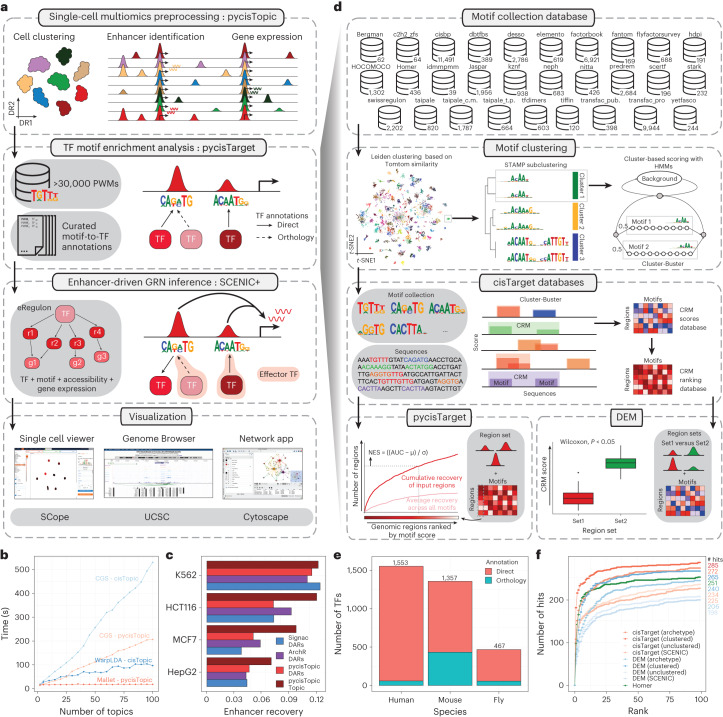
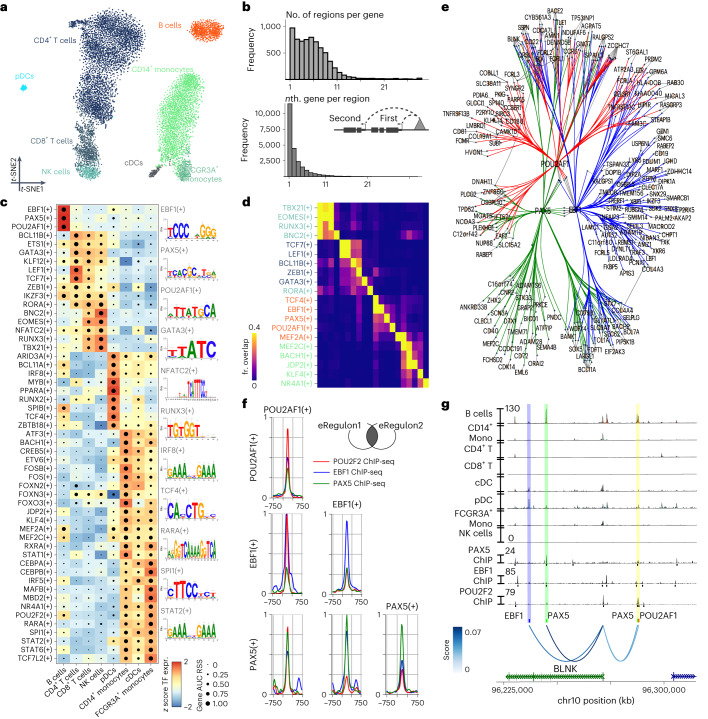
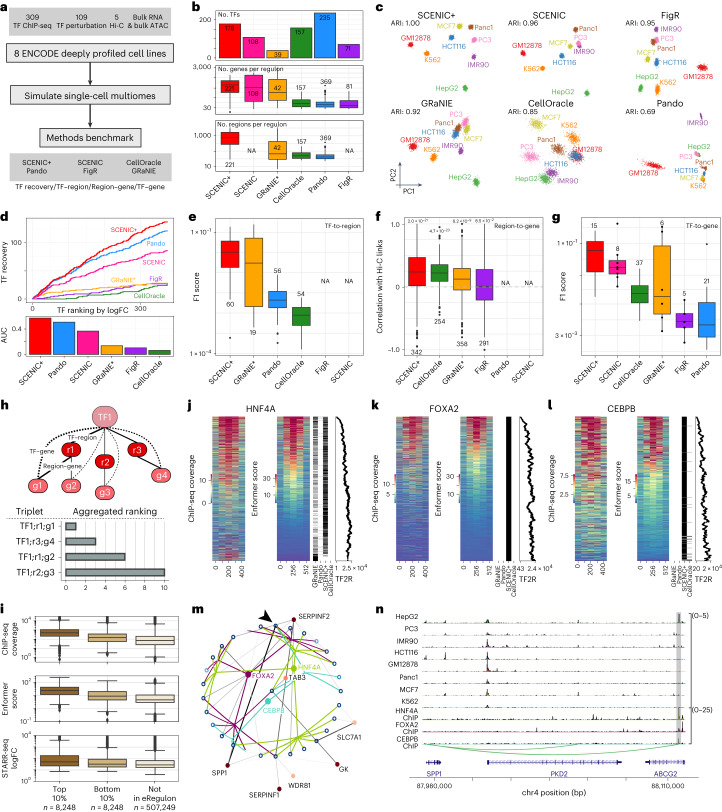
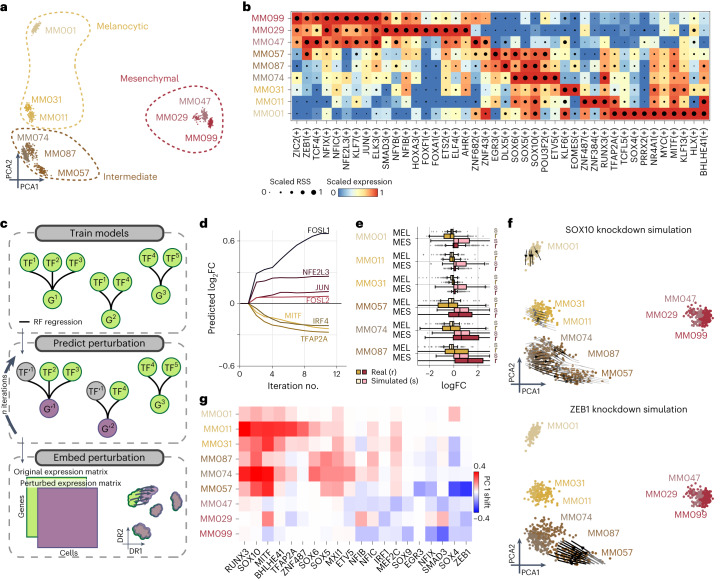
Verification
Claims the paper makes
The claims and statistics of this paper haven’t been checked yet.
Free: it reads the open-access text and checks the first 5 claims that cite a source we can check. Create a free account to check every claim.
Claims other papers make about this one
Each is checked against this paper’s own text: does it say what the citing paper says it does?
The source backs part of the claim, not all of it — or backs it for a different population, condition or comparison.
In the citing paper
“SCENIC+ demonstrated superior performance compared to its original version, as well as ppcor, GRNBOOST2, PIDC, GRaNIE, FigR, and Pando, as evidenced by the AUC and F1 score metrics [48].”
From A mini-review on perturbation modelling across single-cell omic modalities (2024) · cites this paper as [48]
Experimental — accuracy not yet measuredThe source backs part of the claim, not all of it — or backs it for a different population, condition or comparison.
In the citing paper
“pycisTarget (v.1.0.1.dev42+gb6707ee) was run using a custom database with the consensus regions on DARs, binarized topics (with Otsu thresholding), curated DARs and topics and MACS2 (v.2.2.7.1) bdgdiff regions, with and without promoters, and using pycisTarget and DEM7.”
From Single-cell spatial multi-omics and deep learning dissect enhancer-driven gene regulatory networks in liver zonation (2024) · cites this paper as [7]
Experimental — accuracy not yet measuredThe cited source says what the claim attributes to it.
In the citing paper
“Notably, SCENIC+ anticipates genomic enhancers and identifies potential upstream transcription factors (TFs) and establishes connections between these enhancers and their relevant target genes.”
From A mini-review on perturbation modelling across single-cell omic modalities (2024) · cites this paper as [48]
The cited source says what the claim attributes to it.
In the citing paper
“Cell-cell similarity graphs in single cell omics [ 47 ], gene regulatory networks [ 48 ] and protein-protein interaction networks [ 49 ] are fundamental tools to rationalize the complexity of biological systems such as the human body.”
From igraph 1.0 enables fast and robust network analysis across programming languages (2026) · cites this paper as [48]
The cited source says what the claim attributes to it.
In the citing paper
“SCENIC+ was run with the default parameters on the complete dataset and using only hepatocytes, using http://nov2020.archive.ensembl.org/ as Biomart host.”
From Single-cell spatial multi-omics and deep learning dissect enhancer-driven gene regulatory networks in liver zonation (2024) · cites this paper as [7]
1 more claim about this paper
Create a free account to see every claim other papers make about this one.
Self-check
Percentages, sums and reported differences re-computed from the paper’s own numbers.
The self-check needs the paper’s full text.
Citations
Cites
Moderated estimation of fold change and dispersion for RNA-seq data with DESeq2
Love, M. I., Huber, W., & Anders, S. (2014) · Genome Biology · doi:10.1186/s13059-014-0550-8 · Cited by 95,106
A Threshold Selection Method from Gray-Level Histograms
Otsu, N. (1979) · IEEE Transactions on Systems, Man, and Cybernetics · doi:10.1109/tsmc.1979.4310076 · Cited by 43,398 · cited 1×
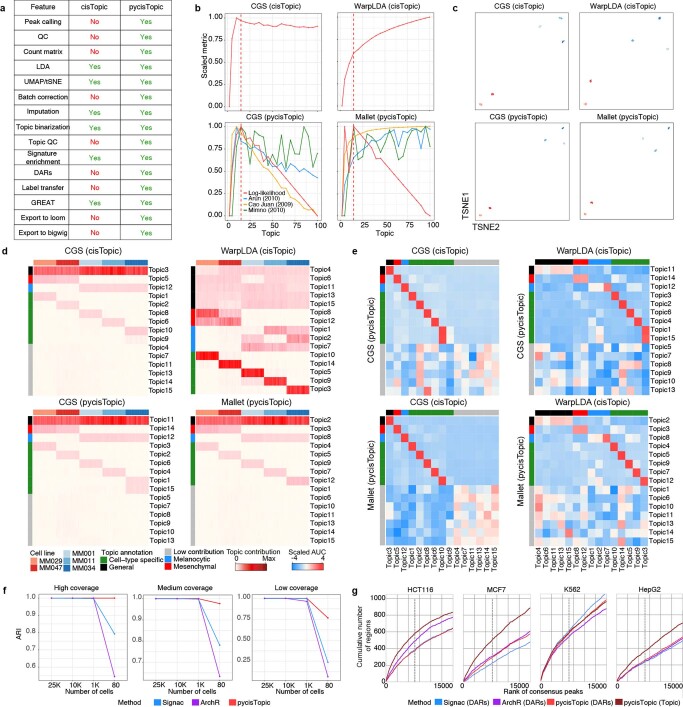
“We have included several binarization methods (applicable for topic-region and cell-topic distributions): ’otsu’ (Otsu, 1979)107, ’yen’ (Yen et al., 1995)108, ’li’ (Li & Lee, 1993)109, ’aucell’ (Van de Sande et al., 2020)20 or ’ntop’ (Taking the top n regions per topic).”
MethodModel-based Analysis of ChIP-Seq (MACS)
Zhang, Y., Liu, T., Meyer, C. A., Eeckhoute, J., Johnson, D. S., Bernstein, B. E., Nusbaum, C., Myers, R. M., Brown, M., Li, W., et al. (2008) · Genome Biology · doi:10.1186/gb-2008-9-9-r137 · Cited by 18,386
An integrated encyclopedia of DNA elements in the human genome
The ENCODE Project Consortium (2012) · Nature · doi:10.1038/nature11247 · Cited by 18,072
Comprehensive Integration of Single-Cell Data
Stuart, T., Butler, A., Hoffman, P., Hafemeister, C., Papalexi, E., Mauck, W. M., Hao, Y., Stoeckius, M., Smibert, P., & Satija, R. (2019) · Cell · doi:10.1016/j.cell.2019.05.031 · Cited by 15,453
Heinz, S., Benner, C., Spann, N., Bertolino, E., Lin, Y. C., Laslo, P., Cheng, J. X., Murre, C., Singh, H., & Glass, C. K. (2010) · Molecular Cell · doi:10.1016/j.molcel.2010.05.004 · Cited by 13,382
Fast, sensitive and accurate integration of single-cell data with Harmony
Korsunsky, I., Millard, N., Fan, J., Slowikowski, K., Zhang, F., Wei, K., Baglaenko, Y., Brenner, M., Loh, P.-R., & Raychaudhuri, S. (2019) · Nature Methods · doi:10.1038/s41592-019-0619-0 · Cited by 10,488
SCANPY: large-scale single-cell gene expression data analysis
Wolf, F. A., Angerer, P., & Theis, F. J. (2018) · Genome Biology · doi:10.1186/s13059-017-1382-0 · Cited by 8,881
Scenic: single-cell regulatory network inference and clustering.
Aibar, S., González-Blas, C. B., Moerman, T., Huynh-Thu, V. A., Imrichova, H., Hulselmans, G., Rambow, F., Marine, J.-C., Geurts, P., Aerts, J., et al. (2017) · Nature Methods · doi:10.1038/nmeth.4463 · Cited by 6,520
Self-citationGriffiths, T. L., & Steyvers, M. (2004) · Proceedings of the National Academy of Sciences · doi:10.1073/pnas.0307752101 · Cited by 6,049 · cited 1×
“- Log-likelihood: Uses the log-likelihood in the last iteration as calculated by Griffiths and Steyvers (2004)104, as used in cisTopic.”
Method
Research works printed but not linked: 1
- Mimno, D., Wallach, H. M., Talley, E., Leenders, M. & McCallum, A. Optimizing semantic coherence in topic models. In Proc. 2011 Conference on Empirical Methods in Natural Language Processing 262–272 (Association for Computational Linguistics, 2011).
Cited by
Items 501–600 of 779
Mereu, E., Balboa, D., Liebig, J., Gonzalez, A., Casals, A. M., Mardamshina, M., Mollandin, F., Schicktanz, F., Sudy, A., Tosti, L., et al. (2026) · Cell Metabolism · doi:10.1016/j.cmet.2026.07.023 · Cited by 8
贾朝阳, Pan, W., Zhao, X., Li, L., & Tan, W. (2026) · Cancer Informatics · doi:10.1177/11769351261478408 · Cited by 1
Trauernicht, M., Franceschini-Santos, V. H., Yücel, H., Filipovska, T., & van Steensel, B. (2026) · Molecular Systems Biology · doi:10.1038/s44320-026-00240-7 · Cited by 1
Padvitski, T., Avila, P. U., Chen, H., Özel, C., Braun, F., Kroll, M.-K., Vossen, C., Wienand, P., Butt, L., Unnersjö‐Jess, D., et al. (2026) · Cell Genomics · doi:10.1016/j.xgen.2026.101337 · Cited by 3
A comprehensive survey on graph neural networks for gene regulatory network inference
Alkhateeb, N. J., & Awad, M. (2026) · Briefings in Bioinformatics · doi:10.1093/bib/bbag443 · Cited by 1
“Several unsupervised learning methods are used to infer GRNs from multi-omics data. scMTNI [ 59] and SCENIC + [ 60] first identified TF binding sites by performing motif analysis in accessible chromatin (ATAC peak) regions to construct initial TF–gene or TF–cis-regulatory element relationships.”
Intranasal HSV‑1 infection drives region‑specific interferon‑dominant microglial remodeling
Frietze, S. E., Lunn, C., Oldham, D., Boyd, J. R., Bubak, A. N., Bustillos, A., Nagel, M. A., Restrepo, D., Bruce, K. D., & Niemeyer, C. S. (2026) · PLoS Pathogens · doi:10.1371/journal.ppat.1014684 · Cited by 2
The potential clinical impact of cell type‐specific genetic regulation: Crohn's disease
Tyebally, M., Xue, A., & Powell, J. E. (2023) · Clinical and Translational Medicine · doi:10.1002/ctm2.1474 · Cited by 1
Sim, H., Park, H. J., Park, G., Kim, Y. J., Park, W., Lee, S., & Choi, M. (2024) · eLife · doi:10.1101/2024.01.02.573827 · Cited by 3
Long, C., Ma, B., Li, K., & Liu, S. (2024) · Frontiers in Oncology · doi:10.3389/fonc.2024.1456986 · Cited by 2
Zhu, Y., Zhang, R., Zhang, S., & Hu, H.-J. (2024) · Discover Oncology · doi:10.1007/s12672-024-01372-8 · Cited by 1
CellWalker2: Multi-omic discovery using hierarchical cell type relationships
Hu, Z., Przytycki, P. F., & Pollard, K. S. (2025) · Cell Genomics · doi:10.1016/j.xgen.2025.100886 · Cited by 6
Zhou, Z., Li, J., Xin, H., Pan, X., & Shen, H. (2025) · NAR Genomics and Bioinformatics · doi:10.1093/nargab/lqaf144 · Cited by 6
Metaplastic Barrett's oesophagus represents reversion to a developmental-like epithelial cell state
Baker, S. M., Mullan, A. F., Jennings, R. E., Hanley, K. P., Ang, Y. S., Palles, C., Hanley, N. A., & Sharrocks, A. D. (2025) · Development · doi:10.1242/dev.204735 · Cited by 2
PETScan: score-based genome-wide association analysis of RNA-Seq and ATAC-Seq data
Hao, Y. B., Kafri, T., & Zou, F. (2026) · Bioinformatics · doi:10.1093/bioinformatics/btaf672 · Cited by 1
Liu, Y., Shen, R., Zhou, L., Xiao, Q., Yuan, J., & Li, Y. (2024) · bioRxiv (Cold Spring Harbor Laboratory) · doi:10.1101/2024.05.19.594895 · Cited by 1
A multiomic atlas of human early skeletal developmentPreprint
To, K., Fei, L., Pett, J. P., Roberts, K., Polański, K., Li, T., Yayon, N., He, P., Xu, C., Cranley, J. J., et al. (2024) · bioRxiv (Cold Spring Harbor Laboratory) · doi:10.1101/2024.07.10.602965 · Cited by 1
Sim, H., Park, H. J., Park, G., Kim, Y. J., Park, W., Lee, S., & Choi, M. (2024) · eLife · doi:10.7554/elife.96951.1 · Cited by 1
The Regulatory Logic of Planarian Stem Cell DifferentiationPreprint
Pérez-Posada, A., García-Castro, H., Emili, E., Vanni, V., Arias-Baldrich, C., Frölich, S., van Heeringen, S. J., Kenny, N. J., & Solana, J. (2024) · bioRxiv (Cold Spring Harbor Laboratory) · doi:10.1101/2024.08.23.608747 · Cited by 1
PICASO: Profiling Integrative Communities of Aggregated Single-cell Omics dataPreprint
Joppich, M., Kramann, R., & Hayat, S. (2024) · bioRxiv (Cold Spring Harbor Laboratory) · doi:10.1101/2024.08.28.610120 · Cited by 1
“Recently a lot of attention was paid to describing new tools which infer gene regulatory networks from single cell RNA-seq data [70,71].”
BackgroundIRAK2 deficiency causes a new immune dysregulation disorderPreprint
Fei, Y., Liu, L., Ma, S., Wang, S., Lu, M., Xue, J., Jin, Y., Wang, Y., Sun, X., Chen, X., et al. (2024) · medRxiv · doi:10.1101/2024.10.21.24315796 · Cited by 1
Peng, R., Gao, Y., Chen, Y., & Wang, J. (2025) · bioRxiv (Cold Spring Harbor Laboratory) · doi:10.1101/2025.02.05.636766 · Cited by 1
Shevade, K., Yang, Y. A., Feng, K., Mader, K., Sevi̇m, V., Parsons, J., Arora, G., Elfawy, H. A., Mace, R., Federman, S., et al. (2025) · bioRxiv (Cold Spring Harbor Laboratory) · doi:10.1101/2025.02.11.637716 · Cited by 1
Single-Cell Resolution of Cellular Damage Illuminates Disease ProgressionPreprint
Padvitski, T., Avila, P. U., Chen, H., Özel, C., Braun, F., Kroll, M.-K., Vossen, C., Wienand, P., Butt, L., Unnersjö‐Jess, D., et al. (2025) · bioRxiv (Cold Spring Harbor Laboratory) · doi:10.1101/2025.02.20.639269 · Cited by 1
Hamrud, E., Leese, J., Thiery, A. P., Buzzi, A. L., Vigilante, A., Briscoe, J., & Streit, A. (2025) · bioRxiv (Cold Spring Harbor Laboratory) · doi:10.1101/2025.05.03.652017 · Cited by 1
Single-Cell Atlas of AML Reveals Age-Related Gene Regulatory Networks in t(8;21) AMLPreprint
Whittle, J., Meyer, S., Lacaud, G., Baker, S. M., & Iqbal, M. (2025) · eLife · doi:10.7554/elife.104978.1 · Cited by 2
EYKTHYR reveals transcriptional regulators of spatial gene programsPreprint
Krieger, S., Haber, E., & Ma, J. (2025) · bioRxiv (Cold Spring Harbor Laboratory) · doi:10.1101/2025.05.19.654884 · Cited by 2
An atlas of TF driven gene programs across human cellsPreprint
Pett, J. P., Prete, M., Pham, D., England, N., Yuan, H., Prigmore, E., Tuck, E. J., Oszlánczi, Á., To, K., Xu, C., et al. (2025) · bioRxiv (Cold Spring Harbor Laboratory) · doi:10.1101/2025.05.30.657075 · Cited by 2
“Scenic+ pipeline allows to include individual enhancer-containing regions in the gene regulatory network 16 .”
Global cis-regulatory landscape of double-stranded DNA virusesPreprint
Taslim, T. H., Finkelberg, J. A., Kales, S., Soto-Ugaldi, L. F., D’Elia, B., Engin, B., Muñoz-Esquivel, G. D., Morara, E., Purinton, J., Chandok, H., et al. (2025) · bioRxiv (Cold Spring Harbor Laboratory) · doi:10.1101/2025.07.20.665756 · Cited by 1
Molecular Mechanisms of Cardiomyocyte AgingPreprint
Yücel, D., Trembley, M. A., Ke, Q., Wu, Z., Kang, P. M., & Pu, W. T. (2025) · bioRxiv (Cold Spring Harbor Laboratory) · doi:10.1101/2025.07.29.666777 · Cited by 1
“Our phenotypic characterization of young and aged hearts confirmed previous findings of age-associated cardiac hypertrophy, fibrosis, and diastolic dysfunction 53,74 .”
Serger, C., Rebuffet, L., Sandholzer, M. T., Fusi, I., Oelgarth, N., Tundo, S., Luu, T. T., Hojski, A., Lardinois, D., Trefny, M. P., et al. (2025) · SSRN Electronic Journal · doi:10.2139/ssrn.5356127 · Cited by 1
Palii, C. G., Tur, S., Yan, S., Longabaugh, W. J. R., Solano, R., Dilworth, F. J., Ranish, J. A., & Brand, M. (2025) · bioRxiv (Cold Spring Harbor Laboratory) · doi:10.1101/2025.09.11.675740 · Cited by 1
Trimbour, R., Sáez-Rodríguez, J., & Cantini, L. (2025) · bioRxiv (Cold Spring Harbor Laboratory) · doi:10.1101/2025.09.23.678054 · Cited by 1
Chen, Y.-H., Bi, T., Xu, M. Q., Lee, J., Lu, W. S., Zhuang, M., Velarde, A. M., McCurry, D., Yang, H., Alatrash, G., et al. (2025) · bioRxiv (Cold Spring Harbor Laboratory) · doi:10.1101/2025.10.17.682671 · Cited by 1
“Leveraging joint scRNA-seq and scATAC-seq profiles, we de novo reconstructed 333 enhancer-driven regulons (eRegulons) for 116 TFs with SCENIC+ ( 53 ).”
Single-Cell Atlas of AML Reveals Age-Related Gene Regulatory Networks in t(8;21) AMLPreprint
Whittle, J., Meyer, S., Lacaud, G., Baker, S. M., & Iqbal, M. (2025) · eLife · doi:10.7554/elife.104978.2 · Cited by 1
Variable Schwann cell merlin inactivation is targetable with TEAD1 inhibition in schwannomasPreprint
Laws, M. T., Bhatt, D., Mandal, D., Ramavenkat, N., Asuzu, D. T., Stoica, S., Rampalli, I., Mullaney, D., Laraba, L., Odom, H., et al. (2025) · bioRxiv (Cold Spring Harbor Laboratory) · doi:10.1101/2025.11.15.688608 · Cited by 1
Chen, H., Lu, Y., Zhao, Y., Dai, Z., Wang, F. L., Li, Q., Rao, Y., & Li, Y. (2025) · bioRxiv (Cold Spring Harbor Laboratory) · doi:10.1101/2025.11.27.691023 · Cited by 2
Circuit-aligned specialization of human basal ganglia astrocytes
Fu, Y., Kempynck, N., Ding, W., Turner, M. A., Garcia, A. D., Schmitz, M. T., Close, J., Kapen, I., Hewitt, M., Seeman, S. C., et al. (2026) · Cell · doi:10.64898/2025.12.19.695583 · Cited by 9
“60 For 3D genome analyses, single-cell Hi-C contact matrices generated by snm3C-seq were aggregated into cell type-resolved pseudobulk contact maps using scHiCluster 61 (https://github.com/zhoujt1994/scHiCluster), based on the methylation-derived cell-type labels.”
Self-citationSingle-cell multimodal atlas reveals regulatory programs in the human brain
Xie, Y., Chang, L., Zhong, G., Rink, J. A., Baez-Becerra, T., Armand, E. J., Ding, W., Li, K., Bonne, É., Indralingam, H. S., et al. (2026) · Cell · doi:10.64898/2026.02.02.703166 · Cited by 7
A multi-omics atlas of human hindbrain developmentPreprint
Joshi, P. K., Sepp, M., Sarropoulos, I., Trost, N., Okonechnikov, K., Yamada, T., Schneider, C., Schmidt, J., Perera, A. A., Wittmann, A., et al. (2026) · bioRxiv (Cold Spring Harbor Laboratory) · doi:10.64898/2026.02.08.704646 · Cited by 1
“Through deep learning 45 and integrative multi-omic 47 analysis, we resolve a multi-layered regulatory code in which CRE accessibility, TF-motif enrichment and TF expression jointly define hindbrain lineages through combinations of shared and unique features.”
Multimodal single-cell epigenomic and 3D genome atlas of the human basal ganglia
Ding, W., Klein, A., Báez-Becerra, C. T., Rink, J. A., Bartlett, A., Wang, R., Zeng, Q., Castanon, R., Nery, J. R., Osgood, E., et al. (2026) · Cell · doi:10.64898/2026.02.12.705594 · Cited by 13
Cell-type specific impact of opioid use disorder and HIV on the human forebrain and cerebellumPreprint
Green, A. A., Vashist, T. D., Jakhmola, S., Chen, X., Baidwan, G., Buchanan, J., Tiwari, S. K., Griffin, E. N., Howell, A., Lee, Y., et al. (2026) · bioRxiv (Cold Spring Harbor Laboratory) · doi:10.64898/2026.03.01.708876 · Cited by 1
He, L. S., Bhatia, P., Bhuiyan, S. A., Semizoglou, E., Wang, J., Li, J., Nam, J., Luo, J. X. J., Arnhold, C., Zhu, D., et al. (2026) · bioRxiv (Cold Spring Harbor Laboratory) · doi:10.64898/2026.03.05.709931 · Cited by 2
Zaidi, S., Büttner, M., Feng, W., Baxter, C., Kates, D. H., Prudente, T. P., Zakharova, D., Mehta, S., Nandakumar, S., Wong, C. K., et al. (2026) · bioRxiv (Cold Spring Harbor Laboratory) · doi:10.64898/2026.05.07.723570 · Cited by 1
Multi-modal comparison of primary and stem cell-derived β-cells nominates targets for maturationPreprint
Maghera, J., Ellis, C. E., Spigelman, A. F., Smith, N. P., Sasaki, S., Lynn, F. C., & MacDonald, P. E. (2026) · bioRxiv (Cold Spring Harbor Laboratory) · doi:10.64898/2026.06.04.730032 · Cited by 2
Gargareta, V., Mougios, N., Hahn, E. T., Siems, S. B., Crisp, S. J., Varga, B. V., Káradóttir, R. T., Buescher, J. M., Jung, R. B., Ramesh, V., et al. (2026) · bioRxiv (Cold Spring Harbor Laboratory) · doi:10.64898/2026.06.09.730898 · Cited by 1
Metastatic Osteosarcoma is Characterized by Loss of Osteoblastic Lineage FidelityPreprint
Tanaka, Y., Morrow, J. J., Casaní-Galdón, S., Pimenta, E. M., Li, J., Butaney, B., Farran, C. A. E., Karam, J., D’Antonio, J. P., Bi, K., et al. (2026) · bioRxiv (Cold Spring Harbor Laboratory) · doi:10.64898/2026.06.10.731352 · Cited by 1
“…the default motif (2022 SCENIC+ human motif collection) and search space input (10 kilobases around the transcription start site (TSS), and 500 base pairs upstream / 100 base pairs downstream of the TSS) files provided with the pySCENIC package, and a list of known transcription factors(76; 77).”
scTraitReg: a single-cell multi-omic database of trait-relevant transcription factor eRegulons
Chen, H., Liu, Y., Rui, X., Li, S., Sun, L., Xiao, G., Tang, H., Sun, Y., Guan, X., & Cao, C. (2026) · Nucleic Acids Research · doi:10.1093/nar/gkag1017
Bouwers, E. G. (2011) · PUB – Publications at Bielefeld University (Bielefeld University)
Las grandes reformas al derecho de familia en el proyecto de Código Civil y Comercial argentino 2012
Medina, G. (2013) · Anuario Uruguayo Crítico de Derecho de Familia y Sucesiones · Cited by 1
Gene regulation modules in non-alcoholic fatty liver disease revealed by single-nucleus ATAC-seqPreprint
Takeuchi, F., Liang, Y.-Q., Shimizu-Furusawa, H., Isono, M., Ang, M. Y., Mori, K., Mori, T., Kakazu, E., Yoshio, S., & Kato, N. (2022) · bioRxiv (Cold Spring Harbor Laboratory) · doi:10.1101/2022.07.12.499681
An oracle predicts regulators of cell identity
Farrell, J. A. (2023) · Nature · doi:10.1038/d41586-023-00251-6
Reconstructing the regulatory programs underlying the phenotypic plasticity of neural cancersPreprint
Larsson, I., Held, F., Popova, G., Koc, A., Jörnsten, R. J., & Nelander, S. (2023) · bioRxiv (Cold Spring Harbor Laboratory) · doi:10.1101/2023.03.10.532041 · Cited by 1
Brain-wide Correspondence Between Neuronal Epigenomics and Long-Distance ProjectionsPreprint
Zhou, J., Zhang, Z., Wu, M., Liu, H., Pang, Y., Bartlett, A., Rivkin, A. C., Lagos, W. N., Williams, E., Lee, C.-T., et al. (2023) · bioRxiv (Cold Spring Harbor Laboratory) · doi:10.1101/2023.05.01.538832
Lin, L., Cai, Q., & Chen, J. (2023) · 中国科学通报:英文版 · doi:10.1016/j.scib.2023.04.032
Planell, N., Martinez‐de‐Morentin, X., Mouzo, D., Lara‐Astiaso, D., Vilas‐Zornoza, A., Martín‐Úriz, P. S., Alignani, D., Paiva, B., Maillo, A., Kurowska, A. K., et al. (2023) · bioRxiv (Cold Spring Harbor Laboratory) · doi:10.1101/2023.07.01.547234
Chromatin priming elements direct tissue-specific gene activity prior to hematopoietic specificationPreprint
Maytum, A., Edginton‐White, B., Keane, P., Cockerill, P. N., Cazier, J., & Bonifer, C. (2023) · bioRxiv (Cold Spring Harbor Laboratory) · doi:10.1101/2023.08.30.555485
Multimodal single-cell profiling of T cell specificity and reactivity in lung cancerPreprint
Bieberich, F., Vazquez-Lombardi, R., Jin, H., Hong, K., Herzig, P., Trefny, M. P., Trüb, M., Laubli, H. P., Lardinois, D., Mertz, K. D., et al. (2023) · bioRxiv (Cold Spring Harbor Laboratory) · doi:10.1101/2023.10.04.560863
Enhancer target prediction: state-of-the-art approaches and future prospects
Umarov, R. K., & Hon, C.-C. (2023) · Biochemical Society Transactions · doi:10.1042/bst20230917
Gene Regulatory Networks: Improving Inferences with Transfer Learning
Moura, M. T. (2023) · Cellular Reprogramming · doi:10.1089/cell.2023.0095
Zhang, Z. S., Wang, R., Hu, H., Zhou, T., Zhou, W., Jiang, X., Yan, S., Shi, T., Qin, W., Li, X., et al. (2024) · Research Square · doi:10.21203/rs.3.rs-3706251/v1 · Cited by 1
NFIB influences progenitor competence in maturation of GABAergic neurons in micePreprint
Bright, A. R., Kotlyarenko, Y., Neuhaus, F., Rodrigues, D., Feng, C., Peters, C., Vitali, I., Dönmez, E., Myoga, M. H., Dvoretskova, E., et al. (2024) · bioRxiv (Cold Spring Harbor Laboratory) · doi:10.1101/2024.03.18.585524
The liver sinusoid at single-cell level
Parhar, R., & Ramachandran, P. (2024) · Elsevier eBooks · doi:10.1016/b978-0-323-95262-0.00006-1
Retinal Lineages: One Cell at a Time
Craigen, E., Enright, J., & Clark, B. S. (2024) · Elsevier eBooks · doi:10.1016/b978-0-443-13820-1.00060-8
Krstevski, C., Farrugia, G. E., Hsu, I., Dona, M. S. I., Gaynor, T. L., Cohen, C. D., Harper, R. L., Harrison, T. I., Claridge, B., Drack, A., et al. (2024) · bioRxiv (Cold Spring Harbor Laboratory) · doi:10.1101/2024.05.09.593315
Jiang, D., Ma, Y., Su, J., Li, J., Zheng, G., Deng, Y. J., Gou, X., Gao, S., Cheng, C., Deng, C., et al. (2024) · Research Square · doi:10.21203/rs.3.rs-4514542/v1
Hannan, A., Wang, Q., Wu, Y., Makrides, N., Qu, X., Mao, J., Que, J., Cardoso, W. V., & Zhang, X. (2024) · bioRxiv (Cold Spring Harbor Laboratory) · doi:10.1101/2024.06.27.601065
Sim, H., Park, H. J., Park, G.-H., et al. (2024) · eLife · doi:10.7554/elife.96951.1.sa1
Sim, H., Park, H. J., Park, G.-H., et al. (2024) · eLife · doi:10.7554/elife.96951.1.sa0
Baker, S. M., Mullan, A. F., Jennings, R. E., Hanley, K. P., Ang, Y. S., Palles, C., Hanley, N. A., & Sharrocks, A. D. (2024) · bioRxiv (Cold Spring Harbor Laboratory) · doi:10.1101/2024.07.25.605105
Cell-type-specific mapping of enhancers and target genes from single-cell multimodal dataPreprint
Su, C., Lee, D., Jin, P. K., & Zhang, J. (2024) · bioRxiv (Cold Spring Harbor Laboratory) · doi:10.1101/2024.09.24.614814
“While scMultiMap is designed to quantify pairwise associations between peaks and genes, it can also serve a tool for constructing gene regulatory networks [56, 57, 58].”
MethodSim, H., Park, H. J., Park, G., Kim, Y. J., Park, W., Lee, S., & Choi, M. (2024) · eLife · doi:10.7554/elife.96951.2
Theme 4 In Vivo Experimental Models
(2024) · Amyotrophic Lateral Sclerosis and Frontotemporal Degeneration · doi:10.1080/21678421.2024.2403301
Transfer learning and DNA language models enhance transcription factor binding predictionsPreprint
Aksu, E. D., & Vingron, M. (2024) · bioRxiv (Cold Spring Harbor Laboratory) · doi:10.1101/2024.11.08.622635
Liu, T., Zhao, J., & Zhao, H. (2024) · bioRxiv (Cold Spring Harbor Laboratory) · doi:10.1101/2024.11.19.624293
Chabrier, L., Crombach, A., Peignier, S., & Rigotti, C. (2024) · IEEE ... International Conference on Data Mining workshops · doi:10.1109/icdmw65004.2024.00117
Nomura, S., Kojima, Y., Minoura, K., Hayashi, S., Abe, K., Hirose, H., & Shimamura, T. (2026) · Bioinformatics · doi:10.1093/bioinformatics/btag652
Jung, H. S., Sedzro, D. M., Liu, P., & Slukvin, I. I. (2025) · Blood Vessels Thrombosis & Hemostasis · doi:10.1016/j.bvth.2025.100046
“Computational analysis of the multiomics data set using SCENIC+ 21 revealed 32 high-quality regulons (Figure 1E).”
Liu, F., Weng, W., & Hu, Z. (2025) · Research Square · doi:10.21203/rs.3.rs-6054213/v1
Ernst, I. V. S., Lehtonen, L., Nilsson, S. M., Nielsen, F. L., Marcher, A.-B., Mandrup, S., & Madsen, J. G. S. (2025) · bioRxiv (Cold Spring Harbor Laboratory) · doi:10.1101/2025.04.01.646568
Yu, Z., Yang, D., Chen, Q., Zhang, Y., Li, Z., Wang, Y., Wang, C., & Zhang, Y. (2025) · bioRxiv (Cold Spring Harbor Laboratory) · doi:10.1101/2025.03.29.646077
Functional enhancers: concept, screening, and validation
Lin, H., Chen, F., & Huang, J. (2025) · Scientia Sinica Vitae · doi:10.1360/ssv-2025-0113
Qiu, R., Trang, B. K., Shalaby, C., Pippin, J. A., Garifallou, J. P., Grant, S. F. A., & Thom, C. S. (2025) · bioRxiv (Cold Spring Harbor Laboratory) · doi:10.1101/2025.05.23.655825
White and Brown Adipose Tissue Share a Common Fibro-Adipogenic Progenitor PopulationPreprint
Bui, H., Hansen, J. K., Sardo, V. L., & Galmozzi, A. (2025) · bioRxiv (Cold Spring Harbor Laboratory) · doi:10.1101/2025.05.28.656577
Dufour, A., Rossignol, M., Manceau, P., Bailly, Y., Ferchaud, S., Mercat, M., Turhan, A., Djebali, S., Foissac, S., Artus, J., et al. (2025) · bioRxiv · doi:10.1101/2025.06.15.657618 · Cited by 1
“For each cell population, we then inferred GRNs based on enhancer-driven gene regulation modules (eRegulons) 10 and validated them through motif occupancy visualisation.”
Modern Techniques for DNA and RNA Assessment
Ozel, M., Alvikas, J., & Neal, M. D. (2025) · Success in academic surgery · doi:10.1007/978-3-031-83034-1_8
Stimulation modulates cell assemblies linked with gene networks in the human temporal cortex ex vivoPreprint
Moore, H., Dehnad, M., Freelin, A. H., Granger, B., Subramanian, S., Kulkarni, A., Berto, S., Lega, B. C., & Konopka, G. (2025) · bioRxiv (Cold Spring Harbor Laboratory) · doi:10.1101/2025.06.25.661589
Lee, J. K. C., Barugahare, A. A., Gemund, I., Li, J., O’Hara, J., Chopin, M., Thiele, D., Azme, M., Bruer, T., Gruta, N. L. L., et al. (2025) · bioRxiv (Cold Spring Harbor Laboratory) · doi:10.1101/2025.07.27.667094 · Cited by 1
“We utilised the SCENIC+ computational tool 39 to identify transcription factor driven gene regulatory networks (GRNs) enriched in naïve, effector and memory CD8 + T cell states ( Fig.”
Zhang, F., Huang, K., Liu, Z., Liu, X., Zhao, Q., Li, X., Wei, W., & Li, X. (2025) · medRxiv · doi:10.1101/2025.07.28.25332052
“To identify cross-region and cross-species gene regulatory networks, we applied SCENIC+ (ref 39 )—an integrative single-cell multi-omic framework that infers enhancer-linked regulons (eRegulons, eRg) using combined chromatin accessibility (scATAC-seq) and expression data (scRNA-seq).”
Lukovic, D., Gyöngyösi, M., White, B., Han, E., Hašimbegović, E., Zlabinger, K., Gynter, A., Mančíková, V., Pavo, I. J., Michelitsch, M., et al. (2025) · medRxiv · doi:10.1101/2025.08.01.25332780
Dang, Q., Smart, N., Redpath, A. N., & Vieira, J. M. (2026) · Advanced Science · doi:10.1002/advs.202517640 · Cited by 1
“To understand the regulatory code underpinning mesothelial identity and function, we inferred GRNs using the SCENIC + protocol, which predicts TF-enhancer-gene (triplet) relationships as regulons [ 23 ].”
Deep information fusion based on a transformer graph encoder for single-cell multi-omics clustering
Ren, Q., Liu, S., Shang, J., & Liu, X. (2025) · Journal of King Saud University - Computer and Information Sciences · doi:10.1007/s44443-025-00193-1
“To characterize the intrinsic relationships within multi-omics data, the cell-cell interaction networks were constructed for each omic layer (Zhang et al. 2021; Bravo González-Blas et al. 2023).”
Three-State Gene Expression Model Parameterized for Single-Cell Multi-omics Data
Peyric, T., Lepoutre, T., Crombach, A., & Guyet, T. (2025) · Lecture notes in computer science · doi:10.1007/978-3-032-01436-8_2
Zinati, Y., & Emad, A. (2025) · bioRxiv (Cold Spring Harbor Laboratory) · doi:10.1101/2025.08.14.670294
Boosting data interpretation with GIBOOST to enhance visualization of complex high-dimensional data
Atitey, K., Li, J., Papas, B. N., Egbon, O. A., Li, J., Kana, M. A., Aimola, I. A., & Anchang, B. (2025) · Briefings in Bioinformatics · doi:10.1093/bib/bbaf415
CD39 defines a cytotoxic tumor-associated NK cell state responsive to NKG2A blockade in lung cancerPreprint
Serger, C., Rebuffet, L., Sandholzer, M., Rackwitz, W., Fusi, I., Herzig, P., Brüggemann, A., Pawlow, C., Chichelnitskiy, E., Hajnal, D., et al. (2026) · bioRxiv · doi:10.1101/2025.08.26.672316
“To define the GRNs driving this progression, we performed pseudotime-based regulon analysis along the NK3_GZMK to NK3_ENTPD1 axis.”
InfluentialscPOEM: robust co-embedding of peaks and genes revealing peak–gene regulation
Zhong, Y., Hou, Y., Yang, Y., Zheng, X., & Cai, J. J. (2025) · Bioinformatics · doi:10.1093/bioinformatics/btaf483
Yao, Y., Zhang, J., & Ji, H. (2025) · Research Square · doi:10.21203/rs.3.rs-7201592/v1
JointMap identified SERPINA3 + chondrocytes as a therapeutic target for osteoarthritisPreprint
Wu, H., Yan, W., Sun, M. J., Fan, Y., Jia, S., Wang, J., Xu, B., Lu, B., Du, Y., Chen, L., et al. (2025) · bioRxiv (Cold Spring Harbor Laboratory) · doi:10.1101/2025.09.09.675251
Chen, X., Hwang, H. S., Li, B., Zhao, Y., Ghosh, K., Deng, L., Creasey, E. A., Ashenberg, O., Graham, D. B., & Xavier, R. J. (2025) · Proceedings of the National Academy of Sciences · doi:10.1073/pnas.2508269122 · Cited by 1
“We next utilized Single - Cell rEgulatory Network Inference and Clustering (SCENIC+) as a method to infer enhancer - driven regulons (eRegulons) consisting of a TF and its candidate genomic enhancers linked to downstream target genes ( 30 ).”
Metadata
- Authors
- Bravo González-Blas, C., De Winter, S., Hulselmans, G., Hecker, N., Matetovici, I., Christiaens, V., Poovathingal, S., Wouters, J., Aibar, S., & Aerts, S.
- Affiliations
- VIB-KU Leuven Center for Brain & Disease Research (BE)
- Vlaams Instituut voor Biotechnologie (BE)
- Corresponding author
- Aerts, Stein
- ORCID
- Venue
- Nature Methods
- Published
- 2023-07-13
- Volume
- 20
- Issue
- 9
- Pages
- 1355-1367
- ISSN
- 1548-7091 (ISSN-L)
- 1548-7105
- PMC
- PMC10482700
- OpenAlex
- W4384198561
- Cited by
- 778
- References
- 169
- Citations by year
- 2026: 279 · 2025: 280 · 2024: 153 · 2023: 59
- FWCI
- 68.58
- Type
- journal article
- Language
- en
- Open access
- hybrid
- doi.org
- Licence
- cc-by
- creativecommons.org/licenses/by/4.0 (tdm)
- creativecommons.org/licenses/by/4.0 (vor)
- Locations
- Nature Methods (publishedVersion, cc-by)
- bioRxiv (Cold Spring Harbor Laboratory) (acceptedVersion)
- PubMed Central (publishedVersion, cc-by)
- PubMed (publishedVersion)
- Lirias (submittedVersion, cc-by)
- Funders
- Fonds Wetenschappelijk Onderzoek (G094121N, 11F1519N)
- KU Leuven
- Fondation contre le Cancer
- Bijzonder Onderzoeksfonds UGent
- Topics
- Life Sciences › Biochemistry, Genetics and Molecular Biology › Molecular Biology › Genomics and Chromatin Dynamics
- Life Sciences › Biochemistry, Genetics and Molecular Biology › Molecular Biology › Single-cell and spatial transcriptomics
- Life Sciences › Biochemistry, Genetics and Molecular Biology › Molecular Biology › Gene Regulatory Network Analysis
- Keywords
- SCENIC, gene regulatory networks, chromatin accessibility, single-cell multi-omics, transcription factor identification, transcription factor binding motifs, cross-species conservation, differentiation trajectories, transcription factor perturbation
- MeSH terms
- Multiomics, Animals, Chromatin, Drosophila, Enhancer Elements, Genetic, Gene Expression Regulation, Humans, Leukocytes, Mononuclear, Mice, Gene Regulatory Networks
About these checks
Registry, retraction, Cites and statistics results are computed, not judged, with one exception: a printed reference that no index lists is read once by a model before it counts as a citation error. Claims are extracted by a model and kept only when their quote appears verbatim in the text; each cited source is then checked, with a model’s help, for whether it says what the claim relies on. Those verdicts can be wrong — read the claim’s quote and the cited source before relying on one.
Statistics and arithmetic are recomputed, not judged.
Confidence bands are shown only for fields calibrated on our annotated test set. None is calibrated yet, so no band is shown.
What counts as a claim ›How we measure confidence ›How we check this ›
Are you an author, or do you see a problem with this page? Request a review
Data sources
Bibliographic data: Semantic Scholar, OpenAlex, Crossref.
Contains information from the Semantic Scholar Academic Graph Datasets, made available under the ODC Attribution License (ODC-BY 1.0).
Semantic Scholar’s data is described in: Kinney, R., et al. (2023). The Semantic Scholar Open Data Platform. arXiv:2301.10140.
