

SCENIC+: single-cell multiomic inference of enhancers and gene regulatory networks
Open accessPublished version of a preprint
The DOI matches its Crossref record; 175 of the 175 references it cites were found in a registry or an index.
Abstract
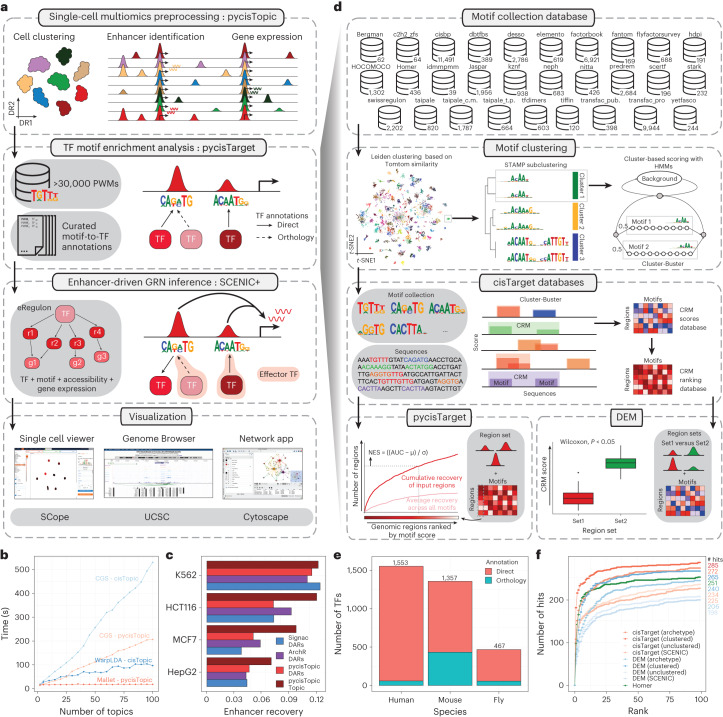
Joint profiling of chromatin accessibility and gene expression in individual cells provides an opportunity to decipher enhancer-driven gene regulatory networks (GRNs). Here we present a method for the inference of enhancer-driven GRNs, called SCENIC+. SCENIC+ predicts genomic enhancers along with candidate upstream transcription factors (TFs) and links these enhancers to candidate target genes. To improve both recall and precision of TF identification, we curated and clustered a motif collection with more than 30,000 motifs. We benchmarked SCENIC+ on diverse datasets from different species, including human peripheral blood mononuclear cells, ENCODE cell lines, melanoma cell states and Drosophila retinal development. Next, we exploit SCENIC+ predictions to study conserved TFs, enhancers and GRNs between human and mouse cell types in the cerebral cortex. Finally, we use SCENIC+ to study the dynamics of gene regulation along differentiation trajectories and the effect of TF perturbations on cell state. SCENIC+ is available at scenicplus.readthedocs.io .
Overview
The claims and statistics of this paper haven’t been checked yet.
Free: it reads the open-access text and checks the first 5 claims that cite a source we can check. Create a free account to check every claim.
Integrity signals
Registry
Cites
Statistics
Figures
Verification
Claims the paper makes
The claims and statistics of this paper haven’t been checked yet.
Free: it reads the open-access text and checks the first 5 claims that cite a source we can check. Create a free account to check every claim.
Claims other papers make about this one
Each is checked against this paper’s own text: does it say what the citing paper says it does?
The source backs part of the claim, not all of it — or backs it for a different population, condition or comparison.
In the citing paper
“SCENIC+ demonstrated superior performance compared to its original version, as well as ppcor, GRNBOOST2, PIDC, GRaNIE, FigR, and Pando, as evidenced by the AUC and F1 score metrics [48].”
From A mini-review on perturbation modelling across single-cell omic modalities (2024) · cites this paper as [48]
Experimental — accuracy not yet measuredThe source backs part of the claim, not all of it — or backs it for a different population, condition or comparison.
In the citing paper
“pycisTarget (v.1.0.1.dev42+gb6707ee) was run using a custom database with the consensus regions on DARs, binarized topics (with Otsu thresholding), curated DARs and topics and MACS2 (v.2.2.7.1) bdgdiff regions, with and without promoters, and using pycisTarget and DEM7.”
From Single-cell spatial multi-omics and deep learning dissect enhancer-driven gene regulatory networks in liver zonation (2024) · cites this paper as [7]
Experimental — accuracy not yet measuredThe cited source says what the claim attributes to it.
In the citing paper
“Notably, SCENIC+ anticipates genomic enhancers and identifies potential upstream transcription factors (TFs) and establishes connections between these enhancers and their relevant target genes.”
From A mini-review on perturbation modelling across single-cell omic modalities (2024) · cites this paper as [48]
The cited source says what the claim attributes to it.
In the citing paper
“Cell-cell similarity graphs in single cell omics [ 47 ], gene regulatory networks [ 48 ] and protein-protein interaction networks [ 49 ] are fundamental tools to rationalize the complexity of biological systems such as the human body.”
From igraph 1.0 enables fast and robust network analysis across programming languages (2026) · cites this paper as [48]
The cited source says what the claim attributes to it.
In the citing paper
“SCENIC+ was run with the default parameters on the complete dataset and using only hepatocytes, using http://nov2020.archive.ensembl.org/ as Biomart host.”
From Single-cell spatial multi-omics and deep learning dissect enhancer-driven gene regulatory networks in liver zonation (2024) · cites this paper as [7]
1 more claim about this paper
Create a free account to see every claim other papers make about this one.
Self-check
Percentages, sums and reported differences re-computed from the paper’s own numbers.
The self-check needs the paper’s full text.
Citations
Cites
Moderated estimation of fold change and dispersion for RNA-seq data with DESeq2
Love, M. I., Huber, W., & Anders, S. (2014) · Genome Biology · doi:10.1186/s13059-014-0550-8 · Cited by 95,106
A Threshold Selection Method from Gray-Level Histograms
Otsu, N. (1979) · IEEE Transactions on Systems, Man, and Cybernetics · doi:10.1109/tsmc.1979.4310076 · Cited by 43,398 · cited 1×
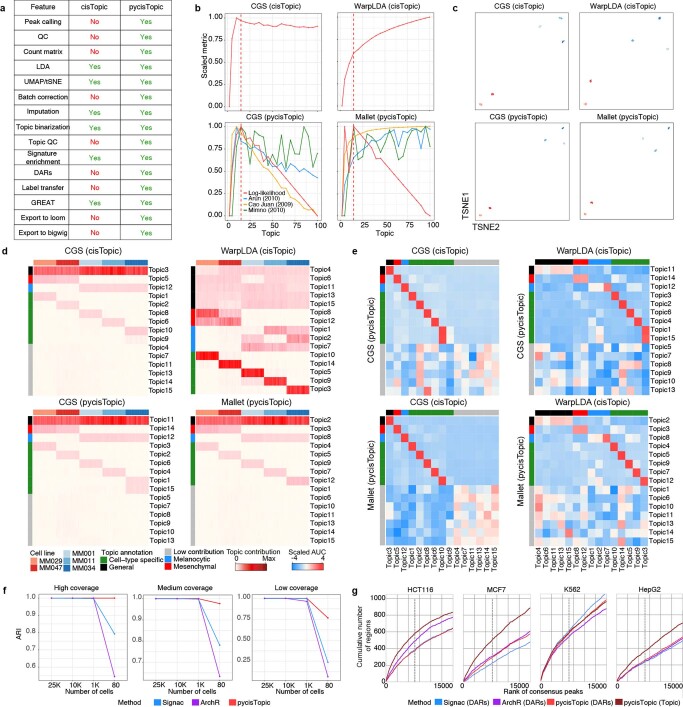
“We have included several binarization methods (applicable for topic-region and cell-topic distributions): ’otsu’ (Otsu, 1979)107, ’yen’ (Yen et al., 1995)108, ’li’ (Li & Lee, 1993)109, ’aucell’ (Van de Sande et al., 2020)20 or ’ntop’ (Taking the top n regions per topic).”
MethodModel-based Analysis of ChIP-Seq (MACS)
Zhang, Y., Liu, T., Meyer, C. A., Eeckhoute, J., Johnson, D. S., Bernstein, B. E., Nusbaum, C., Myers, R. M., Brown, M., Li, W., et al. (2008) · Genome Biology · doi:10.1186/gb-2008-9-9-r137 · Cited by 18,386
An integrated encyclopedia of DNA elements in the human genome
The ENCODE Project Consortium (2012) · Nature · doi:10.1038/nature11247 · Cited by 18,072
Comprehensive Integration of Single-Cell Data
Stuart, T., Butler, A., Hoffman, P., Hafemeister, C., Papalexi, E., Mauck, W. M., Hao, Y., Stoeckius, M., Smibert, P., & Satija, R. (2019) · Cell · doi:10.1016/j.cell.2019.05.031 · Cited by 15,453
Heinz, S., Benner, C., Spann, N., Bertolino, E., Lin, Y. C., Laslo, P., Cheng, J. X., Murre, C., Singh, H., & Glass, C. K. (2010) · Molecular Cell · doi:10.1016/j.molcel.2010.05.004 · Cited by 13,382
Fast, sensitive and accurate integration of single-cell data with Harmony
Korsunsky, I., Millard, N., Fan, J., Slowikowski, K., Zhang, F., Wei, K., Baglaenko, Y., Brenner, M., Loh, P.-R., & Raychaudhuri, S. (2019) · Nature Methods · doi:10.1038/s41592-019-0619-0 · Cited by 10,488
SCANPY: large-scale single-cell gene expression data analysis
Wolf, F. A., Angerer, P., & Theis, F. J. (2018) · Genome Biology · doi:10.1186/s13059-017-1382-0 · Cited by 8,881
Scenic: single-cell regulatory network inference and clustering.
Aibar, S., González-Blas, C. B., Moerman, T., Huynh-Thu, V. A., Imrichova, H., Hulselmans, G., Rambow, F., Marine, J.-C., Geurts, P., Aerts, J., et al. (2017) · Nature Methods · doi:10.1038/nmeth.4463 · Cited by 6,520
Self-citationGriffiths, T. L., & Steyvers, M. (2004) · Proceedings of the National Academy of Sciences · doi:10.1073/pnas.0307752101 · Cited by 6,049 · cited 1×
“- Log-likelihood: Uses the log-likelihood in the last iteration as calculated by Griffiths and Steyvers (2004)104, as used in cisTopic.”
Method
Research works printed but not linked: 1
- Mimno, D., Wallach, H. M., Talley, E., Leenders, M. & McCallum, A. Optimizing semantic coherence in topic models. In Proc. 2011 Conference on Empirical Methods in Natural Language Processing 262–272 (Association for Computational Linguistics, 2011).
Cited by
Items 701–780 of 780
Zhi, Y., Liu, Y., Ou, C., You, Y., Xu, Q., Zhang, R., Liu, S., Zhang, X., Qin, J., Li, M., et al. (2026) · Immunity & Inflammation · doi:10.1007/s44466-026-00045-1
“SCENIC was performed for gene regulation network analysis following standard methods [61].”
Liaskos, D., Oftadeh, O., Tonini, M., Masid, M., & Hatzimanikatis, V. (2026) · bioRxiv (Cold Spring Harbor Laboratory) · doi:10.64898/2026.06.19.733348 · Cited by 1
Cell-type resolved transcriptional network analysis of in vivo cellular senescence following injury
Sabalic, A., Moiseeva, V., Cisneros, A., Deryagin, O., Perdiguero, E., Muñoz‐Cánoves, P., & García‐Ojalvo, J. (2026) · PLoS Computational Biology · doi:10.1371/journal.pcbi.1014429 · Cited by 1
An Integrated muti-omics cell atlas of the human trabecular meshwork and ciliary bodyPreprint
Jian, J., Bao, X., Wang, J., Zheng, Y., Li, J., Shao, J., Yang, T., Yaman, I., Li, J., Chen, H., et al. (2026) · bioRxiv (Cold Spring Harbor Laboratory) · doi:10.64898/2026.06.17.732980 · Cited by 3
Zhu, X., Zhou, X., Zhang, Y., Cai, G., Zhao, W., Zhou, B., Zhou, J., Tang, Z., Liu, J., Zhu, Q., et al. (2026) · bioRxiv (Cold Spring Harbor Laboratory) · doi:10.64898/2026.06.24.734159
“A central challenge in regulatory genomics is to bridge static, noisy measurements of chromatin state with the dynamic, causal control of gene expression 25,39,49,50,53,56 .”
Genomic sequence evolution underlying human neocortical interareal diversification
He, W., Hou, W., Jiang, C., Zhang, X., Wang, Y., Zhou, Y., Gobeske, K. T., Ma, S., Fan, J., Wang, H., et al. (2026) · Genome biology · doi:10.1186/s13059-026-04177-w
Modelling stem cell differentiation related processes—A practical overview for biologists
Zeegelaar, R. A., Yan, X., Klomp, L. J., Schivo, S., & Post, J. N. (2026) · FEBS Letters · doi:10.1002/1873-3468.70395
Huang, R., & Goods, B. A. (2026) · Reproduction · doi:10.1093/reprod/xaag079 · Cited by 2
Causal intervention validation of gene regulatory signals in scGPT
Kendiukhov, I. (2026) · Journal of Biomedical Informatics · doi:10.1016/j.jbi.2026.105080 · Cited by 2
Zhang, W., Tang, Y.-L., Chen, Y., Shang, Y., Mo, H.-B., Huang, J., Li, Y. L., Liu, Z.-H., Tan, G.-L., Ning, Y.-K., et al. (2026) · Frontiers in Immunology · doi:10.3389/fimmu.2026.1719986
Mapping protein–DNA interactions across biological scales: principles, scalability and applications
Song, G., Li, K., & Sun, Y. (2026) · Methods · doi:10.1016/j.ymeth.2026.07.007
Zhuang, A., Xi, Z., Chengfei, X., Liu, J., Cheng, Y., Zhou, X., Chenhe, Z., Chen, Y., Zhuang, A., Wang, X., et al. (2026) · Genes & Diseases · doi:10.1016/j.gendis.2026.102360
Zhang, H., & Liu, Z. (2026) · Journal of the American Statistical Association · doi:10.1080/01621459.2026.2697050
Ren, L., Debnath, I., & Duren, Z. (2026) · bioRxiv (Cold Spring Harbor Laboratory) · doi:10.2139/ssrn.7088360 · Cited by 1
Synthetic developmental engineering of human liver organogenesis
Taheri, M. N., Xiang, Y., & Ebrahimkhani, M. R. (2026) · Development · doi:10.1242/dev.205040
Wang, X., Liu, M., Jia, M., Wang, Q., Li, X., Zou, Q., Huang, X., Zhang, L., Lv, X., Wang, J., et al. (2026) · The Innovation Oncology · doi:10.59717/j.xinn-oncol.2026.100027 · Cited by 1
Yang, B., Hua, J., Zhou, G., Feng, Y., Qi, J., Guo, Y., Sheng, D., & Jin, S. (2026) · Genome Research · doi:10.1101/gr.281661.125
Zhang, J., Zhang, C., Jiang, G., Liu, X., Li, Y., Wang, F., Sun, X., & Sun, P. (2026) · Molecular Carcinogenesis · doi:10.1002/mc.70149
Omelchenko, A. A., Rahman, S. A., Wang, A., Tabib, T., Viswanadham, V., Yuen, G. J., Estrada, P. M. D. R., D’Onofrio, V., Chen, Y., Sun, N., et al. (2026) · Nature Communications · doi:10.1038/s41467-026-75559-8
AGSI: Adaptive group-enhanced strategy for iterative integration of single-cell multi-omics
Zhang, F., Shang, J., Jiang, S., Zhang, X., Yan, S., Sun, Y., & Liu, J.-X. (2026) · Computer Methods and Programs in Biomedicine · doi:10.1016/j.cmpb.2026.109556
Global StationaryOT: trajectory inference for aging time courses of single-cell snapshots
Boyle, C., Ventre, E., & Schiebinger, G. R. (2026) · Bioinformatics · doi:10.1093/bioinformatics/btag532
Xu, T.-F., Wang, X., Li, H., He, S., He, Y.-L., & Huang, X. (2026) · Discover Oncology · doi:10.1007/s12672-026-05644-3
“To infer cell-type-specific transcriptional regulatory programs, we employed the SCENIC workflow[41], which includes three core steps: (1) inference of gene regulatory networks using GRNBoost2[42]; (2) transcription factor binding motif enrichment analysis; and (3) calculation of cell-type-specific…”
Integrative spatial profiling of 3D genome organization and gene expression in tissue
Guo, P., Cui, Y., He, J., Waldman, A. J., Zhu, J., Chen, Y., Huang, Z., Zhou, J., Phillips‐Cremins, J. E., & Deng, Y. (2026) · Cell · doi:10.1016/j.cell.2026.07.039 · Cited by 1
Multi-omic profiling of cardiomyocyte ageing and functional decline
Yücel, D., Trembley, M. A., Ke, Q., Wu, Z., Bonde, D., Kang, P., & Pu, W. T. (2026) · Cardiovascular Research · doi:10.1093/cvr/cvag165 · Cited by 7
Jiang, Y., Li, Y., Xie, Q., Li, Y., & Wang, H. (2026) · bioRxiv (Cold Spring Harbor Laboratory) · doi:10.64898/2026.07.28.738702
Zhou, L., Luo, S., Huang, Z., Zhang, Z., Wang, Z., & Zhang, J. (2026) · Molecular Systems Biology · doi:10.1038/s44320-026-00235-4 · Cited by 3
“…methods, such as PIDC (Chan et al, 2017) and Phixer (Singh et al, 2019); machine-learning-based methods, such as GENIE3 (Huynh-Thu et al, 2010) and GRNBoost2 (Moerman et al, 2019); and integrative approaches, represented by SCENIC (Aibar et al, 2017; Bravo González-Blas et al, 2023).”
Tfh dysfunction is associated with poor responses to HBV vaccinationPreprint
Chen, H. M., Severa, E., Yao, X., Williams, T., Sinha, R., Monteiro, C., Tuen, M., Dubensky, T. B., Koralov, S. B., Nowosad, C. R., et al. (2026) · bioRxiv (Cold Spring Harbor Laboratory) · doi:10.64898/2026.07.30.741822
Stimulation modulates gene-linked cell assemblies in the human brain
Moore, H. C., Dehnad, M., Freelin, A. H., Granger, B., Subramanian, S., van der Molen, T., Kulkarni, A., Berto, S., Lega, B. C., & Konopka, G. (2026) · Nature · doi:10.1038/s41586-026-10879-9 · Cited by 1
“These region sets were used as inputs for the SCENIC+ pipeline, which was run with standard parameters.”
InfluentialLuo, B., Zhang, Q., Yang, X., Tan, Z., Qin, L., Yang, Y., Jokela, R., Giannareas, N., Manninen, A., & Wei, G. (2026) · iScience · doi:10.1016/j.isci.2026.117064
Restoring information in aged gene regulatory networks by single knock-ins
Anonymous, Schutt, T., Ambrosio, F., & Mugler, A. (2026) · Physical review. E · doi:10.1103/cbwg-5nw6
Davidson, G., Debien, V., & Sexton, T. (2026) · bioRxiv (Cold Spring Harbor Laboratory) · doi:10.64898/2026.08.12.744411
Olfactory Neurogenesis and Esthesioneuroblastoma: Lessons from Single-Cell Transcriptomics
Ozhe, S. I., & Isaac, J. A. (2026) · Current Genetic Medicine Reports · doi:10.1007/s40142-026-00265-2
“Consequently, scRNA-seq acts as a crucial tool for understanding the interplay between TAFs, infiltrating lym - phocytes, and tumor cells that contributes to ENB progression and resistance to therapy [56].”
scE2TM improves single-cell embedding interpretability and reveals cellular perturbation signatures
Chen, H., Lu, Y., Zhao, Y., Dai, Z., Wang, F. L., Li, Q., Rao, Y., & Li, Y. (2026) · Nature Communications · doi:10.1038/s41467-026-76825-5
“Recent studies 25,31,32 demonstrated the inherent risks of bias and cognitive limitations when relying primarily on qualitative methods to assess interpretability, underscoring the need for quantifying the biological interpretability.”
Shi, N., Chen, Y., Tang, J., Chen, S., Lin, X., Ye, Y., Zhang, J., Chen, R., Zeng, J., Sun, G., et al. (2026) · Frontiers in Immunology · doi:10.3389/fimmu.2026.1885325
Tang, H., Li, H., Zhao, Q., Zhou, X., Peng, L., Cai, Y., Lin, R., Li, Y., Yuan, Y., Feng, W., et al. (2026) · BMC Genomics · doi:10.1186/s12864-026-13270-0
Epigenetic reprogramming in autoimmune and immune-mediated skin disease
Bilik, S. M., Kraft, G., Sharifi, I., Hanly‐Jorda, F. M., Antonevich, S., Jimenez, J. J., & Satoh, T. K. (2026) · Frontiers in Immunology · doi:10.3389/fimmu.2026.1915200
“Computational frameworks enable joint analysis of transcriptomic and chromatin accessibility data, allowing inference of gene-regulatory relationships and projection of these states into tissue space (183, 184).”
Inference of Gene–Gene Interaction and Its Function
Kamimoto, K. (2026) · Methods in molecular biology · doi:10.1007/978-1-0716-5284-8_5
Single nucleus multiomics reveals an early inflammatory response to high-fat diet in mouse islets
Ernst, I., Lehtonen, L., Nielsen, F. L., Ebbesen, M. F., Nilsson, S. M., Marcher, A.-B., Mandrup, S., & Madsen, J. G. S. (2026) · Life Science Alliance · doi:10.26508/lsa.202603840
“Motif enrichment analysis was carried out using the clustered motif collection database from SCENIC+ (v10, mm10).”
InfluentialTahara, S., Iguchi‐Manaka, A., Takeuchi, N., Matsuo, T., Shibuya, A., Shibuya, K., & Ozaki, H. (2026) · Cancer Medicine · doi:10.1002/cam4.72261
The study of evolvability in gene regulatory networks
Jorritsma, A., Kiggen, A., Belleghem, S. M. V., & van den Berg, P. (2026) · Trends in Genetics · doi:10.1016/j.tig.2026.08.004 · Cited by 1
A single-nucleus multiomic and spatial atlas of gene regulation in human spermatogenesisPreprint
Bhaskaran, J., Ing‐Simmons, E., Balsells, I. B., Persio, S. D., Chan, M., Politz, M., Cremers, J., Rotte, N., Kliesch, S., Friedrich, C., et al. (2026) · bioRxiv (Cold Spring Harbor Laboratory) · doi:10.64898/2026.09.04.749409
MIFGRN: A Multimodal Integration Framework for Gene Regulatory Network
Li, Y., & Li, Y. (2026) · doi:10.1145/3833526.3833527
Inferring Gene Regulatory Networks in Stem Cells: Methods and Applications
Solano-Galarza, D., Roeh, S., & Walzthoeni, T. (2026) · Methods in molecular biology · doi:10.1007/978-1-0716-5539-9_1
O’Leary, T. S., Mikucki, E. E., Tangwancharoen, S., Boyd, J. R., Cahan, S. H., Frietze, S. E., & Lockwood, B. L. (2026) · Development · doi:10.1242/dev.205729 · Cited by 4
A transcription factor regulatory atlas for activity inference and perturbation prediction
Sugimoto, H., Tsuyuzaki, K., Zou, Z., Oki, S., Ohta, T., & Kawakami, E. (2026) · Nucleic Acids Research · doi:10.1093/nar/gkag897
“…responses to TF perturbations, including “foundation models” trained on large omics data [ 24 , 25 ] and regression-based models [ 26 , 27 ], often require substantial task-specific training data and can sometimes fail to outperform simple baselines [ 9 , 28–32 ], limiting their…”
Solano, L. E., Rahimzadeh, N., Shi, Z., & Swarup, V. (2026) · bioRxiv (Cold Spring Harbor Laboratory) · doi:10.64898/2026.09.10.750690
Wang, J., Chen, H., Weissmiller, A. M., Shyr, Y., Tansey, W. P., & Liu, Q. (2026) · SSRN Electronic Journal · doi:10.2139/ssrn.7507099
He, Y., Ebneabbasi, A., Rademaker, K., Jin, E. Z., Gu, Y., Femi, F., Riegis, C. M. L., Pearson, B., Polimanti, R. A., Grove, J., et al. (2026) · medRxiv · doi:10.64898/2026.09.21.26363544
Wei, X., Xu, Y., Du, J., Li, R., Zhou, Z., Yu, Y., Yuan, Z., Cheng, H., Jiang, Y., Zhu, F., et al. (2026) · bioRxiv (Cold Spring Harbor Laboratory) · doi:10.64898/2026.09.22.753364
Atlas of cell types and regulatory elements underlying human facial diversity
Erickson, A. G., Gershtein, Y., Galimullina, R., Waern, F., Riba, T., Tesařová, M., Schnyder, D., Li, L., Vaulin, N., Samuelsson, S., et al. (2026) · Nature Genetics · doi:10.1038/s41588-026-02748-y · Cited by 1
“101,102), we first created metacells using SEACells (v0.”
Semeraro, R., & Magi, A. (2026) · World Congress on Medical Physics and Biomedical Engineering, September 7 - 12, 2009, Munich, Germany · doi:10.1007/978-3-032-37739-5_56
AtlasOT - The Fused Unbalanced Gromov-Wasserstein for Multimodal Integration of Disease AtlasesPreprint
Peng, K., Segura, M. L. R. T., Caron, B., Kuppe, C., Nagai, J. S., & Costa, I. G. (2026) · bioRxiv (Cold Spring Harbor Laboratory) · doi:10.64898/2026.09.22.753496
“As before 38,39 , we only consider spots where the TF motif activity exceeds the regulon gene expression rank % 0 i ⇒ 0.”
Rarani, Z. H., Keshari, S., Sachan, A., Saini, A. S., Pease, N. A., Fan, J., Fu, A., Liu, Y. C., Gurkar, A. U., Delgoffe, G. M., et al. (2026) · bioRxiv (Cold Spring Harbor Laboratory) · doi:10.64898/2026.09.28.754797
NINJ1 Defines a Hyperinflammatory Monocyte State Associated with Severe COVID-19
Yu, F., Ma, H., Li, M., Zhang, H., & Yang, Y. (2026) · Biomedicines · doi:10.3390/biomedicines14102203
Chen, Y., Chi, H.-M., Tian, A., Stains, C. M., Miller, A. R., & Patel, T. (2026) · Cell Reports · doi:10.1016/j.celrep.2026.118062 · Cited by 3
Cochrane, V. A., Sterr, M., Aniag, M., Jiménez, S., Wang, M. S., Liu, Y., Boos, A., Merl‐Pham, J., Anand, A., Hoang, R. E., et al. (2026) · bioRxiv (Cold Spring Harbor Laboratory) · doi:10.64898/2026.09.29.755533 · Cited by 1
“0a2 29 , direct positive regulons, ρ(TF2G) > 0, ≥10 target genes) whose target gene sets significantly overlapped that cluster's differentially expressed genes (one-vs-rest Wilcoxon test via Scanpy v1.”
InfluentialArtificial Intelligence for Plant Gene Regulatory Networks
Yu, H. (2026) · International Journal of Molecular Sciences · doi:10.3390/ijms27198819
“SCENIC+ implements this idea by linking TFs through enhancers to their target genes [39].”
Decoding epithelial–mesenchymal transitions with multi-omics
Narwade, N. P., & Nieto, M. A. (2026) · Nature Reviews Genetics · doi:10.1038/s41576-026-01015-4
Yan, S., Yu, Q., Dai, W., & Cheng, X. (2026) · PLoS ONE · doi:10.1371/journal.pone.0359164
“In specific multimodal practices, SCENIC+ integrates ATAC-seq and TF motif data into the inference process to constrain candidate regulatory edges and reduce spurious regulation caused by co-expression [25].”
Linde, J., Yildiz, C. B., Vöhringer, K., Nabbefeld, G., Graff, S., Pensold, D., Reichard, J., Hermanns, M., Koch, L., Müller, M. S., et al. (2026) · Communications Biology · doi:10.1038/s42003-026-11079-x
MFGRN: Multi-Algorithm Fusion for Gene Regulatory Network Inference in Sickle Cell DiseasePreprint
Zan, Z., Chen, Z., Lu, Q., Wang, J., Zhu, J., Zhao, Q., Wang, P., Hu, Z., Fan, S., Xuemei, W., et al. (2026) · Research Square · doi:10.21203/rs.3.rs-10880995/v1
High-throughput identification of chromatin-opening transcription factorsPreprint
Keith, A., Jain, S., Daza, R. M., Qiu, C., Germain, P., Shendure, J., & Domcke, S. (2026) · bioRxiv (Cold Spring Harbor Laboratory) · doi:10.64898/2026.10.07.757445
Single-cell gene networks nominate IKZF1 as an Alzheimer's disease microglial regulator
ÖZKURT, Ç. (2026) · Journal of Alzheimer s Disease · doi:10.1177/13872877261496918
Lv, H., Ge, C., Jin, Y., Fang, Y., Liu, W., Zhang, Y., Zhang, H., Fang, C., Qu, L., Lu, X., et al. (2026) · Translational Oncology · doi:10.1016/j.tranon.2026.103064
Network Biology: Current Status, Applications, Challenges, and Future Prospects
Li, X., Zhang, L., Ding, Y., Li, K., Chang, S., Pei, L., Li, Z., & Chen, Z. (2026) · MedComm · doi:10.1002/mco2.71065 · Cited by 2
“Single-cell and spatial profiling now resolve cell-state-specif ic regulatory programs and multicellular communication systems that are obscured in bulk tissues [ 13, 14 ].”
Emerging frontiers for AI in single-cell genomics
Mitra, S., Li, J., & Leslie, C. S. (2026) · Molecular Cell · doi:10.1016/j.molcel.2026.09.014 · Cited by 1
Groh, A. M. R., Afanasiev, E., Thevakumaran, R., Creeggan, F., Callahan‐Martin, L., Bigotte, M., Yaqubi, M., Gertsvolf, J., Pei, J., Wu, H., et al. (2026) · Nature Neuroscience · doi:10.1038/s41593-026-02461-3
Çetin, R., Bindels, E. M., van Staalduinen, J., Kuijpers, L., Picco, G., Sanders, M. A., Hoogenboezem, R. M., van Beek, G., Gribnau, J. H., Mulugeta, E., et al. (2026) · bioRxiv (Cold Spring Harbor Laboratory) · doi:10.64898/2026.10.14.759042
Liu, X., Zhang, B., Zou, K., Wan, R., & Zhu, Q. (2026) · Biosensors · doi:10.3390/bios16100581
“…regions and state-associated accessibility programs from scATAC-seq data, applies pycisTarget to construct motif-supported transcription-factor cistromes, and then combines region-to-gene associations with transcription-factor evidence to infer enhancer-driven regulons, or eRegulons [48].”
Donor-Resolved Analysis of HES1-Associated Fibroblast States in Systemic Sclerosis
shenyi, F., Huang, L., & Wang, M. (2026) · Biomedicines · doi:10.3390/biomedicines14102360
“SCENIC+ inferred candidate TF–region–gene links from GSE312129, the same multi-ome source used for the CellOracle skin prior [7,19].”
Dynamic roles of embryonic glial cells in octopus brain development
Lassnig, M., Geslain, E., Nguyen, B., Abaffyová, D., Styfhals, R., Spanier, K. I., Patel, A., Gattamraju, A., Poovathingal, S. K., Wojno, M., et al. (2026) · Current Biology · doi:10.1016/j.cub.2026.09.068
Self-citationPhenotype-cloud reorganization shapes cancer progression and therapeutic adaptationPreprint
Zhang, Y., Ji, J., Gao, M., Zhang, Y., Wu, Z., Wu, C., Wang, J., Jia, H., Yang, Y., Liang, L., et al. (2026) · bioRxiv (Cold Spring Harbor Laboratory) · doi:10.64898/2026.10.20.760393
Epigenomic heterogeneity and spatial organization during human reprogrammingPreprint
Li, T. W., Langerman, J., Liu, C., Sun, Y., Baig, M. S., Kim, G., Fu, J., Ghoor, R. I., Zhang, Y., Behren, Z. V., et al. (2026) · bioRxiv (Cold Spring Harbor Laboratory) · doi:10.64898/2026.10.15.757424
Choi, W., Lee, D., Lee, A., Yun, E., Choi, S. Y., Lee, G., Ju, S., Pak, B., Kim, M., Cho, H., et al. (2026) · Circulation Research · doi:10.1161/circresaha.125.328069
He, J. (2026) · International Conference on Big Data and Intelligent Medicine (BDIMed) · doi:10.1145/3816325.3843649
Jin, X., Xu, Y., Ling, K., Li, H., Wang, J., Liu, J., Yang, X., & 木海琦 (2026) · Cellular Signalling · doi:10.1016/j.cellsig.2026.112937
Mitra, S. (2024) · Zenodo (CERN European Organization for Nuclear Research) · doi:10.5281/zenodo.10899605
Spatial coordination in the codevelopment of the human urogenital system during organogenesis
Guo, Y., Cai, H., Li, D., Ren, P., Cui, L., Hao, C., Jiang, H., Zhang, Z., Wang, X., & Guo, J. (2026) · Science · doi:10.1126/science.aee5093
Metadata
- Authors
- Bravo González-Blas, C., De Winter, S., Hulselmans, G., Hecker, N., Matetovici, I., Christiaens, V., Poovathingal, S., Wouters, J., Aibar, S., & Aerts, S.
- Affiliations
- VIB-KU Leuven Center for Brain & Disease Research (BE)
- Vlaams Instituut voor Biotechnologie (BE)
- Corresponding author
- Aerts, Stein
- ORCID
- Venue
- Nature Methods
- Published
- 2023-07-13
- Volume
- 20
- Issue
- 9
- Pages
- 1355-1367
- ISSN
- 1548-7091 (ISSN-L)
- 1548-7105
- PMC
- PMC10482700
- OpenAlex
- W4384198561
- Semantic Scholar
- abe9998e249e33005981b23b97929dddb246b288
- Cited by
- 778
- References
- 169
- Citations by year
- 2026: 279 · 2025: 280 · 2024: 153 · 2023: 59
- FWCI
- 68.58
- Type
- journal article
- Language
- en
- Open access
- hybrid
- doi.org
- Licence
- cc-by
- creativecommons.org/licenses/by/4.0 (tdm)
- creativecommons.org/licenses/by/4.0 (vor)
- Locations
- Nature Methods (publishedVersion, cc-by)
- bioRxiv (Cold Spring Harbor Laboratory) (acceptedVersion)
- PubMed Central (publishedVersion, cc-by)
- PubMed (publishedVersion)
- Lirias (submittedVersion, cc-by)
- Funders
- Fonds Wetenschappelijk Onderzoek (G094121N, 11F1519N)
- KU Leuven
- Fondation contre le Cancer
- Bijzonder Onderzoeksfonds UGent
- Topics
- Life Sciences › Biochemistry, Genetics and Molecular Biology › Molecular Biology › Genomics and Chromatin Dynamics
- Life Sciences › Biochemistry, Genetics and Molecular Biology › Molecular Biology › Single-cell and spatial transcriptomics
- Life Sciences › Biochemistry, Genetics and Molecular Biology › Molecular Biology › Gene Regulatory Network Analysis
- Keywords
- SCENIC, gene regulatory networks, chromatin accessibility, single-cell multi-omics, transcription factor identification, transcription factor binding motifs, cross-species conservation, differentiation trajectories, transcription factor perturbation
- MeSH terms
- Multiomics, Animals, Chromatin, Drosophila, Enhancer Elements, Genetic, Gene Expression Regulation, Humans, Leukocytes, Mononuclear, Mice, Gene Regulatory Networks
About these checks
Registry, retraction, Cites and statistics results are computed, not judged, with one exception: a printed reference that no index lists is read once by a model before it counts as a citation error. Claims are extracted by a model and kept only when their quote appears verbatim in the text; each cited source is then checked, with a model’s help, for whether it says what the claim relies on. Those verdicts can be wrong — read the claim’s quote and the cited source before relying on one.
Statistics and arithmetic are recomputed, not judged.
Confidence bands are shown only for fields calibrated on our annotated test set. None is calibrated yet, so no band is shown.
What counts as a claim ›How we measure confidence ›How we check this ›
Are you an author, or do you see a problem with this page? Request a review
Data sources
Bibliographic data: Semantic Scholar, OpenAlex, Crossref.
Contains information from the Semantic Scholar Academic Graph Datasets, made available under the ODC Attribution License (ODC-BY 1.0).
Semantic Scholar’s data is described in: Kinney, R., et al. (2023). The Semantic Scholar Open Data Platform. arXiv:2301.10140.
