

SCENIC+: single-cell multiomic inference of enhancers and gene regulatory networks
Open accessPublished version of a preprint
The DOI matches its Crossref record; 175 of the 175 references it cites were found in a registry or an index.
Abstract
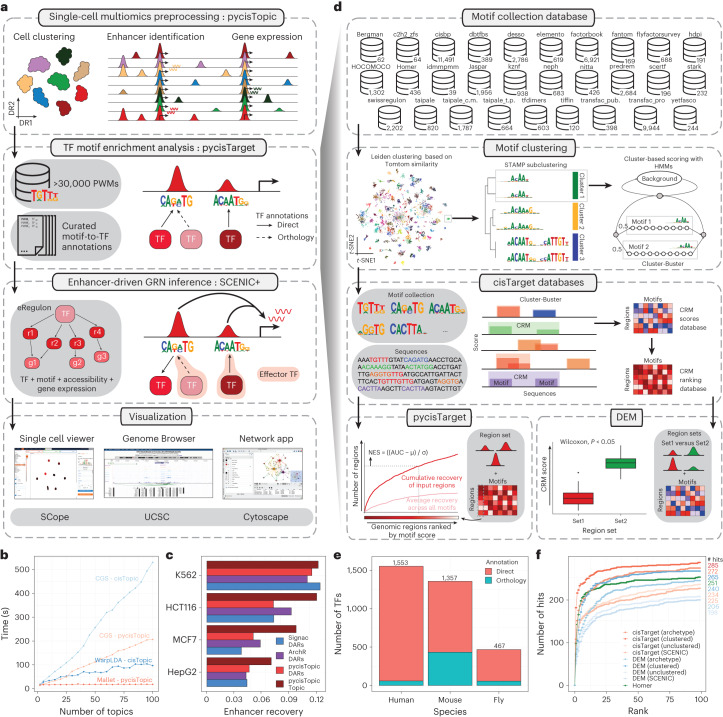
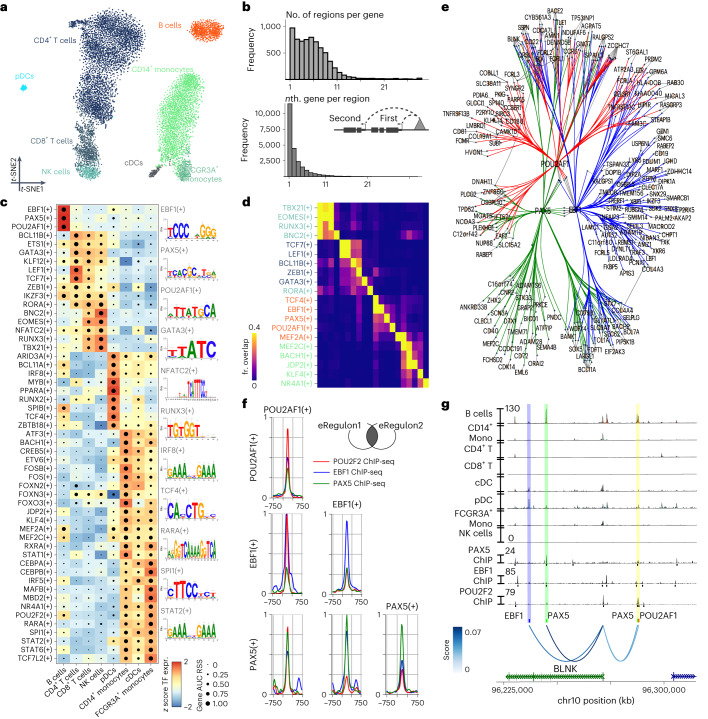
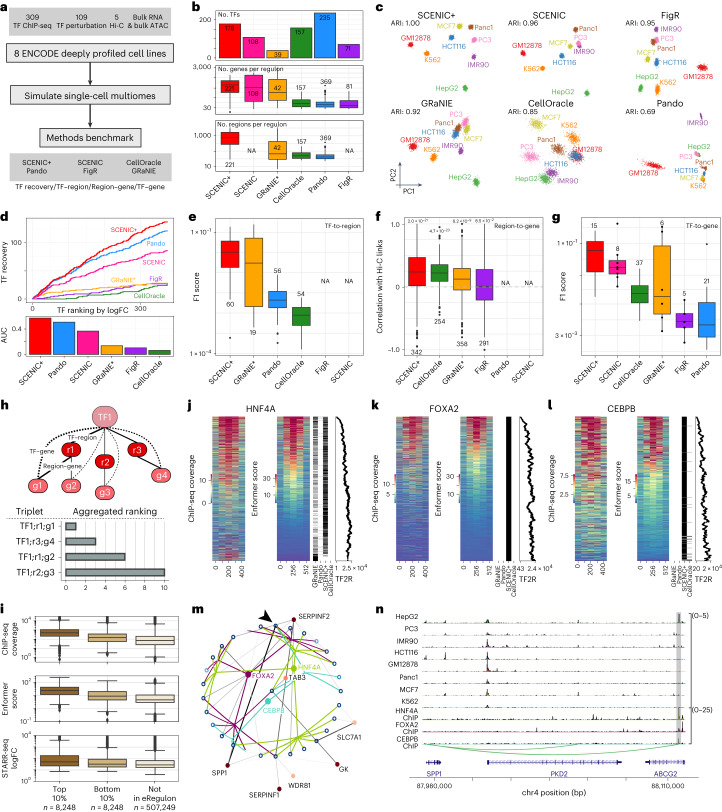
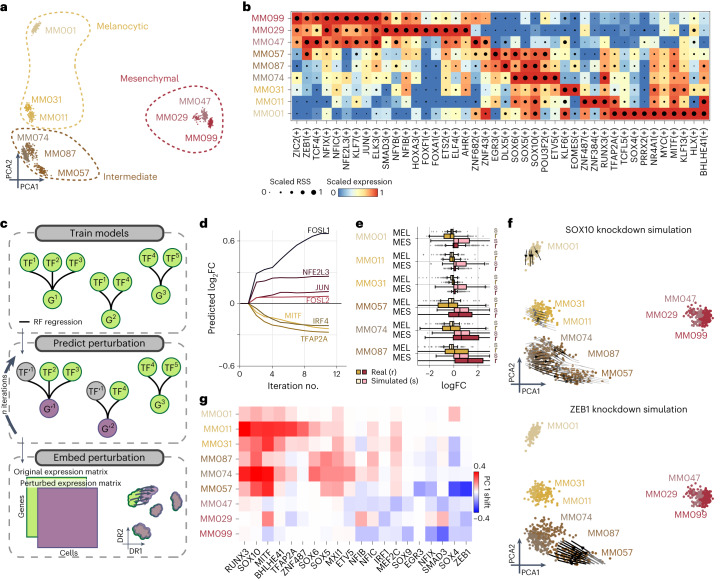
Joint profiling of chromatin accessibility and gene expression in individual cells provides an opportunity to decipher enhancer-driven gene regulatory networks (GRNs). Here we present a method for the inference of enhancer-driven GRNs, called SCENIC+. SCENIC+ predicts genomic enhancers along with candidate upstream transcription factors (TFs) and links these enhancers to candidate target genes. To improve both recall and precision of TF identification, we curated and clustered a motif collection with more than 30,000 motifs. We benchmarked SCENIC+ on diverse datasets from different species, including human peripheral blood mononuclear cells, ENCODE cell lines, melanoma cell states and Drosophila retinal development. Next, we exploit SCENIC+ predictions to study conserved TFs, enhancers and GRNs between human and mouse cell types in the cerebral cortex. Finally, we use SCENIC+ to study the dynamics of gene regulation along differentiation trajectories and the effect of TF perturbations on cell state. SCENIC+ is available at scenicplus.readthedocs.io .
Overview
The claims and statistics of this paper haven’t been checked yet.
Free: it reads the open-access text and checks the first 5 claims that cite a source we can check. Create a free account to check every claim.
Integrity signals
Registry
Cites
Statistics
Figures
Verification
Claims the paper makes
The claims and statistics of this paper haven’t been checked yet.
Free: it reads the open-access text and checks the first 5 claims that cite a source we can check. Create a free account to check every claim.
Claims other papers make about this one
Each is checked against this paper’s own text: does it say what the citing paper says it does?
The source backs part of the claim, not all of it — or backs it for a different population, condition or comparison.
In the citing paper
“SCENIC+ demonstrated superior performance compared to its original version, as well as ppcor, GRNBOOST2, PIDC, GRaNIE, FigR, and Pando, as evidenced by the AUC and F1 score metrics [48].”
From A mini-review on perturbation modelling across single-cell omic modalities (2024) · cites this paper as [48]
Experimental — accuracy not yet measuredThe source backs part of the claim, not all of it — or backs it for a different population, condition or comparison.
In the citing paper
“pycisTarget (v.1.0.1.dev42+gb6707ee) was run using a custom database with the consensus regions on DARs, binarized topics (with Otsu thresholding), curated DARs and topics and MACS2 (v.2.2.7.1) bdgdiff regions, with and without promoters, and using pycisTarget and DEM7.”
From Single-cell spatial multi-omics and deep learning dissect enhancer-driven gene regulatory networks in liver zonation (2024) · cites this paper as [7]
Experimental — accuracy not yet measuredThe cited source says what the claim attributes to it.
In the citing paper
“Notably, SCENIC+ anticipates genomic enhancers and identifies potential upstream transcription factors (TFs) and establishes connections between these enhancers and their relevant target genes.”
From A mini-review on perturbation modelling across single-cell omic modalities (2024) · cites this paper as [48]
The cited source says what the claim attributes to it.
In the citing paper
“Cell-cell similarity graphs in single cell omics [ 47 ], gene regulatory networks [ 48 ] and protein-protein interaction networks [ 49 ] are fundamental tools to rationalize the complexity of biological systems such as the human body.”
From igraph 1.0 enables fast and robust network analysis across programming languages (2026) · cites this paper as [48]
The cited source says what the claim attributes to it.
In the citing paper
“SCENIC+ was run with the default parameters on the complete dataset and using only hepatocytes, using http://nov2020.archive.ensembl.org/ as Biomart host.”
From Single-cell spatial multi-omics and deep learning dissect enhancer-driven gene regulatory networks in liver zonation (2024) · cites this paper as [7]
1 more claim about this paper
Create a free account to see every claim other papers make about this one.
Self-check
Percentages, sums and reported differences re-computed from the paper’s own numbers.
The self-check needs the paper’s full text.
Citations
Cites
Moderated estimation of fold change and dispersion for RNA-seq data with DESeq2
Love, M. I., Huber, W., & Anders, S. (2014) · Genome Biology · doi:10.1186/s13059-014-0550-8 · Cited by 95,106
A Threshold Selection Method from Gray-Level Histograms
Otsu, N. (1979) · IEEE Transactions on Systems, Man, and Cybernetics · doi:10.1109/tsmc.1979.4310076 · Cited by 43,398 · cited 1×
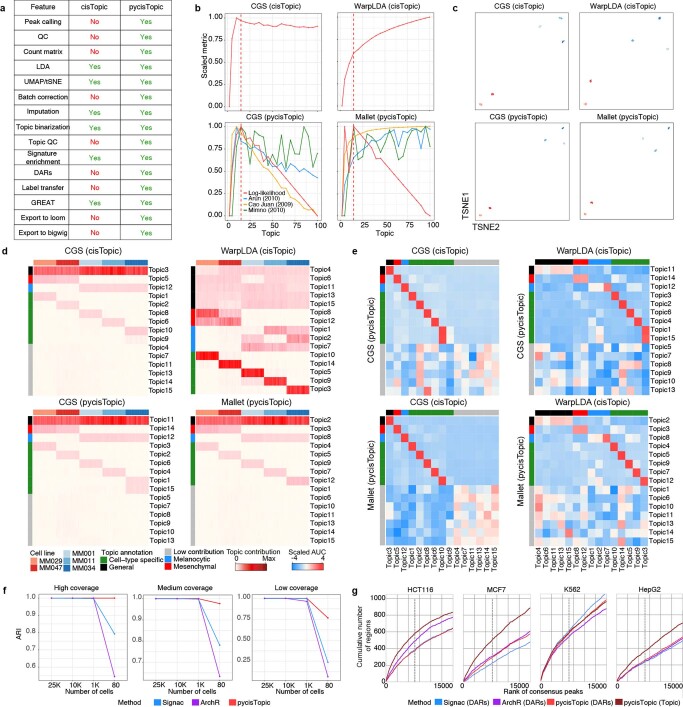
“We have included several binarization methods (applicable for topic-region and cell-topic distributions): ’otsu’ (Otsu, 1979)107, ’yen’ (Yen et al., 1995)108, ’li’ (Li & Lee, 1993)109, ’aucell’ (Van de Sande et al., 2020)20 or ’ntop’ (Taking the top n regions per topic).”
MethodModel-based Analysis of ChIP-Seq (MACS)
Zhang, Y., Liu, T., Meyer, C. A., Eeckhoute, J., Johnson, D. S., Bernstein, B. E., Nusbaum, C., Myers, R. M., Brown, M., Li, W., et al. (2008) · Genome Biology · doi:10.1186/gb-2008-9-9-r137 · Cited by 18,386
An integrated encyclopedia of DNA elements in the human genome
The ENCODE Project Consortium (2012) · Nature · doi:10.1038/nature11247 · Cited by 18,072
Comprehensive Integration of Single-Cell Data
Stuart, T., Butler, A., Hoffman, P., Hafemeister, C., Papalexi, E., Mauck, W. M., Hao, Y., Stoeckius, M., Smibert, P., & Satija, R. (2019) · Cell · doi:10.1016/j.cell.2019.05.031 · Cited by 15,453
Heinz, S., Benner, C., Spann, N., Bertolino, E., Lin, Y. C., Laslo, P., Cheng, J. X., Murre, C., Singh, H., & Glass, C. K. (2010) · Molecular Cell · doi:10.1016/j.molcel.2010.05.004 · Cited by 13,382
Fast, sensitive and accurate integration of single-cell data with Harmony
Korsunsky, I., Millard, N., Fan, J., Slowikowski, K., Zhang, F., Wei, K., Baglaenko, Y., Brenner, M., Loh, P.-R., & Raychaudhuri, S. (2019) · Nature Methods · doi:10.1038/s41592-019-0619-0 · Cited by 10,488
SCANPY: large-scale single-cell gene expression data analysis
Wolf, F. A., Angerer, P., & Theis, F. J. (2018) · Genome Biology · doi:10.1186/s13059-017-1382-0 · Cited by 8,881
Scenic: single-cell regulatory network inference and clustering.
Aibar, S., González-Blas, C. B., Moerman, T., Huynh-Thu, V. A., Imrichova, H., Hulselmans, G., Rambow, F., Marine, J.-C., Geurts, P., Aerts, J., et al. (2017) · Nature Methods · doi:10.1038/nmeth.4463 · Cited by 6,520
Self-citationGriffiths, T. L., & Steyvers, M. (2004) · Proceedings of the National Academy of Sciences · doi:10.1073/pnas.0307752101 · Cited by 6,049 · cited 1×
“- Log-likelihood: Uses the log-likelihood in the last iteration as calculated by Griffiths and Steyvers (2004)104, as used in cisTopic.”
Method
Research works printed but not linked: 1
- Mimno, D., Wallach, H. M., Talley, E., Leenders, M. & McCallum, A. Optimizing semantic coherence in topic models. In Proc. 2011 Conference on Empirical Methods in Natural Language Processing 262–272 (Association for Computational Linguistics, 2011).
Cited by
Items 401–500 of 780
Fei, Y., Liu, L., Ma, S., Jin, Y., Wang, S., Zhang, L., Yang, J., Liu, Y., Lu, M., Xue, J., et al. (2026) · Nature Communications · doi:10.1038/s41467-026-73383-8 · Cited by 3
Yang, Y., Hua, Y., Yang, S., Liu, N., & Li, J. (2026) · Biology Direct · doi:10.1186/s13062-026-00836-x · Cited by 2
“To infer transcription factor-associated regulatory programs, we applied the SCENIC framework [14], which comprises co-expression analysis, cis-regulatory motif enrichment and regulon activity scoring.”
DeGroat, W., & Kreimer, A. (2026) · Nucleic Acids Research · doi:10.1093/nar/gkag554 · Cited by 2
“TAL1 is an erythroid TF, and KLF13 , a Krüppel-like factor, has been shown to contribute to erythroid differentiation and regulation of globin gene expression, supporting the biological plausibility of this interaction [ 57 , 61 ].”
Lee, I.-G., & Jung, K. (2026) · Experimental & Molecular Medicine · doi:10.1038/s12276-026-01759-3 · Cited by 4
“For instance, CellChat 123 infers cell – cell communication, linking metabolic states to speci fi c immune signaling pathways, while SCENIC 124 reconstructs gene regulatory networks.”
Liu, Z. X., Wu, Y. W., Han, S., Lu, T., Pan, L., Dong, R., Huang, Y., Zheng, Y., Cai, X., Ji, Y., et al. (2026) · Journal of Allergy and Clinical Immunology · doi:10.1016/j.jaci.2026.06.020 · Cited by 2
Alkhateeb, N. J., & Awad, M. (2026) · Frontiers in Bioinformatics · doi:10.3389/fbinf.2026.1883130 · Cited by 2
“However, several unsupervised learning methods use multi-omics data to infer GRNs. scMTNI (Zhang et al., 2023) and SCENIC+ (Bravo González-Blas et al., 2023) first identify TF binding sites by performing motif analysis in accessible chromatin (ATAC peak) regions to construct initial TF–gene or TF–cis-regulatory elemen…”
Epigenetic modulation of stromal cell states underpins pathological tissue niches in Crohn’s disease
Koplev, S., Sharma, O., Woelfel, S., Huang, N., Pohin, M., Feile, A., Warschinke, M., Artero, M. R., Suthakaran, S., Sarropoulos, I., et al. (2026) · Nature Immunology · doi:10.1038/s41590-026-02617-0 · Cited by 5
“Differential gene expression (Supplementary Tables 4–13) and differential open chromatin (Supplementary Tables 14–23) between stimulated and unstimulated conditions defined cytokine-specific upregulated and downregulated signatures in stromal cells.”
InfluentialA retinoic acid autoregulatory loop governing prefrontal–motor arealization
Yang, L., Shibata, M., Park, S., Liu, Y., Salamon, I., Liu, J., Kim, S., Shibata, A., Deveau-French, A., Mato-Blanco, X., et al. (2026) · Nature · doi:10.1038/s41586-026-11014-4 · Cited by 5
Spatially resolved multiomics of human meningeal development reveal lineage and disease dynamics
To, K., Pett, J. P., Dufva, O., Chipampe, N.-J., Polański, K., Cujba, A.-M., Roberts, K., Predeus, A. V., Yayon, N., Kanemaru, K., et al. (2026) · Nature Cell Biology · doi:10.1038/s41556-026-02075-8 · Cited by 2
Gene-regulation modules in nonalcoholic fatty liver disease revealed by single-nucleus ATAC-seq
Takeuchi, F., Liang, Y.-Q., Shimizu-Furusawa, H., Isono, M., Ang, M. Y., Mori, K., Mori, T., Kakazu, E., Yoshio, S., & Kato, N. (2023) · Life Science Alliance · doi:10.26508/lsa.202301988 · Cited by 3
Discovering mechanisms of human genetic variation and controlling cell states at scale
Frenkel, M. P. C., & Raman, S. (2024) · Trends in Genetics · doi:10.1016/j.tig.2024.03.010 · Cited by 2
Li, F., Wang, J., Li, M., Zhang, X., Tang, Y., Song, X., Zhang, Y., Pei, L., Liu, J., Zhang, C., et al. (2024) · Briefings in Bioinformatics · doi:10.1093/bib/bbae368 · Cited by 2
“Then, the updated version of SCENIC + incorporates single-cell ATAC-seq (scATAC-seq) data for constructing TF regulatory networks [58].”
MethodIn preprints: insights into human heart development and congenital heart defects
Kathiriya, I. S. (2024) · Development · doi:10.1242/dev.204302 · Cited by 2
Wang, Y., Fu, Y., Lu, Y., Zhang, Z., Clarke, R., Parker, S. J., Herrington, D. M., Yu, G., & Wang, Y. (2024) · Bioinformatics Advances · doi:10.1093/bioadv/vbaf086 · Cited by 3
Spatial Transcriptomics Unveils the Blueprint of Mammalian Lung Development
陈明月, M. C., 吕俊杰, J. L., 张乔, Q. Z., 龚倩, Q. G., 赵婷, T. Z., 陈振平, Z. C., 徐海深, H. X., 周南, N. Z., 姜姗, S. J., 都建, J. D., et al. (2025) · Genomics Proteomics & Bioinformatics · doi:10.1093/gpbjnl/qzaf053 · Cited by 5
Single-Cell Multiome Impact of Prenatal Heavy Metal Exposure on Early Airway Development
Minasenko, B., Wang, D., Chan, J., Tran, V., Gauthier, T. W., Marsit, C. J., Jones, D. P., Go, Y.-M., Wongtrakool, C., Su, C., et al. (2025) · American Journal of Respiratory Cell and Molecular Biology · doi:10.1165/rcmb.2024-0563oc · Cited by 2
Li, H., Cui, L., Zhou, M., Zou, Q., Zhao, Y., Lin, H., Liang, Y., Kow, A. W. C., & Wang, G. (2025) · Molecular Therapy — Nucleic Acids · doi:10.1016/j.omtn.2025.102696 · Cited by 3
Fu, J., Waks, A. G., Pimenta, E. M., Titchen, B. M., Bi, K., Camp, S. Y., Pappa, T., Keenan, T. E., Shannon, E. E., Vigneau, S., et al. (2025) · Nature Communications · doi:10.1038/s41467-025-66659-y · Cited by 7
“Therawgeneexpressioncountmatrix,imputedaccessibilityandmotif enrichment results were used as input into the SCENIC+ work fl ow, keeping 22,125 cells with both high-quality ATAC-seq and RNA-seq pro fi les.”
InfluentialSCOT+: a comprehensive software suite for single-cell alignment using optimal transport
Baker, C., Pham, T. M., Demetçi, P., Tran, Q. H., Redko, I., Sandstede, B., & Singh, R. (2025) · Bioinformatics Advances · doi:10.1093/bioadv/vbaf314 · Cited by 5
Gao, W., Hu, P., Wick, B. D., Qiu, Q., Zhang, H., Li, Y., Kang, X., Bedi, K. C., Haeussler, M., Sasaki, K., et al. (2026) · Genome biology · doi:10.1186/s13059-026-04061-7 · Cited by 4
Abedini‐Nassab, R., Adibi, E., & Ahmadiasl, S. (2024) · Scientific Reports · doi:10.1038/s41598-024-74761-2 · Cited by 3
Spatial-linked alignment tool (SLAT) for aligning heterogenous slices properlyPreprint
Xia, C., Cao, Z., Tu, X., & Gao, G. (2023) · bioRxiv (Cold Spring Harbor Laboratory) · doi:10.1101/2023.04.07.535976 · Cited by 2
Rommelfanger, M. K., Behrends, M., Chen, Y., Martinez, J., Bens, M., Xiong, L., Rudolph, K. L., & MacLean, A. L. (2023) · bioRxiv (Cold Spring Harbor Laboratory) · doi:10.1101/2023.04.18.537360 · Cited by 2
“SCENIC+ [35] uses a large pool of putative TF-target gene interactions learnt from data to build models for GRN inference.”
All wired up: heptads in hematopoiesis
Ng, A. P. (2023) · Blood · doi:10.1182/blood.2023022014 · Cited by 2
Li, C., Chen, S., Chen, Y., Bian, H., Hao, M., Wei, L., & Zhang, X. (2024) · bioRxiv (Cold Spring Harbor Laboratory) · doi:10.1101/2024.01.08.574757 · Cited by 3
Cell-state plasticity drives heterogeneity in Group 3/4 medulloblastomaPreprint
Joshi, P. K., da Silva, P. B. G., Okonechnikov, K., Stelzer, T., Sarropoulos, I., Sepp, M., Nolle, J., Pour-Jamnani, M. V., Rademacher, A., Yamada-Saito, T., et al. (2024) · bioRxiv (Cold Spring Harbor Laboratory) · doi:10.1101/2024.02.09.579680 · Cited by 4
“De-multiplexed reads were aligned to human genome assembly GRCh38 (v. p13, release 37, gencodegenes. org).”
InfluentialHu, Z., Przytycki, P. F., & Pollard, K. S. (2024) · bioRxiv (Cold Spring Harbor Laboratory) · doi:10.1101/2024.05.17.594770 · Cited by 2
Learning sequence-based regulatory dynamics in single-cell genomicsPreprint
Ibarra, I. L., Schneeberger, J., Erdogan, E., Redl, L., Martens, L. D., Klein, D., Aliee, H., & Theis, F. J. (2024) · bioRxiv (Cold Spring Harbor Laboratory) · doi:10.1101/2024.08.07.605876 · Cited by 2
“No DL methods in single-cell genomics jointly optimize DNA sequences and cell relationships, due to scaling limitations, and it is needed to computationally decode regulatory rules that guide cellular states 17–19 .”
BackgroundEndothelial regulatory circuits control cranial neural crest migration and plasticityPreprint
Hu, Z., Mayes, S., Wang, W., Santos-Pereira, J. M., Theis, F. J., & Sauka‐Spengler, T. (2024) · bioRxiv (Cold Spring Harbor Laboratory) · doi:10.1101/2024.09.17.613303 · Cited by 2
Deaf1 regulates the coordinated repression of synaptic genes to limit synaptogenesisPreprint
Kentro, J. A., Singh, G., Pham, T. M., Currie, J., Khullar, S., Medeiros, A. T., Larschan, E., & O’Connor-Giles, K. M. (2024) · bioRxiv (Cold Spring Harbor Laboratory) · doi:10.1101/2024.10.30.621128 · Cited by 2
Groh, A. M. R., Afanasiev, E., Thevakumaran, R., Callahan‐Martin, L., Creeggan, F., Yaqubi, M., Zandee, S., Prat, A., Rudko, D. A., & Stratton, J. A. (2025) · bioRxiv (Cold Spring Harbor Laboratory) · doi:10.1101/2025.01.14.633055 · Cited by 4
Dong, W., Zhou, M., Wang, F., & Li, Y. (2025) · bioRxiv (Cold Spring Harbor Laboratory) · doi:10.1101/2025.01.24.634773 · Cited by 3
Reconfiguration of genome-lamina interactions marks the commissioning of limb cell-fatesPreprint
Chudzik, K., Guerreiro, I. M., Kefalopoulou, S., Abraham, A., Schindler, M., Ringel, A. R., Nicodemi, M., Solovei, I. V., Chiariello, A. M., Mundlos, S., et al. (2025) · bioRxiv (Cold Spring Harbor Laboratory) · doi:10.1101/2025.05.05.651267 · Cited by 3
“8c) 48 .”
Luo, J., Meng, Z., Liu, D., Hu, Y., Qiu, J., Chen, B., Wang, L., He, J., Yan, B., Meng, Y., et al. (2025) · Research Square · doi:10.21203/rs.3.rs-6671626/v1 · Cited by 2
Decoding the gene regulatory landscape through multimodal learning of protein-DNA interactionsPreprint
Tan, J., Fu, X., Ling, X., Mo, S., Bai, J., Rabadán, R., Fenyö, D., Boeke, J. D., Tsirigos, A., & Xia, B. (2025) · bioRxiv (Cold Spring Harbor Laboratory) · doi:10.1101/2025.08.17.670761 · Cited by 5
Xue, A., Fan, J., Dong, O. A., Huang, H. L., Chen, L., Allen, P. C., Spenceley, E., Sagi-Zsigmond, E., Bowen, B., Henry, A., et al. (2025) · medRxiv · doi:10.1101/2025.08.27.25334533 · Cited by 2
Pančíková, A., Cools, R., Eftychiou, M., Aertgeerts, M., Velde, J. V., Segers, H., Cools, J., Harbers, L., & Demeulemeester, J. (2025) · bioRxiv (Cold Spring Harbor Laboratory) · doi:10.1101/2025.09.08.674950 · Cited by 2
Establishing a continuum of cell types in the visual cortexPreprint
Yoo, J., Xie, F., Butrus, S., Xu, R., Tan, Z., Gorzek, R. C., Mirshahidi, P., Tring, E., Suresh, S., Kim, J., et al. (2025) · bioRxiv (Cold Spring Harbor Laboratory) · doi:10.1101/2025.09.22.677893 · Cited by 2
Disruption of cell-type-specific molecular programs of striatal spiny projection neurons in autism
Yuan, G., Suresh, V., Wigdor, E. M., Hao, Y., Sun, F. Y., Evans, C., Leonard, R., Fukushima, Y., Steyert, M. R., Griffiths, M., et al. (2026) · Cell · doi:10.1101/2025.11.05.686845 · Cited by 11
Spatial and regulatory organization of cell identity across the primate subcortex
Dan, S., Turner, M. A., DeBerardine, M., Caceres, L., Nieto-Caballero, V. E., Schembri, J., Levandowski, K. M., Cardenas, C., Wang, N., Li, C., et al. (2026) · Cell · doi:10.1101/2025.11.22.689869 · Cited by 6
Li, Y., Tan, Y., Chen, R., Zhou, X., Chen, Y., Huo, Y., Guo, X., Tiwari, A., Wen, Z., Zhong, X. Y., et al. (2025) · bioRxiv (Cold Spring Harbor Laboratory) · doi:10.64898/2025.12.11.693589 · Cited by 2
“To exploit the vast amount of existing unpaired multi-omics data for more fine-grained biological interpretation (e.g., gene regulatory network (GRN) inference [5]), it is crucial to computationally align cells representing the same underlying biological state across different omic layers.”
Single-cell and spatial characterization of the human pancreas in cystic fibrosis
Mummey, H. M., Corban, S., Lucero, J. D., Melton, R. L., Pittigher, M., Johnston, V. C., Deutsch, G. H., D’Antonio‐Chronowska, A., Wang, A. S., Hull-Meichle, R. L., et al. (2026) · Cell Reports · doi:10.64898/2025.12.14.694120 · Cited by 3
Progenitor Diversity and Architecture of the Human Ganglionic Eminences Shaping the Basal GangliaPreprint
Siebert, C., Song, M., Moriano, J., Li, Z., Cebrián‐Silla, A., Walker, M., Chen, S., Baltazar, J., de Oliveira, L. G., Shankar, M., et al. (2026) · bioRxiv (Cold Spring Harbor Laboratory) · doi:10.64898/2025.12.31.697063 · Cited by 3
Winter, S. D., Mannens, C. C. A., Christiaens, V., Vandepoel, R., Hu, L., Linnarsson, S., & Aerts, S. (2026) · bioRxiv (Cold Spring Harbor Laboratory) · doi:10.64898/2026.01.14.699402 · Cited by 6
Self-citationCancer-myeloid cell invasive program in pediatric-type diffuse high-grade gliomaPreprint
Ruiz-Moreno, C., Collot, R. V. U., van den Broek, T. J. M., Wehrens, E. J., Bessler, N., Dharmadhikari, G., Pas, B. M. T., Ibarra, I. L., Metselaar, D. S., Kranendonk, M. E. G., et al. (2026) · bioRxiv (Cold Spring Harbor Laboratory) · doi:10.64898/2026.01.23.701142 · Cited by 3
Molecular Dynamics of Brodmann Area 22 in Development and AutismPreprint
Suresh, V., Wigdor, E. M., Hao, Y., Leonard, R., Asfouri, J., Griffiths, M., Evans, C., Yuan, G., Rohani, N., Weiss, J., et al. (2026) · SSRN Electronic Journal · doi:10.64898/2026.03.31.715694 · Cited by 3
Murakami, K., Iida, K., & Okada, M. (2025) · Genes to Cells · doi:10.1111/gtc.70000 · Cited by 2
“The cells were clustered using k-means, either on the predicted cRE activity from our model or using eRegulon activity inferred using Scenic+ (Bravo González-Blas et al. 2023).”
InfluentialOptimisation of Xenium automated in situ sequencing for PAXgene-fixed tissue samples
Roberts, K., & Bassett, A. R. (2026) · Journal of Histotechnology · doi:10.1080/01478885.2026.2667003 · Cited by 2
Discrepancies between human and murine model cerebral aneurysms at single-cell resolution
Ji, H., Kuang, G., Yang, H., Liu, H., Li, Y., Hu, S., Xiao, A., You, C., Sun, H., Fan, C., et al. (2025) · Frontiers in Cell and Developmental Biology · doi:10.3389/fcell.2025.1512938 · Cited by 2
Hathazi, D., Lyons, C., Lagos, D., Podmanicky, O., Zarate-Mendez, M., Nie, Y., Müller, J. S., Allinson, K. S. J., Naylor, H. W., Lako, M., et al. (2026) · Nature Communications · doi:10.1038/s41467-026-74103-y · Cited by 3
Zhang, Y., Lu, Y., Zheng, S., Luo, W., Tan, M., & Luo, B. (2025) · Journal of Hepatocellular Carcinoma · doi:10.2147/jhc.s517528 · Cited by 3
Ai, S., Zhou, Y., Zou, W., Chatterjee, E., Li, G., Shi, J., Xiao, J., & Zhao, J. (2025) · IEEE Transactions on Computational Biology and Bioinformatics · doi:10.1109/tcbbio.2025.3576169 · Cited by 1
“[7].”
Conference Report: Cerebellar Development and Disease at Single-Cell Resolution
Kutscher, L. M., Aprile, D., Bayin, N. S., Becker, E. B. E., Cerrato, V., Turrini, G., Coolen, M., Cantagrel, V., Durand, B., Evans, M. K., et al. (2025) · The Cerebellum · doi:10.1007/s12311-025-01864-5 · Cited by 1
“…and scATAC-seq data to model gene expression and chromatin accessibility, respectively, the GRNs will be perturbed in CellOracle [15] and SCENIC+ [16] to simulate Pax6 knockouts and the in silico findings will be compared with Pax6 -null scRNA-seq and PAX6 CUT&Tag-seq data to evaluate efficacy…”
Deciphering the transcriptional regulatory network driving lung adenocarcinoma progression
Wang, K., Sun, S., Guo, D., Zhou, X., Xiang, Y., Pang, Z., & Du, J. (2025) · Medical Oncology · doi:10.1007/s12032-025-02887-y · Cited by 1
“We utilized the SCENIC package in R to identify TFs that drive the transition from normal AT2 cells to AIS, MIA, and IAC [26].”
Leveraging transcription factor physical proximity for enhancing gene regulation inference
Huang, X., Hullur, A. R., Jafari, E., Shridhar, K., Zhou, M., Mackie, K., Huang, K., & Wang, Y. (2025) · Bioinformatics · doi:10.1093/bioinformatics/btaf186 · Cited by 2
Defining the Cis-Regulatory Elements of SCN1A in GABAergic Interneurons
Luginbühl, J., Prabhu, A. V., Yip, C. W., Ando, Y., Leon, J., Yasuzawa, K., Hon, C.-C., Moody, J., Roudnicky, F., Kremer, T., et al. (2025) · Molecular Neurobiology · doi:10.1007/s12035-025-05209-5 · Cited by 2
“The specificity of TSS1 expression prompted us to explore the regulatory mechanisms governing SCN1A using SCENIC + [15].”
Feng, Z., Chen, X. X., Duren, Z., Xin, J., Hao, M., Yuan, Q., Wang, Y., & Wong, W. H. (2025) · Genome biology · doi:10.1186/s13059-025-03680-w · Cited by 4
“…data (gene expression and chromatin accessibility) by tools such as ChromVAR [49], i-cisTarget [50], PECA and PECA2 [51, 52], and SCENIC + [53], and has been applied to identify the master regulators in stem cell differentiation [54], to interpret conserved regions for the non-model…”
Kolmogorov-Arnold Network for Gene Regulatory Network Inference
Tong, T. P., Wang, A., Panagopoulos, G., & Pang, J. (2025) · Lecture notes in computer science · doi:10.1007/978-3-032-01436-8_12 · Cited by 1
Zhang, Y., Wen, B., Jiao, Y., Liu, Y., Guo, X., Wu, Y., Li, J., Han, L., Xu, Y., Gao, X., et al. (2025) · Advanced Science · doi:10.1002/advs.202505021 · Cited by 2
Chun, R., Ni, H., Zhao, Z., & Zhang, C. (2025) · Genes · doi:10.3390/genes16091034 · Cited by 2
“30) package in R was used to calculate TEX scores at the cellular level and single sample gene set enrichment analysis (ssGSEA) was applied to compute TEX scores in bulk RNA-seq samples [22].”
Chaos and complexity: Hallmarks of cancer progression
Uthamacumaran, A. (2025) · Oxford University Press eBooks · doi:10.1093/med/9780192867636.003.0040 · Cited by 3
The DLX/Notch axis is necessary for spatiotemporal regulation of neural cell fate
Leung, R. F., See, M., George, A. M., Barry, P. L., France, K., Charitakis, N., Ramialison, M., Faux, M. C., & Eisenstat, D. D. (2026) · Nature Communications · doi:10.1038/s41467-026-76838-0 · Cited by 1
“01a1) 21 pipeline was used to identify enhancer-driven gene regulatory networks (eRegulons) in WT and Dlx1/Dlx2 − / − snMul-tiome data.”
InfluentialWhite and brown adipose tissue share a convergent fibro-adipogenic progenitor population
Bui, H. V., Hansen, J. K., Sardo, V. L., & Galmozzi, A. (2025) · EMBO Reports · doi:10.1038/s44319-025-00591-6 · Cited by 1
“The SCENIC + motif collection (Bravo Gonzalez-Blas et al, 2023) was obtained from resources.aertslab.org, alongside mm10 genomic region fi les centered on 500 bp and 10,000 bp around transcription start sites.”
IceQream: Quantitative chromosome accessibility analysis using physical TF models
Bercovich, A., Lifshitz, A., Eldar, M., Cheng, S., Ranen, R. S., Stelzer, Y., & Tanay, A. (2025) · Nature Communications · doi:10.1038/s41467-025-63925-x · Cited by 1
“1A (iii)) scans through candidate initial TF models from PSSM databases 12,27 – 30 and de-novo motif regression.”
Hu, J., Zhu, R., Huang, Q., & Li, X. (2025) · Discover Oncology · doi:10.1007/s12672-025-03502-2 · Cited by 1
Xing, L., Wu, T., Xu, H., Yang, S., Luan, C., Xu, Y., Mao, Y., & Li, X. (2025) · Mediators of Inflammation · doi:10.1155/mi/3708640 · Cited by 2
“2.4) tool was utilized to uncover regulatory interactions between TFs and their target gene [18].”
InfluentialDynamic changes in chromatin accessibility during cell fate specification at the neural plate border
Hamrud, E., Leese, J., Thiery, A. P., Buzzi, A. L., Vigilante, A., Briscoe, J., & Streit, A. (2025) · Development · doi:10.1242/dev.204943 · Cited by 4
Li, H., Dai, F., Zhang, Y., Li, X., Zhong, B., Fang, J., Wang, Z., He, Y., Wang, M., Qiu, X., et al. (2025) · Current Cancer Drug Targets · doi:10.2174/0115680096434051251113094536 · Cited by 2
Integrated approaches for discovery and functional annotation of proteins of unknown function
Moitra, T., & Larrouy-Maumus, G. J. (2025) · Trends in Biochemical Sciences · doi:10.1016/j.tibs.2025.11.001 · Cited by 4
DANSE: a pipeline for dynamic modelling of time-series multi-omics data
Klomp, L. J., Yan, X., Snabel, R. R., Veenstra, G. J. C., Meijer, H. G. E., & Post, J. N. (2025) · BMC Bioinformatics · doi:10.1186/s12859-025-06354-3 · Cited by 2
“Common methods for inferring GRNs from multi-omics data include SCENIC+, which focuses on retrieving sets of a transcription factor (TF) and their targets from single-cell multi-omics data [14].”
Feng, G., Qin, X. Y., Zhang, J., Huang, W., Zhang, Y., Cui, W., Yao, C., Li, S., Liu, W., Tian, Y., et al. (2026) · Advanced Science · doi:10.1002/advs.202508697 · Cited by 6
Kim, D., Choi, S. Y., Kim, C. Y., Yoo, J. R., Kim, E. T., & Park, J. (2026) · iScience · doi:10.1016/j.isci.2026.114849 · Cited by 1
“To understand the gene regulation mechanisms in each sub-cluster, we constructed GRNs at the single-cell level by integrating motif activity, chromatin accessibility, and gene expression data using SCENIC+. 57 SCENIC+ defines regulons based on two relationships: (1) TF-to-gene correlation and (2) region-to-gene correl…”
InfluentialHuang, Y., Liu, C., Yang, Z., Liu, B., Zhai, X., Zheng, J., Xiao, J., & Song, T. (2025) · Briefings in Bioinformatics · doi:10.1093/bib/bbaf664 · Cited by 2
“Representative methods include correlation coeff icient-based FigR [14], TRIPOD [15] and multiple regression-based SCENIC + [16].”
Kim, Y., Kang, H., Hwang, Y., Kim, K. S., Moon, S. W., Kim, J., Kim, S. J., & Lee, H. (2026) · Clinical Epigenetics · doi:10.1186/s13148-026-02078-0 · Cited by 3
Wang, W., Xie, H., Yan, C., Xu, Y., Chen, L., Huang, S., & Hu, P. (2026) · Aquaculture · doi:10.1016/j.aquaculture.2026.743810 · Cited by 1
Expanding the fly eye gene regulatory network: From Drosophila to the hoverfly Episyrphus balteatus
Navarro, T., Torres, J., Sáez-Moreno, R., Guerrero, G., Almudí, I., Iannini, A., Figueras, J., Wotton, K. R., Aerts, S., & Casares, F. (2026) · PLoS Genetics · doi:10.1371/journal.pgen.1011864 · Cited by 1
Self-citationAs 5mC enters a programmable era: charted avenues for cancer understanding and intervention
Shi, Q., Liu, P., Zhu, J.-K., & Sun, S. (2026) · Oral Science and Homeostatic Medicine · doi:10.26599/oshm.2026.9610044 · Cited by 1
Boolean logic links chromatin accessibility states to gene expression variability across cell types
Malekpour, S. A., Jafari, M., & Sadeghi, M. (2026) · Nucleic Acids Research · doi:10.1093/nar/gkag230 · Cited by 1
“By jointly analyzing these data, researchers can identify enhancer –gene interactions [ 1 –5 ], reconstruct gene regulatory networks (GRNs) [ 6 –9 ], and infer cellular differentiation trajectories [ 10 –12 ], thereby advancing our understanding of cellular dynamics and plasticity.”
Single-Cell Multi-Omics Reveal Gene Regulatory Mechanisms Underlying Cardiac Embryonic Development
Feng, E., Zheng, X., Zhu, F., Xiang, L., Liu, C., Wang, L., Cao, Y., & Dai, Y. (2026) · Genes · doi:10.3390/genes17040414 · Cited by 3
Macarie, R. D., Tucureanu, M. M., Ciortan, L., Preda, M. B., Mânduțeanu, I., & Butoi, E. D. (2026) · Frontiers in Cardiovascular Medicine · doi:10.3389/fcvm.2026.1755830 · Cited by 2
Giovenale, S. D., Lischio, O., Cortile, C., Corleone, G., Fanciulli, M., Bonchi, F., & Barozzi, I. (2026) · NAR Genomics and Bioinformatics · doi:10.1093/nargab/lqag034 · Cited by 1
“These can either use multi-omics bulk data (including but not limited to GRaNIE [ 15 ] and ANANSE [ 14 ]) or single-cell data (including but not limited to SCENIC + [ 12 ], IReNA [ 16 ], and Pando [ 17 ]).”
Wang, Y., Xu, X., Qi, Y., Zhang, Y., Ding, L., Zhuang, L., Long, S., Yang, G., Sun, R., & Guo, X. (2026) · Biology Direct · doi:10.1186/s13062-026-00814-3 · Cited by 1
“12.1) analysis pipeline [22].”
InfluentialThe evolution of gene regulatory networks
Belova, T., Osorio, D., & Kuijjer, M. L. (2026) · Nature Computational Science · doi:10.1038/s43588-026-00981-3 · Cited by 2
Toumi, I., Kham, C., Stuani, L., Cam, L. L., & Roux, P. (2026) · NAR Genomics and Bioinformatics · doi:10.1093/nargab/lqag046 · Cited by 2
“By capturing accessibility and transcription factor footprinting signatures at single-cell resolution, scATAC-seq reveals regulatory landscapes with a granularity that is inaccessible in bulk assays [ 22 ].”
Conserved Transcriptional Circuits Regulate Cardiac Fibroblast-Mediated Fibrosis
Krstevski, C., Farrugia, G. E., Hsu, I., Dona, M. S. I., Gaynor, T. L., Cohen, C. D., Harper, R. L., Harrison, T. I., Raffaut, S. R., Claridge, B., et al. (2026) · Circulation Research · doi:10.1161/circresaha.125.327294 · Cited by 1
Kinzhebay, A., Zhanymbetova, A., Yerkos, A., Zhetpisbay, Z., Imanbek, R., & Salybekov, A. A. (2026) · International Journal of Molecular Sciences · doi:10.3390/ijms27104377 · Cited by 1
Lin, N., Zhang, Z., Sha, X., Yao, J., Sun, X.-Z., Sun, R., 杨佳佳, Yu, Q., Wu, Z., Guan, J., et al. (2026) · Journal of genetics and genomics/Journal of Genetics and Genomics · doi:10.1016/j.jgg.2026.05.005 · Cited by 1
Epigenetic dynamics of human spermatogenesis and their dysregulation in non-obstructive azoospermia
Xie, H., Li, J., Zhang, L., Xu, X., Zhen-huan, J., Cao, Y., Wen, L., Qiao, J., & Tang, F. (2026) · Protein & Cell · doi:10.1093/procel/pwag033 · Cited by 1
Identifying fate-determining transcription factors with single-cell omics
Xi, X., Li, C., Wei, L., & Zhang, X. (2026) · Trends in Genetics · doi:10.1016/j.tig.2026.05.005 · Cited by 1
Cytotoxic CD39 + tumor-associated NK cells respond to NKG2A blockade in lung cancer
Serger, C., Rebuffet, L., Sandholzer, M. T., Rackwitz, W., Fusi, I., Herzig, P., Brüggemann, A., Pawlow, C. A., Chichelnitskiy, E., Hajnal, D., et al. (2026) · Science Immunology · doi:10.1126/sciimmunol.aeb6645 · Cited by 5
Mao, S., Yang, C., Zhen, C., He, Z., Luo, Y., & Zhang, L. (2026) · Communications Biology · doi:10.1038/s42003-026-10462-y
“We identi fi ed domain clusters on SpaDC spot embeddings using the Leiden algorithm 22 and compared the results with Signac, ArchR, pycisTopic 23 , SnapATAC2, SCALEX 24 , PeakVI, and scBasset.”
Single-Cell Studies Advance Understanding of the Genetic and Molecular Basis of Atherosclerosis
Li, D. Y., Monteiro, J. P., Zhao, Q., Stitziel, N. O., & Quertermous, T. (2026) · Circulation Research · doi:10.1161/circresaha.125.327472 · Cited by 5
Cis-regulatory strategies in developmental patterning
Williams, J. P., & Delàs, M. J. (2026) · Current Opinion in Genetics & Development · doi:10.1016/j.gde.2026.102505 · Cited by 1
Frazee, C. P., Chen, S., Berry, C. T., Lee, C. S., Banciella, R., Ngo, L., Shon, D., Herman, P. J., Fischman, J. S., Leff, C. L., et al. (2026) · Nature Immunology · doi:10.1038/s41590-026-02548-w · Cited by 3
Dynamic molecular networks unveil the mechanism behind hypoxia‐induced tumour cell dormancy
Wang, P., Li, H. X., Lan, Y., Zhang, H. G., Li, C. F., Zhang, X., & Wang, W. (2026) · Biological reviews/Biological reviews of the Cambridge Philosophical Society · doi:10.1002/brv.70195 · Cited by 2
Integrating single-cell RNA sequencing with multi-omics to decode disease microenvironments
Devi, A., Pathak, V., Dwibedi, V., Singh, J., Pathak, A. K., George, N., Kumar, A. C. S., Kaur, G., Rath, S. K., & Chatterjee, A. (2026) · Molecular Biology Reports · doi:10.1007/s11033-026-12250-7 · Cited by 2
“Although it requires large memory and also it requires more time for execution [ 50].”
Fantuz, M., Liebig, J., Fontana, G., Noè, R., Milan, G., Piccoli, G., Iebba, V., Lukassen, S., Carbone, C., Blaauw, B., et al. (2026) · Cell Death and Differentiation · doi:10.1038/s41418-026-01804-8 · Cited by 2
Xu, Z., Ugurbil, A., Kwan, J., Schaefer, C., Abdulraouf, A., Lu, Z., Tang, E., Zhou, W. Y., & Cao, J. (2026) · Nature Communications · doi:10.1038/s41467-026-75360-7 · Cited by 2
“Validation analysis on CEBPB by in-silico knockout and ChIP-seq SCENIC+ 114 was used to simulate the perturbation effects of CEBPB.”
Faisal, S., Sammad, A., Ejaz, M. R., & Wang, Z. (2026) · Journal of Genetic Engineering and Biotechnology · doi:10.1016/j.jgeb.2026.100777 · Cited by 1
“1) 30 – 32 A diffusion pseudotime was computed from a k-nearest-neighbour graph by eigen-decomposition of the symmetric transition matrix, oriented from effector/naïve toward exhausted cells, and NR4A2 was regressed against pseudotime.”
Guo, Y., Xu, K., Zhou, Q., Du, L., Dang, C., Liu, G., Yi, X., Zhou, D., Cao, J., Liu, Z., et al. (2026) · Nature Communications · doi:10.1038/s41467-026-76120-3 · Cited by 2
“As NR3C2 had the highest score calculated by SCENICplus (Supplementary Fig.”
Influential
Metadata
- Authors
- Bravo González-Blas, C., De Winter, S., Hulselmans, G., Hecker, N., Matetovici, I., Christiaens, V., Poovathingal, S., Wouters, J., Aibar, S., & Aerts, S.
- Affiliations
- VIB-KU Leuven Center for Brain & Disease Research (BE)
- Vlaams Instituut voor Biotechnologie (BE)
- Corresponding author
- Aerts, Stein
- ORCID
- Venue
- Nature Methods
- Published
- 2023-07-13
- Volume
- 20
- Issue
- 9
- Pages
- 1355-1367
- ISSN
- 1548-7091 (ISSN-L)
- 1548-7105
- PMC
- PMC10482700
- OpenAlex
- W4384198561
- Semantic Scholar
- abe9998e249e33005981b23b97929dddb246b288
- Cited by
- 778
- References
- 169
- Citations by year
- 2026: 279 · 2025: 280 · 2024: 153 · 2023: 59
- FWCI
- 68.58
- Type
- journal article
- Language
- en
- Open access
- hybrid
- doi.org
- Licence
- cc-by
- creativecommons.org/licenses/by/4.0 (tdm)
- creativecommons.org/licenses/by/4.0 (vor)
- Locations
- Nature Methods (publishedVersion, cc-by)
- bioRxiv (Cold Spring Harbor Laboratory) (acceptedVersion)
- PubMed Central (publishedVersion, cc-by)
- PubMed (publishedVersion)
- Lirias (submittedVersion, cc-by)
- Funders
- Fonds Wetenschappelijk Onderzoek (G094121N, 11F1519N)
- KU Leuven
- Fondation contre le Cancer
- Bijzonder Onderzoeksfonds UGent
- Topics
- Life Sciences › Biochemistry, Genetics and Molecular Biology › Molecular Biology › Genomics and Chromatin Dynamics
- Life Sciences › Biochemistry, Genetics and Molecular Biology › Molecular Biology › Single-cell and spatial transcriptomics
- Life Sciences › Biochemistry, Genetics and Molecular Biology › Molecular Biology › Gene Regulatory Network Analysis
- Keywords
- SCENIC, gene regulatory networks, chromatin accessibility, single-cell multi-omics, transcription factor identification, transcription factor binding motifs, cross-species conservation, differentiation trajectories, transcription factor perturbation
- MeSH terms
- Multiomics, Animals, Chromatin, Drosophila, Enhancer Elements, Genetic, Gene Expression Regulation, Humans, Leukocytes, Mononuclear, Mice, Gene Regulatory Networks
About these checks
Registry, retraction, Cites and statistics results are computed, not judged, with one exception: a printed reference that no index lists is read once by a model before it counts as a citation error. Claims are extracted by a model and kept only when their quote appears verbatim in the text; each cited source is then checked, with a model’s help, for whether it says what the claim relies on. Those verdicts can be wrong — read the claim’s quote and the cited source before relying on one.
Statistics and arithmetic are recomputed, not judged.
Confidence bands are shown only for fields calibrated on our annotated test set. None is calibrated yet, so no band is shown.
What counts as a claim ›How we measure confidence ›How we check this ›
Are you an author, or do you see a problem with this page? Request a review
Data sources
Bibliographic data: Semantic Scholar, OpenAlex, Crossref.
Contains information from the Semantic Scholar Academic Graph Datasets, made available under the ODC Attribution License (ODC-BY 1.0).
Semantic Scholar’s data is described in: Kinney, R., et al. (2023). The Semantic Scholar Open Data Platform. arXiv:2301.10140.
