

Causal identification of single-cell experimental perturbation effects with CINEMA-OT
Open accessPublished version of a preprint
The DOI matches its Crossref record; 85 of the 85 references it cites were found in a registry or an index; 19 of the 39 sources its claims cite were checked for support.
Abstract
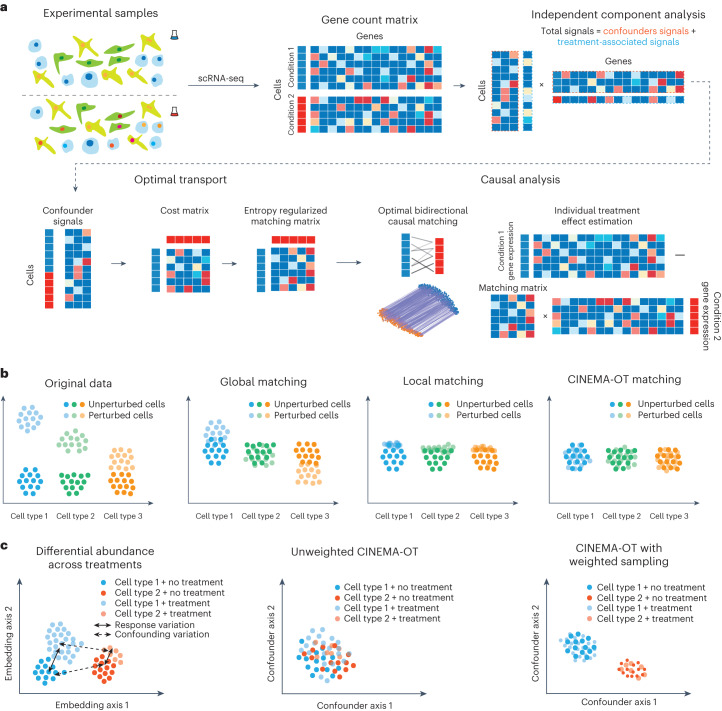
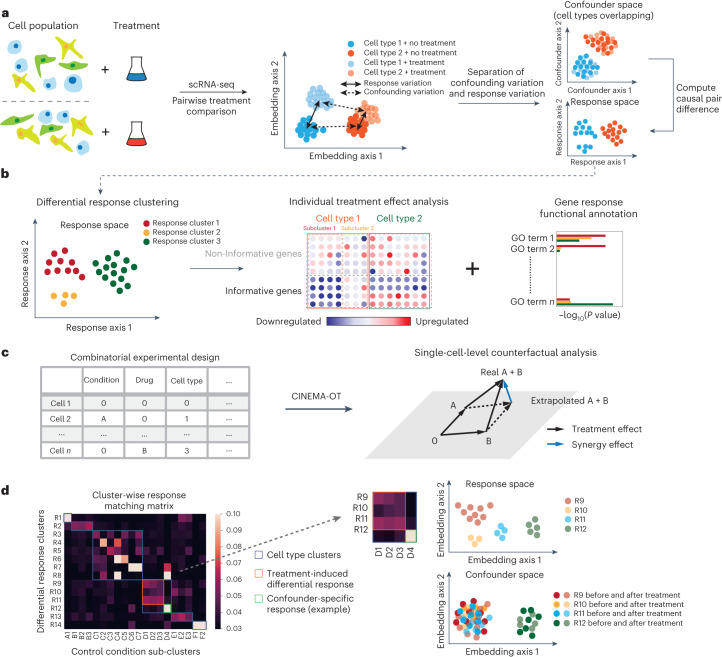
Recent advancements in single-cell technologies allow characterization of experimental perturbations at single-cell resolution. While methods have been developed to analyze such experiments, the application of a strict causal framework has not yet been explored for the inference of treatment effects at the single-cell level. Here we present a causal-inference-based approach to single-cell perturbation analysis, termed CINEMA-OT (causal independent effect module attribution + optimal transport). CINEMA-OT separates confounding sources of variation from perturbation effects to obtain an optimal transport matching that reflects counterfactual cell pairs. These cell pairs represent causal perturbation responses permitting a number of novel analyses, such as individual treatment-effect analysis, response clustering, attribution analysis, and synergy analysis. We benchmark CINEMA-OT on an array of treatment-effect estimation tasks for several simulated and real datasets and show that it outperforms other single-cell perturbation analysis methods. Finally, we perform CINEMA-OT analysis of two newly generated datasets: (1) rhinovirus and cigarette-smoke-exposed airway organoids, and (2) combinatorial cytokine stimulation of immune cells. In these experiments, CINEMA-OT reveals potential mechanisms by which cigarette-smoke exposure dulls the airway antiviral response, as well as the logic that governs chemokine secretion and peripheral immune cell recruitment.
Overview
CoChat Summary
TL;DR
CINEMA-OT is a causal-inference framework for single-cell perturbation analysis that separates confounding variation from treatment-associated variation using ICA and then matches counterfactual cell pairs via entropy-regularized optimal transport. It benchmarks favorably against existing methods and reveals heterogeneous, synergistic responses in airway organoids exposed to rhinovirus and cigarette smoke and in cytokine-stimulated immune cells.
Key findings
- CINEMA-OT identifies confounder signals with ICA and a Chatterjee’s coefficient-based test, then uses weighted optimal transport to generate causal counterfactual cell pairs and individual treatment effects (ITEs).
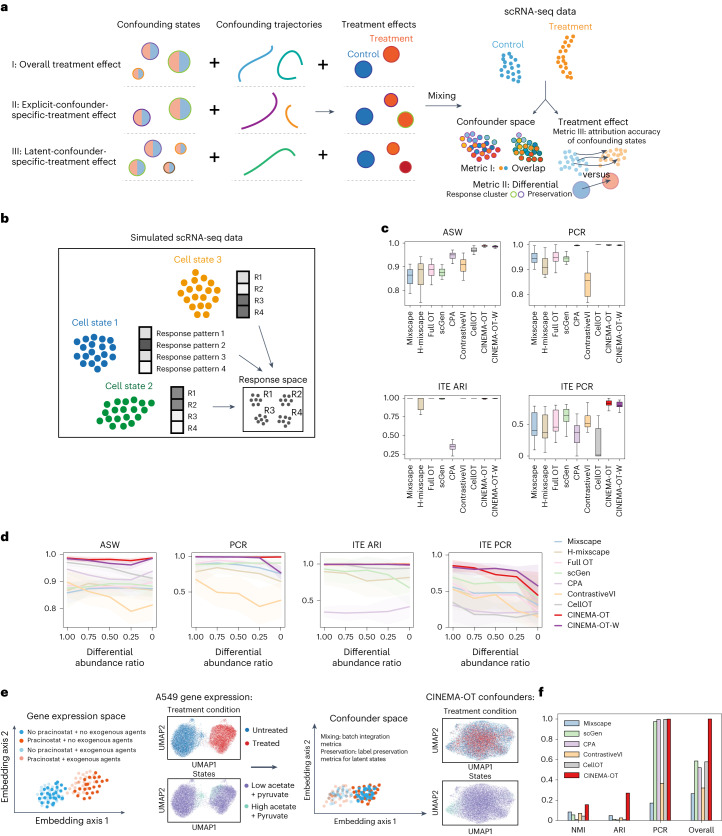
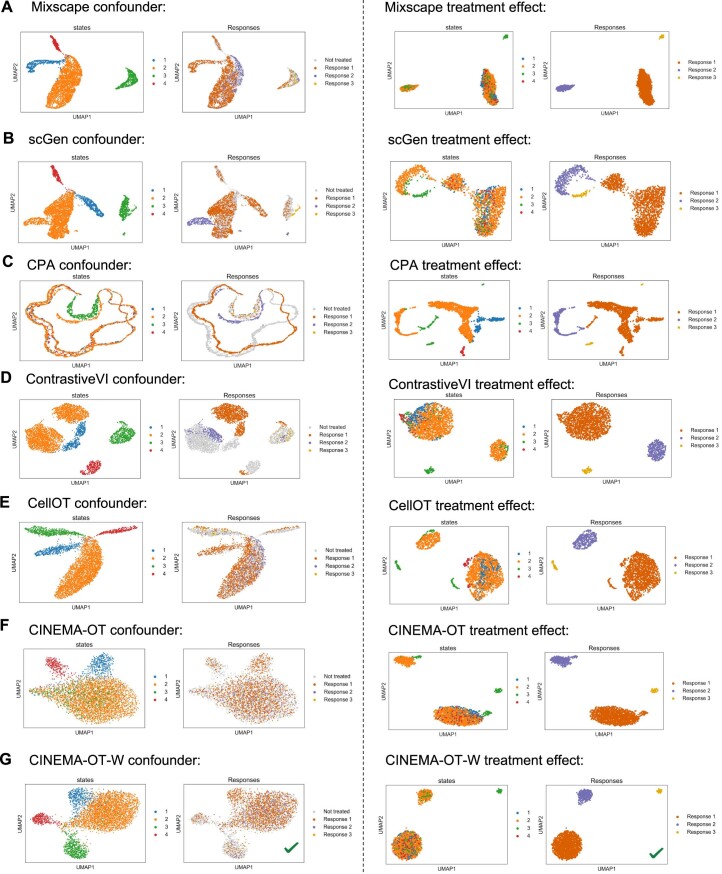
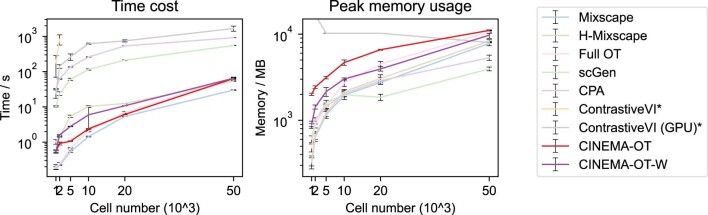
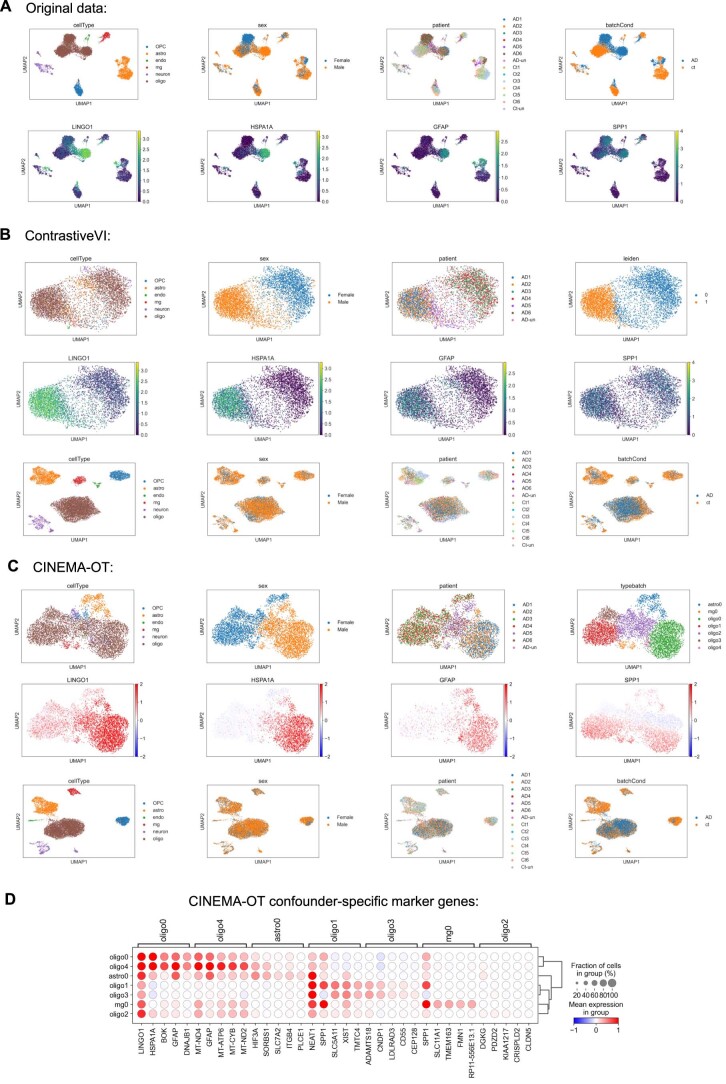
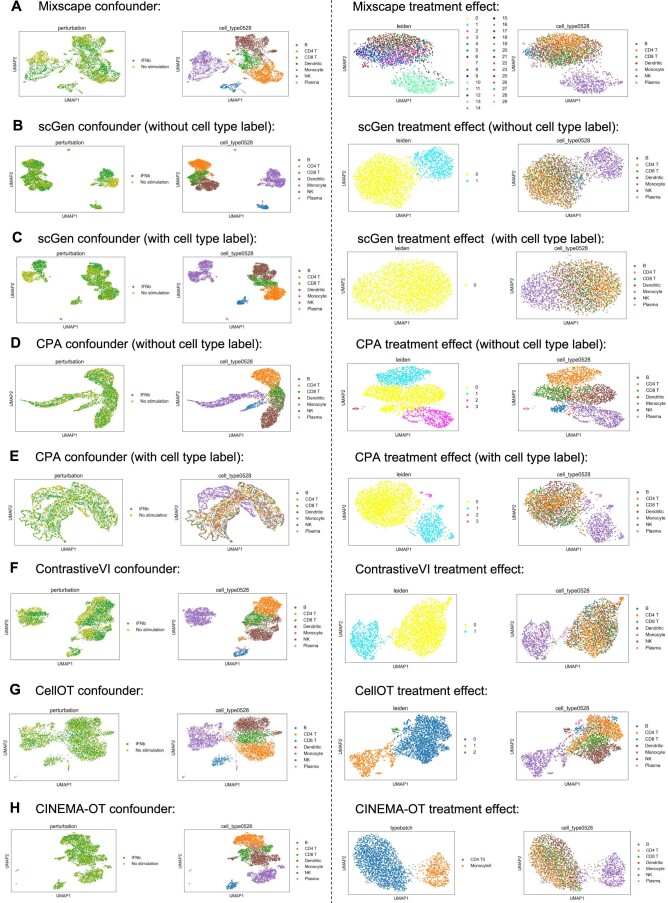
- In simulated and real benchmarks, CINEMA-OT outperformed Mixscape, Harmony-Mixscape, scGen, CPA, ContrastiveVI, CellOT, and Full OT in treatment-effect attribution and batch mixing, while preserving differential-response clusters; it ran in approximately 1 min for 50,000 cells and used less than 12 GB memory.
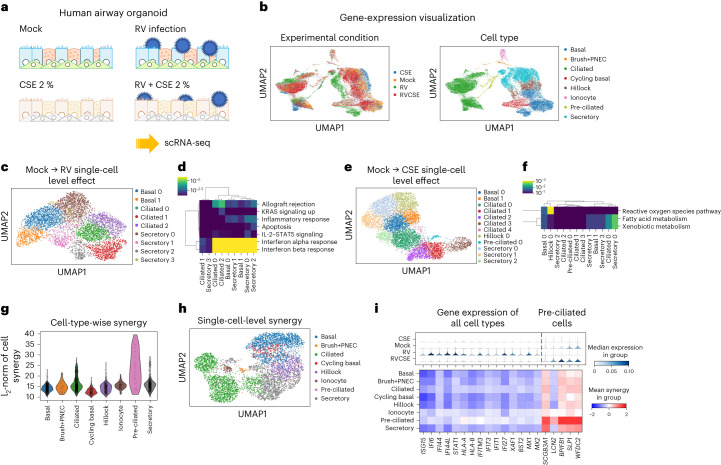
- In human airway organoids (26,420 cells across mock, RV, CSE, and RVCSE), CINEMA-OT found that cigarette-smoke exposure broadly reduced interferon-stimulated gene responses to rhinovirus, while pre-ciliated cells showed synergistic induction of secretory genes such as SCGB3A1, LCN2, BPIFB1, SLPI, and WFDC2.
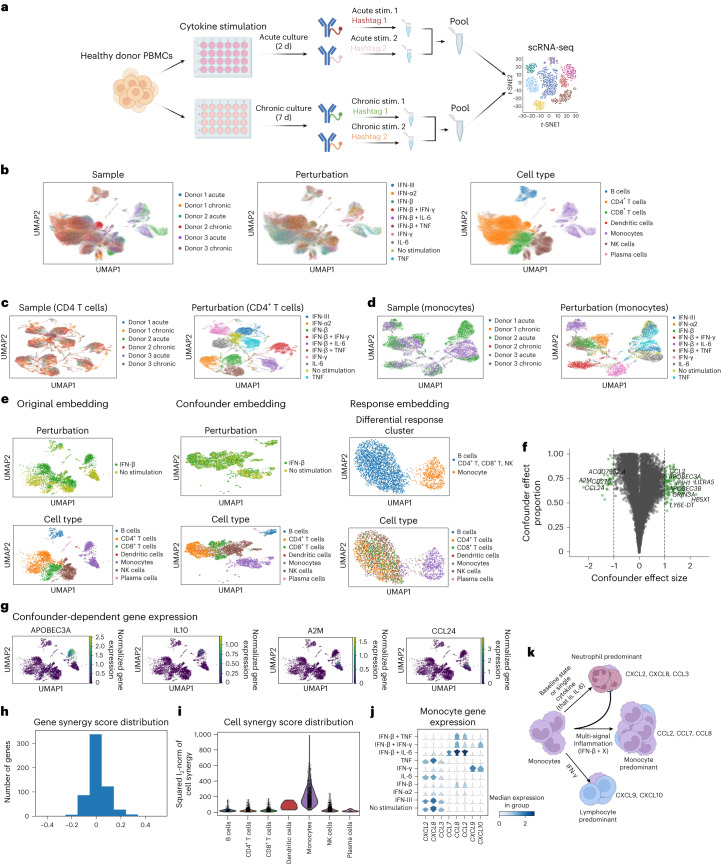
- In combinatorial cytokine stimulation of PBMCs, CINEMA-OT identified monocyte-enriched synergistic chemokine programs, including inhibition of baseline neutrophil chemotactic signaling and induction of monocyte chemotactic signaling with IFN-β + IL-6, and lymphocyte-predominant chemokines with added IFN-γ.
Methods
- CINEMA-OT is an unsupervised method: PCA embedding, FastICA decomposition, Chatterjee’s cross-rank coefficient to separate confounder versus treatment-associated independent components, and entropy-regularized optimal transport solved by Sinkhorn–Knopp to match cells across conditions.
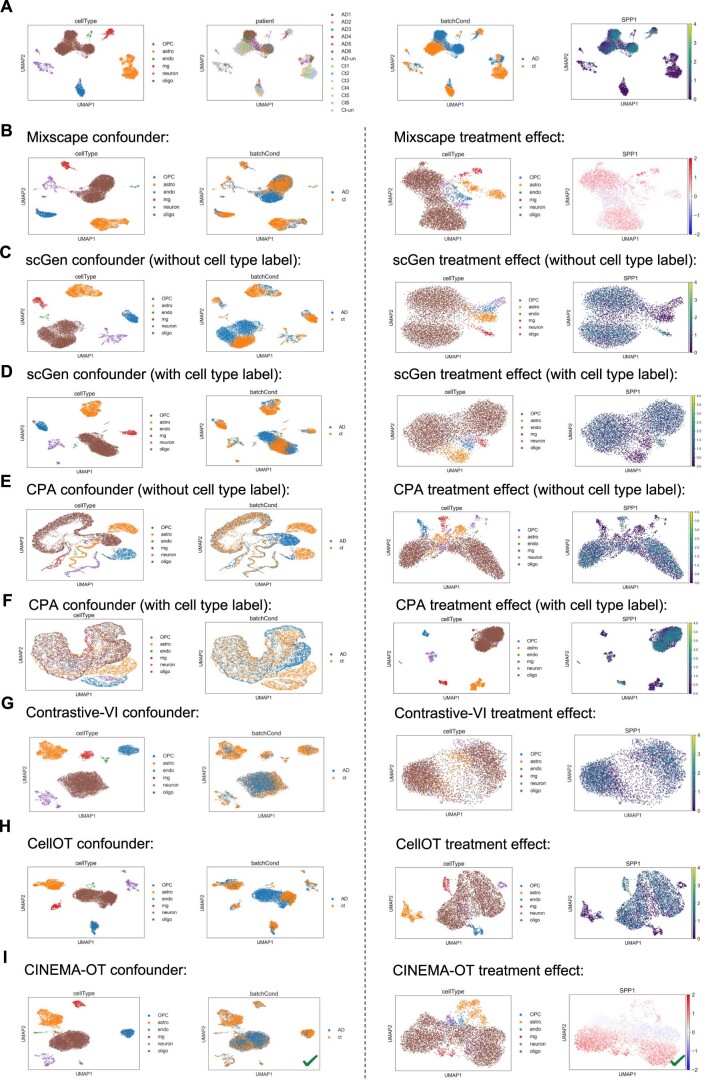
- Benchmarks used simulated scRNA-seq data (1,000 genes × 5,000 cells with 2–5 cell states), the Alzheimer’s entorhinal cortex dataset, and the sci-Plex drug perturbation dataset; comparisons included Mixscape, Harmony-Mixscape, scGen, CPA, ContrastiveVI, CellOT, and Full OT.
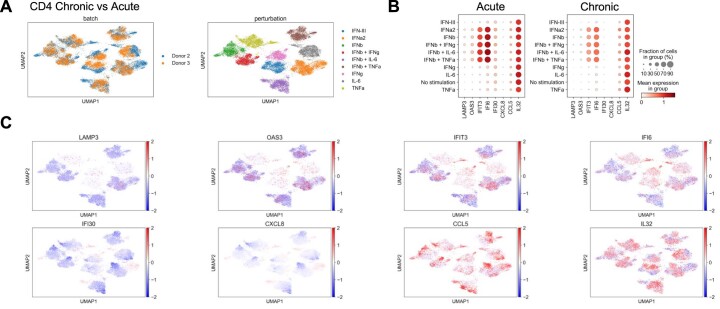
- New datasets included primary human bronchial organoids infected with mock or rhinovirus with/without 2% cigarette-smoke extract (26,420 cells, four samples) and PBMCs from three healthy donors stimulated acutely (2 d) or chronically (7 d) with type I, II, and III IFNs and combinations with TNF or IL-6.
Limitations
- Stated: CINEMA-OT faces bias–variance trade-offs in optimal transport smoothness; too much smoothing can create false positives, while too little harms stability and increases variance.
- Stated: CINEMA-OT cannot extrapolate to unmeasured perturbation–cell pairs, is not designed for cases where changes in confounder distributions are the primary effect of interest, and its current implementation does not perform count modeling, so gene-level differential expression may still be affected by substantial batch effects.
- Stated: CINEMA-OT-W addresses differential abundance but its theoretical foundation no longer holds under differential abundance, and selecting its clustering resolution may require prior biological knowledge; the text also notes that CINEMA-OT can tolerate only moderate differential abundance without CINEMA-OT-W.
Model-written summary. Check it against the paper before relying on it.
Integrity signals
Registry
Cites
Statistics
Figures

Verification
Claims the paper makes
10 Valid · 2 Not valid · 11 Not checked · 88 Own results and interpretations
At least one cited source doesn’t support this claim or points to a different paper, and none confirmed it — see the verdicts below.
In the paper
“Previous studies of viral infection using this model considered gene expression in each cell type, but not heterogeneous response patterns, which may be of biological and clinical relevance in understanding the tissue response to respiratory virus infections44,45.”
§ Causal identification of single-cell experimental perturbation effects with CINEMA-OT > Main > Results
What the sources say
- Disputedcites [44] Cheemarla NR Dynamic innate immune response determines susceptibility to SARS-CoV-2 infection and early replication kinetics J. Exp. Med. 2021 218 e20210583 10.1084/jem.20210583 34128960 PMC8210587 sourceExperimental — accuracy not yet measured
Our copy of Cheemarla et al. shows the study did both things the citing sentence separates: it annotated scRNA-seq clusters to the seven major airway epithelial cell groups (Materials and methods, 'Experimental model and subject details'), and it explicitly examined heterogeneous, cell-by-cell response patterns — Results, 'RV induces an IFN response in bystander cells' states they 'performed scRNA-seq ... to evaluate the host ISG response at single-cell resolution', finding RV RNA in only 70 of 4,200 cells (1.67%), predominantly ciliated cells but spanning all major cell types, with ISGs elevated in uninfected bystander cells. The first half of the characterization (gene expression per cell type) is accurate, but the attributed gap — that heterogeneous response patterns were not considered — is contrary to what the paper reports. (LLM, conf=0.70)
Checked by a reasoning model — may be wrong.
- Disputedcites [45] Ravindra NG Single-cell longitudinal analysis of SARS-CoV-2 infection in human airway epithelium identifies target cells, alterations in gene expression, and cell state changes PLoS Biol. 2021 19 e3001143 10.1371/journal.pbio.3001143 33730024 PMC8007021 sourceExperimental — accuracy not yet measured
Our copy of Ravindra et al. (2021) is a single-cell longitudinal scRNA-seq study of SARS-CoV-2 in HBEC air–liquid interface cultures, and it explicitly resolves heterogeneous responses within each cell type rather than ignoring them: the Results section 'Differentially expressed genes in response to SARS-CoV-2 infection' analyses DEGs 'between infected and uninfected bystander cells of a given cell type' for ciliated, basal, club and BC/club cells. The 'Innate immune response to SARS-CoV-2 infection' section likewise reports cell-intrinsic IFN/IL-6 induction in infected but not bystander cells of the same populations, with ISGs spreading in trans, and the Methods ('scRNA-seq data analysis') define a per-cell MELD metric of transcriptomic similarity to infected cells (−1 bystander to +1 infected) precisely to capture per-cell variation. So the source contradicts the attributed characterization that it considered gene expression per cell type 'but not heterogeneous response patterns'; at most it supports the per-cell-type gene-expression half of the sentence. (LLM, conf=0.78)
Checked by a reasoning model — may be wrong.
plain- Asserted: passes — The authors put it forward as true.
- Checkable: passes — It can be checked against evidence.
- Load-bearing: passes — The paper’s conclusions depend on it.
- Based: passes — The paper gives a reason why it holds.
- Disputed
The cited sources support only part of this claim — read each source’s verdict below.
In the paper
“A key difficulty for applying the potential outcome framework for our task is ‘the mixing of confounders with outcomes’.”
§ Causal identification of single-cell experimental perturbation effects with CINEMA-OT > Main > Results
What the sources say
- Partly supportedcites [19] Squires C Uhler C Causal structure learning: A combinatorial perspective Found. Comput. Math. 2023 23 1781 1815 10.1007/s10208-022-09581-9 PMC9342837 35935470 sourceExperimental — accuracy not yet measured
The “Graphical Representations for Latent Confounding” section says latent confounders must be accounted for to learn causal structure accurately. The cited passages do not describe a difficulty in applying the potential outcome framework or say that confounders are mixed with outcomes; searches for those terms found no such passage. Page numbers were unavailable in our copy. (LLM, conf=0.78)
plainstates an association- Asserted: passes — The authors put it forward as true.
- Checkable: passes — It can be checked against evidence.
- Load-bearing: passes — The paper’s conclusions depend on it.
- Based: passes — The paper gives a reason why it holds.
- Partly supported
The cited sources that could be checked couldn’t confirm or dispute this claim.
In the paper
“A great deal of variability in cellular responses to treatment may be attributable to underlying confounding variation10.”
§ Causal identification of single-cell experimental perturbation effects with CINEMA-OT > Main
What the sources say
- Could not verifycites [10] VanderWeele TJ Shpitser I On the definition of a confounder Ann. Stat. 2013 41 196 10.1214/12-AOS1058 25544784 PMC4276366 sourceExperimental — accuracy not yet measured
The Introduction defines confounding in terms of exposure and counterfactual outcomes, while Section 3 discusses bias in estimates of causal effects. Neither passage addresses cellular responses or suggests that confounding variation accounts for a great deal of their variability; searches for cellular response variability and heterogeneous treatment effects found no such passage. No page numbers were available in our copy. (LLM, conf=0.76)
hedgedstates a possible cause- Asserted: passes — The authors put it forward as true.
- Checkable: passes — It can be checked against evidence.
- Load-bearing: passes — The paper’s conclusions depend on it.
- Based: passes — The paper gives a reason why it holds.
- Could not verify
The cited sources support only part of this claim — read each source’s verdict below.
In the paper
“There are a number of existing methods that perform perturbation-effect analysis in single-cell omics data, but none of them achieve guaranteed confounder identification, which is a necessary condition for interpretable causal-effect estimation.”
§ Causal identification of single-cell experimental perturbation effects with CINEMA-OT > Main > Results
What the sources say
- Partly supportedcites [3] Adamson B A multiplexed single-cell CRISPR screening platform enables systematic dissection of the unfolded protein response Cell 2016 167 1867 1882 10.1016/j.cell.2016.11.048 27984733 PMC5315571 sourceExperimental — accuracy not yet measured
The Introduction (page unavailable) describes Perturb-seq as a method for analyzing single-cell perturbation responses and says its pipeline isolates those responses from confounding effects such as cell cycle. It does not claim that existing methods lack guaranteed confounder identification or that such a guarantee is necessary for interpretable causal-effect estimation. (LLM, conf=0.86)
- Not checked yetcites [4] Dixit A Perturb-seq: dissecting molecular circuits with scalable single-cell rna profiling of pooled genetic screens ell 2016 167 1853 1866 PMC5181115 27984732
- Partly supportedcites [5] Yang L scMAGeCK links genotypes with multiple phenotypes in single-cell CRISPR screens Genome Biol. 2020 21 19 10.1186/s13059-020-1928-4 31980032 PMC6979386 sourceExperimental — accuracy not yet measured
The Results section, “Comparisons with clustering analysis and other algorithms” (page unavailable), describes several methods for analyzing perturbation effects in single-cell CRISPR data. Neither that comparison nor the additional passages retrieved addresses guaranteed confounder identification or says it is necessary for interpretable causal-effect estimation. (LLM, conf=0.85)
- Partly supportedcites [6] Duan B Model-based understanding of single-cell CRISPR screening Nat. Commun. 2019 10 2233 10.1038/s41467-019-10216-x 31110232 PMC6527552 sourceExperimental — accuracy not yet measured
The Discussion (page unavailable) describes MUSIC as a method for estimating and prioritizing perturbation effects in single-cell CRISPR screening, supporting the claim that such analysis methods exist. The Introduction and Methods discuss analytical challenges and perturbation-effect calculations, but our copy does not say that existing methods lack guaranteed confounder identification or that such identification is necessary for interpretable causal-effect estimation (searched: confounder identification, confounding, causal inference). (LLM, conf=0.83)
- Partly supportedcites [7] Jin X In vivo Perturb-seq reveals neuronal and glial abnormalities associated with autism risk genes Science 2020 370 eaaz6063 10.1126/science.aaz6063 33243861 PMC7985844 sourceExperimental — accuracy not yet measured
The Methods Summary (Perturb-Seq analysis; page unavailable) describes a method for testing perturbation effects in single-cell data, including adjustments for batch and gene count. The paper does not establish that no existing method guarantees confounder identification or that such identification is necessary for interpretable causal-effect estimation. (LLM, conf=0.84)
- Partly supportedcites [11] Papalexi E Characterizing the molecular regulation of inhibitory immune checkpoints with multimodal single-cell screens Nat. Genet. 2021 53 322 331 10.1038/s41588-021-00778-2 33649593 PMC8011839 sourceExperimental — accuracy not yet measured
The section “Perturbation signature removes confounding variation” (page not given) describes a single-cell method for analyzing perturbation effects and mitigating confounding variation. The Discussion (page not given) says the method can remove confounding variation even when its sources are unknown. The paper does not establish that no existing method guarantees confounder identification or that such identification is necessary for interpretable causal-effect estimation. (LLM, conf=0.85)
- Not checked yetcites [22] Lotfollahi M Wolf FA Theis FJ scGen predicts single-cell perturbation responses Nat. Methods 2019 16 715 721 10.1038/s41592-019-0494-8 31363220 source
- Partly supportedcites [23] Lotfollahi M Predicting cellular responses to complex perturbations in high‐throughput screens Mol. Syst. Biol. 2023 19 e11517 10.15252/msb.202211517 37154091 PMC10258562 sourceExperimental — accuracy not yet measured
The Introduction discusses existing methods for modeling single-cell perturbations, supporting the claim that such methods exist. Neither the Introduction nor the searched passages on covariates and counterfactual predictions address guaranteed confounder identification or say it is necessary for interpretable causal-effect estimation. (LLM, conf=0.78)
- Not checked yetcites [24] Weinberger E Lin C Lee SI Isolating salient variations of interest in single-cell data with contrastiveVI Nat. Methods 2023 20 1336 1345 10.1038/s41592-023-01955-3 37550579 source
- Not checked yetcites [25] Bunne, C., Stark, S. G., Gut, G. et al. Learning single-cell perturbation responses using neural optimal transport. Nat. Methods (in the press). PMC10630137 37770709
plain- Asserted: passes — The authors put it forward as true.
- Checkable: passes — It can be checked against evidence.
- Load-bearing: passes — The paper’s conclusions depend on it.
- Based: passes — The paper gives a reason why it holds.
- Partly supported
Every source the paper cites for this claim was checked and supports it.
In the paper
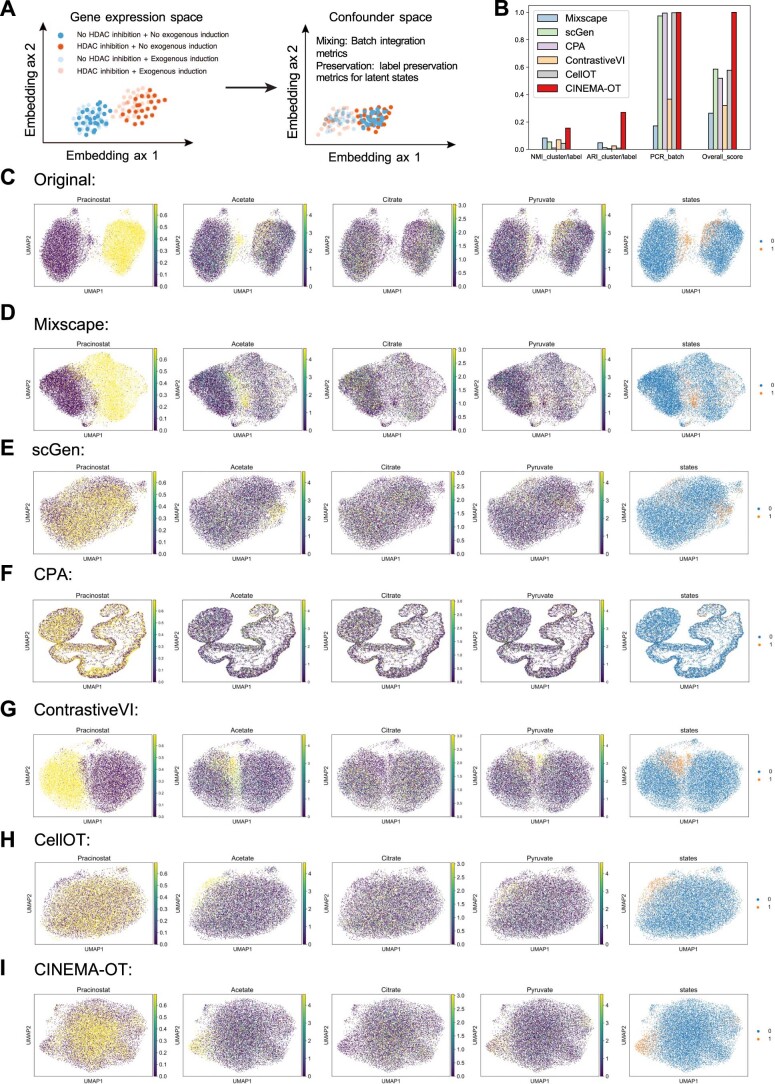
“As HDAC inhibitors act partly through the deprivation of acetyl-CoA, we expect that the relative abundance of acetyl-CoA precursors within a cell would modulate the effect of HDAC inhibitor exposure, and acetyl-CoA precursors can be considered confounders8 (Fig. 3e).”
§ Causal identification of single-cell experimental perturbation effects with CINEMA-OT > Main > Results
What the sources say
- Supportedcites [8] Srivatsan SR Massively multiplex chemical transcriptomics at single-cell resolution Science 2020 367 45 51 10.1126/science.aax6234 31806696 PMC7289078 source
The Results section 'Inference of chemical and mechanistic properties of HDAC inhibitors' states that HDAC inhibition induces 'an acetyl-CoA-deprived state' and that supplementing acetyl-CoA precursors (acetate, pyruvate, citrate) or inhibiting ACLY/ACSS2/PDH shifted cells along the HDAC-inhibitor pseudodose trajectory — i.e. precursor abundance modulates the effect of HDAC inhibitor exposure. The Discussion adds that 'variation in cells' acetate reservoirs is a potential explanation for their heterogeneous responses to HDAC inhibitors', which is the source's version of treating precursors as a confounding variable. The word 'confounder' itself does not appear in our copy; that label is the citing authors' framing of the source's finding. (LLM, conf=0.82)
plainstates a cause- Asserted: passes — The authors put it forward as true.
- Checkable: passes — It can be checked against evidence.
- Load-bearing: passes — The paper’s conclusions depend on it.
- Based: passes — The paper gives a reason why it holds.
- Supported
45 more claims · 2 with their cited sources checked
Create a free account to see all 111 claims and to verify the 20 references still open.
- Probably not a substantial claim. 35
- It may state two separate claims as one. 35
Claims other papers make about this one
Each is checked against this paper’s own text: does it say what the citing paper says it does?
In the citing paper
“CINEMA-OT [40] is a framework for causal learning and optimal transport that aids in distinguishing between intrinsic cell-state effects (confounders) and perturbation effects for scRNA-seq datasets.”
From A mini-review on perturbation modelling across single-cell omic modalities (2024) · cites this paper as [40]
In the citing paper
“CINEMA-OT can be applied for individual treatment-effect analysis, response clustering, attribution analysis, and synergy analysis.”
From A mini-review on perturbation modelling across single-cell omic modalities (2024) · cites this paper as [40]
Self-check
Percentages, sums and reported differences re-computed from the paper’s own numbers.
Each contradiction between two passages listed here was confirmed by an independent check.
Rated major: it would touch a result — a value a result rests on, reported and recomputed p-values on opposite sides of the significance level, two passages that conflict with no sign which is right, or a cited work retracted before this paper was published.
In the paper
§ Causal identification of single-cell experimental perturbation effects with CINEMA-OT > Main > Results
“we subjected peripheral blood mononuclear cells (PBMCs) from multiple healthy donors to acute (2 d) or chronic (7 d) stimulation with type I, type II, and type III IFNs”
§ Causal identification of single-cell experimental perturbation effects with CINEMA-OT > Methods > Interferon treatment data
“and combinatorial cytokines IFN-β + IL-6, IFN-β + TNF, IFN-β + IFN-γ at indicated concentrations above for up to 48 h.”
Rated minor: it would not touch a result — a value no result rests on, a p-value that stays on the same side of the significance level, or a conflict that is clerical, resolved elsewhere in the paper, or outside its own findings.
In the paper
§ Causal identification of single-cell experimental perturbation effects with CINEMA-OT > Main > Results
“f, Two diverging patterns among CINEMA-OT identified synergistic genes, visualized by stacked violin plots and dot plots.”
§ Causal identification of single-cell experimental perturbation effects with CINEMA-OT > Main > Results
“f, Gene set enrichment analysis of mock to CSE response clusters identified by CINEMA-OT, colored by adjusted P value.”
Rated minor: it would not touch a result — a value no result rests on, a p-value that stays on the same side of the significance level, or a conflict that is clerical, resolved elsewhere in the paper, or outside its own findings.
In the paper
§ Causal identification of single-cell experimental perturbation effects with CINEMA-OT > Methods > Rhinovirus infection data
“We annotated eight cell clusters on the basis of known cell-type markers of airway epithelial cells66: cycling basal, basal, hillock, secretory, pre-ciliated, ciliated, ionocyte, PNECs, and brush cells.”
§ Causal identification of single-cell experimental perturbation effects with CINEMA-OT > Main > Results
“We first performed preprocessing of the dataset and annotated eight cell clusters in total, including major cell types in the airway (basal, secretory, ciliated) and other rare (ionocyte, pulmonary neuroendocrine cells (PNECs), and brush) or transitional (hillock and pre-ciliated) cell types (Fig. 4b).”
Citations
Cites
Scikit-learn: Machine Learning in Python
Pedregosa, F., Varoquaux, G., Gramfort, A., Michel, V., Thirion, B., Grisel, O., Blondel, M., Müller, A., Nothman, J., Louppe, G., et al. (2012) · arXiv · doi:10.48550/arxiv.1201.0490 · Cited by 71,016
Subramanian, A., Tamayo, P., Mootha, V. K., Mukherjee, S., Ebert, B. L., Gillette, M. A., Paulovich, A., Pomeroy, S. L., Golub, T. R., Lander, E. S., et al. (2005) · Proceedings of the National Academy of Sciences · doi:10.1073/pnas.0506580102 · Cited by 53,625 · cited 1×
“We may also employ clustering techniques, such as Leiden clustering [23] to group cells by similarity of treatment responses.”
Robinson, M. D., McCarthy, D. J., & Smyth, G. K. (2010) · Bioinformatics · doi:10.1093/bioinformatics/btp616 · Cited by 41,364
limma powers differential expression analyses for RNA-sequencing and microarray studies
Ritchie, M. E., Phipson, B., Wu, D., Hu, Y., Law, C. W., Shi, W., & Smyth, G. K. (2015) · Nucleic Acids Research · doi:10.1093/nar/gkv007 · Cited by 40,458 · cited 1×
“[9–13] 2.”
Enrichr: a comprehensive gene set enrichment analysis web server 2016 update
Kuleshov, M. V., Jones, M. R., Rouillard, A. D., Fernandez, N. F., Duan, Q., Wang, Z., Koplev, S., Jenkins, S. L., Jagodnik, K. M., Lachmann, A., et al. (2016) · Nucleic Acids Research · doi:10.1093/nar/gkw377 · Cited by 10,799 · cited 1×
“These genes are input into GSEApy for analysis by functional signatures [52, 53].”
Fast, sensitive and accurate integration of single-cell data with Harmony
Korsunsky, I., Millard, N., Fan, J., Slowikowski, K., Zhang, F., Wei, K., Baglaenko, Y., Brenner, M., Loh, P.-R., & Raychaudhuri, S. (2019) · Nature Methods · doi:10.1038/s41592-019-0619-0 · Cited by 10,488
UMAP: Uniform Manifold Approximation and Projection
McInnes, L., Healy, J., Saul, N., & Großberger, L. (2018) · Journal of Open Source Software · doi:10.21105/joss.00861 · Cited by 9,826
Estimating causal effects of treatments in randomized and nonrandomized studies
Rubin, D. B. (1974) · Journal of Educational Psychology · doi:10.1037/h0037350 · Cited by 9,436 · cited 1×
“To perform causal single-cell perturbation effect inference, we have adopted the potential outcome causal framework [22, 26].”
SCANPY: large-scale single-cell gene expression data analysis
Wolf, F. A., Angerer, P., & Theis, F. J. (2018) · Genome Biology · doi:10.1186/s13059-017-1382-0 · Cited by 8,881 · cited 1×
“Prior to FastICA, input data is PCA-transformed using scanpy [48].”
UMAP: Uniform Manifold Approximation and Projection for Dimension Reduction
McInnes, L., Healy, J., & Melville, J. (2018) · arXiv · doi:10.48550/arxiv.1802.03426 · Cited by 7,101
Scenic: single-cell regulatory network inference and clustering.
Aibar, S., González-Blas, C. B., Moerman, T., Huynh-Thu, V. A., Imrichova, H., Hulselmans, G., Rambow, F., Marine, J.-C., Geurts, P., Aerts, J., et al. (2017) · Nature Methods · doi:10.1038/nmeth.4463 · Cited by 6,520
McCarthy, D. J., Chen, Y., & Smyth, G. K. (2012) · Nucleic Acids Research · doi:10.1093/nar/gks042 · Cited by 5,195
Causal Inference for Statistics, Social, and Biomedical Sciences: An Introduction
Imbens, G. W., & Rubin, D. B. (2015) · doi:10.1017/cbo9781139025751 · Cited by 4,210
Villani, C. (2009) · Grundlehren der mathematischen Wissenschaften · doi:10.1007/978-3-540-71050-9 · Cited by 3,669
5th International Conference on Learning Representations (ICLR 17)
Havrylov, S., & Titov, I. (2017) · Cited by 3,503
Deep generative modeling for single-cell transcriptomics
Lopez, R., Regier, J., Cole, M. B., Jordan, M. I., & Yosef, N. (2018) · Nature Methods · doi:10.1038/s41592-018-0229-2 · Cited by 2,530 · cited 1×
“[3–7, 18– 21 ] While We consider confounding variation to be causal of differential response, as well as differential underlying phenotype [23].”
BackgroundOpportunities and challenges in long-read sequencing data analysis
Amarasinghe, S. L., Su, S., Dong, X., Zappia, L., Ritchie, M. E., & Gouil, Q. (2020) · Genome Biology · doi:10.1186/s13059-020-1935-5 · Cited by 2,530
Cui, P., Zhang, S., Ding, F., Ali, S., & Xiong, L. (2014) · Genome Biology · doi:10.1186/gb-2014-15-1-r1 · Cited by 2,294
A Linear Non-Gaussian Acyclic Model for Causal Discovery
Shimizu, S., Hoyer, P. O., Hyvärinen, A., & Kerminen, A. (2006) · Cited by 2,264
Dixit, A., Parnas, O., Li, B., Chen, J., Fulco, C. P., Jerby-Arnon, L., Marjanovic, N. D., Dionne, D., Burks, T., Raychowdhury, R., et al. (2016) · Cell · doi:10.1016/j.cell.2016.11.038 · Cited by 1,863
DISTRIBUTION OF EIGENVALUES FOR SOME SETS OF RANDOM MATRICES
Marčenko, V. A., & Pastur, L. A. (1967) · Mathematics of the USSR-Sbornik · doi:10.1070/sm1967v001n04abeh001994 · Cited by 1,713 · cited 1×
“It does diagonal matrix transformation of the data on both sides and thresholding based on the Marchenko-Pastur law [46].”
MethodChen, Y., Lun, A. T. L., & Smyth, G. K. (2016) · F1000Research · doi:10.12688/f1000research.8987.1 · Cited by 1,601
RNA virus interference via CRISPR/Cas13a system in plants
Aman, R., Ali, Z., Butt, H., Mahas, A., Aljedaani, F., Khan, M. Z., Ding, S., & Mahfouz, M. (2018) · Genome Biology · doi:10.1186/s13059-017-1381-1 · Cited by 1,497
Benchmarking atlas-level data integration in single-cell genomics
Luecken, M. D., Büttner, M., Chaichoompu, K., Danese, A., Interlandi, M., Mueller, M. F., Strobl, D. C., Zappia, L., Dugas, M., Colomé-Tatché, M., et al. (2022) · Nature Methods · doi:10.1038/s41592-021-01336-8 · Cited by 1,438 · cited 3×
“These metrics are batch mixing metrics used to evaluate batch correction methods performance in the systematic benchmarking paper [55].”
InfluentialHomeostasis, Inflammation, and Disease Susceptibility
Kotas, M. E., & Medzhitov, R. (2015) · Cell · doi:10.1016/j.cell.2015.02.010 · Cited by 1,213 · cited 1×
“Collectively, confounding factors can be thought of as a cell’s context that may both influence a cell’s underlying gene expression profile, and condition treatment-induced gene signatures.”
Histone Deacetylase Inhibitors as Anticancer Drugs
Eckschlager, T., Plch, J., Stiborova, M., & Hrabeta, J. (2017) · International Journal of Molecular Sciences · doi:10.3390/ijms18071414 · Cited by 1,206 · cited 1×
“HDAC inhibitors act as antitumoral agents through antagonizing the pro-transcriptional effects of histone acetylation and silencing the expression of oncogenic factors through chromatin remodeling [35].”
BackgroundAdamson, B., Norman, T. M., Jost, M., Cho, M. Y., Nuñez, J. K., Chen, Y., Villalta, J. E., Gilbert, L. A., Horlbeck, M. A., Hein, M. Y., et al. (2016) · Cell · doi:10.1016/j.cell.2016.11.048 · Cited by 1,193 · cited 1×
“Several pioneering works in the field propose the use of factor models to identify pseudo-bulk level perturbation effects, including LRICA [4], MIMOSCA [3], scMAGeCK [5], MUSIC [6], and WGCNA/STM [7].”
Visualizing structure and transitions in high-dimensional biological data
Moon, K. R., van Dijk, D., Wang, Z., Gigante, S., Burkhardt, D. B., Chen, W. S., Yim, K., Elzen, A. V. D., Hirn, M. J., Coifman, R. R., et al. (2019) · Nature Biotechnology · doi:10.1038/s41587-019-0336-3 · Cited by 1,065 · cited 1×
“We may employ dimensionality reduction techniques such as t-SNE, UMAP, or PHATE [49–51] to visualize clusters in the response space.”
A single-cell atlas of the airway epithelium reveals the CFTR-rich pulmonary ionocyte
Plasschaert, L. W., Žilionis, R., Choo-Wing, R., Savova, V., Knehr, J., Roma, G., Klein, A. M., & Jaffe, A. B. (2018) · Nature · doi:10.1038/s41586-018-0394-6 · Cited by 1,047 · cited 1×
“These markers are checked based on known cell type markers of airway epithelial cells [56], based on which each cell is assigned to be of one of eight cell types: proliferating basal, basal, hillock, club, goblet, pre-ciliated, ionocyte and neuroendocrine cells.”
A Relationship Between Arbitrary Positive Matrices and Doubly Stochastic Matrices
Sinkhorn, R. (1964) · The Annals of Mathematical Statistics · doi:10.1214/aoms/1177703591 · Cited by 1,032
Treatment of Multiple Sclerosis: A Review
Hauser, S. L., & Cree, B. A. C. (2020) · The American Journal of Medicine · doi:10.1016/j.amjmed.2020.05.049 · Cited by 969 · cited 2×
“In this study, we applied CINEMA-OT to deconvolve confounder effects due to exogenous addition of metabolites (Figure 3), cigarette smoke exposure and viral infection (Figure 4) and combinatorial cytokine treatments of differing durations (Figure 5).”
5-fluorouracil and other fluoropyrimidines in colorectal cancer: Past, present and future
Vodenkova, S., Buchler, T., Cervena, K., Veskrnova, V., Vodicka, P., & Vymetalkova, V. (2020) · Pharmacology & Therapeutics · doi:10.1016/j.pharmthera.2019.107447 · Cited by 956
Grubman, A., Chew, G., Ouyang, J. F., Sun, G., Choo, X. Y., McLean, C., Simmons, R. K., Buckberry, S., Vargas-Landin, D. B., Poppe, D., et al. (2019) · Nature Neuroscience · doi:10.1038/s41593-019-0539-4 · Cited by 956
Differential abundance testing on single-cell data using k-nearest neighbor graphs
Dann, E., Henderson, N. C., Teichmann, S. A., Morgan, M. D., & Marioni, J. C. (2022) · Nature Biotechnology · doi:10.1038/s41587-021-01033-z · Cited by 938 · cited 2×
“[14–17] 3.”
Sala Frigerio, C., Wolfs, L., Fattorelli, N., Thrupp, N., Voytyuk, I., Schmidt, I., Mancuso, R., Chen, W.-T., Woodbury, M. E., Srivastava, G., et al. (2019) · Cell Reports · doi:10.1016/j.celrep.2019.03.099 · Cited by 926
Mathers, T. C., Chen, Y., Kaithakottil, G., Legeai, F., Mugford, S. T., Baa-Puyoulet, P., Bretaudeau, A., Clavijo, B., Colella, S., Collin, O., et al. (2017) · Genome Biology · doi:10.1186/s13059-016-1145-3 · Cited by 822
SCENIC+: single-cell multiomic inference of enhancers and gene regulatory networks
Bravo González-Blas, C., De Winter, S., Hulselmans, G., Hecker, N., Matetovici, I., Christiaens, V., Poovathingal, S., Wouters, J., Aibar, S., & Aerts, S. (2023) · Nature Methods · doi:10.1038/s41592-023-01938-4 · Cited by 778
SCENIC+: single-cell multiomic inference of enhancers and gene regulatory networks
González-Blas, C. B., De Winter, S., Hulselmans, G., Hecker, N., Matetovici, I., Christiaens, V., Poovathingal, S., Wouters, J., Aibar, S., & Aerts, S. (2022) · doi:10.1101/2022.08.19.504505 · Cited by 778
Dissecting cell identity via network inference and in silico gene perturbation
Kamimoto, K., Stringa, B., Hoffmann, C. M., Jindal, K., Solnica-Krezel, L., & Morris, S. A. (2023) · Nature · doi:10.1038/s41586-022-05688-9 · Cited by 677
scGen predicts single-cell perturbation responses
Lotfollahi, M., Wolf, F. A., & Theis, F. J. (2019) · Nature Methods · doi:10.1038/s41592-019-0494-8 · Cited by 661 · cited 1×
“There are a number of existing methods that perform single-cell level perturbation effect analysis [3–7, 18–20, 32].”
Kotliar, D., Veres, A., Nagy, M. A., Tabrizi, S., Hodis, E., Melton, D. A., & Sabeti, P. C. (2019) · eLife · doi:10.7554/elife.43803 · Cited by 563 · cited 1×
“[34] The genes in our simulated data are separated into three subsets, corresponding to the underlying trajectory, cell types, and treatment-associated genes respectively.”
BackgroundBenci, J. L., Johnson, L. R., Choa, R., Xu, Y., Qiu, J., Zhou, Z., Xu, B., Ye, D., Nathanson, K. L., June, C. H., et al. (2019) · Cell · doi:10.1016/j.cell.2019.07.019 · Cited by 541 · cited 1×
“When such effects are present, iterative reweighting may be used to balance cell populations and learn true underlying confounding signals.”
TGF-β – an excellent servant but a bad master
Kubiczkova, L., Sedlarikova, L., Hajek, R., & Sevcikova, S. (2012) · Journal of Translational Medicine · doi:10.1186/1479-5876-10-183 · Cited by 511
Yao, L., Chu, Z., Li, S., Li, Y., Gao, J., & Zhang, A. (2021) · ACM Transactions on Knowledge Discovery from Data · doi:10.1145/3444944 · Cited by 478
Massively multiplex chemical transcriptomics at single-cell resolution
Srivatsan, S. R., McFaline-Figueroa, J. L., Ramani, V., Saunders, L., Cao, J., Packer, J., Pliner, H. A., Jackson, D. L., Daza, R. M., Christiansen, L., et al. (2020) · Science · doi:10.1126/science.aax6234 · Cited by 401 · cited 4×
“Recent advances in single-cell technologies allow complex experiments measuring high dimensional phenotypes at high throughput under diverse stimulation conditions [2–8].”
InfluentialA New Coefficient of Correlation
Chatterjee, S. (2021) · Journal of the American Statistical Association · doi:10.1080/01621459.2020.1758115 · Cited by 374 · cited 1×
“In this study, we applied CINEMA-OT to deconvolve confounder effects due to exogenous addition of metabolites (Figure 3), cigarette smoke exposure and viral infection (Figure 4) and combinatorial cytokine treatments of differing durations (Figure 5).”
Genenames.org: the HGNC and VGNC resources in 2021
Tweedie, S., Braschi, B., Gray, K., Jones, T. E. M., Seal, R. L., Yates, B., & Bruford, E. A. (2021) · Nucleic Acids Research · doi:10.1093/nar/gkaa980 · Cited by 338 · cited 1×
“Genes to be filtered were obtained from the HUGO database [57].”
In vivo Perturb-Seq reveals neuronal and glial abnormalities associated with autism risk genes
Jin, X., Simmons, S. K., Guo, A., Shetty, A. S., Ko, M., Nguyen, L., Jokhi, V., Robinson, E., Oyler, P., Curry, N., et al. (2020) · Science · doi:10.1126/science.aaz6063 · Cited by 317 · cited 2×
“There are a number of existing methods that perform single-cell level perturbation effect analysis [3–7, 18–20, 32].”
Predicting cellular responses to complex perturbations in high‐throughput screens
Lotfollahi, M., Klimovskaia Susmelj, A., De Donno, C., Hetzel, L., Ji, Y., Ibarra, I. L., Srivatsan, S. R., Naghipourfar, M., Daza, R. M., Martin, B., et al. (2023) · Molecular Systems Biology · doi:10.15252/msb.202211517 · Cited by 307 · cited 1×
“In this case, CINEMA-OT can assign weights using confounder labels instead of automatically balancing over all possible covariates.”
Ruiz García, S., Deprez, M., Lebrigand, K., Cavard, A., Paquet, A., Arguel, M.-J., Magnone, V., Truchi, M., Caballero, I., Leroy, S., et al. (2019) · Development · doi:10.1242/dev.177428 · Cited by 297 · cited 1×
“Pre-ciliated cells, sometimes referred to as "deuterosomal" cells, are developing multiciliated cells with the marker genes CCNO and CDC20B [44].”
BackgroundMapping ticks and tick-borne pathogens in China
Zhao, G.-P., Wang, Y.-X., Fan, Z.-W., Ji, Y., Liu, M.-J., Zhang, W.-H., Li, X.-L., Zhou, S.-X., Li, H., Liang, S., et al. (2021) · Nature Communications · doi:10.1038/s41467-021-21375-1 · Cited by 284
On the definition of a confounder
VanderWeele, T. J., & Shpitser, I. (2013) · The Annals of Statistics · doi:10.1214/12-aos1058 · Cited by 268 · cited 2×
“We may also employ clustering techniques, such as Leiden clustering [23] to group cells by similarity of treatment responses.”
BackgroundMethodRavindra, N. G., Alfajaro, M. M., Gasque, V., Huston, N. C., Wan, H., Szigeti-Buck, K., Yasumoto, Y., Greaney, A. M., Habet, V., Chow, R. D., et al. (2021) · PLOS Biology · doi:10.1371/journal.pbio.3001143 · Cited by 258 · cited 1×
“Previous studies only considered gene expression at the cluster level [38] and are unable to detect possibly heterogenous response patterns within clusters, which may be of biological and clinical relevance to the treatment of respiratory virus infections.”
BackgroundSelf-citationEstimation of a Structural Vector Autoregression Model Using Non-Gaussianity
Hyvärinen, A., Zhang, K., Shimizu, S., & Hoyer, P. O. (2010) · doi:10.5555/1756006.1859907 · Cited by 254 · cited 1×
“The LiNGAM framework has been applied to a number of tasks, including: causal discovery for time-series data [38, 39], identifying the features most responsible for an intervention [40], and causal learning across multiple groups [41].”
MethodPapalexi, E., Mimitou, E. P., Butler, A. W., Foster, S., Bracken, B., Mauck, W. M., Wessels, H.-H., Hao, Y., Yeung, B. Z., Smibert, P., et al. (2021) · Nature Genetics · doi:10.1038/s41588-021-00778-2 · Cited by 237 · cited 4×
“There are a number of existing methods that perform single-cell level perturbation effect analysis [3–7, 18–20, 32].”
InfluentialQuantifying the effect of experimental perturbations at single-cell resolution
Burkhardt, D. B., Stanley, J. S., Tong, A., Perdigoto, A. L., Gigante, S. A., Herold, K. C., Wolf, G., Giraldez, A. J., van Dijk, D., & Krishnaswamy, S. (2021) · Nature Biotechnology · doi:10.1038/s41587-020-00803-5 · Cited by 226 · cited 3×
“[14–17] 3.”
In vivo CRISPR screens reveal the landscape of immune evasion pathways across cancer
Dubrot, J., Du, P. P., Lane-Reticker, S. K., Kessler, E. A., Muscato, A. J., Mehta, A., Freeman, S. S., Allen, P. M., Olander, K. E., Ockerman, K. M., et al. (2022) · Nature Immunology · doi:10.1038/s41590-022-01315-x · Cited by 218
Cheemarla, N. R., Watkins, T. A., Mihaylova, V. T., Wang, B., Zhao, D., Wang, G., Landry, M. L., & Foxman, E. F. (2021) · Journal of Experimental Medicine · doi:10.1084/jem.20210583 · Cited by 213 · cited 1×
“In order to demonstrate CINEMA-OT’s ability to perform single-cell level experimental perturbation analysis, we have applied CINEMA-OT to newly-collected scRNA-seq data of rhinovirus infection in primary human airway organoids [37] (Figure 4A).”
Self-citationLearning single-cell perturbation responses using neural optimal transport
Bunne, C., Stark, S. G., Gut, G., del Castillo, J. S., Levesque, M., Lehmann, K.-V., Pelkmans, L., Krause, A., & Rätsch, G. (2023) · Nature Methods · doi:10.1038/s41592-023-01969-x · Cited by 202
Modeling intercellular communication in tissues using spatial graphs of cells
Fischer, D. S., Schaar, A. C., & Theis, F. J. (2023) · Nature Biotechnology · doi:10.1038/s41587-022-01467-z · Cited by 196
Predicting Cellular Responses to Novel Drug Perturbations at a Single-Cell Resolution
Hetzel, L., Boehm, S., Kilbertus, N., Günnemann, S., Lotfollahi, M., & Theis, F. (2022) · neural information processing systems · doi:10.52202/068431-1937 · Cited by 164 · cited 1×
“e: ChemCPA [62], expiMap [63]) to achieve causally-meaningful extrapolation for unseen perturbation effects remains a promising future direction to explore.”
BackgroundOptimal Transport Tools (OTT): A JAX Toolbox for all things WassersteinPreprint
Cuturi, M., Meng-Papaxanthos, L., Tian, Y., Bunne, C., Davis, G., & Teboul, O. (2022) · arXiv (Cornell University) · doi:10.48550/arxiv.2201.12324 · Cited by 161 · cited 1×
“When such effects are present, iterative reweighting may be used to balance cell populations and learn true underlying confounding signals.”
BackgroundDetection of differentially abundant cell subpopulations in scRNA-seq data
Zhao, J., Jaffe, A., Li, H., Lindenbaum, O., Sefik, E., Jackson, R., Cheng, X., Flavell, R. A., & Kluger, Y. (2021) · Proceedings of the National Academy of Sciences · doi:10.1073/pnas.2100293118 · Cited by 154
Single-Cell Transcriptomics: Current Methods and Challenges in Data Acquisition and Analysis
Adil, A., Kumar, V., Jan, A. T., & Asger, M. (2021) · Frontiers in Neuroscience · doi:10.3389/fnins.2021.591122 · Cited by 132 · cited 1×
“Recent advances in single-cell technologies allow complex experiments measuring high dimensional phenotypes at high throughput under diverse stimulation conditions [2–8].”
Variational Autoencoders and Nonlinear ICA: A Unifying Framework
Khemakhem, I., Kingma, D. P., Monti, R. P., & Hyvärinen, A. (2019) · arXiv (Cornell University) · doi:10.48550/arxiv.1907.04809 · Cited by 115 · cited 1×
“While the auto-encoder based methods model confounder variation in general, they can suffer from the fundamental limitation of un-identifiability [36] (See Supplementary notes for a detailed explanation), which can reduce their power in identifying ground truth confounding variations.”
DIALOGUE maps multicellular programs in tissue from single-cell or spatial transcriptomics data
Jerby-Arnon, L., & Regev, A. (2022) · Nature Biotechnology · doi:10.1038/s41587-022-01288-0 · Cited by 113
Biologically informed deep learning to query gene programs in single-cell atlases
Lotfollahi, M., Rybakov, S., Hrovatin, K., Hediyeh-zadeh, S., Talavera-López, C., Misharin, A. V., & Theis, F. J. (2023) · Nature Cell Biology · doi:10.1038/s41556-022-01072-x · Cited by 100 · cited 1×
“e: ChemCPA [62], expiMap [63]) to achieve causally-meaningful extrapolation for unseen perturbation effects remains a promising future direction to explore.”
BackgroundModel-based understanding of single-cell CRISPR screening
Duan, B., Zhou, C., Zhu, C., Yu, Y., Li, G., Zhang, S., Zhang, C., Ye, X., Ma, H., Qu, S., et al. (2019) · Nature Communications · doi:10.1038/s41467-019-10216-x · Cited by 98
scMAGeCK links genotypes with multiple phenotypes in single-cell CRISPR screens
Yang, L., Zhu, Y., Yu, H., Cheng, X., Chen, S., Chu, Y., Huang, H., Zhang, J., & Li, W. (2020) · Genome Biology · doi:10.1186/s13059-020-1928-4 · Cited by 94 · cited 1×
“Several pioneering works in the field propose the use of factor models to identify pseudo-bulk level perturbation effects, including LRICA [4], MIMOSCA [3], scMAGeCK [5], MUSIC [6], and WGCNA/STM [7].”
The transcriptome dynamics of single cells during the cell cycle
Schwabe, D., Formichetti, S., Junker, J. P., Falcke, M., & Rajewsky, N. (2020) · Molecular Systems Biology · doi:10.15252/msb.20209946 · Cited by 79 · cited 1×
“While this assumption is mainly developed for ensuring the ICA identifiability, we note that it is reasonable to assume that the gene expression of a cell is driven by a mixing of underlying independent biological processes, as considered by various previous works [4, 28, 29].”
ResultIsolating salient variations of interest in single-cell data with contrastiveVI
Weinberger, E., Lin, C., & Lee, S.-I. (2023) · Nature Methods · doi:10.1038/s41592-023-01955-3 · Cited by 66 · cited 1×
“In this case, CINEMA-OT can assign weights using confounder labels instead of automatically balancing over all possible covariates.”
Mihaylova, V. T., Kong, Y., Fedorova, O., Sharma, L., Dela Cruz, C. S., Pyle, A. M., Iwasaki, A., & Foxman, E. F. (2018) · Cell Reports · doi:10.1016/j.celrep.2018.08.033 · Cited by 59 · cited 1×
“When such effects are present, iterative reweighting may be used to balance cell populations and learn true underlying confounding signals.”
Self-citationLearning interpretable cellular responses to complex perturbations in high-throughput screens
Lotfollahi, M., Susmelj, A. K., De Donno, C., Ji, Y., Ibarra, I. L., Wolf, F. A., Yakubova, N., Theis, F. J., & Lopez-Paz, D. (2021) · bioRxiv (Cold Spring Harbor Laboratory) · doi:10.1101/2021.04.14.439903 · Cited by 48
Joint estimation of linear non-Gaussian acyclic models
Shimizu, S. (2011) · Neurocomputing · doi:10.1016/j.neucom.2011.11.005 · Cited by 46 · cited 1×
“The LiNGAM framework has been applied to a number of tasks, including: causal discovery for time-series data [38, 39], identifying the features most responsible for an intervention [40], and causal learning across multiple groups [41].”
Predicting Cellular Responses to Novel Drug Perturbations at a Single-Cell ResolutionPreprint
Hetzel, L., Böhm, S., Kilbertus, N., et al. (2022) · arXiv (Cornell University) · doi:10.48550/arxiv.2204.13545 · Cited by 44 · cited 1×
“e: ChemCPA [62], expiMap [63]) to achieve causally-meaningful extrapolation for unseen perturbation effects remains a promising future direction to explore.”
BackgroundCausal Structure Learning: A Combinatorial Perspective
Squires, C., & Uhler, C. (2023) · Foundations of Computational Mathematics · doi:10.1007/s10208-022-09581-9 · Cited by 31 · cited 1×
“In the field of causal inference, such a case is described as learning with both interventions and latent confounding, which remains an active area of research [27].”
Matching for causal effects via multimarginal unbalanced optimal transportPreprint
Gunsilius, F. F., & Xu, Y. (2021) · RePEc: Research Papers in Economics · doi:10.48550/arxiv.2112.04398 · Cited by 28
CoCoA-diff: counterfactual inference for single-cell gene expression analysis
Park, Y., & Kellis, M. (2021) · Genome biology · doi:10.1186/s13059-021-02438-4 · Cited by 21
Biwhitening Reveals the Rank of a Count Matrix
Landa, B., Zhang, T. T. C. K., & Kluger, Y. (2022) · SIAM Journal on Mathematics of Data Science · doi:10.1137/21m1456807 · Cited by 20 · cited 3×
“For the second challenge, we have applied a rank estimation procedure to quantify the instrinsic dimensionality of the count matrix [45].”
BackgroundMethodInfluentialLearning Single-Cell Perturbation Responses using Neural Optimal TransportPreprint
Bunne, C., Stark, S. G., Gut, G., et al. (2021) · bioRxiv (Cold Spring Harbor Laboratory) · doi:10.1101/2021.12.15.472775 · Cited by 19
Sensitive cluster-free differential expression testing.Preprint
Missarova, A. M., Rosen, L. U., Dann, E., Satija, R., & Marioni, J. C. (2023) · bioRxiv (Cold Spring Harbor Laboratory) · doi:10.1101/2023.03.08.531744 · Cited by 15 · cited 1×
“In this case, the confounder matching identified by CINEMA-OT still provides meaningful neighborhood relationships for conducting differential expression testing [61] CINEMA-OT is designed to estimate causal responses from experimentally perturbed single cell omics measurements.”
BackgroundEstimation of interventional effects of features on prediction
Blöbaum, P., & Shimizu, S. (2017) · Machine learning for signal processing ... · doi:10.1109/mlsp.2017.8168175 · Cited by 11
Zhao, J., Jaffe, A., Li, H., Lindenbaum, O., Sefik, E., Jackson, R. P., Cheng, X., Flavell, R. A., & Kluger, Y. (2019) · bioRxiv (Cold Spring Harbor Laboratory) · doi:10.1101/711929 · Cited by 8 · cited 1×
“In those cases, tools such as MELD, MILO, or DA-seq may be more suitable [17, 14, 15].”
MethodCausal identification of single-cell experimental perturbation effects with CINEMA-OT
Dong, M., Wang, B., Wei, J., de O. Fonseca, A. H., Perry, C., Frey, A., Ouerghi, F., Foxman, E. F., Ishizuka, J. J., Dhodapkar, R. M., et al. (2023) · Zenodo (CERN European Organization for Nuclear Research) · doi:10.5061/dryad.4xgxd25g1 · Cited by 3
Self-citationICA based causality inference between variables
Chen, H. (2017) · IEEE International Conference on Communication Technology (ICCT) · doi:10.1109/icct.2017.8359961 · Cited by 2 · cited 1×
“The LiNGAM framework has been applied to a number of tasks, including: causal discovery for time-series data [38, 39], identifying the features most responsible for an intervention [40], and causal learning across multiple groups [41].”
Method
Research works printed but not linked: 2
- Cuturi, M. Sinkhorn distances: lightspeed computation of optimal transport. In Advances in Neural Information Processing Systems Vol. 26 (eds Burges, C. J. et al.) (2013).
- Dong, M. & Kluger, Y. GEASS: neural causal feature selection for high-dimensional biological data. In 11th International Conference on Learning Representations (ICLR, 2023).
Cited by
Mapping cells through time and space with moscot
Klein, D., Palla, G., Lange, M., Klein, M., Piran, Z., Gander, M., Meng-Papaxanthos, L., Sterr, M., Saber, L., Jing, C., et al. (2025) · Nature · doi:10.1038/s41586-024-08453-2 · Cited by 279
“…mapping cells across time points 2,50–52,54–57 , mapping cells from molecular to physical space 3 , aligning spatial transcriptomic samples 4 , integrating data across molecular modalities 49,52 , learning patient manifolds 58 or mapping cells across different experimental perturbations 53,59 .”
Zhang, J., Ubas, A. A., de Borja, R., Svensson, V., Thomas, N., Thakar, N., Lai, I., Winters, A., Khan, U., Jones, M. G., et al. (2025) · bioRxiv (Cold Spring Harbor Laboratory) · doi:10.1101/2025.02.20.639398 · Cited by 106
Rood, J. E., Hupalowska, A., & Regev, A. (2024) · Cell · doi:10.1016/j.cell.2024.07.035 · Cited by 139
Qi, X., Zhao, L., Tian, C., Li, Y., Chen, Z.-L., Huo, P., Chen, R., Liu, X., Wan, B., Yang, S., et al. (2024) · Nature Communications · doi:10.1038/s41467-024-53457-1 · Cited by 131
Immune digital twins for complex human pathologies: applications, limitations, and challenges
Niarakis, A., Laubenbacher, R., An, G. C., Ilan, Y., Fisher, J., Flobak, Å., Reiche, K., Martínez, M. R., Geris, L., Ladeira, L., et al. (2024) · npj Systems Biology and Applications · doi:10.1038/s41540-024-00450-5 · Cited by 128
Metadata
- Authors
- Dong, M., Wang, B., Wei, J., de O. Fonseca, A. H., Perry, C. J., Frey, A., Ouerghi, F., Foxman, E. F., Ishizuka, J. J., Dhodapkar, R. M., & van Dijk, D.
- Affiliations
- Yale University (US)
- University of Southern California (US)
- Corresponding author
- Foxman, Ellen F.
- Ishizuka, Jeffrey J.
- Dhodapkar, Rahul M.
- ORCID
- Venue
- Nature Methods
- Published
- 2023-11
- Volume
- 20
- Issue
- 11
- Pages
- 1769-1779
- ISSN
- 1548-7091 (ISSN-L)
- 1548-7105
- PMC
- PMC10630139
- OpenAlex
- W4388217091
- Semantic Scholar
- be687744152afab7c2ddb01709a001ccb60917bb
- Cited by
- 94
- References
- 81
- Citations by year
- 2026: 37 · 2025: 33 · 2024: 17 · 2023: 7
- FWCI
- 8.35
- Type
- journal article
- Language
- en
- Open access
- hybrid
- doi.org
- Licence
- cc-by
- creativecommons.org/licenses/by/4.0 (tdm)
- creativecommons.org/licenses/by/4.0 (vor, 1 d)
- Locations
- Nature Methods (publishedVersion, cc-by)
- bioRxiv (Cold Spring Harbor Laboratory) (acceptedVersion, cc-by-nc-nd)
- PubMed Central (publishedVersion, cc-by)
- PubMed (publishedVersion)
- Funders
- U.S. Department of Health & Human Services | NIH | National Institute of General Medical Sciences (5R35GM143072)
- U.S. Department of Health & Human Services | NIH | National Institute of Allergy and Infectious Diseases (3R01AI157488)
- Topics
- Life Sciences › Biochemistry, Genetics and Molecular Biology › Molecular Biology › Single-cell and spatial transcriptomics
- Physical Sciences › Mathematics › Statistics and Probability › Advanced Causal Inference Techniques
- Life Sciences › Biochemistry, Genetics and Molecular Biology › Molecular Biology › Gene Regulatory Network Analysis
- Keywords
- causal inference, optimal transport, confounding, treatment effect estimation, synergy analysis, attribution analysis, airway organoids, rhinovirus, cigarette smoke, chemokine secretion, immune cell recruitment, cytokine induction
- MeSH terms
- Motion Pictures, Cytokines
About these checks
Registry, retraction, Cites and statistics results are computed, not judged, with one exception: a printed reference that no index lists is read once by a model before it counts as a citation error. Claims are extracted by a model and kept only when their quote appears verbatim in the text; each cited source is then checked, with a model’s help, for whether it says what the claim relies on. Those verdicts can be wrong — read the claim’s quote and the cited source before relying on one.
The claim verdicts this report counts are experimental: their accuracy is not yet measured.
A language model drew the claims from the paper on 2026-10-05, under version 3 of the claim definition (model deepseek-v4.1-flash, prompt extract-v3).
A second model labelled each claim on 2026-10-05 (model jev-1.13-20260917, definition revision gold-guideline-v0.2).
Cited sources are checked with a language model’s help (qwen3.8-omni-flash and gpt-6-sol).
Statistics and arithmetic are recomputed, not judged.
Confidence bands are shown only for fields calibrated on our annotated test set. None is calibrated yet, so no band is shown.
What counts as a claim ›How we measure confidence ›How we check this ›
Are you an author, or do you see a problem with this page? Request a review
Data sources
Bibliographic data: Semantic Scholar, OpenAlex, Crossref.
Contains information from the Semantic Scholar Academic Graph Datasets, made available under the ODC Attribution License (ODC-BY 1.0).
Semantic Scholar’s data is described in: Kinney, R., et al. (2023). The Semantic Scholar Open Data Platform. arXiv:2301.10140.
