

Psychedelics promote plasticity by directly binding to BDNF receptor TrkB
Open accessThe DOI matches its Crossref record; 94 of the 94 references it cites were found in a registry or an index.
Abstract
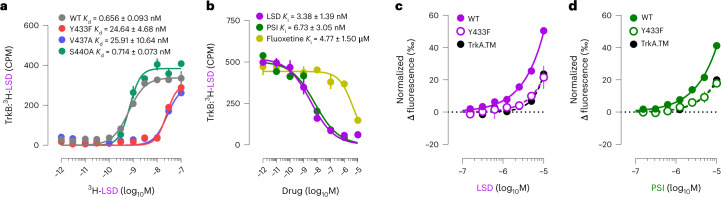
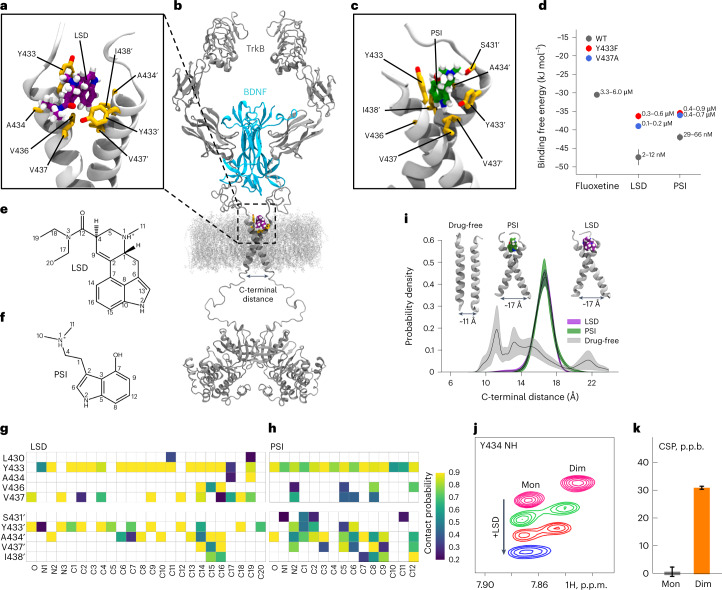
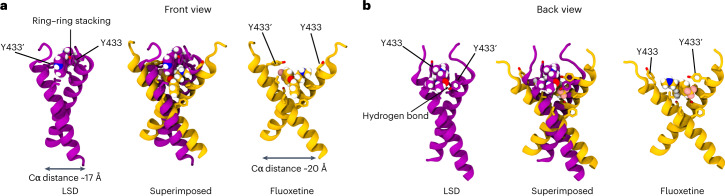
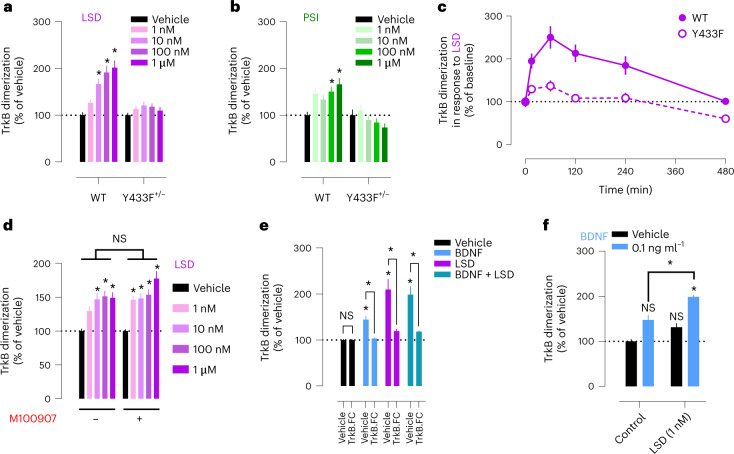
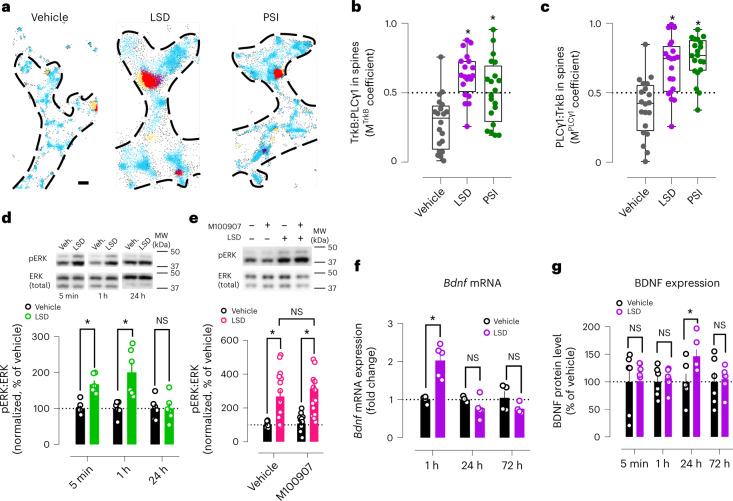
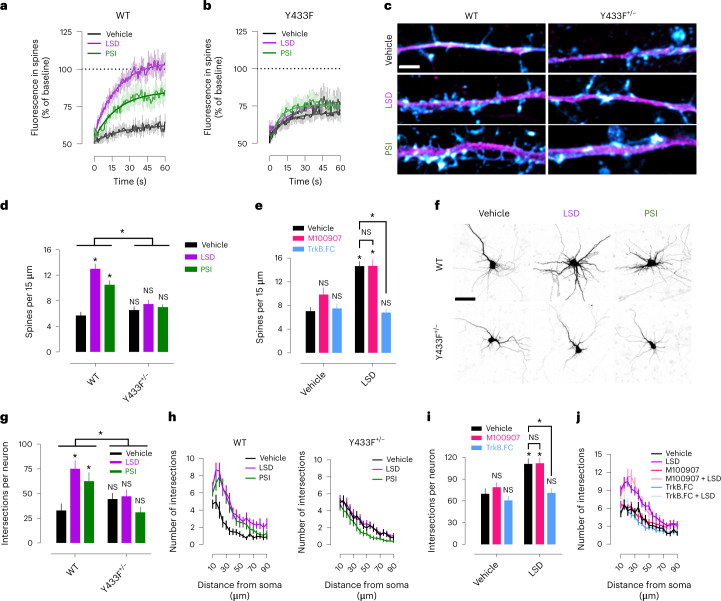
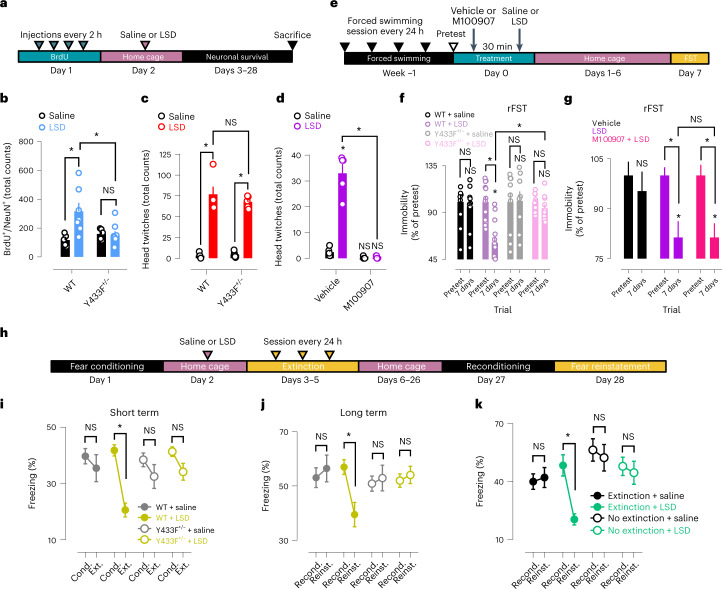
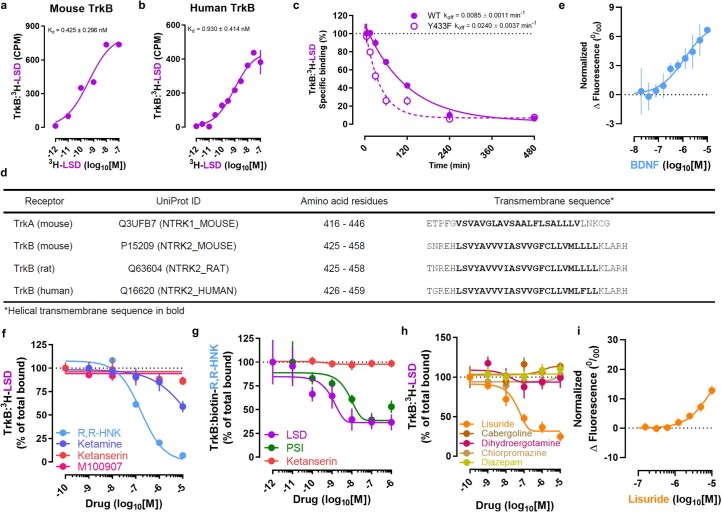
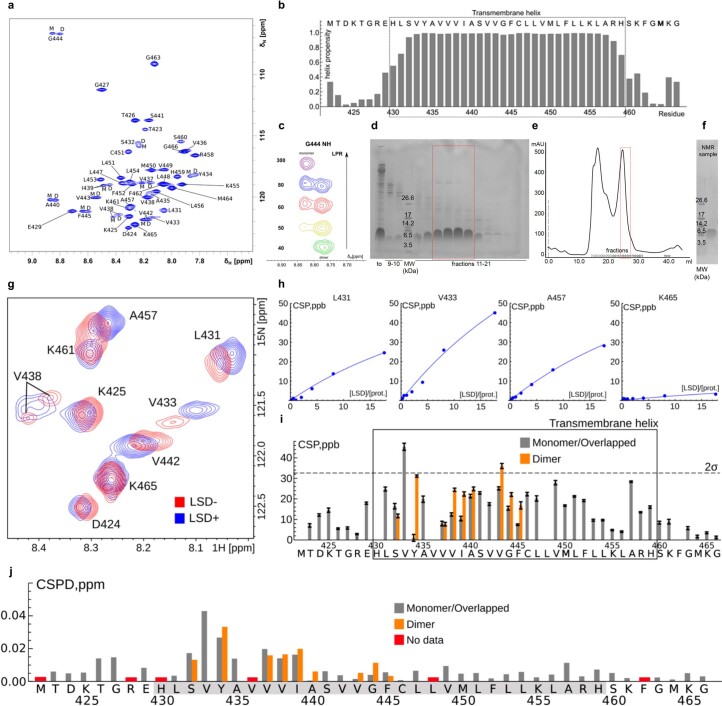
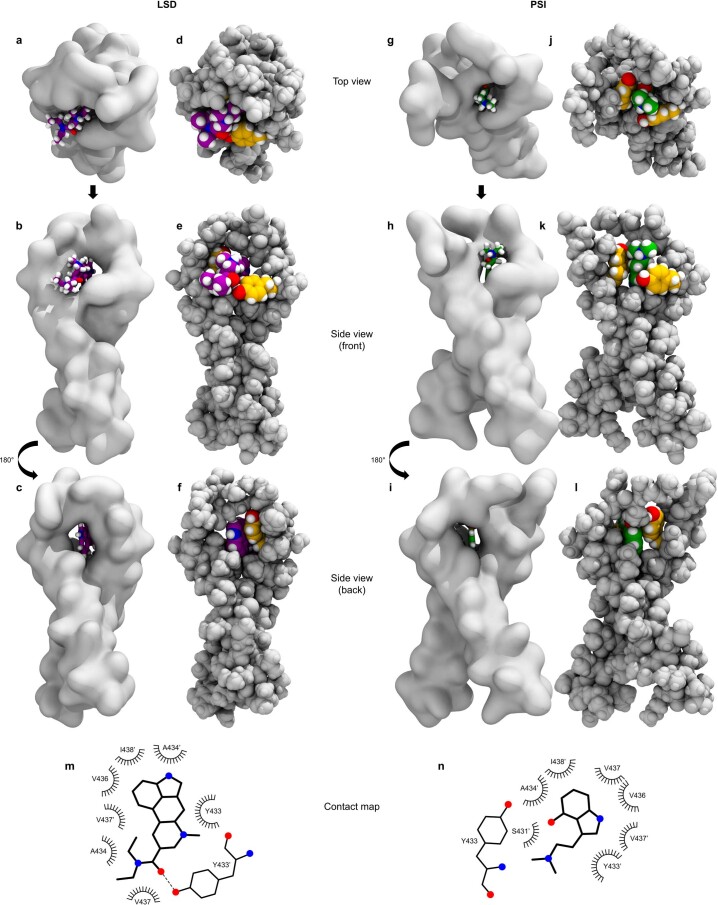
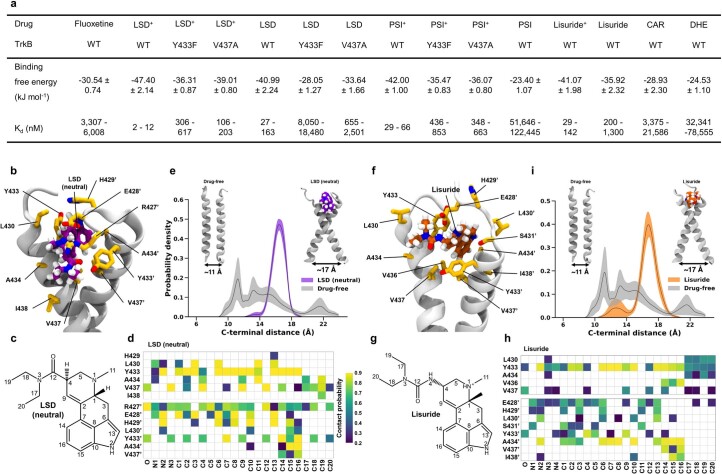
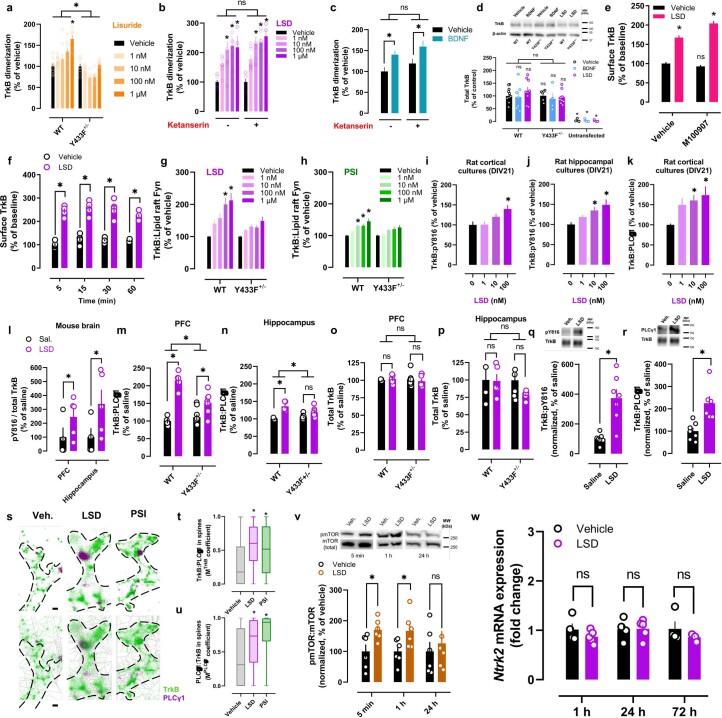
Psychedelics produce fast and persistent antidepressant effects and induce neuroplasticity resembling the effects of clinically approved antidepressants. We recently reported that pharmacologically diverse antidepressants, including fluoxetine and ketamine, act by binding to TrkB, the receptor for BDNF. Here we show that lysergic acid diethylamide (LSD) and psilocin directly bind to TrkB with affinities 1,000-fold higher than those for other antidepressants, and that psychedelics and antidepressants bind to distinct but partially overlapping sites within the transmembrane domain of TrkB dimers. The effects of psychedelics on neurotrophic signaling, plasticity and antidepressant-like behavior in mice depend on TrkB binding and promotion of endogenous BDNF signaling but are independent of serotonin 2A receptor (5-HT 2A ) activation, whereas LSD-induced head twitching is dependent on 5-HT 2A and independent of TrkB binding. Our data confirm TrkB as a common primary target for antidepressants and suggest that high-affinity TrkB positive allosteric modulators lacking 5-HT 2A activity may retain the antidepressant potential of psychedelics without hallucinogenic effects.
Overview
The claims and statistics of this paper haven’t been checked yet.
Free: it reads the open-access text and checks the first 5 claims that cite a source we can check. Create a free account to check every claim.
Integrity signals
Registry
Cites
Statistics
Figures
Verification
Claims the paper makes
The claims and statistics of this paper haven’t been checked yet.
Free: it reads the open-access text and checks the first 5 claims that cite a source we can check. Create a free account to check every claim.
Claims other papers make about this one
Each is checked against this paper’s own text: does it say what the citing paper says it does?
The cited source doesn’t support the claim as written.
In the citing paper
“it is possible that the psychedelic experience is necessary to produce the therapeutic benefits”
From The revival of psilocybin between scientific excitement, evidence of efficacy, and real-world challenges (2024) · cites this paper as [110]
Checked by a reasoning model — may be wrong.
Experimental — accuracy not yet measuredThe source backs part of the claim, not all of it — or backs it for a different population, condition or comparison.
In the citing paper
“Another study reports that the combination of lysergic acid diethylamide (LSD) and psilocybin may exert long-term antidepressant effects by promoting neural plasticity, which dose not involve in the hallucinogenic effects. 384”
From Major depressive disorder: hypothesis, mechanism, prevention and treatment (2024) · cites this paper as [384]
Experimental — accuracy not yet measuredThe source backs part of the claim, not all of it — or backs it for a different population, condition or comparison.
In the citing paper
“Across disease models, TrkB-positive allosteric modulators (PAMs) rescue spine density and preserve mature spine morphology, supporting a model in which TrkB modulation extends antidepressant like plasticity through sustained structural and proteomic reinforcement [33,116,118].”
From Synaptic Plasticity—Intrinsic Excitability and Antidepressant Discovery (2026) · cites this paper as [116]
Experimental — accuracy not yet measuredThe cited source says what the claim attributes to it.
In the citing paper
“According to rodent research, psychedelics may promote synaptic connections by enhancing BDNF-TrkB signaling similar to typical antidepressants [138].”
From Beyond the serotonin deficit hypothesis: Communicating a neuroplasticity framework of major depressive disorder (2024) · cites this paper as [138]
The cited source says what the claim attributes to it.
In the citing paper
“It has recently been demonstrated that conventional antidepressants such as fluoxetine and imipramine, as well as the rapid-acting glutamatergic agent ketamine, directly bind to TrkB and allosterically potentiate BDNF signaling [52,54].”
From Pharmacotherapies Targeting GABA-Glutamate Neurotransmission for Treatment-Resistant Depression (2023) · cites this paper as [54]
2 more claims about this paper
Create a free account to see every claim other papers make about this one.
Self-check
Percentages, sums and reported differences re-computed from the paper’s own numbers.
The self-check needs the paper’s full text.
Citations
Cites
VMD: visual molecular dynamics
Humphrey, W., Dalke, A., & Schulten, K. (1996) · Journal of Molecular Graphics · doi:10.1016/0263-7855(96)00018-5 · Cited by 66,952
Comparison of simple potential functions for simulating liquid water
Jorgensen, W. L., Chandrasekhar, J., Madura, J. D., Impey, R. W., & Klein, M. L. (1983) · The Journal of Chemical Physics · doi:10.1063/1.445869 · Cited by 41,298
Matplotlib: a 2D graphics environment
Hunter, J. D. (2007) · Computing in Science & Engineering · doi:10.1109/mcse.2007.55 · Cited by 39,249
SciPy 1.0: fundamental algorithms for scientific computing in Python
Virtanen, P., Gommers, R., Oliphant, T. E., Haberland, M., Reddy, T., Cournapeau, D., Burovski, E., Peterson, P., Weckesser, W., Bright, J., et al. (2020) · Nature Methods · doi:10.1038/s41592-019-0686-2 · Cited by 38,430
Abraham, M. J., Murtola, T., Schulz, R., Páll, S., Smith, J. C., Hess, B., & Lindahl, E. (2015) · SoftwareX · doi:10.1016/j.softx.2015.06.001 · Cited by 27,190
Cox, J., & Mann, M. (2008) · Nature Biotechnology · doi:10.1038/nbt.1511 · Cited by 14,855
SciPy 1.0: fundamental algorithms for scientific computing in Python
Virtanen, P., Gommers, R., Oliphant, T. E., Haberland, M., Reddy, T., Cournapeau, D., Burovski, E., Peterson, P., Weckesser, W., Bright, J., et al. (2019) · Apollo - University of Cambridge Repository · doi:10.17863/cam.64134 · Cited by 10,460
LigPlot+: Multiple Ligand–Protein Interaction Diagrams for Drug Discovery
Laskowski, R. A., & Swindells, M. B. (2011) · Journal of Chemical Information and Modeling · doi:10.1021/ci200227u · Cited by 6,471
Andromeda: A Peptide Search Engine Integrated into the MaxQuant Environment
Cox, J., Neuhauser, N., Michalski, A., Scheltema, R. A., Olsen, J. V., & Mann, M. (2011) · Journal of Proteome Research · doi:10.1021/pr101065j · Cited by 5,500
Update of the CHARMM All-Atom Additive Force Field for Lipids: Validation on Six Lipid Types
Klauda, J. B., Venable, R. M., Freites, J. A., O’Connor, J. W., Tobias, D. J., Mondragon-Ramirez, C., Vorobyov, I., MacKerell, A. D., & Pastor, R. W. (2010) · The Journal of Physical Chemistry B · doi:10.1021/jp101759q · Cited by 4,501
Research works printed but not linked: 1
- PubChem. PubChem https://pubchem.ncbi.nlm.nih.gov/ (2023).
Cited by
Items 201–300 of 478
Vollebregt, R., Storm, A. E. M., Lucassen, P. J., & Somers, M. (2025) · Neuroscience & Biobehavioral Reviews · doi:10.1016/j.neubiorev.2025.106529 · Cited by 11
Single-dose psilocybin promotes cell-type-specific changes of neurons in the orbitofrontal cortex
Huang, Z., Wei, X., Wang, Y., Tian, J., Dong, J., Liang, B., Lu, L., & Zhang, W. (2026) · Neurotherapeutics · doi:10.1016/j.neurot.2026.e00841 · Cited by 8
“We injected Cre-dependent sh-Htr2a into the OFC of mice and then evaluated the anti-depressant effect of psilocybin with a chronic stress model , specifically, repeated forced swimming, which induces a depressive-like behavior in mice [44 – 46] (Fig.”
Ascone, F., Buzzelli, V., Mottarlini, F., Trapano, M. D., Miglioranza, P., Rava, A., Feo, A., Spano, F., Hausman, M., Sugaya, K., et al. (2026) · Neuropsychopharmacology · doi:10.1038/s41386-026-02361-x · Cited by 7
“…mediates the effects of psilocybin on object recognition in Fmr1-Δ exon 8 rats Given prior evidence that psilocybin also acts via TrkB receptor activation [16], we investigated whether TrkB signaling contributes to the recognition memory-enhancing effects of psilocybin in Fmr1-Δ exon 8 rats.”
InfluentialSerotonergic modulation of excitatory synapse development and plasticity
Chang, V. N., Ogelman, R., Vargas, R. S., & Oh, W. C. (2026) · Molecules and Cells · doi:10.1016/j.mocell.2026.100346 · Cited by 5
The Therapeutic Effects of Classic Psychedelics in Alcohol Use Disorder
Pagni, B. A., Wong, J. M., & Bogenschutz, M. P. (2024) · Current Addiction Reports · doi:10.1007/s40429-024-00581-z · Cited by 8
“Conversely, others have identified neurotrophic and antidepressant effects of psychedelics that are independent of 5-HT 2A and may be mediated via direct binding to the TrkB signaling [19, 30, 37].”
Psychedelics in Psychiatry: Oh, What A Trip!
Fonzo, G. A., Nemeroff, C. B., & Kalin, N. H. (2025) · American Journal of Psychiatry · doi:10.1176/appi.ajp.20241025 · Cited by 5
Kehler, J., & Lindskov, M. S. T. (2025) · Journal of Psychopharmacology · doi:10.1177/02698811251330741 · Cited by 9
Gallo, M. T., Virenque, A., Golinelli, A., Fumagalli, F., Ċastrén, E., Brivio, P., & Calabrese, F. (2025) · Molecular Psychiatry · doi:10.1038/s41380-025-03223-6 · Cited by 6
“Speci fi cally, these compounds, by binding directly to the neuronal receptor tyrosine kinase 2 (TRKB), allosterically promote BDNF signaling [25, 26] and consequently improve neuronal plasticity.”
Hatzipantelis, C. J., Liu, M., Love, A., Leventhal, S. J., Maera, H., Viswanathan, S., Avetisyan, E., Belinsky, L., Rangel, M. M., Jain, N. J., et al. (2025) · Nature Communications · doi:10.1038/s41467-025-64371-5 · Cited by 9
Pasculli, G., Busan, P., Jackson, E. S., Alm, P. A., Gregorio, D. D., Maguire, G. A., Goodwin, G. M., Gobbi, G., Erritzøe, D., & Carhart-Harris, R. L. (2024) · Frontiers in Human Neuroscience · doi:10.3389/fnhum.2024.1402549 · Cited by 7
Costa, M. N., Goto‐Silva, L., Nascimento, J. M., Domith, I., Karmirian, K., Feilding, A., Trindade, P., Martins‐de‐Souza, D., & Rehen, S. K. (2024) · ACS Omega · doi:10.1021/acsomega.4c04712 · Cited by 9
Highly efficient synthesis of lysergic acid using engineered budding yeast
Wu, N., Yao, M., Xiao, W., Wang, Y., & Yuan, Y. (2024) · Green Chemistry · doi:10.1039/d4gc03756a · Cited by 5
Evaluating the value and risks of psychedelics for psychiatric medicine: a clinical perspective
Marazziti, D., Weiss, F., Gurrieri, R., Russomanno, G., Gambini, M., Magnesa, A., Coccoglioniti, A., & Perugi, G. (2024) · Expert Review of Neurotherapeutics · doi:10.1080/14737175.2024.2445016 · Cited by 5
“Consistent with this hypothesis, a recent preclinical study found evidence for a direct agonism of psychedelics (LSD and psilocin) on tropo-myosin receptor kinase B (TrkB), the main preferential receptor of BDNF [99].”
Kim, S., Yang, S., Jung, J., Choi, J., Kang, M., & Joo, J. (2025) · Advanced Science · doi:10.1002/advs.202413786 · Cited by 10
Serotonergic neuron-glioma interactions drive high-grade glioma pathophysiologyPreprint
Drexler, R., Yalçın, B., Mancusi, R. A., Rogers, A. E., Shamardani, K., Woo, P. J., Ravel, A., Wu, S., Yabo, Y. A., Steger, L., et al. (2025) · bioRxiv (Cold Spring Harbor Laboratory) · doi:10.64898/2025.12.10.693579 · Cited by 12
Harari, R., Getselter, D., & Elliott, E. (2025) · Molecular Brain · doi:10.1186/s13041-025-01191-0 · Cited by 4
Lee, M. T., Peng, W., Hsu, T., Chu, T., Teng, Y., Wu, C., Lee, Y., Lan, Y.-Y., & Ho, Y. (2025) · Journal of Psychopharmacology · doi:10.1177/02698811251351611 · Cited by 4
“…effects, encompassing both traditional antidepressants and the fast-acting glutamatergic agent, ketamine in the hippocampus (Autry and Monteggia, 2012; Castren and Antila, 2017; Casarotto et al., 2021; Moliner et al., 2023; Rafalo-Ulinska et al., 2022; Palucha-Poniewiera et al., 2019).”
Microdosing Psychedelics to Restore Synaptic Density in Schizophrenia
Sapienza, J., Spangaro, M., Comai, S., Sabé, M., Torre, J. T. L., Buonarroti, M., Cavallaro, R., & Bosia, M. (2025) · International Journal of Molecular Sciences · doi:10.3390/ijms26188949 · Cited by 8
“Anyway, what does appear to persist, in any case, is the ability to activate the TrkB intracellular pathway, different from antipsychotics [115].”
Small Molecules Targeting the Transmembrane Domain
Wang, Y., & Wang, X. (2025) · Journal of Medicinal Chemistry · doi:10.1021/acs.jmedchem.5c01876 · Cited by 4
Domżalska, M., Kwiatkowska, J., Cichoń, I., & Sokołowska, E. (2025) · Scientific Reports · doi:10.1038/s41598-025-29642-7 · Cited by 4
“Both fluoxetine and ketamine have been shown to increase the firing activity of glutamatergic pyramidal neurons in the medial prefrontal cortex (mPFC), a mechanism associated with their antidepressant effects 29,30 .”
InfluentialPsychedelic Modulation of Excitation/Inhibition Balance: A Dual-Phase Neurodevelopmental Model
Kandilakis, C. L., & Papatheodoropoulos, C. (2026) · ACS Chemical Neuroscience · doi:10.1021/acschemneuro.5c00892 · Cited by 5
Heles, M., Pasvolsky, L., Sathishkumar, H. N., Na’ara, S., Vu, Y., Stewart, C. L., Xie, T., Gleber‐Netto, F. O., McCarthy, W. C., Yaniv, D., et al. (2026) · Science · doi:10.1126/science.aec6116 · Cited by 8
Zahid, Z., Sultan, Z. W., Krause, B. M., Wenthur, C. J., Pearce, R. A., & Banks, M. I. (2024) · Psychedelic Medicine · doi:10.1089/psymed.2023.0061 · Cited by 4
Serotonin circuits act cooperatively with pathophysiology of opioid use disorder
Arakawa, H., & Akihiko, O. (2024) · Addiction Neuroscience · doi:10.1016/j.addicn.2024.100187 · Cited by 5
Brengel, E. K., Axe, B., Maheswari, A., Abeer, M. I., Ortiz, R. J., Woodward, T. J., Walhof, R., Du, W., Utama, R., Rodrigue, B., et al. (2026) · Communications Biology · doi:10.1038/s42003-026-10804-w · Cited by 5
Delcourte, S., Bouloufa, A., Rovera, R., Brunet, E., Le, H. D., Williams, A. E., Panda, S., Azmani, R., Raineteau, O., Dkhissi‐Benyahya, O., et al. (2025) · Frontiers in Pharmacology · doi:10.3389/fphar.2025.1592909 · Cited by 4
LSD: Mechanisms and relevance to the treatment of depression
Bouloufa, A., Delcourte, S., Delannay, T., Rovera, R., Lau, T., Moulédous, L., Dkhissi‐Benyahya, O., Guiard, B. P., & Haddjeri, N. (2025) · Neuroscience & Biobehavioral Reviews · doi:10.1016/j.neubiorev.2025.106407 · Cited by 5
Neurochemistry of the antidepressant effect – a misunderstanding?
Ċastrén, E. (2023) · European Neuropsychopharmacology · doi:10.1016/j.euroneuro.2023.07.001 · Cited by 5
Poulin, J. M., Bigford, G. E., Lanctôt, K. L., Giacobbe, P., Schaffer, A., Sinyor, M., Rabin, J. S., Masellis, M., Singnurkar, A., Pople, C. B., et al. (2024) · Trials · doi:10.1186/s13063-024-08268-6 · Cited by 7
Synergistic behavioral and neuroplastic effects of psilocybin-NMDAR modulator administration
Tal, T. B., Pogodin, I., Botvinnik, A., Lifschytz, T., Heresco‐Levy, U., & Lerer, B. (2025) · Translational Psychiatry · doi:10.1038/s41398-025-03428-x · Cited by 4
Psychedelics for Alcohol Use Disorder: A Narrative Review with Candidate Mechanisms of Action
Miller, E. A., Capone, C., Eaton, E. M., Swift, R. M., & Haass‐Koffler, C. L. (2025) · CNS Drugs · doi:10.1007/s40263-025-01199-z · Cited by 7
“However, other studies have reported that blocking the 5-HT 2A receptor did not prevent psychedelics from rescuing normal behavior in mouse models of depression [82, 83].”
Androni, X., Boyd, R. J., Rosenberg, P. B., & Mahairaki, V. (2025) · Frontiers in Dementia · doi:10.3389/frdem.2025.1605051 · Cited by 4
Making Sense of Psychedelics in the CNS
Fordyce, B. A., & Roth, B. L. (2024) · The International Journal of Neuropsychopharmacology · doi:10.1093/ijnp/pyae007 · Cited by 4
Boltaev, U., Park, H. W., Brown, K. R., Delgado, M., Wu, J., Diaz-Pacheco, B. N., Botero-Pinzon, M., He, K., Ahern, E., Goldshmid, N., et al. (2024) · bioRxiv (Cold Spring Harbor Laboratory) · doi:10.1101/2024.03.04.583022 · Cited by 4
“15 .”
BackgroundFrom molecules to meaning: unpacking the antidepressant mechanisms of psychedelic drugs
Acero, V. P., Flatt, T. A., Gooch, P. M., Gaughan, S. J., Levin, A. W., & Davis, A. K. (2025) · Expert Review of Clinical Pharmacology · doi:10.1080/17512433.2025.2515866 · Cited by 4
Methylone promotes neurite outgrowth and has long-lasting effects on fear extinction learning
Warner‐Schmidt, J. L., Stogniew, M., Mandell, B., & Kelmendi, B. (2025) · Neuropsychopharmacology · doi:10.1038/s41386-025-02206-z · Cited by 4
Psychedelics for major depression—From controlled research settings into broader clinical use
Avram, M., & Borgwardt, S. (2025) · Cell Reports Medicine · doi:10.1016/j.xcrm.2025.102361 · Cited by 8
“For instance, psychedelics also upregulate brain-derived neurotrophic factor (BDNF) and activate its receptor TrkB, a mechanism that may be independent of 5-HT2AR agonism 10 ; however, these findings require further confirmation.”
Du, X., Liu, J., & Wang, X. (2025) · Molecular Psychiatry · doi:10.1038/s41380-025-03291-8 · Cited by 4
Puigseslloses, P., Nadal‐Gratacós, N., Fumàs, B., Modenutti, C. P., Pottie, E., Ortigosa, J., Pablo-Quesada, A., Riera-Colomer, C., Ettcheto, M., Berzosa, X., et al. (2025) · Molecular Psychiatry · doi:10.1038/s41380-025-03308-2 · Cited by 6
Barker, S. A. (2025) · ACS Chemical Neuroscience · doi:10.1021/acschemneuro.5c00695 · Cited by 3
Allen, J., Sun, M., Baker, T. L., Dames, S., Kryskow, P., Christie, B. R., McDonald, S. J., & Shultz, S. R. (2025) · Molecular Psychiatry · doi:10.1038/s41380-025-03329-x · Cited by 5
Werle, I., Guimarães, F. S., SANTOS, R. G. D., Hallak, J. E. C., & Bertoglio, L. J. (2025) · European Neuropsychopharmacology · doi:10.1016/j.euroneuro.2025.11.009 · Cited by 5
Learning as the unifying mechanism of psychedelic action
Caulfield, A., Young, A. H., & Mehta, M. A. (2025) · Journal of Psychopharmacology · doi:10.1177/02698811251405683 · Cited by 4
“This suggests that despite converging downstream targets like BDNF and tropomyosin receptor kinase B (TrkB) (Casarotto et al., 2021; Moliner et al., 2023), there may be distinct changes when considering predictable and deviant sensory processing.”
Bulek, D., & BaDour, S. (2026) · Journal of Neurophysiology · doi:10.1152/jn.00516.2025 · Cited by 3
Ip, C.-T., Olbrich, S., de Bardeci, M., Monn, A., Ort, A., Smallridge, J. W., & Vollenweider, F. X. (2026) · Progress in Neuro-Psychopharmacology and Biological Psychiatry · doi:10.1016/j.pnpbp.2026.111626 · Cited by 5
Frycz, B. A., Dutsch-Wicherek, M., Płaza, O., Szulc, A., Bijata, M., Włodarczyk, J., & Dzwonek, J. (2026) · Pharmacological Reports · doi:10.1007/s43440-026-00827-9 · Cited by 2
Knowledge gaps in psychedelic medicalisation: Preclinical and neuroimaging mechanisms
McCulloch, D. E.-W., López, J. P., Dalla, C., Ċastrén, E., Erritzøe, D., Frøkjær, V. G., Lundberg, J., Preller, K. H., Fisher, P. M., & Knudsen, G. M. (2023) · Neuroscience Applied · doi:10.1016/j.nsa.2023.103929 · Cited by 4
“Additionally, psychedelic-induced plasticity via direct binding to the BDNF receptor TrkB as a positive allosteric modulator has been recently proposed as a mechanism through which they produce their therapeutic effects (Moliner et al., 2023).”
Effects of ketamine and propofol on muscarinic plateau potentials in rat neocortical pyramidal cells
Fleiner, A. S., Kolnier, D., Hagger‐Vaughan, N., Raeder, J. C., & Storm, J. F. (2025) · PLoS ONE · doi:10.1371/journal.pone.0316262 · Cited by 3
“…which could also contribute to the anaesthetic effect, including inhibition of HCN channels (Chen, Shu, and Bayliss 2009), acetylcholine release (Lydic and Baghdoyan 2002), and L-type calcium channels (Yamakage, Hirshman, and Croxton 1995), and enhancement of BDNF signalling (Moliner et al. 2023).”
Lin, C., Wang, X., & Wang, X. (2025) · Neuroscience Bulletin · doi:10.1007/s12264-025-01351-1 · Cited by 4
“Firstly, psychedelics enhance neuroplasticity, enabling the brain to reorganize by forming new neural connections [7].”
Molecular brain imaging of psychedelic action
Cumming, P. D., Egger, K., & Knudsen, G. M. (2025) · International review of neurobiology · doi:10.1016/bs.irn.2025.02.005 · Cited by 3
Visual Hallucinations in Serotonergic Psychedelics and Lewy Body Diseases
Heller, N. H., Barrett, F. S., Buchborn, T., Collerton, D., Dupuis, D., Halberstadt, A. L., Jardri, R., Noorani, T. N., Preller, K. H., Taylor, J., et al. (2025) · Schizophrenia Bulletin · doi:10.1093/schbul/sbaf068 · Cited by 3
“184,185 Critical period plasticity has been implicated in the effects of SP-administration, 186–188 and recent theoretical work suggests CP plasticity plays a role in Hallucination Persisting Perception Disorder.”
Gattuso, J. J., Bezcioglu, B., Wilson, C., Havaux, K., Hannan, A. J., & Renoir, T. (2025) · Psychedelics. · doi:10.61373/pp025i.0044 · Cited by 3
Neurobiologie und Wirkmodelle zu Psychedelika
Herwig, U., Avram, M., Borgwardt, S., & Aicher, H. (2024) · Nervenheilkunde · doi:10.1055/a-2261-0745 · Cited by 3
Licit use of illicit drugs for treating depression: the pill and the process
Pacheco, A. T., & Moghaddam, B. (2024) · Journal of Clinical Investigation · doi:10.1172/jci180217 · Cited by 3
“Recently, a study suggested that plasticity induction via activation of the TrkB/BDNF pathway may generalize to LSD and psilocybin (84), providing a potential convergent pathway for novel and traditional antidepressants, though this study awaits replication.”
BackgroundLi, Q., Ouyang, Z., Zhang, Y., Li, Z., Zhu, X., & Tang, Z. (2024) · Molecular Neurobiology · doi:10.1007/s12035-024-04277-3 · Cited by 3
“Different types of brain damage decreased BDNF expression, and exogenous BDNF supplementation can alleviate neuronal and synaptic dysfunction caused by brain damage [23–25].”
Understanding the variability in ketamine’s efficacy in managing treatment-resistant depression
Bryan, J. (2024) · Discover Psychology · doi:10.1007/s44202-024-00277-5 · Cited by 3
“Differently to ketamine, psilocybin primarily acts as an agonist on the 5-HT 2A serotonergic receptors although similarly has been implicated in catalysing synaptogenesis and cellular excitability [55].”
Wang, L., Ji, Y., Mei, H., Gong, X., Miao, H., Zhu, Z., & Ding, J. (2024) · Experimental Eye Research · doi:10.1016/j.exer.2024.110169 · Cited by 3
Low, Z. X. B., Yong, S. J., AlRasheed, H. A., Al‐Subaie, M. F., Kaabi, N. A., Alfaresi, M. S., Albayat, H., Alotaibi, J., bshabshe, A. A. A. A., Alwashmi, A. S. S., et al. (2025) · Progress in Neuro-Psychopharmacology and Biological Psychiatry · doi:10.1016/j.pnpbp.2025.111279 · Cited by 4
Tang, B. L. (2025) · Psychoactives · doi:10.3390/psychoactives4010005 · Cited by 4
“More recently, the group has further shown that the psychedelics lysergic acid diethylamide (or LSD) and psilocin also bind to TRKB, and with affinities that are a thousand-fold higher than those for other antidepressants [34].”
Vella, Y., Syrová, K., Petrušková, A., Koutrouli, I. R. A., Kútna, V., Pala, J., Nikolič, M., Šíchová, K., Mazoch, V., Jurok, R., et al. (2025) · Journal of Psychopharmacology · doi:10.1177/02698811251338232 · Cited by 3
“Our finding that psilocin promotes structural neuroplasticity is in line with other studies (Du et al., 2023; Moliner et al., 2023; Raval et al., 2021; Vargas et al., 2023).”
Jensen, A. A., Cecchi, C. R., Hibicke, M., Bach, A. H., Kaadt, E., Märcher-Rørsted, E., Nichols, C. D., Elfving, B., & Kristensen, J. L. (2025) · ACS Pharmacology & Translational Science · doi:10.1021/acsptsci.5c00208 · Cited by 4
Huang, Z., Wei, X., Wang, Y., Tian, J., Dong, J., Liang, B., Lü, L., & Zhang, W. (2024) · bioRxiv (Cold Spring Harbor Laboratory) · doi:10.1101/2024.01.07.573163 · Cited by 3
Schuler, H., Zhou, D., Savignac, C., Cvetkovska, V., Tse, Y.-C., Meccia, J., Lopez, J., Harutyunyan, A. S., Ragoussis, J., Bzdok, D., et al. (2025) · bioRxiv (Cold Spring Harbor Laboratory) · doi:10.1101/2025.01.08.631940 · Cited by 5
“We also applied this approach to interrogate the role of other receptors previously implicated in psilocybin’s sustained effects, namely the BDNF TrkB receptor, encoded by Ntrk2, and ArylHydrocarbon receptor, encoded by Ahr 28,49 .”
InfluentialPsychedelic-assisted Therapy as a Promising Treatment for Irritable Bowel Syndrome
Mauney, E. E., King, F., Murray, H. B., & Kuo, B. (2025) · Journal of Clinical Gastroenterology · doi:10.1097/mcg.0000000000002149 · Cited by 6
“61 Of note, genetic variation within BDNF receptor isoforms is related to more severe pain as well as psychological symptoms among patients with IBS, 62 highlighting the possible role of neuroplasticity (or lack thereof) in this condition.”
Serotonergic psychedelics for depression: A comprehensive overview
Wingert, A. M., Agnorelli, C., Peill, J., Reed, S., Nutt, D. J., & Erritzoe, D. (2025) · International Review of Neurobiology · doi:10.1016/bs.irn.2025.04.009 · Cited by 3
Psilocin fosters neuroplasticity in iPSC-derived human cortical neurons
Schmidt, M., Hoffrichter, A., Davoudi, M., Horschitz, S., Lau, T., Meinhardt, M. W., Spanagel, R., Ladewig, J., Köhr, G., & Koch, P. (2026) · eLife · doi:10.7554/elife.104006.3 · Cited by 10
Athanasiou, C., Cabezudo, A. C., Tsengenes, A., & Wade, R. C. (2025) · JACS Au · doi:10.1021/jacsau.5c00174 · Cited by 3
The Medial Prefrontal Cortex Modulates Psychedelic-like Effects of Psilocin
Zhang, M., Zhai, H., Yang, L., Li, H., & Wang, X. (2025) · ACS Pharmacology & Translational Science · doi:10.1021/acsptsci.5c00324 · Cited by 4
Palmisano, V. F., Agnorelli, C., Faraji, S., & Nogueira, J. J. (2025) · Physical Chemistry Chemical Physics · doi:10.1039/d5cp01252j · Cited by 2
Psychedelic therapy: bridging neuroplasticity, phenomenology, and clinical outcomes
Kishon, R., & Cycowicz, Y. M. (2025) · Frontiers in Psychiatry · doi:10.3389/fpsyt.2025.1637162 · Cited by 3
“The structural and functional neuroplasticity that occurs within a few hours post-administration is likely due to gene expression changes (22 – 24), promoting a signi fi cant increase in dendrite and spine formation (25, 26).”
Neuroplasticity and Neuro-Generation: The Promise of Psychedelics in Dementia Care
Soylemez, K. K., de Boo, E. M., Susuzlu, A., & Lusher, J. M. (2025) · Psychoactives · doi:10.3390/psychoactives4030031 · Cited by 2
“Substances like psilocybin and DMT have demonstrated the capacity to upregulate brain-derived neurotrophic factor (BDNF) [56], a protein involved in the survival and growth of neurons, which is often depleted in neurodegenerative conditions [57].”
Molecular dynamics study of differential effects of serotonin-2A-receptor (5-HT2AR) modulators
Peeters, J., Bundel, D. D., & Vanommeslaeghe, K. (2025) · PLoS Computational Biology · doi:10.1371/journal.pcbi.1013000 · Cited by 2
“[26] They further showed that LSD’s antidepressant-like effect was not prevented by the 5-HT 2A antagonist M100907, implicating TrkB in 5-HT 2A -independent mechanisms.”
Richardson, B., Inserra, A., Pileggi, M., Prud’Homme, T., Bruno, V., Wan-Yan-Chan, D., Shareghi-Ghahreman, I., Nasini, S., Strand, T., Leyton, M., et al. (2025) · Progress in Neuro-Psychopharmacology and Biological Psychiatry · doi:10.1016/j.pnpbp.2025.111522 · Cited by 4
Meaning and Psychedelics in Palliative Care: A Narrative Review
Alexander, W. B., Hansen, E., Anderson, B. T., Zarrabi, A. J., Rogers, A. H., Loewen, G., Ficcaro, Z. R., Alexander, M. H., Schaefer, D., & Case, A. A. (2025) · Journal of Pain and Symptom Management · doi:10.1016/j.jpainsymman.2025.10.015 · Cited by 4
Anchesi, I., Astorino, M. F., Raffaele, I., Donato, D. S., Silvestro, S., Minuti, A., Calabrò, M., Scuruchi, M., & Cipriano, G. L. (2025) · Cells · doi:10.3390/cells14231872 · Cited by 3
“This research suggests that some PSYs, such as LSD and psilocin, can directly bind to the TrkB receptor with high affinity, effectively mimicking BDNF [25,92].”
InfluentialGallo, M. T., Golinelli, A., Rizzi, C., Fumagalli, F., Homberg, J. R., Brivio, P., & Calabrese, F. (2025) · Biochemical Pharmacology · doi:10.1016/j.bcp.2025.117632 · Cited by 2
Dutton, M., Schwenn, P., Mitchell, J., Hoffmann, P., Bailey, N. W., Fitzgerald, P. B., Lagopoulos, J., & Can, A. (2025) · Australian & New Zealand Journal of Psychiatry · doi:10.1177/00048674251398677 · Cited by 2
“…changes, which include enhanced environmental sensitivity, along with associated enhancements to neural plasticity and psychological receptivity, which together may offer a unique opportunity to modify existing beliefs and remodel neural circuitry (Aday et al., 2023; Moliner et al., 2023).”
Not all psychedelics are created equal
Ramaekers, J. G., Mallaroni, P., Mason, N. L., & Avram, M. (2025) · Nature Mental Health · doi:10.1038/s44220-025-00551-y · Cited by 4
Romeo, B., Kervadec, E., Fauvel, B., Strika-Bruneau, L., Mathieu, P., Amirouche, A., Bezo, A., Hacquet, R., Piolino, P., & Benyamina, A. (2026) · Progress in Neuro-Psychopharmacology and Biological Psychiatry · doi:10.1016/j.pnpbp.2026.111621 · Cited by 2
Raswanthiya, S. P., Fernandes, O. P., Mathew, M. P., Balgote, P. J., & Sivaraman, J. (2026) · Molecular Biology Reports · doi:10.1007/s11033-026-11485-8 · Cited by 5
Zhang, J., Lin, C., Lv, X., Zhao, H., & Wang, X. (2026) · Biological Psychiatry · doi:10.1016/j.biopsych.2026.02.011 · Cited by 5
Wang, Y., Zhang, Y., 王君明, Wu, X., Li, Y., Sun, W., Song, L., Gong, M., He, Q., Qin, L., et al. (2026) · Journal of Ethnopharmacology · doi:10.1016/j.jep.2026.121428 · Cited by 3
Avram, M., Menegaux, A., Müller, F., Zaczek, H., Korda, A. I., Rogg, H. V., Becker, A. M., Ley, L., Liechti, M. E., & Borgwardt, S. (2026) · Cell Reports Medicine · doi:10.1016/j.xcrm.2026.102791 · Cited by 2
Park, W., Paek, J., Seo, H., Hong, Y., Kim, E., Chung, W. G., An, S. H., Choi, M. S., Kim, E., Lee, J., et al. (2026) · Cell Reports Physical Science · doi:10.1016/j.xcrp.2026.103303 · Cited by 2
Kuypers, K. P. C., Mason, N. L., Carlier, A., Totomanova, I., & Haijen, E. C. H. M. (2026) · Molecular Psychiatry · doi:10.1038/s41380-026-03801-2 · Cited by 2
Fletcher, P. J., Li, Z., Ji, X. D., & Lê, A. D. (2023) · Pharmacology Biochemistry and Behavior · doi:10.1016/j.pbb.2023.173703 · Cited by 3
Nguyen, D. D., Mansur, S., Ciesla, L. M., Gray, N. E., Zhao, S., & Bao, Y. (2024) · Molecules · doi:10.3390/molecules29173992 · Cited by 2
“Figure 4 illustrates the 3D structures of the TrkB-D5 domain in complex with four different ligands: 7,8-DHF, nadolol, valproic acid, and dicaffeoylquinic acid, highlighting the spatial arrangement and interactions between the protein and the ligand of the binding pocket BP1.”
BackgroundPsychedelic LSD activates neurotrophic signal but fails to stimulate neural stem cells
Dong, X., He, L., Li, Y., Pei, G., & Huang, S. (2024) · Stem Cell Research & Therapy · doi:10.1186/s13287-024-03909-8 · Cited by 4
“According to a proposed mechanism, LSD activates the TrkB and HTR2A signaling pathways, which enhance the density of neuronal dendritic spines and synaptic function, and thus promote brain function [3, 4].”
BackgroundLi, J.-R., Chiang, K.-T., Kao, Y., Yu, C., Yang, F., Liang, C., & Hsu, T. (2024) · Journal of Affective Disorders · doi:10.1016/j.jad.2024.10.016 · Cited by 4
Eliasen, J. N., Kristiansen, U., & Kohlmeier, K. A. (2024) · Brain Research · doi:10.1016/j.brainres.2024.149425 · Cited by 2
“While the necessity of activation of the 5-HT 2A R (Moliner et al., 2023), and the requirement of the hallucinogenic experience for psychiatric benefit is debated and unclear at this time (von Rotz et al., 2023, Sloshower et al., 2023, Sekssaoui et al., 2024, Rosenblat et al., 2023, Gukasyan et…”
O'Connor, S., Godfrey, K., Reed, S., Peill, J. M., Rohani-Shukla, C., Healy, M. P., Robbins, T. W., de Souza, A. M. F. L. P., Tyacke, R. J., Papasyrou, M., et al. (2025) · Cureus · doi:10.7759/cureus.78171 · Cited by 5
Barajas, B. V. R., Macías-Islas, M. Á., Saldaña-Cruz, A. M., Yepez, J. E., Olivas-Flores, E. M., & Arelis, A. A. (2025) · Life · doi:10.3390/life15020213 · Cited by 3
“BDNF affects emotional regulation through its effects on the prefrontal cortex and limbic system [34,35] and impacts neurotransmission systems such as the serotoninergic pathway [36,37].”
de Miranda, A. S., Toscano, E. C. D. B., Venna, V. R., Graeff, F. G., & Teixeira, A. L. (2025) · Expert Opinion on Drug Discovery · doi:10.1080/17460441.2025.2460674 · Cited by 4
“Psilocybin also presents a high affinity for the tropomyosin receptor kinase B (TrkB) receptor, the main BDNF receptor, which may also account for its therapeutic actions [47].”
Is there a place for psychedelics in sports practice?
Portes, M. A. M., Werle, I., & Bertoglio, L. J. (2025) · Acta Neuropsychiatrica · doi:10.1017/neu.2025.13 · Cited by 4
“…the brain activation of other serotonergic and dopaminergic receptor subtypes (Werle & Bertoglio, 2024), tropomyosin receptor kinase B ( TrkB ) (Moliner et al ., 2023; Shafiee et al ., 2024), ionotropic glutamate receptor interactions (Heresco-Levy & Lerer, 2024), neurotransmitters release…”
Liu, Y., Chen, Y., Zhang, Y., Hou, C., & Li, J. (2025) · Food Science and Human Wellness · doi:10.26599/fshw.2025.9250550 · Cited by 2
Meng, Q., Guo, M.-H., Zhang, R., Wei, J., Chen, Q., Zhao, X., Xu, C., Wu, Y., Kuai, J., Zhao, J., et al. (2025) · Acta Pharmacologica Sinica · doi:10.1038/s41401-025-01621-8 · Cited by 4
McGovern, H. T., Wellman, N., Hutchinson, B. T., Oestreich, L., Cooper, S., Fonzo, G. A., & Doss, M. K. (2026) · Psychopharmacology · doi:10.1007/s00213-026-07163-z · Cited by 2
Psilocybin does not induce the vulnerability marker HSP70 in neurons susceptible to Olney’s lesions
Iorgu, A.-M., Vasilescu, A.-N., Pfeiffer, N., Spanagel, R., Mallien, A. S., Inta, D., & Gass, P. (2023) · European Archives of Psychiatry and Clinical Neuroscience · doi:10.1007/s00406-023-01699-3 · Cited by 3
A Heuristic Approach: Against Consensus Definitions of Psychedelics
Lepow, L., Kronman, H. G., & Yehuda, R. (2023) · Psychedelic Medicine · doi:10.1089/psymed.2023.0031 · Cited by 2
“6 Only MDMA is widely accepted as an ‘‘entac-togen,’’ though ketamine, 16 LSD, 17 and psilocybin 18 may also produce feelings of connectedness with others depending on dose and context.”
Pharmakotherapie, Psychotherapie oder „Superplacebos“? Wirkmechanismen der Therapie mit Psychedelika
Gründer, G., Brand, M., Färber, L. V., Kärtner, L., Kunz, L. C., Rohrmoser, B., Scharf, D., Schmitz, C. N., Spangemacher, M., & Mertens, L. J. (2024) · Die Psychotherapie · doi:10.1007/s00278-024-00709-6 · Cited by 2
Metadata
- Authors
- Moliner, R., Girych, M., Brunello, C. A., Kovaleva, V., Biojone, C., Enkavi, G., Antenucci, L., Kot, E. F., Goncharuk, S. A., Kaurinkoski, K., Kuutti, M., Fred, S. M., Elsilä, L. V., Sakson, S., Cannarozzo, C., Diniz, C. R. A. F., Seiffert, N., Rubiolo, A., Haapaniemi, H., Meshi, E., Nagaeva, E., Öhman, T., Róg, T., Kankuri, E., Vilar, M., Varjosalo, M., Korpi, E. R., Permi, P., Mineev, K. S., Saarma, M., Vattulainen, I., Casarotto, P. C., & Castrén, E.
- Affiliations
- University of Helsinki (FI)
- University of Jyväskylä (FI)
- Moscow Institute of Physics and Technology (RU)
- Universidade de São Paulo (BR)
- University of Trieste (IT)
- Instituto de Biomedicina de Valencia (ES)
- Goethe University Frankfurt (DE)
- Corresponding author
- Vattulainen, Ilpo
- Casarotto, Plinio C.
- ORCID
- Moliner, Rafael
- Girych, Mykhailo
- Brunello, Cecilia A.
- Kovaleva, Vera
- Biojone, Caroline
- Enkavi, Giray
- Antenucci, Lina
- Kot, Erik F.
- Goncharuk, Sergey A.
- Kaurinkoski, Katja
- Kuutti, Mirjami
- Fred, Senem M.
- Elsilä, Lauri V.
- Sakson, Sven
- Cannarozzo, Cecilia
- Diniz, Cassiano R. A. F.
- Seiffert, Nina
- Rubiolo, Anna
- Haapaniemi, Hele
- Meshi, Elsa
- Nagaeva, Elina
- Öhman, Tiina
- Róg, Tomasz
- Kankuri, Esko
- Vilar, Marçal
- Varjosalo, Markku
- Korpi, Esa R.
- Permi, Perttu
- Mineev, Konstantin S.
- Saarma, Mart
- Vattulainen, Ilpo
- Casarotto, Plinio C.
- Castrén, Eero
- Venue
- Nature Neuroscience
- Published
- 2023-06
- Volume
- 26
- Issue
- 6
- Pages
- 1032-1041
- ISSN
- 1097-6256 (ISSN-L)
- 1546-1726
- PMC
- PMC10244169
- OpenAlex
- W4379469019
- Semantic Scholar
- 441c98113ffe23c80b7976b6ae2592985ce21def
- Cited by
- 478
- References
- 91
- Citations by year
- 2026: 141 · 2025: 157 · 2024: 127 · 2023: 53
- FWCI
- 139.35
- Type
- journal article
- Language
- en
- Open access
- hybrid
- doi.org
- Licence
- cc-by
- creativecommons.org/licenses/by/4.0 (tdm)
- creativecommons.org/licenses/by/4.0 (vor, 4 d)
- Locations
- Nature Neuroscience (publishedVersion, cc-by)
- PubMed Central (publishedVersion, cc-by)
- PubMed (publishedVersion)
- Jyväskylä University Digital Archive (University of Jyväskylä) (submittedVersion, cc-by)
- DIGITAL.CSIC (Spanish National Research Council (CSIC)) (submittedVersion, cc-by)
- Työväentutkimus Vuosikirja (submittedVersion)
- Funders
- Academy of Finland (294710, 303124, 307416, 327192)
- Topics
- Social Sciences › Psychology › Clinical Psychology › Psychedelics and Drug Studies
- Health Sciences › Medicine › Pharmacology (medical) › Treatment of Major Depression
- Life Sciences › Neuroscience › Cellular and Molecular Neuroscience › Neurotransmitter Receptor Influence on Behavior
- Keywords
- psychedelics, TrkB receptor, brain-derived neurotrophic factor, neuroplasticity, antidepressant effects, LSD, psilocin, 5-HT2A receptor, neurotrophic signaling, positive allosteric modulators, fluoxetine, ketamine
- MeSH terms
- Allosteric Regulation, Animals, Antidepressive Agents, Binding Sites, Embryo, Mammalian, Female, Hallucinogens, Humans, Lysergic Acid Diethylamide, Male, Membrane Glycoproteins, Mice, Inbred C57BL, Neuronal Plasticity, Neurons, Psilocybin, Signal Transduction, Brain-Derived Neurotrophic Factor, Receptor, trkB, Mice, Molecular Dynamics Simulation, HEK293 Cells
About these checks
Registry, retraction, Cites and statistics results are computed, not judged, with one exception: a printed reference that no index lists is read once by a model before it counts as a citation error. Claims are extracted by a model and kept only when their quote appears verbatim in the text; each cited source is then checked, with a model’s help, for whether it says what the claim relies on. Those verdicts can be wrong — read the claim’s quote and the cited source before relying on one.
Statistics and arithmetic are recomputed, not judged.
Confidence bands are shown only for fields calibrated on our annotated test set. None is calibrated yet, so no band is shown.
What counts as a claim ›How we measure confidence ›How we check this ›
Are you an author, or do you see a problem with this page? Request a review
Data sources
Bibliographic data: Semantic Scholar, OpenAlex, Crossref.
Contains information from the Semantic Scholar Academic Graph Datasets, made available under the ODC Attribution License (ODC-BY 1.0).
Semantic Scholar’s data is described in: Kinney, R., et al. (2023). The Semantic Scholar Open Data Platform. arXiv:2301.10140.
