

Psychedelics promote plasticity by directly binding to BDNF receptor TrkB
Open accessThe DOI matches its Crossref record; 94 of the 94 references it cites were found in a registry or an index.
Abstract
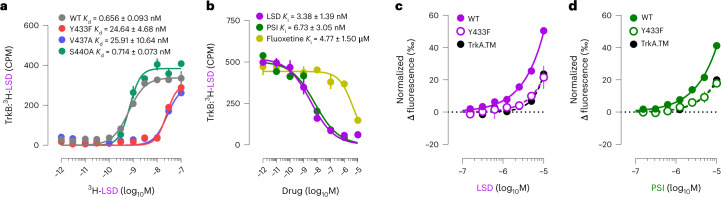
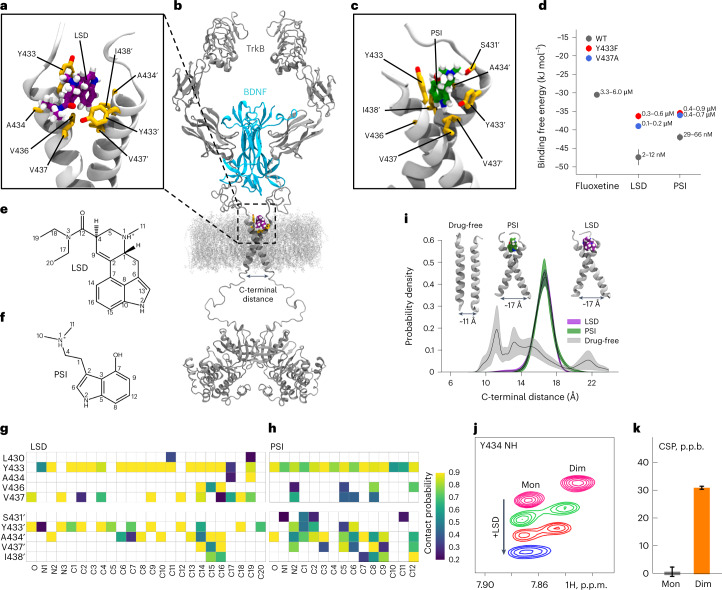
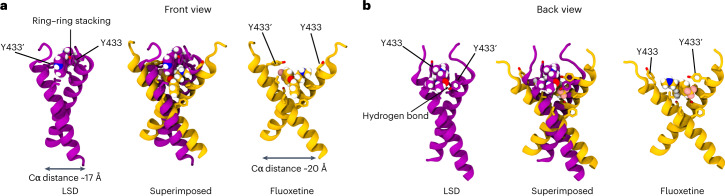
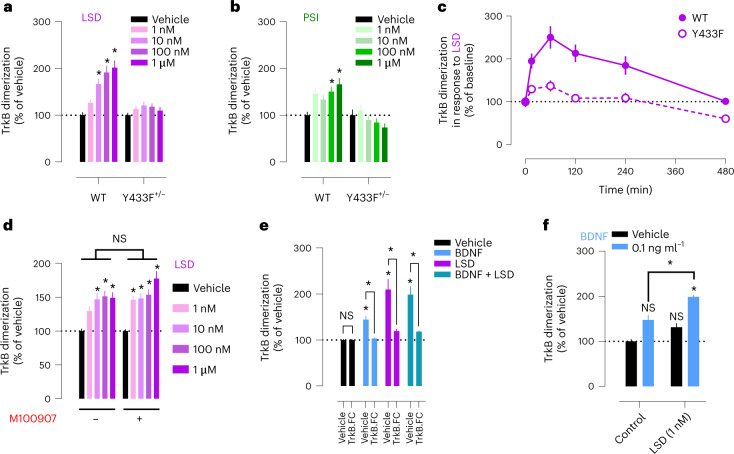
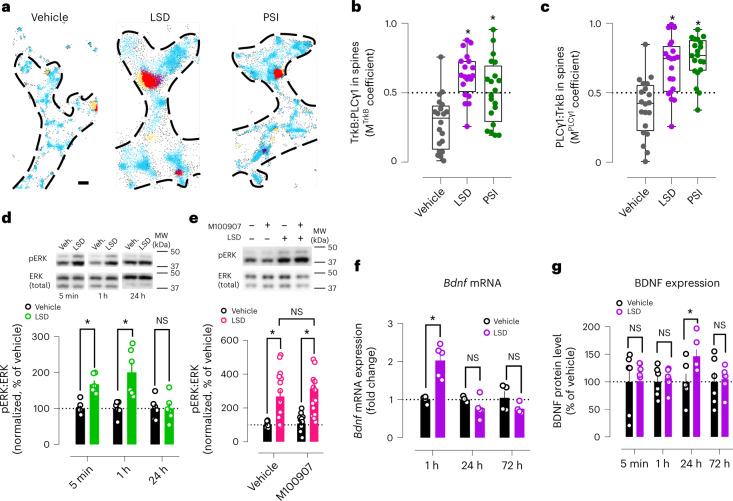
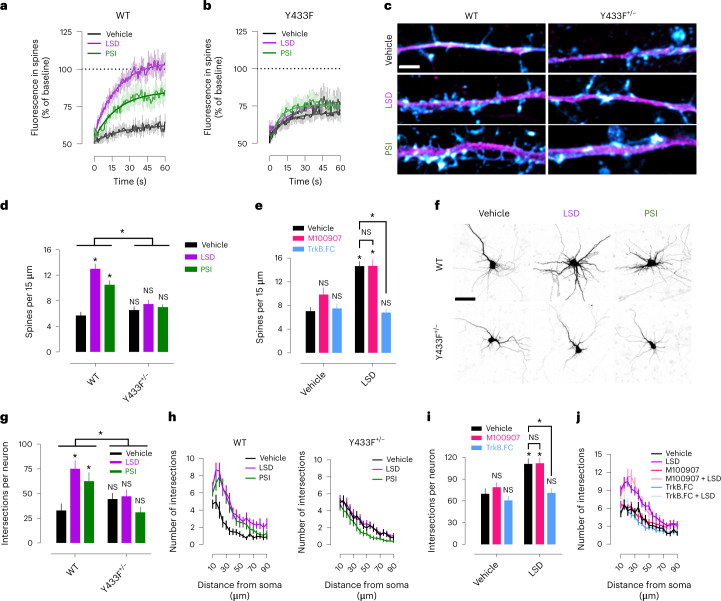
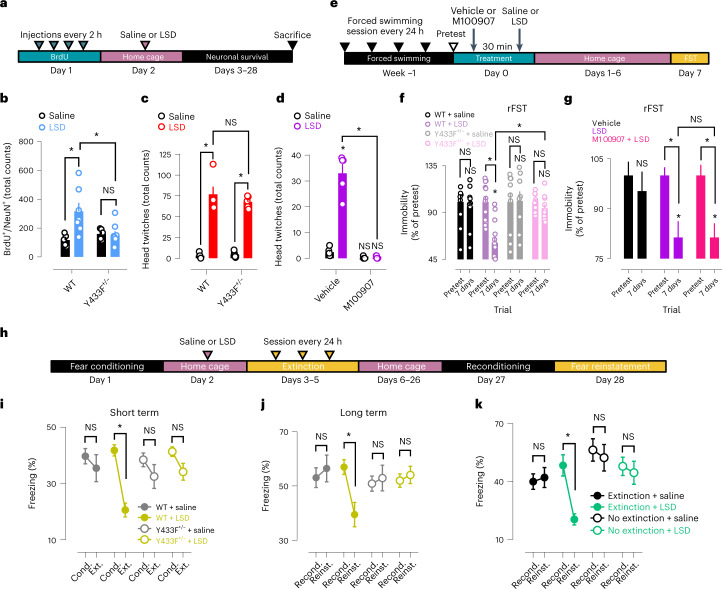
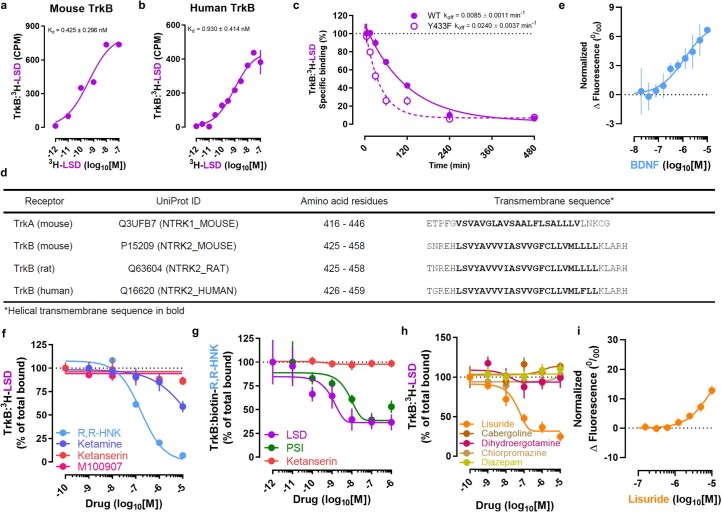
Psychedelics produce fast and persistent antidepressant effects and induce neuroplasticity resembling the effects of clinically approved antidepressants. We recently reported that pharmacologically diverse antidepressants, including fluoxetine and ketamine, act by binding to TrkB, the receptor for BDNF. Here we show that lysergic acid diethylamide (LSD) and psilocin directly bind to TrkB with affinities 1,000-fold higher than those for other antidepressants, and that psychedelics and antidepressants bind to distinct but partially overlapping sites within the transmembrane domain of TrkB dimers. The effects of psychedelics on neurotrophic signaling, plasticity and antidepressant-like behavior in mice depend on TrkB binding and promotion of endogenous BDNF signaling but are independent of serotonin 2A receptor (5-HT 2A ) activation, whereas LSD-induced head twitching is dependent on 5-HT 2A and independent of TrkB binding. Our data confirm TrkB as a common primary target for antidepressants and suggest that high-affinity TrkB positive allosteric modulators lacking 5-HT 2A activity may retain the antidepressant potential of psychedelics without hallucinogenic effects.
Overview
The claims and statistics of this paper haven’t been checked yet.
Free: it reads the open-access text and checks the first 5 claims that cite a source we can check. Create a free account to check every claim.
Integrity signals
Registry
Cites
Statistics
Figures
Verification
Claims the paper makes
The claims and statistics of this paper haven’t been checked yet.
Free: it reads the open-access text and checks the first 5 claims that cite a source we can check. Create a free account to check every claim.
Claims other papers make about this one
Each is checked against this paper’s own text: does it say what the citing paper says it does?
The cited source doesn’t support the claim as written.
In the citing paper
“it is possible that the psychedelic experience is necessary to produce the therapeutic benefits”
From The revival of psilocybin between scientific excitement, evidence of efficacy, and real-world challenges (2024) · cites this paper as [110]
Checked by a reasoning model — may be wrong.
Experimental — accuracy not yet measuredThe source backs part of the claim, not all of it — or backs it for a different population, condition or comparison.
In the citing paper
“Another study reports that the combination of lysergic acid diethylamide (LSD) and psilocybin may exert long-term antidepressant effects by promoting neural plasticity, which dose not involve in the hallucinogenic effects. 384”
From Major depressive disorder: hypothesis, mechanism, prevention and treatment (2024) · cites this paper as [384]
Experimental — accuracy not yet measuredThe source backs part of the claim, not all of it — or backs it for a different population, condition or comparison.
In the citing paper
“Across disease models, TrkB-positive allosteric modulators (PAMs) rescue spine density and preserve mature spine morphology, supporting a model in which TrkB modulation extends antidepressant like plasticity through sustained structural and proteomic reinforcement [33,116,118].”
From Synaptic Plasticity—Intrinsic Excitability and Antidepressant Discovery (2026) · cites this paper as [116]
Experimental — accuracy not yet measuredThe cited source says what the claim attributes to it.
In the citing paper
“According to rodent research, psychedelics may promote synaptic connections by enhancing BDNF-TrkB signaling similar to typical antidepressants [138].”
From Beyond the serotonin deficit hypothesis: Communicating a neuroplasticity framework of major depressive disorder (2024) · cites this paper as [138]
The cited source says what the claim attributes to it.
In the citing paper
“It has recently been demonstrated that conventional antidepressants such as fluoxetine and imipramine, as well as the rapid-acting glutamatergic agent ketamine, directly bind to TrkB and allosterically potentiate BDNF signaling [52,54].”
From Pharmacotherapies Targeting GABA-Glutamate Neurotransmission for Treatment-Resistant Depression (2023) · cites this paper as [54]
2 more claims about this paper
Create a free account to see every claim other papers make about this one.
Self-check
Percentages, sums and reported differences re-computed from the paper’s own numbers.
The self-check needs the paper’s full text.
Citations
Cites
VMD: visual molecular dynamics
Humphrey, W., Dalke, A., & Schulten, K. (1996) · Journal of Molecular Graphics · doi:10.1016/0263-7855(96)00018-5 · Cited by 66,952
Comparison of simple potential functions for simulating liquid water
Jorgensen, W. L., Chandrasekhar, J., Madura, J. D., Impey, R. W., & Klein, M. L. (1983) · The Journal of Chemical Physics · doi:10.1063/1.445869 · Cited by 41,298
Matplotlib: a 2D graphics environment
Hunter, J. D. (2007) · Computing in Science & Engineering · doi:10.1109/mcse.2007.55 · Cited by 39,249
SciPy 1.0: fundamental algorithms for scientific computing in Python
Virtanen, P., Gommers, R., Oliphant, T. E., Haberland, M., Reddy, T., Cournapeau, D., Burovski, E., Peterson, P., Weckesser, W., Bright, J., et al. (2020) · Nature Methods · doi:10.1038/s41592-019-0686-2 · Cited by 38,430
Abraham, M. J., Murtola, T., Schulz, R., Páll, S., Smith, J. C., Hess, B., & Lindahl, E. (2015) · SoftwareX · doi:10.1016/j.softx.2015.06.001 · Cited by 27,190
Cox, J., & Mann, M. (2008) · Nature Biotechnology · doi:10.1038/nbt.1511 · Cited by 14,855
SciPy 1.0: fundamental algorithms for scientific computing in Python
Virtanen, P., Gommers, R., Oliphant, T. E., Haberland, M., Reddy, T., Cournapeau, D., Burovski, E., Peterson, P., Weckesser, W., Bright, J., et al. (2019) · Apollo - University of Cambridge Repository · doi:10.17863/cam.64134 · Cited by 10,460
LigPlot+: Multiple Ligand–Protein Interaction Diagrams for Drug Discovery
Laskowski, R. A., & Swindells, M. B. (2011) · Journal of Chemical Information and Modeling · doi:10.1021/ci200227u · Cited by 6,471
Andromeda: A Peptide Search Engine Integrated into the MaxQuant Environment
Cox, J., Neuhauser, N., Michalski, A., Scheltema, R. A., Olsen, J. V., & Mann, M. (2011) · Journal of Proteome Research · doi:10.1021/pr101065j · Cited by 5,500
Update of the CHARMM All-Atom Additive Force Field for Lipids: Validation on Six Lipid Types
Klauda, J. B., Venable, R. M., Freites, J. A., O’Connor, J. W., Tobias, D. J., Mondragon-Ramirez, C., Vorobyov, I., MacKerell, A. D., & Pastor, R. W. (2010) · The Journal of Physical Chemistry B · doi:10.1021/jp101759q · Cited by 4,501
Research works printed but not linked: 1
- PubChem. PubChem https://pubchem.ncbi.nlm.nih.gov/ (2023).
Cited by
Items 301–400 of 478
Psychiatric Applications of Psychedelics
Tiwari, P., Ehrenkranz, R. C., & Yaden, D. B. (2024) · Advances in Psychiatry and Behavioral Health · doi:10.1016/j.ypsc.2024.04.005 · Cited by 2
Psychodynamically Informed Brain Stimulation: Building a Bridge from Brain to Mind
Austelle, C. W., & Seery, E. (2024) · The American Journal of Psychoanalysis · doi:10.1057/s11231-024-09444-y · Cited by 2
“Rapid-acting antidepressants, like psychedelics, increase BDNF swiftly in comparison to the gradual increases typically seen with other antidepressant medications (Moliner et al., 2023).”
Giorgi, R. D., & Ede, R. (2024) · BMJ · doi:10.1136/bmj.q798 · Cited by 3
Psilocybin causes sex, time, and dose dependent alterations in brain signaling pathwaysPreprint
Barnett, J. H., Todd, K. T., Benetatos, J., Rabichow, B. E., Gibson, K. A., Olney, K. C., & Fryer, J. D. (2024) · bioRxiv (Cold Spring Harbor Laboratory) · doi:10.1101/2024.12.16.628764 · Cited by 2
Mennenga, S. E., Hanson, T., Semple, M. G., Lifshitz, D., Flores, B., Balducci, J., Harker, S. A., Ford, A., & Lewis, C. R. (2025) · Research Square · doi:10.21203/rs.3.rs-7890051/v1 · Cited by 2
Up-to-Date on clinical and preclinical studies of psilocybin therapy
Ibi, D. (2024) · Folia Pharmacologica Japonica · doi:10.1254/fpj.24007 · Cited by 1
Kelly, T. J., & Liu, Q.-S. (2024) · Psychedelics. · doi:10.61373/pp024b.0019 · Cited by 1
Bedanokova, D. R., Goncharuk, M. V., Shabalkina, A. V., Лушпа, В. А., Arseniev, A. S., Bocharov, E. V., Mineev, K. S., & Goncharuk, S. A. (2024) · Russian Journal of Bioorganic Chemistry · doi:10.1134/s1068162024060232 · Cited by 1
Self-citationWirkmechanismen antidepressiver Pharmakotherapie: Gehirn und Psyche – Körper und Umwelt
Spangemacher, M., Reinwald, J., Adolphi, H., Kärtner, L., Mertens, L. J., Schmitz, C. N., & Gründer, G. (2025) · Der Nervenarzt · doi:10.1007/s00115-024-01786-3 · Cited by 1
Neurotrophic Factor: Epidermal Growth Factor (EGF) and Depressive Disorder
Islam, M. R., Roknuzzaman, A. S. M., Sarker, R., Haque, M. A., Qusar, M. S., & Kabir, E. R. (2024) · Springer eBooks · doi:10.1007/978-3-031-32035-4_33-1 · Cited by 1
Exploring Factors Affecting Psychological Flexibility After Psychedelic Experiences
Roméo, B., Kervadec, E., Fauvel, B., Strika-Bruneau, L., Amirouche, A., Verroust, V., Piolino, P., & Benyamina, A. (2025) · Journal of Psychoactive Drugs · doi:10.1080/02791072.2025.2495937 · Cited by 1
Neuropharmacology of Ketamine and Its Use in the Treatment of Major Depressive Disorder: A Review
Papadopoulos, Z. (2025) · Cureus · doi:10.7759/cureus.83244 · Cited by 3
“Increased firing of the lateral habenula suppresses the activity of the dopaminergic ventral tegmental area and the serotonergic raphe nuclei [8,9].”
Vogt, S. B., & Liechti, M. E. (2025) · International review of neurobiology · doi:10.1016/bs.irn.2025.02.003 · Cited by 2
Stirn, J., Berger, R., Hübner, H., Gmeiner, P., & Klein, C. D. P. (2025) · European Journal of Medicinal Chemistry Reports · doi:10.1016/j.ejmcr.2025.100278 · Cited by 2
Epigenome-wide association study of psilocybin-induced methylome changes in alcohol use disorder
Urban, M. M., Zillich, E., Rieser, N. M., Herdener, M., Spanagel, R., Vollenweider, F. X., Preller, K. H., & Meinhardt, M. W. (2026) · Translational Psychiatry · doi:10.1038/s41398-026-03961-3 · Cited by 2
Psilocybin inhibits formalin-induced nociception through 5-hydroxytryptamine 2A receptor in rats
Inan, S., Morris, P., Rawls, S. M., & Daws, S. E. (2025) · Behavioural Pharmacology · doi:10.1097/fbp.0000000000000856 · Cited by 1
Eliasen, J. N., Rezagholizadeh, A., Jacobsen, H. P., Kristiansen, U., & Kohlmeier, K. A. (2025) · Neuroscience · doi:10.1016/j.neuroscience.2025.10.001 · Cited by 1
Molecular determinants of signal transduction in tropomyosin receptor kinases
Enkavi, G. (2025) · FEBS Open Bio · doi:10.1002/2211-5463.70135 · Cited by 3
“The computational model, mutagenesis, and NMR studies agree on the key binding residues, with fluoxe-tine showing specific interactions at residues Y434 and V437 [53,54,56].”
InfluentialSelf-citationInhibition of Ferroptotic Toxicity by 4-Hydroxyindole
Jakaria, M., & Cannon, J. R. (2025) · Chemical Research in Toxicology · doi:10.1021/acs.chemrestox.5c00313 · Cited by 1
Psilocybin and Chronic Pain: A New Perspective for Future Pain Therapists?
Natoli, S., Cuomo, A., Marchesini, M., Luongo, L., Bianco, G. L., Guardamagna, V. A., & Yamaguchi, S. (2025) · Medical Sciences · doi:10.3390/medsci13040277 · Cited by 2
“Of note, psychedelics act allosterically on TrkB by facilitating the effects of endogenous BDNF [19], the TrKB ligand [20].”
Advancing treatment paradigms: the role of psilocybin in managing major depressive disorder
Rasheed, S., Arif, R., Raza, A. A., & Samadi, A. (2025) · Annals of Medicine and Surgery · doi:10.1097/ms9.0000000000004349 · Cited by 1
“This stimulates neurotransmission and the release of brain-Figure derived neurotrophic factor, enhancing synaptic plasticity and potentially reversing synaptic deficiencies in depression [ 10 ] .”
Dual Modulation of 5-HT 2A Receptors and SERT by α-Ethyltryptamine and Its Optical Isomers
Silverman, J. M., Fiorillo, M., Younkin, J., Jones, C. B., Maltman, J. L., Herszenhorn, I., Artigas, A., Wolstenholme, J. T., Dukat, M., & González‐Maeso, J. (2025) · ACS Chemical Neuroscience · doi:10.1021/acschemneuro.5c00468 · Cited by 1
From Science to Pleasure: Justifications of the Use of Classic Psychedelics in Finland
Tsupari, M., & Hupli, A. (2025) · Nordic Studies on Alcohol and Drugs · doi:10.1177/14550725251408251 · Cited by 3
“…and Denmark for alcohol dependency (Yle 2022; EU Clinical Trials Register), in Sweden for palliative care (Uppsala university 2024) and treatment-resistant depression and numerous pre-clinical studies across the Nordic countries (Elsilä et al. 2022; Moliner et al. 2023; Kiilerich et al. 2023).”
Domi, A., Lucente, E., Cadeddu, D., Bengtsson, N., Smedler, E., & Adermark, L. (2026) · Neuropharmacology · doi:10.1016/j.neuropharm.2026.110854 · Cited by 1
Bostancıklıoğlu, M., Kaplan, D. S., Bal, R., Yiğit, E., Ulusal, H., & Temiz, E. (2026) · Biological Psychiatry · doi:10.1016/j.biopsych.2026.01.016 · Cited by 2
Spiking neural P systems with brain-derived neurotrophic factor
Zhao, Y., Lin, Z., & Qi, F. (2026) · Neurocomputing · doi:10.1016/j.neucom.2026.132990 · Cited by 1
Courtes, A. C., Myers, B., Daly, N., Jones, G., Soares, J. C., Zarate, C. A., & Machado‐Vieira, R. (2026) · General Hospital Psychiatry · doi:10.1016/j.genhosppsych.2026.02.011 · Cited by 1
Anchesi, I., Raffaele, I., Astorino, M. F., Lui, M., Calabrò, M., & Cipriano, G. L. (2026) · International Journal of Molecular Sciences · doi:10.3390/ijms27062811 · Cited by 2
“These pathways offer attractive pharmacological targets in their own right and may underpin the durable behavioral effects observed after brief TBG exposure [19].”
Mäki-Marttunen, V. (2026) · Communications Biology · doi:10.1038/s42003-026-09912-4 · Cited by 2
From Biomarkers to New Treatments for Post-Traumatic Stress Disorder
Wong, A. H. C., Wang, L., Shen, Y., & Liu, F. (2026) · Neuroscience Bulletin · doi:10.1007/s12264-026-01617-2 · Cited by 1
“Recent findings demonstrate that fast-acting psychedelic antidepressants act as positive allosteric modulators of TrkB, the receptor for BDNF [84–86].”
Classic psychedelics in obsessive–compulsive disorder: a circuit-based framework
Ali, S. A. M., Carhart-Harris, R. L., & Sieg, K. G. (2026) · Nature Mental Health · doi:10.1038/s44220-026-00626-4 · Cited by 2
Psychedelic-assisted pharmacotherapy: clinical applications and regulatory considerations
Marazziti, D., Gambini, M., Gurrieri, R., Russomanno, G., Sità, G., Pescini, E., DIGIUSEPPE, F. R., & Mucci, F. (2026) · Expert Opinion on Pharmacotherapy · doi:10.1080/14656566.2026.2654682 · Cited by 2
“One of their most significant aspects is their potential to promote rapid and long-lasting psychological and psychiatric and effects after one or more administrations [15,16].”
Partners in plasticity: serotonergic glial interactions in brain circuit remodeling
Miller, V. K., & Broadie, K. S. (2026) · Frontiers in Neuroscience · doi:10.3389/fnins.2026.1782246 · Cited by 3
“Chronic SSRI use also reduces inhibitory tone through BDNF/TrkB-dependent FrontiersinNeuroscience 10 frontiersin.org changes in inhibitory interneurons (Moliner et al., 2023).”
Dölen, G., & Wilkinson, M. L. (2026) · Annual Review of Neuroscience · doi:10.1146/annurev-neuro-112723-045129 · Cited by 4
“Subsequent studies extended these findings across psychedelics, including ketamine, psilocybin, LSD, and ibogaine, for the social reward learning critical period (Nardou et al. 2023), as well as LSD (Moliner et al. 2023) and ibogaine (Acuña et al. 2026) for the ocular dominance plasticity critical period.”
InfluentialPsilocybin restores behavioral and neuroplastic deficits induced by chronic stress in rats
Bysiek, A., Szpręgiel, I., Wojtas, A., Maćkowiak, M., Wawrzczak‐Bargieła, A., Leśkiewicz, M., Trojan, E., Kamińska, K., Kumorek, W., Bilecki, W., et al. (2026) · Progress in Neuro-Psychopharmacology and Biological Psychiatry · doi:10.1016/j.pnpbp.2026.111710 · Cited by 1
Trials, trips, and tribulations: pathways for implementing psychedelic therapy in Ireland
Kelly, J. R., Sheridan, C., Iusan, P., Coakley, L., Burke, L., Brennan, C., MacDonald, A. A., Ivers, J., Trépel, D., Tormey, G., et al. (2026) · The International Journal of Neuropsychopharmacology · doi:10.1093/ijnp/pyag028 · Cited by 1
Allen, J., Jupp, B., Baker, T. L., Haskali, M. B., Brkljača, R., Plummer, Z., Sun, M., Brand, J., Christie, B. R., Debert, C. T., et al. (2026) · Cell Reports Medicine · doi:10.1016/j.xcrm.2026.102867 · Cited by 2
“27,38 Still, 5-HT 2A -driven glutamatergic surges promote synaptic strengthening 38,58 and neuroplasticity, 27,29,44,59 likely contributing to therapeutic outcomes.”
InfluentialFingolimod Acutely Facilitates the Activation of TRKB in a BDNF-dependent Manner
Brunello, C. A., Muñoz, P. P., Araújo, J. P., Seiffert, N., Kaurinkoski, K., Casarotto, P. C., Biojone, C., & Ċastrén, E. (2026) · Cellular and Molecular Neurobiology · doi:10.1007/s10571-026-01774-y · Cited by 1
“Replica numbers as well as specific p-values are indicated in figure legends.”
Self-citationSex-dependent effects of psychedelics: review of evidence from rodent models
Marecki, R., Zaniewska, W., Hamed, A., Waszkiewicz, N., Baker, J. J., & Łukasiewicz, K. (2026) · Frontiers in Psychiatry · doi:10.3389/fpsyt.2026.1824073 · Cited by 1
“The mechanistic basis of these sex differences may primarily involve two points of action: 5-HT receptor agonism and BDNF – TrkB signaling (31), the latter of which remains mechanistically debated (32).”
Gattuso, J. J., Kamal, A., Payet, J. M., Havaux, K., Hendey, J., Bezcioglu, B., Phelan, Z. J., Orchard, M., Bhanot, D., Hale, M. W., et al. (2026) · Neuropsychopharmacology · doi:10.1038/s41386-026-02501-3 · Cited by 1
Werle, I., Probst, M. E. C., & Bertoglio, L. J. (2026) · Journal of Psychopharmacology · doi:10.1177/02698811261464979 · Cited by 2
Role of β-Arrestin2 Signaling in Neuropharmacological Effects of Psychedelic Drugs
Ippolito, A., Tiranti, A., Hurley, S., Gilmour, G., Churchill, G. C., & Sharp, T. (2026) · ACS Chemical Neuroscience · doi:10.1021/acschemneuro.6c00138 · Cited by 3
Sex-sensitive serotonergic signaling in psychedelic pharmacology
Nasini, S., Barzon, B., Casile, A., Richardson, B., Gobbi, G., & Comai, S. (2026) · Trends in Pharmacological Sciences · doi:10.1016/j.tips.2026.07.006 · Cited by 1
Experience, plasticity, and context: Beyond single-level models of antidepressant action
Eckert, D. (2026) · Journal of Psychopharmacology · doi:10.1177/02698811261473402 · Cited by 1
Strika-Bruneau, L., Elhssaini, C., Fauvel, B., Kervadec, E., Bezo, A., Amirouche, A., Benyamina, A., & Roméo, B. (2026) · Journal of Psychopharmacology · doi:10.1177/02698811261473436 · Cited by 2
Unpicking the antidepressant actions of psychedelics
Whalley, K. (2023) · Nature reviews. Neuroscience · doi:10.1038/s41583-023-00719-4 · Cited by 1
Klettke, E. E., Holmes, M. D., Meyer, T. D., & Jones, G. H. (2023) · Personalized Medicine in Psychiatry · doi:10.1016/j.pmip.2023.100112 · Cited by 1
Kétamine et suicidalité : modèles animaux pour comprendre son mécanisme d’action
Nguyen, T. M. L., Jollant, F., Tritschler, L., Colle, R., Corruble, E., & Gardier, A. M. (2023) · Annales Pharmaceutiques Françaises · doi:10.1016/j.pharma.2023.10.008 · Cited by 2
Mendes, L. F. D. S., Leal, A. K. M. P., Bilibio, M. R. B., Brito, S. R. S., Noronha, M. Y. D. C., Moura, P. R. D. S. E. S., Araújo, S. J. F., & Dias, J. O. R. (2024) · Research Society and Development · doi:10.33448/rsd-v13i5.44891 · Cited by 1
Costa, A., Micheli, L., Sordi, V., Ciampi, C., Lucci, J., Passani, M. B., & Provensi, G. (2024) · Frontiers in Pharmacology · doi:10.3389/fphar.2024.1439811 · Cited by 2
Discovery of Rapid-Acting, Orally Available Antidepressants by Activating TrkB Signaling
Cheng, X., Jiang, F., Liu, L., Wang, Y., Chen, S., & Cui, W. (2025) · Journal of Medicinal Chemistry · doi:10.1021/acs.jmedchem.5c01750 · Cited by 1
Noribogaine effects on wakefulness and sleepPreprint
Castro‐Nin, J. P., Serantes, D., Rodríguez, P. M., González, B., Carrera, I., Torterolo, P., & González, J. (2023) · bioRxiv (Cold Spring Harbor Laboratory) · doi:10.1101/2023.07.26.550725 · Cited by 1
How does psychedelic therapy work?
Athéa, H. (2023) · Philosophical Psychology · doi:10.1080/09515089.2023.2260422 · Cited by 2
“Moreover, these studies suggest that the hallucinogenic effects of psychedelic compounds can be dissociated from their therapeutic and plasticity-promoting effects (see Hesselgrave et al., 2021; Moliner et al., 2023).”
Enriquez‐Geppert, S., Krc, J., O'Higgins, F., & Lietz, M. P. (2023) · doi:10.31234/osf.io/jqasf · Cited by 1
Poulin, J. M., Bigford, G. E., Lanctôt, K. L., Giacobbe, P., Schaffer, A., Sinyor, M., Rabin, J. S., Masellis, M., Singnurkar, A., Pople, C. B., et al. (2023) · Research Square · doi:10.21203/rs.3.rs-3474764/v1 · Cited by 1
Therapeutic dissociation: From non-ordinary states to psychological transformationPreprint
Clingo, J. (2024) · PsyArXiv (OSF Preprints) · doi:10.31234/osf.io/ypr7w · Cited by 1
Gudmundsen, F., Czurylo, J., Vo, C. T., Ruuska, J., Jessen, N. S., Baun, C., Herth, M. M., Shalgunov, V., Fisher, P. M., & Palner, M. (2024) · OSF Preprints (OSF Preprints) · doi:10.31219/osf.io/mq4v2 · Cited by 2
Ippolito, A., Vasudevan, S. R., Hurley, S., Gilmour, G., Westhorpe, F. G., Churchill, G. C., & Sharp, T. (2024) · bioRxiv (Cold Spring Harbor Laboratory) · doi:10.1101/2024.06.13.594677 · Cited by 1
Lane, C. P., Tarka, V., Valentin, O., Lehmann, A., Hamel, É., & de Villers‐Sidani, E. (2024) · bioRxiv (Cold Spring Harbor Laboratory) · doi:10.1101/2024.09.27.614985 · Cited by 1
Dissociating the Hallucinogenic and Neuroplastic Effects of PsilocybinPreprint
Baker, J. J., Kogan, E., Ma, S., Lu, J., & Zuo, Y. (2026) · bioRxiv (Cold Spring Harbor Laboratory) · doi:10.64898/2026.04.06.716778 · Cited by 1
Brunello, C. A., Ortiz, M. G., Muñoz, P. P., Araújo, J. P., Pajuelo, J. E. C., Marti, J. C. A., Lyytikäinen, E., Hansen, M., Tonelli, S., Didio, G., et al. (2026) · Journal of Biological Chemistry · doi:10.64898/2026.04.08.717148 · Cited by 1
Self-citationSynaptic Plasticity—Intrinsic Excitability and Antidepressant Discovery
Tanaka, M. (2026) · Biomedicines · doi:10.3390/biomedicines14061265
Oldham, J. M. (2023) · Journal of Psychiatric Practice · doi:10.1097/pra.0000000000000735
Perspectives on Neuroscience and Behavior
(2023) · The Neuroscientist · doi:10.1177/10738584231207812
“The neuro-tropic, plasticity, and antidepressant effects were dependent on TRKB binding and increased endogenous BDNF signaling (Moliner and others 2023).”
BackgroundFarmakológiai biopolitikák (1. rész) : A lélek vegyészete
Básthy, Á., & Lengyel, Z. (2023) · Replika · doi:10.32564/129.1
Examining psychedelic drug action
Koçak, D. D., & Roth, B. L. (2024) · Nature Chemistry · doi:10.1038/s41557-023-01412-w
Neural effects of psychedelics: Complexity the key word
Jones, B. D. M., & Husain, M. I. (2024) · Neuropsychopharmacology · doi:10.1038/s41386-024-01856-9
Jensen, A. A., Cecchi, C. R., Hibicke, M., Bach, A. H., Kaadt, E., Märcher-Rørsted, E., Nichols, C. D., Elfving, B., & Kristensen, J. L. (2024) · bioRxiv (Cold Spring Harbor Laboratory) · doi:10.1101/2024.04.19.590212
POTENCIAL TERAPÊUTICO DA PSILOCIBINA NO TRATAMENTO DA DEPRESSÃO: UMA REVISÃO NARRATIVA
Coelho, B. B., Astrath, I. F., & Vismari, L. (2024) · Congresso Nacional de Neurologia Multidisciplinar · doi:10.29327/1399766.1-5
Distinct classes of antidepressants commonly act to shape pallidal structure and function in micePreprint
Abe, Y., Sugiura, Y., Maeda, R., Taira, S., Yoshida, K., Ibi, D., Moritoh, S., Hashimoto, K., Yagishita, S., & Tanaka, K. F. (2024) · bioRxiv (Cold Spring Harbor Laboratory) · doi:10.1101/2024.09.23.614626 · Cited by 1
Anisman, H., Hayley, S. P., & Kusnecov, A. W. (2024) · Elsevier eBooks · doi:10.1016/b978-0-443-23565-8.00006-5
(2024) · Elsevier eBooks · doi:10.1016/b978-0-443-23565-8.09996-8
Quah, S. K. L., Glick, C., Roseman, L., Pasquini, L., Carhart-Harris, R. L., & Saggar, M. (2025) · bioRxiv (Cold Spring Harbor Laboratory) · doi:10.1101/2025.03.05.641592
Advancements in drug intervention research for stress-related psychiatric disorders
Yan, G. A. O., Xu, N.-L., Chen, Z., Han, M., Zhu, Y., Wu, W., Zhao, M., Yang, W., Wang, Z., Duan, S., et al. (2025) · Scientia Sinica Vitae · doi:10.1360/ssv-2024-0359
Effects of a single dose of psilocybin on diet-induced weight loss in obese mice
Keenan, R. J., Haque, R. T., Jin, X., Mustafa, T., Homman‐Ludiye, J., Elysee, K., Wee, Z. S., Simonds, S. E., Foldi, C. J., & Cowley, M. A. (2026) · Translational Psychiatry · doi:10.1038/s41398-026-03995-7
Exploring the therapeutic convergence of meditation, psychedelics, and MDMA
Dines, J. T. (2025) · Journal of Psychedelic Studies · doi:10.1556/2054.2025.00435 · Cited by 4
Is there mush-room to improve the environmental sustainability of psilocybin production?
Lanham, L., McTaggart, A. R., & Falconer, J. R. (2025) · Journal of CO2 Utilization · doi:10.1016/j.jcou.2025.103137 · Cited by 1
Gunten, M. V., Russell, T., Stirland, I., Parks, S., Jenkins, T. G., & Edwards, J. G. (2025) · bioRxiv (Cold Spring Harbor Laboratory) · doi:10.1101/2025.06.12.658958 · Cited by 1
Mécanismes d’action et perspectives thérapeutiques du LSD : état des lieux actuel
Bouloufa, A., Delcourte, S., & Haddjeri, N. (2025) · Biologie Aujourd hui · doi:10.1051/jbio/2025008
A reciprocal interplay between 5-HT 2A and mGlu 5 receptors underlies neuroplasticityPreprint
del Olmo, T., Decourcelle, M., Sevéno, M., Bockaert, J., Marin, P., & Bécamel, C. (2025) · bioRxiv (Cold Spring Harbor Laboratory) · doi:10.1101/2025.07.23.666382
“It was recently shown that serotonergic psychedelics, such as psilocybin or LSD, promote neuroplasticity, including dendritogenesis 10,22,25-29 .”
Psychedelics‐Inspired Drug Discovery
Gibbs, A., & Khan, T. A. (2025) · Wiley eBooks · doi:10.1002/9783527844678.ch3
Neurotrophic Factor: Epidermal Growth Factor (EGF) and Depressive Disorder
Islam, M. R., Roknuzzaman, A. S. M., Sarker, R., Haque, M. A., Qusar, M. S., & Kabir, E. R. (2025) · Springer eBooks · doi:10.1007/978-3-031-73368-0_33 · Cited by 1
Ketamine’s Multifaceted Neuropharmacological and Neurobiological Actions
Kohtala, S., & Annala, I. (2025) · Neuromethods · doi:10.1007/978-1-0716-4603-8_2
Functional dependency, plasma biomarkers, and cardiometabolic multimorbidity in Chinese older adults
Bai, A., Zhang, C., Zhang, Y., Liu, Y., Sang, Y., Wang, Y., Huo, Z., Shi, H., Jiang, Y., & Shen, J. (2025) · Aging Research · doi:10.26599/agr.2025.9340063
Psychedelic therapy: a paradigm shift in treating neuropsychiatric disorders
Jin, M., Ji, X., Liu, X., Lu, T., Hashimoto, K., & Lu, L. (2025) · Science China Life Sciences · doi:10.1007/s11427-025-3105-2
Quantitative phosphoproteomics uncovers the signalling dynamics of hallucinogenic psychedelicsPreprint
Martin-Guerrero, S. M., Taddei-Tardon, M., Maltman, J. L., Potukanuma, S., González‐Maeso, J., Cutillas, P. R., & Lopez-Gimenez, J. F. (2025) · bioRxiv (Cold Spring Harbor Laboratory) · doi:10.1101/2025.11.24.690190
“1), and further included ketamine, a non-serotonergic hallucinogenic compound, and BDNF, an endogenous neurotrophin that binds to TrkB receptors and is implicated in neuroplasticity induced by psychedelics 13,14 , which served as a positive physiological control.”
Hosford, S., & Austin-Robillard, H. (2025) · Contemporary Family Therapy · doi:10.1007/s10591-025-09766-8 · Cited by 2
“Psilocybin (4-phosphory-loxy-N, N-dimethyltryptamine) is the phosphorylated ester and essential psychoactive compound contained in “magic mushrooms” (Dos Santos et al., 2016; Moliner et al., 2023; Tagliazucchi et al., 2014).”
Mass spectrometry approaches for monitoring therapeutic response in major depressive disorder
Romani, S. A. S., Silva, M. L. D., Ravaglia, G. B., Ferreira, P. C., Carvalho, C. D. D. A., Pereira, T. F. D., & Sussulini, A. (2025) · Bioanalysis · doi:10.1080/17576180.2025.2608564
Kinetic modelling and evaluation of the TrkA/B/C radioligand [18F]TRACK in the pig brain
Varlow, C., Madsen, C. A., Jaworski, C., Laurell, G. L., Shulganov, V., Skjøth-Rasmussen, J., Nasser, A., Schirrmacher, R., & Knudsen, G. M. (2026) · Nuclear Medicine and Biology · doi:10.1016/j.nucmedbio.2025.109600 · Cited by 1
Rojas‐Carvajal, M., Füzesi, T., Baimoukhametova, D. V., Daviu, N., Cook, S. G., Hill, M., & Bains, J. S. (2026) · bioRxiv (Cold Spring Harbor Laboratory) · doi:10.64898/2026.01.07.698178
Inserra, A., Murray, C. J., Campanale, A., VanderZwaag, J., & Tremblay, M. (2026) · Frontiers in Neuroscience · doi:10.3389/fnins.2025.1690318 · Cited by 1
Hinchcliffe, J. K., Thomas, C. W., Gilmour, G., & Robinson, E. S. J. (2026) · bioRxiv (Cold Spring Harbor Laboratory) · doi:10.64898/2026.01.14.699553
HelixSide : A Comprehensive Method for Local and Global Orientational Analysis of Proteins
Pirnes, S., Hägg, V., Girych, M., Vattulainen, I., & Enkavi, G. (2026) · Journal of Chemical Information and Modeling · doi:10.1021/acs.jcim.5c02426
Self-citationBlaise, C. R. (2026) · Synthese · doi:10.1007/s11229-026-05443-x
“For example, animal studies have shown that psychedelics promote the expression of genes related to synaptic plasticity, such as immediate early genes and Brain-Derived Neurotrophic Factor (BDNF) (Moliner et al., 2023 ).”
Banzato, M., Colognesi, M., Lucatello, L., Comai, S., Pasut, G., Capolongo, F., Orian, L., Biasutto, L., Signor, A., Gabbia, D., et al. (2026) · Journal of Medicinal Chemistry · doi:10.1021/acs.jmedchem.5c01797 · Cited by 2
An, H.-J., Choi, S., Lee, S., Yeo, H., & Kim, S. Y. (2026) · PLoS ONE · doi:10.1371/journal.pone.0341746
“In addition to the serotonin pathway, fluoxetine acts by binding with the transmembrane domain of TrkB [15,16].”
Badach, M., Kleinrok, J., Pająk, W., Rogalski, K., Łapińska, J., Krowisz, W., Kusio, I., Forma, A., Teresiński, G., Cywka, T., et al. (2026) · Applied Sciences · doi:10.3390/app16041872
Psilocin fosters neuroplasticity in iPSC-derived human cortical neuronsPreprint
Schmidt, M., Hoffrichter, A., Davoudi, M., Horschitz, S., Lau, T., Meinhardt, M. W., Spanagel, R., Ladewig, J., Köhr, G., & Koch, P. J. (2026) · eLife · doi:10.7554/elife.104006.2 · Cited by 1
Palmisano, V. F., Vidal−Sánchez, M., & Nogueira, J. J. (2026) · ACS Chemical Neuroscience · doi:10.1021/acschemneuro.6c00023
Ayahuasca, DMT, and Mental Health: A Current Review of Scientific Studies
Araújo, D. B., Maia, L. O., Sanchez, T. A., Coelho, N. L. G., & Palhano-Fontes, F. (2026) · Current Addiction Reports · doi:10.1007/s40429-026-00721-7
“At the molecular level, preclinical and translational research support DMT’s ability to enhance neuroplasticity and neurogenesis, potentially through the upregulation of BDNF and downstream signaling pathways involved in synaptic remodeling and stress resilience [79, 80].”
Metadata
- Authors
- Moliner, R., Girych, M., Brunello, C. A., Kovaleva, V., Biojone, C., Enkavi, G., Antenucci, L., Kot, E. F., Goncharuk, S. A., Kaurinkoski, K., Kuutti, M., Fred, S. M., Elsilä, L. V., Sakson, S., Cannarozzo, C., Diniz, C. R. A. F., Seiffert, N., Rubiolo, A., Haapaniemi, H., Meshi, E., Nagaeva, E., Öhman, T., Róg, T., Kankuri, E., Vilar, M., Varjosalo, M., Korpi, E. R., Permi, P., Mineev, K. S., Saarma, M., Vattulainen, I., Casarotto, P. C., & Castrén, E.
- Affiliations
- University of Helsinki (FI)
- University of Jyväskylä (FI)
- Moscow Institute of Physics and Technology (RU)
- Universidade de São Paulo (BR)
- University of Trieste (IT)
- Instituto de Biomedicina de Valencia (ES)
- Goethe University Frankfurt (DE)
- Corresponding author
- Vattulainen, Ilpo
- Casarotto, Plinio C.
- ORCID
- Moliner, Rafael
- Girych, Mykhailo
- Brunello, Cecilia A.
- Kovaleva, Vera
- Biojone, Caroline
- Enkavi, Giray
- Antenucci, Lina
- Kot, Erik F.
- Goncharuk, Sergey A.
- Kaurinkoski, Katja
- Kuutti, Mirjami
- Fred, Senem M.
- Elsilä, Lauri V.
- Sakson, Sven
- Cannarozzo, Cecilia
- Diniz, Cassiano R. A. F.
- Seiffert, Nina
- Rubiolo, Anna
- Haapaniemi, Hele
- Meshi, Elsa
- Nagaeva, Elina
- Öhman, Tiina
- Róg, Tomasz
- Kankuri, Esko
- Vilar, Marçal
- Varjosalo, Markku
- Korpi, Esa R.
- Permi, Perttu
- Mineev, Konstantin S.
- Saarma, Mart
- Vattulainen, Ilpo
- Casarotto, Plinio C.
- Castrén, Eero
- Venue
- Nature Neuroscience
- Published
- 2023-06
- Volume
- 26
- Issue
- 6
- Pages
- 1032-1041
- ISSN
- 1097-6256 (ISSN-L)
- 1546-1726
- PMC
- PMC10244169
- OpenAlex
- W4379469019
- Semantic Scholar
- 441c98113ffe23c80b7976b6ae2592985ce21def
- Cited by
- 478
- References
- 91
- Citations by year
- 2026: 141 · 2025: 157 · 2024: 127 · 2023: 53
- FWCI
- 139.35
- Type
- journal article
- Language
- en
- Open access
- hybrid
- doi.org
- Licence
- cc-by
- creativecommons.org/licenses/by/4.0 (tdm)
- creativecommons.org/licenses/by/4.0 (vor, 4 d)
- Locations
- Nature Neuroscience (publishedVersion, cc-by)
- PubMed Central (publishedVersion, cc-by)
- PubMed (publishedVersion)
- Jyväskylä University Digital Archive (University of Jyväskylä) (submittedVersion, cc-by)
- DIGITAL.CSIC (Spanish National Research Council (CSIC)) (submittedVersion, cc-by)
- Työväentutkimus Vuosikirja (submittedVersion)
- Funders
- Academy of Finland (294710, 303124, 307416, 327192)
- Topics
- Social Sciences › Psychology › Clinical Psychology › Psychedelics and Drug Studies
- Health Sciences › Medicine › Pharmacology (medical) › Treatment of Major Depression
- Life Sciences › Neuroscience › Cellular and Molecular Neuroscience › Neurotransmitter Receptor Influence on Behavior
- Keywords
- psychedelics, TrkB receptor, brain-derived neurotrophic factor, neuroplasticity, antidepressant effects, LSD, psilocin, 5-HT2A receptor, neurotrophic signaling, positive allosteric modulators, fluoxetine, ketamine
- MeSH terms
- Allosteric Regulation, Animals, Antidepressive Agents, Binding Sites, Embryo, Mammalian, Female, Hallucinogens, Humans, Lysergic Acid Diethylamide, Male, Membrane Glycoproteins, Mice, Inbred C57BL, Neuronal Plasticity, Neurons, Psilocybin, Signal Transduction, Brain-Derived Neurotrophic Factor, Receptor, trkB, Mice, Molecular Dynamics Simulation, HEK293 Cells
About these checks
Registry, retraction, Cites and statistics results are computed, not judged, with one exception: a printed reference that no index lists is read once by a model before it counts as a citation error. Claims are extracted by a model and kept only when their quote appears verbatim in the text; each cited source is then checked, with a model’s help, for whether it says what the claim relies on. Those verdicts can be wrong — read the claim’s quote and the cited source before relying on one.
Statistics and arithmetic are recomputed, not judged.
Confidence bands are shown only for fields calibrated on our annotated test set. None is calibrated yet, so no band is shown.
What counts as a claim ›How we measure confidence ›How we check this ›
Are you an author, or do you see a problem with this page? Request a review
Data sources
Bibliographic data: Semantic Scholar, OpenAlex, Crossref.
Contains information from the Semantic Scholar Academic Graph Datasets, made available under the ODC Attribution License (ODC-BY 1.0).
Semantic Scholar’s data is described in: Kinney, R., et al. (2023). The Semantic Scholar Open Data Platform. arXiv:2301.10140.
