

The experience of social exclusion in women with a history of suicidal acts: a neuroimaging study
Open accessThe DOI matches its Crossref record; 45 of the 45 references it cites were found in a registry or an index.
Abstract
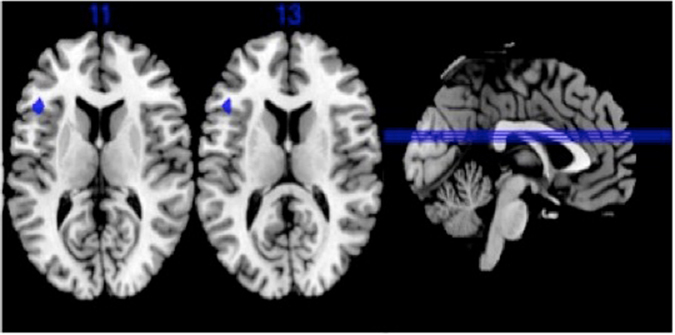
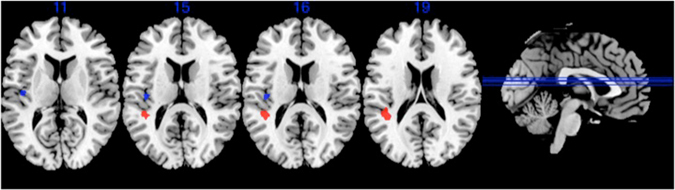
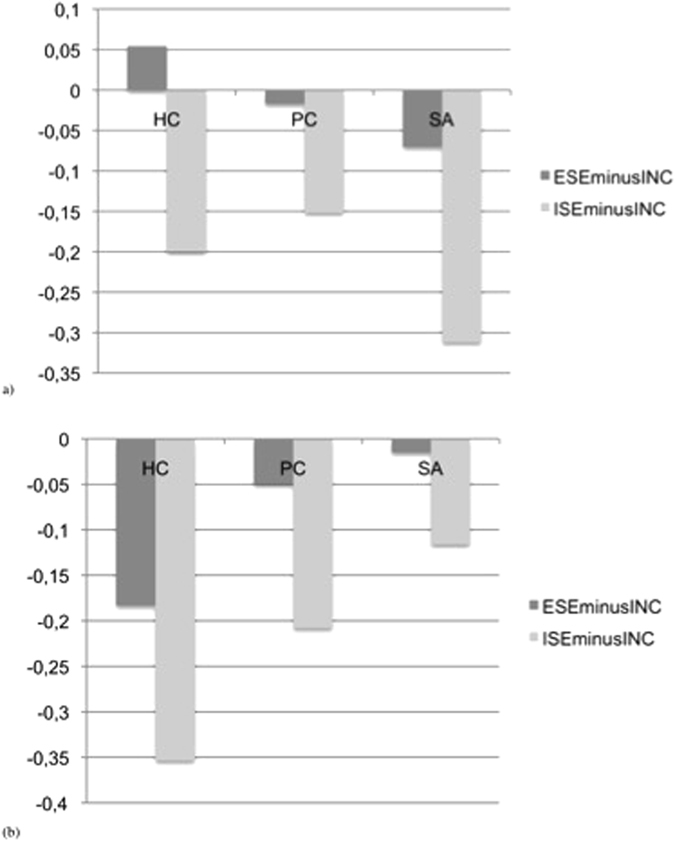
Suicidal behaviors result from a complex interaction between social stressors and individual vulnerability. However, little is known of the specific neural network supporting the sensitivity to social stressors in patients at risk of suicidal acts. Using functional Magnetic Resonance Imaging, we investigated brain processing of social rejection in suicide attempters. Thirty-six euthymic women with a history of depression and suicidal behavior were compared to 41 euthymic women with a history of depression but no suicidal attempt, and 28 healthy controls. The Cyberball Game was used as a validated social exclusion paradigm. Relative to healthy controls, both patient groups reported higher levels of social distress related to the task, without significant differences according to suicidal status. Compared to patients without any history of suicide attempt and healthy controls, suicide attempters showed decreased contrast in the left insula and supramarginal gyrus during the exclusion vs. inclusion condition, after controlling for number of depressive episodes, medication, mood disorder type or social phobia. Our study highlights impaired brain response to social exclusion in euthymic female suicide attempters in regions previously implicated in pain tolerance and social cognition. These findings suggest sustained brain dysfunctions related to social perception in suicide attempters.
Overview
The claims and statistics of this paper haven’t been checked yet.
Free: it reads the open-access text and checks the first 5 claims that cite a source we can check. Create a free account to check every claim.
Integrity signals
Registry
Cites
Statistics
Figures
Verification
Claims the paper makes
The claims and statistics of this paper haven’t been checked yet.
Free: it reads the open-access text and checks the first 5 claims that cite a source we can check. Create a free account to check every claim.
Claims other papers make about this one
Each is checked against this paper’s own text: does it say what the citing paper says it does?
The cited source says what the claim attributes to it.
In the citing paper
“Interestingly, attempters also showed reduced posterior insular activity during exclusion relative to non-attempters and healthy volunteers (Olié et al., 2017).”
From Toward objective characterizations of suicide risk: A narrative review of laboratory-based cognitive and behavioral tasks (2023) · cites this paper as Olié et al., 2017
The cited source says what the claim attributes to it.
In the citing paper
“Suicide attempters have lower activity in the supramarginal gyrus and posterior insula during the cyberball task, an fMRI experiment evoking reaction to social exclusion (103), perhaps reflecting distorted social perception.”
From A brain-centric model of suicidal behavior (2020) · cites this paper as [103]
Self-check
Percentages, sums and reported differences re-computed from the paper’s own numbers.
The self-check needs the paper’s full text.
Citations
Cites
The assessment and analysis of handedness: The Edinburgh inventory
Oldfield, R. C. (1971) · Neuropsychologia · doi:10.1016/0028-3932(71)90067-4 · Cited by 35,900
(1970) · Cited by 24,983
How do you feel? Interoception: The sense of the physiological condition of the body
Craig, A. D. (2002) · Nature Reviews Neuroscience · doi:10.1038/nrn894 · Cited by 6,006
Does Rejection Hurt? An fMRI Study of Social Exclusion
Eisenberger, N. I., Lieberman, M. D., & Williams, K. D. (2003) · Science · doi:10.1126/science.1089134 · Cited by 3,849 · cited 1×
“Three groups of euthymic female participants were recruited: (1) suicide attempters (SA)— individuals with a past history of both major depressive episode and suicidal behaviour; (2) patient controls (PC)—individuals with a past history of major depressive episode but no personal history of suicidal acts; (3) healthy…”
BackgroundState-Trait Anxiety Inventory for Adults
Spielberger, C. D. (2012) · PsycTESTS Dataset · doi:10.1037/t06496-000 · Cited by 3,479
Cyberostracism: effects of being ignored over the Internet
Williams, K. D., Cheung, C. K. T., & Choi, W. (2000) · Journal of Personality and Social Psychology · doi:10.1037/0022-3514.79.5.748 · Cited by 2,276
Social cognition and the brain: A meta-analysis
Van Overwalle, F. (2009) · Human Brain Mapping · doi:10.1002/hbm.20547 · Cited by 1,792
Social exclusion impairs self-regulation
Baumeister, R. F., DeWall, C. N., Ciarocco, N. J., & Twenge, J. M. (2005) · Journal of Personality and Social Psychology · doi:10.1037/0022-3514.88.4.589 · Cited by 1,401
Baumeister, R. F., Gailliot, M., DeWall, C. N., & Oaten, M. (2006) · Journal of Personality · doi:10.1111/j.1467-6494.2006.00428.x · Cited by 910
Chang, L. J., Yarkoni, T., Khaw, M. W., & Sanfey, A. G. (2013) · Cerebral Cortex · doi:10.1093/cercor/bhs065 · Cited by 879
van Heeringen, K., & Mann, J. J. (2014) · The Lancet Psychiatry · doi:10.1016/s2215-0366(14)70220-2 · Cited by 550
The Psychology and Neurobiology of Suicidal Behavior
Joiner, T. E., Brown, J. S., & Wingate, L. R. (2005) · Annual Review of Psychology · doi:10.1146/annurev.psych.56.091103.070320 · Cited by 481
The suicidal mind and brain: A review of neuropsychological and neuroimaging studies
Jollant, F., Lawrence, N. L., Olié, E., Guillaume, S., & Courtet, P. (2011) · The World Journal of Biological Psychiatry · doi:10.3109/15622975.2011.556200 · Cited by 363
Self-citationPrevalence and demographic correlates of childhood maltreatment in an adult community sample
Scher, C. D., Forde, D. R., McQuaid, J. R., & Stein, M. B. (2004) · Child Abuse & Neglect · doi:10.1016/j.chiabu.2003.09.012 · Cited by 329
Jollant, F., Lawrence, N. S., Olie, E., O'Daly, O., Malafosse, A., Courtet, P., & Phillips, M. L. (2010) · NeuroImage · doi:10.1016/j.neuroimage.2010.03.027 · Cited by 312
Self-citationNeural Correlates of Antinociception in Borderline Personality Disorder
Schmahl, C., Bohus, M., Esposito, F., Treede, R.-D., Di Salle, F., Greffrath, W., Ludaescher, P., Jochims, A., Lieb, K., Scheffler, K., et al. (2006) · Archives of General Psychiatry · doi:10.1001/archpsyc.63.6.659 · Cited by 300
Meta-analytic clustering of the insular cortex
Cauda, F., Costa, T., Torta, D. M. E., Sacco, K., D'Agata, F., Duca, S., Geminiani, G., Fox, P. T., & Vercelli, A. (2012) · NeuroImage · doi:10.1016/j.neuroimage.2012.04.012 · Cited by 292
A quantitative meta-analysis of functional imaging studies of social rejection
Cacioppo, S., Frum, C., Asp, E., Weiss, R. M., Lewis, J. W., & Cacioppo, J. T. (2013) · Scientific Reports · doi:10.1038/srep02027 · Cited by 290
Reward Signals, Attempted Suicide, and Impulsivity in Late-Life Depression
Dombrovski, A. Y., Szanto, K., Clark, L., Reynolds, C. F., & Siegle, G. J. (2013) · JAMA Psychiatry · doi:10.1001/jamapsychiatry.2013.75 · Cited by 289
Orbitofrontal cortex response to angry faces in men with histories of suicide attempts
Jollant, F., Lawrence, N. S., Giampietro, V., Brammer, M. J., Fullana, M. A., Drapier, D., Courtet, P., & Phillips, M. L. (2008) · American Journal of Psychiatry · doi:10.1176/appi.ajp.2008.07081239 · Cited by 262
Self-citationFactor Structure of the State-Trait Anger Expression Inventory
Forgays, D. G., Forgays, D. K., & Spielberger, C. D. (1997) · Journal of Personality Assessment · doi:10.1207/s15327752jpa6903_5 · Cited by 242
Hwang, J.-P., Lee, T.-W., Tsai, S.-J., Chen, T.-J., Yang, C.-H., Lirng, J.-F., & Tsai, C.-F. (2010) · Journal of Geriatric Psychiatry and Neurology · doi:10.1177/0891988710363713 · Cited by 211
Structure factorielle de la traduction française de l'échelle d'impulsivité de Barratt (BIS-10)
Baylé, F. J., Bourdel, M. C., Caci, H., Gorwood, P., Chignon, J.-M., Adés, J., & Lôo, H. (2000) · The Canadian Journal of Psychiatry · doi:10.1177/070674370004500206 · Cited by 202
Left inferior parietal lobe engagement in social cognition and language
Bzdok, D., Hartwigsen, G., Reid, A., Laird, A. R., Fox, P. T., & Eickhoff, S. B. (2016) · Neuroscience & Biobehavioral Reviews · doi:10.1016/j.neubiorev.2016.02.024 · Cited by 185
Pan, L. A., Hassel, S., Segreti, A. M., Nau, S. A., Brent, D. A., & Phillips, M. L. (2013) · Psychological Medicine · doi:10.1017/s0033291712002966 · Cited by 183 · cited 1×
“Three groups of euthymic female participants were recruited: (1) suicide attempters (SA)— individuals with a past history of both major depressive episode and suicidal behaviour; (2) patient controls (PC)—individuals with a past history of major depressive episode but no personal history of suicidal acts; (3) healthy…”
BackgroundFoster, T. (2011) · Archives of Suicide Research · doi:10.1080/13811118.2011.540213 · Cited by 181
Olié, E., Guillaume, S., Jaussent, I., Courtet, P., & Jollant, F. (2010) · Journal of Affective Disorders · doi:10.1016/j.jad.2009.03.013 · Cited by 174
Self-citationAn fMRI study on mental pain and suicidal behavior
Reisch, T., Seifritz, E., Esposito, F., Wiest, R., Valach, L., & Michel, K. (2010) · Journal of Affective Disorders · doi:10.1016/j.jad.2010.03.005 · Cited by 173
Opposite effects of suicidality and lithium on gray matter volumes in bipolar depression
Benedetti, F., Radaelli, D., Poletti, S., Locatelli, C., Falini, A., Colombo, C., & Smeraldi, E. (2011) · Journal of Affective Disorders · doi:10.1016/j.jad.2011.07.006 · Cited by 165
The neuroscience of suicidal behaviors: what can we expect from endophenotype strategies?
Courtet, P., Gottesman, I. I., Jollant, F., & Gould, T. D. (2011) · Translational Psychiatry · doi:10.1038/tp.2011.6 · Cited by 149
Self-citationEisenberger, N. I., Gable, S. L., & Lieberman, M. D. (2007) · Emotion · doi:10.1037/1528-3542.7.4.745 · Cited by 147
Jollant, F., Guillaume, S., Jaussent, I., Castelnau, D., Malafosse, A., & Courtet, P. (2006) · Journal of Affective Disorders · doi:10.1016/j.jad.2006.07.022 · Cited by 131
Self-citationAssociation Between Social Integration and Suicide Among Women in the United States
Tsai, A. C., Lucas, M., & Kawachi, I. (2015) · JAMA Psychiatry · doi:10.1001/jamapsychiatry.2015.1002 · Cited by 127
Olié, E., Ding, Y., Le Bars, E., de Champfleur, N. M., Mura, T., Bonafé, A., Courtet, P., & Jollant, F. (2015) · Psychiatry Research: Neuroimaging · doi:10.1016/j.pscychresns.2015.09.020 · Cited by 123
Self-citationThe functional neuroanatomy of mental pain in depression
van Heeringen, K., Van den Abbeele, D., Vervaet, M., Soenen, L., & Audenaert, K. (2010) · Psychiatry Research: Neuroimaging · doi:10.1016/j.pscychresns.2009.07.011 · Cited by 113
Giakoumatos, C. I., Tandon, N., Shah, J., Mathew, I. T., Brady, R. O., Clementz, B. A., Pearlson, G. D., Thaker, G. K., Tamminga, C. A., Sweeney, J. A., et al. (2013) · Journal of Psychiatric Research · doi:10.1016/j.jpsychires.2013.06.011 · Cited by 111
Willeumier, K., Taylor, D. V., & Amen, D. G. (2011) · Translational Psychiatry · doi:10.1038/tp.2011.28 · Cited by 107 · cited 1×
“Three groups of euthymic female participants were recruited: (1) suicide attempters (SA)— individuals with a past history of both major depressive episode and suicidal behaviour; (2) patient controls (PC)—individuals with a past history of major depressive episode but no personal history of suicidal acts; (3) healthy…”
BackgroundOquendo, M. A., Galfalvy, H., Sullivan, G. M., Miller, J. M., Milak, M. M., Sublette, M. E., Cisneros-Trujillo, S., Burke, A. K., Parsey, R. V., & Mann, J. J. (2016) · JAMA Psychiatry · doi:10.1001/jamapsychiatry.2016.1478 · Cited by 93
Boccia, M., Dacquino, C., Piccardi, L., Cordellieri, P., Guariglia, C., Ferlazzo, F., Ferracuti, S., & Giannini, A. M. (2016) · Brain Imaging and Behavior · doi:10.1007/s11682-016-9505-x · Cited by 85
The measurement properties of a French language adaptation of the National Adult Reading Test
Mackinnon, A., Ritchie, K., & Mulligan, R. (1999) · International Journal of Methods in Psychiatric Research · doi:10.1002/mpr.54 · Cited by 71
Misson, H., Mathieu, F., Jollant, F., Yon, L., Guillaume, S., Parmentier, C., Raust, A., Jaussent, I., Slama, F., Leboyer, M., et al. (2009) · Journal of Affective Disorders · doi:10.1016/j.jad.2009.05.012 · Cited by 67
Self-citationSchneidman, E. S. (1999) · Cited by 67
A Neural Basis for the Acquired Capability for Suicide
Deshpande, G., Baxi, M., Witte, T., & Robinson, J. L. (2016) · Frontiers in Psychiatry · doi:10.3389/fpsyt.2016.00125 · Cited by 54
Magnetization Transfer Imaging of Suicidal Patients with Major Depressive Disorder
Chen, Z., Zhang, H., Jia, Z., Zhong, J., Huang, X., Du, M., Chen, L., Kuang, W., Sweeney, J. A., & Gong, Q. (2015) · Scientific Reports · doi:10.1038/srep09670 · Cited by 41
Caine, E. D. (2015) · JAMA Psychiatry · doi:10.1001/jamapsychiatry.2015.1065 · Cited by 9 · cited 1×
“Past alcohol abuse or dependence — 12 (5) 8.”
Background
Cited by
The integrated motivational–volitional model of suicidal behaviour
O'Connor, R. C., & Kirtley, O. J. (2018) · Philosophical Transactions of the Royal Society B: Biological Sciences · doi:10.1098/rstb.2017.0268 · Cited by 1,781
Imaging suicidal thoughts and behaviors: a comprehensive review of 2 decades of neuroimaging studies
Schmaal, L., van Harmelen, A.-L., Chatzi, V., Lippard, E. T. C., Toenders, Y. J., Averill, L. A., Mazure, C. M., & Blumberg, H. P. (2020) · Molecular Psychiatry · doi:10.1038/s41380-019-0587-x · Cited by 373
A brain-centric model of suicidal behavior
Mann, J. J., & Rizk, M. M. (2020) · American Journal of Psychiatry · doi:10.1176/appi.ajp.2020.20081224 · Cited by 214
“Suicide attempters have lower activity in the supramarginal gyrus and posterior insula during the cyberball task, an fMRI experiment evoking reaction to social exclusion (103), perhaps reflecting distorted social perception.”
BackgroundSerafini, G., Parisi, V. M., Aguglia, A., Amerio, A., Sampogna, G., Fiorillo, A., Pompili, M., & Amore, M. (2020) · International Journal of Environmental Research and Public Health · doi:10.3390/ijerph17072393 · Cited by 172
Keep Socially (but Not Physically) Connected and Carry on: Preventing Suicide in the Age of COVID-19
Courtet, P., Olié, E., Debien, C., & Vaiva, G. (2020) · The Journal of Clinical Psychiatry · doi:10.4088/jcp.20com13370 · Cited by 163
Self-citation
Metadata
- Authors
- Olié, E., Jollant, F., Deverdun, J., de Champfleur, N. M., Cyprien, F., Le Bars, E., Mura, T., Bonafé, A., & Courtet, P.
- Affiliations
- Douglas Mental Health University Institute (CA)
- Inserm (FR)
- Centre Hospitalier Universitaire de Montpellier (FR)
- Venue
- Scientific Reports
- Published
- 2017-03-07
- Volume
- 7
- Issue
- 1
- Pages
- 89-89
- ISSN
- 2045-2322 (ISSN-L)
- PMC
- PMC5428048
- OpenAlex
- W2594122305
- Semantic Scholar
- c8c6721c0e138dfa57965d56da380f77a30d6e3e
- Cited by
- 120
- References
- 45
- Citations by year
- 2026: 5 · 2025: 10 · 2024: 10 · 2023: 11 · 2022: 7 · 2021: 16 · 2020: 19 · 2019: 11 · 2018: 28 · 2017: 3
- FWCI
- 20.64
- Type
- journal article
- Language
- en
- Open access
- gold
- doi.org
- Licence
- cc-by
- creativecommons.org/licenses/by/4.0 (tdm)
- creativecommons.org/licenses/by/4.0 (vor)
- Locations
- Scientific Reports (publishedVersion, cc-by)
- PubMed Central (publishedVersion, cc-by)
- PubMed (publishedVersion)
- HAL (submittedVersion, cc-by)
- DOAJ (DOAJ: Directory of Open Access Journals) (submittedVersion, cc-by-sa)
- Funders
- Agence Nationale de la Recherche (ANR MNPS 2009)
- Servier
- CHIST-ERA
- Topics
- Social Sciences › Psychology › Clinical Psychology › Suicide and Self-Harm Studies
- Social Sciences › Psychology › Social Psychology › Death Anxiety and Social Exclusion
- Life Sciences › Neuroscience › Cognitive Neuroscience › Neural and Behavioral Psychology Studies
- Keywords
- social exclusion, suicide attempters, women, social rejection, Cyberball game, insula, supramarginal gyrus, social distress, depression, social cognition, pain tolerance
- MeSH terms
- Adolescent, Adult, Cerebral Cortex, Child, Depression, Female, Humans, Magnetic Resonance Imaging, Middle Aged, Neuropsychological Tests, Psychological Distance, Suicide, Attempted, Young Adult, Suicidal Ideation, Neuroimaging
About these checks
Registry, retraction, Cites and statistics results are computed, not judged, with one exception: a printed reference that no index lists is read once by a model before it counts as a citation error. Claims are extracted by a model and kept only when their quote appears verbatim in the text; each cited source is then checked, with a model’s help, for whether it says what the claim relies on. Those verdicts can be wrong — read the claim’s quote and the cited source before relying on one.
Statistics and arithmetic are recomputed, not judged.
Confidence bands are shown only for fields calibrated on our annotated test set. None is calibrated yet, so no band is shown.
What counts as a claim ›How we measure confidence ›How we check this ›
Are you an author, or do you see a problem with this page? Request a review
Data sources
Bibliographic data: Semantic Scholar, OpenAlex, Crossref.
Contains information from the Semantic Scholar Academic Graph Datasets, made available under the ODC Attribution License (ODC-BY 1.0).
Semantic Scholar’s data is described in: Kinney, R., et al. (2023). The Semantic Scholar Open Data Platform. arXiv:2301.10140.
