

Chronic interfacing with the autonomic nervous system using carbon nanotube (CNT) yarn electrodes
Open accessThe DOI matches its Crossref record; 57 of the 57 references it cites were found in a registry or an index.
Abstract
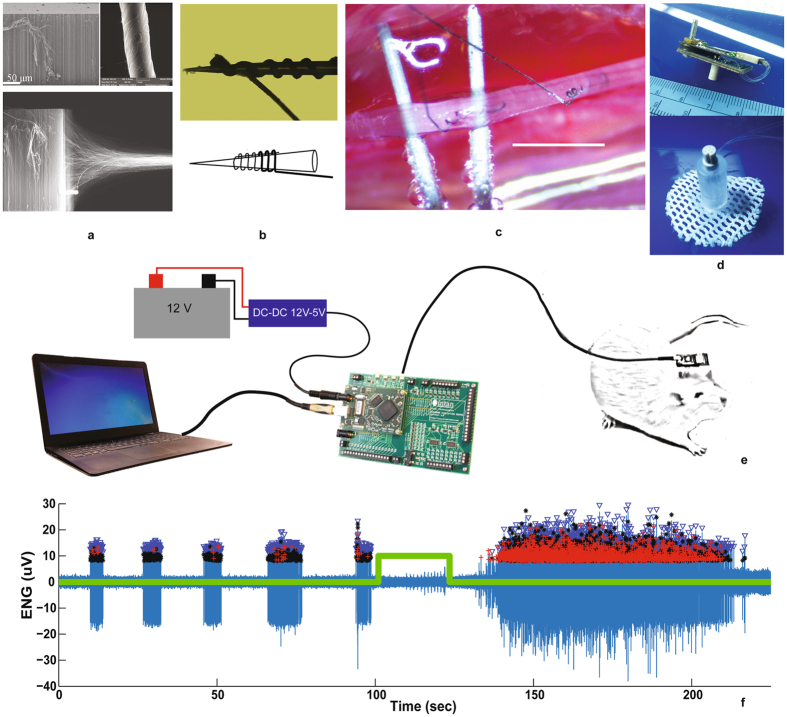
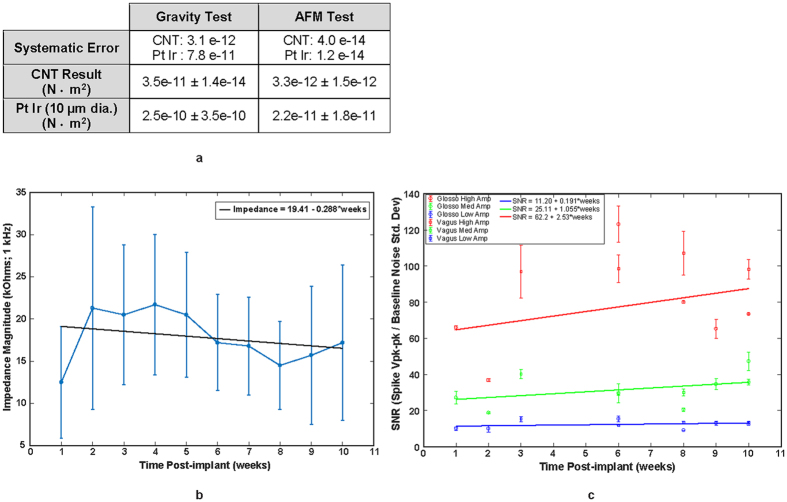
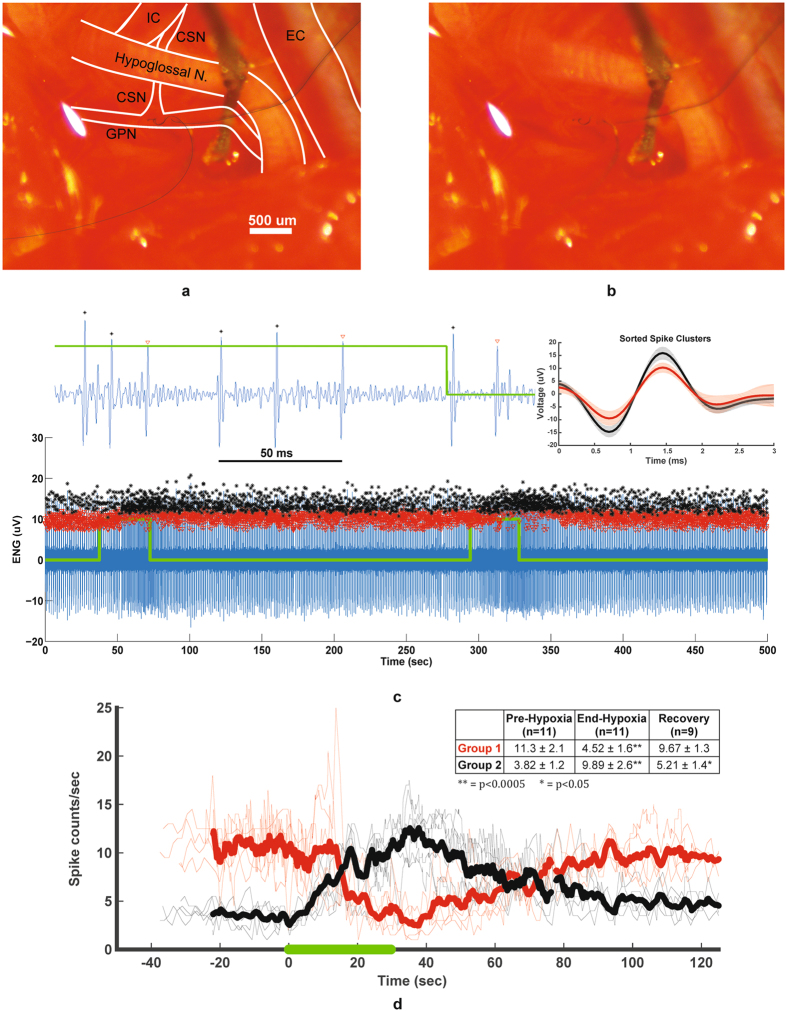
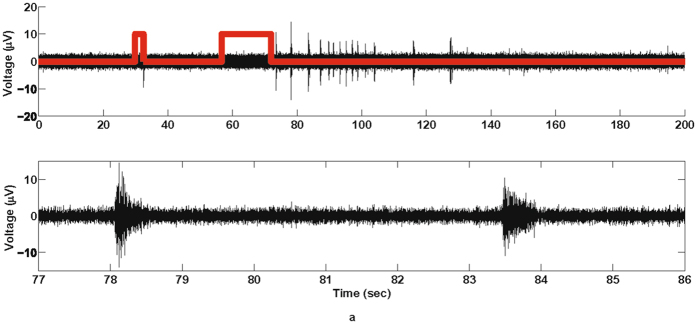
The ability to reliably and safely communicate chronically with small diameter (100–300 µm) autonomic nerves could have a significant impact in fundamental biomedical research and clinical applications. However, this ability has remained elusive with existing neural interface technologies. Here we show a new chronic nerve interface using highly flexible materials with axon-like dimensions. The interface was implemented with carbon nanotube (CNT) yarn electrodes to chronically record neural activity from two separate autonomic nerves: the glossopharyngeal and vagus nerves. The recorded neural signals maintain a high signal-to-noise ratio (>10 dB) in chronic implant models. We further demonstrate the ability to process the neural activity to detect hypoxic and gastric extension events from the glossopharyngeal and vagus nerves, respectively. These results establish a novel, chronic platform neural interfacing technique with the autonomic nervous system and demonstrate the possibility of regulating internal organ function, leading to new bioelectronic therapies and patient health monitoring.
Overview
The claims and statistics of this paper haven’t been checked yet.
Free: it reads the open-access text and checks the first 5 claims that cite a source we can check. Create a free account to check every claim.
Integrity signals
Registry
Cites
Statistics
Figures
Verification
Claims the paper makes
The claims and statistics of this paper haven’t been checked yet.
Free: it reads the open-access text and checks the first 5 claims that cite a source we can check. Create a free account to check every claim.
Claims other papers make about this one
Each is checked against this paper’s own text: does it say what the citing paper says it does?
The check wasn’t confident either way, so it gives no verdict — never disputed.
In the citing paper
“Faradic electrodes based on oxides of iridium (IrOx) tend to have a higher charge capacity compared to titanium-derived electrodes due to their excellent electrochemical properties.[532,533]”
From Flexible Electronics and Devices as Human–Machine Interfaces for Medical Robotics (2022) · cites this paper as [533]
Experimental — accuracy not yet measuredIn the citing paper
“In addition, neural signals from the glossopharyngeal and vagus nerves were chronically recorded using carbon nanotube (CNT) yarn electrodes [Fig.4(i)].109”
From From flexible electronics technology in the era of IoT and artificial intelligence toward future implanted body sensor networks (2019) · cites this paper as [109]
Self-check
Percentages, sums and reported differences re-computed from the paper’s own numbers.
The self-check needs the paper’s full text.
Citations
Cites
The American Journal of Physiology
(1899) · The American Naturalist · doi:10.1086/277182 · Cited by 5,654
A review of methods for spike sorting: the detection and classification of neural action potentials
Lewicki, M. S. (1998) · Network Computation in Neural Systems · doi:10.1088/0954-898x/9/4/001 · Cited by 1,370
Strong, Light, Multifunctional Fibers of Carbon Nanotubes with Ultrahigh Conductivity
Behabtu, N., Young, C. C., Tsentalovich, D. E., Kleinerman, O., Wang, X., Ma, A. W. K., Bengio, E. A., ter Waarbeek, R. F., de Jong, J. J., Hoogerwerf, R. E., et al. (2013) · Science · doi:10.1126/science.1228061 · Cited by 1,354
Functional and chemical anatomy of the afferent vagal system
Berthoud, H.-R., & Neuhuber, W. L. (2000) · Autonomic Neuroscience · doi:10.1016/s1566-0702(00)00215-0 · Cited by 1,280
A neural interface provides long-term stable natural touch perception
Tan, D. W., Schiefer, M. A., Keith, M. W., Anderson, J. R., Tyler, J., & Tyler, D. J. (2014) · Science Translational Medicine · doi:10.1126/scitranslmed.3008669 · Cited by 751
Carbon Nanotube Arrays with Strong Shear Binding-On and Easy Normal Lifting-Off
Qu, L., Dai, L., Stone, M., Xia, Z., & Wang, Z. L. (2008) · Science · doi:10.1126/science.1159503 · Cited by 745
Self-citationKozai, T. D. Y., Langhals, N. B., Patel, P. R., Deng, X., Zhang, H., Smith, K. L., Lahann, J., Kotov, N. A., & Kipke, D. R. (2012) · Nature Materials · doi:10.1038/nmat3468 · Cited by 721
Rush, A. J., George, M. S., Sackeim, H. A., Marangell, L. B., Husain, M. M., Giller, C., Nahas, Z., Haines, S., Simpson, R. K., & Goodman, R. (2000) · Biological Psychiatry · doi:10.1016/s0006-3223(99)00304-2 · Cited by 688
Groves, D. A., & Brown, V. J. (2005) · Neuroscience & Biobehavioral Reviews · doi:10.1016/j.neubiorev.2005.01.004 · Cited by 675
Quantitative measures of cluster quality for use in extracellular recordings
Schmitzer-Torbert, N., Jackson, J., Henze, D., Harris, K., & Redish, A. D. (2005) · Neuroscience · doi:10.1016/j.neuroscience.2004.09.066 · Cited by 662
Cited by
Flexible Electronics and Devices as Human–Machine Interfaces for Medical Robotics
Heng, W., Solomon, S., & Gao, W. (2022) · Advanced Materials · doi:10.1002/adma.202107902 · Cited by 609
Materials for flexible bioelectronic systems as chronic neural interfaces
Song, E., Li, J., Won, S. M., Bai, W., & Rogers, J. A. (2020) · Nature Materials · doi:10.1038/s41563-020-0679-7 · Cited by 498
Zhang, X., Lu, W., Zhou, G., & Li, Q. (2020) · Advanced Materials · doi:10.1002/adma.201902028 · Cited by 408
Niu, Y., Liu, H., He, R., Li, Z., Ren, H., Gao, B., Guo, H., Genin, G. M., & Xu, F. (2020) · Materials Today · doi:10.1016/j.mattod.2020.10.004 · Cited by 224
Xue, Y., Chen, X., Wang, F., Lin, J., & Liu, J. (2023) · Advanced Materials · doi:10.1002/adma.202304095 · Cited by 185
Lee, S., Shi, Q., & Lee, C. (2019) · APL Materials · doi:10.1063/1.5063498 · Cited by 164
Implantable intracortical microelectrodes: reviewing the present with a focus on the future
Wang, Y., Yang, X., Zhang, X., Wang, Y., & Pei, W. (2023) · Microsystems & Nanoengineering · doi:10.1038/s41378-022-00451-6 · Cited by 163
Thin film multi-electrode softening cuffs for selective neuromodulation
González-González, M. A., Kanneganti, A., Joshi-Imre, A., Hernandez-Reynoso, A. G., Bendale, G., Modi, R., Ecker, M., Khurram, A., Cogan, S. F., Voit, W. E., et al. (2018) · Scientific Reports · doi:10.1038/s41598-018-34566-6 · Cited by 97
Bioinspired Materials for In Vivo Bioelectronic Neural Interfaces
Woods, G. A., Rommelfanger, N. J., & Hong, G. (2020) · Matter · doi:10.1016/j.matt.2020.08.002 · Cited by 91
Stretchable Low Impedance Electrodes for Bioelectronic Recording from Small Peripheral Nerves
Decataldo, F., Cramer, T., Martelli, D., Gualandi, I., Korim, W. S., Yao, S. T., Tessarolo, M., Murgia, M., Scavetta, E., Amici, R., et al. (2019) · Scientific Reports · doi:10.1038/s41598-019-46967-2 · Cited by 74
Direct measurement of vagal tone in rats does not show correlation to HRV
Marmerstein, J. T., McCallum, G. A., & Durand, D. M. (2021) · Scientific Reports · doi:10.1038/s41598-020-79808-8 · Cited by 77
Self-citationLi, H., Wang, J., & Fang, Y. Z. (2023) · Microsystems & Nanoengineering · doi:10.1038/s41378-022-00444-5 · Cited by 73
An Injectable Neural Stimulation Electrode Made from an In‐Body Curing Polymer/Metal Composite
Trevathan, J. K., Baumgart, I. W., Nicolai, E. N., Gosink, B. A., Asp, A. J., Settell, M. L., Polaconda, S. R., Malerick, K. D., Brodnick, S. K., Zeng, W., et al. (2019) · Advanced Healthcare Materials · doi:10.1002/adhm.201900892 · Cited by 73
Bioelectronic medicine for the autonomic nervous system: clinical applications and perspectives
Cracchiolo, M., Ottaviani, M. M., Panarese, A., Strauss, I., Vallone, F., Mazzoni, A., & Micera, S. (2021) · Journal of Neural Engineering · doi:10.1088/1741-2552/abe6b9 · Cited by 69
“The vision crafted by this newly formed community of BM neural engineers is that miniaturized electrical devices implanted to target individual nerves in the ANS will be able to act in a closed loop fashion, deciphering and modulating neural signalling patterns.”
MethodInfluentialFlexible sensors based on assembled carbon nanotubes
He, S., Hong, Y., Liao, M., Li, Y., Qiu, L., & Peng, H. (2021) · Aggregate · doi:10.1002/agt2.143 · Cited by 67
Jiman, A. A., Ratze, D. C., Welle, E. J., Patel, P. R., Richie, J. M., Bottorff, E. C., Seymour, J. P., Chestek, C. A., & Bruns, T. M. (2020) · Scientific Reports · doi:10.1038/s41598-020-72512-7 · Cited by 61
Compliant peripheral nerve interfaces.
Paggi, V., Akouissi, O., Micera, S., & Lacour, S. P. (2021) · Journal of Neural Engineering · doi:10.1088/1741-2552/abcdbe · Cited by 60
“For instance carbon fibers [218] or carbon nanotube yarn electrodes [219] have allowed chronic interfacing and easy access to small nerves (sub-mm) which are typically difficult to target with thick conventional materials.”
BackgroundPatel, P. R., Popov, P., Caldwell, C. M., Welle, E. J., Egert, D., Pettibone, J. R., Roossien, D. H., Becker, J. B., Berke, J. D., Chestek, C. A., et al. (2020) · Journal of Neural Engineering · doi:10.1088/1741-2552/abb1f6 · Cited by 60
“Finally, the very small size and pitch may ultimately enable use of the present device in nerves and ganglia where carbon based devices have already shown the ability to record unit activity [63, 70].”
BackgroundA flexible protruding microelectrode array for neural interfacing in bioelectronic medicine
Steins, H., Mierzejewski, M., Brauns, L., Stumpf, A., Kohler, A., Heusel, G., Corna, A., Herrmann, T., Jones, P. D., Zeck, G. M., et al. (2022) · Microsystems & Nanoengineering · doi:10.1038/s41378-022-00466-z · Cited by 56
Recent progress on peripheral neural interface technology towards bioelectronic medicine
Cho, Y., Park, J., Lee, C., & Lee, S. (2020) · Bioelectronic Medicine · doi:10.1186/s42234-020-00059-z · Cited by 55
“1g) (McCallum et al. 2017).”
Bioelectronic Medicine: a multidisciplinary roadmap from biophysics to precision therapies
González‐González, M. A., Conde, S. V., Latorre, R., Thébault, S. C., Pratelli, M., Spitzer, N. C., Verkhratsky, A., Tremblay, M., Akçora, C. G., Hernandez-Reynoso, A. G., et al. (2024) · Frontiers in Integrative Neuroscience · doi:10.3389/fnint.2024.1321872 · Cited by 50
“…their chemical stability and high performance are the nanostructured carbon composite materials, including nanofibers, carbon nanotubes and graphene oxide, among others (Geim, 2009; Tian et al., 2014; Thompson et al., 2015; McCallum et al., 2017; Wang et al., 2019; Gonzalez-Gonzalez et al., 2021).”
BackgroundNeurotechnologies to restore hand functions
Losanno, E., Mender, M. J., Chestek, C. A., Shokur, S., & Micera, S. (2023) · Nature Reviews Bioengineering · doi:10.1038/s44222-023-00054-4 · Cited by 49
Chronic neural activity recorded within breast tumors
McCallum, G. A., Shiralkar, J., Suciu, D., Covarrubias, G., Yu, J. S., Karathanasis, E., & Durand, D. M. (2020) · Scientific Reports · doi:10.1038/s41598-020-71670-y · Cited by 47
Self-citationYan, D., Jiman, A. A., Bottorff, E. C., Patel, P. R., Meli, D., Welle, E. J., Ratze, D. C., Havton, L. A., Chestek, C. A., Kemp, S. W. P., et al. (2022) · Small · doi:10.1002/smll.202200311 · Cited by 47
Carbon Nanotube Fibers for Neural Recording and Stimulation
Alvarez, N. T., Buschbeck, E. K., Miller, S., Le, A. D., Gupta, V. K., Ruhunage, C. K., Vilinsky, I., & Ma, Y. (2020) · ACS Applied Bio Materials · doi:10.1021/acsabm.0c00861 · Cited by 39
Ma, J., Yang, S., Yang, Z.-H., He, Z., & Du, Z. J. (2025) · Sensors · doi:10.3390/s25144412 · Cited by 38
Carbon fiber electrodes for intracellular recording and stimulation
Huan, Y., Gill, J. P., Fritzinger, J. B., Patel, P. R., Richie, J. M., della Valle, E., Weiland, J. D., Chestek, C. A., & Chiel, H. J. (2021) · Journal of Neural Engineering · doi:10.1088/1741-2552/ac3dd7 · Cited by 37
“For example, carbon nanotube (CNT) yarns have been used extracellularly for recording and stimulation in nerves and neurons [49, 50], but the greater flexibility of CNT yarns compared to carbon fiber makes it harder for the CNT yarns to be inserted into precise locations for intracellular recording [51].”
Shoffstall, A. J., Ecker, M., Danda, V. R., Joshi‐Imre, A., Stiller, A. M., Yu, M. H., Paiz, J. E., Mancuso, E., Bedell, H. W., Voit, W., et al. (2018) · Micromachines · doi:10.3390/mi9100486 · Cited by 38
Platinized graphene fiber electrodes uncover direct spleen-vagus communication
González‐González, M. A., Bendale, G. S., Wang, K., Wallace, G. G., & Romero‐Ortega, M. I. (2021) · Communications Biology · doi:10.1038/s42003-021-02628-7 · Cited by 36
Semiconducting electrodes for neural interfacing: a review
Ahnood, A., Chambers, A., Gelmi, A. A., Yong, K., & Kavehei, O. (2023) · Chemical Society Reviews · doi:10.1039/d2cs00830k · Cited by 36
Bioinspired materials and systems for neural interfacing
Shoffstall, A. J., & Capadona, J. R. (2018) · Current Opinion in Biomedical Engineering · doi:10.1016/j.cobme.2018.05.002 · Cited by 35
Challenges in Scaling Down of Free-Floating Implantable Neural Interfaces to Millimeter Scale
Yang, K.-W., Oh, K., & Ha, S. (2020) · IEEE Access · doi:10.1109/access.2020.3007517 · Cited by 32
Zhang, Y., Yan, J. H., Jin, X., Yang, H., Zhang, Y., Ma, H., & Ma, R. (2023) · International Journal of Environmental Research and Public Health · doi:10.3390/ijerph20043678 · Cited by 33
“At the same time, physical activities can also improve the nervous system’s regulating effect on internal organs, make organs and systems more flexible, and improve the body’s working ability based on the ability to resist diseases, so that students would not have too many health factors restricting their learning and…”
BackgroundBioinspired flexible electronics for seamless neural interfacing and chronic recording
Li, H., Wang, J., & Fang, Y. Z. (2020) · Nanoscale Advances · doi:10.1039/d0na00323a · Cited by 32
Lifetime engineering of bioelectronic implants with mechanically reliable thin film encapsulations
Niemiec, M., & Kim, K. (2023) · Progress in Biomedical Engineering · doi:10.1088/2516-1091/ad0b19 · Cited by 32
“Other carbon-based materials which can be made with even lower bending stiffnesses are being developed, such as carbon nanotube yarns [97, 98], which approach axon-like physical dimensions and mechanical properties.”
Modulus‐Tailorable, Stretchable, and Biocompatible Carbonene Fiber for Adaptive Neural Electrode
Gong, Q., Yu, Y., Kang, L., Zhang, M., Zhang, Y., Wang, S., Niu, Y., Zhang, Y., Di, J., Li, Q., et al. (2021) · Advanced Functional Materials · doi:10.1002/adfm.202107360 · Cited by 31
Zanos, T. P. (2019) · Cold Spring Harbor Perspectives in Medicine · doi:10.1101/cshperspect.a034157 · Cited by 31
“However, surface recordings have a lower signal-to-noise ratio and spatial specificity (Wodlinger and Durand 2009) than recordings from electrodes inside the nerve (Micera et al. 2011; Kundu et al. 2014; McCallum et al. 2017).”
BackgroundMaterials and System Design for Self‐Decision Bioelectronic Systems
Zeng, Q., Liu, H., Zhang, Y., Zheng, Y., Ding, X., Zhu, M., Shi, G., Wang, Y., Haick, H., & Zhang, M. (2026) · Advanced Materials · doi:10.1002/adma.202521164 · Cited by 33
Self-citationWu, Y., Jiang, D., & Demosthenous, A. (2021) · IEEE Transactions on Biomedical Circuits and Systems · doi:10.1109/tbcas.2021.3139996 · Cited by 30
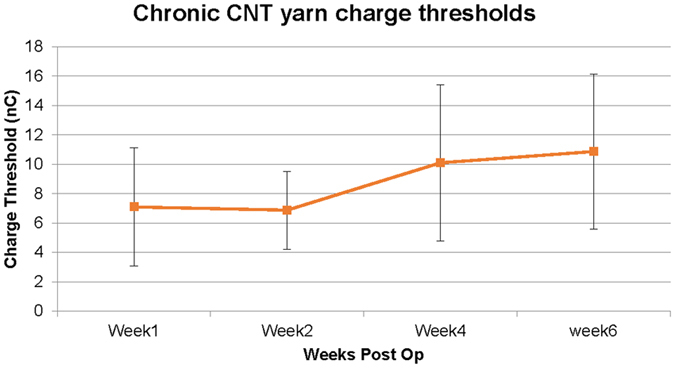
“nerve stimulation), the recommended stimulation threshold is below 20 nC for a pulse width of 100 μs and a frequency of 1 Hz [28].”
BackgroundSharpened and Mechanically Durable Carbon Fiber Electrode Arrays for Neural Recording
Welle, E. J., Woods, J. E., Jiman, A. A., Richie, J. M., Bottorff, E. C., Ouyang, Z., Seymour, J. P., Patel, P. R., Bruns, T. M., & Chestek, C. A. (2021) · IEEE Transactions on Neural Systems and Rehabilitation Engineering · doi:10.1109/tnsre.2021.3082056 · Cited by 30
“The yarn electrode recorded neural clusters from small autonomic nerves with electrodes exhibiting both a larger diameter (10–20 μm) and larger exposed length (200–500 μm), resulting in a larger surface area electrode [28], [32].”
BackgroundImplantable neural electrodes: from preparation optimization to application
Zhang, B., Xie, R., Jiang, J., Hao, S., Fang, B., Zhang, J., Bai, H., Peng, B., Li, L., Liu, Z., et al. (2023) · Journal of Materials Chemistry C · doi:10.1039/d2tc05162a · Cited by 28
Lin, X., Zhang, X., Chen, J., & Liu, J. (2025) · Advanced Materials · doi:10.1002/adma.202413938 · Cited by 27
Liu, K., Zhang, H., Hu, M., Li, Z., Xu, K., Chen, D., Cui, W., Lv, C., Ding, R., Geng, X., et al. (2024) · Materials Advances · doi:10.1039/d3ma01105d · Cited by 26
Implantable Neural Microelectrodes: How to Reduce Immune Response
Xiang, Y., Zhao, Y., Cheng, T., Sun, S., Wang, J., & Pei, R. (2024) · ACS Biomaterials Science & Engineering · doi:10.1021/acsbiomaterials.4c00238 · Cited by 26
Bioelectronics: The Promise of Leveraging the Body’s Circuitry to Treat Disease
Vitale, F., & Litt, B. (2017) · Bioelectronics in Medicine · doi:10.2217/bem-2017-0010 · Cited by 25
Recent progress of electroactive interface in neural engineering
Shan, Y., Cui, X. J., Chen, X., & Li, Z. (2022) · Wiley Interdisciplinary Reviews Nanomedicine and Nanobiotechnology · doi:10.1002/wnan.1827 · Cited by 21
Vagus Nerve Electroneurogram-Based Detection of Acute Pentylenetetrazol Induced Seizures in Rats
Stumpp, L. I., Smets, H., Vespa, S., Cury, J., Doguet, P., Delbeke, J., Nonclercq, A., & Tahry, R. E. (2021) · International Journal of Neural Systems · doi:10.1142/s0129065721500246 · Cited by 20
A review: flexible devices for nerve stimulation
Liu, Z.-Q., Yu, X.-Y., Huang, J., Wu, X.-Y., Wang, Z.-Y., & Zhu, B. (2024) · Soft Science · doi:10.20517/ss.2023.36 · Cited by 19
Shon, A., Brakel, K., Hook, M. A., & Park, H. (2021) · IEEE Transactions on Biomedical Circuits and Systems · doi:10.1109/tbcas.2021.3072894 · Cited by 19
Decoding Vagus-Nerve Activity with Carbon Nanotube Sensors in Freely Moving Rodents
Marmerstein, J. T., McCallum, G. A., & Durand, D. M. (2022) · Biosensors · doi:10.3390/bios12020114 · Cited by 18
“The sample was passively cleared and stained with a collagen antibody, as described by our group previously [26].”
BackgroundMethodSelf-citationWang, T., Chen, Y., Wang, Y., Lee, S., Lee, Y., & Dong, J. (2024) · Advanced Sensor Research · doi:10.1002/adsr.202400142 · Cited by 19
Yu, X. P., Su, J., Guo, J. Y., Zhang, X., Li, R. H., Chai, X., Chen, Y., Zhang, D. G., Wang, J., Sui, X., et al. (2019) · Journal of Neuroscience Methods · doi:10.1016/j.jneumeth.2019.108450 · Cited by 17
Self-citationShikano, Y., Nishimura, Y., Okonogi, T., Ikegaya, Y., & Sasaki, T. (2018) · European Journal of Neuroscience · doi:10.1111/ejn.14275 · Cited by 17
“In previous studies, recordings of VN spikes have been performed in anesthetized rodent animals (Caravaca et al., 2017; Harreby et al., 2011; McCallum et al., 2017; Silverman et al., 2018).”
BackgroundPeña, E., Pelot, N. A., & Grill, W. M. (2024) · PLoS Computational Biology · doi:10.1371/journal.pcbi.1011833 · Cited by 15
“…artifacts [8] and limited recording selectivity and longevity of conventional recording methods [9], a range of new electrode interfaces [10–12] and signal analysis methods [13–15] have emerged to extract information with reduced noise, greater selectivity, and improved stability over time.”
BackgroundChronic recording of the vagus nerve to analyze modulations by the light–dark cycle
Smets, H., Stumpp, L. I., Cerda, J. C., Cury, J., Perre, L. V., Doguet, P., Vanhoestenberghe, A., Delbeke, J., Tahry, R. E., & Nonclercq, A. (2022) · Journal of Neural Engineering · doi:10.1088/1741-2552/ac7c8f · Cited by 14
Single-interface bioelectronic medicines—concept, clinical applications and preclinical data
Sevcencu, C. (2022) · Journal of Neural Engineering · doi:10.1088/1741-2552/ac6e08 · Cited by 14
“In this direction, important achievements have been reported with 10–20 μm thick carbon nanotube yarn electrodes, which were used for both signal recording from, and stimulation of, several nerves including the LVN in chronic conditions [146, 147].”
Neural Stimulation Hardware for the Selective Intrafascicular Modulation of the Vagus Nerve
Strauss, I., Agnesi, F., Zinno, C., Giannotti, A., Dushpanova, A., Casieri, V., Terlizzi, D., Bernini, F., Gabisonia, K., Wu, Y., et al. (2023) · IEEE Transactions on Neural Systems and Rehabilitation Engineering · doi:10.1109/tnsre.2023.3329735 · Cited by 14
Intraneural ultramicroelectrode arrays for function-specific interfacing to the vagus nerve
Ghazavi, A., González‐González, M. A., Romero‐Ortega, M. I., & Cogan, S. F. (2020) · Biosensors and Bioelectronics · doi:10.1016/j.bios.2020.112608 · Cited by 14
Optogenetic Manipulation of the Vagus Nerve
Okonogi, T., & Sasaki, T. (2021) · Advances in experimental medicine and biology · doi:10.1007/978-981-15-8763-4_30 · Cited by 14
Singh, O. P., El-Badawy, I. M., Sornambikai, S., & O’Mahony, C. (2025) · Biomedical Microdevices · doi:10.1007/s10544-024-00732-z · Cited by 13
“Carbon material electrodes, comprising carbon black (Lozano and Stoeber 2021), carbon nanotubes (CNTs) (McCallum et al. 2017) and graphene (Apollo et al. 2015), are known for their superior conductivity and mechanical strength.”
Flexural characterization of carbon nanotube (CNT) yarn neural electrodes
Zhu, F., Zhu, J., Zhang, X., Wang, Y., Su, J., McCallum, G. A., Zhang, X., Sui, X., & Durand, D. M. (2019) · Materials Research Express · doi:10.1088/2053-1591/aafbf7 · Cited by 13
Self-citationA Miniature Wireless Neural Recording System for Chronic Implantation in Freely Moving Animals
Kanchwala, M. A., McCallum, G. A., & Durand, D. M. (2018) · IEEE Biomedical Circuits and Systems Conference (BioCAS) · doi:10.1109/biocas.2018.8584701 · Cited by 12
“These two inputs are connected to the Carbon Nano Tube Yarn (CNTY) electrodes [4], as these electrodes are biocompatible, flexible, have low impedance, and have demonstrated chronic neural recordings.”
BackgroundMethodSelf-citationFunctionalized carbon nanotube microfibers for chronic neural implants
Buschbeck, E. K., Le, A. D., Kelley, C., Hoque, A., & Alvarez, N. T. (2021) · Journal of Neuroscience Methods · doi:10.1016/j.jneumeth.2021.109370 · Cited by 11
Kotamraju, B. P., Eggers, T. E., McCallum, G. A., & Durand, D. M. (2023) · Journal of Neural Engineering · doi:10.1088/1741-2552/ad1611 · Cited by 10
“It is important to note that a prior study [21] established that CNTY electrodes, when in motion, do not introduce any motion artifacts into neural recordings.”
BackgroundMethodResultInfluentialSelf-citationMechanism of peripheral nerve modulation and recent applications
Shin, H., Kang, M., & Lee, S. (2021) · International Journal of Optomechatronics · doi:10.1080/15599612.2021.1978601 · Cited by 9
“In the case of the invasive method, a study of an electrode that is made with flexible, thin carbon nanotube (CNT) yarn using tungsten microneedle has successfully implanted into the vagus nerve of a rat for 16weeks to maintain good performance even for a long-term implant was reported (Figure 2(d)).([46]) As with the…”
BackgroundMethodFabrication and Validation of Sub-Cellular Carbon Fiber Electrodes
Richie, J. M., Letner, J. G., McLane-Svoboda, A. K., Huan, Y., Ghaffari, D. H., della Valle, E., Patel, P. R., Chiel, H. J., Pelled, G., Weiland, J. D., et al. (2024) · IEEE Transactions on Neural Systems and Rehabilitation Engineering · doi:10.1109/tnsre.2024.3360866 · Cited by 9
“Carbon yarn [46], [47], [48] has been shown to record in nerve, and can be assembled in the lab with 10-30 µ m diameters [46], [48].”
BackgroundPayne, S. C., Wiedmann, N. M., Eiber, C. D., Wong, A. W., Senn, P., Osborne, P. B., Keast, J. R., & Fallon, J. B. (2020) · Frontiers in Neuroscience · doi:10.3389/fnins.2020.619275 · Cited by 8
Wang, X., Zhang, Y., Guo, T., Wu, S., Zhong, J., Cheng, C., & Sui, X. (2024) · Computers in Biology and Medicine · doi:10.1016/j.compbiomed.2024.108556 · Cited by 7
Self-citationImplantation and Control of Wireless, Battery-free Systems for Peripheral Nerve Interfacing
Wang, H., D’Andrea, D., Choi, Y. S., Bouricha, Y., Wickerson, G., Ahn, H., Guo, H., Huang, Y. Y., Sandhu, M. S., Jordan, S. W., et al. (2021) · Journal of Visualized Experiments · doi:10.3791/63085 · Cited by 7
Insulation of Carbon Nanotube Yarn Electrodes for Intrafascicular Neural Stimulation and Recording
Su, J., Zhang, X., Li, M. N., Gao, T., Wang, R., Chai, X. Y., Zhang, D. G., Zhang, X. H., & Sui, X. (2019) · International IEEE/EMBS Conference on Neural Engineering · doi:10.1109/ner.2019.8716984 · Cited by 7
Self-citationShen, A., Li, R., Li, Y., Guo, J., Wang, J., & Sui, X. (2022) · Frontiers in Medical Technology · doi:10.3389/fmedt.2022.941686 · Cited by 6
Self-citationPirbhai, M., Chandrasekar, S., Zheng, M., Ignatova, T., Rotkin, S. V., & Jedlicka, S. S. (2019) · Advanced Biosystems · doi:10.1002/adbi.201800321 · Cited by 6
Adaptation and Optimization of an Intraneural Electrode to Interface with the Cervical Vagus Nerve
Strauss, I., Zinno, C., Giannotti, A., Ottaviani, M. M., Recchia, F. A., & Micera, S. (2021) · International IEEE/EMBS Conference on Neural Engineering · doi:10.1109/ner49283.2021.9441131 · Cited by 5
Vagus nerve electroneurogram-based detection of acute kainic acid induced seizures
Reina, E. A., Germany, E., Dereli, A. S., Collard, E., Raffoul, R., Nonclercq, A., & Tahry, R. E. (2024) · Frontiers in Neuroscience · doi:10.3389/fnins.2024.1427308 · Cited by 5
Sharpened and mechanically durable carbon fiber electrode arrays for neural interfacingPreprint
Welle, E. J., Woods, J. E., Jiman, A. A., Richie, J. M., Bottorff, E. C., Ouyang, Z., Seymour, J. P., Patel, P. R., Bruns, T. M., & Chestek, C. A. (2021) · bioRxiv (Cold Spring Harbor Laboratory) · doi:10.1101/2021.01.21.427697 · Cited by 5
“Flexible carbon nanotube “yarn” electrodes recently demonstrated physiologicallyrelevant recordings in the rat CVN and glossopharyngeal nerves for up to 16 weeks with minimal scarring [29].”
BackgroundChronic CNT Fiber Interface With Median Nerve at Acupoint PC6 for Rat’s Myocardial Ischemia Control
Yu, A., Li, P., Yuan, J., Han, L., Li, M., Song, X., Liu, C., Fu, Q., Ning, S., Chai, Y., et al. (2025) · IEEE Transactions on Neural Systems and Rehabilitation Engineering · doi:10.1109/tnsre.2025.3555405 · Cited by 4
“Recent studies have demonstrated their applications in nerve generation [23], [24] and chronic neural interfaces [25], [26].”
Accessing the viscera: Technologies for interoception research
Pang, K. K. L., Mondal, R., Sahasrabudhe, A., & Anikeeva, P. (2025) · Current Opinion in Neurobiology · doi:10.1016/j.conb.2025.103050 · Cited by 4
Effect of Anesthesia and Diurnal Variation on Chronic Vagus Nerve Activity in Rats
Rodrigues, A. J., Marmerstein, J. T., Kotamraju, B. P., McCallum, G. A., & Durand, D. M. (2025) · Journal of Neuroscience Research · doi:10.1002/jnr.70045 · Cited by 5
“To characterize vagus nerve activity, previous studies have used root- mean-square (RMS) and spike-rate (Marmerstein et al. 2022, 2021; McCallum et al. 2020, 2017; Smets et al. 2022), since RMS provides an estimate of the overall power of nerve signals and spike-rate quantifies the firing patterns…”
InfluentialSelf-citationBlood Pressure Change in Intrafascicular Vagal Activities
Guo, J., Li, R., Wang, J., Arranz, J., Li, Y., Chai, X., Wang, J., & Sui, X. (2021) · Journal of Shanghai Jiaotong University (Science) · doi:10.1007/s12204-021-2259-7 · Cited by 4
Self-citationDecoding the dialogue: The vagus nerve at the interface of brain, body, and Tumor
Dang, H.-R., & Jin, W.-L. (2026) · Molecular Aspects of Medicine · doi:10.1016/j.mam.2026.101487 · Cited by 3
Yu, X. P., Li, R., Su, J., Wang, J., Zhang, X., Chen, Y., Kang, Y., Chai, X., & Sui, X. (2022) · Journal of Neuroscience Methods · doi:10.1016/j.jneumeth.2022.109481 · Cited by 3
Self-citationIntrafascicular Vagal Activity Recording and Analysis Based on Carbon Nanotube Yarn Electrodes
Arranz, J., Guo, J., Yu, X. H., Wang, J., Chai, X., Wang, J., & Sui, X. (2020) · Journal of Shanghai Jiaotong University (Science) · doi:10.1007/s12204-020-2197-9 · Cited by 3
Self-citationChiang, C., Kotamraju, B. P., & Durand, D. M. (2025) · Epilepsia Open · doi:10.1002/epi4.70060 · Cited by 2
“29 The CNTY wire electrode is an effective neural interface because it shares mechanical properties similar to those of a single large axon, such as diameter (10 μm) and flexural rigidity.”
Self-citationModulating and Monitoring Autonomic Nerves for Glycemic Control
Jiman, A. A. (2020) · Deep Blue (University of Michigan) · Cited by 2
Osborn, L. E., Betthauser, J., & Thakor, N. V. (2019) · Wiley eBooks · doi:10.1002/047134608x.w1424.pub2 · Cited by 4
Li, M., Ly, C. M., Wen, J., Rustogi, P., & Meng, E. F. (2026) · Bioelectronic Medicine · doi:10.1186/s42234-025-00199-0 · Cited by 1
A Physiolomics Approach to Reveal Systemic Organ Dynamics in a Rodent
Sasaki, T. (2019) · Biological and Pharmaceutical Bulletin · doi:10.1248/bpb.b19-00182 · Cited by 1
Zhang, Y., Deng, S., Jian, M., Zhang, X., Chen, Y., Wang, J., & Sui, X. (2025) · Journal of Neuroscience Methods · doi:10.1016/j.jneumeth.2025.110496 · Cited by 1
Self-citationGu, M., Li, Y., Li, R., Wang, X., Xiang, T., Zhang, Y., Cheng, C., Wang, J., & Sui, X. (2025) · Biomedical Signal Processing and Control · doi:10.1016/j.bspc.2025.108140 · Cited by 1
Self-citationSong, E., Lu, Y., & Zhang, H. (2025) · Wiley eBooks · doi:10.1002/9783527845507.ch6 · Cited by 1
Dampak Latihan Anaerobik Terhadap Aktivitas Sistem Saraf Otonom: Literature Review
Lopo, Y. N. (2022) · Jurnal Literasi Olahraga · doi:10.35706/jlo.v3i1.7148 · Cited by 1
Falcone, J., Liu, T., Goldman, L., Pogue, D. D., Straka, M., Rieth, L. W., Bouton, C. E., & Sohal, H. S. (2018) · bioRxiv (Cold Spring Harbor Laboratory) · doi:10.1101/402925 · Cited by 1
Kostick, N. H. (2018) · OhioLink ETD Center (Ohio Library and Information Network)
The Role of Innate Immunity in the Response to IntracorticalMicroelectrodes
Hermann, J. K. (2018) · OhioLink ETD Center (Ohio Library and Information Network)
Selective Chronic Recording in the Peripheral Nervous System
Durand, D. M., & Eggers, T. E. (2020) · Springer eBooks · doi:10.1007/978-3-030-43395-6_10
Self-citationAdvancements in Implantable Microelectrodes: Opportunities and Risks for Neural Interface TechnologyPreprint
Ali, S. A., & Khan, R. (2023) · Preprints.org · doi:10.20944/preprints202303.0237.v1
Recording and decoding neural signals from the vagus nerve
Durand, D. M. (2023) · Open Access Government · doi:10.56367/oag-039-10825
Self-citationExploration of Intrafascicular Vagus Nerve Stimulation on Blood Pressure Reduction
Tian, H., Gu, M., Li, R., Jin, M., Peng, W., & Sui, X. (2024) · Journal of Shanghai Jiaotong University (Science) · doi:10.1007/s12204-024-2767-3
Self-citationBrain Machine Interfaces for the Control of Prosthetic Fingers
Chestek, C. A. (2025) · Biosystems & biorobotics · doi:10.1007/978-3-031-77588-8_1
Randolph, M. A., Marcu, V. I., Tsiptsis, C., Shoffstall, A. J., Baskin, J. Z., & Tyler, D. J. (2025) · bioRxiv (Cold Spring Harbor Laboratory) · doi:10.1101/2025.11.19.687256
Metadata
- Authors
- McCallum, G. A., Sui, X., Qiu, C., Marmerstein, J., Zheng, Y., Eggers, T. E., Hu, C., Dai, L., & Durand, D. M.
- Affiliations
- Case Western Reserve University (US)
- Shanghai Jiao Tong University (CN)
- Corresponding author
- Durand, Dominique M.
- ORCID
- Venue
- Scientific Reports
- Published
- 2017-09-15
- Volume
- 7
- Issue
- 1
- Pages
- 11723-11723
- ISSN
- 2045-2322 (ISSN-L)
- PMC
- PMC5601469
- OpenAlex
- W2755841351
- Semantic Scholar
- a4f3fc27204f81d22cde256d11e27c2f0ed369a5
- Cited by
- 102
- References
- 57
- Citations by year
- 2026: 6 · 2025: 13 · 2024: 10 · 2023: 11 · 2022: 9 · 2021: 21 · 2020: 14 · 2019: 11 · 2018: 6 · 2017: 1
- FWCI
- 4.28
- Type
- journal article
- Language
- en
- Open access
- gold
- doi.org
- Licence
- cc-by
- creativecommons.org/licenses/by/4.0 (tdm)
- creativecommons.org/licenses/by/4.0 (vor)
- Locations
- Scientific Reports (publishedVersion, cc-by)
- Europe PMC (PubMed Central) (publishedVersion, cc-by)
- PubMed Central (publishedVersion, cc-by)
- PubMed (publishedVersion)
- DOAJ (DOAJ: Directory of Open Access Journals) (submittedVersion)
- UNSWorks (UNSW Sydney) (submittedVersion, cc-by-nc-nd)
- Funders
- GlaxoSmithKline
- Case Western Reserve University
- Scheme for Promotion of Academic and Research Collaboration
- National Institutes of Health (1s10od016164-01, 1u18eb021759-01)
- National Institute of Neurological Disorders and Stroke (R01NS032845)
- National Institute of Biomedical Imaging and Bioengineering (U18 EB021759)
- Office of Research Infrastructure Programs, National Institutes of Health (S10 OD016164)
- Topics
- Life Sciences › Neuroscience › Cellular and Molecular Neuroscience › Neuroscience and Neural Engineering
- Life Sciences › Neuroscience › Neurology › Vagus Nerve Stimulation Research
- Physical Sciences › Chemistry › Analytical Chemistry › Electrochemical sensors and biosensors
- Keywords
- autonomic nervous system, glossopharyngeal nerve, vagus nerve, hypoxia detection, bioelectronic medicine, implantable neural interfaces
- MeSH terms
- Animals, Autonomic Nervous System, Biotechnology, Electric Stimulation, Electrodes, Implanted, Glossopharyngeal Nerve, Humans, Microelectrodes, Software, Vagus Nerve, Nanotubes, Carbon, Rats
About these checks
Registry, retraction, Cites and statistics results are computed, not judged, with one exception: a printed reference that no index lists is read once by a model before it counts as a citation error. Claims are extracted by a model and kept only when their quote appears verbatim in the text; each cited source is then checked, with a model’s help, for whether it says what the claim relies on. Those verdicts can be wrong — read the claim’s quote and the cited source before relying on one.
Statistics and arithmetic are recomputed, not judged.
Confidence bands are shown only for fields calibrated on our annotated test set. None is calibrated yet, so no band is shown.
What counts as a claim ›How we measure confidence ›How we check this ›
Are you an author, or do you see a problem with this page? Request a review
Data sources
Bibliographic data: Semantic Scholar, OpenAlex, Crossref.
Contains information from the Semantic Scholar Academic Graph Datasets, made available under the ODC Attribution License (ODC-BY 1.0).
Semantic Scholar’s data is described in: Kinney, R., et al. (2023). The Semantic Scholar Open Data Platform. arXiv:2301.10140.
