

Chronic interfacing with the autonomic nervous system using carbon nanotube (CNT) yarn electrodes
Open accessThe DOI matches its Crossref record; 57 of the 57 references it cites were found in a registry or an index.
Abstract
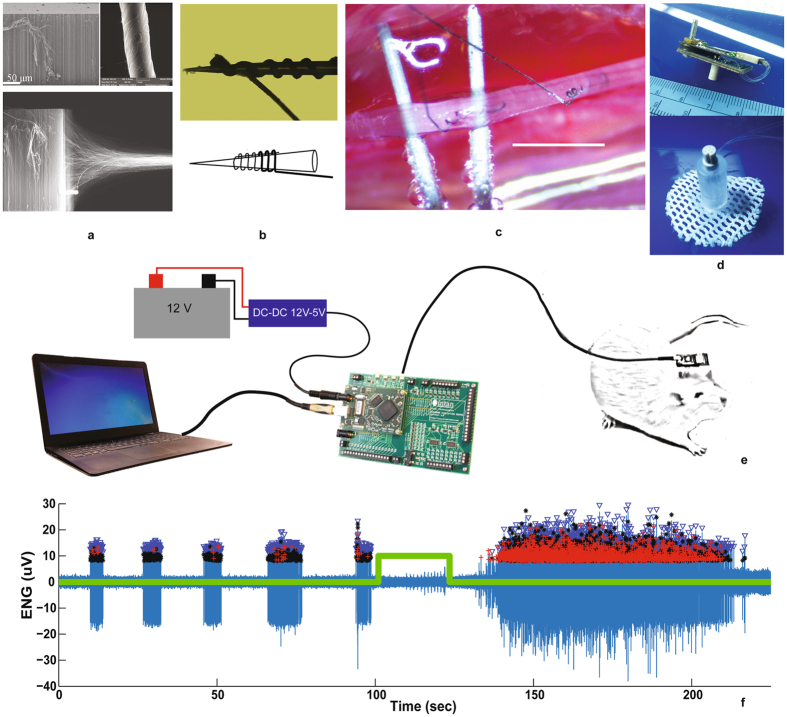
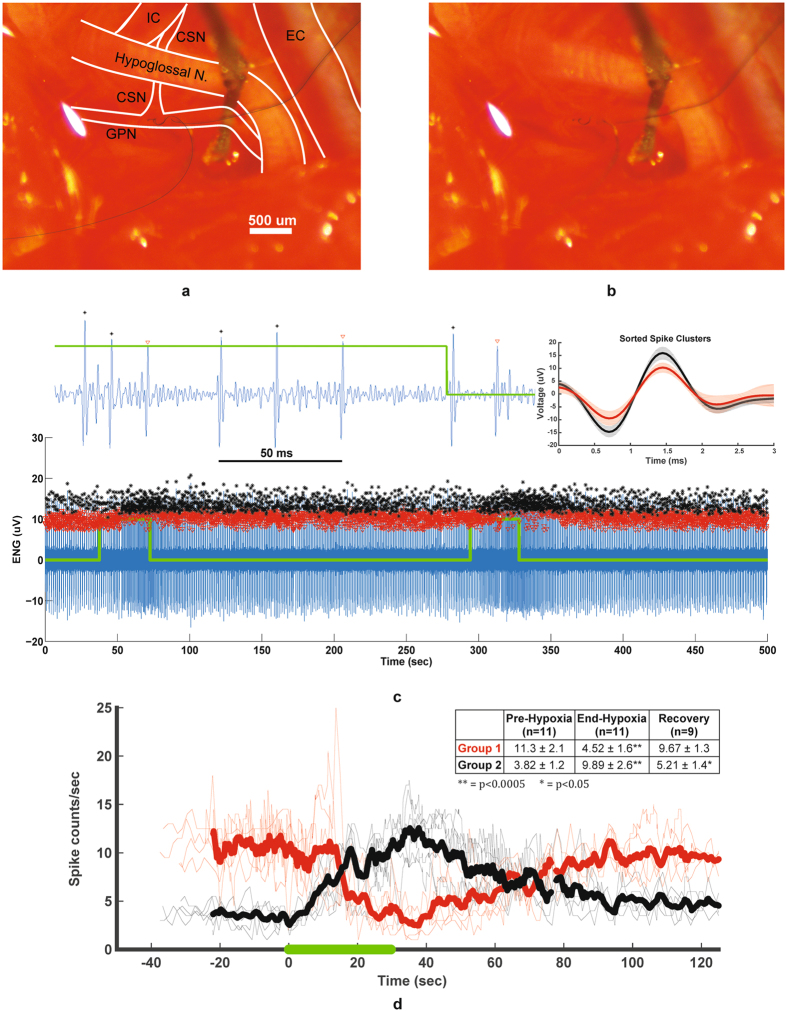
The ability to reliably and safely communicate chronically with small diameter (100–300 µm) autonomic nerves could have a significant impact in fundamental biomedical research and clinical applications. However, this ability has remained elusive with existing neural interface technologies. Here we show a new chronic nerve interface using highly flexible materials with axon-like dimensions. The interface was implemented with carbon nanotube (CNT) yarn electrodes to chronically record neural activity from two separate autonomic nerves: the glossopharyngeal and vagus nerves. The recorded neural signals maintain a high signal-to-noise ratio (>10 dB) in chronic implant models. We further demonstrate the ability to process the neural activity to detect hypoxic and gastric extension events from the glossopharyngeal and vagus nerves, respectively. These results establish a novel, chronic platform neural interfacing technique with the autonomic nervous system and demonstrate the possibility of regulating internal organ function, leading to new bioelectronic therapies and patient health monitoring.
Overview
The claims and statistics of this paper haven’t been checked yet.
Free: it reads the open-access text and checks the first 5 claims that cite a source we can check. Create a free account to check every claim.
Integrity signals
Registry
Cites
Statistics
Figures
Verification
Claims the paper makes
The claims and statistics of this paper haven’t been checked yet.
Free: it reads the open-access text and checks the first 5 claims that cite a source we can check. Create a free account to check every claim.
Claims other papers make about this one
Each is checked against this paper’s own text: does it say what the citing paper says it does?
The check wasn’t confident either way, so it gives no verdict — never disputed.
In the citing paper
“Faradic electrodes based on oxides of iridium (IrOx) tend to have a higher charge capacity compared to titanium-derived electrodes due to their excellent electrochemical properties.[532,533]”
From Flexible Electronics and Devices as Human–Machine Interfaces for Medical Robotics (2022) · cites this paper as [533]
Experimental — accuracy not yet measuredIn the citing paper
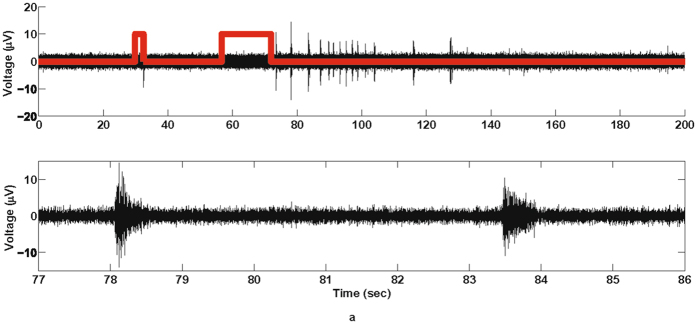
“In addition, neural signals from the glossopharyngeal and vagus nerves were chronically recorded using carbon nanotube (CNT) yarn electrodes [Fig.4(i)].109”
From From flexible electronics technology in the era of IoT and artificial intelligence toward future implanted body sensor networks (2019) · cites this paper as [109]
Self-check
Percentages, sums and reported differences re-computed from the paper’s own numbers.
The self-check needs the paper’s full text.
Citations
Cites
The American Journal of Physiology
(1899) · The American Naturalist · doi:10.1086/277182 · Cited by 5,654
A review of methods for spike sorting: the detection and classification of neural action potentials
Lewicki, M. S. (1998) · Network Computation in Neural Systems · doi:10.1088/0954-898x/9/4/001 · Cited by 1,370
Strong, Light, Multifunctional Fibers of Carbon Nanotubes with Ultrahigh Conductivity
Behabtu, N., Young, C. C., Tsentalovich, D. E., Kleinerman, O., Wang, X., Ma, A. W. K., Bengio, E. A., ter Waarbeek, R. F., de Jong, J. J., Hoogerwerf, R. E., et al. (2013) · Science · doi:10.1126/science.1228061 · Cited by 1,354
Functional and chemical anatomy of the afferent vagal system
Berthoud, H.-R., & Neuhuber, W. L. (2000) · Autonomic Neuroscience · doi:10.1016/s1566-0702(00)00215-0 · Cited by 1,280
A neural interface provides long-term stable natural touch perception
Tan, D. W., Schiefer, M. A., Keith, M. W., Anderson, J. R., Tyler, J., & Tyler, D. J. (2014) · Science Translational Medicine · doi:10.1126/scitranslmed.3008669 · Cited by 751
Carbon Nanotube Arrays with Strong Shear Binding-On and Easy Normal Lifting-Off
Qu, L., Dai, L., Stone, M., Xia, Z., & Wang, Z. L. (2008) · Science · doi:10.1126/science.1159503 · Cited by 745
Self-citationKozai, T. D. Y., Langhals, N. B., Patel, P. R., Deng, X., Zhang, H., Smith, K. L., Lahann, J., Kotov, N. A., & Kipke, D. R. (2012) · Nature Materials · doi:10.1038/nmat3468 · Cited by 721
Rush, A. J., George, M. S., Sackeim, H. A., Marangell, L. B., Husain, M. M., Giller, C., Nahas, Z., Haines, S., Simpson, R. K., & Goodman, R. (2000) · Biological Psychiatry · doi:10.1016/s0006-3223(99)00304-2 · Cited by 688
Groves, D. A., & Brown, V. J. (2005) · Neuroscience & Biobehavioral Reviews · doi:10.1016/j.neubiorev.2005.01.004 · Cited by 675
Quantitative measures of cluster quality for use in extracellular recordings
Schmitzer-Torbert, N., Jackson, J., Henze, D., Harris, K., & Redish, A. D. (2005) · Neuroscience · doi:10.1016/j.neuroscience.2004.09.066 · Cited by 662
Sackeim, H. (2001) · Neuropsychopharmacology · doi:10.1016/s0893-133x(01)00271-8 · Cited by 568
A jump-start for electroceuticals
Famm, K., Litt, B., Tracey, K. J., Boyden, E. S., & Slaoui, M. (2013) · Nature · doi:10.1038/496159a · Cited by 554
Prospective Long‐Term Study of Vagus Nerve Stimulation for the Treatment of Refractory Seizures
DeGiorgio, C. M., Schachter, S. C., Handforth, A., Salinsky, M., Thompson, J., Uthman, B., Reed, R., Collin, S., Tecoma, E., Morris, G. L., et al. (2000) · Epilepsia · doi:10.1111/j.1528-1157.2000.tb00325.x · Cited by 479 · cited 2×
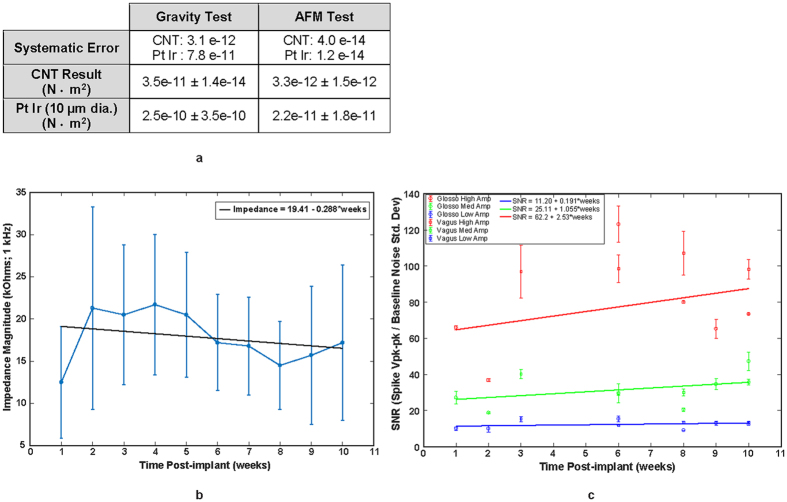
“Figure 2 summarizes three important points regarding this interface technology: (1) the flexural rigidity value of the CNT yarn electrode compared to a Platinum-Iridium (PtIr) wire of a similar 10 μm diameter is an order of magnitude lower; (2) the measured, in vivo, chronic impedance values are stable over time; (3)…”
BackgroundQuality Metrics to Accompany Spike Sorting of Extracellular Signals
Hill, D. N., Mehta, S. B., & Kleinfeld, D. (2011) · Journal of Neuroscience · doi:10.1523/jneurosci.0971-11.2011 · Cited by 454
Neural Stimulation and Recording with Bidirectional, Soft Carbon Nanotube Fiber Microelectrodes
Vitale, F., Summerson, S. R., Aazhang, B., Kemere, C., & Pasquali, M. (2015) · ACS Nano · doi:10.1021/acsnano.5b01060 · Cited by 311
The Carotid Body as a Therapeutic Target for the Treatment of Sympathetically Mediated Diseases
Paton, J. F. R., Sobotka, P. A., Fudim, M., Engelman, Z. J., Hart, E. C. J., McBryde, F. D., Abdala, A. P., Marina, N., Gourine, A. V., Lobo, M., et al. (2013) · Hypertension · doi:10.1161/hypertensionaha.111.00064 · Cited by 310
Vagus nerve stimulation (VNS) for major depressive episodes: one year outcomes
Marangell, L. B., Rush, A. J., George, M. S., Sackeim, H. A., Johnson, C. R., Husain, M. M., Nahas, Z., & Lisanby, S. H. (2002) · Biological Psychiatry · doi:10.1016/s0006-3223(01)01343-9 · Cited by 290
Relation between chemosensitivity and the ventilatory response to exercise in chronic heart failure
Chua, T. P., Clark, A. I., Amadi, A. A., & Coats, A. J. S. (1996) · Journal of the American College of Cardiology · doi:10.1016/0735-1097(95)00523-4 · Cited by 277
Potentiation of sympathetic nerve responses to hypoxia in borderline hypertensive subjects.
Somers, V. K., Mark, A. L., & Abboud, F. M. (1988) · Hypertension · doi:10.1161/01.hyp.11.6.608 · Cited by 267
The carotid body as a putative therapeutic target for the treatment of neurogenic hypertension
McBryde, F. D., Abdala, A. P., Hendy, E. B., Pijacka, W., Marvar, P., Moraes, D. J. A., Sobotka, P. A., & Paton, J. F. R. (2013) · Nature Communications · doi:10.1038/ncomms3395 · Cited by 248
Sjogren, M. J. C., Hellstrom, P. T. O., Jonsson, M. A. G., Runnerstam, M., C-son Silander, H., Ben-Menachem, E., Sjögren, J. C., & Hellström, P. T. O. (2002) · The Journal of Clinical Psychiatry · doi:10.4088/jcp.v63n1103 · Cited by 233
Badia, J., Boretius, T., Andreu, D., Azevedo-Coste, C., Stieglitz, T., & Navarro, X. (2011) · Journal of Neural Engineering · doi:10.1088/1741-2560/8/3/036023 · Cited by 227
Lago, N., Yoshida, K., Koch, K. P., & Navarro, X. (2007) · IEEE Transactions on Biomedical Engineering · doi:10.1109/tbme.2006.886617 · Cited by 227
Cuff electrodes for chronic stimulation and recording of peripheral nerve activity
Loeb, G. E., & Peck, R. A. (1996) · Journal of Neuroscience Methods · doi:10.1016/0165-0270(95)00123-9 · Cited by 215
Enhanced peripheral chemoreflex function in conscious rabbits with pacing-induced heart failure
Sun, S.-Y., Wang, W., Zucker, I. H., & Schultz, H. D. (1999) · Journal of Applied Physiology · doi:10.1152/jappl.1999.86.4.1264 · Cited by 186
Gastric loads and cholecystokinin synergistically stimulate rat gastric vagal afferents
Schwartz, G. J., McHugh, P. R., & Moran, T. H. (1993) · American Journal of Physiology-Regulatory, Integrative and Comparative Physiology · doi:10.1152/ajpregu.1993.265.4.r872 · Cited by 183
Increased sensitivity of the arterial chemoreceptor drive in young men with mild hypertension
TRZEBSKI, A., TAFIL, M., ZOLTOWSKI, M., & PRZYBYLSKI, J. (1982) · Cardiovascular Research · doi:10.1093/cvr/16.3.163 · Cited by 177
Characterization of vagal pathways mediating gastric accommodation reflex in rats
Takahashi, T., & Owyang, C. (1997) · The Journal of Physiology · doi:10.1111/j.1469-7793.1997.479be.x · Cited by 162
The effect of vagus nerve stimulation on migraines
Hord, E. D., Evans, M. S., Mueed, S., Adamolekun, B., & Naritoku, D. K. (2003) · Journal of Pain · doi:10.1016/j.jpain.2003.08.001 · Cited by 157
Chen, H., Roy, A. K., Baek, J., Zhu, L., Qu, J., & Dai, L. (2010) · Materials Science and Engineering R Reports · doi:10.1016/j.mser.2010.06.003 · Cited by 156
Self-citationEnhanced activity of carotid body chemoreceptors in rabbits with heart failure: role of nitric oxide
Sun, S.-Y., Wang, W., Zucker, I. H., & Schultz, H. D. (1999) · Journal of Applied Physiology · doi:10.1152/jappl.1999.86.4.1273 · Cited by 140
Fukuda, Y., Sato, A., & Trzebski, A. (1987) · Journal of the Autonomic Nervous System · doi:10.1016/0165-1838(87)90139-1 · Cited by 137
Micera, S., Rossini, P. M., Rigosa, J., Citi, L., Carpaneto, J., Raspopovic, S., Tombini, M., Cipriani, C., Assenza, G., Carrozza, M. C., et al. (2011) · Journal of NeuroEngineering and Rehabilitation · doi:10.1186/1743-0003-8-53 · Cited by 100
Mechanosensitive Properties of Gastric Vagal Afferent Fibers in the Rat
Ozaki, N., Sengupta, J. N., & Gebhart, G. F. (1999) · Journal of Neurophysiology · doi:10.1152/jn.1999.82.5.2210 · Cited by 100
Long-term outcome of vagus nerve stimulation for refractory partial epilepsy
Chavel, S. M., Westerveld, M., & Spencer, S. S. (2003) · Epilepsy & Behavior · doi:10.1016/s1525-5050(03)00109-4 · Cited by 99 · cited 2×
“Figure 2 summarizes three important points regarding this interface technology: (1) the flexural rigidity value of the CNT yarn electrode compared to a Platinum-Iridium (PtIr) wire of a similar 10 μm diameter is an order of magnitude lower; (2) the measured, in vivo, chronic impedance values are stable over time; (3)…”
BackgroundFreitas, R. A. (2003) · doi:10.1201/9781498712576 · Cited by 91
Arterial chemoreceptor reflex and hypertension.
Trzebski, A. (1992) · Hypertension · doi:10.1161/01.hyp.19.6.562 · Cited by 88
AC impedance of the perineurium of the frog sciatic nerve
Weerasuriya, A., Spangler, R. A., Рапопорт, С. И., & Taylor, R. E. (1984) · Biophysical Journal · doi:10.1016/s0006-3495(84)84009-6 · Cited by 80
Morphology of the rat carotid sinus nerve. I. Course, connections, dimensions and ultrastructure
McDonald, D. M. (1983) · Journal of Neurocytology · doi:10.1007/bf01159380 · Cited by 79
Revelations About Carotid Body Function Through its Pathological Role in Resistant Hypertension
Paton, J. F. R., Ratcliffe, L., Hering, D., Wolf, J., Sobotka, P. A., & Narkiewicz, K. (2013) · Current Hypertension Reports · doi:10.1007/s11906-013-0366-z · Cited by 76
Vagus nerve stimulation (VNS): utility in neuropsychiatric disorders
George, M. S., Rush, A. J., Sackeim, H. A., & Marangell, L. B. (2003) · The International Journal of Neuropsychopharmacology · doi:10.1017/s1461145703003250 · Cited by 74
Localization and Recovery of Peripheral Neural Sources With Beamforming Algorithms
Wodlinger, B., & Durand, D. M. (2009) · IEEE Transactions on Neural Systems and Rehabilitation Engineering · doi:10.1109/tnsre.2009.2034072 · Cited by 73
Self-citationIntrafascicular stimulation of monkey arm nerves evokes coordinated grasp and sensory responses
Ledbetter, N. M., Ethier, C., Oby, E. R., Hiatt, S. D., Wilder, A. M., Ko, J. H., Agnew, S. P., Miller, L. E., & Clark, G. A. (2013) · Journal of Neurophysiology · doi:10.1152/jn.00688.2011 · Cited by 69
Aoyagi, Y., Stein, R. B., Branner, A., Pearson, K. G., & Normann, R. A. (2003) · Journal of Neuroscience Methods · doi:10.1016/s0165-0270(03)00143-2 · Cited by 68
Fibrous capsule formation around titanium and copper
Suska, F., Emanuelsson, L., Johansson, A., Tengvall, P., & Thomsen, P. (2008) · Journal of Biomedical Materials Research Part A · doi:10.1002/jbm.a.31575 · Cited by 68
Miki, K., Kosho, A., & Hayashida, Y. (2002) · Experimental Physiology · doi:10.1113/eph8702281 · Cited by 64
Cafeteria Diet Increases Fat Mass and Chronically Elevates Lumbar Sympathetic Nerve Activity in Rats
Muntzel, M. S., Al-Naimi, O. A. S., Barclay, A., & Ajasin, D. (2012) · Hypertension · doi:10.1161/hypertensionaha.112.194886 · Cited by 60
Yoshida, K., Farina, D., Akay, M., & Jensen, W. (2010) · Proceedings of the IEEE · doi:10.1109/jproc.2009.2038613 · Cited by 52
Stocker, S. D., & Muntzel, M. S. (2013) · American Journal of Physiology-Heart and Circulatory Physiology · doi:10.1152/ajpheart.00173.2013 · Cited by 49
Automatic onlinespike sorting with singular value decomposition and fuzzy C-mean clustering
Oliynyk, A., Bonifazzi, C., Montani, F., & Fadiga, L. (2012) · BMC Neuroscience · doi:10.1186/1471-2202-13-96 · Cited by 43
The Open Source Brain Initiative: enabling collaborative modelling in computational neuroscience
Gleeson, P., Piasini, E., Crook, S. M., Cannon, R. C., Steuber, V., Jaeger, D., Solinas, S. M. G., D'Angelo, E. U., & Silver, R. A. (2012) · BMC Neuroscience · doi:10.1186/1471-2202-13-s1-o7 · Cited by 35
Ultra-low noise miniaturized neural amplifier with hardware averaging
Dweiri, Y. M., Eggers, T. E., McCallum, G. A., & Durand, D. M. (2015) · Journal of Neural Engineering · doi:10.1088/1741-2560/12/4/046024 · Cited by 23
Self-citationOlausson, B. (1998) · Experimental Brain Research · doi:10.1007/s002210050490 · Cited by 17
Kundu, A., Wirenfeldt, M., Harreby, K. R., & Jensen, W. (2014) · The International Journal of Artificial Organs · doi:10.5301/ijao.5000342 · Cited by 15
Mendoza, J. P., Passafaro, R. J., Baby, S. M., Young, A. P., Bates, J. N., Gaston, B. M., & Lewis, S. J. (2014) · Journal of Applied Physiology · doi:10.1152/japplphysiol.00842.2013 · Cited by 8
Clinical Respiratory Physiology
Ayvazian, L. F. (1989) · American Review of Respiratory Disease · doi:10.1164/ajrccm/140.5.1500 · Cited by 8
Bioelectric interfaces for the peripheral nervous system
Yoshida, K., Stieglitz, T., & Qiao, S. (2014) · Annual International Conference of the IEEE Engineering in Medicine and Biology Society (EMBC) · doi:10.1109/embc.2014.6944815 · Cited by 7
Cited by
Flexible Electronics and Devices as Human–Machine Interfaces for Medical Robotics
Heng, W., Solomon, S., & Gao, W. (2022) · Advanced Materials · doi:10.1002/adma.202107902 · Cited by 609
Materials for flexible bioelectronic systems as chronic neural interfaces
Song, E., Li, J., Won, S. M., Bai, W., & Rogers, J. A. (2020) · Nature Materials · doi:10.1038/s41563-020-0679-7 · Cited by 498
Zhang, X., Lu, W., Zhou, G., & Li, Q. (2020) · Advanced Materials · doi:10.1002/adma.201902028 · Cited by 408
Niu, Y., Liu, H., He, R., Li, Z., Ren, H., Gao, B., Guo, H., Genin, G. M., & Xu, F. (2020) · Materials Today · doi:10.1016/j.mattod.2020.10.004 · Cited by 224
Xue, Y., Chen, X., Wang, F., Lin, J., & Liu, J. (2023) · Advanced Materials · doi:10.1002/adma.202304095 · Cited by 185
Metadata
- Authors
- McCallum, G. A., Sui, X., Qiu, C., Marmerstein, J., Zheng, Y., Eggers, T. E., Hu, C., Dai, L., & Durand, D. M.
- Affiliations
- Case Western Reserve University (US)
- Shanghai Jiao Tong University (CN)
- Corresponding author
- Durand, Dominique M.
- ORCID
- Venue
- Scientific Reports
- Published
- 2017-09-15
- Volume
- 7
- Issue
- 1
- Pages
- 11723-11723
- ISSN
- 2045-2322 (ISSN-L)
- PMC
- PMC5601469
- OpenAlex
- W2755841351
- Semantic Scholar
- a4f3fc27204f81d22cde256d11e27c2f0ed369a5
- Cited by
- 102
- References
- 57
- Citations by year
- 2026: 6 · 2025: 13 · 2024: 10 · 2023: 11 · 2022: 9 · 2021: 21 · 2020: 14 · 2019: 11 · 2018: 6 · 2017: 1
- FWCI
- 4.28
- Type
- journal article
- Language
- en
- Open access
- gold
- doi.org
- Licence
- cc-by
- creativecommons.org/licenses/by/4.0 (tdm)
- creativecommons.org/licenses/by/4.0 (vor)
- Locations
- Scientific Reports (publishedVersion, cc-by)
- Europe PMC (PubMed Central) (publishedVersion, cc-by)
- PubMed Central (publishedVersion, cc-by)
- PubMed (publishedVersion)
- DOAJ (DOAJ: Directory of Open Access Journals) (submittedVersion)
- UNSWorks (UNSW Sydney) (submittedVersion, cc-by-nc-nd)
- Funders
- GlaxoSmithKline
- Case Western Reserve University
- Scheme for Promotion of Academic and Research Collaboration
- National Institutes of Health (1s10od016164-01, 1u18eb021759-01)
- National Institute of Neurological Disorders and Stroke (R01NS032845)
- National Institute of Biomedical Imaging and Bioengineering (U18 EB021759)
- Office of Research Infrastructure Programs, National Institutes of Health (S10 OD016164)
- Topics
- Life Sciences › Neuroscience › Cellular and Molecular Neuroscience › Neuroscience and Neural Engineering
- Life Sciences › Neuroscience › Neurology › Vagus Nerve Stimulation Research
- Physical Sciences › Chemistry › Analytical Chemistry › Electrochemical sensors and biosensors
- Keywords
- autonomic nervous system, glossopharyngeal nerve, vagus nerve, hypoxia detection, bioelectronic medicine, implantable neural interfaces
- MeSH terms
- Animals, Autonomic Nervous System, Biotechnology, Electric Stimulation, Electrodes, Implanted, Glossopharyngeal Nerve, Humans, Microelectrodes, Software, Vagus Nerve, Nanotubes, Carbon, Rats
About these checks
Registry, retraction, Cites and statistics results are computed, not judged, with one exception: a printed reference that no index lists is read once by a model before it counts as a citation error. Claims are extracted by a model and kept only when their quote appears verbatim in the text; each cited source is then checked, with a model’s help, for whether it says what the claim relies on. Those verdicts can be wrong — read the claim’s quote and the cited source before relying on one.
Statistics and arithmetic are recomputed, not judged.
Confidence bands are shown only for fields calibrated on our annotated test set. None is calibrated yet, so no band is shown.
What counts as a claim ›How we measure confidence ›How we check this ›
Are you an author, or do you see a problem with this page? Request a review
Data sources
Bibliographic data: Semantic Scholar, OpenAlex, Crossref.
Contains information from the Semantic Scholar Academic Graph Datasets, made available under the ODC Attribution License (ODC-BY 1.0).
Semantic Scholar’s data is described in: Kinney, R., et al. (2023). The Semantic Scholar Open Data Platform. arXiv:2301.10140.
