

Prevalence of Depression in the Community from 30 Countries between 1994 and 2014
Open accessThe DOI matches its Crossref record; 54 of the 54 references it cites were found in a registry or an index.
Abstract
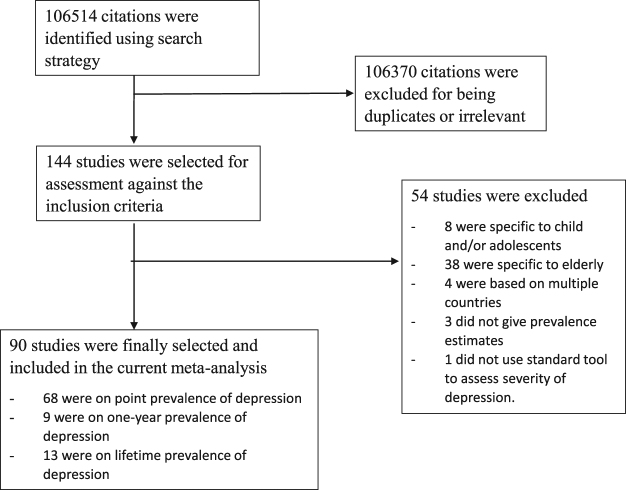
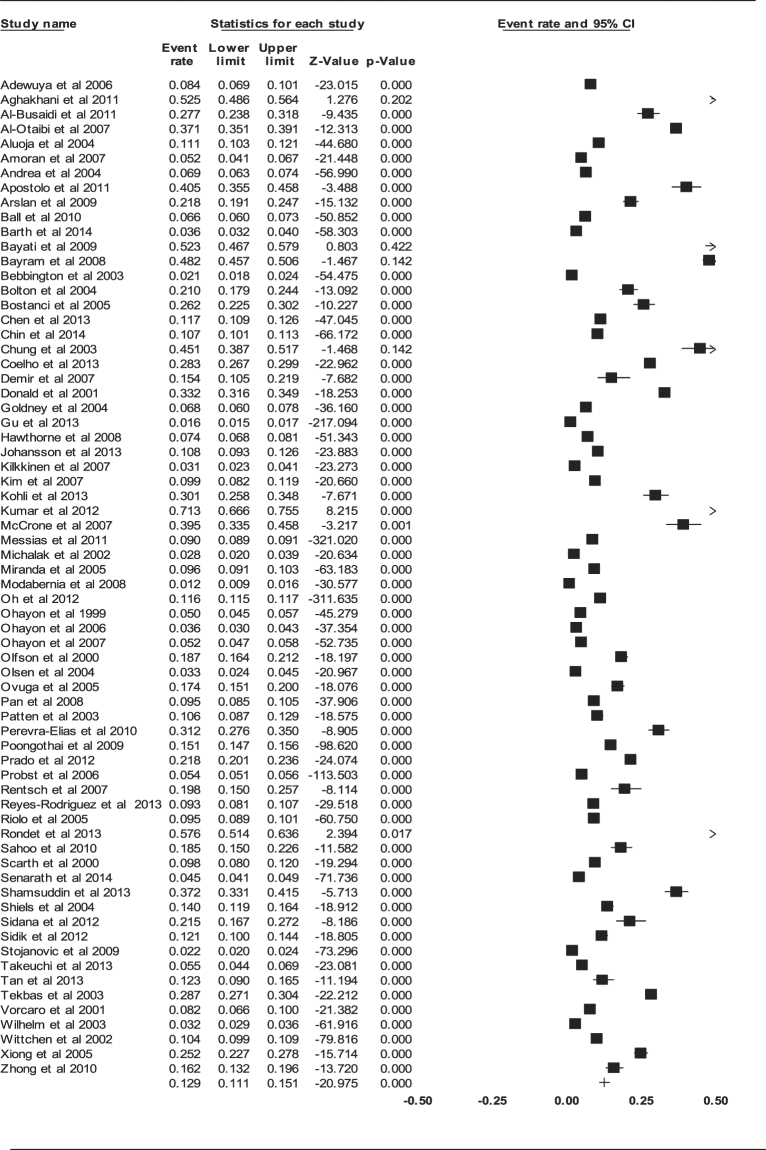
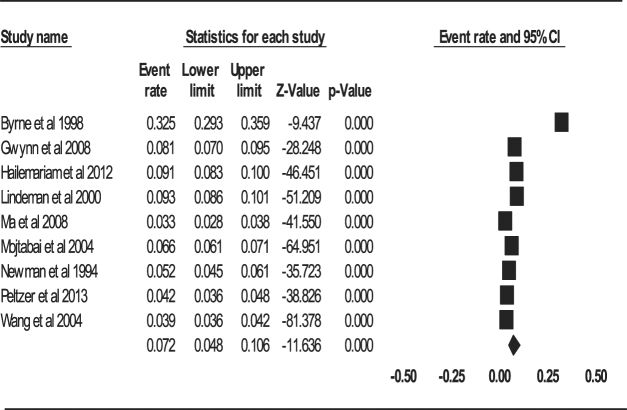
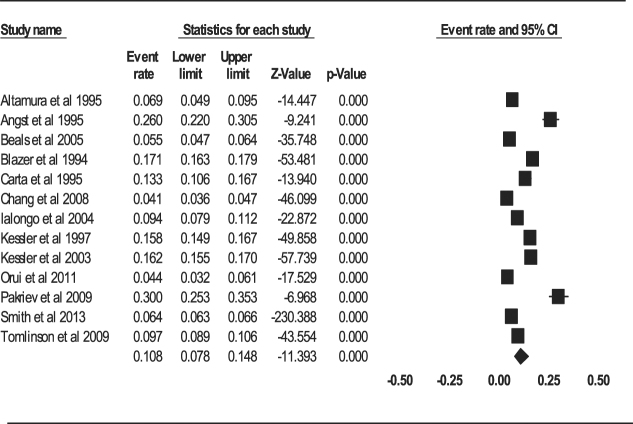
The prevalence of depression may be affected by changes in psychiatric practices and the availability of online mental health information in the past two decades. This study aimed to evaluate the aggregate prevalence of depression in communities from different countries between 1994 and 2014 and to explore the variations in prevalence stratified by geographical, methodological and socio-economic factors. A total of 90 studies were identified and met the inclusion criteria (n = 1,112,573 adults) with 68 studies on single point prevalence, 9 studies on one-year prevalence, and 13 studies on lifetime prevalence of depression. A random-effects model meta-analysis that was performed to calculate the aggregate point, one-year and lifetime prevalence of depression calculated prevalences of 12.9%, 7.2% and 10.8% respectively. Point prevalence of depression was significantly higher in women (14.4%), countries with a medium human development index (HDI) (29.2%), studies published from 2004 to 2014 (15.4%) and when using self-reporting instruments (17.3%) to assess depression. Heterogeneity was identified by meta-regression and subgroup analysis, and response rate, percentage of women and year of publication, respectively, were determined contribute to depression prevalence. This meta-analysis allows benchmarking of the prevalence of depression during the era when online health information emerged, facilitating future comparisons.
Overview
The claims and statistics of this paper haven’t been checked yet.
Free: it reads the open-access text and checks the first 5 claims that cite a source we can check. Create a free account to check every claim.
Integrity signals
Registry
Cites
Statistics
Figures
Verification
Claims the paper makes
The claims and statistics of this paper haven’t been checked yet.
Free: it reads the open-access text and checks the first 5 claims that cite a source we can check. Create a free account to check every claim.
Self-check
Percentages, sums and reported differences re-computed from the paper’s own numbers.
The self-check needs the paper’s full text.
Citations
Cites
Preferred Reporting Items for Systematic Reviews and Meta-Analyses: the PRISMA statement
Moher, D., Liberati, A., Tetzlaff, J., Altman, D. G., & for the PRISMA Group (2009) · BMJ · doi:10.1136/bmj.b2535 · Cited by 83,823
Kessler, R. C. (1994) · Archives of General Psychiatry · doi:10.1001/archpsyc.1994.03950010008002 · Cited by 12,370
Preferred reporting items for systematic reviews and meta-analyses: The PRISMA statement
Moher, D., Liberati, A., Tetzlaff, J., & Altman, D. G. (2010) · International Journal of Surgery · doi:10.1016/j.ijsu.2010.02.007 · Cited by 12,156
How should meta‐regression analyses be undertaken and interpreted?
Thompson, S. G., & Higgins, J. P. T. (2002) · Statistics in Medicine · doi:10.1002/sim.1187 · Cited by 3,026
(1984) · PubMed · Cited by 2,436
Cross-national epidemiology of DSM-IV major depressive episode
Bromet, E., Andrade, L. H., Hwang, I., Sampson, N. A., Alonso, J., de Girolamo, G., de Graaf, R., Demyttenaere, K., Hu, C., Iwata, N., et al. (2011) · BMC Medicine · doi:10.1186/1741-7015-9-90 · Cited by 2,221
Cost of Lost Productive Work Time Among US Workers With Depression
Stewart, W. F. (2003) · JAMA · doi:10.1001/jama.289.23.3135 · Cited by 1,421
Krebber, A. M. H., Buffart, L. M., Kleijn, G., Riepma, I. C., de Bree, R., Leemans, C. R., Becker, A., Brug, J., van Straten, A., Cuijpers, P., et al. (2014) · Psycho-Oncology · doi:10.1002/pon.3409 · Cited by 908
Excess mortality in depression: a meta-analysis of community studies
Cuijpers, P., & Smit, F. (2002) · Journal of Affective Disorders · doi:10.1016/s0165-0327(01)00413-x · Cited by 775
Van de Velde, S., Bracke, P., & Levecque, K. (2010) · Social Science & Medicine · doi:10.1016/j.socscimed.2010.03.035 · Cited by 719
Research works printed but not linked: 1
- Puri, B., Hall A., Ho R. Revision Notes in Psychiatry. 3rd edn, 384 (CRC Press, 2014).
Cited by
Items 401–500 of 1,000
Domínguez-González, A. D., Valdivia-Gómez, G. G., Ángeles-Téllez, F. S., Manjarrez-Ángeles, M. I., & Diep, R. S. (2022) · Heliyon · doi:10.1016/j.heliyon.2022.e08851 · Cited by 30
“These results con fi rm the higher prevalence of depression in women, which has been observed in the general population (Lim et al., 2018), in college students (Auerbach et al., 2018), and particularly in medical students (Pacheco et al., 2019; Tadeo-(cid:1) Alvarez et al., 2019), which manifests…”
Mechanisms of paeoniaceae action as an antidepressant
Guo, W., Yao, X., Cui, R., Yang, W., & Wang, L. (2023) · Frontiers in Pharmacology · doi:10.3389/fphar.2022.934199 · Cited by 31
“Studies have shown that the prevalence of depression increased significantly from 1994 to 2014, and the prevalence rate from 2004 to 2014 was higher than that from 1994 to 2003 (Lim et al., 2018).”
Jirakran, K., Vasupanrajit, A., Tunvirachaisakul, C., & Maes, M. H. J. (2023) · Frontiers in Psychiatry · doi:10.3389/fpsyt.2023.1158036 · Cited by 28
Subermaniam, K., Yow, Y., Lim, S., Koh, O. H., & Wong, K.-H. (2020) · Saudi Journal of Biological Sciences · doi:10.1016/j.sjbs.2020.04.042 · Cited by 28
Jackson, H. M., Calear, A. L., Batterham, P. J., Ohan, J. L., Farmer, G. M., & Farrer, L. M. (2023) · Journal of Medical Internet Research · doi:10.2196/44673 · Cited by 25
Blampied, M., Bell, C., Gilbert, C., & Rucklidge, J. J. (2020) · Expert Review of Neurotherapeutics · doi:10.1080/14737175.2020.1740595 · Cited by 51
Ekeanyanwu, R. C., Nkwocha, C. C., & Ekeanyanwu, C. L. (2021) · IBRO Neuroscience Reports · doi:10.1016/j.ibneur.2021.01.001 · Cited by 26
Inflammation and the Association of Vitamin D and Depressive Symptomatology
Dogan-Sander, E., Mergl, R., Willenberg, A., Baber, R., Wirkner, K., Riedel-Heller, S. G., Röhr, S., Schmidt, F. M., Schomerus, G., & Sander, C. (2021) · Nutrients · doi:10.3390/nu13061972 · Cited by 28
“Depression is highly prevalent affecting approximately 350 million people worldwide [1].”
BackgroundGut microbiome and daytime function in Chinese patients with major depressive disorder
Zhang, Q., Yun, Y., An, H., Zhao, W., Ma, T., Wang, Z., & Yang, F. (2022) · Journal of Psychosomatic Research · doi:10.1016/j.jpsychores.2022.110787 · Cited by 27
Ganji, K. K., Alam, M. K., Siddiqui, A. A., Munisekhar, M. S., & Alduraywish, A. (2022) · Work · doi:10.3233/wor-210346 · Cited by 28
Fui, W. M., Majid, H. A., İsmail, R., Su, T. T., Tan, M. P., & Said, M. A. (2022) · PLoS ONE · doi:10.1371/journal.pone.0264886 · Cited by 26
Does growth mindset benefit mental health in Asia? Evidence from Chinese students
Huang, Z., Shi, Y., & Wang, Y. (2022) · Journal of Pacific Rim Psychology · doi:10.1177/18344909221135358 · Cited by 24
“…but researchers have also begun to cast their attention to growth mindset as a potential toolkit against psychological distress, especially considering the growing prevalence of mental health conditions like depression (Lim et al., 2018) and anxiety (Fehm et al., 2008) around the world.”
BackgroundPrevalence and predictors of depression among women in Afghanistan: a cross-sectional study
Neyazi, A., Haidarzada, A. S., Rangelova, V., Erfan, A., Bashiri, B., Neyazi, M., Faizi, N., Ünlü, H. K., Saokaew, S., & Griffiths, M. D. (2023) · Discover Psychology · doi:10.1007/s44202-023-00068-4 · Cited by 26
Yang, T., Wang, H., Dai, H., Hui, J., Zhang, J., Li, J., Cui, G., Wang, J., Mu, J., & Zhang, Z. (2023) · Frontiers in Psychiatry · doi:10.3389/fpsyt.2023.1132666 · Cited by 28
Risk of depression and anxiety disorders according to long-term glycemic variability
Kwon, M., Lee, M., Kim, E. H., Choi, D., Jung, E.-J., Kim, K. Y., Jung, I., & Ha, J.-H. (2023) · Journal of Affective Disorders · doi:10.1016/j.jad.2023.09.017 · Cited by 26
Schefft, C., Heinitz, C., Guhn, A., Brakemeier, E., Sterzer, P., & Köhler, S. (2023) · Frontiers in Psychiatry · doi:10.3389/fpsyt.2023.1189970 · Cited by 28
Ilavská, L., Morvová, M., Paduchová, Z., Muchová, J., Garaiová, I., Ďuračková, Z., Šikurová, L., & Trebatická, J. (2024) · Frontiers in Psychiatry · doi:10.3389/fpsyt.2024.1347178 · Cited by 29
Advances in biosensors for major depressive disorder diagnostic biomarkers
Dong, T., Yu, C., Mao, Q., Han, F., Yang, Z., Yang, Z., Pires, N. M. M., Wei, X., Jing, W., Lin, Q., et al. (2024) · Biosensors and Bioelectronics · doi:10.1016/j.bios.2024.116291 · Cited by 27
Diacylglycerol lipase alpha in astrocytes is involved in maternal care and affective behaviors
Schüle, L., Glasmacher, S., Gertsch, J., Roggan, M. D., Transfeld, J. L., Bîndilă, L., Lutz, B., Kolbe, C., Bilkei‐Gorzó, A., Zimmer, A., et al. (2020) · Glia · doi:10.1002/glia.23903 · Cited by 25
“In the light of sex differences in the occurrence of depressionrelated disorders in humans, with higher prevalence of depression in women (Lim et al., 2018), it was noteworthy that only female GLASTDagla KO mice displayed depressive-like behavior and a corresponding slight decrease of 2-AG levels,…”
BackgroundThe effect of COVID-19 lockdown on psychiatric admissions: role of gender
Davies, M., & Hogarth, L. (2021) · BJPsych Open · doi:10.1192/bjo.2021.927 · Cited by 28
Cerón, S. C., Lokkerbol, J., Moreno-Peral, P., Wijnen, B. F. M., Fernández, A., Mendive, J. M., Smit, F., & Bellón, J. Á. (2021) · Clinical Psychology Review · doi:10.1016/j.cpr.2021.102064 · Cited by 29
Zhang, X., Ding, L., Yang, F., Qiao, G., Gao, X., Xiong, Z., & Zhu, X. (2024) · BMJ Open · doi:10.1136/bmjopen-2023-075105 · Cited by 24
Brenna, C. T. A., Goldstein, B. I., Zarate, C. A., & Orser, B. A. (2024) · Anesthesiology · doi:10.1097/aln.0000000000005037 · Cited by 24
Deep learning-based depression recognition through facial expression: A systematic review
Cao, X., Zhai, L., Zhai, P., Li, F., He, T., & He, L. (2025) · Neurocomputing · doi:10.1016/j.neucom.2025.129605 · Cited by 32
Luta, X., Buso, G., Porceddu, E., Psychogyiou, R., Keller, S., & Mazzolai, L. (2025) · PLoS ONE · doi:10.1371/journal.pone.0319099 · Cited by 32
“%) in the general female population [55].”
Assessing Mental Health of Women Living in Karachi During the Covid-19 Pandemic
Asim, S. S., Ghani, S., Ahmed, M., Asim, A., & Qureshi, A. F. K. (2021) · Frontiers in Global Women s Health · doi:10.3389/fgwh.2020.594970 · Cited by 29
Li, Z., & Yang, M. (2021) · Frontiers in Psychology · doi:10.3389/fpsyg.2021.729790 · Cited by 29
“Almost 11% of older adults have depression or clinically relevant depressive symptoms (Lim et al., 2018).”
BackgroundSex differences in ketamine's therapeutic effects for mood disorders: A systematic review
Benitah, K. C., Siegel, A. N., Lipsitz, O., Rodrigues, N. B., Meshkat, S., Lee, Y. L., Mansur, R. B., Nasri, F., Lui, L. M. W., McIntyre, R. S., et al. (2022) · Psychiatry Research · doi:10.1016/j.psychres.2022.114579 · Cited by 25
Moritz, S., Scheunemann, J., Jelinek, L., Penney, D., Schmotz, S., Hoyer, L. N., Grudzień, D., & Aleksandrowicz, A. (2023) · Psychological Medicine · doi:10.1017/s0033291723003392 · Cited by 26
Koshiyama, D., Kirihara, K., Usui, K., Tada, M., Fujioka, M., Morita, S., Kawakami, S., Yamagishi, M., Sakurada, H., Sakakibara, E., et al. (2020) · Journal of Affective Disorders · doi:10.1016/j.jad.2020.01.030 · Cited by 24
Cho, S. H., Lim, J., Lee, J., Lee, J. S., Jeong, H., Lee, M., Ko, Y., Han, C., Ham, B., & Han, K. (2021) · Journal of Affective Disorders · doi:10.1016/j.jad.2021.05.040 · Cited by 27
Guo, W., Tang, Z., Cai, Z., Zhao, W., Yang, J., Wang, X., Ji, J., Huang, X., & Sun, X. (2021) · The FASEB Journal · doi:10.1096/fj.202100124rr · Cited by 23
Kang, S., Lee, J.-L., & Koo, J.-H. (2023) · International Journal for Equity in Health · doi:10.1186/s12939-023-01875-w · Cited by 25
Trofimova, O., Loued‐Khenissi, L., Domenicantonio, G. D., Lutti, A., Kliegel, M., Stringhini, S., Marques-Vidal, P. M., Vollenweider, P., Waeber, G., Preisig, M., et al. (2021) · Neurobiology of Aging · doi:10.1016/j.neurobiolaging.2021.02.002 · Cited by 25
Keskin, G. (2021) · Pesquisa Brasileira em Odontopediatria e Clínica Integrada · doi:10.1590/pboci.2021.102 · Cited by 26
Wang, G., Luo, P., Zhang, S., Huang, Q., Zhang, S., Zeng, Q., & Mao, J. (2021) · Oxidative Medicine and Cellular Longevity · doi:10.1155/2021/2230195 · Cited by 23
Retracteddel Valle, M. V., López‐Morales, H., Trudo, R. G., Poó, F. M., García, M. J., Avincetto, M. M. Y., Andrés, M. L., Juric, L. C., & Urquijo, S. (2022) · Stress and Health · doi:10.1002/smi.3163 · Cited by 28
Weight-centric treatment of depression and chronic pain
Ghusn, W., Bouchard, C., Frye, M. A., & Acosta, A. J. (2022) · Obesity Pillars · doi:10.1016/j.obpill.2022.100025 · Cited by 25
“Considering the high prevalence of CNCD such as depression [28] and chronic pain [29] in the general population and in patients with overweight and obesity [15,30], it is extremely signi fi cant to understand the effect of these diseases ’ medications on body weight.”
BackgroundIdentifying circulating biomarkers for major depressive disorder
Zhang, E., Huang, Z., Zang, Z., Qiao, X., Yan, J., & Shao, X. (2023) · Frontiers in Psychiatry · doi:10.3389/fpsyt.2023.1230246 · Cited by 28
“The inclusion criteria were as follows: (1) aged 18–60 years old; (2) met the diagnostic criteria of MDD in DSM-IV; (3) the 17-item Hamilton Depression Rating Scale (HAMD-17) >17; (4) no history of antidepressants, psychotropic drugs and electroconvulsive therapy (MECT) in the past 3 months.”
BackgroundMethodOduro, P., Uzougbo, N. S., & Ugwu, M. C. (2024) · Engineering Science & Technology Journal · doi:10.51594/estj.v5i5.1152 · Cited by 23
Namiot, E. D., Smirnovová, D., Sokolov, A. V., Chubarev, V. N., Tarasov, V. V., & Schiöth, H. B. (2024) · Translational Psychiatry · doi:10.1038/s41398-024-03031-6 · Cited by 27
“Surveys conducted in 30 countries estimated the lifetime prevalence of depression to be approximately 10.8% [2].”
BackgroundInfluentialDavison, K., Lin, S., Tong, H., Kobayashi, K. M., Mora-Almanza, J. G., & Fuller‐Thomson, E. (2020) · International Journal of Environmental Research and Public Health · doi:10.3390/ijerph17051493 · Cited by 24
“Future investigations could explore this by linking participant data with medical records and by using standardized measures such as the Anxiety Sensitivity Index [82,83].”
Simchon, A., Guntuku, S. C., Simhon, R., Ungar, L., Hassin, R. R., & Gilead, M. (2020) · Journal of Experimental Psychology General · doi:10.1037/xge0000767 · Cited by 27
“Participants were all residents of the United States.”
InfluentialFactors Related to Mental Health During the COVID-19 Lockdown in Spain
González, R. P., Vicario‐Molina, I., Ortega, E. G., & Picos, A. P. (2021) · Frontiers in Psychology · doi:10.3389/fpsyg.2021.715792 · Cited by 27
P2X7 Receptor-Related Genetic Mouse Models – Tools for Translational Research in Psychiatry
Urbina-Treviño, L., von Mücke-Heim, I.-A., & Deussing, J. M. (2022) · Frontiers in Neural Circuits · doi:10.3389/fncir.2022.876304 · Cited by 26
Scherr, S. (2018) · Current Psychology · doi:10.1007/s12144-018-0020-7 · Cited by 22
“General population Depression casts its shadows over the human mind and negatively affects the mood and the activity levels of approximately 30 million people across Europe (Wittchen et al. 2011), and appears to be on the rise together with new media technologies (Lim et al. 2018).”
BackgroundMental health of young people amidst COVID-19 pandemic in Bangladesh
Khan, M. A. S., Debnath, S., Islam, M. S., Zaman, S., Ambia, N. E., Barshan, A. D., Hossain, M. S., Tabassum, T., Rahman, M., & Hasan, M. J. (2021) · Heliyon · doi:10.1016/j.heliyon.2021.e07173 · Cited by 26
Depression and cardiovascular risk in primary care patients
Hooker, S. A., O’Connor, P. J., Sperl‐Hillen, J. M., Crain, A. L., Ohnsorg, K. A., Kane, S. M., & Rossom, R. C. (2022) · Journal of Psychosomatic Research · doi:10.1016/j.jpsychores.2022.110920 · Cited by 23
Depression status and insulin resistance in adults with obesity: A cross-sectional study
He, Y., Li, T., Guo, F., Zhao, S., Zhang, J., Guo, X., Tao, Y., Lin, X., & Jin, L. (2022) · Journal of Psychosomatic Research · doi:10.1016/j.jpsychores.2022.111049 · Cited by 22
Hunter-Gatherers, Mismatch and Mental Disorder
Chaudhary, N., & Salalι, G. D. (2022) · Cambridge University Press eBooks · doi:10.1017/9781009030564.007 · Cited by 25
Roy, U., & Swain, D. (2023) · Asian Journal of Psychiatry · doi:10.1016/j.ajp.2023.103873 · Cited by 22
A data-driven typology of emotion regulation profiles.
Moreira, J. F. G., Sahi, R. S., Leon, M. D. C., Saragosa‐Harris, N. M., Waizman, Y. H., Sedykin, A., Ninova, E., Peris, T. S., Gross, J. J., & Silvers, J. A. (2024) · Emotion · doi:10.1037/emo0001306 · Cited by 22
Huang, Z., Liu, M., Yang, H. Y., Wang, M., Zhao, Y., Xiao, H., Chen, H., & Feng, Y. (2024) · Neurophotonics · doi:10.1117/1.nph.11.2.025001 · Cited by 22
“8,9 Depression severity has been found to be significantly associated with cognitive performance in situational memory, executive functioning, and processing speed, and as depression severity increases, these cognitive abilities decline.”
BackgroundDepression in doctors: A bitter pill to swallow
Outhoff, K. (2019) · South African Family Practice · doi:10.1080/20786190.2019.1610232 · Cited by 28
Pereira‐Morales, A. J., & Camargo, A. (2019) · Psychology Health & Medicine · doi:10.1080/13548506.2019.1612078 · Cited by 22
“…reported a one-year prevalence of depression among undergraduate medical students of 27.2% (Rotenstein et al., 2016), higher than that reported in the general population, which is in the United States of 9.3% among 18- to 25-year-olds (Hedden, 2015) and of 7.2% worldwide (Lim et al., 2018).”
BackgroundInfluentialGulliver, A., Calear, A. L., Sunderland, M., KAY‐LAMBKIN, F. J., Farrer, L. M., Banfield, M., & Batterham, P. J. (2020) · JMIR Formative Research · doi:10.2196/22528 · Cited by 23
Saleem, J., Ishaq, M., Zakar, R., Suddahazai, I. H. K., & Fischer, F. (2021) · BMC Health Services Research · doi:10.1186/s12913-021-06308-4 · Cited by 23
Batterham, P. J., Calear, A. L., Sunderland, M., Kay-Lambkin, F., Farrer, L. M., & Gulliver, A. (2019) · Contemporary Clinical Trials · doi:10.1016/j.cct.2019.01.015 · Cited by 21
“Depression and anxiety are common mental disorders, with estimated 12-month prevalence rates of 5-7% for major depressive disorder and 5-10% for anxiety disorders globally [1-3].”
BackgroundConstantino, J. L., Godschalk, M., van Dalfsen, J. H., Veraart, J. K. E., Spijker, J., van Exel, E. R., Schoevers, R. A., & Kamphuis, J. (2025) · Psychiatry Research · doi:10.1016/j.psychres.2025.116355 · Cited by 23
“Major depressive disorder (MDD) is one of the most common psychiatric disorders worldwide (Lim et al., 2018), and the duration and course of MDD episodes varies largely, with the mean duration being estimated at 10.7 months, and around 20% of individuals developing a chronic course of 24 months of…”
InfluentialDesvenlafaxine in the treatment of major depression: an updated overview
Norman, T. R., & Olver, J. S. (2021) · Expert Opinion on Pharmacotherapy · doi:10.1080/14656566.2021.1900826 · Cited by 23
Hill, A. T., Hadas, I., Zomorrodi, R., Voineskos, D., Fitzgerald, P. B., Blumberger, D. M., & Daskalakis, Z. J. (2021) · Journal of Affective Disorders · doi:10.1016/j.jad.2021.03.010 · Cited by 21
Assessment of Population Well-being With the Mental Health Quotient: Validation Study
Newson, J. J., Pastukh, V., & Thiagarajan, T. C. (2022) · JMIR Mental Health · doi:10.2196/34105 · Cited by 23
Role of high mobility group box protein 1 in depression: A mechanistic and therapeutic perspective
Wang, S., Guan, Y., Zhu, Y., & Wang, M. (2022) · World Journal of Psychiatry · doi:10.5498/wjp.v12.i6.779 · Cited by 23
Cai, H. X., Bai, W., Yue, Y., Zhang, L., Mi, W.-F., Li, Y., Liu, H., Du, X., Zeng, Z.-T., Lu, C.-M., et al. (2022) · Frontiers in Psychiatry · doi:10.3389/fpsyt.2022.997593 · Cited by 23
“Inclusion criteria were: (1) 18 years or older and (2) a diagnosis of recurrent depressive disorder based on the ICD-10”
BackgroundDujardin, K., Tard, C., Diglé, E., Herlin, V., Mutez, E., Davion, J., Wissocq, A., Delforge, V., Kuchcinski, G., & Huin, V. (2024) · Movement Disorders · doi:10.1002/mds.29750 · Cited by 22
“25,26 This was also in contrast with a study reporting behavioral-psychiatric symptoms as the fi rst manifestation of CAN-VAS.”
ResultSocio-economic-demographic determinants of depression in Indonesia: A hospital-based study
Mumang, A. A., Liaury, K., Syamsuddin, S., Maria, I. L., Tanra, A. J., Ishida, T., Shimizu-Furusawa, H., Yusuf, I., & Furusawa, T. (2020) · PLoS ONE · doi:10.1371/journal.pone.0244108 · Cited by 26
Milosavljevic, J. Z., Milosavljević, M. N., Arsenijević, P. S., Milentijević, M. N., & Stefanović, S. (2021) · International Journal of Psychiatry in Clinical Practice · doi:10.1080/13651501.2021.1872647 · Cited by 23
“The prevalence of depression and anxiety disorders has experienced a clear upward trend in the world in the last twenty years (Lim et al. 2018), including couples who have a problem with conception (Sylvester et al.”
BackgroundParental attachment and depression in adolescents: Moderation mediation model of empathy and gender
Chen, H., Meza, J. I., Yan, Y. X., Wu, Q., & Lin, X. (2021) · Current Psychology · doi:10.1007/s12144-021-01698-4 · Cited by 24
Uğur, K., & Polat, H. (2021) · Archives of Psychiatric Nursing · doi:10.1016/j.apnu.2021.06.012 · Cited by 22
Wayessa, Z. J., Melesse, G. T., Amaje, E., & Wako, W. G. (2021) · SAGE Open Medicine · doi:10.1177/20503121211032810 · Cited by 21
Dadfar, M., Lester, D., Hosseini, A. F., & Eslami, M. (2021) · Mental Health Religion & Culture · doi:10.1080/13674676.2021.1956884 · Cited by 21
“In previous studies, the prevalence of depression varies across countries (Lim et al., 2018).”
BackgroundCampanella, S., Arikan, K., Babiloni, C., Balconi, M., Bertollo, M., Betti, V., Bianchi, L., Brunovský, M., Buttinelli, C., Comani, S., et al. (2020) · Clinical EEG and Neuroscience · doi:10.1177/1550059420954054 · Cited by 21
Drakes, D. H., Fawcett, E. J., Yick, J. J. J., Coles, A. R. L., Seim, R. B., Miller, K., LaSaga, M. S., & Fawcett, J. M. (2025) · Journal of Psychiatric Research · doi:10.1016/j.jpsychires.2025.03.020 · Cited by 21
Recent advances in biomimetic nanodelivery systems for the treatment of depression
Jiang, P., & Li, J. (2025) · Materials Today Bio · doi:10.1016/j.mtbio.2025.101781 · Cited by 24
“These findings have greatly contributed to the development of the “ serotonin hypothesis ” of depression, also known as the “ monoamine hypothesis, ” which has been instrumental in advancing our understanding of the neurobiological mechanisms underlying depression [58].”
Causes of mortality in a large population-based cohort of psychiatric patients in Southern Europe
Girardi, P., Schievano, E., Fedeli, U., Braggion, M., Nuti, M., & Amaddeo, F. (2021) · Journal of Psychiatric Research · doi:10.1016/j.jpsychires.2021.01.050 · Cited by 21
Sun, Q., Ho, C., Zhang, X., Liu, Y., Zhang, R., & Wu, Z. (2022) · Food & Function · doi:10.1039/d1fo02716f · Cited by 20
Self-citationRengasamy, M. L., Silva, S. A. D. C. E., Marsland, A. L., & Price, R. B. (2022) · Brain Behavior and Immunity · doi:10.1016/j.bbi.2022.04.006 · Cited by 21
Necho, M., Zenebe, Y., Tiruneh, C., Ayano, G., & Yimam, B. (2022) · Frontiers in Psychiatry · doi:10.3389/fpsyt.2022.814360 · Cited by 20
Ying, Y., Jing, C., & Zhang, F. (2022) · Frontiers in Psychiatry · doi:10.3389/fpsyt.2022.878884 · Cited by 21
“In China, women suffered from a greater psychological impact of the pandemic and exhibited higher levels of stress, anxiety, and depression (12, 13).”
BackgroundRamadan, B., Cabeza, L., Cramoisy, S., Houdayer, C., Andrieu, P., Millot, J., Haffen, É., Risold, P., & Peterschmitt, Y. (2022) · Biomedicine & Pharmacotherapy · doi:10.1016/j.biopha.2022.113100 · Cited by 21
Zhang, Y., Tao, S., Qu, Y., Mou, X., Gan, H., Zhou, P., Zhu, Z., Wu, X., & Tao, F. (2022) · BMC Public Health · doi:10.1186/s12889-022-14598-4 · Cited by 22
“Females than males were more likely to unhealthy behaviors and depression and anxiety symptoms, which were similar previous studies [8, 12, 18, 44, 45].”
ResultSex Steroid Hormones in Depressive Disorders as a Basis for New Potential Treatment Strategies
Pillerová, M., Pastorek, M., Borbélyová, V., RILJAK, V., Frick, K. M., Hodosy, J., & Tóthová, Ľ. (2022) · Physiological Research · doi:10.33549/physiolres.935001 · Cited by 21
C-Reactive Protein (CRP): A Potent Inflammation Biomarker in Psychiatric Disorders
Orsolini, L., Pompili, S., & Volpe, U. (2023) · Advances in experimental medicine and biology · doi:10.1007/978-981-19-7376-5_7 · Cited by 22
Ketogenic Diet and Inflammation: Implications for Mood and Anxiety Disorders
Karkafi, R. E., Gebara, T., Salem, M., Kamel, J., Khoury, G. E., Zalal, M., & Fakhoury, M. (2023) · Advances in experimental medicine and biology · doi:10.1007/978-981-19-7376-5_23 · Cited by 22
Arafat, S. M. Y., Baminiwatta, A., Menon, V., Singh, R. K., Varadharajan, N., Guhathakurta, S., Mahesar, R. A., & Rezaeian, M. (2023) · BJPsych Open · doi:10.1192/bjo.2023.48 · Cited by 22
The Role of the Adrenal–Gut–Brain Axis on Comorbid Depressive Disorder Development in Diabetes
Mázala-de-Oliveira, T., da Silva, B. P. B., Campello‐Costa, P., & Carvalho, V. F. (2023) · Biomolecules · doi:10.3390/biom13101504 · Cited by 20
“Currently, depression is the leading cause of disability worldwide, and is associated with an increased risk of suicide [56,57].”
BackgroundZolotareva, A. A. (2024) · Clinical Psychology and Special Education · doi:10.17759/cpse.2023120406 · Cited by 23
Guo, M., & Zhu, C. (2024) · Journal of Affective Disorders · doi:10.1016/j.jad.2024.07.146 · Cited by 20
Sitting time and depression in young women over 12-years: The effect of physical activity
Pavey, T., & Brown, W. J. (2019) · Journal of science and medicine in sport · doi:10.1016/j.jsams.2019.06.010 · Cited by 20
Lenferink, L. I. M., de Keijser, J., Eisma, M. C., Smid, G. E., & Boelen, P. A. (2020) · BMJ Open · doi:10.1136/bmjopen-2019-035050 · Cited by 21
Pandey, G. N., Sharma, A., Rizavi, H. S., & Ren, X. (2021) · The International Journal of Neuropsychopharmacology · doi:10.1093/ijnp/pyab003 · Cited by 20
Fear and depression during the COVID-19 outbreak in Cameroon: a nation-wide observational study
Fodjo, J. N. S., Ngarka, L., Njamnshi, W. Y., Nfor, L. N., Mengnjo, M. K., Mendo, E. L., Angwafor, S. A., Atchou, J. G. B., Nkouonlack, C., Njit, E. N., et al. (2021) · BMC Psychiatry · doi:10.1186/s12888-021-03323-x · Cited by 20
Taarnhøj, G. A., Lindberg, H., Johansen, C., & Pappot, H. (2021) · Journal of Clinical Medicine · doi:10.3390/jcm10091852 · Cited by 20
“Finally, the prevalence of persistent depression seen in this sample population is comparable to that of the general European population in a recent study [45], although 21% of the patients in our study at a single time point all scored as having clinical depression using HADS, as was the case with anxiety for 19% of…”
ResultArtru, E., & Rabeyron, T. (2021) · L Évolution Psychiatrique · doi:10.1016/j.evopsy.2021.03.013 · Cited by 22
Marine algae as emerging therapeutic alternatives for depression: A review.
Subermaniam, K., Teoh, S. L., Yow, Y., Tang, Y.-Q., Lim, L. W., & Wong, K.-H. (2021) · PubMed Central · doi:10.22038/ijbms.2021.54800.12291 · Cited by 28
Kim, M. J., Park, C., Sharp, L. K., Quinn, L., Bronas, U. G., Gruss, V. A., & Fritschi, C. (2021) · Geriatric Nursing · doi:10.1016/j.gerinurse.2021.11.006 · Cited by 23
Solomou, S., Robinson, H., & Algorta, G. P. (2024) · PLoS ONE · doi:10.1371/journal.pone.0312123 · Cited by 23
Mental Health Promotion and Prevention: Best Practices in Public Health
OECD (2025) · OECD eBooks · doi:10.1787/88bbe914-en · Cited by 26
Choi, H. N., Jung, D.-J., Jeon, Y.-H., & Kim, M. J. (2020) · The Arts in Psychotherapy · doi:10.1016/j.aip.2020.101689 · Cited by 19
Zhou, Y., An, S.-J., Tang, E., Xu, C., Cao, Y., Liu, X., Yao, C., Xiao, H., Zhang, Q., Liu, F., et al. (2021) · Journal of Toxicology and Environmental Health · doi:10.1080/15287394.2021.1880507 · Cited by 19
“Depression is a prevalent mental disorder characterized by sadness, loss of interest or pleasure, appetite or disturbed sleep, low self-worth or feelings of guilt, poor concentration, and feelings of tiredness (Kim et al. 2016; Lim et al. 2018; Zhao et al. 2018).”
Background
Metadata
- Authors
- Lim, G. Y., Tam, W. W., Lu, Y., Ho, C. S., Zhang, M. W., & Ho, R. C.
- Affiliations
- Monash University (AU)
- National University of Singapore (SG)
- Zhejiang University (CN)
- National University Hospital (SG)
- Institute of Mental Health (SG)
- Corresponding author
- Lu, Yanxia
- Venue
- Scientific Reports
- Published
- 2018-02-12
- Volume
- 8
- Issue
- 1
- Pages
- 2861-2861
- ISSN
- 2045-2322 (ISSN-L)
- PMC
- PMC5809481
- OpenAlex
- W2807669085
- Cited by
- 1,557
- References
- 54
- Citations by year
- 2026: 88 · 2025: 172 · 2024: 198 · 2023: 234 · 2022: 265 · 2021: 285 · 2020: 199 · 2019: 91 · 2018: 23
- FWCI
- 202.75
- Type
- journal article
- Language
- en
- Update notices
- correction (2022-09-01)
- Open access
- gold
- doi.org
- Licence
- cc-by
- creativecommons.org/licenses/by/4.0 (tdm)
- creativecommons.org/licenses/by/4.0 (vor)
- Locations
- Scientific Reports (publishedVersion, cc-by)
- Europe PMC (PubMed Central) (publishedVersion, cc-by)
- PubMed Central (publishedVersion, cc-by)
- PubMed (publishedVersion)
- Rare & Special e-Zone (The Hong Kong University of Science and Technology) (submittedVersion)
- National University of Singapore (submittedVersion, cc-by)
- DOAJ (DOAJ: Directory of Open Access Journals) (submittedVersion, cc-by-sa)
- Funders
- National Natural Science Foundation of China (81600018)
- Topics
- Health Sciences › Medicine › Psychiatry and Mental health › Mental Health Treatment and Access
- Social Sciences › Psychology › Clinical Psychology › Suicide and Self-Harm Studies
- Social Sciences › Psychology › Clinical Psychology › Child and Adolescent Psychosocial and Emotional Development
- Keywords
- depression, prevalence, community-dwelling adults, point prevalence, lifetime prevalence, sex differences, Human Development Index, self-report measures, online mental health information, cross-national comparison, response rate
- MeSH terms
- Cross-Sectional Studies, Depression, Female, Humans, Male, Sex Characteristics, Socioeconomic Factors, Prevalence, Self Report
About these checks
Registry, retraction, Cites and statistics results are computed, not judged, with one exception: a printed reference that no index lists is read once by a model before it counts as a citation error. Claims are extracted by a model and kept only when their quote appears verbatim in the text; each cited source is then checked, with a model’s help, for whether it says what the claim relies on. Those verdicts can be wrong — read the claim’s quote and the cited source before relying on one.
Statistics and arithmetic are recomputed, not judged.
Confidence bands are shown only for fields calibrated on our annotated test set. None is calibrated yet, so no band is shown.
What counts as a claim ›How we measure confidence ›How we check this ›
Are you an author, or do you see a problem with this page? Request a review
Data sources
Bibliographic data: Semantic Scholar, OpenAlex, Crossref.
Contains information from the Semantic Scholar Academic Graph Datasets, made available under the ODC Attribution License (ODC-BY 1.0).
Semantic Scholar’s data is described in: Kinney, R., et al. (2023). The Semantic Scholar Open Data Platform. arXiv:2301.10140.
