

Prevalence of Depression in the Community from 30 Countries between 1994 and 2014
Open accessThe DOI matches its Crossref record; 54 of the 54 references it cites were found in a registry or an index.
Abstract
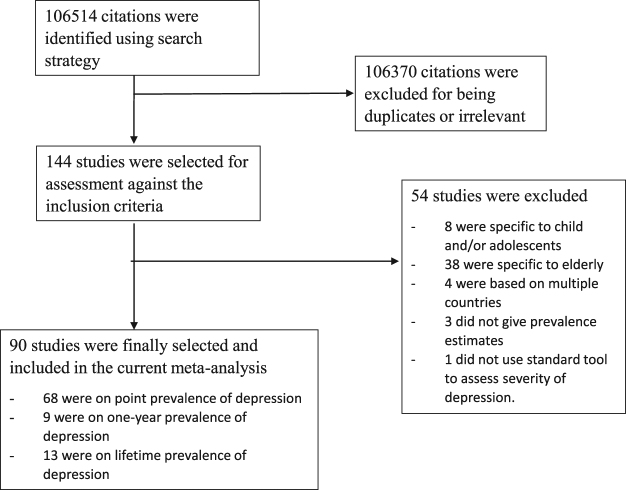
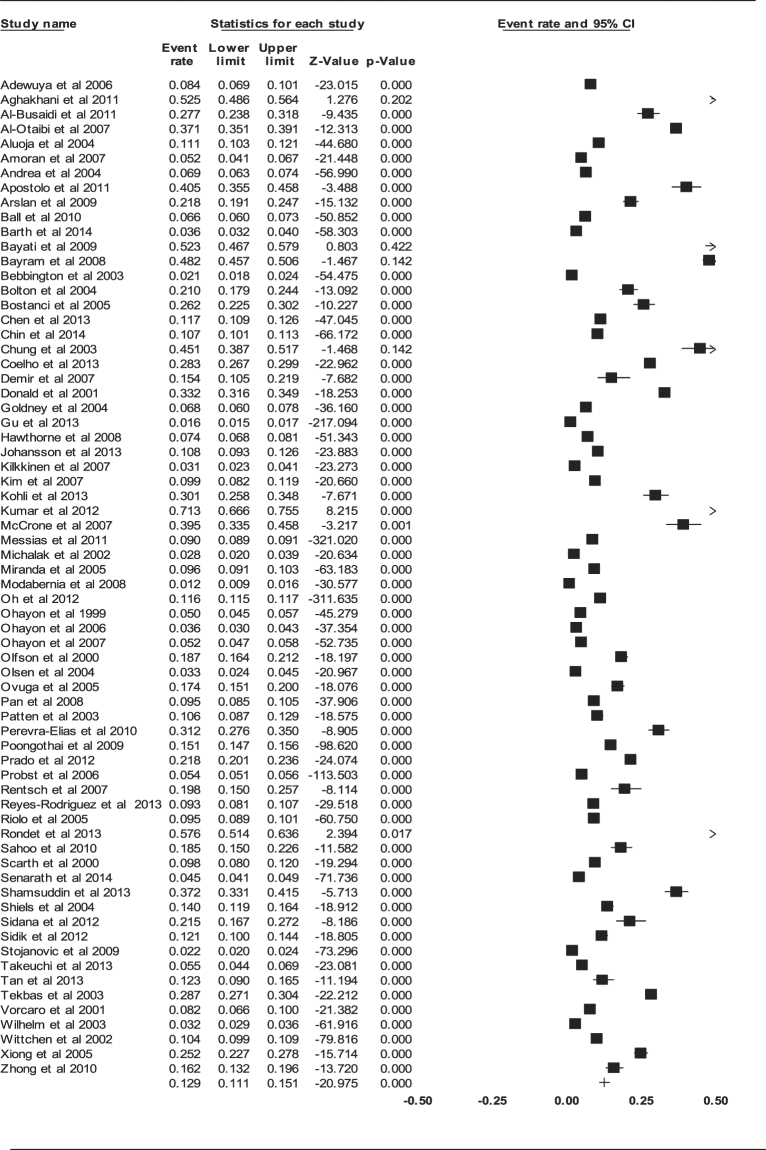
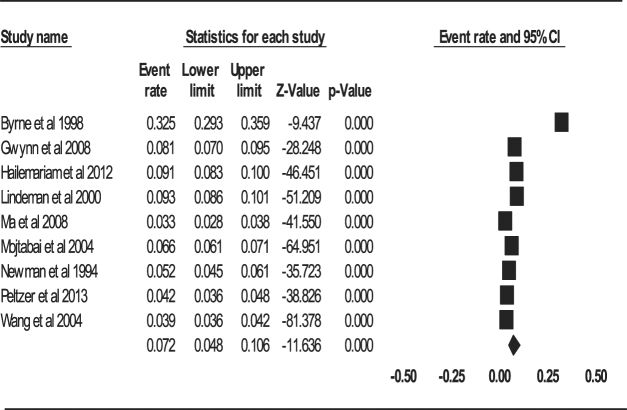
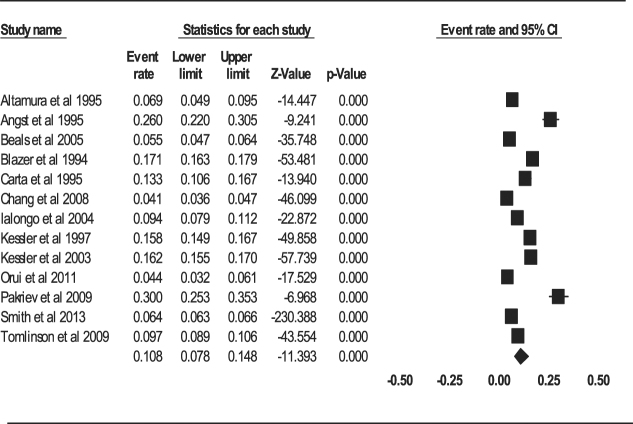
The prevalence of depression may be affected by changes in psychiatric practices and the availability of online mental health information in the past two decades. This study aimed to evaluate the aggregate prevalence of depression in communities from different countries between 1994 and 2014 and to explore the variations in prevalence stratified by geographical, methodological and socio-economic factors. A total of 90 studies were identified and met the inclusion criteria (n = 1,112,573 adults) with 68 studies on single point prevalence, 9 studies on one-year prevalence, and 13 studies on lifetime prevalence of depression. A random-effects model meta-analysis that was performed to calculate the aggregate point, one-year and lifetime prevalence of depression calculated prevalences of 12.9%, 7.2% and 10.8% respectively. Point prevalence of depression was significantly higher in women (14.4%), countries with a medium human development index (HDI) (29.2%), studies published from 2004 to 2014 (15.4%) and when using self-reporting instruments (17.3%) to assess depression. Heterogeneity was identified by meta-regression and subgroup analysis, and response rate, percentage of women and year of publication, respectively, were determined contribute to depression prevalence. This meta-analysis allows benchmarking of the prevalence of depression during the era when online health information emerged, facilitating future comparisons.
Overview
The claims and statistics of this paper haven’t been checked yet.
Free: it reads the open-access text and checks the first 5 claims that cite a source we can check. Create a free account to check every claim.
Integrity signals
Registry
Cites
Statistics
Figures
Verification
Claims the paper makes
The claims and statistics of this paper haven’t been checked yet.
Free: it reads the open-access text and checks the first 5 claims that cite a source we can check. Create a free account to check every claim.
Self-check
Percentages, sums and reported differences re-computed from the paper’s own numbers.
The self-check needs the paper’s full text.
Citations
Cites
Preferred Reporting Items for Systematic Reviews and Meta-Analyses: the PRISMA statement
Moher, D., Liberati, A., Tetzlaff, J., Altman, D. G., & for the PRISMA Group (2009) · BMJ · doi:10.1136/bmj.b2535 · Cited by 83,823
Kessler, R. C. (1994) · Archives of General Psychiatry · doi:10.1001/archpsyc.1994.03950010008002 · Cited by 12,370
Preferred reporting items for systematic reviews and meta-analyses: The PRISMA statement
Moher, D., Liberati, A., Tetzlaff, J., & Altman, D. G. (2010) · International Journal of Surgery · doi:10.1016/j.ijsu.2010.02.007 · Cited by 12,156
How should meta‐regression analyses be undertaken and interpreted?
Thompson, S. G., & Higgins, J. P. T. (2002) · Statistics in Medicine · doi:10.1002/sim.1187 · Cited by 3,026
(1984) · PubMed · Cited by 2,436
Cross-national epidemiology of DSM-IV major depressive episode
Bromet, E., Andrade, L. H., Hwang, I., Sampson, N. A., Alonso, J., de Girolamo, G., de Graaf, R., Demyttenaere, K., Hu, C., Iwata, N., et al. (2011) · BMC Medicine · doi:10.1186/1741-7015-9-90 · Cited by 2,221
Cost of Lost Productive Work Time Among US Workers With Depression
Stewart, W. F. (2003) · JAMA · doi:10.1001/jama.289.23.3135 · Cited by 1,421
Krebber, A. M. H., Buffart, L. M., Kleijn, G., Riepma, I. C., de Bree, R., Leemans, C. R., Becker, A., Brug, J., van Straten, A., Cuijpers, P., et al. (2014) · Psycho-Oncology · doi:10.1002/pon.3409 · Cited by 908
Excess mortality in depression: a meta-analysis of community studies
Cuijpers, P., & Smit, F. (2002) · Journal of Affective Disorders · doi:10.1016/s0165-0327(01)00413-x · Cited by 775
Van de Velde, S., Bracke, P., & Levecque, K. (2010) · Social Science & Medicine · doi:10.1016/j.socscimed.2010.03.035 · Cited by 719
Research works printed but not linked: 1
- Puri, B., Hall A., Ho R. Revision Notes in Psychiatry. 3rd edn, 384 (CRC Press, 2014).
Cited by
Items 101–200 of 1,000
Bain, K. A., McDonald, E., Moffat, F., Tutino, M., Castelino, M., Barton, A. C., Cavanagh, J., Ijaz, U. Z., Siebert, S., McInnes, I. B., et al. (2019) · British Journal of Dermatology · doi:10.1111/bjd.18008 · Cited by 115
Wong, S., Le, G. H., Phan, L., Rhee, T. G., Ho, R., Meshkat, S., Teopiz, K. M., Kwan, A. T. H., Mansur, R. B., Rosenblat, J. D., et al. (2024) · Journal of Affective Disorders · doi:10.1016/j.jad.2024.04.086 · Cited by 107
Self-citationNickson, D., Meyer, C., Walasek, L., & Toro, C. T. (2023) · BMC Medical Informatics and Decision Making · doi:10.1186/s12911-023-02341-x · Cited by 108
A Meta-Analysis of the Rates of Suicide Ideation, Attempts and Deaths in People with Epilepsy
Abraham, N., Buvanaswari, P., Rathakrishnan, R., Tran, B. X., Vu, G. T., Nguyen, L. H., Ho, C. S. H., & Ho, R. (2019) · International Journal of Environmental Research and Public Health · doi:10.3390/ijerph16081451 · Cited by 121
“Heterogeneity appears to be the norm rather than the exception in meta-analyses of large numbers of cross-sectional studies globally [34].”
BackgroundSelf-citationTran, B. X., McIntyre, R. S., Latkin, C. A., Phan, H. T., Vu, G. T., Nguyen, H. L. T., Gwee, K. K., Ho, C. S. H., & Ho, R. (2019) · International Journal of Environmental Research and Public Health · doi:10.3390/ijerph16122150 · Cited by 106
Self-citationMan and the Microbiome: A New Theory of Everything?
Butler, M. I., Cryan, J. F., & Dinan, T. G. (2019) · Annual Review of Clinical Psychology · doi:10.1146/annurev-clinpsy-050718-095432 · Cited by 90
Dean, R. L., Hurducas, C., Hawton, K., Spyridi, S., Cowen, P. J., Hollingsworth, S., Marquardt, T., Barnes, A., Smith, R., McShane, R., et al. (2021) · Cochrane Database of Systematic Reviews · doi:10.1002/14651858.cd011612.pub3 · Cited by 95
Elyoseph, Z., Levkovich, I., & Shinan-Altman, S. (2024) · Family Medicine and Community Health · doi:10.1136/fmch-2023-002583 · Cited by 77
Gual-Montolio, P., Jaén, I., Martínez-Borba, V., Castilla, D., & Suso-Ribera, C. (2022) · International Journal of Environmental Research and Public Health · doi:10.3390/ijerph19137737 · Cited by 93
Obesity as pleiotropic risk state for metabolic and mental health throughout life
Leutner, M., Dervic, E., Bellach, L., Klimek, P., Thurner, S., & Kautzky, A. (2023) · Translational Psychiatry · doi:10.1038/s41398-023-02447-w · Cited by 93
“The pattern of time-directionality between obesity and the development of psychiatric disorders such as MDD, anxiety disorders and PSD, is still a matter of debate that is fueled by the plethora of suggested biological and psycho-socio-economic links between these disorders.”
BackgroundInfluentialDepression and anxiety during the COVID‐19 pandemic in Saudi Arabia: A cross‐sectional study
Alyami, H. S., Naser, A. Y., Dahmash, E. Z., Alyami, M. H., & Alyami, M. S. (2021) · International Journal of Clinical Practice · doi:10.1111/ijcp.14244 · Cited by 98
Gut Microbiome Composition Associated With Major Depressive Disorder and Sleep Quality
Zhang, Q., Yun, Y., An, H., Zhao, W., Ma, T., Wang, Z., & Yang, F. (2021) · Frontiers in Psychiatry · doi:10.3389/fpsyt.2021.645045 · Cited by 88
Trends of Perinatal Stress, Anxiety, and Depression and Their Prediction on Postpartum Depression
Cheng, C., Chou, Y., Chang, C., & Liou, S. (2021) · International Journal of Environmental Research and Public Health · doi:10.3390/ijerph18179307 · Cited by 98
Kristiansen, C. B., Kjær, J. N., Hjorth, P., Andersen, K., & Prina, M. A. (2019) · Social Psychiatry and Psychiatric Epidemiology · doi:10.1007/s00127-019-01680-3 · Cited by 99
“Although decreasing over time, this review showed that throughout the first 5 years of widowhood prevalence estimates remained higher than what is found in the community [5, 48, 49].”
BackgroundResultPrevalence of depressive symptoms among nurses in China: A systematic review and meta-analysis
Xie, N., Qin, Y., Wang, T., Zeng, Y., Deng, X., & Guan, L. (2020) · PLoS ONE · doi:10.1371/journal.pone.0235448 · Cited by 95
Cancer‐related inflammation and depressive symptoms: Systematic review and meta‐analysis
McFarland, D. C., Doherty, M. J., Atkinson, T. M., O’Hanlon, R., BREITBART, W. S., Nelson, C. J., & Miller, A. H. (2022) · Cancer · doi:10.1002/cncr.34193 · Cited by 99
Self-Reported Symptoms of Depression and Anxiety After ACL Injury: A Systematic Review
Piussi, R., Berghdal, T., Sundemo, D. S., Grassi, A., Zaffagnini, S., Sansone, M., Samuelsson, K., & Senorski, E. H. (2022) · Orthopaedic Journal of Sports Medicine · doi:10.1177/23259671211066493 · Cited by 94
“9%.(34) The prevalence of depression in a population of patients with ACL injury and/or reconstruction therefore appears to be higher than in the general population at the time of reconstruction but appears to decrease to a level lower than that of the general population up to 20 years after reconstruction.”
BackgroundNiu, G., Shi, X.-H., Yao, L.-S., Yang, W., Jin, S., & Xu, L. (2022) · Current Psychology · doi:10.1007/s12144-022-03318-1 · Cited by 100
“9%, with the data of 1 million participants from 30 countries from 1994 to 2014 (Chen et al., 2013; Lei et al., 2016; Lépine & Briley 2011; Lim et al., 2018).”
BackgroundFernandes, M. D. S. V., Mendonça, C. R., da Silva, T. M. V., Noll, P. R. E. S., de Abreu, L. C., & Noll, M. A. (2023) · Scientific Reports · doi:10.1038/s41598-023-33584-3 · Cited by 97
van Rijn, S. (2019) · Current Opinion in Psychiatry · doi:10.1097/yco.0000000000000471 · Cited by 89
Linking childhood emotional abuse and adult depressive symptoms: The role of mentalizing incapacity
Li, E. T., Carracher, E., & Bird, T. (2020) · Child Abuse & Neglect · doi:10.1016/j.chiabu.2019.104253 · Cited by 70
Shawahna, R., Hattab, S., Alshafei, R. S., & Tabouni, M. (2020) · BMC Psychiatry · doi:10.1186/s12888-020-02658-1 · Cited by 101
“Depression is characterized by many symptoms like sadness, excessive loss of interests and/or pleasure, feeling guilty or low self-esteem, disturbances in sleep and/or appetite, feeling tired, and decreased ability to concentrate [30, 31].”
BackgroundFactors associated with stress, anxiety, and depression during social distancing in Brazil
Souza, A. S. R., Souza, G. F. D. A., Souza, G. A., Cordeiro, A. L. N., Praciano, G. D. A. F., Alves, A. C. D. S., dos Santos, A. C., da Silva, J. R., & de Souza, M. B. R. (2021) · Revista de Saúde Pública · doi:10.11606/s1518-8787.2021055003152 · Cited by 103
Depression and coronary heart disease: mechanisms, interventions, and treatments
Xu, L., Zhai, X., Shi, D., & Zhang, Y. (2024) · Frontiers in Psychiatry · doi:10.3389/fpsyt.2024.1328048 · Cited by 99
Perez, N., Langlest, F., Mallet, L., De Pieri, M., Sentissi, O., Thorens, G., Seragnoli, F., Zullino, D., Kirschner, M., Kaiser, S., et al. (2023) · European Neuropsychopharmacology · doi:10.1016/j.euroneuro.2023.07.011 · Cited by 88
“The lifetime prevalence of major depressive disorder (MDD) is between 10% and 20% ( Lim et al., 2018 ), with an onset in a third of patients by 25 years old, an median age at onset at 30 years old ( M. Solmi et al., 2021 ).”
Liao, S., Zhou, Y., Liu, Y., & Wang, R. (2020) · Journal of Affective Disorders · doi:10.1016/j.jad.2020.04.022 · Cited by 90
The psychological status of people affected by the COVID-19 outbreak in China
Zhu, Z. H., Liu, Q., Jiang, X., Manandhar, U., Luo, Z., Zheng, X., Li, Y., Xie, J., & Bo, Z. (2020) · Journal of Psychiatric Research · doi:10.1016/j.jpsychires.2020.05.026 · Cited by 93
Rehfeldt, S. C. H., Laufer, S., & Goettert, M. I. (2021) · International Journal of Molecular Sciences · doi:10.3390/ijms22073701 · Cited by 89
Fang, Y., Ji, B., Liu, Y., Zhang, J., Liu, Q., Ge, Y., Xie, Y., & Liu, C. (2022) · Scientific Reports · doi:10.1038/s41598-022-16328-7 · Cited by 91
Rogowska, A. M., Ochnik, D., Kuśnierz, C., Jakubiak, M., Schütz, A., Held, M. J., Arzenšek, A., Benatov, J., Berger, R., Korchagina, E. V., et al. (2021) · BMC Public Health · doi:10.1186/s12889-021-12288-1 · Cited by 84
The effect of anxiety levels of elderly people in quarantine on depression during covid-19 pandemic
Yıldırım, H., Işık, K., & Aylaz, R. (2021) · Social Work in Public Health · doi:10.1080/19371918.2020.1868372 · Cited by 94
“Anxiety and depressive disorders are more common in women (Alexander et al., 2007), and the prevalence of symptoms such as depression are reported to be higher among women (Lim et al., 2018).”
BackgroundIs depression the missing link between inflammatory mediators and cancer?
Polityńska, B., Pokorska, O., Wojtukiewicz, A. M., Sawicka, M., Mysliwiec, M., Honn, K. V., Tucker, S. C., & Wojtukiewicz, M. Z. (2022) · Pharmacology & Therapeutics · doi:10.1016/j.pharmthera.2022.108293 · Cited by 89
Ancient Roots of Today’s Emerging Renaissance in Psychedelic Medicine
George, D. R., Hanson, R., Wilkinson, D., & Garcia‐Romeu, A. (2021) · Culture Medicine and Psychiatry · doi:10.1007/s11013-021-09749-y · Cited by 94
“Indeed, the early twenty-first century has not only ushered in rising depression and anxiety (Lim et al. 2018; Ettman et al. 2020), but also a crisis of ‘‘Deaths of Despair’’ (DoD)—excess mortality and morbidity from suicide, drug overdose, and alcoholism, especially among working class adults in…”
BackgroundDigital training for building resilience: systematic review, meta-analysis, and meta-regression
Ang, W. H. D., Chew, H. S. J., Dong, J., Yi, H., Mahendren, R., & Lau, Y. (2022) · Stress and Health · doi:10.1002/smi.3154 · Cited by 83
“Collectively, as depression continues to be the most common mental health disorder (Lim et al., 2018), future digital resilience training should orientate their content surrounding cognitive behavioural techniques that could ameliorate depressive symptoms.”
BackgroundCattane, N., Räikkönen, K., Anniverno, R., Mencacci, C., Riva, M. A., Pariante, C. M., & Cattaneo, A. (2020) · Molecular Psychiatry · doi:10.1038/s41380-020-0813-6 · Cited by 97
Tee, M. L., Wang, C., Tee, C., Pan, R., Reyes, P. W. C., Wan, X., Anlacan, J. P., Tan, Y., Xu, L., Harijanto, C., et al. (2021) · Frontiers in Psychiatry · doi:10.3389/fpsyt.2020.568929 · Cited by 88
“Another study involving thirty countries found that unmodifiable risk factors for depression included female gender, and depression became more common in 2004 to 2014 compared to previous periods (18).”
BackgroundSelf-citationUsing the tools of genetic epidemiology to understand sex differences in neuropsychiatric disorders
Merikangas, A. K., & Almasy, L. (2020) · Genes, Brain and Behavior · doi:10.1111/gbb.12660 · Cited by 82
Bacigalupe, A., & Martín, U. (2020) · Scandinavian Journal of Public Health · doi:10.1177/1403494820944736 · Cited by 86
“The results are consistent with the literature about women’s worse mental health and more frequent diagnoses of depression or anxiety [20].”
ResultFacing the COVID-19 Pandemic: The Role of Sense of Coherence
Barni, D., Danioni, F., Canzi, E., Ferrari, L., Ranieri, S., Lanz, M., Iafrate, R., Regalia, C., & Rosnati, R. R. (2020) · Frontiers in Psychology · doi:10.3389/fpsyg.2020.578440 · Cited by 83
Ochnik, D., Rogowska, A. M., Kuśnierz, C., Jakubiak, M., Schütz, A., Held, M. J., Arzenšek, A., Benatov, J., Berger, R., Korchagina, E. V., et al. (2021) · Journal of Clinical Medicine · doi:10.3390/jcm10132882 · Cited by 91
“9% in the global population based on data from 30 countries collected between 1994 and 2014 [20].”
BackgroundResultInfluentialIncreased GFAP concentrations in the cerebrospinal fluid of patients with unipolar depression
Michel, M., Fiebich, B. L., Kuzior, H., Meixensberger, S., Berger, B., Maier, S., Nickel, K., Runge, K., Denzel, D., Pankratz, B., et al. (2021) · Translational Psychiatry · doi:10.1038/s41398-021-01423-6 · Cited by 79
Slagboom, T. N. A., van Bunderen, C. C., de Vries, R., Bisschop, P. H. L. T., & Drent, M. L. (2023) · Pituitary · doi:10.1007/s11102-023-01322-7 · Cited by 84
Jaen-Varas, D. C., Mari, J. D. J., Asevedo, E. D. M., Borschmann, R., Diniz, E., Ziebold, C., & Gadelha, A. (2019) · Brazilian Journal of Psychiatry · doi:10.1590/1516-4446-2018-0223 · Cited by 93
The importance of harmonising diagnostic criteria sets for pathological grief
Lenferink, L. I. M., Boelen, P. A., Smid, G. E., & Paap, M. C. S. (2021) · The British Journal of Psychiatry · doi:10.1192/bjp.2019.240 · Cited by 70
Badini, I., Coleman, J. R. I., Hagenaars, S. P., Hotopf, M., Breen, G., Lewis, C. M., & Fabbri, C. (2022) · Psychological Medicine · doi:10.1017/s0033291720002342 · Cited by 75
“, 2012) and we reported heritability considering a range of plausible prevalence values (Lim et al., 2018) (Łojko & Rybakowski, 2017) (Levitan et al.”
BackgroundMethodZhao, B., Kong, F., Aung, M. N., Yuasa, M., & Nam, E. W. (2020) · International Journal of Environmental Research and Public Health · doi:10.3390/ijerph17186671 · Cited by 83
O'Sullivan, D. T., Gordon, B. R., Lyons, M., Meyer, J. D., & Herring, M. P. (2023) · Psychiatry Research · doi:10.1016/j.psychres.2023.115322 · Cited by 86
“Depression has a lifetime prevalence of approximately 15.4% (Lim et al., 2018).”
InfluentialMental health of parents of children with a developmental disability in British Columbia, Canada
Marquis, S., McGrail, K. M., & Hayes, M. (2019) · Journal of Epidemiology & Community Health · doi:10.1136/jech-2018-211698 · Cited by 85
Meshkat, S., Alnefeesi, Y., Jawad, M. Y., Vincenzo, J. D. D., Rodrigues, N. B., Ceban, F., Lui, L. M. W., McIntyre, R. S., & Rosenblat, J. D. (2022) · Psychiatry Research · doi:10.1016/j.psychres.2022.114857 · Cited by 79
Lauron, S., Plasse, C., Vaysset, M., Pereira, B., D'Incan, M., Rondepierre, F., & Jalenques, I. (2023) · JAMA Dermatology · doi:10.1001/jamadermatol.2022.6085 · Cited by 80
Potential role of insulin on the pathogenesis of depression
Zou, X. H., Sun, L., Yang, W., Li, B. J., & Cui, R. (2020) · Cell Proliferation · doi:10.1111/cpr.12806 · Cited by 75
Xiao, K., Luo, Y., Liang, X., Tang, J., Wang, J., Xiao, Q., Qi, Y., Li, Y., Zhu, P., Yang, H., et al. (2021) · Translational Psychiatry · doi:10.1038/s41398-021-01571-9 · Cited by 77
Poor Separation of Clinical Symptom Profiles by DSM-5 Disorder Criteria
Newson, J. J., Pastukh, V., & Thiagarajan, T. C. (2021) · Frontiers in Psychiatry · doi:10.3389/fpsyt.2021.775762 · Cited by 105
The effects of reserpine on depression: A systematic review
Strawbridge, R., Javed, R. R., Cave, J., Jauhar, S., & Young, A. H. (2022) · Journal of Psychopharmacology · doi:10.1177/02698811221115762 · Cited by 81
“…of depression reported after reserpine treatment was approximate to the upper limit of point prevalence estimates for depression in the general population (using self-report to assess depression (Lim et al., 2018), and rates of depression may be higher in older people (Kim et al., 2020)).”
BackgroundThérond, A., Pezzoli, P., Abbas, M., Howard, A., Bowie, C. R., & Guimond, S. (2021) · Journal of Affective Disorders · doi:10.1016/j.jad.2021.02.009 · Cited by 81
Sbarra, D. A., Ramadan, F. A., Choi, K. W., Treur, J. L., Levey, D. F., Wootton, R. E., Stein, M. B., Gelernter, J. E., & Klimentidis, Y. C. (2023) · Molecular Psychiatry · doi:10.1038/s41380-023-02259-w · Cited by 83
“The lifetime prevalence of MD is 16.2% in the United States and roughly 11% globally [2], and many more people experience subthreshold but clinically signi fi cant depressive symptoms [3].”
InfluentialGhezzi, E. S., Sharman, R. L. S., Selvanayagam, J. B., Psaltis, P. J., Sanders, P., Astley, J. M., Knayfati, S., Batra, V., & Keage, H. A. D. (2023) · Europace · doi:10.1093/europace/euad130 · Cited by 73
Treccani, G., Ardalan, M., Chen, F., Musazzi, L., Popoli, M., Wegener, G., Nyengaard, J. R., & Müller, H. K. (2019) · Molecular Neurobiology · doi:10.1007/s12035-019-1613-3 · Cited by 73
Meta-analysis of prevalence: the psychological sequelae among COVID-19 survivors
Khraisat, B., Toubasi, A. A., AlZoubi, L., Al-Sayegh, T., & Mansour, A. T. (2021) · International Journal of Psychiatry in Clinical Practice · doi:10.1080/13651501.2021.1993924 · Cited by 80
“In addition, a global meta-analysis found that the lifetime prevalence of depression was 10.8% (Lim et al. 2018).”
BackgroundInfluentialde la Torre, J. A., Vilagut, G., Ronaldson, A., Bakolis, I., Dregan, A., Martín, V., Martínez‐Alés, G., Molina, A. J., Serrano‐Blanco, A., Valderas, J. M., et al. (2023) · The Lancet Public Health · doi:10.1016/s2468-2667(23)00220-7 · Cited by 83
Review of EEG-based neurofeedback as a therapeutic intervention to treat depression
Patil, A. U., Lin, C., Lee, S., Huang, H.-W., Wu, S., Madathil, D., & Huang, C. (2023) · Psychiatry Research Neuroimaging · doi:10.1016/j.pscychresns.2023.111591 · Cited by 76
Wang, P., Shen, X., Wang, Y., & Jia, X. (2023) · Frontiers in Psychiatry · doi:10.3389/fpsyt.2023.1152435 · Cited by 76
Yoshino, Y., Roy, B., & Dwivedi, Y. (2021) · Neuropsychopharmacology · doi:10.1038/s41386-020-00861-y · Cited by 70
Epidemiology and costs of depressive disorder in Spain: the EPICO study
Vieta, E., Alonso, J., Pérez-Sola, V., Roca, M., Hernando, T., Sicras-Mainar, A., Sicras-Navarro, A., Herrera, B., & Gabilondo, A. (2021) · European Neuropsychopharmacology · doi:10.1016/j.euroneuro.2021.04.022 · Cited by 70
Michopoulos, I., Furukawa, T. A., Noma, H., Kishimoto, S., Onishi, A., Ostinelli, E. G., Ciharova, M., Miguel, C., Karyotaki, E., & Cuijpers, P. (2021) · Journal of Clinical Epidemiology · doi:10.1016/j.jclinepi.2020.12.012 · Cited by 69
Caro-Fuentes, S., & Sanabria‐Mazo, J. P. (2023) · Journal of the Academy of Consultation-Liaison Psychiatry · doi:10.1016/j.jaclp.2023.11.685 · Cited by 77
Cannabis use and mood disorders: a systematic review
Sorkhou, M., Dent, E. L., & George, T. P. (2024) · Frontiers in Public Health · doi:10.3389/fpubh.2024.1346207 · Cited by 77
Na, K., Cho, S., Geem, Z. W., & Kim, Y. (2020) · Neuroscience Letters · doi:10.1016/j.neulet.2020.134804 · Cited by 68
Association Between Depression, Health Beliefs, and Face Mask Use During the COVID-19 Pandemic
Bressington, D. T., Cheung, T. C. C., Lam, S. C., Suen, L. K. P., Fong, T. K. H., Ho, H., & Xiang, Y. (2020) · Frontiers in Psychiatry · doi:10.3389/fpsyt.2020.571179 · Cited by 76
“Section B included the face mask use scale (FMUS) (22) which involved two categories: (1) protect self, (2) protect others; and in three areas: (1) public, (2) clinic, (3) home.”
BackgroundVetter, J., Spiller, T. R., Cathomas, F., Robinaugh, D. J., Brühl, A. B., Boeker, H., Seifritz, E., & Kleim, B. (2020) · Journal of Affective Disorders · doi:10.1016/j.jad.2020.08.074 · Cited by 71
“The increased prevalence of major depressive disorder (MDD) in females compared to males has been reported consistently over time and in different populations (Kessler et al., 2003; Lim et al., 2018).”
BackgroundOliveira, J. P., & Ferreira, S. (2019) · The Application of Clinical Genetics · doi:10.2147/tacg.s146022 · Cited by 67
James, C., Powell, M. G., Seixas, A. A., Bateman, A. G., Pengpid, S., & Peltzer, K. (2019) · International Journal of Psychology · doi:10.1002/ijop.12613 · Cited by 72
Jalenques, I., Ciortianu, L., Pereira, B., D'Incan, M., Lauron, S., & Rondepierre, F. (2020) · Journal of the American Academy of Dermatology · doi:10.1016/j.jaad.2020.03.041 · Cited by 70
Sex Differences in Variability of Brain Structure Across the Lifespan
Forde, N. J., Jeyachandra, J., Joseph, M. J. E., Jacobs, G. R., Dickie, E. W., Satterthwaite, T. D., Shinohara, R. T., Ameis, S. H., & Voineskos, A. N. (2020) · Cerebral Cortex · doi:10.1093/cercor/bhaa123 · Cited by 70
Cheng, C., Lau, Y.-C., & Luk, J. W. (2020) · Journal of Medical Internet Research · doi:10.2196/22740 · Cited by 62
“Systematic and meta-analytic reviews similarly showed that probable depression was prevalent (overall effect size of 34%, 95% CI 28%-41%) across the globe during the early stage of the pandemic [6,7] and that such alarming rates were 3-fold higher than the lifetime prevalence of depression from 1994 to 2014 (11%) [8].”
BackgroundAshrafizadeh, M., Najafi, M., Kaviyani, N., Mohammadinejad, R., Farkhondeh, T., & Samarghandian, S. (2021) · Inflammation · doi:10.1007/s10753-021-01428-9 · Cited by 67
“Major depressive disorder (MDD) is a mental disorder affecting a high number of people around the world [124, 125].”
BackgroundRetractedDigital mental health interventions for depression
Himle, J. A., Weaver, A., Zhang, A., & Xiang, X. (2022) · Cognitive and Behavioral Practice · doi:10.1016/j.cbpra.2020.12.009 · Cited by 65
“…racial/ethnic minorities (Conner et al., 2010; Hunt et al., 2015), reside in rural areas (Bolin et al., 2015; Hartley, 2004; Johnson et al., 2006), and with low socio-economic status (Freeman et al., 2016; Mayer et al., 2014; Saloner & Cook, 2013; Sugiyama et al., 2016; Williams & Sternthal, 2010).”
BackgroundMaternal Depression in Early Childhood and Developmental Vulnerability at School Entry
Wall‐Wieler, E., Roos, L. L., & Gotlib, I. H. (2020) · PEDIATRICS · doi:10.1542/peds.2020-0794 · Cited by 75
Khawar, M. B., Abbasi, M. H., Hussain, S., Riaz, M., Rafiq, M., Mehmood, R., Sheikh, N., Amaan, H. N., Fatima, S., Jabeen, F., et al. (2021) · Heliyon · doi:10.1016/j.heliyon.2021.e07030 · Cited by 76
Mental Health Conditions Among E-Learning Students During the COVID-19 Pandemic
Rutkowska, A., Cieślik, B., Tomaszczyk, A., & Szczepańska-Gieracha, J. (2022) · Frontiers in Public Health · doi:10.3389/fpubh.2022.871934 · Cited by 76
Depression after stoma surgery: a systematic review and meta-analysis
Kovoor, J. G., Jacobsen, J. H. W., Stretton, B., Bacchi, S., Gupta, A. K., Claridge, B., van der Steen, M., Bhanushali, A., Bartholomeusz, L., Edwards, S., et al. (2023) · BMC Psychiatry · doi:10.1186/s12888-023-04871-0 · Cited by 75
He, J., Zhou, H.-Y., Xue, S.-G., Lu, J.-J., Xu, J.-F., Zhou, B., Hu, Z., Wu, P., Long, L., Ni, L., et al. (2020) · Biological Psychiatry · doi:10.1016/j.biopsych.2020.09.003 · Cited by 71
Major Depressive Disorder and gut microbiota – Association not causation. A scoping review
Łoniewski, I., Misera, A., Skonieczna-Żydecka, K., Kaczmarczyk, M., Kaźmierczak-Siedlecka, K., Misiak, B., Marlicz, W., & Samochowiec, J. (2021) · Progress in Neuro-Psychopharmacology and Biological Psychiatry · doi:10.1016/j.pnpbp.2020.110111 · Cited by 61
Portuguese Nurses’ Stress, Anxiety, and Depression Reduction Strategies during the COVID-19 Outbreak
de Pinho, L. G., Sampaio, F., Sequeira, C., Teixeira, L., da Fonseca, C. J. V., & Lopes, M. J. (2021) · International Journal of Environmental Research and Public Health · doi:10.3390/ijerph18073490 · Cited by 69
Handajani, Y. S., Schröder‐Butterfill, E., Hogervorst, E., Turana, Y., & Hengky, A. (2022) · Clinical Practice and Epidemiology in Mental Health · doi:10.2174/17450179-v18-e2207010 · Cited by 90
Horticultural therapy program for middle-aged women’s depression, anxiety, and self-identify
Kim, K., & Park, S.-A. (2018) · Complementary Therapies in Medicine · doi:10.1016/j.ctim.2018.06.008 · Cited by 72
Factors associated with depression among the Lebanese population: Results of a cross‐sectional study
Obeid, S., Lahoud, N., Haddad, C., Sacre, H., Akel, M., Fares, K., Salameh, P., & Hallit, S. (2020) · Perspectives in Psychiatric Care · doi:10.1111/ppc.12518 · Cited by 59
Psychological impact of COVID-19 pandemic on postgraduate trainees: a cross-sectional survey
Imran, N., Masood, H. M. U., Ayub, M., & Gondal, K. M. (2020) · Postgraduate Medical Journal · doi:10.1136/postgradmedj-2020-138364 · Cited by 65
Samus, A., Freeman, C., Dickinson, K. J. M., & van Heezik, Y. (2022) · Urban forestry & urban greening · doi:10.1016/j.ufug.2022.127519 · Cited by 68
Kurçer, M. A., Erdoğan, Z., & KARDEŞ, V. Ç. (2021) · Perspectives In Psychiatric Care · doi:10.1111/ppc.12850 · Cited by 70
“In literature, females are more at risk than males regarding the general anxiety forms.29 Females can be more anxious than males due to many factors, such as biological factors like imbalances in reproductive hormones, sociocultural factors, personality traits like increasing anxiety sensitivity, and cognitive factors…”
BackgroundInfluentialPrevalence of pulp stones: A systematic review and meta‐analysis
Jannati, R., Afshari, M., Moosazadeh, M., Allahgholipour, S. Z., Eidy, M., & Hajihoseini, M. (2018) · Journal of Evidence-Based Medicine · doi:10.1111/jebm.12331 · Cited by 71
Peng, X., Liang, S., Liu, L., Cai, C., Chen, J., Huang, A., Wang, X., & Zhao, J. (2022) · Current Psychology · doi:10.1007/s12144-021-02512-x · Cited by 66
“…well as higher levels of depression, anxiety and suicidal ideation during the COVID-19 pandemic, which is consistent with previous studies that found that female gender was at a higher risk of depression (Zhou et al., 2020; Lim et al., 2018) and anxiety symptoms (Zhou et al., 2020; Putwain, 2007).”
ResultSex Differences in Depression and Anxiety
Pavlidi, P., Kokras, N., & Dalla, C. (2022) · Current topics in behavioral neurosciences · doi:10.1007/7854_2022_375 · Cited by 63
Lamichhane, D. K., Jung, D.-Y., Shin, Y., Lee, K., Lee, S., Ahn, K., Kim, K. W., Shin, Y. H., Suh, D. I., Hong, S., et al. (2021) · International Journal of Hygiene and Environmental Health · doi:10.1016/j.ijheh.2021.113823 · Cited by 63
Flavonols in Action: Targeting Oxidative Stress and Neuroinflammation in Major Depressive Disorder
Jembrek, M. J., Oršolić, N., Karlović, D., & Peitl, V. (2023) · International Journal of Molecular Sciences · doi:10.3390/ijms24086888 · Cited by 64
Bedaso, A., Ayalew, M., Mekonnen, N., & Duko, B. (2020) · Depression Research and Treatment · doi:10.1155/2020/3695209 · Cited by 58
Errázuriz, A., Avello-Vega, D., Ramírez-Mahaluf, J. P., Torres, R., Crossley, N. A., Undurraga, E. A., & Jones, P. B. (2023) · The Lancet Regional Health - Americas · doi:10.1016/j.lana.2023.100587 · Cited by 71
Zhao, T., Tesch, F., Markevych, I., Baumbach, C., Janßen, C., Schmitt, J. M., Romanos, M., Nowak, D., & Heinrich, J. (2020) · International Journal of Hygiene and Environmental Health · doi:10.1016/j.ijheh.2020.113562 · Cited by 63
Nouri, E., Moradi, Y., & Moradi, G. (2022) · Annals of General Psychiatry · doi:10.1186/s12991-022-00414-1 · Cited by 64
Μangoulia, P., Milionis, C., Vlachou, E. D., & Ilias, Ι. (2024) · Healthcare · doi:10.3390/healthcare12141457 · Cited by 70
“Anxiety disorders usually involve a persistent and undue feeling of worry or dread, which can interfere with daily life.”
Background
Metadata
- Authors
- Lim, G. Y., Tam, W. W., Lu, Y., Ho, C. S., Zhang, M. W., & Ho, R. C.
- Affiliations
- Monash University (AU)
- National University of Singapore (SG)
- Zhejiang University (CN)
- National University Hospital (SG)
- Institute of Mental Health (SG)
- Corresponding author
- Lu, Yanxia
- Venue
- Scientific Reports
- Published
- 2018-02-12
- Volume
- 8
- Issue
- 1
- Pages
- 2861-2861
- ISSN
- 2045-2322 (ISSN-L)
- PMC
- PMC5809481
- OpenAlex
- W2807669085
- Semantic Scholar
- e3cd42f33f82796136b738a9ca84d8d523a0fb4b
- Cited by
- 1,557
- References
- 54
- Citations by year
- 2026: 88 · 2025: 172 · 2024: 198 · 2023: 234 · 2022: 265 · 2021: 285 · 2020: 199 · 2019: 91 · 2018: 23
- FWCI
- 202.75
- Type
- journal article
- Language
- en
- Update notices
- correction (2022-09-01)
- Open access
- gold
- doi.org
- Licence
- cc-by
- creativecommons.org/licenses/by/4.0 (tdm)
- creativecommons.org/licenses/by/4.0 (vor)
- Locations
- Scientific Reports (publishedVersion, cc-by)
- Europe PMC (PubMed Central) (publishedVersion, cc-by)
- PubMed Central (publishedVersion, cc-by)
- PubMed (publishedVersion)
- Rare & Special e-Zone (The Hong Kong University of Science and Technology) (submittedVersion)
- National University of Singapore (submittedVersion, cc-by)
- DOAJ (DOAJ: Directory of Open Access Journals) (submittedVersion, cc-by-sa)
- Funders
- National Natural Science Foundation of China (81600018)
- Topics
- Health Sciences › Medicine › Psychiatry and Mental health › Mental Health Treatment and Access
- Social Sciences › Psychology › Clinical Psychology › Suicide and Self-Harm Studies
- Social Sciences › Psychology › Clinical Psychology › Child and Adolescent Psychosocial and Emotional Development
- Keywords
- depression, prevalence, community-dwelling adults, point prevalence, lifetime prevalence, sex differences, Human Development Index, self-report measures, online mental health information, cross-national comparison, response rate
- MeSH terms
- Cross-Sectional Studies, Depression, Female, Humans, Male, Sex Characteristics, Socioeconomic Factors, Prevalence, Self Report
About these checks
Registry, retraction, Cites and statistics results are computed, not judged, with one exception: a printed reference that no index lists is read once by a model before it counts as a citation error. Claims are extracted by a model and kept only when their quote appears verbatim in the text; each cited source is then checked, with a model’s help, for whether it says what the claim relies on. Those verdicts can be wrong — read the claim’s quote and the cited source before relying on one.
Statistics and arithmetic are recomputed, not judged.
Confidence bands are shown only for fields calibrated on our annotated test set. None is calibrated yet, so no band is shown.
What counts as a claim ›How we measure confidence ›How we check this ›
Are you an author, or do you see a problem with this page? Request a review
Data sources
Bibliographic data: Semantic Scholar, OpenAlex, Crossref.
Contains information from the Semantic Scholar Academic Graph Datasets, made available under the ODC Attribution License (ODC-BY 1.0).
Semantic Scholar’s data is described in: Kinney, R., et al. (2023). The Semantic Scholar Open Data Platform. arXiv:2301.10140.
