

Prevalence of Depression in the Community from 30 Countries between 1994 and 2014
Open accessThe DOI matches its Crossref record; 54 of the 54 references it cites were found in a registry or an index.
Abstract
The prevalence of depression may be affected by changes in psychiatric practices and the availability of online mental health information in the past two decades. This study aimed to evaluate the aggregate prevalence of depression in communities from different countries between 1994 and 2014 and to explore the variations in prevalence stratified by geographical, methodological and socio-economic factors. A total of 90 studies were identified and met the inclusion criteria (n = 1,112,573 adults) with 68 studies on single point prevalence, 9 studies on one-year prevalence, and 13 studies on lifetime prevalence of depression. A random-effects model meta-analysis that was performed to calculate the aggregate point, one-year and lifetime prevalence of depression calculated prevalences of 12.9%, 7.2% and 10.8% respectively. Point prevalence of depression was significantly higher in women (14.4%), countries with a medium human development index (HDI) (29.2%), studies published from 2004 to 2014 (15.4%) and when using self-reporting instruments (17.3%) to assess depression. Heterogeneity was identified by meta-regression and subgroup analysis, and response rate, percentage of women and year of publication, respectively, were determined contribute to depression prevalence. This meta-analysis allows benchmarking of the prevalence of depression during the era when online health information emerged, facilitating future comparisons.
Overview
The claims and statistics of this paper haven’t been checked yet.
Free: it reads the open-access text and checks the first 5 claims that cite a source we can check. Create a free account to check every claim.
Integrity signals
Registry
Cites
Statistics
Figures
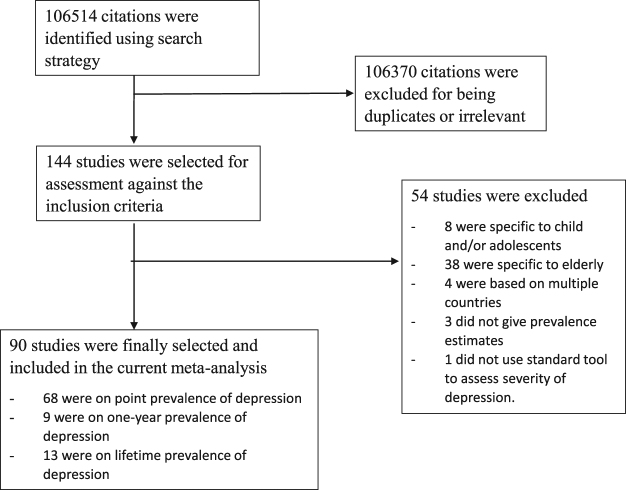
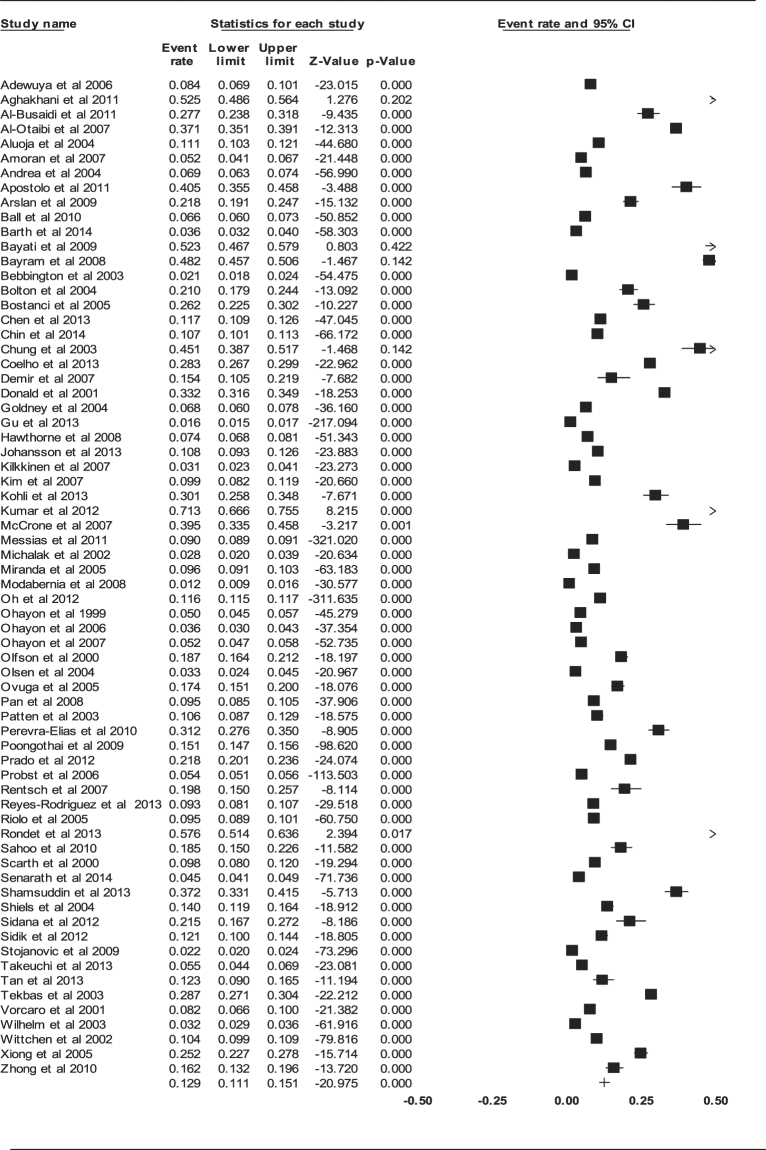
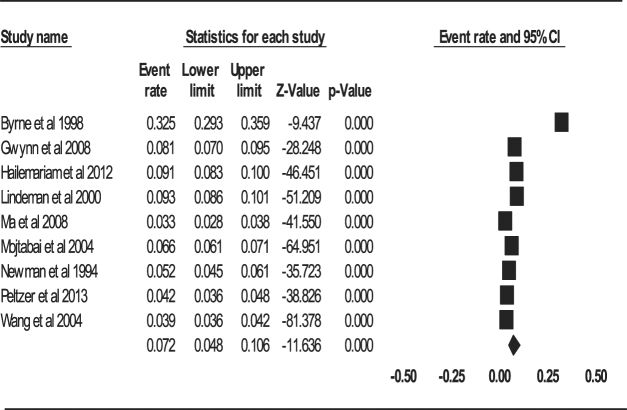
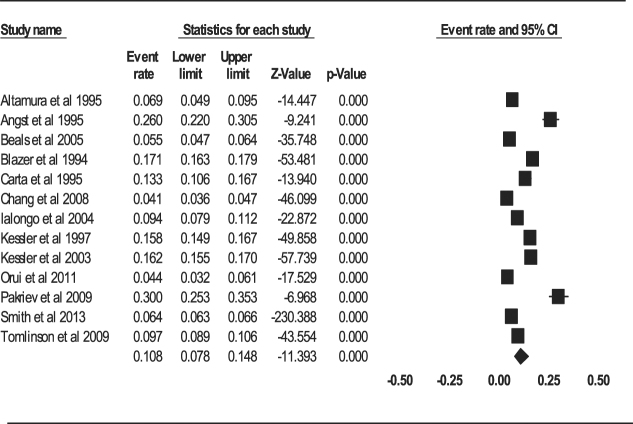
Verification
Claims the paper makes
The claims and statistics of this paper haven’t been checked yet.
Free: it reads the open-access text and checks the first 5 claims that cite a source we can check. Create a free account to check every claim.
Self-check
Percentages, sums and reported differences re-computed from the paper’s own numbers.
The self-check needs the paper’s full text.
Citations
Cites
Preferred Reporting Items for Systematic Reviews and Meta-Analyses: the PRISMA statement
Moher, D., Liberati, A., Tetzlaff, J., Altman, D. G., & for the PRISMA Group (2009) · BMJ · doi:10.1136/bmj.b2535 · Cited by 83,823
Kessler, R. C. (1994) · Archives of General Psychiatry · doi:10.1001/archpsyc.1994.03950010008002 · Cited by 12,370
Preferred reporting items for systematic reviews and meta-analyses: The PRISMA statement
Moher, D., Liberati, A., Tetzlaff, J., & Altman, D. G. (2010) · International Journal of Surgery · doi:10.1016/j.ijsu.2010.02.007 · Cited by 12,156
How should meta‐regression analyses be undertaken and interpreted?
Thompson, S. G., & Higgins, J. P. T. (2002) · Statistics in Medicine · doi:10.1002/sim.1187 · Cited by 3,026
(1984) · PubMed · Cited by 2,436
Cross-national epidemiology of DSM-IV major depressive episode
Bromet, E., Andrade, L. H., Hwang, I., Sampson, N. A., Alonso, J., de Girolamo, G., de Graaf, R., Demyttenaere, K., Hu, C., Iwata, N., et al. (2011) · BMC Medicine · doi:10.1186/1741-7015-9-90 · Cited by 2,221
Cost of Lost Productive Work Time Among US Workers With Depression
Stewart, W. F. (2003) · JAMA · doi:10.1001/jama.289.23.3135 · Cited by 1,421
Krebber, A. M. H., Buffart, L. M., Kleijn, G., Riepma, I. C., de Bree, R., Leemans, C. R., Becker, A., Brug, J., van Straten, A., Cuijpers, P., et al. (2014) · Psycho-Oncology · doi:10.1002/pon.3409 · Cited by 908
Excess mortality in depression: a meta-analysis of community studies
Cuijpers, P., & Smit, F. (2002) · Journal of Affective Disorders · doi:10.1016/s0165-0327(01)00413-x · Cited by 775
Van de Velde, S., Bracke, P., & Levecque, K. (2010) · Social Science & Medicine · doi:10.1016/j.socscimed.2010.03.035 · Cited by 719
Research works printed but not linked: 1
- Puri, B., Hall A., Ho R. Revision Notes in Psychiatry. 3rd edn, 384 (CRC Press, 2014).
Cited by
Items 801–900 of 1,000
Factors associated with depression among university students: the role of students satisfactionPreprint
Бекова, С., Dementeva, J., & Smirnov, I. (2021) · SocArXiv (OSF Preprints) · doi:10.31235/osf.io/9fg8t · Cited by 10
Hofstra, B., Kas, M. J., & Verbeek, D. S. (2024) · Translational Psychiatry · doi:10.1038/s41398-024-02968-y · Cited by 10
“Depression is a psychiatric disorder that affects ~10% of the general population [1].”
BackgroundZhao, Y., Liang, K., Qu, D., He, Y., Ren, Y., & Chi, X. (2024) · Journal of Research on Adolescence · doi:10.1111/jora.13040 · Cited by 8
Trends in depression in the European population aged 50 years and older by geographic region
Núñez‐Cortés, R., Calatayud, J., Andersen, L. L., Villafañe, J. H., Suso‐Martí, L., & López‐Bueno, R. (2025) · American Journal of Epidemiology · doi:10.1093/aje/kwaf027 · Cited by 10
Fountoulakis, K. Ν., Karakatsoulis, G. N., Abraham, S., Adorjan, K., Ahmed, H. U., Alarcón, R. D., Arai, K., Salihu, A., Berk, M., Levaj, S., et al. (2025) · Psychiatry Research · doi:10.1016/j.psychres.2025.116459 · Cited by 9
“…the prevalence of major mental disorders, including anxiety (Bourdon et al., 1992; Wittchen and Jacobi, 2005), depression (Goodwin et al., 2022; Lim et al., 2018), Bipolar disorder (Bebbington and Ramana, 1995; Fountoulakis, 2015; Merikangas et al., 2011; Pini et al., 2005), and psychosis…”
The role of interleukin-17 in neurological disorders
Park, S. E., Ferreira, A. F. F., Kwon, H., Yu, J., Diniz, L., Ulrich, H., Britto, L. R. G., & Kim, E. (2025) · Animal Cells and Systems · doi:10.1080/19768354.2025.2510994 · Cited by 9
“Major depressive disorder (MDD) is one of the most common neuropsychiatric diseases of childhood and adolescence (Lim et al. 2018; Mullen 2018).”
Burden of psychiatric disease inversely correlates with Alzheimer's age at onset
Eijansantos, E., Allen, I. E., Deleon, J., Grasso, S. M., Rogers, N., Bogley, R., Paramo, A., Ehrenberg, A. J., Montembeault, M., Sturm, V. E., et al. (2025) · Alzheimer s & Dementia · doi:10.1002/alz.70677 · Cited by 8
Wood‐Ross, C., Best, M. W., Milanovic, M., & Bowie, C. R. (2020) · Cognitive Therapy and Research · doi:10.1007/s10608-020-10145-w · Cited by 9
“8% of the world’s population across the lifespan (Lim et al. 2018).”
BackgroundRahman, F. N. A., Wong, Y. Y., & Khalib, A. Q. (2022) · Frontiers in Psychiatry · doi:10.3389/fpsyt.2021.772744 · Cited by 9
“6 (7) years with most having a secondary education (53.”
BackgroundDepression in multiple system atrophy: Views on pathological, clinical and imaging aspects
Lv, Q., Pan, Y., Chen, X., Wei, J., Wang, W., Zhang, H., Wan, J., Li, S., Zhuang, Y., Yang, B., et al. (2022) · Frontiers in Psychiatry · doi:10.3389/fpsyt.2022.980371 · Cited by 8
Tadesse, A., & Huang, J. X. (2022) · Global Social Welfare · doi:10.1007/s40609-022-00251-w · Cited by 8
Chiu, Y., Lan, J.-L., Huang, W., & Wu, C. (2023) · Frontiers in Medicine · doi:10.3389/fmed.2023.1221393 · Cited by 9
Untargeted Plasma Metabolomic Profiling in Patients with Depressive Disorders: A Preliminary Study
Chernonosov, A. А., Mednova, I. A., Levchuk, L. A., Mazurenko, E. O., Roschina, O. V., Simutkin, G. G., Bokhan, N. A., Koval, V. V., & Ivanova, S. А. (2024) · Metabolites · doi:10.3390/metabo14020110 · Cited by 8
“The lifetime prevalence of depression in communities from different countries between 1994 and 2014 was 10.8% [2].”
BackgroundInfluentialSerravalle, L., Trespalacios, F., & Ellenbogen, M. A. (2024) · European Child & Adolescent Psychiatry · doi:10.1007/s00787-024-02553-0 · Cited by 9
“Affective disorders (AD), including major depressive disorder (MDD) and bipolar disorder (BD), negatively impact millions of individuals worldwide [32, 62].”
König, L., Schröder, R., Hamer, T., & Suhr, R. (2024) · Frontiers in Psychology · doi:10.3389/fpsyg.2024.1494333 · Cited by 9
Rajačić, B. K., Šagud, M., Begić, D., Perković, M. N., Kozmar, A., Rogić, D., Peleš, A. M., Božičević, M., & Pivac, N. (2025) · Biomolecules · doi:10.3390/biom15020295 · Cited by 9
“Depression is a prevalent and frequently severe psychiatric condition that can lead to significant impairment, with an aggregate lifetime prevalence of 10.8% in community samples [1].”
Influentialde Souza, M. L. P., Caranha, N. P., & Herkrath, F. J. (2021) · International Journal of Social Psychiatry · doi:10.1177/00207640211004999 · Cited by 10
“A higher prevalence of depression in females is well documented in the literature (Lim et al., 2018), including in rural contexts (Brossart et al.”
BackgroundYang, S., Yao, H., Song, Y., Shu, C., Chen, M., Pi, G., Jin, M., Chen, R., Wang, Q., Chang, J. H., et al. (2021) · Annals of Palliative Medicine · doi:10.21037/apm-21-745 · Cited by 10
Effects of COVID-19 pandemic and lockdown on mental health of Iranian people
Mowla, A., Ardekani, A., Feili, A., & Rahimian, Z. (2022) · Przeglad Epidemiologiczny · doi:10.32394/pe.75.44 · Cited by 8
Anxiety and depression in the post-pandemic era: concerns about viral mutation and re-outbreak
Li, Z., Li, J., Li, Y., Tian, F., Huang, J., Wang, Z., & Wang, M. (2022) · BMC Psychiatry · doi:10.1186/s12888-022-04307-1 · Cited by 10
Menstrual cycle changes: A cross-sectional study of Saudi females following SARS-CoV-2 infection
Abdel-Moneim, Y. A. S., Alghamdi, H. Y., Alrashed, A. M., Jawhari, A. M., Bukhari, S. M. M., Bukhari, N. M. M., & Abdel-Moneim, A. S. (2022) · PLoS ONE · doi:10.1371/journal.pone.0279408 · Cited by 9
“Compared to men, women are more susceptible to negative psychological responses, including stress, anxiety, and depression [30,31].”
BackgroundNguyen, T. T. P., Nguyen, C. T., Trung, H., Tran, H. T., Vu, T. M. T., Nghiem, S. H., Vu, G. T., Latkin, C. A., Ho, C. S. H., & Ho, R. (2023) · Frontiers in Public Health · doi:10.3389/fpubh.2022.967913 · Cited by 8
Self-citationPoint prevalence and sex-specific associated factors of depression in Latvian general population
Vinogradova, V. V., Ķīvīte‐Urtāne, A., Vrubļevska, J., & Rancāns, E. (2023) · Frontiers in Psychiatry · doi:10.3389/fpsyt.2023.1065404 · Cited by 8
“9% (16), and, in comparison with our estimates, is higher; however, as was concluded in the abovementioned meta-analysis, there was a high level of heterogeneity between the reported results: with statistically significant difference in the aggregate prevalence depending of used instruments, human development index of…”
ResultEken, M. M., Runciman, P., Badenhorst, M., Blauwet, C. A., Gouttebarge, V., Swartz, L. M., & Derman, W. E. (2023) · British Journal of Sports Medicine · doi:10.1136/bjsports-2022-106582 · Cited by 8
Common mental disorders in Peruvian immigrant in Chile: a comparison with the host population
Errázuriz, A., Schmidt, K., Valenzuela, P., Pino, R., & Jones, P. B. (2023) · BMC Public Health · doi:10.1186/s12889-023-15793-7 · Cited by 10
“Finally, based on meta-analytic findings that control for methodological factors or perform subgroup analysis for studies using interview-based assessment method, the point prevalence of depressive and anxiety disorders across general populations globally appears similar to our estimates for immigrants in the present…”
ResultHsiao-Hui, L. I. U., Wu, C., Chiang, Y., Tsai, K., Chu, T., & Hsiao, Y. (2024) · Journal of Nursing Research · doi:10.1097/jnr.0000000000000592 · Cited by 9
Alamiri, B., Alkhamis, M. A., Naguy, A., Alenezi, H. F. F., & Alshekaili, M. (2024) · Frontiers in Psychiatry · doi:10.3389/fpsyt.2024.1322745 · Cited by 8
Pharmacological investigation of taxifolin for its therapeutic potential in depression
Mir, M., Khan, A., & Khan, A. (2024) · Heliyon · doi:10.1016/j.heliyon.2024.e30467 · Cited by 9
“Depression typically has a chronic course and significantly impairs individuals ’ capacity to work and their overall quality of life [1].”
Compositional Differences in the Habitat-Forming Bryozoan Communities of the Antarctic Shelf
Santagata, S., Ade, V., Mahon, A. R., Wisocki, P. A., & Halanych, K. M. (2018) · Frontiers in Ecology and Evolution · doi:10.3389/fevo.2018.00116 · Cited by 8
Depression in Mexican medical students: A path model analysis
Castaños-Cervantes, S., & Domínguez-González, A. D. (2020) · Heliyon · doi:10.1016/j.heliyon.2020.e04178 · Cited by 10
“In a meta-analysis conducted by Lim et al. (2018) it was identified that the aggregate point prevalence, one-year, and lifetime prevalence of depression were of 12.9%, 7.2%, and 10.8%, respectively from 1994 to 2014, and that the heterogeneity in prevalence was high.”
BackgroundInfluentialButler, E., Collier, S., & Hevey, D. (2020) · Journal of Psychosocial Oncology · doi:10.1080/07347332.2020.1836109 · Cited by 8
A Load to Find Clinically Useful Biomarkers for Depression
Perković, M. N., Šagud, M., Tudor, L., Konjevod, M., Štrac, D. Š., & Pivac, N. (2021) · Advances in experimental medicine and biology · doi:10.1007/978-981-33-6044-0_11 · Cited by 8
Recent advances in the psychopharmacology of major depressive disorder
Alexander, L., & Young, A. H. (2022) · BJPsych Advances · doi:10.1192/bja.2022.14 · Cited by 9
Winter, A., Thiel, K., Meinert, S., Lemke, H., Waltemate, L., Breuer, F., Culemann, R., Pfarr, J., Stein, F., Brosch, K., et al. (2022) · Psychological Medicine · doi:10.1017/s003329172200188x · Cited by 8
Andersen, K., Nielsen, B., Hesse, M., Mejldal, A., Bilberg, R., & Nielsen, A. S. (2023) · Nordic Journal of Psychiatry · doi:10.1080/08039488.2023.2200764 · Cited by 8
Association of fear of COVID-19 and preventive behaviors (PB) against COVID-19 in Iran
Mosazadeh, H., Charkazi, A., Ahmadi-Livani, M., Nori, A., Foroughi, A., Rahimi, A., Ghelichi-Ghojogh, M., Kalteh, E. A., Pahlavanzadeh, B., Ozouni‐Davaji, R. B., et al. (2021) · Psychiatria · doi:10.5603/psych.a2021.0016 · Cited by 11
Impact of COVID-19 on Psychological and Emotional Well-being of Healthcare Workers
Prakash, J., & Bhattacharya, P. (2021) · Indian Journal of Critical Care Medicine · doi:10.5005/jp-journals-10071-23833 · Cited by 8
PHQ-8 scores and estimation of depression prevalence – Author's reply
de la Torre, J. A., Vilagut, G., Ronaldson, A., Serrano‐Blanco, A., & Alonso, J. (2021) · The Lancet Public Health · doi:10.1016/s2468-2667(21)00226-7 · Cited by 8
Daccò, S., Grassi, M., Wolpe, Z., Bruner, M., Caldirola, D., Perna, G., & Defillo, A. (2025) · Frontiers in Psychiatry · doi:10.3389/fpsyt.2025.1449360 · Cited by 7
“…Health Organization (WHO), have repeatedly highlighted that more attention should be devoted to detecting current depression not only in the general population but also in outpatients with different medical conditions, with the fi nal aim of improving functional and clinical outcome (1, 20, 21).”
Kwon, N., Lee, D., Hwang, S., Yang, S., Youn, I., Moon, H.-J., & Han, S. (2025) · Acta Psychologica · doi:10.1016/j.actpsy.2025.105432 · Cited by 10
Fletcher-Hildebrand, S., Williamson, L. E., Lawson, K. L., & Dell, C. A. (2023) · Evaluation and Program Planning · doi:10.1016/j.evalprogplan.2023.102239 · Cited by 8
Cytokine associated with severity of depressive symptoms in female nurses in Korea
Kim, Y., Pang, Y., Park, H., Kim, O., & Lee, H. (2023) · Frontiers in Public Health · doi:10.3389/fpubh.2023.1194519 · Cited by 7
“Depression is one of the most common and harmful mental disorders, affecting about 15–20% of the general population (1, 2).”
BackgroundAmiri, S., Arbabi, M., Rahimi, M., Parvaresh, M., & Mirbagheri, M. M. (2023) · Brain Communications · doi:10.1093/braincomms/fcad256 · Cited by 8
Liu, Z., Yu, S., Hu, Y., Wang, D., Wang, S., Tang, Z., & Li, W. (2024) · Frontiers in Psychiatry · doi:10.3389/fpsyt.2023.1275839 · Cited by 7
“According to community surveys from 30 countries, its lifetime Funnel plot of HAMD. prevalence rate is up to 10.8% (37).”
BackgroundInfluentialHofstra, B., Hoeksema, E. E., Kas, M. J., & Verbeek, D. S. (2024) · Neurobiology of Stress · doi:10.1016/j.ynstr.2024.100643 · Cited by 8
“The psychiatric disorder affects 10.8% of the general population (Lim et al., 2018), leading to 800,000 deaths and up to 1 trillion US dollars in economic burden each year (World Health Organization, 2019).”
InfluentialDemissie, G., & Balta, B. (2024) · BMC Nursing · doi:10.1186/s12912-024-02061-1 · Cited by 8
MacKinnon, D. F., & Chen, L. N. (2024) · Springer eBooks · doi:10.1007/978-3-030-51366-5_20 · Cited by 10
Moroń, M., Mengel‐From, J., Zhang, D., Hjelmborg, J., & Semkovska, M. (2024) · Journal of Affective Disorders · doi:10.1016/j.jad.2024.09.089 · Cited by 8
The Factorial Structure of Trait Anxiety and Its Mediating Effect Between Mindfulness and Depression
Wang, T., Li, M., Xu, S., Jiang, C., Gao, D., Wu, T., Lu, F. Y., Liu, B., & Jia, W. (2018) · Frontiers in Psychiatry · doi:10.3389/fpsyt.2018.00514 · Cited by 7
“It is one of the diseases that the world health organization (WHO) focuses on (1).”
BackgroundShen, Q., Hu, C., Miao, J., Chen, J., Peng, Y., Pan, T., Xiao-lin, H., Yuan, J., Ni, S., Wang, Y., et al. (2021) · European Journal of Pharmaceutical Sciences · doi:10.1016/j.ejps.2021.105724 · Cited by 7
The association between attachment pattern and depression severity in Thai depressed patients
Chinvararak, C., Kirdchok, P., & Lueboonthavatchai, P. (2021) · PLoS ONE · doi:10.1371/journal.pone.0255995 · Cited by 7
Amer, S. A., Abd‐Ellatif, E. E., Hughes, P. G., Al-Enazi, H. M. G., AlHasan, A., Amer, M. A., Alruhaimi, A. F., & Elsayed, M. (2022) · Clinical Practice and Epidemiology in Mental Health · doi:10.2174/17450179-v18-e2208200 · Cited by 7
Bete, T., Misgana, T., Nigussie, K., Aliye, K., Abdeta, T., Wedaje, D., Hunduma, G., Asefa, A., Tesfaye, D., Asfaw, H., et al. (2024) · BMC Psychiatry · doi:10.1186/s12888-023-05466-5 · Cited by 7
“According to a systematic review and meta-analysis of 90 publications, the combined lifetime and annual community prevalence of depressive disorder in the six continents and 30 countries studied was 10.8% and 7.32%, respectively [16].”
BackgroundInfluentialKnudsen, J. K., Bundgaard‐Nielsen, C., Leutscher, P., Hjerrild, S., Nielsen, R. E., & Sørensen, S. (2024) · BMC Psychiatry · doi:10.1186/s12888-024-05547-z · Cited by 8
Substance use in a Dutch migraine cohort compared with the general population
van den Hoek, T. C., Verhagen, I. E., de Boer, I., & Terwindt, G. M. (2024) · Headache The Journal of Head and Face Pain · doi:10.1111/head.14663 · Cited by 7
“We acknowledge that depression is an important factor in substance use and major depression is common in the general population 28 and three times more likely in those with migraine.”
BackgroundNakanishi, M., Perry, M., Bejjani, R., Yamaguchi, S., Usami, S., & van der Steen, J. T. (2024) · International Journal of Geriatric Psychiatry · doi:10.1002/gps.6103 · Cited by 9
Wu, Y., Qiao, S., Zhong, J., Zhang, L., Wang, J., Hu, B., & Peng, H. (2024) · CNS Neuroscience & Therapeutics · doi:10.1111/cns.70139 · Cited by 10
Lau, E. Y. Y., Wong, M. L., Lam, Y. C., Lau, K. N. T., Chung, K., & Rusak, B. (2021) · Psychosomatic Medicine · doi:10.1097/psy.0000000000000996 · Cited by 7
Mise à jour des croyances et congruence à l'humeur dans le trouble dépressif
Bottemanne, H., Frileux, S., Guesdon, A., & Fossati, P. (2021) · L Encéphale · doi:10.1016/j.encep.2021.06.015 · Cited by 7
Aftanas, L. I., Filimonova, E., Anisimenko, M. S., Berdyugina, D. A., Rezakova, M. V., Simutkin, G. G., Bokhan, N. A., Ivanova, S. А., Danilenko, K. V., & Lipina, T. V. (2022) · The World Journal of Biological Psychiatry · doi:10.1080/15622975.2022.2086297 · Cited by 7
“tal disorder (Lim et al. 2018) with its key symptoms as”
BackgroundProfiles of depressive symptoms in Peru: An 8-year analysis in population-based surveys
Villarreal‐Zegarra, D., Otazú-Alfaro, S., Segovia-Bacilio, P., García-Serna, J., Reátegui-Rivera, C. M., & Meléndez‐Torres, G. J. (2023) · Journal of Affective Disorders · doi:10.1016/j.jad.2023.04.078 · Cited by 7
Deconstructing depression by machine learning: the POKAL-PSY study
Eder, J., Pfeiffer, L., Wichert, S. P., Keeser, B., Simon, M. S., Popovic, D., Glocker, C., Brunoni, A. R., Schneider, A., Gensichen, J. S., et al. (2023) · European Archives of Psychiatry and Clinical Neuroscience · doi:10.1007/s00406-023-01720-9 · Cited by 7
“%) between the years 2004 and 2014 [4, 5].”
BackgroundHeath, J., Walmsley, L. A., Aker, R. M., Ferrin, S., Stone, D. N., & Norton, J. C. (2020) · Clinical Nurse Specialist · doi:10.1097/nur.0000000000000506 · Cited by 7
Şahin, C. U., & Baz, A. N. S. (2021) · Yuksekogretim Dergisi · doi:10.2399/yod.20.019000 · Cited by 9
Giolo, S. R., Giordani, R. C. F., da Silva, M. Z., Dias, P. C., Estavela, A. J., & Gove, J. I. M. (2022) · Journal of Health Psychology · doi:10.1177/13591053221076578 · Cited by 7
Saddik, B. A., Hussein, A., Albanna, A., Elbarazi, I., Al-Shujairi, A., Sharif‐Askari, F. S., Temsah, M.-H. A., Stip, É., Hamid, Q. A., & Halwani, R. (2020) · Research Square · doi:10.21203/rs.3.rs-66841/v1 · Cited by 10
Liu, Y., Liu, X., Gao, B., Li, C., & Liang, X.-S. (2020) · doi:10.21203/rs.3.rs-32833/v1 · Cited by 7
Wang, L., Zhang, X., Pan, L., & Guo, R. (2025) · Frontiers in Psychology · doi:10.3389/fpsyg.2025.1649395 · Cited by 6
Yoo, Y., Baek, S. Y., Lee, H., Lee, J., Lee, H., Lee, H., Ma, H., Kim, Y., Choi, H., Lee, J. T., et al. (2026) · Journal of Medicinal Chemistry · doi:10.1021/acs.jmedchem.5c02981 · Cited by 6
Mehrabi, F., Iskric, A., & Beshai, S. (2023) · Current Psychology · doi:10.1007/s12144-023-05170-3 · Cited by 6
“Depression is a prevalent psychological disorder, with an estimated 10.8% of adults developing the condition at some point in their life across the globe (Lim et al., 2018).”
InfluentialHu, Y., Chavez, T., Eckel, S. P., Yang, T., Chen, X., Vigil, M. J., Pavlovic, N., Lurmann, F., Lerner, D. L., Lurvey, N., et al. (2024) · Journal of Exposure Science & Environmental Epidemiology · doi:10.1038/s41370-024-00692-9 · Cited by 6
“Depression and anxiety, the most common mental health disorders across the globe, cost the global economy approximately 1 trillion US dollars each year in lost productivity [1 – 3].”
A study on the effects of metacinnabar (β-HgS) on weight and appetite recovery in stressed mice
Qiao, Y., Chen, H., Guo, J., Zhang, X., Liang, X., Wei, L., Wang, Q., Bi, H., & Gao, T. (2024) · Journal of Ethnopharmacology · doi:10.1016/j.jep.2024.118663 · Cited by 8
Herr, K. J., Berk, M., Huang, W.-L., Kato, T., Lee, J. G., Ng, C. G., Wang, Z., Webb, T., Kasahara‐Kiritani, M., & Vandervoort, L. (2024) · Neuropsychiatric Disease and Treatment · doi:10.2147/ndt.s487747 · Cited by 8
Jacob, G., Ocytil, Y., & Brenner, B. (2024) · Seminars in Thrombosis and Hemostasis · doi:10.1055/s-0044-1800968 · Cited by 9
“61 Patients with MDD exhibit a heightened procoagulant state, characterized by elevated procoagulant index values, increased fi brinogen and VWF levels, platelet activation, and increased levels of PAI-1.”
Psychological and Behavioural Factors That Impact on the Mental Health of University Students
Catling, J. C., Hussain, I., & Khalil, A. (2025) · Mental Illness · doi:10.1155/mij/4160351 · Cited by 10
“Furthermore, the prevalence of mental health issues is higher in university students than in the general population [4, 5].”
Muflih, M., & Fitriawan, A. S. (2025) · Archives of Mental Health · doi:10.4103/amh.amh_175_24 · Cited by 6
Bucatos, B. O., Gaiţă, L., Romoșan, A. M., Papavă, I., Popovici, M., Romoșan, R. S., Bondrescu, M., Dăescu, A.-M. C., & Dehelean, L. (2025) · Healthcare · doi:10.3390/healthcare13091050 · Cited by 8
“It seems that combined self-reports and diagnostic interviews are more effective ways to assess depression [1].”
Oestrogen receptor genes and perinatal depression symptoms: systematic review
Zorzini, G., & Ehlert, U. (2025) · The British Journal of Psychiatry · doi:10.1192/bjp.2025.39 · Cited by 6
Impact of Depression on Mortality in Patients with Pancreatic Cancer: A Systematic Review
Hein, M., & Bouchart, C. (2025) · Current Oncology · doi:10.3390/curroncol32090511 · Cited by 7
Sáenz, E. D. J. Q., Carrillo, J. F. S., Rivera‐Lozada, O., & Bonilla-Asalde, C. A. (2022) · F1000Research · doi:10.12688/f1000research.70655.3 · Cited by 6
Health indicators and poor health dynamics during COVID-19 pandemic
Oyenubi, A., Nwosu, C. O., & Kollamparambil, U. (2022) · Current Psychology · doi:10.1007/s12144-022-03425-z · Cited by 6
“This is perhaps counterintuitive since one will expect a negative relationship between HDI and depression.”
InfluentialDepression Among Patient with Sickle Cell Disease: Prevalence and Prediction
Alsalman, M., Alhabrati, A., Al-Kuwaiti, A. A., Alramadhan, N., AlMurayhil, N., Althafar, A. K., & Alsaad, A. J. (2022) · Nigerian Journal of Clinical Practice · doi:10.4103/njcp.njcp_50_22 · Cited by 6
“[1] The relationship between chronic diseases and depression is described as either independent or interrelated.”
Sethi, Y., Kaiwan, O., Bassiony, M., Vora, V., Agarwal, P., Gajwani, N., Garg, K., Sai, B. S., Prakash, A., Gohel, S., et al. (2022) · Cureus · doi:10.7759/cureus.29267 · Cited by 6
“Several studies have shown that pandemics result in adverse psychological outcomes among the public [20,21].”
BackgroundSiwa, M., Kuliś, E., Banik, A., Szczuka, Z., Boberska, M., Wietrzykowska, D., Knoll, N., DeLongis, A., Knaüper, B., & Łuszczyńska, A. (2022) · Mental health and physical activity · doi:10.1016/j.mhpa.2022.100501 · Cited by 6
Kay, E., Gillespie, A., & Cooper, M. (2023) · Journal of Constructivist Psychology · doi:10.1080/10720537.2023.2175752 · Cited by 6
“Over the past two decades, depression has been identified as the most common mental health condition worldwide (Lim et al., 2018).”
BackgroundKim, S. W., & Chang, M. C. (2023) · Annals of Palliative Medicine · doi:10.21037/apm-23-78 · Cited by 6
Minagar, F., Ahmadzad-Asl, M., Hashemi, A. T. B., Tayefi, B., Mohabbat, N., & Ramezani, M. (2023) · Iranian Journal of Psychiatry and Clinical Psychology · doi:10.32598/ijpcp.28.4.4340.1 · Cited by 6
Shiraishi, N., Sakata, M., Toyomoto, R., Yoshida, K., Luo, Y., Nakagami, Y., Tajika, A., Watanabe, T., Sahker, E., Uwatoko, T., et al. (2023) · Annals of General Psychiatry · doi:10.1186/s12991-023-00468-9 · Cited by 6
“The prevalence of depression among university students worldwide was estimated as 32% [3], while community prevalence was approximately 13% [4].”
BackgroundGérard, M., Charvier, K. F., Leduc, H., & Courtois, F. J. (2023) · The Journal of Sex Research · doi:10.1080/00224499.2023.2260816 · Cited by 6
“These estimates are slightly higher than those from the general population (Lim et al., 2018; Remes et al., 2016).”
Pitanupong, J., & Aunjitsakul, W. (2023) · Quality of Life Research · doi:10.1007/s11136-023-03527-6 · Cited by 7
“Among communities in different countries between 1994 and 2014, one-year and lifetime prevalence rates of MDD were 7.2% and 10.8%, respectively [3].”
InfluentialMeier, R., Grischott, T., Rachamin, Y., Jäger, L., Senn, O., Rosemann, T. J., Burgstaller, J. M., & Markun, S. (2023) · Swiss Medical Weekly · doi:10.57187/smw.2023.40107 · Cited by 6
“…our study were consistent with prior knowledge (i.e. higher prevalence among females of chronic pain [57], mental disorders [foremost depression] [58], osteoarthritis [59], thyroid disorders [60], irritable bowel syndrome [61], migraine [62] and osteoporosis [63]; and higher prevalence among…”
ResultJakubowska, A. (2024) · Psychiatry International · doi:10.3390/psychiatryint5020012 · Cited by 6
“These results are consistent with previous studies on interregional differences in the prevalence of depressive disorders and their sociodemographic determinants, such as those conducted by Guti é rrez-Rojas et al. [56], Huijts et al. [57], and Lim et al. [58].”
ResultYumuşak, İ. G. (2024) · Frontiers in Public Health · doi:10.3389/fpubh.2024.1421137 · Cited by 6
“Today, approximately 13% of people deal with varying degrees of depression (4).”
BackgroundWang, T., Zhang, S., Li, Q., Liu, H., Zhang, S., Jian, W., & Guo, J. (2024) · Journal of Global Health · doi:10.7189/jogh.14.04127 · Cited by 6
García‐Marín, L. M., Ogonowski, N. S., Han, L. K. M., Maya-Martínez, M., Mitchell, B. L., Schmaal, L., Martin, N. G., & Rentería, M. E. (2024) · Imaging Neuroscience · doi:10.1162/imag_a_00291 · Cited by 7
“Depression is among the most common mental health disorders, with a 12-month prevalence of ~5% worldwide ( Bromet et al., 2011; Guti é rrez-Rojas et al., 2020; Lim et al., 2018; World Health Organization, 2017).”
BackgroundTherapeutic Potential of Dexmedetomidine in Neuropsychiatric Disorders: From the Bench to the Clinic
Hu, X., Luo, R., Fan, L., Li, X., Luo, Y., Li, Q., Yi, L., Zhang, X., Polyak, A., Tao, Y., et al. (2025) · Current Neuropharmacology · doi:10.2174/011570159x349530241123140415 · Cited by 7
Park, Y. R., Duhon, M., Kwon, K. A., Beisly, A. H., Walker, M., & Miguel, E. A. (2025) · Journal of Applied Developmental Psychology · doi:10.1016/j.appdev.2025.101760 · Cited by 9
Lian, K., Yang, W., Ye, J., Chen, Y., Zhang, L., & Xu, X. (2025) · BMC Psychiatry · doi:10.1186/s12888-025-06542-8 · Cited by 6
“Major Depressive Disorder (MDD) affects over 300 million people worldwide, with an annual prevalence rate of 4.4% [1].”
InfluentialThe relationship between Coronavirus (COVID-19) outbreak related perceptions and health anxiety
Artan, T., CEBECİ, F., KARAMAN, M., & Atak, I. (2021) · Social Work in Public Health · doi:10.1080/19371918.2021.1986452 · Cited by 6
Horwood, G., & Augoustinos, M. (2022) · Qualitative Health Research · doi:10.1177/10497323221102240 · Cited by 7
“, Raven, M., & Jureidini, J. (2020). Antidepressant prescribing and suicide/self-harm by young Australians: Regulatory warnings, contradictory advice, and long-term trends. Frontiers in Psychiatry, 11(478), 1–14. https://doi. org/10.3389/fpsyt.2020.00478 Wong, C., Harrison, C., Britt, H., & Henderson, J. (2014). Patie…”
BackgroundInfluential
Metadata
- Authors
- Lim, G. Y., Tam, W. W., Lu, Y., Ho, C. S., Zhang, M. W., & Ho, R. C.
- Affiliations
- Monash University (AU)
- National University of Singapore (SG)
- Zhejiang University (CN)
- National University Hospital (SG)
- Institute of Mental Health (SG)
- Corresponding author
- Lu, Yanxia
- Venue
- Scientific Reports
- Published
- 2018-02-12
- Volume
- 8
- Issue
- 1
- Pages
- 2861-2861
- ISSN
- 2045-2322 (ISSN-L)
- PMC
- PMC5809481
- OpenAlex
- W2807669085
- Semantic Scholar
- e3cd42f33f82796136b738a9ca84d8d523a0fb4b
- Cited by
- 1,557
- References
- 54
- Citations by year
- 2026: 88 · 2025: 172 · 2024: 198 · 2023: 234 · 2022: 265 · 2021: 285 · 2020: 199 · 2019: 91 · 2018: 23
- FWCI
- 202.75
- Type
- journal article
- Language
- en
- Update notices
- correction (2022-09-01)
- Open access
- gold
- doi.org
- Licence
- cc-by
- creativecommons.org/licenses/by/4.0 (tdm)
- creativecommons.org/licenses/by/4.0 (vor)
- Locations
- Scientific Reports (publishedVersion, cc-by)
- Europe PMC (PubMed Central) (publishedVersion, cc-by)
- PubMed Central (publishedVersion, cc-by)
- PubMed (publishedVersion)
- Rare & Special e-Zone (The Hong Kong University of Science and Technology) (submittedVersion)
- National University of Singapore (submittedVersion, cc-by)
- DOAJ (DOAJ: Directory of Open Access Journals) (submittedVersion, cc-by-sa)
- Funders
- National Natural Science Foundation of China (81600018)
- Topics
- Health Sciences › Medicine › Psychiatry and Mental health › Mental Health Treatment and Access
- Social Sciences › Psychology › Clinical Psychology › Suicide and Self-Harm Studies
- Social Sciences › Psychology › Clinical Psychology › Child and Adolescent Psychosocial and Emotional Development
- Keywords
- depression, prevalence, community-dwelling adults, point prevalence, lifetime prevalence, sex differences, Human Development Index, self-report measures, online mental health information, cross-national comparison, response rate
- MeSH terms
- Cross-Sectional Studies, Depression, Female, Humans, Male, Sex Characteristics, Socioeconomic Factors, Prevalence, Self Report
About these checks
Registry, retraction, Cites and statistics results are computed, not judged, with one exception: a printed reference that no index lists is read once by a model before it counts as a citation error. Claims are extracted by a model and kept only when their quote appears verbatim in the text; each cited source is then checked, with a model’s help, for whether it says what the claim relies on. Those verdicts can be wrong — read the claim’s quote and the cited source before relying on one.
Statistics and arithmetic are recomputed, not judged.
Confidence bands are shown only for fields calibrated on our annotated test set. None is calibrated yet, so no band is shown.
What counts as a claim ›How we measure confidence ›How we check this ›
Are you an author, or do you see a problem with this page? Request a review
Data sources
Bibliographic data: Semantic Scholar, OpenAlex, Crossref.
Contains information from the Semantic Scholar Academic Graph Datasets, made available under the ODC Attribution License (ODC-BY 1.0).
Semantic Scholar’s data is described in: Kinney, R., et al. (2023). The Semantic Scholar Open Data Platform. arXiv:2301.10140.
