

Prevalence of Depression in the Community from 30 Countries between 1994 and 2014
Open accessThe DOI matches its Crossref record; 54 of the 54 references it cites were found in a registry or an index.
Abstract
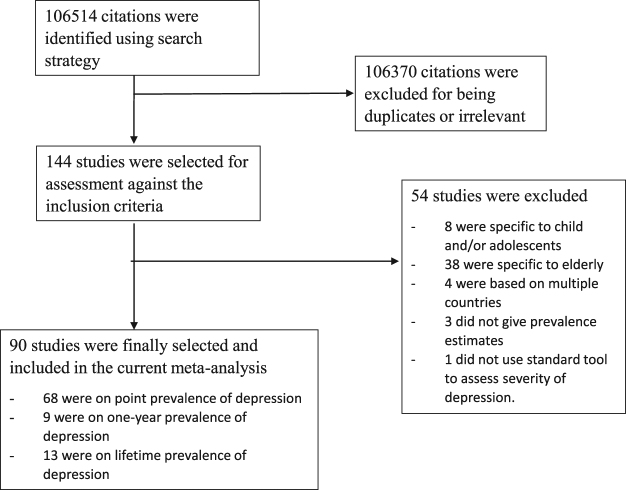
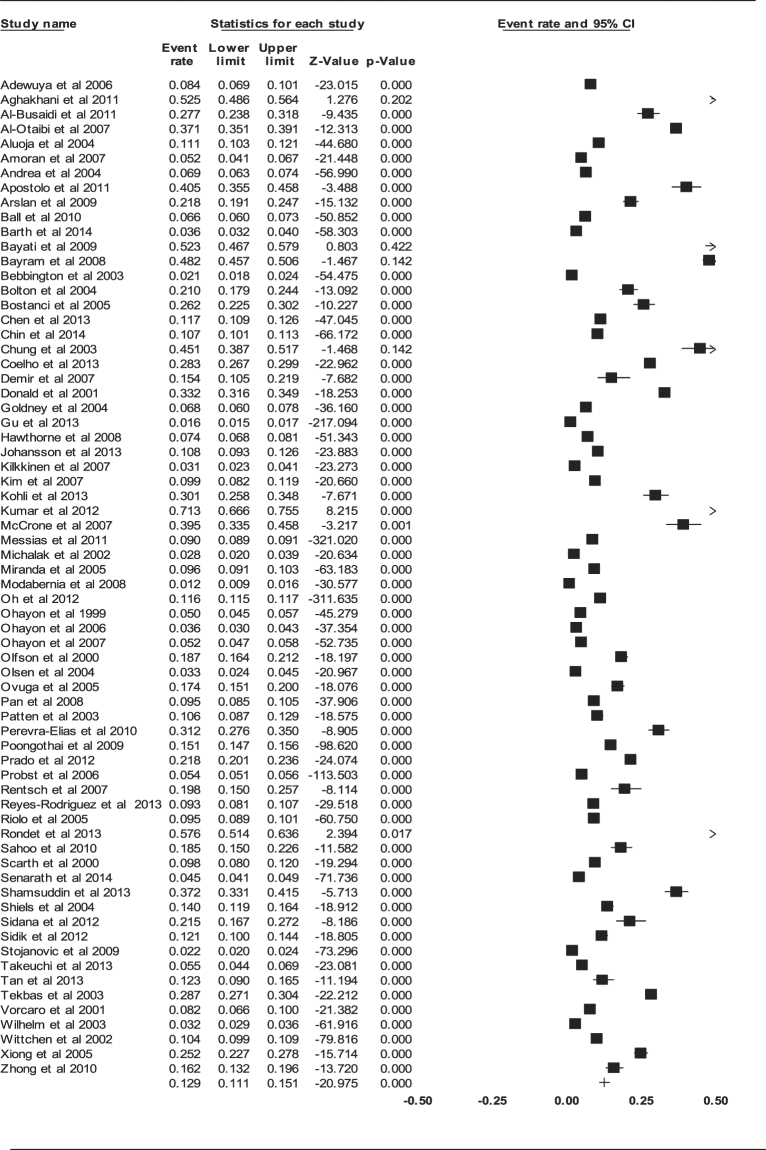
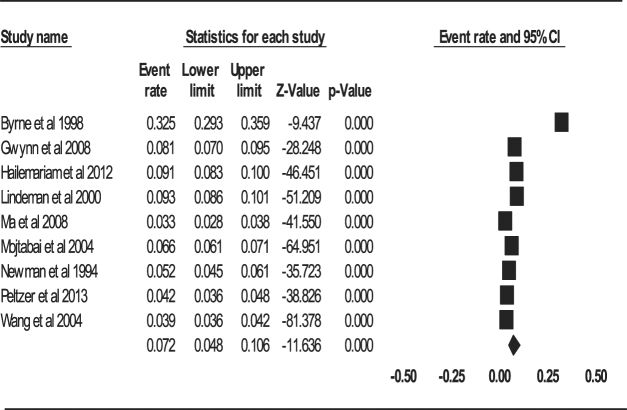
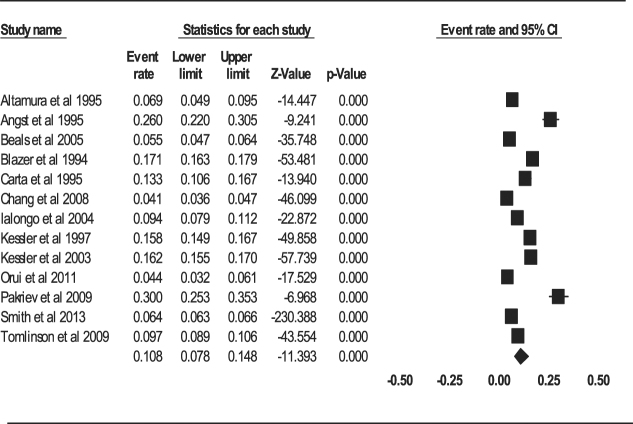
The prevalence of depression may be affected by changes in psychiatric practices and the availability of online mental health information in the past two decades. This study aimed to evaluate the aggregate prevalence of depression in communities from different countries between 1994 and 2014 and to explore the variations in prevalence stratified by geographical, methodological and socio-economic factors. A total of 90 studies were identified and met the inclusion criteria (n = 1,112,573 adults) with 68 studies on single point prevalence, 9 studies on one-year prevalence, and 13 studies on lifetime prevalence of depression. A random-effects model meta-analysis that was performed to calculate the aggregate point, one-year and lifetime prevalence of depression calculated prevalences of 12.9%, 7.2% and 10.8% respectively. Point prevalence of depression was significantly higher in women (14.4%), countries with a medium human development index (HDI) (29.2%), studies published from 2004 to 2014 (15.4%) and when using self-reporting instruments (17.3%) to assess depression. Heterogeneity was identified by meta-regression and subgroup analysis, and response rate, percentage of women and year of publication, respectively, were determined contribute to depression prevalence. This meta-analysis allows benchmarking of the prevalence of depression during the era when online health information emerged, facilitating future comparisons.
Overview
The claims and statistics of this paper haven’t been checked yet.
Free: it reads the open-access text and checks the first 5 claims that cite a source we can check. Create a free account to check every claim.
Integrity signals
Registry
Cites
Statistics
Figures
Verification
Claims the paper makes
The claims and statistics of this paper haven’t been checked yet.
Free: it reads the open-access text and checks the first 5 claims that cite a source we can check. Create a free account to check every claim.
Self-check
Percentages, sums and reported differences re-computed from the paper’s own numbers.
The self-check needs the paper’s full text.
Citations
Cites
Preferred Reporting Items for Systematic Reviews and Meta-Analyses: the PRISMA statement
Moher, D., Liberati, A., Tetzlaff, J., Altman, D. G., & for the PRISMA Group (2009) · BMJ · doi:10.1136/bmj.b2535 · Cited by 83,823
Kessler, R. C. (1994) · Archives of General Psychiatry · doi:10.1001/archpsyc.1994.03950010008002 · Cited by 12,370
Preferred reporting items for systematic reviews and meta-analyses: The PRISMA statement
Moher, D., Liberati, A., Tetzlaff, J., & Altman, D. G. (2010) · International Journal of Surgery · doi:10.1016/j.ijsu.2010.02.007 · Cited by 12,156
How should meta‐regression analyses be undertaken and interpreted?
Thompson, S. G., & Higgins, J. P. T. (2002) · Statistics in Medicine · doi:10.1002/sim.1187 · Cited by 3,026
(1984) · PubMed · Cited by 2,436
Cross-national epidemiology of DSM-IV major depressive episode
Bromet, E., Andrade, L. H., Hwang, I., Sampson, N. A., Alonso, J., de Girolamo, G., de Graaf, R., Demyttenaere, K., Hu, C., Iwata, N., et al. (2011) · BMC Medicine · doi:10.1186/1741-7015-9-90 · Cited by 2,221
Cost of Lost Productive Work Time Among US Workers With Depression
Stewart, W. F. (2003) · JAMA · doi:10.1001/jama.289.23.3135 · Cited by 1,421
Krebber, A. M. H., Buffart, L. M., Kleijn, G., Riepma, I. C., de Bree, R., Leemans, C. R., Becker, A., Brug, J., van Straten, A., Cuijpers, P., et al. (2014) · Psycho-Oncology · doi:10.1002/pon.3409 · Cited by 908
Excess mortality in depression: a meta-analysis of community studies
Cuijpers, P., & Smit, F. (2002) · Journal of Affective Disorders · doi:10.1016/s0165-0327(01)00413-x · Cited by 775
Van de Velde, S., Bracke, P., & Levecque, K. (2010) · Social Science & Medicine · doi:10.1016/j.socscimed.2010.03.035 · Cited by 719
Research works printed but not linked: 1
- Puri, B., Hall A., Ho R. Revision Notes in Psychiatry. 3rd edn, 384 (CRC Press, 2014).
Cited by
Wang, C., Pan, R., Wan, X., Tan, Y., Xu, L., Ho, C. S., & Ho, R. C. (2020) · International Journal of Environmental Research and Public Health · doi:10.3390/ijerph17051729 · Cited by 9,923
Self-citationImpact of COVID-19 pandemic on mental health in the general population: a systematic review
Xiong, J., Lipsitz, O., Nasri, F., Lui, L. M. W., Gill, H., Phan, L., Chen-Li, D., Iacobucci, M., Ho, R., Majeed, A., et al. (2020) · Journal of Affective Disorders · doi:10.1016/j.jad.2020.08.001 · Cited by 5,204
Self-citationDementia prevention, intervention, and care: 2024 report of the Lancet standing Commission
Livingston, G., Huntley, J., Liu, K. Y., Costafreda, S. G., Selbæk, G., Alladi, S., Ames, D., Banerjee, S., Burns, A., Brayne, C., et al. (2024) · The Lancet · doi:10.1016/s0140-6736(24)01296-0 · Cited by 3,860
Salari, N., Hosseinian-Far, A., Jalali, R., Vaisi-Raygani, A., Rasoulpoor, S., Mohammadi, M., Rasoulpoor, S., & Khaledi-Paveh, B. (2020) · Globalization and Health · doi:10.1186/s12992-020-00589-w · Cited by 3,560
“The results of epidemiological studies show that women are at a higher risk of depression [43].”
BackgroundHo, C. S., Chee, C. Y., & Ho, R. C. (2020) · Annals of the Academy of Medicine, Singapore · doi:10.47102/annals-acadmedsg.202043 · Cited by 1,699
Self-citationZhou, S.-J., Zhang, L.-G., Wang, L.-L., Guo, Z.-C., Wang, J.-Q., Chen, J.-C., Liu, M., Chen, X., & Chen, J.-X. (2020) · European Child & Adolescent Psychiatry · doi:10.1007/s00787-020-01541-4 · Cited by 1,464
“This finding is consistent with previous epidemiological studies that found that women were at a higher risk of depression [56].”
ResultThe burden and risks of emerging complications of diabetes mellitus
Tomic, D., Shaw, J. E., & Magliano, D. J. (2022) · Nature Reviews Endocrinology · doi:10.1038/s41574-022-00690-7 · Cited by 1,163
Depression and Anxiety in Hong Kong during COVID-19
Choi, E. P. H., Hui, B. P. H., & Wan, E. Y. F. (2020) · International Journal of Environmental Research and Public Health · doi:10.3390/ijerph17103740 · Cited by 893
Osimo, E. F., Pillinger, T., Rodriguez, I. M., Khandaker, G. M., Pariante, C. M., & Howes, O. D. (2020) · Brain, Behavior, and Immunity · doi:10.1016/j.bbi.2020.02.010 · Cited by 937
“3 2 Introduction Depression is a common mental illness and is one of the leading causes of disability worldwide, affecting around 10-20% of the general population in their lifetime(1).”
BackgroundPrevalence of depression during the COVID-19 outbreak: A meta-analysis of community-based studies
Bueno-Notivol, J., Gracia-García, P., Olaya, B., Lasheras, I., López-Antón, R., & Santabárbara, J. (2021) · International Journal of Clinical and Health Psychology · doi:10.1016/j.ijchp.2020.07.007 · Cited by 820
“, & Taylor, S. (2020). Coronaphobia: Fear and the 2019-nCoV outbreak.”
Bakioğlu, F., Korkmaz, O., & Ercan, H. (2021) · International Journal of Mental Health and Addiction · doi:10.1007/s11469-020-00331-y · Cited by 812
Osimo, E. F., Baxter, L. J., Lewis, G., Jones, P. B., & Khandaker, G. M. (2019) · Psychological Medicine · doi:10.1017/s0033291719001454 · Cited by 774
“Introduction Depression is a common mental illness with a complex aetiology and is one of the leading causes of disability worldwide, affecting around 10–20% of the general population in their lifetime (Lim et al., 2018).”
BackgroundLim, K.-S., Wong, C. H., McIntyre, R. S., Wang, J., Zhang, Z., Tran, B. X., Tan, W., Ho, C. S., & Ho, R. C. (2019) · International Journal of Environmental Research and Public Health · doi:10.3390/ijerph16224581 · Cited by 586
“A forest plot was then constructed and reported the aggregate prevalence, 95% confidence interval (CI) and p-value based on the method adopted by previous meta-analysis on prevalence [26,27].”
MethodSelf-citationSheldon, E., Simmonds-Buckley, M., Bone, C., Mascarenhas, T., Chan, N., Wincott, M., Gleeson, H., Sow, K., Hind, D., & Barkham, M. (2021) · Journal of Affective Disorders · doi:10.1016/j.jad.2021.03.054 · Cited by 644
Barzilay, R., Moore, T. M., Greenberg, D. M., DiDomenico, G. E., Brown, L. A., White, L. K., Gur, R. C., & Gur, R. E. (2020) · Translational Psychiatry · doi:10.1038/s41398-020-00982-4 · Cited by 634
Zhang, Y., Zhang, H., Ma, X., & Di, Q. (2020) · International Journal of Environmental Research and Public Health · doi:10.3390/ijerph17103722 · Cited by 562
“Similarly, in the aftermath of a human-made disaster, the terrorist attacks of September 11, 2011, 20% of respondents who lived near the World Trade Centre reported post-traumatic stress disorder (PTSD) and 9.7% reported depression symptoms, indicating considerable psychological morbidity in the general population [4].”
ResultInfluentialSolomou, I., & Constantinidou, F. (2020) · International Journal of Environmental Research and Public Health · doi:10.3390/ijerph17144924 · Cited by 591
Deng, J., Zhou, F., Hou, W., Silver, Z., Wong, C. Y., Chang, O., Drakos, A., Zuo, Q. K., & Huang, E. (2021) · Psychiatry Research · doi:10.1016/j.psychres.2021.113863 · Cited by 474
Arioz, B. I., Tastan, B., Tarakcioglu, E., Tufekci, K. U., Olcum, M., Ersoy, N., Bagriyanik, A., Genc, K., & Genc, S. (2019) · Frontiers in Immunology · doi:10.3389/fimmu.2019.01511 · Cited by 516
“According to WHO reports, more than 350 million people globally are affected by depression (2).”
BackgroundTian, F., Li, H., Tian, S., Yang, J., Shao, J., & Tian, C. (2020) · Psychiatry Research · doi:10.1016/j.psychres.2020.112992 · Cited by 468
Mukadam, N., Sommerlad, A., Huntley, J., & Livingston, G. (2019) · The Lancet Global Health · doi:10.1016/s2214-109x(19)30074-9 · Cited by 416
“22 These results possibly reflect a true difference in prevalence.”
Prevalence of Burnout in Medical and Surgical Residents: A Meta-Analysis
Low, Z. X., Yeo, K. A., Sharma, V. K., Leung, G. K., McIntyre, R. S., Guerrero, A., Lu, B., Sin Fai Lam, C. C., Tran, B. X., Nguyen, L. H., et al. (2019) · International Journal of Environmental Research and Public Health · doi:10.3390/ijerph16091479 · Cited by 415
“A random effects model was used to calculate the aggregate prevalence of burnout and 95% confidence intervals (CIs) [26].”
MethodSelf-citationMajor Depressive Disorder: Advances in Neuroscience Research and Translational Applications
Li, Z., Ruan, M., Chen, J., & Fang, Y. (2021) · Neuroscience Bulletin · doi:10.1007/s12264-021-00638-3 · Cited by 326
Blackmore, R., Gray, K. M., Boyle, J. A., Fazel, M., Ranasinha, S., Fitzgerald, G., Misso, M., & Gibson-Helm, M. (2020) · Journal of the American Academy of Child & Adolescent Psychiatry · doi:10.1016/j.jaac.2019.11.011 · Cited by 329
Gut microbiota and major depressive disorder: a systematic review and meta-analysis
Sanada, K., Nakajima, S., Kurokawa, S., Barceló-Soler, A., Ikuse, D., Hirata, A., Yoshizawa, A., Tomizawa, Y., Salas-Valero, M., Noda, Y., et al. (2020) · Journal of Affective Disorders · doi:10.1016/j.jad.2020.01.102 · Cited by 372
Varshney, M., Parel, J. T., Raizada, N., & Sarin, S. K. (2020) · PLOS ONE · doi:10.1371/journal.pone.0233874 · Cited by 347
Berk, M., Köhler‐Forsberg, O., Turner, M., Penninx, B. W. J. H., Wrobel, A., Firth, J., Loughman, A., Reavley, N. J., McGrath, J. J., Momen, N. C., et al. (2023) · World Psychiatry · doi:10.1002/wps.21110 · Cited by 336
Arias-de la Torre, J., Vilagut, G., Ronaldson, A., Serrano-Blanco, A., Martín, V., Peters, M., Valderas, J. M., Dregan, A., & Alonso, J. (2021) · The Lancet Public Health · doi:10.1016/s2468-2667(21)00047-5 · Cited by 282
Pilania, M., Yadav, V., Bairwa, M., Behera, P., Gupta, S. D., Khurana, H., Mohan, V., Baniya, G., & Poongothai, S. (2019) · BMC Public Health · doi:10.1186/s12889-019-7136-z · Cited by 299
“This period marked the era of broad access to communication technologies like mobile phone and various applications, Internet, E-health and online access to health information [81].”
BackgroundStress and coping during COVID-19 pandemic: Result of an online survey
Kar, N., Kar, B., & Kar, S. (2021) · Psychiatry Research · doi:10.1016/j.psychres.2020.113598 · Cited by 275
“The point prevalence of depression when using self-reporting instruments has been reported to be 17.3% in a systematic review (Lim et al., 2018).”
InfluentialSleep problems among Chinese adolescents and young adults during the coronavirus-2019 pandemic
Zhou, S.-J., Wang, L.-L., Yang, R., Yang, X.-J., Zhang, L.-G., Guo, Z.-C., Chen, J.-C., Wang, J.-Q., & Chen, J.-X. (2020) · Sleep Medicine · doi:10.1016/j.sleep.2020.06.001 · Cited by 316
Shi, P., Yang, A., Zhao, Q., Chen, Z., Ren, X., & Dai, Q. (2021) · Frontiers in Psychiatry · doi:10.3389/fpsyt.2021.589687 · Cited by 244
Air pollution exposure and depression: A comprehensive updated systematic review and meta-analysis
Borroni, E., Pesatori, A. C., Bollati, V., Buoli, M., & Carugno, M. (2022) · Environmental Pollution · doi:10.1016/j.envpol.2021.118245 · Cited by 269
Peng, P., Hao, Y., Liu, Y., Chen, S., Wang, Y., Yang, Q., Wang, X., Li, M., Wang, Y., He, L., et al. (2023) · Journal of Affective Disorders · doi:10.1016/j.jad.2022.10.040 · Cited by 239
Khandaker, G. M., Zuber, V., Rees, J. M. B., Carvalho, L., Mason, A. M., Foley, C. N., Gkatzionis, A., Jones, P. B., & Burgess, S. (2020) · Molecular Psychiatry · doi:10.1038/s41380-019-0395-3 · Cited by 281
Zhang, Z., Sun, K., Jatchavala, C., Koh, J., Chia, Y., Bose, J., Li, Z., Tan, W., Wang, S., Chu, W., et al. (2019) · International Journal of Environmental Research and Public Health · doi:10.3390/ijerph17010280 · Cited by 263
“, depression) and these patients may not receive adequate psychiatric treatment [11].”
BackgroundSelf-citationChanges in Undergraduate Students’ Psychological Well-Being as They Experience University Life
Liu, X., Ping, S., & Gao, W. (2019) · International Journal of Environmental Research and Public Health · doi:10.3390/ijerph16162864 · Cited by 261
Assessing Coronavirus Fear in Indian Population Using the Fear of COVID-19 Scale
Doshi, D., Karunakar, P., Sukhabogi, J. R., Prasanna, J. S., & Mahajan, S. V. (2021) · International Journal of Mental Health and Addiction · doi:10.1007/s11469-020-00332-x · Cited by 246
“In the literature (Lim 2018; Wang et al. 2020), it has been found that females are more prone to stress, depression and anxiety.”
BackgroundOtten, D., Tibubos, A. N., Schomerus, G., Brähler, E., Binder, H., Kruse, J., Ladwig, K.-H., Wild, P. S., Grabe, H. J., & Beutel, M. E. (2021) · Frontiers in Public Health · doi:10.3389/fpubh.2021.553071 · Cited by 201
Lim, I. C. Z. Y., Tam, W. W. S., Chudzicka-Czupała, A., McIntyre, R. S., Teopiz, K. M., Ho, R. C., & Ho, C. S. H. (2022) · Frontiers in Psychiatry · doi:10.3389/fpsyt.2022.978703 · Cited by 191
Self-citationLee, Y., Lui, L. M. W., Chen-Li, D., Liao, Y., Mansur, R. B., Brietzke, E., Rosenblat, J. D., Ho, R., Rodrigues, N. B., Lipsitz, O., et al. (2021) · Journal of Affective Disorders · doi:10.1016/j.jad.2021.04.050 · Cited by 234
Self-citationSun, P., Wang, M., Song, T., Wu, Y., Luo, J., Chen, L., & Yan, L. (2021) · Frontiers in Psychology · doi:10.3389/fpsyg.2021.626547 · Cited by 204
Satinsky, E. N., Kimura, T., Kiang, M. V., Abebe, R., Cunningham, S., Lee, H., Lin, X., Liu, C. H., Rudan, I., Sen, S., et al. (2021) · Scientific Reports · doi:10.1038/s41598-021-93687-7 · Cited by 223
Ho, C. S. H., Lim, L. J. H., Lim, A. Q., Chan, N. H. C., Tan, R. S., Lee, S. H., & Ho, R. C. M. (2020) · Frontiers in Psychiatry · doi:10.3389/fpsyt.2020.00378 · Cited by 221
“0 DSM-IV HAMD MMSE Depressive symptoms Cognitive functioning Mianserin (2), Sodium valproate (2), Paroxetine (2), Lithium (2), Amoxapine (1), Olanzapine (3), Milnacipran (5), Maprotiline (1) 48-Channel ETG-4000 (Hitachi) 2 follow day follo improve depress sympto treatme another weeks”
BackgroundSelf-citationPsychological distress related to COVID-19 – The contribution of continuous traumatic stress
Lahav, Y. (2020) · Journal of Affective Disorders · doi:10.1016/j.jad.2020.07.141 · Cited by 217
Monoaminergic system and depression
Perez-Caballero, L., Torres-Sanchez, S., Romero-López-Alberca, C., González-Saiz, F., Mico, J. A., & Berrocoso, E. (2019) · Cell and Tissue Research · doi:10.1007/s00441-018-2978-8 · Cited by 204
Mahmud, S., Mohsin, M., Dewan, M. N., & Muyeed, A. (2022) · Trends in Psychology · doi:10.1007/s43076-021-00116-9 · Cited by 181
“These psychiatric prevalence estimates are notably higher compared to before-pandemic situations (Huang et al., 2019; Krishnamoorthy et al., 2020; Lim et al., 2018).”
ResultImpact of post-COVID conditions on mental health: a cross-sectional study in Japan and Sweden
Matsumoto, K., Hamatani, S., Shimizu, E., Käll, A., & Andersson, G. (2022) · BMC Psychiatry · doi:10.1186/s12888-022-03874-7 · Cited by 200
Cai, H., Bai, W., Liu, H., Chen, X., Qi, H., Liu, R., Cheung, T., Su, Z., Lin, J., Tang, Y.-L., et al. (2022) · Translational Psychiatry · doi:10.1038/s41398-022-01838-9 · Cited by 182
“Therefore, findings based on samples from Western countries and Africa are not necessarily as applicable within sociocultural and economic contexts of highly populated, rapidly developing Asian countries such as China [29, 30].”
BackgroundAlli, S. R., Gorbovskaya, I., Liu, J. C. W., Kolla, N. J., Brown, L., & Müller, D. J. (2022) · International Journal of Molecular Sciences · doi:10.3390/ijms23094494 · Cited by 202
“8% in community samples globally [2], it is the most common psychiatric illness worldwide, and a leading cause of disability [3].”
BackgroundHamaideh, S. H., Al‐Modallal, H., Tanash, M., & Hamdan‐Mansour3, A. (2022) · Nursing Open · doi:10.1002/nop2.918 · Cited by 178
“One significant input was that female university students had higher scores in depression, stress and anxiety than male students; and this is valid even before the pandemic (Lim et al., 2018).”
BackgroundSex differences and psychological stress: responses to the COVID-19 pandemic in China
Yan, S., Xu, R., Stratton, T. D., Kavcic, V., Luo, D., Hou, F., Bi, F., Jiao, R., Song, K., & Jiang, Y. (2021) · BMC Public Health · doi:10.1186/s12889-020-10085-w · Cited by 168
Metabolic Profile and Long-Term Risk of Depression, Anxiety, and Stress-Related Disorders
Chourpiliadis, C., Zeng, Y., Lovik, A., Wei, D., Valdimarsdóttir, U., Song, H., Hammar, N., & Fang, F. (2024) · JAMA Network Open · doi:10.1001/jamanetworkopen.2024.4525 · Cited by 164
Arvind, B. A., Gururaj, G., Loganathan, S., Amudhan, S., Varghese, M., Benegal, V., Rao, G. N., Kokane, A. M., B S, C., P K, D., et al. (2019) · BMJ Open · doi:10.1136/bmjopen-2018-027250 · Cited by 173
Chudzicka-Czupała, A., Hapon, N., Chiang, S.-K., Żywiołek-Szeja, M., Karamushka, L., Lee, C. T., Grabowski, D., Paliga, M., Rosenblat, J. D., Ho, R., et al. (2023) · Scientific Reports · doi:10.1038/s41598-023-28729-3 · Cited by 187
Self-citationFear of COVID 19 Infection Across Different Cohorts: A Scoping Review
Quadros, S., Garg, S., Ranjan, R., Vijayasarathi, G., & Mamun, M. A. (2021) · Frontiers in Psychiatry · doi:10.3389/fpsyt.2021.708430 · Cited by 168
Sex differences in psychiatric disorders: what we can learn from sex chromosome aneuploidies
Green, T., Flash, S., & Reiss, A. L. (2019) · Neuropsychopharmacology · doi:10.1038/s41386-018-0153-2 · Cited by 169
Roberts, H., van Lissa, C., Hagedoorn, P., Kellar, I., & Helbich, M. (2019) · Environmental Research · doi:10.1016/j.envres.2019.108606 · Cited by 165
“Depression is understood to have a lifetime prevalence of 10.8% among the global population (Lim et al., 2018).”
BackgroundInfluentialCao, B., Zhu, J., Zuckerman, H., Rosenblat, J. D., Brietzke, E., Pan, Z., Subramanieapillai, M., Park, C., Lee, Y., & McIntyre, R. S. (2019) · Progress in Neuro-Psychopharmacology and Biological Psychiatry · doi:10.1016/j.pnpbp.2019.01.002 · Cited by 175
“The global point prevalence and lifetime prevalence of depressive symptoms are 12.9% and 10.8% respectively (Lim et al., 2018) According to the World Health Organization, depression is the leading cause of disability worldwide, affecting> 350 million individuals globally (World Health Organization,…”
BackgroundInfluentialKarami, N., Kazeminia, M., Karami, A., Salimi, Y., Ziapour, A., & Janjani, P. (2022) · Journal of Affective Disorders · doi:10.1016/j.jad.2022.12.055 · Cited by 184
Saddik, B. A., Hussein, A., Albanna, A., Elbarazi, I., Al-Shujairi, A., Sharif‐Askari, F. S., Temsah, M.-H. A., Stip, É., Hamid, Q. A., & Halwani, R. (2021) · BMC Psychiatry · doi:10.1186/s12888-021-03213-2 · Cited by 186
C-Reactive protein as a biomarker for major depressive disorder?
Orsolini, L., Pompili, S., Tempia Valenta, S., Salvi, V., & Volpe, U. (2022) · International Journal of Molecular Sciences · doi:10.3390/ijms23031616 · Cited by 171
“Depression is the most common mental illness affecting around 10–20% of the general population [1].”
BackgroundPrevalence of Depression among Migrants: A Systematic Review and Meta-Analysis
Foo, S. Q., Tam, W., Ho, C. S. H., Tran, B. X., Nguyen, L. H., McIntyre, R. S., & Ho, R. (2018) · International Journal of Environmental Research and Public Health · doi:10.3390/ijerph15091986 · Cited by 191
Self-citationBrain proteome-wide association study implicates novel proteins in depression pathogenesis
Wingo, T. S., Liu, Y., Gerasimov, E. S., Gockley, J., Logsdon, B. A., Duong, D. M., Dammer, E. B., Lori, A., Kim, P. J., Ressler, K. J., et al. (2021) · Nature Neuroscience · doi:10.1038/s41593-021-00832-6 · Cited by 163
Fabbri, C., Hagenaars, S. P., John, C., Williams, A. T., Shrine, N., Moles, L., Hanscombe, K. B., Serretti, A., Shepherd, D. J., Free, R. C., et al. (2021) · Molecular Psychiatry · doi:10.1038/s41380-021-01062-9 · Cited by 162
Should antidepressants be used for major depressive disorder?
Jakobsen, J. C., Gluud, C., & Kirsch, I. (2020) · BMJ Evidence-Based Medicine · doi:10.1136/bmjebm-2019-111238 · Cited by 162
Zhang, M., Chen, J., Yin, Z., Wang, L., & Peng, L. (2021) · Translational Psychiatry · doi:10.1038/s41398-021-01759-z · Cited by 172
Self-citationCai, H. X., Jin, Y., Liu, S., Zhang, Q., Zhang, L., Cheung, T. C. C., Balbuena, L., & Xiang, Y. (2021) · Journal of Affective Disorders · doi:10.1016/j.jad.2021.05.115 · Cited by 169
Gasparro, R., Scandurra, C., Maldonato, N. M., Dolce, P., Bochicchio, V., Valletta, A., Sammartino, G., Sammartino, P., Mariniello, M., di Lauro, A. E., et al. (2020) · International Journal of Environmental Research and Public Health · doi:10.3390/ijerph17155338 · Cited by 172
“epidemiological studies which report that women are at higher risk of depressive symptoms than men [38].”
BackgroundAmiri, S. (2021) · International Journal of Occupational Safety and Ergonomics · doi:10.1080/10803548.2021.1954793 · Cited by 173
“higher in women than men in the general population [7].”
BackgroundImpact on mental health due to covid-19 pandemic: Cross-sectional study in Portugal and Brazil.
Passos, L., Prazeres, F., Teixeira, A., & Martins, C. (2020) · International Journal of Environmental Research and Public Health · doi:10.3390/ijerph17186794 · Cited by 154
Mechanisms Underlying the Anti-Depressive Effects of Regular Tea Consumption
Rothenberg, D. O., & Zhang, L. (2019) · Nutrients · doi:10.3390/nu11061361 · Cited by 149
“The World Health Organization (WHO) predicts that, by 2020, depression will rank second in global disease burdens and one of the priority conditions covered by the WHO’s Mental Health Gap Action Programme [10].”
BackgroundDepression, Anxiety, and Suicide After Stroke: A Narrative Review of the Best Available Evidence
Chun, H.-Y. Y., Ford, A., Kutlubaev, M. A., Almeida, O. P., & Mead, G. E. (2022) · Stroke · doi:10.1161/strokeaha.121.035499 · Cited by 150
BDNF Impact on Biological Markers of Depression—Role of Physical Exercise and Training
Murawska‐Ciałowicz, E., Wiatr, M., Ciałowicz, M., de Assis, G. G., Borowicz, W., Rocha‐Rodrigues, S., Paprocka‐Borowicz, M., & Marques, A. (2021) · International Journal of Environmental Research and Public Health · doi:10.3390/ijerph18147553 · Cited by 175
“Eating and sleep disorders, permanent fatigue, and lack of concentration are also reported [4].”
BackgroundPreoperative staging of extrahepatic bile duct cancer with intraductal ultrasonography.
Tamada, K., Ido, K., Ueno, N., Kimura, K., Ichiyama, M., & Tomiyama, T. (1995) · PubMed · Cited by 160
Prevalence of depressive symptoms among medical students: overview of systematic reviews
Tam, W., Lo, K., & Pacheco, J. (2019) · Medical Education · doi:10.1111/medu.13770 · Cited by 131
Self-citationWen, J., Fu, C. H. Y., Tosun, D., Veturi, Y., Yang, Z., Abdulkadir, A., Mamourian, E., Srinivasan, D., Skampardoni, I., Singh, A., et al. (2022) · JAMA Psychiatry · doi:10.1001/jamapsychiatry.2022.0020 · Cited by 140
Khandaker, G. M., Zuber, V., Rees, J. M. B., Carvalho, L., Mason, A. M., Foley, C. N., Gkatzionis, A., Jones, P. B., & Burgess, S. (2021) · Molecular Psychiatry · doi:10.1038/s41380-020-0857-7 · Cited by 141
Increased prevalence of depression in South Korea from 2002 to 2013
Kim, G. E., Jo, M., & Shin, Y. (2020) · Scientific Reports · doi:10.1038/s41598-020-74119-4 · Cited by 145
Hornstein, S., Zantvoort, K., Lueken, U., Funk, B., & Hilbert, K. (2023) · Frontiers in Digital Health · doi:10.3389/fdgth.2023.1170002 · Cited by 134
“Yet, major questions remain open, such as (1) what personalization is, (2) how prevalent it is in practice, and (3) what benefits it truly has.”
BackgroundZhang, X., Zhu, W., Kang, S., Qiu, L., Lu, Z., & Sun, Y. (2020) · International Journal of Environmental Research and Public Health · doi:10.3390/ijerph17207666 · Cited by 124
“Epidemiological studies have found that women are more likely than men to suffer from depression and other negative mood disorders [57,58].”
BackgroundKhan, N. A., Palepu, A., Dodek, P., Salmon, A., Leitch, H. A., Ruzycki, S. M., Townson, A. F., & Lacaille, D. V. (2021) · BMJ Open · doi:10.1136/bmjopen-2021-050380 · Cited by 144
Perceived stress and depression in 45 low- and middle-income countries
Cristóbal-Narváez, P., Haro, J. M., & Koyanagi, A. (2020) · Journal of Affective Disorders · doi:10.1016/j.jad.2020.04.020 · Cited by 145
Naveed, S., Waqas, A., Chaudhary, A. M. D., Kumar, S., Abbas, N., Amin, R., Jamil, N., & Saleem, S. (2020) · Frontiers in Psychiatry · doi:10.3389/fpsyt.2020.573150 · Cited by 150
“4%) among 173,449 participants which is significantly higher than a previous study presenting data from 30 countries (15, 16).”
MethodResultPriego-Parra, B. A., Triana‐Romero, A., Gálvez, S. M. P., Ramos, C. D., Nolasco, O. I. S., Reyes, M. M., la Medina, A. R., & Remes-Troche, J. M. (2020) · medRxiv · doi:10.1101/2020.05.10.20095844 · Cited by 145
Chao, L., Liu, C., Sutthawongwadee, S., Li, Y., Lv, W., Chen, W., Yu, L., Zhou, J., Guo, A., Li, Z., et al. (2020) · Frontiers in Neurology · doi:10.3389/fneur.2020.00421 · Cited by 125
Solomou, S., Logue, J., Reilly, S., & Algorta, G. P. (2022) · Health Education Research · doi:10.1093/her/cyac035 · Cited by 143
COVID-19 in Portugal: exploring the immediate psychological impact on the general population.
Paulino, M., Dumas-Diniz, R., Brissos, S., Brites, R., Alho, L., Simões, M. R., & Silva, C. F. (2021) · Psychology, Health & Medicine · doi:10.1080/13548506.2020.1808236 · Cited by 124
“Nevertheless, women may have an elevated risk of psychological symptoms, which could be due to their unique biological and socioeconomic factors (Lim et al., 2018).”
Comorbid Major Depressive Disorder in Schizophrenia: A Systematic Review and Meta-Analysis
Etchecopar‐Etchart, D., Korchia, T., Loundou, A., Llorca, P., Auquier, P., Lançon, C., Boyer, L., & Fond, G. B. (2020) · Schizophrenia Bulletin · doi:10.1093/schbul/sbaa153 · Cited by 135
Johnson, D., Thurairajasingam, S., Letchumanan, V., Chan, K., & Lee, L. (2021) · Nutrients · doi:10.3390/nu13051728 · Cited by 139
“The World Health Organization (WHO) predicts that depression may become the second leading burden of global disease, outranking cardiovascular disease, from its current fourth rank by 2030 [45,76].”
BackgroundBrunckhorst, O., Hashemi, S., Martin, A., George, G., Van Hemelrijck, M., Dasgupta, P., Stewart, R., & Ahmed, K. (2021) · Prostate Cancer and Prostatic Diseases · doi:10.1038/s41391-020-00286-0 · Cited by 116
Neuroinflammation: A Modifiable Pathway Linking Obesity, Alzheimer's disease, and Depression
Ly, M., Yu, G. Z., Mian, A., Cramer, A., Meysami, S., Merrill, D. A., Samara, A., Eisenstein, S. A., Hershey, T., Babulal, G. M., et al. (2023) · The American Journal of Geriatric Psychiatry · doi:10.1016/j.jagp.2023.06.001 · Cited by 108
Kim, Y. E., & Lee, B. (2019) · Psychiatry Investigation · doi:10.30773/pi.2019.0226 · Cited by 99
Alrahimi, J., Nass, N. M., Hassoubah, S. A., Wazqar, D. Y., & Alamoudi, S. A. (2021) · PLoS ONE · doi:10.1371/journal.pone.0250554 · Cited by 125
“This study also demonstrated that female patients with chronic diseases are more likely to have high levels of fear and health anxiety, which is consistent with two previous studies conducted in Iran and Turkey during the COVID-19 outbreak [32, 33], as well as findings of earlier research on women’s mental health [34].”
ResultPark, S., & Yu, H. Y. (2021) · Psychiatry Research · doi:10.1016/j.psychres.2021.114037 · Cited by 120
Factors Associated with Depression among the Elderly Living in Urban Vietnam
Dao, A. T. M., Nguyễn, V. T., Huy, N. V., & Nguyen, L. T. K. (2018) · BioMed Research International · doi:10.1155/2018/2370284 · Cited by 120
The Influence of Personality, Resilience, and Alexithymia on Mental Health During COVID-19 Pandemic
Osimo, S. A., Aiello, M., Gentili, C., Ionta, S., & Cecchetto, C. (2021) · Frontiers in Psychology · doi:10.3389/fpsyg.2021.630751 · Cited by 106
Yaow, C. Y. L., Teoh, S. E., Lim, W. S., Wang, R. S. Q., Han, M. X., Pek, P. P., Tan, B. Y.-Q., Ong, M. E. H., Ng, Q. X., & Ho, A. F. W. (2022) · Resuscitation · doi:10.1016/j.resuscitation.2021.11.023 · Cited by 91
Prevalence of common mental disorders in widowhood: A systematic review and meta-analysis
Kristiansen, C. B., Kjær, J. N., Hjorth, P., Andersen, K., & Prina, M. A. (2018) · Journal of Affective Disorders · doi:10.1016/j.jad.2018.11.088 · Cited by 116
Davidson, B., Hamani, C., Rabin, J. S., Goubran, M., Meng, Y., Huang, Y., Baskaran, A., Sharma, S., Ozzoude, M., Richter, M. A., et al. (2020) · Molecular Psychiatry · doi:10.1038/s41380-020-0737-1 · Cited by 126
Metadata
- Authors
- Lim, G. Y., Tam, W. W., Lu, Y., Ho, C. S., Zhang, M. W., & Ho, R. C.
- Affiliations
- Monash University (AU)
- National University of Singapore (SG)
- Zhejiang University (CN)
- National University Hospital (SG)
- Institute of Mental Health (SG)
- Corresponding author
- Lu, Yanxia
- Venue
- Scientific Reports
- Published
- 2018-02-12
- Volume
- 8
- Issue
- 1
- Pages
- 2861-2861
- ISSN
- 2045-2322 (ISSN-L)
- PMC
- PMC5809481
- OpenAlex
- W2807669085
- Semantic Scholar
- e3cd42f33f82796136b738a9ca84d8d523a0fb4b
- Cited by
- 1,557
- References
- 54
- Citations by year
- 2026: 88 · 2025: 172 · 2024: 198 · 2023: 234 · 2022: 265 · 2021: 285 · 2020: 199 · 2019: 91 · 2018: 23
- FWCI
- 202.75
- Type
- journal article
- Language
- en
- Update notices
- correction (2022-09-01)
- Open access
- gold
- doi.org
- Licence
- cc-by
- creativecommons.org/licenses/by/4.0 (tdm)
- creativecommons.org/licenses/by/4.0 (vor)
- Locations
- Scientific Reports (publishedVersion, cc-by)
- Europe PMC (PubMed Central) (publishedVersion, cc-by)
- PubMed Central (publishedVersion, cc-by)
- PubMed (publishedVersion)
- Rare & Special e-Zone (The Hong Kong University of Science and Technology) (submittedVersion)
- National University of Singapore (submittedVersion, cc-by)
- DOAJ (DOAJ: Directory of Open Access Journals) (submittedVersion, cc-by-sa)
- Funders
- National Natural Science Foundation of China (81600018)
- Topics
- Health Sciences › Medicine › Psychiatry and Mental health › Mental Health Treatment and Access
- Social Sciences › Psychology › Clinical Psychology › Suicide and Self-Harm Studies
- Social Sciences › Psychology › Clinical Psychology › Child and Adolescent Psychosocial and Emotional Development
- Keywords
- depression, prevalence, community-dwelling adults, point prevalence, lifetime prevalence, sex differences, Human Development Index, self-report measures, online mental health information, cross-national comparison, response rate
- MeSH terms
- Cross-Sectional Studies, Depression, Female, Humans, Male, Sex Characteristics, Socioeconomic Factors, Prevalence, Self Report
About these checks
Registry, retraction, Cites and statistics results are computed, not judged, with one exception: a printed reference that no index lists is read once by a model before it counts as a citation error. Claims are extracted by a model and kept only when their quote appears verbatim in the text; each cited source is then checked, with a model’s help, for whether it says what the claim relies on. Those verdicts can be wrong — read the claim’s quote and the cited source before relying on one.
Statistics and arithmetic are recomputed, not judged.
Confidence bands are shown only for fields calibrated on our annotated test set. None is calibrated yet, so no band is shown.
What counts as a claim ›How we measure confidence ›How we check this ›
Are you an author, or do you see a problem with this page? Request a review
Data sources
Bibliographic data: Semantic Scholar, OpenAlex, Crossref.
Contains information from the Semantic Scholar Academic Graph Datasets, made available under the ODC Attribution License (ODC-BY 1.0).
Semantic Scholar’s data is described in: Kinney, R., et al. (2023). The Semantic Scholar Open Data Platform. arXiv:2301.10140.
