

Prevalence of Depression in the Community from 30 Countries between 1994 and 2014
Open accessThe DOI matches its Crossref record; 54 of the 54 references it cites were found in a registry or an index.
Abstract
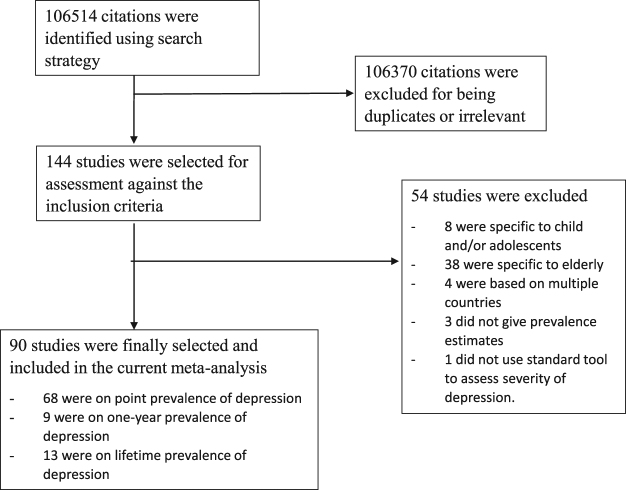
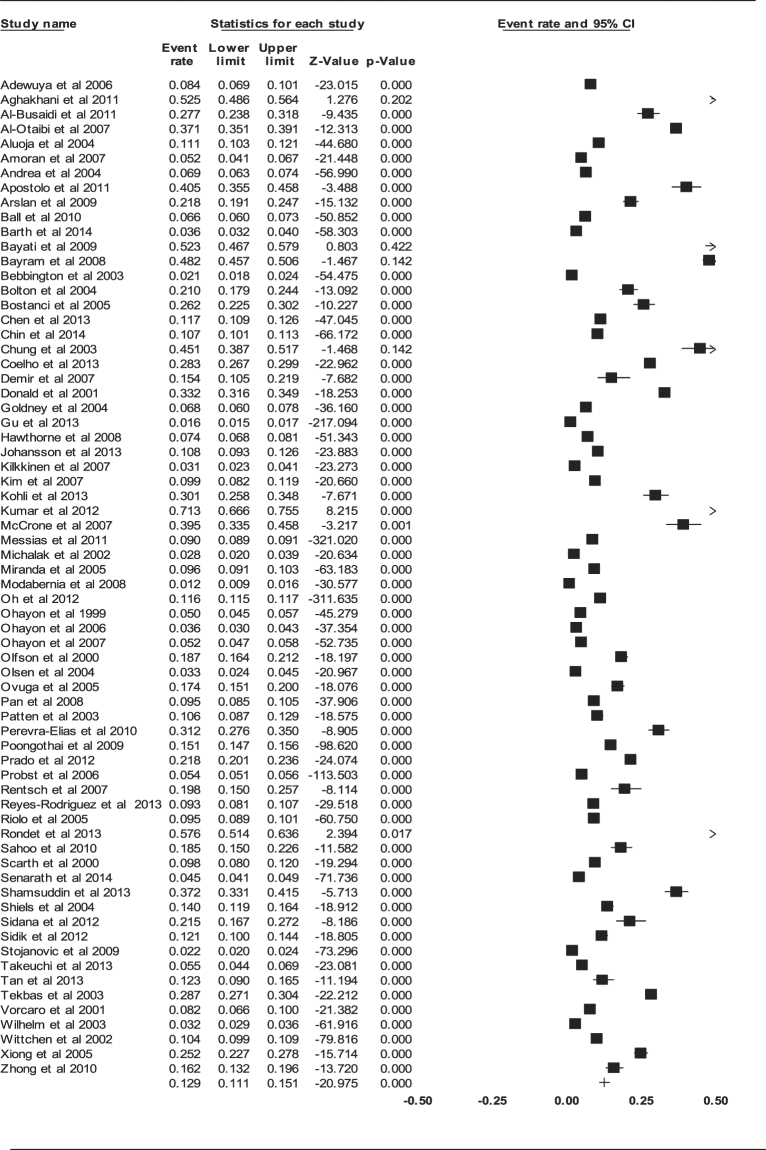
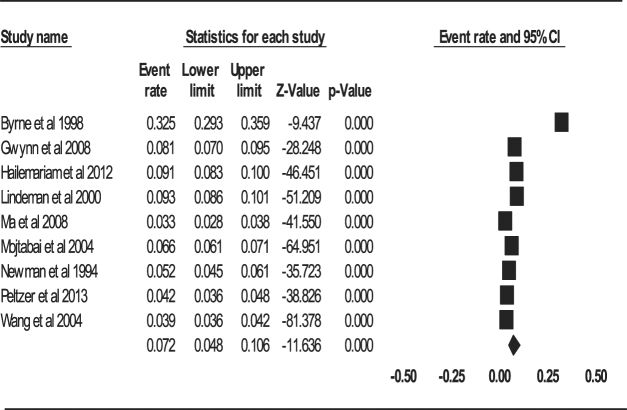
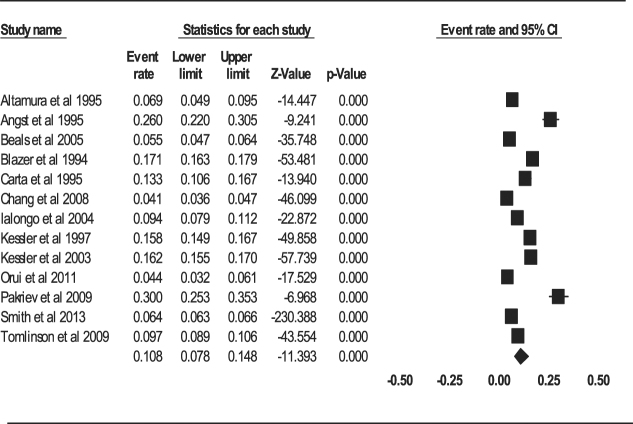
The prevalence of depression may be affected by changes in psychiatric practices and the availability of online mental health information in the past two decades. This study aimed to evaluate the aggregate prevalence of depression in communities from different countries between 1994 and 2014 and to explore the variations in prevalence stratified by geographical, methodological and socio-economic factors. A total of 90 studies were identified and met the inclusion criteria (n = 1,112,573 adults) with 68 studies on single point prevalence, 9 studies on one-year prevalence, and 13 studies on lifetime prevalence of depression. A random-effects model meta-analysis that was performed to calculate the aggregate point, one-year and lifetime prevalence of depression calculated prevalences of 12.9%, 7.2% and 10.8% respectively. Point prevalence of depression was significantly higher in women (14.4%), countries with a medium human development index (HDI) (29.2%), studies published from 2004 to 2014 (15.4%) and when using self-reporting instruments (17.3%) to assess depression. Heterogeneity was identified by meta-regression and subgroup analysis, and response rate, percentage of women and year of publication, respectively, were determined contribute to depression prevalence. This meta-analysis allows benchmarking of the prevalence of depression during the era when online health information emerged, facilitating future comparisons.
Overview
The claims and statistics of this paper haven’t been checked yet.
Free: it reads the open-access text and checks the first 5 claims that cite a source we can check. Create a free account to check every claim.
Integrity signals
Registry
Cites
Statistics
Figures
Verification
Claims the paper makes
The claims and statistics of this paper haven’t been checked yet.
Free: it reads the open-access text and checks the first 5 claims that cite a source we can check. Create a free account to check every claim.
Self-check
Percentages, sums and reported differences re-computed from the paper’s own numbers.
The self-check needs the paper’s full text.
Citations
Cites
Preferred Reporting Items for Systematic Reviews and Meta-Analyses: the PRISMA statement
Moher, D., Liberati, A., Tetzlaff, J., Altman, D. G., & for the PRISMA Group (2009) · BMJ · doi:10.1136/bmj.b2535 · Cited by 83,823
Kessler, R. C. (1994) · Archives of General Psychiatry · doi:10.1001/archpsyc.1994.03950010008002 · Cited by 12,370
Preferred reporting items for systematic reviews and meta-analyses: The PRISMA statement
Moher, D., Liberati, A., Tetzlaff, J., & Altman, D. G. (2010) · International Journal of Surgery · doi:10.1016/j.ijsu.2010.02.007 · Cited by 12,156
How should meta‐regression analyses be undertaken and interpreted?
Thompson, S. G., & Higgins, J. P. T. (2002) · Statistics in Medicine · doi:10.1002/sim.1187 · Cited by 3,026
(1984) · PubMed · Cited by 2,436
Cross-national epidemiology of DSM-IV major depressive episode
Bromet, E., Andrade, L. H., Hwang, I., Sampson, N. A., Alonso, J., de Girolamo, G., de Graaf, R., Demyttenaere, K., Hu, C., Iwata, N., et al. (2011) · BMC Medicine · doi:10.1186/1741-7015-9-90 · Cited by 2,221
Cost of Lost Productive Work Time Among US Workers With Depression
Stewart, W. F. (2003) · JAMA · doi:10.1001/jama.289.23.3135 · Cited by 1,421
Krebber, A. M. H., Buffart, L. M., Kleijn, G., Riepma, I. C., de Bree, R., Leemans, C. R., Becker, A., Brug, J., van Straten, A., Cuijpers, P., et al. (2014) · Psycho-Oncology · doi:10.1002/pon.3409 · Cited by 908
Excess mortality in depression: a meta-analysis of community studies
Cuijpers, P., & Smit, F. (2002) · Journal of Affective Disorders · doi:10.1016/s0165-0327(01)00413-x · Cited by 775
Van de Velde, S., Bracke, P., & Levecque, K. (2010) · Social Science & Medicine · doi:10.1016/j.socscimed.2010.03.035 · Cited by 719
Research works printed but not linked: 1
- Puri, B., Hall A., Ho R. Revision Notes in Psychiatry. 3rd edn, 384 (CRC Press, 2014).
Cited by
Items 701–800 of 1,000
Frenn, Y. E., Hallit, S. R., Obeïd, S., & Soufia, M. (2022) · Current Psychology · doi:10.1007/s12144-022-03148-1 · Cited by 14
Hierarchical Structure of Depression Knowledge Network and Co-word Analysis of Focus Areas
Yu, Q., Wang, Z., Li, Z., Liu, X., Agyeman, F. O., & Wang, X. (2022) · Frontiers in Psychology · doi:10.3389/fpsyg.2022.920920 · Cited by 13
Royuela-Colomer, E., Wante, L., Orue, I., Braet, C., & Mueller, S. C. (2022) · BMC Psychology · doi:10.1186/s40359-022-00836-2 · Cited by 13
The Fear of COVID-19: Gender Differences among Italian Health Volunteers
Burrai, J., Quaglieri, A., Aitella, U. L., Cricenti, C., D’Alessio, I., Pizzo, A., Lausi, G., Giannini, A. M., & Mari, E. (2022) · International Journal of Environmental Research and Public Health · doi:10.3390/ijerph19116369 · Cited by 13
The possible place for psychedelics in pharmacotherapy of mental disorders
Wojtas, A. (2023) · Pharmacological Reports · doi:10.1007/s43440-023-00550-9 · Cited by 14
“In fact, studies show that 5% of the world's adult population might suffer from this debilitating disorder [1], while up to 15% of the general population will experience depression at least once in their lifetime [2].”
BackgroundMahdi, A., Nyman, M. H., & Wretenberg, P. F. (2020) · Archives of Orthopaedic and Trauma Surgery · doi:10.1007/s00402-020-03537-w · Cited by 12
“Only 4–8% of people have a clinical diagnosis of depression; in contrast, symptoms of depression are much more common, but only about one-third of patients with depression symptoms require treatment [23].”
BackgroundGalea, J. T., Monedero-Recuero, I., & Sweetland, A. C. (2019) · Public Health Action · doi:10.5588/pha.19.0008 · Cited by 12
Rao, S., Yin, L., Xiang, Y., & So, H. (2021) · Translational Psychiatry · doi:10.1038/s41398-021-01545-x · Cited by 12
Blampied, M., Tylianakis, J. M., Bell, C., Gilbert, C., & Rucklidge, J. J. (2023) · Journal of Affective Disorders · doi:10.1016/j.jad.2023.05.077 · Cited by 13
Kind, L., Luttenberger, K., Leßmann, V., Dorscht, L., Mühle, C., Müller, C. P., Siegmann, E.-M., Schneider, S., & Kornhuber, J. (2023) · Trials · doi:10.1186/s13063-023-07629-x · Cited by 12
Stolicyn, A., Harris, M. A., de Nooij, L., Shen, X., Macfarlane, J. A., Campbell, A., McNeil, C. J., Sandu, A., Murray, A. D., Waiter, G. D., et al. (2024) · Journal of Affective Disorders · doi:10.1016/j.jad.2024.01.038 · Cited by 11
Al-Hussaini, M. A., Abdel‐Razeq, H., Shamieh, O. M., Al-Ani, A. T., Hammouri, M., & Mansour, A. H. (2024) · The Oncologist · doi:10.1093/oncolo/oyae193 · Cited by 12
“49 Patients with cancer within low-to-middle-income countries, which comprise the majority of MENA nations, are limited in terms of disposal income for cancer care whether it be screening, treatment, or follow-up.”
Application of machine learning in depression risk prediction for connective tissue diseases
Yang, L., Jin, Y., Lu, W., Wang, X., Yan, Y., Tong, Y., Su, D., Huang, K., & Zou, J. (2025) · Scientific Reports · doi:10.1038/s41598-025-85890-7 · Cited by 14
Asharani, P. V., Abdin, E., Roystonn, K., Devi, F., Wang, P., Shafie, S., Sagayadevan, V., Jeyagurunathan, A., Chua, B. Y., Tan, B. C. W., et al. (2025) · Depression and Anxiety · doi:10.1155/da/9071391 · Cited by 12
“Another meta-analysis showed a point prevalence, 1 year and lifetime prevalence of 12.9 % , 7.2 % , and 10.8 % , respectively, for depression in older adults from 30 countries from 1994 to 2014 [36].”
InfluentialAbu-Elenin, M. M., Radwan, M. M., Rabie, M. M., Eldabaa, M. M., Wahab, M. M. A. E., Shatat, Y. H. I., Taalap, M. M., Sabry, M. A., & Mounir, R. M. (2025) · BMC Public Health · doi:10.1186/s12889-025-22550-5 · Cited by 11
“Also, a systematic review included studies conducted between 1994 and 2014 interpreted that females who were not involved in a war zone in 30 countries were associated with a higher prevalence of depression [37].”
Exploring depression treatment response by using polygenic risk scoring across diverse populations
Lapinska, S., Pimplaskar, A., Shi, Z., Ding, Y., Frydman-Gani, C., Hou, K., Venkateswaran, V., Boulier, K. M., Loohuis, L. M. O., & Paşaniuc, B. (2025) · The American Journal of Human Genetics · doi:10.1016/j.ajhg.2025.06.003 · Cited by 11
Andersen, A. I. O., Skogen, J. C., Hjetland, G. J., Finserås, T. R., Bøe, T., Colman, I., & Sivertsen, B. (2025) · Computers in Human Behavior Reports · doi:10.1016/j.chbr.2025.100881 · Cited by 12
The Main Determinants for Suicidal Ideation in a Romanian Cohort of Multiple Sclerosis Patients
Romaniuc, A., Bălașa, R., Ştirbu, N., Maier, S., Andone, S. R., Bajkó, Z., Bărcuţean, L., Voidăzan, S. T., & Moțățăianu, A. (2020) · Behavioural Neurology · doi:10.1155/2020/2594702 · Cited by 12
Ge, F., Wan, M., Zheng, A., & Zhang, J. (2020) · Precision Clinical Medicine · doi:10.1093/pcmedi/pbaa023 · Cited by 11
Manjunath, N. K., Majumdar, V., Rozzi, A., Wang, H., Mishra, A., Kimura, K., Nagarathna, R., & Nagendra, H. R. (2021) · JMIR Formative Research · doi:10.2196/23630 · Cited by 13
“These real-time findings observed during the pandemic also relate with reports documented before the COVID-19 pandemic, with a generally higher prevalence of adverse mental health symptoms in women compared to men [36].”
ResultSilva, L. O. J. E., Prakken, S., Meltzer, A. C., Broder, J. S., Gerberi, D., Upadhye, S., Carpenter, C. R., & Bellolio, F. (2021) · Academic Emergency Medicine · doi:10.1111/acem.14394 · Cited by 11
Behnoush, A. H., Ahmadi, N., Mozafar, M., Mirghaderi, P., Azad, A. J., Houjaghan, A. K., Behzad, G., Jahromi, N. A., Zahirian, S., Bazmi, E., et al. (2021) · Iranian Red Crescent Medical Journal · doi:10.32592/ircmj.2022.24.2.1519 · Cited by 11
Niazi, A., Alekozay, M., & Najm, A. F. (2022) · Global Health Journal · doi:10.1016/j.glohj.2022.02.001 · Cited by 14
Activity-related dyspnea in older adults participating in the Canadian Longitudinal Study on Aging
Verschoor, C. P., Cakmak, S., Lukina, A. O., & Dales, R. (2022) · Journal of General Internal Medicine · doi:10.1007/s11606-021-07374-4 · Cited by 11
Learnihan, V., Kinfu, Y., & Turrell, G. (2022) · SSM - Population Health · doi:10.1016/j.ssmph.2022.101190 · Cited by 11
Christian, C., Cusack, C., Ralph-Nearman, C., Spoor, S. P., Hunt, R. A., & Levinson, C. (2022) · The Behavior Therapist · doi:10.1016/j.beth.2022.08.003 · Cited by 10
Early Implementation of Palliative and Supportive Care in Hepatocellular Carcinoma
Gofton, C., Agar, M. R., & George, J. (2022) · Seminars in Liver Disease · doi:10.1055/a-1946-5592 · Cited by 12
Saeed, B. A., Ismael, S. K., Amin, R., Mahmud, N. M., Al-Banna, D. A., & Shabila, N. P. (2023) · PLoS ONE · doi:10.1371/journal.pone.0283260 · Cited by 11
Testosterone and aging male, a perspective from a developing country
Hoai, B. N., Long, H., Thắng, N. C., Pham, Q. M., & Jannini, E. A. (2023) · The Aging Male · doi:10.1080/13685538.2023.2223712 · Cited by 15
“Women have a significantly higher prevalence of depression than men [162].”
BackgroundP2X7 receptor: a potential target for treating comorbid anxiety and depression
Liu, J. H., Liu, T.-T., Mou, L., Zhang, Y., Chen, X., Wang, Q., Deng, B.-L., & Liu, J. (2024) · Purinergic Signalling · doi:10.1007/s11302-024-10007-0 · Cited by 12
“These comorbidities represent a substantial portion of the global disease burden [7, 8].”
Lee, C., & Feng, J. (2020) · Addictive Behaviors · doi:10.1016/j.addbeh.2020.106756 · Cited by 11
The Role of Psychosocial Factors in Depression and Mortality Among Urban Hemodialysis Patients
Muthukumaran, A., Natarajan, G., Dineshkumar, T., Sultan, S. A., Dhanapriya, J., & Sakthirajan, R. (2021) · Kidney International Reports · doi:10.1016/j.ekir.2021.02.004 · Cited by 11
Aldhmadi, B. K., Kumar, R., Itumalla, R., & Perera, B. (2021) · International Journal of Environmental Research and Public Health · doi:10.3390/ijerph18094924 · Cited by 11
“Nevertheless, sudden lifestyle changes, disruption of academic and social activities, and uncertainties about the future have had a negative impact on the psychological health of most university undergraduates irrespective of gender [9,11,31,32].”
BackgroundAlinaitwe, R., Birungi, C., Bangirana, P., & Nakasujja, N. (2021) · Journal of Psychosomatic Research · doi:10.1016/j.jpsychores.2021.110591 · Cited by 11
Estrup, S., Kjer, C. K. W., Vilhelmsen, F., Ahmed, N. S., Poulsen, L. M., Gögenür, I., & Mathiesen, O. (2021) · Acta Anaesthesiologica Scandinavica · doi:10.1111/aas.13976 · Cited by 12
COVID-19 pandemic and mental health of a sample of Brazilian caregivers of people with dementia
Schmidt, A., Ayoub, M. F., de Souza, Y. L. P., Guimarães, A. T. B., & Foss, M. P. (2021) · Dementia & Neuropsychologia · doi:10.1590/1980-57642021dn15-040004 · Cited by 11
Fernández‐Arana, A., Olórtegui‐Yzú, A., Vega‐Dienstmaier, J. M., & Cuesta, M. J. (2021) · Brain and Behavior · doi:10.1002/brb3.2452 · Cited by 12
“…add that variability in conditions such as rapid access to information, training, protocols, personal protective gear, and other occupational and/or social supports can reduceorworsen theexplored symptoms (Cai et al., 2020; Kisely et al., 2020; Lim et al., 2018; Ripp et al., 2020; Taylor, 2019).”
BackgroundSmith, K. V., Wild, J., & Ehlers, A. (2022) · Frontiers in Psychiatry · doi:10.3389/fpsyt.2022.814171 · Cited by 14
Wen, X., Wang, Z., Xu, L., Luo, J., Geng, X., Chen, X., Yang, Y., Cui, D., & Mao, Z. (2022) · Frontiers in Pharmacology · doi:10.3389/fphar.2022.829660 · Cited by 12
“Depression is characterized by marked and lasting depressed mood and sadness, slow thinking, loss of interest or pleasure, decreased willpower, low self-worth, feelings of tiredness, and poor concentration (Guajardo et al., 2013; Lim et al., 2018).”
BackgroundLuo, X., Xu, Q., Fan, K., Wang, J., Wei, D., Wang, X., Lou, X., Lin, H., Wang, C., Wu, C., et al. (2022) · Frontiers in Public Health · doi:10.3389/fpubh.2022.936700 · Cited by 12
The Role of Kiwifruit in Supporting Psychological Well-Being: A Rapid Review of the Literature
Billows, M., Kakoschke, N., & Zajac, I. T. (2022) · Nutrients · doi:10.3390/nu14214657 · Cited by 11
Mental stress objective screening for workers using urinary neurotransmitters
Tanabe, K., & Yokota, A. (2023) · PLoS ONE · doi:10.1371/journal.pone.0287613 · Cited by 10
Lifetime Exposure to Depression and Neuroimaging Measures of Brain Structure and Function
Wang, X., Hoffstaedter, F., Kasper, J., Eickhoff, S. B., Patil, K. R., & Dukart, J. (2024) · JAMA Network Open · doi:10.1001/jamanetworkopen.2023.56787 · Cited by 11
Volta, M. F. C. D., Vallone, F., & Zurlo, M. C. (2024) · Healthcare · doi:10.3390/healthcare12070752 · Cited by 10
“However, the review above mentioned has primarily underlined alarming levels of depression, i.e., the prevalence of depression among university students ranged from 10% to 58%, and these levels are significantly higher than those registered in the general population [5,8,9].”
BackgroundAnjum, S., Zafar, M. M., & Kumari, A. (2024) · Elsevier eBooks · doi:10.1016/b978-0-443-16080-6.00004-5 · Cited by 14
Su, S., Ning, Y., Guo, Z., Yang, W., Zhu, M., Zhou, Q., & He, X. (2025) · Neuroinformatics · doi:10.1007/s12021-025-09731-8 · Cited by 10
“It affects approximately 300 million people annually, making it one of the leading causes of disability worldwide (Lim et al., 2018).”
Moens, I. S., van Gerven, L. J., Debeij, S. M., Bakker, C., Moester, M. J. C., Mooijaart, S. P., van der Pas, S., Vangeel, M., Gussekloo, J., Drewes, Y. M., et al. (2022) · BMC Geriatrics · doi:10.1186/s12877-021-02737-2 · Cited by 10
Validation of the Occupational Depression Inventory in Sweden
Jansson‐Fröjmark, M., Badinlou, F., Lundgren, T., Schonfeld, I. S., & Bianchi, R. (2023) · BMC Public Health · doi:10.1186/s12889-023-16417-w · Cited by 10
Mao, W., Shalaby, R., Agyapong, B., Obuobi-Donkor, G., Dias, R. D. L., & Agyapong, V. I. O. (2024) · Behavioral Sciences · doi:10.3390/bs14030209 · Cited by 10
“[52,55].”
Rueger, M. S., Lechner-Meichsner, F., Kirschbaum, L., Lubik, S., Roll, S. C., & Steil, R. (2024) · BMC Psychiatry · doi:10.1186/s12888-024-05784-2 · Cited by 9
“A meta-analysis suggested that interview-based measures lead to a more valid estimation of the prevalence of mental disorders [12].”
BackgroundClimate change distress and impairment in Germany
König, L., Breves, P. L., Linnemann, G. A., Hamer, T., & Suhr, R. (2024) · Frontiers in Public Health · doi:10.3389/fpubh.2024.1432881 · Cited by 12
“Furthermore, women seem to be more likely to report physical and somatoform symptoms and they show a higher point prevalence of depression (37, 38).”
BackgroundMatsuzaka, Y., & Yashiro, R. (2025) · Biologics · doi:10.3390/biologics5010007 · Cited by 11
“A meta-analysis across 30 countries found aggregate point, one-year, and lifetime prevalence rates of depression to be 12.9%, 7.2%, and 10.8%, respectively [26].”
InfluentialDepressive symptoms mediate the relationship between sleep disturbances and type 2 diabetes mellitus
Peleg, O., Cohen, A., & Haimov, I. (2019) · Journal of Diabetes · doi:10.1111/1753-0407.12996 · Cited by 10
The Association of 5α-Reductase Inhibitor With Suicidality
Kim, J. A., Choi, D., Choi, S., Chang, J., & Park, S. M. (2020) · Psychosomatic Medicine · doi:10.1097/psy.0000000000000784 · Cited by 11
“can be explained by a higher prevalence of depression in Korea compared with Canada (15).”
InfluentialAl‐Alawi, M., Brietzke, E. M., Carvalhal, A., & Soares, C. N. (2020) · Reviews in the Neurosciences · doi:10.1515/revneuro-2020-0001 · Cited by 11
Chiu, H., Liao, N. C., Lin, Y., & Huang, Y. (2021) · PLoS ONE · doi:10.1371/journal.pone.0259852 · Cited by 11
Albuloshi, T., Dimala, C. A., Kuhnle, G., Bouhaimed, M., Dodd, G. F., & Spencer, J. P. E. (2022) · Nutrition and Healthy Aging · doi:10.3233/nha-200094 · Cited by 10
“Globally, depression is the most common mental health disorder in the general population [1].”
BackgroundPolanka, B. M., Gupta, S. K., So‐Armah, K., Freiberg, M. S., Zapolski, T. C. B., Hirsh, A. T., & Stewart, J. C. (2022) · Annals of Behavioral Medicine · doi:10.1093/abm/kaab119 · Cited by 11
Sun, R., Lv, K., He, Z., Liao, L., Wang, H., & Lan, Y. (2022) · Frontiers in Public Health · doi:10.3389/fpubh.2022.843845 · Cited by 10
Neyazi, A., Tosun, N., Hosaini, S. F., & Saokaew, S. (2022) · Razi International Medical Journal · doi:10.56101/rimj.v2i1.35 · Cited by 10
Lea, K., Richardson, T. H., & Rauze, N. (2023) · Brain Sciences · doi:10.3390/brainsci13030377 · Cited by 10
Mohsenpour, M. A., Mohammadi, F., Razmjooei, N., Eftekhari, M. H., & Hejazi, N. (2023) · BMC Nutrition · doi:10.1186/s40795-023-00732-x · Cited by 10
“7% of the population suffer from depression [6].”
BackgroundInfluentialMassey, H. C., Denton, H., Burlingham, A., Violato, M., Bibby-Jones, A.-M., Cunningham, R., Ciccognani, S., Robertson, S., & Strauss, C. (2023) · Pilot and Feasibility Studies · doi:10.1186/s40814-023-01358-3 · Cited by 11
The association between parental internalizing disorders and child school performance
Nordmo, M., Kleppestø, T. H., Sunde, H. F., Flatø, M., Demange, P., & Torvik, F. A. (2023) · npj Science of Learning · doi:10.1038/s41539-023-00182-x · Cited by 12
“We fi nd that mothers experience nearly double rates of internalizing disorders compared to fathers which also match with fi ndings from epidemiological research 21 .”
InfluentialA Review of Psychosocial Risk Factors Among Transgender Patients Seeking Bariatric Surgery
Hecht, L. M., Miller, C., Miller-Matero, L. R., Hamann, A., Carlin, A. M., & Martens, K. M. (2019) · Obesity Surgery · doi:10.1007/s11695-019-04076-z · Cited by 11
Depressive Symptomatology in Adults during the COVID-19 Pandemic
González, Á. A. O., García, J. F. C., Sandoval, L. C. P., Cuevas, J. R. T., Ibarra, S. A. H., Sandoval, D. A. C., González, E. C., Chica, K. S. G., Lozano, J. C. G., & Rico, M. D. C. M. (2022) · Journal of Investigative Medicine · doi:10.1136/jim-2021-001992 · Cited by 10
Guhn, A., Merkel, L., Heim, C. C., Klawitter, H., Teich, P., Betzler, F., Sterzer, P., & Köhler, S. (2022) · Journal of Psychiatric Research · doi:10.1016/j.jpsychires.2022.06.020 · Cited by 10
Periodic limb movements in sleep in patients using antidepressants
Marey, H., Chai, A., & Bikov, A. (2024) · Sleep Medicine Reviews · doi:10.1016/j.smrv.2024.102011 · Cited by 10
Adam, S. H., Junne, F., Schlachter, S., Mehler, M., Gündel, H., Rüsch, N., von Wietersheim, J., Giel, K. E., Zipfel, S., & Erschens, R. S. (2025) · JMIR Public Health and Surveillance · doi:10.2196/65698 · Cited by 11
“While the point prevalence of depression in the general population ranges between 6.38% [8] and 12.9% [9], an aggregate increased prevalence of 24% persists for individuals who are unemployed [7].”
InfluentialMayoyo, E. M., Criel, B., Labat, A., Coppieters, Y., & Chenge, F. M. (2025) · International Journal of Environmental Research and Public Health · doi:10.3390/ijerph22030457 · Cited by 9
“The prevalence of depression is significantly higher than that found in general population studies published in a systematic review with meta-analysis of publications from five continents, estimated to be 18% [45].”
MemRank: Memory-Augmented Similarity Ranking for Video-Based Depression Severity Estimation
Li, Y., Wei, Z., Guo, G., & Zhou, X. (2025) · IEEE Transactions on Affective Computing · doi:10.1109/taffc.2025.3553090 · Cited by 13
“The prevalence of depression varies among populations and diagnostic criteria [2], [3], yet it is widely recognized as a common mental disorder impacting individuals of all ages, backgrounds, and cultures [4], [5], [6].”
Medical students’ mental health after the first year of war in Ukraine: A cross-sectional study
Karasevska, T. A., Fiialkovska, O., Mostbauer, H. V., Tsymbaliuk, R. S., Gambiroža, L., Orlandić, I. N., Shmatkova, M., Puljak, L., & Sapunar, D. (2025) · Journal of Health Psychology · doi:10.1177/13591053251328916 · Cited by 9
“The adjustment of covariates to control for their potential confounding effect on the relationship between affiliation and mental health outcomes confirmed that gender significantly contributes to predicting mental health outcomes, consistent with previous findings (Lim et al., 2018).”
Iqbal, N., Emran, A., & Dar, K. A. (2025) · International Journal of Social Psychiatry · doi:10.1177/00207640251348046 · Cited by 11
“Notably, the prevalence of depression is particularly high in some of the world’s most populous regions, with Asia reporting rates as high as 16.7% and Africa at 11.5% (Lim et al., 2018).”
InfluentialTorpuş, K., Usta, G., Özbay, S. Ç., & Kanbay, Y. (2025) · Psychology Health & Medicine · doi:10.1080/13548506.2025.2564301 · Cited by 9
“…et al., 2022; Dattel & Neimeyer, 2007; Del Río-Casanova et al., 2021; Doshi et al., 2021; Evardone & Alexander, 2009; Horesh et al., 2020; Lim et al., 2018; Limcaoco et al., 2020; Liu et al., 2021; Majeed et al., 2021; Niño et al., 2021; Qiu et al., 2020; Tzur Bitan et al., 2020; Wang et…”
Bereziartua, A., Jimeno-Romero, A., Subiza‐Pérez, M., & Lertxundi, A. (2026) · Environmental Research · doi:10.1016/j.envres.2026.123738 · Cited by 9
Depression, anxiety and stress among people infected with COVID-19 in Dhaka and Chittagong cities
Zahangir, M. S., & Rokonuzzaman, M. (2022) · Heliyon · doi:10.1016/j.heliyon.2022.e10415 · Cited by 9
“The higher prevalence of mental health symptoms among Bangladeshis could indicate an unfulfilled need in the country's healthcare system fired by the pandemic and a lack of psychiatrists to meet these needs (Lim et al., 2018).”
InfluentialThe relationship between depressive symptoms, metamemory, and prospective memory in older adults
Coelho, C. D. S., Zuber, S., Künzi, M., Joly-Burra, E., & Kliegel, M. (2023) · Journal of Clinical and Experimental Neuropsychology · doi:10.1080/13803395.2023.2195618 · Cited by 11
“…life, such as reduced work-related activity, loneliness, reduced social skills, and somatization leading to reports of physical pain (Enns et al., 2018; Fernándeztheoduloz et al., 2019; Gilmour & Patten, 2007; Lim et al., 2018; Singh & Misra, 2009; Organization, 2017, December; Yap et al., 2004).”
BackgroundAkaishi, Y., Nawa, N., Kashimada, A., Itsui, Y., Okada, E., & Yamawaki, M. (2023) · Medical Education Online · doi:10.1080/10872981.2023.2225886 · Cited by 9
Guiñazú, M. F., González, M., Ruiz, R. B., Hernández, V., Diez, S. B., & Velásquez, J. D. (2023) · Information Fusion · doi:10.1016/j.inffus.2023.101960 · Cited by 9
The Roles of Long Noncoding RNA in Depression
Wang, S., Tang, L., Huang, N., & Wang, H. (2023) · Frontiers in Bioscience-Landmark · doi:10.31083/j.fbl2811321 · Cited by 9
“More than 300 million people suffer from severe depression, with a lifetime prevalence rate of 17% [2].”
BackgroundKalfas, M., Ayling, K., Jia, R., Coupland, C. A. C., Vedhara, K., & Chalder, T. (2024) · Stress · doi:10.1080/10253890.2024.2352117 · Cited by 9
“…was entered in the regression model. it is likely therefore that this association may be attributed to the higher prevalence of depression in women (lim et al., 2018). the largest proportion of participants were women (90.6%), which also limited comparisons between genders. anxiety, stress and…”
InfluentialSantopetro, N. J., Jones, D. N., Garron, A., Meyer, A., Joyner, K. J., & Hajcak, G. (2024) · JMIR Mental Health · doi:10.2196/54252 · Cited by 10
Deng, Z., Zeng, X., Wang, H., Bi, W., Huang, Y., & Fu, H. (2024) · BMC Gastroenterology · doi:10.1186/s12876-024-03526-y · Cited by 9
Chen, Y., Zhang, L., Zhang, S., Zhang, J., Hong, Y., Li, Q., & Zhou, Y. (2025) · Journal of Affective Disorders · doi:10.1016/j.jad.2025.01.129 · Cited by 12
Mood matters: a national survey on attitudes to depression
Kelly, J. R., Cosgrove, M., Judd, C., Scott, K., Loughlin, A. M., & O’Keane, V. (2019) · Irish Journal of Medical Science (1971 -) · doi:10.1007/s11845-019-02014-7 · Cited by 10
Moshtagh, M., Mirlashari, J., & Amiri, R. (2021) · Qualitative Social Work · doi:10.1177/1473325020981088 · Cited by 10
“Although evidence indicates a higher mortality rate among men, it is clear that women are more vulnerable to psychological consequences such as post-traumatic stress, anxiety, and depression (Lim et al., 2018; Rubin et al., 2010; Zhang and Ma, 2020).”
BackgroundClassifying Emotions in Roman Urdu Posts using Machine Learning
Nabeel, Z., Mehmood, M., Baqir, A., & Amjad, A. (2021) · Mohammad Ali Jinnah University International Conference on Computing (MAJICC) · doi:10.1109/majicc53071.2021.9526273 · Cited by 9
Lemma, A., Mulat, H., Nigussie, K., & Getinet, W. (2021) · PLoS ONE · doi:10.1371/journal.pone.0261064 · Cited by 9
Young women’s food consumption and mental health: the role of employment
Lee, J., & Allen, J. (2022) · BMC Women s Health · doi:10.1186/s12905-022-01675-4 · Cited by 10
Depression in doctors: A bitter pill to swallow
Outhoff, K. (2019) · South African Family Practice · doi:10.4102/safp.v61i1.5046 · Cited by 9
Risk factors for mental health in general population during SARS-COV2 pandemic: a systematic review
Biondi, F., Liparoti, M., Lacetera, A., Sorrentino, P., & Minino, R. (2022) · Middle East Current Psychiatry · doi:10.1186/s43045-022-00251-8 · Cited by 9
Gisinger, T., Dev, R., Kautzky, A., Harreiter, J., Raparelli, V., Kublickiene, K. R., Herrero, M. T., Norris, C. M., Lavoie, K., Pilote, L., et al. (2022) · Journal of Women s Health · doi:10.1089/jwh.2022.0115 · Cited by 10
“37 In our study, we also analyzed gender-related variables and their correlation with negative emotions during the pandemic.”
COVID-19 and Lockdown: Impact on Mental Health Among the Residents of Assam, India
Gogoi, A. J., & Sarmah, C. (2020) · Asia Pacific Journal of Public Health · doi:10.1177/1010539520962952 · Cited by 10
“32(8) 456 –457 © 2020 APJPH Article reuse guidelines: sagepub.”
dos Santos, A. C., Tenório, P. J., Barbosa, E. A. S., Souza, G. F. D. A., Souza, G. A., Praciano, G. D. A. F., Maranhão, L. B. B., Costa, G., & Souza, A. S. R. (2021) · Revista Brasileira de Saúde Materno Infantil · doi:10.1590/1806-9304202100s100007 · Cited by 10
“18 The stress subscale is composed by questions 1, 6, 8, 11, 12, 14, and 18, that describes normal symptoms (if scored between 0-14), mild signs and symptoms (15-18), moderate (19-25), severe (26-33) and extreme (>33).”
BackgroundSchou‐Bredal, I., Grimholt, T. K., Bonsaksen, T., Skogstad, L., Heir, T., & Ekeberg, Ø. (2021) · Journal of Mental Health · doi:10.1080/09638237.2021.1952949 · Cited by 9
“are at higher risk of depression (Lim et al., 2018) and that anxiety and depression disorder are more frequent in women (Albert, 2015).”
BackgroundScreening of SERT and p11 mRNA Levels in Airline Pilots: A Translational Approach
Becerril‐Villanueva, E., Olvera-Alvarez, M. I., Álvarez-Herrera, S., Maldonado-García, J. L., López-Torres, A., Ramírez‐Marroquín, O. A., Ruiz, O. G., Nogueira-Fernández, J. M., Mendoza-Contreras, J. M., Sánchez-García, H. O., et al. (2022) · Frontiers in Psychiatry · doi:10.3389/fpsyt.2022.859768 · Cited by 9
“9% reported in the general population (12).”
Amare, N. S., Gessesse, D. N., Solomon, Y., Mekuriyaw, A. M., Tizazu, M. A., Menalu, M. M., Taye, B. T., & Mekonnen, A. G. (2022) · International Journal of Africa Nursing Sciences · doi:10.1016/j.ijans.2022.100459 · Cited by 9
Cui, X., Li, M., Li, P., Li, J., Hou, X., Yan, G., Li, P., Su, X., Qin, D., Zhang, Y., et al. (2022) · Frontiers in Psychiatry · doi:10.3389/fpsyt.2022.934428 · Cited by 11
Zheng, Z., Liu, W., Liu, Y., Sun, N., Lu, Y., & Chen, H. (2022) · International Journal of Environmental Research and Public Health · doi:10.3390/ijerph192113941 · Cited by 9
Self-citationdos Santos, G. B., Beleza, A. C. S., Sato, T. D. O., Carvalho, C., & Serrão, P. R. M. D. S. (2022) · Scientific Reports · doi:10.1038/s41598-022-23612-z · Cited by 11
Metadata
- Authors
- Lim, G. Y., Tam, W. W., Lu, Y., Ho, C. S., Zhang, M. W., & Ho, R. C.
- Affiliations
- Monash University (AU)
- National University of Singapore (SG)
- Zhejiang University (CN)
- National University Hospital (SG)
- Institute of Mental Health (SG)
- Corresponding author
- Lu, Yanxia
- Venue
- Scientific Reports
- Published
- 2018-02-12
- Volume
- 8
- Issue
- 1
- Pages
- 2861-2861
- ISSN
- 2045-2322 (ISSN-L)
- PMC
- PMC5809481
- OpenAlex
- W2807669085
- Semantic Scholar
- e3cd42f33f82796136b738a9ca84d8d523a0fb4b
- Cited by
- 1,557
- References
- 54
- Citations by year
- 2026: 88 · 2025: 172 · 2024: 198 · 2023: 234 · 2022: 265 · 2021: 285 · 2020: 199 · 2019: 91 · 2018: 23
- FWCI
- 202.75
- Type
- journal article
- Language
- en
- Update notices
- correction (2022-09-01)
- Open access
- gold
- doi.org
- Licence
- cc-by
- creativecommons.org/licenses/by/4.0 (tdm)
- creativecommons.org/licenses/by/4.0 (vor)
- Locations
- Scientific Reports (publishedVersion, cc-by)
- Europe PMC (PubMed Central) (publishedVersion, cc-by)
- PubMed Central (publishedVersion, cc-by)
- PubMed (publishedVersion)
- Rare & Special e-Zone (The Hong Kong University of Science and Technology) (submittedVersion)
- National University of Singapore (submittedVersion, cc-by)
- DOAJ (DOAJ: Directory of Open Access Journals) (submittedVersion, cc-by-sa)
- Funders
- National Natural Science Foundation of China (81600018)
- Topics
- Health Sciences › Medicine › Psychiatry and Mental health › Mental Health Treatment and Access
- Social Sciences › Psychology › Clinical Psychology › Suicide and Self-Harm Studies
- Social Sciences › Psychology › Clinical Psychology › Child and Adolescent Psychosocial and Emotional Development
- Keywords
- depression, prevalence, community-dwelling adults, point prevalence, lifetime prevalence, sex differences, Human Development Index, self-report measures, online mental health information, cross-national comparison, response rate
- MeSH terms
- Cross-Sectional Studies, Depression, Female, Humans, Male, Sex Characteristics, Socioeconomic Factors, Prevalence, Self Report
About these checks
Registry, retraction, Cites and statistics results are computed, not judged, with one exception: a printed reference that no index lists is read once by a model before it counts as a citation error. Claims are extracted by a model and kept only when their quote appears verbatim in the text; each cited source is then checked, with a model’s help, for whether it says what the claim relies on. Those verdicts can be wrong — read the claim’s quote and the cited source before relying on one.
Statistics and arithmetic are recomputed, not judged.
Confidence bands are shown only for fields calibrated on our annotated test set. None is calibrated yet, so no band is shown.
What counts as a claim ›How we measure confidence ›How we check this ›
Are you an author, or do you see a problem with this page? Request a review
Data sources
Bibliographic data: Semantic Scholar, OpenAlex, Crossref.
Contains information from the Semantic Scholar Academic Graph Datasets, made available under the ODC Attribution License (ODC-BY 1.0).
Semantic Scholar’s data is described in: Kinney, R., et al. (2023). The Semantic Scholar Open Data Platform. arXiv:2301.10140.
