

Prevalence of Depression in the Community from 30 Countries between 1994 and 2014
Open accessThe DOI matches its Crossref record; 54 of the 54 references it cites were found in a registry or an index.
Abstract
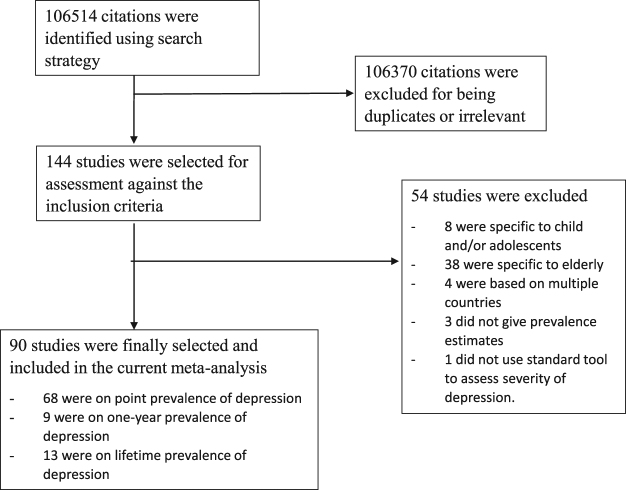
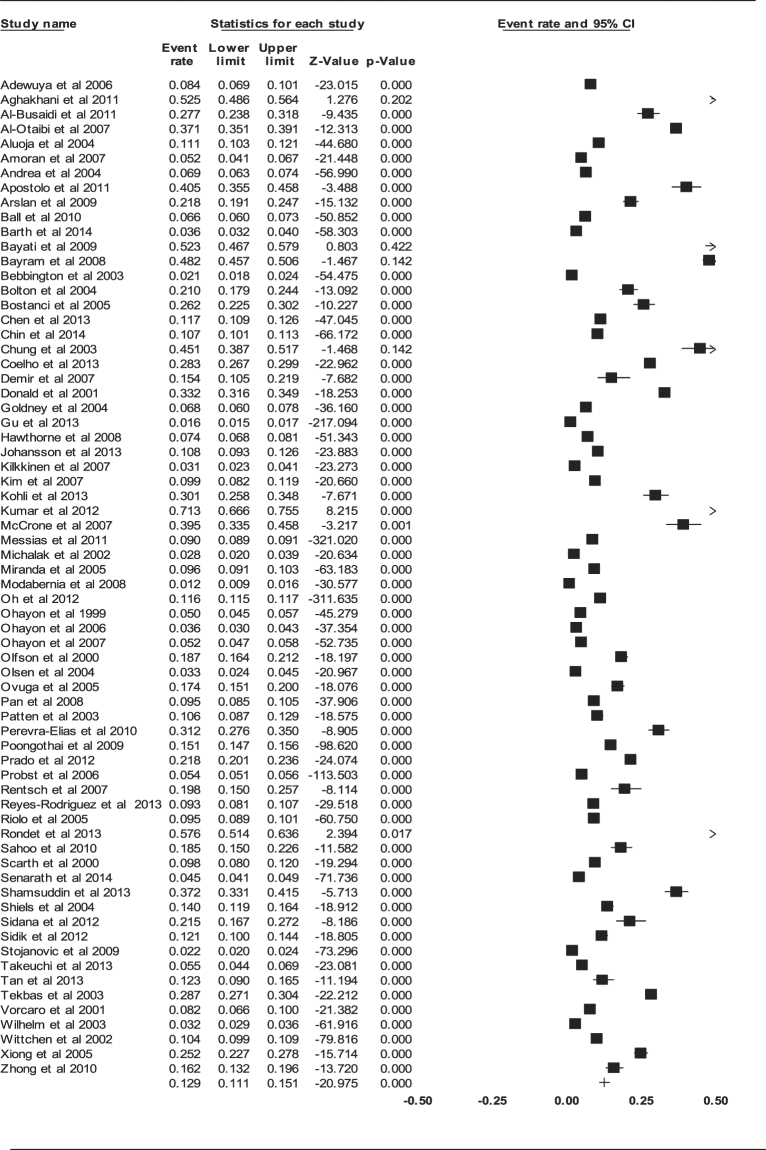
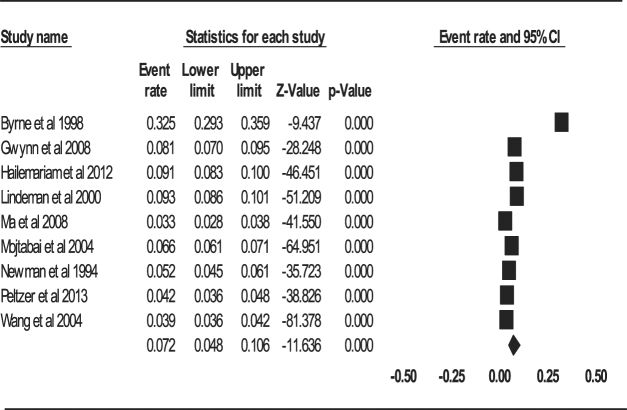
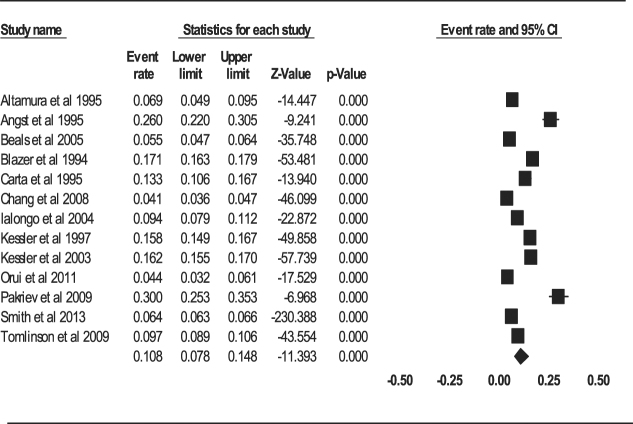
The prevalence of depression may be affected by changes in psychiatric practices and the availability of online mental health information in the past two decades. This study aimed to evaluate the aggregate prevalence of depression in communities from different countries between 1994 and 2014 and to explore the variations in prevalence stratified by geographical, methodological and socio-economic factors. A total of 90 studies were identified and met the inclusion criteria (n = 1,112,573 adults) with 68 studies on single point prevalence, 9 studies on one-year prevalence, and 13 studies on lifetime prevalence of depression. A random-effects model meta-analysis that was performed to calculate the aggregate point, one-year and lifetime prevalence of depression calculated prevalences of 12.9%, 7.2% and 10.8% respectively. Point prevalence of depression was significantly higher in women (14.4%), countries with a medium human development index (HDI) (29.2%), studies published from 2004 to 2014 (15.4%) and when using self-reporting instruments (17.3%) to assess depression. Heterogeneity was identified by meta-regression and subgroup analysis, and response rate, percentage of women and year of publication, respectively, were determined contribute to depression prevalence. This meta-analysis allows benchmarking of the prevalence of depression during the era when online health information emerged, facilitating future comparisons.
Overview
The claims and statistics of this paper haven’t been checked yet.
Free: it reads the open-access text and checks the first 5 claims that cite a source we can check. Create a free account to check every claim.
Integrity signals
Registry
Cites
Statistics
Figures
Verification
Claims the paper makes
The claims and statistics of this paper haven’t been checked yet.
Free: it reads the open-access text and checks the first 5 claims that cite a source we can check. Create a free account to check every claim.
Self-check
Percentages, sums and reported differences re-computed from the paper’s own numbers.
The self-check needs the paper’s full text.
Citations
Cites
Preferred Reporting Items for Systematic Reviews and Meta-Analyses: the PRISMA statement
Moher, D., Liberati, A., Tetzlaff, J., Altman, D. G., & for the PRISMA Group (2009) · BMJ · doi:10.1136/bmj.b2535 · Cited by 83,823
Kessler, R. C. (1994) · Archives of General Psychiatry · doi:10.1001/archpsyc.1994.03950010008002 · Cited by 12,370
Preferred reporting items for systematic reviews and meta-analyses: The PRISMA statement
Moher, D., Liberati, A., Tetzlaff, J., & Altman, D. G. (2010) · International Journal of Surgery · doi:10.1016/j.ijsu.2010.02.007 · Cited by 12,156
How should meta‐regression analyses be undertaken and interpreted?
Thompson, S. G., & Higgins, J. P. T. (2002) · Statistics in Medicine · doi:10.1002/sim.1187 · Cited by 3,026
(1984) · PubMed · Cited by 2,436
Cross-national epidemiology of DSM-IV major depressive episode
Bromet, E., Andrade, L. H., Hwang, I., Sampson, N. A., Alonso, J., de Girolamo, G., de Graaf, R., Demyttenaere, K., Hu, C., Iwata, N., et al. (2011) · BMC Medicine · doi:10.1186/1741-7015-9-90 · Cited by 2,221
Cost of Lost Productive Work Time Among US Workers With Depression
Stewart, W. F. (2003) · JAMA · doi:10.1001/jama.289.23.3135 · Cited by 1,421
Krebber, A. M. H., Buffart, L. M., Kleijn, G., Riepma, I. C., de Bree, R., Leemans, C. R., Becker, A., Brug, J., van Straten, A., Cuijpers, P., et al. (2014) · Psycho-Oncology · doi:10.1002/pon.3409 · Cited by 908
Excess mortality in depression: a meta-analysis of community studies
Cuijpers, P., & Smit, F. (2002) · Journal of Affective Disorders · doi:10.1016/s0165-0327(01)00413-x · Cited by 775
Van de Velde, S., Bracke, P., & Levecque, K. (2010) · Social Science & Medicine · doi:10.1016/j.socscimed.2010.03.035 · Cited by 719
Research works printed but not linked: 1
- Puri, B., Hall A., Ho R. Revision Notes in Psychiatry. 3rd edn, 384 (CRC Press, 2014).
Cited by
Items 201–300 of 1,000
Urban environment and psychiatric disorders: a review of the neuroscience and biology
Silva, J. A. C. E., & Steffen, R. E. (2019) · Metabolism · doi:10.1016/j.metabol.2019.07.004 · Cited by 66
Wellbeing, Whole Health and Societal Transformation: Theoretical Insights and Practical Applications
Kemp, A. H., & Fisher, Z. (2022) · Global Advances in Health and Medicine · doi:10.1177/21649561211073077 · Cited by 56
Edwards, N., Walker, S., Paddick, S., Prina, M. A., Chinnasamy, M., Reddy, N. B., Mboya, I. B., Mtei, M., Varghese, M., Nakkasuja, N., et al. (2023) · Journal of Affective Disorders · doi:10.1016/j.jad.2023.01.068 · Cited by 60
Singh, S., Saini, R., Mathur, R., Sarkar, S., & Sagar, R. (2024) · Journal of Psychosomatic Research · doi:10.1016/j.jpsychores.2024.111677 · Cited by 56
AlHadi, A. N., & Alhuwaydi, A. M. (2021) · Journal of American College Health · doi:10.1080/07448481.2021.1947839 · Cited by 65
The impact of widowhood on wellbeing, health, and care use: A longitudinal analysis across Europe
Peña-Longobardo, L. M., Rodríguez-Sánchez, B., & Oliva, J. (2021) · Economics & Human Biology · doi:10.1016/j.ehb.2021.101049 · Cited by 59
Fenollar-Cortés, J., Jiménez, Ó., Ruiz‐García, A., & Resurrección, D. M. (2021) · Frontiers in Psychology · doi:10.3389/fpsyg.2021.682860 · Cited by 59
Arruda, H. S., Araújo, M. V. L., & Maróstica, M. R. (2022) · Food Chemistry Molecular Sciences · doi:10.1016/j.fochms.2022.100148 · Cited by 67
Ochnik, D., Buława, B., Nagel, P., Gachowski, M., & Budziński, M. (2024) · Scientific Reports · doi:10.1038/s41598-024-76813-z · Cited by 76
“Several previous studies have shown a link between a higher prevalence of mood disorders and anxiety with urbanization 4,6 , while other studies have not confirmed this link 7,8 .”
Effects and Mechanisms of Tea on Parkinson’s Disease, Alzheimer’s Disease and Depression
Luo, M., Gan, R., Li, B., Mao, Q., Shang, A., Xu, X., Li, H., & Li, H.-B. (2021) · Food Reviews International · doi:10.1080/87559129.2021.1904413 · Cited by 57
“[10] The World Health Organization predicted that depression would rank second in global disease burdens in 2020, and would be one of the priority conditions covered by the World Health Organization’s Mental Health Gap Action Programme.”
BackgroundFond, G. B., Lançon, C., Auquier, P., & Boyer, L. (2019) · La Presse Médicale · doi:10.1016/j.lpm.2018.12.004 · Cited by 64
Wang, G., Si, T., Li, L., Fang, Y., Wang, C., Wang, L., Tan, K. H. X., Ettrup, A., Eriksen, H. F., Luo, S., et al. (2019) · Neuropsychiatric Disease and Treatment · doi:10.2147/ndt.s195505 · Cited by 55
Zhang, Y., Wu, X., Tao, S., Li, S., Ma, L., Yu, Y., Sun, G., Li, T., & Tao, F. (2021) · Environmental Health and Preventive Medicine · doi:10.1186/s12199-021-01025-0 · Cited by 58
Systematic review and meta-analysis of prevalence of depression among caregivers of cancer patients
Pan, Y.-C., & Lin, Y.-S. (2022) · Frontiers in Psychiatry · doi:10.3389/fpsyt.2022.817936 · Cited by 52
“the depression prevalence in community samples and found that most studies using self-report instruments were significantly higher than those using interview-based assessment tools (105).”
The prevalence of comorbidity in rheumatoid arthritis: a systematic review and meta-analysis
Hill, J. E., Harrison, J., Christian, D. L., Reed, J., Clegg, A. J., Duffield, S. J., Goodson, N. J., & Marson, T. (2022) · British Journal of Community Nursing · doi:10.12968/bjcn.2022.27.5.232 · Cited by 55
Arcand, M., Bilodeau-Houle, A., Juster, R., & Marin, M. (2023) · Frontiers in Psychology · doi:10.3389/fpsyg.2023.1166154 · Cited by 56
Overparenting and offspring depression, anxiety, and internalizing symptoms: A meta-analysis
Zhang, Q., & Ji, W. (2023) · Development and Psychopathology · doi:10.1017/s095457942300055x · Cited by 61
Parkinson, J. T., Foley, É. M., Jadon, D. R., & Khandaker, G. M. (2020) · Therapeutic Advances in Musculoskeletal Disease · doi:10.1177/1759720x20970028 · Cited by 56
Inflammation and Depression: A Public Health Perspective
Chu, A. L., Hickman, M., Steel, N., Jones, P. B., Smith, G. D., & Khandaker, G. M. (2021) · Brain Behavior and Immunity · doi:10.1016/j.bbi.2021.04.015 · Cited by 55
Li, N., Li, S., & Fan, L. (2021) · Journal of Adolescent Health · doi:10.1016/j.jadohealth.2021.07.018 · Cited by 55
“This finding is inconsistent with previous research [24].”
Resultdel-Valle, M. V., López-Morales, H., Andrés, M. L., Yerro-Avincetto, M., Gelpi Trudo, R., Urquijo, S., & Canet-Juric, L. (2022) · Journal of Anxiety Disorders · doi:10.1016/j.janxdis.2022.102531 · Cited by 45
“Results of various epidemiological studies have also revealed that women are usually at higher risk of depression and anxiety than men (Lim et al., 2018).”
Associations Between Pubertal Stage and Depression: A Systematic Review of the Literature
Stumper, A., & Alloy, L. B. (2021) · Child Psychiatry & Human Development · doi:10.1007/s10578-021-01244-0 · Cited by 53
“Keywords Puberty · Depression · Adolescence · Sex differences Introduction One of the most robust findings in the depression literature is the gender gap in prevalence: women are nearly twice as likely to experience depressive symptoms or meet diagnostic criteria for a depressive episode than men [1, 2].”
BackgroundWhy Do We Care More About Disease than Health?
Picard, M. A. (2022) · Phenomics · doi:10.1007/s43657-021-00037-8 · Cited by 56
“For example, in the case of depression, which stands as one of the most debilitating condition world-wide (Lim et al. 2018), the evidence for genetic etiology is controversial and in most people, antidepressants work similarly well as placebos (Troeung et al. 2013).”
BackgroundBifftu, B. B., Takele, W. W., Guracho, Y. D., & Yehualashet, F. A. (2018) · Depression Research and Treatment · doi:10.1155/2018/1592596 · Cited by 60
Parvar, S. Y., Ghamari, N., Pezeshkian, F., & Shahriarirad, R. (2022) · Health Science Reports · doi:10.1002/hsr2.460 · Cited by 56
“However, regardless of the occurring pandemic, female gender was always perceived to make up the majority of depression prevalence in different communities.(50) This result was in line with another study that puts healthcare workers under investigation and found higher resilience men, respectively.”
ResultAssessing Fear and Anxiety of Corona Virus Among Dental Practitioners
Suryakumari, V. B. P., Reddy, Y. P., Yadav, S. S., Doshi, D., & Reddy, V. S. (2020) · Disaster Medicine and Public Health Preparedness · doi:10.1017/dmp.2020.350 · Cited by 52
Necho, M., Birkie, M., Gelaye, H., Beyene, A., Belete, A., & Tsehay, M. (2020) · PLoS ONE · doi:10.1371/journal.pone.0244530 · Cited by 54
“Although not the case in the present study, epidemiological evidence revealed that women are more vulnerable to anxiety and depression than men [48].”
ResultLi, F., Wang, X., He, X., Cheng, L., & Wang, Y. (2021) · Interactive Learning Environments · doi:10.1080/10494820.2021.2012810 · Cited by 55
“To generalize the fi ndings, we treated the selected studies as random samples from a larger population (Lim et al., 2018).”
MethodHallford, D. J., Rusanov, D., Yeow, J., & Barry, T. J. (2022) · Clinical Psychology & Psychotherapy · doi:10.1002/cpp.2786 · Cited by 53
“In addition to depression being a highly prevalent disorder (Lim et al., 2018), it is also a recurring illness, with estimates that 50% of people experience multiple episodes or a more chronic course of illness (Eaton et al., 2008).”
BackgroundZou, H. L., Gao, H., Liu, Y., Zhang, Z., Zhao, J. W., Wang, W., Ren, B., & Tan, X. (2024) · International Journal of Biological Macromolecules · doi:10.1016/j.ijbiomac.2024.129420 · Cited by 56
The changing prevalence of ADHD? A systematic review
Martin, A. F., Rubin, G. J., Rogers, M. B., Wessely, S. C., Greenberg, N. L., Hall, C. E., Pitt, A., Logan, P. E., Lucas, R., & Brooks, S. K. (2025) · Journal of Affective Disorders · doi:10.1016/j.jad.2025.119427 · Cited by 56
Abir, T. A., Kalimullah, N. A., Osuagwu, U. L., Yazdani, D. M. N., Husain, T., Goson, P. C., Basak, P., Rahman, M. A., Mamun, A. A., Permarupan, P. Y., et al. (2021) · Annals of Global Health · doi:10.5334/aogh.3269 · Cited by 54
Millán-Alanís, J. M., Carranza-Navarro, F., de León-Gutiérrez, H., Leyva-Camacho, P. C., Guerrero-Medrano, A. F., Barrera, F. J., Lopez, L. E. G., & Uribe, E. S. (2021) · Archives of Women s Mental Health · doi:10.1007/s00737-021-01144-1 · Cited by 54
“(Lim et al., 2018).”
Katsuki, F., Watanabe, N., Yamada, A., & Hasegawa, T. (2022) · BJPsych Open · doi:10.1192/bjo.2022.543 · Cited by 52
Ohse, J., Hadžić, B., Mohammed, P., Peperkorn, N., Danner, M., Yorita, A., Kubota, N., Rätsch, M., & Shiban, Y. (2024) · Computer Speech & Language · doi:10.1016/j.csl.2024.101663 · Cited by 63
Anxiety and Mood Disorders in Systemic Lupus Erythematosus: Current Insights and Future Directions
Tisseverasinghe, A., PESCHKEN, C. A., & Hitchon, C. A. (2018) · Current Rheumatology Reports · doi:10.1007/s11926-018-0797-2 · Cited by 53
Grygiel‐Górniak, B., Limphaibool, N., & Puszczewicz, M. (2019) · Psychiatry and Clinical Neurosciences · doi:10.1111/pcn.12826 · Cited by 51
“Major depressive disorder (MDD) is a heterogeneous psychiatric condition, with a lifetime prevalence of approximately 10% in the global population.(4) The World Health Organization predicts that MDD will become the second leading global burden of disease in the next decade.”
BackgroundBibliometric Study of the Comorbidity of Pain and Depression Research
Wang, X., Peng, M., Weng, L., Zheng, Y.-L., Zhang, Z., & Chen, P. (2019) · Neural Plasticity · doi:10.1155/2019/1657498 · Cited by 52
Paduchová, Z., Katrenčíková, B., Vaváková, M., Laubertová, L., Nagyová, Z., Garaiová, I., Ďuračková, Z., & Trebatická, J. (2021) · Nutrients · doi:10.3390/nu13041095 · Cited by 50
“7% among those aged 13–18 years old [1,2].”
BackgroundPersonalised depression forecasting using mobile sensor data and ecological momentary assessment
Kathan, A., Harrer, M., Küster, L., Triantafyllopoulos, A., He, X., Milling, M., Gerczuk, M., Yan, T., Rajamani, S. T., Heber, E., et al. (2022) · Frontiers in Digital Health · doi:10.3389/fdgth.2022.964582 · Cited by 47
Zhang, Y., Tao, S., Qu, Y., Mou, X., Gan, H., Zhou, P., Zhu, Z., Wu, X., & Tao, F. (2023) · Frontiers in Public Health · doi:10.3389/fpubh.2022.1031560 · Cited by 50
Lenferink, L. I. M., Franzen, M., ten Klooster, P. M., Knaevelsrud, C., Boelen, P. A., & Heeke, C. (2023) · Journal of Affective Disorders · doi:10.1016/j.jad.2023.03.006 · Cited by 49
Foundational Nutrition: Implications for Human Health
Townsend, J. R., Kirby, T. O., Marshall, T. M., Church, D. D., Jajtner, A. R., & Esposito, R. (2023) · Nutrients · doi:10.3390/nu15132837 · Cited by 53
Yin, J., Song, X., Wang, C., Lin, X., & Miao, M. (2023) · BMC Psychiatry · doi:10.1186/s12888-023-05382-8 · Cited by 51
“The lifetime prevalence of MDD is between 10–20% [2–4].”
BackgroundWang, B., Li, M., Haihambo, N. P., Qiu, Z., Sun, M., Guo, M., Zhao, X., & Han, C. (2024) · Journal of Affective Disorders · doi:10.1016/j.jad.2024.03.145 · Cited by 49
c-Jun N-Terminal Kinase Inhibitors as Potential Leads for New Therapeutics for Alzheimer’s Diseases
Rehfeldt, S. C. H., Majolo, F., Goettert, M. I., & Laufer, S. (2020) · International Journal of Molecular Sciences · doi:10.3390/ijms21249677 · Cited by 52
Yoshino, Y., Roy, B., Kumar, N., Mukhtar, M. S., & Dwivedi, Y. (2021) · Translational Psychiatry · doi:10.1038/s41398-020-01159-9 · Cited by 55
Zhang, B., Liu, S., Liu, X., Chen, S., Ke, Y., Qi, S., Wei, X., & Ming, D. (2021) · Journal of Affective Disorders · doi:10.1016/j.jad.2021.10.122 · Cited by 51
Husain, M. O., Chaudhry, I. B., Blakemore, A., Shakoor, S., Husain, M. A., Lane, S., Kiran, T., Jafri, F., Memon, R., Panagioti, M., et al. (2021) · SAGE Open Medicine · doi:10.1177/20503121211032813 · Cited by 55
Ho, R., Chua, A. N., Tran, B. X., Choo, C. C., Husain, S. F., Vu, G. T., McIntyre, R. S., & Ho, C. S. H. (2018) · International Journal of Environmental Research and Public Health · doi:10.3390/ijerph15102073 · Cited by 46
Self-citationVakharia, R. M., Ehiorobo, J. O., Sodhi, N., Swiggett, S. J., Mont, M. A., & Roche, M. W. (2019) · The Journal of Arthroplasty · doi:10.1016/j.arth.2019.12.011 · Cited by 46
FKBP5 and early life stress affect the hippocampus by an age-dependent mechanism
Criado‐Marrero, M., Smith, T. M., Gould, L. A., Kim, S., Penny, H. J., Sun, Z., Gulick, D., Dickey, C. A., & Blair, L. J. (2020) · Brain Behavior & Immunity - Health · doi:10.1016/j.bbih.2020.100143 · Cited by 54
Sarapultseva, M., Zolotareva, A. A., Kritsky, I. S., Nasretdinova, N., & Sarapultsev, A. (2021) · International Journal of Environmental Research and Public Health · doi:10.3390/ijerph18020708 · Cited by 51
“By contrast, several other studies have revealed that female dentists showed significantly higher levels of self-reported anxiety [13], depression [12], and stress [21], confirming that women are at higher risk of depressive symptoms than men [47].”
ResultStudent mental health during the COVID-19 pandemic: are international students more affected?
Kivelä, L., Mouthaan, J., van der Does, W., & Antypa, N. (2024) · Journal of American College Health · doi:10.1080/07448481.2022.2037616 · Cited by 45
Strauss, C., Bibby-Jones, A.-M., Jones, F., Byford, S., Heslin, M., Parry, G., Barkham, M., Lea, L., Crane, R., de Visser, R., et al. (2023) · JAMA Psychiatry · doi:10.1001/jamapsychiatry.2023.0222 · Cited by 45
“Exclusion criteria were that participants: (1) scored 20 or more points (severe range) on the PHQ-9; (2) scored 4 on the CIS-R suicidality scale; and (3) expressed a strong preference for one intervention over the other such that, if randomized to the nonpreferred intervention, they would likely decline treatment.”
BackgroundLatsou, D., Bolosi, F.-M., Androutsou, L., & Geitona, M. (2022) · Health Services Insights · doi:10.1177/11786329221096042 · Cited by 34
Chin, Y. H., Ng, C. H., Chew, N., Kong, G., Lim, W. H., Tan, D. J. H., Chan, K. E., Tang, A. S. P., Huang, D. Q., Chan, M. Y., et al. (2022) · EClinicalMedicine · doi:10.1016/j.eclinm.2022.101685 · Cited by 46
The Economics of Treatment for Depression
Stecher, C. D., Cloonan, S., & Domino, M. E. (2023) · Annual Review of Public Health · doi:10.1146/annurev-publhealth-061022-040533 · Cited by 51
Anxiety and depression during the COVID-19 pandemic in Kuwait: the importance of physical activity
Alsharji, K. E. (2020) · Middle East Current Psychiatry · doi:10.1186/s43045-020-00065-6 · Cited by 47
“[19] indicated that these psychological differences might be because women are more sensitive to psychological stress thus susceptible to experiencing anxiety and depression versus men [18, 31].”
BackgroundBienassis, K. D., Kristensen, S., Hewlett, E., Roe, D., Mainz, J., & Klazinga, N. (2021) · International Journal for Quality in Health Care · doi:10.1093/intqhc/mzab020 · Cited by 50
Gulliver, A., Calear, A. L., Sunderland, M., Kay-Lambkin, F., Farrer, L. M., & Batterham, P. J. (2021) · Internet Interventions · doi:10.1016/j.invent.2021.100400 · Cited by 44
kouhestani, M., Gharaei, H. A., Fararouei, M., Ghahremanloo, H. H., Ghaiasvand, R., & Dianatinasab, M. (2020) · BMJ Supportive & Palliative Care · doi:10.1136/bmjspcare-2019-002050 · Cited by 44
Almeida, S. S., Zizzi, F., Cattaneo, A., Comandini, A., Dato, G. D., Lubrano, E., Pellicano, C., Spallone, V., Tongiani, S., & Torta, R. (2020) · Frontiers in Psychology · doi:10.3389/fpsyg.2020.542444 · Cited by 47
“…disorder, chronic diseases, diabetes, rheumatoid arthritis, cancer, Parkinson’s disease INTRODUCTION The prevalence of major depressive disorder (MDD) in the general population is approximately 6.6% (Kessler et al., 2005), with a lifetime prevalence of approximately 11% (Lim et al., 2018).”
BackgroundInfluentialUribe, F. A. R., de Oliveira, S. B., Gouvêia, A., & Pedroso, J. D. S. (2021) · Psicologia Reflexão e Crítica · doi:10.1186/s41155-021-00202-y · Cited by 52
“Depression is one of the most common psychopathological conditions in the general population (Global Burden of Disease, 2020), and its prevalence has been increasing in recent decades (Lim et al., 2018).”
BackgroundHo, C. S. H., Chua, J., & Tay, G. W. N. (2022) · BMC Psychiatry · doi:10.1186/s12888-022-03942-y · Cited by 49
“Severe cases of MDD may also present with psychotic symptoms and are a risk factor for suicide [5, 6].”
BackgroundSelf-citationFu, H., Feng, T., Wang, T., Wu, X., Cai, Y., & Yang, T. (2020) · Journal of Affective Disorders · doi:10.1016/j.jad.2020.08.011 · Cited by 43
The Multi-Sites Trial on the Effects of Therapeutic Gardening on Mental Health and Well-Being
Yang, Y., Ro, E., Lee, T.-J., An, B.-C., Hong, K., Yun, H.-J., Park, E.-Y., Cho, H.-R., Yun, S., Park, M., et al. (2022) · International Journal of Environmental Research and Public Health · doi:10.3390/ijerph19138046 · Cited by 46
Weierstall‐Pust, R., Schnell, T. G., Heßmann, P., Feld, M., Höfer, M., Plate, A., & Müller, M. J. (2022) · BMC Public Health · doi:10.1186/s12889-022-14682-9 · Cited by 44
Mokhtari, S., Mokhtari, A., Bakizadeh, F., Moradi, A., & Shalbafan, M. (2023) · BMC Psychiatry · doi:10.1186/s12888-023-04554-w · Cited by 51
“8% of individuals suffer from this chronic condition at some point in their lives [4].”
BackgroundAttention bias modification for depression: A systematic review and meta-analysis
Xia, H., Li, Y., Zhang, Q., Zhong, D., Liu, X.-B., Gou, X.-Y., Fan, J., Zhao, J., Zhang, Y., Ai, S., et al. (2023) · Frontiers in Psychiatry · doi:10.3389/fpsyt.2023.1098610 · Cited by 44
“(2) Intervention included ABM alone, or ABM plus conventional treatment (CT).”
BackgroundMethodInfluentialThe individual dynamics of affective expression on social media
Pellert, M., Schweighofer, S., & García, D. (2020) · EPJ Data Science · doi:10.1140/epjds/s13688-019-0219-3 · Cited by 43
Ermers, N. J., Hagoort, K., & Scheepers, F. E. (2020) · Frontiers in Psychiatry · doi:10.3389/fpsyt.2020.00472 · Cited by 44
“Despite its ubiquity, accurately diagnosing depression appears troublesome (3, 4).”
BackgroundBrahim, L. O., Lambert, S., Feeley, N., Coumoundouros, C., Schaffler, J. L., McCusker, J., Moodie, E. E. M., Kayser, J. W., Kolne, K., Belzile, É., et al. (2021) · BMC Psychiatry · doi:10.1186/s12888-021-03504-8 · Cited by 46
“Prevalence of depression is more common among individuals with chronic physical diseases [2, 3, 5].”
BackgroundPrimary prevention of depression: An umbrella review of controlled interventions
de Pablo, G. S., Solmi, M., Vaquerizo‐Serrano, J., Raduà, J., Passina, A., Mosillo, P., Correll, C. U., Borgwardt, S., Galderisi, S., Bechdolf, A., et al. (2021) · Journal of Affective Disorders · doi:10.1016/j.jad.2021.07.101 · Cited by 46
“Odds ratio (OR) was converted into RR (Zhang and Yu, 1998), assuming a prevalence of depression of 12.9% in the general population (Lim et al., 2018).”
InfluentialIslam, M. R., Sohan, M., Daria, S., Masud, A. A., Ahmed, M. U., Roy, A., & Shahriar, M. (2023) · International Journal of Immunopathology and Pharmacology · doi:10.1177/03946320231198828 · Cited by 43
Jamieson, A. J., Harrison, B. J., Razi, A., & Davey, C. G. (2022) · Neuropsychopharmacology · doi:10.1038/s41386-021-01214-z · Cited by 41
Juchnowicz, D., Baj, J., Forma, A., Karakuła, K. H., Sitarz, R., Bogucki, J., & Karakuła‐Juchnowicz, H. (2021) · Journal of Clinical Medicine · doi:10.3390/jcm10050944 · Cited by 43
“Generally, depressive [55] and anxiety [56,57] symptoms are more prevalently observed in females; therefore, increased levels of emotional distress in females compared to males seem not to be surprising.”
BackgroundYoshino, Y., & Dwivedi, Y. (2019) · Journal of Affective Disorders · doi:10.1016/j.jad.2019.11.001 · Cited by 41
“…brain; dorsolateral prefrontal cortex; major depressive disorder; suicide; ER stress; UPR system; gene expression Introduction MDD is a commonly occurring mental disorder with an estimated lifetime prevalence of 10.8% in general population across the world (Lim et al., 2018).”
BackgroundInfluentialAnyan, F., Hjemdal, O., Ernstsen, L., & Havnen, A. (2020) · Frontiers in Psychology · doi:10.3389/fpsyg.2020.598481 · Cited by 45
Ayano, G., Belete, A., Duko, B., Tsegay, L., & Dachew, B. A. (2021) · BMJ Open · doi:10.1136/bmjopen-2020-040061 · Cited by 46
Depression symptoms and risk of sick leave: a systematic review and meta-analysis
Amiri, S., & Behnezhad, S. (2021) · International Archives of Occupational and Environmental Health · doi:10.1007/s00420-021-01703-0 · Cited by 41
Chen, Y., Li, L., Zhang, J., Cui, H., Wang, J., Wang, C., Shi, M., & Fan, H. (2021) · Molecular Neurobiology · doi:10.1007/s12035-021-02512-9 · Cited by 43
Patwary, M. M., Disha, A. S., Bardhan, M., Haque, M. Z., Kabir, M. P., Billah, S. M., Hossain, M. R., Alam, M. A., Browning, M. H. E. M., Shuvo, F. K., et al. (2022) · Frontiers in Psychiatry · doi:10.3389/fpsyt.2022.856202 · Cited by 42
“An extensive review conducted in 30 countries found a greater prevalence of depression among women (76).”
BackgroundHeumann, E., Helmer, S. M., Busse, H., Negash, S., Horn, J., Pischke, C. R., Niephaus, Y., & Stock, C. (2022) · Journal of Affective Disorders · doi:10.1016/j.jad.2022.09.158 · Cited by 42
RetractedKrieger, T., Bur, O. T., Weber, L., Wolf, M., Berger, T., Watzke, B., & Münder, T. (2023) · Internet Interventions · doi:10.1016/j.invent.2023.100617 · Cited by 40
“Depression is a highly prevalent public health issue and a debilitating condition for the individual, the healthcare system, and society (Lim et al., 2018).”
BackgroundSlavova, D., Ortiz, V., Blaise, M., Bairachnaya, M., Giros, B., & Isingrini, E. (2024) · Neuroscience & Biobehavioral Reviews · doi:10.1016/j.neubiorev.2024.105925 · Cited by 40
“The prevalence of MDD is reported to be twice as high in females as in males across different nations (Bromet et al., 2011; Lim et al., 2018), with higher prevalence in high-income countries compared to low-income ones (14.6 % vs 5.5 % and 11.1 % vs 5.9 %, respectively) (Bromet et al., 2011).”
BackgroundInfluentialSerra, M. P., Poddighe, L., Boi, M., Sanna, F., Piludu, M. A., Sanna, F., Corda, M. G., Giorgi, O., & Quartu, M. (2018) · International Journal of Molecular Sciences · doi:10.3390/ijms19123745 · Cited by 43
Araujo, B. B., Lima‐Costa, A. R., Baptista, M. N., & Filho, N. H. (2021) · Current Psychology · doi:10.1007/s12144-021-01726-3 · Cited by 42
“Depression is widely investigated because it can lead to impaired life outcomes, it can manifest in a diversity of symptom combinations, and it has increased in prevalence in the last years (Lim et al., 2018).”
BackgroundGenetic overlap and causal associations between smoking behaviours and mental health
Barkhuizen, W., Dudbridge, F., & Ronald, A. (2021) · Scientific Reports · doi:10.1038/s41598-021-93962-7 · Cited by 43
Hu, S., Li, X., Law, S., Shen, C., Yao, G., Zhang, X., Li, J., Chen, G., Xu, B., Liu, X., et al. (2021) · Psychiatry Research · doi:10.1016/j.psychres.2021.114229 · Cited by 42
Wynter, K. H., Redley, B., Holton, S., Manias, E., McDonall, J., McTier, L., Hutchinson, A. M., Kerr, D. C., Lowe, G., Phillips, N. M., et al. (2021) · International Journal of Nursing Education Scholarship · doi:10.1515/ijnes-2021-0060 · Cited by 45
Boele, F. W., den Otter, P. W., Reijneveld, J. C., Hamer, P. C. D. W., van Thuijl, H. F., Lorenz, L. M. C., Wesseling, P., Lagerwaard, F. J., TAPHOORN, M. J. B., Kouwenhoven, M. C. M., et al. (2022) · Neuro-Oncology · doi:10.1093/neuonc/noac185 · Cited by 41
Conteh, I., Yan, J., Dovi, K. S., Bajinka, O., Massey, I. Y., & Turay, B. (2022) · Psychiatry Research Communications · doi:10.1016/j.psycom.2022.100082 · Cited by 39
Assessing the psychological condition among general people of Bangladesh during COVID-19 pandemic
Rahman, M. M., Khan, S. J., Sakib, M. S., Chakma, S., Procheta, N. F., Mamun, Z. A., Arony, A., Rahman, F., & Rahman, M. M. (2020) · Journal of Human Behavior in the Social Environment · doi:10.1080/10911359.2020.1848688 · Cited by 41
Batterham, P. J., Calear, A. L., Sunderland, M., KAY‐LAMBKIN, F. J., Farrer, L. M., Christensen, H. M., & Gulliver, A. (2021) · Journal of Medical Internet Research · doi:10.2196/23029 · Cited by 42
de Boer, G. M., Houweling, L., Hendriks, R. W., Vercoulen, J. H. M. M., Tramper‐Stranders, G. A., & Braunstahl, G. (2021) · Chronic Respiratory Disease · doi:10.1177/14799731211029658 · Cited by 45
Álvarez-Mon, M. Á., Ortega, M. A., Montero, C. G., Fraile‐Μartinez, O., Monserrat, J., Lahera, G., Mora, F., Rodríguez-Quiroga, A., Fernández-Rojo, S., Quintero, J., et al. (2021) · Pharmaceuticals · doi:10.3390/ph14080821 · Cited by 44
Lenferink, L. I. M., Liddell, B. J., Byrow, Y., O'Donnell, M. L., Bryant, R. A., Mau, V., McMahon, T., Benson, G. M., & Nickerson, A. (2021) · Journal of Psychiatric Research · doi:10.1016/j.jpsychires.2021.12.009 · Cited by 41
Fear of COVID ‐19, stress and depression: A meta‐analytic test of the mediating role of anxiety
Çıkrıkçı, Ö., Çıkrıkçı, N., & Griffiths, M. D. (2022) · Psychology and Psychotherapy Theory Research and Practice · doi:10.1111/papt.12406 · Cited by 42
Öztürk Çopur, E., & Karasu, F. (2021) · Perspectives in Psychiatric Care · doi:10.1111/ppc.12730 · Cited by 38
Metadata
- Authors
- Lim, G. Y., Tam, W. W., Lu, Y., Ho, C. S., Zhang, M. W., & Ho, R. C.
- Affiliations
- Monash University (AU)
- National University of Singapore (SG)
- Zhejiang University (CN)
- National University Hospital (SG)
- Institute of Mental Health (SG)
- Corresponding author
- Lu, Yanxia
- Venue
- Scientific Reports
- Published
- 2018-02-12
- Volume
- 8
- Issue
- 1
- Pages
- 2861-2861
- ISSN
- 2045-2322 (ISSN-L)
- PMC
- PMC5809481
- OpenAlex
- W2807669085
- Semantic Scholar
- e3cd42f33f82796136b738a9ca84d8d523a0fb4b
- Cited by
- 1,557
- References
- 54
- Citations by year
- 2026: 88 · 2025: 172 · 2024: 198 · 2023: 234 · 2022: 265 · 2021: 285 · 2020: 199 · 2019: 91 · 2018: 23
- FWCI
- 202.75
- Type
- journal article
- Language
- en
- Update notices
- correction (2022-09-01)
- Open access
- gold
- doi.org
- Licence
- cc-by
- creativecommons.org/licenses/by/4.0 (tdm)
- creativecommons.org/licenses/by/4.0 (vor)
- Locations
- Scientific Reports (publishedVersion, cc-by)
- Europe PMC (PubMed Central) (publishedVersion, cc-by)
- PubMed Central (publishedVersion, cc-by)
- PubMed (publishedVersion)
- Rare & Special e-Zone (The Hong Kong University of Science and Technology) (submittedVersion)
- National University of Singapore (submittedVersion, cc-by)
- DOAJ (DOAJ: Directory of Open Access Journals) (submittedVersion, cc-by-sa)
- Funders
- National Natural Science Foundation of China (81600018)
- Topics
- Health Sciences › Medicine › Psychiatry and Mental health › Mental Health Treatment and Access
- Social Sciences › Psychology › Clinical Psychology › Suicide and Self-Harm Studies
- Social Sciences › Psychology › Clinical Psychology › Child and Adolescent Psychosocial and Emotional Development
- Keywords
- depression, prevalence, community-dwelling adults, point prevalence, lifetime prevalence, sex differences, Human Development Index, self-report measures, online mental health information, cross-national comparison, response rate
- MeSH terms
- Cross-Sectional Studies, Depression, Female, Humans, Male, Sex Characteristics, Socioeconomic Factors, Prevalence, Self Report
About these checks
Registry, retraction, Cites and statistics results are computed, not judged, with one exception: a printed reference that no index lists is read once by a model before it counts as a citation error. Claims are extracted by a model and kept only when their quote appears verbatim in the text; each cited source is then checked, with a model’s help, for whether it says what the claim relies on. Those verdicts can be wrong — read the claim’s quote and the cited source before relying on one.
Statistics and arithmetic are recomputed, not judged.
Confidence bands are shown only for fields calibrated on our annotated test set. None is calibrated yet, so no band is shown.
What counts as a claim ›How we measure confidence ›How we check this ›
Are you an author, or do you see a problem with this page? Request a review
Data sources
Bibliographic data: Semantic Scholar, OpenAlex, Crossref.
Contains information from the Semantic Scholar Academic Graph Datasets, made available under the ODC Attribution License (ODC-BY 1.0).
Semantic Scholar’s data is described in: Kinney, R., et al. (2023). The Semantic Scholar Open Data Platform. arXiv:2301.10140.
