

Prevalence of Depression in the Community from 30 Countries between 1994 and 2014
Open accessThe DOI matches its Crossref record; 54 of the 54 references it cites were found in a registry or an index.
Abstract
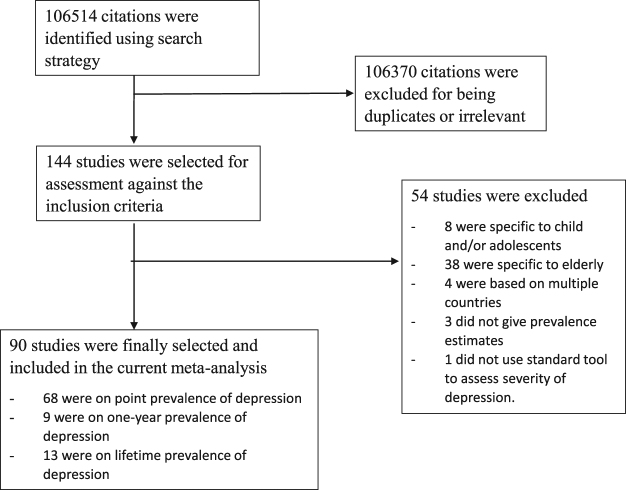
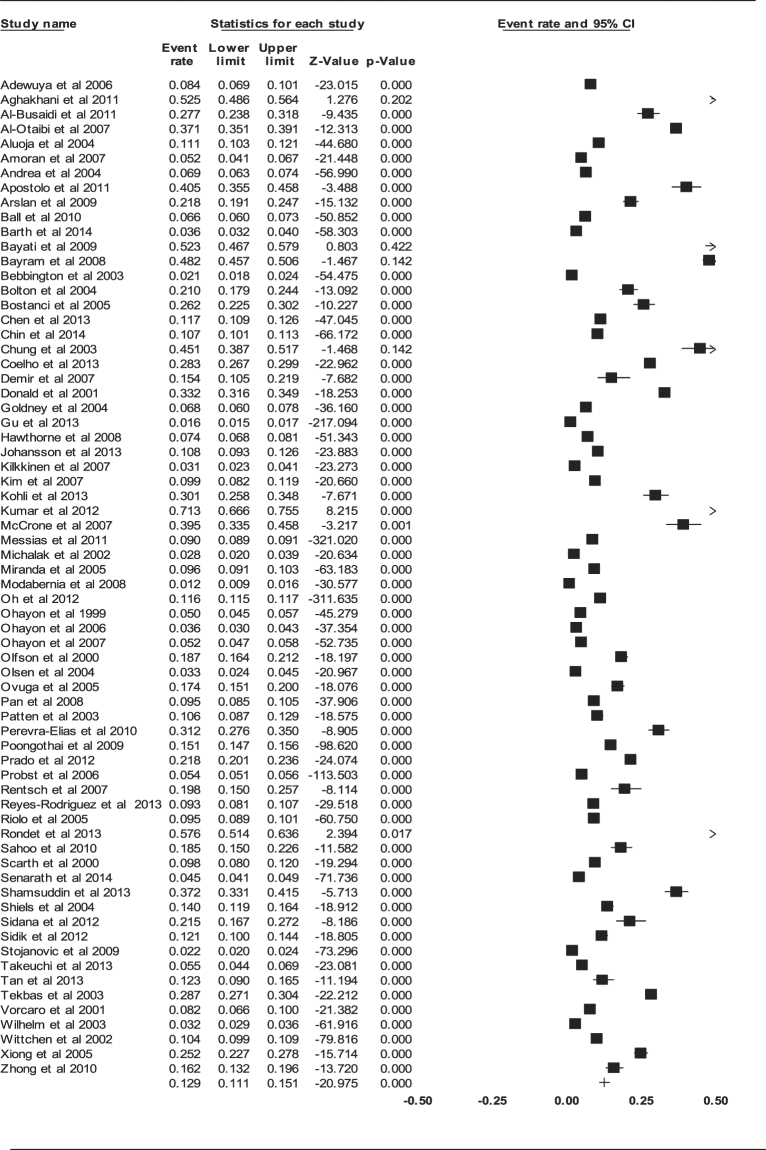
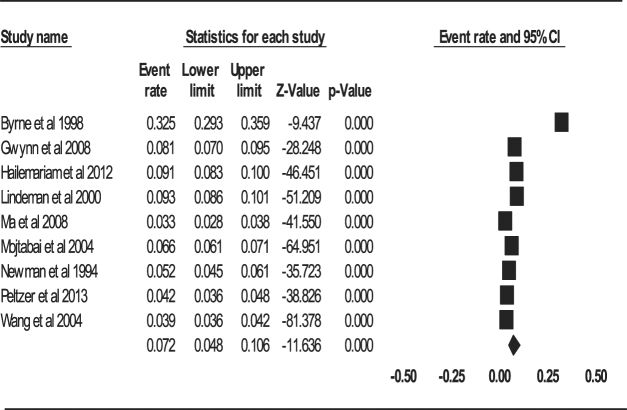
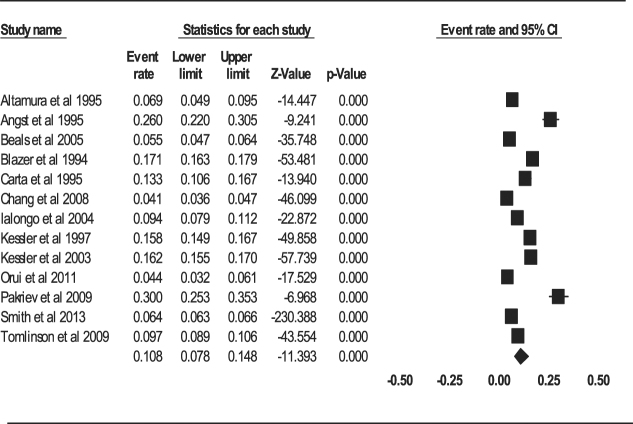
The prevalence of depression may be affected by changes in psychiatric practices and the availability of online mental health information in the past two decades. This study aimed to evaluate the aggregate prevalence of depression in communities from different countries between 1994 and 2014 and to explore the variations in prevalence stratified by geographical, methodological and socio-economic factors. A total of 90 studies were identified and met the inclusion criteria (n = 1,112,573 adults) with 68 studies on single point prevalence, 9 studies on one-year prevalence, and 13 studies on lifetime prevalence of depression. A random-effects model meta-analysis that was performed to calculate the aggregate point, one-year and lifetime prevalence of depression calculated prevalences of 12.9%, 7.2% and 10.8% respectively. Point prevalence of depression was significantly higher in women (14.4%), countries with a medium human development index (HDI) (29.2%), studies published from 2004 to 2014 (15.4%) and when using self-reporting instruments (17.3%) to assess depression. Heterogeneity was identified by meta-regression and subgroup analysis, and response rate, percentage of women and year of publication, respectively, were determined contribute to depression prevalence. This meta-analysis allows benchmarking of the prevalence of depression during the era when online health information emerged, facilitating future comparisons.
Overview
The claims and statistics of this paper haven’t been checked yet.
Free: it reads the open-access text and checks the first 5 claims that cite a source we can check. Create a free account to check every claim.
Integrity signals
Registry
Cites
Statistics
Figures
Verification
Claims the paper makes
The claims and statistics of this paper haven’t been checked yet.
Free: it reads the open-access text and checks the first 5 claims that cite a source we can check. Create a free account to check every claim.
Self-check
Percentages, sums and reported differences re-computed from the paper’s own numbers.
The self-check needs the paper’s full text.
Citations
Cites
Preferred Reporting Items for Systematic Reviews and Meta-Analyses: the PRISMA statement
Moher, D., Liberati, A., Tetzlaff, J., Altman, D. G., & for the PRISMA Group (2009) · BMJ · doi:10.1136/bmj.b2535 · Cited by 83,823
Kessler, R. C. (1994) · Archives of General Psychiatry · doi:10.1001/archpsyc.1994.03950010008002 · Cited by 12,370
Preferred reporting items for systematic reviews and meta-analyses: The PRISMA statement
Moher, D., Liberati, A., Tetzlaff, J., & Altman, D. G. (2010) · International Journal of Surgery · doi:10.1016/j.ijsu.2010.02.007 · Cited by 12,156
How should meta‐regression analyses be undertaken and interpreted?
Thompson, S. G., & Higgins, J. P. T. (2002) · Statistics in Medicine · doi:10.1002/sim.1187 · Cited by 3,026
(1984) · PubMed · Cited by 2,436
Cross-national epidemiology of DSM-IV major depressive episode
Bromet, E., Andrade, L. H., Hwang, I., Sampson, N. A., Alonso, J., de Girolamo, G., de Graaf, R., Demyttenaere, K., Hu, C., Iwata, N., et al. (2011) · BMC Medicine · doi:10.1186/1741-7015-9-90 · Cited by 2,221
Cost of Lost Productive Work Time Among US Workers With Depression
Stewart, W. F. (2003) · JAMA · doi:10.1001/jama.289.23.3135 · Cited by 1,421
Krebber, A. M. H., Buffart, L. M., Kleijn, G., Riepma, I. C., de Bree, R., Leemans, C. R., Becker, A., Brug, J., van Straten, A., Cuijpers, P., et al. (2014) · Psycho-Oncology · doi:10.1002/pon.3409 · Cited by 908
Excess mortality in depression: a meta-analysis of community studies
Cuijpers, P., & Smit, F. (2002) · Journal of Affective Disorders · doi:10.1016/s0165-0327(01)00413-x · Cited by 775
Van de Velde, S., Bracke, P., & Levecque, K. (2010) · Social Science & Medicine · doi:10.1016/j.socscimed.2010.03.035 · Cited by 719
Research works printed but not linked: 1
- Puri, B., Hall A., Ho R. Revision Notes in Psychiatry. 3rd edn, 384 (CRC Press, 2014).
Cited by
Items 901–1,000 of 1,000
Morlat, P. V., Lei, C. W., Tse, S. Y., & Guerra, C. (2022) · Children & Schools · doi:10.1093/cs/cdac009 · Cited by 7
Waddell, J. T., & Sasser, J. (2022) · International Journal of Mental Health and Addiction · doi:10.1007/s11469-022-00899-7 · Cited by 6
“Rates of both heavy drinking (Grant et al., 2017) and depression (Lim et al., 2018; Steffen et al., 2020) continue to increase over time, and depression and heavy drinking are strongly related to one another (e.g., Brière et al., 2014; Conner et al., 2009).”
Zadjali, F., Al-Futaisi, A. M., Al-Hosni, A., Al‐Huseini, S., Crommelin, M., & Mirza, H. (2022) · International Journal of Public Health · doi:10.3389/ijph.2022.1604474 · Cited by 6
Depression Among Immigrant Nigerians in Canada
Aluh, D. O., Aigbogun, O., & Anyachebelu, O. C. (2022) · Journal of Immigrant and Minority Health · doi:10.1007/s10903-022-01404-x · Cited by 6
Mackin, R. S., Jin, C., Burns, E. M., Kassel, M. T., Rhodes, E., Nosheny, R. L., Ashford, M. T., Banh, T., Eichenbaum, J., Knight, K., et al. (2022) · Journal of Affective Disorders · doi:10.1016/j.jad.2022.12.045 · Cited by 6
“Major Depressive Disorder (MDD) is a prevalent and disabling psychiatric disorder across the age spectrum with a 7 % to 11 % pooled disease prevalence that increases with age (Luppa et al., 2012; Lim et al., 2018).”
Armon, D. B., Buhayer, A., Dobretz, K., Meinlschmidt, G., & Battegay, E. (2023) · BMJ Open · doi:10.1136/bmjopen-2023-071940 · Cited by 9
Major depressive disorder (mdd): emerging immune targets at preclinical level
Varma, M., Kaur, A., Bhandari, R., Kumar, A., & Kuhad, A. (2023) · Expert Opinion on Therapeutic Targets · doi:10.1080/14728222.2023.2225216 · Cited by 6
Predictors of program interest in a digital health pilot study for heart health
Lockwood, K. G., Pitter, V., Kulkarni, P. R., Graham, S. A., Auster‐Gussman, L. A., & Branch, O. H. (2023) · PLOS Digital Health · doi:10.1371/journal.pdig.0000303 · Cited by 6
Moghadam, M. R. S. F., Etemadi, S., Amushahi, M., Araste, A., Rashidipour, M., Bakhshipour, R., Jandari, S., Pezeshki, P., Rezvani, R., & Hosseini, Z. (2023) · Mediterranean Journal of Nutrition and Metabolism · doi:10.3233/mnm-220104 · Cited by 6
“The reported prevalence in different countries was estimated to be about 1.5% in China to 15.2% in India before the pandemic, with a mean of 7% globally regardless of age [17, 18].”
InfluentialPredictive Modeling for Detection of Depression Using Machine Learning
Felice, M. D., Deroche, A., Trupkin, I., Chatterjee, P., & Cattaneo, M. F. P. (2023) · Communications in computer and information science · doi:10.1007/978-3-031-46813-1_4 · Cited by 6
Yang, L., Li, Y., Turki, T., Tan, H., Wei, Z., & Chang, X. (2018) · Genes · doi:10.3390/genes9070325 · Cited by 7
“However, depression is a very common mental disorder [38], while EDs are relatively rare [39].”
BackgroundMetabonomic Profile and Signaling Pathway Prediction of Depression-Associated Suicidal Behavior
Liu, S. (2020) · Frontiers in Psychiatry · doi:10.3389/fpsyt.2020.00269 · Cited by 6
“The inclusion criteria were (1) clinical studies involving human samples, (2) studies comparing metabolites between drug-naïve depressed suicide attempters and healthy controls.”
BackgroundHo, R., Chua, A. N., Husain, S. F., Tan, W., Hao, F., Vu, G. T., Tran, B. X., Nguyen, H. T., McIntyre, R. S., & Ho, C. S. H. (2022) · Diagnostics · doi:10.3390/diagnostics12010096 · Cited by 7
Self-citationChen, S., Wang, Y., & She, R. (2023) · BMC Psychiatry · doi:10.1186/s12888-023-04557-7 · Cited by 6
Liu, Y., liu, X., gao, B., Li, C., & Liang, X.-S. (2020) · doi:10.21203/rs.3.rs-26633/v1 · Cited by 6
“This finding corresponds to previous studies of immediate psychological response of general population on the COVID-19 outbreak during early stage in China [12] and extensive epidemiological studies that found that women are at high risk of depression [19].”
ResultVelasquez Reyes, D., Patel, H., Lautenschlager, N., Ford, A. H., Curran, E., Kelly, R., Lai, R., Chong, T., Flicker, L., Ekers, D., et al. (2019) · BMJ Open · doi:10.1136/bmjopen-2019-032421 · Cited by 5
Zhao, R., Amarnath, A., Karyotaki, E., Struijs, S. Y., & Cuijpers, P. (2022) · Psychological Medicine · doi:10.1017/s0033291722003518 · Cited by 5
Oh, J. W., Kim, S. M., Lee, D., Son, N., Uh, J., Yoon, J. H., Choi, Y., & Lee, S. (2023) · JMIR Mental Health · doi:10.2196/45543 · Cited by 6
“Depression is the leading cause of mental illness in the general population and in primary care, instigating a substantial global health-related burden [1].”
Miller, K., Kshatriya, B. S. A., Núñez, N. A., Gardea‐Resendez, M., Ryu, E., Coombes, B. J., Fu, S., Frye, M. A., Biernacka, J. M., Huang, M. S., et al. (2023) · IEEE International Conference on Healthcare Informatics (ICHI) · doi:10.1109/ichi57859.2023.00034 · Cited by 6
“Major Depressive Disorder (MDD) is an increasingly prevalent psychiatric condition estimated to affect 1 in 6 people in their lifetime or 1 in 15 adults each year [1].”
BackgroundJafari, A., Moshki, M., Naddafi, F., Lael–Monfared, E., & Nejatian, M. (2024) · BMC Psychology · doi:10.1186/s40359-024-01802-w · Cited by 6
“Depression is a serious challenge in the field of public health and is considered the most common mental disorder [1, 2].”
BackgroundNpbwr1 signaling mediates fast antidepressant action
Stein, G., Aly, J. S., Lange, L. D., Manzolillo, A., Riege, K., Brancato, A., Huebner, A. K., Turecki, G., Hoffmann, S., & Engmann, O. (2024) · Molecular Psychiatry · doi:10.1038/s41380-024-02790-4 · Cited by 7
“Depression (major depressive disorder) affects up to 1 in 7 people in high-income countries within their lifetime [1 – 3].”
Positive association of neck pain and depression in American young adults :A cross-sectional study
Zhu, J., Li, X., Wang, X., Yang, F., Wang, Q., & Lu, J. (2025) · Journal of Clinical Neuroscience · doi:10.1016/j.jocn.2025.111315 · Cited by 5
Khoei, M. N., Alinaghipour, N., Saghaei, E., Dezak, E. S., & Amini-Khoei, H. (2025) · Journal of Biochemical and Molecular Toxicology · doi:10.1002/jbt.70311 · Cited by 5
Blood metabolites mediate gut microbiota effects on depression: A Mendelian randomization study
Zhang, Y., Zhao, S., Li, X., & Liu, H.-Z. (2025) · Journal of Affective Disorders · doi:10.1016/j.jad.2025.120478 · Cited by 6
Hansen, H. A., Norris, J. E., Bain, C. M., Ethridge, L. E., & Tardif, C. L. (2026) · Human Brain Mapping · doi:10.1002/hbm.70468 · Cited by 6
“…those results into context, prevalence of these disorders in the general population worldwide is reported to be around 7% for anxiety (Baxter et al. 2013), 11% for depression (Lim et al. 2018), and under 1% for autism (Zeidan et al. 2022), demonstrating elevated symptom presentation in misophonia.”
Ciminero, M. L., Swiggett, S. J., Golub, I. J., Ashraf, A. M., Vakharia, R. M., & Kang, K. K. (2021) · European Journal of Orthopaedic Surgery & Traumatology · doi:10.1007/s00590-021-03085-y · Cited by 5
“[4] More importantly, DD has been found to have a significant impact on outcomes in both elective and traumatic orthopaedic surgeries.”
BackgroundSáenz, E. D. J. Q., Carrillo, J. F. S., Rivera‐Lozada, O., & Bonilla-Asalde, C. A. (2021) · F1000Research · doi:10.12688/f1000research.70655.1 · Cited by 5
Rahnejat, A. M., Ebrahimi, M., Khoshdel, A., Noorbala, A. A., Barzoki, H. S., Avarzamani, L., Avakh, F., & Taghva, A. (2021) · International Journal of Psychology · doi:10.1002/ijop.12813 · Cited by 6
Lin, R. F., Leung, T., Liu, Y.-P., & Hu, K.-R. (2022) · Healthcare · doi:10.3390/healthcare10050935 · Cited by 5
Kotyśko, M., & Frankowiak, J. K. (2023) · PLoS ONE · doi:10.1371/journal.pone.0290536 · Cited by 6
Nöhles, V. B., Bermpohl, F., Falkai, P., Reif-Leonhard, C., Jessen, F., Adli, M., Otte, C., Meyer‐Lindenberg, A., Bauer, M., Rubarth, K., et al. (2023) · BMC Psychiatry · doi:10.1186/s12888-023-05230-9 · Cited by 5
Dörner, M., von Känel, R., Pazhenkottil, A. P., Altwegg, R., Nager, L., Attanasio, V., Guth, L., Zirngast, S., Menzi, A., Princip, M., et al. (2023) · Journal of Clinical Medicine · doi:10.3390/jcm12216884 · Cited by 5
“In the latter, the prevalence of anxiety was estimated to be 7% [27], of depression 7–13% [28] and of PTSD only 1–2% [29].”
BackgroundDepressive disorders in adolescents in outpatient psychiatric practice
Golovina, A. G., & Кравченко, Н. Е. (2023) · S S Korsakov Journal of Neurology and Psychiatry · doi:10.17116/jnevro202312309258 · Cited by 5
Gerczuk, M., Amiriparian, S., Kathan, A., Bauer, J., Berking, M., & Schuller, B. W. (2023) · Annual International Conference of the IEEE Engineering in Medicine and Biology Society (EMBC) · doi:10.1109/embc40787.2023.10340985 · Cited by 6
“9 % , Major Depressive Disorder (MDD) is one of the major mental health diseases in the general population [1], associated with a range of negative effects [2].”
BackgroundFlinkenflügel, K., Gruber, M., Meinert, S., Thiel, K., Winter, A., Goltermann, J., Usemann, P., Brosch, K., Stein, F., Thomas‐Odenthal, F., et al. (2023) · Molecular Psychiatry · doi:10.1016/j.nsa.2023.103474 · Cited by 5
Yang, X., Zhang, X. Y., Liu, Y. H., Liu, F., Lin, H. X., Chang, C. J., & Cao, W. (2024) · Public Health · doi:10.1016/j.puhe.2024.03.001 · Cited by 5
Park, Y.-S., Oh, J., Park, H., Lee, J., Yun, B., & Yoon, J. (2024) · Safety and Health at Work · doi:10.1016/j.shaw.2024.06.005 · Cited by 5
“According to Lim et al. [3], the lifetime prevalence of depression was reported at 10.8% from 1994 to 2014.”
BackgroundInfluentialChurch, E., Kelley, E. L., Maniglia, T., Kohli, R., Sajatovic, M., & Levin, J. B. (2024) · Journal of Women s Health · doi:10.1089/jwh.2024.0600 · Cited by 5
Measuring What Matters: The Patient-Reported Indicator Surveys
OECD (2019) · OECD health policy studies · doi:10.1787/2148719d-en · Cited by 52
Hatano, M., Ikeda, M., Saito, T., Miyata, M., Iwata, N., & Yamada, S. (2025) · Frontiers in Psychiatry · doi:10.3389/fpsyt.2025.1542000 · Cited by 5
Kanter, J. W., Nash, M. G., Kuczynski, A. M., & Rosen, D. C. (2021) · Journal of Social and Clinical Psychology · doi:10.1521/jscp.2021.40.5.447 · Cited by 5
Tanabe, H., Mutai, H., Sasayama, D., Sasamoto, H., Miyashiro, Y., Sugiyama, N., & Washizuka, S. (2021) · PLoS ONE · doi:10.1371/journal.pone.0261440 · Cited by 6
“One of the major questions regarding depression is the sex difference in its prevalence [20].”
BackgroundVulnerable individuals and changes in suicidal behaviour during the COVID-19 pandemic in Korea
Lee, G. E., Kim, J. W., Lee, K. R., Hong, D. Y., Park, S. O., Kim, S. Y., Baek, K. J., & Jeon, H. J. (2022) · BJPsych Open · doi:10.1192/bjo.2022.569 · Cited by 5
Depression and anxiety in caregivers of patients with functional seizures
Tsamakis, K., Teagarden, D. L., Villarreal, H. K., Evans, L., Morton, M. L., Janocko, N. J., Groover, O., Hewitt, K. C., Price, M. E., Loring, D. W., et al. (2023) · Epileptic Disorders · doi:10.1002/epd2.20014 · Cited by 5
Kim, M.-S., Park, S., Kim, H., & Hwang, S.-H. (2023) · Safety and Health at Work · doi:10.1016/j.shaw.2023.11.008 · Cited by 5
Schräder, J., Meller, T., Evermann, U., Pfarr, J., & Nenadić, I. (2024) · Journal of Affective Disorders · doi:10.1016/j.jad.2024.01.221 · Cited by 5
Robustness and Findings of a Web-Based System for Depression Assessment in a University Work Context
Cuesta, S. A., Bresó, A., Sáez, C., & Garcia-Gomez, J. M. (2019) · International Journal of Environmental Research and Public Health · doi:10.3390/ijerph16040644 · Cited by 5
Psychosocial factors associated with pharmacists’ antidepressant drug treatment monitoring
Lauzier, S., Guillaumie, L., Humphries, B., Grégoire, J., Moisan, J., & Villeneuve, D. (2020) · Journal of the American Pharmacists Association · doi:10.1016/j.japh.2020.01.007 · Cited by 5
Depression as a Comorbid Condition: A Descriptive Comparative Study
Frain, J., Wu, H.-S., & Chen, L. (2020) · Western Journal of Nursing Research · doi:10.1177/0193945920937450 · Cited by 5
Gharagzlu, T. T., Safavi, M., & Fesharaki, M. G. (2020) · فصلنامه علوم پزشکی دانشگاه آزاد اسلامی واحد پزشکی تهران · doi:10.29252/iau.30.3.287 · Cited by 5
Assessment scoring tools of depression
Gorenstein, C., Henna, E., & Wang, Y. (2021) · Elsevier eBooks · doi:10.1016/b978-0-12-817933-8.00051-7 · Cited by 8
Ouyang, H., Wen, J., Gu, W., Shen, H., & Song, K. (2021) · Science Progress · doi:10.1177/00368504211014696 · Cited by 5
“Therefore, the mental health problems of people cannot be ignored.(27) In this study, we surveyed 999 internet consultation patients, and the incidence of anxiety was 54.”
BackgroundDeath Anxiety and Intrusive Thinking During the COVID-19 Pandemic
Or, G., Levi‐Belz, Y., & Aisenberg-Shafran, D. (2021) · GeroPsych · doi:10.1024/1662-9647/a000268 · Cited by 5
Sociodemographic Factors and Depressive Symptoms Among Cardiac Nurses: A Cross-Sectional Study
Larysz, A., & Uchmanowicz, I. (2021) · Frontiers in Psychology · doi:10.3389/fpsyg.2021.723035 · Cited by 5
Can, F., Ergül‐Topçu, A., & Topçu, G. (2021) · Social Work in Public Health · doi:10.1080/19371918.2021.1965938 · Cited by 5
“Although female gender was associated with depression prior to the pandemic on the bases of data from 30 countries (Lim et al., 2018), a study that examined the depression, anxiety and health anxiety levels of Turkish people during COVID-19 pandemic reported higher anxiety levels in women compared…”
BackgroundThe Protective Effect of Culture on Depression During Covid-19 Pandemic: A Romanian National Study
Bartucz, M. B., Matu, S. A., & David, D. O. (2022) · Journal of Cross-Cultural Psychology · doi:10.1177/00220221221109564 · Cited by 5
“…the cultural level of analysis, previous studies found that the prevalence of mood disorders varies across cultures, with high and middle-income countries systematically displaying a higher prevalence of depressive disorders compared to low-income nations (Ferrari et al., 2012; Lim et al., 2018).”
ResultThe enduring role of sense of coherence in facing the pandemic
Danioni, F., Barni, D., Ferrari, L., Ranieri, S., Canzi, E., Iafrate, R., Lanz, M., Regalia, C., & Rosnati, R. R. (2023) · Health Promotion International · doi:10.1093/heapro/daad054 · Cited by 5
Evaluation of Thiol/Disulfide Interrelation in Major Depressive Disorder
Beğinoğlu, Ö., Aşoğlu, M., Sabuncu, E., & Çelık, H. (2024) · ALPHA PSYCHIATRY · doi:10.5152/alphapsychiatry.2023.231277 · Cited by 5
“A recent study emphasized that the diminished levels of neurogenesis observed in mice with stress-induced depression were restored by increasing the expression of the mitochondrial antioxidant sirtuin 3.”
BackgroundGenetic Overlap Between Type 2 Diabetes and Depression in a Sri Lankan Population Twin Sample
Kan, C., Jayaweera, K., Adikari, A., Siribaddana, S., Zavos, H. M. S., Harber-Aschan, L., Sumathipala, A., Hotopf, M. H., Ismail, K., & Rijsdijk, F. V. (2019) · Psychosomatic Medicine · doi:10.1097/psy.0000000000000771 · Cited by 6
Yun, K. S., Moon, B.-G., Park, M., Kim, S.-J., Shin, Y., Cho, S.-M., Noh, J. S., Lim, K. Y., Chung, Y.-K., Son, S. J., et al. (2020) · Psychiatry Investigation · doi:10.30773/pi.2019.0163 · Cited by 5
Nalçakan, A. D., Şahin, E. A., Yalçınkaya, O. K., & Ak, S. (2021) · International Journal of Social Psychiatry · doi:10.1177/0020764020985545 · Cited by 5
“As expected, we found a higher level of depression than in the general population (Lim et al., 2018).”
ResultDetecting and Monitoring Brain Disorders Using Smartphones and Machine LearningPreprint
Colbaugh, R., Glass, K., & Global, V. (2020) · medRxiv · doi:10.1101/2020.10.03.20206235 · Cited by 6
Brahim, L. O., Lambert, S., Feeley, N., Coumoundouros, C., Schaffler, J. L., McCusker, J., Moodie, E. E. M., Kayser, J. W., Kolne, K., Belzile, É., et al. (2021) · Research Square · doi:10.21203/rs.3.rs-228613/v1 · Cited by 5
Kurniawan, D., Fitriawan, A. S., Setyaningsih, W. A. W., Wulandari, A. N., Wijoyo, E. B., Samutri, E., Suparmanto, G., Achmad, B. F., Retnaningsih, L. N., & Sudiarti, P. E. (2024) · Nurse Media Journal of Nursing · doi:10.14710/nmjn.v14i2.56407 · Cited by 5
Factors associated with depressive disorders in college students using quantile regression analysis
Xu, H., Zhang, C., Wang, Z., Zhang, C., Peng, L., & Liu, X. (2025) · BMC Psychiatry · doi:10.1186/s12888-025-07334-w · Cited by 5
“Depression is a common mental disorder affecting 350 million people globally [1].”
Xu, S., Sun, M., & Xiang, Y. (2025) · Translational Psychiatry · doi:10.1038/s41398-025-03636-5 · Cited by 5
Do sex and gender matter in the pharmacological treatment of depression?
Seifert, J. (2025) · Naunyn-Schmiedeberg s Archives of Pharmacology · doi:10.1007/s00210-025-04611-z · Cited by 7
“Prevalence rates vary by region, with lifetime and 12-month prevalence in high-income countries estimated at 14.6% and 5.5%, respectively, compared to 11.1% and 5.9% in low-and middle-income countries (Lim et al. 2018).”
InfluentialFair Uncertainty Quantification for Depression Prediction
Li, Y., Zhang, Z., & Zhou, X. (2026) · IEEE Transactions on Affective Computing · doi:10.1109/taffc.2026.3702998 · Cited by 7
“Additionally, women are consistently found to be at a greater risk of depression compared to men [6], [7], [8], [9], [10].”
Anhedonia in patients with major depressive disorder (MDD): State-of-the-art consensus review
Cutler, A. J., Clayton, A. H., Krystal, A. D., Maletic, V., McIntyre, R. S., & Nemeroff, C. B. (2026) · Psychiatry Research · doi:10.1016/j.psychres.2026.117225 · Cited by 4
Stigma’s Influence on Mental Health Treatment in China
Brewer, K. B., Gearing, R. E., Cheung, M., Leung, P., Chen, W., Carr, L. C., Bjugstad, A., & He, X. (2022) · Journal of Mental Health and Social Behaviour · doi:10.33790/jmhsb1100172 · Cited by 4
Santos, I. S., Tovo‐Rodrigues, L., Maruyama, J. M., Barros, A. J. D., Bierhals, I. O., Del‐Ponte, B., & Matijasevich, A. (2023) · Archives of Women s Mental Health · doi:10.1007/s00737-023-01331-2 · Cited by 5
“4%).(Lim et al. 2018) The higher prevalence among Brazilian women may in part be explained by heightened exposure to severe adversity, particularly violence against women and girls.”
BackgroundScholze, K., Reich, H., Passow, P., Sander, C., Czaplicki, A., & Hegerl, U. (2023) · BMC Psychiatry · doi:10.1186/s12888-023-04907-5 · Cited by 4
Yelpaze, İ. (2023) · Deviant Behavior · doi:10.1080/01639625.2023.2268252 · Cited by 4
“In this context, there is a very robust literature showing that depression also differs by gender and that women are more depressed (Baxter et al. 2014; Lim et al. 2018; Whiteford et al. 2013).”
BackgroundLatief, K., Akyirem, S., Sithichoksakulchai, S., Nurrika, D., Sujarwadi, M., & Hasan, F. (2024) · Clinical Hypertension · doi:10.1186/s40885-024-00263-y · Cited by 4
“In line with previous studies, the prevalence of depression was ranging from 22 to 32% following hypertension [7, 9] and 13–17% in the general population [51, 52].”
MethodScott, B. M., Eisinger, R. S., Mara, R., Rana, A., Thompson, S., Okun, M. S., Gunduz, A., & Bowers, D. (2024) · Archives of Clinical Neuropsychology · doi:10.1093/arclin/acae036 · Cited by 4
Guzmán‐González, M., Valarezo-Bravo, O. F., & Casu, G. (2024) · Current Psychology · doi:10.1007/s12144-024-06214-y · Cited by 4
“Furthermore, examining factors related to depressive symptoms in culturally diverse contexts can help reduce disparities in mental health research (Lim et al., 2018).”
Zhu, S., Liu, Y., Ying, J., Jiang, D., Xiao, W., Zhou, J., Shan, S., Zhang, C., Yang, L., & Song, P. (2025) · Child Abuse & Neglect · doi:10.1016/j.chiabu.2025.107254 · Cited by 5
Prevalence and Associated Factors of Depression in Nepal: A Systematic Review and Meta-analysis
Sharma, P., Singh, S., Parajuli, A., Dhungel, O., & Pathak, P. (2025) · Journal of Nepal Medical Association · doi:10.31729/jnma.8960 · Cited by 4
“71 However, this pooled prevalence is less than the global point prevalence of 4.7% shown in another study after adjusting for methodological differences.”
InfluentialSabol, R. M., Sun, C. N., Gudenburr, C. A., Zou, H., Fabian, T. J., & Xue, Y. (2025) · Journal of Psychiatric Research · doi:10.1016/j.jpsychires.2025.03.059 · Cited by 4
Wang, C., Huang, C., Nguyen, N. T. H., Lin, M., Nguyễn, P. A., Islam, M. M., Chien, S.-C., & Yang, H. (2025) · Cancers · doi:10.3390/cancers17101616 · Cited by 4
“The lifetime prevalence of depression is reported to be 10.8%, with a higher susceptibility observed in females compared to males [2].”
InfluentialMilitary experience and depression: a prospective multi-cohort analysis across nations
Zhu, X., Du, Y., Wang, M., & Guo, C. (2025) · Social Science & Medicine · doi:10.1016/j.socscimed.2025.118291 · Cited by 4
Peperkorn, N., Ohse, J., Fox, J., Kuhlencord, M., Grevenhaus, C. J., Krutzki, J., Witthöft, M., & Shiban, Y. (2025) · Scientific Reports · doi:10.1038/s41598-025-96228-8 · Cited by 4
Fieß, A., Hartmann, A., Ernst, M., Schuster, A. K.-G., Mildenberger, E., Brähler, E., Urschitz, M. S., Pfeiffer, N., Beutel, M. E., Gißler, S., et al. (2025) · EClinicalMedicine · doi:10.1016/j.eclinm.2025.103316 · Cited by 5
“14 Additionally, it has been increasing in prevalence in recent years.”
From Convolution to Spikes for Mental Health: A CNN-to-SNN Approach Using the DAIC-WOZ Dataset
Triohin, V., Leba, M., & Ionica, A. C. (2025) · Applied Sciences · doi:10.3390/app15169032 · Cited by 4
Body and Social Anhedonia of Depression: A Bifactor Model Analysis
Feng, B., Jiang, Y., Li, Y., Liu, X., & Wu, S. (2020) · Psychologica Belgica · doi:10.5334/pb.524 · Cited by 4
Treatment‐resistant depression: An overview for psychiatric advanced practice nurses
Kameg, B., & Kameg, K. M. (2020) · Perspectives In Psychiatric Care · doi:10.1111/ppc.12596 · Cited by 4
COVID-19, Pandemi Sürecinin Psikolojik Etkileri ve Duygusal Yeme Davranışı
GÜNGÖR, A. G., & ÖZDOĞAN, Y. (2021) · Türkiye Sağlık Bilimleri ve Araştırmaları Dergisi · doi:10.51536/tusbad.935208 · Cited by 5
Trajectories of depressive symptoms in systemic lupus erythematosus over time
Chawla, S., Su, J., Touma, Z., & Katz, P. (2022) · Rheumatology · doi:10.1093/rheumatology/keac333 · Cited by 4
Psychology University Students’ Mental Health Status during COVID-19 Pandemic in Karachi, Pakistan
Noorullah, A., Mansoor, M., & Zahid, A. (2023) · Open Journal of Psychiatry · doi:10.4236/ojpsych.2023.132006 · Cited by 6
Balbuena, S. E. (2023) · International Journal of Assessment Tools in Education · doi:10.21449/ijate.1210479 · Cited by 4
“Hence, the use of both methods in estimating depression prevalence was recommended (Lim et al., 2018).”
Country Differences in the Effects of Individual Traits on Depression in Women in Europe
Donate, M. C. R., Nieto-González, I. L., & Pérez, G. G. (2024) · International Journal of Mental Health and Addiction · doi:10.1007/s11469-024-01289-x · Cited by 4
“In a similar line, Lim et al. (2018) examines the relationship between certain sociodemographic variables and mental health across different regions.”
Bremer, S., Weitkemper, E., Häberlein, H., & Franken, S. (2024) · Scientific Reports · doi:10.1038/s41598-024-60562-0 · Cited by 6
“depression throughout their lives is approximately 12.9% worldwide 1 .”
InfluentialWilhelmsen‐Langeland, A., Børtveit, T., Jürgensen, M., Søfteland, E. W., Hystad, S. W., & Kvale, G. (2024) · BMC Psychiatry · doi:10.1186/s12888-024-05786-0 · Cited by 4
“Anxiety and depression disorders are highly prevalent and represent a huge individual and societal burden [1, 2].”
BackgroundDepression, health-related quality of life and life satisfaction in patients with heart failure
Sedlar, N., Omersa, D., Lainščak, M., & Farkaš, J. (2024) · Global Cardiology · doi:10.4081/cardio.2024.47 · Cited by 4
How does depressive cognition develop? A state-dependent network model of predictive processing.
Hutchinson-Wong, N., Glue, P., Adhia, D. B., & Ridder, D. D. (2025) · Psychological Review · doi:10.1037/rev0000512 · Cited by 5
“Characterized by changes in emotion, cognition, and behavior, it is a globally leading cause of disability and the most common cause of suicidality (Lim et al., 2018; World Health Organization, 2020).”
Arıkan, M. K., Gıca, Ş., İlhan, R., Orhan, Ö., Kalaba, Ö., & Günver, M. G. (2025) · Clinical EEG and Neuroscience · doi:10.1177/15500594241310949 · Cited by 4
Inhibition of emotional faces in clinical and subclinical depression
Ridout, N., Dritschel, B., Wardall, H., Day, R. K., & O’Carroll, R. E. (2025) · Journal of Psychiatric Research · doi:10.1016/j.jpsychires.2025.01.025 · Cited by 4
Herr, K. J., Berk, M., Huang, W., Kato, T., Lee, J. G., Ng, C. G., Wang, Z., Webb, T., Kasahara‐Kiritani, M., & Vandervoort, L. (2025) · Neuropsychopharmacology Reports · doi:10.1002/npr2.70007 · Cited by 4
Farkas, K., Komoróczy, E., Sörnyei, D., Vass, Á., Vizin, G., Szuromi, B., & Réthelyi, J. (2026) · Neuroscience Applied · doi:10.1016/j.nsa.2025.105985 · Cited by 4
Waddell, M. M. (2020) · Journal of Disability & Religion · doi:10.1080/23312521.2019.1694463 · Cited by 3
“For sake of comparison, a 2017 meta-analysis of data from studies of depression from 30 countries indicated a lifetime prevalence of 10.8% for the general population (Lim et al., 2018).”
Influential
Metadata
- Authors
- Lim, G. Y., Tam, W. W., Lu, Y., Ho, C. S., Zhang, M. W., & Ho, R. C.
- Affiliations
- Monash University (AU)
- National University of Singapore (SG)
- Zhejiang University (CN)
- National University Hospital (SG)
- Institute of Mental Health (SG)
- Corresponding author
- Lu, Yanxia
- Venue
- Scientific Reports
- Published
- 2018-02-12
- Volume
- 8
- Issue
- 1
- Pages
- 2861-2861
- ISSN
- 2045-2322 (ISSN-L)
- PMC
- PMC5809481
- OpenAlex
- W2807669085
- Cited by
- 1,557
- References
- 54
- Citations by year
- 2026: 88 · 2025: 172 · 2024: 198 · 2023: 234 · 2022: 265 · 2021: 285 · 2020: 199 · 2019: 91 · 2018: 23
- FWCI
- 202.75
- Type
- journal article
- Language
- en
- Update notices
- correction (2022-09-01)
- Open access
- gold
- doi.org
- Licence
- cc-by
- creativecommons.org/licenses/by/4.0 (tdm)
- creativecommons.org/licenses/by/4.0 (vor)
- Locations
- Scientific Reports (publishedVersion, cc-by)
- Europe PMC (PubMed Central) (publishedVersion, cc-by)
- PubMed Central (publishedVersion, cc-by)
- PubMed (publishedVersion)
- Rare & Special e-Zone (The Hong Kong University of Science and Technology) (submittedVersion)
- National University of Singapore (submittedVersion, cc-by)
- DOAJ (DOAJ: Directory of Open Access Journals) (submittedVersion, cc-by-sa)
- Funders
- National Natural Science Foundation of China (81600018)
- Topics
- Health Sciences › Medicine › Psychiatry and Mental health › Mental Health Treatment and Access
- Social Sciences › Psychology › Clinical Psychology › Suicide and Self-Harm Studies
- Social Sciences › Psychology › Clinical Psychology › Child and Adolescent Psychosocial and Emotional Development
- Keywords
- depression, prevalence, community-dwelling adults, point prevalence, lifetime prevalence, sex differences, Human Development Index, self-report measures, online mental health information, cross-national comparison, response rate
- MeSH terms
- Cross-Sectional Studies, Depression, Female, Humans, Male, Sex Characteristics, Socioeconomic Factors, Prevalence, Self Report
About these checks
Registry, retraction, Cites and statistics results are computed, not judged, with one exception: a printed reference that no index lists is read once by a model before it counts as a citation error. Claims are extracted by a model and kept only when their quote appears verbatim in the text; each cited source is then checked, with a model’s help, for whether it says what the claim relies on. Those verdicts can be wrong — read the claim’s quote and the cited source before relying on one.
Statistics and arithmetic are recomputed, not judged.
Confidence bands are shown only for fields calibrated on our annotated test set. None is calibrated yet, so no band is shown.
What counts as a claim ›How we measure confidence ›How we check this ›
Are you an author, or do you see a problem with this page? Request a review
Data sources
Bibliographic data: Semantic Scholar, OpenAlex, Crossref.
Contains information from the Semantic Scholar Academic Graph Datasets, made available under the ODC Attribution License (ODC-BY 1.0).
Semantic Scholar’s data is described in: Kinney, R., et al. (2023). The Semantic Scholar Open Data Platform. arXiv:2301.10140.
