

Prevalence of Depression in the Community from 30 Countries between 1994 and 2014
Open accessThe DOI matches its Crossref record; 54 of the 54 references it cites were found in a registry or an index.
Abstract
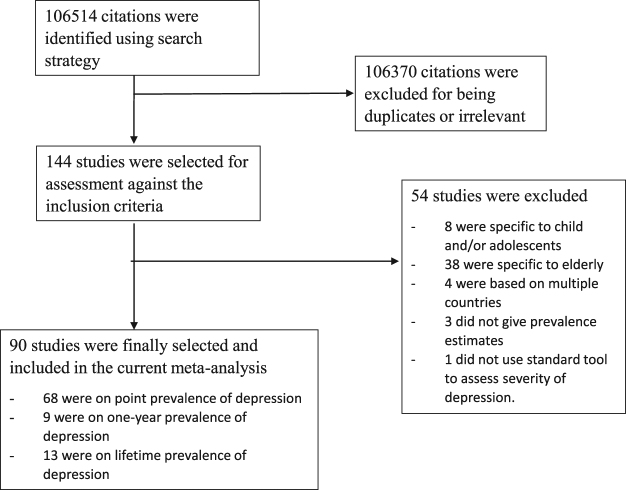
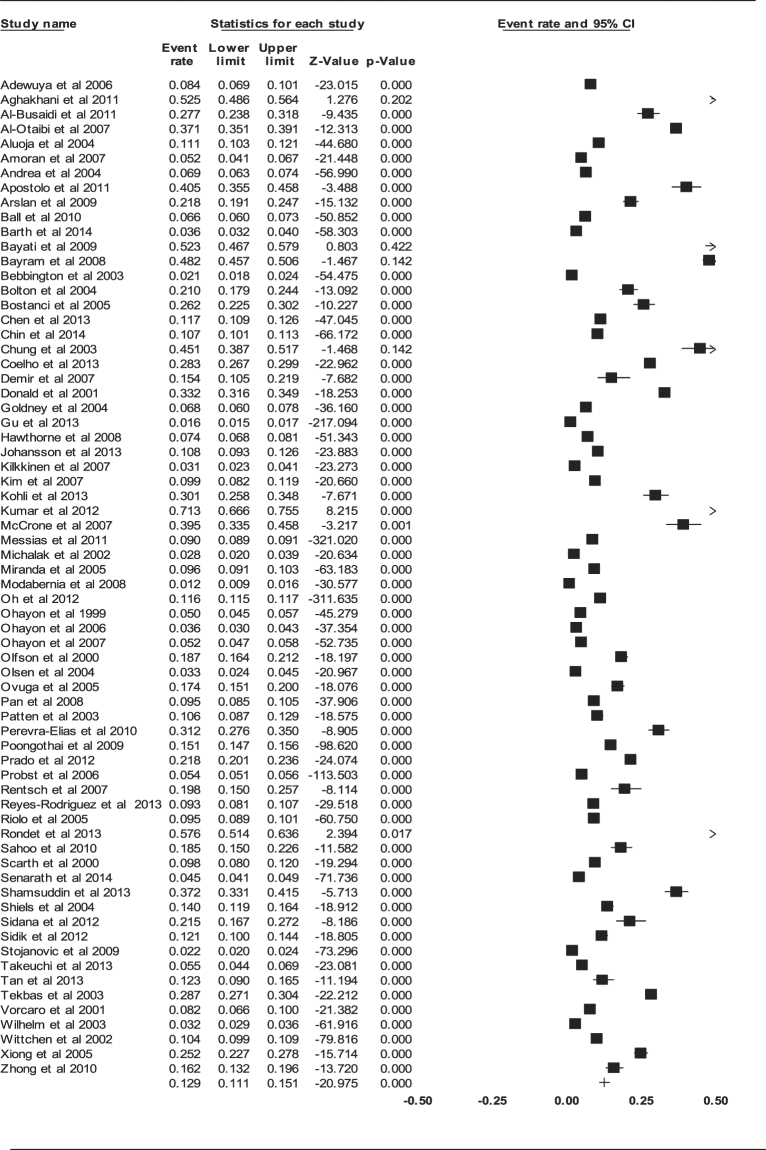
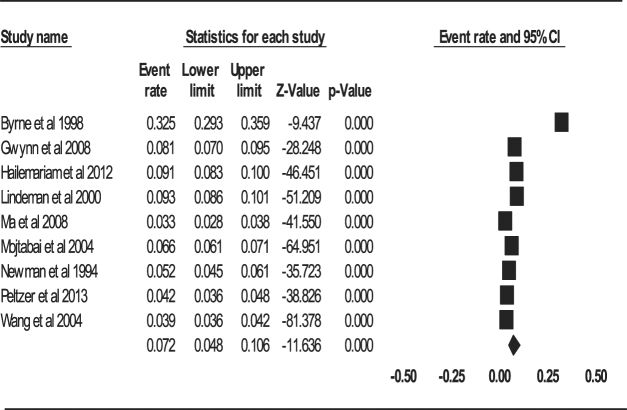
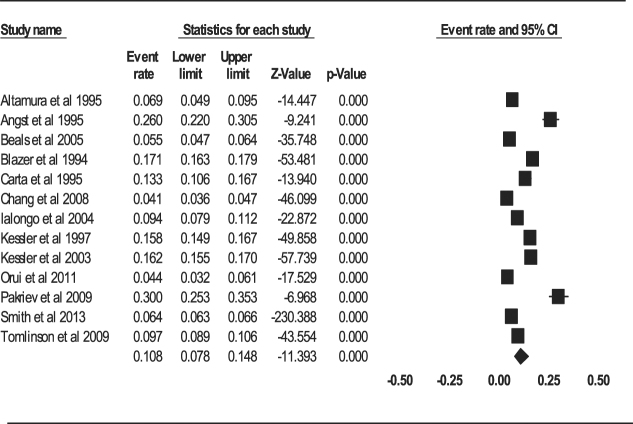
The prevalence of depression may be affected by changes in psychiatric practices and the availability of online mental health information in the past two decades. This study aimed to evaluate the aggregate prevalence of depression in communities from different countries between 1994 and 2014 and to explore the variations in prevalence stratified by geographical, methodological and socio-economic factors. A total of 90 studies were identified and met the inclusion criteria (n = 1,112,573 adults) with 68 studies on single point prevalence, 9 studies on one-year prevalence, and 13 studies on lifetime prevalence of depression. A random-effects model meta-analysis that was performed to calculate the aggregate point, one-year and lifetime prevalence of depression calculated prevalences of 12.9%, 7.2% and 10.8% respectively. Point prevalence of depression was significantly higher in women (14.4%), countries with a medium human development index (HDI) (29.2%), studies published from 2004 to 2014 (15.4%) and when using self-reporting instruments (17.3%) to assess depression. Heterogeneity was identified by meta-regression and subgroup analysis, and response rate, percentage of women and year of publication, respectively, were determined contribute to depression prevalence. This meta-analysis allows benchmarking of the prevalence of depression during the era when online health information emerged, facilitating future comparisons.
Overview
The claims and statistics of this paper haven’t been checked yet.
Free: it reads the open-access text and checks the first 5 claims that cite a source we can check. Create a free account to check every claim.
Integrity signals
Registry
Cites
Statistics
Figures
Verification
Claims the paper makes
The claims and statistics of this paper haven’t been checked yet.
Free: it reads the open-access text and checks the first 5 claims that cite a source we can check. Create a free account to check every claim.
Self-check
Percentages, sums and reported differences re-computed from the paper’s own numbers.
The self-check needs the paper’s full text.
Citations
Cites
Preferred Reporting Items for Systematic Reviews and Meta-Analyses: the PRISMA statement
Moher, D., Liberati, A., Tetzlaff, J., Altman, D. G., & for the PRISMA Group (2009) · BMJ · doi:10.1136/bmj.b2535 · Cited by 83,823
Kessler, R. C. (1994) · Archives of General Psychiatry · doi:10.1001/archpsyc.1994.03950010008002 · Cited by 12,370
Preferred reporting items for systematic reviews and meta-analyses: The PRISMA statement
Moher, D., Liberati, A., Tetzlaff, J., & Altman, D. G. (2010) · International Journal of Surgery · doi:10.1016/j.ijsu.2010.02.007 · Cited by 12,156
How should meta‐regression analyses be undertaken and interpreted?
Thompson, S. G., & Higgins, J. P. T. (2002) · Statistics in Medicine · doi:10.1002/sim.1187 · Cited by 3,026
(1984) · PubMed · Cited by 2,436
Cross-national epidemiology of DSM-IV major depressive episode
Bromet, E., Andrade, L. H., Hwang, I., Sampson, N. A., Alonso, J., de Girolamo, G., de Graaf, R., Demyttenaere, K., Hu, C., Iwata, N., et al. (2011) · BMC Medicine · doi:10.1186/1741-7015-9-90 · Cited by 2,221
Cost of Lost Productive Work Time Among US Workers With Depression
Stewart, W. F. (2003) · JAMA · doi:10.1001/jama.289.23.3135 · Cited by 1,421
Krebber, A. M. H., Buffart, L. M., Kleijn, G., Riepma, I. C., de Bree, R., Leemans, C. R., Becker, A., Brug, J., van Straten, A., Cuijpers, P., et al. (2014) · Psycho-Oncology · doi:10.1002/pon.3409 · Cited by 908
Excess mortality in depression: a meta-analysis of community studies
Cuijpers, P., & Smit, F. (2002) · Journal of Affective Disorders · doi:10.1016/s0165-0327(01)00413-x · Cited by 775
Van de Velde, S., Bracke, P., & Levecque, K. (2010) · Social Science & Medicine · doi:10.1016/j.socscimed.2010.03.035 · Cited by 719
Research works printed but not linked: 1
- Puri, B., Hall A., Ho R. Revision Notes in Psychiatry. 3rd edn, 384 (CRC Press, 2014).
Cited by
Items 501–600 of 1,000
Long‐term antidepressant use in a cohort of older people
O’Neill, A., Mcfarland, J. W., & Kelly, D. (2021) · International Journal of Geriatric Psychiatry · doi:10.1002/gps.5518 · Cited by 21
“Studies suggest that between 14% and 20% of older people living in the community experience depressive symptoms.(1) Because of our ageing populations, it is expected that the number of older people suffering from depression will increase.”
BackgroundAnxiety and depression levels of healthcare workers during the Covid-19 pandemic
Turan, O., Demirci, N. Y., AK, G., Akçay, Ş., Aktürk, Ü. A., Bilaçeroğlu, S., Çoşkun, F., Köktürk, O., Mirici, A., Özdemir, C., et al. (2022) · African Health Sciences · doi:10.4314/ahs.v22i1.62 · Cited by 20
Wang, Z., Jiang, B., Wang, X., Niu, Y., & Xue, H. (2022) · Frontiers in Psychiatry · doi:10.3389/fpsyt.2022.915042 · Cited by 22
Lam, R. W. M., Wong, H., Ramruttun, A. K., Chua, A. N., Ho, R., McIntyre, R. S., & Ho, C. S. H. (2022) · Translational Psychiatry · doi:10.1038/s41398-022-02083-w · Cited by 21
“As depression is more prevalent in women [33] and previous research focused on the fracture risk of women who suffered from MDD and consumed SSRI [34], this study included female rats only.”
ResultSelf-citationAlotaibi, N. M., Alkhamis, M. A., Alrasheedi, M., Alotaibi, K., Alduaij, L., Alazemi, F., Alfaraj, D., & Alrowaili, D. (2024) · International Journal of Environmental Research and Public Health · doi:10.3390/ijerph21030245 · Cited by 23
“…qualitative or mixed research studies in relevant faculties (i.e., Faculty of Islamic studies) to better understand in depth the phenomena of students’ psychological symptoms (i.e., depressive symptoms) from the students’ perspectives, thus offering the most relevant and tailored interventions…”
BackgroundNeural activation signatures in individuals with subclinical depression: A task-fMRI meta-analysis
Lyu, C., Lyu, X., Gong, Q., Gao, B., & Wang, Y. (2024) · Journal of Affective Disorders · doi:10.1016/j.jad.2024.06.040 · Cited by 20
Game Changer: Exploring the Role of Board Games in the Lives of Autistic People
Cross, L., Belshaw, F., Piovesan, A., & Atherton, G. (2024) · Journal of Autism and Developmental Disorders · doi:10.1007/s10803-024-06408-0 · Cited by 23
“This is in line with the estimates suggested by Lim et al. (2018) of 12.9%, and higher compared to the 8.1% estimates of depression prevalence among adults (20 + yo) in the USA between 2013 and 2016 (Brody et al., 2018).”
InfluentialStrodl, E. S., Bambling, M., Parnam, S., Ritchie, G., Cramb, S. M., & Vitetta, L. (2024) · Scientific Reports · doi:10.1038/s41598-024-71093-z · Cited by 20
Angerer, F., Mennel, V., Grund, S., Mayer, A., Büscher, R., Sander, L., Cuijpers, P. J., Terhorst, Y., Baumeister, H., & Domhardt, M. (2024) · Journal of Affective Disorders · doi:10.1016/j.jad.2024.09.055 · Cited by 19
Guo, Y., Chu, T., Li, Q., Gai, Q., Ma, H., Shi, Y., Che, K., Dong, F., Zhao, F., Chen, D., et al. (2024) · Journal of Magnetic Resonance Imaging · doi:10.1002/jmri.29617 · Cited by 19
Khuê, P. M., Vallo, R., Thi, H. D., Hai, O. K. T., Jarlais, D. C. D., Peries, M., Le, S. M., Rapoud, D., Quillet, C., NhamThi, T. T., et al. (2018) · BioMed Research International · doi:10.1155/2018/8346195 · Cited by 21
“The current and lifetime depression rates in our study were comparable to community rates reported by meta-analysis results from 30 countries between 1994 and 2014 [37].”
ResultBubolz, S., Mayer, G., Gronewold, N., Hilbel, T., & Schultz, J. (2020) · Journal of Medical Internet Research · doi:10.2196/16136 · Cited by 23
Juul, S., Siddiqui, F., Barbateskovic, M., Kamp, C. B., Hengartner, M. P., Kirsch, I., Gluud, C. N., & Jakobsen, J. C. (2021) · Systematic Reviews · doi:10.1186/s13643-021-01705-6 · Cited by 20
“The estimated lifetime prevalence of major depressive disorder is between 10 and 20% [3, 4].”
BackgroundFaraci, P., Bottaro, R., Valenti, G. D., & Craparo, G. (2022) · Psychology Research and Behavior Management · doi:10.2147/prbm.s354083 · Cited by 20
Chomchoei, C., Apidechkul, T., Keawdounglek, V., Wongfu, C., Khunthason, S., Kullawong, N., Tamornpark, R., Upala, P., & Yeemard, F. (2020) · Heliyon · doi:10.1016/j.heliyon.2020.e04273 · Cited by 26
“9% and that females had a higher prevalence than males [23].”
Heritability and polygenic load for comorbid anxiety and depression
Tabrizi, F., Rosén, J., Grönvall, H., William-Olsson, V. R., Arner, E., Magnusson, P. K., Palm, C., Larsson, H., Viktorin, A., Bernhardsson, J., et al. (2025) · Translational Psychiatry · doi:10.1038/s41398-025-03325-3 · Cited by 16
“Anxiety-and mood disorders are the most commonly occurring psychiatric disorders in the general population, with lifetime prevalence estimates of up to 33.7% and 14.7%, respectively [1, 2].”
InfluentialThe Psychological Impact of COVID-19 Pandemic on Mental Health of Iranian Population
Mohammadi, S. M., Ashtari, S., & Fetrat, M. K. (2020) · International Journal of Travel Medicine and Global Health · doi:10.34172/ijtmgh.2021.04 · Cited by 18
Zhang, Y., Cao, X., Aashiq, Xie, Y., Zhong, Q., Lei, G., Zhang, J., Xiao, Q., Wang, G., Bian, Y., et al. (2021) · Children and Youth Services Review · doi:10.1016/j.childyouth.2021.105980 · Cited by 18
Immunological Interfaces: The COVID-19 Pandemic and Depression
Perlmutter, A. (2021) · Frontiers in Neurology · doi:10.3389/fneur.2021.657004 · Cited by 18
“It is estimated that globally 350 million people are affected by depression, and it is a leading cause of disability (10, 11).”
BackgroundMedicinal Plants in the Treatment of Depression. II: Evidence from Clinical Trials
Moragrega, I., & Ríos, J. L. (2021) · Planta Medica · doi:10.1055/a-1517-6882 · Cited by 22
“This fact, along with the interrelationship between depression and physical health, has led to a worrying decrease in public health worldwide; therefore, depression is one of the priorities covered by the WHOʼs Mental Health Gap Action Programme [4].”
BackgroundSymptoms of depression, anxiety and stress in patients with chronic otitis media
Jotic, A. D., Opanković, A., Radin, Z. Z., Čvorović, L., Vujović, K. S., Krejovic-Trivic, S. B., Bukurov, B. M., Miličić, B., & Stojanovic, J. D. (2022) · PLoS ONE · doi:10.1371/journal.pone.0270793 · Cited by 23
“29% of patients had scores indicating depression disorder, which is similar to depression rates reported in the general population [17, 18].”
ResultXiong, M., & Hu, Z.-Q. (2022) · Frontiers in Public Health · doi:10.3389/fpubh.2022.1008370 · Cited by 20
“More importantly, depression is a crucial dimension of psychological well-being (26).”
BackgroundGlobal occurrence of depressive symptoms during the COVID-19 pandemic
Egbert, A. R., Karpiak, S. E., Havlik, R. J., & Cankurtaran, S. (2023) · Journal of Psychosomatic Research · doi:10.1016/j.jpsychores.2022.111145 · Cited by 18
“The current findings are also higher than other recent global reports of a single-point (13%) or lifetime (11%) estimates of depression before COVID-19 [4].”
BackgroundResultBoer, J. D., Höhle, N., Rosenblum, L., & Fietze, I. (2023) · Brain Sciences · doi:10.3390/brainsci13030480 · Cited by 19
Otten, D., Heller, A., Schmidt, P. S., Beutel, M. E., & Brähler, E. (2023) · Social Psychiatry and Psychiatric Epidemiology · doi:10.1007/s00127-023-02479-z · Cited by 19
“For most internalizing disorders (e.g., major depression [29] and anxiety disorders), women are more frequently affected than men [30, 31], whereas for externalizing disorders (e.g., substance abuse) men are more frequently affected [32].”
BackgroundAnalysis of Automated Clinical Depression Diagnosis in a Chinese Corpus
Mao, K., Wang, D. B., Zheng, T., Jiao, R., Zhu, Y., Wu, B., Lei, Q., Lyu, W., Chen, J., & Ye, M. (2023) · IEEE Transactions on Biomedical Circuits and Systems · doi:10.1109/tbcas.2023.3291554 · Cited by 20
“MDD has become one of the most common and costly disorders worldwide in recent years, with a higher prevalence in low and middle-income populations with fewer economic and social resources [3], [4].”
BackgroundRahman, A. A. M., Islam, M. T., Moniruzzaman, M., Rahim, S. K. A., Singh, M. J., Misran, N. B., Islam, M. S., & Soliman, M. S. (2023) · Scientific Reports · doi:10.1038/s41598-023-43182-y · Cited by 18
Potential role of gut microbiota in major depressive disorder: A review
Khaledi, M., Sameni, F., Gholipour, A., Shahrjerdi, S., Golmohammadi, R., Ghaleh, H. E. G., Poureslamfar, B., Hemmati, J., Mobarezpour, N., Milasi, Y. E., et al. (2024) · Heliyon · doi:10.1016/j.heliyon.2024.e33157 · Cited by 20
“According to a report from a survey of 30 countries, depression has a lifetime prevalence rate of about 10.8 % [8] and exerts a large clinical and social burden.”
BackgroundInfluentialOverview of Federated Facility to Harmonize, Analyze and Management of Missing Data in Cohorts
Rajula, H. S. R., Odintsova, V. V., Manchia, M., & Fanos, V. (2019) · Applied Sciences · doi:10.3390/app9194103 · Cited by 18
“Meta-analysis is a common approach to pool results from multiple cohorts and it is consistently used, for example, in GWAS [9] epidemiological studies [10], case-control studies [11] and randomized controlled trials [12].”
MethodOshvandi, K., Khatiban, M., Gheshlagh, R. G., & Razavi, M. R. (2020) · Irish Journal of Medical Science (1971 -) · doi:10.1007/s11845-020-02208-4 · Cited by 20
Prevalence and predictors of psychological response during immediate COVID‐19 pandemic
Cansel, N., Ucuz, İ., Arslan, A. K., Tetik, B. K., Çolak, C., Melez, Ş. N. İ., Gümüştakım, R. Ş., Ceylan, S., Öztürk, G. Z., Öztürk, Y. K., et al. (2021) · International Journal of Clinical Practice · doi:10.1111/ijcp.13996 · Cited by 20
Vancea, F., & Apostol, M.-Ş. (2021) · Science Progress · doi:10.1177/00368504211025873 · Cited by 22
COVID-19 and Mental Health Concerns Among Business Owners: a Cross-Sectional Study from India
Lathabhavan, R. (2022) · International Journal of Mental Health and Addiction · doi:10.1007/s11469-022-00824-y · Cited by 21
“Depression is characterized by sadness, loss of interest or pleasure, feelings of guilt or low self-worth, disturbed sleep or appetite, feelings of tiredness, and poor concentration, and in its most severe form, it can lead to suicide (Lim et al., 2018).”
BackgroundGao, J., Chen, M., Xiao, D., Li, Y., Zhu, S., Li, Y., Dai, X., Lu, F., Wang, Z., Cai, S., et al. (2022) · Cerebral Cortex · doi:10.1093/cercor/bhac217 · Cited by 21
Zurlo, M. C., Vallone, F., & Volta, M. F. C. D. (2022) · International Journal of Environmental Research and Public Health · doi:10.3390/ijerph191610443 · Cited by 20
Fatori, D., Suen, P. J. C., Bacchi, P. S., Afonso, L., Klein, I., Cavendish, B. A., Lee, Y. A., Liu, Z., Bauermeister, J. R., Moreno, M., et al. (2022) · Social Psychiatry and Psychiatric Epidemiology · doi:10.1007/s00127-022-02365-0 · Cited by 19
Reskati, M. H., Shafizad, M., Aarabi, M., Hedayatizadeh‐Omran, A., Khosravi, S., & Elyasi, F. (2021) · Current Psychology · doi:10.1007/s12144-021-02011-z · Cited by 17
“…et al., 2020), the given findings were generally consistent with the results of extensive epidemiological studies conducted in the past, suggesting that women were at higher risks of psychological problems (Wang et al., 2020b; Noorbala & Akhondzadeh, 2015; Gao et al., 2020; Lim et al., 2018).”
ResultStigmatizing attitudes towards depression among university students in Syria
Swed, S., Sohib, S., Hassan, N. A. I. F., Almoshantaf, M. B., Alkadi, S. M. S., AbdelQadir, Y. H., Ibrahim, N., Khairy, L. T., Bakkour, A., Muwaili, A. H. H., et al. (2022) · PLoS ONE · doi:10.1371/journal.pone.0273483 · Cited by 17
COVID-19 stress and wellbeing: A phenomenological qualitative study of Pakistani Medical Doctors
Afshan, G., Ahmed, F., Anwer, N., Shahid, S., & Khuhro, M. A. (2022) · Frontiers in Psychology · doi:10.3389/fpsyg.2022.920192 · Cited by 21
“Furthermore, extensive epidemiological findings indicate that females were at high risk of depression than males (Lim et al., 2018; Wang et al., 2020).”
BackgroundRetractedBarnish, M. S., & Nelson-Horne, R. V. (2023) · BMJ Open · doi:10.1136/bmjopen-2022-069310 · Cited by 19
Rong, R., Xu, Q., Jordan, K. P., & Chen, Y. (2023) · Journal of Adolescent Health · doi:10.1016/j.jadohealth.2023.09.011 · Cited by 17
Brodosi, L., Stecchi, M., Musio, A., Bazzocchi, M., Risi, E., Marchignoli, F., Marchesini, G., & Petroni, M. L. (2024) · Acta Diabetologica · doi:10.1007/s00592-024-02287-0 · Cited by 17
“Depression is a common public health problem, affecting 12.9% of individuals globally, with differences among countries, gender and other socioeconomic factors [12].”
BackgroundResultInfluentialStudents’ perceived restorativeness of university environment: the validation of the Rest@U scale
Menardo, E., Brondino, M., Damian, O., Lezcano, M., Marossi, C., & Pasini, M. (2024) · Frontiers in Psychology · doi:10.3389/fpsyg.2024.1348483 · Cited by 19
Explaining GPTs’ schema of depression: A machine behavior analysis.
Ganesan, A. V., Varadarajan, V., Lal, Y. K., Eijsbroek, V. C., Kjell, K., Kjell, O., Dhanasekaran, T., Stade, E. C., Eichstaedt, J. C., Boyd, R. L., et al. (2026) · Journal of Psychopathology and Clinical Science · doi:10.1037/abn0001144 · Cited by 17
“First, depression is one of the most prevalent mental health conditions, affecting an estimated 10–15% of the population throughout their lifetime [30, 32], and is the leading cause of disability worldwide [13].”
An Updated List of Neuromedicinal Plants of Pakistan, Their Uses, and Phytochemistry
Khan, A. W., Khan, A., Shah, S. M. M., Ullah, A., Faheem, M., & Saleem, M. H. (2019) · Evidence-based Complementary and Alternative Medicine · doi:10.1155/2019/6191505 · Cited by 18
Nigussie, K., Tesfaye, B., Lemma, A., & Kerebih, H. (2021) · BMJ Open · doi:10.1136/bmjopen-2020-043227 · Cited by 19
Gouvernet, B., & Bonierbale, M. (2021) · L Encéphale · doi:10.1016/j.encep.2021.03.002 · Cited by 17
Effects of subclinical depression on prefrontal–striatal model-based and model-free learning
Heo, S., Sung, Y., & Lee, S. W. (2021) · PLoS Computational Biology · doi:10.1371/journal.pcbi.1009003 · Cited by 19
Habtamu, Y., Admasu, K., Tullu, M., Damene, W., Birhanu, A., Beyero, T., & Tekeda, A. B. (2021) · Neuropsychiatric Disease and Treatment · doi:10.2147/ndt.s311949 · Cited by 18
Cao, L., Zhao, Y., Bai, M., Geliebter, D., Geliebter, J., Tiwari, R. K., He, H.-J., Wang, Z., Jia, X.-Y., Li, J., et al. (2022) · Frontiers in Pharmacology · doi:10.3389/fphar.2022.838261 · Cited by 26
Rocha, N. P., Tuazon, M. R., Patiño, J., Furr-Stimming, E. E., & Teixeira, A. L. (2022) · Cognitive and Behavioral Neurology · doi:10.1097/wnn.0000000000000301 · Cited by 17
Mattiello, R., Ayala, C. O., Pedron, F. F., Ferreira, I. C. S., Ley, L. L. G., Paungartner, L. M., Martins, M. D. S., Bagatini, M. A., Batista, N. O. W., Cecagno, P. O. M., et al. (2022) · BMJ Open · doi:10.1136/bmjopen-2022-063902 · Cited by 17
Wang, Z., Jiang, B., Wang, X., Wang, D., & Xue, H. (2023) · BMC Psychology · doi:10.1186/s40359-023-01038-0 · Cited by 17
Gallagher, C., Waidyatillake, N. T., Pirkis, J., Lambert, K. A., Cassim, R., Dharmage, S. C., & Erbas, B. (2023) · Obesity · doi:10.1002/oby.23813 · Cited by 20
Sanabria‐Mazo, J. P., Gómez-Acosta, A., Muñoz, J. A. C., Rojas, Y. F., Feliu‐Soler, A., Luciano, J. V., & Sanz, A. (2023) · Current Psychology · doi:10.1007/s12144-023-05180-1 · Cited by 17
“A meta-analysis that examined 68 studies conducted in 30 countries, between 1994 and 2014, reported a prevalence of depression of around 13% in the general population (Lim et al., 2018).”
The prevalence of Burnout Syndrome among Turkish Urologists: Results of a Nationwide Survey
Bolat, M. S., Çınar, Ö., Akdeniz, E., Yürük, E., Müslümanoğlu, A. Y., Altunrende, F., Kadıoğlu, A., Özkuvancı, Ü., & Tomak, L. (2018) · Urology Research and Practice · doi:10.5152/tud.2018.34202 · Cited by 21
Tubbs, A. S., Gallagher, R., Perlis, M. L., Hale, L. E., Branas, C. C., Barrett, M. S., Gehrels, J.-A., Alfonso‐Miller, P., & Grandner, M. A. (2020) · Sleep and Biological Rhythms · doi:10.1007/s41105-020-00255-z · Cited by 17
Lenferink, L. I. M., de Keijser, J., Smid, G. E., & Boelen, P. A. (2020) · Traumatology An International Journal · doi:10.1037/trm0000253 · Cited by 17
Pattern of inpatient care for depression: an analysis of 232,289 admissions
Fugger, G., Waldhoer, T., Hinterbuchinger, B., Pruckner, N., König, D., Gmeiner, A., Vyssoki, S., Vyssoki, B., & Fellinger, M. (2020) · BMC Psychiatry · doi:10.1186/s12888-020-02781-z · Cited by 19
“As repeatedly demonstrated in various patient samples women are significantly more often diagnosed with MDD [3], and female gender is associated with up to 50% higher prevalence rates of the disorder [4–6].”
BackgroundAssociation between mitochondrial DNA levels and depression: a systematic review and meta-analysis
Li, W., Zhu, L., Chen, Y., Zhuo, Y., Wan, S., & Guo, R. (2023) · BMC Psychiatry · doi:10.1186/s12888-023-05358-8 · Cited by 16
Ramdhonee‐Dowlot, K., Balloo, K., Morgül, E., & Essau, C. A. (2025) · Psychiatric Research and Clinical Practice · doi:10.1176/appi.prcp.20250026 · Cited by 21
“Emotional problems limit an individual's psychosocial functioning, diminishing their quality of life, and are frequently associated with substantial burdens and psychological, medical and financial costs not only for the individuals and their families, but also for society as a whole (73).”
Factors Associated With High Rates of Depressive Symptomatology in Older People in Vietnam
Tran, K., Esterman, A., Saito, Y., Brodaty, H., Nguyen, V. C., Roughead, E. E., Dang, T. H., Minas, H., Dang, L. T., & Nguyen, T. A. (2022) · American Journal of Geriatric Psychiatry · doi:10.1016/j.jagp.2022.02.007 · Cited by 19
The prevalence and factors associated with mental disorders in a community setting in central Uganda
Akena, D. H., Kiguba, R., Muwhezi, W. W., Kwesiga, B., Kigozi, G., Lukwata, H., & Nakasujja, N. (2023) · PLoS ONE · doi:10.1371/journal.pone.0285091 · Cited by 17
Anticipating and enacting worlds: moods, illness and psychobehavioral adaptation
Crippen, M. (2023) · Phenomenology and the Cognitive Sciences · doi:10.1007/s11097-023-09934-x · Cited by 17
Fountoulakis, K. Ν., Karakatsoulis, G. N., Abraham, S., Adorjan, K., Ahmed, H. U., Alarcón, R. D., Arai, K., Salihu, A., Berk, M., Bjedov, S., et al. (2024) · CNS Spectrums · doi:10.1017/s1092852924000026 · Cited by 16
Omylinska‐Thurston, J., Aithal, S., Liverpool, S., Clark, R. D., Moula, Z., Wood, J., Viliardos, L., Rodríguez-Dorans, E., Farish-Edwards, F., Parsons, A. S., et al. (2024) · JMIR Mental Health · doi:10.2196/55500 · Cited by 18
“This is reflected in the mental health literature reporting that women are twice as likely to report depression than men [225-227], including postnatal depression.”
BackgroundVitamin D, chronic pain, and depression: linear and non-linear Mendelian randomization analyses
Bassett, E., Gjekmarkaj, E., Mason, A. M., Zhao, S. S., & Burgess, S. (2024) · Translational Psychiatry · doi:10.1038/s41398-024-02997-7 · Cited by 17
Unlocking Success in Counseling: How Personality Traits Moderates Its Effectiveness
Fortunato, A., Andreassi, S., Franchini, C., Sciabica, G. M., Morelli, M., Chirumbolo, A., & Speranza, A. M. (2024) · European Journal of Investigation in Health Psychology and Education · doi:10.3390/ejihpe14100174 · Cited by 17
D'Souza, R. S., Klasová, J., Saini, C., Chang, A., Music, S. C., Shah, J. D., Elmati, P. R., Chitneni, A., To, J., Prokop, L. J., et al. (2025) · Anesthesia & Analgesia · doi:10.1213/ane.0000000000007421 · Cited by 18
“As a result, the certainty of this study’s conclusions is limited, in line with the GRADE criteria’s appraisal of low certainty.”
Jahrami, H., Saif, Z., AlHaddad, M., Faris, M. E., Hammad, L., & Ali, B. (2020) · Heliyon · doi:10.1016/j.heliyon.2020.e04323 · Cited by 19
“Globally, depression is a common mental disorder, with about 265 million people of all ages suffer from depression (Lim et al., 2018).”
BackgroundJahrami, H., Bragazzi, N. L., Grant, W. B., AlFarra, H. S. M., AlFara, W. S. M., Mashalla, S., & Saif, Z. (2020) · Nutrients · doi:10.3390/nu12092587 · Cited by 19
“Depression is a universal mental illness that affects a large proportion of any community [1].”
BackgroundHe, Q., Ren, J., Wang, G., Zhang, J., Xiang, J., & He, D. (2021) · International Journal of Disaster Risk Reduction · doi:10.1016/j.ijdrr.2021.102188 · Cited by 18
Prevalence of depression disorder in industrial workers: a meta-analysis
Amiri, S. (2021) · International Journal of Occupational Safety and Ergonomics · doi:10.1080/10803548.2021.1912448 · Cited by 16
SARS‐CoV ‐2 ( COVID ‐19) pandemic and a possible impact in the future of menstrual cycle research
Prado, R. C. R., Silveira, R., & Asano, R. Y. (2021) · Health Science Reports · doi:10.1002/hsr2.276 · Cited by 21
Martz, C. D., Hunter, E. A., Kramer, M. R., Wang, Y., Chung, K. W., Brown, M., Drenkard, C., Lim, S. S., & Chae, D. H. (2021) · Health & Place · doi:10.1016/j.healthplace.2021.102587 · Cited by 16
“It is estimated that 24–35% of people living with SLE are diagnosed with major depressive disorder, making it one of the most common comorbid conditions observed in SLE patients [13–15].”
González-Robles, A., Suso‐Ribera, C., Díaz‐García, A., García‐Palacios, A., Castilla, D., & Botella, C. (2021) · Internet Interventions · doi:10.1016/j.invent.2021.100420 · Cited by 16
Pungpapong, G., & Kalayasiri, R. (2022) · Journal of Health Science and Medical Research · doi:10.31584/jhsmr.2021824 · Cited by 20
Kim, Y., Kim, H., Suh, S., Park, H., & Lee, H. (2021) · Supportive Care in Cancer · doi:10.1007/s00520-021-06578-y · Cited by 17
Iglesias-González, M., Boigués, M., Sanagustín, D., Giralt‐López, M., Cuevas‐Esteban, J., Martínez-Cáceres, E. M., & Díez, C. (2021) · Brain Behavior & Immunity - Health · doi:10.1016/j.bbih.2021.100405 · Cited by 18
“Depressive disorders are a common mental illness and one of the most important causes of disability (Lim et al., 2018).”
Depressive symptoms in the general population: The 7th Tromsø Study
Grønli, O., Bramness, J. G., Wynn, R., & Høye, A. (2022) · Journal of Affective Disorders Reports · doi:10.1016/j.jadr.2022.100322 · Cited by 19
Wang, Z., & Zou, Q. (2022) · Acta Psychologica · doi:10.1016/j.actpsy.2022.103577 · Cited by 17
Ramadan, M. M., Fallatah, A., Batwa, Y. F., Saifaddin, Z., Mirza, M. S., Al-Dabbagh, M. A., & Alhusseini, N. K. (2021) · BMC Psychiatry · doi:10.1186/s12888-022-03988-y · Cited by 16
“One reason for this could be that compared to male, females are more vulnerable to stress and posttraumatic stress disorder as the COVID19 Pandemic [28, 29].”
BackgroundRole of Resilience in the Psychological Recovery of Women With Acute Myocardial Infarction
Arabadjian, M. E., Duberstein, Z. T., Sperber, S. H., Kaur, K., Kalinowski, J., Xia, Y., Hausvater, A., O'Hare, O., Smilowitz, N. R., Dickson, V. V., et al. (2023) · Journal of the American Heart Association · doi:10.1161/jaha.122.027092 · Cited by 17
Armandpishe, S., Pakzad, R., Jandaghian-Bidgoli, M., Abdi, F., Sardashti, M., & Soltaniha, K. (2023) · Heliyon · doi:10.1016/j.heliyon.2023.e16901 · Cited by 19
van Gastel, J., Hendrickx, J. O., Leysen, H., Martin, B., Veenker, L., Beuning, S., Coppens, V., Morrens, M., & Maudsley, S. R. (2019) · Methods in molecular biology · doi:10.1007/978-1-4939-9554-7_39 · Cited by 17
Yuan, X., Chai, J., Xu, W., & Zhao, Y. (2024) · Probiotics and Antimicrobial Proteins · doi:10.1007/s12602-024-10326-z · Cited by 15
“MDD impacts roughly 300 million individuals globally [3], with an estimated prevalence of around 10.8% derived from community surveys spanning 30 countries [4].”
InfluentialAvaliando "depressões": dos critérios diagnósticos às escalas psicométricas
Baptista, M. N. (2018) · Revista Avaliação Psicológica · doi:10.15689/ap.2018.1703.14265.03 · Cited by 23
Tsamakis, K., Teagarden, D. L., Villarreal, H. K., Morton, M. L., Janocko, N. J., Groover, O., Loring, D. W., Drane, D. L., & Karakis, I. (2021) · The Journal of Nervous and Mental Disease · doi:10.1097/nmd.0000000000001436 · Cited by 15
Mumin, F. I., Wesonga, F. D., Handuleh, J. I. M., White, R. G., & Mor, S. M. (2022) · BMC Public Health · doi:10.1186/s12889-022-14878-z · Cited by 16
Hou, L., Chen, L., & Zhang, W. (2023) · Frontiers in Public Health · doi:10.3389/fpubh.2023.1126190 · Cited by 15
“5 to < 25, 25 to < 30, or ≥30); (2) lifestyle habits: sleep difficulties (never, rarely, sometimes, or often); physical activity (sedentary, low, moderate, or high); smoking (never smoked, ex-smoker, smoke < 10 day, smoke 10–19 day, or smoke ≥20 day), alcohol consumption (low risk drinker, non- drinker, non-drinker, r…”
BackgroundMethodLee, Y., Lin, P., Huang, Y., Chiu, N., Hung, C., & Wang, L. (2023) · Neuropsychiatric Disease and Treatment · doi:10.2147/ndt.s415881 · Cited by 16
Bergenfeld, I., Kaslow, N. J., Yount, K. M., Cheong, Y. F., Johnson, E. R., & Clark, C. J. (2023) · Psychological Assessment · doi:10.1037/pas0001262 · Cited by 15
Pei, J., Hu, M., Lü, Q., Zhou, P., Shang, Y., Zhang, H., Yang, X., & Li, Y. (2024) · Frontiers in Public Health · doi:10.3389/fpubh.2024.1428384 · Cited by 17
McBain, R. K., Mwale, O., Mpinga, K., Kamwiyo, M., Kayira, W., Ruderman, T., Connolly, E., Watson, S., Wroe, E. B., Munyaneza, F., et al. (2024) · The Lancet · doi:10.1016/s0140-6736(24)01809-9 · Cited by 15
A Study of Sex Differences in the Biological Pathways of Stress Regulation in Mice
Qiao, Y., Chen, H., Guo, J., Zhang, X., Liang, X., Wei, L., Wang, Q., Bi, H., & Gao, T. (2025) · CNS Neuroscience & Therapeutics · doi:10.1111/cns.70433 · Cited by 16
Yao, R., Wang, H., Yuan, M., Wang, G., & Wu, C. (2020) · Psychiatry Research · doi:10.1016/j.psychres.2020.112750 · Cited by 16
Effect of fluoxetine on the testes of adult albino rats and the possible protective role of curcumin
Elsedawi, B. F., Hussein, Y., Sabry, M. A., & Aziz, J. A. (2020) · Anatomical Science International · doi:10.1007/s12565-020-00573-9 · Cited by 18
“Depression is the most prevalent mental illness; globally, it affects more than 350 million individuals and one of every ten men (Wang et al. 2017; Lim et al. 2018).”
BackgroundChao, Y., Lin, K.-F., Wu, C.-J., Wu, H., Hsu, H., Tsao, L., Cheng, Y.-P., Lai, Y.-C., & Chen, W. (2020) · BMJ Open · doi:10.1136/bmjopen-2020-037022 · Cited by 17
COVID-19 lockdown impact on cognitions and emotions experienced during sexual intercourse
Gouvernet, B., & Bonierbale, M. (2020) · Sexologies · doi:10.1016/j.sexol.2020.11.002 · Cited by 14
Shi, Z., Qin, Y., Chair, S. Y., Liu, Y., Tian, Y., Li, X., Hu, W., & Wang, Q. (2021) · BMJ Open · doi:10.1136/bmjopen-2021-050084 · Cited by 15
“Extensive information and online psychological support should be provided to the general population, especially the high-risk groups for psychological disorders during a public health crisis.”
Metadata
- Authors
- Lim, G. Y., Tam, W. W., Lu, Y., Ho, C. S., Zhang, M. W., & Ho, R. C.
- Affiliations
- Monash University (AU)
- National University of Singapore (SG)
- Zhejiang University (CN)
- National University Hospital (SG)
- Institute of Mental Health (SG)
- Corresponding author
- Lu, Yanxia
- Venue
- Scientific Reports
- Published
- 2018-02-12
- Volume
- 8
- Issue
- 1
- Pages
- 2861-2861
- ISSN
- 2045-2322 (ISSN-L)
- PMC
- PMC5809481
- OpenAlex
- W2807669085
- Semantic Scholar
- e3cd42f33f82796136b738a9ca84d8d523a0fb4b
- Cited by
- 1,557
- References
- 54
- Citations by year
- 2026: 88 · 2025: 172 · 2024: 198 · 2023: 234 · 2022: 265 · 2021: 285 · 2020: 199 · 2019: 91 · 2018: 23
- FWCI
- 202.75
- Type
- journal article
- Language
- en
- Update notices
- correction (2022-09-01)
- Open access
- gold
- doi.org
- Licence
- cc-by
- creativecommons.org/licenses/by/4.0 (tdm)
- creativecommons.org/licenses/by/4.0 (vor)
- Locations
- Scientific Reports (publishedVersion, cc-by)
- Europe PMC (PubMed Central) (publishedVersion, cc-by)
- PubMed Central (publishedVersion, cc-by)
- PubMed (publishedVersion)
- Rare & Special e-Zone (The Hong Kong University of Science and Technology) (submittedVersion)
- National University of Singapore (submittedVersion, cc-by)
- DOAJ (DOAJ: Directory of Open Access Journals) (submittedVersion, cc-by-sa)
- Funders
- National Natural Science Foundation of China (81600018)
- Topics
- Health Sciences › Medicine › Psychiatry and Mental health › Mental Health Treatment and Access
- Social Sciences › Psychology › Clinical Psychology › Suicide and Self-Harm Studies
- Social Sciences › Psychology › Clinical Psychology › Child and Adolescent Psychosocial and Emotional Development
- Keywords
- depression, prevalence, community-dwelling adults, point prevalence, lifetime prevalence, sex differences, Human Development Index, self-report measures, online mental health information, cross-national comparison, response rate
- MeSH terms
- Cross-Sectional Studies, Depression, Female, Humans, Male, Sex Characteristics, Socioeconomic Factors, Prevalence, Self Report
About these checks
Registry, retraction, Cites and statistics results are computed, not judged, with one exception: a printed reference that no index lists is read once by a model before it counts as a citation error. Claims are extracted by a model and kept only when their quote appears verbatim in the text; each cited source is then checked, with a model’s help, for whether it says what the claim relies on. Those verdicts can be wrong — read the claim’s quote and the cited source before relying on one.
Statistics and arithmetic are recomputed, not judged.
Confidence bands are shown only for fields calibrated on our annotated test set. None is calibrated yet, so no band is shown.
What counts as a claim ›How we measure confidence ›How we check this ›
Are you an author, or do you see a problem with this page? Request a review
Data sources
Bibliographic data: Semantic Scholar, OpenAlex, Crossref.
Contains information from the Semantic Scholar Academic Graph Datasets, made available under the ODC Attribution License (ODC-BY 1.0).
Semantic Scholar’s data is described in: Kinney, R., et al. (2023). The Semantic Scholar Open Data Platform. arXiv:2301.10140.
