

Prevalence of Depression in the Community from 30 Countries between 1994 and 2014
Open accessThe DOI matches its Crossref record; 54 of the 54 references it cites were found in a registry or an index.
Abstract
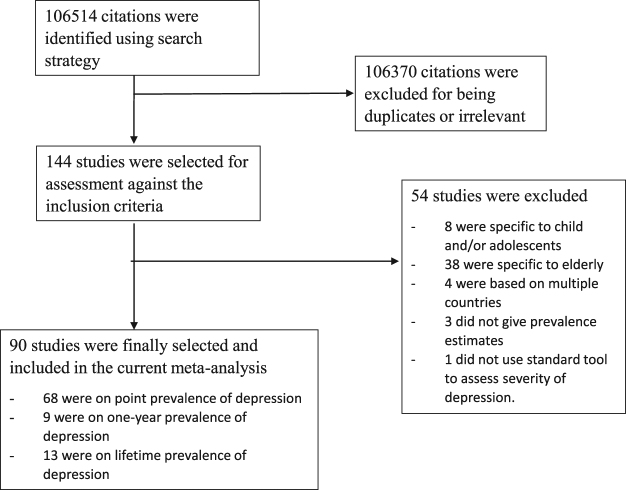
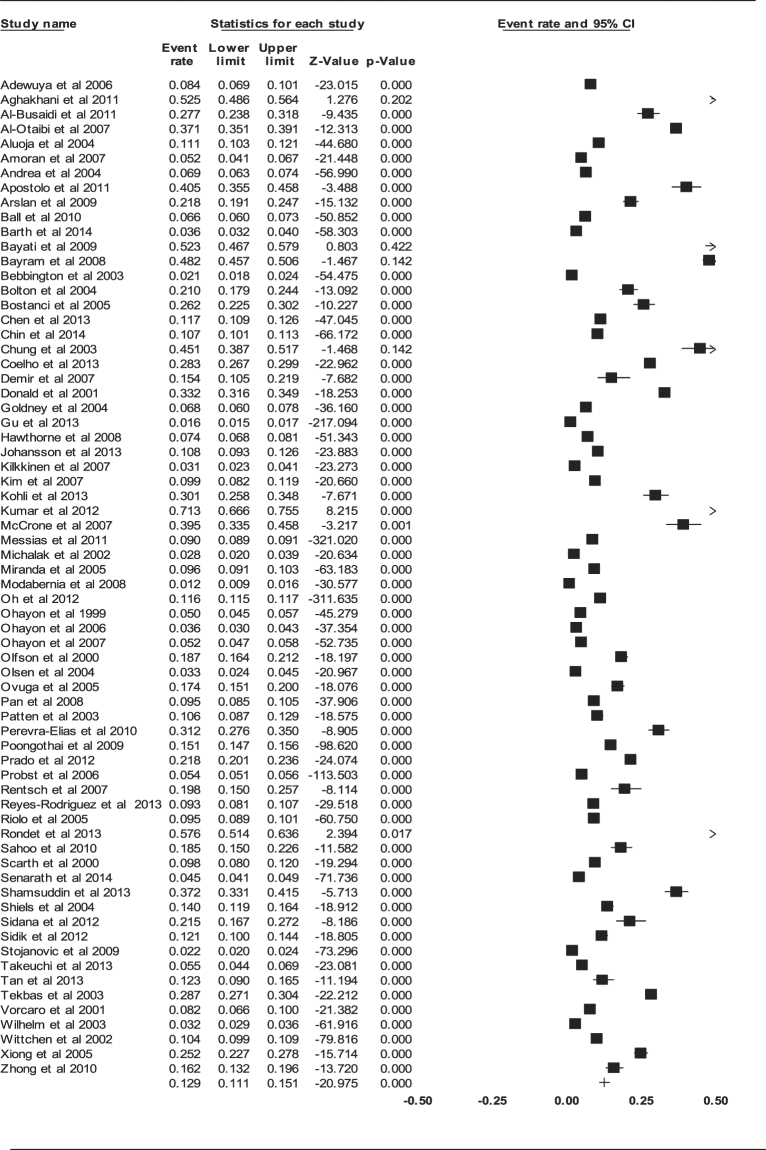
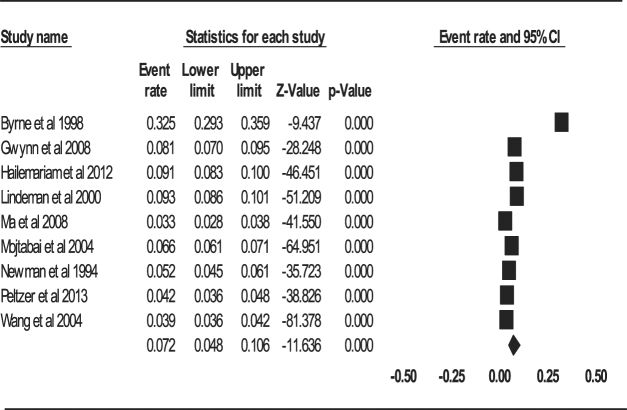
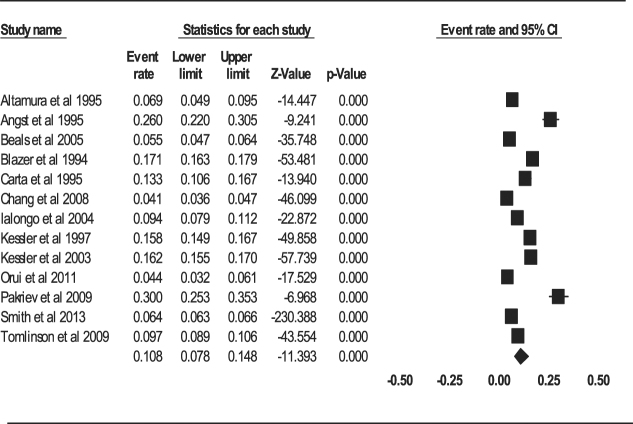
The prevalence of depression may be affected by changes in psychiatric practices and the availability of online mental health information in the past two decades. This study aimed to evaluate the aggregate prevalence of depression in communities from different countries between 1994 and 2014 and to explore the variations in prevalence stratified by geographical, methodological and socio-economic factors. A total of 90 studies were identified and met the inclusion criteria (n = 1,112,573 adults) with 68 studies on single point prevalence, 9 studies on one-year prevalence, and 13 studies on lifetime prevalence of depression. A random-effects model meta-analysis that was performed to calculate the aggregate point, one-year and lifetime prevalence of depression calculated prevalences of 12.9%, 7.2% and 10.8% respectively. Point prevalence of depression was significantly higher in women (14.4%), countries with a medium human development index (HDI) (29.2%), studies published from 2004 to 2014 (15.4%) and when using self-reporting instruments (17.3%) to assess depression. Heterogeneity was identified by meta-regression and subgroup analysis, and response rate, percentage of women and year of publication, respectively, were determined contribute to depression prevalence. This meta-analysis allows benchmarking of the prevalence of depression during the era when online health information emerged, facilitating future comparisons.
Overview
The claims and statistics of this paper haven’t been checked yet.
Free: it reads the open-access text and checks the first 5 claims that cite a source we can check. Create a free account to check every claim.
Integrity signals
Registry
Cites
Statistics
Figures
Verification
Claims the paper makes
The claims and statistics of this paper haven’t been checked yet.
Free: it reads the open-access text and checks the first 5 claims that cite a source we can check. Create a free account to check every claim.
Self-check
Percentages, sums and reported differences re-computed from the paper’s own numbers.
The self-check needs the paper’s full text.
Citations
Cites
Preferred Reporting Items for Systematic Reviews and Meta-Analyses: the PRISMA statement
Moher, D., Liberati, A., Tetzlaff, J., Altman, D. G., & for the PRISMA Group (2009) · BMJ · doi:10.1136/bmj.b2535 · Cited by 83,823
Kessler, R. C. (1994) · Archives of General Psychiatry · doi:10.1001/archpsyc.1994.03950010008002 · Cited by 12,370
Preferred reporting items for systematic reviews and meta-analyses: The PRISMA statement
Moher, D., Liberati, A., Tetzlaff, J., & Altman, D. G. (2010) · International Journal of Surgery · doi:10.1016/j.ijsu.2010.02.007 · Cited by 12,156
How should meta‐regression analyses be undertaken and interpreted?
Thompson, S. G., & Higgins, J. P. T. (2002) · Statistics in Medicine · doi:10.1002/sim.1187 · Cited by 3,026
(1984) · PubMed · Cited by 2,436
Cross-national epidemiology of DSM-IV major depressive episode
Bromet, E., Andrade, L. H., Hwang, I., Sampson, N. A., Alonso, J., de Girolamo, G., de Graaf, R., Demyttenaere, K., Hu, C., Iwata, N., et al. (2011) · BMC Medicine · doi:10.1186/1741-7015-9-90 · Cited by 2,221
Cost of Lost Productive Work Time Among US Workers With Depression
Stewart, W. F. (2003) · JAMA · doi:10.1001/jama.289.23.3135 · Cited by 1,421
Krebber, A. M. H., Buffart, L. M., Kleijn, G., Riepma, I. C., de Bree, R., Leemans, C. R., Becker, A., Brug, J., van Straten, A., Cuijpers, P., et al. (2014) · Psycho-Oncology · doi:10.1002/pon.3409 · Cited by 908
Excess mortality in depression: a meta-analysis of community studies
Cuijpers, P., & Smit, F. (2002) · Journal of Affective Disorders · doi:10.1016/s0165-0327(01)00413-x · Cited by 775
Van de Velde, S., Bracke, P., & Levecque, K. (2010) · Social Science & Medicine · doi:10.1016/j.socscimed.2010.03.035 · Cited by 719
Research works printed but not linked: 1
- Puri, B., Hall A., Ho R. Revision Notes in Psychiatry. 3rd edn, 384 (CRC Press, 2014).
Cited by
Items 301–400 of 1,000
Choudhary, S., Thomas, N., Ellenberger, J., Srinivasan, G., & Cohen, R. (2022) · JMIR Formative Research · doi:10.2196/37736 · Cited by 46
“It is also interesting that studies have shown that the prevalence of depression rates is lower in Asian countries, such as South Korea, when compared with Western countries [62,63] owing to the stigma surrounding psychiatric illnesses [64].”
BackgroundTran, B. X., Ha, G. H., Vu, G. T., Nguyen, L. H., Latkin, C. A., Nathan, K., McIntyre, R. S., Ho, C. S. H., Tam, W., & Ho, R. (2019) · International Journal of Environmental Research and Public Health · doi:10.3390/ijerph16132255 · Cited by 38
Self-citationMartín, J., Padierna, Á., Villanueva, A., & Quintana, J. M. (2021) · International Journal of Clinical Practice · doi:10.1111/ijcp.14607 · Cited by 43
Age and sex‐related variability in the presentation of generalized anxiety and depression symptoms
Thompson, K. N., Hübel, C., Cheesman, R., Adey, B. N., Armour, C., Davies, M. R., Hotopf, M. H., Jones, I. R., Kalsi, G., McIntosh, A. M., et al. (2021) · Depression and Anxiety · doi:10.1002/da.23213 · Cited by 40
“Around 11% of the world's population experience clinically relevant symptoms within their lifetime (Lim et al., 2018) and they co‐occur simultaneously or sequentially in 50%–80% of cases (Brown et al., 2001; Jacobson & Newman, 2017; Kroenke et al., 2007; Moffitt et al., 2007).”
BackgroundMu, T., Xu, R., Xu, J.-Y., Dong, D., Zhou, Z.-N., Dai, J.-N., & Shen, C. (2022) · PLoS ONE · doi:10.1371/journal.pone.0266950 · Cited by 38
Broder, J. S., Silva, L. O. J. E., Bellolio, F., Freiermuth, C. E., Griffey, R. T., Hooker, E. A., Jang, T. B., Meltzer, A. C., Mills, A. M., Pepper, J. D., et al. (2022) · Academic Emergency Medicine · doi:10.1111/acem.14495 · Cited by 43
Zheng, X., Cui, Y., Xue, Y., Shi, L., Guo, Y., Dong, F., & Zhang, C. (2022) · Journal of Affective Disorders · doi:10.1016/j.jad.2022.01.040 · Cited by 37
Hossain, M. J., Ahmmed, F., Sarker, M. M. R., Sarwar, S., Bari, M. S., Khan, M. R., Shahriar, S., Rafi, M. O., Emran, T. B., Mitra, S., et al. (2022) · Frontiers in Public Health · doi:10.3389/fpubh.2021.807474 · Cited by 39
Self-Compassion, Anxiety and Depression Symptoms; the Mediation of Shame and Guilt
Shamsabadi, P. E., & Dehshiri, G. (2024) · Psychological Reports · doi:10.1177/00332941241227525 · Cited by 41
“Due to the negative individual, social and economic consequences of anxiety and depression, it is also possible to commit suicide in the worst cases (Bech et al., 2018; Davis et al., 2019; Lim et al., 2018; Wu et al., 2018).”
Depression and lifestyle among university students: A one-year follow-up study
Roldán-Espínola, L., Serra, P. R., Roca, M., García-Toro, M., Coronado-Simsic, V., Castro, A., Navarra‐Ventura, G., Vilagut, G., Alayo, I., Ballester, L., et al. (2024) · The European Journal of Psychiatry · doi:10.1016/j.ejpsy.2024.100250 · Cited by 43
Zughbur, M. R., Hamam, Y., Kagee, A., Hamam, M., Hijazi, Y. M., Hamam, M., Abuolwan, O., Sayeed, S., & Veronese, G. (2025) · Conflict and Health · doi:10.1186/s13031-025-00681-1 · Cited by 45
“In some cases, fear and anxiety can lead to overemotional stimulation [21].”
Filatova, S., Upadhyaya, S., Kronström, K., Suominen, A., Chudal, R., Luntamo, T., Sourander, A., & Gyllenberg, D. (2019) · Nordic Journal of Psychiatry · doi:10.1080/08039488.2019.1652342 · Cited by 42
Gharraee, B., Tajrishi, K. Z., Sheybani, F., Tahmasbi, N., Mirzaee, M., Farahani, H., & Naserbakht, M. (2019) · Medical Journal of the Islamic Republic of Iran · doi:10.47176/mjiri.33.151 · Cited by 37
Anti-depressant effects of acupuncture: The insights from NLRP3 mediated pyroptosis and inflammation
Chen, Y., Hao, C., Chen, W., Cheng, W., Li, P., Shen, J., Tong, T., Yan, S., Huang, S., He, T., et al. (2022) · Neuroscience Letters · doi:10.1016/j.neulet.2022.136787 · Cited by 41
Herrera‐Añazco, P., Urrunaga‐Pastor, D., Benites-Zapata, V. A., Bendezú-Quispe, G., Toro-Huamanchumo, C. J., & Hernández, A. V. (2022) · Frontiers in Psychiatry · doi:10.3389/fpsyt.2022.727034 · Cited by 38
Wu, H., Li, T., Peng, C., Yang, C., Bian, Y., Li, X., Xiao, Q., Wang, P., Zhang, Z., & Zhang, Y. (2022) · Journal of Affective Disorders · doi:10.1016/j.jad.2022.08.024 · Cited by 37
Darwish, A. B., Sayed, N. S. E., Salama, A., & Saad, M. A. (2023) · Life Sciences · doi:10.1016/j.lfs.2023.121546 · Cited by 37
Deleskog, A., Ljung, R., Forsell, Y., Nevriana, A., Almas, A., & Möller, J. (2019) · BMC Public Health · doi:10.1186/s12889-019-7322-z · Cited by 40
Loh, A. Z. H., Tan, J., Tam, J. K. C., Zhang, M. W. B., Ho, C. S. H., & Ho, R. (2020) · Psychosomatic Medicine · doi:10.1097/psy.0000000000000833 · Cited by 38
Self-citationStolicyn, A., Harris, M. A., Shen, X., Barbu, M. C., Adams, M. J., Hawkins, E. L., de Nooij, L., Yeung, H. W., Murray, A. D., Lawrie, S. M., et al. (2020) · Human Brain Mapping · doi:10.1002/hbm.25095 · Cited by 39
“Depression (major depressive disorder, MDD) is a prevalent psychiatric condition which on average affects between 10 and 15% of the general population over the lifetime in countries around the world (Bromet et al., 2011; Kessler & Bromet, 2013; Lim et al., 2018).”
Depressive symptoms in the front-line non-medical workers during the COVID-19 outbreak in Wuhan
Fang, X., Zhang, J., Teng, C., Zhao, K., Su, K., Wang, Z., Tang, W., & Zhang, C. (2020) · Journal of Affective Disorders · doi:10.1016/j.jad.2020.06.078 · Cited by 35
Sazakli, E., Leotsinidis, M., Bakola, M., Kitsou, K. S., Katsifara, A., Konstantopoulou, A., & Jelastopulu, E. (2021) · Journal of Public Health Research · doi:10.4081/jphr.2021.2089 · Cited by 36
“10 has improved [22], which may explain the similar depression rates in men and women,”
BackgroundParental bonding, depression, and suicidal ideation in medical students
Tugnoli, S., Casetta, I., Caracciolo, S., & Salviato, J. (2022) · Frontiers in Psychology · doi:10.3389/fpsyg.2022.877306 · Cited by 41
“The prevalence rate of depression is higher in undergraduate medical students than in the general population (Lim et al., 2018), and the overall prevalence of depression or depressive symptoms among medical students is 27.”
BackgroundPhalswal, U., Pujari, V., Sethi, R., & Verma, R. (2023) · Journal of Education and Health Promotion · doi:10.4103/jehp.jehp_460_22 · Cited by 38
“)[36,37] It is important to note that the presence of depressive symptoms does not reflect a clinical diagnosis of depression.”
BackgroundInfluentialLee, S., & Choi, M.-J. (2023) · Nutrients · doi:10.3390/nu15092169 · Cited by 36
Prudente, T. P., Mezaiko, E., Silveira, É. A., & Nogueira, T. E. (2024) · Behavioral Sciences · doi:10.3390/bs14010043 · Cited by 57
“Interestingly, these continents are associated with the lowest reported aggregate prevalence of depression [68].”
BackgroundZakeri, M. A., Rafsanjanipoor, S. M. H., Sedri, N., Kahnooji, M., Rafsanjani, M. S., Zakeri, M., Bazmandeh, A. Z., Talebi, A., & Dehghan, M. (2021) · Current Psychology · doi:10.1007/s12144-021-01582-1 · Cited by 37
“…stress, level of psychological influence of outbreak, mental health problems and fear (Wang et al., 2020), which is consistent with this study and that could possibly be due to their unique socioeconomic and biological conditions and also an elevated risk of depression in women (Lim et al., 2018).”
ResultMartinelli, N. N., Gil, S., Chevalère, J., Belletier, C., Dezecache, G., Huguet, P., & Droit‐Volet, S. (2021) · International Journal of Environmental Research and Public Health · doi:10.3390/ijerph18063250 · Cited by 36
“The prevalence rate is close to 8%–10%, a number that corresponds to the average global rate [22].”
BackgroundIslam, S., Islam, T., Nahar, Z., Shahriar, M., Islam, S. M. A., Bhuiyan, M. A., & Islam, M. R. (2022) · PLoS ONE · doi:10.1371/journal.pone.0276619 · Cited by 37
A New Paradigm for Achieving a Rapid Antidepressant Response
Malhi, G. S., Morris, G., Bell, E., & Hamilton, A. (2020) · Drugs · doi:10.1007/s40265-020-01303-1 · Cited by 34
“Depressive disorders account for significant disability worldwide [1] and are one of the most common psychiatric illnesses in the general population [2, 3].”
BackgroundHosen, I., Al‐Mamun, F., & Mamun, M. A. (2021) · Health Science Reports · doi:10.1002/hsr2.398 · Cited by 37
“Besides, another study reported female gender significantly develops depression more frequently, which is contrast to the present study findings as the present findings reported no association between gender and depression.(40) Students belonging to medical college were significantly more anxious, which alludes to the…”
ResultWu, N., Yang, F., Xia, J., Ma, T., Yu, C. P., & Li, N. (2021) · 四川大学学报:医学版 · doi:10.12182/20210960507 · Cited by 33
After Over a Year of Pandemic: Mental Well-being and Life Satisfaction of Filipino College Students
Egcas, R. A., Oducado, R. M., Cleofas, J. V., Rabacal, J., & Lausa, S. M. (2021) · Pertanika journal of social science & humanities · doi:10.47836/pjssh.29.4.17 · Cited by 39
Langhein, M., Seitz‐Holland, J., Lyall, A. E., Pasternak, O., Chunga, N., Karayumak, S. C., Kubicki, A., Mulert, C., Espinoza, R. T., Narr, K. L., et al. (2022) · Journal of Affective Disorders · doi:10.1016/j.jad.2022.06.043 · Cited by 34
Association Between Unemployment and Mental Disorders: A Narrative Update of the Literature
Franke, A. G., Schmidt, P., & Neumann, S. (2024) · International Journal of Environmental Research and Public Health · doi:10.3390/ijerph21121698 · Cited by 38
Yazew, K. G., Beshah, D. T., Salih, M. H., & Amare, T. (2019) · Psychiatry Journal · doi:10.1155/2019/6892623 · Cited by 36
“Depression is the most common mental health condition in the general population [1], characterized by sadness, loss of interest or pleasure, feelings of guilt or low self-worth, disturbed sleep or appetite, feelings of tiredness, and poor concentration [2].”
BackgroundLo, K., Chiang, L.-L., Hsu, S.-M., Tsai, C.-Y., Wu, D., Chou, C.-J., Chuang, H., & Liu, W. (2021) · The Science of The Total Environment · doi:10.1016/j.scitotenv.2021.147291 · Cited by 34
Gonsalves, M. A., White, T. L., Barredo, J., Fukuda, A. M., Joyce, H. E., Harris, A. D., & Carpenter, L. L. (2022) · NeuroImage Clinical · doi:10.1016/j.nicl.2022.103049 · Cited by 34
Cultural values, shame and guilt, and expressive suppression as predictors of depression
Liw, L., Çiftçi, A., & Kim, T. (2022) · International Journal of Intercultural Relations · doi:10.1016/j.ijintrel.2022.05.005 · Cited by 36
Zhang, X., Cai, Y., Hu, X., Lu, C. Y., Nie, X., & Shi, L. (2022) · Frontiers in Psychiatry · doi:10.3389/fpsyt.2022.922648 · Cited by 34
Depression and Quality of Life in Patients with Gliomas: A Narrative Review
Hu, Y., Deng, F., Zhang, L., Hu, K., Liu, S., Zhong, S., Yang, J., Zeng, X., & Peng, X. (2022) · Journal of Clinical Medicine · doi:10.3390/jcm11164811 · Cited by 35
Reuben, A., Moreland, A. D., Abdalla, S. M., Cohen, G. H., Friedman, M. J., Galea, S., Rothbaum, A. O., Schmidt, M. G., Vena, J. E., & Kilpatrick, D. G. (2022) · JAMA Network Open · doi:10.1001/jamanetworkopen.2022.32556 · Cited by 32
Guzek, D., Kołota, A., Lachowicz, K., Skolmowska, D., Stachoń, M., & Głąbska, D. (2023) · Nutrients · doi:10.3390/nu15040951 · Cited by 38
Carneiro, L., Afonso, J., Ramirez-Campillo, R., Murawska-Ciałowciz, E., Marques, A., & Clemente, F. M. (2020) · International Journal of Environmental Research and Public Health · doi:10.3390/ijerph17186715 · Cited by 31
“This is troublesome, as the prevalence of depression may vary depending on a country’s human development index [66].”
BackgroundKukucka, T., Ferencová, N., Višňovcová, Z., Ondrejka, I., Hrtánek, I., Kovacova, V., Macejova, A., Mlyncekova, Z., & Tonhajzerová, I. (2024) · International Journal of Molecular Sciences · doi:10.3390/ijms25084511 · Cited by 34
“Several studies estimating the prevalence of depressive disorders display a significant heterogeneity in results, ranging from 3.44% [2] to 17.3% [3] during the pre-pandemic period.”
BackgroundInfluentialAl‐Hakeim, H. K., Al-Fadhel, S. Z., Al-Dujaili, A. H., & Maes, M. H. J. (2020) · Acta Neuropsychiatrica · doi:10.1017/neu.2019.47 · Cited by 31
Katrenčíková, B., Vaváková, M., Waczulíková, I., Oravec, S., Garaiová, I., Nagyová, Z., Hlaváčová, N., Ďuračková, Z., & Trebatická, J. (2020) · Biomolecules · doi:10.3390/biom10101427 · Cited by 36
“In Europe, the prevalence of depressive disorder in adults is 12% [1] and 5.”
BackgroundPredicting Depression in Community Dwellers Using a Machine Learning Algorithm
Cho, S., Geem, Z. W., & Na, K. (2021) · Diagnostics · doi:10.3390/diagnostics11081429 · Cited by 32
“8% worldwide [2], and it is the single most significant contributor to non-fatal health loss globally [3].”
BackgroundContent Validity through Expert Judgment for the Depression Clinical Evaluation Test
Guillot-Valdés, M., Guillén‐Riquelme, A., & Buela‐Casal, G. (2022) · International Journal of Clinical and Health Psychology · doi:10.1016/j.ijchp.2022.100292 · Cited by 39
Baumann, C., Rousseau, H., Tarquinio, C., Batt, M., Tarquinio, P., Lebreuilly, R., Sorsana, C., Legrand, K., Guillemin, F., & Bourion-Bédès, S. (2021) · Health and Quality of Life Outcomes · doi:10.1186/s12955-021-01903-9 · Cited by 33
Ghorbani, M., Mohammadi, P., Keshavarzi, M., Ziroohi, A., Mohammadi, M., Aghamohammadhasan, M., & Pakseresht, M. (2021) · Critical Reviews in Analytical Chemistry · doi:10.1080/10408347.2021.2018648 · Cited by 31
Zhang, Z., Huang, P., Li, S., Liu, Z., Zhang, J., Li, Y., & Liu, Z. (2022) · Psychiatry Research · doi:10.1016/j.psychres.2022.114598 · Cited by 33
Prevalence and associated factors of depression in Sri Lanka: a systematic review and meta-analysis
Alwis, I., Baminiwatta, A., & Chandradasa, M. (2023) · Social Psychiatry and Psychiatric Epidemiology · doi:10.1007/s00127-023-02495-z · Cited by 35
“This may be problematic as it could delay the detection and management of the early stages of depression and lead to unmet mental health needs in the community [21].”
InfluentialTreatment gap in bereavement care: (Online) bereavement support needs and use after traumatic loss
Lenferink, L. I. M., de Keijser, J., Eisma, M. C., Smid, G. E., & Boelen, P. A. (2021) · Clinical Psychology & Psychotherapy · doi:10.1002/cpp.2544 · Cited by 35
Molenaar, N. M., Lambregtse-van den Berg, M. P., & Bonsel, G. J. (2020) · Archives of Women's Mental Health · doi:10.1007/s00737-019-0951-5 · Cited by 30
Leiz, M., Pfeuffer, N., Rehner, L., Stentzel, U., & van den Berg, N. (2022) · Patient Preference and Adherence · doi:10.2147/ppa.s388106 · Cited by 36
Back pain and depressive symptoms: A systematic review and meta-analysis
Amiri, S., Behnezhad, S., & Azad, E. (2020) · The International Journal of Psychiatry in Medicine · doi:10.1177/0091217420913001 · Cited by 33
Rousseau, K.-L., Thompson, S. N., Pileggi, L.-A., Henry, M., & Thomas, K. G. F. (2020) · South African Journal of Psychology · doi:10.1177/0081246320977759 · Cited by 32
“Email: rsskim004@myuct.ac.za Globally, the clinical syndrome of major depressive disorder (MDD; commonly referred to as depression) has the highest lifetime prevalence of all psychiatric disorders (Kessler et al., 1994; Lim et al., 2018).”
BackgroundPiera-Jiménez, J., Etzelmueller, A., Kolovos, S., Folkvord, F., & Lupiáñez‐Villanueva, F. (2021) · Journal of Medical Internet Research · doi:10.2196/27410 · Cited by 30
“Although often underdiagnosed, depression is the most prevalent mental health condition among adult population and across cultural settings resulting in an aggregate point prevalence of 12.9%, 1-year prevalence of 7.2%, and lifetime prevalence of 10.8% (years 1994-2014) [7-9].”
InfluentialThe Psychological and Quality of Life Impacts on Women in Hong Kong during the COVID-19 Pandemic
Hung, M. S. Y., Lam, S. K. K., Chan, L. C. K., Liu, S. P. S., & Chow, M. C. M. (2021) · International Journal of Environmental Research and Public Health · doi:10.3390/ijerph18136734 · Cited by 31
Factors Associated with Affective Symptoms and Quality of Life in Patients with Atopic Dermatitis
Ferrucci, S. M., Tavecchio, S., Angileri, L., Surace, T., Berti, E., & Buoli, M. (2021) · Acta Dermato Venereologica · doi:10.2340/00015555-3922 · Cited by 31
Depression, stress, anxiety among jordanian people during COVID-19 pandemic: A survey-based study
Abuhammad, S., Khabour, O. F., Alomari, M. A., & Alzoubi, K. H. (2022) · Informatics in Medicine Unlocked · doi:10.1016/j.imu.2022.100936 · Cited by 32
Risk factors of paternal postnatal depression in Pakistan: Findings from an urban sample
Atif, M., Halaki, M., Chow, C. M., & Raynes‐Greenow, C. H. (2022) · Nursing and Health Sciences · doi:10.1111/nhs.12954 · Cited by 30
“According to a recent meta-analysis that included one million participants from 30 countries, the aggregate point prevalence of depression was 12.9%, the 1-year prevalence was 7.2%, and lifetime prevalence was 10.8% from 1994 to 2014 (Lim et al., 2018).”
BackgroundMethodInfluentialDepression prevalence in Vietnam during the Covid-19 pandemic: A systematic review and meta-analysis
Tran, Q. D., Quynh, V. T., & Phan, Q. N. (2022) · Ethics Medicine and Public Health · doi:10.1016/j.jemep.2022.100806 · Cited by 32
Chang, T.-Y., Liao, S., Chang, C., Wu, C., Huang, W., Hwang, J., & Hsu, C. (2022) · The Lancet Regional Health - Western Pacific · doi:10.1016/j.lanwpc.2022.100501 · Cited by 32
Pandey, A. R., Adhikari, B., Bista, B., Lamichhane, B., Joshi, D., C, S. P. K., Sharma, S., & Baral, S. (2024) · BMJ Open · doi:10.1136/bmjopen-2023-078582 · Cited by 33
Yuping, Z., Tianbi, L., Wentao, S., Li, Y., & Zhang, G. (2024) · Depression and Anxiety · doi:10.1155/da/5716755 · Cited by 33
“According to the World Health Organization (WHO), depression is now one of the leading causes of disability globally, affecting more than 300million individuals each year, which constitutes over 4 % of the world population [2 – 4].”
Cénat, J. M., Farahi, S. M. M. M., Gakima, L., Mukunzi, J. N., Darius, W. P., Diao, D. G., Bekarkhanechi, F. M., Dalcé, A., Bangoura, B.-K., Mkhatri, J., et al. (2025) · The Lancet Regional Health - Americas · doi:10.1016/j.lana.2025.101027 · Cited by 34
Olmos-Gómez, M. D. C. (2020) · International Journal of Environmental Research and Public Health · doi:10.3390/ijerph17145036 · Cited by 30
“The adaptive situation of confinement may cause students to experience psychological effects which generate high levels of stress, anxiety, and depression [26,27].”
BackgroundIranian psychosocial status and its determinant factors during the prevalence of COVID-19 disease
Rafsanjanipoor, S. M. H., Zakeri, M. A., Dehghan, M., Kahnooji, M., Rafsanjani, M. S., Ahmadinia, H., & Zakeri, M. (2021) · Psychology Health & Medicine · doi:10.1080/13548506.2021.1874438 · Cited by 31
Kim, H., & Kim, C. (2021) · The Journal of Arthroplasty · doi:10.1016/j.arth.2021.06.020 · Cited by 29
Habtu, Y., Kumie, A., Selamu, M., Harada, H., & Girma, E. (2024) · Scientific Reports · doi:10.1038/s41598-024-72930-x · Cited by 29
Bala, R., Handley, D., Gillett, A. C., Green, H., Bowden, J., Wood, A. R., Barroso, I., Lewis, C. M., & Tyrrell, J. (2025) · Molecular Psychiatry · doi:10.1038/s41380-025-03083-0 · Cited by 31
“It is estimated that the lifetime occurrence of MDD is 11% [3] whilst the prevalence of T2D is 9% [4].”
Bücker, L., Schnakenberg, P., Karyotaki, E., Moritz, S., & Westermann, S. (2019) · Journal of Medical Internet Research · doi:10.2196/14240 · Cited by 27
“MD has an aggregated lifetime prevalence of 10.8% and a 1-year prevalence of 7.2% [2], and it represents an enormous personal and economic burden [3,4].”
InfluentialBarkhuizen, W., Pain, O., Dudbridge, F., & Ronald, A. (2020) · Translational Psychiatry · doi:10.1038/s41398-020-0765-2 · Cited by 29
Rancāns, E., Renemane, L., Ķīvīte‐Urtāne, A., & Ziedonis, D. M. (2020) · Annals of General Psychiatry · doi:10.1186/s12991-020-00276-5 · Cited by 28
A meta-analysis of cranial electrotherapy stimulation in the treatment of depression
Price, L. R., Briley, J., Haltiwanger, S., & Hitching, R. (2020) · Journal of Psychiatric Research · doi:10.1016/j.jpsychires.2020.12.043 · Cited by 31
Prevalence of depression in women with low income living in developed countries
Corcoran, J., Marinescu, I., Vogelsang, C. J., Kim, J. C., & Morgan, S. (2021) · Depression and Anxiety · doi:10.1002/da.23208 · Cited by 31
“Similarly, a systematic review of studies reported in English‐ language peer‐reviewed journals in a 20‐year period from 1994 to 2014, examined depression worldwide (Lim et al., 2018).”
BackgroundResultInfluentialZhang, B., Liu, S., Chen, S., Yan, F., Ke, Y., Chen, L., Ming, D., Qi, S., & Wei, X. (2022) · Journal of Affective Disorders · doi:10.1016/j.jad.2022.08.128 · Cited by 28
Tran, B. X., Nguyen, T. T., Nguyen, H. S. A., Boyer, L., Auquier, P., Fond, G. B., Tran, H. T. N., Nguyen, H. M., Choi, J., Latkin, C. A., et al. (2022) · Journal of Affective Disorders · doi:10.1016/j.jad.2022.11.091 · Cited by 28
Self-citationCross, L., Piovesan, A., Sousa, M., Wright, P., & Atherton, G. (2023) · Simulation & Gaming · doi:10.1177/10468781231189493 · Cited by 35
“The prevalence of depression, dyslexia and ADHD is consistent with that found in the general population (Lim et al., 2018; Polanczyk et al., 2007; Shaywitz & Shaywitz, 2005).”
ResultEfficacy, Safety, and Evaluation Criteria of mHealth Interventions for Depression: Systematic Review
Duarte‐Díaz, A., Perestelo‐Pérez, L., Gelabert, E., Robles, N., Pérez-Navarro, A., Vidal‐Alaball, J., Solà-Morales, O., Sales-Masnou, A., & Carrión, C. (2023) · JMIR Mental Health · doi:10.2196/46877 · Cited by 31
“Depression is the most common mental health condition in the general population and is one of the leading causes of the global burden of disease and disability [1-3].”
BackgroundSudarisan, S. S. P., Abraham, B., & George, C. (2019) · Psycho-Oncology · doi:10.1002/pon.5083 · Cited by 32
“This could be postulated to be due to the higher baseline prevalence of depression in this medium human development index (HDI) country compared to developed settings.(32) Further, this may be possibly”
Jalenques, I., Lauron, S., Almon, S., Pereira, B., D'Incan, M., & Rondepierre, F. (2020) · Acta Dermato Venereologica · doi:10.2340/00015555-3660 · Cited by 30
Couple therapy and systemic interventions for adult‐focused problems: The evidence base
Carr, A. (2025) · Journal of Family Therapy · doi:10.1111/1467-6427.12481 · Cited by 30
Yoshino, Y., Roy, B., & Dwivedi, Y. (2020) · European Neuropsychopharmacology · doi:10.1016/j.euroneuro.2020.06.004 · Cited by 27
Lu, Y., An, T., Tian, H., Gao, X., Wang, F., Wang, S., & Ma, K. (2021) · Frontiers in Pharmacology · doi:10.3389/fphar.2020.596362 · Cited by 27
“Diabetes mellitus (DM) is a prevalent chronic metabolic disease characterized by high blood glucose levels, whereas depression is a mood disorder that is marked by a loss of interest, constant sadness, feelings of guilt or low self-worth, tiredness, disturbed sleep or appetite, and poor concentration (Koye et al., 201…”
BackgroundSelf-citationCostantini, I., Kwong, A. S. F., Major‐Smith, D., Lewcock, M., Lawlor, D. A., Moran, P., Tilling, K. M., Golding, J., & Pearson, R. M. (2021) · Frontiers in Psychology · doi:10.3389/fpsyg.2021.599240 · Cited by 28
Kassir, G., Hayek, S. E., Zalzale, H., Orsolini, L., & Bizri, M. (2021) · International Journal of Psychiatry in Clinical Practice · doi:10.1080/13651501.2021.1900872 · Cited by 29
“One possible explanation for this finding is that depression and anxiety are overall more prevalent in women than in men (Lim et al. 2018).”
BackgroundEs-safi, I., Mechchate, H., Amaghnouje, A., Kamaly, O. M. A., Jawhari, F. Z., Imtara, H., Grafov, A., & Bousta, D. (2021) · Molecules · doi:10.3390/molecules26072009 · Cited by 28
Yang, S.-W., & Koo, M. (2022) · International Journal of Environmental Research and Public Health · doi:10.3390/ijerph192416468 · Cited by 34
“Negative psychological well-being indicators, such as stress, anxiety, and depression, have been found to be increasing in the past decades around the world [2].”
BackgroundShi, L., Xia, Z., Guo, J., Wang, L., Peng, Z., Qiu, D., Zhou, Y., Zhou, D., Kuang, L., & Qiu, T. (2023) · Journal of Affective Disorders · doi:10.1016/j.jad.2023.02.016 · Cited by 27
Chen, L., Yao, Z., Qu, S., Zhang, J., Zhang, J., Zhang, Z., Huang, Y., & Zheng, Z. (2020) · Journal of International Medical Research · doi:10.1177/0300060520918419 · Cited by 33
“8%, respectively; it is associated with a high economic burden.(1,2) Work-related disability and loss of productivity due to depression contribute substantially to the economic costs of depression.”
BackgroundMarković, I., Nikolovski, S. S., Milojević, S., Živković, D., Knezevic, S., Mitrović, A., Fiser, Z., & Djurdjevic, D. (2020) · Vojnosanitetski pregled · doi:10.2298/vsp200713108m · Cited by 31
The gut microbiota-brain connection: insights into major depressive disorder and bipolar disorder
Zhao, J. W., Liu, J., Feng, J., Liu, X., & Hu, Q. (2024) · Frontiers in Psychiatry · doi:10.3389/fpsyt.2024.1421490 · Cited by 30
Determining Risk for Depression among Older People Residing in Vietnamese Rural Settings
Vu, H. T. T., Lin, V., Pham, T., Pham, T. L., Nguyen, A. T., Nguyen, H. T., Nguyen, T. X., Nguyen, T. N., Nguyen, H. T. T., Nguyen, T. T. H., et al. (2019) · International Journal of Environmental Research and Public Health · doi:10.3390/ijerph16152654 · Cited by 28
“Unfortunately, research has found that having a higher life expectancy does not equate to individuals living healthier, especially in their old age [3,4].”
BackgroundSelf-citationMahdi, A., Nyman, M. H., & Wretenberg, P. F. (2021) · European Journal of Orthopaedic Surgery & Traumatology · doi:10.1007/s00590-020-02860-7 · Cited by 26
“Symptoms of depression are much more frequent than this, but only about a third of patients with depression symptoms require treatment [19].”
BackgroundThe Beck depression inventory: Uses and applications
Wang, Y., & Gorenstein, C. (2021) · Elsevier eBooks · doi:10.1016/b978-0-12-817933-8.00020-7 · Cited by 37
Last, B. S., Buttenheim, A. M., Futterer, A. C., Livesey, C., Jaeger, J. R., Stewart, R. E., Reilly, M. E., Press, M. J., Peifer, M. K., Wolk, C. B., et al. (2021) · BMC Family Practice · doi:10.1186/s12875-021-01550-5 · Cited by 28
Sense of Coherence and COVID-19: A Longitudinal Study
Danioni, F., Sorgente, A., Barni, D., Canzi, E., Ferrari, L., Ranieri, S., Iafrate, R., Regalia, C., Rosnati, R. R., & Lanz, M. (2021) · The Journal of Psychology · doi:10.1080/00223980.2021.1952151 · Cited by 28
“Women generally show lower levels of psychological wellbeing (e.g., Lim et al., 2018), confirmed regarding the COVID-19 pandemic.”
Background
Metadata
- Authors
- Lim, G. Y., Tam, W. W., Lu, Y., Ho, C. S., Zhang, M. W., & Ho, R. C.
- Affiliations
- Monash University (AU)
- National University of Singapore (SG)
- Zhejiang University (CN)
- National University Hospital (SG)
- Institute of Mental Health (SG)
- Corresponding author
- Lu, Yanxia
- Venue
- Scientific Reports
- Published
- 2018-02-12
- Volume
- 8
- Issue
- 1
- Pages
- 2861-2861
- ISSN
- 2045-2322 (ISSN-L)
- PMC
- PMC5809481
- OpenAlex
- W2807669085
- Semantic Scholar
- e3cd42f33f82796136b738a9ca84d8d523a0fb4b
- Cited by
- 1,557
- References
- 54
- Citations by year
- 2026: 88 · 2025: 172 · 2024: 198 · 2023: 234 · 2022: 265 · 2021: 285 · 2020: 199 · 2019: 91 · 2018: 23
- FWCI
- 202.75
- Type
- journal article
- Language
- en
- Update notices
- correction (2022-09-01)
- Open access
- gold
- doi.org
- Licence
- cc-by
- creativecommons.org/licenses/by/4.0 (tdm)
- creativecommons.org/licenses/by/4.0 (vor)
- Locations
- Scientific Reports (publishedVersion, cc-by)
- Europe PMC (PubMed Central) (publishedVersion, cc-by)
- PubMed Central (publishedVersion, cc-by)
- PubMed (publishedVersion)
- Rare & Special e-Zone (The Hong Kong University of Science and Technology) (submittedVersion)
- National University of Singapore (submittedVersion, cc-by)
- DOAJ (DOAJ: Directory of Open Access Journals) (submittedVersion, cc-by-sa)
- Funders
- National Natural Science Foundation of China (81600018)
- Topics
- Health Sciences › Medicine › Psychiatry and Mental health › Mental Health Treatment and Access
- Social Sciences › Psychology › Clinical Psychology › Suicide and Self-Harm Studies
- Social Sciences › Psychology › Clinical Psychology › Child and Adolescent Psychosocial and Emotional Development
- Keywords
- depression, prevalence, community-dwelling adults, point prevalence, lifetime prevalence, sex differences, Human Development Index, self-report measures, online mental health information, cross-national comparison, response rate
- MeSH terms
- Cross-Sectional Studies, Depression, Female, Humans, Male, Sex Characteristics, Socioeconomic Factors, Prevalence, Self Report
About these checks
Registry, retraction, Cites and statistics results are computed, not judged, with one exception: a printed reference that no index lists is read once by a model before it counts as a citation error. Claims are extracted by a model and kept only when their quote appears verbatim in the text; each cited source is then checked, with a model’s help, for whether it says what the claim relies on. Those verdicts can be wrong — read the claim’s quote and the cited source before relying on one.
Statistics and arithmetic are recomputed, not judged.
Confidence bands are shown only for fields calibrated on our annotated test set. None is calibrated yet, so no band is shown.
What counts as a claim ›How we measure confidence ›How we check this ›
Are you an author, or do you see a problem with this page? Request a review
Data sources
Bibliographic data: Semantic Scholar, OpenAlex, Crossref.
Contains information from the Semantic Scholar Academic Graph Datasets, made available under the ODC Attribution License (ODC-BY 1.0).
Semantic Scholar’s data is described in: Kinney, R., et al. (2023). The Semantic Scholar Open Data Platform. arXiv:2301.10140.
