

Prevalence of Depression in the Community from 30 Countries between 1994 and 2014
Open accessThe DOI matches its Crossref record; 54 of the 54 references it cites were found in a registry or an index.
Abstract
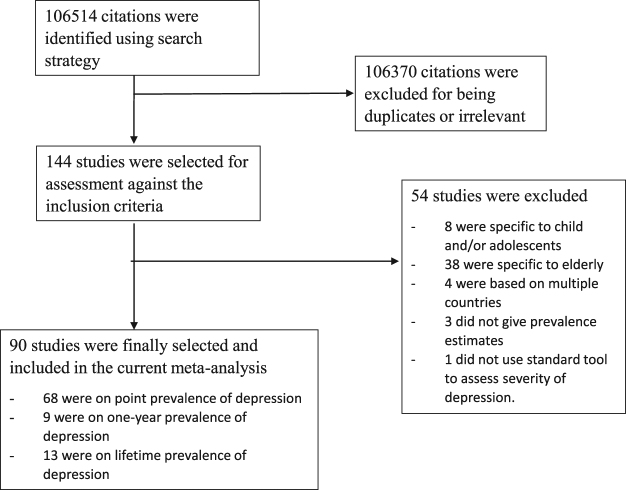
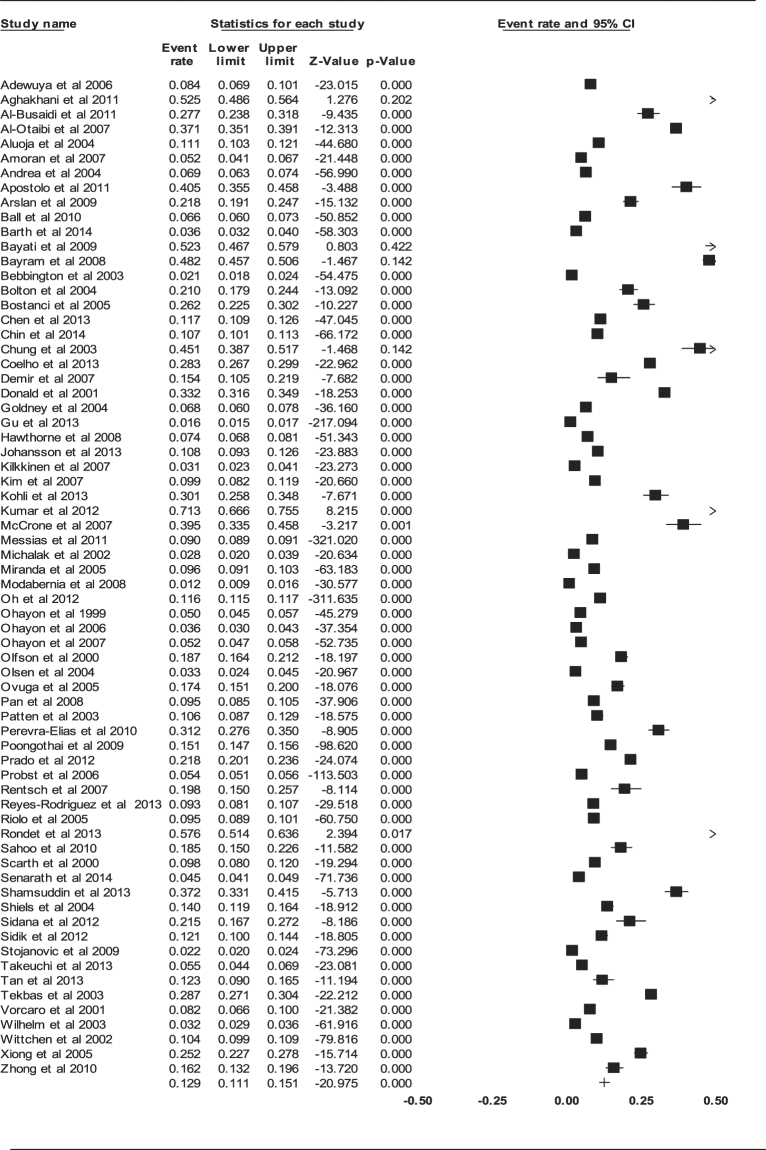
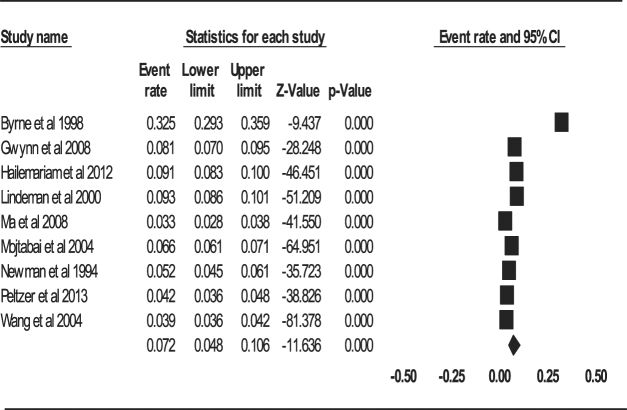
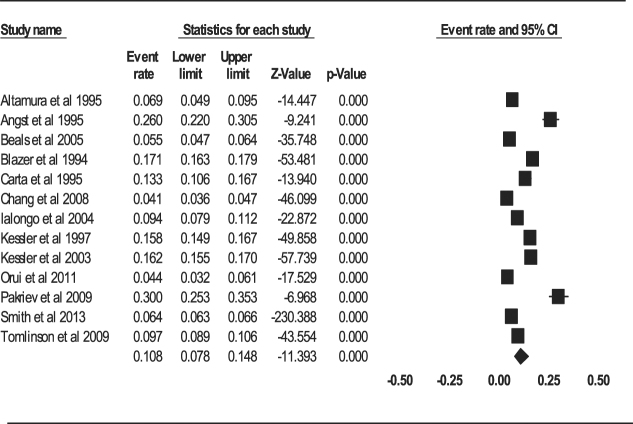
The prevalence of depression may be affected by changes in psychiatric practices and the availability of online mental health information in the past two decades. This study aimed to evaluate the aggregate prevalence of depression in communities from different countries between 1994 and 2014 and to explore the variations in prevalence stratified by geographical, methodological and socio-economic factors. A total of 90 studies were identified and met the inclusion criteria (n = 1,112,573 adults) with 68 studies on single point prevalence, 9 studies on one-year prevalence, and 13 studies on lifetime prevalence of depression. A random-effects model meta-analysis that was performed to calculate the aggregate point, one-year and lifetime prevalence of depression calculated prevalences of 12.9%, 7.2% and 10.8% respectively. Point prevalence of depression was significantly higher in women (14.4%), countries with a medium human development index (HDI) (29.2%), studies published from 2004 to 2014 (15.4%) and when using self-reporting instruments (17.3%) to assess depression. Heterogeneity was identified by meta-regression and subgroup analysis, and response rate, percentage of women and year of publication, respectively, were determined contribute to depression prevalence. This meta-analysis allows benchmarking of the prevalence of depression during the era when online health information emerged, facilitating future comparisons.
Overview
The claims and statistics of this paper haven’t been checked yet.
Free: it reads the open-access text and checks the first 5 claims that cite a source we can check. Create a free account to check every claim.
Integrity signals
Registry
Cites
Statistics
Figures
Verification
Claims the paper makes
The claims and statistics of this paper haven’t been checked yet.
Free: it reads the open-access text and checks the first 5 claims that cite a source we can check. Create a free account to check every claim.
Self-check
Percentages, sums and reported differences re-computed from the paper’s own numbers.
The self-check needs the paper’s full text.
Citations
Cites
Preferred Reporting Items for Systematic Reviews and Meta-Analyses: the PRISMA statement
Moher, D., Liberati, A., Tetzlaff, J., Altman, D. G., & for the PRISMA Group (2009) · BMJ · doi:10.1136/bmj.b2535 · Cited by 83,823
Kessler, R. C. (1994) · Archives of General Psychiatry · doi:10.1001/archpsyc.1994.03950010008002 · Cited by 12,370
Preferred reporting items for systematic reviews and meta-analyses: The PRISMA statement
Moher, D., Liberati, A., Tetzlaff, J., & Altman, D. G. (2010) · International Journal of Surgery · doi:10.1016/j.ijsu.2010.02.007 · Cited by 12,156
How should meta‐regression analyses be undertaken and interpreted?
Thompson, S. G., & Higgins, J. P. T. (2002) · Statistics in Medicine · doi:10.1002/sim.1187 · Cited by 3,026
(1984) · PubMed · Cited by 2,436
Cross-national epidemiology of DSM-IV major depressive episode
Bromet, E., Andrade, L. H., Hwang, I., Sampson, N. A., Alonso, J., de Girolamo, G., de Graaf, R., Demyttenaere, K., Hu, C., Iwata, N., et al. (2011) · BMC Medicine · doi:10.1186/1741-7015-9-90 · Cited by 2,221
Cost of Lost Productive Work Time Among US Workers With Depression
Stewart, W. F. (2003) · JAMA · doi:10.1001/jama.289.23.3135 · Cited by 1,421
Krebber, A. M. H., Buffart, L. M., Kleijn, G., Riepma, I. C., de Bree, R., Leemans, C. R., Becker, A., Brug, J., van Straten, A., Cuijpers, P., et al. (2014) · Psycho-Oncology · doi:10.1002/pon.3409 · Cited by 908
Excess mortality in depression: a meta-analysis of community studies
Cuijpers, P., & Smit, F. (2002) · Journal of Affective Disorders · doi:10.1016/s0165-0327(01)00413-x · Cited by 775
Van de Velde, S., Bracke, P., & Levecque, K. (2010) · Social Science & Medicine · doi:10.1016/j.socscimed.2010.03.035 · Cited by 719
Research works printed but not linked: 1
- Puri, B., Hall A., Ho R. Revision Notes in Psychiatry. 3rd edn, 384 (CRC Press, 2014).
Cited by
Items 601–700 of 1,000
PSYCHOLOGICAL FACTORS AND CONSEQUENCES OF PSYCHOSOCIAL STRESS DURING THE PANDEMIC
Maruta, N. A., Маркова, М. В., Kozhyna, H. M., Aliieva, T. А., Yuryeva, L., Abdriakhimova, T. B., Пшук, Н. Г., & Skrypnikov, A. M. (2021) · Wiadomości Lekarskie · doi:10.36740/wlek202109126 · Cited by 15
“There is a higher prevalence of adverse psychological effects in the population compared to the spread of the pandemic [15-17].”
BackgroundCognitive vulnerabilities and Depression: A Culture-Moderated Meta-Analysis
Bartucz, M. B., David, D. O., & Matu, S. A. (2022) · Cognitive Therapy and Research · doi:10.1007/s10608-022-10299-9 · Cited by 16
“(Lim et al., 2018; Ferrari et al., 2013; Bromet & Kessler, 2013; Rai et al., 2013).”
BackgroundThomas, F. P., Saporta, M., Attarian, S., Sevilla, T., Sivera, R., Fabrizi, G. M., Genovese, F., Gray, A., Bull, S. C., Tanesse, D., et al. (2022) · Journal of Clinical Neuromuscular Disease · doi:10.1097/cnd.0000000000000426 · Cited by 17
Chen, Y., Wang, P., He, Y., Jiang, F., Liu, H., Liu, Y., Liu, T., Tang, Y., & Zhu, J. (2022) · Journal of Affective Disorders · doi:10.1016/j.jad.2022.08.089 · Cited by 15
Continuous Neurophysiologic Data Accurately Predict Mood and Energy in the Elderly
Merritt, S. H., Krouse, M. C., Alogaily, R., & Zak, P. J. (2022) · Brain Sciences · doi:10.3390/brainsci12091240 · Cited by 15
“6% for adults in developed countries [14], and women are approximately twice as likely as men to have an episode of depression [15].”
BackgroundBiases, Fairness, and Implications of Using AI in Social Media Data Mining
Anzum, F., Asha, A. Z., & Gavrilova, M. L. (2022) · International Conference on Cyberworlds (CW) · doi:10.1109/cw55638.2022.00056 · Cited by 25
“Similarly, expression of depression can vary in different cultures [47], age groups [34], countries [30], genders [39].”
BackgroundOlson, A. M., Nævestad, T., Orru, K., Nero, K., Schieffelers, A., & Meyer, S. F. (2023) · International Journal of Disaster Risk Reduction · doi:10.1016/j.ijdrr.2023.103739 · Cited by 16
Landeghem, C. V., & Jakobson, L. S. (2024) · Frontiers in Psychology · doi:10.3389/fpsyg.2024.1330483 · Cited by 16
“In addition, contrary to work carried out both before (Lim et al., 2018) and during the COVID-19 pandemic (Sun et al., 2023), females were not found to be more likely to report symptoms of depression than males.”
ResultLee, D. H., Kim, K. M., Cho, S., Kim, W., Yang, K. I., Yun, C., & Chu, M. K. (2020) · Journal of Affective Disorders · doi:10.1016/j.jad.2020.03.102 · Cited by 16
Factors Associated with Depression among Elderly People Living In Old Aged Homes of Pokhara, Nepal
Dhungana, A. R. (2020) · Journal of Health and Allied Sciences · doi:10.37107/jhas.175 · Cited by 15
Impact of Covid-19 outbreak on psychological health–The case of Bangladesh
Sultana, S., Shafique, I., Majeed, N., Jamshed, S., Shahani, A. K., & Qureshi, F. (2021) · Heliyon · doi:10.1016/j.heliyon.2021.e06772 · Cited by 15
“This outcome was consistent with the result of Lim et al. (2018) which indicated that nations that have a median human development index (HDI) tend to see more women suffering from depression (Bangladesh HDI value ¼ 0.632) (Human Development Reports 2019).”
InfluentialEarly Mental Health and Quality of Life in Discharged Patients With COVID-19
Hu, J., Zhang, Y., Xue, Q., Song, Y., Li, F. R., Lei, R., Wu, J., & Qian, J. (2021) · Frontiers in Public Health · doi:10.3389/fpubh.2021.725505 · Cited by 14
“Findings from epidemiological studies indicate that women are at higher risk of psychological outcomes (27).”
BackgroundHuang, S., Li, Y., Shen, J., Liang, W., & Li, C. (2023) · Frontiers in Psychiatry · doi:10.3389/fpsyt.2023.1168516 · Cited by 14
Bazargan, M., Dehghani, A., Ramezani, M. A., & Ramezani, A. (2023) · Health Science Reports · doi:10.1002/hsr2.1584 · Cited by 16
“Depression is one of the most prevalent mental health disorders among people, especially in children and adolescents.(65) Determining the point prevalence in populations can provide very useful information for planning and developing prevention measures.”
BackgroundKim, B., Kim, M., & Lee, D. (2023) · Behavioral Sciences · doi:10.3390/bs13100870 · Cited by 16
“Depression rates have been relatively high, and the country has struggled with high suicide rates compared to other OECD countries [29].”
BackgroundResultDevelopment of depression detection algorithm using text scripts of routine psychiatric interview
Oh, J., Lee, T., Chung, E. S., Kim, H., Cho, K., Kim, H., Choi, J., Sim, H.-H., Lee, J., Choi, I. Y., et al. (2024) · Frontiers in Psychiatry · doi:10.3389/fpsyt.2023.1256571 · Cited by 20
Yoshii, T., Oishi, N., Sotozono, Y., Watanabe, A., Sakai, Y., Yamada, S., Matsuda, K., Kido, M., Ikoma, K., Tanaka, M., et al. (2024) · Scientific Reports · doi:10.1038/s41598-024-53103-2 · Cited by 14
Abrantes, A. M., Browne, J., Stein, M. D., Anderson, B. J., Iacoi, S., Barter, S., Shah, Z., Read, J. P., & Battle, C. L. (2024) · Journal of Substance Use and Addiction Treatment · doi:10.1016/j.josat.2024.209406 · Cited by 14
Risk Factors for Depression Among Middle-Aged to Older People Living With HIV in Lima, Peru
Failoc‐Rojas, V. E., Jia, D. T., Gil-Zacarías, M., Latorre, A., Cabello, R. L., Garcia, P. J., & Diaz, M. M. (2024) · Journal of the International Association of Providers of AIDS Care (JIAPAC) · doi:10.1177/23259582241273452 · Cited by 14
The association between anxiety and depression with 25(OH)D and thyroid stimulating hormone levels
Erensoy, H. (2019) · Neurosciences · doi:10.17712/nsj.2019.4.20190028 · Cited by 14
Evidence for an enhanced procoagulant state in remitted major depression
von Känel, R., Merz, F., Pfister, H., Brückl, T. M., Zimmermann, P., Uhr, M., Holsboer, F., Höhne, N., & Ising, M. (2019) · The World Journal of Biological Psychiatry · doi:10.1080/15622975.2019.1696475 · Cited by 16
Hernández, C., Cottin, M., Parada, F., Labbé, N., Núñez, C., Quevedo, Y., Davanzo, A., & Behn, A. J. (2021) · Computers in Human Behavior · doi:10.1016/j.chb.2021.106995 · Cited by 15
Psychological Distress in Patients with COVID-19 During Hospitalization
Yıldırım, N., Candan, H. D., & İnan, A. H. (2021) · Clinical Nursing Research · doi:10.1177/10547738211040322 · Cited by 15
“In an epidemiological study, it was stated that women are at a higher risk of depression (Lim et al., 2018).”
BackgroundSousa, N. F. D. S., Barros, M. B. D. A., Medina, L. D. P. B., Malta, D. C., & Szwarcwald, C. L. (2021) · Revista Brasileira de Epidemiologia · doi:10.1590/1980-549720210015.supl.2 · Cited by 15
Effectiveness of Case Management with Problem-Solving Therapy for Rural Older Adults with Depression
Hollister, B. A., Crabb, R. M., Kaplan, S., Brandner, M., & Areán, P. A. (2022) · American Journal of Geriatric Psychiatry · doi:10.1016/j.jagp.2022.03.001 · Cited by 15
Yasmin, F., Jatoi, H. N., Abbasi, M. S., Asghar, M. S., Siddiqui, S. A., Nauman, H., Khattak, A. K., & Alam, M. T. (2022) · Frontiers in Psychology · doi:10.3389/fpsyg.2022.830935 · Cited by 17
Pang, X.-Y., Li, F., Dou, L., Tian, Y., & Zhang, Y. (2022) · Current Psychology · doi:10.1007/s12144-022-03155-2 · Cited by 14
Tahir, M. J., Tariq, W., Asar, M. P., Malik, M. I., Akhtar, F. K., Malik, M., Akhtar, Q., Ahmed, K. A. H. M., Awan, M. T., Ullah, K., et al. (2022) · Journal of Multidisciplinary Healthcare · doi:10.2147/jmdh.s369452 · Cited by 14
Liu, Z., Wong, N. M. L., Shao, R., Lee, S., Huang, C.-M., Liu, H., Lin, C., & Lee, T. M. C. (2022) · Journal of Affective Disorders Reports · doi:10.1016/j.jadr.2022.100428 · Cited by 22
Ozamiz-Etxebarria, N., Santamaría, M. D., Mondragón, N. I., Gorrotxategi, M. P., Olaya, B., & Santabárbara, J. (2022) · The European Journal of Psychiatry · doi:10.1016/j.ejpsy.2022.09.007 · Cited by 14
Education Level Modulates the Presence of Poststroke Depression and Anxiety, But It Depends on Age
Samudio-Cruz, M. A., Toussaint-González, P., Estrada-Cortés, B., Martínez-Cortéz, J. A., Rodríguez-Barragán, M. A., Hernández-Arenas, C., Quinzaños-Fresnedo, J., & Carrillo‐Mora, P. (2023) · The Journal of Nervous and Mental Disease · doi:10.1097/nmd.0000000000001663 · Cited by 15
Speranza, A. M., Franchini, C., Quintigliano, M., Andreassi, S., Morelli, M., Cerolini, S., Petrocchi, C., & Fortunato, A. (2023) · Frontiers in Psychology · doi:10.3389/fpsyg.2023.1134510 · Cited by 14
Yin, H., Zhu, Y., Tan, L., Zhong, X., & Yang, Q. (2024) · Journal of Affective Disorders · doi:10.1016/j.jad.2024.01.132 · Cited by 14
Hendriati, N., Ni'matuzahroh, & Achmat, Z. (2024) · International Journal of Disaster Risk Reduction · doi:10.1016/j.ijdrr.2024.104362 · Cited by 14
Nursing students and depressive symptomatology: an observational study in University of Palermo
Santangelo, O. E., Provenzano, S., Giordano, D., Alagna, E., Armetta, F., Gliubizzi, C., Terranova, A., D’Anna, G., Barresi, D., Grigis, D., et al. (2019) · Mental Illness · doi:10.1108/mij-10-2019-0006 · Cited by 17
“The aggregate point, one-year and lifetime prevalence of depression are 12.9, 7.2 and 10.8 per cent, respectively (Lim et al., 2018).”
BackgroundInfluentialFenger‐Grøn, M., Vestergaard, C. H., Frost, L., Davydow, D. S., Parner, E. T., Christensen, B., & Ribe, A. R. (2019) · Medical Care · doi:10.1097/mlr.0000000000001268 · Cited by 14
Feghali, J., Chen, Y., Xie, Y., Chen, C., & Huang, J. (2020) · Journal of Neurosurgery Spine · doi:10.3171/2020.2.spine2069 · Cited by 14
Parental age and risk of depression: A nationwide, population-based case-control study
Filatova, S., Upadhyaya, S., Luntamo, T., Sourander, A., & Chudal, R. (2020) · Journal of Affective Disorders · doi:10.1016/j.jad.2020.12.197 · Cited by 14
Cebrino, J., & de la Cruz, S. P. (2020) · Nutrients · doi:10.3390/nu13010106 · Cited by 16
“Considering the rise in the number of people with depression worldwide [34], preventive strategies are needed in order to reduce its prevalence.”
BackgroundWilliams, K., Hartley, S., Langer, S., Manandhar‐Richardson, M., Sinha, M., & Taylor, P. (2022) · Clinical Psychology & Psychotherapy · doi:10.1002/cpp.2773 · Cited by 13
“Major depression affects approximately 264 million people worldwide and has an estimated lifetime prevalence of 10.8% (James et al., 2018; Lim et al., 2018).”
BackgroundInfluentialCao, D.-H., & Zheng, L.-K. (2023) · BMC Psychology · doi:10.1186/s40359-023-01214-2 · Cited by 15
Minaei-Moghadam, S., Manzari, Z. S., Vaghee, S., & Mirhosseini, S. (2024) · BMC Public Health · doi:10.1186/s12889-023-17594-4 · Cited by 18
“Also, in Iran, its prevalence was estimated equal to 4.8% and 2.3% in women and men respectively [2, 3].”
BackgroundInfluentialVilarim, M. M., Rebelo, F. M., Vieira, I. S. A., Mazzoli, F., Carta, M. G., Nardi, A. E., & Marano, D. (2024) · Brazilian Journal of Psychiatry · doi:10.47626/1516-4446-2023-3453 · Cited by 22
Continued Homelessness and Depressive Symptoms in Older Adults
Dobbins, S. K., Garcia, C. M., Evans, J. L., Valle, K. A., Guzman, D., & Kushel, M. (2024) · JAMA Network Open · doi:10.1001/jamanetworkopen.2024.27956 · Cited by 13
Almadani, A. H., Alabdulkarim, I. M., Akresh, M. I., Alassaf, M. I., Alkathiri, M. A., Alkublan, K. M., Aldoghmani, R. A., Alghtani, Y., & Alwaily, S. A. (2024) · Medicine · doi:10.1097/md.0000000000040217 · Cited by 16
“[7,14,27,28] Furthermore, in our study, depression severity showed a significant association with the presence of clinical misophonia, consistent with the findings of another study conducted in Poland [17] using the hospital anxiety and depression scale.”
ResultForsström, D., Badinlou, F., Johansson, M., Ojala, O., Alaoui, S. E., Månsson, K. N. T., Rozental, A., Lundin, J., Jangard, S., Shahnavaz, S., et al. (2025) · BMC Psychiatry · doi:10.1186/s12888-024-06417-4 · Cited by 14
Villada, F. A. P., Serna, V. H. A., Vélez, E. F. A., Restrepo, S. B., & Arango-Paternina, C. M. (2019) · Educación Física y Deporte · doi:10.17533/udea.efyd.v38n2a02 · Cited by 18
Chandra, M., Raveendranathan, D., Ruben, J. P., Patra, S., Rushi, Prasad, K. M. R., & Brar, J. S. (2020) · Indian Journal of Psychological Medicine · doi:10.1177/0253717620971200 · Cited by 13
“The exclusion criteria are: (1) antidepressant use for any indication in last 3 months; (2) major complications of diabetes mellitus such as retinopathy, nephropathy, etc.”
BackgroundMethodInfluentialWelander, N. Z., Mwinyi, J., Asif, S., Schiöth, H. B., Skalkidou, A., & Fransson, E. (2021) · Journal of Affective Disorders · doi:10.1016/j.jad.2021.08.119 · Cited by 13
Birling, Y., Nevitt, S. J., Bhuyan, D. J., Jia, M., Feng, F., Carlson, L. E., Pham, T., Liu, J., Ayati, Z., Nyiam, L., et al. (2021) · Methods and Protocols · doi:10.3390/mps4040076 · Cited by 16
O’Brien, W. J., Badenhorst, C. E., Draper, N., Basu, A., Elliot, C., Hamlin, M. J., Batten, J., Lambrick, D., & Faulkner, J. (2021) · International Journal of Environmental Research and Public Health · doi:10.3390/ijerph182212036 · Cited by 15
“Consistent with decades of literature in this area, males tended to report better wellbeing than females and those who did not specify their gender [27–30]; however, the results were not statistically significant for either.”
ResultContinuum beliefs and the perception of similarities and differences to a person with depression
Buckwitz, V., Bommes, J. N., Hinshaw, S. P., & Schomerus, G. (2022) · Comprehensive Psychiatry · doi:10.1016/j.comppsych.2022.152314 · Cited by 16
Batterham, P. J., Gulliver, A., Kurz, E., Farrer, L. M., Vis, C., Schuurmans, J., & Calear, A. L. (2022) · Journal of Medical Internet Research · doi:10.2196/34769 · Cited by 13
Pupillary response in reward processing in adults with major depressive disorder in remission
Guath, M., Willfors, C., Avdic, H. B., Nordgren, A., & Kleberg, J. L. (2022) · Journal of the International Neuropsychological Society · doi:10.1017/s1355617722000224 · Cited by 16
“Finally, it should be noted that a relatively high number of participants in the current sample had a life time history of MDD (∼38%), which can be compared to an estimated life time prevalence of 10–20% in recent studies (Hasin et al., 2018; Lim et al., 2018).”
ResultLongitudinal Measurement Invariance of the Korean Version of the CES-D-11 Scale
Park, B.-S., Lee, K., Shin, C., Choi, K., & Bae, S. (2022) · SAGE Open · doi:10.1177/21582440221117799 · Cited by 13
“According to a meta-analysis that evaluated the aggregate prevalence of depression in multiple countries between 1994 and 2014, it was estimated that 10.8% of the people in the world are affected by depression at some point in their lives (Lim et al., 2018).”
MethodInfluentialReskati, M. H., Kheradmand, M., Moosazadeh, M., Assadi, T., Shafizad, M., Hedayatizadeh‐Omran, A., Hosseini, S. H., & Elyasi, F. (2022) · Nursing Open · doi:10.1002/nop2.1341 · Cited by 13
“Some studies had correspondingly reported that women had experienced the higher levels of stress, anxiety, and depression than men (Hurissi et al., 2021; Lim et al., 2018; Reskati et al., 2021; Wang, Pan et al., 2020) even if no difference had been observed between males and females in some other surveys (Thakur & Jai…”
ResultPurgato, M., Tedeschi, F., Turrini, G., Acartürk, C., Anttila, M., Augustinavicious, J., Baumgartner, J. S., Bryant, R. A., Churchill, R. C., İlkkurşun, Z., et al. (2022) · European Journal of Psychotraumatology · doi:10.1080/20008066.2022.2128270 · Cited by 13
“psychological symptoms and wellbeing (Lim et al., 2018).”
MethodBirhanu, H., Zenu, S., Sheleme, T., & Kefeni, B. T. (2022) · Scientific Reports · doi:10.1038/s41598-022-26330-8 · Cited by 13
Gai, Q., Chu, T., Che, K., Li, Y., Dong, F., Zhang, H., Li, Q., Ma, H., Shi, Y., Zhao, F., et al. (2022) · Journal of Magnetic Resonance Imaging · doi:10.1002/jmri.28578 · Cited by 13
Vastegani, S. M., Hajipour, S., Sarkaki, A., Basir, Z., Farbood, Y., Bavarsad, K., & Khoshnam, S. E. (2023) · Neurochemical Research · doi:10.1007/s11064-023-03877-0 · Cited by 13
“Anxiety and depression are the most common mental disorders [13, 14], and their development can be attributed to environmental factors such as exposure to ambient air pollution [6, 7, 15].”
BackgroundSustainable Development Goals: Therapeutic Entrepreneurship and Mental Health Conditions
Ovharhe, O. H., & Stanley, P. (2023) · British Journal of Multidisciplinary and Advanced Studies · doi:10.37745/bjmas.2022.0107 · Cited by 20
Autonomy matters: Influences of causality orientations on Chinese adolescents’ growth mindset
Zhao, Y., Huang, Z., Wu, Y., & Peng, K. (2023) · Journal of Pacific Rim Psychology · doi:10.1177/18344909231157466 · Cited by 13
“…academic and occupational performance (Han & Stieha, 2020; Yeager et al., 2016, 2019), self-regulation (Burnette et al., 2013), psychological well-being (Zeng et al., 2016; Zhao et al., 2021), and fewer mental health dif fi culties (Fehm et al., 2008; Lim et al., 2018; Schleider & Weisz, 2018).”
BackgroundPengpid, S., Peltzer, K., & Anantanasuwong, D. (2023) · BJPsych Open · doi:10.1192/bjo.2023.72 · Cited by 14
Islam, S. T., Descallar, J., Martens, D., Hassett, G., & Gibson, K. (2023) · The Journal of Rheumatology · doi:10.3899/jrheum.2022-1261 · Cited by 13
Meißner, C., Meyrose, A., & Nestoriuc, Y. (2024) · British Journal of General Practice · doi:10.3399/bjgp.2023.0020 · Cited by 14
“43 Sampling might have been selective, favouring patients with previous negative British Journal of General Practice, July 2024 discontinuation experiences, recurring episodes, and a longer total duration of antidepressant use.”
BackgroundThe association between urbanization and adolescent depression in China
Pan, D., Yan, N., Pu, L., He, X., Wang, H. H., Zhang, X., Shi, X., Wen, J., & Li, J. (2024) · PeerJ · doi:10.7717/peerj.16888 · Cited by 14
“It is a state of mind characterized by persistent low mood, loss of enjoyment in daily activities, and loss of energy, leading to varying degrees of impaired social and occupational functioning that can severely reduce quality of life ( Lim et al., 2018 ; Malhi & Mann, 2018 ).”
BackgroundŞahin, C. U., Aydın, M., & Kulakaç, N. (2020) · Cyprus Journal of Medical Sciences · doi:10.5152/cjms.2020.2685 · Cited by 14
“Despite not statistically significant, the BAI scores of the students living in the metropolis during the COVID-19 were higher.”
López-Caamal, A., & Reyes‐Chilpa, R. (2021) · The Botanical Review · doi:10.1007/s12229-021-09265-z · Cited by 13
Association of post-COVID-19 fatigue with mental health problems and sociodemographic risk factors
Uygur, Ö. F., & Uygur, H. (2021) · Fatigue Biomedicine Health & Behavior · doi:10.1080/21641846.2021.2000251 · Cited by 13
Chen, X., Lin, F., Gao, H., & Zou, Y. (2022) · Journal of Psychosomatic Research · doi:10.1016/j.jpsychores.2022.110959 · Cited by 14
Werner, P., & Segel‐Karpas, D. (2019) · Aging & Mental Health · doi:10.1080/13607863.2019.1584791 · Cited by 13
“With more than 4% of the world population living with depression, and with estimates for a marked increase in prevalence rates in the near future (Lim et al., 2018), depression has been associated with significant individual, family, and social impairments (Elmståhl, Dahlrup, Ekstr€ om, & Nordell, 2018).”
BackgroundWang, T., Li, M., Xu, S., Xiang, A., Xu, X., & Wang, H. (2022) · Psychology Health & Medicine · doi:10.1080/13548506.2022.2124293 · Cited by 13
“The total and one-year prevalence of depression were previously reported to be 12.9% and 7.2%, respectively (Lim et al., 2018).”
BackgroundInfluentialOptimizing the predictive power of depression screenings using machine learning
Terhorst, Y., Sander, L., Ebert, D. D., & Baumeister, H. (2023) · Digital Health · doi:10.1177/20552076231194939 · Cited by 16
Sapkota, D., Dennison, S. M., & Thompson, C. (2024) · Community Mental Health Journal · doi:10.1007/s10597-023-01222-x · Cited by 13
“Consistent to another review on the prevalence of mental disorders among the general population (Lim et al., 2018), this review concluded that studies utilising symptoms screeners reported higher prevalence rates compared to those using diagnostic interviews.”
MethodResultKwon, D.-H., Kim, Y., & Cho, S. (2024) · International Journal of Molecular Sciences · doi:10.3390/ijms25179673 · Cited by 12
“Depression is a highly prevalent mental disorder, with a lifetime prevalence of 10.8% worldwide [1], and causes psychological and physical symptoms [2].”
BackgroundInfluentialA systematic review of associations between hormone levels in hair and peripartum depression
Hill, K. E., Cárdenas, E. F., Yu, E., Hammond, R., Humphreys, K. L., & Kujawa, A. (2024) · Psychoneuroendocrinology · doi:10.1016/j.psyneuen.2024.107194 · Cited by 13
Orrù, G., Piarulli, A., Conversano, C., Grenno, G., & Gemignani, A. (2025) · International Journal of Environmental Research and Public Health · doi:10.3390/ijerph22020132 · Cited by 15
“Previous research (i.e., [1,2]) has consistently demonstrated that students who report elevated levels of stress, anxiety, depression, and even suicidal ideation are at heightened risk of experiencing both mental health difficulties and academic struggles ([3]; for a meta-analysis, see: [4]).”
Elahinejad, V., Khorasanian, A. S., Tehrani‐Doost, M., Khosravi‐Darani, K., Mirsepassi, Z., Effatpanah, M., Askari‐Rabori, R., Tajadod, S., & Jazayeri, S. (2025) · Food Science & Nutrition · doi:10.1002/fsn3.4698 · Cited by 14
“antidepressant therapies (Lim et al. 2018; Brenjian et al. 2020).”
Kalagy, T., Braun‐Lewensohn, O., & Abu‐Kaf, S. (2025) · Psychiatry Research · doi:10.1016/j.psychres.2025.116491 · Cited by 13
Meyer, N., Ratinho, L. R., Greive, S. J., Bacri, L., Thiébot, B., della Rocca, B. M., Chinappi, M., Pelta, J., & Cressiot, B. (2025) · ACS Nano · doi:10.1021/acsnano.5c08031 · Cited by 12
Carpita, B., Betti, L., Palego, L., Bartolommei, N., Chico, L., Pasquali, L., Siciliano, G., Monzani, F., Franchi, R., Rogani, S., et al. (2020) · CNS Spectrums · doi:10.1017/s1092852920001443 · Cited by 13
Wegemer, C. M. (2020) · Frontiers in Psychology · doi:10.3389/fpsyg.2020.523950 · Cited by 12
Meesala, N., Harsha, G. V. D., Kandikatla, P., Karteekvarma, P., Nadakuditi, S. R., & Kakaraparthi, S. (2020) · Journal of Family Medicine and Primary Care · doi:10.4103/jfmpc.jfmpc_1244_20 · Cited by 12
Fang, C., Hayashi, S., Du, X., Cai, X., Deng, B., Zheng, H., Ishido, S., Tsutsui, H., & Sheng, J. (2021) · Scientific Reports · doi:10.1038/s41598-021-86659-4 · Cited by 12
Bublitz, M. H., Sharp, M., Freeburg, T., Sanapo, L., Nugent, N. R., Sharkey, K. M., & Bourjeily, G. R. (2021) · Diagnostics · doi:10.3390/diagnostics11050858 · Cited by 15
“These rates are higher than those reported in national samples [15,37].”
ResultBlázquez, F. P., & Sánchez, B. E. P. (2021) · Psicodebate · doi:10.18682/pd.v21i1.2034 · Cited by 12
“(Lim et al., 2018).”
BackgroundMayoyo, E. M., van de Put, W. A. C. M., Belle, S. V., van Mierlo, B., & Criel, B. (2021) · Santé Publique · doi:10.3917/spub.211.0077 · Cited by 16
Mladenova, Z. (2021) · Journal of Applied Sports Sciences · doi:10.37393/jass.2021.01.8 · Cited by 12
Bigseth, T. T., Engh, J. A., Egeland, J., Andersen, E., Andreassen, O. A., Bang-Kittilsen, G., Falk, R. S., Holmen, T. L., Lindberg, M., Mordal, J., et al. (2021) · BMC Psychiatry · doi:10.1186/s12888-021-03522-6 · Cited by 13
Zhang, M., Wu, Y., Ji, C., & Wu, J. (2022) · International Journal of Environmental Research and Public Health · doi:10.3390/ijerph19063348 · Cited by 12
Self-citationLi, F., Jörg, F., Li, X., & Feenstra, T. (2022) · PharmacoEconomics · doi:10.1007/s40273-022-01185-z · Cited by 15
Jobson, L., Wade, K. A., Rasor, S., Spearing, E. R., McEwen, C., & Fahmi, D. (2022) · Memory · doi:10.1080/09658211.2022.2134422 · Cited by 14
“Around 6% of the community have PTSD (National Center for PTSD, 2022) and around 10% of the community have depression (Lim et al., 2018).”
BackgroundHo, C. S. H., Soh, M. W. T., & Tay, G. W. N. (2022) · Comprehensive Psychiatry · doi:10.1016/j.comppsych.2022.152363 · Cited by 12
Self-citationPrefrontal Glutathione Levels in Major Depressive Disorder Are Linked to a Lack of Positive Affect
Tuura, R., Buchmann, A., Ritter, C. J., Hase, A., Haynes, M., Noeske, R., & Hasler, G. (2023) · Brain Sciences · doi:10.3390/brainsci13101475 · Cited by 23
“Major depressive disorder (MDD) is one of the most common neuropsychiatric disorders worldwide, with an estimated lifetime prevalence of 10.8% [1], increasing to 19% among adolescents [2].”
BackgroundInfluentialMorito, K., Yamagata, M., Naka, F., Kobayashi, K., Ueda, H., Morimoto, H., Yasukawa, T., Takayama, K., Uozumi, Y., & Nagasawa, K. (2024) · Biochemical and Biophysical Research Communications · doi:10.1016/j.bbrc.2024.149631 · Cited by 12
Validation of the English version of the Mood Rhythm Instrument
de Oliveira, M. A. B., Epifano, K., Mathur, S., Carvalho, F. G., Medeiros, M. S., Carissimi, A., Francisco, A. P., Garay, L. L. D. S., Adán, A., Hidalgo, M. P. L., et al. (2020) · BMC Psychology · doi:10.1186/s40359-020-00397-2 · Cited by 12
Aggarwal, P., Raval, V. V., Chari, U., Raman, V., Sreenivas, K. K., Krishnamurthy, S., & Visweswariah, A. M. (2020) · Culture Medicine and Psychiatry · doi:10.1007/s11013-020-09680-8 · Cited by 13
Kesgin, M. T., Tok, H. H., Uzun, L. N., & Pehlivan, Ş. (2021) · Perspectives In Psychiatric Care · doi:10.1111/ppc.12857 · Cited by 12
Truhan, T. E., Gianniou, F., & Papageorgiou, K. Α. (2021) · Personality and Individual Differences · doi:10.1016/j.paid.2021.111308 · Cited by 12
Alharbi, N. A. N., Alawi, S., Alharbi, Y. M., Alharbi, M. Y., Alsamarh, T. N., Aldubaiyan, A. A. R., Alwasil, S., & Alomairi, A. A. (2022) · Neurosciences · doi:10.17712/nsj.2022.2.20210101 · Cited by 13
Metadata
- Authors
- Lim, G. Y., Tam, W. W., Lu, Y., Ho, C. S., Zhang, M. W., & Ho, R. C.
- Affiliations
- Monash University (AU)
- National University of Singapore (SG)
- Zhejiang University (CN)
- National University Hospital (SG)
- Institute of Mental Health (SG)
- Corresponding author
- Lu, Yanxia
- Venue
- Scientific Reports
- Published
- 2018-02-12
- Volume
- 8
- Issue
- 1
- Pages
- 2861-2861
- ISSN
- 2045-2322 (ISSN-L)
- PMC
- PMC5809481
- OpenAlex
- W2807669085
- Semantic Scholar
- e3cd42f33f82796136b738a9ca84d8d523a0fb4b
- Cited by
- 1,557
- References
- 54
- Citations by year
- 2026: 88 · 2025: 172 · 2024: 198 · 2023: 234 · 2022: 265 · 2021: 285 · 2020: 199 · 2019: 91 · 2018: 23
- FWCI
- 202.75
- Type
- journal article
- Language
- en
- Update notices
- correction (2022-09-01)
- Open access
- gold
- doi.org
- Licence
- cc-by
- creativecommons.org/licenses/by/4.0 (tdm)
- creativecommons.org/licenses/by/4.0 (vor)
- Locations
- Scientific Reports (publishedVersion, cc-by)
- Europe PMC (PubMed Central) (publishedVersion, cc-by)
- PubMed Central (publishedVersion, cc-by)
- PubMed (publishedVersion)
- Rare & Special e-Zone (The Hong Kong University of Science and Technology) (submittedVersion)
- National University of Singapore (submittedVersion, cc-by)
- DOAJ (DOAJ: Directory of Open Access Journals) (submittedVersion, cc-by-sa)
- Funders
- National Natural Science Foundation of China (81600018)
- Topics
- Health Sciences › Medicine › Psychiatry and Mental health › Mental Health Treatment and Access
- Social Sciences › Psychology › Clinical Psychology › Suicide and Self-Harm Studies
- Social Sciences › Psychology › Clinical Psychology › Child and Adolescent Psychosocial and Emotional Development
- Keywords
- depression, prevalence, community-dwelling adults, point prevalence, lifetime prevalence, sex differences, Human Development Index, self-report measures, online mental health information, cross-national comparison, response rate
- MeSH terms
- Cross-Sectional Studies, Depression, Female, Humans, Male, Sex Characteristics, Socioeconomic Factors, Prevalence, Self Report
About these checks
Registry, retraction, Cites and statistics results are computed, not judged, with one exception: a printed reference that no index lists is read once by a model before it counts as a citation error. Claims are extracted by a model and kept only when their quote appears verbatim in the text; each cited source is then checked, with a model’s help, for whether it says what the claim relies on. Those verdicts can be wrong — read the claim’s quote and the cited source before relying on one.
Statistics and arithmetic are recomputed, not judged.
Confidence bands are shown only for fields calibrated on our annotated test set. None is calibrated yet, so no band is shown.
What counts as a claim ›How we measure confidence ›How we check this ›
Are you an author, or do you see a problem with this page? Request a review
Data sources
Bibliographic data: Semantic Scholar, OpenAlex, Crossref.
Contains information from the Semantic Scholar Academic Graph Datasets, made available under the ODC Attribution License (ODC-BY 1.0).
Semantic Scholar’s data is described in: Kinney, R., et al. (2023). The Semantic Scholar Open Data Platform. arXiv:2301.10140.
