

Evidence that the Great Pacific Garbage Patch is rapidly accumulating plastic
Open accessThe DOI matches its Crossref record; 55 of the 56 references it cites were found in a registry or an index.
Abstract
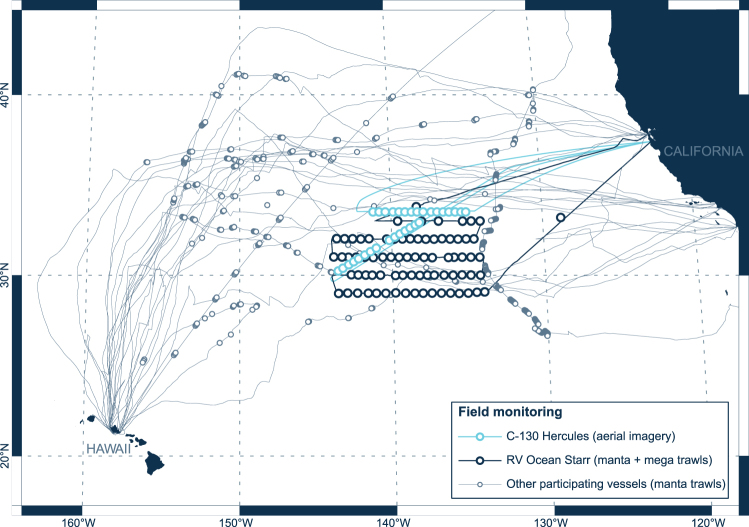
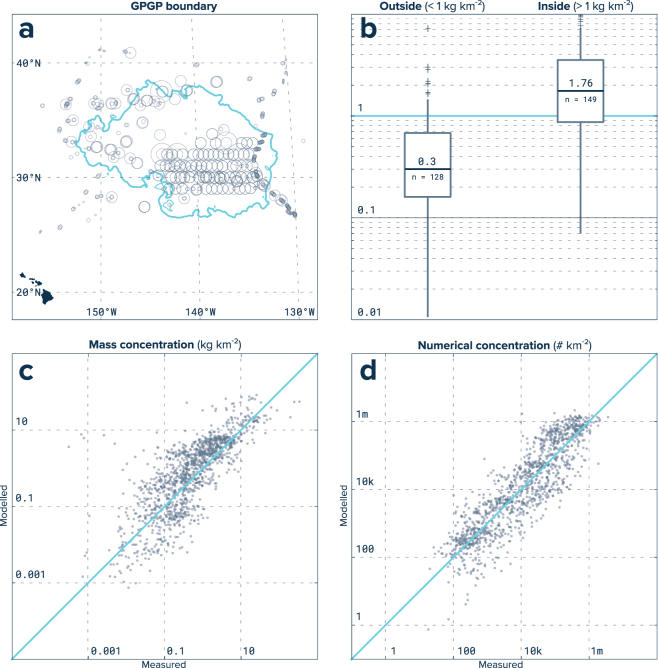
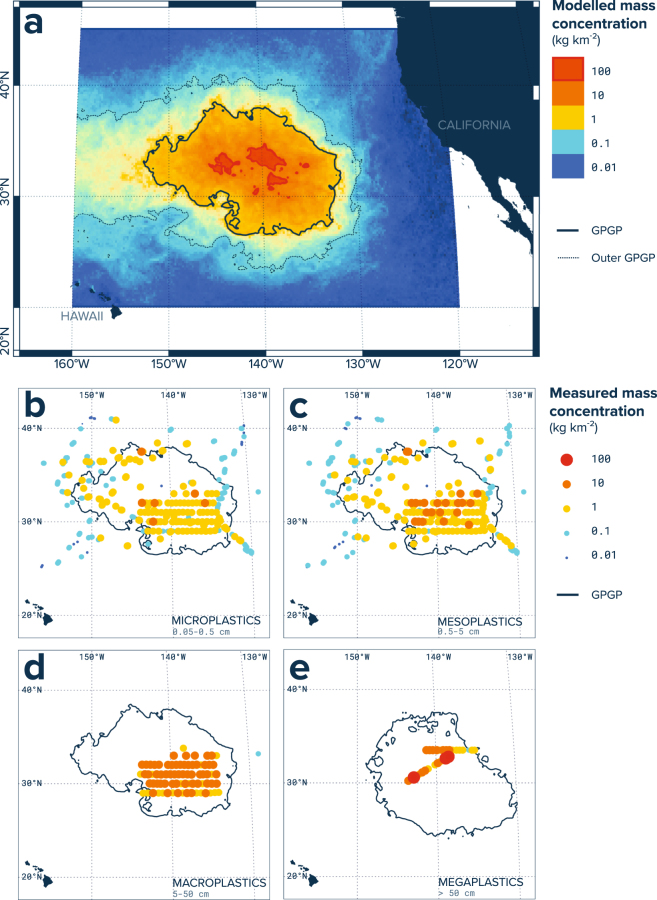
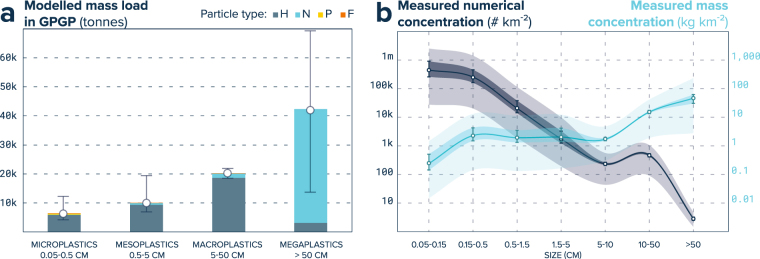
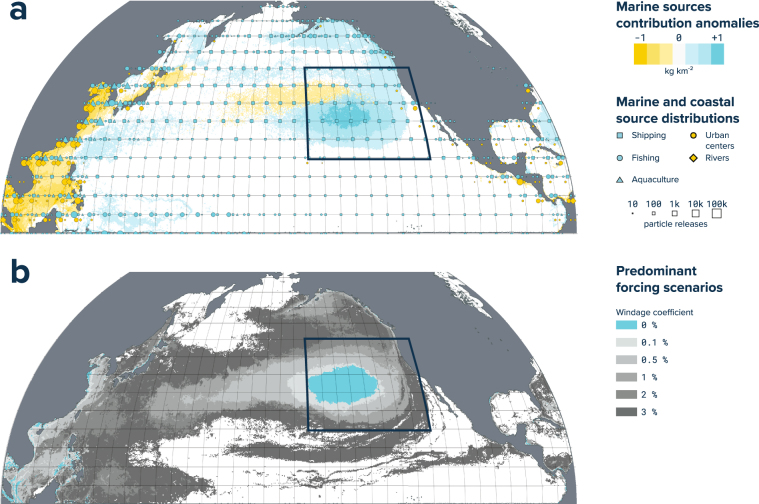
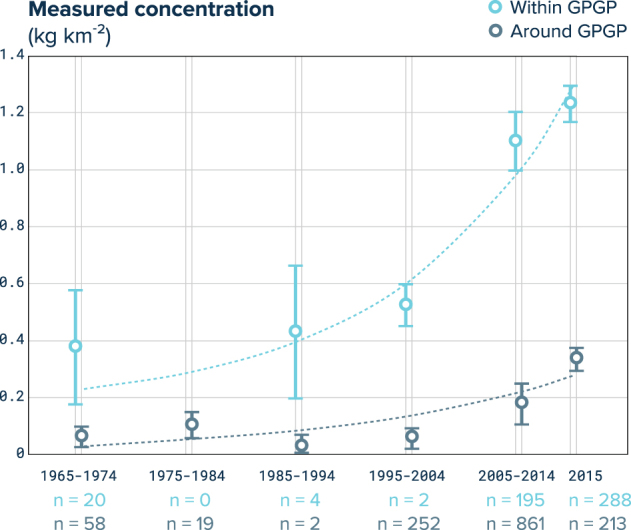
Ocean plastic can persist in sea surface waters, eventually accumulating in remote areas of the world’s oceans. Here we characterise and quantify a major ocean plastic accumulation zone formed in subtropical waters between California and Hawaii: The Great Pacific Garbage Patch (GPGP). Our model, calibrated with data from multi-vessel and aircraft surveys, predicted at least 79 (45–129) thousand tonnes of ocean plastic are floating inside an area of 1.6 million km 2 ; a figure four to sixteen times higher than previously reported. We explain this difference through the use of more robust methods to quantify larger debris. Over three-quarters of the GPGP mass was carried by debris larger than 5 cm and at least 46% was comprised of fishing nets. Microplastics accounted for 8% of the total mass but 94% of the estimated 1.8 (1.1–3.6) trillion pieces floating in the area. Plastic collected during our study has specific characteristics such as small surface-to-volume ratio, indicating that only certain types of debris have the capacity to persist and accumulate at the surface of the GPGP. Finally, our results suggest that ocean plastic pollution within the GPGP is increasing exponentially and at a faster rate than in surrounding waters.
Overview
The claims and statistics of this paper haven’t been checked yet.
Free: it reads the open-access text and checks the first 5 claims that cite a source we can check. Create a free account to check every claim.
Integrity signals
Registry
Cites
Statistics
Figures
Verification
Claims the paper makes
The claims and statistics of this paper haven’t been checked yet.
Free: it reads the open-access text and checks the first 5 claims that cite a source we can check. Create a free account to check every claim.
Claims other papers make about this one
Each is checked against this paper’s own text: does it say what the citing paper says it does?
In the citing paper
“Surface trawl observations may be underestimated by a factor of 4-16.55”
From The fate of plastic in the ocean environment – a minireview (2021) · cites this paper as [55]
Self-check
Percentages, sums and reported differences re-computed from the paper’s own numbers.
The self-check needs the paper’s full text.
Citations
Cites
The NCEP/NCAR 40-Year Reanalysis Project
Kalnay, E., Kanamitsu, M., Kistler, R., Collins, W., Deaven, D., Gandin, L., Iredell, M., Saha, S., White, G., Woollen, J., et al. (1996) · Bulletin of the American Meteorological Society · doi:10.1175/1520-0477(1996)077<0437:tnyrp>2.0.co;2 · Cited by 28,360 · cited 1×
“We sourced global sea surface currents (1993 to 2012) from the HYCOM + NCODA global 1/12° reanalysis (experiment 19.0 and 19.1 36–38 ), and wind (10 m above sea level) speed and direction data (1993 to 2012) from NCEP/NCAR global reanalysis 39 .”
MethodInfluentialProduction, use, and fate of all plastics ever made
Geyer, R., Jambeck, J. R., & Law, K. L. (2017) · Science Advances · doi:10.1126/sciadv.1700782 · Cited by 18,606
Plastic waste inputs from land into the ocean
Jambeck, J. R., Geyer, R., Wilcox, C., Siegler, T. R., Perryman, M., Andrady, A., Narayan, R., & Law, K. L. (2015) · Science · doi:10.1126/science.1260352 · Cited by 13,163 · cited 1×
“…were identically and continuously released in time from 1993 to 2012 following spatial distributions and amplitudes of significant ocean plastic sources on land (coastal population hotspots 23 and major rivers 24 ) as well as at sea (fishing 26,41 , aquaculture 42 and shipping industries 43 ).”
BackgroundMicroplastics in the marine environment
Andrady, A. L. (2011) · Marine Pollution Bulletin · doi:10.1016/j.marpolbul.2011.05.030 · Cited by 8,105 · cited 2×
“Buoyant plastic represents about 60% of the global plastic demand 10 , thus nearly half of the plastic input into the oceans should sink to the floor soon after release, accumulating in sediments 53 and underwater canyons 54 . rest may strand in coastlines 13,55,56 , be ingested by marine life 57…”
BackgroundLost at sea: where is all the plastic?
Thompson, R. C., Olsen, Y., Mitchell, R. P., Davis, A., Rowland, S. J., John, A. W. G., McGonigle, D., & Russell, A. E. (2004) · Science · doi:10.1126/science.1094559 · Cited by 7,765
A global map of human impact on marine ecosystems
Halpern, B. S., Walbridge, S., Selkoe, K. A., Kappel, C. V., Micheli, F., D'Agrosa, C., Bruno, J. F., Casey, K. S., Ebert, C., Fox, H. E., et al. (2008) · Science · doi:10.1126/science.1149345 · Cited by 6,627
Accumulation and fragmentation of plastic debris in global environments
Barnes, D. K. A., Galgani, F., Thompson, R. C., & Barlaz, M. (2009) · Philosophical Transactions of the Royal Society B: Biological Sciences · doi:10.1098/rstb.2008.0205 · Cited by 6,126 · cited 1×
“…it seems the bulk mass of material currently present in the GPGP is very unlikely to leave the area and may slowly degrade into increasingly smaller pieces that can eventually either sink to the seafloor 14 , or behave as water tracer due to its microscopic size and low Reynolds number 66 .”
BackgroundEriksen, M., Lebreton, L. C. M., Carson, H. S., Thiel, M., Moore, C. J., Borerro, J. C., Galgani, F., Ryan, P. G., & Reisser, J. (2014) · PLoS ONE · doi:10.1371/journal.pone.0111913 · Cited by 4,710 · cited 3×
“A dynamic GPGP model boundary allowed us to determine whether surface net tows from previous studies 17,21,22,46–49 were sampling inside or outside the GPGP. Average plastic mass concentration measured by net tows inside the GPGP boundary showed an exponential increase over the last decades, rising…”
ResultInfluentialSelf-citationRiver plastic emissions to the world’s oceans
Lebreton, L. C. M., van der Zwet, J., Damsteeg, J.-W., Slat, B., Andrady, A., & Reisser, J. (2017) · Nature Communications · doi:10.1038/ncomms15611 · Cited by 4,011 · cited 1×
“…were identically and continuously released in time from 1993 to 2012 following spatial distributions and amplitudes of significant ocean plastic sources on land (coastal population hotspots 23 and major rivers 24 ) as well as at sea (fishing 26,41 , aquaculture 42 and shipping industries 43 ).”
BackgroundSelf-citationPlastic debris in the open ocean
Cózar, A., Echevarría, F., González-Gordillo, J. I., Irigoien, X., Úbeda, B., Hernández-León, S., Palma, Á. T., Navarro, S., García-de-Lomas, J., Ruiz, A., et al. (2014) · Proceedings of the National Academy of Sciences · doi:10.1073/pnas.1314705111 · Cited by 3,133 · cited 1×
“Our plastic mass estimate for the GPGP (~79 k tonnes) was nearly sixteen times higher than a previous study (~4.8 k tonnes) that used net trawl data only 29 and four times higher than another assessment (~21 k tonnes) that combined net trawl data with vessel-based visual surveys 21 .”
ResultInfluential
Research works printed but not linked: 11
- Plastics Europe. Plastics - the facts 2016: an analysis of European plastics production, demand and waste data. Preprint at http://www.plasticseurope.org (2016).
- Weisskopf M Plastic reaps a grim harvest in the oceans of the world Smithsonian 1988 18 59
- American Plastics Council. Understanding plastic film: its uses, benefits and waste management options. Preprint at https://plastics.americanchemistry.com/Understanding-Plastic-Film/ (1996).
- Tolman HL The numerical model WAVEWATCH: a third-generation model for the hindcasting of wind waves on tides in shelf seas Communications on Hydraulic and Geotechnical Engineering, Delft Univ. of Techn. 1989 89 72
- FAO. The state of world fisheries and aquaculture 2014. Preprint at http://www.fao.org/3/a-i3720e.pdf (2014).
- NOAA. Detecting Japan tsunami marine debris at sea: a synthesis of efforts and lessons learned. Preprint at https://marinedebris.noaa.gov/sites/default/files/JTMD_Detection_Report.pdf (2015)
- U.S. EPA. Characterization of municipal solid waste in the United States: 1997 update. Preprint at https://archive.epa.gov/epawaste/nonhaz/municipal/web/pdf/msw97rpt.pdf (1998).
- International Coastal Cleanup. Tracking trash - 25 years of action for the ocean. Preprint at http://act.oceanconservancy.org/pdf/Marine_Debris_2011_Report_OC.pdf (2011).
- GESAMP. Sources, fate and effects of microplastics in the marine environment: part two of a global assessment (eds Kershaw, P. J. & Rochman, C. M.). (IMO/FAO/UNESCO-IOC/UNIDO/WMO/IAEA/UN/UNEP/UNDP Joint Group of Experts on the Scientific Aspects of Marine Environmental Protection). Rep. Stud. GESAMP, 93, 220 (2016).
- Maximenko, N. et al. Remote sensing of marine debris to study dynamics, balances and trends. Preprint at https://ecocast.arc.nasa.gov/las/Reports%20and%20Papers/Marine-Debris-Workshop-2017.pdf (2017).
- NASA. Satellite-respondent buoys identify ocean debris. Preprint at https://www.nasa.gov/offices/oct/home/tech_life_buoy.html (2010).
Cited by
Items 901–1,000 of 1,001
Hong, Y., Yang, H., Lee, M. H., Kim, S., Park, S. B., Hwang, S. Y., Park, J., Koo, J. M., Oh, D. X., & Hwang, D. S. (2024) · Chemical Engineering Journal · doi:10.1016/j.cej.2024.151388 · Cited by 14
Perold, V., Connan, M., Suaria, G., Weideman, E. A., Dilley, B. J., & Ryan, P. G. (2024) · Marine Pollution Bulletin · doi:10.1016/j.marpolbul.2024.116400 · Cited by 13
Berg, C. J., Hafner, J., Lamson, M. R., Maximenko, N., & Welti, C. W. (2024) · Marine Pollution Bulletin · doi:10.1016/j.marpolbul.2024.116484 · Cited by 14
Mo, A., Liang, Y., Cao, X., Jiang, J., Liu, Y., Cao, X., Qiu, Y., & He, D. (2024) · Journal of Hazardous Materials · doi:10.1016/j.jhazmat.2024.134730 · Cited by 13
Mixing of passive tracers at the ocean surface and its implications for plastic transport modelling
Wichmann, D., Delandmeter, P., Dijkstra, H. A., & van Sebille, E. (2019) · Environmental Research Communications · doi:10.1088/2515-7620/ab4e77 · Cited by 17
Jain, S., Mishra, D., & Khare, P. (2021) · Elsevier eBooks · doi:10.1016/b978-0-12-822263-8.00010-5 · Cited by 14
Microplastics as Pollutants in the Marine Environment
Andrady, A. L., & Zhu, L. (2021) · Springer eBooks · doi:10.1007/978-3-030-75602-4_17 · Cited by 16
Thammatorn, W., & Palić, D. (2022) · Applied Sciences · doi:10.3390/app12105135 · Cited by 16
Plastic Waste is Exponentially Filling our Oceans, but where are the Robots?
Rojas, J. (2018) · IEEE Region Humanitarian Technology Conference · doi:10.1109/r10-htc.2018.8629805 · Cited by 13
Introduction: Modeling the Pacific Ocean
Vehlken, S., Vagt, C., & Kittler, W. (2021) · Media+Environment · doi:10.1525/001c.21997 · Cited by 13
Coulter, K., & Milburn, J. (2022) · The Palgrave Macmillan animal ethics series · doi:10.1007/978-3-030-97142-7_3 · Cited by 12
Hollow Wing Technique to Enhancing Conveyor Performance on Marine Debris Collection
Sugianto, E., & Chen, J.-H. (2022) · Evergreen · doi:10.5109/6625727 · Cited by 16
Role of nanotechnology as a zero waste tool
Bhattacherjee, S., Girigoswami, A., Nag, M., Rubab, T., & Girigoswami, K. (2023) · Environmental Quality Management · doi:10.1002/tqem.22046 · Cited by 12
Zuo, X., Li, X., Wang, C., Ma, L., & Liu, L. (2023) · Infrared Physics & Technology · doi:10.1016/j.infrared.2023.104910 · Cited by 13
Plastic debris: An overview of composition, sources, environmental occurrence, transport, and fate
Hale, R. C., King, A. E., & Ramirez, J. M. (2024) · Elsevier eBooks · doi:10.1016/b978-0-443-15332-7.00004-1 · Cited by 16
Marine litter along the shores of the Persian Gulf, Iran
Jokar, Z., Banavi, N., Taghizadehfard, S., Hassani, F., Solimani, R., Azarpira, N., Dehghani, H., Dezhgahi, A., Sanati, A. M., Farjadfard, S., et al. (2024) · Heliyon · doi:10.1016/j.heliyon.2024.e30853 · Cited by 13
The Nexus Between the Transport Mechanisms and Remediation Techniques of Microplastics
Agbasi, J. C., Onuba, L. N., Nweke, N. D., Egbueri, J. C., & Ayejoto, D. A. (2024) · Emerging contaminants and associated treatment technologies · doi:10.1007/978-3-031-64253-1_14 · Cited by 18
Estuarine plastic dynamics: Analyzing export patterns from a typical semi-enclosed bay in Asia
Wei, N., Lu, J., Jiao, M., Zong, C., Zhang, F., Jiang, C., Zhu, L., Liu, K., Cui, T., & Li, D. (2025) · Journal of Hazardous Materials · doi:10.1016/j.jhazmat.2025.138214 · Cited by 12
From fossil fuels to photovoltaics: energy's role in human development and sustainability
Peters, I. M. (2025) · EES solar. · doi:10.1039/d5el00039d · Cited by 14
“45 This situation poses a severe threat to marine life 46 and leads to the contamination of the food chain, 47 as illustrated in Fig.”
Metagenomic analyses of the plastisphere reveals a common functional potential across oceans
Lips, S., Schmitt‐Jansen, M., & Borchert, E. (2026) · Environmental Pollution · doi:10.1016/j.envpol.2026.127830 · Cited by 12
Chawla, T., Eijdenberg, E. L., & Wood, J. (2020) · Elsevier eBooks · doi:10.1016/b978-0-12-817465-4.00011-x · Cited by 19
Ruiz, I., Burgoa, I., Santos, M., Basurko, O. C., García‐Barón, I., Louzao, M., Beldarrain, B., Kukul, D., Valle, C., Uriarte, A., et al. (2022) · Marine Pollution Bulletin · doi:10.1016/j.marpolbul.2021.113266 · Cited by 12
Yen, N., Hu, C.-S., Chiu, C., & Walther, B. A. (2022) · The Science of The Total Environment · doi:10.1016/j.scitotenv.2022.153584 · Cited by 13
Distribution of Microplastics in the Marine Environment
Strafella, P., Correa, M. L., Pyko, I., Teichert, S., & Gomiero, A. (2022) · Springer eBooks · doi:10.1007/978-3-030-39041-9_43 · Cited by 19
Droplet nuclei caustic formations in exhaled vortex rings
Papoutsakis, A., Danaila, I., Luddens, F., & Gavaises, M. (2022) · Scientific Reports · doi:10.1038/s41598-022-07717-z · Cited by 12
Towards responsible fisheries: Management of gillnet fishing in Taiwan
Tseng, H.-S., & Kao, S.-M. (2022) · Marine Policy · doi:10.1016/j.marpol.2022.105098 · Cited by 12
Burić, P., Kovačić, I., Jurković, L., Tez, S., Oral, R., Landeka, N., & Lyons, D. M. (2023) · International Journal of Molecular Sciences · doi:10.3390/ijms24044136 · Cited by 14
Understanding allochthonous marine litter in a Protected Area in the Amazon Coast
Assis, L. F. D. S., Pereira, L. C. C., Jiménez, J. A., da Silva, B. R. P., Pereira, R. L. M. D. C., & da Costa, R. M. (2023) · Marine Pollution Bulletin · doi:10.1016/j.marpolbul.2023.115548 · Cited by 13
Schicchi, A. E., Moreira, D., Eisenberg, P., & Simionato, C. G. (2023) · Journal of Marine Science and Engineering · doi:10.3390/jmse11122317 · Cited by 13
Governance and Socio-Ecological Aspects of Plastics Pollution in Coastal and Marine Environments
Vince, J., Walker, T. R., Willis, K. A., Stoett, P. J., Komyakova, V., Hardesty, B. D., Schofield, J., van Leeuwen, J., & Townsend, K. A. (2023) · Elsevier eBooks · doi:10.1016/b978-0-323-90798-9.00089-5 · Cited by 15
Timko, M. T. (2019) · IEEE Engineering Management Review · doi:10.1109/emr.2019.2900636 · Cited by 12
“The Great Pacific Garbage Patch is an area the size of Texas, perhaps larger, that represents the accumulation of decades of plastic waste [2].”
BackgroundTechnologies for Observing and Monitoring Plastics in the Oceans
Garello, R., Plag, H., Shapiro, A., Martinez, S., Pearlman, J. S., & Pendleton, L. H. (2019) · MTS/IEEE OCEANS Conference (OCEANS) · doi:10.1109/oceanse.2019.8867401 · Cited by 13
“According to [22], derelict fishing gears account for 46% of the plastics currently in the ocean.”
BackgroundSeawater activated TiO2 photocatalyst for degradation of organic compounds
Volhard, M., Christ, J. J., Blank, L. M., & Jüstel, T. (2020) · Sustainable Chemistry and Pharmacy · doi:10.1016/j.scp.2020.100251 · Cited by 12
Plastic in the Aquatic Environment: Interactions with Microorganisms
Sapozhnikov, P. V., Salimon, A. I., Korsunsky, A. M., Kalinina, O. Y., Il’ina, O. V., Statnik, E. S., & Snigirova, A. (2021) · The handbook of environmental chemistry · doi:10.1007/698_2021_747 · Cited by 12
An Empirical Model for Predicting Biodegradation Profiles of Glycopolymers
Dragomir, T.-L., Pană, A.-M., Ordodi, V. L., Gherman, V. D., Dumitrel, G., & Nanu, S. (2021) · Polymers · doi:10.3390/polym13111819 · Cited by 13
“It is noteworthy to mention the floating plastic island in the Pacific [4,5], debris contaminating soil and drinking water [6,7], birds and animals suffering injuries after consuming plastic fragments [8,9], etc.”
BackgroundPerspectives From the Science-Policy Interface in Animal Health and Welfare
More, S. J. (2019) · Frontiers in Veterinary Science · doi:10.3389/fvets.2019.00382 · Cited by 13
“Further, human impacts are linked to broader environmental concerns, including climate change (54, 55), species decline (56, 57), and plastics pollution (58, 59).”
BackgroundExperimental Study of the Effect of a Solid Wing Conveyor on Marine Debris Collection
Sugianto, E., & Chen, J.-H. (2022) · Journal of marine science and technology · doi:10.51400/2709-6998.2584 · Cited by 12
Branson, Y., Söltl, S., Buchmann, C., Wei, R., Schaffert, L., Badenhorst, C. P. S., Reisky, L., Jäger, G., & Bornscheuer, U. T. (2023) · Angewandte Chemie · doi:10.1002/ange.202216220 · Cited by 11
Walker-Franklin, I., & Jambeck, J. (2023) · The MIT Press eBooks · doi:10.7551/mitpress/14571.001.0001 · Cited by 11
From land to sea: the fall migration of the red phalarope through the Western Hemisphere
Saalfeld, S., Vâlcu, M., Brown, S. A., English, W. B., Giroux, M., Harrison, A., Krietsch, J., Kuletz, K. J., Lamarre, J., Latty, C. J., et al. (2024) · Marine Ecology Progress Series · doi:10.3354/meps14531 · Cited by 11
“For example, in our study, we showed that red phalaropes often stopped within the North Pacific Current, which is at the northern boundary of the plastic-laden ‘Great Pacific Garbage Patch’ (Lebreton et al. 2018).”
ResultKumar, M., Chaudhary, V., Chaudhary, V., Srivastav, A. L., & Madhav, S. (2024) · Environmental Science and Pollution Research · doi:10.1007/s11356-024-35472-3 · Cited by 13
A Review of Processes and Models for the Export of Microplastics From Terrestrial to Aquatic Systems
Hafiz, A. M. I., Ahmadisharaf, E., Salehi, M., Farner, J. M., White, J. C., Zeng, E. Y., & Nazari, B. (2025) · Wiley Interdisciplinary Reviews Water · doi:10.1002/wat2.70004 · Cited by 12
“Lebreton et al. (2018) combined ocean circulation modeling with particle tracking to predict microplastic accumulation in the Great Pacific Garbage Patch, while Wright et al. (2020) integrated atmospheric transport modeling with statistical analyses.”
Kibuta, C., Akin, O., Withoeck, D., He, Q., Schmidt, M., Varghese, R. J., Schlummer, M., Meester, S. D., Calik, F. D., Denton, M., et al. (2025) · Waste Management · doi:10.1016/j.wasman.2025.02.003 · Cited by 12
Delorme, A. E., Poirion, O., Lebreton, L., Gac, P. L., Kāne, K., & Royer, S.-J. (2025) · Marine Pollution Bulletin · doi:10.1016/j.marpolbul.2025.117712 · Cited by 11
Self-citationGutiérrez-Rial, D., Villar, I., Feijóo, P., Soto, B., Garrido, J., & Mato, S. (2025) · Biodegradation · doi:10.1007/s10532-025-10143-3 · Cited by 12
“Each year, rivers release more than 2.7 million tons (m.t.) of plastic into coasts worldwide (Lebreton et al. 2018; Meijer et al. 2021).”
InfluentialStrong Convergence of Floating Microplastics at a Small-Scale Estuarine Surface Front
Jong, M., Tong, X., Chen, M., Tay, S. H. X., Trinh, D. H., Cao, Y., Zhao, S., Lu, S., Park, E., Shi, H., et al. (2025) · Environmental Science & Technology Letters · doi:10.1021/acs.estlett.5c00322 · Cited by 11
Estimating microplastic emissions from offshore wind turbine blades in the Dutch North Sea
Caboni, M., Schwarz, A. E., Slot, H., & Meijer, H. V. D. M. (2025) · Wind energy science · doi:10.5194/wes-10-1123-2025 · Cited by 11
Self-citationLife cycle impact assessment of hydrogen production from plastic waste polymers
Obaid, A., Mahmud, M. A. P., & Tabraiz, S. (2025) · Clean Technologies and Environmental Policy · doi:10.1007/s10098-025-03253-2 · Cited by 12
“Such huge amount polymer waste is not affecting human lives but also destroying our ecosystem (Alimi et al. 2018; Lebreton et al. 2018; Okunola et al .”
Advances in microplastic mitigation: current progress and future directions
Gaur, V. K., Raheja, Y., Gaur, P., Kumar, N., Sharma, P., Kumar, A., & Srivastava, J. K. (2025) · Archives of Microbiology · doi:10.1007/s00203-025-04530-w · Cited by 14
““The Great Pacific Garbage Patch , a stark affair of the plastic pollution crisis, encompassing approximately 79,000 tones of plastic debris floating across 1.6 million km² area (Lebreton et al. 2018).”
InfluentialPolymeric chains and petrolic imaginaries: world literature, plastic, and negative value
Loughry, T. D. (2019) · Green Letters · doi:10.1080/14688417.2019.1650661 · Cited by 11
“Plastic now pollutes the remotest recesses of life: the Pacific Garbage Patch covers an area nearly three times as large as France (Lebreton et al 2018, 1), and plastic has been found in Arctic oceans and deep sea troughs (Barnes et al. 2009, 1985-1998).”
BackgroundPENGUIN: aquatic plastic pollution sensing using AUVs
Flores, H., Zuniga, A., Motlagh, N. H., Liyanage, M., Passananti, M., Tarkoma, S., Youssef, M. A., & Nurmi, P. (2020) · ACM Workshop on Micro Aerial Vehicle Networks, Systems, and Applications (DroNet) · doi:10.1145/3396864.3399704 · Cited by 15
“Another example is the so-called Great Pacific Garbage Patch [24], which has been shown to steadily increase in size [20].”
BackgroundBiodegradable Bio-based Plastics Toward Climate Change Mitigation
Morais, A. M. M. B., Morais, R. M. S. C., Drew, D., Mustakhimov, I. I., & Lackner, M. K. (2022) · Springer eBooks · doi:10.1007/978-3-030-72579-2_91 · Cited by 14
Do we need more research on the environmental impacts of plastics?
Ryan, P. G., & Chitaka, T. Y. (2022) · Environmental Research Letters · doi:10.1088/1748-9326/ac8ab5 · Cited by 11
Microbial bioprocesses in remediation of contaminated environments and resource recovery
Rawat, C. D., Phian, S., Gupta, R., Verma, H., Kumar, M., Kaur, J., & Rawat, V. S. (2023) · Elsevier eBooks · doi:10.1016/b978-0-323-95332-0.00005-3 · Cited by 19
Siddiqui, R., & Khan, N. A. (2023) · Environmental Microbiology Reports · doi:10.1111/1758-2229.13166 · Cited by 11
“Moreover, synthetic plastic is either non-biodegradable or degrades extremely slowly, for example, polythene requires approximately 1000 years to degrade (Lebreton et al., 2018; Sangale et al., 2019).”
BackgroundInfluentialLimits of the detection of microplastics in fish tissue using stimulated Raman scattering microscopy
Floess, M., Fagotto-Kaufmann, M., Gall, A., Steinle, T. R. J., Ehrlich, I., & Giessen, H. W. (2024) · Biomedical Optics Express · doi:10.1364/boe.519561 · Cited by 11
“Waste dumping into rivers constitutes the largest source of plastic waste in the oceans [1,2].”
BackgroundThe distribution of per- and poly-fluoroalkyl substances in the global marine water
Xiang, Q., Shan, G., Wu, W., & Zhu, L. Y. (2019) · Chinese Science Bulletin (Chinese Version) · doi:10.1360/n972019-00033 · Cited by 12
Murano, C., Palumbo, A., & Leone, S. (2023) · Environmental Toxicology and Chemistry · doi:10.1002/etc.5643 · Cited by 11
Life-cycle Analysis of Conversion of Post-Use Plastic via Pyrolysis with the GREET Model
Benavides, P. T., Gracida-Alvarez, U. R., Lee, U., & Wang, M. (2022) · OSTI OAI (U.S. Department of Energy Office of Scientific and Technical Information) · doi:10.2172/1885570 · Cited by 11
Arora, V., Tanwer, N., Khosla, B., & Laura, J. S. (2024) · Elsevier eBooks · doi:10.1016/b978-0-323-91545-8.00009-7 · Cited by 15
Rossi, D., Cappello, M., Filippi, S., Bartoli, M., Malucelli, G., Cinelli, P., & Seggiani, M. (2024) · Materials Today Communications · doi:10.1016/j.mtcomm.2024.110650 · Cited by 16
Unveiling marine plastic degraders through DNA-stable isotope probing
Odobel, C., Jacquin, J., Picq, C. S., Hingant, M., Lemechko, P., Thomas, T., Eyheraguibel, B., Cébron, A., ter Halle, A., Barbe, V., et al. (2025) · Journal of Hazardous Materials · doi:10.1016/j.jhazmat.2025.137729 · Cited by 10
Ecolabels and Sustainability in the Seafood Sector: Key Elements of the Debate and Shortcomings
Ceballos‐Santos, S., Martínez-Ibáñez, E., Laso, J., Bala, A., Fullana–i–Palmer, P., Margallo, M., & García, R. A. (2025) · ACS Environmental Au · doi:10.1021/acsenvironau.5c00019 · Cited by 10
Applications of Fluorescence Technology for Rapid Identification of Marine Plastic Pollution
Zhang, H., Li, Y., Zhu, L., Song, X., Ren, C., Guo, B., & Gu, Y. (2025) · Polymers · doi:10.3390/polym17121679 · Cited by 12
“While macrolitter accounts for a significant share of marine litter [18], much of the current research on marine plastics focuses on the identification and management of microplastics [19].”
Environmental performance of PET and biopolymers: a comparative LCA of end-of-life scenarios
Borda, F., Conte, R., Ambrogio, G., & Gagliardi, F. (2026) · The International Journal of Advanced Manufacturing Technology · doi:10.1007/s00170-025-17057-7 · Cited by 10
“The Mediterranean Sea is now considered the sixth major plastic accumulation zone, often referred to as Mare plasticum , due to its semi-enclosed nature and high population density of coastal regions [11 , 12].”
Global Coastline Plastic Emissions into the Oceans
Han, Y., Zhang, Y., Liu, X., Liu, Y., Ma, W., & Wen, Z. (2026) · Environmental Science & Technology · doi:10.1021/acs.est.5c15230 · Cited by 10
Marine Environmental Characterization
Nichols, C. R., & Raghukumar, K. (2020) · Synthesis lectures on ocean systems engineering · doi:10.1007/978-3-031-02490-0 · Cited by 10
Shoopman, C., & Pan, X. (2021) · Methods in molecular biology · doi:10.1007/978-1-0716-1514-0_25 · Cited by 12
Sources and occurrence of microplastics and nanoplastics in the environment
Onyedibe, V. O., Kakar, F. L., Okoye, F. C., Elbeshbishy, E., & Hamza, R. (2022) · Elsevier eBooks · doi:10.1016/b978-0-323-99908-3.00019-1 · Cited by 12
Microbes mediated plastic degradation: A sustainable approach for environmental sustainability
Kour, H., Khan, S. S., Kour, D., Rasool, S., Sharma, Y. P., Rai, P. K., Singh, S., Chaubey, K. K., Rai, A. K., & Yadav, A. N. (2022) · Journal of Applied Biology & Biotechnology · doi:10.7324/jabb.2023.110515 · Cited by 17
Macroplastics in the Bottom of the Veracruz Reef System National Park
Jiménez, C. M., Lango‐Reynoso, F., Castañeda‐Chávez, M. D. R., & Navarrete-Rodríguez, G. (2023) · Sustainability · doi:10.3390/su15086934 · Cited by 10
Little evidence for bioaccumulation or biomagnification of microplastics in a deep-sea food web
Hermabessière, L., Thaysen, C., Sherlock, C., Choy, C. A., & Rochman, C. M. (2023) · Marine Ecology Progress Series · doi:10.3354/meps14458 · Cited by 11
Potential of Plastic Waste Leakage to Environment in Indonesian Final Disposal
Ramadan, A. H., & Sembiring, E. (2023) · IOP Conference Series Earth and Environmental Science · doi:10.1088/1755-1315/1257/1/012001 · Cited by 13
“Plastic in waterways will eventually making its way into the ocean because one of main route of plastic leakage to the sea is through the river [15,26–28].”
BackgroundKumar, S., Kumar, S., Kumar, S., Yadav, T., Dhapola, P. S., & Singh, P. K. (2024) · Macromolecular Symposia · doi:10.1002/masy.202300146 · Cited by 10
RetractedKwon, H., Kim, Y., Bae, J., Bae, S. H., Park, J. H., Choi, K., Hong, P. H., Ko, M. J., Ryu, J., Jung, H. W., et al. (2024) · Chemical Engineering Journal · doi:10.1016/j.cej.2024.150360 · Cited by 10
Seasonal hotspots of beach litter in the North-East Atlantic linked to aquaculture and river runoff
Rieger, N., Olmedo, E., Thiel, M., Salvo, V.-S., Honorato‐Zimmer, D., Vásquez, N., Turiel, A., & Piera, J. (2024) · Communications Earth & Environment · doi:10.1038/s43247-024-01913-7 · Cited by 11
“Global estimates on source shares exist 11,72 , but regional data may vary greatly 1,16,43 .”
Filho, C. A. D. F. (2025) · Environmental Science and Pollution Research · doi:10.1007/s11356-024-35865-4 · Cited by 12
Praved, P. H., Neethu, K. V., Nandan, S. B., Krishna, N. G. A., Aneesh, B. P., Sankar, N. D., Antony, H., & Aravind, E. H. (2025) · Journal of Environmental Management · doi:10.1016/j.jenvman.2025.124578 · Cited by 12
Onrubia, G. L., Castillo‐Pazos, D. J., Grieger, K., Wheeler, M. D., Grignon, E., Pazoki, F., Gallenstein, R., Castilla-Acevedo, S. F., Fan, F., Musa, E. N., et al. (2025) · ACS Sustainable Chemistry & Engineering · doi:10.1021/acssuschemeng.5c00741 · Cited by 10
Roman, L., Warmbrunn, A., Lawson, T. J., Willis, K. A., Wilcox, C., & Hardesty, B. D. (2021) · Marine Pollution Bulletin · doi:10.1016/j.marpolbul.2021.112919 · Cited by 14
Airborne Spectral Reflectance Dataset of Submerged Plastic Targets in a Coastal Environment
Παπακωνσταντίνου, Α., Moustakas, A., Kolokoussis, P., Papageorgiou, D., de Vries, R., & Topouzelis, K. (2023) · Data · doi:10.3390/data8010019 · Cited by 10
Nabi, R. A. U., Hussain, H., Naz, M. Y., Shukrullah, S., Khawaja, H. A., Irfan, M., Rahman, S., & Ghanim, A. A. J. (2023) · ACS Omega · doi:10.1021/acsomega.3c00801 · Cited by 10
Peller, J. R., Mezyk, S. P., Shidler, S., Castleman, J., Kaiser, S., & Horne, G. P. (2021) · Water · doi:10.3390/w13213120 · Cited by 10
“PE is a commonly identified microplastic in water and other environmental media [20,21].”
BackgroundMenéndez, D., Álvarez, A., García‐Vázquez, E., & Ardura, A. (2024) · Frontiers in Marine Science · doi:10.3389/fmars.2024.1333141 · Cited by 9
Nopp‐Mayr, U., Layendecker, S., Sittenthaler, M., Philipp, M., Kaegi, R., & Weinberger, I. C. (2024) · Environmental Monitoring and Assessment · doi:10.1007/s10661-024-12791-z · Cited by 9
Ship-based visual observation underestimates plastic debris in marine surface water
Jang, Y. L., Eo, S., Han, G. M., Ha, S. Y., Hong, S. H., & Shim, W. J. (2024) · Marine Pollution Bulletin · doi:10.1016/j.marpolbul.2024.117245 · Cited by 9
Zoveidadianpour, Z., Alava, J. J., Drever, M. C., Schuerholz, G., Pierzchalski, C., Douglas, T. J., Heath, W. A., Juurlink, B. H. J., & Bendell, L. I. (2024) · Marine Pollution Bulletin · doi:10.1016/j.marpolbul.2024.117367 · Cited by 10
Transient Attracting Profiles in the Great Pacific Garbage Patch
Kunz, L., Griesel, A., Eden, C., Duran, R., & Sainte-Rose, B. (2024) · Ocean science · doi:10.5194/os-20-1611-2024 · Cited by 9
“They demonstrate how TRAPs uncover the stretching of tracer patterns that remains undetected by conventional diagnostics like streamlines or divergence Their experiments also indicate that TRAPs are insensitive to the shape, submergence level, release time and release position of drifting objects…”
Self-citationA Paradigm Shift in End-of-Life Membrane Recycling: From Conventional to Emerging Techniques
Khanzada, N. K., Ibrahim, Y., Khatri, M., Khayet, M., & Hilal, N. (2025) · Membranes · doi:10.3390/membranes15120350 · Cited by 9
“Recent studies demonstrate that recycling plastic waste into functional membranes offers a technologically viable and sustainable pathway for circular materials integration [70].”
Lee, D. H., Park, S., Kim, H.-T., Kim, J.-D., Kim, J.-H., Kim, S.-K., Seo, J. K., Song, P.-K., Oh, J., Youn, B., et al. (2021) · Scientific Reports · doi:10.1038/s41598-021-03757-z · Cited by 9
Surfactant-free starch-graphene composite films as simultaneous oxygen and water vapour barriers
Wei, Z., Sugunan, A., Gillgren, T., Larsson, J. A., Zhang, Z., Zhang, S., Sommertune, J., Dobryden, I., & Ahniyaz, A. (2022) · npj 2D Materials and Applications · doi:10.1038/s41699-022-00292-x · Cited by 9
“(2) The SNPs on the graphene surface facilitate the incorporation of graphene into the starch matrix.”
BackgroundPredicting Drifting Polystyrene Degradation in World Oceans Based on Thermal Decomposition
Kimukai, H., Koizumi, K., Taguchi, H., Okabe, A., Takatama, K., Chung, S.-Y., Kwon, B. G., Nishimura, M., Menteşe, S., & Saido, K. (2022) · ACS ES&T Water · doi:10.1021/acsestwater.2c00023 · Cited by 10
Pérez-Bravo, G., Contreras-Larios, J. L., Rodríguez, J. F., Zeifert, B., Ángeles-Beltrán, D., Medina, R. L., Vázquez, T., & Salmones, J. (2022) · Sustainability · doi:10.3390/su142214914 · Cited by 9
Willingness-to-pay for precautionary control of microplastics, a comparison of hybrid choice models
King, P. M. (2022) · Journal of Environmental Economics and Policy · doi:10.1080/21606544.2022.2146757 · Cited by 9
“Although no exact limit has not yet been identi fi ed, microplastics ’ ingestion may increase above a no-e ff ect threshold, given the increasing release and concentration of microplastics (Lebreton et al. 2018).”
BackgroundPaquibut, R. Y., Legion, M., Islam, A. R. M. T., Chaudhry, I. S., & Gernal, L. (2022) · International Journal of Environmental Science and Technology · doi:10.1007/s13762-022-04675-x · Cited by 9
Employee Green Behavior at Workplace: A Review and Bibliometric Analysis
Hussain, N., Zakuan, N., Yaacob, T. Z., Hashim, H. I. C., & Hasan, M. Z. (2023) · International Journal of Academic Research in Business and Social Sciences · doi:10.6007/ijarbss/v13-i3/16847 · Cited by 11
“The recent case of the Great Pacific Garbage Patch was widespread and gained media attention (Lebreton et al., 2018), There is strong evidence that human activity is harming the environment.”
BackgroundEmergent Self-Assembly of Sustainable Plastics Based on Amino Acid Nanocrystals
Niazov‐Elkan, A., Weissman, H., Shimoni, E., Sui, X., Feldman, Y., Wagner, H. D., & Rybtchinski, B. (2023) · ACS Nano · doi:10.1021/acsnano.3c02528 · Cited by 9
Deshpande, P. C., Muntaha, S. T., & Alnes, R. B. (2023) · Marine Pollution Bulletin · doi:10.1016/j.marpolbul.2023.115798 · Cited by 9
Public perceptions of the value of reducing marine plastics in Australian waters
Mutuku, J., Tocock, M., Yanotti, M., Tinch, D., & MacDonald, D. H. (2024) · Ecological Economics · doi:10.1016/j.ecolecon.2023.108065 · Cited by 9
More-than-Human Biographies: Designing for their Endings
Wakkary, R. (2024) · Oxford University Press eBooks · doi:10.1093/9780191980060.003.0017 · Cited by 9
Metadata
- Authors
- Lebreton, L., Slat, B., Ferrari, F., Sainte-Rose, B., Aitken, J., Marthouse, R., Hajbane, S., Cunsolo, S., Schwarz, A., Levivier, A., Noble, K., Debeljak, P., Maral, H., Schoeneich-Argent, R., Brambini, R., & Reisser, J.
- Affiliations
- The Ocean Cleanup (NL)
- Centre National de la Recherche Scientifique (FR)
- Corresponding author
- Lebreton, L.
- Venue
- Scientific Reports
- Published
- 2018-03-22
- Volume
- 8
- Issue
- 1
- Pages
- 4666-4666
- ISSN
- 2045-2322 (ISSN-L)
- PMC
- PMC5864935
- OpenAlex
- W2791727655
- Cited by
- 1,839
- References
- 56
- Citations by year
- 2026: 152 · 2025: 242 · 2024: 252 · 2023: 257 · 2022: 289 · 2021: 272 · 2020: 193 · 2019: 141 · 2018: 40
- FWCI
- 60.53
- Type
- journal article
- Language
- en
- Open access
- gold
- doi.org
- Licence
- cc-by
- creativecommons.org/licenses/by/4.0 (tdm)
- creativecommons.org/licenses/by/4.0 (vor)
- Locations
- Scientific Reports (publishedVersion, cc-by)
- Europe PMC (PubMed Central) (publishedVersion, cc-by)
- PubMed Central (publishedVersion, cc-by)
- PubMed (publishedVersion)
- VBN Forskningsportal (Aalborg Universitet) (publishedVersion, cc-by)
- Roger Williams University - Digital Commons (Roger Williams University) (submittedVersion)
- HAL (submittedVersion, other-oa)
- DOAJ (DOAJ: Directory of Open Access Journals) (submittedVersion)
- Funders
- Technische Universiteit Delft
- Topics
- Physical Sciences › Environmental Science › Pollution › Microplastics and Plastic Pollution
- Physical Sciences › Environmental Science › Pollution › Oil Spill Detection and Mitigation
- Physical Sciences › Environmental Science › Waste Management and Disposal › Waste Management and Recycling
- Keywords
- Great Pacific Garbage Patch, marine plastic pollution, plastic accumulation, fishing nets, microplastics, debris size distribution, surface-to-volume ratio, subtropical gyre
- MeSH terms
- California, Environmental Monitoring, Garbage, Hawaii, Models, Theoretical, Pacific Ocean, Plankton, Plastics, Sampling Studies, Spectrophotometry, Infrared, Waste Products, Water Pollutants, Chemical, Water Pollution, Chemical, Wind, Satellite Imagery
About these checks
Registry, retraction, Cites and statistics results are computed, not judged, with one exception: a printed reference that no index lists is read once by a model before it counts as a citation error. Claims are extracted by a model and kept only when their quote appears verbatim in the text; each cited source is then checked, with a model’s help, for whether it says what the claim relies on. Those verdicts can be wrong — read the claim’s quote and the cited source before relying on one.
Statistics and arithmetic are recomputed, not judged.
Confidence bands are shown only for fields calibrated on our annotated test set. None is calibrated yet, so no band is shown.
What counts as a claim ›How we measure confidence ›How we check this ›
Are you an author, or do you see a problem with this page? Request a review
Data sources
Bibliographic data: Semantic Scholar, OpenAlex, Crossref.
Contains information from the Semantic Scholar Academic Graph Datasets, made available under the ODC Attribution License (ODC-BY 1.0).
Semantic Scholar’s data is described in: Kinney, R., et al. (2023). The Semantic Scholar Open Data Platform. arXiv:2301.10140.
