

Evidence that the Great Pacific Garbage Patch is rapidly accumulating plastic
Open accessThe DOI matches its Crossref record; 55 of the 56 references it cites were found in a registry or an index.
Abstract
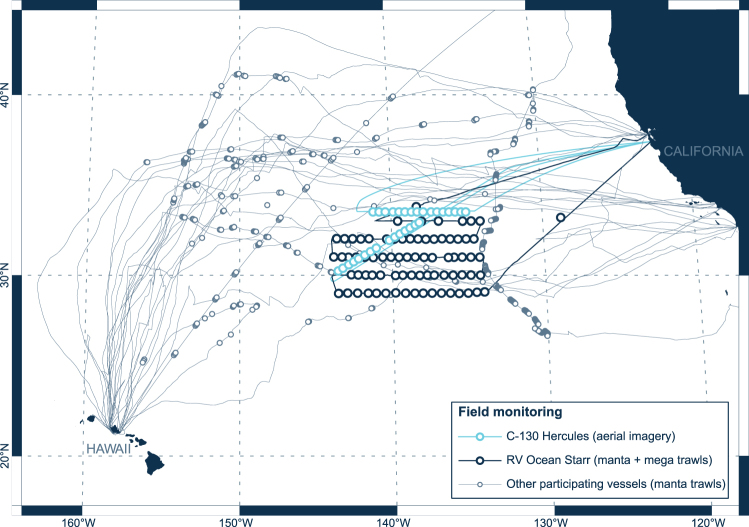
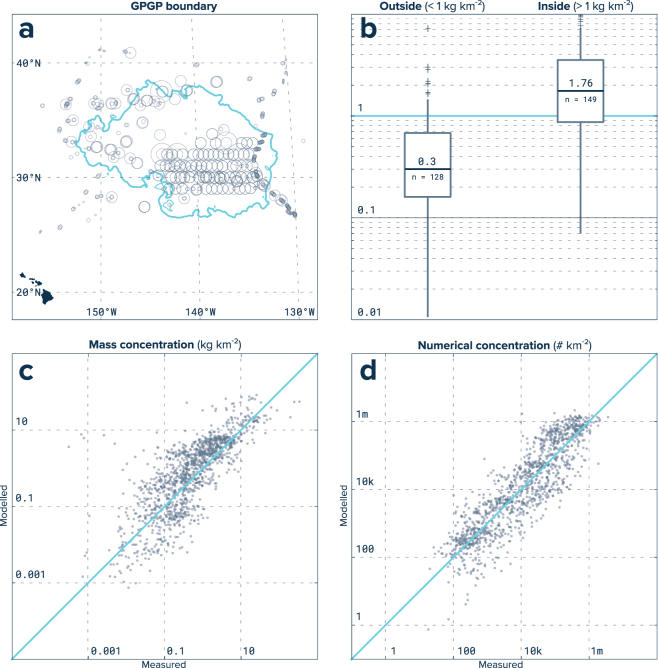
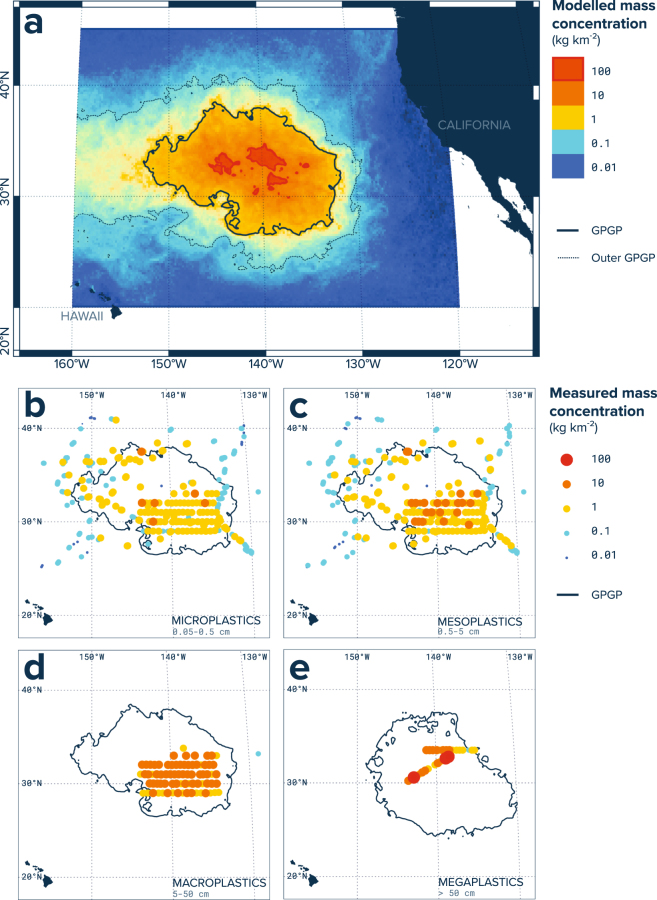
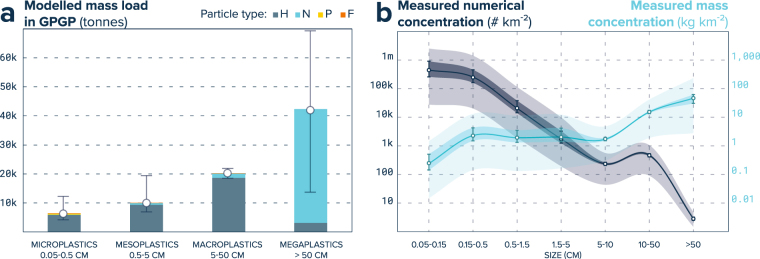
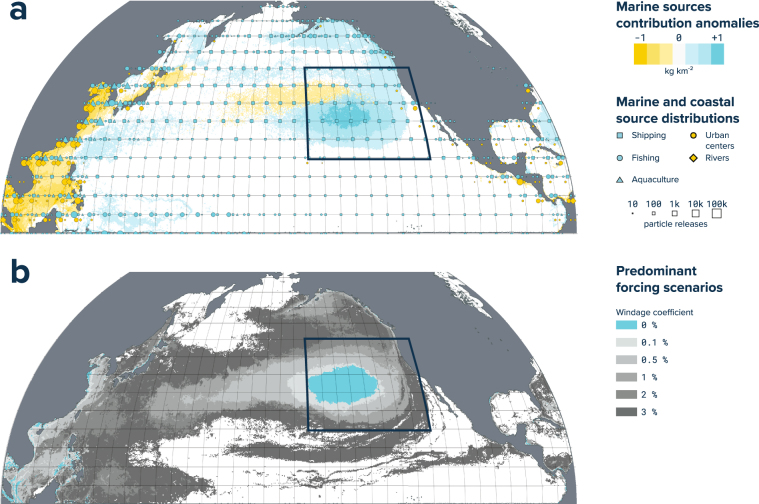
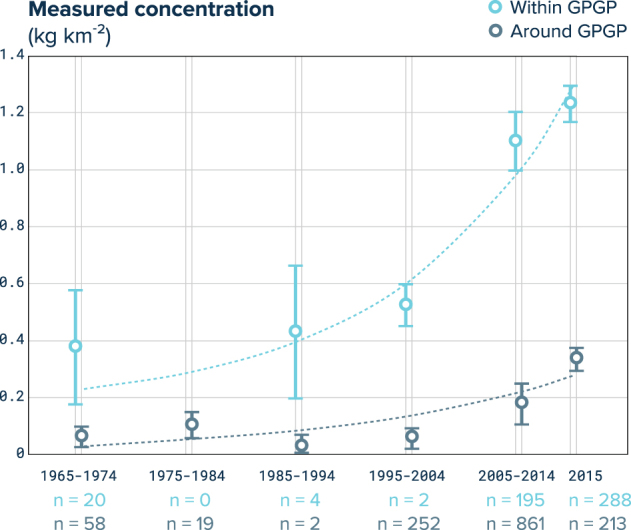
Ocean plastic can persist in sea surface waters, eventually accumulating in remote areas of the world’s oceans. Here we characterise and quantify a major ocean plastic accumulation zone formed in subtropical waters between California and Hawaii: The Great Pacific Garbage Patch (GPGP). Our model, calibrated with data from multi-vessel and aircraft surveys, predicted at least 79 (45–129) thousand tonnes of ocean plastic are floating inside an area of 1.6 million km 2 ; a figure four to sixteen times higher than previously reported. We explain this difference through the use of more robust methods to quantify larger debris. Over three-quarters of the GPGP mass was carried by debris larger than 5 cm and at least 46% was comprised of fishing nets. Microplastics accounted for 8% of the total mass but 94% of the estimated 1.8 (1.1–3.6) trillion pieces floating in the area. Plastic collected during our study has specific characteristics such as small surface-to-volume ratio, indicating that only certain types of debris have the capacity to persist and accumulate at the surface of the GPGP. Finally, our results suggest that ocean plastic pollution within the GPGP is increasing exponentially and at a faster rate than in surrounding waters.
Overview
The claims and statistics of this paper haven’t been checked yet.
Free: it reads the open-access text and checks the first 5 claims that cite a source we can check. Create a free account to check every claim.
Integrity signals
Registry
Cites
Statistics
Figures
Verification
Claims the paper makes
The claims and statistics of this paper haven’t been checked yet.
Free: it reads the open-access text and checks the first 5 claims that cite a source we can check. Create a free account to check every claim.
Claims other papers make about this one
Each is checked against this paper’s own text: does it say what the citing paper says it does?
In the citing paper
“Surface trawl observations may be underestimated by a factor of 4-16.55”
From The fate of plastic in the ocean environment – a minireview (2021) · cites this paper as [55]
Self-check
Percentages, sums and reported differences re-computed from the paper’s own numbers.
The self-check needs the paper’s full text.
Citations
Cites
The NCEP/NCAR 40-Year Reanalysis Project
Kalnay, E., Kanamitsu, M., Kistler, R., Collins, W., Deaven, D., Gandin, L., Iredell, M., Saha, S., White, G., Woollen, J., et al. (1996) · Bulletin of the American Meteorological Society · doi:10.1175/1520-0477(1996)077<0437:tnyrp>2.0.co;2 · Cited by 28,360 · cited 1×
“We sourced global sea surface currents (1993 to 2012) from the HYCOM + NCODA global 1/12° reanalysis (experiment 19.0 and 19.1 36–38 ), and wind (10 m above sea level) speed and direction data (1993 to 2012) from NCEP/NCAR global reanalysis 39 .”
MethodInfluentialProduction, use, and fate of all plastics ever made
Geyer, R., Jambeck, J. R., & Law, K. L. (2017) · Science Advances · doi:10.1126/sciadv.1700782 · Cited by 18,606
Plastic waste inputs from land into the ocean
Jambeck, J. R., Geyer, R., Wilcox, C., Siegler, T. R., Perryman, M., Andrady, A., Narayan, R., & Law, K. L. (2015) · Science · doi:10.1126/science.1260352 · Cited by 13,163 · cited 1×
“…were identically and continuously released in time from 1993 to 2012 following spatial distributions and amplitudes of significant ocean plastic sources on land (coastal population hotspots 23 and major rivers 24 ) as well as at sea (fishing 26,41 , aquaculture 42 and shipping industries 43 ).”
BackgroundMicroplastics in the marine environment
Andrady, A. L. (2011) · Marine Pollution Bulletin · doi:10.1016/j.marpolbul.2011.05.030 · Cited by 8,105 · cited 2×
“Buoyant plastic represents about 60% of the global plastic demand 10 , thus nearly half of the plastic input into the oceans should sink to the floor soon after release, accumulating in sediments 53 and underwater canyons 54 . rest may strand in coastlines 13,55,56 , be ingested by marine life 57…”
BackgroundLost at sea: where is all the plastic?
Thompson, R. C., Olsen, Y., Mitchell, R. P., Davis, A., Rowland, S. J., John, A. W. G., McGonigle, D., & Russell, A. E. (2004) · Science · doi:10.1126/science.1094559 · Cited by 7,765
A global map of human impact on marine ecosystems
Halpern, B. S., Walbridge, S., Selkoe, K. A., Kappel, C. V., Micheli, F., D'Agrosa, C., Bruno, J. F., Casey, K. S., Ebert, C., Fox, H. E., et al. (2008) · Science · doi:10.1126/science.1149345 · Cited by 6,627
Accumulation and fragmentation of plastic debris in global environments
Barnes, D. K. A., Galgani, F., Thompson, R. C., & Barlaz, M. (2009) · Philosophical Transactions of the Royal Society B: Biological Sciences · doi:10.1098/rstb.2008.0205 · Cited by 6,126 · cited 1×
“…it seems the bulk mass of material currently present in the GPGP is very unlikely to leave the area and may slowly degrade into increasingly smaller pieces that can eventually either sink to the seafloor 14 , or behave as water tracer due to its microscopic size and low Reynolds number 66 .”
BackgroundEriksen, M., Lebreton, L. C. M., Carson, H. S., Thiel, M., Moore, C. J., Borerro, J. C., Galgani, F., Ryan, P. G., & Reisser, J. (2014) · PLoS ONE · doi:10.1371/journal.pone.0111913 · Cited by 4,710 · cited 3×
“A dynamic GPGP model boundary allowed us to determine whether surface net tows from previous studies 17,21,22,46–49 were sampling inside or outside the GPGP. Average plastic mass concentration measured by net tows inside the GPGP boundary showed an exponential increase over the last decades, rising…”
ResultInfluentialSelf-citationRiver plastic emissions to the world’s oceans
Lebreton, L. C. M., van der Zwet, J., Damsteeg, J.-W., Slat, B., Andrady, A., & Reisser, J. (2017) · Nature Communications · doi:10.1038/ncomms15611 · Cited by 4,011 · cited 1×
“…were identically and continuously released in time from 1993 to 2012 following spatial distributions and amplitudes of significant ocean plastic sources on land (coastal population hotspots 23 and major rivers 24 ) as well as at sea (fishing 26,41 , aquaculture 42 and shipping industries 43 ).”
BackgroundSelf-citationPlastic debris in the open ocean
Cózar, A., Echevarría, F., González-Gordillo, J. I., Irigoien, X., Úbeda, B., Hernández-León, S., Palma, Á. T., Navarro, S., García-de-Lomas, J., Ruiz, A., et al. (2014) · Proceedings of the National Academy of Sciences · doi:10.1073/pnas.1314705111 · Cited by 3,133 · cited 1×
“Our plastic mass estimate for the GPGP (~79 k tonnes) was nearly sixteen times higher than a previous study (~4.8 k tonnes) that used net trawl data only 29 and four times higher than another assessment (~21 k tonnes) that combined net trawl data with vessel-based visual surveys 21 .”
ResultInfluential
Research works printed but not linked: 11
- Plastics Europe. Plastics - the facts 2016: an analysis of European plastics production, demand and waste data. Preprint at http://www.plasticseurope.org (2016).
- Weisskopf M Plastic reaps a grim harvest in the oceans of the world Smithsonian 1988 18 59
- American Plastics Council. Understanding plastic film: its uses, benefits and waste management options. Preprint at https://plastics.americanchemistry.com/Understanding-Plastic-Film/ (1996).
- Tolman HL The numerical model WAVEWATCH: a third-generation model for the hindcasting of wind waves on tides in shelf seas Communications on Hydraulic and Geotechnical Engineering, Delft Univ. of Techn. 1989 89 72
- FAO. The state of world fisheries and aquaculture 2014. Preprint at http://www.fao.org/3/a-i3720e.pdf (2014).
- NOAA. Detecting Japan tsunami marine debris at sea: a synthesis of efforts and lessons learned. Preprint at https://marinedebris.noaa.gov/sites/default/files/JTMD_Detection_Report.pdf (2015)
- U.S. EPA. Characterization of municipal solid waste in the United States: 1997 update. Preprint at https://archive.epa.gov/epawaste/nonhaz/municipal/web/pdf/msw97rpt.pdf (1998).
- International Coastal Cleanup. Tracking trash - 25 years of action for the ocean. Preprint at http://act.oceanconservancy.org/pdf/Marine_Debris_2011_Report_OC.pdf (2011).
- GESAMP. Sources, fate and effects of microplastics in the marine environment: part two of a global assessment (eds Kershaw, P. J. & Rochman, C. M.). (IMO/FAO/UNESCO-IOC/UNIDO/WMO/IAEA/UN/UNEP/UNDP Joint Group of Experts on the Scientific Aspects of Marine Environmental Protection). Rep. Stud. GESAMP, 93, 220 (2016).
- Maximenko, N. et al. Remote sensing of marine debris to study dynamics, balances and trends. Preprint at https://ecocast.arc.nasa.gov/las/Reports%20and%20Papers/Marine-Debris-Workshop-2017.pdf (2017).
- NASA. Satellite-respondent buoys identify ocean debris. Preprint at https://www.nasa.gov/offices/oct/home/tech_life_buoy.html (2010).
Cited by
Items 401–500 of 1,001
Phillips, R. A., & Waluda, C. M. (2020) · Environment International · doi:10.1016/j.envint.2019.105443 · Cited by 61
“, 46% of the Great Pacific Garbage Patch is comprised of fishing nets (Lebreton et al., 2018).”
BackgroundSepúlveda-Carter, J., Villegas, C., Torres, A., Vargas, E., Rodríguez, F. J., Baltazar, S. E., Prada, A., Rojas, A., Romero, J., Faba, S., et al. (2020) · The Journal of Supercritical Fluids · doi:10.1016/j.supflu.2020.104844 · Cited by 58
Micro- and Nanoplastics’ Effects on Protein Folding and Amyloidosis
Windheim, J., Colombo, L., Battajni, N. C., Russo, L., Cagnotto, A., Diomede, L., Bigini, P., Vismara, E., Fiumara, F., Gabbrielli, S., et al. (2022) · International Journal of Molecular Sciences · doi:10.3390/ijms231810329 · Cited by 61
“, the ‘great Pacific garbage patch’ [6]), made up of items ranging from synthetic teabags [7] to automobile tires [8], are alarming reminders of the ubiquity of plastics use in our societies.”
BackgroundGunawan, N. R., Tessman, M., Zhen, D., Johnson, L., Evans, P., Clements, S. M., Pomeroy, R. S., Burkart, M. D., Simkovsky, R., & Mayfield, S. P. (2022) · The Science of The Total Environment · doi:10.1016/j.scitotenv.2022.158761 · Cited by 58
Designing biodegradable alternatives to commodity polymers
Fiandra, E. F., Shaw, L. A., Starck, M., McGurk, C. J., & Mahon, C. S. (2023) · Chemical Society Reviews · doi:10.1039/d3cs00556a · Cited by 57
Yozukmaz, A. (2021) · Marine Pollution Bulletin · doi:10.1016/j.marpolbul.2021.112733 · Cited by 58
A mini-review on the use of plastic waste as a modifier of the bituminous mix for flexible pavement
Noor, A., & Rehman, M. A. U. (2022) · Cleaner Materials · doi:10.1016/j.clema.2022.100059 · Cited by 55
Journey to the deep: plastic pollution in the hadal of deep-sea trenches.
Abel, S. M., Wu, F., Primpke, S., Gerdts, G., & Brandt, A. (2022) · Environmental Pollution · doi:10.1016/j.envpol.2023.122078 · Cited by 57
Association between blood microplastic levels and severity of extracranial artery stenosis
Yu, H., Li, H., Cui, C., Han, Y., Xiao, Y., Zhang, B., & Li, G. (2024) · Journal of Hazardous Materials · doi:10.1016/j.jhazmat.2024.136211 · Cited by 59
Olivera, N., Rouf, T. B., Bonilla, J. C., Carriazo, J. G., Dianda, N., & Kokini, J. L. (2018) · Journal of Food Engineering · doi:10.1016/j.jfoodeng.2018.10.002 · Cited by 55
Gündoğdu, S., Yeşilyurt, İ. N., & Erbaş, C. (2019) · Marine Pollution Bulletin · doi:10.1016/j.marpolbul.2019.01.032 · Cited by 59
Evidences of microplastics in diverse fish species off the Western Coast of Pacific Ocean, Mexico
Jonathan, M. P., Sujitha, S. B., Rodríguez‐González, F., Villegas, L. E. C., Hernández‐Camacho, C. J., & Sarkar, S. K. (2021) · Ocean & Coastal Management · doi:10.1016/j.ocecoaman.2021.105544 · Cited by 57
Hermabessière, L., & Rochman, C. M. (2021) · Environmental Toxicology and Chemistry · doi:10.1002/etc.5179 · Cited by 58
Ducoli, S., Federici, S., Cocca, M., Gentile, G., Zendrini, A., Bergese, P., & Depero, L. E. (2023) · Environmental Pollution · doi:10.1016/j.envpol.2023.123150 · Cited by 55
Guerrini, F., Mari, L., & Casagrandi, R. (2019) · Frontiers in Marine Science · doi:10.3389/fmars.2019.00299 · Cited by 61
“These areas, frequently referred to as garbage patches, are showing increasing litter concentrations (Lebreton et al., 2018) due to the coupling between rising plastic production (PlasticsEurope, 2018) and the input of plastic waste in the world’s oceans (Jambeck et al.”
BackgroundGarcia‐Garin, O., Aguilar, Á., Borrell, A., Gozalbes, P., Lobo, A., Penadés-Suay, J., Raga, J. A., Revuelta, O., Serrano, M., & Vighi, M. (2019) · Environmental Pollution · doi:10.1016/j.envpol.2019.113680 · Cited by 54
Beron-Vera, F. J. (2020) · Nonlinear Dynamics · doi:10.1007/s11071-020-06053-z · Cited by 59
“The ocean’s subtropical gyres are well-documented [20, 50] to show a tendency to accumulate plastic debris forming large patches, particularly that of the North Pacific, known as the “Great Pacific Garbage Patch.”
BackgroundCastro, J. I., Porras, D. P. N., Cortés, J. A. A., Hernández, J. H. M., & Grande‐Tovar, C. D. (2022) · Molecules · doi:10.3390/molecules27072264 · Cited by 53
“By 2050, it is projected that more than 33 million tons of plastic will end up accumulating in various ecosystems, especially in the ocean [3].”
BackgroundMelo-Agustín, P., Kozak, E. R., Perea‐Flores, M. D. J., & Mendoza-Pérez, J. A. (2021) · The Science of The Total Environment · doi:10.1016/j.scitotenv.2022.154434 · Cited by 57
Marine plastic pollution detection and identification by using remote sensing-meta analysis
Waqas, M., Wong, M. S., Stocchino, A., Abbas, S., Hafeez, S., & Zhu, R. (2023) · Marine Pollution Bulletin · doi:10.1016/j.marpolbul.2023.115746 · Cited by 57
Najahi, H., Bannı, M., Nakad, M., Abboud, R., Assaf, J. C., Operato, L., Hassen, M. B., Gomes, L., & Hamd, W. S. (2025) · Journal of Hazardous Materials Advances · doi:10.1016/j.hazadv.2025.100667 · Cited by 81
Jung, M. R., Balazs, G. H., Work, T. M., Jones, T. T., Orski, S. V., Rodriguez C., V., Beers, K. L., Brignac, K. C., Hyrenbach, K. D., Jensen, B. A., et al. (2018) · Environmental Science & Technology · doi:10.1021/acs.est.8b03118 · Cited by 53
Mekaru, H. (2020) · ACS Omega · doi:10.1021/acsomega.9b03278 · Cited by 53
Microplastic pollution on island beaches, Oahu, Hawai`i
Rey, S. F., Franklin, J., & Rey, S. J. (2021) · PLoS ONE · doi:10.1371/journal.pone.0247224 · Cited by 58
“Microplastics are the predominant form of marine plastic debris [11] and found in marine habitats ranging from the open seas [12], deep oceans [13] and mid-ocean gyres [14], to coastal estuaries [15] and beaches [16].”
Nakajima, R., Tsuchiya, M., Yabuki, A., Masuda, S., Kitahashi, T., Nagano, Y., Ikuta, T., Isobe, N., Nakata, H., Ritchie, H., et al. (2021) · Marine Pollution Bulletin · doi:10.1016/j.marpolbul.2021.112188 · Cited by 55
Micro and Nano-Plastics in the Environment: Research Priorities for the Near Future
Vighi, M., Bayo, J., Fernández‐Piñas, F., Gago, J., Gómez, M., Hernández‐Borges, J., Herrera, A., Landaburu‐Aguirre, J., Muniategui‐Lorenzo, S., Muñoz, A., et al. (2021) · Reviews of Environmental Contamination and Toxicology · doi:10.1007/398_2021_69 · Cited by 67
Scientists' warning of an imperiled ocean
Georgian, S. E., Hameed, S. O., Morgan, L. E., Amon, D. J., Sumaila, U. R., Johns, D., & Ripple, W. J. (2022) · Biological Conservation · doi:10.1016/j.biocon.2022.109595 · Cited by 55
Biodegradation of polyethylene by the marine fungus Parengyodontium album
Vaksmaa, A., Vielfaure, H., Polerecky, L., Kienhuis, M. V. M., van der Meer, M. T. J., Pflüger, T., Egger, M., & Niemann, H. (2024) · Science of The Total Environment · doi:10.1016/j.scitotenv.2024.172819 · Cited by 52
Assessing plastic size distribution and quantity on a remote island in the South Pacific
Nichols, E. C., Lavers, J. L., Archer-Rand, S., & Bond, A. L. (2021) · Marine Pollution Bulletin · doi:10.1016/j.marpolbul.2021.112366 · Cited by 59
de Castro, T. R., de Macedo, D. C., Chiroli, D. M. D. G., da Silva, R. C., & Tebcherani, S. M. (2021) · Journal of Polymers and the Environment · doi:10.1007/s10924-021-02241-z · Cited by 56
Challenges and Opportunities for Recycled Polyethylene Fishing Nets: Towards a Circular Economy
Juan, R., Domínguez, C., Robledo, N., Paredes, B., Galera, S., & García‐Muñoz, R. A. (2021) · Polymers · doi:10.3390/polym13183155 · Cited by 56
Yin, M., Cao, H., Zhao, W., Wang, T., Huang, W., & Cai, M. (2022) · The Science of The Total Environment · doi:10.1016/j.scitotenv.2022.157374 · Cited by 59
Courtene‐Jones, W., van Gennip, S. J., Pénicaud, J., Penn, E., & Thompson, R. C. (2022) · Marine Pollution Bulletin · doi:10.1016/j.marpolbul.2022.114371 · Cited by 55
“, 2015) when compared to other ocean basins, such as the North Pacific (Desforges et al., 2014; Egger et al., 2020; Goldstein et al., 2013; Law et al., 2014; Lebreton et al., 2018; Martinez et al., 2009; Rios Mendoza and Jones, 2015).”
BackgroundInfluentialEnvironmental Sustainability Assessment of Hydrogen from Waste Polymers
Salah, C., Cobo, S., Pérez‐Ramírez, J., & Guillén‐Gosálbez, G. (2023) · ACS Sustainable Chemistry & Engineering · doi:10.1021/acssuschemeng.2c05729 · Cited by 55
Ning, J., Pang, S., Arifin, Z., Zhang, Y., Epa, U. P. K., Qu, M., Zhao, J., Zhen, F., Chowdhury, A., Guo, R., et al. (2024) · Journal of Marine Science and Engineering · doi:10.3390/jmse12071181 · Cited by 60
Abandoned, lost, or discarded fishing gear at urban coastlines
Gajanur, A. R., & Jaafar, Z. (2022) · Marine Pollution Bulletin · doi:10.1016/j.marpolbul.2022.113341 · Cited by 52
Gohla, J., Bračun, S., Gretschel, G., Koblmüller, S., Wagner, M., & Pacher-Deutsch, C. (2021) · Marine Pollution Bulletin · doi:10.1016/j.marpolbul.2021.112618 · Cited by 54
Floating marine macro litter in the Black Sea: Toward baselines for large scale assessment
González‐Fernández, D., Hanke, G., Pogojeva, M., Machitadze, N., Kotelnikova, Y., Tretiak, I. P., Savenko, O., Bilashvili, K., Gelashvili, N., Fedorov, A. V., et al. (2022) · Environmental Pollution · doi:10.1016/j.envpol.2022.119816 · Cited by 51
Properties and Recyclability of Abandoned Fishing Net-Based Plastic Debris
Koziol, A., Paso, K. G., & Kuciel, S. T. (2022) · Catalysts · doi:10.3390/catal12090948 · Cited by 56
“Out of this, at least 46% is comprised of fishing nets [12].”
BackgroundIvy, N., Bhattacharya, S., Dey, S., Gupta, K., Dey, A., & Sharma, P. (2023) · Chemosphere · doi:10.1016/j.chemosphere.2023.139542 · Cited by 52
Khattab, A. M., Esmael, M. E., Farrag, A. A., & Ibrahim, M. I. A. (2021) · International Journal of Biological Macromolecules · doi:10.1016/j.ijbiomac.2021.08.090 · Cited by 54
Pan, Z., Liu, Q., Sun, X., Li, W., Zou, Q., Cai, S., & Lin, H. (2021) · Gondwana Research · doi:10.1016/j.gr.2021.10.024 · Cited by 55
Microbial Degradation of Marine Plastics: Current State and Future Prospects
Vaksmaa, A., Hernando-Morales, V., Zeghal, E., & Niemann, H. (2021) · Biotechnology for Sustainable Environment · doi:10.1007/978-981-16-1955-7_5 · Cited by 50
da Silva, E. F., do Carmo, D. D. F., Muniz, M. C., dos Santos, C. A., Cardozo, B. B. I., Costa, D. M. D. O., dos Anjos, R. M., & Vezzone, M. (2021) · Marine Pollution Bulletin · doi:10.1016/j.marpolbul.2021.113161 · Cited by 53
Distribution of Microplastics in Beach Sand on the Can Gio Coast, Ho Chi Minh City, Vietnam
Nhon, N. T. T., Nguyen, N. T., Hai, H. T. N., & To, H. T. (2022) · Water · doi:10.3390/w14182779 · Cited by 56
Agbakoba, V. C., Webb, N., Jegede, E., Phillips, R., Hlangothi, S. P., & John, M. J. (2023) · Macromolecular Materials and Engineering · doi:10.1002/mame.202300276 · Cited by 54
From Waste to Worth: Upcycling Plastic into High-Value Carbon-Based Nanomaterials
Abdelfatah, A. M., Hosny, M., Elbay, A. S., El-Maghrabi, N., & Fawzy, M. (2024) · Polymers · doi:10.3390/polym17010063 · Cited by 57
Compa, M., March, D., & Deudero, S. (2019) · Marine Pollution Bulletin · doi:10.1016/j.marpolbul.2019.02.027 · Cited by 55
Winterstetter, A., Grodent, M., Kini, V., Ragaert, K., & Vrancken, K. C. (2021) · Sustainability · doi:10.3390/su13094894 · Cited by 55
Abundance and sources of plastic debris on beaches in a plastic hotspot, Nha Trang, Viet Nam
Fruergaard, M., Laursen, S. N., Larsen, M. N., Posth, N. R., Niebe, K. B., Bentzon-Tarp, A., Svenningsen, S. K., Acevedo, L. I., Trinh, B., Tran-Thi, P. T., et al. (2022) · Marine Pollution Bulletin · doi:10.1016/j.marpolbul.2022.114394 · Cited by 54
Research Progress in Hemicellulose-Based Nanocomposite Film as Food Packaging
Liu, G., Shi, K., & Sun, H. (2023) · Polymers · doi:10.3390/polym15040979 · Cited by 52
“Excessive use of plastics will inevitably lead to high consumption of nonrenewable fossil resources and environmental pollution [1].”
BackgroundPortz, L., Manzolli, R. P., Daza, D. A. V., & Fontán-Bouzas, Á. (2021) · The Science of The Total Environment · doi:10.1016/j.scitotenv.2021.151878 · Cited by 55
The Story of Plastic Pollution: From the Distant Ocean Gyres to the Global Policy Stage
Rochman, C. M. (2020) · Oceanography · doi:10.5670/oceanog.2020.308 · Cited by 60
“Intrigued by this idea, and with some disbelief, a group of graduate students led by Miriam Goldstein at the Scripps Institution of Oceanography (SIO) heard Thompson’s call for research and found funding for the first scientific expedition to the Great Pacific Garbage Patch in the summer of 2009.”
InfluentialHuang, D., Zhou, W., Chen, S., Tao, J., Li, R., Yin, L., Wang, X., & Chen, H. (2022) · Chemosphere · doi:10.1016/j.chemosphere.2022.134729 · Cited by 49
High-precision density mapping of marine debris and floating plastics via satellite imagery
Booth, H., Ma, W., & Karakuş, O. (2023) · Scientific Reports · doi:10.1038/s41598-023-33612-2 · Cited by 55
“F-mask takes raw Sentinel-2 data as an input and produces a mask with integer values of 0-5 representing (0) land, (1) water, (2) cloud shadow, (3) snow, (4) cloud, and (5) no observation, respectively.”
BackgroundMethodInfluentialIsmail, M., Abouhmad, A., Warlin, N., Pyo, S., Örn, O. E., Al‐Rudainy, B., Tullberg, C., Zhang, B., & Hatti‐Kaul, R. (2024) · Green Chemistry · doi:10.1039/d3gc04728h · Cited by 48
Payne, J., McKeown, P., Driscoll, O. J., Kociok-Köhn, G. I., Emanuelsson, E. A. C., & Jones, M. D. (2021) · Polymer Chemistry · doi:10.1039/d0py01519a · Cited by 48
Odontocete cetaceans foraging behind trawlers, worldwide
Bonizzoni, S., Hamilton, S., Reeves, R. R., Genov, T., & Bearzi, G. (2022) · Reviews in Fish Biology and Fisheries · doi:10.1007/s11160-022-09712-z · Cited by 52
A new look at the potential role of marine plastic debris as a global vector of toxic benthic algae
Leite, I. D. P., Menegotto, A., Lana, P. D. C., & Mafra, L. L. (2022) · The Science of The Total Environment · doi:10.1016/j.scitotenv.2022.156262 · Cited by 49
Workplace pro-environmental behaviour: a review and bibliometric analysis
Zaidi, H., & Azmi, F. T. (2022) · International Journal of Productivity and Performance Management · doi:10.1108/ijppm-09-2021-0507 · Cited by 52
Falk‐Andersson, J., Haarr, M. L., & Havas, V. (2020) · The Science of The Total Environment · doi:10.1016/j.scitotenv.2020.141117 · Cited by 50
Park, Y.-J., Garaba, S. P., & Sainte-Rose, B. (2021) · Optics Express · doi:10.1364/oe.440380 · Cited by 47
Self-citationViana, E. B. M., Oliveira, N. L., Ribeiro, J. S., Almeida, M. F., Souza, C. C. E., de Resende, J. V., Santos, L. S., & Veloso, C. M. (2021) · Food Packaging and Shelf Life · doi:10.1016/j.fpsl.2021.100776 · Cited by 55
Impact of starch-based bioplastic on growth and biochemical parameters of basil plants
Celletti, S., Fedeli, R., Ghorbani, M., & Loppi, S. (2022) · The Science of The Total Environment · doi:10.1016/j.scitotenv.2022.159163 · Cited by 50
Cassone, B. J., Grove, H. C., Kurchaba, N. W., Geronimo, P., & LeMoine, C. M. R. (2021) · Journal of Hazardous Materials · doi:10.1016/j.jhazmat.2021.127862 · Cited by 48
Tsuchiya, M., Kitahashi, T., Nakajima, R., OGURI, K., Kawamura, K., Nakamura, A., Nakano, K., Maeda, Y., Murayama, M., Chiba, S., et al. (2023) · Marine Pollution Bulletin · doi:10.1016/j.marpolbul.2023.115466 · Cited by 46
Paddle surfing for science on microplastic pollution
Camins, E., de Haan, W. P., Salvo, V.-S., Canals, M., Raffard, A., & Sànchez‐Vidal, A. (2019) · The Science of The Total Environment · doi:10.1016/j.scitotenv.2019.136178 · Cited by 50
Tong, X., Jong, M., Zhang, J., You, L., & Gin, K. Y. (2021) · Journal of Hazardous Materials · doi:10.1016/j.jhazmat.2021.125502 · Cited by 46
Ruiz, I., Basurko, O. C., Rubio, A., Delpey, M. T., Granado, I., Declerck, A., Mader, J., & Cózar, A. (2020) · Frontiers in Marine Science · doi:10.3389/fmars.2020.00308 · Cited by 51
Simeonova, A., & Chuturkova, R. Z. (2020) · Regional Studies in Marine Science · doi:10.1016/j.rsma.2020.101329 · Cited by 50
Imzilen, T., Lett, C., Chassot, E., & Kaplan, D. M. (2020) · Biological Conservation · doi:10.1016/j.biocon.2020.108939 · Cited by 45
Loubet, P., Couturier, J., Arduin, R. H., & Sonnemann, G. (2021) · The Science of The Total Environment · doi:10.1016/j.scitotenv.2021.150117 · Cited by 45
Deville, A., Vázquez‐Rowe, I., Ita‐Nagy, D., & Kahhat, R. F. (2023) · Marine Pollution Bulletin · doi:10.1016/j.marpolbul.2023.114785 · Cited by 45
Zhao, S., Mincer, T. J., Lebreton, L., & Egger, M. (2023) · PNAS Nexus · doi:10.1093/pnasnexus/pgad070 · Cited by 49
Self-citationRoyer, S., Corniuk, R. N., McWhirter, A., Lynch, H. W., Pollock, K., O’Brien, K., Escalle, L., Stevens, K., Moreno, G., & Lynch, J. M. (2023) · Marine Pollution Bulletin · doi:10.1016/j.marpolbul.2023.115585 · Cited by 44
Abu-Bakar, H., Charnley, F., Hopkinson, P., & Morasae, E. K. (2023) · Journal of Cleaner Production · doi:10.1016/j.jclepro.2023.140066 · Cited by 56
How Water Bottle Refill Stations Contribute to Campus Sustainability: A Case Study in Japan
Uehara, T., & Ynacay-Nye, A. (2018) · Sustainability · doi:10.3390/su10093074 · Cited by 47
Chambault, P., Vandeperre, F., Machete, M., Lagoa, J. C., & Pham, C. K. (2018) · Marine Environmental Research · doi:10.1016/j.marenvres.2018.09.015 · Cited by 48
Society Role in the Reduction of Plastic Pollution
Sandu, C., Takács, E., Suaria, G., Borgogno, F., Laforsch, C., Löder, M. G. J., Gijsbert, T., & Florea, L. (2020) · The handbook of environmental chemistry · doi:10.1007/698_2020_483 · Cited by 51
An intelligent way for discerning plastics at the shorelines and the seas
Kylili, K., Hadjistassou, C., & Artusi, A. (2020) · Environmental Science and Pollution Research · doi:10.1007/s11356-020-10105-7 · Cited by 44
“At the sea surface, the five subtropical gyres, namely, the North and South Pacific Ocean, the North and South Atlantic Ocean, and the Indian Ocean, feature the highest concentration of floating marine debris (Cózar et al. 2014; Lebreton et al. 2018).”
BackgroundInfluentialPark, H.-M., Park, S., de Guzman, M. K., Baek, J. Y., Veličković, T. Ć., Messem, A. V., & Neve, W. D. (2022) · PLoS ONE · doi:10.1371/journal.pone.0269449 · Cited by 53
“Indeed, plastic pollution has become so severe that even an island of plastic, called the Great Pacific Garbage Patch, can now be found in the Central Pacific Gyre [2].”
BackgroundMarine Debris Detection in Satellite Surveillance Using Attention Mechanisms
Shen, A., Zhu, Y., Angelov, P. P., & Jiang, R. (2024) · IEEE Journal of Selected Topics in Applied Earth Observations and Remote Sensing · doi:10.1109/jstars.2024.3349489 · Cited by 43
“Within this 1.6 million km 2 area, there are 42 000 metric tons of giant plastics, 20 000 metric tons of large plastics, 10 000 metric tons of medium plastics, and 6400 metric tons of microplastics [3].”
InfluentialSow, P. K., Ishita, I., & Singhal, R. (2018) · Journal of environmental chemical engineering · doi:10.1016/j.jece.2018.11.031 · Cited by 47
Experimental study of particle trajectories below deep-water surface gravity wave groups
van den Bremer, T. S., Whittaker, C., Calvert, R., Raby, A. C., & Taylor, P. H. (2019) · Journal of Fluid Mechanics · doi:10.1017/jfm.2019.584 · Cited by 43
Transition paths of marine debris and the stability of the garbage patches
Miron, P., Beron-Vera, F. J., Helfmann, L., & Koltai, P. (2021) · Chaos: An Interdisciplinary Journal of Nonlinear Science · doi:10.1063/5.0030535 · Cited by 35
Algae for global sustainability?
Bourgougnon, N., Burlot, A.-S., & Jacquin, A.-G. (2021) · Advances in botanical research · doi:10.1016/bs.abr.2021.01.003 · Cited by 54
Shaji, A., Kamalesh, R., Dinakarkumar, Y., Saravanan, A., Arokiyaraj, S., Mani, H. P., Veera, H. M., Muthu, D. B., Ramakrishnan, G., & Romauld, S. I. (2023) · Biochemical Engineering Journal · doi:10.1016/j.bej.2023.109133 · Cited by 46
Legacy oceanic plastic pollution must be addressed to mitigate possible long-term ecological impacts
Richon, C., Kvale, K., Lebreton, L., & Egger, M. (2023) · Microplastics and Nanoplastics · doi:10.1186/s43591-023-00074-2 · Cited by 45
“Over the past decades, the steep increase in ocean plastics contamination has raised concerns in the scientific community as well as among the public [1–4].”
BackgroundSelf-citationZendehboudi, A., Mohammadi, A., Dobaradaran, S., De-la-Torre, G. E., Ramavandi, B., Hashemi, S. E., Saeedi, R., Tayebi, E. M., Vafaee, A., & Darabi, A. (2023) · Marine Pollution Bulletin · doi:10.1016/j.marpolbul.2023.115825 · Cited by 48
Emerging Technologies for Remote Sensing of Floating and Submerged Plastic Litter
Goddijn‐Murphy, L., Martínez-Vicente, V., Dierssen, H. M., Raimondi, V., Gandini, E., Foster, R., & Chirayath, V. (2024) · Remote Sensing · doi:10.3390/rs16101770 · Cited by 45
Synergistic technologies for a circular economy: upcycling waste plastics and biomass
Osman, A. I., Nasr, M., Aniagor, C. O., Farghali, M. R. F., Huang, M. M., Chin, B. L. F., Sun, Z., Lock, S. S. M., López‐Maldonado, E. A., Yiin, C. L., et al. (2024) · Frontiers of Chemical Science and Engineering · doi:10.1007/s11705-024-2507-0 · Cited by 44
Odontocete Adaptations to Human Impact and Vice Versa
Bearzi, G., Piwetz, S., & Reeves, R. R. (2019) · Ethology and behavioral ecology of marine mammals · doi:10.1007/978-3-030-16663-2_10 · Cited by 45
Composition, spatial distribution and sources of plastic litter on the East China Sea floor
Zhang, F., Yao, C., Xu, J., Zhu, L., Peng, G., & Li, D. (2020) · The Science of The Total Environment · doi:10.1016/j.scitotenv.2020.140525 · Cited by 42
Fluorescent plastic nanoparticles to track their interaction and fate in physiological environments
Caldwell, J., Lehner, R., Balog, S., Rhême, C., Gao, X., Septiadi, D., Weder, C., Petri‐Fink, A., & Rothen‐Rutishauser, B. (2021) · Environmental Science Nano · doi:10.1039/d0en00944j · Cited by 48
Relative Abundance of Floating Plastic Debris and Neuston in the Eastern North Pacific Ocean
Egger, M., Quiros, L., Leone, G., Ferrari, F. F., Boerger, C. M., & Tishler, M. S. (2021) · Frontiers in Marine Science · doi:10.3389/fmars.2021.626026 · Cited by 46
Self-citationBioplastic accumulates antibiotic and metal resistance genes in coastal marine sediments
Cesare, A. D., Pinnell, L. J., Brambilla, D., Elli, G., Sabatino, R., Sathicq, M. B., Corno, G., O’Donnell, C. A., & Turner, J. W. (2021) · Environmental Pollution · doi:10.1016/j.envpol.2021.118161 · Cited by 44
Estimation and prediction of plastic losses to the environment in China from 1950 to 2050
Luan, X., Kou, X., Zhang, L., Chen, L., Liu, W., & Cui, Z. (2022) · Resources Conservation and Recycling · doi:10.1016/j.resconrec.2022.106386 · Cited by 47
Shorebirds ingest plastics too: what we know, what we do not know, and what we should do next
Flemming, S. A., Lanctot, R. B., Price, C. M., Mallory, M. L., Kühn, S., Drever, M. C., Barry, T., & Provencher, J. F. (2022) · Environmental Reviews · doi:10.1139/er-2022-0008 · Cited by 41
“This pattern may be attributable to the water surface in marine environments being an accumulation zone for plastics pollution (Eriksen et al. 2013; Lebreton et al. 2018; Schwarz et al. 2019).”
BackgroundJasińska, A., Różalska, S., Rusetskaya, V., Słaba, M., & Bernat, P. (2022) · International Journal of Molecular Sciences · doi:10.3390/ijms232112978 · Cited by 41
“6 million km2, contains 45–129 thousand tons of plastic [17].”
BackgroundInvestigation of microplastic contamination in the sediments of Noyyal River- Southern India
Ayyamperumal, R., Huang, X., Li, F., Chengjun, Z., Chellaiah, G., Gopalakrishnan, G., Senapathi, V., Rajkumar, P., & Antony, J. K. (2022) · Journal of Hazardous Materials Advances · doi:10.1016/j.hazadv.2022.100198 · Cited by 47
Metadata
- Authors
- Lebreton, L., Slat, B., Ferrari, F., Sainte-Rose, B., Aitken, J., Marthouse, R., Hajbane, S., Cunsolo, S., Schwarz, A., Levivier, A., Noble, K., Debeljak, P., Maral, H., Schoeneich-Argent, R., Brambini, R., & Reisser, J.
- Affiliations
- The Ocean Cleanup (NL)
- Centre National de la Recherche Scientifique (FR)
- Corresponding author
- Lebreton, L.
- Venue
- Scientific Reports
- Published
- 2018-03-22
- Volume
- 8
- Issue
- 1
- Pages
- 4666-4666
- ISSN
- 2045-2322 (ISSN-L)
- PMC
- PMC5864935
- OpenAlex
- W2791727655
- Cited by
- 1,839
- References
- 56
- Citations by year
- 2026: 152 · 2025: 242 · 2024: 252 · 2023: 257 · 2022: 289 · 2021: 272 · 2020: 193 · 2019: 141 · 2018: 40
- FWCI
- 60.53
- Type
- journal article
- Language
- en
- Open access
- gold
- doi.org
- Licence
- cc-by
- creativecommons.org/licenses/by/4.0 (tdm)
- creativecommons.org/licenses/by/4.0 (vor)
- Locations
- Scientific Reports (publishedVersion, cc-by)
- Europe PMC (PubMed Central) (publishedVersion, cc-by)
- PubMed Central (publishedVersion, cc-by)
- PubMed (publishedVersion)
- VBN Forskningsportal (Aalborg Universitet) (publishedVersion, cc-by)
- Roger Williams University - Digital Commons (Roger Williams University) (submittedVersion)
- HAL (submittedVersion, other-oa)
- DOAJ (DOAJ: Directory of Open Access Journals) (submittedVersion)
- Funders
- Technische Universiteit Delft
- Topics
- Physical Sciences › Environmental Science › Pollution › Microplastics and Plastic Pollution
- Physical Sciences › Environmental Science › Pollution › Oil Spill Detection and Mitigation
- Physical Sciences › Environmental Science › Waste Management and Disposal › Waste Management and Recycling
- Keywords
- Great Pacific Garbage Patch, marine plastic pollution, plastic accumulation, fishing nets, microplastics, debris size distribution, surface-to-volume ratio, subtropical gyre
- MeSH terms
- California, Environmental Monitoring, Garbage, Hawaii, Models, Theoretical, Pacific Ocean, Plankton, Plastics, Sampling Studies, Spectrophotometry, Infrared, Waste Products, Water Pollutants, Chemical, Water Pollution, Chemical, Wind, Satellite Imagery
About these checks
Registry, retraction, Cites and statistics results are computed, not judged, with one exception: a printed reference that no index lists is read once by a model before it counts as a citation error. Claims are extracted by a model and kept only when their quote appears verbatim in the text; each cited source is then checked, with a model’s help, for whether it says what the claim relies on. Those verdicts can be wrong — read the claim’s quote and the cited source before relying on one.
Statistics and arithmetic are recomputed, not judged.
Confidence bands are shown only for fields calibrated on our annotated test set. None is calibrated yet, so no band is shown.
What counts as a claim ›How we measure confidence ›How we check this ›
Are you an author, or do you see a problem with this page? Request a review
Data sources
Bibliographic data: Semantic Scholar, OpenAlex, Crossref.
Contains information from the Semantic Scholar Academic Graph Datasets, made available under the ODC Attribution License (ODC-BY 1.0).
Semantic Scholar’s data is described in: Kinney, R., et al. (2023). The Semantic Scholar Open Data Platform. arXiv:2301.10140.
