

Evidence that the Great Pacific Garbage Patch is rapidly accumulating plastic
Open accessThe DOI matches its Crossref record; 55 of the 56 references it cites were found in a registry or an index.
Abstract
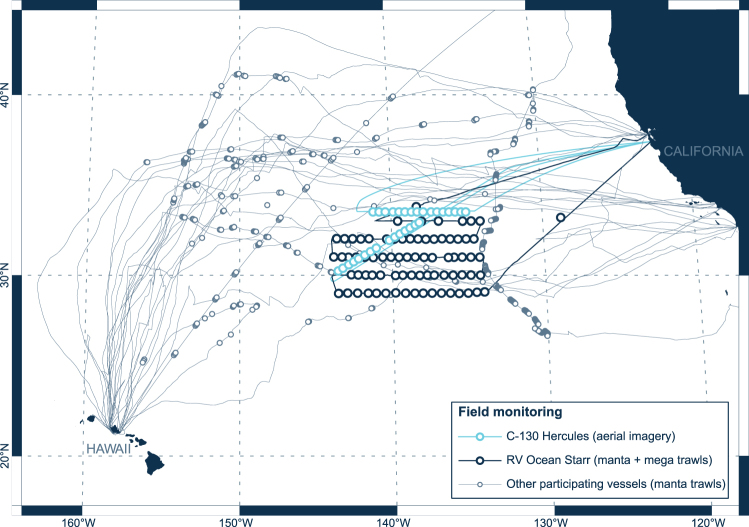
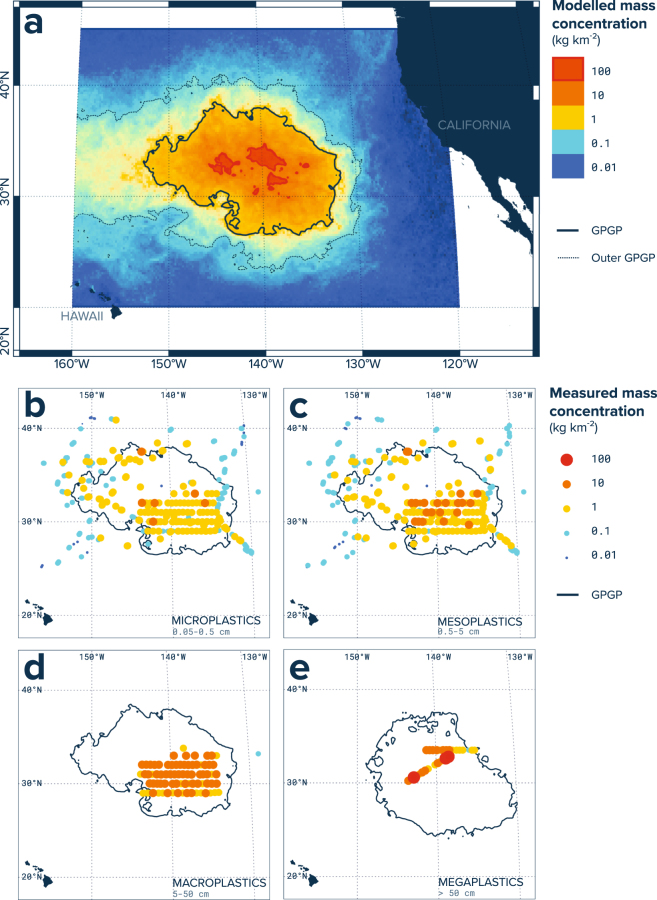
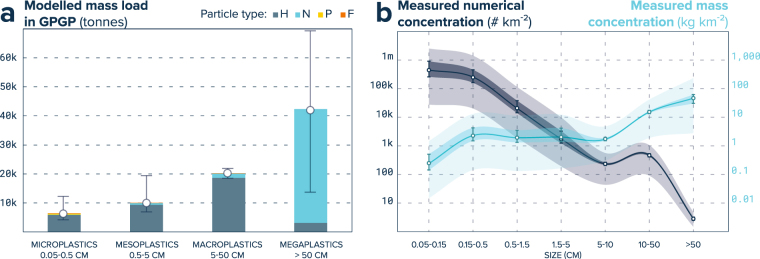
Ocean plastic can persist in sea surface waters, eventually accumulating in remote areas of the world’s oceans. Here we characterise and quantify a major ocean plastic accumulation zone formed in subtropical waters between California and Hawaii: The Great Pacific Garbage Patch (GPGP). Our model, calibrated with data from multi-vessel and aircraft surveys, predicted at least 79 (45–129) thousand tonnes of ocean plastic are floating inside an area of 1.6 million km 2 ; a figure four to sixteen times higher than previously reported. We explain this difference through the use of more robust methods to quantify larger debris. Over three-quarters of the GPGP mass was carried by debris larger than 5 cm and at least 46% was comprised of fishing nets. Microplastics accounted for 8% of the total mass but 94% of the estimated 1.8 (1.1–3.6) trillion pieces floating in the area. Plastic collected during our study has specific characteristics such as small surface-to-volume ratio, indicating that only certain types of debris have the capacity to persist and accumulate at the surface of the GPGP. Finally, our results suggest that ocean plastic pollution within the GPGP is increasing exponentially and at a faster rate than in surrounding waters.
Overview
The claims and statistics of this paper haven’t been checked yet.
Free: it reads the open-access text and checks the first 5 claims that cite a source we can check. Create a free account to check every claim.
Integrity signals
Registry
Cites
Statistics
Figures
Verification
Claims the paper makes
The claims and statistics of this paper haven’t been checked yet.
Free: it reads the open-access text and checks the first 5 claims that cite a source we can check. Create a free account to check every claim.
Claims other papers make about this one
Each is checked against this paper’s own text: does it say what the citing paper says it does?
In the citing paper
“Surface trawl observations may be underestimated by a factor of 4-16.55”
From The fate of plastic in the ocean environment – a minireview (2021) · cites this paper as [55]
Self-check
Percentages, sums and reported differences re-computed from the paper’s own numbers.
The self-check needs the paper’s full text.
Citations
Cites
The NCEP/NCAR 40-Year Reanalysis Project
Kalnay, E., Kanamitsu, M., Kistler, R., Collins, W., Deaven, D., Gandin, L., Iredell, M., Saha, S., White, G., Woollen, J., et al. (1996) · Bulletin of the American Meteorological Society · doi:10.1175/1520-0477(1996)077<0437:tnyrp>2.0.co;2 · Cited by 28,360 · cited 1×
“We sourced global sea surface currents (1993 to 2012) from the HYCOM + NCODA global 1/12° reanalysis (experiment 19.0 and 19.1 36–38 ), and wind (10 m above sea level) speed and direction data (1993 to 2012) from NCEP/NCAR global reanalysis 39 .”
MethodInfluentialProduction, use, and fate of all plastics ever made
Geyer, R., Jambeck, J. R., & Law, K. L. (2017) · Science Advances · doi:10.1126/sciadv.1700782 · Cited by 18,606
Plastic waste inputs from land into the ocean
Jambeck, J. R., Geyer, R., Wilcox, C., Siegler, T. R., Perryman, M., Andrady, A., Narayan, R., & Law, K. L. (2015) · Science · doi:10.1126/science.1260352 · Cited by 13,163 · cited 1×
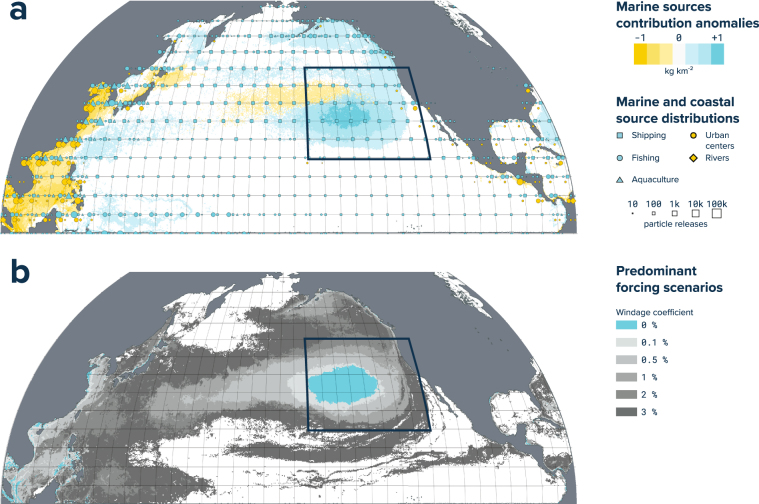
“…were identically and continuously released in time from 1993 to 2012 following spatial distributions and amplitudes of significant ocean plastic sources on land (coastal population hotspots 23 and major rivers 24 ) as well as at sea (fishing 26,41 , aquaculture 42 and shipping industries 43 ).”
BackgroundMicroplastics in the marine environment
Andrady, A. L. (2011) · Marine Pollution Bulletin · doi:10.1016/j.marpolbul.2011.05.030 · Cited by 8,105 · cited 2×
“Buoyant plastic represents about 60% of the global plastic demand 10 , thus nearly half of the plastic input into the oceans should sink to the floor soon after release, accumulating in sediments 53 and underwater canyons 54 . rest may strand in coastlines 13,55,56 , be ingested by marine life 57…”
BackgroundLost at sea: where is all the plastic?
Thompson, R. C., Olsen, Y., Mitchell, R. P., Davis, A., Rowland, S. J., John, A. W. G., McGonigle, D., & Russell, A. E. (2004) · Science · doi:10.1126/science.1094559 · Cited by 7,765
A global map of human impact on marine ecosystems
Halpern, B. S., Walbridge, S., Selkoe, K. A., Kappel, C. V., Micheli, F., D'Agrosa, C., Bruno, J. F., Casey, K. S., Ebert, C., Fox, H. E., et al. (2008) · Science · doi:10.1126/science.1149345 · Cited by 6,627
Accumulation and fragmentation of plastic debris in global environments
Barnes, D. K. A., Galgani, F., Thompson, R. C., & Barlaz, M. (2009) · Philosophical Transactions of the Royal Society B: Biological Sciences · doi:10.1098/rstb.2008.0205 · Cited by 6,126 · cited 1×
“…it seems the bulk mass of material currently present in the GPGP is very unlikely to leave the area and may slowly degrade into increasingly smaller pieces that can eventually either sink to the seafloor 14 , or behave as water tracer due to its microscopic size and low Reynolds number 66 .”
BackgroundEriksen, M., Lebreton, L. C. M., Carson, H. S., Thiel, M., Moore, C. J., Borerro, J. C., Galgani, F., Ryan, P. G., & Reisser, J. (2014) · PLoS ONE · doi:10.1371/journal.pone.0111913 · Cited by 4,710 · cited 3×
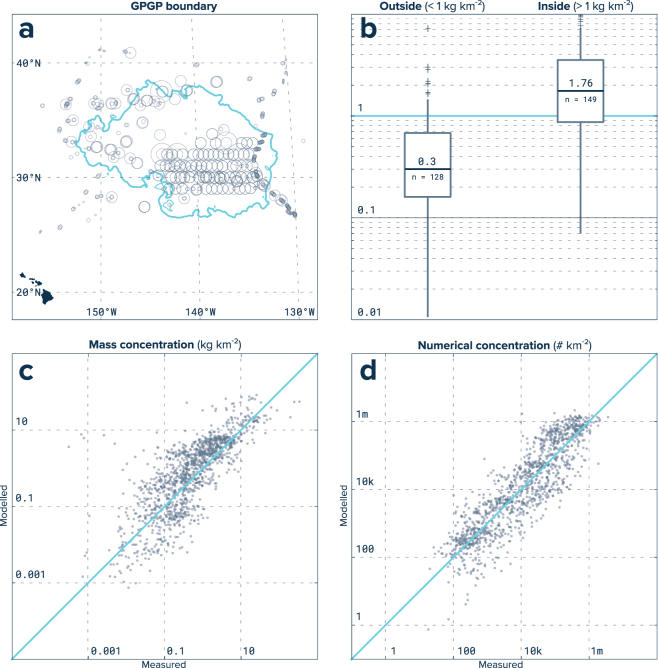
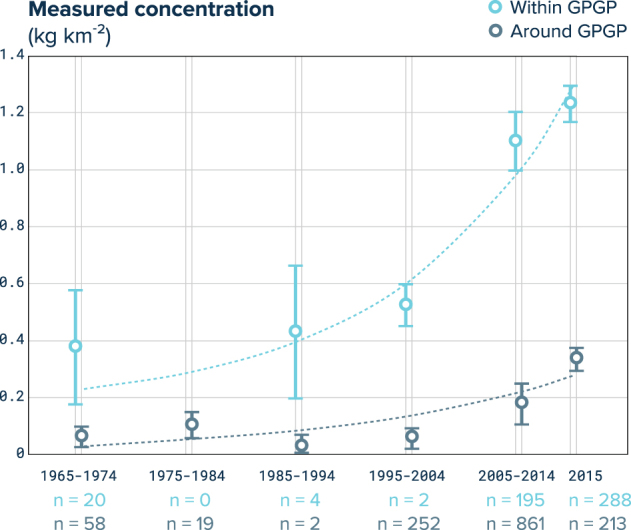
“A dynamic GPGP model boundary allowed us to determine whether surface net tows from previous studies 17,21,22,46–49 were sampling inside or outside the GPGP. Average plastic mass concentration measured by net tows inside the GPGP boundary showed an exponential increase over the last decades, rising…”
ResultInfluentialSelf-citationRiver plastic emissions to the world’s oceans
Lebreton, L. C. M., van der Zwet, J., Damsteeg, J.-W., Slat, B., Andrady, A., & Reisser, J. (2017) · Nature Communications · doi:10.1038/ncomms15611 · Cited by 4,011 · cited 1×
“…were identically and continuously released in time from 1993 to 2012 following spatial distributions and amplitudes of significant ocean plastic sources on land (coastal population hotspots 23 and major rivers 24 ) as well as at sea (fishing 26,41 , aquaculture 42 and shipping industries 43 ).”
BackgroundSelf-citationPlastic debris in the open ocean
Cózar, A., Echevarría, F., González-Gordillo, J. I., Irigoien, X., Úbeda, B., Hernández-León, S., Palma, Á. T., Navarro, S., García-de-Lomas, J., Ruiz, A., et al. (2014) · Proceedings of the National Academy of Sciences · doi:10.1073/pnas.1314705111 · Cited by 3,133 · cited 1×
“Our plastic mass estimate for the GPGP (~79 k tonnes) was nearly sixteen times higher than a previous study (~4.8 k tonnes) that used net trawl data only 29 and four times higher than another assessment (~21 k tonnes) that combined net trawl data with vessel-based visual surveys 21 .”
ResultInfluential
Research works printed but not linked: 11
- Plastics Europe. Plastics - the facts 2016: an analysis of European plastics production, demand and waste data. Preprint at http://www.plasticseurope.org (2016).
- Weisskopf M Plastic reaps a grim harvest in the oceans of the world Smithsonian 1988 18 59
- American Plastics Council. Understanding plastic film: its uses, benefits and waste management options. Preprint at https://plastics.americanchemistry.com/Understanding-Plastic-Film/ (1996).
- Tolman HL The numerical model WAVEWATCH: a third-generation model for the hindcasting of wind waves on tides in shelf seas Communications on Hydraulic and Geotechnical Engineering, Delft Univ. of Techn. 1989 89 72
- FAO. The state of world fisheries and aquaculture 2014. Preprint at http://www.fao.org/3/a-i3720e.pdf (2014).
- NOAA. Detecting Japan tsunami marine debris at sea: a synthesis of efforts and lessons learned. Preprint at https://marinedebris.noaa.gov/sites/default/files/JTMD_Detection_Report.pdf (2015)
- U.S. EPA. Characterization of municipal solid waste in the United States: 1997 update. Preprint at https://archive.epa.gov/epawaste/nonhaz/municipal/web/pdf/msw97rpt.pdf (1998).
- International Coastal Cleanup. Tracking trash - 25 years of action for the ocean. Preprint at http://act.oceanconservancy.org/pdf/Marine_Debris_2011_Report_OC.pdf (2011).
- GESAMP. Sources, fate and effects of microplastics in the marine environment: part two of a global assessment (eds Kershaw, P. J. & Rochman, C. M.). (IMO/FAO/UNESCO-IOC/UNIDO/WMO/IAEA/UN/UNEP/UNDP Joint Group of Experts on the Scientific Aspects of Marine Environmental Protection). Rep. Stud. GESAMP, 93, 220 (2016).
- Maximenko, N. et al. Remote sensing of marine debris to study dynamics, balances and trends. Preprint at https://ecocast.arc.nasa.gov/las/Reports%20and%20Papers/Marine-Debris-Workshop-2017.pdf (2017).
- NASA. Satellite-respondent buoys identify ocean debris. Preprint at https://www.nasa.gov/offices/oct/home/tech_life_buoy.html (2010).
Cited by
Items 301–400 of 1,001
Romera-Castillo, C., Birnstiel, S., Álvarez-Salgado, X. A., & Sebastián, M. (2022) · Frontiers in Marine Science · doi:10.3389/fmars.2022.861557 · Cited by 74
Extent and reproduction of coastal species on plastic debris in the North Pacific Subtropical Gyre
Haram, L. E., Carlton, J. T., Centurioni, L., Choong, H., Cornwell, B. H., Crowley, M. E., Egger, M., Hafner, J., Hormann, V., Lebreton, L., et al. (2023) · Nature Ecology & Evolution · doi:10.1038/s41559-023-01997-y · Cited by 84
Self-citationPlastics pollution as waste colonialism in Te Moananui
Fuller, S., Ngata, T., Borrelle, S. B., & Farrelly, T. A. (2022) · Journal of Political Ecology · doi:10.2458/jpe.2401 · Cited by 85
“With a combined coastline of nearly 60,000km positioned in the trade winds, the region's coastlines are catchalls for mismanaged plastics in the form of marine plastic debris travelling on Ocean currents (Figure 2) (Andrew et al., 2019; Lavers and Bond, 2017; Lebreton et al., 2018).”
BackgroundInfluentialTrends in starch-based edible films and coatings enriched with tropical fruits extracts: a review
Kupervaser, M. G., Traffano-Schiffo, M. V., Dellamea, M. L., Flores, S. K., & Sosa, C. A. (2023) · Food Hydrocolloids for Health · doi:10.1016/j.fhfh.2023.100138 · Cited by 87
Thatcher, A., Nayak, R., & Waterson, P. E. (2019) · Ergonomics · doi:10.1080/00140139.2019.1646925 · Cited by 80
“Our lack of concern for our waste, especially plastics, has led to massive oceanic garbage accumulations such as the Great Pacific Garbage Patch which covers an area greater than 1.6 million km2 (Lebreton et al. 2018).”
BackgroundInfluentialThe Paleoecology of Microplastic Contamination
Bancone, C. E. P., Turner, S. D., do Sul, J. A. I., & Rose, N. L. (2020) · Frontiers in Environmental Science · doi:10.3389/fenvs.2020.574008 · Cited by 79
“Plastics identified by production dates as many years/decades old in scientific surveys of buried, surface and buoyant plastics (Hoffmann and Reicherter, 2014; Sander, 2016; Lebreton et al., 2018) support the idea of a long-term build-up of anachronistic microplastics now found in depositional settings.”
BackgroundOccurrence, effects, and biodegradation of plastic additives in sludge anaerobic digestion: A review
Chen, Y., Zhang, Y., & Zhang, Z.-Z. (2021) · Environmental Pollution · doi:10.1016/j.envpol.2021.117568 · Cited by 74
Back, H. D. M., Vargas, E. C., Alarcon, O. E., & Pottmaier, D. (2021) · Chemosphere · doi:10.1016/j.chemosphere.2021.131903 · Cited by 89
Fishing plastic waste: Knowns and known unknowns
Apete, L., Martin, O., & Iacovidou, E. (2024) · Marine Pollution Bulletin · doi:10.1016/j.marpolbul.2024.116530 · Cited by 78
“Furthermore, 52 % of all plastics found in the Great Pacific Garbage Patch originate from fishing activities (plastic lines, ropes and fishing nets), with fishing nets forming 86 % of the 42 k tonnes of mega-plastics ( > 50 cm) present (Lebreton et al., 2018).”
Polyethylene degradation and assimilation by the marine yeast Rhodotorula mucilaginosa
Vaksmaa, A., Polerecky, L., Dombrowski, N., Kienhuis, M. V. M., Posthuma, I., Gerritse, J., Boekhout, T., & Niemann, H. (2023) · ISME Communications · doi:10.1038/s43705-023-00267-z · Cited by 73
Isotactic Poly(propylene oxide): A Photodegradable Polymer with Strain Hardening Properties
Lipinski, B. M., Morris, L. S., Silberstein, M. N., & Coates, G. W. (2020) · Journal of the American Chemical Society · doi:10.1021/jacs.0c01768 · Cited by 73
Ryan, P. G., Weideman, E. A., Perold, V., & Moloney, C. L. (2020) · Frontiers in Marine Science · doi:10.3389/fmars.2020.575395 · Cited by 79
“However, most dated items found floating in the North Pacific gyre (Lebreton et al., 2018) are much older than the average 3-year residence time for floating items predicted by Koelmans et al. (2017).”
BackgroundDestination of floating plastic debris released from ten major rivers around the Korean Peninsula
Seo, S., & Park, Y. (2020) · Environment International · doi:10.1016/j.envint.2020.105655 · Cited by 72
The Indian Ocean ‘garbage patch’: Empirical evidence from floating macro-litter
Connan, M., Perold, V., Dilley, B. J., Barbraud, C., Cherel, Y., & Ryan, P. G. (2021) · Marine Pollution Bulletin · doi:10.1016/j.marpolbul.2021.112559 · Cited by 74
Shaw, W. J., Kidder, M. K., Bare, S. R., Delferro, M., Morris, J. R., Toma, F. M., Senanayake, S. D., Autrey, T. S., Biddinger, E. J., Boettcher, S. W., et al. (2024) · Nature Reviews Chemistry · doi:10.1038/s41570-024-00587-1 · Cited by 77
Bruno, A., Dovizio, M., Milillo, C., Aruffo, E., Pesce, M., Gatta, M., Chiacchiaretta, P., Carlo, P. D., & Ballerini, P. (2024) · Cancers · doi:10.3390/cancers16173079 · Cited by 77
“Once released, plastic degradation occurs, leading to the formation of microplastics (MPs) (smaller than 5 mm) and nanoplastics (NPs) (smaller than 1000 nm) [3,4].”
BackgroundWackett, L. P., & Robinson, S. L. (2020) · Biochemical Journal · doi:10.1042/bcj20190720 · Cited by 71
Study of marine debris around a tourist city in East China: Implication for waste management
Chen, H., Wang, S., Guo, H., Lin, H., Zhang, Y., Long, Z., & Huang, H. (2019) · Science of The Total Environment · doi:10.1016/j.scitotenv.2019.04.335 · Cited by 66
Identification of Microplastics Based on the Fractal Properties of Their Holographic Fingerprint
Bianco, V., Pirone, D., Memmolo, P., Merola, F., & Ferraro, P. (2021) · ACS Photonics · doi:10.1021/acsphotonics.1c00591 · Cited by 73
Samalens, F., Thomas, M. G., Claverie, M., Castejón, N., Zhang, Y., Pigot, T., Blanc, S. P.-L., & Fernandes, S. C. M. (2022) · Green Chemistry · doi:10.1039/d1gc04327g · Cited by 72
The streaming of plastic in the Mediterranean Sea
Baudena, A., Ser‐Giacomi, E., Jalón‐Rojas, I., Galgani, F., & Pedrotti, M. L. (2022) · Nature Communications · doi:10.1038/s41467-022-30572-5 · Cited by 82
Building a Maxey–Riley framework for surface ocean inertial particle dynamics
Beron-Vera, F. J., Olascoaga, M. J., & Miron, P. (2019) · Physics of Fluids · doi:10.1063/1.5110731 · Cited by 78
Gnann, N., Baschek, B., & Ternes, T. A. (2022) · Water Research · doi:10.1016/j.watres.2022.118902 · Cited by 75
Understanding the potential release of microplastics from coatings used on commercial ships
Tamburri, M. N., Soon, Z. Y., Scianni, C., Øpstad, C. L., Oxtoby, N. S., Doran, S., & Drake, L. A. (2022) · Frontiers in Marine Science · doi:10.3389/fmars.2022.1074654 · Cited by 71
Ji, H., Wang, X., Wei, X., Peng, Y., Zhang, S., Song, S., & Zhang, H. (2023) · Small · doi:10.1002/smll.202300903 · Cited by 74
Delineating the global plastic marine litter challenge: clarifying the misconceptions
Hahladakis, J. Ν. (2020) · Environmental Monitoring and Assessment · doi:10.1007/s10661-020-8202-9 · Cited by 73
“Despite the fact that plastic debris prefers to accumulate in specific areas in the oceans, there are no visible layers of plastic seen, e.g., from airplanes (Lebreton et al., 2018).”
BackgroundSambandam, M., Dhineka, K., Sivadas, S. K., Kaviarasan, T., Begum, M., Hoehn, D. P., Sivyer, D. B., Mishra, P., & Murthy, M. V. R. (2022) · Chemosphere · doi:10.1016/j.chemosphere.2022.135135 · Cited by 74
Andraju, N., Curtzwiler, G. W., Ji, Y., Kozliak, E. I., & Ranganathan, P. (2022) · ACS Applied Materials & Interfaces · doi:10.1021/acsami.2c08301 · Cited by 79
Algal degradation of microplastic from the environment: Mechanism, challenges, and future prospects
Priya, A. K., Jalil, A. A., Dutta, K., Rajendran, S., Vasseghian, Y., Karimi‐Maleh, H., & Soto-Moscoso, M. (2022) · Algal Research · doi:10.1016/j.algal.2022.102848 · Cited by 74
Meyerjürgens, J., Badewien, T. H., Garaba, S. P., Wolff, J., & Zielinski, O. (2019) · Frontiers in Marine Science · doi:10.3389/fmars.2019.00058 · Cited by 77
The complex issue of chemicals and microplastic pollution: A case study in North Pacific lanternfish
Gassel, M., & Rochman, C. M. (2019) · Environmental Pollution · doi:10.1016/j.envpol.2019.03.002 · Cited by 69
Signoret, C., Caro‐Bretelle, A. S., Lopez‐Cuesta, J., Ienny, P., & Perrin, D. (2019) · Waste Management · doi:10.1016/j.wasman.2019.08.010 · Cited by 75
Microplastics contamination in pearl-farming lagoons of French Polynesia
Gardon, T., Rakwe, M. E., Paul-Pont, I., Luyer, J. L., Thomas, L., Prado, É., Boukerma, K., Cassone, A.-L., Quillien, V., Soyez, C., et al. (2021) · Journal of Hazardous Materials · doi:10.1016/j.jhazmat.2021.126396 · Cited by 74
In search for the sources of plastic marine litter that contaminates the Easter Island Ecoregion
van Gennip, S. J., Dewitte, B., Garcon, V. C., Thiel, M., Popova, E. E., Drillet, Y., Ramos, M., Yannicelli, B., Bravo, L., Ory, N. C., et al. (2019) · Scientific Reports · doi:10.1038/s41598-019-56012-x · Cited by 74
Picuno, C., Eygen, E. V., Brouwer, M. T., Kuchta, K., & van Velzen, E. U. T. (2021) · Sustainability · doi:10.3390/su13126772 · Cited by 77
“The discovery of plastic soup in the oceans led to a growing public discontent with the current effluent use of plastic packaging [6].”
BackgroundThe Fate of Marine Litter in Semi-Enclosed Seas: A Case Study of the Black Sea
Stanev, E. V., & Ricker, M. (2019) · Frontiers in Marine Science · doi:10.3389/fmars.2019.00660 · Cited by 73
“The monthly mean dataset provided by Ludwig et al. (2009) is used for river runoff. The boundary condition in the Bosporus Strait follows the formulation of Stanev and Beckers (1999) and Peneva et al.”
MethodInfluentialMonitoring marine plastics – will we know if we are making a difference?
Ryan, P. G., Pichegru, L., Perold, V., & Moloney, C. L. (2020) · South African Journal of Science · doi:10.17159/sajs.2020/7678 · Cited by 77
A Review of the Production, Recycling and Management of Marine Plastic Pollution
Issifu, I., & Sumaila, U. R. (2020) · Journal of Marine Science and Engineering · doi:10.3390/jmse8110945 · Cited by 75
Marine macroinvertebrates inhabiting plastic litter in Peru
De-la-Torre, G. E., Dioses-Salinas, D. C., Pérez-Baca, B. L., Millones, L., Pizarro-Ortega, C. I., Torres, F. G., Gonzales, K. N., & Santillán, L. (2021) · Marine Pollution Bulletin · doi:10.1016/j.marpolbul.2021.112296 · Cited by 73
Goodman, A. J., McIntyre, J., Smith, A., Fulton, L., Walker, T. R., & Brown, C. J. (2021) · Marine Pollution Bulletin · doi:10.1016/j.marpolbul.2021.112766 · Cited by 67
Suteja, Y., Atmadipoera, A. S., Riani, E., Nurjaya, I. W., Nugroho, D., & Purwiyanto, A. I. S. (2021) · Marine Pollution Bulletin · doi:10.1016/j.marpolbul.2021.113026 · Cited by 76
Transport of microplastics in the South China Sea: A review
Cai, M., Liu, M., Qi, H., Cui, Y., Zhang, M., Huang, P., Wang, L., Xie, M., Li, Y., Wang, W., et al. (2021) · Gondwana Research · doi:10.1016/j.gr.2021.12.003 · Cited by 67
Nawar, N., Rahman, M. M., Chowdhury, F. N., Marzia, S., Ali, M. M., Akbor, M. A., Siddique, M. A. B., Khatun, M. A., Shahjalal, M., Huque, R., et al. (2023) · The Science of The Total Environment · doi:10.1016/j.scitotenv.2023.161704 · Cited by 67
RetractedPěnčík, O., Durdakova, M., Molnárová, K., Kucsera, A., Klofáč, D., Koláčková, M., Adam, V., & Húska, D. (2023) · Journal of Hazardous Materials · doi:10.1016/j.jhazmat.2023.131476 · Cited by 69
OpenLitterMap.com – Open Data on Plastic Pollution with Blockchain Rewards (Littercoin)
Lynch, S. (2018) · Open Geospatial Data Software and Standards · doi:10.1186/s40965-018-0050-y · Cited by 78
“Without support, the future of OpenLitterMap is uncertain [16].”
BackgroundGigli, M., Quartinello, F., Soccio, M., Pellis, A., Lotti, N., Guebitz, G. M., Licoccia, S., & Munari, A. (2019) · Environment International · doi:10.1016/j.envint.2019.05.046 · Cited by 72
Monitoring nest incorporation of anthropogenic debris by Northern Gannets across their range
O’Hanlon, N. J., Bond, A. L., Lavers, J. L., Masden, E. A., & James, N. A. (2019) · Environmental Pollution · doi:10.1016/j.envpol.2019.113152 · Cited by 67
Modeling the Exposure of the Macaronesia Islands (NE Atlantic) to Marine Plastic Pollution
Cardoso, C., & Caldeira, R. (2021) · Frontiers in Marine Science · doi:10.3389/fmars.2021.653502 · Cited by 73
“For example, although surface-trawling plankton nets are mostly used to sample plastic debris at the ocean surface (e.g., van Sebille et al., 2015; Lebreton et al., 2018; Lacerda et al., 2019), it is now known that a significant amount of small-sized plastic debris are concealed in sub-surface layers, with a exponenti…”
BackgroundLi, C., Zhu, L., Wang, X., Liu, K., & Li, D. (2021) · The Science of The Total Environment · doi:10.1016/j.scitotenv.2021.150243 · Cited by 74
Zero-waste circular economy of plastic packaging: The bottlenecks and a way forward
Novakovic, K., Thumbarathy, D., Peeters, M., Geoghegan, M., Jefferies, J. G., Hicks, C., Manika, D., & Dai, S. (2023) · Sustainable materials and technologies · doi:10.1016/j.susmat.2023.e00735 · Cited by 81
Haarr, M. L., Westerveld, L., Fabrés, J., Iversen, K. R., & Busch, K. E. T. (2018) · Marine Pollution Bulletin · doi:10.1016/j.marpolbul.2018.12.025 · Cited by 66
Plastic pollution on eight beaches of Tenerife (Canary Islands, Spain): An annual study
Reinold, S., Herrera, A., Hernández-González, C. L., & Gómez, M. (2020) · Marine Pollution Bulletin · doi:10.1016/j.marpolbul.2019.110847 · Cited by 70
A spatially variable scarcity of floating microplastics in the eastern North Pacific Ocean
Egger, M., Nijhof, R., Quiros, L., Leone, G., Royer, S., McWhirter, A., Kantakov, G. A., Радченко, В. И., Pakhomov, E. A., Hunt, B. P. V., et al. (2020) · Environmental Research Letters · doi:10.1088/1748-9326/abbb4f · Cited by 71
“Lastly, we included an additional 501 samples in our analyses that were collected during The Ocean Cleanup’s Mega Expedition in 2015 (Lebreton et al 2018).”
BackgroundMethodSelf-citationLu, T., Jan, K., & Chen, W. (2022) · Journal of the Energy Institute · doi:10.1016/j.joei.2022.10.003 · Cited by 65
Pulvirenti, E., Ferrante, M., Barbera, N., Favara, C., Aquilia, E., Palella, M., Cristaldi, A., Conti, G. O., & Fiore, M. (2022) · Frontiers in Bioscience-Landmark · doi:10.31083/j.fbl2710287 · Cited by 73
“…degradation processes and/or mechanical fragmentation and/or biodegradation, produces smaller particles classified according to the size as: nanoplastics ≤ 0.1 µ m (NPs), 0.1 µ m microplastics < 5 mm (MPs), 0.5 < mesoplastics < 5 cm, 5 < macroplastics < 50 cm, and megaplastics > 50 cm [7,8].”
BackgroundInfluentialOccurrence, analysis, and toxicity of polyethylene terephthalate microplastics: a review
Alaraby, M., Abass, D., Velázquez, A., Hernández, A., & Marcos, R. (2025) · Environmental Chemistry Letters · doi:10.1007/s10311-025-01841-8 · Cited by 76
“This accumulation significantly contributes to plastic pollution, particularly in oceanic gyres where floating debris forms garbage patches [12].”
Estimation and prediction of plastic waste annual input into the sea from China
Bai, M., Zhu, L., An, L., Peng, G., & Li, D. (2018) · Acta Oceanologica Sinica · doi:10.1007/s13131-018-1279-0 · Cited by 68
Assessing meso- and microplastic pollution in the Ligurian and Tyrrhenian Seas
Caldwell, J., Petri‐Fink, A., Rothen‐Rutishauser, B., & Lehner, R. (2019) · Marine Pollution Bulletin · doi:10.1016/j.marpolbul.2019.110572 · Cited by 66
“More recent studies in this region, however, give values significantly higher; with a study published in 2018 giving an estimate of 79 thousand tons of plastic present (Lebreton et al., 2018).”
ResultGorsky, G., Bourdin, G., Lombard, F., Pedrotti, M. L., Audrain, S., Bin, N., Boss, E., Bowler, C., Cassar, N., Caudan, L., et al. (2019) · Frontiers in Marine Science · doi:10.3389/fmars.2019.00750 · Cited by 78
Weideman, E. A., Perold, V., Arnold, G., & Ryan, P. G. (2020) · The Science of The Total Environment · doi:10.1016/j.scitotenv.2020.138310 · Cited by 66
Helping to heal nature and ourselves through human-rights-based and gender-responsive One Health
Garnier, J., Savić, S., Boriani, E., Bagnol, B., Häsler, B., & Kock, R. A. (2020) · One Health Outlook · doi:10.1186/s42522-020-00029-0 · Cited by 70
Vega-Moreno, D., Abaroa-Pérez, B., Rein-Loring, P. D., Presas˗Navarro, C., Fraile‐Nuez, E., & Machín, F. (2021) · The Science of The Total Environment · doi:10.1016/j.scitotenv.2021.147802 · Cited by 68
“Microplastic (MP) covers vast areas of the open ocean, and buoyant plastic tends to accumulate at surface convergence areas like subtropical gyres (Eriksen et al., 2013, 2014; Law et al., 2010; Lebreton et al., 2018; Sebille et al., 2015).”
BackgroundScopetani, C., Chelazzi, D., Martellini, T., Pellinen, J., Ugolini, A., Sarti, C., & Cincinelli, A. (2021) · Marine Pollution Bulletin · doi:10.1016/j.marpolbul.2021.112712 · Cited by 65
Sources of marine debris for Seychelles and other remote islands in the western Indian Ocean
Vogt-Vincent, N., Burt, A., Kaplan, D. M., Mitarai, S., Turnbull, L. A., & Johnson, H. L. (2023) · Marine Pollution Bulletin · doi:10.1016/j.marpolbul.2022.114497 · Cited by 67
Proof of concept for a model of light reflectance of plastics floating on natural waters
Goddijn‐Murphy, L., & Dufaur, J. (2018) · Marine Pollution Bulletin · doi:10.1016/j.marpolbul.2018.08.044 · Cited by 66
Selective accumulation of plastic debris at the breaking wave area of coastal waters
Ho, N. H. E., & Not, C. (2018) · Environmental Pollution · doi:10.1016/j.envpol.2018.11.041 · Cited by 67
Garaba, S. P., Arias, M., Corradi, P., Harmel, T., de Vries, R., & Lebreton, L. (2020) · Journal of Hazardous Materials · doi:10.1016/j.jhazmat.2020.124290 · Cited by 68
“In the last few decades, scientific evidence-based research combined with numerical simulations have been suggesting an exponential surge in floating ocean plastic litter accumulation (Lebreton et al., 2018; Maximenko et al., 2018).”
Self-citationLow-pressure hydrothermal processing of mixed polyolefin wastes into clean fuels
Jin, K., Vozka, P., Gentilcore, C., Kılaz, G., & Wang, N. L. (2021) · Fuel · doi:10.1016/j.fuel.2021.120505 · Cited by 68
Jang, M., Yang, H., Park, S., Sung, H. K., Koo, J. M., Hwang, S. Y., Jeon, H., Oh, D. X., & Park, J. (2022) · Chemosphere · doi:10.1016/j.chemosphere.2022.134946 · Cited by 66
Feng, S., Lu, H., Yao, T., Tang, M., & Yin, C. (2022) · The Science of The Total Environment · doi:10.1016/j.scitotenv.2022.159399 · Cited by 63
Not so dangerous? PET microplastics toxicity on freshwater microalgae and cyanobacteria
Pěnčík, O., Molnárová, K., Durdakova, M., Koláčková, M., Klofáč, D., Kucsera, A., Cápal, P., Svec, P., Bytešníková, Z., Richtera, L., et al. (2023) · Environmental Pollution · doi:10.1016/j.envpol.2023.121628 · Cited by 66
Yang, G., & Wu, G. (2018) · ACS Sustainable Chemistry & Engineering · doi:10.1021/acssuschemeng.8b05084 · Cited by 67
Assessment of litter in the remote beaches of Lakshadweep Islands, Arabian Sea
Kaviarasan, T., Naik, S., Sivadas, S. K., Dhineka, K., Sambandam, M., Sivyer, D. B., Mishra, P., & Murthy, M. V. R. (2020) · Marine Pollution Bulletin · doi:10.1016/j.marpolbul.2020.111760 · Cited by 63
Martínez, K. B. P., Tekman, M. B., & Bergmann, M. (2020) · Frontiers in Marine Science · doi:10.3389/fmars.2020.00321 · Cited by 68
Laursen, S. N., Fruergaard, M., & Andersen, T. J. (2022) · Marine Pollution Bulletin · doi:10.1016/j.marpolbul.2022.113619 · Cited by 65
The status and fate of oceanic garbage patches
Lebreton, L. (2022) · Nature Reviews Earth & Environment · doi:10.1038/s43017-022-00363-z · Cited by 64
Self-citationGoswami, P., Selvakumar, N., Verma, P. P., Saha, M., Suneel, V., Vinithkumar, N. V., Dharani, G., Rathore, C., & Nayak, J. (2022) · The Science of The Total Environment · doi:10.1016/j.scitotenv.2022.160876 · Cited by 73
Duarte, M. M., & Azevedo, L. (2023) · IEEE Transactions on Geoscience and Remote Sensing · doi:10.1109/tgrs.2023.3283607 · Cited by 74
“The so-called Great Pacific garbage patch is estimated to comprise almost 79 000 tons of accumulated plastic [3], including not only macroplastics (plastic particles >5 mm in size), such as abandoned fishing nets, bottles, and containers, but also microplastics (plastic particles <5 mm in size), which usually result f…”
BackgroundStubbins, A., Zhu, L., Zhao, S., Spencer, R. G. M., & Podgorski, D. C. (2023) · Environmental Science & Technology · doi:10.1021/acs.est.1c03592 · Cited by 64
Marine Debris Pathway Across Indonesian Boundary Seas
Purba, N. P., Faizal, I., Cordova, M. R., Abimanyu, A., Afandi, N. K. A., Indriawan, D., & Khan, A. M. A. (2021) · Journal of Ecological Engineering · doi:10.12911/22998993/132428 · Cited by 67
“Previous studies have shown that MD is found in the coastal areas (Maharani et al., 2018; Purba et al., 2019b), ecosystems and up to the open sea (Hiwari et al., 2019; Lebreton et al., 2018), and deep-sea (Cordova and Wahyudi, 2017).”
BackgroundAnimal Harms and Food Production: Informing Ethical Choices
Hampton, J. O., Hyndman, T. H., Allen, B. L., & Fischer, B. (2021) · Animals · doi:10.3390/ani11051225 · Cited by 70
Remote Hyperspectral Imaging Acquisition and Characterization for Marine Litter Detection
Freitas, S., Silva, H. M., & Silva, E. (2021) · Remote Sensing · doi:10.3390/rs13132536 · Cited by 64
“Introduction Large marine litter accumulation zones, such as marine litter windrows [1], are appearing in the oceans, such as Atlantic [2] and Pacific [3,4].”
Backgroundde Vries, R., Egger, M., Mani, T., & Lebreton, L. (2021) · Remote Sensing · doi:10.3390/rs13173401 · Cited by 64
Self-citationMarine biofouling organisms on beached, buoyant and benthic plastic debris in the Catalan Sea
Subías-Baratau, A., Sànchez‐Vidal, A., Martino, E. D., & Figuerola, B. (2022) · Marine Pollution Bulletin · doi:10.1016/j.marpolbul.2022.113405 · Cited by 66
Microplastics as emerging carcinogens: from environmental pollutants to oncogenic drivers
Mishra, S. K., Sanyal, T., Kundu, P., Kumar, R., Ghosh, D., Chakrabarti, G., Sikdar, N., Bhattacharya, S., Paul, S., & Das, A. K. (2025) · Molecular Cancer · doi:10.1186/s12943-025-02409-4 · Cited by 70
“In 2015 alone, between 60 and 99 Mt of plastic ended up as waste, and projections suggest that by 2060, this number may rise to between 155 and 265 Mt each year [1].”
Chirico, A., Scurati, G. W., Chiara, M., Huang, S., Graziosi, S., Ferrise, F., & Gaggioli, A. (2020) · Virtual Reality · doi:10.1007/s10055-020-00442-w · Cited by 70
“Large-scale areas of floating plastics debris were found in the oceans, for instance, the Great Pacific Garbage Patch, in which amount of plastic has found to be not only considerably higher than expected, but also very rapidly accumulating (Lebreton et al. 2018).”
BackgroundSavoca, M. S., Kühn, S., Sun, C., Avery‐Gomm, S., Choy, C. A., Dudas, S. E., Hong, S. H., Hyrenbach, K. D., Li, T., Ng, C. K.-Y., et al. (2022) · Environmental Pollution · doi:10.1016/j.envpol.2022.119861 · Cited by 65
Organophosphate contaminants in North Atlantic fin whales
Garcia‐Garin, O., Sala, B., Aguilar, Á., Vighi, M., Víkingsson, G. A., Chosson, V., Eljarrat, E., & Borrell, A. (2020) · The Science of The Total Environment · doi:10.1016/j.scitotenv.2020.137768 · Cited by 60
Grand Transitions: How the Modern World Was Made
Smil, V. (2021) · doi:10.1093/oso/9780190060664.001.0001 · Cited by 87
Recycled plastic packaging from the Dutch food sector pollutes Asian oceans
Navarre, N., Mogollón, J. M., Tukker, A., & Barbarossa, V. (2022) · Resources Conservation and Recycling · doi:10.1016/j.resconrec.2022.106508 · Cited by 65
Ghobish, S. A., Motti, C. A., Bissember, A. C., & Vamvounis, G. (2025) · Journal of Hazardous Materials · doi:10.1016/j.jhazmat.2025.137945 · Cited by 64
Sinking microplastics in the water column: simulations in the Mediterranean Sea
de la Fuente, R., Drótos, G., Hernández-García, E., López, C., & van Sebille, E. (2021) · Ocean science · doi:10.5194/os-17-431-2021 · Cited by 63
Constantino, E., Martins, I., Sierra, J. M. S., & Bessa, F. (2018) · Marine Pollution Bulletin · doi:10.1016/j.marpolbul.2018.11.008 · Cited by 62
Visual observations of floating macro litter around Italy (Mediterranean Sea)
Campanale, C., Suaria, G., Bagnuolo, G., Baini, M., Galli, M., de Rysky, E., BALLINI, M., Aliani, S., Fossi, M. C., & Uricchio, V. F. (2019) · Mediterranean Marine Science · doi:10.12681/mms.19054 · Cited by 59
“Once at sea, winds and surface currents are the primary driver of floating litter transport in the marine environment (Lebreton et al., 2012, Liang et al., 2018).”
BackgroundGarcia‐Garin, O., García-Cuevas, I., Drago, M., Rita, D., Parga, M., Gažo, M., & Cardona, L. (2020) · The Science of The Total Environment · doi:10.1016/j.scitotenv.2020.140210 · Cited by 59
Plastic pollution in marine and freshwater environments: abundance, sources, and mitigation
Mihai, F., Gündoğdu, S., Khan, F. R., Olivelli, A., Markley, L., & van Emmerik, T. H. M. (2022) · Elsevier eBooks · doi:10.1016/b978-0-323-85160-2.00016-0 · Cited by 66
Plastic leachates impair picophytoplankton and dramatically reshape the marine microbiome
Focardi, A., Moore, L. R., Raina, J., Seymour, J. R., Paulsen, I. T., & Tetu, S. G. (2022) · Microbiome · doi:10.1186/s40168-022-01369-x · Cited by 57
Mussel power: Scoping a nature-based solution to microplastic debris
Cole, M., Artioli, Y., Coppock, R., Galli, G., Saad, R., Torres, R., Vance, T., Yunnie, A. L. E., & Lindeque, P. K. (2023) · Journal of Hazardous Materials · doi:10.1016/j.jhazmat.2023.131392 · Cited by 59
Fishing Gears and Nets as a Source of Microplastic
Sharma, D., Dhanker, R., Bhawna, Tomar, A., Raza, S., & Sharma, A. (2024) · Springer eBooks · doi:10.1007/978-981-99-8357-5_8 · Cited by 73
On Thermal Infrared Remote Sensing of Plastic Pollution in Natural Waters
Goddijn‐Murphy, L., & Williamson, B. J. (2019) · Remote Sensing · doi:10.3390/rs11182159 · Cited by 62
Metadata
- Authors
- Lebreton, L., Slat, B., Ferrari, F., Sainte-Rose, B., Aitken, J., Marthouse, R., Hajbane, S., Cunsolo, S., Schwarz, A., Levivier, A., Noble, K., Debeljak, P., Maral, H., Schoeneich-Argent, R., Brambini, R., & Reisser, J.
- Affiliations
- The Ocean Cleanup (NL)
- Centre National de la Recherche Scientifique (FR)
- Corresponding author
- Lebreton, L.
- Venue
- Scientific Reports
- Published
- 2018-03-22
- Volume
- 8
- Issue
- 1
- Pages
- 4666-4666
- ISSN
- 2045-2322 (ISSN-L)
- PMC
- PMC5864935
- OpenAlex
- W2791727655
- Semantic Scholar
- cbd6216cc4dd8bc948ba20943141090562992fab
- Cited by
- 1,839
- References
- 56
- Citations by year
- 2026: 152 · 2025: 242 · 2024: 252 · 2023: 257 · 2022: 289 · 2021: 272 · 2020: 193 · 2019: 141 · 2018: 40
- FWCI
- 60.53
- Type
- journal article
- Language
- en
- Open access
- gold
- doi.org
- Licence
- cc-by
- creativecommons.org/licenses/by/4.0 (tdm)
- creativecommons.org/licenses/by/4.0 (vor)
- Locations
- Scientific Reports (publishedVersion, cc-by)
- Europe PMC (PubMed Central) (publishedVersion, cc-by)
- PubMed Central (publishedVersion, cc-by)
- PubMed (publishedVersion)
- VBN Forskningsportal (Aalborg Universitet) (publishedVersion, cc-by)
- Roger Williams University - Digital Commons (Roger Williams University) (submittedVersion)
- HAL (submittedVersion, other-oa)
- DOAJ (DOAJ: Directory of Open Access Journals) (submittedVersion)
- Funders
- Technische Universiteit Delft
- Topics
- Physical Sciences › Environmental Science › Pollution › Microplastics and Plastic Pollution
- Physical Sciences › Environmental Science › Pollution › Oil Spill Detection and Mitigation
- Physical Sciences › Environmental Science › Waste Management and Disposal › Waste Management and Recycling
- Keywords
- Great Pacific Garbage Patch, marine plastic pollution, plastic accumulation, fishing nets, microplastics, debris size distribution, surface-to-volume ratio, subtropical gyre
- MeSH terms
- California, Environmental Monitoring, Garbage, Hawaii, Models, Theoretical, Pacific Ocean, Plankton, Plastics, Sampling Studies, Spectrophotometry, Infrared, Waste Products, Water Pollutants, Chemical, Water Pollution, Chemical, Wind, Satellite Imagery
About these checks
Registry, retraction, Cites and statistics results are computed, not judged, with one exception: a printed reference that no index lists is read once by a model before it counts as a citation error. Claims are extracted by a model and kept only when their quote appears verbatim in the text; each cited source is then checked, with a model’s help, for whether it says what the claim relies on. Those verdicts can be wrong — read the claim’s quote and the cited source before relying on one.
Statistics and arithmetic are recomputed, not judged.
Confidence bands are shown only for fields calibrated on our annotated test set. None is calibrated yet, so no band is shown.
What counts as a claim ›How we measure confidence ›How we check this ›
Are you an author, or do you see a problem with this page? Request a review
Data sources
Bibliographic data: Semantic Scholar, OpenAlex, Crossref.
Contains information from the Semantic Scholar Academic Graph Datasets, made available under the ODC Attribution License (ODC-BY 1.0).
Semantic Scholar’s data is described in: Kinney, R., et al. (2023). The Semantic Scholar Open Data Platform. arXiv:2301.10140.
