

Evidence that the Great Pacific Garbage Patch is rapidly accumulating plastic
Open accessThe DOI matches its Crossref record; 55 of the 56 references it cites were found in a registry or an index.
Abstract
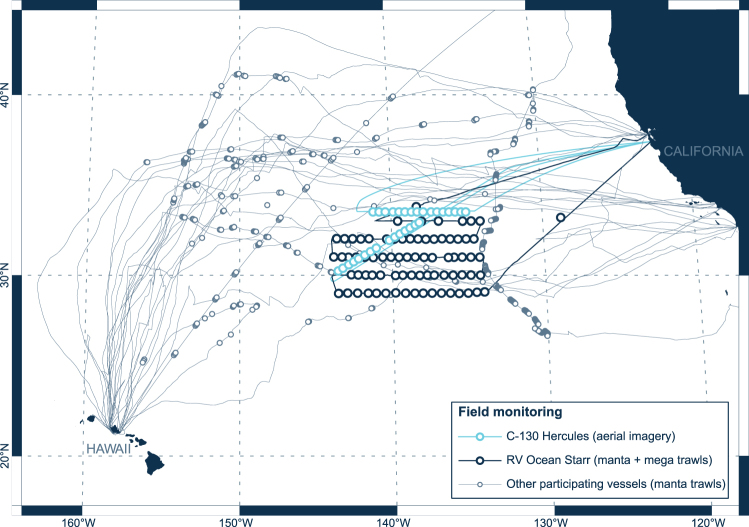
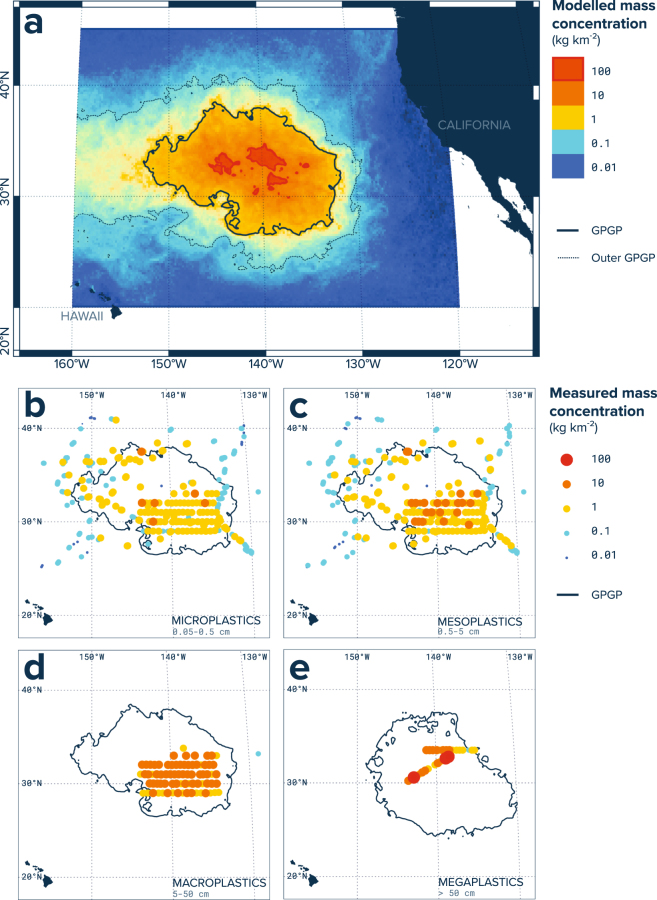
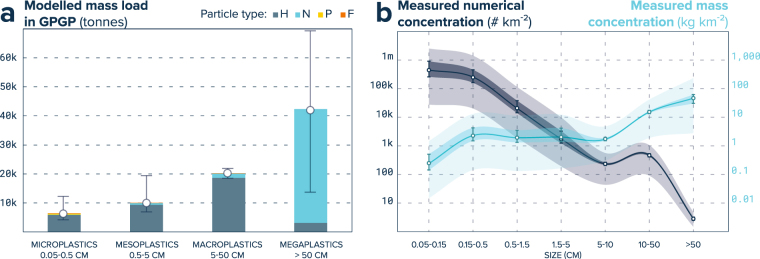
Ocean plastic can persist in sea surface waters, eventually accumulating in remote areas of the world’s oceans. Here we characterise and quantify a major ocean plastic accumulation zone formed in subtropical waters between California and Hawaii: The Great Pacific Garbage Patch (GPGP). Our model, calibrated with data from multi-vessel and aircraft surveys, predicted at least 79 (45–129) thousand tonnes of ocean plastic are floating inside an area of 1.6 million km 2 ; a figure four to sixteen times higher than previously reported. We explain this difference through the use of more robust methods to quantify larger debris. Over three-quarters of the GPGP mass was carried by debris larger than 5 cm and at least 46% was comprised of fishing nets. Microplastics accounted for 8% of the total mass but 94% of the estimated 1.8 (1.1–3.6) trillion pieces floating in the area. Plastic collected during our study has specific characteristics such as small surface-to-volume ratio, indicating that only certain types of debris have the capacity to persist and accumulate at the surface of the GPGP. Finally, our results suggest that ocean plastic pollution within the GPGP is increasing exponentially and at a faster rate than in surrounding waters.
Overview
The claims and statistics of this paper haven’t been checked yet.
Free: it reads the open-access text and checks the first 5 claims that cite a source we can check. Create a free account to check every claim.
Integrity signals
Registry
Cites
Statistics
Figures
Verification
Claims the paper makes
The claims and statistics of this paper haven’t been checked yet.
Free: it reads the open-access text and checks the first 5 claims that cite a source we can check. Create a free account to check every claim.
Claims other papers make about this one
Each is checked against this paper’s own text: does it say what the citing paper says it does?
In the citing paper
“Surface trawl observations may be underestimated by a factor of 4-16.55”
From The fate of plastic in the ocean environment – a minireview (2021) · cites this paper as [55]
Self-check
Percentages, sums and reported differences re-computed from the paper’s own numbers.
The self-check needs the paper’s full text.
Citations
Cites
The NCEP/NCAR 40-Year Reanalysis Project
Kalnay, E., Kanamitsu, M., Kistler, R., Collins, W., Deaven, D., Gandin, L., Iredell, M., Saha, S., White, G., Woollen, J., et al. (1996) · Bulletin of the American Meteorological Society · doi:10.1175/1520-0477(1996)077<0437:tnyrp>2.0.co;2 · Cited by 28,360 · cited 1×
“We sourced global sea surface currents (1993 to 2012) from the HYCOM + NCODA global 1/12° reanalysis (experiment 19.0 and 19.1 36–38 ), and wind (10 m above sea level) speed and direction data (1993 to 2012) from NCEP/NCAR global reanalysis 39 .”
MethodInfluentialProduction, use, and fate of all plastics ever made
Geyer, R., Jambeck, J. R., & Law, K. L. (2017) · Science Advances · doi:10.1126/sciadv.1700782 · Cited by 18,606
Plastic waste inputs from land into the ocean
Jambeck, J. R., Geyer, R., Wilcox, C., Siegler, T. R., Perryman, M., Andrady, A., Narayan, R., & Law, K. L. (2015) · Science · doi:10.1126/science.1260352 · Cited by 13,163 · cited 1×
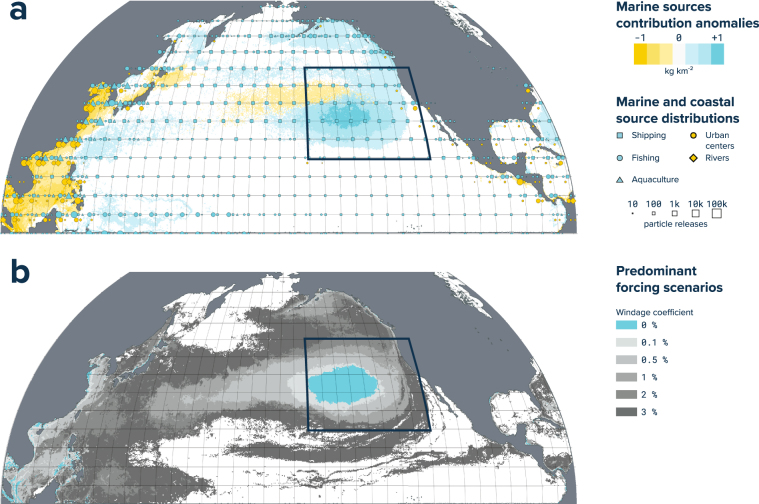
“…were identically and continuously released in time from 1993 to 2012 following spatial distributions and amplitudes of significant ocean plastic sources on land (coastal population hotspots 23 and major rivers 24 ) as well as at sea (fishing 26,41 , aquaculture 42 and shipping industries 43 ).”
BackgroundMicroplastics in the marine environment
Andrady, A. L. (2011) · Marine Pollution Bulletin · doi:10.1016/j.marpolbul.2011.05.030 · Cited by 8,105 · cited 2×
“Buoyant plastic represents about 60% of the global plastic demand 10 , thus nearly half of the plastic input into the oceans should sink to the floor soon after release, accumulating in sediments 53 and underwater canyons 54 . rest may strand in coastlines 13,55,56 , be ingested by marine life 57…”
BackgroundLost at sea: where is all the plastic?
Thompson, R. C., Olsen, Y., Mitchell, R. P., Davis, A., Rowland, S. J., John, A. W. G., McGonigle, D., & Russell, A. E. (2004) · Science · doi:10.1126/science.1094559 · Cited by 7,765
A global map of human impact on marine ecosystems
Halpern, B. S., Walbridge, S., Selkoe, K. A., Kappel, C. V., Micheli, F., D'Agrosa, C., Bruno, J. F., Casey, K. S., Ebert, C., Fox, H. E., et al. (2008) · Science · doi:10.1126/science.1149345 · Cited by 6,627
Accumulation and fragmentation of plastic debris in global environments
Barnes, D. K. A., Galgani, F., Thompson, R. C., & Barlaz, M. (2009) · Philosophical Transactions of the Royal Society B: Biological Sciences · doi:10.1098/rstb.2008.0205 · Cited by 6,126 · cited 1×
“…it seems the bulk mass of material currently present in the GPGP is very unlikely to leave the area and may slowly degrade into increasingly smaller pieces that can eventually either sink to the seafloor 14 , or behave as water tracer due to its microscopic size and low Reynolds number 66 .”
BackgroundEriksen, M., Lebreton, L. C. M., Carson, H. S., Thiel, M., Moore, C. J., Borerro, J. C., Galgani, F., Ryan, P. G., & Reisser, J. (2014) · PLoS ONE · doi:10.1371/journal.pone.0111913 · Cited by 4,710 · cited 3×
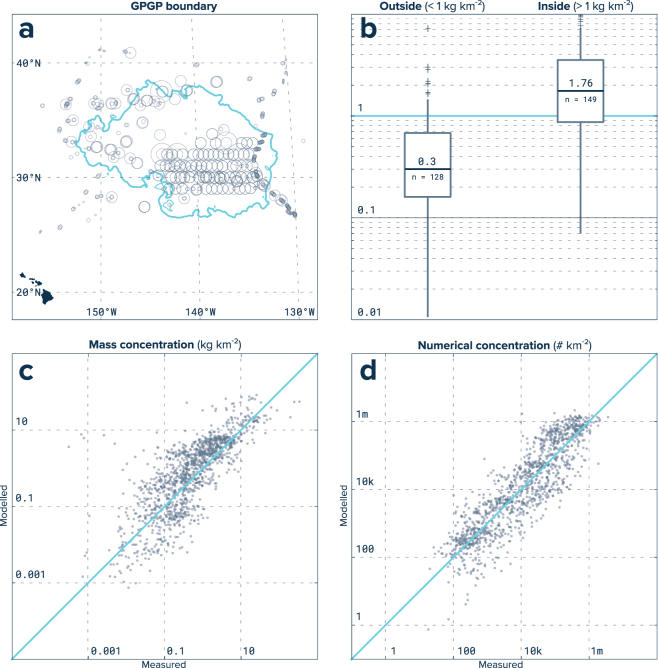
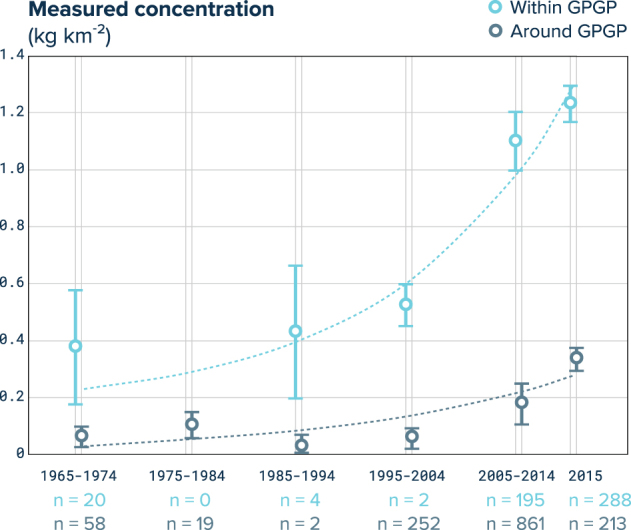
“A dynamic GPGP model boundary allowed us to determine whether surface net tows from previous studies 17,21,22,46–49 were sampling inside or outside the GPGP. Average plastic mass concentration measured by net tows inside the GPGP boundary showed an exponential increase over the last decades, rising…”
ResultInfluentialSelf-citationRiver plastic emissions to the world’s oceans
Lebreton, L. C. M., van der Zwet, J., Damsteeg, J.-W., Slat, B., Andrady, A., & Reisser, J. (2017) · Nature Communications · doi:10.1038/ncomms15611 · Cited by 4,011 · cited 1×
“…were identically and continuously released in time from 1993 to 2012 following spatial distributions and amplitudes of significant ocean plastic sources on land (coastal population hotspots 23 and major rivers 24 ) as well as at sea (fishing 26,41 , aquaculture 42 and shipping industries 43 ).”
BackgroundSelf-citationPlastic debris in the open ocean
Cózar, A., Echevarría, F., González-Gordillo, J. I., Irigoien, X., Úbeda, B., Hernández-León, S., Palma, Á. T., Navarro, S., García-de-Lomas, J., Ruiz, A., et al. (2014) · Proceedings of the National Academy of Sciences · doi:10.1073/pnas.1314705111 · Cited by 3,133 · cited 1×
“Our plastic mass estimate for the GPGP (~79 k tonnes) was nearly sixteen times higher than a previous study (~4.8 k tonnes) that used net trawl data only 29 and four times higher than another assessment (~21 k tonnes) that combined net trawl data with vessel-based visual surveys 21 .”
ResultInfluential
Research works printed but not linked: 11
- Plastics Europe. Plastics - the facts 2016: an analysis of European plastics production, demand and waste data. Preprint at http://www.plasticseurope.org (2016).
- Weisskopf M Plastic reaps a grim harvest in the oceans of the world Smithsonian 1988 18 59
- American Plastics Council. Understanding plastic film: its uses, benefits and waste management options. Preprint at https://plastics.americanchemistry.com/Understanding-Plastic-Film/ (1996).
- Tolman HL The numerical model WAVEWATCH: a third-generation model for the hindcasting of wind waves on tides in shelf seas Communications on Hydraulic and Geotechnical Engineering, Delft Univ. of Techn. 1989 89 72
- FAO. The state of world fisheries and aquaculture 2014. Preprint at http://www.fao.org/3/a-i3720e.pdf (2014).
- NOAA. Detecting Japan tsunami marine debris at sea: a synthesis of efforts and lessons learned. Preprint at https://marinedebris.noaa.gov/sites/default/files/JTMD_Detection_Report.pdf (2015)
- U.S. EPA. Characterization of municipal solid waste in the United States: 1997 update. Preprint at https://archive.epa.gov/epawaste/nonhaz/municipal/web/pdf/msw97rpt.pdf (1998).
- International Coastal Cleanup. Tracking trash - 25 years of action for the ocean. Preprint at http://act.oceanconservancy.org/pdf/Marine_Debris_2011_Report_OC.pdf (2011).
- GESAMP. Sources, fate and effects of microplastics in the marine environment: part two of a global assessment (eds Kershaw, P. J. & Rochman, C. M.). (IMO/FAO/UNESCO-IOC/UNIDO/WMO/IAEA/UN/UNEP/UNDP Joint Group of Experts on the Scientific Aspects of Marine Environmental Protection). Rep. Stud. GESAMP, 93, 220 (2016).
- Maximenko, N. et al. Remote sensing of marine debris to study dynamics, balances and trends. Preprint at https://ecocast.arc.nasa.gov/las/Reports%20and%20Papers/Marine-Debris-Workshop-2017.pdf (2017).
- NASA. Satellite-respondent buoys identify ocean debris. Preprint at https://www.nasa.gov/offices/oct/home/tech_life_buoy.html (2010).
Cited by
Items 101–200 of 1,001
Fallati, L., Polidori, A., Salvatore, C., Saponari, L., Savini, A., & Galli, P. (2019) · Science of The Total Environment · doi:10.1016/j.scitotenv.2019.133581 · Cited by 188
Highest risk abandoned, lost and discarded fishing gear
Gilman, E., Musyl, M., Suuronen, P., Chaloupka, M., Gorgin, S., Wilson, J., & Kuczenski, B. (2021) · Scientific Reports · doi:10.1038/s41598-021-86123-3 · Cited by 180
Dzierżyński, E., Gawlik, P. J., Puźniak, D., Flieger, W., Jóźwik, K., Teresiński, G., Forma, A., Wdowiak, P., Baj, J., & Flieger, J. (2024) · Cancers · doi:10.3390/cancers16213703 · Cited by 167
Marine Plastic Pollution: Sources, Impacts, and Policy Issues
Carney Almroth, B., & Eggert, H. (2019) · Review of Environmental Economics and Policy · doi:10.1093/reep/rez012 · Cited by 176
“Jambeck et al. (2015) provide support for the argument that rivers are the major source and estimate that more than 50 percent of marine plastic waste emanates 1Abbott and Sumaila (2019) focus on how economics can be used to inform effective policies for addressing MPP. 2The average concentration of plastics on the oc…”
BackgroundInfluentialInvestigating Detection of Floating Plastic Litter from Space Using Sentinel-2 Imagery
Themistocleous, K., Papoutsa, C., Michaelides, S., & Hadjimitsis, D. (2020) · Remote Sensing · doi:10.3390/rs12162648 · Cited by 181
“A large portion of these plastic clusters enter ocean gyres and can result in clusters that are up to several kilometers in size, such as the Great Pacific Garbage Patch (GPGP) [35,36].”
BackgroundMethodChitosan, gelatin and methylcellulose films incorporated with tannic acid for food packaging
Halim, A. L. A., Kamari, A., & Phillip, E. (2018) · International Journal of Biological Macromolecules · doi:10.1016/j.ijbiomac.2018.08.169 · Cited by 183
Abundance of plastic debris across European and Asian rivers
van Calcar, C. J., & van Emmerik, T. H. M. (2019) · Environmental Research Letters · doi:10.1088/1748-9326/ab5468 · Cited by 186
“In 2018, the plastic composition in an area of about 300 km(2) in the North Pacific Ocean was analyzed using air- and seaborne vessels [15], Over 90% of the macroplastics was hard plastic, plastic sheet, and film and only about 0.”
BackgroundMethodInfluentialMicro- and nanoplastic toxicity: A review on size, type, source, and test-organism implications
Pelegrini, K., Pereira, T. C. B., Maraschin, T. G., Teodoro, L. D. S., Basso, N. R. D. S., De Galland, G. L. B., Ligabue, R. A., & Bogo, M. R. (2023) · Science of The Total Environment · doi:10.1016/j.scitotenv.2023.162954 · Cited by 181
Tejaswini, M. S. S. R., Pathak, P., Ramkrishna, S., & Ganesh, P. S. (2022) · Science of The Total Environment · doi:10.1016/j.scitotenv.2022.153973 · Cited by 182
Rapid increase in Asian bottles in the South Atlantic Ocean indicates major debris inputs from ships
Ryan, P. G., Dilley, B. J., Ronconi, R. A., & Connan, M. (2019) · Proceedings of the National Academy of Sciences · doi:10.1073/pnas.1909816116 · Cited by 175
Tracking Marine Litter With a Global Ocean Model: Where Does It Go? Where Does It Come From?
Chassignet, E. P., Xu, X., & Zavala-Romero, O. (2021) · Frontiers in Marine Science · doi:10.3389/fmars.2021.667591 · Cited by 170
“The overall distribution is quite close to that seen in Figure 3 and agrees well with previously published modeling studies (e.g., van Sebille et al., 2012; Maes et al., 2018; Lebreton et al., 2018; Viatte et al., 2020).”
BackgroundResultPlastic as a Vector of Dispersion for Marine Species With Invasive Potential. A Review
García-Gómez, J. C., Garrigós, M., & Garrigós, J. (2021) · Frontiers in Ecology and Evolution · doi:10.3389/fevo.2021.629756 · Cited by 165
Comprehensive Review of Polysaccharide-Based Materials in Edible Packaging: A Sustainable Approach
Zhao, Y., Li, B., Li, C., Xu, Y., Luo, Y., Liang, D., & Huang, C. (2021) · Foods · doi:10.3390/foods10081845 · Cited by 169
“[4], over 79,000 tons of plastic waste float on the Great Pacific Garbage Patch, and the content of marine microplastics has increased rapidly from 0.”
BackgroundA review of microplastic distribution in sediment profiles
Uddin, S., Fowler, S. W., Uddin, M. F., Behbehani, M., & Naji, A. (2021) · Marine Pollution Bulletin · doi:10.1016/j.marpolbul.2021.111973 · Cited by 185
Global producer responsibility for plastic pollution
Cowger, W., Willis, K. A., Bullock, S., Conlon, K., Emmanuel, J., Erdle, L. M., Eriksen, M., Farrelly, T. A., Hardesty, B. D., Kerge, K., et al. (2024) · Science Advances · doi:10.1126/sciadv.adj8275 · Cited by 185
Automated River Plastic Monitoring Using Deep Learning and Cameras
van Lieshout, C., van Oeveren, K., van Emmerik, T., & Postma, E. (2020) · Earth and Space Science · doi:10.1029/2019ea000960 · Cited by 166
“By mounting a video camera perpendicular to the water surface at a height of about 4 to 9 m from the water surface, it is feasible to observe macroplastics (5 cm and larger), which constitutes to ≈ 90% of the total plastic mass in the oceans (Lebreton et al., 2018).”
BackgroundLiu, J., Liang, J., Ding, J., Zhang, G., Zeng, X., Yang, Q., Zhu, B., & Gao, W. (2021) · Environment, Development and Sustainability · doi:10.1007/s10668-020-01173-3 · Cited by 158
“2011), the sea surface (Eriksen et al. 2014; Lebreton et al. 2018), deep-sea sediment (Sanchez-Vidal et al.”
BackgroundCanals, M., Pham, C. K., Bergmann, M., Gutow, L., Hanke, G., van Sebille, E., Angiolillo, M., Buhl-Mortensen, L., Cau, A., Ioakeimidis, C., et al. (2020) · Environmental Research Letters · doi:10.1088/1748-9326/abc6d4 · Cited by 163
“Models on marine litter come in many varieties, from very simple budget-style mathematical equations (Koelmans et al 2017, Lebreton et al 2019) to full-blown simulations of plastic dispersion based on fine-resolution outputs from OGCMs (Lebreton et al 2018, Mountford and Morales Maqueda 2019, Onink et al 2019, Wichman…”
BackgroundInfluentialFoschi, E., & Bonoli, A. (2019) · Administrative Sciences · doi:10.3390/admsci9010018 · Cited by 165
Plastics pollution exacerbates the impacts of all planetary boundaries
Villarrubia-Gómez, P., Almroth, B. C., Eriksen, M., Ryberg, M. W., & Cornell, S. (2024) · One Earth · doi:10.1016/j.oneear.2024.10.017 · Cited by 196
Sorption of pharmaceuticals on the surface of microplastics
Puckowski, A., Cwięk, W., Mioduszewska, K., Stepnowski, P., & Białk-Bielińska, A. (2021) · Chemosphere · doi:10.1016/j.chemosphere.2020.127976 · Cited by 177
PMBD: a Comprehensive Plastics Microbial Biodegradation Database
Gan, Z., & Zhang, H. (2019) · Database · doi:10.1093/database/baz119 · Cited by 166
How plastic debris and associated chemicals impact the marine food web: A review
Tuuri, E. M., & Leterme, S. C. (2023) · Environmental Pollution · doi:10.1016/j.envpol.2023.121156 · Cited by 160
“…ocean is notably demonstrated through records of floating debris from the five-ocean garbage patches, the North Pacific Gyre, the South Pacific Gyre, the North Atlantic Gyre, the South Atlantic Gyre, and the Indian Ocean Gyre (Van Sebille et al., 2012; Froyland et al., 2014; Lebreton et al., 2018).”
BackgroundBranson, Y., Söltl, S., Buchmann, C., Wei, R., Schaffert, L., Badenhorst, C. P. S., Reisky, L., Jäger, G., & Bornscheuer, U. T. (2023) · Angewandte Chemie International Edition · doi:10.1002/anie.202216220 · Cited by 165
Sensing Ocean Plastics with an Airborne Hyperspectral Shortwave Infrared Imager
Garaba, S. P., Aitken, J., Slat, B., Dierssen, H. M., Lebreton, L., Zielinski, O., & Reisser, J. (2018) · Environmental Science & Technology · doi:10.1021/acs.est.8b02855 · Cited by 187
Self-citationThornton Hampton, L. M., Brander, S. M., Coffin, S., Cole, M., Hermabessiere, L., Koelmans, A. A., & Rochman, C. M. (2022) · Microplastics and Nanoplastics · doi:10.1186/s43591-022-00040-4 · Cited by 166
“Introduction By weight, macroplastics make up the greatest percentage of plastic floating in our oceans; however, by count, microplastics are by far the most numerous [1, 2].”
BackgroundGonçalves, C., Martins, M., Sobral, P., Costa, P. M., & Costa, M. H. (2019) · Environmental Pollution · doi:10.1016/j.envpol.2018.11.038 · Cited by 158
Alpizar, F., Carlsson, F., Lanza, G., Carney, B., Daniels, R. C., Jaime, M., Ho, T., Nie, Z., Salazar, C., Tibesigwa, B., et al. (2020) · Environmental Science & Policy · doi:10.1016/j.envsci.2020.04.007 · Cited by 153
Environmental (in)justice in the Anthropocene ocean
Bennett, N. J., Alava, J. J., Ferguson, C. E., Blythe, J. L., Morgera, E., Boyd, D. R., & Côté, I. M. (2022) · Marine Policy · doi:10.1016/j.marpol.2022.105383 · Cited by 179
Global Review of Beach Debris Monitoring and Future Recommendations
Serra-Gonçalves, C., Lavers, J. L., & Bond, A. L. (2019) · Environmental Science & Technology · doi:10.1021/acs.est.9b01424 · Cited by 172
Mountford, A. S., & Morales Maqueda, M. A. (2019) · Journal of Geophysical Research: Oceans · doi:10.1029/2019jc015050 · Cited by 161
Wright, L. S., Napper, I. E., & Thompson, R. C. (2021) · Marine Pollution Bulletin · doi:10.1016/j.marpolbul.2021.113115 · Cited by 178
“This may be due to the high fishing intensity in that region (Witt and Godley, 2007; MMO, 2017) and, more specifically, the prevalent use of nets (Lee et al., 2010).”
Ballesteros, L. V., Matthews, J. L., & Hoeksema, B. W. (2018) · Marine Pollution Bulletin · doi:10.1016/j.marpolbul.2018.08.033 · Cited by 175
The costs of removing the unsanctioned import of marine plastic litter to small island states
Burt, A., Raguain, J., Sanchez, C. L., Brice, J., Fleischer‐Dogley, F., Goldberg, R. L., Talma, S., Syposz, M., Mahony, J., Letori, J., et al. (2020) · Scientific Reports · doi:10.1038/s41598-020-71444-6 · Cited by 167
Influence of Near‐Surface Currents on the Global Dispersal of Marine Microplastic
Wichmann, D., Delandmeter, P., & van Sebille, E. (2019) · Journal of Geophysical Research: Oceans · doi:10.1029/2019jc015328 · Cited by 152
Prey-size plastics are invading larval fish nurseries
Gove, J. M., Whitney, J. L., McManus, M. A., Lecky, J., Carvalho, F. C., Lynch, J. M., Li, J., Neubauer, P., Smith, K. A., Phipps, J. E., et al. (2019) · Proceedings of the National Academy of Sciences · doi:10.1073/pnas.1907496116 · Cited by 159
“The accumulation of plastics in large-scale oceanic features, such as subtropical gyres, has been well documented (13, 14).”
InfluentialO’Dea, R. M., Willie, J. A., & Epps, T. H. I. (2020) · ACS Macro Letters · doi:10.1021/acsmacrolett.0c00024 · Cited by 169
Liu, S., He, Y., Jia, Y., Zhu, Q., Liao, C., & Jiang, G. (2024) · Journal of Hazardous Materials · doi:10.1016/j.jhazmat.2024.134054 · Cited by 169
De Sales-Ribeiro, C., Brito-Casillas, Y., Fernandez, A., & Caballero, M. J. (2020) · Scientific Reports · doi:10.1038/s41598-020-69062-3 · Cited by 153
Framework for quantifying environmental losses of plastics from landfills
Yadav, V., Sherly, M. A., Ranjan, P., Tinoco, R. O., Boldrin, A., Damgaard, A., & Laurent, A. (2020) · Resources Conservation and Recycling · doi:10.1016/j.resconrec.2020.104914 · Cited by 166
“A substantial portion of total produced plastics is quickly discarded as waste because of their primary use in short-lived products and applications (Lebreton et al., 2018).”
BackgroundClosing the Mediterranean Marine Floating Plastic Mass Budget: Inverse Modeling of Sources and Sinks
Kaandorp, M. L. A., Dijkstra, H. A., & van Sebille, E. (2020) · Environmental Science & Technology · doi:10.1021/acs.est.0c01984 · Cited by 147
Roman, L., Schuyler, Q. A., Wilcox, C., & Hardesty, B. D. (2020) · Conservation Letters · doi:10.1111/conl.12781 · Cited by 159
“Fishing debris contributes half of debris in some regions (byweight), includingwithin the Great Pacific Garbage Patch (Lebreton et al., 2018).”
BackgroundOcean plastics: environmental implications and potential routes for mitigation – a perspective
Watt, E., Picard, M. C., Maldonado, B., Abdelwahab, M. A., Mielewski, D. F., Drzal, L. T., Misra, M., & Mohanty, A. K. (2021) · RSC Advances · doi:10.1039/d1ra00353d · Cited by 162
Human impacts and their interactions in the Baltic Sea region
Reckermann, M., Omstedt, A., Soomere, T., Aigars, J., Akhtar, N., Bełdowska, M., Bełdowski, J., Cronin, T., Czub, M. J., Eero, M., et al. (2022) · Earth System Dynamics · doi:10.5194/esd-13-1-2022 · Cited by 165
Gangadoo, S., Owen, S., Rajapaksha, P., Plaisted, K., Cheeseman, S., Haddara, H., Truong, V. K., Ngô, S. T., Vu, V. V., Cozzolino, D., et al. (2020) · The Science of The Total Environment · doi:10.1016/j.scitotenv.2020.138792 · Cited by 159
Resource or waste? A perspective of plastics degradation in soil with a focus on end-of-life options
Scalenghe, R. (2018) · Heliyon · doi:10.1016/j.heliyon.2018.e00941 · Cited by 154
Shafqat, A., Tahir, A., Mahmood, A., Tabinda, A. B., Yasar, A., & Pugazhendhi, A. (2020) · Biocatalysis and Agricultural Biotechnology · doi:10.1016/j.bcab.2020.101540 · Cited by 161
Patti, A., & Acierno, D. (2022) · Polymers · doi:10.3390/polym14040692 · Cited by 158
“Every year, tons of plastic waste accumulate in the oceans, including microplastics (1 to 5000 μm particles), seriously altering the marine environment and the lives of its inhabitants [17].”
BackgroundSuteja, Y., Atmadipoera, A. S., Riani, E., Nurjaya, I. W., Nugroho, D., & Cordova, M. R. (2021) · Marine Pollution Bulletin · doi:10.1016/j.marpolbul.2021.111979 · Cited by 163
Solving the plastic problem: from cradle to grave, to reincarnation
Rhodes, C. J. (2019) · Science Progress · doi:10.1177/0036850419867204 · Cited by 146
Deshpande, P. C., Philis, G., Brattebø, H., & Fet, A. M. (2019) · Resources Conservation & Recycling X · doi:10.1016/j.rcrx.2019.100024 · Cited by 171
Scott, N., Porter, A., Santillo, D. J., Simpson, H., Lloyd-Williams, S., & Lewis, C. N. (2019) · Marine Pollution Bulletin · doi:10.1016/j.marpolbul.2019.05.041 · Cited by 158
“Particle shape, size, and density may determine a particles position in the water column and changes to these characteristics could determine the way in which the particles are transported (Kowalski et al., 2016; Lebreton et al., 2018).”
BackgroundTrevisan, R., Ranasinghe, P., Jayasundara, N., & Giulio, R. T. D. (2022) · Toxics · doi:10.3390/toxics10060326 · Cited by 153
Forrest, A., Giacovazzi, L., Dunlop, S. A., Reisser, J., Tickler, D. M., Jamieson, A. J., & Meeuwig, J. J. (2019) · Frontiers in Marine Science · doi:10.3389/fmars.2019.00627 · Cited by 152
“, 2018), aquaculture (FAO, 2016a; Lebreton et al., 2018), primary microplastics (Boucher and Friot, 2017), inland populations (Lebreton et al.”
BackgroundSelf-citationEcology and risks of the global plastisphere as a newly expanding microbial habitat
Li, C., Gillings, M. R., Zhang, C., Chen, Q., Zhu, D., Wang, J., Zhao, K., Xu, Q., Leung, P. H. M., Li, X. D., et al. (2023) · The Innovation · doi:10.1016/j.xinn.2023.100543 · Cited by 193
Removal of phthalates from aqueous solution by semiconductor photocatalysis: A review
Pang, X., Skillen, N. C., Gunaratne, H. Q. N., Rooney, D. W., & Robertson, P. K. J. (2020) · Journal of Hazardous Materials · doi:10.1016/j.jhazmat.2020.123461 · Cited by 142
The long-term legacy of plastic mass production
Hohn, S., Acevedo‐Trejos, E., Abrams, J. F., de Moura, J. F., Spranz, R., & Merico, A. (2020) · The Science of The Total Environment · doi:10.1016/j.scitotenv.2020.141115 · Cited by 148
Are litter, plastic and microplastic quantities increasing in the ocean?
Galgani, F., Brien, A. S.-O., Weis, J., Ioakeimidis, C., Schuyler, Q., Makarenko, I., Griffiths, H., Bondareff, J., Vethaak, D., Deidun, A., et al. (2021) · Microplastics and Nanoplastics · doi:10.1186/s43591-020-00002-8 · Cited by 130
Surana, M., Pattanayak, D. S., Yadav, V., Singh, V. K., & Pal, D. (2024) · Environmental Research · doi:10.1016/j.envres.2024.118268 · Cited by 145
Olivelli, A., Hardesty, B. D., & Wilcox, C. (2020) · Environmental Research Letters · doi:10.1088/1748-9326/ab7836 · Cited by 145
“…waste predicted to enter the ocean in 2010 (sensu Jambeck et al 2015) and the rate of plastic accumulating in the ocean gyres is increasing in time (Lebreton et al 2018, Wilcox et al 2019) the question arises about where the remaining ‘missing’ plastic waste is located (Thompson et al 2004).”
BackgroundInfluentialRuiz‐Salmón, I., Laso, J., Margallo, M., Villanueva-Rey, P., Rodríguez, E., Quinteiro, P. S. G. N., Dias, A. C., Almeida, C., Nunes, M. L., Marques, A., et al. (2020) · The Science of The Total Environment · doi:10.1016/j.scitotenv.2020.144094 · Cited by 146
Schwarz, A., Lensen, S. M. C., Langeveld, E., Parker, L. A., & Urbanus, J. H. (2023) · The Science of The Total Environment · doi:10.1016/j.scitotenv.2023.162644 · Cited by 147
Self-citationSomoza-Tornos, A., Gonzalez-Garay, A., Pozo, C., Graells, M., Espuña, A., & Guillén-Gosálbez, G. (2020) · ACS Sustainable Chemistry & Engineering · doi:10.1021/acssuschemeng.9b04835 · Cited by 130
Ronkay, F., Molnar, B., Gere, D., & Czigany, T. (2021) · Waste Management · doi:10.1016/j.wasman.2020.09.029 · Cited by 129
Nanoplastics and ultrafine microplastic in the dutch Wadden Sea - the hidden plastics debris?
Materić, D., Holzinger, R., & Niemann, H. (2022) · Science of The Total Environment · doi:10.1016/j.scitotenv.2022.157371 · Cited by 134
Uzun, P., Farazande, S., & Güven, B. (2021) · Chemosphere · doi:10.1016/j.chemosphere.2021.132517 · Cited by 141
Global marine litter research 2015–2020: Geographical and methodological trends
Haarr, M. L., Falk‐Andersson, J., & Fabrés, J. (2022) · The Science of The Total Environment · doi:10.1016/j.scitotenv.2022.153162 · Cited by 141
Organocatalysis for versatile polymer degradation
McKeown, P., Kamran, M., Davidson, M. G., Jones, M. D., Román‐Ramírez, L. A., & Wood, J. (2020) · Green Chemistry · doi:10.1039/d0gc01252a · Cited by 135
Li, C., Wang, X., Liu, K., Zhu, L., Wei, N., Zong, C., & Li, D. (2020) · The Science of The Total Environment · doi:10.1016/j.scitotenv.2020.142629 · Cited by 138
Wolf, M., Berg, K. V. D., Garaba, S. P., Gnann, N., Sattler, K., Stahl, F. T., & Zielinski, O. (2020) · Environmental Research Letters · doi:10.1088/1748-9326/abbd01 · Cited by 146
“Using these captured images, state-of-the-art machine learning algorithms have been evaluated for potential applications in automated quantification and identification of plastics litter (Acuña-Ruz et al (Kataoka et al 2012, 2018, Lebreton et al 2018, Garaba et al 2018, Bao et al 2018).”
MethodLebreton, L., Royer, S., Peytavin, A., Strietman, W. J., Smeding-Zuurendonk, I., & Egger, M. (2022) · Scientific Reports · doi:10.1038/s41598-022-16529-0 · Cited by 146
Self-citationFate of floating plastic debris released along the coasts in a global ocean model
Chenillat, F., Huck, T., Maes, C., Grima, N., & Blanke, B. (2021) · Marine Pollution Bulletin · doi:10.1016/j.marpolbul.2021.112116 · Cited by 141
Moshtaghi, M., Knaeps, E., Sterckx, S., Garaba, S. P., & Meire, D. (2021) · Scientific Reports · doi:10.1038/s41598-021-84867-6 · Cited by 140
Courtene-Jones, W., Quinn, B., Ewins, C., Gary, S. F., & Narayanaswamy, B. E. (2019) · Environmental Pollution · doi:10.1016/j.envpol.2018.10.090 · Cited by 118
Redesigned Hybrid Nylons with Optical Clarity and Chemical Recyclability
Cywar, R. M., Rorrer, N. A., Mayes, H. B., Maurya, A. K., Tassone, C. J., Beckham, G. T., & Chen, E. Y. ‐. (2022) · Journal of the American Chemical Society · doi:10.1021/jacs.1c12611 · Cited by 134
Amaneesh, C., Balan, S. A., Silpa, P., Kim, J. W., Greeshma, K., Mohan, A. A., Antony, A. R., Grossart, H., Kim, H.-S., & Ramanan, R. (2022) · Environmental Science & Technology · doi:10.1021/acs.est.2c05817 · Cited by 132
Kushwaha, A., Goswami, L., Singhvi, M. S., & Kim, B. S. (2022) · Chemical Engineering Journal · doi:10.1016/j.cej.2022.141230 · Cited by 131
Chemically Recyclable Ester-Linked Polypropylene
Kocen, A. L., Cui, S., Lin, T.-W., LaPointe, A. M., & Coates, G. W. (2022) · Journal of the American Chemical Society · doi:10.1021/jacs.2c04499 · Cited by 125
Krause, S., Molari, M., Gorb, E. V., Gorb, S. N., Kossel, E., & Haeckel, M. (2020) · Scientific Reports · doi:10.1038/s41598-020-66361-7 · Cited by 125
Limited long-distance transport of plastic pollution by the Orange-Vaal River system, South Africa
Weideman, E. A., Perold, V., & Ryan, P. G. (2020) · The Science of The Total Environment · doi:10.1016/j.scitotenv.2020.138653 · Cited by 135
Biodegradation of Hemicellulose-Cellulose-Starch-Based Bioplastics and Microbial Polyesters
Abe, M. M., Branciforti, M. C., & Brienzo, M. (2021) · Recycling · doi:10.3390/recycling6010022 · Cited by 131
“8 trillion pieces of plastic have been quantified in the Great Pacific Garbage Patch (GPGP) [20].”
MethodInfluentialSampling microfibres at the sea surface: The effects of mesh size, sample volume and water depth
Ryan, P. G., Suaria, G., Perold, V., Pierucci, A., Bornman, T. G., & Aliani, S. (2020) · Environmental Pollution · doi:10.1016/j.envpol.2019.113413 · Cited by 112
Closing the Carbon Loop in the Circular Plastics Economy
Schirmeister, C. G., & Mülhaupt, R. (2022) · Macromolecular Rapid Communications · doi:10.1002/marc.202200247 · Cited by 132
Zhang, P., Huang, P. X., Sun, H., Ma, J., & Li, B. (2019) · Environmental Pollution · doi:10.1016/j.envpol.2019.113525 · Cited by 129
Habitat-forming species trap microplastics into coastal sediment sinks
de Smit, J. C., Antón, A., Martin, C., Rossbach, S., Bouma, T. J., & Duarte, C. M. (2021) · The Science of The Total Environment · doi:10.1016/j.scitotenv.2021.145520 · Cited by 125
Assessment of marine litter through remote sensing: recent approaches and future goals
Salgado-Hernanz, P. M., Llinàs, J. B., Alomar, C., Compa, M., Romero, L., & Deudero, S. (2021) · Marine Pollution Bulletin · doi:10.1016/j.marpolbul.2021.112347 · Cited by 129
Anionic Polymerization of Terpene Monomers: New Options for Bio-Based Thermoplastic Elastomers
Wahlen, C., & Frey, H. (2021) · Macromolecules · doi:10.1021/acs.macromol.1c00770 · Cited by 127
Li, D., Liu, K., Li, C., Peng, G., Andrady, A. L., Wu, T., Zhang, Z., Wang, X., Song, Z., Zong, C., et al. (2020) · Environmental Science & Technology · doi:10.1021/acs.est.0c02374 · Cited by 129
Distribution characteristics of microplastics in surface and subsurface Antarctic seawater
Zhang, S., Zhang, W., Ju, M., Qu, L., Chu, X., Huo, C., & Wang, J. (2022) · The Science of The Total Environment · doi:10.1016/j.scitotenv.2022.156051 · Cited by 143
Microplastic Pollution: Threats and Impacts on Global Marine Ecosystems
Yu, R.-S., & Singh, S. (2023) · Sustainability · doi:10.3390/su151713252 · Cited by 138
Microplastics modify the toxicity of glyphosate on Daphnia magna
Zocchi, M., & Sommaruga, R. (2019) · Science of The Total Environment · doi:10.1016/j.scitotenv.2019.134194 · Cited by 113
How to Deal With Seafloor Marine Litter: An Overview of the State-of-the-Art and Future Perspectives
Madricardo, F., Ghezzo, M., Nesto, N., McKiver, W. J., Faussone, G. C., Fiorin, R., Riccato, F., Mackelworth, P. C., Basta, J., Pascàlis, F. D., et al. (2020) · Frontiers in Marine Science · doi:10.3389/fmars.2020.505134 · Cited by 129
Drabinski, T. L., de Carvalho, D. G., Gaylarde, C. C., Lourenço, M. F. D. P., Machado, W., da Fonseca, E. M., da Silva, A. L. C., & Neto, J. A. B. (2023) · Micro · doi:10.3390/micro3010015 · Cited by 125
Melchor-Martínez, E. M., Macías-Garbett, R., Alvarado-Ramírez, L., Araújo, R. G., Sosa‐Hernández, J. E., Ramírez-Gamboa, D., Parra-Arroyo, L., Alvarez, A. G., Monteverde, R. P. B., Cazares, K. A. S., et al. (2022) · Polymers · doi:10.3390/polym14061203 · Cited by 126
Scircle, A., Cizdziel, J. V., Missling, K., Li, L., & Vianello, A. (2020) · Environmental Toxicology and Chemistry · doi:10.1002/etc.4698 · Cited by 124
“stream have resulted in widespread plastic pollution, including the infamous oceanic garbage patches (Lebreton et al. 2018).”
Understanding plasticiser leaching from polystyrene microplastics
Gulizia, A. M., Patel, K., Philippa, B., Motti, C. A., van Herwerden, L., & Vamvounis, G. (2023) · Science of The Total Environment · doi:10.1016/j.scitotenv.2022.159099 · Cited by 117
Modeling the Conditional Fragmentation-Induced Microplastic Distribution
Wang, L., Li, P., Zhang, Q., Wu, W.-M., Luo, J., & Hou, D. (2021) · Environmental Science & Technology · doi:10.1021/acs.est.1c01042 · Cited by 115
Deep learning for detecting macroplastic litter in water bodies: A review
Jia, T., Kapelan, Z. S., de Vries, R., Vriend, P., Peereboom, E. C., Okkerman, I., & Taormina, R. (2023) · Water Research · doi:10.1016/j.watres.2023.119632 · Cited by 127
Garcia‐Garin, O., Monleón-Getino, T., Brosa, P. L., Borrell, A., Aguilar, Á., Robalino, R. S. B., Cardona, L., & Vighi, M. (2021) · Environmental Pollution · doi:10.1016/j.envpol.2021.116490 · Cited by 119
Rossatto, A., Arlindo, M. Z. F., de Morais, M. S., de Souza, T. D., & Ogrodowski, C. S. (2023) · Environmental Advances · doi:10.1016/j.envadv.2023.100396 · Cited by 124
Metadata
- Authors
- Lebreton, L., Slat, B., Ferrari, F., Sainte-Rose, B., Aitken, J., Marthouse, R., Hajbane, S., Cunsolo, S., Schwarz, A., Levivier, A., Noble, K., Debeljak, P., Maral, H., Schoeneich-Argent, R., Brambini, R., & Reisser, J.
- Affiliations
- The Ocean Cleanup (NL)
- Centre National de la Recherche Scientifique (FR)
- Corresponding author
- Lebreton, L.
- Venue
- Scientific Reports
- Published
- 2018-03-22
- Volume
- 8
- Issue
- 1
- Pages
- 4666-4666
- ISSN
- 2045-2322 (ISSN-L)
- PMC
- PMC5864935
- OpenAlex
- W2791727655
- Semantic Scholar
- cbd6216cc4dd8bc948ba20943141090562992fab
- Cited by
- 1,839
- References
- 56
- Citations by year
- 2026: 152 · 2025: 242 · 2024: 252 · 2023: 257 · 2022: 289 · 2021: 272 · 2020: 193 · 2019: 141 · 2018: 40
- FWCI
- 60.53
- Type
- journal article
- Language
- en
- Open access
- gold
- doi.org
- Licence
- cc-by
- creativecommons.org/licenses/by/4.0 (tdm)
- creativecommons.org/licenses/by/4.0 (vor)
- Locations
- Scientific Reports (publishedVersion, cc-by)
- Europe PMC (PubMed Central) (publishedVersion, cc-by)
- PubMed Central (publishedVersion, cc-by)
- PubMed (publishedVersion)
- VBN Forskningsportal (Aalborg Universitet) (publishedVersion, cc-by)
- Roger Williams University - Digital Commons (Roger Williams University) (submittedVersion)
- HAL (submittedVersion, other-oa)
- DOAJ (DOAJ: Directory of Open Access Journals) (submittedVersion)
- Funders
- Technische Universiteit Delft
- Topics
- Physical Sciences › Environmental Science › Pollution › Microplastics and Plastic Pollution
- Physical Sciences › Environmental Science › Pollution › Oil Spill Detection and Mitigation
- Physical Sciences › Environmental Science › Waste Management and Disposal › Waste Management and Recycling
- Keywords
- Great Pacific Garbage Patch, marine plastic pollution, plastic accumulation, fishing nets, microplastics, debris size distribution, surface-to-volume ratio, subtropical gyre
- MeSH terms
- California, Environmental Monitoring, Garbage, Hawaii, Models, Theoretical, Pacific Ocean, Plankton, Plastics, Sampling Studies, Spectrophotometry, Infrared, Waste Products, Water Pollutants, Chemical, Water Pollution, Chemical, Wind, Satellite Imagery
About these checks
Registry, retraction, Cites and statistics results are computed, not judged, with one exception: a printed reference that no index lists is read once by a model before it counts as a citation error. Claims are extracted by a model and kept only when their quote appears verbatim in the text; each cited source is then checked, with a model’s help, for whether it says what the claim relies on. Those verdicts can be wrong — read the claim’s quote and the cited source before relying on one.
Statistics and arithmetic are recomputed, not judged.
Confidence bands are shown only for fields calibrated on our annotated test set. None is calibrated yet, so no band is shown.
What counts as a claim ›How we measure confidence ›How we check this ›
Are you an author, or do you see a problem with this page? Request a review
Data sources
Bibliographic data: Semantic Scholar, OpenAlex, Crossref.
Contains information from the Semantic Scholar Academic Graph Datasets, made available under the ODC Attribution License (ODC-BY 1.0).
Semantic Scholar’s data is described in: Kinney, R., et al. (2023). The Semantic Scholar Open Data Platform. arXiv:2301.10140.
