

Evidence that the Great Pacific Garbage Patch is rapidly accumulating plastic
Open accessThe DOI matches its Crossref record; 55 of the 56 references it cites were found in a registry or an index.
Abstract
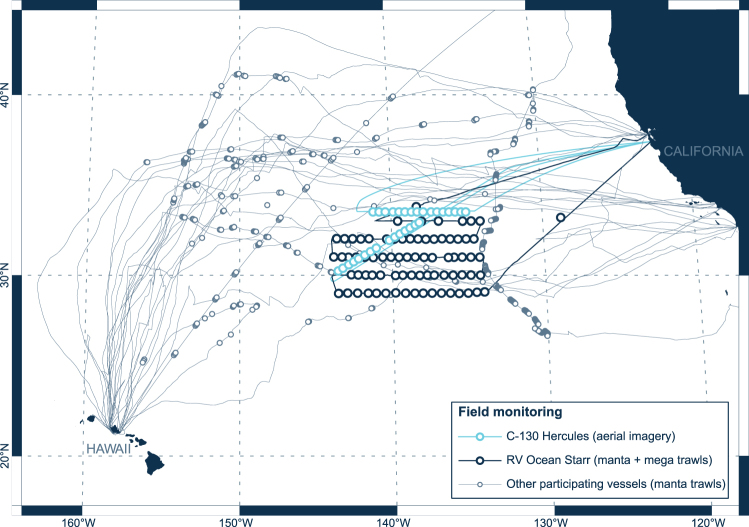
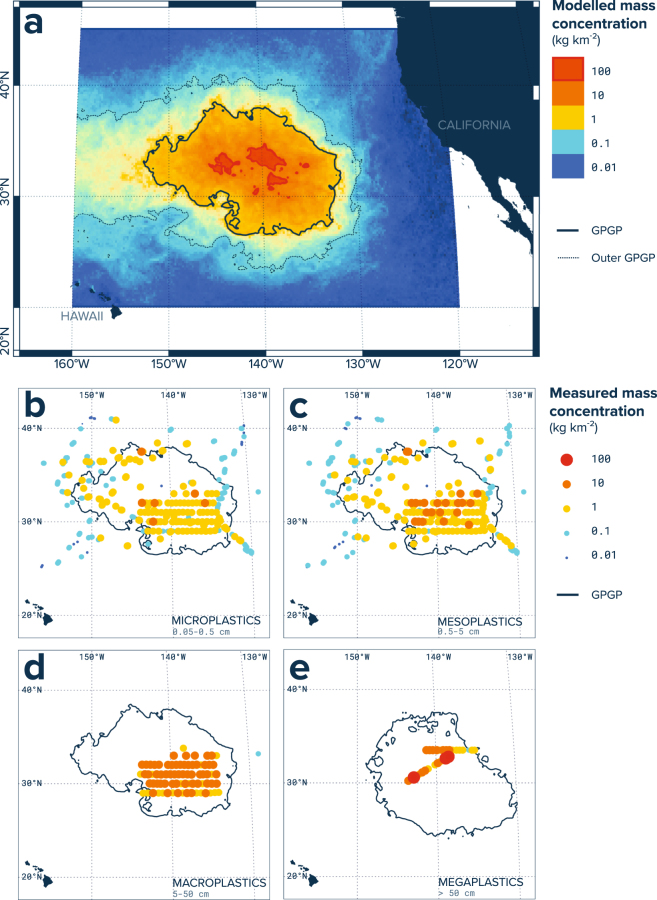
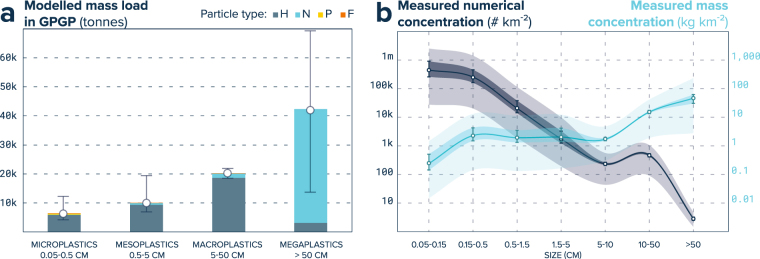
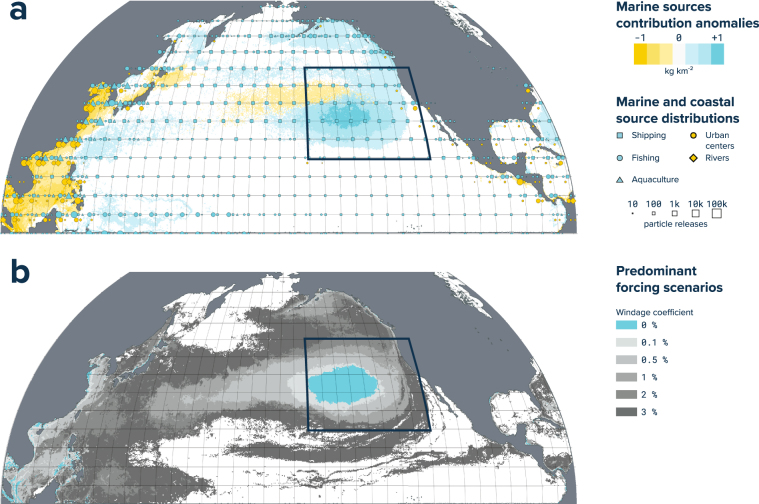
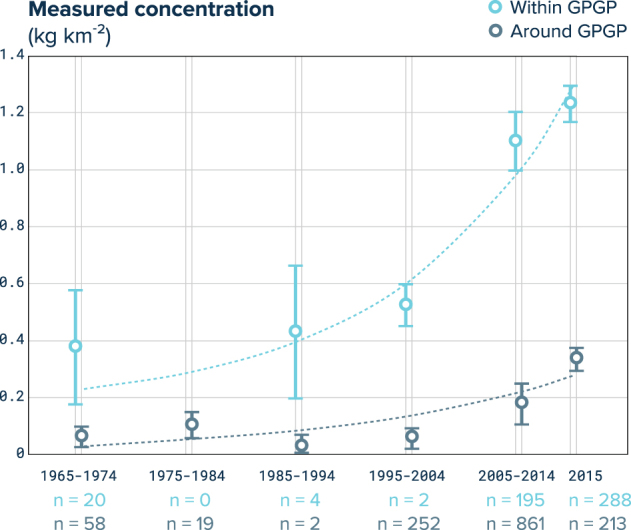
Ocean plastic can persist in sea surface waters, eventually accumulating in remote areas of the world’s oceans. Here we characterise and quantify a major ocean plastic accumulation zone formed in subtropical waters between California and Hawaii: The Great Pacific Garbage Patch (GPGP). Our model, calibrated with data from multi-vessel and aircraft surveys, predicted at least 79 (45–129) thousand tonnes of ocean plastic are floating inside an area of 1.6 million km 2 ; a figure four to sixteen times higher than previously reported. We explain this difference through the use of more robust methods to quantify larger debris. Over three-quarters of the GPGP mass was carried by debris larger than 5 cm and at least 46% was comprised of fishing nets. Microplastics accounted for 8% of the total mass but 94% of the estimated 1.8 (1.1–3.6) trillion pieces floating in the area. Plastic collected during our study has specific characteristics such as small surface-to-volume ratio, indicating that only certain types of debris have the capacity to persist and accumulate at the surface of the GPGP. Finally, our results suggest that ocean plastic pollution within the GPGP is increasing exponentially and at a faster rate than in surrounding waters.
Overview
The claims and statistics of this paper haven’t been checked yet.
Free: it reads the open-access text and checks the first 5 claims that cite a source we can check. Create a free account to check every claim.
Integrity signals
Registry
Cites
Statistics
Figures
Verification
Claims the paper makes
The claims and statistics of this paper haven’t been checked yet.
Free: it reads the open-access text and checks the first 5 claims that cite a source we can check. Create a free account to check every claim.
Claims other papers make about this one
Each is checked against this paper’s own text: does it say what the citing paper says it does?
In the citing paper
“Surface trawl observations may be underestimated by a factor of 4-16.55”
From The fate of plastic in the ocean environment – a minireview (2021) · cites this paper as [55]
Self-check
Percentages, sums and reported differences re-computed from the paper’s own numbers.
The self-check needs the paper’s full text.
Citations
Cites
The NCEP/NCAR 40-Year Reanalysis Project
Kalnay, E., Kanamitsu, M., Kistler, R., Collins, W., Deaven, D., Gandin, L., Iredell, M., Saha, S., White, G., Woollen, J., et al. (1996) · Bulletin of the American Meteorological Society · doi:10.1175/1520-0477(1996)077<0437:tnyrp>2.0.co;2 · Cited by 28,360 · cited 1×
“We sourced global sea surface currents (1993 to 2012) from the HYCOM + NCODA global 1/12° reanalysis (experiment 19.0 and 19.1 36–38 ), and wind (10 m above sea level) speed and direction data (1993 to 2012) from NCEP/NCAR global reanalysis 39 .”
MethodInfluentialProduction, use, and fate of all plastics ever made
Geyer, R., Jambeck, J. R., & Law, K. L. (2017) · Science Advances · doi:10.1126/sciadv.1700782 · Cited by 18,606
Plastic waste inputs from land into the ocean
Jambeck, J. R., Geyer, R., Wilcox, C., Siegler, T. R., Perryman, M., Andrady, A., Narayan, R., & Law, K. L. (2015) · Science · doi:10.1126/science.1260352 · Cited by 13,163 · cited 1×
“…were identically and continuously released in time from 1993 to 2012 following spatial distributions and amplitudes of significant ocean plastic sources on land (coastal population hotspots 23 and major rivers 24 ) as well as at sea (fishing 26,41 , aquaculture 42 and shipping industries 43 ).”
BackgroundMicroplastics in the marine environment
Andrady, A. L. (2011) · Marine Pollution Bulletin · doi:10.1016/j.marpolbul.2011.05.030 · Cited by 8,105 · cited 2×
“Buoyant plastic represents about 60% of the global plastic demand 10 , thus nearly half of the plastic input into the oceans should sink to the floor soon after release, accumulating in sediments 53 and underwater canyons 54 . rest may strand in coastlines 13,55,56 , be ingested by marine life 57…”
BackgroundLost at sea: where is all the plastic?
Thompson, R. C., Olsen, Y., Mitchell, R. P., Davis, A., Rowland, S. J., John, A. W. G., McGonigle, D., & Russell, A. E. (2004) · Science · doi:10.1126/science.1094559 · Cited by 7,765
A global map of human impact on marine ecosystems
Halpern, B. S., Walbridge, S., Selkoe, K. A., Kappel, C. V., Micheli, F., D'Agrosa, C., Bruno, J. F., Casey, K. S., Ebert, C., Fox, H. E., et al. (2008) · Science · doi:10.1126/science.1149345 · Cited by 6,627
Accumulation and fragmentation of plastic debris in global environments
Barnes, D. K. A., Galgani, F., Thompson, R. C., & Barlaz, M. (2009) · Philosophical Transactions of the Royal Society B: Biological Sciences · doi:10.1098/rstb.2008.0205 · Cited by 6,126 · cited 1×
“…it seems the bulk mass of material currently present in the GPGP is very unlikely to leave the area and may slowly degrade into increasingly smaller pieces that can eventually either sink to the seafloor 14 , or behave as water tracer due to its microscopic size and low Reynolds number 66 .”
BackgroundEriksen, M., Lebreton, L. C. M., Carson, H. S., Thiel, M., Moore, C. J., Borerro, J. C., Galgani, F., Ryan, P. G., & Reisser, J. (2014) · PLoS ONE · doi:10.1371/journal.pone.0111913 · Cited by 4,710 · cited 3×
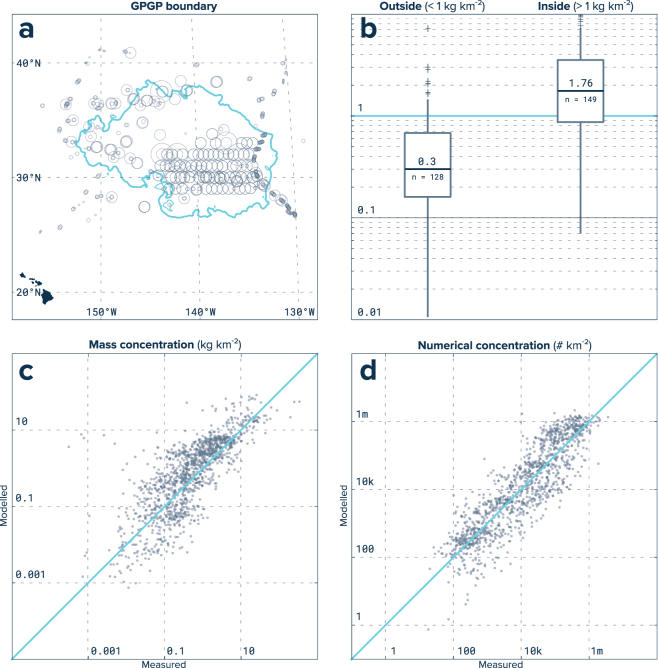
“A dynamic GPGP model boundary allowed us to determine whether surface net tows from previous studies 17,21,22,46–49 were sampling inside or outside the GPGP. Average plastic mass concentration measured by net tows inside the GPGP boundary showed an exponential increase over the last decades, rising…”
ResultInfluentialSelf-citationRiver plastic emissions to the world’s oceans
Lebreton, L. C. M., van der Zwet, J., Damsteeg, J.-W., Slat, B., Andrady, A., & Reisser, J. (2017) · Nature Communications · doi:10.1038/ncomms15611 · Cited by 4,011 · cited 1×
“…were identically and continuously released in time from 1993 to 2012 following spatial distributions and amplitudes of significant ocean plastic sources on land (coastal population hotspots 23 and major rivers 24 ) as well as at sea (fishing 26,41 , aquaculture 42 and shipping industries 43 ).”
BackgroundSelf-citationPlastic debris in the open ocean
Cózar, A., Echevarría, F., González-Gordillo, J. I., Irigoien, X., Úbeda, B., Hernández-León, S., Palma, Á. T., Navarro, S., García-de-Lomas, J., Ruiz, A., et al. (2014) · Proceedings of the National Academy of Sciences · doi:10.1073/pnas.1314705111 · Cited by 3,133 · cited 1×
“Our plastic mass estimate for the GPGP (~79 k tonnes) was nearly sixteen times higher than a previous study (~4.8 k tonnes) that used net trawl data only 29 and four times higher than another assessment (~21 k tonnes) that combined net trawl data with vessel-based visual surveys 21 .”
ResultInfluential
Research works printed but not linked: 11
- Plastics Europe. Plastics - the facts 2016: an analysis of European plastics production, demand and waste data. Preprint at http://www.plasticseurope.org (2016).
- Weisskopf M Plastic reaps a grim harvest in the oceans of the world Smithsonian 1988 18 59
- American Plastics Council. Understanding plastic film: its uses, benefits and waste management options. Preprint at https://plastics.americanchemistry.com/Understanding-Plastic-Film/ (1996).
- Tolman HL The numerical model WAVEWATCH: a third-generation model for the hindcasting of wind waves on tides in shelf seas Communications on Hydraulic and Geotechnical Engineering, Delft Univ. of Techn. 1989 89 72
- FAO. The state of world fisheries and aquaculture 2014. Preprint at http://www.fao.org/3/a-i3720e.pdf (2014).
- NOAA. Detecting Japan tsunami marine debris at sea: a synthesis of efforts and lessons learned. Preprint at https://marinedebris.noaa.gov/sites/default/files/JTMD_Detection_Report.pdf (2015)
- U.S. EPA. Characterization of municipal solid waste in the United States: 1997 update. Preprint at https://archive.epa.gov/epawaste/nonhaz/municipal/web/pdf/msw97rpt.pdf (1998).
- International Coastal Cleanup. Tracking trash - 25 years of action for the ocean. Preprint at http://act.oceanconservancy.org/pdf/Marine_Debris_2011_Report_OC.pdf (2011).
- GESAMP. Sources, fate and effects of microplastics in the marine environment: part two of a global assessment (eds Kershaw, P. J. & Rochman, C. M.). (IMO/FAO/UNESCO-IOC/UNIDO/WMO/IAEA/UN/UNEP/UNDP Joint Group of Experts on the Scientific Aspects of Marine Environmental Protection). Rep. Stud. GESAMP, 93, 220 (2016).
- Maximenko, N. et al. Remote sensing of marine debris to study dynamics, balances and trends. Preprint at https://ecocast.arc.nasa.gov/las/Reports%20and%20Papers/Marine-Debris-Workshop-2017.pdf (2017).
- NASA. Satellite-respondent buoys identify ocean debris. Preprint at https://www.nasa.gov/offices/oct/home/tech_life_buoy.html (2010).
Cited by
Items 201–300 of 1,001
Identifying floating plastic marine debris using a deep learning approach
Kylili, K., Kyriakides, I., Artusi, A., & Hadjistassou, C. (2019) · Environmental Science and Pollution Research · doi:10.1007/s11356-019-05148-4 · Cited by 118
The sorption of persistent organic pollutants in microplastics from the coastal environment
Wang, L., Lin, J. C.-T., Dong, C., Chen, C., & Liu, T. (2021) · Journal of Hazardous Materials · doi:10.1016/j.jhazmat.2021.126658 · Cited by 117
Oceanic long-range transport of organic additives present in plastic products: an overview
Andrade, H., Glüge, J., Herzke, D., Ashta, N. M., Nayagar, S. M., & Scheringer, M. (2021) · Environmental Sciences Europe · doi:10.1186/s12302-021-00522-x · Cited by 119
“Within the NPG there are three large accumulation zones for marine debris: the North Pacific Subtropical Convergence Zone, the “Eastern Garbage Patch”, and the “Western Garbage Patch”.”
BackgroundInfluentialOcean sediments as the global sink for marine micro‐ and mesoplastics
Martin, C., Young, C. A., Valluzzi, L., & Duarte, C. M. (2022) · Limnology and Oceanography Letters · doi:10.1002/lol2.10257 · Cited by 117
“However, a recent study highlighted that buoyant plastic loads might have been underestimated by a factor from 4 to 16, due to use of limiting methodologies (Lebreton et al. 2018).”
BackgroundBabalar, M., Siddiqua, S., & Sakr, M. A. (2023) · Separation and Purification Technology · doi:10.1016/j.seppur.2023.125582 · Cited by 120
Conti, I., Simioni, C., Varano, G., Brenna, C., Costanzi, E., & Neri, L. M. (2021) · Environmental Pollution · doi:10.1016/j.envpol.2021.117708 · Cited by 123
Progress and Challenges in Polystyrene Recycling and Upcycling
Xu, Z. C., Sun, D., Xu, J., Yang, R., Russell, J. D., & Liu, G. (2024) · ChemSusChem · doi:10.1002/cssc.202400474 · Cited by 113
Vriend, P., Hidayat, H., van Leeuwen, J., Cordova, M. R., Purba, N. P., Löhr, A., Faizal, I., Ningsih, N. S., Agustina, K., Husrin, S., et al. (2021) · Frontiers in Environmental Science · doi:10.3389/fenvs.2021.692907 · Cited by 123
Laboratory simulated aging methods, mechanisms and characteristic changes of microplastics: A review
Wang, L., Zhang, J., Huang, W., & He, Y. (2023) · Chemosphere · doi:10.1016/j.chemosphere.2023.137744 · Cited by 114
Microplastics in the environment: A DPSIR analysis with focus on the responses
Miranda, M. N., Silva, A. M. T., & Pereira, M. F. R. (2019) · The Science of The Total Environment · doi:10.1016/j.scitotenv.2019.134968 · Cited by 116
Global review of shark and ray entanglement in anthropogenic marine debris
Parton, K. J., Galloway, T. S., & Godley, B. J. (2019) · Endangered Species Research · doi:10.3354/esr00964 · Cited by 126
“The most famous of these is located in the North Pacific gyre (Lebreton et al. 2018).”
BackgroundPerumal, K., & Muthuramalingam, S. (2021) · Estuarine Coastal and Shelf Science · doi:10.1016/j.ecss.2021.107702 · Cited by 116
Global distribution of potential impact hotspots for marine plastic debris entanglement
Høiberg, M. A., Woods, J. S., & Verones, F. (2021) · Ecological Indicators · doi:10.1016/j.ecolind.2021.108509 · Cited by 117
The Abundance of Microplastics in the World’s Oceans: A Systematic Review
Mutuku, J., Yanotti, M., Tocock, M., & MacDonald, D. H. (2024) · Oceans · doi:10.3390/oceans5030024 · Cited by 121
Bianco, A., Sordello, F., Ehn, M., Vione, D. V., & Passananti, M. (2020) · The Science of The Total Environment · doi:10.1016/j.scitotenv.2020.140413 · Cited by 113
Plastic photodegradation under simulated marine conditions
Delre, A., Goudriaan, M., Morales, V. H., Vaksmaa, A., Ndhlovu, R. T., Baas, M., Keijzer, E., de Groot, T., Zeghal, E., Egger, M., et al. (2023) · Marine Pollution Bulletin · doi:10.1016/j.marpolbul.2022.114544 · Cited by 106
Marine Debris Polymers on Main Hawaiian Island Beaches, Sea Surface, and Seafloor
Brignac, K. C., Jung, M. R., King, C., Royer, S.-J., Blickley, L., Lamson, M. R., Potemra, J. T., & Lynch, J. M. (2019) · Environmental Science & Technology · doi:10.1021/acs.est.9b03561 · Cited by 100
Kikaki, K., Karantzalos, K. G., Power, C. A., & Raitsos, D. Ε. (2020) · Remote Sensing · doi:10.3390/rs12111727 · Cited by 119
“The global amount of microplastic debris was estimated between 93 and 236 thousand metric tonnes for 2014 [3], while there is also sufficient evidence that the largest plastics accumulator (Great Pacific Garbage Patch) is constantly growing [4].”
BackgroundBergami, E., Emerenciano, A. K., González‐Aravena, M., Cárdenas, C. A., Hernández, P., da Silva, J. R. M. C., & Corsi, I. (2019) · Polar Biology · doi:10.1007/s00300-019-02468-6 · Cited by 110
“Since plastic pollution has rapidly increased in oceanic gyres (Lebreton et al. 2018), sea ice (Peeken et al.”
Mendoza, M. S., Castro, K. E. N., Arreola, M. I. P., Garay-Canales, C. A., & Morales‐Montor, J. (2020) · Birth Defects Research · doi:10.1002/bdr2.1779 · Cited by 116
“There are not many studies on the Mediterranean Sea, but an accumulation of plastics with an extension close to 900 km2 has been detected near the island of Elba (Italy), and it is estimated that this sea has some 3.5 million tons of plastic in total (Lebreton et al., 2018).”
BackgroundInfluentialAmino Acid-Based Cholinium Ionic Liquids as Sustainable Catalysts for PET Depolymerization
Marullo, S., Rizzo, C., Dintcheva, N. T., & D’Anna, F. (2021) · ACS Sustainable Chemistry & Engineering · doi:10.1021/acssuschemeng.1c04060 · Cited by 110
Building evidence around ghost gear: Global trends and analysis for sustainable solutions at scale
Richardson, K., Asmutis‐Silvia, R., Drinkwin, J., Gilardi, K. V. K., Giskes, I., Jones, G., O’Brien, K., Pragnell-Raasch, H., Ludwig, L., Antonelis, K., et al. (2018) · Marine Pollution Bulletin · doi:10.1016/j.marpolbul.2018.11.031 · Cited by 104
Chemicals sorbed to environmental microplastics are toxic to early life stages of aquatic organisms
Cormier, B., Gambardella, C., Tato, T., Perdriat, Q., Costa, E., Veclin, C., Bihanic, F. L., Grassl, B., Dubocq, F., Kärrman, A., et al. (2020) · Ecotoxicology and Environmental Safety · doi:10.1016/j.ecoenv.2020.111665 · Cited by 109
Anthropocene, the plastic age and future perspectives
Porta, R. (2021) · FEBS Open Bio · doi:10.1002/2211-5463.13122 · Cited by 113
Bukhari, M. U., Khan, A., Maqbool, K. Q., Arshad, A., Riaz, K., & Bermak, A. (2022) · Energy Reports · doi:10.1016/j.egyr.2021.12.072 · Cited by 105
Can we quantify the aquatic environmental plastic load from aquaculture?
Tian, Y., Yang, Z., Yu, X., Jia, Z. Y., Rosso, M., Dedman, S., Zhu, J., Xia, Y., Zhang, G., Yang, J., et al. (2022) · Water Research · doi:10.1016/j.watres.2022.118551 · Cited by 104
Recyclable LRS FRP composites for engineering structures: Current status and future opportunities
Ye, Y.-Y., Liang, S.-D., Feng, P., & Zeng, J. (2021) · Composites Part B Engineering · doi:10.1016/j.compositesb.2021.108689 · Cited by 105
Conformational Selection in Biocatalytic Plastic Degradation by PETase
Guo, B., Vanga, S. R., Lopez‐Lorenzo, X., Méndez, P. S., Ericsson, S. R., Fang, Y., Ye, X., Schriever, K., Bäckström, E., Biundo, A., et al. (2022) · ACS Catalysis · doi:10.1021/acscatal.1c05548 · Cited by 106
Impacts of microplastic on fisheries and seafood security — Global analysis and synthesis
Kibria, G. (2023) · The Science of The Total Environment · doi:10.1016/j.scitotenv.2023.166652 · Cited by 109
Accumulation and characteristics of plastic debris along five beaches in Cape Town
Chitaka, T. Y., & von Blottnitz, H. (2018) · Marine Pollution Bulletin · doi:10.1016/j.marpolbul.2018.11.065 · Cited by 104
Sendra, M., Carrasco‐Braganza, M. I., Yeste, M. P., Vilà, M., & Blasco, J. (2020) · Scientific Reports · doi:10.1038/s41598-020-65596-8 · Cited by 105
Environmental implications of microplastic pollution in the Northwestern Pacific Ocean
Pan, Z., Liu, Q., Sun, Y., Sun, X., & Lin, H. (2019) · Marine Pollution Bulletin · doi:10.1016/j.marpolbul.2019.06.031 · Cited by 110
Coastal ocean dynamics reduce the export of microplastics to the open ocean
Zhang, Z., Wu, H., Peng, G., Xu, P., & Li, D. (2020) · The Science of The Total Environment · doi:10.1016/j.scitotenv.2020.136634 · Cited by 107
Janaswamy, S., Yadav, M. P., Hoque, M., Bhattarai, S., & Ahmed, S. (2022) · Industrial Crops and Products · doi:10.1016/j.indcrop.2022.114692 · Cited by 103
Impact of microplastics on the intestinal microbiota: A systematic review of preclinical evidence
Silva, T. G. D. S. E., Oliveira, I. A., da Silva, G. G., Vilela, F. C., Novaes, R. D., & Paula, H. A. D. A. (2022) · Life Sciences · doi:10.1016/j.lfs.2022.120366 · Cited by 118
Microplastics May Be a Significant Cause of Male Infertility
Zhang, C., Chen, J., Ma, S., Sun, Z.-X., & Wang, Z. (2022) · American Journal of Men s Health · doi:10.1177/15579883221096549 · Cited by 114
seyyedi, S. R., Kowsari, E., Ramakrishna, S., Gheibi, M., & Chinnappan, A. (2023) · Journal of Environmental Management · doi:10.1016/j.jenvman.2023.118591 · Cited by 115
Advanced analytical techniques for microplastics in the environment: a review
Randhawa, J. S. (2023) · Bulletin of the National Research Centre/Bulletin of the National Research Center · doi:10.1186/s42269-023-01148-0 · Cited by 107
Garaba, S. P., & Dierssen, H. M. (2020) · Earth system science data · doi:10.5194/essd-12-77-2020 · Cited by 98
Martinelli, J., Phan, S., Luscombe, C. K., & Padilla-Gamiño, J. (2020) · The Science of The Total Environment · doi:10.1016/j.scitotenv.2020.136826 · Cited by 103
Microfibers in Laundry Wastewater: Problem and Solution
Le, L.-T., Nguyen, K.-Q., Nguyen, P.-T., Duong, H. C., Bui, X., Hoang, N. B., & Nghiem, L. D. (2022) · The Science of The Total Environment · doi:10.1016/j.scitotenv.2022.158412 · Cited by 107
Sunny, A. R., Sazzad, S. A., Islam, M. A., Mithun, M. H., Hussain, M., Raposo, A., & Bhuiyan, M. K. A. (2025) · Water · doi:10.3390/w17121741 · Cited by 119
Underwater and airborne monitoring of marine ecosystems and debris
Watanabe, J.-I., Shao, Y., & Miura, N. (2019) · Journal of Applied Remote Sensing · doi:10.1117/1.jrs.13.044509 · Cited by 94
“They also reported that there are areas in the Pacific Ocean that accumulate debris rapidly based on multivessel and aircraft surveys and simulation.(30) However, it is still difficult to estimate debris distribution around the vast ocean and efficiently clean up the area.”
BackgroundProbabilistic environmental risk assessment of microplastics in marine habitats
Adam, V., von Wyl, A., & Nowack, B. (2020) · Aquatic Toxicology · doi:10.1016/j.aquatox.2020.105689 · Cited by 101
“…an increase in particle size lead to a decrease in toxicity towards copepods and rotifers in Jeong et al. (2017,2016), Beiras et al. (2018) and Lee et al. (2013), while no influence of particle size was observed towards bacteria, diatoms, mussels and oysters by Gambardella et al. (2019); Yi…”
Evaluation of microplastic ingestion by tropical fish from Moorea Island, French Polynesia
Garnier, Y., Jacob, H., Guerra, A. S., Bertucci, F., & Lecchini, D. (2019) · Marine Pollution Bulletin · doi:10.1016/j.marpolbul.2019.01.038 · Cited by 100
SKIM, a Candidate Satellite Mission Exploring Global Ocean Currents and Waves
Ardhuin, F., Brandt, P. N., Gaultier, L., Donlon, C. J., Battaglia, A., Boy, F., Casal, T., Chapron, B., Collard, F., Cravatte, S., et al. (2019) · Frontiers in Marine Science · doi:10.3389/fmars.2019.00209 · Cited by 93
“As Lagrangian pathways are typically very sensitive to the flow field, accurate knowledge of the surface flow improves our ability to track surface floating debris and determine how microplastic at the surface ocean is transported from coastlines into the open-ocean accumulation zones (Lebreton et al., 2018).”
BackgroundMarine invertebrate larvae love plastics: Habitat selection and settlement on artificial substrates
Pinochet, J., Urbina, M. A., & Lagos, M. E. (2019) · Environmental Pollution · doi:10.1016/j.envpol.2019.113571 · Cited by 96
Land or sea? What bottles tell us about the origins of beach litter in Kenya
Ryan, P. G. (2020) · Waste Management · doi:10.1016/j.wasman.2020.07.044 · Cited by 95
Ghost fishing gear and their effect on ecosystem services – Identification and knowledge gaps
Do, H.-L., & Armstrong, C. W. (2023) · Marine Policy · doi:10.1016/j.marpol.2023.105528 · Cited by 93
Plastic debris on Pacific Islands: Ecological and health implications
Filho, W. L., Havea, P. H., Balogun, A., Boenecke, J., Maharaj, A., Ha’apio, M. O., & Hemstock, S. L. (2019) · The Science of The Total Environment · doi:10.1016/j.scitotenv.2019.03.181 · Cited by 95
Large impact of Stokes drift on the fate of surface floating debris in the South Indian Basin
Dobler, D., Huck, T., Maes, C., Grima, N., Blanke, B., Martinez, É., & Ardhuin, F. (2019) · Marine Pollution Bulletin · doi:10.1016/j.marpolbul.2019.07.057 · Cited by 101
“The sensitivity of the trajectories of surface floating debris in the Indian Basin is particularly important to understand and quantify, as a large fraction of the world’s plastic waste is released in this area, with significant input from Asian rivers (Lebreton et al., 2018) and a very large population living on its…”
BackgroundVázquez, O. A., & Rahman, M. S. (2021) · Environmental Toxicology and Pharmacology · doi:10.1016/j.etap.2021.103615 · Cited by 99
Cormier, B., Cachot, J., Blanc, M., Cabar, M., Clérandeau, C., Dubocq, F., Bihanic, F. L., Morin, B., Zapata, S., Bégout, M., et al. (2022) · Environmental Pollution · doi:10.1016/j.envpol.2022.119721 · Cited by 97
Littering behaviour: A systematic review
Chaudhary, A. H., Polonsky, M. J., & McClaren, N. (2021) · International Journal of Consumer Studies · doi:10.1111/ijcs.12638 · Cited by 109
Huber, M., Archodoulaki, V., Pomakhina, E., Pukánszky, B., Zinöcker, E., & Gahleitner, M. (2021) · Polymer Degradation and Stability · doi:10.1016/j.polymdegradstab.2021.109794 · Cited by 96
Muiruri, J. K., Yeo, J. C. C., Zhu, Q., Ye, E., Loh, X. J., & Li, Z. (2022) · ACS Sustainable Chemistry & Engineering · doi:10.1021/acssuschemeng.1c08631 · Cited by 98
Plastics in the deep sea – A global estimate of the ocean floor reservoir
Zhu, X., Rochman, C. M., Hardesty, B. D., & Wilcox, C. (2024) · Deep Sea Research Part I Oceanographic Research Papers · doi:10.1016/j.dsr.2024.104266 · Cited by 110
Transport of marine microplastic particles: why is it so difficult to predict?
Khatmullina, L., & Chubarenko, I. (2019) · Anthropocene Coasts · doi:10.1139/anc-2018-0024 · Cited by 106
“The distribution of MPs by size was attained for MPs in the upper part of the water column (Cózar et al. 2014, 2015; Isobe et al. 2014; Enders et al. 2015; Reisser et al. 2015; Lebreton et al. 2018).”
BackgroundMethodInfluentialEmergence of a neopelagic community through the establishment of coastal species on the high seas
Haram, L. E., Carlton, J. T., Centurioni, L., Crowley, M. E., Hafner, J., Maximenko, N., Murray, C. C., Shcherbina, A., Hormann, V., Wright, C., et al. (2021) · Nature Communications · doi:10.1038/s41467-021-27188-6 · Cited by 96
Microplastic in oysters: A review of global trends and comparison to southern Australia
Wootton, N., Sarakinis, K. G., Varea, R., Reis‐Santos, P., & Gillanders, B. M. (2022) · Chemosphere · doi:10.1016/j.chemosphere.2022.136065 · Cited by 90
Assessment of fishing-related plastic debris along the beaches in Kerala Coast, India
Daniel, D. B., Thomas, S. N., & Thomson, K. T. (2019) · Marine Pollution Bulletin · doi:10.1016/j.marpolbul.2019.110696 · Cited by 92
Reversible-deactivation radical polymerization of cyclic ketene acetals
Jackson, A. W. (2020) · Polymer Chemistry · doi:10.1039/d0py00446d · Cited by 31
Akanyange, S. N., Zhang, Y., Zhao, X., Adom‐Asamoah, G., Ature, A.-R. A., Anning, C., Chen, T., Zhao, H., Lyu, X., & Crittenden, J. C. (2022) · Sustainable Production and Consumption · doi:10.1016/j.spc.2022.06.020 · Cited by 102
Kim, S., Kim, J., Kim, S. Y., Song, N.-S., La, H. S., & Yang, E. J. (2023) · Science Advances · doi:10.1126/sciadv.add2348 · Cited by 101
“Recent observations of pelagic MPs have shown that a substantial fraction of MPs resides below the OSL to the bottom layers of the oceanic water column due to the vertical sinking and oscillation, regardless of whether it is in coastal waters (53) or open ocean waters including mid-latitude offshores (54, 55), the Atl…”
BackgroundResultInfluentialEwell, C., Hocevar, J., Mitchell, E. A., Snowden, S., & Jacquet, J. (2020) · Marine Policy · doi:10.1016/j.marpol.2020.103842 · Cited by 89
Spatio-temporal variability of beached macro-litter on remote islands of the North Atlantic
Ríos, N., Frias, J. P. G. L., Rodríguez, Y., Carriço, R., Garcia, S. M., Juliano, M., & Pham, C. K. (2018) · Marine Pollution Bulletin · doi:10.1016/j.marpolbul.2018.05.038 · Cited by 91
Payne, J., Kamran, M., Davidson, M. G., & Jones, M. D. (2022) · ChemSusChem · doi:10.1002/cssc.202200255 · Cited by 93
Methodology to address potential impacts of plastic emissions in life cycle assessment
Maga, D., Galafton, C., Blömer, J., Thonemann, N., Özdamar, A., & Bertling, J. (2022) · The International Journal of Life Cycle Assessment · doi:10.1007/s11367-022-02040-1 · Cited by 92
Quantitative assessment of microplastic in sandy beaches of Gujarat state, India
Rabari, V., Patel, K., Patel, H., & Trivedi, J. N. (2022) · Marine Pollution Bulletin · doi:10.1016/j.marpolbul.2022.113925 · Cited by 95
Air pollution as a determinant of food delivery and related plastic waste
Chu, J., Liu, H., & Salvo, A. (2020) · Nature Human Behaviour · doi:10.1038/s41562-020-00961-1 · Cited by 87
Chen, C.-F., Ju, Y., Lim, Y. C., Chen, C., & Dong, C. (2021) · The Science of The Total Environment · doi:10.1016/j.scitotenv.2021.146610 · Cited by 94
Global Causes, Drivers, and Prevention Measures for Lost Fishing Gear
Richardson, K., Hardesty, B. D., Vince, J., & Wilcox, C. (2021) · Frontiers in Marine Science · doi:10.3389/fmars.2021.690447 · Cited by 92
“It may also drift with currents where it has the potential to interact with fish and other marine wildlife (Wilcox et al., 2013; Lebreton et al., 2018; Stelfox et al., 2020), provide habitat for invasive species (Miralles et al.”
BackgroundPrecision copolymerization of CO2 and epoxides enabled by organoboron catalysts
Yang, G., Xu, C., Xie, R. J., Zhang, Y., Lu, C., Qi, H., Li, Y., Wang, Y., & Wu, G. (2022) · Nature Synthesis · doi:10.1038/s44160-022-00137-x · Cited by 90
“9° (7), the -AB-/-ABB- contents increase from 69.”
BackgroundMethodInfluentialDebrah, J. K., Vidal, D. G., & Dinis, M. A. P. (2021) · Urban Science · doi:10.3390/urbansci5010012 · Cited by 84
“[8] and Neilson’s [9] studies, most plastics enter the oceans and lands and potentially damage the environment.”
BackgroundIssifu, I., Alava, J. J., Lam, V. W. Y., & Sumaila, U. R. (2022) · Frontiers in Marine Science · doi:10.3389/fmars.2021.770805 · Cited by 96
Adamopoulou, A., Zeri, C., Garaventa, F., Gambardella, C., Ioakeimidis, C., & Pitta, E. (2021) · Frontiers in Marine Science · doi:10.3389/fmars.2021.699000 · Cited by 89
Coastal and marine plastic litter monitoring using remote sensing: A review
Veettil, B. K., Quan, N. H., Hauser, L. T., Van, D. D., & Quảng, N. X. (2022) · Estuarine Coastal and Shelf Science · doi:10.1016/j.ecss.2022.108160 · Cited by 91
Marine Waste—Sources, Fate, Risks, Challenges and Research Needs
Dąbrowska, J., Sobota, M., Świąder, M., Borowski, P., Moryl, A., Stodolak, R., Kucharczak, E., Zięba, Z., & Kazak, J. K. (2021) · International Journal of Environmental Research and Public Health · doi:10.3390/ijerph18020433 · Cited by 99
“6) trillion pieces floating in the area [9].”
BackgroundPlastics: are they part of the zero-waste agenda or the toxic-waste agenda?
Zaman, A. U., & Newman, P. W. G. (2021) · Sustainable Earth Reviews · doi:10.1186/s42055-021-00043-8 · Cited by 87
Emerging Roles of PETase and MHETase in the Biodegradation of Plastic Wastes
Maity, W., Maity, S., Bera, S., & Roy, A. (2021) · Applied Biochemistry and Biotechnology · doi:10.1007/s12010-021-03562-4 · Cited by 92
“6 million km2 subtropical region of the Pacific ocean that stretched between California and Hawaii—measures up to an astounding 70 thousand tones and still growing at an alarming rate [14].”
BackgroundVera, A., Tapia, C., & Abugoch, L. (2020) · International Journal of Biological Macromolecules · doi:10.1016/j.ijbiomac.2019.12.120 · Cited by 83
How to remove microplastics in wastewater? A cost-effectiveness analysis
Vuori, L., & Ollikainen, M. (2021) · Ecological Economics · doi:10.1016/j.ecolecon.2021.107246 · Cited by 89
Nodehi, M., & Taghvaee, V. M. (2022) · Circular Economy and Sustainability · doi:10.1007/s43615-022-00149-x · Cited by 92
“3 billion metric tons[109] while its annual production is estimated to be higher than 200–320 million tons [110, 111].”
BackgroundAli, S. S., Alsharbaty, M. H. M., Al-Tohamy, R., Schagerl, M., Al-Zahrani, M., Kornaros, M. E., & Sun, J. (2024) · Environmental Chemistry and Ecotoxicology · doi:10.1016/j.enceco.2024.12.005 · Cited by 85
Role of Indian Ocean Dynamics on Accumulation of Buoyant Debris
van der Mheen, M., Pattiaratchi, C. B., & van Sebille, E. (2019) · Journal of Geophysical Research Oceans · doi:10.1029/2018jc014806 · Cited by 86
“Since then, several sampling studies have confirmed the existence of garbage patches in both the North Pacific and the North Atlantic oceans (Lebreton et al., 2018; van Sebille et al., 2015).”
BackgroundMethodInfluentialCastro, R. O., da Silva, M. L., Marques, M. R. D. C., & de Araújo, F. V. (2020) · Marine Pollution Bulletin · doi:10.1016/j.marpolbul.2020.111537 · Cited by 91
Pansharpening PRISMA Data for Marine Plastic Litter Detection Using Plastic Indexes
Kremezi, M., Kristollari, V., Karathanassi, V., Topouzelis, K., Kolokoussis, P., Taggio, N., Aiello, A., Ceriola, G., Barbone, E., & Corradi, P. (2021) · IEEE Access · doi:10.1109/access.2021.3073903 · Cited by 84
“Plastic fragments, lolly sticks, plastic caps/lids, and string/cord (diameter < 1 cm) are the most frequent debris and their amount in the oceans and coastal areas, which is steadily increasing, is now a global major environmental problem [2].”
BackgroundBasin-scale sources and pathways of microplastic that ends up in the Galápagos Archipelago
van Sebille, E., Delandmeter, P., Schofield, J., Hardesty, B. D., Jones, J., & Donnelly, A. (2019) · Ocean science · doi:10.5194/os-15-1341-2019 · Cited by 100
“There is still a debate in the physical oceanography community as to what extent wave-induced currents – so-called Stokes drift (Stokes, 1847) – have an impact on the transport of plastic (Lebreton et al., 2018; Onink et al., 2019).”
BackgroundFloating microplastics in a coastal embayment: A multifaceted issue
Frias, J. P. G. L., Lyashevska, O., Joyce, H., Pagter, E., & Nash, R. (2020) · Marine Pollution Bulletin · doi:10.1016/j.marpolbul.2020.111361 · Cited by 84
López, A. D. F., Rimondino, G. N., Truchet, D. M., Colombo, C. V., Buzzi, N. S., Malanca, F. E., Spetter, C. V., & Fernández-Severini, M. D. (2021) · The Science of The Total Environment · doi:10.1016/j.scitotenv.2021.147141 · Cited by 86
Identifying distribution and accumulation patterns of floating marine debris in the Black Sea
Miladinova, S., Macias, D. M., Stips, A., & García‐Górriz, E. (2020) · Marine Pollution Bulletin · doi:10.1016/j.marpolbul.2020.110964 · Cited by 86
The transport and fate of marine plastics in South Africa and adjacent oceans
Ryan, P. G. (2020) · South African Journal of Science · doi:10.17159/sajs.2020/7677 · Cited by 95
Martin, C., Zhang, Q., Zhai, D., Zhang, X., & Duarte, C. M. (2021) · Environmental Pollution · doi:10.1016/j.envpol.2021.116730 · Cited by 80
Ye, L., Liu, X., Beckett, K., Rothbaum, J. O., Lincoln, C. L., Broadbelt, L. J., Kratish, Y., & Marks, T. J. (2023) · Chem · doi:10.1016/j.chempr.2023.10.022 · Cited by 81
Leaching of flame-retardants from polystyrene debris: Bioaccumulation and potential effects on coral
Aminot, Y., Lanctôt, C. M., Bednarz, V. N., Robson, W. J., Taylor, A., Ferrier‐Pagès, C., Métian, M., & Tolosa, I. (2020) · Marine Pollution Bulletin · doi:10.1016/j.marpolbul.2019.110862 · Cited by 78
An Irgafos® 168 story: When the ubiquity of an additive prevents studying its leaching from plastics
Hermabessière, L., Receveur, J., Himber, C., Mazurais, D., Huvet, A., Lagarde, F., Christophe Lambert, B., Paul-Pont, I., Dehaut, A., Jézéquel, R., et al. (2020) · The Science of The Total Environment · doi:10.1016/j.scitotenv.2020.141651 · Cited by 78
Shi, J., Zhang, C., & Chen, W. (2020) · Sustainable Production and Consumption · doi:10.1016/j.spc.2020.08.005 · Cited by 86
Marine Litter Windrows: A Strategic Target to Understand and Manage the Ocean Plastic Pollution
Cózar, A., Aliani, S., Basurko, O. C., Arias, M., Isobe, A., Topouzelis, K., Rubio, A., & Morales‐Caselles, C. (2021) · Frontiers in Marine Science · doi:10.3389/fmars.2021.571796 · Cited by 88
“, 2019), but we already have the technology and methods necessary to monitor litter from aircraft or similar platforms (Lebreton et al., 2018; Lambert et al., 2020).”
MethodCharacterization and environmental impacts of microplastics
Du, H., & Wang, J. (2021) · Gondwana Research · doi:10.1016/j.gr.2021.05.023 · Cited by 83
Waluda, C. M., Staniland, I. J., Dunn, M. J., Thorpe, S. E., Grilly, E., Whitelaw, M., & Hughes, K. A. (2020) · Environment International · doi:10.1016/j.envint.2020.105460 · Cited by 82
“Similar patterns of increased debris on windward shores are observed elsewhere, for example the Caribbean (Debrot et al., 2013), Henderson Island in the South Pacific (Lavers & Bond, 2017) and various island shores in the Atlantic Ocean (Monteiro et al., 2018).”
Background
Metadata
- Authors
- Lebreton, L., Slat, B., Ferrari, F., Sainte-Rose, B., Aitken, J., Marthouse, R., Hajbane, S., Cunsolo, S., Schwarz, A., Levivier, A., Noble, K., Debeljak, P., Maral, H., Schoeneich-Argent, R., Brambini, R., & Reisser, J.
- Affiliations
- The Ocean Cleanup (NL)
- Centre National de la Recherche Scientifique (FR)
- Corresponding author
- Lebreton, L.
- Venue
- Scientific Reports
- Published
- 2018-03-22
- Volume
- 8
- Issue
- 1
- Pages
- 4666-4666
- ISSN
- 2045-2322 (ISSN-L)
- PMC
- PMC5864935
- OpenAlex
- W2791727655
- Semantic Scholar
- cbd6216cc4dd8bc948ba20943141090562992fab
- Cited by
- 1,839
- References
- 56
- Citations by year
- 2026: 152 · 2025: 242 · 2024: 252 · 2023: 257 · 2022: 289 · 2021: 272 · 2020: 193 · 2019: 141 · 2018: 40
- FWCI
- 60.53
- Type
- journal article
- Language
- en
- Open access
- gold
- doi.org
- Licence
- cc-by
- creativecommons.org/licenses/by/4.0 (tdm)
- creativecommons.org/licenses/by/4.0 (vor)
- Locations
- Scientific Reports (publishedVersion, cc-by)
- Europe PMC (PubMed Central) (publishedVersion, cc-by)
- PubMed Central (publishedVersion, cc-by)
- PubMed (publishedVersion)
- VBN Forskningsportal (Aalborg Universitet) (publishedVersion, cc-by)
- Roger Williams University - Digital Commons (Roger Williams University) (submittedVersion)
- HAL (submittedVersion, other-oa)
- DOAJ (DOAJ: Directory of Open Access Journals) (submittedVersion)
- Funders
- Technische Universiteit Delft
- Topics
- Physical Sciences › Environmental Science › Pollution › Microplastics and Plastic Pollution
- Physical Sciences › Environmental Science › Pollution › Oil Spill Detection and Mitigation
- Physical Sciences › Environmental Science › Waste Management and Disposal › Waste Management and Recycling
- Keywords
- Great Pacific Garbage Patch, marine plastic pollution, plastic accumulation, fishing nets, microplastics, debris size distribution, surface-to-volume ratio, subtropical gyre
- MeSH terms
- California, Environmental Monitoring, Garbage, Hawaii, Models, Theoretical, Pacific Ocean, Plankton, Plastics, Sampling Studies, Spectrophotometry, Infrared, Waste Products, Water Pollutants, Chemical, Water Pollution, Chemical, Wind, Satellite Imagery
About these checks
Registry, retraction, Cites and statistics results are computed, not judged, with one exception: a printed reference that no index lists is read once by a model before it counts as a citation error. Claims are extracted by a model and kept only when their quote appears verbatim in the text; each cited source is then checked, with a model’s help, for whether it says what the claim relies on. Those verdicts can be wrong — read the claim’s quote and the cited source before relying on one.
Statistics and arithmetic are recomputed, not judged.
Confidence bands are shown only for fields calibrated on our annotated test set. None is calibrated yet, so no band is shown.
What counts as a claim ›How we measure confidence ›How we check this ›
Are you an author, or do you see a problem with this page? Request a review
Data sources
Bibliographic data: Semantic Scholar, OpenAlex, Crossref.
Contains information from the Semantic Scholar Academic Graph Datasets, made available under the ODC Attribution License (ODC-BY 1.0).
Semantic Scholar’s data is described in: Kinney, R., et al. (2023). The Semantic Scholar Open Data Platform. arXiv:2301.10140.
