

Evidence that the Great Pacific Garbage Patch is rapidly accumulating plastic
Open accessThe DOI matches its Crossref record; 55 of the 56 references it cites were found in a registry or an index.
Abstract
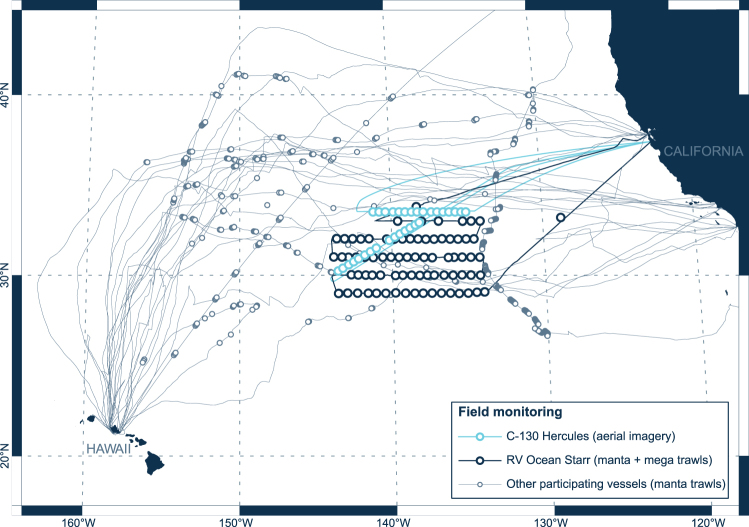
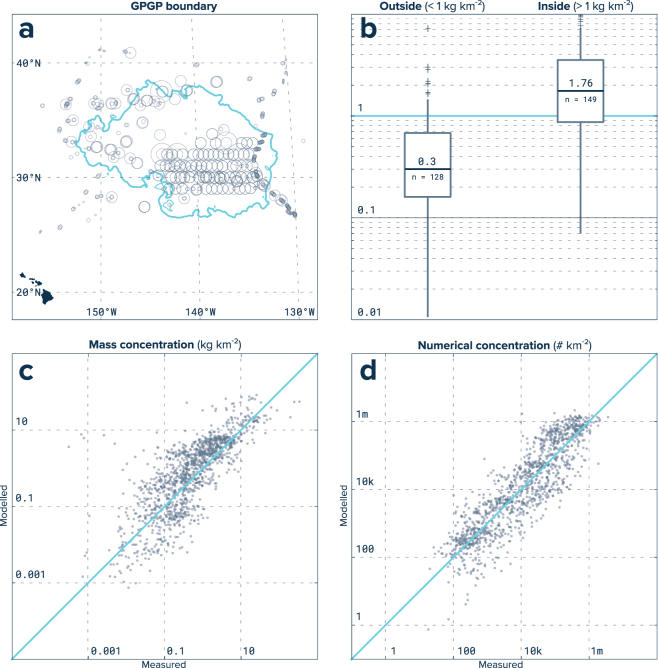
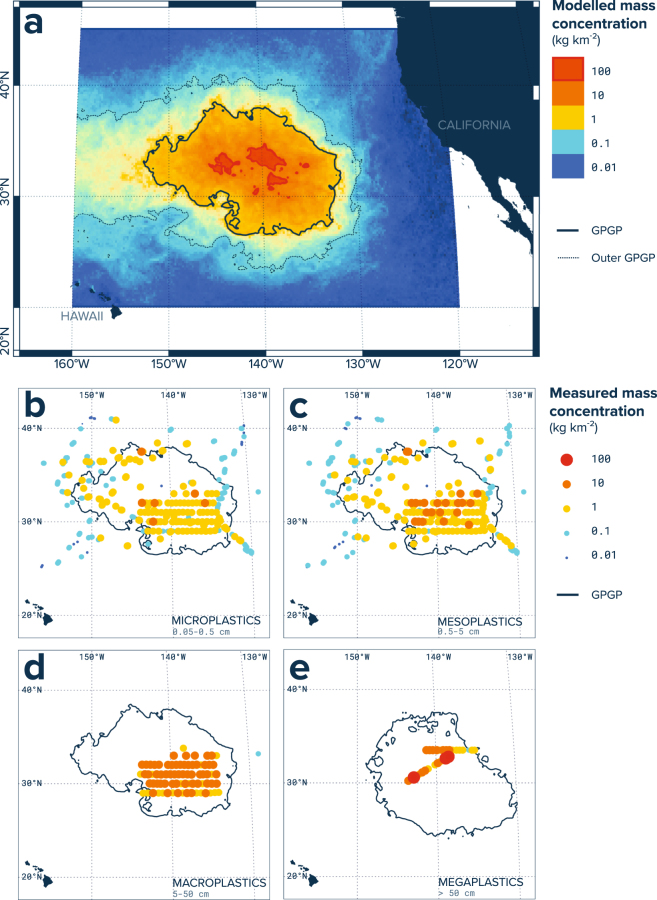
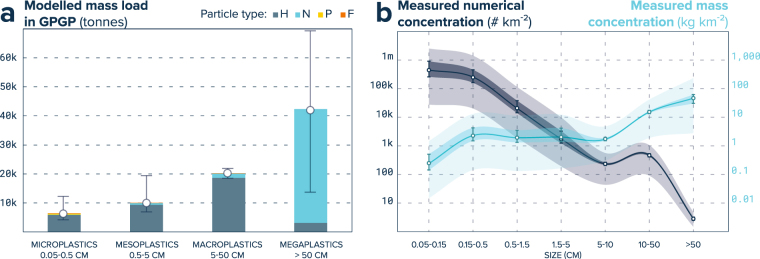
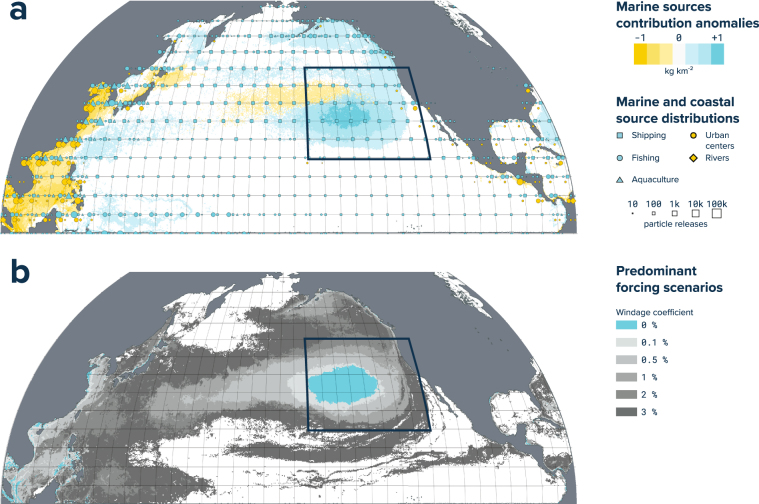
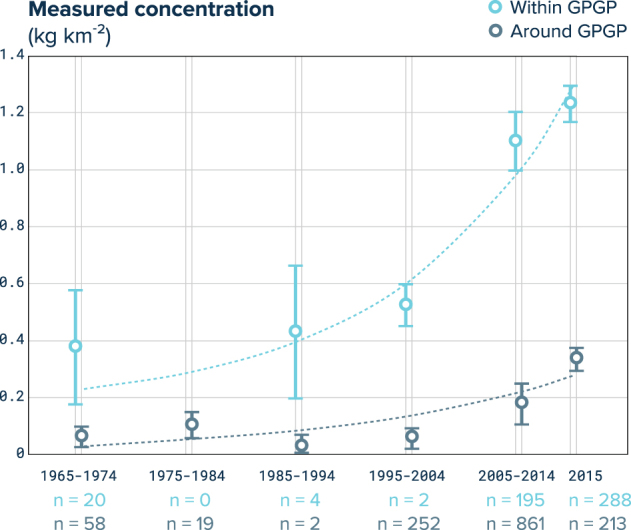
Ocean plastic can persist in sea surface waters, eventually accumulating in remote areas of the world’s oceans. Here we characterise and quantify a major ocean plastic accumulation zone formed in subtropical waters between California and Hawaii: The Great Pacific Garbage Patch (GPGP). Our model, calibrated with data from multi-vessel and aircraft surveys, predicted at least 79 (45–129) thousand tonnes of ocean plastic are floating inside an area of 1.6 million km 2 ; a figure four to sixteen times higher than previously reported. We explain this difference through the use of more robust methods to quantify larger debris. Over three-quarters of the GPGP mass was carried by debris larger than 5 cm and at least 46% was comprised of fishing nets. Microplastics accounted for 8% of the total mass but 94% of the estimated 1.8 (1.1–3.6) trillion pieces floating in the area. Plastic collected during our study has specific characteristics such as small surface-to-volume ratio, indicating that only certain types of debris have the capacity to persist and accumulate at the surface of the GPGP. Finally, our results suggest that ocean plastic pollution within the GPGP is increasing exponentially and at a faster rate than in surrounding waters.
Overview
The claims and statistics of this paper haven’t been checked yet.
Free: it reads the open-access text and checks the first 5 claims that cite a source we can check. Create a free account to check every claim.
Integrity signals
Registry
Cites
Statistics
Figures
Verification
Claims the paper makes
The claims and statistics of this paper haven’t been checked yet.
Free: it reads the open-access text and checks the first 5 claims that cite a source we can check. Create a free account to check every claim.
Claims other papers make about this one
Each is checked against this paper’s own text: does it say what the citing paper says it does?
In the citing paper
“Surface trawl observations may be underestimated by a factor of 4-16.55”
From The fate of plastic in the ocean environment – a minireview (2021) · cites this paper as [55]
Self-check
Percentages, sums and reported differences re-computed from the paper’s own numbers.
The self-check needs the paper’s full text.
Citations
Cites
The NCEP/NCAR 40-Year Reanalysis Project
Kalnay, E., Kanamitsu, M., Kistler, R., Collins, W., Deaven, D., Gandin, L., Iredell, M., Saha, S., White, G., Woollen, J., et al. (1996) · Bulletin of the American Meteorological Society · doi:10.1175/1520-0477(1996)077<0437:tnyrp>2.0.co;2 · Cited by 28,360 · cited 1×
“We sourced global sea surface currents (1993 to 2012) from the HYCOM + NCODA global 1/12° reanalysis (experiment 19.0 and 19.1 36–38 ), and wind (10 m above sea level) speed and direction data (1993 to 2012) from NCEP/NCAR global reanalysis 39 .”
MethodInfluentialProduction, use, and fate of all plastics ever made
Geyer, R., Jambeck, J. R., & Law, K. L. (2017) · Science Advances · doi:10.1126/sciadv.1700782 · Cited by 18,606
Plastic waste inputs from land into the ocean
Jambeck, J. R., Geyer, R., Wilcox, C., Siegler, T. R., Perryman, M., Andrady, A., Narayan, R., & Law, K. L. (2015) · Science · doi:10.1126/science.1260352 · Cited by 13,163 · cited 1×
“…were identically and continuously released in time from 1993 to 2012 following spatial distributions and amplitudes of significant ocean plastic sources on land (coastal population hotspots 23 and major rivers 24 ) as well as at sea (fishing 26,41 , aquaculture 42 and shipping industries 43 ).”
BackgroundMicroplastics in the marine environment
Andrady, A. L. (2011) · Marine Pollution Bulletin · doi:10.1016/j.marpolbul.2011.05.030 · Cited by 8,105 · cited 2×
“Buoyant plastic represents about 60% of the global plastic demand 10 , thus nearly half of the plastic input into the oceans should sink to the floor soon after release, accumulating in sediments 53 and underwater canyons 54 . rest may strand in coastlines 13,55,56 , be ingested by marine life 57…”
BackgroundLost at sea: where is all the plastic?
Thompson, R. C., Olsen, Y., Mitchell, R. P., Davis, A., Rowland, S. J., John, A. W. G., McGonigle, D., & Russell, A. E. (2004) · Science · doi:10.1126/science.1094559 · Cited by 7,765
A global map of human impact on marine ecosystems
Halpern, B. S., Walbridge, S., Selkoe, K. A., Kappel, C. V., Micheli, F., D'Agrosa, C., Bruno, J. F., Casey, K. S., Ebert, C., Fox, H. E., et al. (2008) · Science · doi:10.1126/science.1149345 · Cited by 6,627
Accumulation and fragmentation of plastic debris in global environments
Barnes, D. K. A., Galgani, F., Thompson, R. C., & Barlaz, M. (2009) · Philosophical Transactions of the Royal Society B: Biological Sciences · doi:10.1098/rstb.2008.0205 · Cited by 6,126 · cited 1×
“…it seems the bulk mass of material currently present in the GPGP is very unlikely to leave the area and may slowly degrade into increasingly smaller pieces that can eventually either sink to the seafloor 14 , or behave as water tracer due to its microscopic size and low Reynolds number 66 .”
BackgroundEriksen, M., Lebreton, L. C. M., Carson, H. S., Thiel, M., Moore, C. J., Borerro, J. C., Galgani, F., Ryan, P. G., & Reisser, J. (2014) · PLoS ONE · doi:10.1371/journal.pone.0111913 · Cited by 4,710 · cited 3×
“A dynamic GPGP model boundary allowed us to determine whether surface net tows from previous studies 17,21,22,46–49 were sampling inside or outside the GPGP. Average plastic mass concentration measured by net tows inside the GPGP boundary showed an exponential increase over the last decades, rising…”
ResultInfluentialSelf-citationRiver plastic emissions to the world’s oceans
Lebreton, L. C. M., van der Zwet, J., Damsteeg, J.-W., Slat, B., Andrady, A., & Reisser, J. (2017) · Nature Communications · doi:10.1038/ncomms15611 · Cited by 4,011 · cited 1×
“…were identically and continuously released in time from 1993 to 2012 following spatial distributions and amplitudes of significant ocean plastic sources on land (coastal population hotspots 23 and major rivers 24 ) as well as at sea (fishing 26,41 , aquaculture 42 and shipping industries 43 ).”
BackgroundSelf-citationPlastic debris in the open ocean
Cózar, A., Echevarría, F., González-Gordillo, J. I., Irigoien, X., Úbeda, B., Hernández-León, S., Palma, Á. T., Navarro, S., García-de-Lomas, J., Ruiz, A., et al. (2014) · Proceedings of the National Academy of Sciences · doi:10.1073/pnas.1314705111 · Cited by 3,133 · cited 1×
“Our plastic mass estimate for the GPGP (~79 k tonnes) was nearly sixteen times higher than a previous study (~4.8 k tonnes) that used net trawl data only 29 and four times higher than another assessment (~21 k tonnes) that combined net trawl data with vessel-based visual surveys 21 .”
ResultInfluential
Research works printed but not linked: 11
- Plastics Europe. Plastics - the facts 2016: an analysis of European plastics production, demand and waste data. Preprint at http://www.plasticseurope.org (2016).
- Weisskopf M Plastic reaps a grim harvest in the oceans of the world Smithsonian 1988 18 59
- American Plastics Council. Understanding plastic film: its uses, benefits and waste management options. Preprint at https://plastics.americanchemistry.com/Understanding-Plastic-Film/ (1996).
- Tolman HL The numerical model WAVEWATCH: a third-generation model for the hindcasting of wind waves on tides in shelf seas Communications on Hydraulic and Geotechnical Engineering, Delft Univ. of Techn. 1989 89 72
- FAO. The state of world fisheries and aquaculture 2014. Preprint at http://www.fao.org/3/a-i3720e.pdf (2014).
- NOAA. Detecting Japan tsunami marine debris at sea: a synthesis of efforts and lessons learned. Preprint at https://marinedebris.noaa.gov/sites/default/files/JTMD_Detection_Report.pdf (2015)
- U.S. EPA. Characterization of municipal solid waste in the United States: 1997 update. Preprint at https://archive.epa.gov/epawaste/nonhaz/municipal/web/pdf/msw97rpt.pdf (1998).
- International Coastal Cleanup. Tracking trash - 25 years of action for the ocean. Preprint at http://act.oceanconservancy.org/pdf/Marine_Debris_2011_Report_OC.pdf (2011).
- GESAMP. Sources, fate and effects of microplastics in the marine environment: part two of a global assessment (eds Kershaw, P. J. & Rochman, C. M.). (IMO/FAO/UNESCO-IOC/UNIDO/WMO/IAEA/UN/UNEP/UNDP Joint Group of Experts on the Scientific Aspects of Marine Environmental Protection). Rep. Stud. GESAMP, 93, 220 (2016).
- Maximenko, N. et al. Remote sensing of marine debris to study dynamics, balances and trends. Preprint at https://ecocast.arc.nasa.gov/las/Reports%20and%20Papers/Marine-Debris-Workshop-2017.pdf (2017).
- NASA. Satellite-respondent buoys identify ocean debris. Preprint at https://www.nasa.gov/offices/oct/home/tech_life_buoy.html (2010).
Cited by
Items 601–700 of 1,001
How will marine plastic pollution affect bacterial primary producers?
Tetu, S. G., Sarker, I., & Moore, L. R. (2020) · Communications Biology · doi:10.1038/s42003-020-0789-4 · Cited by 32
Marine plastic litter detection offshore Hawai'i by Sentinel-2
Ciappa, A. C. (2021) · Marine Pollution Bulletin · doi:10.1016/j.marpolbul.2021.112457 · Cited by 35
Baseline Marine Litter Surveys along Vietnam Coasts Using Citizen Science Approach
Nguyen, T.-T. T., Ha, N.-H., Bui, T.-K. L., Nguyen, K. L. P., Tran, D.-P. T., Nguyễn, H. Q., El-Arini, A., Schuyler, Q. A., & Nguyen, T. T. L. (2022) · Sustainability · doi:10.3390/su14094919 · Cited by 31
Foraging strategy influences the quantity of ingested micro- and nanoplastics in shorebirds
Mylius, K. A., Lavers, J. L., Woehler, E. J., Rodemann, T., Keys, B. C., & Rivers‐Auty, J. (2022) · Environmental Pollution · doi:10.1016/j.envpol.2022.120844 · Cited by 32
Thibault, M., Hoarau, L., Lebreton, L., Corre, M. L., Barret, M., Cordier, E., Ciccione, S., Royer, S., ter Halle, A., Ramanampamonjy, A., et al. (2023) · Marine Pollution Bulletin · doi:10.1016/j.marpolbul.2023.115343 · Cited by 32
Self-citationPlastic habits – an overview for the collection ‘Plastics and Sustainable Earth’
Paterson, H. (2019) · Sustainable Earth Reviews · doi:10.1186/s42055-019-0017-6 · Cited by 31
Microplastic and mesoplastic pollution in surface waters and beaches of the Canary Islands: A review
García-Regalado, A., Herrera, A., & Almeda, R. (2024) · Marine Pollution Bulletin · doi:10.1016/j.marpolbul.2024.116230 · Cited by 33
“…Canary Islands reported in items/km 2 (max-min of 21,326 – 17 M items/km 2 , mean of 998,075 items/km 2 ) are close to those observed in the North Pacific Subtropical Gyre (Lebreton et al., 2018) and only surpassed by the East Asian Sea, with an average of 1,720,000 items/km 2 (Isobe et al., 2015).”
Özşeker, K., Coşkun, T., & Erüz, C. (2024) · Marine Pollution Bulletin · doi:10.1016/j.marpolbul.2024.116348 · Cited by 30
A review of low-cost production of polyhydroxyalkanoates: Strategies, challenges, and perspectives
Yao, J., Xiao, X.-Y., Wang, M., Zhang, Q., Chen, Y., Gou, M., Xia, Z., & Tang, Y. (2025) · Bioresource Technology · doi:10.1016/j.biortech.2025.132745 · Cited by 32
Coffin, S., Magnuson, J. T., Vliet, S. M. F., Volz, D. C., & Schlenk, D. (2020) · Environmental Pollution · doi:10.1016/j.envpol.2020.114617 · Cited by 30
Low densities of macroplastic debris in the Pitcairn Islands Marine Reserve
Ryan, P. G., & Schofield, A. (2020) · Marine Pollution Bulletin · doi:10.1016/j.marpolbul.2020.111373 · Cited by 31
Bermúdez, R., Métian, M., Oberhänsli, F., Taylor, A., & Swarzenski, P. W. (2021) · Marine Environmental Research · doi:10.1016/j.marenvres.2021.105260 · Cited by 32
Said, R. M., Nassar, S. E., & Mohamed, A. A. (2022) · Marine Pollution Bulletin · doi:10.1016/j.marpolbul.2022.113493 · Cited by 31
Floating microplastic loads in the nearshore revealed through citizen science
de Haan, W. P., Uviedo, O., Ballesteros, M., Canales, I., Curto, X., Guart, M., Higueras, S., Molina, A., & Sànchez‐Vidal, A. (2022) · Environmental Research Letters · doi:10.1088/1748-9326/ac5df1 · Cited by 33
“Lebreton et al 2019, Wilcox et al 2020), and higher than most studies conducted within the Mediterranean Sea (Simon-Sánchez et al 2022), including samples taken at only ∼4 km from shore in the study area (de Haan et al 2019). Our results depict generally higher microplastic mass loads nearshore (r = 0.18, p = 0.04), a…”
BackgroundResultInfluentialSpatiotemporal Variability of Microplastics in the Eastern Baltic Sea
Mishra, A., Buhhalko, N., Lind, K., Lips, I., Liblik, T., Väli, G., & Lips, U. (2022) · Frontiers in Marine Science · doi:10.3389/fmars.2022.875984 · Cited by 34
“The shorter-term and smaller-scale spatial variability of the MP concentration in the sea surface is shaped by various processes such as advection, divergence, convergence, and vertical mixing (Auta et al., 2017; Lebreton et al., 2018; Zhang et al., 2020).”
BackgroundDevelopment and Characterization of PHB-PLA/Corncob Composite for Fused Filament Fabrication
Ohaeri, O., & Cree, D. E. (2022) · Journal of Composites Science · doi:10.3390/jcs6090249 · Cited by 30
Williams, J. M., Nitzsche, M. P., Bromberg, L. E., Qu, Z., Moment, A. J., Hatton, T. A., & Park, A. A. (2023) · Energy & Environmental Science · doi:10.1039/d3ee02461j · Cited by 30
Harwatt, H., Benton, T. G., Bengtsson, J., Birgisdóttir, B. E., Brown, K. A., van Dooren, C., Erkkola, M., Graversgaard, M., Halldorsson, T. I., Hauschild, M. Z., et al. (2024) · Food & Nutrition Research · doi:10.29219/fnr.v68.10539 · Cited by 33
Big brands impact small islands: Sources of plastic pollution in a remote and protected archipelago
Savage, J. M., Chamberlain, A., Fellows, M., Jones, R., Letessier, T. B., Llewellyn, F., Morritt, D., Rowcliffe, J. M., & Koldewey, H. J. (2024) · Marine Pollution Bulletin · doi:10.1016/j.marpolbul.2024.116476 · Cited by 32
Native bacterial cellulose films based on kombucha pellicle as a potential active food packaging
Doğan, N. (2023) · Journal of food science and technology · doi:10.1007/s13197-023-05808-x · Cited by 28
“The enormous masses of plastic garbage, created by eddy currents in the oceans, can even be seen from space (Lebreton et al. 2018).”
BackgroundGulizia, A. M., Philippa, B. W., Zacharuk, J., Motti, C. A., & Vamvounis, G. (2023) · Marine Pollution Bulletin · doi:10.1016/j.marpolbul.2023.115392 · Cited by 31
“Microplastics are diverse in their polymeric origin, with polyethylene (PE), polypropylene (PP), poly-styrene (PS) and polyvinyl chloride (PVC) comprising the bulk of all microplastic contamination detected in oceanic environments (Eriksen et al., 2014b; Lebreton et al., 2018).”
Computer vision segmentation model—deep learning for categorizing microplastic debris
Royer, S., Wolter, H., Delorme, A. E., Lebreton, L., & Poirion, O. (2024) · Frontiers in Environmental Science · doi:10.3389/fenvs.2024.1386292 · Cited by 32
Self-citationde Fockert, A., Eleveld, M. A., Bakker, W., Felício, J. M., Costa, T. S., Vala, M., Marques, P. A. C., Leonor, N., Moreira, A. A., Costa, J. R., et al. (2024) · Scientific Reports · doi:10.1038/s41598-024-74332-5 · Cited by 30
“The observed concentrations vary significantly, reaching mass concentrations of up to 100 kg·km − 2 in ocean gyres 7,19–21 and number concentrations ranging from 0 to 600 items·km − 2 for items larger than 2 cm 22 .”
BackgroundAbundance, distribution and characteristics of microplastics in the North and South Atlantic Ocean
Andersen, R., Harsaae, A. L., Kellner, A., Smyth, A., Westermann, T. A. R., Green, M., Vollertsen, J., Syberg, K., & Lorenz, C. (2024) · Marine Pollution Bulletin · doi:10.1016/j.marpolbul.2024.117217 · Cited by 32
Najeeb, S., Khan, R. A. A., Deng, X., & Wu, C. (2025) · Frontiers in Marine Science · doi:10.3389/fmars.2025.1518701 · Cited by 38
A trawl survey of seafloor macrolitter on the South African continental shelf
Ryan, P. G., Weideman, E. A., Perold, V., Durholtz, D., & Fairweather, T. P. (2019) · Marine Pollution Bulletin · doi:10.1016/j.marpolbul.2019.110741 · Cited by 29
Chen, Y., Chen, Y., Qi, Y., Zhu, H., Huang, X., Wang, Y., Yang, R., Kan, Y., Li, S., & Lan, Y. (2020) · Chem · doi:10.1016/j.chempr.2020.11.019 · Cited by 30
Song, K. S., Jung, J., Lee, S. H., & Park, S.-H. (2021) · Marine Pollution Bulletin · doi:10.1016/j.marpolbul.2021.112466 · Cited by 32
Sheela, A. M., Manimekalai, B., & Dhinagaran, G. (2021) · Environmental Engineering Research · doi:10.4491/eer.2021.243 · Cited by 29
Mohapatra, B., Dhamale, T., Saha, B. K., & Phale, P. S. (2021) · Elsevier eBooks · doi:10.1016/b978-0-323-85455-9.00006-0 · Cited by 29
The accumulation of microplastic pollution in a commercially important fishing ground
Cunningham, E. M., Ehlers, S. M., Kiriakoulakis, K., Schuchert, P., Jones, N. H., Kregting, L., Woodall, L. C., & Dick, J. T. A. (2022) · Scientific Reports · doi:10.1038/s41598-022-08203-2 · Cited by 32
Macroplastics in Lakes: An Underrepresented Ecological Problem?
Cera, A., Gallitelli, L., & Scalici, M. (2022) · Water · doi:10.3390/w15010060 · Cited by 30
Microplastics segregation by rise velocity at the ocean surface
DiBenedetto, M. H., Donohue, J., Tremblay, K., Edson, E., & Law, K. L. (2023) · Environmental Research Letters · doi:10.1088/1748-9326/acb505 · Cited by 32
“At the ocean surface, low-density plastics accumulate in relatively high concentrations due to their buoyancy and environmental persistence [3, 4].”
BackgroundSun, Y., Zhang, Y., Hao, X., Zhang, X., Ma, Y., & Niu, Z. (2023) · Environmental Pollution · doi:10.1016/j.envpol.2023.122390 · Cited by 30
Assessment of Microplastic Pollution in River Ecosystems: Effect of Land Use and Biotic Indices
Gutiérrez-Rial, D., Villar, I., Troncoso, R. Á., Soto, B., Mato, S., & Garrido, J. (2024) · Water · doi:10.3390/w16101369 · Cited by 36
“Moreover, rivers represent one of the main pathways of efficient transport of MPs from land to the oceans, and the concentration of MPs in freshwater ecosystems is expected to be at least equal to that found in the oceans, with a highly heterogeneous distribution in different areas [10,11].”
Microplastics in anaerobic digestion: occurrence, impact, and mitigation strategies
Alimohammadi, M., & Demirer, G. N. (2024) · Journal of Environmental Health Science and Engineering · doi:10.1007/s40201-024-00910-4 · Cited by 32
Paudel, S., & Janaswamy, S. (2024) · International Journal of Biological Macromolecules · doi:10.1016/j.ijbiomac.2024.139004 · Cited by 28
Wu, L., Li, C., Huang, C., Luo, Y., Huang, J., Chen, F., Huang, X., & Sun, R. (2025) · Journal of Hazardous Materials · doi:10.1016/j.jhazmat.2025.137332 · Cited by 29
Quantifying Marine Plastic Debris in a Beach Environment Using Spectral Analysis
Guffogg, J. A., Blades, S., Soto‐Berelov, M., Bellman, C. J., Skidmore, A. K., & Jones, S. (2021) · Remote Sensing · doi:10.3390/rs13224548 · Cited by 28
“Reasons put forward to explain this disparity include (a) over-estimating the amount of mismanaged debris entering the marine environment and underestimating the amount of floating debris in oceans [17], (b) bio-fouling and degradation of MPD affecting buoyancy and thus sinking within a short time frame [18] and (c) t…”
BackgroundRecycled Polyethylene Fibres for Structural Concrete
Sainz-Aja, J. A., Sánchez, M., González, L., Tamayo, P., Garcia, G., Aghajanian, A., Diego, S., & Thomas, C. (2022) · Applied Sciences · doi:10.3390/app12062867 · Cited by 28
Onink, V., van Sebille, E., & Laufkötter, C. (2022) · Geoscientific model development · doi:10.5194/gmd-15-1995-2022 · Cited by 30
Kaandorp, M., Ypma, S., Boonstra, M., Dijkstra, H. A., & van Sebille, E. (2022) · Ocean science · doi:10.5194/os-18-269-2022 · Cited by 31
Garcia‐Garin, O., Sahyoun, W., Net, S., Vighi, M., Aguilar, Á., Ouddane, B., Víkingsson, G. A., Chosson, V., & Borrell, A. (2022) · Chemosphere · doi:10.1016/j.chemosphere.2022.134453 · Cited by 28
Mesocosm trials reveal the potential toxic risk of degrading bioplastics to marine life
Quade, J., López‐Ibáñez, S., & Beiras, R. (2022) · Marine Pollution Bulletin · doi:10.1016/j.marpolbul.2022.113673 · Cited by 30
Cleaning technology for marine debris: A review of current status and evaluation
Sugianto, E., Chen, J. H., & Purba, N. P. (2022) · International Journal of Environmental Science and Technology · doi:10.1007/s13762-022-04373-8 · Cited by 33
“2017), and 86% of this pollution comes from Asia's rivers (Lebreton, Egger and Slat 2019).”
BackgroundJadhav, H. S., Fulke, A. B., & Giripunje, M. D. (2022) · International Journal of Environmental Science and Technology · doi:10.1007/s13762-022-04363-w · Cited by 29
“It is difficult to prevent plastic contamination since plastics are resistant to normal environmental degradation processes and because there is an increase in global plastic production paired with poor plastic waste management strategies (Barnes et al. 2009; Lebreton et al. 2018; Jambeck et al. 2015).”
BackgroundWang, Z., Su, Y., Zhu, J., Wu, D., & Xie, B. (2022) · The Science of The Total Environment · doi:10.1016/j.scitotenv.2022.158264 · Cited by 28
Fernández, J. A. H., Puello-Polo, E., & Trilleras, J. E. (2022) · Sustainability · doi:10.3390/su142013613 · Cited by 30
“Introduction Plastic pollution, and mainly that related to the generation of microparticles or microplastics (MP), has increased scientific, academic, governmental, and general public concern worldwide [1,2].”
BackgroundZhang, C., Wang, Z., Ma, S., Chen, R., Wang, S., Zhang, H., Hua, Z., & Sun, Z.-X. (2023) · Pharmaceutical Biology · doi:10.1080/13880209.2023.2168705 · Cited by 29
“Deep in the Pacific Ocean, between California and Hawaii, there is an island of plastic waste six times the size of the UK that has been dubbed the ‘eighth continent’ or the ‘Great Pacific Waste Patch’ (Lebreton et al. 2018).”
BackgroundBerry, K., Hall, N., Critchell, K., Chan, K., Bennett, B., Mortimer, M. R., & Lewis, P. J. (2023) · Springer textbooks in earth sciences, geography and environment · doi:10.1007/978-3-031-10127-4_9 · Cited by 28
Suzuki, M., Tachibana, Y., Takizawa, R., Morikawa, T., Takeno, H., & Kasuya, K. (2020) · Polymer Degradation and Stability · doi:10.1016/j.polymdegradstab.2020.109461 · Cited by 29
Airborne GNSS-R: A Key Enabling Technology for Environmental Monitoring
Pérez-Portero, A., Muñoz-Martín, J. F., Park, H., & Camps, A. (2021) · IEEE Journal of Selected Topics in Applied Earth Observations and Remote Sensing · doi:10.1109/jstars.2021.3076003 · Cited by 28
An anthropocene-framed transdisciplinary dialog at the chemistry-energy nexus
Prévot, M. S., Finelli, V., Carrier, X., Deplano, G., Cavallo, M., Quadrelli, E. A., Michel, J., Pietraru, M., Camp, C., Forghieri, G., et al. (2024) · Chemical Science · doi:10.1039/d4sc00099d · Cited by 28
Plastics pollution: pathways, impacts, and regulatory challenges in marine environments
Hassen, M. B., Zouari, A. B., Abdennadher, M., Assaf, J. C., Nakad, M., Abboud, R., Khammeri, Y., Bannı, M., Panzeri, A., Gomes, L., et al. (2025) · Frontiers in Environmental Science · doi:10.3389/fenvs.2025.1635230 · Cited by 36
Online media reveals a global problem of discarded containers as deadly traps for animals
Kolenda, K., Pawlik, M., Kuśmierek, N., Smolis, A., & Kadej, M. (2021) · Scientific Reports · doi:10.1038/s41598-020-79549-8 · Cited by 27
Entanglement of Cape fur seals (Arctocephalus pusillus pusillus) at colonies in central Namibia
Curtis, S., Elwen, S. H., Dreyer, N., & Gridley, T. (2021) · Marine Pollution Bulletin · doi:10.1016/j.marpolbul.2021.112759 · Cited by 27
A new paradigm for estimating the prevalence of plastic litter in the marine environment
Kylili, K., Artusi, A., & Hadjistassou, C. (2021) · Marine Pollution Bulletin · doi:10.1016/j.marpolbul.2021.113127 · Cited by 28
Arreola-Alarcon, I. M., Reyes‐Bonilla, H., Jeyakumar, S. S. L., Rodríguez‐González, F., & Jonathan, M. P. (2022) · Marine Pollution Bulletin · doi:10.1016/j.marpolbul.2022.113333 · Cited by 33
Miksch, L., Köck, M., Gutow, L., & Saborowski, R. (2022) · Frontiers in Marine Science · doi:10.3389/fmars.2022.920293 · Cited by 28
“Marine plastic debris covers a wide size range from large abandoned fishing nets to the smallest microand nanoparticles (Lebreton et al., 2018).”
BackgroundSpatiotemporal variability of microplastics in Muskoka-Haliburton headwater lakes, Ontario, Canada
Welsh, B., Aherne, J., Paterson, A. M., Yao, H., & McConnell, C. (2022) · Environmental Earth Sciences · doi:10.1007/s12665-022-10670-9 · Cited by 30
Assessing the effectiveness of MARPOL Annex V at reducing marine debris on Australian beaches
Serra-Gonçalves, C., Lavers, J. L., Tait, H. L., Fischer, A. M., & Bond, A. L. (2023) · Marine Pollution Bulletin · doi:10.1016/j.marpolbul.2023.114929 · Cited by 28
Short‐term plastisphere colonization dynamics across six plastic types
Silva, V., Pérez, V., & Gillanders, B. M. (2023) · Environmental Microbiology · doi:10.1111/1462-2920.16445 · Cited by 29
Microplastics: a review of their impacts on different life forms and their removal methods
Dad, F. P., Khan, W., Kirkham, M. B., Bolan, N. S., & Tanveer, M. (2023) · Environmental Science and Pollution Research · doi:10.1007/s11356-023-28513-w · Cited by 29
“The biological degradation of MPs is mediated by several mechanisms, including hydrolysis of MP polymers, and conversion of the oligomeric form of MPs to monomers (Lebreton et al. 2018).”
BackgroundIllegal dumping from ships is responsible for most drink bottle litter even far from shipping lanes
Ryan, P. G. (2023) · Marine Pollution Bulletin · doi:10.1016/j.marpolbul.2023.115751 · Cited by 32
Gallitelli, L., Cutini, M., & Scalici, M. (2023) · The Science of The Total Environment · doi:10.1016/j.scitotenv.2023.169570 · Cited by 27
Curren, E., Yu, D. C. Y., & Leong, S. C. Y. (2023) · Water Air & Soil Pollution · doi:10.1007/s11270-023-06823-6 · Cited by 27
“Lebreton et al. (2018) estimated that this patch extends over an area of 1.6 million km 2 , where 94% of items are MPs.”
InfluentialOver 1000 rivers accountable for 80% of global riverine plastic emissions into the oceanPreprint
Meijer, L. J. J., van Emmerik, T. H. M., Lebreton, L., Schmidt, C., & van der Ent, R. (2019) · EarthArXiv (California Digital Library) · doi:10.31223/osf.io/zjgty · Cited by 32
“Dots indicate midpoints of extrapolated measurements [metric tons 558 month], where the river name is represented by a letter which can be found in the table, and the 559 number is the month of the year [1-12].”
Self-citationThe Microplastics Iceberg: Filling Gaps in Our Understanding
Rede, D., Delerue-Matos, C. M., & Fernandes, V. C. (2023) · Polymers · doi:10.3390/polym15163356 · Cited by 27
“However, buoyant particles of PP and PE can sink and be retained within sediments, which means that even when physical properties are well known, predicting the fate of polymers in the environment is very challenging [2,29].”
BackgroundRecent Advances in the Aggregation Behavior of Nanoplastics in Aquatic Systems
Cid, A., & Diniz, M. (2023) · International Journal of Molecular Sciences · doi:10.3390/ijms241813995 · Cited by 26
“Therefore, the shoreline is the marine system most affected by microplastic pollution since most macroplastic waste goes offshore [10].”
BackgroundBiofilm development as a factor driving the degradation of plasticised marine microplastics
Gulizia, A. M., Bell, S. C., Kuek, F., Santana, M., Edmunds, R. C., Yeoh, Y. K., Sato, Y., Haikola, P., van Herwerden, L., Motti, C. A., et al. (2024) · Journal of Hazardous Materials · doi:10.1016/j.jhazmat.2024.136975 · Cited by 27
Biochar-based adsorption technologies for microplastic remediation in aquatic ecosystems
Selim, M. M., Tounsi, A. E., Gomaa, H., & Shenashen, M. A. (2025) · AIP Advances · doi:10.1063/5.0258086 · Cited by 27
The clinical relevance of microplastic exposure on colorectal cancer: A systematic review
Mashayekhi‐Sardoo, H., Ghoreshi, Z., Askarpour, H., Arefinia, N., & Ali‐Hassanzadeh, M. (2025) · Cancer Epidemiology · doi:10.1016/j.canep.2025.102840 · Cited by 29
The World on Fire: A Buddhist Response to the Environmental Crisis
Javanaud, K. (2020) · Religions · doi:10.3390/rel11080381 · Cited by 26
“Comprising approximately 80,000 tons of plastic, spread over an area three times the size of France, the Great Pacific Garbage Patch is both a symptom and a cause of much suffering (Lebreton et al. 2018).”
BackgroundSize Dependent Transport of Floating Plastics Modeled in the Global Ocean
Klink, D., Peytavin, A., & Lebreton, L. (2022) · Frontiers in Marine Science · doi:10.3389/fmars.2022.903134 · Cited by 26
Self-citationBiodegradability of bioplastic blown film in a marine environment
Phosri, S., Kunjiek, T., Mukkhakang, C., Suebthep, S., Sinsup, W., Phornsirigarn, S., & Charoeythornkhajhornchai, P. (2022) · Frontiers in Marine Science · doi:10.3389/fmars.2022.917397 · Cited by 29
“Plastic pollution is a problem not only on land but also in the marine environment because of its resistance to degradation (Joyner and Frew, 1991; Eriksen et al., 2014; Jambeck Jenna et al., 2015; Haward, 2018; Lebreton et al., 2018; Stafford and Jones, 2019; Ross et al., 2021).”
BackgroundWicked Problems for Archaeologists: Heritage as Transformative Practice
Schofield, J. (2024) · doi:10.1093/oso/9780192844880.001.0001 · Cited by 34
Microplastics in the World Oceans and Strategies for Their Control
Kakade, A., Mi, J., & Long, R. (2024) · Reviews of Environmental Contamination and Toxicology · doi:10.1007/s44169-024-00069-x · Cited by 34
“The plastic waste mainly contains fishing accessories (75–86%), along with other objects such as cans, household items, and floats (Egger 2022; Lebreton et al. 2018).”
Critical reassessment of microplastic abundances in the marine environment
Reineccius, J., & Waniek, J. J. (2024) · The Science of The Total Environment · doi:10.1016/j.scitotenv.2024.176449 · Cited by 27
Pérez‐Venegas, D., Valenzuela‐Sánchez, A., Montalva, F., Pavés, H. J., Seguel, M., Wilcox, C., & Galbán-Malagón, C. J. (2021) · Environmental Pollution · doi:10.1016/j.envpol.2021.116881 · Cited by 27
Jo, S. Y., Son, J., Sohn, Y. J., Lim, S. H., Lee, J. Y., Yoo, J. I., Park, S. Y., Na, J., & Park, S. J. (2021) · International Journal of Biological Macromolecules · doi:10.1016/j.ijbiomac.2021.10.066 · Cited by 27
Hotspots of Floating Plastic Particles across the North Pacific Ocean
Rynek, R., Tekman, M. B., Rummel, C. D., Bergmann, M., Wagner, S., Jahnke, A., & Reemtsma, T. (2024) · Environmental Science & Technology · doi:10.1021/acs.est.3c05039 · Cited by 41
Pasciucco, F., Rossi, D., Maccaferri, E., Pecorini, I., Giorgini, L., & Seggiani, M. (2024) · Journal of Cleaner Production · doi:10.1016/j.jclepro.2024.144634 · Cited by 28
Marine litter in the deepest site of the Mediterranean Sea
Hanke, G., Canals, M., Vescovo, V. L., MacDonald, T., Martini, E., Ruiz-Orejón, L. F., Galgani, F., Palma, M., Papatheodorou, G. N., Ioakeimidis, C., et al. (2025) · Marine Pollution Bulletin · doi:10.1016/j.marpolbul.2025.117610 · Cited by 25
Macroplastic distribution patterns and accumulation in an urbanised Austral subtropical river system
Dalu, T., Oduro, C., Matsimela, R. M., Munyai, L. F., Wu, N., Moyo, S., & Cuthbert, R. N. (2025) · Scientific Reports · doi:10.1038/s41598-025-94282-w · Cited by 27
Photocatalytic valorisation of real-world substrates
Ralphs, K., Liu, J., Lan, L., Hardacre, C., Skillen, N. C., & Robertson, P. K. J. (2025) · RSC Sustainability · doi:10.1039/d4su00646a · Cited by 27
Rapid Microplastic Detection Using High-Throughput Screening Raman Spectroscopy
Shiwani, S., Latka, I., Popp, J., Krafft, C., & Schie, I. W. (2025) · ACS Omega · doi:10.1021/acsomega.5c04522 · Cited by 26
Retention and dispersion of buoyant plastic debris in a well-mixed estuary from drifter observations
Chen, Z., Bowen, M., Li, G., Coco, G., & Hall, B. S. (2022) · Marine Pollution Bulletin · doi:10.1016/j.marpolbul.2022.113793 · Cited by 26
Marine Debris Floating in Arctic and Temperate Northeast Atlantic Waters
Tekman, M. B., Gutow, L., & Bergmann, M. (2022) · Frontiers in Marine Science · doi:10.3389/fmars.2022.933768 · Cited by 27
Cleaning up plastics in healthcare waste: the transformative potential of leadership
Rasheed, F. N., & Walraven, G. E. L. (2022) · BMJ Innovations · doi:10.1136/bmjinnov-2022-000986 · Cited by 25
Energy–time optimal path planning in dynamic flows: Theory and schemes
Doshi, M. M., Bhabra, M. S., & Lermusiaux, P. F. J. (2023) · Computer Methods in Applied Mechanics and Engineering · doi:10.1016/j.cma.2022.115865 · Cited by 25
Floating plastic accumulation and distribution around Kuroshio Current, western North Pacific
Thushari, G. G. N., Miyazono, K., Sato, T., Yamashita, R., Takasuka, A., Watai, M., Yasuda, T., Kuroda, H., & Takahashi, K. (2023) · Marine Pollution Bulletin · doi:10.1016/j.marpolbul.2023.114604 · Cited by 28
A renewable lignin-based thermoplastic adhesive for steel joining
Kanbargi, N. S., Hoskins, D., Gupta, S., Yu, Z., Shin, Y., Qiao, Y., Merkel, D. R., Bowland, C. C., Labbé, N., Simmons, K. L., et al. (2023) · European Polymer Journal · doi:10.1016/j.eurpolymj.2023.111981 · Cited by 25
Computational Exploration of Bio-Degradation Patterns of Various Plastic Types
Sunny, Maurya, A. C., Khare, S. K., Khare, S. K., & Srivastava, K. R. (2023) · Polymers · doi:10.3390/polym15061540 · Cited by 26
Ingestion of microplastics by copepods in Tampa Bay Estuary, FL
Fibbe, M. C., Carroll, D., Gowans, S., & Siuda, A. N. S. (2023) · Frontiers in Ecology and Evolution · doi:10.3389/fevo.2023.1143377 · Cited by 31
“85 trillion microplastic particles are present in surface waters of the world’s oceans (Cózar et al., 2014; Eriksen et al., 2014; van Sebille et al., 2015; Lebreton et al., 2018), with greater concentrations near continents as opposed to offshore (Tonhua et al.”
BackgroundPetkovšek, M., Kržan, A., Šmid, A., Žagar, E., & Zupanc, M. Ž. (2023) · npj Clean Water · doi:10.1038/s41545-023-00248-8 · Cited by 26
Salmon, H. R. S., Baker, L. J., Kozarek, J. L., & Coletti, F. (2023) · Water Resources Research · doi:10.1029/2023wr035716 · Cited by 25
Balasubramanian, V. K., Chellapandi, R., Balakrishnan, M., Murugan, K., Kennedy, J. P. K. J., Murugan, S., Khumalo, M. V., Sarangi, P. K., Chou, J., & Muthuramalingam, J. B. (2024) · Process Safety and Environmental Protection · doi:10.1016/j.psep.2024.05.021 · Cited by 25
Shankar, V. S., De, K., Jacob, S., & Satyakeerthy, T. R. (2025) · Marine Pollution Bulletin · doi:10.1016/j.marpolbul.2025.117591 · Cited by 24
Recent studies on enzyme-catalysed recycling and biodegradation of synthetic polymers
Lens-Pechakova, L. S. (2021) · Advanced Industrial and Engineering Polymer Research · doi:10.1016/j.aiepr.2021.06.005 · Cited by 29
Hazard and catch composition of ghost fishing gear revealed by a citizen science clean-up initiative
Thorbjørnsen, S. H., Synnes, A. W., Løset, I. D., & Kleiven, A. R. (2022) · Marine Policy · doi:10.1016/j.marpol.2022.105431 · Cited by 24
Metadata
- Authors
- Lebreton, L., Slat, B., Ferrari, F., Sainte-Rose, B., Aitken, J., Marthouse, R., Hajbane, S., Cunsolo, S., Schwarz, A., Levivier, A., Noble, K., Debeljak, P., Maral, H., Schoeneich-Argent, R., Brambini, R., & Reisser, J.
- Affiliations
- The Ocean Cleanup (NL)
- Centre National de la Recherche Scientifique (FR)
- Corresponding author
- Lebreton, L.
- Venue
- Scientific Reports
- Published
- 2018-03-22
- Volume
- 8
- Issue
- 1
- Pages
- 4666-4666
- ISSN
- 2045-2322 (ISSN-L)
- PMC
- PMC5864935
- OpenAlex
- W2791727655
- Semantic Scholar
- cbd6216cc4dd8bc948ba20943141090562992fab
- Cited by
- 1,839
- References
- 56
- Citations by year
- 2026: 152 · 2025: 242 · 2024: 252 · 2023: 257 · 2022: 289 · 2021: 272 · 2020: 193 · 2019: 141 · 2018: 40
- FWCI
- 60.53
- Type
- journal article
- Language
- en
- Open access
- gold
- doi.org
- Licence
- cc-by
- creativecommons.org/licenses/by/4.0 (tdm)
- creativecommons.org/licenses/by/4.0 (vor)
- Locations
- Scientific Reports (publishedVersion, cc-by)
- Europe PMC (PubMed Central) (publishedVersion, cc-by)
- PubMed Central (publishedVersion, cc-by)
- PubMed (publishedVersion)
- VBN Forskningsportal (Aalborg Universitet) (publishedVersion, cc-by)
- Roger Williams University - Digital Commons (Roger Williams University) (submittedVersion)
- HAL (submittedVersion, other-oa)
- DOAJ (DOAJ: Directory of Open Access Journals) (submittedVersion)
- Funders
- Technische Universiteit Delft
- Topics
- Physical Sciences › Environmental Science › Pollution › Microplastics and Plastic Pollution
- Physical Sciences › Environmental Science › Pollution › Oil Spill Detection and Mitigation
- Physical Sciences › Environmental Science › Waste Management and Disposal › Waste Management and Recycling
- Keywords
- Great Pacific Garbage Patch, marine plastic pollution, plastic accumulation, fishing nets, microplastics, debris size distribution, surface-to-volume ratio, subtropical gyre
- MeSH terms
- California, Environmental Monitoring, Garbage, Hawaii, Models, Theoretical, Pacific Ocean, Plankton, Plastics, Sampling Studies, Spectrophotometry, Infrared, Waste Products, Water Pollutants, Chemical, Water Pollution, Chemical, Wind, Satellite Imagery
About these checks
Registry, retraction, Cites and statistics results are computed, not judged, with one exception: a printed reference that no index lists is read once by a model before it counts as a citation error. Claims are extracted by a model and kept only when their quote appears verbatim in the text; each cited source is then checked, with a model’s help, for whether it says what the claim relies on. Those verdicts can be wrong — read the claim’s quote and the cited source before relying on one.
Statistics and arithmetic are recomputed, not judged.
Confidence bands are shown only for fields calibrated on our annotated test set. None is calibrated yet, so no band is shown.
What counts as a claim ›How we measure confidence ›How we check this ›
Are you an author, or do you see a problem with this page? Request a review
Data sources
Bibliographic data: Semantic Scholar, OpenAlex, Crossref.
Contains information from the Semantic Scholar Academic Graph Datasets, made available under the ODC Attribution License (ODC-BY 1.0).
Semantic Scholar’s data is described in: Kinney, R., et al. (2023). The Semantic Scholar Open Data Platform. arXiv:2301.10140.
