

The developmental trajectories of executive function from adolescence to old age.
Open accessThe DOI matches its Crossref record; 116 of the 116 references it cites were found in a registry or an index.
Abstract
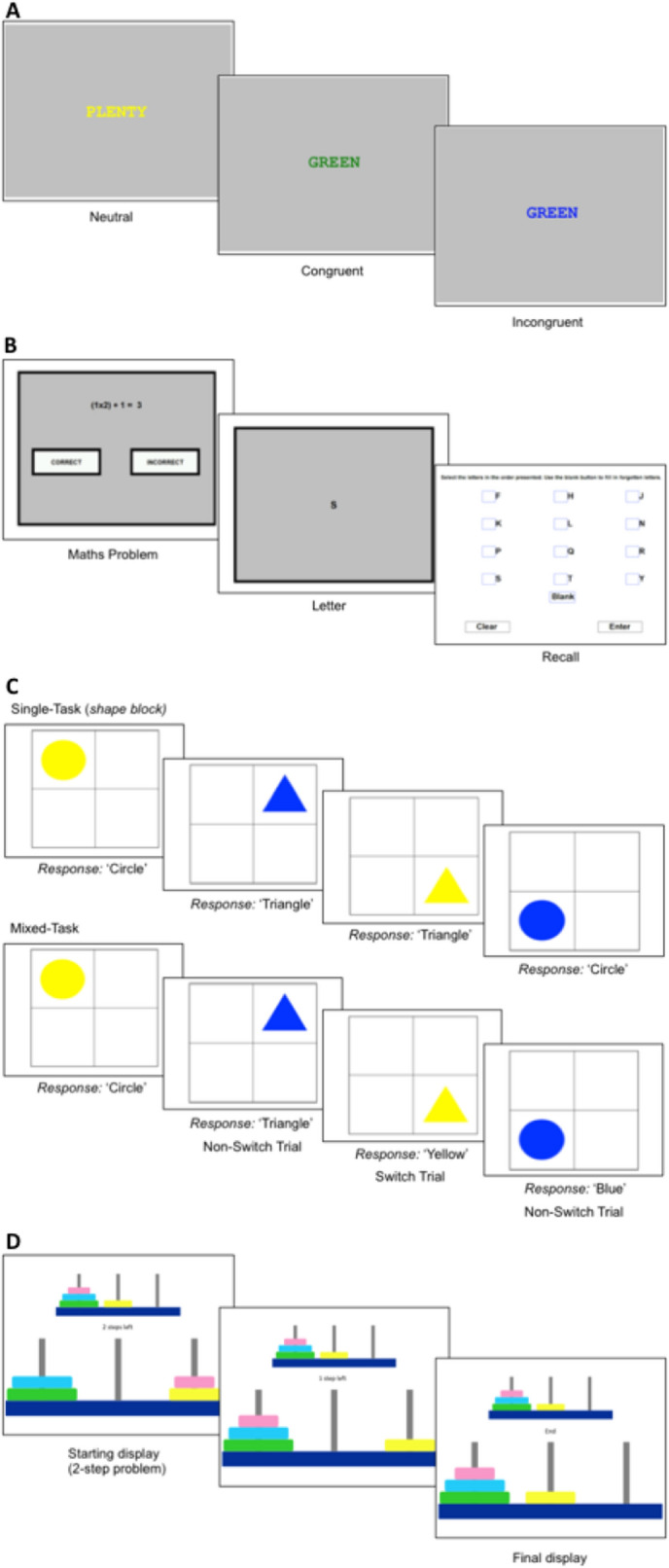
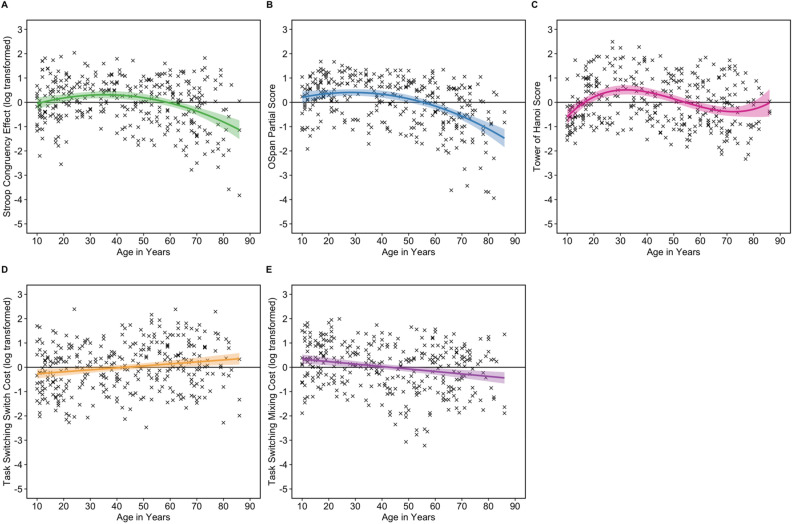
Executive functions demonstrate variable developmental and aging profiles, with protracted development into early adulthood and declines in older age. However, relatively few studies have specifically included middle-aged adults in investigations of age-related differences in executive functions. This study explored the age-related differences in executive function from late childhood through to old age, allowing a more informed understanding of executive functions across the lifespan. Three hundred and fifty participants aged 10 to 86 years-old completed a battery of tasks assessing the specific roles of inhibitory control, working memory, cognitive flexibility, and planning. Results highlighted continued improvement in working memory capacity across adolescence and into young adulthood, followed by declines in both working memory and inhibitory control, beginning from as early as 30–40 years old and continuing into older age. Analyses of planning abilities showed continued improvement across adolescence and into young adulthood, followed by a decline in abilities across adulthood, with a small (positive) change in older age. Interestingly, a dissociation was found for cognitive flexibility; switch costs decreased, yet mixing costs increased across the lifespan. The results provide a description of the developmental differences in inhibitory control, working memory, cognitive flexibility and planning, above any effects of IQ or SES, and highlight the importance of including middle-aged adults in studies seeking to establish a more comprehensive picture of age-related differences in executive function.
Overview
The claims and statistics of this paper haven’t been checked yet.
Free: it reads the open-access text and checks the first 5 claims that cite a source we can check. Create a free account to check every claim.
Integrity signals
Registry
Cites
Statistics
Figures
Verification
Claims the paper makes
The claims and statistics of this paper haven’t been checked yet.
Free: it reads the open-access text and checks the first 5 claims that cite a source we can check. Create a free account to check every claim.
Claims other papers make about this one
Each is checked against this paper’s own text: does it say what the citing paper says it does?
The cited source says what the claim attributes to it.
In the citing paper
“A recent study by (Ferguson et al., 2021) examined EF in a large, community-based sample aged from 10 to 86 years old, demonstrating that planning ability and WM capacity continue to develop throughout adolescence as well as in early adulthood.”
From Assessment of executive functions in school-aged children: A narrative review (2022) · cites this paper as Ferguson et al., 2021
Self-check
Percentages, sums and reported differences re-computed from the paper’s own numbers.
The self-check needs the paper’s full text.
Citations
Cites
Studies of interference in serial verbal reactions
Stroop, J. R. (1935) · Journal of Experimental Psychology · doi:10.1037/h0054651 · Cited by 18,622
Miyake, A., Friedman, N. P., Emerson, M. J., Witzki, A. H., Howerter, A., & Wager, T. D. (2000) · Cognitive Psychology · doi:10.1006/cogp.1999.0734 · Cited by 15,798
Diamond, A. (2013) · Annual Review of Psychology · doi:10.1146/annurev-psych-113011-143750 · Cited by 13,268
Dynamic mapping of human cortical development during childhood through early adulthood
Gogtay, N., Giedd, J. N., Lusk, L., Hayashi, K. M., Greenstein, D., Vaituzis, A. C., Nugent, T. F., Herman, D. H., Clasen, L. S., Toga, A. W., et al. (2004) · Proceedings of the National Academy of Sciences · doi:10.1073/pnas.0402680101 · Cited by 5,604
Wechsler Abbreviated Scale of Intelligence
Dumont, R., Willis, J. O., Veizel, K., & Zibulsky, J. (2014) · Encyclopedia of Special Education · doi:10.1002/9781118660584.ese2519 · Cited by 5,521
Wechsler Abbreviated Scale of Intelligence
Wechsler, D. (2012) · PsycTESTS Dataset · doi:10.1037/t15170-000 · Cited by 4,596
Miyake, A., & Friedman, N. P. (2012) · Current Directions in Psychological Science · doi:10.1177/0963721411429458 · Cited by 3,944
Costs of a predictible switch between simple cognitive tasks.
Rogers, R. D., & Monsell, S. (1995) · Journal of Experimental Psychology: General · doi:10.1037/0096-3445.124.2.207 · Cited by 3,170
Regional Brain Changes in Aging Healthy Adults: General Trends, Individual Differences and Modifiers
Raz, N., Lindenberger, U., Rodrigue, K. M., Kennedy, K. M., Head, D., Williamson, A., Dahle, C., Gerstorf, D., & Acker, J. D. (2005) · Cerebral Cortex · doi:10.1093/cercor/bhi044 · Cited by 2,875
Executive function in preschoolers: A review using an integrative framework.
Garon, N., Bryson, S. E., & Smith, I. M. (2008) · Psychological Bulletin · doi:10.1037/0033-2909.134.1.31 · Cited by 2,695
Research works printed but not linked: 3
- 41. Jacques S Marcovitch S Overton WF Development of executive function across the lifespan Cognition, Biology, and Methods Across the Lifespan. The Handbook of Life-Span Development 2010 Hoboken, NJ Wiley 431 466
- 46. Delis DC Kaplan E Kramer JH Delis–Kaplan Executive Function System (D-KEFS) 2001 San Antonio, TX The Psychological Corporation
- 73. Lawson GM Hook CJ Hackman DA Farah MJ Griffin JA Freund LS McCardle P Socioeconomic status and neurocognitive development: Executive function Executive Function in Preschool Children: Integrating Measurement, Neurodevelopment, and Translational Research 2016 Washington, DC American Psychological Association Press
Cited by
Items 101–200 of 774
Casagrande, C. C., Rempe, M. P., Springer, S. D., & Wilson, T. W. (2023) · Ageing Research Reviews · doi:10.1016/j.arr.2023.101950 · Cited by 14
Sadus, K., Schubert, A., Löffler, C., & Hagemann, D. (2023) · Psychophysiology · doi:10.1111/psyp.14459 · Cited by 14
Goldschmidt, A. B., Jeong, K., Yu, L., Egbert, A. H., Schmidt, R., & Hilbert, A. (2024) · Journal of Child Psychology and Psychiatry · doi:10.1111/jcpp.14031 · Cited by 14
Event perception and event memory in real-world experience
Bailey, H. R., & Smith, M. E. (2024) · Nature Reviews Psychology · doi:10.1038/s44159-024-00367-0 · Cited by 14
“There is a vast literature showing that older adults have difficulties controlling focused attention and inhibiting irrelevant information 104–106 .”
Chuikova, Z. V., Filatov, A. A., Faber, A. Y., & Arsalidou, M. (2024) · Brain Imaging and Behavior · doi:10.1007/s11682-024-00921-7 · Cited by 14
“In light of neural and cognitive changes across adulthood (Ferguson et al., 2021; Ferreira et al., 2017; Hart-shorne & Germine, 2015; Yaple et al., 2019) it is critical to map processes with age considerations.”
Su, W.-C., Mutersbaugh, J., Huang, W.-L., Bhat, A. N., & Gandjbakhche, A. (2024) · Scientific Reports · doi:10.1038/s41598-024-81652-z · Cited by 14
Tabletop role-playing games and social and emotional learning in school settings
Stubbs, R., & Sorensen, N. (2025) · Social and Emotional Learning Research Practice and Policy · doi:10.1016/j.sel.2025.100090 · Cited by 14
Neural sensitivity to semantic neighbors is stable across the adult lifespan
Diaz, M. T., Zhang, H., Cosgrove, A. L., Gertel, V. H., Troutman, S. B. W., & Karimi, H. (2022) · Neuropsychologia · doi:10.1016/j.neuropsychologia.2022.108237 · Cited by 14
A Toolkit for Co-Designing towards Community-Based Active Ageing: Lessons Learned during Development
Wang, G., Kasraian, D., Valk, C. A. L., Lü, Y., Hurst, W., Jambroes, M., & van Wesemael, P. J. V. (2022) · International Journal of Environmental Research and Public Health · doi:10.3390/ijerph192315591 · Cited by 14
Pak, K., Malén, T., Santavirta, S., Shin, S., Nam, H., Mæyer, S. D., & Nummenmaa, L. (2022) · Diabetes Care · doi:10.2337/dc22-1872 · Cited by 14
Doma, K. M., Lewis, E. D., Barracato, J., Brink, L., Gratson, A. A., Pandey, N., Crowley, D. C., & Evans, M. (2023) · Neurology and Therapy · doi:10.1007/s40120-023-00454-z · Cited by 14
“In addition, working memory is a subdomain of executive function, as defined in the Diagnostic and Statistical Manual of Mental Disorders-5 [43], which has an important role in everyday life including future planning, problem-solving, and focus attention [42].”
BackgroundMethodMore than “just a test”—Task-switching paradigms offer an early warning system for cognitive decline
Karayanidis, F., & McKewen, M. (2021) · The Psychology of learning and motivation/The psychology of learning and motivation · doi:10.1016/bs.plm.2021.02.006 · Cited by 14
Exploring behavior change techniques for reablement: A scoping review
Azim, F. T., Burton, E., Ariza‐Vega, P., Asadian, M., Bellwood, P., Burns, J., Clemson, L. M., Grover, S., Hoppmann, C. A., Langford, D., et al. (2022) · Brazilian Journal of Physical Therapy · doi:10.1016/j.bjpt.2022.100401 · Cited by 14
Hasan, F., Hart, C. M., Graham, S. A., & Kam, J. W. Y. (2023) · Journal of Experimental Child Psychology · doi:10.1016/j.jecp.2023.105832 · Cited by 13
Johnson, A. D., Partika, A. C., Martin, A., Castle, S. L., Phillips, D. A., & the Tulsa SEED Study Team (2024) · Applied Developmental Science · doi:10.1080/10888691.2024.2345365 · Cited by 13
“For this reason, early childhood has been referred to as a “sensitive period” for the development of EF, although the underlying brain regions continue developing through late adolescence (Best & Miller, 2010; Blair, 2016; Ferguson et al., 2021).”
The effects of a short exercise bout on executive functions in healthy older adults
Martini, M., Enoch, J., & Kramer, A. F. (2024) · Scientific Reports · doi:10.1038/s41598-024-79685-5 · Cited by 13
The Training of Rhythm Skills and Executive Function: A Systematic Review
Ahokas, J. R., Saarikallio, S. H., Welch, G. F., Goswami, U., & Parviainen, T. M. (2025) · Music & Science · doi:10.1177/20592043241305922 · Cited by 13
“In older adult populations, these functions begin to slowly decline after the age of 60 (Ferguson et al., 2021).”
Cognitive and Cerebral Aging Research in Autism: A Systematic Review on an Emerging Topic
Besse, M., Morel‐Kohlmeyer, S., Houy‐Durand, E., Prévost, P., Tuller, L., Bouazzaoui, B., Taconnat, L., Capdeville, J., Angel, L., & Gomot, M. (2025) · Autism Research · doi:10.1002/aur.70031 · Cited by 13
“For clarity's sake, the different studies will be divided according to the main EF components sensitive to age effects (e.g., Ferguson et al. 2021; Fisk and Sharp 2004).”
Matrisciano, C., Minino, R., Mariani, A. M., & D’Anna, C. (2025) · Brain Sciences · doi:10.3390/brainsci15070703 · Cited by 13
“Many authors in their studies have focused on executive functions in both adolescents and older adults [8], as these functions develop progressively through early adulthood and subsequently decline in older age due to structural and functional changes in the prefrontal cortex [1,9].”
Salem, A. A. G. G., Ferreira, P. C. D. S., Felizardo, D. D. F., Holz, M. R., & Fonseca, R. P. (2022) · Applied Neuropsychology Child · doi:10.1080/21622965.2022.2026222 · Cited by 13
“Ferguson et al. (2021) indicate that at the end of adolescence, the manipulation of mental information from working memory is still in development.”
BackgroundHsieh, S., & Chen, E.-H. (2023) · Frontiers in Psychology · doi:10.3389/fpsyg.2023.1108725 · Cited by 13
Can Interacting with Animals Improve Executive Functions? A Systematic Review
Tepper, D. L., Shnookal, J., Howell, T. J., & Bennett, P. C. (2023) · Animals · doi:10.3390/ani13132080 · Cited by 13
“Whilst EFs remain relatively stable throughout adulthood, studies have reported a mild age-related decline in older adults [11,12].”
BackgroundRelationship between lifestyle proxies of cognitive reserve and cortical regions in older adults
Šneidere, K., Zdanovskis, N., Mondini, S., & Stepens, A. (2024) · Frontiers in Psychology · doi:10.3389/fpsyg.2023.1308434 · Cited by 13
The influence of relative pubertal maturity on executive function development in adolescent girls
Gerván, P., Oláh, G., Utczás, K., Tróznai, Z., Berencsi, A., Gombos, F., & Kovács, I. (2024) · Scientific Reports · doi:10.1038/s41598-024-71768-7 · Cited by 13
Validity and reliability of the executive function scale in Cuban university student
Díaz‐Guerra, D. D., Hernández-Lugo, M. D. L. C., Ramos-Galarza, C., & Broche‐Pérez, Y. (2025) · Frontiers in Psychology · doi:10.3389/fpsyg.2025.1484883 · Cited by 13
“…deficits during this critical developmental phase can lead to long-term difficulties in adulthood (Miller et al., 2012), as poor executive functioning in adolescence has been linked to higher rates of academic underachievement, mental health issues, and behavioral problems (Ferguson et al., 2021).”
Predovan, D., Berryman, N., Lussier, M., Comte, F., Vu, T. T. M., Villalpando, J. M., & Bherer, L. (2021) · Frontiers in Psychology · doi:10.3389/fpsyg.2021.742184 · Cited by 14
“It has been reported that global switching is more sensitive to agerelated decline compared to local switching (Verhaeghen and Cerella, 2002; Wasylyshyn et al., 2011; Ferguson et al., 2021).”
BackgroundΚαρούσου, Α., Economacou, D., & Makris, Ν. (2023) · Journal of Intelligence · doi:10.3390/jintelligence11110209 · Cited by 12
“…the causes of individual differences in its development, or for detecting the developmental causes of verbal fluency deficits; it is also crucial for grasping the full nature of these processes and detecting the roots and causes of individual differences in verbal fluency performance, even in adults.”
BackgroundA Longitudinal Study of Adolescent‐to‐Young Adult Executive Function Development in Seven Countries
Folker, A. E., Bertrand, C. M., Hong, Y., Steinberg, L. D., Duell, N., Chang, L., Giunta, L. D., Dodge, K. A., Gurdal, S., Junla, D., et al. (2025) · Developmental Science · doi:10.1111/desc.70040 · Cited by 12
The lifespan trajectories of brain activities related to conflict-driven cognitive control
Li, Z., Petersen, I. T., Wang, L., Raduà, J., Yang, G., & Liu, X. (2025) · Science Bulletin · doi:10.1016/j.scib.2025.08.038 · Cited by 12
“Similar results have been observed in other conflict tasks, such as color-81 word Stroop (requiring participants to name the ink color of a word that is incongruent with the word’s semantic meaning ) [11].”
Change in physical and mental health due to aging: future perspective
Baig, S. (2023) · Futurity Medicine. · doi:10.57125/fem.2023.03.30.02 · Cited by 12
Hansen, B. H., Andresen, H. N., Gjesvik, J., Thorsby, P. M., Nærland, T., & Knudsen, S. (2023) · Sleep Medicine · doi:10.1016/j.sleep.2023.06.021 · Cited by 12
Kouklari, E.-C., Tagkouli, E., Tsermentseli, S. K., Ntre, V., Pehlivanidis, A., & Papanikolaou, Κ. (2023) · Journal of Pediatric Neuropsychology · doi:10.1007/s40817-023-00148-2 · Cited by 12
James, C. E., Stucker, C. L., Tschopp, C., Fernandes, A., Revol, A., Mili, I., Kliegel, M., Frisoni, G. B., Guevara, A. B., & Marié, D. (2023) · BMC Geriatrics · doi:10.1186/s12877-022-03678-0 · Cited by 12
“Executive functions are one of the cognitive domains most affected by aging [5, 6], and especially so in MCI patients [7–12].”
BackgroundOlegário, R. L., Fernandes, S. R., & de Moraes, R. (2023) · Psychology and Health · doi:10.1080/08870446.2023.2267610 · Cited by 12
“…literature indicates that healthy older adults showed worse performance than healthy younger adults on a variety of cognitive tasks that assessed: processing speed, inhibition, and visual-spatial ability (Ferguson et al., 2021; Kujawski et al., 2021; Langeard et al., 2021; Li et al., 2021).”
Campidelli, L., Domanti, U., Fusi, G., Kenett, Y. N., & Agnoli, S. (2025) · Cognition · doi:10.1016/j.cognition.2025.106318 · Cited by 11
Systematic Review and Meta-Analysis of Executive Function Following Remission From Major Depression
Semkovska, M., Nikolic, J., Dølven, S., & Roth, H. N. (2025) · Biological Psychiatry Cognitive Neuroscience and Neuroimaging · doi:10.1016/j.bpsc.2025.09.006 · Cited by 11
Link between fluid/crystallized intelligence and global/local visual abilities across adulthood
Doucet, G. E., Hamlin, N., Kruse, J. A., Taylor, B. K., & Poirel, N. (2022) · Consciousness and Cognition · doi:10.1016/j.concog.2022.103429 · Cited by 11
Veerapandian, K. D., Tan, G. X. D., Majeed, N. M., & Hartanto, A. (2023) · Brain Sciences · doi:10.3390/brainsci13020206 · Cited by 11
“Both executive functions [90] and BPD symptomatology [99] have been found to fluctuate over time as an individual ages, so future studies could thus utilise longitudinal and experimental methods to further examine the directionality and stability of the relationship between executive functions and BPD symptomatology.”
BackgroundThe relationship between cognitive and affective control and adolescent mental health
Minihan, S., Kumle, L., Maston, K., Bal, D., Werner‐Seidler, A., Christensen, H. M., & Schweizer, S. (2023) · JCPP Advances · doi:10.1002/jcv2.12204 · Cited by 11
“Cognitive control develops throughout adolescence (Ferguson et al., 2021) and is driven by the experience ‐ dependent changes that occur during this critical phase in underlying brain regions, in particular, the prefrontal cortex (Luna et al., 2010).”
BackgroundWáng, Q., Tang, Y., Yu, J., Huang, L., Wang, X., & Shi, B. (2024) · Thinking Skills and Creativity · doi:10.1016/j.tsc.2024.101682 · Cited by 11
Frick, A., Fay, S., Bouazzaoui, B., Sauzeon, H., Angel, L., Vanneste, S., & Taconnat, L. (2023) · Psychology and Aging · doi:10.1037/pag0000752 · Cited by 10
The association between childhood maltreatment and internet addiction: A three-level meta-analysis
Xianxin, M., Chen, Y., Delin, Y., Shuling, G., & Fu, X. (2024) · Advances in Psychological Science · doi:10.3724/sp.j.1042.2024.01087 · Cited by 10
O’Laughlin, K. D., Cheng, B. H., Volponi, J. J., Lorentz, J. D. A., Obregon, S. A., Younger, J. W., Gazzaley, A. H., Uncapher, M. R., & Anguera, J. A. (2025) · Journal of Medical Internet Research · doi:10.2196/60041 · Cited by 10
“This noninvariance of means and scaling is interesting, although perhaps not surprising, as EF has been shown to evolve across the lifespan [71].”
Age‐ and Sex‐Specific Patterns in Adult Brain Network Segregation
Sidhu, A. S., Duarte, K. T. N., Shahid, T. H., Sharkey, R. J., Lauzon, M. L., Salluzzi, M., McCreary, C. R., Protzner, A. B., Goodyear, B. G., & Frayne, R. (2025) · Human Brain Mapping · doi:10.1002/hbm.70169 · Cited by 10
Billot, A., Jhingan, N., Varkanitsa, M., Wolna, A., Shain, C., Blank, I., Ryskin, R. A., Kiran, S., & Fedorenko, E. G. (2026) · Nature Communications · doi:10.1038/s41467-026-76598-x · Cited by 10
Farhi, M., Gliksman, Y., & Shalev, L. (2024) · Education Sciences · doi:10.3390/educsci14020159 · Cited by 10
Hagan, K. E., Aimufua, I., Haynos, A. F., & Walsh, B. T. (2024) · International Journal of Eating Disorders · doi:10.1002/eat.24173 · Cited by 10
Tometich, D. B., Welniak, T. L., Gudenkauf, L. M., Maconi, M. L., Fulton, H. J., Tyson, D. M., Zambrano, K., Hasan, S., Rodriguez, Y., Bryant, C., et al. (2024) · Psycho-Oncology · doi:10.1002/pon.6309 · Cited by 10
Temperament and Child Development in Context
Lengua, L. J., Gartstein, M. A., Zhou, Q., Colder, C. R., & Jacques, D. T. (2024) · Cambridge University Press eBooks · doi:10.1017/9781009521840 · Cited by 10
Abra, Y., Mirams, L., & Fairhurst, M. T. (2024) · Heliyon · doi:10.1016/j.heliyon.2024.e36487 · Cited by 9
“…of the effect of age on DD, such as mental health and loneliness, future studies should disentangle whether indeed age reflects the real threat from COVID-19, especially given that our proxy for interpersonal boundaries was response time, which in older individuals has been shown to be slower [63].”
BackgroundfNIRS Classification of Adults With ADHD Enhanced by Feature Selection
Hong, M., Dong, S.-Y., McIntyre, R. S., Chiang, S., & Ho, R. (2024) · IEEE Transactions on Neural Systems and Rehabilitation Engineering · doi:10.1109/tnsre.2024.3522121 · Cited by 9
Functional contrast across the gray-white matter boundary
Li, M., Xu, L., Choi, S., Qin, Y., Gao, F., Schilling, K. G., Gao, Y., Zu, Z., Anderson, A. W., Ding, Z., et al. (2025) · Nature Communications · doi:10.1038/s41467-025-61251-w · Cited by 9
Huang, L., Zeng, M., Jiao, T., Yang, F., & Zhang, Y. (2025) · Journal of Youth and Adolescence · doi:10.1007/s10964-025-02268-8 · Cited by 9
“From a lifespan psychological development perspective, executive function improves with age (Ferguson et al., 2021 ), enhancing emotion regulation skills (Martin & Och - sner, 2016).”
Chiranakorn‐Costa, S., George, R. J. S., McDonald, J. S., Wang, X., & Alty, J. (2022) · Geriatrics · doi:10.3390/geriatrics7040072 · Cited by 9
Macoir, J., & Hudon, C. (2023) · Archives of Clinical Neuropsychology · doi:10.1093/arclin/acad065 · Cited by 9
Liang, M., Yao, L., Wei, W., SCHWEIZER, K. W., Ren, X., & Wang, T. (2024) · Thinking Skills and Creativity · doi:10.1016/j.tsc.2024.101610 · Cited by 9
The validity of studying healthy aging with cognitive tests measuring different constructs
Hatahet, O., & Seghier, M. L. (2024) · Scientific Reports · doi:10.1038/s41598-024-74488-0 · Cited by 9
“This shift in task loadings could be explained by the fact that memory impairment may manifest at a later age or at a different rate compared to executive functions, consequently, these two cognitive constructs may become more distinct with advancing age 80 .”
BackgroundGestational organophosphate esters (OPEs) and executive function in adolescence: The HOME Study
Vuong, A. M., Percy, Z., Yang, W., Godbole, A. M., Ospina, M., Calafat, A. M., Cecil, K. M., Lanphear, B. P., Braun, J. M., Yolton, K. A., et al. (2024) · Environmental Research · doi:10.1016/j.envres.2024.120239 · Cited by 9
O’Connor, E. J., Murphy, A., Kohler, M. J., Chan, R. W., & Immink, M. A. (2022) · Frontiers in Sports and Active Living · doi:10.3389/fspor.2022.907654 · Cited by 9
“It is thought that cognitive control processes do not fully develop until early adulthood (Ferguson et al., 2021) meaning that younger athletes may not similarly benefit from singlesession meditation as their adult counterparts.”
BackgroundExecutive Functioning as a Predictor of Adverse Driving Outcomes in Teen Drivers With ADHD
Lynch, J. D., Tamm, L., Garner, A. A., Avion, A. A., Fisher, D. L., Kiefer, A. W., Peugh, J., Simon, J. O., & Epstein, J. N. (2023) · Journal of Attention Disorders · doi:10.1177/10870547231197210 · Cited by 9
“However, EF development is a protracted process that proceeds from early childhood into young adulthood, undergoing age-related functional differentiation and improvements in performance (Diamond, 2013; Ferguson et al., 2021).”
BackgroundReiff, J. S., Cagle, J. G., Zhang, T., Roth, D. L., & Wolff, J. L. (2022) · Journal of the American Geriatrics Society · doi:10.1111/jgs.18034 · Cited by 9
“Accordingly, comprehending the originally worded questions in this context requires abstraction and cognitive flexibility—skills which decline with age, especially in the presence of cognitive decline.(24) Family respondents may have difficulty judging response options and confidently selecting an answer if they are n…”
BackgroundChanbenjapipu, P., Chuangchai, W., Thepmalee, C., & Wonghempoom, A. (2022) · Journal of Architectural/Planning Research and Studies (JARS) · doi:10.56261/jars.v20i1.249299 · Cited by 9
“, planning and reasoning including mental flexibility (Ferguson et al., 2021).”
BackgroundScherer, R., Siddiq, F., Howard, S. K., & Tondeur, J. (2022) · PsyArXiv (OSF Preprints) · doi:10.31234/osf.io/zm9eh · Cited by 9
Fogel, Y., Gilboa, Y., & Meyer, S. (2024) · American Journal of Occupational Therapy · doi:10.5014/ajot.2024.050686 · Cited by 8
“These skills are essential in adults ’ everyday lives, highlighting the need to identify early strategies to evaluate and rehabilitate these disorders (Borgnis et al., 2022; Ferguson et al., 2021).”
Social support, online social support, and problematic social media use: A three-level meta-analysis
Huang, L., Zeng, M., & Wen, X. (2025) · Addictive Behaviors · doi:10.1016/j.addbeh.2025.108579 · Cited by 8
Acceptance as a cognitive emotion regulation strategy across the lifespan
Wolfe, H. E., & Isaacowitz, D. M. (2022) · The Psychology of learning and motivation/The psychology of learning and motivation · doi:10.1016/bs.plm.2022.07.002 · Cited by 10
Nouchi, R., Butler, L. T., Lamport, D. J., Nouchi, H., & Kawashima, R. (2023) · Nutrients · doi:10.3390/nu15020431 · Cited by 8
Resting-state cortical hubs in youth organize into four categories
Demeter, D. V., Gordon, E. M., Nugiel, T., Garza, A., Larguinho, T. L., & Church, J. A. (2023) · Cell Reports · doi:10.1016/j.celrep.2023.112521 · Cited by 8
Dinu, L. M., Singh, S. N., Baker, N. S., Georgescu, A. L., Overton, P. G., & Dommett, E. J. (2023) · PLoS ONE · doi:10.1371/journal.pone.0294911 · Cited by 8
“Given the developmental trajectories of cognitive functions relevant to ADHD do not differ markedly in this period [78] this age difference is unlikely to be clinically meaningful.”
Lanfranco, R. C., Sousa, F. D. S., Wessel, P. M., Rivera-Rei, Á. A., Bekinschtein, T. A., Lucero, B. A., Canales‐Johnson, A., & Huepe, D. (2024) · Cortex · doi:10.1016/j.cortex.2024.03.004 · Cited by 8
Perceived Negative Effects of Tic Management Strategies in Adults With Tic Disorders
Barber, K. E., Pitts, B. X., Stiede, J. T., Espil, F. M., Woods, D. W., Specht, M. W., Bennett, S. M., Walkup, J. T., Ricketts, E. J., Mcguire, J. F., et al. (2024) · Behavior Modification · doi:10.1177/01454455241236446 · Cited by 8
“Participants who felt more present while managing tics were also older on average, possibly reflecting age-related differences in cognitive and executive functioning, which peak between the ages of 20 to 30 (Ferguson et al., 2021; Zelazo et al., 2014).”
BackgroundInhibitory systems in brain evolution: pathways of vulnerability in neurodevelopmental disorders
Hanson, K. L., Greiner, D. M. Z., Schumann, C. M., & Semendeferi, K. (2024) · Brain Behavior and Evolution · doi:10.1159/000540865 · Cited by 8
“Cognitive decline differentially affects executive function, and altered performance on tasks designed to measure inhibitory behavioral control and behavioral fl exibility may begin in early middle age [233].”
Adelirad, F., Javadivala, Z., Dianat, I., Tabieh, A. A., & Chattu, V. K. (2024) · BioSocial Health Journal. · doi:10.34172/bshj.3 · Cited by 8
Ward, T. W., Schantell, M. D., Dietz, S. M., Ende, G. C., Rice, D. L., Coutant, A. T., Arif, Y., Wang, Y., Calhoun, V. D., Stephen, J. M., et al. (2024) · Communications Biology · doi:10.1038/s42003-024-06924-w · Cited by 8
Pollé, S., Sankalaite, S., Huizinga, M., McClelland, M. M., Spilt, J. L., & Baeyens, D. (2025) · Frontiers in Education · doi:10.3389/feduc.2025.1528805 · Cited by 9
Wilford, R., Chen, H., Wharton-Shukster, E., Finn, A. S., & Duncan, K. D. (2025) · Journal of Cognitive Neuroscience · doi:10.1162/jocn_a_02345 · Cited by 8
Contextualizing the Neural Vulnerabilities Model of Obesity
Nelson, T. D., & Stice, E. M. (2023) · Nutrients · doi:10.3390/nu15132988 · Cited by 8
“Certain regulation abilities, such as executive control, follow an extremely protracted developmental course, with critical growth periods in preschool and adolescence, and maturation continuing into the 20s, before declining later in adulthood [43,69].”
BackgroundBonnier, R., Beames, J. R., Claes, L., Kirtley, O. J., de Thurah, L., Weermeijer, J. D. M., Uyttebroek, L., Luijsmans, M., Myin‐Germeys, I., & Kiekens, G. (2025) · International Journal of Clinical and Health Psychology · doi:10.1016/j.ijchp.2025.100618 · Cited by 7
“This may reflect greater clinical severity of adolescents who self-injure and seek treatment (Kiekens et al., 2024), as well as ongoing development of self-regulatory and executive functioning skills, which can heighten the perceived burden of EMA prompts (Ferguson et al., 2021).”
Reid, C. A., Dhamankar, M., Marsh, S., Peterson, E. R., Erb, C. D., & Waldie, K. E. (2026) · Developmental Review · doi:10.1016/j.dr.2026.101266 · Cited by 7
Effects of healthy ageing and bilingualism on attention networks
Markiewicz, R., Rahman, F., Fernandes, E. G., Limachya, R., Wetterlin, A., Wheeldon, L. R., & Segaert, K. (2024) · Bilingualism Language and Cognition · doi:10.1017/s1366728924000154 · Cited by 7
The Relationship Between Executive Functions, Self-Reflection, and Insight Across Adulthood
İlkmen, Y. S., & Buyukiscan, E. S. (2024) · Experimental Aging Research · doi:10.1080/0361073x.2024.2331404 · Cited by 7
“Cross-sectional studies examining developmental profiles of executive functions across age groups reveal that these abilities emerge in early childhood, develop into adolescence to early adulthood, and start to decline with aging (Ferguson, Brunsdon, & Bradford, 2021).”
InfluentialKakihara, M., Wang, X., Iwasaki, S., Soshi, T., Yamashita, M., & Sekiyama, K. (2024) · Psychology of Music · doi:10.1177/03057356241248086 · Cited by 7
“Although EFs may decline over time (Dennis & Cabeza, 2011; Ferguson et al., 2021; Park et al., 2002), recent studies indicate that older adults with a history of musical practice tend to perform better on different tests measuring EF abilities (Amer et al., 2013; Hanna-Pladdy & MacKay, 2011;…”
Wasif, F., & McAuley, T. (2024) · Journal of Happiness Studies · doi:10.1007/s10902-024-00777-0 · Cited by 7
“Typically, such refine - ment involves showing increased mastery over engaging with and executing goal-directed thoughts and actions as teens age (Ferguson et al., 2021; McAuley & White, 2011).”
McLaurin, K. A., Ott, R. K., Mactutus, C. F., & Booze, R. M. (2024) · Neuropharmacology · doi:10.1016/j.neuropharm.2024.110064 · Cited by 7
Wang, H., Gao, F., & Zhang, J. (2024) · Humanities and Social Sciences Communications · doi:10.1057/s41599-024-03479-3 · Cited by 7
“Previous studies have shown that executive function is highly related to age (Ferguson et al., 2021), and plays an important role in neurodegenerative diseases (e.g., Alzheimer ’ s disease, Kirova et al., 2015), multilingual ability (e.g., Carlson and Meltzoff, 2008; Zhang et al., 2015) and other fi…”
de Rezende, V. L., da Costa, M. D. A., Martins, C. D., Mathias, K., Gonçalves, C. L., Barichello, T., & Petronilho, F. C. (2025) · Neurochemical Research · doi:10.1007/s11064-025-04361-7 · Cited by 7
“These structural changes have been linked to a decline in executive function, including deficits in attention-switching, slower response times, and reduced inhibitory control [25].”
Moelyo, A. G., Pulungan, A. B., Sitaresmi, M. N., & Julia, M. (2025) · BMC Pediatrics · doi:10.1186/s12887-025-05829-9 · Cited by 7
“Some abilities, continue to improve into young adulthood before gradually declining later in life [19, 20].”
The effect of child-appropriate play with various types on preschoolers' executive function
Zhao, T., Luan, J., Dan, F., Chang, X., & Cong, L. (2025) · Acta Psychologica · doi:10.1016/j.actpsy.2025.106022 · Cited by 7
Grandi, F., Martínez‐Pernía, D., Parra, M. A., Olavarría, L., Huepe, D., Alegria, P., Aliaga, Á., Lillo, P., Delgado, C., Tenorio, M., et al. (2022) · Dementia & Neuropsychologia · doi:10.1590/1980-5764-dn-2021-0059 · Cited by 7
The Science of Free Will: Bridging Theory and Positive Psychology
Baumeister, R. F. (2024) · doi:10.1093/oso/9780197693520.001.0001 · Cited by 7
Liu, X., Jones, P. S., Pasternak, M. M., Masellis, M., Bouzigues, A., Russell, L. L., Foster, P. H., Ferry‐Bolder, E., Swieten, J. C. V., Jiskoot, L. C., et al. (2024) · Alzheimer s & Dementia · doi:10.1002/alz.14299 · Cited by 7
Efeitos de intervenções de mindfulness nas funções executivas de adultos: uma revisão sistemática
Lemos, I. S., de Sousa, G. M., de Lima-Araujo, G. L., Moreira, J. M., & Brys, I. (2025) · Ciencias Psicológicas · doi:10.22235/cp.v19i1.3748 · Cited by 7
Executive Performance Is Associated With Rest-Activity Rhythm in Nurses Working Rotating Shifts
Zhao, X., Tang, Q., Feng, Z., & Zhào, H. (2022) · Frontiers in Neuroscience · doi:10.3389/fnins.2022.805039 · Cited by 7
Clock monitoring is associated with age-related decline in time-based prospective memory
Schmidt, N., Haas, M., Krebs, C. R., Klöppel, S., Kliegel, M., & Peter, J. (2022) · Current Psychology · doi:10.1007/s12144-022-03005-1 · Cited by 7
“Since age is known to influence executive functions (Ferguson et al., 2021), it is an important confound for any type of relationship between these cognitive domains.”
BackgroundTapia, J. L., Puertas, F. J., & Duñabeitia, J. A. (2022) · Frontiers in Behavioral Neuroscience · doi:10.3389/fnbeh.2022.779990 · Cited by 7
“We selected this age range in an attempt to improve sample homogeneity in executive function development (see Ferguson et al., 2021), and to ensure that participants would have access to new technologies.”
BackgroundLauriola, M., Cerniglia, L., Tambelli, R., & Cimino, S. (2022) · Children · doi:10.3390/children9121915 · Cited by 7
“, working memory and planning) throughout adolescence [21].”
BackgroundDo executive functions buffer against COVID-19 stress? A latent variable approach
Ng, T. L. Y., Majeed, N. M., Lua, V. Y. Q., & Hartanto, A. (2023) · Current Psychology · doi:10.1007/s12144-023-04652-8 · Cited by 7
“Evidence supporting this lies in the fact that individual levels of executive functions have been shown to be relatively stable during major changes in the lifespan developmental profile, including late adolescence, early adulthood, and old age (Ferguson et al., 2021; Friedman et al., 2016).”
Executive Function in Children and Adolescents: A Concept in Need of Clarity
England-Mason, G., & Dewey, D. (2023) · Autism and child psychopathology series · doi:10.1007/978-3-031-24926-6_13 · Cited by 7
Graziano, P. A., Sibley, M. H., Coxe, S. J., Bickman, L., Martin, P., Scheres, A., & Hernandez, M. L. (2023) · Behavior Therapy · doi:10.1016/j.beth.2023.08.001 · Cited by 7
Kardan, O., Sereeyothin, C., Schertz, K. E., Angstadt, M., Weigard, A. S., Berman, M. G., Heitzeg, M. M., & Rosenberg, M. D. (2026) · Developmental Cognitive Neuroscience · doi:10.1016/j.dcn.2026.101719 · Cited by 7
Metadata
- Authors
- Ferguson, H. J., Brunsdon, V. E. A., & Bradford, E. E. F.
- Affiliations
- University of Kent (GB)
- University of Dundee (GB)
- Corresponding author
- Ferguson, Heather J.
- Venue
- Scientific Reports
- Published
- 2021-01-14
- Volume
- 11
- Issue
- 1
- Pages
- 1382-1382
- ISSN
- 2045-2322 (ISSN-L)
- PMC
- PMC7809200
- OpenAlex
- W3116908532
- Cited by
- 583
- References
- 116
- Citations by year
- 2026: 125 · 2025: 137 · 2024: 145 · 2023: 96 · 2022: 66 · 2021: 14
- FWCI
- 42.22
- Type
- journal article
- Language
- en
- Open access
- gold
- doi.org
- Licence
- cc-by
- creativecommons.org/licenses/by/4.0 (tdm)
- creativecommons.org/licenses/by/4.0 (vor)
- Locations
- Scientific Reports (publishedVersion, cc-by)
- PubMed Central (publishedVersion, cc-by)
- PubMed (publishedVersion)
- Kent Academic Repository (University of Kent) (acceptedVersion)
- St Andrews Research Repository (St Andrews Research Repository) (acceptedVersion, cc-by)
- Discovery Research Portal (University of Dundee) (submittedVersion, cc-by)
- DOAJ (DOAJ: Directory of Open Access Journals) (submittedVersion, cc-by-sa)
- OSF Preprints (OSF Preprints) (submittedVersion)
- Funders
- European Research Council (636458)
- Topics
- Life Sciences › Neuroscience › Cognitive Neuroscience › Neural and Behavioral Psychology Studies
- Social Sciences › Psychology › Experimental and Cognitive Psychology › Cognitive Abilities and Testing
- Social Sciences › Psychology › Experimental and Cognitive Psychology › Cognitive Functions and Memory
- Keywords
- executive function, lifespan development, aging, inhibitory control, working memory, cognitive flexibility, planning, switch costs, mixing costs, middle-aged adults, adolescence, cognitive decline
- MeSH terms
- Adolescent, Adult, Aged, Aged, 80 and over, Aging, Child, Female, Humans, Male, Memory, Short-Term, Middle Aged, Executive Function
About these checks
Registry, retraction, Cites and statistics results are computed, not judged, with one exception: a printed reference that no index lists is read once by a model before it counts as a citation error. Claims are extracted by a model and kept only when their quote appears verbatim in the text; each cited source is then checked, with a model’s help, for whether it says what the claim relies on. Those verdicts can be wrong — read the claim’s quote and the cited source before relying on one.
Statistics and arithmetic are recomputed, not judged.
Confidence bands are shown only for fields calibrated on our annotated test set. None is calibrated yet, so no band is shown.
What counts as a claim ›How we measure confidence ›How we check this ›
Are you an author, or do you see a problem with this page? Request a review
Data sources
Bibliographic data: Semantic Scholar, OpenAlex, Crossref.
Contains information from the Semantic Scholar Academic Graph Datasets, made available under the ODC Attribution License (ODC-BY 1.0).
Semantic Scholar’s data is described in: Kinney, R., et al. (2023). The Semantic Scholar Open Data Platform. arXiv:2301.10140.
