

The developmental trajectories of executive function from adolescence to old age.
Open accessThe DOI matches its Crossref record; 116 of the 116 references it cites were found in a registry or an index.
Abstract
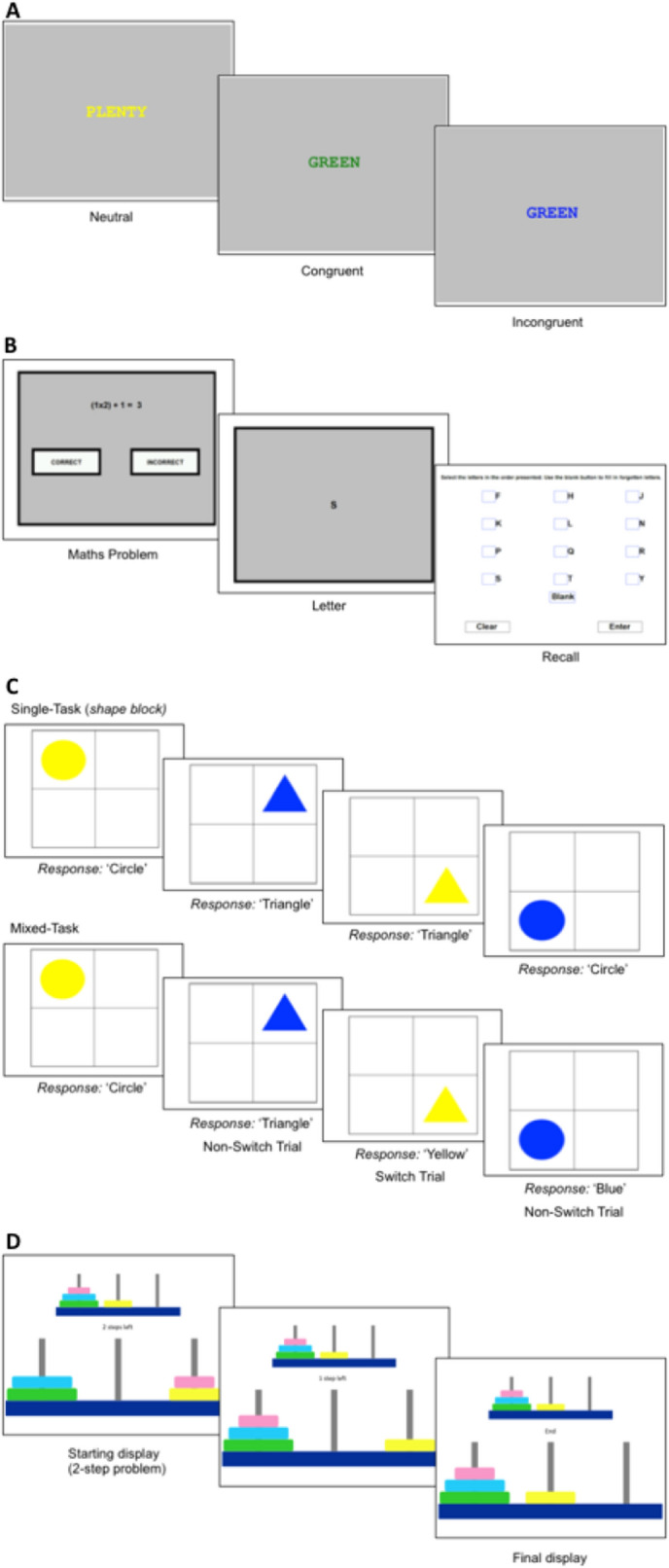
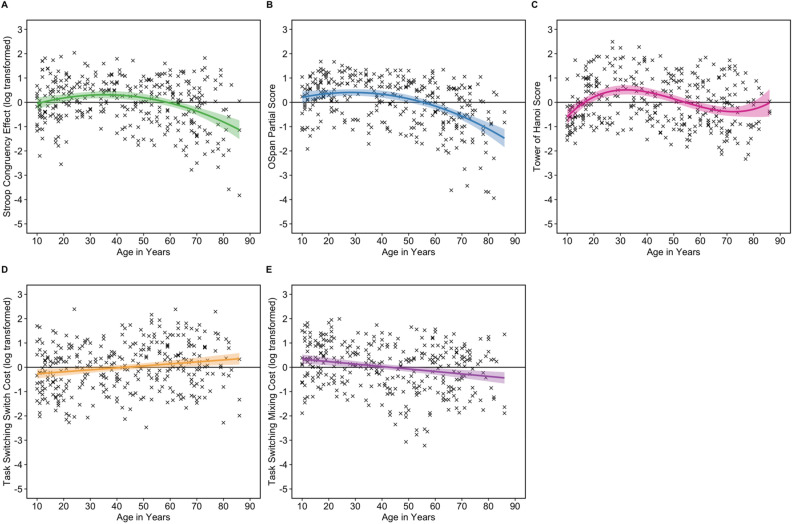
Executive functions demonstrate variable developmental and aging profiles, with protracted development into early adulthood and declines in older age. However, relatively few studies have specifically included middle-aged adults in investigations of age-related differences in executive functions. This study explored the age-related differences in executive function from late childhood through to old age, allowing a more informed understanding of executive functions across the lifespan. Three hundred and fifty participants aged 10 to 86 years-old completed a battery of tasks assessing the specific roles of inhibitory control, working memory, cognitive flexibility, and planning. Results highlighted continued improvement in working memory capacity across adolescence and into young adulthood, followed by declines in both working memory and inhibitory control, beginning from as early as 30–40 years old and continuing into older age. Analyses of planning abilities showed continued improvement across adolescence and into young adulthood, followed by a decline in abilities across adulthood, with a small (positive) change in older age. Interestingly, a dissociation was found for cognitive flexibility; switch costs decreased, yet mixing costs increased across the lifespan. The results provide a description of the developmental differences in inhibitory control, working memory, cognitive flexibility and planning, above any effects of IQ or SES, and highlight the importance of including middle-aged adults in studies seeking to establish a more comprehensive picture of age-related differences in executive function.
Overview
The claims and statistics of this paper haven’t been checked yet.
Free: it reads the open-access text and checks the first 5 claims that cite a source we can check. Create a free account to check every claim.
Integrity signals
Registry
Cites
Statistics
Figures
Verification
Claims the paper makes
The claims and statistics of this paper haven’t been checked yet.
Free: it reads the open-access text and checks the first 5 claims that cite a source we can check. Create a free account to check every claim.
Claims other papers make about this one
Each is checked against this paper’s own text: does it say what the citing paper says it does?
The cited source says what the claim attributes to it.
In the citing paper
“A recent study by (Ferguson et al., 2021) examined EF in a large, community-based sample aged from 10 to 86 years old, demonstrating that planning ability and WM capacity continue to develop throughout adolescence as well as in early adulthood.”
From Assessment of executive functions in school-aged children: A narrative review (2022) · cites this paper as Ferguson et al., 2021
Self-check
Percentages, sums and reported differences re-computed from the paper’s own numbers.
The self-check needs the paper’s full text.
Citations
Cites
Studies of interference in serial verbal reactions
Stroop, J. R. (1935) · Journal of Experimental Psychology · doi:10.1037/h0054651 · Cited by 18,622
Miyake, A., Friedman, N. P., Emerson, M. J., Witzki, A. H., Howerter, A., & Wager, T. D. (2000) · Cognitive Psychology · doi:10.1006/cogp.1999.0734 · Cited by 15,798
Diamond, A. (2013) · Annual Review of Psychology · doi:10.1146/annurev-psych-113011-143750 · Cited by 13,268
Dynamic mapping of human cortical development during childhood through early adulthood
Gogtay, N., Giedd, J. N., Lusk, L., Hayashi, K. M., Greenstein, D., Vaituzis, A. C., Nugent, T. F., Herman, D. H., Clasen, L. S., Toga, A. W., et al. (2004) · Proceedings of the National Academy of Sciences · doi:10.1073/pnas.0402680101 · Cited by 5,604
Wechsler Abbreviated Scale of Intelligence
Dumont, R., Willis, J. O., Veizel, K., & Zibulsky, J. (2014) · Encyclopedia of Special Education · doi:10.1002/9781118660584.ese2519 · Cited by 5,521
Wechsler Abbreviated Scale of Intelligence
Wechsler, D. (2012) · PsycTESTS Dataset · doi:10.1037/t15170-000 · Cited by 4,596
Miyake, A., & Friedman, N. P. (2012) · Current Directions in Psychological Science · doi:10.1177/0963721411429458 · Cited by 3,944
Costs of a predictible switch between simple cognitive tasks.
Rogers, R. D., & Monsell, S. (1995) · Journal of Experimental Psychology: General · doi:10.1037/0096-3445.124.2.207 · Cited by 3,170
Regional Brain Changes in Aging Healthy Adults: General Trends, Individual Differences and Modifiers
Raz, N., Lindenberger, U., Rodrigue, K. M., Kennedy, K. M., Head, D., Williamson, A., Dahle, C., Gerstorf, D., & Acker, J. D. (2005) · Cerebral Cortex · doi:10.1093/cercor/bhi044 · Cited by 2,875
Executive function in preschoolers: A review using an integrative framework.
Garon, N., Bryson, S. E., & Smith, I. M. (2008) · Psychological Bulletin · doi:10.1037/0033-2909.134.1.31 · Cited by 2,695
Research works printed but not linked: 3
- 41. Jacques S Marcovitch S Overton WF Development of executive function across the lifespan Cognition, Biology, and Methods Across the Lifespan. The Handbook of Life-Span Development 2010 Hoboken, NJ Wiley 431 466
- 46. Delis DC Kaplan E Kramer JH Delis–Kaplan Executive Function System (D-KEFS) 2001 San Antonio, TX The Psychological Corporation
- 73. Lawson GM Hook CJ Hackman DA Farah MJ Griffin JA Freund LS McCardle P Socioeconomic status and neurocognitive development: Executive function Executive Function in Preschool Children: Integrating Measurement, Neurodevelopment, and Translational Research 2016 Washington, DC American Psychological Association Press
Cited by
Items 301–400 of 774
Executive Functions Interplay: A Multidimensional Model Including Different Inhibitory Processes
López-Ramón, M. F., Richard’s, M. M., Musso, M., Aydmune, Y. S., Bario, D. A., & Introzzi, I. M. (2026) · Trends in Psychology · doi:10.1007/s43076-025-00511-6 · Cited by 3
How is musical expertise related to executive functions? A systematic review and meta-analysis
Aryanto, C. B., Aisyah, A. R. K., Timmers, R., Blakey, E., & von Bastian, C. C. (2026) · Psychonomic Bulletin & Review · doi:10.3758/s13423-025-02769-4 · Cited by 3
“Executive functions are essential when people make decisions, plan, and solve problems in everyday life (Ferguson et al., 2021).”
Smalle, E. H. M., Karantinou, E., & Möttönen, R. (2026) · Cognitive Science · doi:10.1111/cogs.70178 · Cited by 3
“…(e.g., Crone, 2009; Paz-Alonso, Bunge, Ghetti, & Board, 2014), with a rapid development in late childhood to mid-adolescence (10–15 years old) before they stabilize in the early adulthoods (Best & Miller, 2010; Ferguson, Brunsdon, & Bradford, 2021; Poon, 2018; Tervo-Clemmens et al., 2023).”
Zhu, L., & Yao, D. (2026) · ALPHA PSYCHIATRY · doi:10.31083/ap40062 · Cited by 3
“Notably, the average rate of increase is most rapid every six months before reaching age 8, whereas post-age 8, the rate of growth significantly diminishes [12].”
Elsayed, M., Belisario, K. L., Murphy, J. G., & MacKillop, J. M. (2026) · Journal of Psychiatry and Neuroscience · doi:10.1139/jpn-25-0116 · Cited by 3
Executive Functions and Emotional Lability in Adults with ADHD
Amador, J. A., & Krieger, V. (2023) · Autism and child psychopathology series · doi:10.1007/978-3-031-41709-2_5 · Cited by 3
Baroi, B., & Himi, S. A. (2024) · Applied Neuropsychology Child · doi:10.1080/21622965.2024.2324983 · Cited by 3
“However, the distinct components of EF exhibit developmental trajectories across the life-span (Ferguson et al., 2021).”
Barber, K. E., Woods, D. W., Deckersbach, T., Bauer, C. C., Compton, S. N., Twohig, M. P., Ricketts, E. J., Robinson, J. S., Saunders, S. M., & Franklin, M. E. (2024) · Behaviour Research and Therapy · doi:10.1016/j.brat.2024.104556 · Cited by 3
Dopamine D1 Receptor Agonists Rescue Age-Related Decline in Temporal Order Memory
Bransom, L., Bassett, A. P., Zhou, M., Cimino, J. X., Mailman, R. B., & Yang, Y. (2024) · Neuroscience · doi:10.1016/j.neuroscience.2024.05.033 · Cited by 3
The role of emotional regulation, executive functioning, and aggression in hoarding behaviours
Bates, E. J., Neave, N., Dodd, A., & Hamilton, C. (2024) · Journal of Obsessive-Compulsive and Related Disorders · doi:10.1016/j.jocrd.2024.100894 · Cited by 3
Otstavnov, N. S., Voevodina, E., Mening, S. M., Urazaeva, R., & Fedele, T. (2024) · Психология Журнал Высшей школы экономики · doi:10.17323/1813-8918-2024-3-456-471 · Cited by 3
Richards, L., Carter, N., Hanley, C., Barnes, C. M., Summers, H. D., Porter, A. M., & Tales, A. (2024) · Brain Sciences · doi:10.3390/brainsci14111048 · Cited by 3
Payne, A. D., Smith, Z. R., & Holmbeck, G. N. (2024) · Child Neuropsychology · doi:10.1080/09297049.2024.2428673 · Cited by 4
“…on the emergence of EFs during the preschool years rather than considering long-term trajectories of these functions (Best & Miller, 2010; Best et al., 2009; Garon et al., 2008) and has been conducted using performance-based measures (Best & Miller, 2010; Best et al., 2009; Ferguson et al., 2021).”
Grainger, S. A., Henry, J. D., Alister, M., Bourdaniotis, X. E., Mead, J. K., Bailey, T. G., Coombes, J. S., & Vear, N. K. (2023) · The Journals of Gerontology Series B · doi:10.1093/geronb/gbad101 · Cited by 3
“…cognition is distinct from executive function, these two neurocognitive domains exhibit some degree of overlap (Grainger et al., 2023a; Phillips et al., 2011; Rakoczy et al., 2012) and show similar patterns of age-related decline across the lifespan (Ferguson et al., 2021; Grainger et al., 2023a).”
BackgroundChoe, D. E., Olwert, M. R., & Golden, A. B. (2023) · Journal of Family Psychology · doi:10.1037/fam0001140 · Cited by 3
“The current study is the first to test parents’ IQ, EFs (specifically inhibitory control, the ability to control one’s attention, behavior, emotion, and thinking by suppressing prepotent responses in favor of more socially appropriate actions; Diamond, 2013), and their interaction as predictors of physical and inducti…”
BackgroundResultInfluentialThe Role of Sleep for Age-Related Differences in Neurobehavioral Performance
Tzischinsky, O., & Barel, E. (2024) · Life · doi:10.3390/life14040496 · Cited by 4
“In their review, Ferguson and colleagues [30] investigated age-related differences in executive functioning.”
BackgroundTeachers’ Experiences of Executive Functions in Grade R
Etokabeka, E. M. D. C., Masola, F., & Moen, M. C. (2023) · Journal of Educational Studies · doi:10.59915/jes.2023.22.4.8 · Cited by 3
Ferreyra, F. A., Bario, D. A., Krzemien, D., & Richard’s, M. M. (2024) · Revista de Psicología · doi:10.46553/rpsi.20.40.2024.p154-174 · Cited by 3
Task-switching and frontal cortex functioning across adulthood: An fNIRS study
Yeung, M. K.-C. (2025) · NeuroImage · doi:10.1016/j.neuroimage.2025.121160 · Cited by 3
“This finding is at odds with previous behavioral studies that have reported age-related differences in global and/or local RT switch cost across adulthood (Ferguson et al., 2021; Huff et al., 2015; Reimers and Maylor, 2005).”
InfluentialRebón-Ortiz, F., Areces, D., Saura-Carrasco, M., Flores, C. P. C., Rodríguez, C., Díaz-Orueta, U., Climent, G., & Giglioli, I. A. C. (2025) · Frontiers in Psychology · doi:10.3389/fpsyg.2025.1561802 · Cited by 3
“In early 10.3389/fpsyg.2025.1561802 Frontiers in Psychology 02 frontiersin.org childhood, executive functions are still developing, with attention, working memory, and cognitive flexibility gradually improving as the brain matures (Diamond, 2013; Ferguson et al., 2021).”
InfluentialLost in Thought or Just Lonely? Everyday Cognitive Competence in Middle Adulthood
Juras, L., Martinčević, M., & Vranić, A. (2025) · European Journal of Investigation in Health Psychology and Education · doi:10.3390/ejihpe15040058 · Cited by 3
“Evidence suggests that these changes may begin as early as midlife, with some EF processes starting to decline around 35 years of age (Ferguson et al., 2021).”
Bringing Executive Function Testing Online: Assessment Validation Study
Attarha, M., Pelegrino, A. D. F., Ouellet, L., Grant, S.-J., de Villers‐Sidani, E., & Vleet, T. V. (2025) · JMIR Formative Research · doi:10.2196/75687 · Cited by 3
“However, executive function is known to decline with age [6,7].”
Zhunussova, A., Pellicciari, M. C., Carreiras, M., & Cespón, J. (2026) · Cognitive Affective & Behavioral Neuroscience · doi:10.3758/s13415-025-01384-z · Cited by 3
“These results are highly relevant considering that executive functions substantially decline with aging (Ferguson et al., 2021; Grady, 2012; Zacks et al., 2000) as a result of physiological changes within the frontal and parietal areas (Bagarinao et al., 2022).”
Brecht, A.-K., Medawar, E., Thieleking, R., Sacher, J., Beyer, F., Villringer, A., & Witte, A. V. (2022) · Appetite · doi:10.1016/j.appet.2022.106093 · Cited by 3
Bouges, S., Fischer, B. L., Norton, D., Wyman, M. F., Lambrou, N. H., Zuelsdorff, M. L., Hulle, C. A. V., Ennis, G. E., James, T. T., Johnson, A. L., et al. (2023) · Journal of Alzheimer s Disease · doi:10.3233/jad-220920 · Cited by 3
“While cognitive ability does not uniformly worsen with MetS nor with ADRD, two cognitive domains well recognized to decline with both disorders include processing speed and executive functioning [16, 17].”
Memory self-efficacy and working memory
Mashinchi, G. M., Hall, S., & Cotter, K. A. (2023) · Aging Neuropsychology and Cognition · doi:10.1080/13825585.2023.2259023 · Cited by 3
“…of cognitive functioning that allows an individual set goals and problem solve through a process of planning, organizing, and judging situations for appropriate behavior (McCabe et al., 2010; Norman et al., 2023) and is particularly affected by age-related cognitive decline (Ferguson et al., 2021).”
BackgroundChen, Y., Chang, C.-C., Lin, M.-P., Lin, C.-C., Chen, P., & Juan, C.-H. (2024) · Progress in brain research · doi:10.1016/bs.pbr.2024.01.007 · Cited by 3
Cognitive Control Is Enhanced by Single Pulse TMS Over the Left Frontal and Parietal Areas
Cespón, J., Pellicciari, M. C., & Miniussi, C. (2024) · Journal of Psychophysiology · doi:10.1027/0269-8803/a000331 · Cited by 3
Riganello, F., Pearce, A., Lyons, K., Owen, A. M., Soddu, A., & Stojanoski, B. B. (2023) · bioRxiv (Cold Spring Harbor Laboratory) · doi:10.1101/2023.04.03.535439 · Cited by 3
Gerván, P., Oláh, G., Utczás, K., Tróznai, Z., Berencsi, A., Gombos, F., & Kovács, I. (2023) · PsyArXiv (OSF Preprints) · doi:10.31234/osf.io/hauxc · Cited by 3
Frogner, E. R., Dahl, A., Kjelkenes, R., Moberget, T., Collins, A. G. E., Westlye, L. T., & Pedersen, M. L. (2025) · OSF Preprints (OSF Preprints) · doi:10.31219/osf.io/b826r_v1 · Cited by 3
Guillén, J. C. (2023) · Dipòsit Digital de la Universitat de Barcelona (Universitat de Barcelona) · Cited by 3
Iktilat, K., Isaacson, M., Tzemah-Shahar, R., & Agmon, M. (2025) · PLoS ONE · doi:10.1371/journal.pone.0321450 · Cited by 2
Cravet, E., & Usai, M. C. (2025) · Journal of Child Language · doi:10.1017/s0305000925000236 · Cited by 2
Yoon, C. D., Meadan, H., Xia, Y. R., & Shic, F. (2025) · Research in Autism · doi:10.1016/j.reia.2025.202622 · Cited by 2
Decoding the impact of aging on the interaction between visual attention and working memory
Balagué‐Marmaña, M., Martínez-Garcia, M., & Dempere‐Marco, L. (2025) · Scientific Reports · doi:10.1038/s41598-025-00305-x · Cited by 2
Interpreting insect behavior through the lens of executive functions
Baran, B., Obidziński, M., & Hohol, M. (2025) · Frontiers in Behavioral Neuroscience · doi:10.3389/fnbeh.2025.1638374 · Cited by 2
Yin, H., & Amran, M. S. (2025) · The Open Psychology Journal · doi:10.2174/0118743501413673250806080123 · Cited by 2
Grandi, F., Olavarría, L., Parra, M. A., Martínez‐Pernía, D., Serey, C., Lema, J., Delgado, C., Ramos, T. D. J. M., Lillo, P., García, A. M., et al. (2025) · Archives of Clinical Neuropsychology · doi:10.1093/arclin/acaf073 · Cited by 2
Chávez–Hernández, M. E., Torre, L. D. L., Rodríguez–Serrano, L. M., & Sánchez, M. W. (2025) · Frontiers in Psychology · doi:10.3389/fpsyg.2025.1635050 · Cited by 2
Yates, B. A., Orkaby, A. R., Vingren, J. L., & Armstrong, L. E. (2025) · Alzheimer s & Dementia Translational Research & Clinical Interventions · doi:10.1002/trc2.70141 · Cited by 2
“16 Since executive and physical function declines are recognized beginning as early as midlife (45 years), 21,22 we enrolled participants who were ≥ 45 years of age.”
Adult Dyslexia Traits as Predictors of Hot/Cool Executive Function and Prospective Memory Abilities
Protopapa, C., Elward, R. L., & Smith-Spark, J. H. (2025) · Brain Sciences · doi:10.3390/brainsci15101065 · Cited by 2
Wei, H. T., Kulzhabayeva, D., Erceg, L., Rose, M. K., Spencer, K. A., Robin, J., Bialystok, E., & Meltzer, J. A. (2025) · Journal of Speech Language and Hearing Research · doi:10.1044/2025_jslhr-24-00268 · Cited by 2
Simulation-driven mentalizing facilitates projection and introjection
Todd, A. R., & Tamir, D. (2025) · Trends in Cognitive Sciences · doi:10.1016/j.tics.2025.10.013 · Cited by 2
Viglietti, P. G., Jäggi, L., Wey, H., Petitpierre, A., Lindh, C. H., Rousseau, K.-L., Donnell, J. M., Röösli, M., Malcolm‐Smith, S., Fuhrimann, S., et al. (2025) · Environmental Research · doi:10.1016/j.envres.2025.123310 · Cited by 2
A comprehensive study of cognitive control in healthy aging
Pue, S. D., Stuyck, H., Gillebert, C. R., Dierckx, E., & den Bussche, E. V. (2025) · Communications Medicine · doi:10.1038/s43856-025-01239-1 · Cited by 2
“For example (in bold): Methods, p. 24-25: “ Participants had to decide for each stimulus whether the presented picture was identical to the picture that was presented second-to-last (i.e., 2-back task), by pressing “J” as quickly as possible if that was the case (i.”
Executive Function Among Older Adults With Bipolar Disorder: A GAGE-BD Analysis
Klaus, F., Appiah, E., Barbosa, I. G., Chen, P., Gildengers, A. G., Nunes, P. V., Briggs, F. B. S., Fiorelli, N. M., Sutherland, A. N., Emanuel, J. E., et al. (2025) · American Journal of Geriatric Psychiatry · doi:10.1016/j.jagp.2025.11.017 · Cited by 2
“The evaluation of a global cognition score might mask differences, highlighting the importance of investigating individual domains, such as executive function, which constitutes an essential skill for navigating everyday life in BD. 11 These cognitive deficits impact clinical and functional outcomes, quality of life,…”
InfluentialGilbert, L. M., Williams, R., Morris, J. G., Dunn, A., Boat, R., Dring, K. J., Nevill, M. E., & Cooper, S. B. (2025) · Frontiers in Cognition · doi:10.3389/fcogn.2025.1565625 · Cited by 2
Carrigan, A., McGuckian, T. B., Wilson, P., Greene, D. A., Duckworth, J., Thong, L. P., Eldridge, R., Psarakis, M., McKinnon, A. C., Anic, A., et al. (2025) · Transportation Research Part F Traffic Psychology and Behaviour · doi:10.1016/j.trf.2025.103425 · Cited by 2
Wang, L., Wang, J., Li, H., Han, S., Zhang, M., Yang, X., & Guo, N. (2025) · Journal of Construction Engineering and Management · doi:10.1061/jcemd4.coeng-16970 · Cited by 2
Older adults can outperform younger adults in creative problem solving
Ozkalp-Poincloux, B., Cassotti, M., Salvia, É., Doucet, G. E., & Camarda, A. (2026) · BMC Geriatrics · doi:10.1186/s12877-025-06707-w · Cited by 2
“Interestingly, the results of these studies are consistent with those showing a decline with age in high-level cognitive processes that are known to be involved in creativity, such as inhibitory control or executive functions in general [1, 6].”
Microsystem components and EFL achievement in adolescence: A network analysis
Wang, T., Zhou, Q. F., Yin, K., Hu, H., Xu, H., Huang, J., & Chen, S. (2026) · Acta Psychologica · doi:10.1016/j.actpsy.2026.106379 · Cited by 2
Li, G., Liu, Y., Liu, C., & Zhang, Y. (2026) · Behavioral and Brain Functions · doi:10.1186/s12993-026-00323-3 · Cited by 2
“The absence of age-related moderation may be consistent with a non-linear, potentially inverted U-shaped relationship between age and training outcomes, as suggested by prior work [30, 69, 70].”
Rethinking Teacher Education for Sustainable Development: Stories from a South African University
Dyantyi, N. (2026) · International Journal of Learning Teaching and Educational Research · doi:10.26803/ijlter.25.2.44 · Cited by 2
Executive dysfunction and impulsivity in adolescence: a cross-lagged panel network analysis
Hu, C., Jin, L., Yu, D., Zhang, S., & Lu, Z. (2026) · BMC Psychology · doi:10.1186/s40359-026-04376-x · Cited by 2
“Adolescence represents a sensitive period for executive function development, characterized by ongoing maturation of prefrontal and related neural circuitry [6].”
Chen, W., Zhang, C., Wang, F., Baiqiao, H., Peiyu, X., Meini, X., Cong, L., Peng, W., Qian, H., & Xing, W. (2026) · BMC Public Health · doi:10.1186/s12889-026-27418-w · Cited by 2
“…individual tests were classified into subdomains—inhibitory control, working memory, cognitive flexibility, and reasoning/ planning—based on established literature [61], with each study outcome coded into one or more subcategories to allow independent effect size calculations for each sub-domain.”
Olorunlambe, W., & Jud, A. (2026) · Transcultural Psychiatry · doi:10.1177/13634615261436997 · Cited by 2
“A further rationale for including both adolescents and emerging adults in this study was that developmental transitions under conditions of con fl ict and chronic stress are often disrupted and delayed, rendering chronological age differences less distinct (Becht et al., 2021; Ferguson et al., 2021).”
Liu, R., Azzam, M., Zabik, N. L., Wan, S., Blackford, J. U., & Wang, J. (2026) · Addiction Biology · doi:10.1111/adb.70188 · Cited by 2
Dash, G. F., Lichenstein, S. D., Cheng, A., Prieto, S., Thomsen, K. R., Yip, S. W., Leventhal, A. M., & Ewing, S. W. F. (2026) · Neuroscience & Biobehavioral Reviews · doi:10.1016/j.neubiorev.2026.107023 · Cited by 2
Schwartz, K. T. G., Shippen, N. A., Lejeune, J., Zolli, N., Massey, C. S., Chronis-Tuscano, A. M., & Meinzer, M. C. (2024) · Evidence-Based Practice in Child and Adolescent Mental Health · doi:10.1080/23794925.2024.2330393 · Cited by 2
“This unexpected demand was particularly difficult for youth to meet, given their natural level of cognitive development (Ferguson et al., 2021).”
Semenova, E. Y., Lind, K. V., Logvinenko, T. I., & Grigorenko, E. L. (2024) · Психологические исследования · doi:10.54359/ps.v17i95.1599 · Cited by 2
Fatima, S. (2025) · Cognitive development · doi:10.1016/j.cogdev.2025.101585 · Cited by 2
Executive function performance in middle-aged adults
Sharma, N., & Shenoy, S. (2023) · Dementia & Neuropsychologia · doi:10.1590/1980-5764-dn-2022-0065 · Cited by 2
“Types of comorbidities: diabetes (6), hypertension (13), hypothyroidism (8)”
BackgroundParcellation-Based Connectivity Model of the Judgement Core
Hormovas, J., Dadario, N. B., Tang, S. J., Nicholas, P. J., Dhanaraj, V., Young, I. M., Doyen, S., & Sughrue, M. E. (2023) · Journal of Personalized Medicine · doi:10.3390/jpm13091384 · Cited by 2
“Mirroring these late-occurring structural developments, performance across these same executive functions was shown to not reach a stable maximum until approximately age 30 [49].”
BackgroundSofologi, M., Kamari, A., Kougioumtzis, G. Α., Tatsiopoulou, P., Bonti, E., Papadimitropoulou, P., & Sarris, D. (2023) · Advances in psychology, mental health, and behavioral studies (APMHBS) book series · doi:10.4018/979-8-3693-0644-4.ch017 · Cited by 3
Gies, L. M., Lynch, J. D., Bonanno, K., Zhang, N., Yeates, K. O., Taylor, H. G., & Wade, S. L. (2024) · Child Neuropsychology · doi:10.1080/09297049.2024.2314957 · Cited by 3
“Importantly, this protracted recovery period coincides with the protracted structural and functional development of EF through childhood and adolescence (Anderson et al., 2012; Diamond, 2013; Ferguson et al., 2021).”
Wiguna, T., Minayati, K., Kaligis, F., Teh, S. D., Krishnandita, M., Fitri, N. M. A., Ismail, R. I., Fasha, A. H., Steven, S., & Bahana, R. (2024) · Assessment · doi:10.1177/10731911241234734 · Cited by 2
“Therefore, they are related to a higher level of cognitive function that develops in the dorsolateral prefrontal cortex (Ferguson et al., 2021).”
Duval, A., Beatty‐Martínez, A. L., Pasvanis, S., Crestol, A., Snytte, J., Rajah, M. N., & Titone, D. A. (2024) · Journal of Experimental Psychology General · doi:10.1037/xge0001564 · Cited by 2
Kelleher, J. A., Durkin, K., Fedele, D. A., Moffett, K. S., Filigno, S. S., Lynn, C., Everhart, R. S., Stark, L. J., & Duncan, C. L. (2024) · Journal of Pediatric Psychology · doi:10.1093/jpepsy/jsae034 · Cited by 2
Loneliness and life satisfaction in old age: The moderating effect of executive functions
Kodžopeljić, J., Pekić, J. M., & Milovanović, I. Z. (2024) · Psiholoska istrazivanja · doi:10.5937/psistra0-46797 · Cited by 2
Domic‐Siede, M., Ortiz, R., Ávalos, M., Salazar, N., Burgos, J., Rosales, C., Ramos‐Henderson, M., Véliz‐García, Ó., & Calderón, C. (2024) · Applied Neuropsychology Child · doi:10.1080/21622965.2024.2381199 · Cited by 2
The development of self-initiated visuo-spatial working memory
Gorohovsky, N., Koor, T., & Magen, H. (2024) · Journal of Experimental Child Psychology · doi:10.1016/j.jecp.2024.106043 · Cited by 2
Lapierre, M. A., van Reijmersdal, E. A., & Boerman, S. C. (2025) · Young Consumers Insight and Ideas for Responsible Marketers · doi:10.1108/yc-07-2024-2133 · Cited by 2
Sapunova, O. V., Romanova, E. N., Morkovina, O. I., Sharapkova, A. A., & Tolchennikova, V. V. (2025) · Folia Phoniatrica et Logopaedica · doi:10.1159/000545151 · Cited by 2
“Since most executive functions are known to decline with age, possibly due to changes in brain connectivity [42, 43], a respective decline in phonemic fl uency should be observed; yet, contrary to the expectation, the adverse effect of aging has been found only for SVF (and the excluding letter…”
InfluentialSeiffer, B., & Wolf, S. (2025) · German Journal of Exercise and Sport Research · doi:10.1007/s12662-025-01032-1 · Cited by 2
“…of their results, it is essential to evaluate, through high-quality trials that provide reliableevidence, whetherpromotingex-ecutive functions is possible even during developmentalstagescharacterizedbyei-therapeakortheonsetofdeclineinthese functions (Ferguson et al., 2021).”
Rodríguez, D., Desai, G. S., Barg, G., Queirolo, E. I., Parsons, P. J., Palmer, C. D., Beledo, M. I., & Kordas, K. (2025) · Environmental Research · doi:10.1016/j.envres.2025.121791 · Cited by 2
Turnbull, K., Orr, C., & Cruz, S. (2025) · Journal of Cognitive Psychology · doi:10.1080/20445911.2025.2507017 · Cited by 2
“The development of EF follows an inverted U-shaped curve across the lifespan (Ferguson et al., 2021).”
Porter, P. A., Zhao, Y., & Hinshaw, S. P. (2025) · Research on Child and Adolescent Psychopathology · doi:10.1007/s10802-025-01333-x · Cited by 2
“Individuals experience significant growth in EF throughout childhood and adolescence (Jurado & Rosselli, 2007 ), with maturational changes continuing into the mid-20s (De Luca et al., 2003 ; Ferguson et al., 2021 ).”
Lafenthaler, S., Höller, Y., Bergmann, J., Kirschner, M., Frey, V., Rossini, F., Trinka, E., & Staffen, W. (2025) · Aphasiology · doi:10.1080/02687038.2025.2520358 · Cited by 2
“The error patterns observed in our control group may reflect age-related changes in executive functions (Ferguson et al., 2021) and word retrieval abilities (Barresi et al., 2000; Shafto et al., 2007).”
Kulatunga-Moruzi, C., Sim, P., Mitchell, I., Palmer, D., & Joffe, A. R. (2025) · Archives of Sexual Behavior · doi:10.1007/s10508-025-03335-8 · Cited by 2
“…educational achievement, the methodological design, particularly the lack of post-treatment IQ assessments and evaluation of executive functions (which in particular develop into adolescence and beyond), precludes definitive conclusions (Ferguson et al., 2021; Tervo-Clemmens et al., 2023).”
The Impact of a 9-Week Exercise Program on College Students' Executive Function
Schaerz, S., & Quesada, R. (2024) · Health & fitness journal of Canada · doi:10.14288/hfjc.v17i4.852 · Cited by 2
Executive Function Development: The Mediating Role of Social and Environmental Context
Federico, F., & Mellone, M. (2022) · Advances in psychology, mental health, and behavioral studies (APMHBS) book series · doi:10.4018/978-1-7998-9075-1.ch002 · Cited by 3
Bilhartz, J. L., Lopez, M. J., Eder, S. J., Magee, J. C., Rea, K. E., Sturza, J. S., & Fredericks, E. M. (2023) · Pediatric Transplantation · doi:10.1111/petr.14673 · Cited by 2
Family Transmission of Executive Functions: Mix of Traditional and Citizen Science Research Approach
Milovanović, I. Z., Sadiković, S., Krstić, T., & Stojadinović, A. (2023) · Primenjena psihologija · doi:10.19090/pp.v16i4.2509 · Cited by 2
Redlich, D., Schommer, L., Krüger, K., & Raab, M. (2024) · Journal of Cognitive Enhancement · doi:10.1007/s41465-024-00305-1 · Cited by 2
Stanley, J. T., & Villalba, A. A. (2022) · Elsevier eBooks · doi:10.1016/b978-0-323-91497-0.00062-x · Cited by 2
Modulatory Effects of Language Context on Executive Functioning in MultilingualsPreprint
Choo, K. K., Wong, H. K., & Price, J. M. (2021) · PsyArXiv (OSF Preprints) · doi:10.31234/osf.io/wjzfp · Cited by 2
Scherer, R., Siddiq, F., Howard, S. K., & Tondeur, J. (2022) · OSF Preprints (OSF Preprints) · doi:10.31219/osf.io/upt98 · Cited by 2
Promoting brain health in a digital world
Siddarth, P., Hodes, J. F., & Small, G. W. (2023) · Elsevier eBooks · doi:10.1016/b978-0-12-820480-1.00015-2 · Cited by 2
Neves-Teles, T., de Souza, J. B., & de Almeida, R. M. M. (2024) · Research Square · doi:10.21203/rs.3.rs-5161193/v1 · Cited by 2
Lifespan Trajectories of Alpha Rhythm: Dynamic Shifts in Neural Excitation-Inhibition BalancePreprint
Han, C., Cheung, V. C. K., & Chan, R. H. M. (2025) · bioRxiv (Cold Spring Harbor Laboratory) · doi:10.1101/2025.05.14.653960 · Cited by 2
Welch, L. (2022) · Scholars Archive - University at Albany (University at Albany, State University of New York) · doi:10.54014/afky-g78a · Cited by 2
Sevchik, B. L., Shafiei, G., Murtha, K., Linguiti, S., Brodrick, L., Brook, J. B. H., Cieslak, M., Flook, E. A., Mehta, K. P., Meisler, S. L., et al. (2026) · Scientific Data · doi:10.1038/s41597-026-08095-1 · Cited by 2
An Edugame as a Didactic Tool for the Development of Executive Functions
Campitiello, L., Marras, A., Todino, M. D., & Tore, S. D. (2022) · International Journal of Digital Literacy and Digital Competence · doi:10.4018/ijdldc.309713 · Cited by 1
Riva, F., Pronizius, E., Lenger, M., Kronbichler, M., Silani, G., & Lamm, C. (2023) · Social Cognitive and Affective Neuroscience · doi:10.1093/scan/nsad034 · Cited by 1
Long term neuropsychological outcomes of a pediatric ETANTR brain tumor: A case study
Thomas, T., Grieco, J. A., & Pulsifer, M. B. (2024) · Applied Neuropsychology Child · doi:10.1080/21622965.2024.2322735 · Cited by 1
“Executive functioning skills have a pro-tracted development over time, with a period of rapid development during adolescence, and continued development into age 20s, particularly for more complex skills such as planning and cognitive flexibility (Ferguson et al., 2021).”
BackgroundFree Will Gone Rogue: The Mystery of Self-Destructive Behavior
Baumeister, R. F. (2024) · Oxford University Press eBooks · doi:10.1093/oso/9780197693520.003.0013 · Cited by 1
A Preliminary Examination of a Novel Telepractice Screening Protocol for Poststroke Aphasia
Teti, S. D., Murray, L. L., Orange, J. B., Roberts, A., & Sedzro, M. T. (2024) · American Journal of Speech-Language Pathology · doi:10.1044/2024_ajslp-23-00341 · Cited by 1
Maierhofer, B., Grigoryeva, D., Beck, B., & Lehrner, J. P. (2024) · Neuropsychiatrie · doi:10.1007/s40211-024-00510-6 · Cited by 1
Metadata
- Authors
- Ferguson, H. J., Brunsdon, V. E. A., & Bradford, E. E. F.
- Affiliations
- University of Kent (GB)
- University of Dundee (GB)
- Corresponding author
- Ferguson, Heather J.
- Venue
- Scientific Reports
- Published
- 2021-01-14
- Volume
- 11
- Issue
- 1
- Pages
- 1382-1382
- ISSN
- 2045-2322 (ISSN-L)
- PMC
- PMC7809200
- OpenAlex
- W3116908532
- Cited by
- 583
- References
- 116
- Citations by year
- 2026: 125 · 2025: 137 · 2024: 145 · 2023: 96 · 2022: 66 · 2021: 14
- FWCI
- 42.22
- Type
- journal article
- Language
- en
- Open access
- gold
- doi.org
- Licence
- cc-by
- creativecommons.org/licenses/by/4.0 (tdm)
- creativecommons.org/licenses/by/4.0 (vor)
- Locations
- Scientific Reports (publishedVersion, cc-by)
- PubMed Central (publishedVersion, cc-by)
- PubMed (publishedVersion)
- Kent Academic Repository (University of Kent) (acceptedVersion)
- St Andrews Research Repository (St Andrews Research Repository) (acceptedVersion, cc-by)
- Discovery Research Portal (University of Dundee) (submittedVersion, cc-by)
- DOAJ (DOAJ: Directory of Open Access Journals) (submittedVersion, cc-by-sa)
- OSF Preprints (OSF Preprints) (submittedVersion)
- Funders
- European Research Council (636458)
- Topics
- Life Sciences › Neuroscience › Cognitive Neuroscience › Neural and Behavioral Psychology Studies
- Social Sciences › Psychology › Experimental and Cognitive Psychology › Cognitive Abilities and Testing
- Social Sciences › Psychology › Experimental and Cognitive Psychology › Cognitive Functions and Memory
- Keywords
- executive function, lifespan development, aging, inhibitory control, working memory, cognitive flexibility, planning, switch costs, mixing costs, middle-aged adults, adolescence, cognitive decline
- MeSH terms
- Adolescent, Adult, Aged, Aged, 80 and over, Aging, Child, Female, Humans, Male, Memory, Short-Term, Middle Aged, Executive Function
About these checks
Registry, retraction, Cites and statistics results are computed, not judged, with one exception: a printed reference that no index lists is read once by a model before it counts as a citation error. Claims are extracted by a model and kept only when their quote appears verbatim in the text; each cited source is then checked, with a model’s help, for whether it says what the claim relies on. Those verdicts can be wrong — read the claim’s quote and the cited source before relying on one.
Statistics and arithmetic are recomputed, not judged.
Confidence bands are shown only for fields calibrated on our annotated test set. None is calibrated yet, so no band is shown.
What counts as a claim ›How we measure confidence ›How we check this ›
Are you an author, or do you see a problem with this page? Request a review
Data sources
Bibliographic data: Semantic Scholar, OpenAlex, Crossref.
Contains information from the Semantic Scholar Academic Graph Datasets, made available under the ODC Attribution License (ODC-BY 1.0).
Semantic Scholar’s data is described in: Kinney, R., et al. (2023). The Semantic Scholar Open Data Platform. arXiv:2301.10140.
