

The developmental trajectories of executive function from adolescence to old age.
Open accessThe DOI matches its Crossref record; 116 of the 116 references it cites were found in a registry or an index.
Abstract
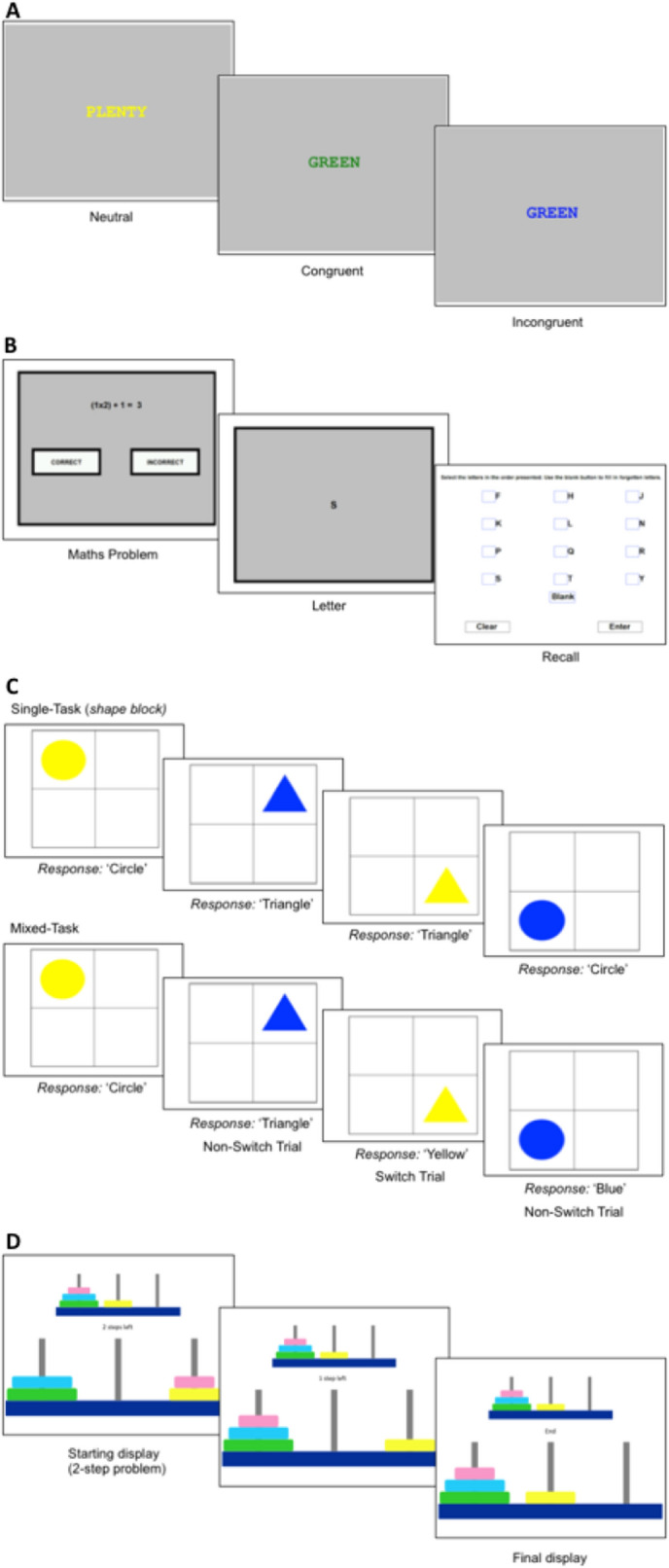
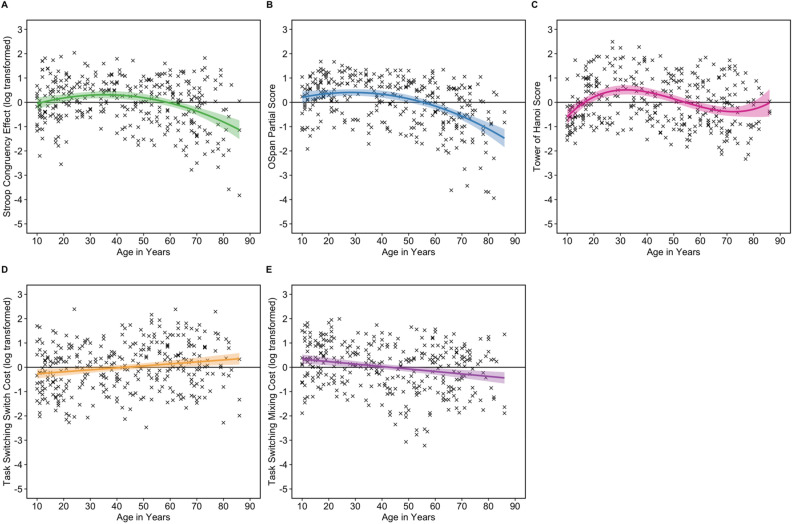
Executive functions demonstrate variable developmental and aging profiles, with protracted development into early adulthood and declines in older age. However, relatively few studies have specifically included middle-aged adults in investigations of age-related differences in executive functions. This study explored the age-related differences in executive function from late childhood through to old age, allowing a more informed understanding of executive functions across the lifespan. Three hundred and fifty participants aged 10 to 86 years-old completed a battery of tasks assessing the specific roles of inhibitory control, working memory, cognitive flexibility, and planning. Results highlighted continued improvement in working memory capacity across adolescence and into young adulthood, followed by declines in both working memory and inhibitory control, beginning from as early as 30–40 years old and continuing into older age. Analyses of planning abilities showed continued improvement across adolescence and into young adulthood, followed by a decline in abilities across adulthood, with a small (positive) change in older age. Interestingly, a dissociation was found for cognitive flexibility; switch costs decreased, yet mixing costs increased across the lifespan. The results provide a description of the developmental differences in inhibitory control, working memory, cognitive flexibility and planning, above any effects of IQ or SES, and highlight the importance of including middle-aged adults in studies seeking to establish a more comprehensive picture of age-related differences in executive function.
Overview
The claims and statistics of this paper haven’t been checked yet.
Free: it reads the open-access text and checks the first 5 claims that cite a source we can check. Create a free account to check every claim.
Integrity signals
Registry
Cites
Statistics
Figures
Verification
Claims the paper makes
The claims and statistics of this paper haven’t been checked yet.
Free: it reads the open-access text and checks the first 5 claims that cite a source we can check. Create a free account to check every claim.
Claims other papers make about this one
Each is checked against this paper’s own text: does it say what the citing paper says it does?
The cited source says what the claim attributes to it.
In the citing paper
“A recent study by (Ferguson et al., 2021) examined EF in a large, community-based sample aged from 10 to 86 years old, demonstrating that planning ability and WM capacity continue to develop throughout adolescence as well as in early adulthood.”
From Assessment of executive functions in school-aged children: A narrative review (2022) · cites this paper as Ferguson et al., 2021
Self-check
Percentages, sums and reported differences re-computed from the paper’s own numbers.
The self-check needs the paper’s full text.
Citations
Cites
Studies of interference in serial verbal reactions
Stroop, J. R. (1935) · Journal of Experimental Psychology · doi:10.1037/h0054651 · Cited by 18,622
Miyake, A., Friedman, N. P., Emerson, M. J., Witzki, A. H., Howerter, A., & Wager, T. D. (2000) · Cognitive Psychology · doi:10.1006/cogp.1999.0734 · Cited by 15,798
Diamond, A. (2013) · Annual Review of Psychology · doi:10.1146/annurev-psych-113011-143750 · Cited by 13,268
Dynamic mapping of human cortical development during childhood through early adulthood
Gogtay, N., Giedd, J. N., Lusk, L., Hayashi, K. M., Greenstein, D., Vaituzis, A. C., Nugent, T. F., Herman, D. H., Clasen, L. S., Toga, A. W., et al. (2004) · Proceedings of the National Academy of Sciences · doi:10.1073/pnas.0402680101 · Cited by 5,604
Wechsler Abbreviated Scale of Intelligence
Dumont, R., Willis, J. O., Veizel, K., & Zibulsky, J. (2014) · Encyclopedia of Special Education · doi:10.1002/9781118660584.ese2519 · Cited by 5,521
Wechsler Abbreviated Scale of Intelligence
Wechsler, D. (2012) · PsycTESTS Dataset · doi:10.1037/t15170-000 · Cited by 4,596
Miyake, A., & Friedman, N. P. (2012) · Current Directions in Psychological Science · doi:10.1177/0963721411429458 · Cited by 3,944
Costs of a predictible switch between simple cognitive tasks.
Rogers, R. D., & Monsell, S. (1995) · Journal of Experimental Psychology: General · doi:10.1037/0096-3445.124.2.207 · Cited by 3,170
Regional Brain Changes in Aging Healthy Adults: General Trends, Individual Differences and Modifiers
Raz, N., Lindenberger, U., Rodrigue, K. M., Kennedy, K. M., Head, D., Williamson, A., Dahle, C., Gerstorf, D., & Acker, J. D. (2005) · Cerebral Cortex · doi:10.1093/cercor/bhi044 · Cited by 2,875
Executive function in preschoolers: A review using an integrative framework.
Garon, N., Bryson, S. E., & Smith, I. M. (2008) · Psychological Bulletin · doi:10.1037/0033-2909.134.1.31 · Cited by 2,695
Research works printed but not linked: 3
- 41. Jacques S Marcovitch S Overton WF Development of executive function across the lifespan Cognition, Biology, and Methods Across the Lifespan. The Handbook of Life-Span Development 2010 Hoboken, NJ Wiley 431 466
- 46. Delis DC Kaplan E Kramer JH Delis–Kaplan Executive Function System (D-KEFS) 2001 San Antonio, TX The Psychological Corporation
- 73. Lawson GM Hook CJ Hackman DA Farah MJ Griffin JA Freund LS McCardle P Socioeconomic status and neurocognitive development: Executive function Executive Function in Preschool Children: Integrating Measurement, Neurodevelopment, and Translational Research 2016 Washington, DC American Psychological Association Press
Cited by
Standards of Care for the Health of Transgender and Gender Diverse People, Version 8
Coleman, E., Radix, A. E., Bouman, W. P., Brown, G. R., de Vries, A. L. C., Deutsch, M. B., Ettner, R., Fraser, L., Goodman, M., Green, J., et al. (2022) · International Journal of Transgender Health · doi:10.1080/26895269.2022.2100644 · Cited by 2,698
Magnon, V., Vallet, G. T., Benson, A. C., Mermillod, M., Chaussé, P., Lacroix, A., Bouillon‐Minois, J., & Dutheil, F. (2022) · Cortex · doi:10.1016/j.cortex.2022.07.008 · Cited by 117
Scherer, R., Siddiq, F., Howard, S. K., & Tondeur, J. (2022) · Computers in Human Behavior · doi:10.1016/j.chb.2022.107530 · Cited by 114
Shi, P., Tang, Y., Zhang, Z., Feng, X., & Li, C. (2022) · Brain Sciences · doi:10.3390/brainsci12121734 · Cited by 88
“It is the process by which individuals coordinate divergent cognitive activities while undertaking a cognitive task, with the objective of enabling individuals to achieve set targets and produce intentional behavior in a flexible and efficient way [2].”
BackgroundAhmed, S. F., Ellis, A., Ward, K. P., Chaku, N., & Davis-Kean, P. E. (2022) · Developmental Psychology · doi:10.1037/dev0001396 · Cited by 84
Garrett, J., Chak, C., Bullock, T., & Giesbrecht, B. (2024) · Communications Psychology · doi:10.1038/s44271-024-00124-2 · Cited by 85
“Contrary to this account, though, the largest exercise induced effects were observed for executive processes, which are believed to be at peak ef fi ciency during this period in the lifespan 117,118 .”
ResultBlueberry Supplementation in Midlife for Dementia Risk Reduction
Krikorian, R., Skelton, M. R., Summer, S. S., Shidler, M. D., & Sullivan, P. G. (2022) · Nutrients · doi:10.3390/nu14081619 · Cited by 82
“From a developmental perspective, executive ability tends to decline beginning in midlife, even in the context of nonpathological aging [80].”
BackgroundSex Differences in Cognition Across Aging
Lee, B. H., Richard, J. E., de leon, R. G., Yagi, S., & Galea, L. A. M. (2022) · Current topics in behavioral neurosciences · doi:10.1007/7854_2022_309 · Cited by 66
Reinvest to Assess: Advancing Approaches to Motor Competence Measurement Across the Lifespan
Hulteen, R. M., Terlizzi, B. M., Abrams, T. C., Sacko, R. S., Meester, A. D., Pesce, C., & Stodden, D. F. (2022) · Sports Medicine · doi:10.1007/s40279-022-01750-8 · Cited by 64
Grainger, S. A., Crawford, J. D., Riches, J., Kochan, N. A., Chander, R. J., Mather, K. A., Sachdev, P. S., & Henry, J. D. (2022) · The Journals of Gerontology Series B · doi:10.1093/geronb/gbac110 · Cited by 63
“Normal aging is associated with declines in cognitive function, such as processing speed, executive functioning, and memory (Ferguson et al., 2021; Salthouse, 2009).”
Childhood unpredictability and the development of exploration
Xu, Y., Harms, M. B., Green, C. S., Wilson, R. C., & Pollak, S. D. (2023) · Proceedings of the National Academy of Sciences · doi:10.1073/pnas.2303869120 · Cited by 66
“…also begin to exhibit more strategic use of exploration (37), as this is the developmental period when executive processes such as cognitive flexibility undergo substantial development (38) and adult - like performance on reward - driven tasks is competent but not yet at adult levels (39, 40).”
Miguel, P. M., Meaney, M. J., & Silveira, P. P. (2023) · Biological Psychiatry · doi:10.1016/j.biopsych.2023.01.008 · Cited by 59
Zhang, Z., Peng, P., Eickhoff, S. B., Lin, X., Zhang, D., & Wang, Y. (2021) · Developmental Science · doi:10.1111/desc.13111 · Cited by 58
Dean, C. E., Akhtar, S., Gale, T. M., Irvine, K., Grohmann, D., & Laws, K. R. (2022) · PLoS ONE · doi:10.1371/journal.pone.0267360 · Cited by 57
Assessment of executive functions in school-aged children: A narrative review
Souissi, S., Chamari, K., & Bellaj, T. (2022) · Frontiers in Psychology · doi:10.3389/fpsyg.2022.991699 · Cited by 56
“A recent study by (Ferguson et al., 2021) examined EF in a large, communitybased sample aged from 10 to 86 years old, demonstrating that planning ability and WM capacity continue to develop throughout adolescence as well as in early adulthood.”
BackgroundYe, M., Song, T., Xia, H., Hou, Y., & Chen, A. (2024) · International Journal of Nursing Studies · doi:10.1016/j.ijnurstu.2024.104912 · Cited by 53
Ludyga, S., Held, S., Rappelt, L., Donath, L., & Klatt, S. (2022) · European Journal of Sport Science · doi:10.1080/17461391.2022.2099765 · Cited by 52
“that is characterized by a peak or an onset of the decline of executive function (Ferguson et al., 2021).”
BackgroundResultMarié, D., Müller, C. A. H., ALTENMÜLLER, E. O., Ville, D. V. D., Jünemann, K., Scholz, D. S., Krüger, T. H. C., Worschech, F., Kliegel, M., Sinke, C., et al. (2023) · Neuroimage Reports · doi:10.1016/j.ynirp.2023.100166 · Cited by 52
“For both interventions, associated GM plasticity of the left caudate nucleus may thus relate to executive function benefits (eg. inhibition or monitoring), particularly affected by aging (Buckner, 2004; Ferguson et al., 2021; Rozas et al., 2008).”
BackgroundMaeneja, R., Rato, J. R., & Ferreira, I. S. (2025) · Children · doi:10.3390/children12050555 · Cited by 53
Yalçın, M., Mundorf, A., Thiel, F., Amatriain‐Fernández, S., Kalthoff, I. S., Beucke, J., Budde, H., Garthus‐Niegel, S., Peterburs, J., & Relógio, A. (2022) · Frontiers in Physiology · doi:10.3389/fphys.2022.873237 · Cited by 54
“It is known that EF suffer a decrease in their capacity to function due to developmental changes and ageing (Ferguson et al., 2021).”
BackgroundExecutive Function Strengths in Athletes: a Systematic Review and Meta‐Analysis
Ren, S., Shi, P., Feng, X., Zhang, K., & Wang, W. (2025) · Brain and Behavior · doi:10.1002/brb3.70212 · Cited by 49
Early Intervention in Cognitive Aging with Strawberry Supplementation
Krikorian, R., Shidler, M. D., & Summer, S. S. (2023) · Nutrients · doi:10.3390/nu15204431 · Cited by 47
“The finding of improvement in this regard for interference In of Demographically, executive capability begins to decline in middle-age [70].”
BackgroundUnderstanding patch foraging strategies across development
Lloyd, A., Viding, E. M., McKay, R., & Furl, N. (2023) · Trends in Cognitive Sciences · doi:10.1016/j.tics.2023.07.004 · Cited by 46
“, ages 10–24) [33], a period of profound neurocognitive change [12,34,35].”
Inhibition changes across the lifespan: experimental evidence from the Stroop task
Forte, G., Troisi, G., Favieri, F., & Casagrande, M. (2024) · BMC Psychology · doi:10.1186/s40359-024-01844-0 · Cited by 44
“The present study aimed to determine how cognitive inhibition develops and evolves with age and to further examine the U-shaped trend suggested by previous studies [7].”
BackgroundMethodResultInfluentialEmotion regulation and executive function: Associations with depression and anxiety in autism
Conner, C. M., Elias, R., Smith, I. C., & White, S. W. (2023) · Research in Autism Spectrum Disorders · doi:10.1016/j.rasd.2023.102103 · Cited by 43
Perspective-taking and social inferences in adolescents, young adults, and older adults.
Lillo, M. D., & Ferguson, H. J. (2023) · Journal of Experimental Psychology General · doi:10.1037/xge0001337 · Cited by 44
Self-citationInterleaved Pro/Anti-saccade Behavior Across the Lifespan
Yep, R., Smorenburg, M. L., Riek, H. C., Calancie, O. G., Kirkpatrick, R. H., Perkins, J. E., Huang, J. C. H., Coe, B. C., Brien, D. C., & Munoz, D. P. (2022) · Frontiers in Aging Neuroscience · doi:10.3389/fnagi.2022.842549 · Cited by 42
The media literacy theory of change and the message interpretation process model
Austin, E. W., & Domgaard, S. (2024) · Communication Theory · doi:10.1093/ct/qtae018 · Cited by 42
Factors that amplify and attenuate egocentric mentalizing
Todd, A. R., & Tamir, D. (2024) · Nature Reviews Psychology · doi:10.1038/s44159-024-00277-1 · Cited by 42
Lillo, M. D., Foley, R., Fysh, M. C., Stimson, A., Bradford, E. E. F., Woodrow-Hill, C., & Ferguson, H. J. (2021) · Nature Human Behaviour · doi:10.1038/s41562-021-01113-9 · Cited by 41
“These older adults were recruited from the local community, and it is likely that the cohort who were willing to take part in our research study were experiencing ‘healthy’ aging, and therefore had a higher IQ (as seen in 72 ).”
Self-citationMakmee, P., & Wongupparaj, P. (2022) · Psychosocial Intervention · doi:10.5093/pi2022a10 · Cited by 37
Contreras-Osorio, F., Guzmán‐Guzmán, I. P., Cerda-Vega, E., Ríos, L. J. C., Ramírez‐Campillo, R., & Campos‐Jara, C. (2022) · International Journal of Environmental Research and Public Health · doi:10.3390/ijerph19053045 · Cited by 37
“Although the tasks used to assess executive function involve complex demands that make it difficult to identify the unique contribution of a single dimension of executive functions [54,55], the results allow us to relate the increase in these anthropometric parameters to a lower performance in the following: (1) inhib…”
The cognitive tenacity of self-directed ageism
Henry, J. D., Coundouris, S. P., Craik, F. I. M., von Hippel, C., & Grainger, S. A. (2023) · Trends in Cognitive Sciences · doi:10.1016/j.tics.2023.03.010 · Cited by 35
Racial discrimination and core executive functions
Keating, L., Kaur, A., Mendieta, M., Gleason, C., Basello, G., Roth, A. R., & Brondolo, E. N. (2021) · Stress and Health · doi:10.1002/smi.3116 · Cited by 34
Lippolis, M., Müllensiefen, D., Frieler, K., Matarrelli, B., Vuust, P., Cassibba, R., & Brattico, E. (2022) · Frontiers in Psychology · doi:10.3389/fpsyg.2022.982704 · Cited by 36
“The prolonged development of WM throughout adolescence is linked to brain changes, notably the prefrontal cortex’s maturation (Ferguson et al., 2021).”
BackgroundYeung, M. K.-C., Bai, J., & Mak, K. (2024) · Autism Research · doi:10.1002/aur.3196 · Cited by 33
“Beginning in the 30s, these functions show a decline across adulthood (De Luca et al., 2003; Ferguson et al., 2021).”
Immediate and short-term effects of single-task and motor-cognitive dual-task on executive function
Zhang, W., Hua, L., & Zhang, T. (2023) · PLoS ONE · doi:10.1371/journal.pone.0290171 · Cited by 33
Haatveit, B. C., Westlye, L. T., Vaskinn, A., Flaaten, C. B., Mohn, C., Bjella, T. D., Sæther, L. S., Sundet, K. S., Melle, I. S., Andreassen, O. A., et al. (2023) · Schizophrenia · doi:10.1038/s41537-023-00414-4 · Cited by 34
“Furthermore, cognitive domains show differential trajectories through the lifespan 14 .”
BackgroundGetzmann, S., Reiser, J. E., Gajewski, P. D., Schneider, D. A., Karthaus, M., & Wascher, E. (2023) · Frontiers in Psychology · doi:10.3389/fpsyg.2023.1232344 · Cited by 32
“A study on the development of EF over the lifespan showed clear differences in the trajectories (Ferguson et al., 2021).”
BackgroundMakmee, P., & Wongupparaj, P. (2025) · Psychosocial Intervention · doi:10.5093/pi2025a4 · Cited by 32
“…short-term memory (Bopp & Verhaeghen, 2005; Durteste et al., 2023; Mitchell & Cusack, 2018; Verhaegen & Poncelet, 2015), executive functioning (Ferguson et al., 2021; Idowu & Szameitat, 2023; Rodríguez-Aranda et al., 2016), and also physical and psychological well-being (Górska et al., 2021;…”
Zhang, T., Cui, H., Wei, Y., Tang, X., Xu, L., Hu, Y., Tang, Y., Chen, T., Li, C., & Wang, J. (2021) · Biological Psychiatry Cognitive Neuroscience and Neuroimaging · doi:10.1016/j.bpsc.2021.06.015 · Cited by 32
Inhibitory Control and Fall Prevention: Why Stopping Matters
Bolton, D. A. E., & Richardson, J. K. (2022) · Frontiers in Neurology · doi:10.3389/fneur.2022.853787 · Cited by 32
“Given that inhibitory executive functions decline by middle age (45), thismay represent an earlymarker for fall risk analogous to elevated blood pressure being a treatable risk factor in advance of cardiovascular events.”
BackgroundKlein, S. D., Collins, P. F., & Luciana, M. M. (2022) · Cognitive Psychology · doi:10.1016/j.cogpsych.2022.101518 · Cited by 32
McGreen, J., Kemps, E., & Tiggemann, M. (2023) · Appetite · doi:10.1016/j.appet.2023.106466 · Cited by 32
Schwarze, S. A., Fandakova, Y., & Lindenberger, U. (2024) · Current Opinion in Behavioral Sciences · doi:10.1016/j.cobeha.2024.101395 · Cited by 31
Rogers, F., & Metzler‐Baddeley, C. (2024) · Brain and Cognition · doi:10.1016/j.bandc.2024.106137 · Cited by 31
“In a large-scale longitudinal study of 354 number of participants between the ages of 10 – 86 years old, age-related EF decline was shown to commence in middle adulthood, with working memory capacity and inhibitory control showing reductions in as early as the third decade (Ferguson et al., 2021).”
BackgroundXia, H., Hou, Y., Li, Q., & Chen, A. (2024) · Human Brain Mapping · doi:10.1002/hbm.70031 · Cited by 30
“The population aged 60 and above demonstrates significantly lower cognitive flexibility compared to young adults aged 18 – 35 (Craik & Bialystok, 2006; Ferguson et al., 2021), and this decline in cognitive flexibility involves functional changes in regions that support various mental functions.”
BackgroundSnytte, J., Setton, R., Mwilambwe-Tshilobo, L., Rajah, M. N., Sheldon, S., Turner, G. R., & Spreng, R. N. (2024) · eNeuro · doi:10.1523/eneuro.0418-23.2023 · Cited by 31
“…and Grady, 2002; Salat et al., 2004; Rajah and D ’ Esposito, 2005) as well as changes in inhibition, working memory, and attention that emerge in later stages of development, which may impact episodic memory (Miyake et al., 2000; Salthouse, 2019; Campbell et al., 2020; Ferguson et al., 2021).”
BackgroundEffects of computer-based training on children’s executive functions and academic achievement
Conesa, P. J., & Duñabeitia, J. A. (2021) · The Journal of Educational Research · doi:10.1080/00220671.2021.1998881 · Cited by 29
“The 6 to 12-year-old stage is crucial in the development of EF (Davidson et al., 2006; Ferguson et al., 2021), since neuronal plasticity is particularly high and the prefrontal cortex is especially sensitive to environmental influences (Bull et al., 2011).”
BackgroundMartin, S., Frieling, R., Saur, D., & Hartwigsen, G. (2023) · Brain stimulation · doi:10.1016/j.brs.2023.09.009 · Cited by 29
“We included middle-aged to older adults since executive functions like alertness and inhibitory control have been shown to decline from middle age [26,27], which might increase the modulatory potential of TBS in this age group.”
Changes in Behavior and Neural Dynamics across Adolescent Development
Liuzzi, L., Pine, D. S., Fox, N. A., & Averbeck, B. B. (2023) · Journal of Neuroscience · doi:10.1523/jneurosci.0462-23.2023 · Cited by 29
“…abilities reach adult levels by late childhood (Leat et al., 2009), executive processing, such as working memory and inhibitory control, depend on prefrontal cortex (Goldman-Rakic, 1996) and continue to develop into adulthood (Larsen and Luna, 2018; Theodoraki et al., 2020; Ferguson et al., 2021).”
BackgroundFrom Frege to ChatGPT: Compositionality in Language, Cognition, and Deep Neural Networks
Russin, J., McGrath, S. W., & Williams, D. J. (2026) · The MIT Press eBooks · doi:10.7551/mitpress/15862.003.0017 · Cited by 27
Executive Functioning and Offending Behavior: An Updated Meta-Analysis
Griffith, R., Nowalis, S., & Monroe‐Gulick, A. (2024) · Criminal Justice and Behavior · doi:10.1177/00938548231225260 · Cited by 27
“…more than 300 individuals aged 10 to 86 examined specific executive functions at different ages while controlling for IQ and socioeconomic status (Ferguson et al., 2021). working memory improved from adolescence to adulthood, with inhibitory control and working memory showing declines as early…”
BackgroundResultInfluentialMarini, A., Petriglia, F., D’Ortenzio, S., Bosco, F. M., & Gasparotto, G. (2025) · Discourse Processes · doi:10.1080/0163853x.2025.2507548 · Cited by 26
“Executive functions (Ferguson et al., 2021) enable individuals to plan their actions, monitor whether their actions or discourse align with the initial plan, inhibit the production of inappropriate responses or tangential utterances, and update processed information through working memory.”
Brain signal variability and executive functions across the life span
Goodman, Z. T., Nomi, J. S., Kornfeld, S., Bolt, T., Saumure, R. A., Romero, C., Bainter, S. A., & Uddin, L. Q. (2024) · Network Neuroscience · doi:10.1162/netn_a_00347 · Cited by 26
“Within the broad EF domain, specific cognitive abilities vary in the age at which they grow, peak, and decline (Ferguson et al., 2021).”
BackgroundDevelopment of white matter fiber covariance networks supports executive function in youth
Bagautdinova, J., Bourque, J., Sydnor, V. J., Cieslak, M., Alexander‐Bloch, A. F., Bertolero, M. A., Cook, P. A., Gur, R. E., Gur, R. C., Hu, F., et al. (2023) · Cell Reports · doi:10.1016/j.celrep.2023.113487 · Cited by 26
“Furthermore, they corresponded to known fiber bundles, including commissural fibers (networks 1, 6, and 7), association fibers (5, 9, 10, and 14), projection fibers (3, 4, and 8), and cerebellar white matter (11, 12, and 13); one network included a mix of association and projection fibers (network…”
Rizzo, L., Pinnelli, S., & Minnaert, A. E. M. G. (2025) · Frontiers in Education · doi:10.3389/feduc.2025.1696805 · Cited by 25
Gutiérrez-Capote, A., Jiménez-Martínez, J., Madinabeitia, I., de Orbe-Moreno, M., Pesce, C., & Vélez, D. C. (2024) · International Journal of Sport and Exercise Psychology · doi:10.1080/1612197x.2023.2289552 · Cited by 25
“Certain EFs seem to develop earlier and at a faster pace than others and most EFs undergo accelerated development in childhood, but exhibit continued improvement through adolescence and into young adulthood (Best & Miller, 2010; Ferguson et al., 2021; Huizinga et al., 2006).”
BackgroundLongitudinal changes in grey matter and cognitive performance over four years of healthy aging
Neufeld, N., Parker, A. F., Kwan, H., Mazerolle, E. L., & Gawryluk, J. R. (2022) · Neuroimage Reports · doi:10.1016/j.ynirp.2022.100140 · Cited by 24
“It was most recently corroborated by Ferguson et al. (2021), who examined the trajectory of specific components of EF over the lifespan.”
FISHERMAN: A Serious Game for Executive Function Assessment of Older Adults
Wang, P., Fang, Y., Qi, J.-Y., & Li, H. (2022) · Assessment · doi:10.1177/10731911221105648 · Cited by 25
“…studies showed that the core EF abilities, including inhibition, shifting, and working memory, presented an inverted-U-shaped curve that rose across childhood while declining in the late adulthood (De Luca Cinzia et al., 2008; Ferguson et al., 2021; Hartshorne & Germine, 2015; Zelazo et al., 2014).”
BackgroundResultThe structure and development of explore-exploit decision making
Harms, M. B., Xu, Y., Green, C. S., Woodard, K. A., Wilson, R. C., & Pollak, S. D. (2024) · Cognitive Psychology · doi:10.1016/j.cogpsych.2024.101650 · Cited by 27
“Because executive processes like working memory and cognitive flexibility undergo substantial development from early adolescence to early adulthood (Ferguson, Brunsdon & Bradford, 2021), and previous work shows different exploration strategies in adolescents vs. adults, we hypothesized that the…”
BackgroundFombouchet, Y., Lannegrand‐Willems, L., & Lucenet, J. (2024) · Journal of Adolescence · doi:10.1002/jad.12334 · Cited by 24
Smith, K. E., & Goldschmidt, A. B. (2024) · Current Obesity Reports · doi:10.1007/s13679-024-00553-4 · Cited by 23
“Executive functions remain in flux throughout childhood, late adolescence, and into early adulthood [70, 71], underscored by developmental changes in neurobiology [72].”
BackgroundExecutive functioning profiles and mathematical and reading achievement in Grades 2, 6, and 10
Carriedo, N., Rodríguez‐Villagra, O. A., Pérez, L., & Iglesias-Sarmiento, V. (2024) · Journal of School Psychology · doi:10.1016/j.jsp.2024.101353 · Cited by 25
Clinchard, C., Casas, B. R., & Kim‐Spoon, J. (2024) · Development and Psychopathology · doi:10.1017/s0954579424001457 · Cited by 23
Farmand, S., Preez, A. D., Kim, C., de Lucia, C., Ruepp, M., Stubbs, B., & Thuret, S. (2025) · Ageing Research Reviews · doi:10.1016/j.arr.2025.102725 · Cited by 23
“While these effects are considered to be more subtle than those associated with brain pathologies, they can still negatively impact various aspects of cognition, such as core executive functions (Ferguson et al., 2021).”
Wun, V. L., Klein, S. D., Collins, P. F., & Luciana, M. M. (2025) · Developmental Psychology · doi:10.1037/dev0001969 · Cited by 23
Bugannim, Y., Roziner, I., & Kishon‐Rabin, L. (2025) · Scientific Reports · doi:10.1038/s41598-025-05882-5 · Cited by 22
Shroff, D. M., Dunn, N. C., Green, C., Breaux, R. P., Becker, S. P., & Langberg, J. M. (2023) · Development and Psychopathology · doi:10.1017/s0954579423000743 · Cited by 12
The need to change: Is there a critical role of midlife adaptation in mental health later in life?
Thams, F., & Brassen, S. (2023) · eLife · doi:10.7554/elife.82390 · Cited by 22
“Similarly, gray matter changes have been related to cognitive decline, particularly in executive functions ( Ferreira et al., 2014 ; Park and Festini, 2016 ), which can be observed as early as age 40 ( Singh-Manoux et al., 2012 ; Ferguson et al., 2021 ).”
Otstavnov, N. S., Nieto-Doval, C., Galli, G., & Feurra, M. (2024) · eNeuro · doi:10.1523/eneuro.0394-23.2024 · Cited by 21
Hilviu, D., Parola, A., Bosco, F. M., Marini, A., & Gabbatore, I. (2024) · Language Cognition and Neuroscience · doi:10.1080/23273798.2024.2401027 · Cited by 21
“In line with previous studies (see e.g. Friend & Bates, 2014), we expected to observe an association between narrative ability and cognitive functions, i.e. EFs and LTM.”
InfluentialAging amplifies sex differences in low alpha and low beta EEG oscillations
Han, C., Cheung, V. C. K., & Chan, R. H. M. (2025) · NeuroImage · doi:10.1016/j.neuroimage.2025.121231 · Cited by 21
Klotzbier, T. J., & Schott, N. (2025) · Frontiers in Human Neuroscience · doi:10.3389/fnhum.2025.1631958 · Cited by 20
“Working memory shows substantial improvements from childhood (Broomell and Bell, 2022; Moriguchi et al., 2016) through adolescence and refines further during early adulthood (Ferguson et al., 2021).”
Quality of Survey Responses at Older Ages Predicts Cognitive Decline and Mortality Risk
Schneider, S., Junghaenel, D. U., Meijer, E., Zelinski, E. M., Jin, H., Lee, P.-J., & Stone, A. A. (2022) · Innovation in Aging · doi:10.1093/geroni/igac027 · Cited by 20
“…adults, such as problems with executive and self-control functions that can make it difficult to focus, follow instructions, inhibit competing responses, and maintain attentional focus on relevant stimuli over extended periods amidst potential environmental distractions (Ferguson et al., 2021).”
BackgroundSpeech Entrainment in Adolescent Conversations: A Developmental Perspective
Wynn, C. J., Barrett, T. S., Berisha, V., Liss, J., & Borrie, S. A. (2023) · Journal of Speech Language and Hearing Research · doi:10.1044/2023_jslhr-22-00263 · Cited by 20
“Consequently, as skills such as attention (e.g., Karns et al., 2015; Memmert, 2014; Mizuno et al., 2011 working memory (e.g., Carriedo et al., 2016; Ferguson et al., 2021; Mizuno et al., 2011), cognitive flexibility (Luna et al., 2004; Rubia et al., 2006; Williams et al., 1999), and processing…”
BackgroundKrynicki, C. R., Hacker, D., & Jones, C. A. (2022) · Journal of Neuropsychology · doi:10.1111/jnp.12300 · Cited by 19
Valos, N., & Bennett, J. M. (2023) · Transportation Research Part F Traffic Psychology and Behaviour · doi:10.1016/j.trf.2023.10.018 · Cited by 19
“The inverted U-shape of cognitive development matches the U-shape curve of road fatalities.”
Lurie, L. A., Rosen, M. L., Weissman, D. G., Machlin, L., Lengua, L. J., Sheridan, M. A., & McLaughlin, K. A. (2024) · Cerebral Cortex · doi:10.1093/cercor/bhad545 · Cited by 19
Attentional bias to threat: an investigation of psychological predictors beyond trait anxiety
Williams, M. M., Honan, C. A., & Matthews, A. J. (2024) · Current Psychology · doi:10.1007/s12144-024-05641-1 · Cited by 19
“However, if age shared a statistically significant ( p .05) relationship with an ABT score, it was entered at Step 1 alone to first control for a potential demographic confound, given that age has been shown to impact inhibitory control processes (e.g., Ferguson et al., 2021).”
Terroux, A., Mello, C., Morin, D., & Rivard, M. (2024) · Journal of Autism and Developmental Disorders · doi:10.1007/s10803-024-06463-7 · Cited by 19
“While EF begins to develop as early as the first years of life, the maturation of these cognitive processes continues throughout adolescence and early adulthood (Anderson, 2002; Chevalier, 2010; Ferguson et al., 2021).”
Latent state–trait and latent growth curve modeling of inhibitory control.
Faßbender, K., Meyhöfer, I., & Ettinger, U. (2023) · Journal of Experimental Psychology General · doi:10.1037/xge0001344 · Cited by 19
Li, F., Wang, L., Qin, Y., & Liu, G. (2022) · Complementary Therapies in Medicine · doi:10.1016/j.ctim.2022.102833 · Cited by 18
Functional Training and Dual-Task Training Improve the Executive Function of Older Women
Pantoja-Cardoso, A., Aragão-Santos, J. C., Santos, P. D. J., Dos-Santos, A. C., Silva, S. R., Lima, N. B. C., Vasconcelos, A. B. S., Fortes, L. D. S., & Silva‐Grigoletto, M. E. D. (2023) · Geriatrics · doi:10.3390/geriatrics8050083 · Cited by 18
Colverson, A. J., Barsoum, S., Cohen, R. A., & Williamson, J. B. (2024) · Experimental Gerontology · doi:10.1016/j.exger.2023.112354 · Cited by 18
“Changes in motor control and executive function occur as a result of aging (Seidler et al., 2010; Bernard and Seidler, 2014; Fjell et al., 2017; Caballero et al., 2021; Ferguson et al., 2021; Veríssimo et al., 2022).”
Healthy Lifestyle Related to Executive Functions in Chilean University Students: A Pilot Study
Navarrete, F. C., Arriagada-Hernández, C., Fuentes-Vilugrón, G., Jara-Tomckowiack, L., Levín-Catrilao, Á., Martín, P. D. V., Muñoz-Troncoso, F., & Delgado‐Floody, P. (2024) · Healthcare · doi:10.3390/healthcare12101022 · Cited by 18
“They continue to develop at their own pace in adolescence [6], and cognitive performance peaks during young adulthood [6,7].”
BackgroundAuditory cognitive aging in amateur singers and non-singers
Tremblay, P., & Perron, M. (2022) · Cognition · doi:10.1016/j.cognition.2022.105311 · Cited by 18
Callahan, B. L., Plamondon, A., Gill, S., & Ismail, Z. (2021) · Scientific Reports · doi:10.1038/s41598-021-03782-y · Cited by 17
The developmental trajectory of task-related frontal EEG theta/beta ratio in childhood
Chen, J., Xiao, Y., Xu, B., & Zhang, D. (2023) · Developmental Cognitive Neuroscience · doi:10.1016/j.dcn.2023.101233 · Cited by 17
“linear, quadratic, and cubic regression models (Ferguson et al., 2021).”
Chaku, N., Yan, R., Kelly, D. P., Zhang, Z., Lopez‐Duran, N. L., Weigard, A. S., & Beltz, A. M. (2023) · Research on Child and Adolescent Psychopathology · doi:10.1007/s10802-023-01071-y · Cited by 17
“IC and working mem - ory are distinct executive functioning skills that continue to differentiate during adolescence (Miyake & Friedman, 2012), and low correlations ( r = 0.20 - 0.30) are common in nomothetic and population-level studies (Chaku et al., 2022; Ferguson et al., 2021).”
BackgroundInfluentialDoes Playing Mahjong Benefit Older Individuals? A Scoping Review
Tse, Z. C. K., Cao, Y., Chau, B. K. H., Yeung, M. K.-C., Leung, C. C., & Shum, D. (2024) · The Journal of Prevention of Alzheimer s Disease · doi:10.14283/jpad.2024.102 · Cited by 17
The Impact of Game-Based Interventions on Adult Cognition: A Systematic Review
Coelho, F., Gonçalves, D., & Abreu, A. M. (2025) · International Journal of Human–Computer Interaction · doi:10.1080/10447318.2025.2462746 · Cited by 14
“Additionally, cognitive abilities like working memory and inhibitory control show enhancement throughout adolescence and early adulthood, followed by decline from around 30 – 40 years old onwards (Ferguson et al., 2021).”
Shi, P., Zhang, Z., Feng, X., Li, C., & Tang, Y. (2023) · Child Care Health and Development · doi:10.1111/cch.13182 · Cited by 16
Funghi, G., Meli, C., Cavagna, A., Bisoffi, L., Zappini, F., Papagno, C., & Dodich, A. (2024) · Archives of Gerontology and Geriatrics · doi:10.1016/j.archger.2024.105405 · Cited by 16
Barrios-Fernández, S., Delgado, M. G., Amado-Fuentes, M., Carlos‐Vivas, J., & Gómez, A. G. (2021) · Children · doi:10.3390/children8090799 · Cited by 17
“These skills reach their peak around the age of 30, after which a slow decline in some of these skills until old age [13,80,88,89].”
BackgroundMusic Listening, Emotion, and Cognition in Older Adults
Vincenzi, M., Borella, E., Sella, E., Lima, C. F., Béni, R. D., & Schellenberg, E. G. (2022) · Brain Sciences · doi:10.3390/brainsci12111567 · Cited by 16
The effect of age on executive functions in adults is not sex specific
Lemire, M., Soulières, I., & Saint‐Amour, D. (2024) · Journal of the International Neuropsychological Society · doi:10.1017/s1355617723011487 · Cited by 15
“Working memory matures gradually, reaching its peak in the twenties, but is the first to decline (Ferguson et al., 2021).”
BackgroundAge as a moderator of the relationship between planning and temporal information processing
Jablonska, K., Stanczyk, M., Piotrowska, M., Szymaszek, A., Lukomska, B., Bednarek, H., & Szela̧g, E. (2022) · Scientific Reports · doi:10.1038/s41598-022-05316-6 · Cited by 15
Brain Macro-Structural Alterations in Aging Rats: A Longitudinal Lifetime Approach
Gull, S., Gaser, C., Herrmann, K., Urbach, A., Boehme, M., Afzal, S., Reichenbach, J. R., Witte, O. W., & Schmidt, S. (2023) · Cells · doi:10.3390/cells12030432 · Cited by 15
“Nevertheless, a few aspects of cognition, such as semantic memory, the accumulation of knowledge, and the flexibility to switch between different executive tasks, are maintained or improved with increasing age [4,5].”
BackgroundSystematic cross-sectional age-associations in global fMRI signal topography
Nomi, J. S., Bzdok, D., Li, J., Bolt, T., Chang, C., Kornfeld, S., Goodman, Z. T., Yeo, B. T. T., Spreng, R. N., & Uddin, L. Q. (2024) · Imaging Neuroscience · doi:10.1162/imag_a_00101 · Cited by 15
“The trajectory of the lateral frontoparietal network also closely resembles executive function performance across development, where performance peaks in the 3rd and 4th decade of life before dropping off in old age ( Ferguson et al., 2021).”
Background
Metadata
- Authors
- Ferguson, H. J., Brunsdon, V. E. A., & Bradford, E. E. F.
- Affiliations
- University of Kent (GB)
- University of Dundee (GB)
- Corresponding author
- Ferguson, Heather J.
- Venue
- Scientific Reports
- Published
- 2021-01-14
- Volume
- 11
- Issue
- 1
- Pages
- 1382-1382
- ISSN
- 2045-2322 (ISSN-L)
- PMC
- PMC7809200
- OpenAlex
- W3116908532
- Cited by
- 583
- References
- 116
- Citations by year
- 2026: 125 · 2025: 137 · 2024: 145 · 2023: 96 · 2022: 66 · 2021: 14
- FWCI
- 42.22
- Type
- journal article
- Language
- en
- Open access
- gold
- doi.org
- Licence
- cc-by
- creativecommons.org/licenses/by/4.0 (tdm)
- creativecommons.org/licenses/by/4.0 (vor)
- Locations
- Scientific Reports (publishedVersion, cc-by)
- PubMed Central (publishedVersion, cc-by)
- PubMed (publishedVersion)
- Kent Academic Repository (University of Kent) (acceptedVersion)
- St Andrews Research Repository (St Andrews Research Repository) (acceptedVersion, cc-by)
- Discovery Research Portal (University of Dundee) (submittedVersion, cc-by)
- DOAJ (DOAJ: Directory of Open Access Journals) (submittedVersion, cc-by-sa)
- OSF Preprints (OSF Preprints) (submittedVersion)
- Funders
- European Research Council (636458)
- Topics
- Life Sciences › Neuroscience › Cognitive Neuroscience › Neural and Behavioral Psychology Studies
- Social Sciences › Psychology › Experimental and Cognitive Psychology › Cognitive Abilities and Testing
- Social Sciences › Psychology › Experimental and Cognitive Psychology › Cognitive Functions and Memory
- Keywords
- executive function, lifespan development, aging, inhibitory control, working memory, cognitive flexibility, planning, switch costs, mixing costs, middle-aged adults, adolescence, cognitive decline
- MeSH terms
- Adolescent, Adult, Aged, Aged, 80 and over, Aging, Child, Female, Humans, Male, Memory, Short-Term, Middle Aged, Executive Function
About these checks
Registry, retraction, Cites and statistics results are computed, not judged, with one exception: a printed reference that no index lists is read once by a model before it counts as a citation error. Claims are extracted by a model and kept only when their quote appears verbatim in the text; each cited source is then checked, with a model’s help, for whether it says what the claim relies on. Those verdicts can be wrong — read the claim’s quote and the cited source before relying on one.
Statistics and arithmetic are recomputed, not judged.
Confidence bands are shown only for fields calibrated on our annotated test set. None is calibrated yet, so no band is shown.
What counts as a claim ›How we measure confidence ›How we check this ›
Are you an author, or do you see a problem with this page? Request a review
Data sources
Bibliographic data: Semantic Scholar, OpenAlex, Crossref.
Contains information from the Semantic Scholar Academic Graph Datasets, made available under the ODC Attribution License (ODC-BY 1.0).
Semantic Scholar’s data is described in: Kinney, R., et al. (2023). The Semantic Scholar Open Data Platform. arXiv:2301.10140.
